Who hasn’t needed some “me-time”? America’s standard 40 hour work weeks can drive us all into the ground and sometimes we just need to let our minds and bodies play catch-up.
Vacationing with friends or loved ones can be fun and all, but sometimes some alone time is just what the doctor ordered.
Take it from me, a frequent solo traveler who has heard every unwanted piece of feedback in the book about my travel lifestyle.
If it’s not, “You’re running from your problems”, then it’s “Something bad is going to happen to you!”
Well, if I’m running, then you’re hiding.
Solo travel can be the ultimate reset, and to be honest, profoundly therapeutic. Where to go is always the question.
If you’re alone, keeping yourself entertained and on par with your budget is key. Not every destination fits the mold, but one Scandinavian country is perfect for those of us ready to venture off into the world on our own.
Norway and Denmark aren’t exactly backpackers’ favorite budget destinations. I haven’t been to Denmark, but I’ve been to Norway three times.
After paying $8 for a Red Bull in a poor attempt to defeat jet lag upon arriving in Oslo, I knew my bank account was in for a world of hurt.
Sweden, however, doesn’t align with its Scandinavian neighbors. Having just planned a trip myself this fall, I was surprised to discover the low rates of Stockholm hotels.
No, it’s nothing special, but oftentimes solo travelers don’t find the need to splurge with a tight budget.
Sweden’s capital city of Stockholm is where you’re likely to spend most of your time and money, for that matter.
With a popular coffee culture, a cup of joe tends to cost just $2-3. Stockholm is easy to get around by public transit (SL) with single rides costing about $4 and even more savings for passes in increments of 24-hour, 72-hour, 7-day and 30-days.
Tip: make sure to keep your transit ticket with you or risk a stiff $140 fine!
Delightful Cities And Stunning Nature: Sweden Has It All!
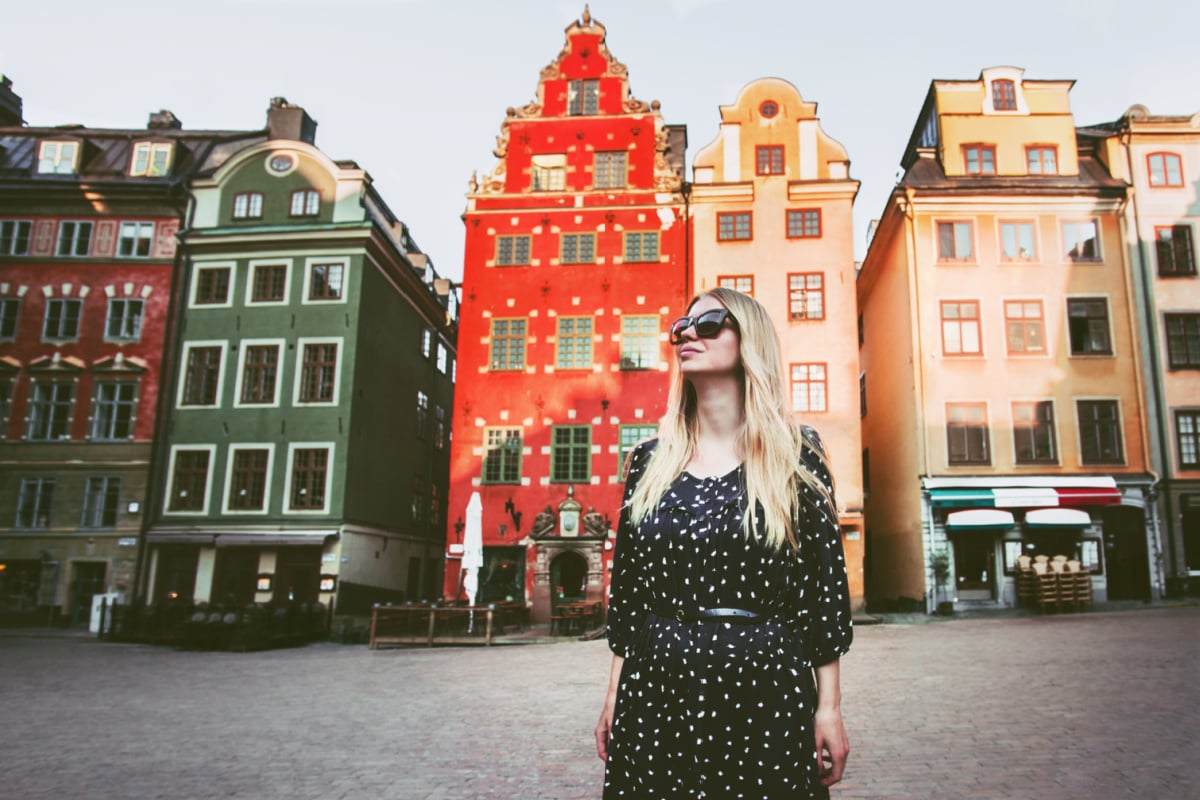
Sweden’s claim to fame may be Stockholm, a vibrant city encapsulating Scandinavian charm and innovation, offering picturesque cobblestone streets, world-class museums, and a thriving startup scene.
But there is far more to see than Stockholm despite stealing most of Sweden’s spotlight.
There is Malmo, another wallet-friendly city and a gateway into neighboring Denmark, among scattered charming small towns, such as Ystad.
As pretty and fun to explore as Sweden’s main cities and charming towns may be, venturing into Sweden’s abounding nature is a whole other world.
Much to the likes of Iceland, Norway, and Finland, add Sweden to the mix to witness the wonders of the Aurora Borealis (Northern Lights), best viewed from September – March.
Wander Abisko National Park to see the Northern Lights in all their glory and hike scenic trails with a vast array of wildlife like reindeer and arctic foxes.
You can explore Sweden’s underrated coastline across the UNESCO-protected Höga Kuste too, perfect for kayaking the calm waters and checking out local villages.
Between urban explorations and natural wonders, solo travelers will never have a dull moment biding time throughout this stunning country.
‘Fika’ Culture: A Swedish Tradition
After reading about Sweden’s Fika culture, I’m beginning to wonder if I should spit in a tube for 23andMe to trace down my Swedish roots.
Pronounced fee-ka, this Swedish custom isn’t your average coffee break. It’s a way of life built on appreciating the smaller things, such as a hot drink and a bite to eat, but catered toward social interactions.
It’s a time to destress and mingle with others while putting phones and laptops away.
Cafes are popular places to hang out, giving solo travelers all the more reason to feel comfortable in Sweden.
Knowing Sweden’s reputation for safety makes it an even more attractive destination as the U.S. State Departments lists Sweden as Level 2 only for terrorism concerns.
Sam, our Lead Writer & Journalist based in San Diego has visited 30 countries and written over 400 articles with a focus on sharing his own travel experiences and shining a light on lesser-known gems.
Opinions expressed here are the author’s alone, not those of any bank, credit card issuer, hotel, airline, or other entity. This content has not been reviewed, approved or otherwise endorsed by any of the entities included within the post.
Train travel is backen vogue in Europe, with numerous train routes launching simultaneously and demand for the railway having increased significantly.
It seems as if travelers have had it with airports in general: from the stressful security check-up, to the long wait in line, and even the super-strict luggage rules low-cost carriers impose, it’s no wonder they’re flocking into the nearest train station instead.
Not only are they a (far more) scenic experience, but trains can literally be hotels on wheels.
Europe’s new fleet of Nightjet trains cover long distances overnight, and with their lie-flat seats and incredible onboard catering, you hardly ever notice the passing of time.
If you’re fed up with the airport chaos yourself, and you’re not on a rush to be anywhere on vacation, you’ll be ecstatic to learn there are 3 new Nightjet sleepers launching in the Old Continent this fall––and they will be connecting 6 completely unique destinations:
New Trains Launching Between Austria, Germany And Italy
In the latest expansion of its Nightjet service, Austrian operator ÖBB will start operation between six cities across Austria, Germany and Italy from September 10, 2024.
The Nightjet is ÖBB’s overnight service, with each train being seven cars long, including two sleeper cars with private cabins, three couchette cars, equipped with 28 compartments, a multi-functional car with both seating and accessible sleeper arrangements, and a seats-only car.
Traveling on the Nightjet, tickets for a standard seat start from only €29.90, or around US$33 based on the current exchange rate. A couchette, or a seat in a shared sleeper cabin costs around $85, while private cabins can go as high as US$192 on some routes.
Editor’s Note: We took a Nightjet train last year and it is an excellent experience (pictured above). Very comfortable and top-notch service!
The list of amenities in the latter category is quite extensive, with guests having enjoying both a seating area and a bed (with softer mattresses and pillows), a private washbasin, adjustable temperature control, multicolored mood lighting, and breakfast the following morning.
For those in ‘comfort plus’, cabins even come with a shower cubicle.
In general, seats are for travelers covering shorter distances, who won’t be traveling the whole extent of the Nightjet, the couchette cars are perfect for families and groups of friends, as it accommodates up to four people, and the private cabins are reserved for solo travelers or couples expecting privacy.
Now that you know what to expect from the Nightjet, let’s move on to the most important part: where can you go this fall?
Munich to Bologna
Munich is a major German city, capital of the state of Bavaria, and a cultural hotspot of the first order, with a central square (Marienplatz) flanked by historical landmarks, and a thriving brewery scene––to our fellow beer buffs out there, it’s also where the traditional Oktoberfest originated.
If you’re visiting Munich this fall, other than signing up for this $68.76 Bavarian Beer and Food Evening Tour, you can now go on a little weekend escapade to Italy––more specifically, the romantic Bologna, an offbeat gem often bypassed by first-time visitors.
Leaving from Hauptbahnhof (the Central Station) in the evening, the Nightjet crosses the state of Bavaria, and the whole of Austria overnight before reaching Italy, for a total travel duration of 10h28 (don’t worry, you’ll be fast asleep in your comfy couchette bed before you even notice).
Arriving in Bologna, you can go on a gastronomic tour guided by a local, packed with cheese boards, freshly-baked bread and homemade tagliatelle pasta, for only $87.62, or simply admire the city’s stunning architecture:
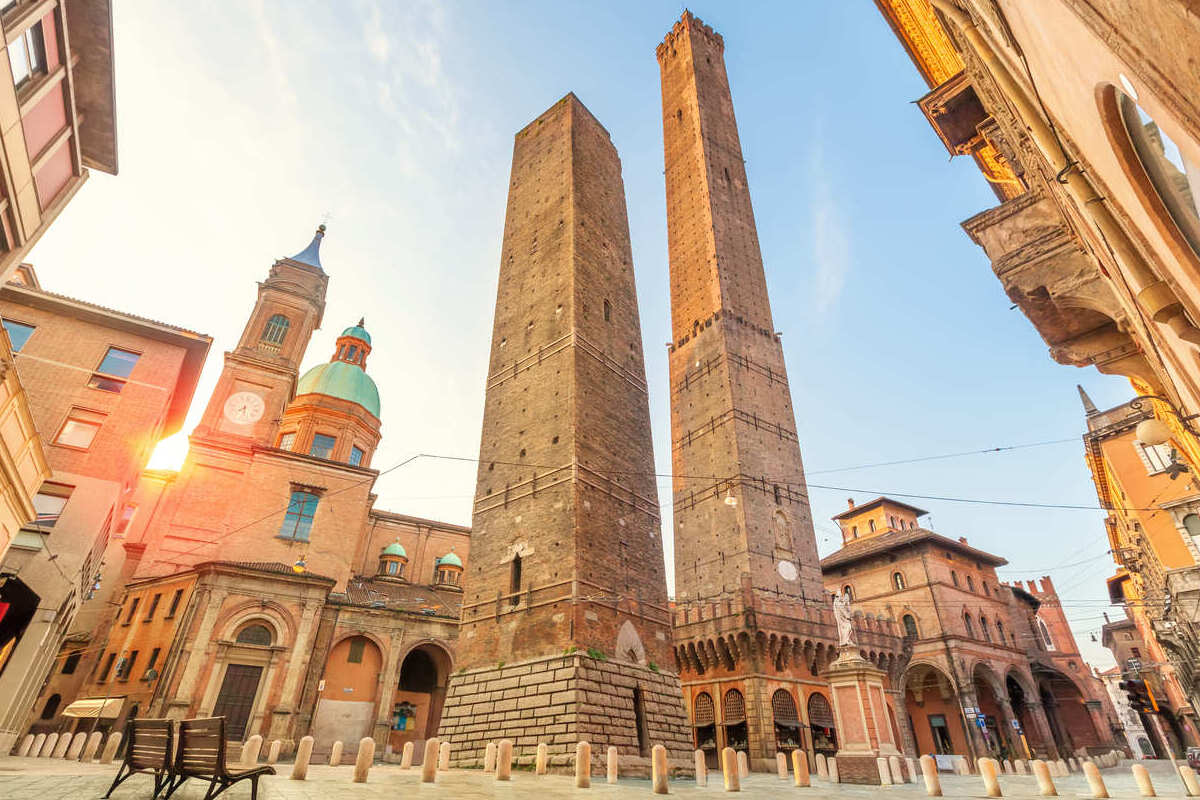
Bologna is famous for its Renaissance-era monuments, picturesque piazze surrounded by arched colonnades and casual historic cafes, and its twin Asinelli and Garisenda Towers, which similarly to Pisa, have also leaned forward over the years.
Outbound
Departing from Munich 8:15 p.m.
Arriving to Bologna 5:39 a.m.
Return
Departing from Bologna 10:54 p.m.
Arriving to Munich 9:22 a.m.
Salzburg to Florence
Austria’s famous alpine city, Salzburg has become a popular alternative for travelers keen on escaping the scorching Mediterranean heat this year, thanks to its milder mid-year temperatures and most importantly, inestimable cultural value:
With its perfectly preserved Old Town, dotted with domes and towering church spires, winding cobbled streets, and lush green gardens, set against the backdrop of snow-capped peaks, it is often called Rome of the North.
The Italy associations don’t stop there: from September 10, you can go to sleep in the ÖBB Nightjet in Salzburg and wake up the next morning in Florence, one of Europe’s prettiest cities, and the birthplace of the cultural and intellectual movement that was the Renaissance.
Florence is best-known for its UNESCO-listed Historic Center, dominated by a red-colored Brunelleschi Duomo, that rises above a maze of medieval streets––in the midst of it, there are museums housing iconic Western art, from Michelangelo’s David to Botticelli’s Birth of Venus.
Besides being a cultural behemoth, Florence is a renowned foodie hotspot, and in case you’re looking for an authentic restaurant, we’d warmly suggest La Buchetta: a bistro with a timeless interior, it has a near-perfect 4.7 rate on Google Reviews (and it’s where we had the best gnocchi ever).
Outbound
Departing from Salzburg 10:02 p.m.
Arriving to Florence 6:42 a.m.
Return
Departing from Florence 9:48 p.m.
Arriving to Salzburg 6:49 a.m.
Vienna to Rome
Habsburg-era palaces, sprawling lush gardens dotted with ornate fountains and postcardy gazebos, and essentially a stately Baroque monument per square mile (not literally, but it surely feels like it): Vienna is the quintessential European city.
The Austrian capital is notorious for its State Opera, considered one of the best in the world, glazed tile-roofed Stephansdom, a Gothic wonder rising 447.5 feet tall, and artsy coffee shops––our favorite, and one tourists often miss when visiting if they’re inattentive, is Fenster.
They’re nothing but a window opening onto a cobbled street where you can only get takeout coffee, and our go-to order has to be the milk espresso served in an ice cream cone; some say it’s overrated because it costs $12, but the presentation is cute, and it is really high-quality stuff.
If you’re coming all the way to Vienna for the culture and the coffee, you might as well add a little side trip to a fellow capital that’s developed a solid reputation entirely on those exact two things–of course, we’re talking about Rome, now linked to Austria via the Nightjet.
More than just great coffee and ancient sites, however, Rome is a vibrant metropolis with a jovial atmosphere and diverse tourist offer.
Unlike New York, it does go to sleep eventually, but if you know where to go, you can still have an enjoyable time.
Be it the endless streets of Trastevere, with its local-owned osteria and hidden courtyards, or the lively San Lorenzo, a student quarter full of bars, your Sunday evenings in Rome don’t have to be spent in a museum, or admiring Roman ruins if, you know, you’re in need of a Bohemian weekend away.
Outbound
Departing from Vienna 7:18 p.m.
Arriving to Rome 11:05 a.m.
Return
Departing from Rome 5:40 p.m.
Arriving to Vienna 9:04 a.m.
Why Take A Sleeper Train Instead Of Just Flying?
If you’ve never taken a sleeper train before, you may be wondering how exactly it’s any better than flying, and why would people choose to deliberately be in a train for 8 hours or longer when they could simply take the quickest, ‘easiest’ route.
Environmental wiffle-waffle aside, have you ever stopped to think how long you actually spend traveling by plane?
Sure, flights are mostly short-distance, particularly in Europe where it normally takes a maximum 3 hours to get anywhere, but how about the airport commute and wait?
If you’re flying from Paris Beauvais, an airport a whopping 41 miles outside the city of Paris itself, you’re advised to leave for the airport between five and three hours in advance, as the transfer time can take as long as 1h30, and there’s usually big lines at security.
However short that flight is, and let’s say it’s roughly 2 hours, your overall travel time has already bumped up to at least 7 hours, airport commute, wait time and actual flight included––and we haven’t even factored commuting upon arrival.
Most major international airports in Europe are located miles out of the city center, or even the city they serve, which is the case with Beauvais, and for that reason, flying typically takes up the best part of a travel day, if not the entire day.
Sleeper trains take between 8 to 10 hours to complete their journey, which is either equivalent or slightly longer, the difference being that you’re traveling overnight, going to bed at your departure point, and magically waking up at your destination.
No stress, no hopping on and off airport shuttles and trams in between, no sitting up straight.
Are Trains Really That Much More Expensive?
Lie-flat cabins are pretty expensive, sure, but have you pondered it’s almost as if you’re combining the cost of accommodation and travel into a single booking?
Think about it: if you choose to stay another night in a three-star hotel in Rome, basic amenities, only to fly to Vienna in the morning, you’ll be set back by $93–$146 this season, plus the flight tickets: booked through Austrian Airlines, that’s as high as $128 on certain dates.
We haven’t even added the cost of airport transfers, hold luggage (which is free on trains), whether it’s Ubers or trains, nor the usual airport expenses––who can resist a cheeky KFC as they wait for their gate to open, or browsing through DutyFree?
It’s not that airports are bad (not at all), but is $192 for a private sleeper cabin, or even $85 for a couchette in a shared compartment really that expensive?
Not to mention the scenic views, ability to take a walk and stretch your legs without being told off by overly-strict flight attendants, and comfy seating.
Lastly, trains don’t arrive miles outside a city.
Instead, they take you straight to the city center, probably in proximity of your hotel, making getting around much easier. Sleeper trains are perfect if you’re not in a rush to be somewhere, but if you’re actually smart about it, they’re rarely ever not the best choice.
Vini, our senior lead writer at Travel Off Path, has over 60+ countries under his belt (and currently weaving tales from Paris!), and a knack for turning off-the-beaten-path experiences into informative stories that will have you packing your bags.
Opinions expressed here are the author’s alone, not those of any bank, credit card issuer, hotel, airline, or other entity. This content has not been reviewed, approved or otherwise endorsed by any of the entities included within the post.
Bali and Thailand are the two top destinations that come to mind if you’re thinking of flying halfway across the globe to Southeast Asia.
The ancient pagodas, lush green nature, and beautiful coastal scenery all seem heavenly enough, alright, but perhaps not if you’re keen on avoiding the crowds…
Between the dollarization of prices and ongoing Westernization, both Bali and Thailand are now far from representing the idyllic, mystical Orient, and unless you’re signing up for an Ubud wellness cult, or looking to party hard in Phuket, you’re unlikely to find the spiritual awakening you seek.
Lucky for the passionate off-path explorer, not all of Southeast Asia is on the average Western Gen Z’s radar, and certainly not Cambodia, one of the region’s last hidden gems:
Why Cambodia Is Southeast Asia’s Rising Star
Though it’s been historically treated as an add-on in multi-country trips, particularly for travelers heading primarily to Thailand or Vietnam, interest in Cambodia as a stand-alone destination is increasing among Westerners:
Last year, the Asian hub hosted 5.4 million tourists, a whopping 139.5 percent increase year-on-year, and it looks set to grow even further in 2024, with 2 million arrivals registered between January and May already.
If Cambodia is nothing but a name or a vague location on a map for you, you may be wondering why Europeans and Americans alike are suddenly entertaining the idea of visiting––well, allow us to introduce you to Southeast Asia’s unspoiled kingdom.
A Charming Historic Capital
Yet to be discovered by the masses, Cambodia is nothing short of a cultural behemoth, retracing its origins back to a 9th-century Khmer civilization and having been part of several different empires over the centuries, including Greater India and France.
National capital Phnom Penh is home to an assortment of ancient and colonial-era landmarks, including the Central Market, an Art Deco-inspired markethall, Hotel Le Royal, evocative of Europe’s greatest, and the monumental Royal Palace, seat of the Cambodian royal family.
As charming as Phnom Penh, Cambodia’s true wonders lie outside its rather-compact capital city: the country is traversed by the Mekong Delta, a watercourse it shares with Vietnam, and one of the longest in the world, reaching as far as the South China Sea.
Leaving from Phnom Penh, there are several boat tours traveling down the Mekong, including this incredible sunset river cruise on GetYourGuide for as low as $9, though for the odd nature enthusiast, that’s only the starting point to a far more enthralling adventure.
This is Southeast Asia, after all, and you can expect some breathtaking natural vistas:
The Most Beautiful Nature You’ve Ever Seen
Located near the Vietnamese border, the scenic Bou Sra is one of Cambodia’s top sights, and a trio of cascading drops between 15 and 20 meters in height––for the thrill-seekers out there, you can even zip line over the waterfall for roughly $45, on the equivalent in Cambodian riel.
Elsewhere in Preah Monivong, in Cambodia’s southeastern end, tourists are greeted with emerald jungles and epic hikes, one of which leads up to Bokor Hill Station, a French-built ghost town left to crumble following their departure from Southeast Asia.
Other than paying the local Catholic church a visit, one of a handful scattered around Cambodia where Buddhism is king, the province is known for its thriving wildlife: if you’re lucky enough, you’ll be able to spot elephants, macaques, Asian tigers, and many other endangered species.
Another must-see attraction is Phnom Kulen: Thailand may lay claim to ‘The Beach’, a.k.a overtouristed Maya Bay, where Leonardo DiCaprio spent time shooting the 2000 drama, but this preserve in Cambodia had Angelina Jolie as a guest while filming her 2001 blockbuster Tomb Raider.
Hollywood features aside, let’s not forget the picturesque Battambang, a small town some 6 hours driving from Phnom Penh host to a nature-made spectacle you simply can’t miss: at sunset hours, hundreds of thousands of bats spew out of the local caves in an entrancing synchronized dance.
Cambodia also has a 275-mile-long, mostly sandy coastline along the Gulf of Thailand.
Numerous peninsulas jut out into teal-colored seas, and sleepy fishing villages tuck away cozily in remote, scenic bays, making it a literal paradise for sunseekers.
The southern coast’s number one beach getaway, however, has to be the exotic Koh Rong Island, with its 26 miles of largely-undisturbed white sands, fast-flowing waterfalls and laid-back villages yet to know the spoils of mass tourism.
Culture Buffs, You’ve Been All Sleeping On Cambodia For Far Too Long
Other than the awe-inspiring nature, Cambodia has been gaining momentum partly thanks to its ancient heritage:
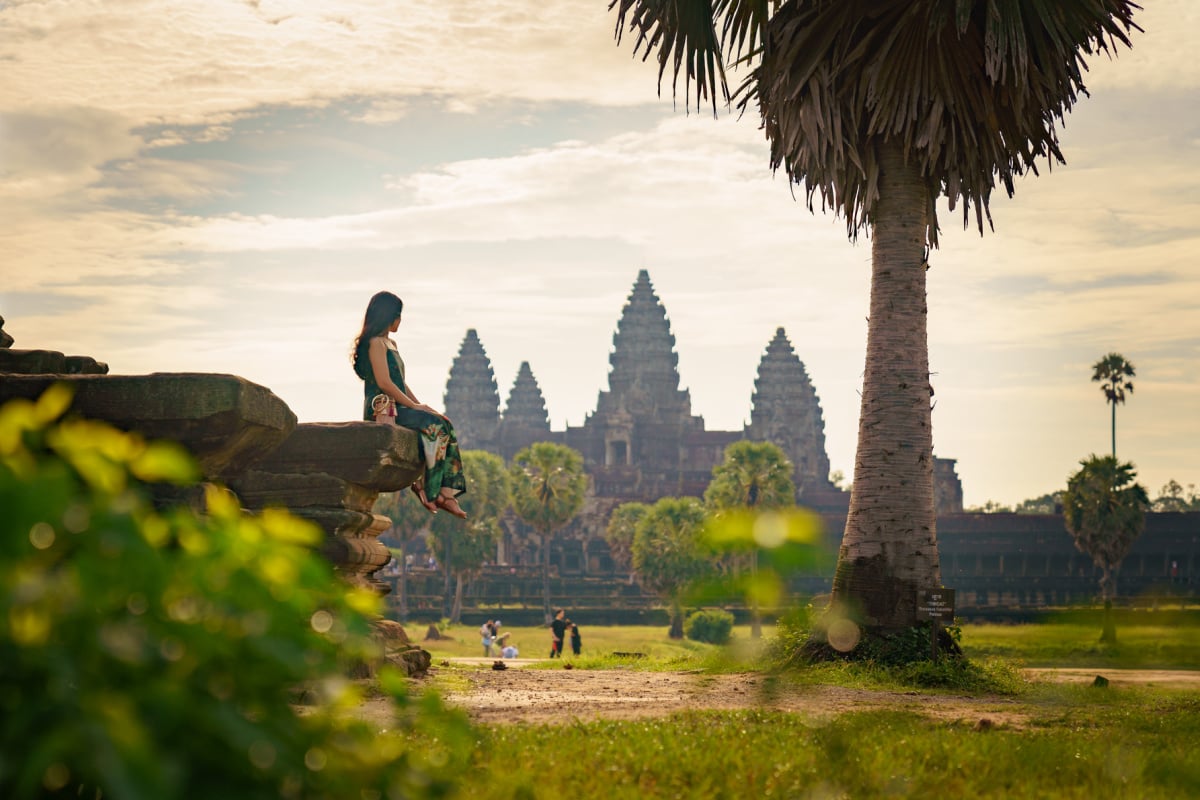
The country’s signature postcard picture, emblazoned on its own flag, the ruins of Angkor Wat draw millions of visitors every year.
Located in the peaceful resort town of Siam Reap, in the Northwest, it is an amalgamation of temples built during the Khmer Empire.
Some date as far back as 900 years, with a string of chedi towers and delicately-sculpted facades, and the best part is, unlike other historical sites in Bali or Phuket, Angkor Wat can still be enjoyed without the crowds, especially if you’re booking Viator’s small-group sunrise tour.
The even more off-path Angkor Thom, a short tuk-tuk ride away from Angkor Wat, is the site of the last and longest-surviving capital of the bygone Khmer Empire, settled in the 12th-century, and it features stunningly-preserved temples.
Best Bang For Your Buck
Not only is Cambodian culture fascinating, but the country itself is very budget-friendly:
There have been complaints from tourists that certain beach zones in Indonesia and Thailand are becoming increasingly expensive to visit as gentrification advances and luxury resorts start sealing off access to privileged beach locations.
They’re still pretty cheap to visit, but in terms of overall affordability, they’re not nearly as attractive to the budget-wary tourist as Cambodia is:
The four-star, oceanfront BeachWalk Hotel in Koh Rong Island costs $92 to book per night, and at this rate, we’re talking world-class service and exceptional catering; elsewhere in Phnom Penh, the M9 Kirirom Hotel costs a mere $33 nightly, offering sweeping views of the capital’s skyline.
In Siem Reap, the leading tourist destination in Cambodia, five-star listing The Villa by Metta will only set you back $95 per night, and if you’re really being economical, there are private double rooms (fan-only) for as cheap as $8 at the centrally-located Damnak Riverside Villa.
Food is remarkably cheap, too: whether you’re ordering their signature fish amok, or the flavorful Samlor Korkor soup, accompanied by pepper crab sides and a soft drink, it’s unlikely to cost you over $16, even at the priciest of mid-range restaurants catering to visiting foreigners.
In inexpensive eateries locals actually frequent, it can go as cheap as $4 for a meal.
Overall, the average daily cost of a one-trip to Cambodia for a single person is, believe it or not, a negligible $431 based on Budget Your Trip estimates (for a non-luxurious trip).
Flying to Cambodia may be relatively pricey for most Americans and Europeans, as it typically involves multi-stop flight routes, and availability is lower compared to tourism hotspots like Bali, but once there, you can live like a king… even on a shoestring budget.
Vini, our senior lead writer at Travel Off Path, has over 60+ countries under his belt (and currently weaving tales from Paris!), and a knack for turning off-the-beaten-path experiences into informative stories that will have you packing your bags.
Opinions expressed here are the author’s alone, not those of any bank, credit card issuer, hotel, airline, or other entity. This content has not been reviewed, approved or otherwise endorsed by any of the entities included within the post.
In Tokyo everyone is busy and rushing to get somewhere while people in Osaka feels more casual and relaxed.
Osaka feels like Tokyo’s little sister: younger, more exciting, and more carefree. And that’s why this incredible city is winning over travelers right now.
A Funky Party Playground
Japan is my favorite country in the world, and Osaka is its party playground.
Osaka is grittier and dirtier than Tokyo. All those rules that you’ll read about in your Japan Guidebook, like not eating on the street or watching the volume of your voice, will go right out of the window here!
Japanese people travel to Osaka to gamble, party, and generally let their hair down.
This is why you’ll find a huge concentration of bars, karaoke mega clubs, and gaming centers in the heart of the city.
If you really want to party, then Pure Osaka is the place to be.
It’s a nightclub in the heart of downtown Osaka and is popular with Japanese celebrities, influencers, and anyone else who wants to be in the right place at the right time.
My favorite way to party in Osaka is karaoke! Hire a private room and sing the night away. It’s so much fun and incredibly affordable, too.
The price will be determined by the size of the room you hire and how long you stay, but we paid less than $15 for our family of four.
Japan’s Kitchen
Osaka is referred to as the kitchen of Japan, and there’s no better place to be for foodies.
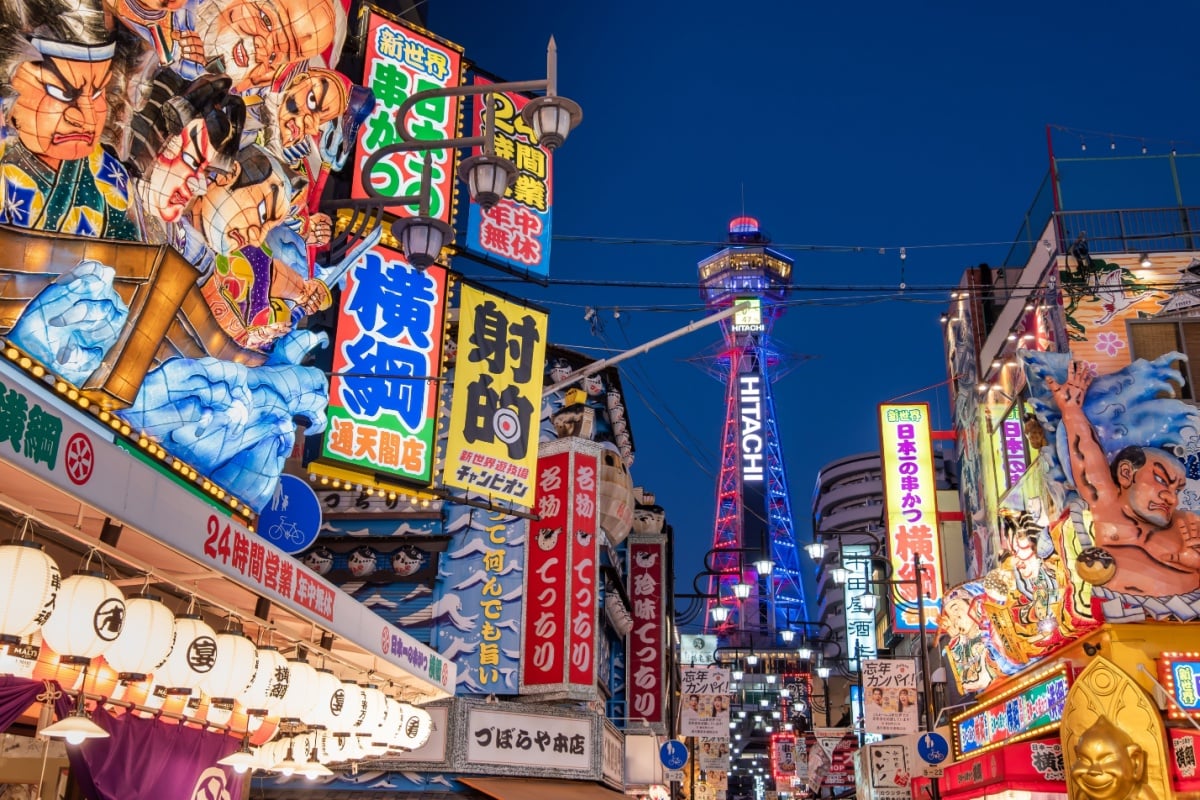
The streets along either side of the Dotonbori Canal, between the Dōtonboribashi Bridge and Nipponbashi Bridge are known simply as Dotonbori and this is the place to be if you want to eat in Osaka.
This is also the spot where you can take a photo with Osaka’s infamous mascot, The Running Man.
People travel from all over Japan and the world to eat in this district (so of course I had to join them!)
I recommend trying the okonomiyaki, which is a savory pancake filled with cabbage and onions and smothered in a spicy mayonnaise-style sauce.
Perhaps the most iconic thing to eat in Dotonbori is takoyaki. You’ll have probably seen these before: little rich, eggy dough balls filled with octopus served piping hot.
My husband loved these, but I definitely didn’t!
Osaka With Kids
As much as I would love to share personal stories about wild nights in Osaka nightclubs, I visited with two boys under the age of 10.
So my experience was a little bit different!
But I will say that Osaka is a great place for family travel. It might not seem like an obvious family destination, like Tokyo, but we loved every minute.
We challenged each other to eat unusual foods in Dotonbori, wandered through the Team Labs botanical gardens, and rode the HEP FIVE Ferris Wheel for incredible views of the city. Each carriage has Bluetooth, so you can pump out your own tunes as you ride, too!
If you’re traveling with kids (or if you’re a theme park or adrenaline junkie) then Osaka is also home to Universal Studios Japan.
This was the first Universal Studios to open a Super Nintendo World, and it’s also the largest.
This is a modern and interactive park where you can buy wristbands and use them to interact with the attractions in a way that will make you feel like you’re in a Mario video game (I tried it and regressed! I felt 15 again!)
You’ll also find Harry Potter World and the usual Universal offerings like Jurassic Park and Jaws here.
Osaka is also a great place to position yourself if you want to take day trips to other popular tourist destinations like Kyoto and Nara too. On the fastest train you can get to Kyoto from Osaka in around 20 minutes.
Culture In Osaka
Osaka has an undeserved reputation for being devoid of culture. We definitely didn’t find that to be the case!
Osaka Castle was once the largest castle in Japan, and it’s not only beautiful but also huge! It really dominates the surrounding skyline, and the gardens are a beautiful place to walk.
We also visited Ohatsu Tenjin, which is in the heart of the city, hidden behind a neon-lit restaurant district. This is the shrine to love. It is also the only place in Japan where I saw pink Tori gates!
There are actually two shrines here. The first is dedicated to the tragic story of two star-crossed lovers who met a terrible end, and the other is a shrine to children.
Volunteers wait at the entrance to the Shrine and will show you around and tell you the story of the star-crossed lovers (not those star-crossed lovers) in detail, and although it’s not an attraction in the guidebooks, it was a real highlight for us.
Getting To Osaka
When I last visited Osaka, I traveled from Tokyo Station to Shin Osaka Station via the bullet train.
This is an incredibly easy journey that only took 2.5 hours door to door.
I chose to buy a JR Pass: This is a train ticket valid for a certain period of time that you can use on any JR train across Japan.
This worked out as the best value option for me because I was also visiting nearby Nara and Kyoto as part of my trip.
The JR Pass costs 50,000 YEN ($316.00) for 7 days or 80,000 YEN ($506.00) for 14 days.
Osaka and Tokyo are incredibly well connected for a 2 center trip like this with a train leaving Tokyo station every 10 minutes.
If you don’t want to visit Tokyo, you can fly directly into Osaka instead. If you’re traveling from the U.S., you can fly nonstop into Kansai International Airport from San Francisco and Los Angeles.
United Airlines operates the route to San Francisco, while Japan Airlines operates the route to Los Angeles.
Tor has been writing for more than 20 years and has visited 25 countries (and counting!) She specializes in European and family travel and never says no to new adventures.
Opinions expressed here are the author’s alone, not those of any bank, credit card issuer, hotel, airline, or other entity. This content has not been reviewed, approved or otherwise endorsed by any of the entities included within the post.
10 million people flock to a vibrant coastal city in Texas, yet it still flies under the radar.
Often overshadowed by the Caribbean-esque beaches of Florida and even neighboring Gulf Shores, Texas is commonly seen viewed as a hootin’ hollerin’ good time in many of the state’s inland cities.
Texas may not have a seat at the table with the likes of Cancun and Los Cabos, but it more than holds its own in the South.
As a born and raised Texan, I can tell you to skip Galveston’s brown waters, but Corpus Christi is a pretty cool place to visit, even if you never step foot on the beach.
Tucked away from the hustle and bustle of Dallas, Houston, and Austin lies a laid-back getaway ready to surprise you this summer from nearby beautiful beaches, delicious fresh seafood, and a thriving arts scene.
No Need To Visit Florida! Head To The Coast Of Texas Instead
There’s no doubt about it, Florida draws a crowd.
From the immaculate city of Miami all the way around to the Florida panhandle, you will find hordes of tourists enjoying the sun and sand at some of America’s best beach locations.
However, when it comes to Texas, most of the millions of visitors are locals who are aware of Corpus Christi’s allure.
A lot of Texas is flat, nothing reminiscent of paradisal beaches. But once you reach the southernmost points of this vast state, you will find a treasure trove of hidden gems flying under the radar.
Stretching from Corpus Christi to the Mexican border, this region isn’t discussed enough as a top vacation destination, especially in summer.
Florida’s hidden gems are unveiled left and right, but it’s time to shine a light on Corpus and the surrounding area.
And to do that, it needs to be affordable, right?
Budget-Friendly Beaches: Corpus Christi‘s Affordable Stays
Unlike California, the South, including Florida, is typically viewed as an affordable beach destination.
This is true for most of the South – you know, Gulf Shores, Destin, Biloxi, and yes, Corpus Christi.
Airfare can be hard to track with so many factors changing day to day, but Corpus Christi is large enough for its own airport.
On the other hand, hotels are much easier to keep an eye on and rates typically stay in the same ballpark unless there’s a major event.
In other words, if Taylor Swift isn’t touring here, you’re solid!
Corpus has some awesome hotels to stay in overlooking the scenic bay, historic U.S.S. Lexington, and even scattered around nearby beach towns.
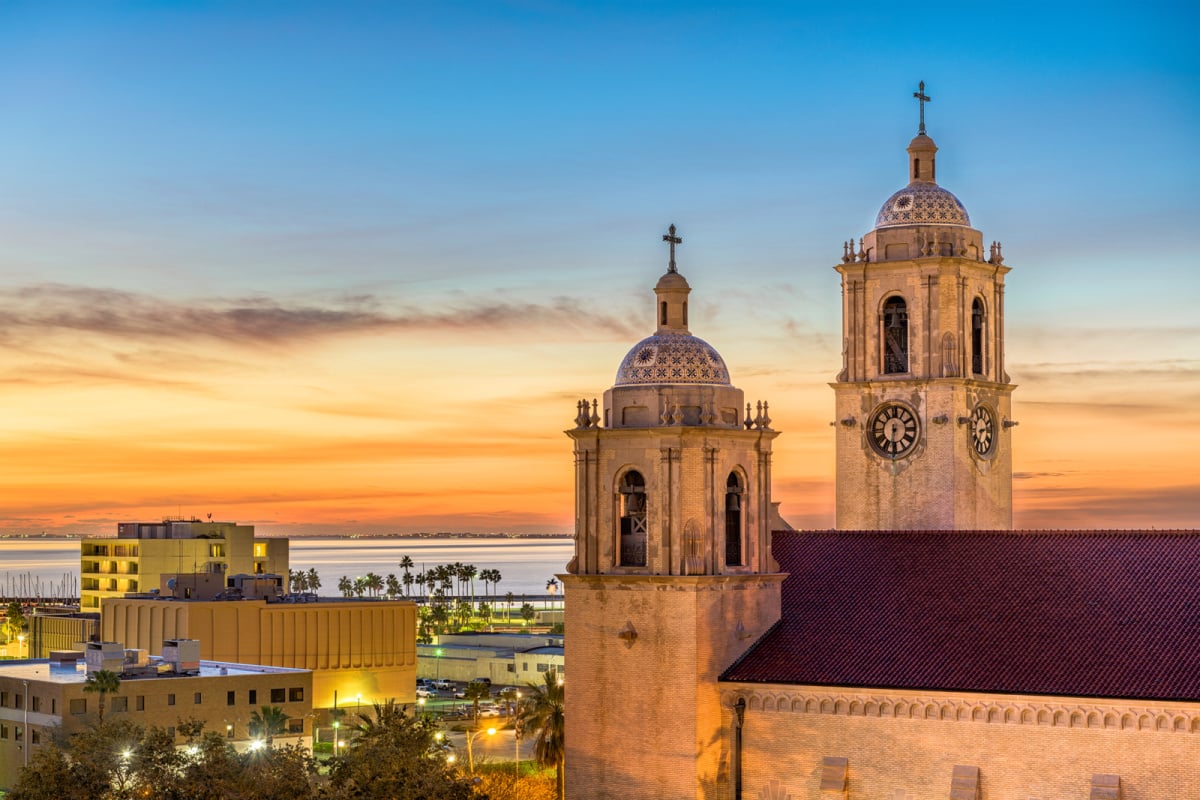
Downtown has undergone major renovations where you can easily explore the newfound booming arts scene and surprises like European-esque cathedrals from affordable name-brand hotels such as:
Formerly the main draw of Corpus were the many tributes to native singer Selina, but this delightful city is undoubtedly a beach destination.
Although, most would agree it’s best to go outside the city limits to level up in terms of quality.
In nearby Port Aransas, Padre Island, and Mustang Island, there are some great deals too such as:
Fresh Seafood Galore: Indulge In The ‘Catch Of The Day’
Anyone in Texas, or perhaps in the South for that matter, knows the cult-like following of Whataburger, founded right here in Corpus Christi.
But this seaside city’s foodie claim to fame isn’t fast food burgers; it’s fresh seafood straight from the source.
My personal favorite is beachfront restaurant Fajitaville, a unique blend of Jimmy Buffet’s Margaritaville vibes mixed with Tex-Mex dishes, but also serve Shrimp Cocktail and Ceviche for your seafood fix.
There are too many to name individually, but what you want to do is take advantage of the breezy patios while indulging in your ‘fresh catch’.
Even more so for dinner as the Texas heat winds down with epic sunset views.
According to TripAdvisor, few of the top-rated restaurants where you can do so:
Sam, our Lead Writer & Journalist based in San Diego has visited 30 countries and written over 400 articles with a focus on sharing his own travel experiences and shining a light on lesser-known gems.
Opinions expressed here are the author’s alone, not those of any bank, credit card issuer, hotel, airline, or other entity. This content has not been reviewed, approved or otherwise endorsed by any of the entities included within the post.
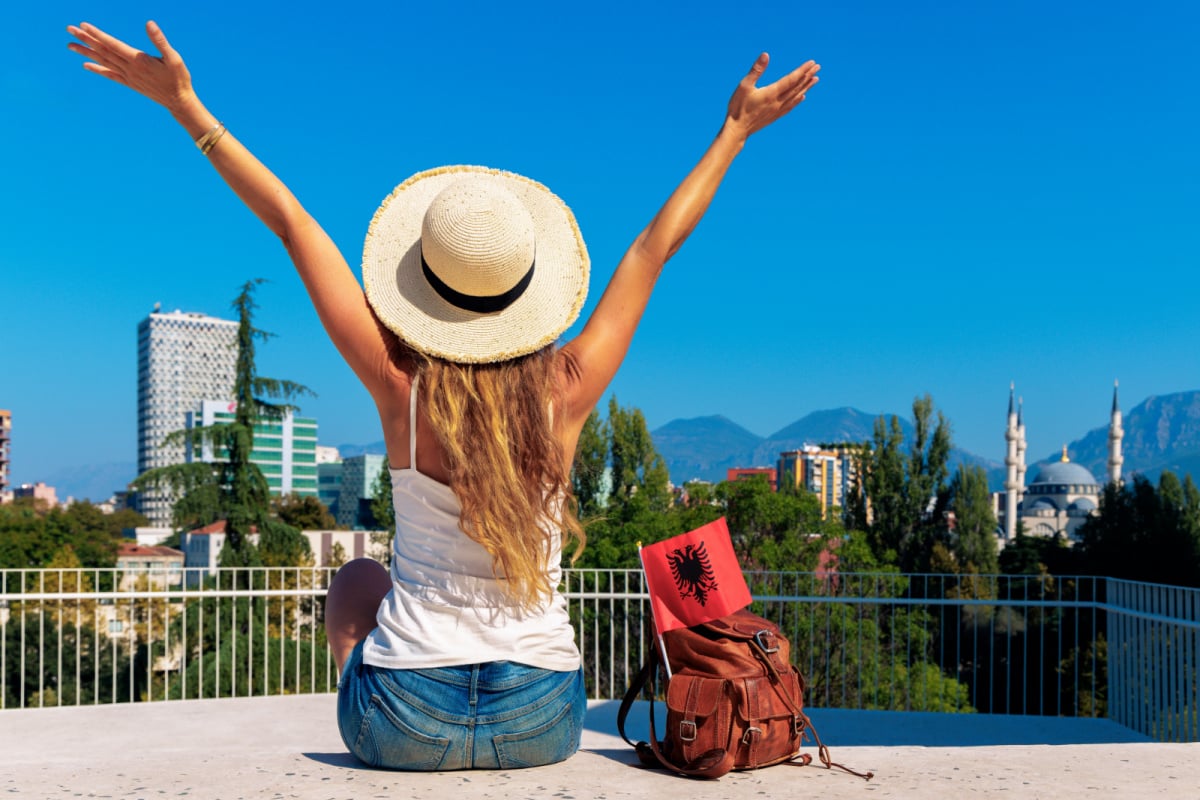
Little by little, Albania has turned into one of Europe’s most beloved budget hubs, but as more people than ever flock to its once-overlooked capital, it’s not that easy to find those amazing-value deals everyone keeps talking about.
And since Mastercard just came out with a report naming Tirana, a place that I’ve been calling home for more than I can remember, the third-fastest growing travel destination in the world, I figured it was time to come here and give you some insider tips on how to truly get the most out of the city.
Having A Set Itinerary With Plenty Of Pit Stops Is Essential
First things first: Tirana is busy, bigger than you think, and this time of year, scorching hot, too.
Throughout July and August, highs that reach the 35°C – 38°C (95°F – 100°F) range are pretty common, so while I know how much fun it is to be spontaneous and see where the day takes you, now it’s not the time to do that.
You’ll want to have a set itinerary with plenty of stops to rest and recharge – of course, keep a list of backup places to see along with their approximate locations on your phone so that even if there’s a change of plans, you don’t have to roam around clueless under the scorching summer heat.
Here’s what a first-time visitor’s day in Tirana can look like:
9:00 – 9:30 – Coffee and breakfast at a Mon Cheri, Mulliri i Vjetër, or Sophie Cafe (these are popular chains with locations all over the city)
9:45 – 10:45 – Visit Skanderbeg Square (great place to buy some souvenirs, take in the local architecture, and people-watch).
10:50 – 12:00 – Visit Bunk’Art 2 (located less than 5 minutes away from the square).
12:05 – 12:30 – Quick snack run at a nearby supermarket or byrektore (where you can find freshly-made bureks for less than $0.8 a piece).
12:35 – 13:45 – Visit Tirana Castle and the surrounding pedestrian area
14:00 – 15:30 – Lunch at Restaurant Era Blloku (traditional dishes at a reasonable price)
15:50 – 18:30 – Go back to your hotel/Airbnb and rest (it should’ve gotten too hot to walk around by this time and most of the city is pretty quiet).
18:45 – 20:30 – A Dajti Express ride that takes you right to the top of Dajti Mountain just in time to watch the sunset.
9:00 – 10:30 – Dinner back in the city either at Pizzeria Deliziosa (Italian), Sakura (Japanese), or Serendiville (Mexican).
Afterward, you can either call it a day or go for a drink in the famous Blloku neighborhood (more on that below).
You Can Get By On Less Than $60 A Day If You Play Your Cards Right
I recently saw a video of a tourist spending two days in Tirana for under $150, and I couldn’t help but think that you can definitely get by on even less.
As long as you keep your meals quick and cheap (e.g., get a $2.5 breakfast sandwich at Mulliri i Vjetër for breakfast, a $0.7 burek for lunch, and a $6 combo meal at OPA for dinner), you’re set up for success.
That Dajti Express ticket I just mentioned is just ~$2.2, entry to Bunk’art costs ~$7, and there are plenty of hotels in amazing locations that charge a little over $40.
Speaking of which…
Finding A Decent, Cheap Place To Stay Is Easier Than You’d Think
Cheap places to stay in the city are easy to come across, but my top tip would be to opt for an Airbnb rather than a traditional hotel – I know that they’re a bit controversial among U.S. travelers, but here, they offer excellent value.
It’s right in the city center, has rave reviews, and costs less than $50 a day.
Avoid Using Public Transport As Much As You Can, Especially During Peak Hours
Public transport in Tirana can be challenging to navigate even as a local, especially during the hot summer months when surviving a ride in traffic in an outdated, incredibly crowded bus can be a nightmare.
So my top tip would be to spend a bit more on a more centrally-located Airbnb (search for places close to Scanderbeg Square, Myslym Shyri, Blloku, 21 Dhjetori, Vasil Shanto, Komuna e Parisit, Rruga e Elbasanit, or Liqeni) and book a Green Taxi whenever you need to go somewhere you can’t walk to.
Take Advantage Of The Incredible Food Scene
Not only are traditional Albanian dishes truly as good as they say, but Tirana happens to be such a mix of cultures and influences that you’re guaranteed to find some great food no matter what type of cuisine you prefer.
I’ve already talked about some of my favorites.
OPA’s gyros, Deliziosa’s pizzas, Era’s fërgesë, Sakura’s sushi, and Cioccolatitaliani’s tiramisù are all must-tries.
If Your Schedule Allows, Plan A Day Trip To One Of The Many Amazing Nearby Cities
While there’s a lot to love about Tirana, Albania is a surprisingly diverse country with plenty more to take in beyond its capital.
So, if you have a day to spare, why not spend it catching some rays in Durrës (if you do go here, make sure to try the paella at 4 Stinët), taking in the fairytale-like views of Berat, or revel in the historical sites of Krujë?
Enjoying A Night Out Like A Local: Exploring Blloku
There’s nothing locals in Tirana love more than a night out in “Blloku,” by far the city’s liveliest, trendiest neighborhood.
Here, you’ll find everything from upscale restaurants and high-end boutiques to Irish pubs where you can get a specialty beer and a snack of choice for less than $10.
If that combo piqued your interest, make sure to check out Duff or Meduza – neither the atmosphere nor the food will disappoint.
Having explored over 20 countries in the last 3 years, Megi is committed to bringing the freshest, most up-to-date news and perspectives on the world’s most fascinating destinations.
Opinions expressed here are the author’s alone, not those of any bank, credit card issuer, hotel, airline, or other entity. This content has not been reviewed, approved or otherwise endorsed by any of the entities included within the post.
Medellin, Colombia has undergone quite the transformation in recent years. Once known for its rough reputation, the city has become a thriving destination for digital nomads and travelers searching for an affordable place to visit. Medellin is currently implementing new regulations to attract more responsible visitors and remote workers.
Once a haven for bachelor parties and all-night debauchery, the city’s Mayor, Federico Gutiérrez is transforming the tourism experience. Medellin is looking to attract visitors seeking cultural experiences and more professional digital nomads.
Over 1.4 million visitors arrived in Medellin last year, many of them American.
Medellin and Colombian immigration are now taking multiple steps to let bad behaving tourists know loud and clear, they are not welcome.
The Party Is Over
Famous for its nightlife, the district of El Poblado is filled with countless nightclubs and areas to let your hair down. Arriving in the area of Calle 10 which is known for the infamous Lleras Park, visitors will be greeted by dozens of police, security cameras and checkpoints to the well-known party areas.
The Mayor even went as far as setting a 1:00am temporary curfew on bars to tame the party. The curfew has since been lifted but the message is still loud and clear. “We have to recover control of this area — it is also very important for us to protect the community,” Federico Gutiérrez explained in a statement.
Security is strict everywhere including hotels, nightclubs and restaurants. The Mayor has banned all prostitution it in all popular tourism areas. Large billboards regarding sexual tourism and the exploitation of minors are posted warning tourists of the potential 25 years they could spend in prison. Signs are posted in all hotels and all guests are strictly checked for Identification.
Be Ready For Extra Questions & Background Checks On Arrival
Colombian authorities are now working with the US to catch unsavory tourists before they even enter the country. Arriving in at the International Airport just outside of Medellin, tourists are being asked extra questions about the purpose of their trip and those with criminal records could be turned back under the new ‘Angel Watch’ program.
US Government Warns Travelers To Avoid Dating Apps
Medellin, Colombia isn’t that place to go looking for the love of your life right now. Earlier this year the US government issued a warning that travelers are being targeted on dating apps, then drugged and robbed for their possessions. Even launching Tinder in Medellin, users are greeted with a warning that meeting people could be dangerous amid recent government warnings. The same warning goes for nightclubs and bars. Unsuspecting tourists are being targeted and drugged with Scopolamine.
28 tourists have died in Medellin so far in 2024. This includes homicides and natural causes.
According to Medellin Advisors, the homicide rate in Medellin in 2022 was 15 deaths per 100,000 inhabitants. This represents a 3% reduction compared to previous years and is lower than the national average in Colombia, which was 23 homicides per 100,000 inhabitants as of the end of 2022.
Colombia’s Digital Nomad Visa Just Got Harder
Colombia’s Digital Nomad visa has been a huge success for the country as thousands of travelers flocked to the country for affordable living and culture. When the program first launched, digital nomads were raving about how easy it was to be approved if you could provide the following:
Monthly earnings above $900 US
Health insurance that covers your stay in Colombia
Permission to work abroad
Now times have changed and message boards on Facebook and Reddit are filling up with questions regarding extra paperwork that is not the easiest to obtain. The Colombian government is permitted to require any additional information they see fit when reviewing applicants and they are doing just that for almost everyone now. New forms being asked for include:
Criminal FBI background checks with Apostille
Official proof of good standing for self-owned companies along with Apostille
Official proof of ownership for digital nomads that operate their own companies with Apostille
All Forms must be dated and issued within the past 60 days
Safety In Medellin
While the city has made huge improvements to overall safety travelers are advised to stick to well known tourist areas and avoid walking alone at night. For more information on safety, read the top 7 things travelers need to know when visiting Medellin.
Opinions expressed here are the author’s alone, not those of any bank, credit card issuer, hotel, airline, or other entity. This content has not been reviewed, approved or otherwise endorsed by any of the entities included within the post.
Nothing screams “summer” quite like a getaway to some stunning Caribbean island.
But as some of us grow tired of going to the same ol’ places over and over again and others try to avoid the insane tourist crowds at some of those all-time favorite hubs, there’s one destination with surprisingly untouched beaches that emerges as the region’s trendiest hotspot.
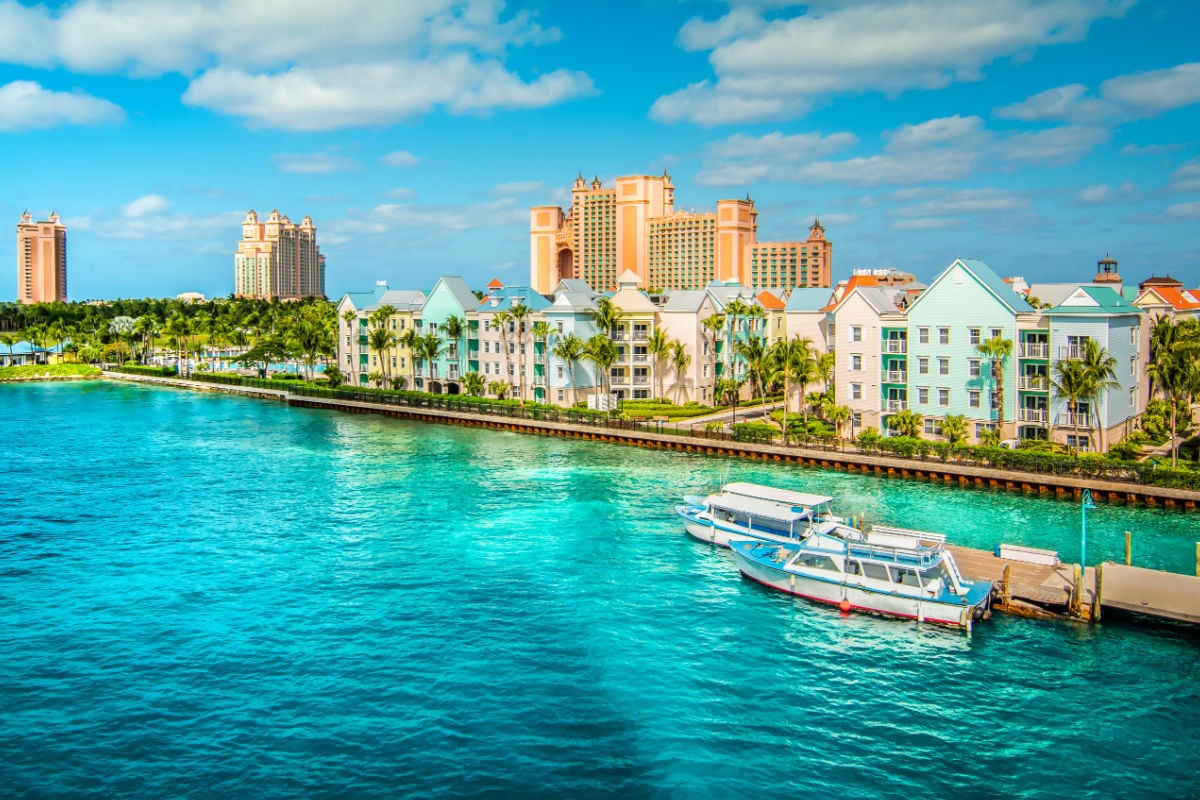
Paradise Island in the Bahamas welcomed close to 1.9 million visitors in the first four months of 2024 alone, which not only marks a 13.2% increase from the same time last year but also lets us know that an even more successful summer season lies ahead.
But what is it about this place that sets it apart from so many other Caribbean gems of its kind?
Stick around to find out.
Some Of The Caribbean’s Most Incredible Beaches
I know, I know – all Caribbean beaches are postcard-worthy, but it’s about time we accepted that some are simply more impressive than others.
You’ll see what I’m talking about as soon as you set foot on Paradise Island and catch a glimpse of the pristine white sand and translucent-looking waters.
While you could argue that the entire island is one big beach you won’t be able to get enough of, there are actually a couple of places that might be worth a visit more than others.
My personal top picks would be Cabbage, Paradise, and Colonial Beach – all different enough so that you don’t feel bored, but similar in what really matters – to-die-for views and the best waters you’ve ever swam in.
Flying To This Actual Paradise Has Never Been Easier
When people named this place, they weren’t kidding – it’s an actual real-life paradise!
And now, you can just hop on just about any plane and take it all in, thanks to the many airlines that have come out these past couple of years with new exciting routes to the Bahamian gem – well, to Nassau, but Paradise Island is just an 18-minute drive away from the Bahamian capital, so all the same.
Even budget-friendly carriers like Southwest and Jetblue have thrown their hats in the ring, making the once mysterious island reachable only by a lucky few more accessible than ever.
Not only have these companies helped expand scheduling opportunities, but they’ve also had a noticeable impact in lowering airfare prices from competitor airlines, too – as we speak, some tickets are priced at a little over $200.
Here, You’ll Find Everything From Budget-Friendly Stays To Indulgent All-Inclusive Resorts
I want to preface this by saying that there aren’t any really cheap hotels in Paradise Island, at least not ones widely available to the public, so the use of “budget-friendly” here is a bit subjective.
For example, one of the best lower-cost stays on the island is Comfort Suites, whose rooms start at $370 per night.
Still, consider the fact that these are all big-ish resorts where you pay for more than just your stay, it all balances itself out; and when it comes to iconic places like the Atlantis Paradise you pay for the service and overall atmosphere, too.
The good news is that if your budget doesn’t allow for any of that, you can always book something cheaper ($80-$120 a night) near Nassau and drive back and forth whenever you want to take advantage of Paradise Island’s unreal beaches – I guarantee it’ll be worth it.
A Surprisingly Lively Hub With Lots To Explore
At just 1.1 sq mi (2.8 km2), you’d expect Paradise Island to be a tree-filled piece of land when nothing really happens.
Luckily, that couldn’t be further from the truth.
The island’s event calendar is jam-packed this summer, and depending on what you’re into, you can take your pick between culinary festivals, basketball matches, wine tastings, gallery openings, and monastery excursions.
However, if being among nature is your top priority this summer, Paradise Island is still a fantastic choice.
Go diving in the Blue Hole, take on kayaking, try a boat tour or fishing charter, or enjoy a scenic hike – the choice is yours.
Having explored over 20 countries in the last 3 years, Megi is committed to bringing the freshest, most up-to-date news and perspectives on the world’s most fascinating destinations.
Opinions expressed here are the author’s alone, not those of any bank, credit card issuer, hotel, airline, or other entity. This content has not been reviewed, approved or otherwise endorsed by any of the entities included within the post.
We’ve laid out the top 4 below, which one is your favorite?
4. Milan
Milan ranked as the 4th most cultural destination in Europe as well as the most cultural spot in Italy. It is noteworthy that Milan ranked above Rome in every single category within the Slasher study.
Milan was ranked highly for its film and media sites, comedy and entertainment venues, and parks and recreational spaces.
Some of the best cultural attractions not to miss in Milan include Duomo di Milano, which is Milan’s cathedral and is considered the city’s most important landmark.
You can also see da Vinci’s famous mural of The Last Supper in Milan, as well as explore the Triennale di Milano which is a museum of art and design in the Parco Sempione in Milan.
For art lovers, there are few cities better to explore in Europe. Milan deserves a spot on your bucket list!
3. Amsterdam
Amsterdam can be famously overcrowded, especially during the summer months, but that doesn’t stop it being the 3rd most cultural city in Europe. And for good reason.
Amsterdam boasts the highest number of live performance spaces of any city in Europe. And there are 94 sites of cultural interest per 100,000 residents in the city, which is the 2nd highest in Europe.
Some of the cultural highlights of a trip to Amsterdam include The Rembrandt House Museum which is located in a beautiful townhouse in the center of the city.
The Anne Frank House is also a fascinating location which gives great insight into life in the city during the Second World War.
The best way to see Amsterdam, especially if you’re short on time, is via its canals.
Amsterdam is one of my favorite European cities because, despite its reputation for debauchery, it is one of the most child-friendly European capitals.
From beautiful urban parks to fascinating canal cruises and child-focused museums, I’ve been visiting Amsterdam since I was a child and I love returning to explore all of its beautiful culture with my own kids.
2. Barcelona
The 2nd most cultural destination Europe this summer is Barcelona. And it may be an unpopular opinion, but I think it’s one of the best times to visit the city.
Barcelona in the summer is hot and sticky. But if you go off the beaten track then it can also be one of the quietest times to explore.
Many natives of the city leave during the summer months, so the streets are empty and local shops and restaurants are closed.
This means you can wander the back streets alone, which is something almost unheard of in such an overcrowded destination.
Some of the best cultural attractions to explore in Barcelona, no matter what the time of year, include the vibrant Park Güell, the Picasso Museum, and the Barcelona Museum of Contemporary Art
And it would be impossible to talk about cultural attractions in Barcelona without mentioning Gaudi’s Sagrada Família. This stunningly beautiful basilica is finally set for completion in 2026, but that doesn’t mean it’s not an amazing place to visit now.
1. Paris
It is probably no surprise that Europe’s most popular cultural destination is Paris.
Paris is known as the City of Light and has been a source of inspiration for more novels, films, and other creative works than I can count.
Paris is home to the highest number of parks and recreational spaces per 100,000 people in the whole of Europe with an incredible 1,238 green spaces to explore.
And the city also ranked highly for its number of live performance spaces.
Of course, the city’s most iconic attraction is the Eiffel Tower.
But other cultural hubs in Paris that are worth exploring include the Grand Palais des Champs-Élysées,the grandiose Petit Palace, and The Hôtel des Invalides. This is a particularly fascinating attraction if you have an interest in military history.
My favorite cultural attraction in Paris is the city’s museum of modern art (Musée d’Art Moderne de Paris). The exterior of the building is imposing, but it’s the art inside that has me going back again and again.
Tor has been writing for more than 20 years and has visited 25 countries (and counting!) She specializes in European and family travel and never says no to new adventures.
Opinions expressed here are the author’s alone, not those of any bank, credit card issuer, hotel, airline, or other entity. This content has not been reviewed, approved or otherwise endorsed by any of the entities included within the post.
There’s no better place to spend the summer than the Caribbean.
Unfortunately, it seems like too many of us agree on that; and our favorite hotspots have gotten so chaotic and overcrowded that it’s impossible not to turn our eyes elsewhere for a quieter, more authentically Caribbean experience.
That’s exactly why more and more travelers are favoring some once-overlooked destinations right now – case in point, Grenada and the U.S. Virgin Islands.
So if you, too, have grown tired of the insatiable tourist crowds that have overtaken one of the most gorgeous regions in the world, this is why these two places should jump right to the top of your must-see list this summer:
Untouched Beaches
Let’s start with the one thing we’re probably all here for – the beaches.
You don’t need me to tell you that the Caribbean has some of the most breathtaking shores on Earth, but the places you’ll find on these islands are truly next-level.
Starting with Grenada, Anse Beach, La Sagesse, and Morne Rouge (easily my favorite hidden nook in the entire country), are some of the most pristine-looking places you’ll ever come across, and even in more classically touristy places like Anse, you’ll still get a whiff of that laid-back island feel.
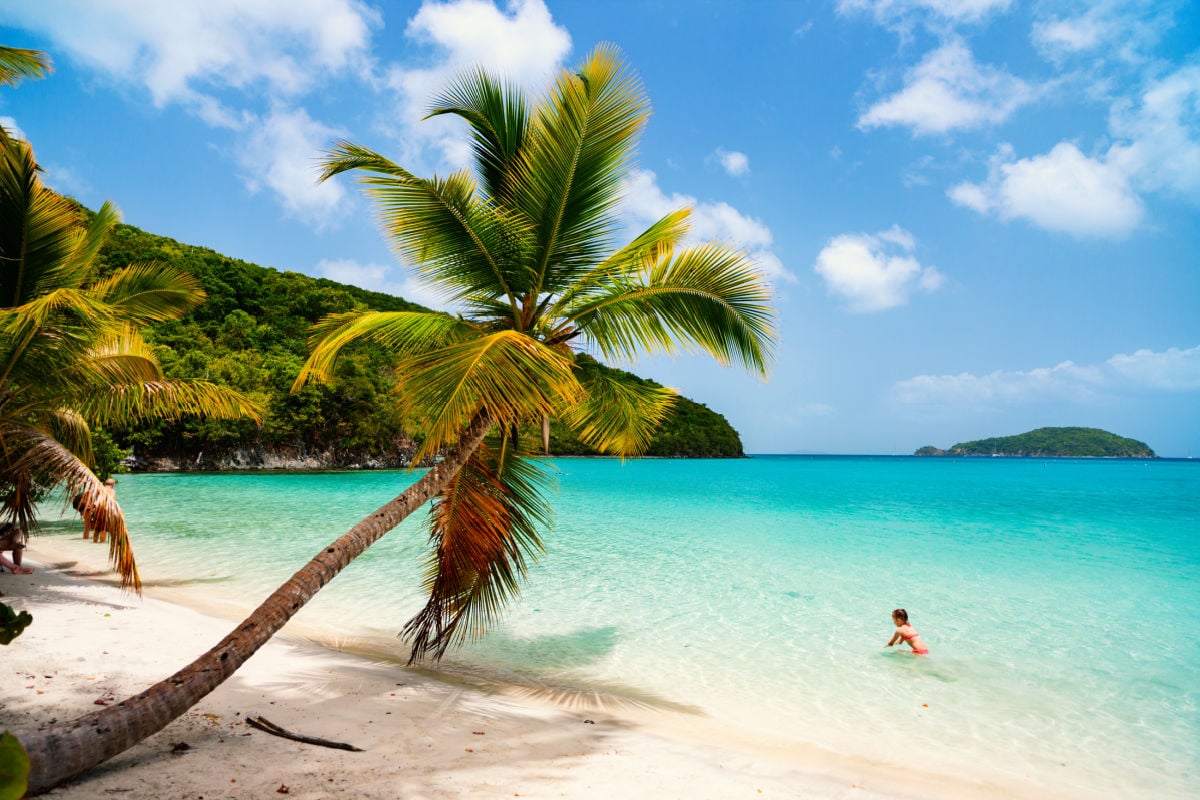
The U.S. Virgin Islands (consisting of St. Thomas, St. John, and St. Croix) aren’t too far behind in terms of scenery, either.
Editors Note: I actually lived in Grenada for half a year and used to walk my dog Nala (pictured above) on Morne Rouge beach every morning. If you get there early you MIGHT see 4 people there and it is one of the most beautiful beaches I have ever been on in my opinion.
You’ve probably already heard of the famously gorgeous Trunk Bay and Magens Bay, and while they’re both definitely worth a visit, don’t forget to add less commercial places like Cinnamon Bay, Secret Harbour Beach, and Buck Island to your list of must-see beaches, too.
Taking In That Authentic Caribbean Charm Crowd-Free
Another reason why I’d recommend prioritizing these lesser-known places during your visit to either Grenada or the U.S. Virgin Islands is that here, you’ll get exactly what you were hoping for – untouched nature and the ultimate uncrowded Caribbean experience.
Even when you’re not at the beach, you can spend your days exploring Grenada’s picturesque capital (St. Georges), its famous National Museum housed in a former French barracks, as well as its iconic Belmont Estate.
Traveling to the U.S. Virgin Islands instead?
Fill your itinerary with shopping sprees in St. Thomas, excursions to the Blackbeard’s Castle, visits to the Annaberg Sugar Plantation, and historically immersive walks at St. Croix’s Estate Whim Plantation Museum.
Whichever You Choose, You’re Guaranteed A Good Time
The great thing about all of these islands is that while peaceful and quiet, they’re never boring.
Take Grenada, for example.
Between all the diving sessions, submerged sculpture expeditions, excellent hiking opportunities, and fun nights out at the local beach bars, you’re guaranteed a summer holiday that you’ll remember for a lifetime.
Similarly, those vacationing in St. Croix, St. John, or St. Thomas this season (why not all three?) can look forward to a trip filled with fun nights out, mountaintop restaurants, sunset boat rides, and endless shopping sprees – I don’t know about you, but that sounds like the perfect summer to me.
You’re Guaranteed Great Food, Too
It doesn’t matter if you’re a foodie or not, how well you eat is a major part of how much you get to enjoy a vacation, and luckily for you, you won’t have to worry about sub-par food in either of these destinations.
Tell me, can the food in a place nicknamed “the spice isle” be anything but mind-blowing?
Grenada doesn’t just produce its insane array of spices, though, the locals have learned to use them in some of the most unique, flavorful ways you could ever imagine.
Just try their famous Oil Down, a hearty one-pot meal made with a fresh protein of choice, breadfruit, callaloo, and veggies all simmered in coconut milk and spices, preferably over an open flame, and get back to me – and don’t forget to wash it all down with a bottle of rum right from the River Antoine Distillery.
The people over on the U.S. Virgin Islands have a similarly vibrant culinary background.
Here, you’ll get to indulge in some of the most iconic dishes in all of the Caribbean, including Kallaloo, Fungi, Johnnycake, and Red Grout, just to name a few.
Having explored over 20 countries in the last 3 years, Megi is committed to bringing the freshest, most up-to-date news and perspectives on the world’s most fascinating destinations.
Opinions expressed here are the author’s alone, not those of any bank, credit card issuer, hotel, airline, or other entity. This content has not been reviewed, approved or otherwise endorsed by any of the entities included within the post.