There’s a whole manner of different motivations, but surely one of the simplest and most important reasons is simply to have fun.
Of course, fun is something that’s hard to define and something that everyone has a different concept of, which is why Wallet Hub has surveyed 180 different U.S. cities on no fewer than 65 different metrics to find out which are generally the most fun to spend time in.
The metrics included everything from the number of attractions to the average price of food and drink.
It even focused on how many movie theatres, beer gardens, music venues, or coffee shops there are per capita – really making sure to capture as many different things as possible that can be considered fun.
At the end of it all, these 8 cities came out as the most fun to visit in all of America:
1. Las Vegas, Nevada
It probably shouldn’t be a surprise that Vegas came out on top in a ranking of how fun places are, should it?
‘Sin City’ is well-known for being an adult playground thanks to its famous casinos and infamous nightlife.
It was the top-ranking city in this study in terms of overall entertainment and recreation rank, and nightlife and parties rank – it also scored well in terms of the number of restaurants and festivals it has per capita.
Despite its adult entertainment reputation, there are still some family-friendly attractions in Vegas, such as Hershey’s Chocolate World, the Shark Reef Aquarium, and many theme park rides at various hotels.
2. Orlando, Florida
And while Las Vegas is probably America’s best adult city for fun, Orlando could be its best family city for fun.
Of course, there is much more to Orlando than just the theme parks, but they help make it a very inviting place to go with children.
Like Vegas, Orlando is not always what it seems, it actually has a pretty vibrant nightlife with some fantastic bars and clubs, so there is plenty to entertain adults too.
It also ranked as the cheapest city in the top 8 of this list.
3. Miami, Florida
Combining fantastic nightlife with epic beaches and a wonderful art scene, it’s probably no surprise to see Miami in this list either.
The city has been having a record-breaking year for tourism and is a brilliant launchpad to visit other places in Florida (via train) or even the Caribbean (via cruise).
Any place where you go straight from the beach to the bar sounds fun to us.
Great entertainment can be found at theatres such as the Alliance and the Atlanta Magic Theatre, while there is also an excellent zoo, the chance to ride cable cars at nearby Stone Mountain Park, and even the Chick-fil-A College Football Hall of Fame, making it truly a city with something for everyone.
5. San Francisco, California
San Francisco came out as the most expensive city in the top 8 of this study, but it’s definitely still a fun place to be, even if it might hit your wallet a little harder.
Entertainment can be found in the shape of the zoo, the Museum of 3D Illusions, Golden Gate Park, a tour of Alcatraz, or even taking up a hike on one of the many trails surrounding the city.
Winter is a fantastic time to visit to witness America’s tallest living Christmas tree, the decorated coastal inns of Monterey County, or even to try ice skating at one of several seasonal rinks.
6. New Orleans, Louisiana
One of the cities that could rival Las Vegas as the best nightlife location in America, New Orleans is a place for those who love live music, entertainment, and partying.
The city is a high-energy place and has a great schedule of festivals, carnivals, and events that keep it rocking right throughout the year.
Perhaps a little slower-paced in terms of nightlife than some others on this list, Austin has a small-town feel and a proximity to beautiful nature that makes it an ideal place to blow away the cobwebs.
From its famous shows to its widely varied range of museums, Chicago will keep you entertained, whether you’re traveling solo, with a partner, or with family.
Despite being a large city, many of its iconic sights like the Bean or Navy Pier are walkable or easy to get to via its affordable public transport network (I still can’t get over that it’s only $5 to get to the city from the airport via the city via the blue line train!).
With national governments easing border curbs for digital nomads and some going as far as competing for the title of nomad hotspot while launching migration routes unique to the category, you may feel as if there are (far too many) options at hand already.
Which so many digital nomad residency permits available and multiple countries relaxing visa requirements, which are some of the best destinations for remote workers?
Why Affordability And Culture Are Important
As part of the community ourselves, when picking a new base, we normally take into account factors like affordability and the cultural aspect.
For instance, though it is an intriguing metropolis and a microcosm for the East-West divide, Hong Kong wouldn’t rank high on our list of nomad-friendly spots due to its strict residency rules, expensive cost of living, and eroding democracy.
The same applies to a number of European and Latin American destinations: who wouldn’t love to live in charming, heart-of-Europe Paris? French cuisine is an immaterial world heritage, the architecture is stupendously beautiful, and the vibes romantic, immaculate.
Or then, tropical Rio de Janeiro, where glitzy beachfront apartment blocks are interspersed with Atlantic forest and bounded by an azure Atlantic, and consumer prices are extremely low compared to much of the Northern hemisphere?
The downsides to those? Paris is one of the most expensive nomad destinations worldwide, where you are expected to earn on average US$5,307 monthly to make a decent living, and as for Rio, it is not exactly tourist-friendly by any standards, with crime being rampant.
Where, then, should you go that ticks all of these boxes?
It has a vast cultural offer and wide range of attractions
Good to great nomad infrastructure
Easy to relocate to
Safety levels are either ok or high
We have 5 picks:
Mexico
The most obvious pick for American nomads, Mexico’s biggest appeal is its diversity, as the country combines elements of the Hispanic World, owing to its background of Spanish colonization and much earlier pre-Columbian civilizations.
Cities like Mexico City (CDMX) offer long-term residents a plethora of coworking spaces and artsy trendy districts to explore; at the same time, those choosing to relocate to the Mayan Riviera instead get to live by the seaside and within driving distance of a number of prominent historical landmarks.
Other up-and-coming destinations include the state of Baja California Sur, on the Mexican Pacific, a favorite among nomads looking for a more peaceful, quieter alternative to the bustling Caribbean coast, and the inland historic cities of Guanajuato and Guadalajara.
Away from the major tourist hotspots like Cancun and Los Cabos, Mexico is also relatively affordable to live in, with NomadList estimating monthly expenses to be US$2,314, though these can vary wildly depending on city/state.
Finally, Mexican cities are not any more dangerous than the average large urban center in the United States, with the Mexican President claiming himself it is actually ‘safer’, and authorities allow most foreigners to remain in the national territory for up to six months visa-free.
Georgia
The rising star of the digital nomad scene, Georgia (the country) is a lesser-known sovereign state in the Caucasus, an ambiguous territory nestled between Europe’s far East and Western Asia.
Historically, it’s always been a poorer country, having remained under Russian control for much of its modern existence, but following its full transition into a democracy in the early nineties and pursuit of closer ties to Europe, it started becoming more attractive to potential migrants.
As a land, Georgia is simply mesmerizing, being bounded by the majestic snow-capped Caucasus peaks to the North, marking the natural boundary between Europe and Asia, straddling the shores of the warm, bright-blue, misleadingly-titled Black Sea, and boasting a verdant, fertile hinterland.
Not only is Georgian nature a force to be reckoned with, but its national capital, the charming Tbilisi, has been recently dubbed the Eurasian Capital for Digital Nomads, owing to its vast selection of nomad-friendly cafes and coworking centers, the friendliness of locals, and high affordability.
Staying in Old Town Tbilisi, the prettiest district, jam-packed with medieval structures and colorful heritage mansions, remote workers looking to live comfortably by themselves in a well-equipped, centrally-located flat and treat themselves to nice dinners are expected to budget only US$2,217 monthly.
Other nomad ‘centers’ include the seaside resort of Batumi, where prices are roughly the same, and the equally fascinating ancient city of Kutaisi.
Fortunately for nomads, they can stay in Georgia for up to one year visa-free, though they are automatically liable for income tax after 183 days.
Thailand
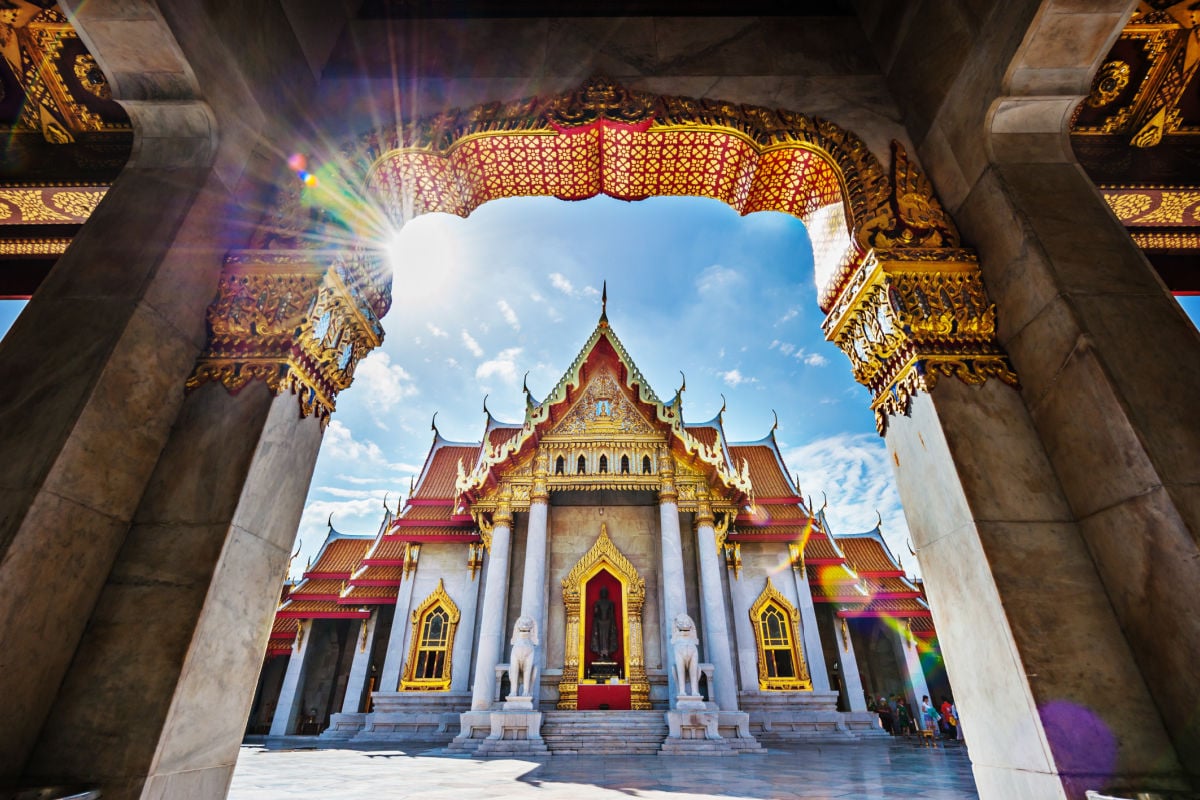
Over in Southeast Asia, Thailand is one of the world’s fastest-growing nomad destinations for a reason – well, several reasons.
First of all, it is warm all year long, and other than the rainy season – which is a temporary nuisance more than anything – it will certainly help you beat those winter blues in the Northeastern U.S. or Canada, whether you’re based in Bangkok or a tropical island on the Gulf of Thailand.
Speaking of Bangkok, you should probably know it is ranked number one for Digital Nomad Cities on NomadList, with a more-than-perfect score of 5.08/5.
This means you are extremely likely to approve of Thailand as a destination in your capacity as a remote worker.
Thailand is extremely affordable in general, and Bangkok itself, supposedly one of the most expensive destinations in the country – it is, after all, the sprawling capital and a major financial hub – will only set you back by around US$1,419 a month.
Further North, in the increasingly popular Chiang Mai, a UNESCO-listed historic city famous for its protective, moated Old Town, an average meal will cost you on average a negligible US$4.18, and you may find kerbside foot and shoulder massagists for a very reasonable US$7.04.
Prices may double in seaside resorts like Phuket Island and Pattaya, as they cater mostly to vacationers and short-term visitors with money to splurge, but all in all, Thailand remains a remarkable budget ‘workcation’ by any standards.
Recently, Thailand has announced the rollout of a Digital Nomad Visa, promising to make relocation and long-term residence easier for those interested.
Turkiye
Sitting atop the natural border between Europe and Asia, Turkiye (formerly spelled Turkey) has always been Europe’s go-to summer and winter sun destination.
Since it reopened its borders, however, it’s been attracting a new niche of visitors, and they are unlikely to leave anytime soon.
Digital nomads love Turkiye for its gorgeous Aegean and Eastern Mediterranean coastlines, dotted with quaint seaside villages, exciting city breaks, natural wealth, and of course, its low cost of living. In case you weren’t aware, it is one of the cheapest nomad destinations in Eurasia.
This is due to the depreciation of the Turkish lira, which has been getting progressively weaker against an ultra-valued dollar and giving Americans more purchasing power when residing in Turkiye for prolonged periods of time.
Some of the best cities to be a nomad in are Istanbul, the country’s most multicultural metropolis and an ancient gem we have written extensively about here; Antalya, a large city on the Mediterranean shoreline; Ankara, Turkiye’s vibrant inland capital; and Trabzon, the gateway to the Black Sea.
Regrettably, Turkiye has more restrictive visa rules than other countries on this list, requiring U.S. passport holders to apply for an eVisa ahead of visiting, but once approved, which is the likely outcome in practically 100% of cases, they can stay for 3 months as short-term tourists.
Those wishing to reside in Turkiye for longer must apply for a Residence Permit on other grounds, as Turkiye does not yet have a Digital Nomad Visa in place.
In general, authorities are not opposed to migration from the U.S. or Europe, which makes obtaining a long-term visa easier.
Albania
The final entry on this list, Albania was Europe’s underdog nation and its last hidden gem before it went viral all over TikTok last year, and tourists started flooding into its Adriatic beaches from all over the world, but that doesn’t mean it has been spoiled – not yet.
Unlike a majority of European countries, Albania is neither in the European Union nor the Schengen Zone.
This means they apply their own visa rules, and the Immigration Authority is not at all strict when it comes to long-term stays, especially when it’s Americans.
U.S. citizens can stay in Albania for a whole year visa-free, and you may be wondering why you should exactly, seeing it’s an unheard-of small Balkan nation.
If this article doesn’t inspire you to pack your bags and get the next plane out to Tirana, let us just reiterate that Albania is one of the most beautiful yet overlooked European countries.
It has 476 km of pristine coastline, hugged by the teal-colored waters of the Adriatic, a subdivision of the Mediterranean, crowd-free, fairytale UNESCO-listed towns dating back centuries, such as Berat and Gjirokaster, a quirky, unusually-modern national capital in Tirana, and a flavorful ethnic cuisine.
Tirana itself is a self-proclaimed European Capital for Digital Nomads, with its numerous internet cafes and low consumer prices.
It even hosted a nomad conference last year, which we attended ourselves and have been able to evaluate, firsthand, the infrastructure put in place for the community.
On average, you can live a pretty decent life in Albania, earning US$2,010 monthly, as verified by NomadList, and quite frankly, considering the amazing culture, breathtaking coastal views, and temperate climate – the Albanian coast is generally warmer than other European destinations in winter – we’re not sure we’d ever want to leave.
There’s nothing quite like the freedom and exhilaration that traveling alone can give you.
You’re the boss, you can do your own thing, and quite often you can do it for less compared to traveling with friends or partners.
The hardest part can actually be choosing where to go – but if you’re thinking of taking a solo trip to Europe next year, then a recent list compiled by airline Wizz Air of the best solo travel destinations on this continent may be helpful.
Wizz collated data from reviews by solo travelers on TripAdvisor to come up with a list of the top five destinations in Europe that are most loved.
Containing a great mix of popular cities and one or two surprises, this list could make a great solo travel itinerary for spring or summer 2024.
This coastal treasure has just the right mix of beautiful beaches and fascinating history and culture – perfect for exploring at your own pace, which is one of the great pleasures of traveling solo.
Croatia is widely regarded as one of the world’s safest countries, ranking number 14 on the most recent Global Peace Index.
It will also be a great year to visit in 2024, with major events such as the Mediterranean Film Festival and the celebration of Saint Sveti Duje set to take place.
Nestled in the heart of the country’s beautiful Algarve region, Faro is the gateway to some of the most breathtaking beaches in all of Europe – not to mention generally favorable weather all year round.
The city has a fantastic party vibe and is home to major festivals such as Afro Nation (June) and Festival F (September).
A city jam-packed with famous icons such as the Blue Mosque and Grand Bazaar as well as many hidden gems too – Istanbul is somewhere that can entertain a solo traveler for many days.
Istanbul has long been a place where the cultures of Europe and Asia collide, so it’s a great place to enjoy some unique sights, sounds, and smells as you wonder through its maze of cobbled streets.
While it can be a frantic place, it’s generally safe for solo travelers provided you exercise normal precautions – it also has great, affordable public transport and street food.
Florence, Italy
Set in the heart of the Tuscany region, Florence is easily one of my favorite cities in Europe.
A beautiful riverside city that is defined by its artistic importance and as being one of the main epicenters of the renaissance, Florence is a place that will move you.
The headline acts of this incredible Italian show are no doubt the Cathedral and its ‘Duomo’, the famous David statue by Michelangelo, as well as the unrivaled Uffizi Museum and the Ponte Vecchio bridge.
But what makes it great for solo travelers is the quaint independent cafes and bars, the excellent nightlife, and the uniquely beautiful apartments you can stay in right at the heart of the city.
Digital nomads are back to Latin America in droves now that countries in the region have normalized entry rules and even launched migration paths that are unique to the category.
LatAm (as it is commonly called in the short form) is openly challenging Europe and Southeast Asia for the title of number one nomad hotspot, and one nation in particular is playing a key role in advancing that cause.
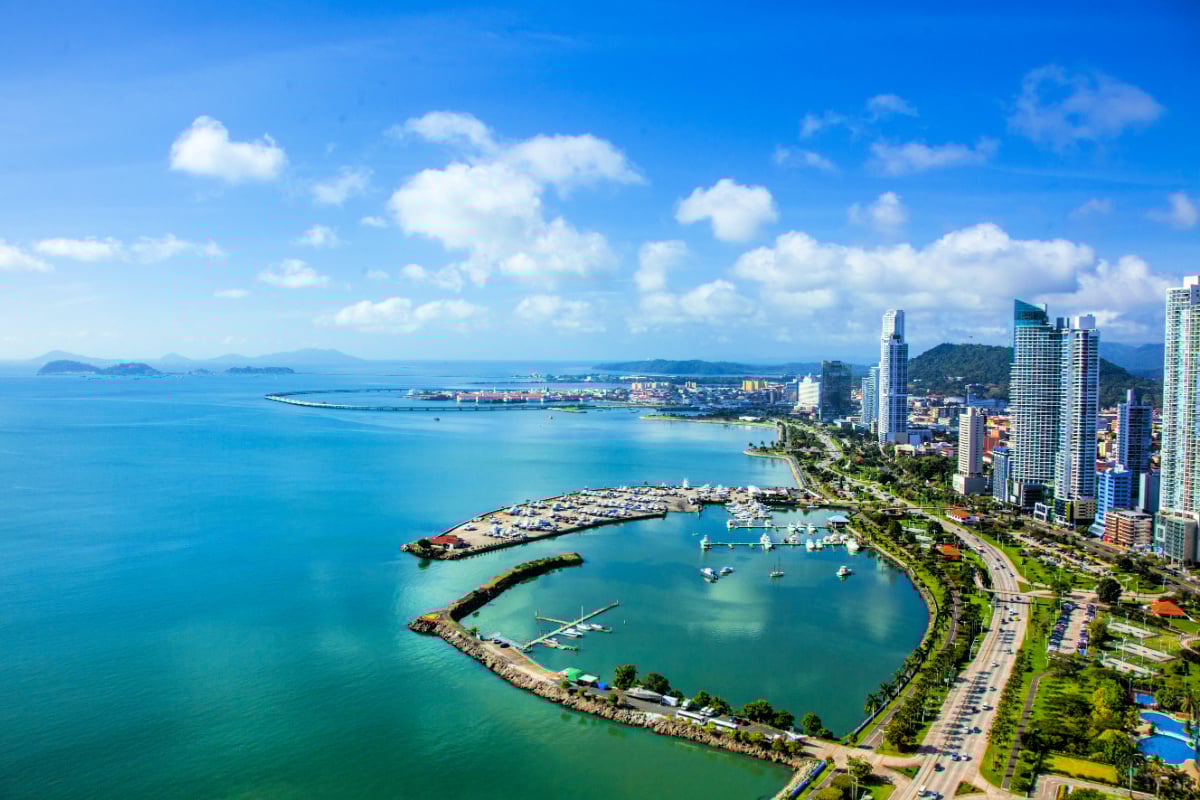
Sitting on the Central American isthmus and bordering Costa Rica and Colombia, Panama is simply the perfect digital nomad destination, and these are 4 of the main reasons why:
Stunning Natural Scenery
Though they are definitely not a homogenous bunch, and there are subcategories within the group, it’s a fact most digital nomads favor warmer, tropical climates when picking a new country to call home, even if temporarily.
That is because a majority of them hail from big cities in naturally colder countries in the Northern Hemisphere, where the nature may not be as abundant, and winters can be particularly harsh.
In a sense, it’s no surprise as many as 80,000 Americans are now residing in Panama, as the country is widely known for its wealth of natural resources and tropical weather.
With coastlines on both the Caribbean and Pacific Seas and its year-round warm climate, it is an incredibly attractive destination not only for tourists and retiring expats but especially for remote workers looking for a higher quality of life.
Outside Panama City, the country’s capital and largest city, nomads will find a plethora of protected reserves, jungle parks, and as much as 1,771 miles of combined coastline (both Caribbean and Pacific) dotted with quaint seaside resort towns.
If it’s a slow-paced life you’re craving, and the sight of tall coconut trees lining soft sands bounded by the azure Pacific has been in your dreams lately, you should definitely consider relocating to Bocas del Toro, one of the best-equipped towns in Colon, a paradisaical island surrounded by teal-colored waters.
Famous for its nomad-friendly facilities, including internet cafes and long-term rentals, and unspoiled nature, it is one of Panama’s most highly sought-after nomad hubs.
Better Infrastructure Than Most Central American Countries
The better-than-average infrastructure is yet another reason why nomads are enamored with Panama.
It’s no secret they tend to gravitate towards countries where there is already a well-established expat community, as this helps with integration, and the presence of foreigners and the influx of dollars is known to boost development in any given city.
Panama City is easily one of the most nomad-friendly capitals in Latin America:
It is large, but not overwhelmingly like São Paulo; as a regional hub for business, it boasts an entrepreneurial vein and a plethora of coworking spots, much like Mexico City; the Quality of Life score is ‘good’, as reported by NomadList, and safety levels are ‘okay’.
Other popular nomad centers in Panama include Santiago, one of the country’s most traditional and best-preserved colonial cities, home to a landmark Spanish-built cathedral, Colón, a medium-sized city straddling the Caribbean coast and fast-growing financial hub, and third-largest city, Tocumen.
Outside urban zones, internet connectivity may not be as strong, and nomad infrastructure may be lacking, especially in the heart of the jungle, but it still doesn’t take away from the fact that Panamanian cities are very well-prepared to host remote workers.
Panama Is Relatively Affordable
Affordability is yet another important factor behind Panama’s soaring popularity with nomads.
A majority of long-term travelers belonging to this category is budget-conscious, meaning they carefully pick destinations based on affordability and how far their hard-earned dollars can stretch, as in most cases, they are freelance writers used to planning their financial year well in advance.
In this regard, Panama is incredibly cheap for American and European nomads, with large cities like the capital requiring month-long residents to spend on average $2,575 per month, including food, accommodation, and leisure activities.
It is certainly not as cheap as neighboring Colombia, where development is not as pronounced, and thus, the cost of living is a lot lower, but seeing that the average nomad makes anywhere between $50,000 and $80,000 a year, Panama is a pretty safe bet at a temporary relocation that will not break the bank.
As reported by Numbeo, every time you eat a meal at an inexpensive restaurant will set you back by only $10, on average, though mid-range to high-end restaurants can bill you as much as $60.
Additionally, rent is up to 38.2% lower than the average Western city, like Paris or London.
Panama Is Open To Digital Nomads
Finally, Panama has been leading travel trends in the nomad community lately due to its friendly policies towards long-term residents and digital nomads.
Historically, the nation has always been open to foreign investment, serving as the natural gateway between South and North America and thus benefitting from cross-continental trade and the influx of foreign capital.
It’s never been exactly difficult to obtain permanent residency in Panama, but when it comes to digital nomads specifically, they benefit from their own ‘Short Term Remote Worker‘ visa, enabling them to remain in the territory for up to 9 months initially.
Before that period expires, they are invited to renew their visa for an additional 9 months, without leaving the territory, if they so wish, with each application costing a very reasonable $300.
Every first application must be made through a Panamanian Embassy or Consulate in the applicant’s home country or current country of residence, and only those who meet the minimum annual income of around $36,000 can qualify.
Being a digital nomad in Panama under the Short Term Remote Worker visa may make you eligible for some form of tax exemption.
If the bureaucracy sounds discouraging to you, you can still relocate to Panama for up to 180 days, or 6 months, as a tourist, if you hold American citizenship.
While some travelers are counting the days until they can indulge in a cup of hot cocoa and take in the views of snow-laced peaks, others are dreaming of a warm beachy escape that’ll provide a much-needed break from the plummeting temperatures back home.
If that sounds like you, there’s one particular European island that should be moved right to the top of your travel bucket list.
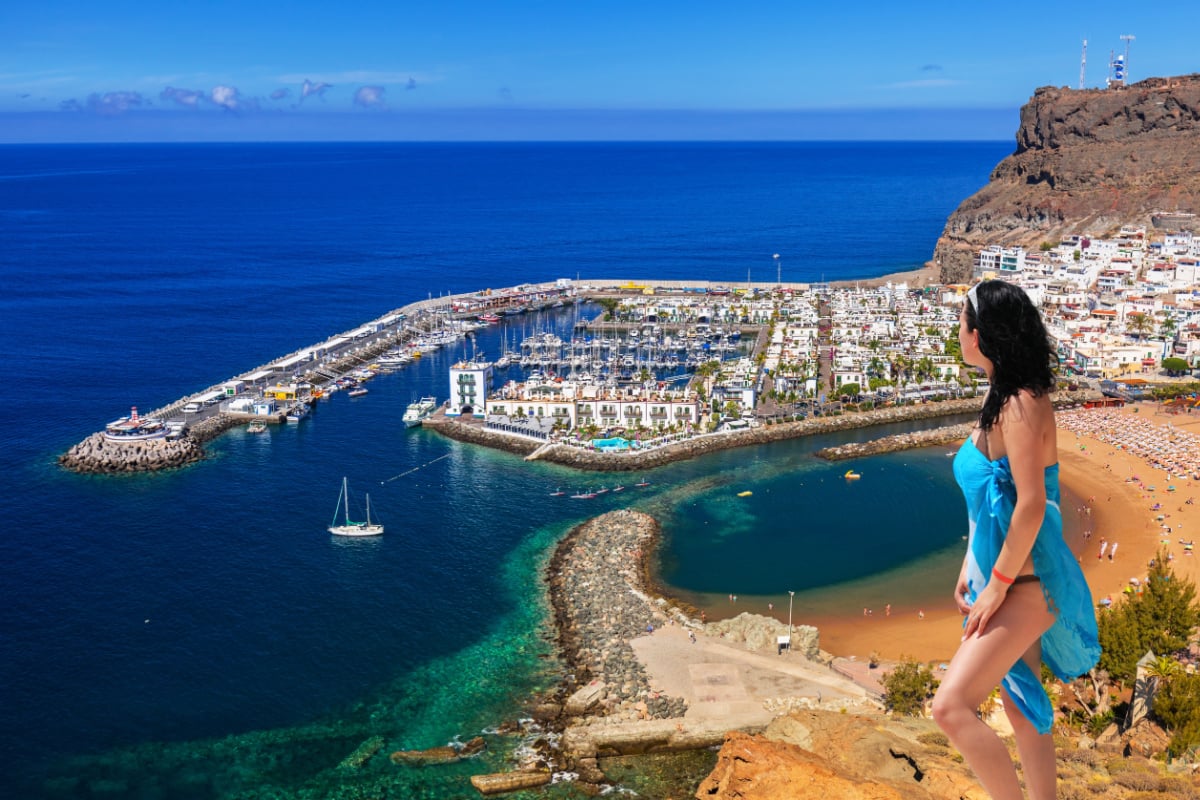
Gran Canaria, part of Spain’s iconic Canary Islands archipelago, is one of the region’s crown jewels, beckoning travelers with open arms and sunny shores despite winter being just a hop, skip, and jump away.
So, if you’re still on the search for your next travel destination, what you’ll find below might just persuade you to head off to Gran Canaria this winter.
Dreamy Weather
One of the most defining features that sets Gran Canaria apart from other winter getaway destinations across Europe is its dreamy weather that continues to keep travelers warm even this time of year.
According to TUI, the UK’s largest tour operator, average temperatures on the island are expected to hover around 20°C (68°F), which, while not quite ideal for sunbathing, are perfect for pleasant sightseeing excursions where you won’t have to wear anything more than a light t-shirt.
However, beach enthusiasts will be delighted to learn that swimming is still very much on the table, as the part of the Atlantic that meets the island’s shores is remarkably warm, even as air temperatures start to drop.
This upcoming month, water temperatures are expected to average 21° C (70°F), making it the best time to go in for a pleasant yet refreshing swim.
Moreover, predictions speak of a 63% chance of a perfect sunny day this December and a 37% chance of seeing a few clouds, so chances are that you’ll get to soak under the Spanish sun more than once during your time here.
So Much To See
One of the main reasons why you’ll come to appreciate the pleasant weather in Gran Canaria is the fact that you’ll have a long itinerary to complete before you leave the island.
The region is a microcosm of diverse landscapes and ecosystems, and the island’s interior, a Unesco Biosphere Reserve, is home to the iconic Roque Nublo, a towering volcanic rock formation whose panoramic views are not to be missed.
On the other hand, those looking to get a tan this winter can still take advantage of Gran Canaria’s 146-mile-long (236 km) coastline.
Here, you’ll find the idyllic gold-sanded beaches of Playa del Ingles and Maspalomas, where you can not only take in the spectacular views but also explore the buzzing underwater world of the region.
An Event-Filled Winter
If hiking or diving isn’t really your thing, you can always stick to the cultural events that take place all over the island this time of year.
Attend the Christmas Eve concert at Santa Ana Square, experience the exhilarating music played at the concerts on Las Canteras Beach, walk through the old town of Las Palmas, or visit one of the many Christmas Markets scattered across Gran Canaria – the choices are virtually endless.
Exceptional Cuisine
Though this might be expected when visiting Southern Europe, it’s still worth mentioning – Gran Canaria’s culinary scene is a marvel waiting to be explored.
Drawing inspiration from Spanish, African, and Latin American cuisines, the bold, flavorful dishes served by local tavernas serve as a testament to the island’s diverse influences throughout its past.
From fresh seafood caught right off the coast to arrugadas, mojo sauces, and the renowned Canarian black pig, the region promises to take every palate through the journey of a lifetime.
A Gateway To Other Idyllic Islands
If you’re looking to indulge in an island-hopping experience this upcoming winter, setting up base in Gran Canaria is one of the best choices you can make.
Whether you want to explore the volcanic landscapes of Lanzarote or the lush forests of La Gomera, the island serves as the perfect gateway to an exciting, well-rounded exploration of the entire Canary archipelago.
New Year’s Eve is one of the most overrated holidays. Your favorite bars are too crowded and too expensive. There’s too much pressure to make great plans and have the night of your life.
You could call it a night and stay home in your pajamas. Or you could use it as an opportunity to travel, explore, and have the night of your life!
Some of my favorite New Year’s Eves are ones I spend surrounded by strangers on the other side of the world.
These are the top 6 destinations to spend New Year’s Eve this year:
1. New York, New York
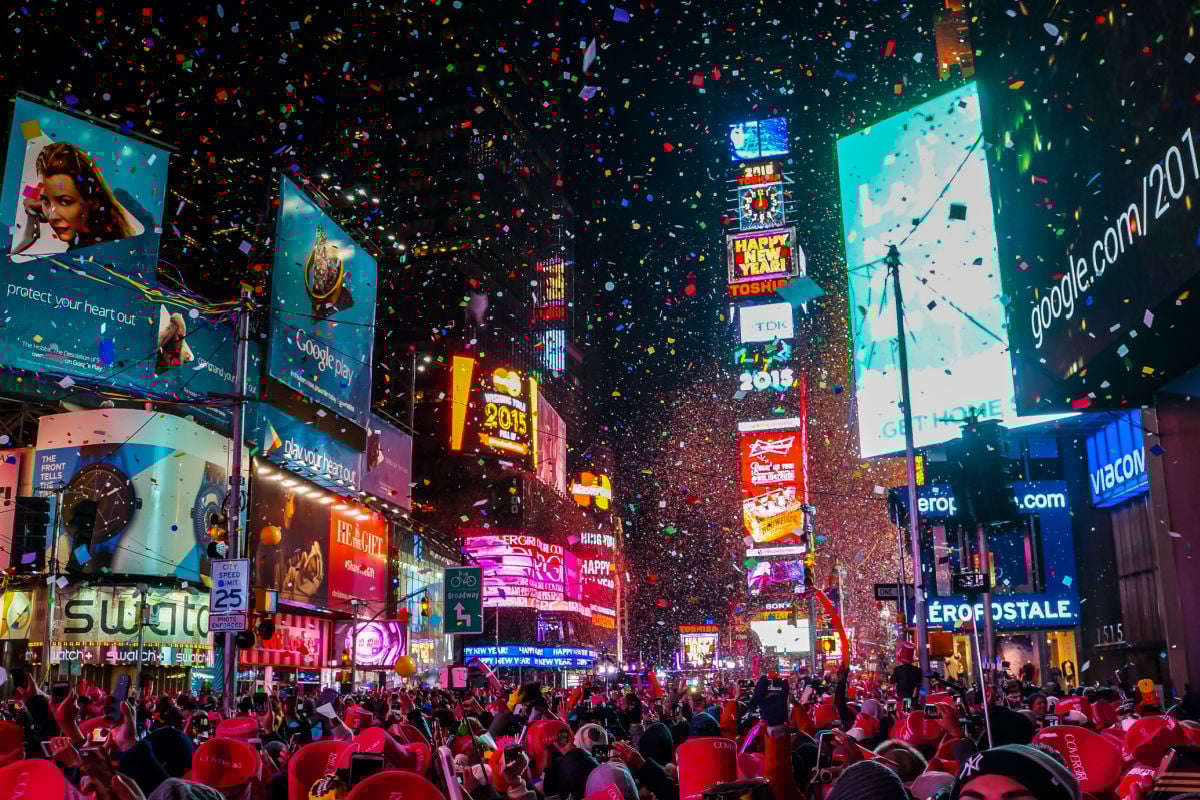
Watching the ball drop in Times Square, New York, is so iconic that people from all over the U.S. and even around the world tune in to watch it happen. Why not enjoy the experience in person?
Spending New Year in New York is an experience that’s on many people’s bucket lists as long as you don’t mind braving the cold. Up to 100,000 people attend the New Year’s Ball Drop event each year and as an added bonus access is free.
Happy woman tourist taking photo picture with tablet in New York City, Manhattan, Times Square. Girl traveler taking selfie joyful and happy smiling. Multiethnic Asian Caucasian woman in her 20s.
Outside of this focal point event the bars and clubs of New York City are a great place to spend the New Year if you want to party.
Other fun informal traditions to celebrate the city include seeing in the New Year on the Brooklyn Bridge, watching the fireworks that are launched in Central Park, or joining the New York Road Runners Club to start the New Year with a 4 mile run!
2. Cancun, Mexico
Cancun is a fun and exciting place to spend New Year’s Eve, especially if you want to celebrate in the sunshine.
All of the bars are decorated with bright and colorful decorations to get you into the party spirit and there are glitzy and glamorous parties hosted all over the region particularly in the hotels and all-inclusive resorts. Cancun might not be the cheapest place to celebrate New Year’s Eve but you are guaranteed a wild celebration.
If you want to put on your glad rags and dance all night long then Cancun is one of the best places to see in the new year.
Stop at midnight to eat 12 grapes as quickly as possible – this is a longstanding tradition where each grape represents an upcoming month and will bring you luck. Most bars and clubs will offer grapes to their guests on New Year’s Eve.
3. Edinburgh, Scotland
Perhaps the world’s most famous New Year’s celebration is in Edinburgh where Hogmanay is celebrated with gusto. The whole city pours into the streets to celebrate, to join hands to sing ‘Auld Lang Syne’, and to enjoy the fireworks.
Edinburgh has been awarded the best outdoor celebration of New Year’s Eve in the world and the party lasts for around 3 days. Start by joining the torchlight procession through the city on December 30 to warm up for the epic street party on the 31st.
If you’re not feeling delicate after a few too many malt whiskeys the night before then on January 1 you can enjoy other public entertainment options such as a traditional ceildh.
The Discovery Channel listed spending the new year in Edinburgh as one of its ‘Top 25 World Travel Experiences’, and it is one of the best and most exciting New Year’s Eves I have ever experienced.
4. Rio De Janeiro, Brazil
The 2 million people that head to Rio De Janeiro for New Year’s Eve every year can’t be wrong! It’s summertime in Brazil so if you want to see in the New Year with sunshine this is a great place to be.
Live music is set up on Copacabana beach with performances starting from 8pm. Because the Copacabana beach is so big there are several stages set up along the shore meaning there’s plenty of room for everyone and you can see the hottest Brazillian singers and bands.
It is traditional to wear white for New Year’s Eve in Brazil. This is a tradition that originated in rituals to seek peace and spiritual purification. And it’s a great way to show off your tan.
Many people also wear brightly colored underwear because it’s thought to be lucky. Red to bring you love or yellow to bring you money.
5. Reykjavik, Iceland
Iceland is known as the land of fire and ice thanks to its dramatic contrasts. No time of year shows this more clearly than New Year’s Eve.
Set against a freezing cold background of snow and ice, New Year’s Eve is celebrated in Iceland with fireworks and huge community bonfires.
In Reykjavik you will find a Nordic bonfire in the heart of the city and fireworks displays like no other. In the greater Reykjavik area, there are usually around fifteen bonfires and these really stand out against the cold night sky.
Watch the bonfires as the fireworks explode in the sky then find a cozy bar to retreat to. And because bars in Reykjavik don’t have entry fees it’s a great place for bar hopping too!
New Year’s Eve is considered a night of magic and mystery in Icelandic folklore – a night when the elves come out to play. This makes it a fun place for a lighthearted night of celebration.
6. Sydney, Australia
Ring in the new year early by heading to Sydney where you can enjoy the largest and most technologically advanced New Year’s Eve fireworks display in the world.
Sydney celebrates twice with spectacular 9pm and midnight fireworks displays, ideal for Cinderellas that can’t stay up past midnight!
Sydney’s New Year’s Eve fireworks are watched by more than one million people around the harbor, plus another one billion people on television around the globe. It is a bucket list experience to see this incredible display in person.
It doesn’t have a world-famous resort strip home to all the popular brands in hospitality, like Cancun.
Its wellness scene is nowhere near as developed, if it is existing at all, as Los Cabos.
It does not even have a beach, like fellow Jalisco city Puerto Vallarta.
Yet, for some reason, Guadalajara is smashing tourism records in 2023, with international arrival figures up 18.3% against the already record-breaking 2022, which remains, to this date, Mexico’s best-performing year: so far this year, as many as 4.2 million foreign visitors have landed there.
This may have left some wondering what it is about this inland metropolis that is captivating a growing number of tourists.
Here are 5 reasons why:
Incredibly Historical
Though it is a poorly-disseminated fact among Americans, Guadalajara is, in fact, one of the cultural capitals of Mexico, with a historical relevance comparable to that of Mexico City, having been founded as early as 1532 and having played a key role in the Mexican War of Independence.
It’s here where the country’s first revolutionary government convened, and throughout its History, Guadalajara has hosted migrants not only from Spain, but all over Europe and further afield, drawn to its 18th-century development boom, and they have left a profound mark on the city.
This is evidenced in a diverse demographic, mixed-origin cuisine, and inestimable cultural wealth, offering culture seekers plenty to sample and marvel at, especially if lounging by a pool all week is not their idea of fun.
Beautiful Architecture
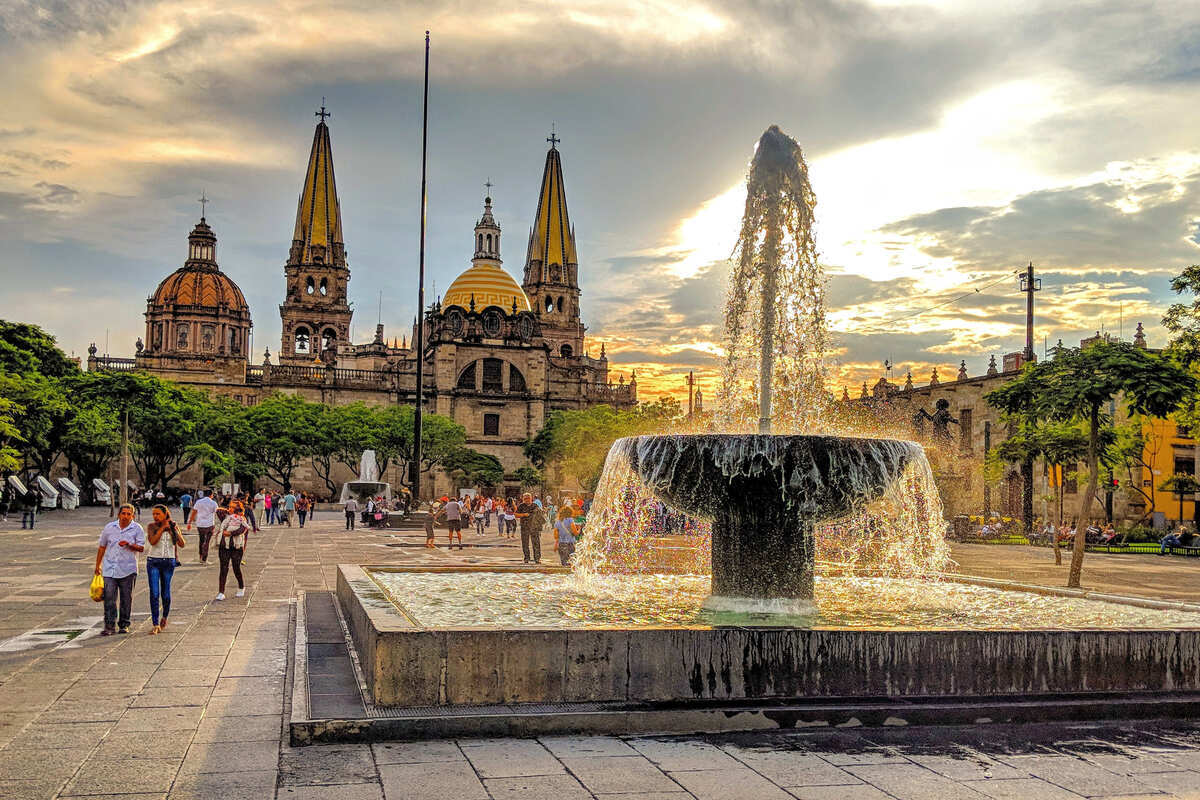
With its accumulated centuries of History, it goes without saying Guadalajara has a plethora of landmarks, some of which rank among the most iconic in Mexico: think Guadalajara Cathedral, an imposing 16th-century Catholic effort, or Hospicio Cabañas.
Guadalajara’s number one point of interest and a UNESCO World Heritage Site, Cabañas once housed one of the largest orphanages and hospitals in the Americas; still, it is only the tip of a monumental iceberg, as it only takes a short stroll around the historic center to be awe-struck.
From the Expiatorio Church to the Neoclassical Teatro Degollado to San Juan de Dios Market, the largest indoor market South of the United States, and all the winding streets lined by brightly-painted colonial houses that connect them, Guadalajara truly has an endless supply of manmade wonders.
Affordable Prices
Over the years, Mexico went from being an affordable tropical destination to one of the most luxurious, and if you’re headed to the Mexican Caribbean or even coastal Jalisco, you should definitely plan on spending a few thousand dollars during your stay, be it on costly dining or expensive resorts.
In Guadalajara, on the other hand, as it does not sit on the overdeveloped coast, consumer prices are within a ‘normal’ range: it is by no means the cheapest destination in Latin America, but tourists can get by on $46 per day for meals, or $791 for the whole week, all included.
The cost of living for locals is even lower, and if you’re visiting for a longer period (e.g. you’re a digital nomad) you should expect to live comfortably off of $1,918 per month; naturally, prices are higher for short-term visitors as they normally spend more on experiences, cultural attractions, and hotels.
Great Connectivity
One of the reasons why Guadalajara is seeing this uptick in foreign arrivals, particularly from the United States, is the great connectivity between U.S. hubs and the Jalisco capital: it is among the best-connected international airports in inland Mexico.
You can fly to Guadalajara from at least 20 departure points across America, including Atlanta, Chicago, Dallas/Fort Worth, Los Angeles, New York, and San Francisco, and more keep getting added: next year, Detroit will receive its inaugural Guadalajara-bound Aeroméxico Connect flights.
Guadalajara also hosts nonstop service from Vancouver, in Canada and a Transatlantic link to Madrid, in Spain, making it one of a handful of non-coastal resort destinations in Mexico that are open to foreign markets outside the United States.
One Of The Top Destinations In Jalisco
Finally, it was recently crowned one of top destinations for tourists, both domestic and international, in the state of Jalisco, alongside Puerto Vallarta, proving they are not exactly intra-state competitors, but actually complement each other.
While Vallarta, and its neighboring Riviera Nayarit, in the bordering state, caters mostly to beachgoers and high-end travelers seeking relaxation and some fun in the sun, Guadalajara’s tourism sector is mainly geared towards culture and immersive experiences.
That’s not to say museums and historical buildings are the city’s only attractions:
Tourists will often visit it for the family-run restaurants and delectable cuisine, as it is the birthplace of the ‘drowned’ sandwich and tejuino, an indigenous corn beverage, shopping, and the exciting nightlife of Chapultepec Avenue.
Mexico is currently one of the most popular international destinations, having hosted over 30 million visitors last year alone and is poised for additional growth in 2023, and though Cancun and Los Cabos lead booking trends, they’re not the only ones behind this resounding success.
Now more than ever, travelers are seeking more unique, authentic experiences when going abroad, particularly Americans who, for the best part of the previous three years, were forced to be confined at home – unsurprisingly, interest in lesser-known, off-path sites has surged.
In Mexico, it’s the unsung ‘Magical Cities’ that are helping boost recovery, and five in particular are being touted as the next tourist hotspots:
Tequisquiapan
The first one is Tequisquiapan, a traditional municipality in the state of Queretaro, in Central Mexico, famous for its cobblestone streets, rustic buildings with wooden windowsills and wrought iron ornaments, and its colonial legacy.
As reported by Cronica earlier this year, Tequisquiapan is one of Mexico’s criminally underrated wellness hubs, as besides the historical weight it carries as a 300-year-old settlement, it boasts a high number of resort spas and natural hot springs.
For decades now, Mexicans have been driving all the way here from neighboring Queretaro City and as far as Mexico City for weekend escapades, yet Tequisquiapan is only now reaching its global breakthrough.
At this year’s International Tourism Fait (FITUR), held in Madrid, it took home the award for best ‘Wellness Tourism Paradise‘: there are as many as 1,200 hotel rooms available, over 1,000 AirBnB stays, and more than 250 eateries where visitors can experiment with traditional Mexican cuisine.
Tequila
Though Tequila is not exactly an unheard-of gem, being a permanent feature in travel brochures on the cultural side of Mexico, it’s definitely not one to be underestimated amid the ongoing Mexican Reinassance, with over 334,000 guests registered between January and August of this year.
On average, this small, quaint town hosts half a million tourists per year, indicating it is on a clear path towards recovery, if not record-breaking figures come December, and this cannot be solely attributed to the trademark distilled beverage which originated in Tequila:
A perfectly-preserved colonial settlement of Spanish Mexico, home to a beautiful central plaza, regal palaces that combine elements of both Iberian and Moorish architecture, much like continental Spain, as well as the iconic Church of Santiago Apostol, with its striking stone facade.
Owing to its rich History, architectural wealth, and the immaterial heritage that is tequila (the drink), made from the blue agave plant, native to the region, Tequila is one of the best destinations to sample some culture South of the border.
Cholula
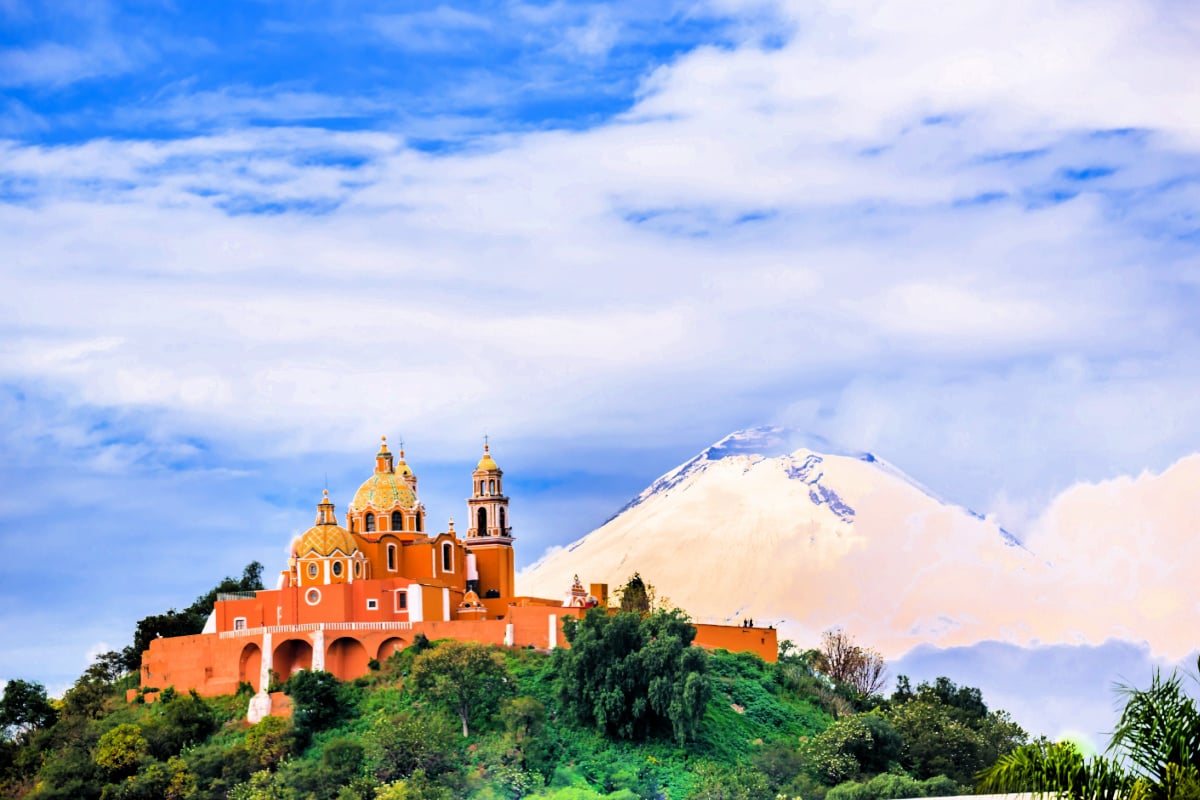
Perhaps Mexico’s best-hidden secret and one most foreigners are yet to be let in on, Cholula is a literal ‘Magical Town‘ of the state of Puebla that has recently attained the distinction of being the most visited statewide.
Though it is attached to the state capital, Cholula has a unique character, and it stands on its own as a cultural center, divided into eighteen neighborhoods, each of them with its own patron saint, and concentrating both colonial-era and ancient landmarks.
The most impressive of them, the Great Pyramid, is the largest complex of its kind in the Americas, as well as the largest pyramid by volume in the world today.
It may not rise as high as Mayan structures across Yucatan, or the Pyramid of Giza in Egypt, but its base dimensions are much wider.
Other attractions in Cholula include the San Gabriel Franciscan Convent, established by the Spaniards in the 16th century – one of the oldest in the Americas – and the colorful, shop-lined Morelos Street.
According to local authorities, alongside other ‘Magical Towns’ of Puebla, Cholula has attracted more than 1.4 million this year already, 68 percent more than in 2022.
Izamal
Yucatan is best known for Caribbean beaches, state-of-the-art resorts and luxurious shopping, but there’s yet another side to the paradisaical peninsula foreigners are only now starting to discover: it is crammed with picturesque, Instagrammable towns that just ooze character.
One of those is Izamal, ‘The Yellow City’ of Yucatan, where the cobble-laden alleys are flanked by vibrant, jaune-colored houses; two cultures clash – Hispanic and pre-Columbian – and Spanish structures, erected out of Mayan stones, dominate the grid-like, yellow landscape.
Walking around Izamal, tourists will be met with the City of Hills, an archaeological complex that once housed a Mayan outpost before Spanish settlers stormed in and occupied the area, and a large Franciscan Monastery, whose open atrium is second in size only to the Vatican.
This year, the town has been experiencing a popularity boom as demand for cultural expeditions grows out of Cancun, roughly three hours away, and it is set to consolidate itself as a popular destination once the Maya Train launches December 1, with a stop in Izamal.
The beauty of digital nomadism is that it allows you to stay in places you love for longer.
But where will the best digital nomad destinations be for 2024? A recent study could have the answers.
InterNations recently surveyed its large community of expats and digital nomads to find the locations where people enjoy being the most.
It ranked no fewer than 49 different destinations around the world, however, these seven rated as some of the very best:
Bangkok, Thailand
Southeast Asia’s original megacity, Bangkok is as charming as it is chaotic.
Despite continuous popularity, Bangkok remains an affordable and fun place to spend some time as a digital nomad.
The sheer size of the city means accommodation can be found at a decent rate; public transport is also cheap, as are ride-share apps such as Grab, while you can enjoy a hearty meal in a restaurant for less than $15 in some cases.
Surrounded by beautiful beaches and basking in a warm Mediterranean climate with more than 300 days of sunshine a year, Malaga has a lot going for it as a digital nomad destination.
Combining a perfect blend between Andalusian history and modern culture, there’s a lot more to the artsy town of Malaga than the stereotypes would have you believe.
There are plenty of parties to be found if you’re the type who wants to make friends, while the iconic Alcazaba fortress and museums dedicated to the life and work of artist Pablo Picasso offer a more chilled, cultural way to experience this destination.
From the hipster neighborhoods of Roma and La Condesa to the mainstream icons like Palacio de Bellas Artes, Mexico City has no shortage of attractions to keep you entertained for as long as you decide to stay.
The city has many positives for digital nomads, such as an easy visa, generally affordable cost of living, good internet, and a relatively good record when it comes to safety, despite what you may have heard.
Alicante, Spain
Recently rated as one of the cheapest Mediterranean destinations, Alicante is situated on Spain’s Costa Blanca and has stunning beaches to match that name.
Food, public transport, and accommodation are all very reasonable in Alicante, despite its popularity as a holiday town for much of Europe.
Break up your working day with trips out to one of the many beaches or visiting one of the regions historic castles, such as Santa Barbara.
Kuala Lumpur, Malaysia
The colorful capital of Malaysia has a different vibe to many of its Southeast Asian counterparts, with a slightly slower pace of life and less chaotic nature.
It’s a multicultural city with desirable nightlife, a fantastic food scene, and some iconic landmarks such as the Petronas Towers and the KL Tower.
If you decide to go, be sure to visit the nearby Batu Caves for a taste of Malaysian culture and wildlife.
Valencia, Spain
A fine example of how to blend age-old tradition with cutting-edge modernity, Valencia is a trendy and increasingly popular city for digital nomads to spend some time in.
You can see the old side of Valencia at icons such as the Miguelete and Holy Grail Cathedral and the Barrio del Carmen, while the more modern side is on display in the stylish City of Arts and Sciences area.
Valencia is relatively cheap and has very clean, efficient, and affordable public transport including trams, which can be used to easily get out to its beautiful beach.
Madrid, Spain
The final Spanish destination rounding off this list is the capital of Madrid.
While it doesn’t have the year-round warm temperatures of some of its coastal counterparts, it is a city dripping with culture and history.
Americans have been attracted here in record numbers, perhaps in part thanks to iconic sights such as the Plaza Mayor, the Royal Palace, or the many quiet and beautiful gardens around the city.
South Korea is one of the top destinations in Asia for digital nomads right now, having developed into a major ‘soft power’ in recent years, following the export of K-pop, doramas, and other art forms, and trending for its high-quality of life and relative affordability.
With that being said, most nomads landing in the East Asian country stay in Seoul, its vibrant capital and largest metropolis, and end up staying most of their time there, ignoring secondary destinations that are just as incredible.
As it turns out, Seoul is not Korea’s only nomad hotspot, as an equally strong competitor on the Southeastern coast has been surging in popularity lately:
It is the largest city, after all, boasting high-speed internet connectivity, great transport links, and unparalleled entrepreneurial atmosphere, but it is certainly not the only world-class Korean metropolis or creative hub.
Busan, on the Southeastern coast, is the country’s second-largest city and a busy port with over 3.4 million residents, and it is just as well-equipped a nomad destination as Seoul, except it straddles the ocean. It is smaller and can feel a lot less chaotic.
Here, you will find the same world-class urban infrastructure, with an excellent public transportation system that will get you anywhere you need within the Metropolitan Area, increasingly pedestrianized central districts, affordable housing and an ample selection of coworking centers.
Why Is Busan Unique?
Busan is unique in the sense that it is a sprawling metropolis bounded by both mountains and the sea, snaking along narrow valleys, following the course of the historic Nakdong and Sueyong Rivers, and also lining the oceanfront.
Infrastructure-wise, it may be comparable to Seoul, but it has an entirely different character altogether. Being surrounded by nature, it can feel more laid-back, and not as hectic as the 10 million-people strong inland capital.
The aforementioned Nakdong River is Korea’s longest, and one of the most popular activities in Busan is walking the Nakdonggang Riverside Trail, a multi-lane boardwalk for pedestrians and cyclists.
The trail spans, in fact, most of the extent of the river, which is 230 kilometers long, thus linking Busan to Andong, a city in the Northern part of South Korea, but within Busan proper, it makes for a peaceful promenade from the downtown area to the outer suburbs.
Busan Has Beautiful Beaches
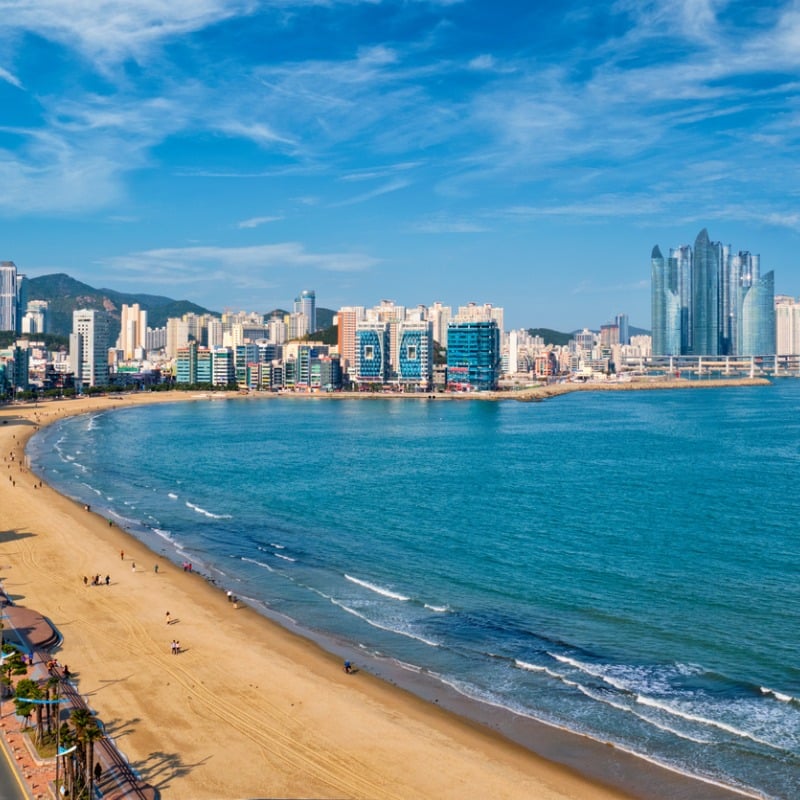
Busan is also highly sought-after for its beaches, being lapped by long, soft, golden-sand crescents, and home to the iconic Haeundae Beach, South Korea’s largest and best-frequented.
During the summer months, Haeundae is brimming with life and sunbathers looking to catch a tan beneath the unforgiving East Asian sun.
In the off-season, particularly spring and fall, it is ideal for contemplative, early-afternoon walks on the sand and admiring the sweeping views of Busan’s maritime port further in the distance, one of the largest and most economically important in the world.
Needless to say, the ocean is a huge part of Busan’s appeal to long-term visitors. The city’s economy is heavily reliant on ocean trade, and as a result, the seaside is highly developed.
Other than beaches, nomads get to enjoy seaside parks in their free time, like Taejongdae, where hiking trails and viewing platforms offer unique perspectives of the rugged coastline, marvel at landmark bridges – including Korea’s second-largest – and gorge on some delicious seafood.
Busan is arguably South Korea’s foodie capital, and there is no way you can conclude your nomadic stay without having sampled classics like seafood porridge, soy-marinated raw crabs, or sliced raw fish from local seafood markets.
Another reason why Busan is trending with nomads is its cultural weight.
Busan Is An Underrated Cultural Hotspot
Yes, it is a modern maritime port and financial center, but beneath the surface lies a far older, more traditional Korean settlement that is yet to be fully eradicated by the rapid industrialization of the Korean coast.
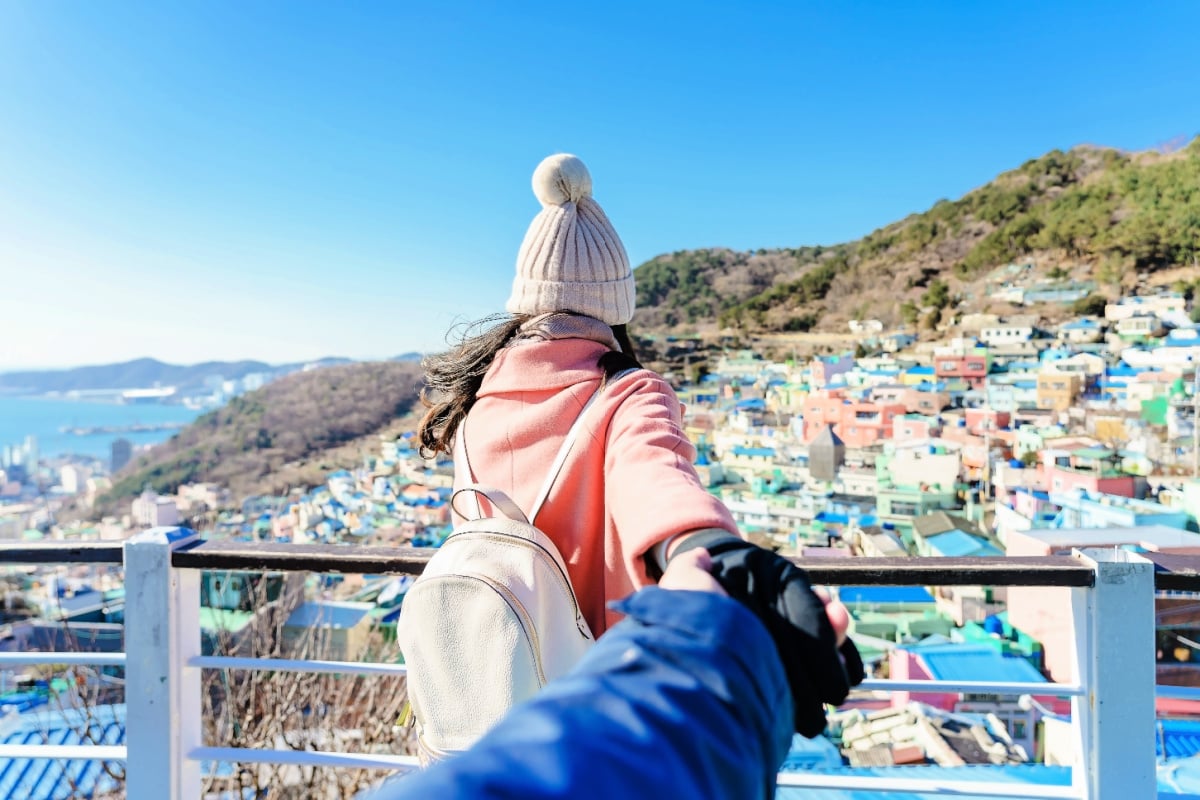
One of Busan’s top cultural attractions is Gamcheon Village, a hillside district where the tiny, agglutinated houses are painted in bright colors and the narrow alleys are lined with vibrant street art and other whimsical installations, in a similar manner to South America’s underdeveloped barrios.
Busan also houses Beomeosa Temple, a picturesque Buddhist complex nestled on a hilly, forested area away from the clusters of skyscrapers and towering apartment blocks.
An ancient gem of Korea, it was founded as early as 678 AD, and it stands among the most easily-recognized Korean architectural feats globally.
Nomads are enamored with Busan because it is a city that just oozes creativity, and its public transportation is solid proof of that.
Busan’s Creative Vibes Are Unparalleled
No visit to Busan is complete without a scenic journey on a Haeundae Sky Capsule, a 4-seater retro tram with a colorful exterior – usually electric blue, deep red, light yellow and green, running on a 2.3 km-long elevated rail linking the beach zones of Mipo to Cheongsapo.
The colors emulate that of the accompanying Haeundae Beach Train, which travels along the scenic oceanfront between Mipo and Songjeong, and it’s the world’s first battery-charged and perhaps one of the most eco-friendly transportation modes.
Busan’s numerous monorails are yet another fun way to get around and explore, traveling upward the hilly cityscape and revealing breathtaking panoramas of the lively streets below.
Naturally, one of the main reasons why nomads are flocking to Busan is the affordable living.
Busan Is More Affordable Than Seoul
Rent in Busan can be up to 71.2% lower than in Paris, a major digital nomad hotspot in the Western World, as seen on Numbeo, and a single person’s estimated monthly expenses are US$919.70 without rent.
You should expect to find street food for as cheap as US$6.07, on average, and a restaurant bill for two people in a mid-range restaurant should total roughly US$31.29 roughly.
These often reflect prices for locals and long-term visitors.
According to BudgetYourTrip, short-term travelers spend on average US$88 per day in Busan, with an average US$26 on meals and US$21 on public transportation, making it a relatively affordable destination to work from remotely for a limited period of time.
Seoul can be considerably more expensive, with estimated daily expenses for tourists averaging US$109 daily.
Though South Korea has not yet launched a Digital Nomad Visa, U.S. passport holders can enter the country and stay visa-free for up to three months.