Tag: Advisory

  • U.S. Issues New Travel Advisory For Mexico Regarding Spring Break

    U.S. Issues New Travel Advisory For Mexico Regarding Spring Break

    [ad_1]

    Share The Article

    Last Updated

    While American travelers are enjoying or getting ready for spring break travel, the government of the United States has just issued a travel warning for one of the top destinations this season: Mexico. 

    The U.S. State Department shared on Monday an official travel warning addressing multiple concerns, recognizing safety threats, and sharing advice related to current events. 

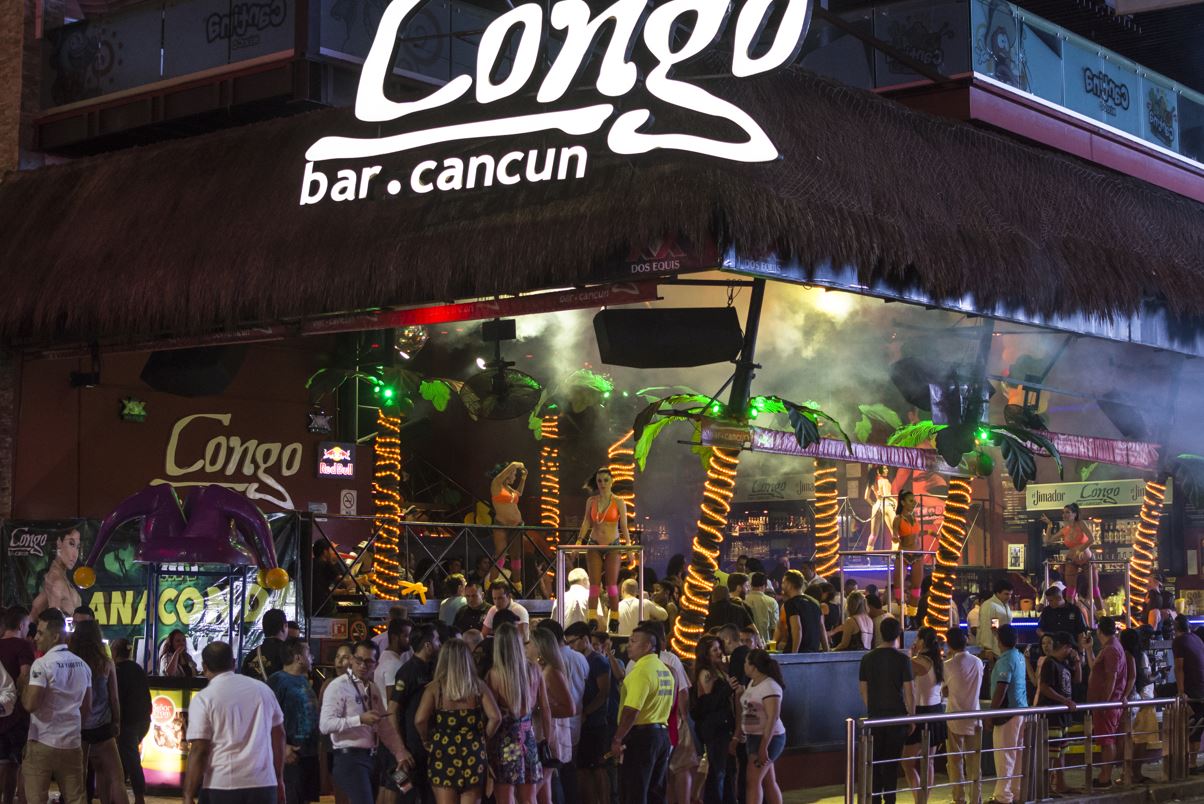
    Congo bar cancun, people waiting to get into bar

    The document published on the website of the U.S. Embassy and Consulates in Mexico explains to travelers the main factors to consider when planning travel to this country, including risks of crime, drugs, assault, medication, and other warnings like drowning and arrests.

    A list of actions to take when traveling to Mexico—like reading the Mexico Travel Advisory page, recommendations for safety applications that travelers can download, and general warnings— has also been included. 

    Considering top spring break destinations, authorities have specifically addressed locations like Cancun, Playa del Carmen, and other popular beach destinations in the Quintana Roo region. 

    Busy street in Playa del Carmen at night

    Just a few weeks ago, the U.S. The State Department issued a special travel advisory for U.S. citizens visiting Cancun related to disputes and violent incidents between taxis and Uber drivers in the region.

    While American authorities warn travelers about travel to Mexico, the Mexican government assures tourists that Mexico is a safe destination.

    Considering the current situation in Mexico, there are new updates for tourists. Here’s what travelers should know about this recent travel advisory shared by the American government: 

    Top 5 Travel Insurance Plans For 2023 Starting At $10 Per Week

    U.S. State Department logo on computer screen

    Factors To Consider When Traveling To Mexico

    The U.S. government states that most visitors travel safely in Mexico —Cancun is still considered a safe destination for many travelers— but those planning a trip to this country should bear in mind multiple factors. 

    buildings next to beautiful beach at sunset

    Regarding safety, travelers are encouraged to maintain high levels of awareness and avoid risky situations since crime (including violent crime) can occur even in popular tourist destinations like Playa del Carmen, Cancun, and Tulum, especially after dark.

    U.S. citizens have also been victims of assault, and lonely or drunk travelers have been targeted. 

    Authorities also remind travelers about illegal actions and behaviors in Mexico and that Mexican law is different from American law, and travelers should keep this in mind.

    The document highlights that guns and ammunition are illegal, as well as drug possession—including medical marijuana—, public urination, and drinking and driving. Those who violate these terms can be arrested.

    Police Patrolling The Beach In Isla Mujeres, Mexican Caribbean, Latin America

    U.S. citizens are warned about consuming drugs or unregulated alcohol as travelers have been injured by contaminated alcohol, synthetic drugs, and adulterated prescription pills. Counterfeit medication has also been reported. Travelers should consult with medical professionals and buy medicine from reputable establishments.

    In case of emergency or need for medical attention, the document mentions that private hospitals might be more expensive in Mexico than in the United States and that payment in cash might be required. This is one reason it is always good to buy travel insurance.

    Concerning natural factors, it warns about rip tides and strong undercurrents, as well as a lack of security measures and lifeguards. Drowning has been considered a relevant factor of risk for visitors.

    Man snorkeling underwater looks a starfish in a coral reef with tropical fish, Caribbean sea

    Travelers are advised to respect legal terms of stay as well with regards to visas, as violating those terms can result in detention or fines. 

    Actions For Travelers

    After taking into consideration all risks, travelers are also encouraged to take action. The U.S. government recommends:

    A Border Checkpoint Between Mexico And The United States Close To El Paso, Texas, Lined By Fences
    • Reading the Mexico Travel Advisory page, and the country information page.   
    • In case of an emergency, call 911
    • Purchase travel insurance that covers Mexico or make sure that health insurance covers the destination.
    • To receive updates and relevant information on safety in Mexico, travelers should enroll in the  Smart Traveler Enrollment Program.
    • Drink responsibly, and don’t leave drinks unattended. Travelers must seek medical attention if they feel ill and report to the Mexican Federal Commission for the Protection against Sanitary Risk (COFEPRIS) in case of alcohol contamination.
    • Stay in groups of friends and know your drinking companions, especially at night and at clubs and bars. 
    • Monitor credit cards to confirm all transactions are correct, bring limited cash, and be careful when withdrawing money from ATMs.
    • Keep family and friends informed of travel plans.
    • Download the “Guest Assist” application when traveling in the Quintana Roo region for relevant updates, information, and assistance for travelers.
    • Keep passports safe. 
    • Travelers can Contact U.S. Embassy or Consulate if they need assistance.
    Hiking woman using smart phone, travel and active lifestyle concept

    Traveler Alert: Don’t Forget Travel Insurance For Your Next Trip!

    ↓ Join Our Community ↓

    The Travel Off Path Community FB group has all the latest reopening news, conversations, and Q&A’s happening daily! 

    Travel-off-Path-group-1-1
    SUBSCRIBE TO OUR LATEST POSTS

    Enter your email address to subscribe to Travel Off Path’s latest breaking travel news, straight to your inbox

    This article originally appeared on TravelOffPath.com

    [ad_2]

    Source link
  • Los Cabos And Cancun At Level 2 Travel Advisory Heading Into The Fall

    Los Cabos And Cancun At Level 2 Travel Advisory Heading Into The Fall

    [ad_1]

    Share The Article

    Last Updated

    Heading south of the border this fall?

    You may have seen the U.S. Department of State has issued updated travel advisories for each individual Mexican destination this fall. While security risks in places like Puerto Vallarta are considered high enough to warrant a Level 3 badge, meaning Americans should ‘reconsider travel‘ due to crime and even kidnapping risks, others like Cabo and Cancun remained at a much safer Level 2.

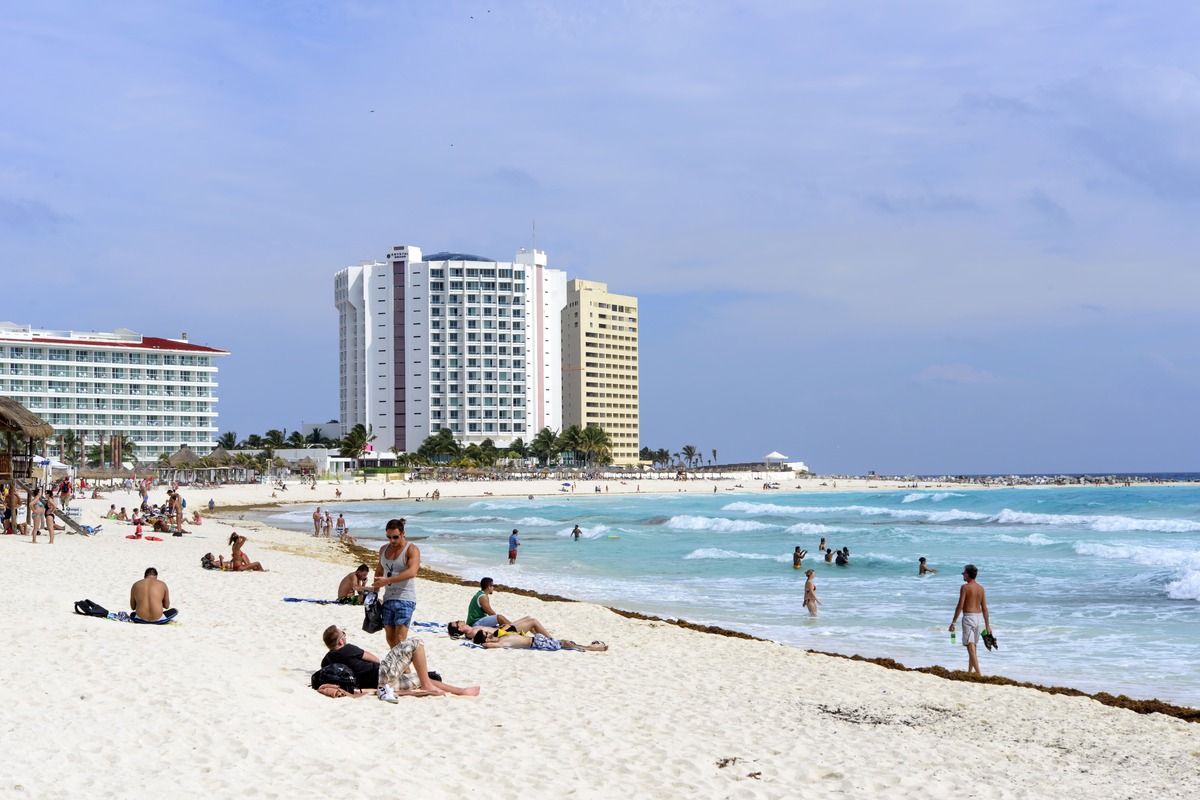
    Tourists Sunbathing In Cancun Beach, Quintana Roo, Riviera Maya, Mexican Caribbean, Mexico

    Mexico is the number one destination for Americans going abroad. Boasting a pristine coastline extending for miles on end, some of the best preserved pre-Columbian sites in all of the Americas, and home to one of the world’s richest, and most diverse cuisine, it definitely deserves its hard-earned title of King of Tourism.

    On the downside, its recent run-ins with the law have been a cause for concern, particularly among first-time visitors. Luckily, that’s not the case with America’s favorites Cabo and Cancun:

    Is Mexico A Safe Place To Visit?

    Cancun Beach Huts In The Riviera Maya, Mexican Caribbean, Mexico

    Before anything else, we should probably point out Mexic is pretty safe to visit. There is a reason the country has been smashing tourism records lately, with Los Cabos even outpacing majority of beach destinations in the wider region in terms of tourism growth. Yes, crime can occur, but in any tourist setting, chances are slim.

    Although we cannot disregard the warnings coming from the United States Government, seeing that they are official and data-informed, we should note an ‘increased risk’ of crime is merely that: a risk. It does not mean it will happen, or that it will affect Americans in Mexico. In fact, the vast majority of them will experience a trouble-free vacation.

    Young Male Tourist Walking The Beach In Cancun, Mexico

    Tourists Should Exercise Increased Caution Visiting Cabo And Cancun

    That being said, the U.S. has nevertheless granted a Level 2 status to the Baja California Sur and Quintana Roo states, of which Los Cabos and Cancun are a part of. In simpler terms, these destinations are not under a particularly high threat of crime, or are turf war hotspots, like other Level 3, or even Level 4 ‘No Travel’ cities.

    As per the department’s statement, U.S. citizens should only ‘exercise increase caution’ in the region due to crime, a warning that, in reality, applies to every single major international destination. Unlike in the states of Jalisco or Sinaloa, there are currently ‘no restriction’ on travel for U.S. Government employees based in Baja California Sur, or even tourists.

    Mexican Police Officers Patrolling Playa Del Carmen, Quintana Roo, Mexico

    Similarly, Quintana Roo – and the Riviera Maya on an extent – has not been blacklisted by the department, featuring on the same Level 2 list as Cabo. All of the Mexican Caribbean’s consolidated stars, namely Cancun, Tulum, Playa del Carmen, Isla Mujeres and Chetumal are not deemed seriously dangerous for tourists.

    The advisory mentions ‘criminal activity and violence may occur in any location, at any time, including in popular tourist destinations‘, but then again, this same advice could be replicated for numerous countries, including the U.S., where pick-pocketing and illicit activities have long posed a problem (especially in New York, L.A., and other large cities).

    Police Patrolling Cancun Beach With K9 Unit

    Naturally, minor incidents cannot be ruled out, and while this is far from being exclusive to Cabo or Cancun, like anywhere else, visitors must not let their guards down when flying abroad. In fact, maintaining a high level of situational awareness is key to a stress-free vacation in the Riviera Maya and Cabo’s Pacific Coast.

    Essentially, Americans must observe all of these rules:

    • Avoid walking after dark in poorly-lit pedestrian zones
    • Refrain from visiting by yourself peripheral districts of Cancun or Cabo that do not normally receive a lot of tourists
    • ‘Promptly depart’ from areas where dangerous events are unfolding, however rare
    • Constantly checking the U.S. Department of State web-page for all the latest updates on travel to Cancun

    *Personally, we would recommend not flashing jewelry or other expensive belongings that may attract thieves

    Bottomline

    Los Cabos Arch In Baja California, Pacific Coast, Mexico

    Realistically, tourists should not feel as if they have a target on their backs traveling in Cabo or Cancun. At the same time, exercising caution when abroad, whether it’s Mexico or elsewhere, is of paramount importance. In Mexico specifically, violent incidents are not directed at visitors, but they can still be injured finding themselves in the wrong place, wrong time.

    At the same time, you probably risk getting robbed strolling alone after sundown in New York, as well. Sod’s law.

    Once again, the occasions in which tourists are harmed, or witness acts of violence, are incredibly rare. Additionally, the Mexican Government takes tourism very seriously, and has clamped down on crime lately by deploying more police to tourist areas and ensuring Americans feel safe when vacationing in Cabo or Cancun.

    Two Women In A Mexican Beach Observing Princess Cruise Vessel In Mexico, Pacific Coast

    In comparison, tourists should ‘reconsider travel’ to Puerto Vallarta and the whole state of Jalisco, which has been placed under the Level 3 listing, only one step short of being blacklisted by the Federal Government. In essence, despite these warnings, the states of Baja California Sur and Quintana Roo are considered much safer for travel than Jalisco, for example.

    Visiting Mexico soon?

    • Follow the official advice and plan your itinerary accordingly, making sure you cross out blacklisted regions
    • Pre-book transfers between the airport and your hotel, or in between municipalities, in order to avoid Mexico’s infamous taxi scams
    • Call 911, Mexico’s national emergency number whenever in need, especially when finding yourself in a dangerous situation
    • Of course, don’t forget to enjoy your sunny getaway!

    Read More:

    Travel Insurance That Covers Covid-19 For 2022

    U.S. Issues Mexico Travel Advisory After Multiple Cities Come Under Attack

    3 Popular Beaches In Mexico Considered Unsafe For Swimming Due To Bacteria

    Mexico Will Have 11 New Tourist Train Routes With The First Launching In 2023

    Frontier Announces 5 New Non Stop Flights To International Destinations Starting At $69

    This article originally appeared on Travel Off Path. For the latest breaking news that will affect your next trip, please visit: Traveloffpath.com

    ↓ Join the community ↓

    The Travel Off Path Community FB group has all the latest reopening news, conversations, and Q&A’s happening daily! 

    Travel-off-Path-group-1-1
    SUBSCRIBE TO OUR LATEST POSTS

    Enter your email address to subscribe to Travel Off Path’s latest breaking travel news, straight to your inbox

    Disclaimer: Current travel rules and restrictions can change without notice. The decision to travel is ultimately your responsibility. Contact your consulate and/or local authorities to confirm your nationality’s entry and/or any changes to travel requirements before traveling.  Travel Off Path does not endorse traveling against government advisories

    [ad_2]

    Source link

  • U.S. State Department Issues 16 New Travel Advisory Updates

    U.S. State Department Issues 16 New Travel Advisory Updates

    [ad_1]

    Share The Article

    Last Updated

    The U.S. State Department has just issued a further 16 more new travel advisory updates. Posted on the Department of State’s travel advisory website just yesterday, the new travel advisories are the latest of several updates already this month, as the State Department and embassies around the world work around the clock to ensure that American travelers are kept in the loop and can make informed decisions regarding their travel plans.

    Featuring a wide range of countries spanning several continents, yesterday’s travel advisories prove that even after the pandemic, there are still plenty of other things that travelers need to be wary of when traveling abroad. Here’s a look at which countries were affected by yesterday’s latest round of travel advisory updates, plus a reminder of what travel advisories are and the role they should play in any traveler’s trips abroad. 

    Travel Advisory Updates – Information For Travelers

    Travel advisory updates are the State Departments way of keeping travelers up to date with issues they may encounter on their trips abroad. Every country in the world has a travel advisory page, regardless of its popularity, which contains concise, up to date information about security threats and concerns not just in the country as a whole, but often in specific regions where appropriate. A wide range of different issues are covered, ranging from everyday issues such as high crime rates to more pressing matters such as civil unrest and terrorism. Following the pandemic, travel advisories also contain an update from the CDC on the level of Covid-19 in each destination. 

    Travel advisories come in four different levels, each one indicating the severity of the risk travelers will face in that country. Level 1 travel advisories – the least severe warning – advises travelers to “exercise normal precautions,” whilst Level 4 – the most severe warning level – tells travelers “do not travel” to that destination. Despite the strict wording on the different levels, travel advisories do not have the power to prevent a traveler from heading to a certain destination, though they do provide travelers with the information required to make the decision of whether or not to travel in the first place.

    Latest Travel Advisories – What Travelers Should Know

    Yesterday’s travel advisory updates saw a further 7 countries issued with Level 1 travel advisories, bringing the total number of Level 1 countries up to 81. Those 7 countries and their CDC-determined Covid-19 levels are:

    Angola (low Covid-19 level), Comoros (low Covid-19 level), Dominica (unknown Covid-19 level), Equatorial Guinea (low Covid-19 level), Fiji (high Covid-19 level), Poland (high Covid-19 level) and Togo (moderate Covid-19 level).

    There were also five additions to the Level 2 category, which advises travelers to exercise increased caution. They are as follows:

    • Bangladesh: exercise increased caution in Bangladesh due to crime, terrorism, and kidnapping. Low level of Covid-19.
    • Bosnia and Herzegovina: exercise increased caution in Bosnia and Herzegovina due to terrorism and land mines. High level of Covid-19.
    • India: exercise increased caution in India due to crime and terrorism. Moderate level of Covid-19.
    • Laos: exercise increased caution to Laos due to civil unrest. Unknown level of Covid-19
    • Philippines: exercise increased caution to the Philippines due to crime, terrorism, civil unrest, and kidnapping. Moderate level of Covid-19.

    Four countries were awarded Level 3 travel advisories, which asks travelers to reconsider travel. El Salvador, which has a moderate level of Covid-19, was deemed to be Level 3 due to its high levels of crime. That was also the case for Honduras, which also has a high level of Covid-19 according to the CDC. Travelers are also asked to reconsider travel to moderate Covid-19-level Ethiopia due to armed conflict, civil unrest, communications disruptions, crime, and the potential for terrorism and kidnapping in border areas. Those with travel plans involving Moldova (moderate level of Covid-19) are also asked to reconsider them, due to the country’s close proximity to the conflict in Ukraine. 

    Flag Of Honduras Flying In Tegucigalpa

    The latest round of travel advisory updates saw no countries awarded the most severe Level 4 update – but that doesn’t mean that things can’t change quickly. In addition to making sure they read the travel advisory page for their destinations this summer, travelers should also ensure they purchase a good travel insurance policy to ensure they are covered in the event that something does go wrong. 

    Young Traveler Holding Up A US Passport Ahead Of International Travel

    Read More:

    Top 5 U.S. Airports With The Cheapest Airfares

    Travel Insurance That Covers Covid-19 For 2022

    TikTok Study Reveals Most Popular Travel Destinations

    ↓ Join the community ↓

    The Travel Off Path Community FB group has all the latest reopening news, conversations, and Q&A’s happening daily! 

    Travel-off-Path-group-1-1
    SUBSCRIBE TO OUR LATEST POSTS

    Enter your email address to subscribe to Travel Off Path’s latest breaking travel news, straight to your inbox

    Disclaimer: Current travel rules and restrictions can change without notice. The decision to travel is ultimately your responsibility. Contact your consulate and/or local authorities to confirm your nationality’s entry and/or any changes to travel requirements before traveling.  Travel Off Path does not endorse traveling against government advisories

    [ad_2]

    Source link

  • Canada Issues New Travel Advisory Due To Monkeypox

    Canada Issues New Travel Advisory Due To Monkeypox

    [ad_1]

    Share The Article

    Last Updated

    As monkeypox spreads globally, the Canadian government has issued a travel advisory for Canadians traveling overseas. The new Level 2 travel advisory suggests Canadians should practice enhanced health precautions following the emergence of monkeypox. 

    The Canadian government released the travel advisory on June 7, 2022. 

    The Full Details Of The Level 2 Travel Advisory 

    According to the Canadian government, a Level 2 travel health notice “indicates an increased risk to travellers or certain groups of travellers (for example, pregnant women, campers, people visiting friends and relatives) and reminds them to practise enhanced health precautions.”

    Canadian flag and Parliament buildings in Ottawa in the background

    The Canadian government suggests all Canadians should follow these precautions:

    • Use personal protective equipment—such as masks—to minimize the spread of monkeypox
    • Delaying all travel until the risk is lower
    • Avoiding higher-risk activities 
    • Taking recommended vaccinations for some groups 
    • Washing hands at all times, especially after being in close contact with some people
    • Being careful if you’re attending mass gatherings or parties 
    • Being aware of any symptoms, such as a new rash 

    The Canadian government has issued the advisory if you’re traveling to these destinations:

    • Argentina
    • Australia
    • Austria
    • Belgium
    • Bolivia
    • The Czech Republic
    • Denmark
    • Finland
    • France
    • Germany
    • Hungary
    • Ireland
    • Israel
    • Italy
    • Malta
    • Mexico
    • Morocco
    • Netherlands
    • Norway
    • Portugal
    • Slovenia
    • Spain
    • Sweden
    • Switzerland
    • The United Arab Emirates
    • United Kingdom
    • United States
    Toronto City Skyline, Ontario, Canada

    The Canadian government says: “During your travel, you may be subject to procedures at your destination put in place to limit the spread of monkeypox, such as isolation, should you become infected. You may have limited access to timely and appropriate health care should you become ill, and may experience delays in returning home.”

    “PHAC is working closely with international, provincial, and territorial health partners to gather information on this evolving issue. Further investigations are underway to determine the likely source of infection and to limit further onward spread.”

    The Canadian government says you should see a healthcare professional if you develop symptoms when you’re traveling. In addition, if you have monkeypox symptoms during the flight: “tell the flight attendant before you land or the border services officer as you enter the country.”

    What Is Monkeypox?

    The Canadian government states: “Monkeypox is a disease that is caused by a virus. It is regularly found in parts of Central and West Africa, where it has been re-emerging in recent years”

    They suggest monkeypox can spread in three ways:

    • From animals to humans
    • From person to person
    • Through direct contact with contaminated objects
    Young Female Traveler Looking Concerned At The Airport While Wearing A Surgical Face Mask And Holding A Red European Passport, Covid 19 Pandemic

    In addition, monkeypox can spread from person to person via close contact in the following ways:

    • Scabs or skin lesions (which may resemble chickenpox)
    • Body fluids or blood 
    • Mucosal surfaces (including eyes, mouth, throat, and rectum.)
    • Contaminated clothing or linens
    • Respiratory droplets (coughs and sneezes) may transmit the monkeypox virus, but scientists are still learning.

    However, the Canadian government suggests that: “symptoms usually last between 14 and 28 days. Monkeypox is usually a mild, self-limited disease. In rare situations, people may become very sick and death may occur.”

    They add: “Treatment for monkeypox is mainly supportive. Vaccines and medications for prevention and treatment are not commercially available at this time.”

    Have Other Countries Issued Travel Advisories? 

    The Canadian government isn’t the first nation to introduce a travel advisory for monkeypox. The United States issued a travel advisory due to monkeypox almost two weeks ago.

    The CDC advises Americans to avoid:

    • Close contact with sick people, particularly those with skin or genital lesions.
    • Touching any dead or live wild animals, such as rats, squirrels, monkeys, and apes.
    • Handling all materials used by monkeypox-infected individuals as they could be contaminated.

    We will keep you updated on how monkeypox may affect travelers going forward. 

    Read More:

    Travel Insurance That Covers Covid-19 For 2022

    Romania And Hungary Launch New Digital Nomad Visas

    Italy Planning To Launch A Digital Nomad Visa

    Riu To Open Two New All Inclusive Resorts In Cancun This Year

    Your Phone Could Be Searched When Entering Canada With New Proposed Law

    ↓ Join the community ↓

    The Travel Off Path Community FB group has all the latest reopening news, conversations, and Q&A’s happening daily! 

    Travel-off-Path-group-1-1
    SUBSCRIBE TO OUR LATEST POSTS

    Enter your email address to subscribe to Travel Off Path’s latest breaking travel news, straight to your inbox

    Disclaimer: Current travel rules and restrictions can change without notice. The decision to travel is ultimately your responsibility. Contact your consulate and/or local authorities to confirm your nationality’s entry and/or any changes to travel requirements before traveling.  Travel Off Path does not endorse traveling against government advisories

    [ad_2]

    Source link

  • CDC Issues Travel Advisory Traveling To These Countries Due To Monkeypox

    CDC Issues Travel Advisory Traveling To These Countries Due To Monkeypox

    [ad_1]

    Share The Article

    Last Updated

    Are we in the early days of a new global health emergency? After several monkeypox outbreaks were registered across Europe this week, and Belgium going as far as imposing a strict 21-day quarantine for travelers with a confirmed infection, the CDC has now issued a travel warning to a number of destinations due to the emerging threat.

    Monkeypox is a disease classed by the World Health Organization as being of ‘global public health importance‘. Although it mostly affects countries in West and Central Africa, it is also present in other parts of the world, and the identification of new clusters in Europe and North America, where it is not yet endemic, is worrying health experts.

    CDC Formally Recognizes The New Global Health Threat

    Adding weight to the other health warnings issued by countries like the UK, the U.S. Centers for Disease Control and Prevention – CDC has formally recognized monkeypox as a potentially disruptive pathogen, and emitted its own travel alert to a number of destinations in Europe and beyond. According to the CDC, cases have been reported in the following states:

    • Australia
    • Austria
    • Belgium
    • Canada
    • England
    • France
    • Germany
    • Israel
    • Italy
    • Netherlands
    • Portugal
    • Scotland
    • Spain
    • Sweden
    • Switzerland
    Gaudi's La Sagrada Familia In Barcelona, Catalonia, Spain

    Besides the above, monkeypox has already reached the United States as well, less than a month after the first infection clusters were identified in Europe. For that reason, the CDC has added the affected countries to the Level 2 category, stopping short of slapping a Level 3 travel warning due to monkeypox.

    This means that, when traveling to all European countries listed, as well as Australia, Canada and Israel, U.S. citizens should now ‘practice enhanced precautions’ to avoid monkeypox. This is a first for these destinations, as monkeypox had been mostly limited to a number of African nations up until recently.

    Young Man Wearing A Face Mask On A Balcony In An Unspecified European City

    Out of the CDC-flagged countries, Belgium has been the first to act, enacting a mandatory 21-day quarantine requirement for travelers with a confirmed monkeypox infection. The ECDC, the European equivalent to the CDC, is also monitoring the situation closely, as the case count across Europe exceeds 100 – with a large concentration of those in Spain and Portugal.

    Curiously, recent cases have not been linked to travel to Central or West African countries, ‘where monkeypox usually occurs’, such as the Democratic Republic of the Congo and Nigeria. This is a strong indication there is community transmission within Europe and North American continents.

    Young Female Traveler By The Boarding Gate At The Airport

    LGBTQ+ Americans Should Exercise Increased Caution When Traveling From Now On

    Corroborating other findings by health authorities in foreign countries, the CDC mentions a considerable portion of cases have been reported among men who have sex with men, as sexual interaction with an infected individual increases transmission dramatically. In fact, the first European clusters were likely spread by risky sexual behavior at 2 raves.

    Because of early infection trends, gay travelers should exercise increased caution, considering Spain happens to be one of the safest destinations for them, and thus a leader in LGBTQ+ tourism. That said, anyone can be infected, regardless of gender or sexual orientation, as ‘cases were also reported in people live in the same household as an infected person’.

    Couple Of Young Men Embracing Themselves While Holding Up An LGBTQ+ Flag At The Beach Seen From A Car Boot

    How Is Monkeypox Transmitted And What Does The CDC Now Advises?

    All it takes is coming into close contact with a person with an active infection, and particularly visible rashes and scabs caused by the disease. It can also be transmitted via bodily fluids such as pus or blood from open lesions, which are common throughout the course of infection. Scientists have not yet established whether it can be passed on through semen.

    While most patients will recover without any long-term complications, monkeypox scabs can leave scars behind once they fall off, and seriously disrupt travel plans. Following in the steps of Belgium, the Dominican Republic, one of the preferred vacation spots for Americans, has also issued a preventive alert due to monkeypox.

    Female Traveler Watching Her Phone While Wearing A Face Mask At The Airport

    As the World Health Organization states, people are most infectious when they have symptoms, much like Covid, and ‘normally for between two and four weeks’. Touching clothing, bedding, towels and contaminated objects such as cutlery and dishes have been equally recognized as precursors to infection.

    When visiting Spain, France, Portugal, or any other destination on the list, the CDC now advises travelers to avoid:

    • Close contact with sick people, particularly those with skin or genital lesions;
    • Touching any dead or live wild animals, such as rats, squirrels, monkeys and apes;
    • Handling all materials used by monkeypox-infected individuals as they could be contaminated.
    Young Female Traveler Looking Concerned At An Airport

    Risk To The General Public Remains Low As Of Now

    Despite the warnings, the CDC maintains that the ‘risk to the general public is low’. Regardless, travelers are advised to seek immediate medical attention when developing any known monkeypox symptoms. Those can manifest through fever, chills, tiredness and new, syphilis-like lesions on any part of the body.

    The latest CDC advice deals a fresh blow to Europe, which only recently started reopening following the Covid crisis. While monkeypox is not a novel virus like Covid, it has the potential to spread quickly and trigger a new era of tightened health protocols for travelers. So far, the World Health Organization has not declared it a global health emergency.

    Read More:

    Travel Insurance That Covers Covid-19 For 2022

    Germany Removes All Entry Requirements For Summer

    Record Number Of Direct Flights Happening Between The U.S. And Greece This Summer

    Mexico Expecting 40 Million Visitors This Year – How It Will Impact Your Trip

    Barbados Lifts Testing Requirement For Vaccinated Americans

    ↓ Join the community ↓

    The Travel Off Path Community FB group has all the latest reopening news, conversations, and Q&A’s happening daily! 

    Travel-off-Path-group-1-1
    SUBSCRIBE TO OUR LATEST POSTS

    Enter your email address to subscribe to Travel Off Path’s latest breaking travel news, straight to your inbox

    Disclaimer: Current travel rules and restrictions can change without notice. The decision to travel is ultimately your responsibility. Contact your consulate and/or local authorities to confirm your nationality’s entry and/or any changes to travel requirements before traveling.  Travel Off Path does not endorse traveling against government advisories

    [ad_2]

    Source link