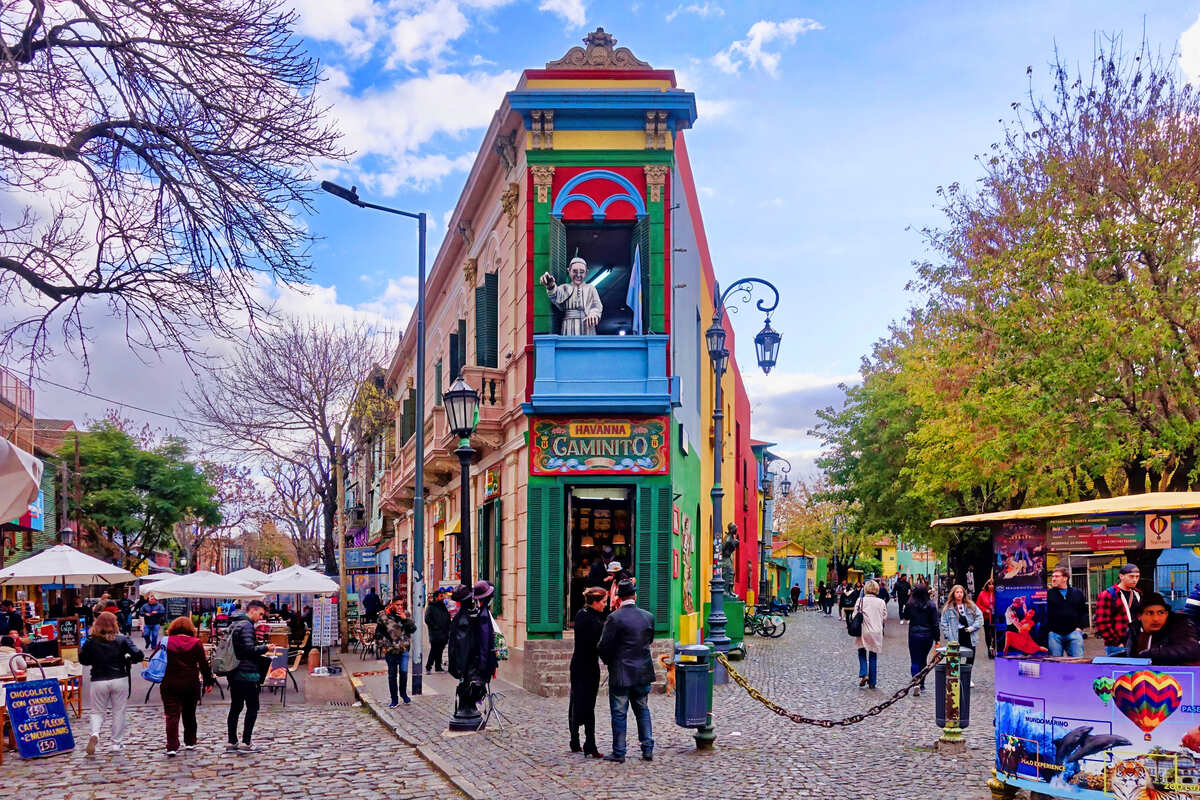
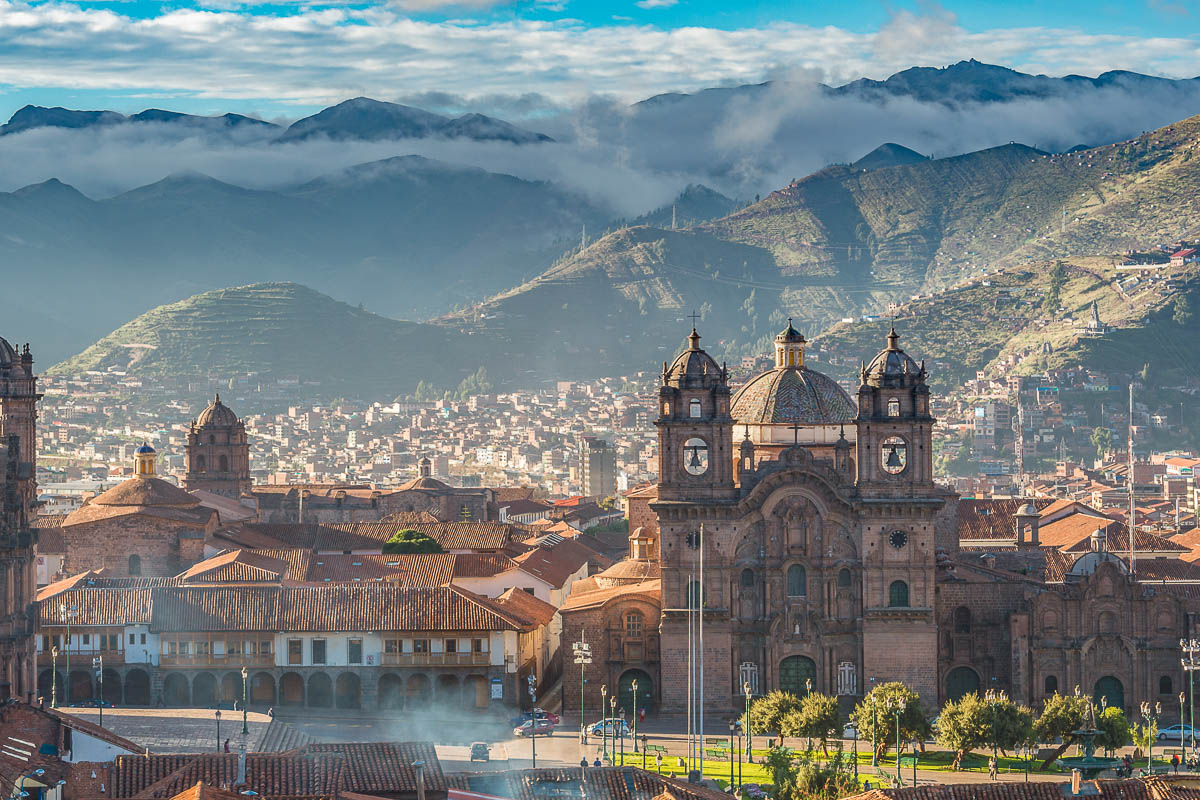
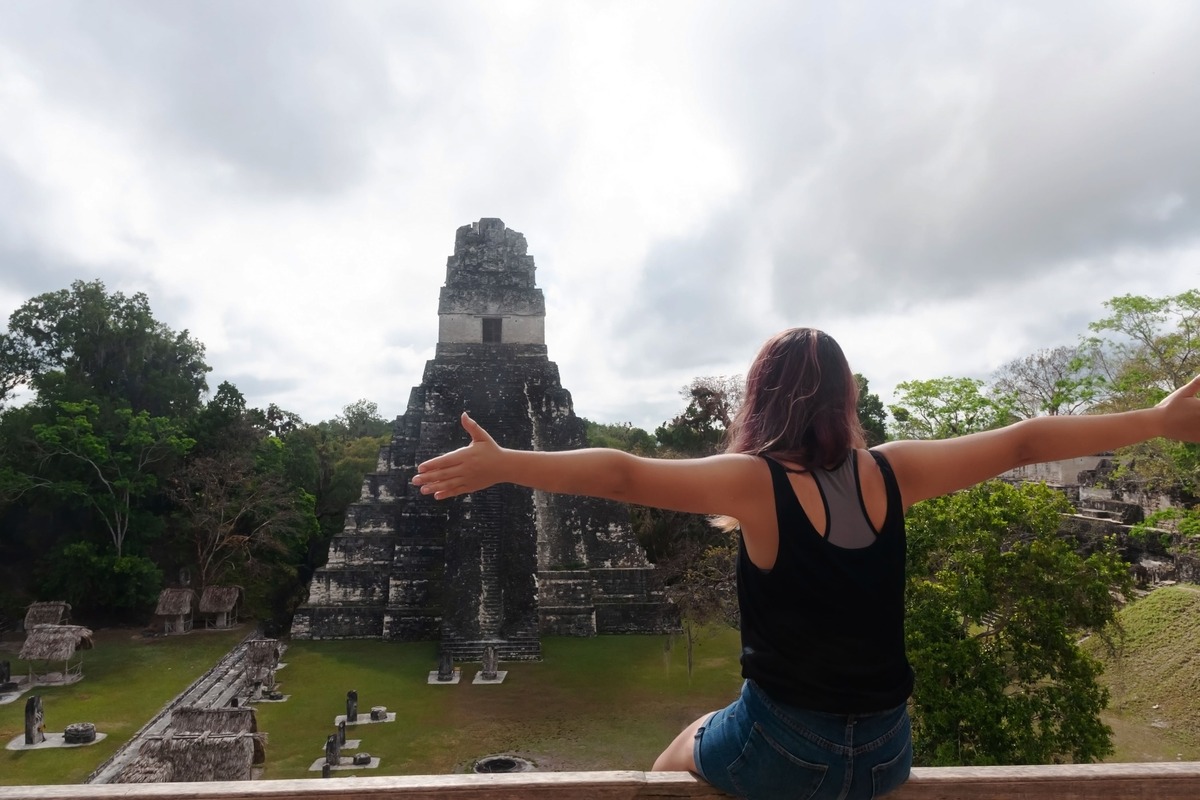
The world is once again open for tourism, but on the downside, the surging demand for travel, coupled with a financial crisis, has led to price increases across the board. With Europe and the Caribbean out of the question for millions of middle-income tourists, all eyes are on a much more affordable South America instead.
But which destinations in the continent are truly cheap to visit, and which ones are best avoided?
South America Is Filled With Wonders, And It’s Cheaper To Explore Than The U.S.
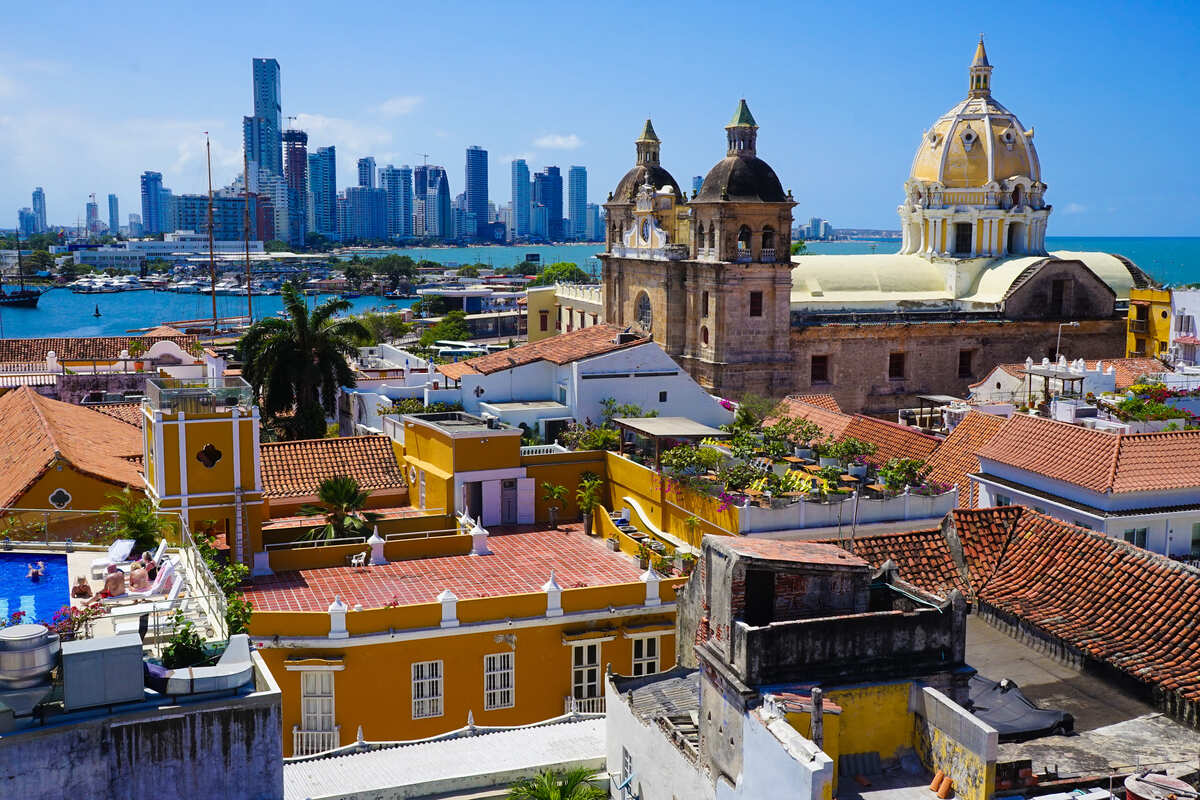
Although it is often mistaken for a homogenous Spanish/Portuguese-speaking group, South American (SA) countries comprise an incredibly vast territory stretching from the glacial tip of Argentina to Colombia’s northwesternmost Caribbean Coast, which is as geographically diverse as it is multicultural. In fact, ‘diverse’ doesn’t even begin to cover it:
Whether they’re looking for beaches, off-grid travel (one of the top five travel trends for 2023), off-path locations yet to be ruined by mass tourism, or natural world experiences, American globetrotters will be spoiled for choice, irrespective of personal preferences. On top of accessing this vast tourist offer, their dollars stretch much further in the Global South.
So where, then, will they get the best value for money?
The ranking below, based on estimates available on Numbeo, the world’s largest crowd-sourced quality-of-life data, might give us an idea. The percentage indicates how much lower the cost of living (COL) is in those countries compared to the United States as a whole:
Colombia – 66.7% lower
Argentina – 57.1% lower
Bolivia – 55.9% lower
Peru – 54.2% lower
Ecuador – 51.6% lower
Brazil – 49.5% lower
Venezuela – 42.2.% lower
Chile – 36% lower
Uruguay – 17.2% lower
Colombia Is The Cheapest Tourist Destination
Colombia leads the affordability ranking with a 66.7% decrease in COL against the U.S., and we can’t say we’re surprised based on the financial threshold the Colombian Government has set for issuing Digital Nomads Visas: in order to be eligible to move to the country, remote workers must earn a minimum of USD $684 per month only.
In a major city like New York, named the most expensive in the world, long-term travelers would struggle to find a room to rent for less than 700 bucks a month, much less be able to afford other daily expenses. This is further indication Colombia is a low-risk spot for backpackers and budget-conscious tourists alike – at least when it comes to money.
Recently, Travel Off Path named Colombia one of the 7 best destinations when you’re young and broke, citing USD $35 will be required per day on a trip to Colombia. Back to Numbeo figures, you would need, on average, USD $1632 in Bogota per month when aiming to maintain the same standards of living you enjoy earning USD $7000 in Los Angeles (CA).
Argentina And Bolivia Round Out The Top Three
Second on the list, Argentina has always been widely recognized as safe haven for budget travelers, largely due to a depreciated currency, and then there’s Bolivia, an under-visited gem of the continent that may impose stricter visa requirements on U.S. passport holders, but comes in third with a decreasing COL rate of 55.9%.
Across Colombia, Argentina and Bolivia, Americans will benefit from the following:
Lower prices for consumer goods
Inexpensive vacation rentals
Good currency exchange rates
Cheaper food and transportation
Of course, affordability rates can vary significantlywithin the bloc: while flying within Colombia is generally cheap, intra-Brazilian flights can be incredibly costly, especially when booked last minute. To draw another comparison, Santiago (Chile) is 47.5% less expensive than Seattle (WA), without accommodation costs – Lima (Peru) is cheaper by a further 13.3%.
The bottom two – Uruguay and Chile – are known for their relatively high development index and living costs comparable to those of America, and could prove costlier to visit than destinations in the top tier. Judging by the data, however, one thing is clear: when combined, these nine destinations are 48.5% less expensive to travel to than the United States.
When unsure where to go amid this unstable economy, South America is your best bet for traveling internationally without breaking the bank.
These unique North American cities will make you feel as if you’ve been transported to Europe.
Most cities in North America are very new in comparison with their European counterparts, and they lack the Old World charm that can only be found across the Atlantic.
In North America, you won’t find many thousand-year-old castles, towering cathedrals, or cobblestone streets.
But there are some cities that have a decidedly European flair to them, whether it’s real (in the case of 500-year-old colonial cities) or manufactured (in the case of 50-year-old “themed” cities.)
These are five cities in North America that feel like visiting Europe:
1. Quebec City, Canada
Quebec City tops the list of the most European-feeling cities in North America. It’s no surprise that this Canadian city has a strong European feel to it, given the French influence on Quebec.
Known for its rich history, cobblestoned streets, and beautiful architecture, Quebec City is a slice of Europe in North America. Adding to the sensation that you’re actually in Europe is the fact that 95% of Quebec residents are French speakers.
One traveler was amazed by the parallels between Quebec City and other European destinations such as Switzerland, Germany, and Austria. Quebec City is a top destination for food, arts, and culture in Canada.
For one of the most unique places in the Pacific Northwest, head to Leavenworth, Washington. This town will make you feel as if you’ve stepped directly into a quaint Bavarian village.
Leavenworth, which is located in the Cascade Mountains, didn’t always have its unique German theming, with Alpine-style buildings and German beer halls. It actually began as a civic initiative in the 1960s to attract tourists.
Now, Leavenworth is a popular winter destination, when the town is transformed into a winter wonderland filled with twinkling lights. They are also known for hosting Oktoberfest in the fall.
3. Solvang, California
Solvang is one of the most intriguing places in the United States. Visitors to this town might find it hard to believe that they’re actually in Southern California and not Denmark.
That’s because Solvang is known as the “Danish Capital of America.” Settled by a group of Danish Americans in the early 1900s, they wanted to escape the cold winters of the Midwest, where most Danish immigrants lived.
Solvang has a unique Danish-style architecture and flair that cannot be found anywhere else in the U.S. The Elverhøj Museum of History & Art explores the city’s Danish heritage. The town is also known for its many wineries, making it a popular day trip in Southern California.
B
4. Mexico City, Mexico
Mexico City is a bustling, world-class city that rivals any European capital. It’s a vibrant and multicultural city known for its architecture, museums, food, nightlife, and culture.
European influence can be glimpsed around the city. Picturesque, tree-lined avenues in neighborhoods like La Condesa and Roma Norte lend an especially European feel to the city.
Mexico City is often compared to Paris because of its status as a hub of arts and culture. It’s not hard to see why many artists, writers, and filmmakers have been inspired by Mexico City over the years.
5. Guanajuato, Mexico
The city of Guanajuato is often described as one of the most beautiful cities in Mexico. Its colonial architecture and colorful buildings give it a decidedly European feel.
Guanajuato’s historic center is a designated UNESCO World Heritage Site, and its cobblestoned streets are lined with beautiful colonial buildings, museums, galleries, and shops.
Narrow, mazelike alleyways open up into squares with stunning churches, while underground, Guanajuato has a hidden system of tunnels dating back to its copper mining history. These tunnels are open to tourists today and are one of the most interesting things to see in the city.
Brazil may be home to a beautiful coastline and some of the world’s most iconic sights, but the cold, hard truth is that it remains one of the least tourist-friendly destinations in Latin America, and in this article, we will give you four reasons why you may find it more challenging to travel Brazil than neighboring countries.
I get it: catching a glimpse of Christ the Redeemer standing watch mercifully over the bustling metropolis that is Rio, sunbathing in Ipanema as you sip some coconut water to the soothing sound of crashing waves, or exploring the colorful streets of Salvador, the regional capital of an under-visited Northeast, all sound appealing enough.
Sadly, it only takes a couple of hours being in the country for visitors to realize there is a lot your usual travel brochure does not cover:
You May Have Your Purchases Limited For Not Being Brazilian
Perhaps one of the most unbelievable entries on this list, and something not that many Americans are aware of, unless you hold a CPF (Cadastro de Pessoa Fisica), which is the Brazilian equivalent to a Social Security Number, it will be extremely difficult, and at times impossible, to buy anything online– this includes tickets for cultural attractions, purchasing data, and intercity transportation.
Let’s take SIM cards, for instance: although e-SIMs have become massively popular in recent months, and roaming fees are not as expensive as they once were, you will certainly get the best value for your money buying a local Brazilian SIM. While there are several companies to choose from, perhaps shockingly, it is extremely difficult to find one that offers a tourist data package.
It gets worse: in some places, can only buy SIM cards in Brazil upon presentation of a CPF, supposedly for security reasons, which is an inconvenient requirement seeing that, for obvious reasons, non-Brazilian tourists do not have one. You read that right: a passport will not cut it. Alternatively, visitors can buy a pre-paid SIM from unofficial vendors or kiosks, though online activation of the SIM will normally still require a CPF.
It’s a dead end, and that’s only one example.
Searching Google, you should come across numerous reports of visitors to Brazil who had trouble not only accessing data but even booking flights thanks to their status as non-Brazilians, and, subsequently, individuals without a CPF. There is a way for foreigners to get their own Brazilian Social Security Number, but it is so complicated it resembles a visa application process, and it takes time:
Passport in hand, proceed to a CPF registration center: Banco do Brasil, Caixa Economica Federal,or Correios;
Request a CPF application form*;
Provide proof of residence in Brazil (energy or water bills will suffice).**
**When staying at a friend’s house or with a host family, you should ask them to write a declaration confirming you reside in the address. This needs to be notarized at a Registry Office (Cartorio)
It costs BRL 7,00 to apply.
You can certainly enjoy a stress-free, short-term vacation in Brazil if data roaming isn’t a big concern/ you’re an Airalo user, and you’re not planning on ordering items online/booking inter-municipal tickets in advance, but if you’re a digital nomad staying longer than a couple of weeks, you’re best advised to apply for a CPF.
I have seen foreign visitors routinely using their Brazilian friends’/ acquaintances’ CPF numbers as well, though they may pose a problem if ID verification is required upon boarding a bus or entering a venue.
Brazil Is In The Top Ten For Highest Crime Rates Globally
Being born in Brazil myself, and having lived several non-consecutive years in the country, I have always maintained an increased level of situational awareness due to the widespread violence and impossibly high crime rates. That being said, even keeping a low profile and exercising caution might not entirely protect you from harm in large urban centers.
Most visits to Brazil are trouble-free, irrespective of high crime levels, as attested by the U.K. Government, but there is no denying safety is a pressing concern for tourists and locals alike. As any Brazilian who’s grown up in this environment will immediately warn you, flashing any valuable items – jewelry, phones, tablets – is most definitely a no, daytime or nighttime, as is drawing attention to yourself by speaking English, or any foreign language, in city centers.
This is particularly true in places like Rio, which have long struggled to keep crime levels in check, mostly to no avail as a result of the city’s own complex social fabric and the systemic issues that pervade Brazil’s judiciary. I was only ever mugged in Brazil once as a teenager, and ironically, the traumatizing experience transpired in Rio.
More precisely, in Copacabana, a developed beachfront area lined with five-star hotels where the carioca elite is normally seen about. For me, this is a testament to how ‘normal’ safety rules applying to other countries, such as Mexico, cannot necessarily be replicated in Brazil. Whether you’re being reasonable by sticking to well-lit pedestrianized streets and tourist zones or not, you could still be affected.
I have lost count of the number of times I was urged by Brazilian friends to leave my phone at home going out at night, or at the very least, bring a secondary one with me ‘in case’ I am approached violently, so I would have something to give up; or then again, always calling an Uber from inside the building, as opposed to standing by the sidewalk, where you’re in a vulnerable position.
It just feels like being in a constant survival mode, 24/7, except when you’re home or safe inside your hotel.
Currently, Brazil has the ninth highest crime rate globally, with 67.49 incidents recorded per 100,000 inhabitants. It surpasses all of its closest competitors in the region, most notably Argentina, Chile, and Uruguay, which are not traditionally deemed ‘unsafe’, though it still fares a lot better than Venezuela, where rates reach a staggering 83.76.
Ninguém Fala Inglês. Ninguém Mesmo.
Brazil’s unpreparedness for international tourism means local staff and service providers outside Rio, Sao Paulo, and other metropolitan hubs are not usually trained to host international guests. A mere 1% of Brazilians are able to speak English fluently, and this normally poses a problem for tourists in need of assistance.
Internet in Brazil isn’t exactly the fastest or most reliable, so it may be, at times, that Google will not be available as a translation tool. In any such scenario, knowing a useful phrase or two in the local language is crucial. According to previous visitors who have shared their experiences on the online forum Travel Stack Exchange, ‘people understand very little other than Portuguese‘.
Matt Colson, an expat who was reportedly living in the Brazilian state of Rio Grande do Norte in 2016, confirmed himself ‘tourist staff will not be able to understand anything beyond the most basic phrases‘. Believe it or not, consolidated tourism hubs like Rio are no exception: ‘even in Ipanema, one of the most popular parts of Rio for international tourists, English is not spoken‘, remarked forum member ‘Tim’.
Brazil Needs Better, Faster, Smarter Public Transportation. Urgently.
Unlike other destinations in Latin America that have been investing heavily in infrastructure in hopes of bettering themselves and improving the tourist experience – notably, Mexico’s laudableTren Maya project – Brazil is still lagging behind as a continent-sized behemoth where the flow of goods, services, and people takes place almost exclusively via road.
Naturally, traffic can be wild, with three people dying in car collisions per hour, and traffic jams influenced by a lack of transportation planning and dual carriageways. In the likely event that your bus will get stuck behind a heavy lorry – or a whole queue of them – you should anticipate hours wasted in excruciatingly long bus journeys. Flights remain an option for major destinations along the coast, but other off-path gems like Ouro Preto can only be reached via land.
Brazil does not have a railway system or an equivalent to Germany’s autobahns, even between the economic powerhouse trio of Rio, Sao Paulo, and Minas Gerais. Cross-country travel is mostly reduced to buses, with a poor to average service, owing their inexistent infrastructure and sub-optimal schedules to long-standing transportation monopolies. In other words, planning a multi-destination trip is cumbersome, to say the very least.
Fortunately, privately-owned platforms like Buser are transforming the travel landscape within Brazil, offering the country’s first-ever luxury coaches operating between state capitals. I have traveled myself on the lie-flat, Sao Paulo – Belo Horizonte luxury express twice, and I am glad to say I was pleasantly surprised with the experience:
You get your own TV screen;
Free drinks;
Snacks;
You sleep comfortably through the night, knowing you’ll wake up in the next city in the wee hours.
The only downside to it all? You will need a CPF to book your ticket. Sorry.
We should bear in mind we’re talking about a vast country encompassing different customs, ethnic groups, and cultural influences. Brazil is certainly not a homogeneous bunch, and some states are less tourist-friendly than others – smaller towns, in particular, are not as plagued by violence as state capitals, much like anywhere else – but it’s evident there are issues that need to be addressed.
Do I wish tourism officials improved the quality of services provided and did away with all the pointless, excessively bureaucratic hurdles (e.g. mandatory CPF for e-commerce)? Yes, that would help. Do I feel like local authorities have historically failed, and continued to fail, in keeping cities safe, in stark contrast with the Mexican Government’s latest acts? Absolutely.
Will I ever let my guard down and walk the streets of Rio completely carefree as if I was back home in Europe? Probably not 90% of the time, when I’m not staying in a gated community or find myself strolling alone in rundown downtown areas. As the U.S. Government clearly states, ‘violent crime, such as murder, armed robbery, and carjacking, is common in urban areas, day and night‘.
Moreover, U.S. Government personnel are discouraged from using public and municipal buses in all parts of Brazil ‘due to an elevated risk of robbery and assault at any time of day’, reinforcing my earlier impressions that Uber, and other private transportation providers, are the safest and easiest way to commute in a Brazilian city.
With that being said, I would not discourage foreigners from visiting Brazil. Despite its ongoing war against crime and the violence surge noted in some states, it is an essential part of your Latin America puzzle map. Incredible regional cuisine, historical sites, stunning nature: it truly has it all.
As long as you’re extra vigilant and follow local guidance, chances are you’ll love it in the end – but I would urge people to calibrate their expectations to the reality on the ground: international tourism, and the well-being of visitors, are truly rather poorly handled.
Being one of the world’s top ten economies with a developing society and democracy, Brazil is surely no crumbling state in the Global South plagued by incessant humanitarian crises and on the brink of collapse. It has the financial means to do better and the potential to become a global leader on the tourism front.
It’s simply a shame it does not seem to have the political will to do so.
Mexico has three of the top five islands in North America, according to a poll conducted by the renowned travel magazine Condé Nast Traveler. Every year, their editors compile the world’s favorite destinations based on their readers’ preferences, and this time, those surveyed sent a clear message that the Riviera Maya remains highly sought-after for beach breaks.
Throughout the pandemic, while most of the world shut down for tourism, the Mexican Caribbean remained open and continue to welcome foreigners, irrespective of their immunization status and with very few entry requirements. As a result, Mexico easily outpaced other global competitors and is on track to claim the unofficial title of King of Tourism.
It may have taken a health crisis for the more skeptical tourist to turn their eyes to Mexico, but now that they have seen firsthand all the wonders it hides, they don’t want to go anywhere else:
Mexico Is Officially America’s Favorite Sunny Destination
The Mexican Caribbean is easily Mexico’s best-selling product when it comes to international tourism. Home to an internationalized Cancun and featuring an extensive list of traditional fishing villages and historical sites of invaluable importance, it has arguably become the top-rated sunny destination in North America.
This winter alone, the state of Quintana Roo is projected to host nine million visitors, easily surpassing an already record-breaking 2019, and this fast-paced recovery has shown no signs of slowing down. Naturally, part of the Riviera’s irresistible appeal lies in a triad of islands that have been recently recognized for their enviable advances on the tourism front.
According to Condé Nast Traveler (CN Traveler), a respected source that has been tracking travel trends for more than three decades, three of North America’s top five island destinations are now claimed by the Mexican Caribbean. For the 35th edition of their Readers’ Choice Awards, the publication heard 240,000 readers, and the masses have spoken:
Isla Holbox is 2022’s trendiest North American island.
Isla Holbox Is The Number One Island Destination
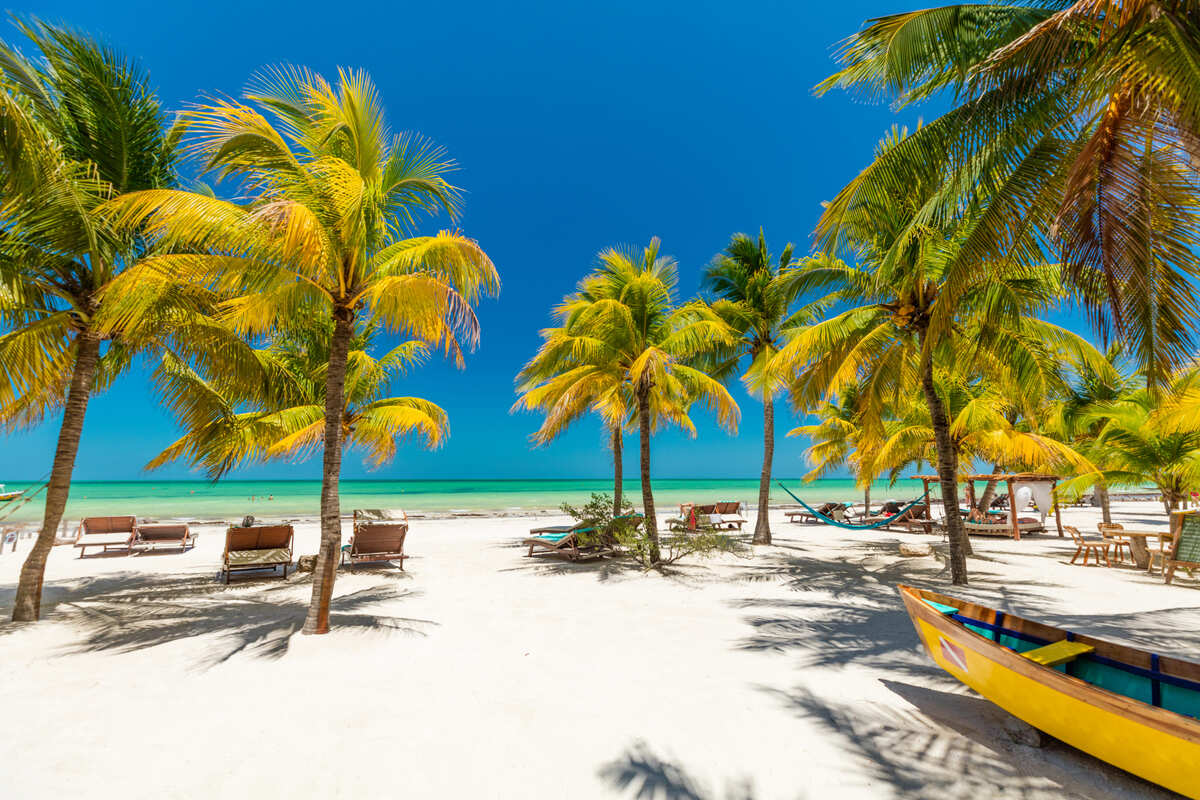
Isla Holbox, situated north of the Yucatán Peninsula in the Quintana Roo state, is officially the region’s best-loved island. Isla Holbox is famous for its wildlife, which includes elegant pink flamingos wandering turquoise water beaches. Moreover, it is car-free, making it much more quaint than the continental Quintana Roo.
Overall, it has a score of 88.96 on CN Traveler’s ranking, placing it at number one. It was almost a tie between Isla Holbox and the second-best placed, the beautiful Isla Mujeres, but the former still came out ahead with slightly more points. Interestingly, these two islands do not have a commercial airport.
While Cancun, Tulum, and the like have direct international links to cities across the United States and Canada, most visitors attempting to reach Isla Holbox do so by ferry, even though there is a small aerodrome hosting air taxis and other private jets. Similarly, the gateway into Isla Mujeres, located only 13 kilometers off the Cancun coast, is also Cancun Airport.
These islands’ relative exclusivity, at least when it comes to the incredibly well-connected Cozumel, proves North American travelers are favoring destinations that offer more peace and quiet and are not as overrun by tourists as the coast. Regarding its score, Isla Mujeres ranks in the runner-up slot with an enviable 88.01 points – marginally fewer than Holbox.
Cozumel Rounds Out The Top Five
When it comes to the aforementioned Cozumel, the Riviera Maya’s most popular island based on arrival figures alone, it charts at a lower number five, scoring 80.22 points. Rounding out the ranking, the island is served by an international airport, unlike Holbox and Isla Mujeres, and is much more densely populated, with over 100,000 inhabitants.
The full top five can be seen below, Mexico being the definitive winner with three out of five entries:
Isla Holbox, Mexico
Isla Mujeres, Mexico
Cape Breton, Canada
Vancouver Island, Canada
Cozumel, Mexico
Additionally, readers elected Cape Breton and Vancouver Island as the third and fourth-best islands in North America, respectively. These Canadian gems are the only ones in the list that have not been attributed to winter breaks or beach holidays: Cape Breton has a rugged coastline and dramatic scenery, while Vancouver Island is a well-known metropolitan hub.
Enter your email address to subscribe to Travel Off Path’s latest breaking travel news, straight to your inbox
Disclaimer: Current travel rules and restrictions can change without notice. The decision to travel is ultimately your responsibility. Contact your consulate and/or local authorities to confirm your nationality’s entry and/or any changes to travel requirements before traveling. Travel Off Path does not endorse traveling against government advisories
It may seem as if the world has already moved on from Covid at this point, but in reality, some of the most popular destinations continue enacting entry rules and delaying the resumption of normal tourism. As we have detailed before, on our side of the pond, the list can be quite extensive, especially if you’re looking to explore Latin America heading into the fall. Luckily, there are countries in the region that have scrapped all Covid rules already and are eager to host Americans again.
On this article, you will find out which ones exactly.
Latin America has been abandoning its harsh anti-Covid policies this year after struggling with repeated viral surges for two and a half years, becoming at one point the world’s hotspot for infections. In fact, there was zero coordination throughout most of the crisis, with countries like Brazil and Colombia remaining relatively open for tourism while others like Chile and Argentina shut down borders completely.
Fortunately, the situation is changing, albeit slowly, and there is a clear reopening trend being observed now that Covid has subsided:
Americans Can Travel Requirement-Free To These Latin American Countries
Latin America is a personal favorite among Americans going abroad. Whether it’s the crystal clear beaches of Mexico’s Pacific Coast, on its northernmost edge, or Argentina’s deep south, where our civilization meets the vast wilderness of the Antarctica continent, this geopolitical region is full of both natural and man-made wonders.
It is also struggling to fully resume tourist now that Covid and its offspring have been largely contained. A majority of countries belonging to the group are yet to reinstate their pre-pandemic normality, in stark contrast with Europe, where only three destinations continue enforcing border rules (including the Netherlands, where unvaccinated Americans are banning from entering).
In spite of relying heavily on tourist dollars, Latin American nations have opted for a tougher approach, with Brazil only recently opening up to non-immunized travelers, though they are still required to get tested ahead of flying. Similarly, Colombia, Peru, Ecuador, Chile, Bolivia, Paraguay, Uruguay, Panama, Nicaragua and Honduras all follow the ‘vaccine or test’ model.
Generally, Americans must produce a valid vaccination certificate, in most cases with a WHO-backed vaccine, or alternatively, when unvaccinated, be able to present a negative Covid test issued up to a day, 48 or 72 hours (depending on the rules at their destination) when crossing the border. Considering how far we’ve come regarding Covid, it sounds pretty obsolete, right?
But it is the truth: most of Latin America has not returned to their pre-2020 state of normality. On the other hand, these select few Latin American countries below have been welcoming Americans irrespective of vaccination status:
Argentina
Cuba
Costa Rica
Dominican Republic
El Salvador
Overseas territories of France in the Americas: French Guiana, Guadeloupe, Martinique, Saint Barthelemy, Saint Pierre and Miquelon (France)*
Panama
Guatemala
Mexico
*French Guiana is an integral part of France, but it is included on this list seeing that it is located in the American continent and it is a territory where a Latin language (in this case, French) is spoken.
The list includes restriction-free destinations in all of the Americas, be it North, Central, South, or insular nations, as long as a Latin language is spoken.
Less Than 10 Latin American Countries Have Reopened Fully
We define as Latin American all those countries where a language originating from Latin, such as the widely-spoken Spanish, Portuguese or French, are official languages. This definition is merely based on Language, hence, it does not include nations where English, Dutch, or any Western Germanic and thus non-Latin languages are spoken, even when they are located geographically in Central or South America (ex. Suriname).
As can bee seen above, only nine nations and/or regions in Latin America have lifted all of their Covid curbs, including the French Guiana, an overseas territory of France bordering Brazil. In all six, Americans are no longer required to present any health-related documentation, nor experience bureaucratic hurdles when traveling.
In sum, U.S. citizens visiting Argentina, Cuba, the Dominican Republic, El Salvador, any and all French territories in the Americas (or Metropolitan France over in Europe), Panama, Guatemala and Mexico are not subject to:
Vaccine requirements
Mandatory entry forms
Pre-departure tests
Post-arrival tests
Post-arrival quarantine
If you’re a Latin America enthusiast and have opted not to get the shot, or you’re simply looking to avoid Covid mandates altogether even if you’re immunized, then these are the best picks. Additionally, Americans have unrestricted entry to Spanish-speaking Puerto Rico, which may not have lifted all Covid curbs, reflecting the mainland U.S., but has axed all Covid regulations affecting incoming U.S. tourists prior to departure.
Of course, Puerto Rico isn’t available as a fully open destination for non-American citizens, as they must observe entry rules for the United States as a whole. Up until now, the Americas’ number one economy has refused to announce an official reopening date, and has maintained a vaccine requirement in place, applying to all foreigners.
What Are The Best Latin American Destinations For Travel This Fall?
Costa Rica
Mexico
Argentina
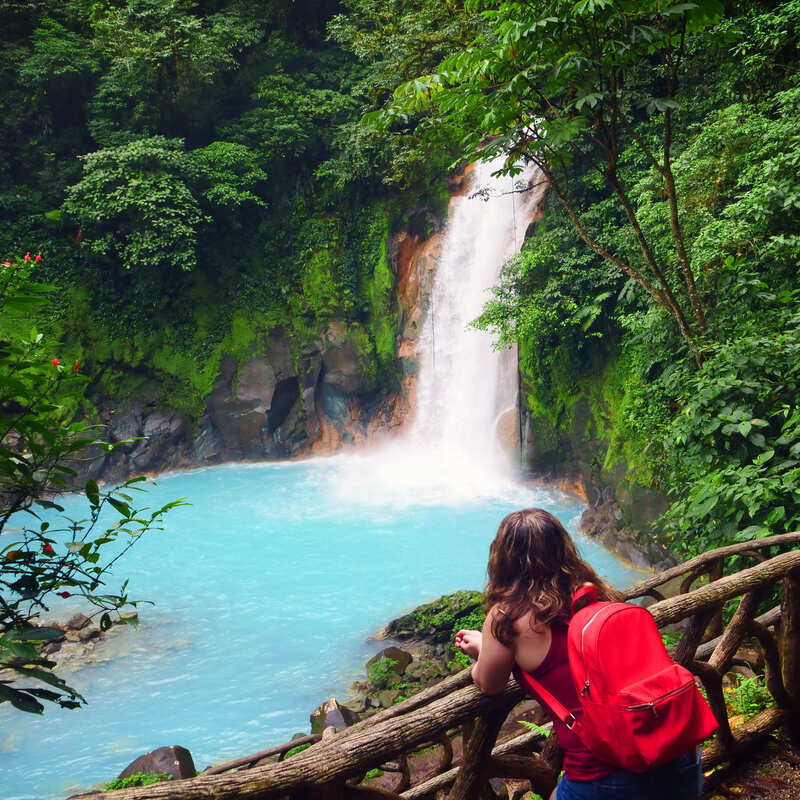
Some of the top destinations to visit in restriction-free Latin America include Costa Rica, where several natural landmarks can be found, including tropical forests, volcanoes, picturesque lakes and waterfalls; of course, Mexico remains a trendy vacay for Americans going south of the border this year.
Guanajuato, one of its colonial cities, has just been named ‘the most beautiful‘ in the entire country, at the same time that the charming, equally-historical San Miguel de Allende experiences a surge in bookings. This proves Mexico continues to be at the top of its game when it comes to tourism reinvention, as it looks to diversify its offer amid the tropical storm warnings issued for the coasts.
Lastly, there is Argentina, the only country in South America that welcomes Americans without Covid entry requirements. The home of tango, History icons like Evita, stunning cities like Buenos Aires and Mendoza, and guarding the gateway to the world’s edge, namely the frosty Ushuaia, it can be an incredible fall destination.
Enter your email address to subscribe to Travel Off Path’s latest breaking travel news, straight to your inbox
Disclaimer: Current travel rules and restrictions can change without notice. The decision to travel is ultimately your responsibility. Contact your consulate and/or local authorities to confirm your nationality’s entry and/or any changes to travel requirements before traveling. Travel Off Path does not endorse traveling against government advisories
Safety remains a primary concern for Americans traveling in the Southern Hemisphere, especially in places where neither local customs, nor the language feel familiar and scamming culture is widespread. However, there is one country where risks aren’t as high, and that has been deemed the safest to travel in Latin America.
The geopolitical group remains a major tourist destination as a whole: whether it’s a beach getaway closer to home in Mexico’s stunning Riviera Maya, or a prolonged city break in the Wonderful City of Rio, in Brazil, Latin America is full of wonders and beautiful off path places ready to be discovered.
On the downside, those visiting these countries are usually advised to be more ‘cautious’ as crime rates are usually high.
What Are Some Of The World’s Safest Destinations?
This year’s edition of the Global Peace Index (GPI) ranked 163 independent countries and territories based on their ‘level of peacefulness’. The study makes use of 23 qualitative and quantitative indicators from ‘highly respected sources’ and takes into account three main ‘domains’ in measuring peace:
The level of ‘Societal Safety and Security’
The extent of any ‘Ongoing Domestic and International Conflict’
The degree of Militarization
These factors contribute directly to the perception of tourism safety – when locals themselves feel crime levels in their home cities are low, visitors have no reason to worry themselves. As expected, the safest continent with the highest score of safety markers remains Europe, headed by the insular nation of Iceland, the most peaceful in the world.
Iceland is one of the few counties to have secured the nearly unattainable blue badge from the U.S. Department of State, meaning it is placed at the lowest possible Level 1 Travel Advisory. Touring Iceland, Americans should ‘exercise normal precautions’. Other countries in the top ten include New Zealand, in the runner-up slot, Ireland, Denmark and Austria.
Conversely, the countries with the lowest scores this year are Afghanistan, having held the title for five consecutive years now, Yemen, Syria, Russia, largely due to its aggressive campaign against neighboring Ukraine, and South Sudan. In sum, the ‘State of Peace’ across different countries has been classified according to the categorization below:
Very high (Dark green)
High (Light green)
Medium (Yellow)
Low (Orange)
Very low (Red)
Not included (Gray)
And The Most Peaceful Latin American Country This Year Is…
Out of 33 Latin American and Caribbean countries, only four achieved at least a ‘light green’ certification, those being Chile, Uruguay, Panama and the highest-peaking Costa Rica. With an overall safety score of 1.732, up 0.017 points from last year’s index, Costa Rica is officially the safest destination within the collective.
In the global ranking, it is the 38th most peaceful country, beating other American competitors like Mexico and even United States by a large margin. To draw a comparison, these North American giants are ranked 129th and 137th, respectively, being assigned an ‘orange’, or ‘low safety’ badge.
The U.S. and Mexico share this sub-optimal status with nations like Brazil, Turkey, Colombia and Israel.
Back to Costa Rica, it sits behind only Canada (12th globally) in the Americas, charting 26 slots lower. In Central America, it is the country where Americans will feel the most secure – this is part of the reason why it has become so popular among young backpackers in recent months, being crowned a regional tourism leader.
This year’s GPI does note there has been a ‘deterioration’ in peacefulness, attributed to an increase in violent demonstration, importation of weapons, rising crime rates and political instability, but Costa Rica maintains a good score both on the Militarization and Ongoing Conflict fronts, faring a lot better than its counterparts in that respect.
What You Should Know Ahead Of Visiting Costa Rica
Currently, there are no Covid entry requirements for Americans traveling to Costa Rica. They are allowed to enter regardless of being vaccinated and no pre-departure testing rule, or post-arrival testing/quarantine applies. It is one of a handful of Latin American countries where these restrictions have been axed for good.
The U.S. Department of State advises Americans to exercise ‘increased caution‘in Costa Rica, the exact same advice applying to a number of traditionally safe European and North American destinations. The entity specifically lists pickpocketing and theft as ‘common crimes‘, though the vast majority of visits to Costa Rica are completely trouble-free.
The U.K. Home Office, an equivalent to the U.S. Department of State, notes Costa Rica has a ‘low murder rate‘ than its neighbors’, despite being high compared to the United Kingdom. Even then, tourists should maintain the ‘same level of personal security awareness’ as in Britain, where theft of personal items and mugging is also a problem.
Enter your email address to subscribe to Travel Off Path’s latest breaking travel news, straight to your inbox
Disclaimer: Current travel rules and restrictions can change without notice. The decision to travel is ultimately your responsibility. Contact your consulate and/or local authorities to confirm your nationality’s entry and/or any changes to travel requirements before traveling. Travel Off Path does not endorse traveling against government advisories
Following a relatively free summer and the waning of Covid, it might seem like the world has finally moved on from the pandemic and strict mandates are a thing of the past. This may be the case for most of Europe, Mexico and the like, but it is definitely not yet a reality in South America, where only a single country has dropped all travel restrictions.
For more than two years, the Southern Hemisphere has barred international travel in an attempt to keep variants from getting imported from abroad. Despite enjoying a robust protection, with countries like Brazil being world leaders in vaccination coverage, the region has continued to refuse entry to certain categories of travelers.
Most notably, unvaccinated Americans, with the exception of one:
Most Of South America Is Still Closed To Unvaccinated Americans
South America is an incredibly vast, and culturally diverse continent that for decades has attracted American tourists due to its high affordability and natural landmarks. Sadly, for the better part of 2022, a huge percentage of Americans, roughly 30%, is still prevented from returning based on their vaccination status.
Nearly every single South American country continues to impose a vaccine requirement at their external entry points, be it land crossings, airports or cruise terminals. Out of twelve, only one has mirrored the steps of Central American counterparts and Europe when it became the 27th country to return to their pre-2020 entry guidelines: Argentina*.
*The territory of French Guiana is free of restrictions, but as it is not a sovereign entity, being an integral part of France, in spite of being in South America, it is not taken into account
Argentina is the first in Mercosur, and on an extent in South America, to lift the pandemic-era restrictions affecting American travelers and other foreign visitors. As soon as April 2022, the home of Tango abandoned its hard-stance approach, which had made it into a completely isolated nation for a period, in favor of much more relaxed policies.
Argentina Has Been The Only South American Country To Drop All Restrictions So Far
Prior to that date, even Mercosur citizens, a bloc of which Argentina is a part of and where freedom of movement applies, had been barred from crossing the border. Now, any foreigner can enter Argentina, irrespective of their purpose of travel, and with no other requirement than a valid passport and/or visa when applicable.
For Americans, this effectively means:
No vaccination required
No boosters needed
No pre-departure tests
No post-arrival tests
No quarantine
Conversely, all of Argentina’s neighbors remain ‘partially restrictive’, according to IATA’s Covid-19 Travel Regulations Map. Much like the EU in the earlier days of the crisis, Mercosur and its associated members have failed to coordinate actions in both introducing, and removing pandemic measures, leading to a confusing patchwork of rules.
European states, on the other hand, have worked through their differences and now a majority is open for travel. Below the Equator line, this level of cross-border harmonization has not been achieved as of this point. The most obvious disparity is seen between Brazil and Argentina, South America’s closest neighbors and top destinations.
The Confusing Patchwork Of Rules Affecting Tourists In The Region
While Argentina is open, Brazil only allows American visitors with proof of vaccination. A negative PCR or rapid antigen test, or even recovery certificates, are not considered valid proof of entry, though in Uruguay, bordering Southern Brazil, unvaccinated U.S. citizens are permitted to enter when presenting a negative test within 72 hours of departure.
Moving West, Paraguay accepts all of the above, on top of positive Covid tests (antigen, LAMP, NAAT or PCR) issued ‘at least 10 days and at most 90 days before boarding’. On the Pacific Coast, Chile accepts both vaccine certificates and PCRs not older than 48 hours, and travelers remain subject to testing on arrival, a controversial policy also enacted by Canada.
North of Chile, the Inca heartland of Peru, a favorite among hikers, has similar provisions, except it does not test tourists randomly upon landing. Bolivia, Colombia, Ecuador, Venezuela and Suriname all follow the ‘vaccine or test’ model, while Guyana – not the French one – mimics Brazil in banning those who are not fully immunized.
Other regional discrepancies include:
In Peru, tests must be of the NAAT kind, including RT-PCRs and RTLamps, and they must not be older than 48 hours
Bolivia accepts PCR test results issued within 72 hours of departure, or Rapid Antigen tests taken at most 48 hours before boarding
In Colombia, besides the 72-hour/48-hour rules for PCR and Rapid Antigen respectively, passengers must submit their personal information online via the Check Mig form ahead of traveling
Venezuela imposes a validity date of 270 days on two-dose certificates, requiring tourists to present proof of a booster dose once this period has elapsed in order to be granted entry on the grounds of being immunized
Venezuela only accepts PCR test results obtained 72 hours preceding arrival, as opposed to departure
Guyana arrivals may be subject to random Covid tests on arrival, even when fulfilling other criteria such as being vaccinated
Suriname‘s pre-departure test validity is 48 hours for PCR, 24 hours for Rapid Antigen
Suriname is accepting recovery certificates issued up to 6 months prior to the date of travel
*Other rules may apply for any of the above countries. We advise our readers planning an international trip to keep up to date with the evolving regulations by visiting their country of destination’s Consulate website, where official requirements are described.
Bottomline
As you can see, the rest of South America has a lot of catching up to do with La Tierra de Los Hermanos and other Central American competitors in terms of post-pandemic management. As things stand, it is one of the strictest continents to travel right now, unless visitors qualify for exemptions as vaccinated foreigners or returning residents.
Luckily, the up-and-coming digital nomad hub of Argentina, a poster nation for travel freedom, is already welcoming Americans with open arms.
Enter your email address to subscribe to Travel Off Path’s latest breaking travel news, straight to your inbox
Disclaimer: Current travel rules and restrictions can change without notice. The decision to travel is ultimately your responsibility. Contact your consulate and/or local authorities to confirm your nationality’s entry and/or any changes to travel requirements before traveling. Travel Off Path does not endorse traveling against government advisories
The Trials and Tribulations of Traveling Through Latin America
South America is an astonishing continent. Vibrant culture, astounding natural beauty, and a unique flair all collide, whichever country you find yourself in. But after five months of working my way down its western coast, I can also tell you it can be an unforgiving place too.
I spent the first half of 2022 exploring Colombia, Ecuador, Peru, and Argentina, scaling mountains, exploring the jungle, and getting to grips with the ins and outs of South American culture. It’s been unforgettable, but it’s also left me with a sense of relief at leaving I haven’t felt anywhere else.
South America should be on your bucket list, but being prepared is key to enjoying this vast continent. With that in mind, here are the eight most challenging things about traveling in South America.
Safety
Let’s get the elephant in the room out of the way first. Is South America safe? Yes, it can be safe for those taking proper care. With that said, it’s by far and away the least comfortable I’ve felt in years of full-time travel.
Until South America, I’d never seen a mugging before, and I’m lucky enough to never have been pickpocketed or had anything stolen. In my time there, I witnessed two violent muggings in broad daylight, had my own bag slashed, and met countless people who had been held at gun or knife point. There’s no getting around it; crime (and violent crime, in particular) is more prevalent here than anywhere else I’ve been.
Colombia and Ecuador were particularly problematic. I was warned never to wander around with a camera, phone, or anything valuable in sight. We were told never to walk around at night outside of the busy downtown areas and to always get an uber if possible.
Being careful makes it unlikely you’ll fall victim to anything serious, but it’s important not to dilute the fact that crime is far more prevalent than anywhere you may visit in Europe or Asia.
With that said, Buenos Aires in Argentina felt like a massive exception to this rule, as well as Cusco, Peru, where pickpocketing and petty crime pose the only major threats.
2. The Transport
Deciding how to get around South America is tough problem to solve. Flights, especially this year, can be expensive with awkward layovers, while the buses are brutally long. Our own experience was a mixed bag. After spending days trying to get the bus from Medellin to Quito, we chose to fly. Every bus option was over thirty hours long and worked its way through some unstable areas. The flights weren’t cheap and had to fly North to Panama City and then back South to Quito.
Other buses in Ecuador and Peru were amazing in terms of comfort. Lay flat seats, good air conditioning, and even snacks made the 20-hour bus journey much easier. Finding the buses, on the other hand, was a nightmare unless using the specific apps. Try to plan ahead instead of booking in person. It’ll save you many headaches.
With that said, there’s no shortage of options in each country. Domestic buses were much easier to navigate and super cheap too.
3. The Climate is sneaky
Complete ignorance on my part is to blame for this challenge. As far as my limited knowledge was concerned, Ecuador, on the equator, was always hot right? False. Sure, down by the beach, the weather is always pretty good. But in Quito, at over 2,000 meters high, it got chilly in April.
Two days later, in the Amazon, I’m sweating. A week later, in Banos, I’m perfectly comfortable. Peru’s northern regions were hot and dry, while Lima was a gloomy 60 degrees. Pick your clothes wisely, and dress for every kind of weather. If you’re exploring the whole continent, you’re going to come up against everything.
4. The Altitude
If you’ve never been at altitude before, some of South America is going to be a shock for you. Several of the continent’s most prominent tourist destinations and cities are some of the highest settled points in the world.
Ecuador’s capital, Quito, sits just shy of three thousand meters, Cusco is at a whopping 3,400 meters, and La Paz in Bolivia is a breathtaking 3,625 meters. This means it can get super cold in all of these places, but more importantly, it’s going to seriously affect your wellbeing.
Altitude sickness is very real, and it’s not uncommon for visitors to feel a bit sick during their first few days in any of these cities. Even after that, simple tasks like walking up stairs might suddenly seem a little more complicated and leave you short of breath. It’s super important to acclimatize a little and make sure to take a few days before you undertake anything strenuous like mountain climbing.
5. The Spanish
I learned French at school, so I was coming in blind with regard to Spanish in South America. I did my best to pick up the basics and was getting comfortable ordering things, listening for instructions, using numbers, and other day-to-day lingo.
But then I moved from Colombia to Ecuador, and it sounded like a different language. Then again, from Ecuador to Peru. And then Argentinian Spanish is completely different sounding. Each country and even regions within them have their own variations of Spanish. While these usually only take shape in pronunciation tendencies, like the “double-l” sound, some words and phrases are completely different.
Do your best to read up on a few differences when you visit each one so you can prepare yourself to listen for the nuanced phrasing. They didn’t teach you this in high school, that’s for sure.
6. The Water
Always ask about the drinking water. If there’s no answer to be found, assume you can’t drink from the tap in South America and go for the bottle. Even in some cases, locals may drink it, but their bodies are used to it, while ours may reject it a little.
I was able to drink in some apartments we stayed in, but they were usually fitted with individual filters that allowed us to do so. In other cities, we only used bottled water. It’s tough, especially if you’re inclined to be more environmentally conscious, but you don’t want to be sick on your trip.
7. When it’s touristy, it’s very touristy
A lot of South America is pleasantly free of mass tourism in the way we understand it. While this has its drawbacks in regards to convenience, it makes for a wonderful experience and lets you get a little more in tune with the culture.
But in tourist towns, it’s extremely touristy, and it can be anger-inducing at times. Cusco, where most tourists base themselves for a trip to the famous Machu Picchu, has an economy based on tourism. Because of this, anywhere around the center square is packed with vendors and other tourist-centric salespeople peddling their wares, drugs, or tours.
It’s virtually impossible to walk across Plaza de Armas without being stopped by five or six people selling jewelry, paintings, or even having a baby alpaca handed to you. Sitting at any of the street side tables in a restaurant means you’ll spend a significant portion of your meal waving them away. Don’t make a lot of eye contact, politely decline, and keep walking. Be firm, but try not to be rude, even after multiple solicitations. They are trying to make a living, after all.
8. The toilets…
In most of the more developed cities, the toilets are great! Even once you get out into the countryside, you don’t need to use squatty toilets too much like in Asia, where it’s the norm in some countries. But public toilets can have an aversion to toilet paper. Some, mainly in tourist spots, will have someone nearby selling by the sheet, but many won’t have any at all.
Having some with you in your bag, especially for the girls, is a great idea to help you out of an icky situation. Also, be very careful with what you flush down the toilet. Many of the plumbing systems in the region can’t cope with toilet paper and require you to toss it in the bin. As much as you might not enjoy it, just do it. You don’t want to be the gringo that clogged the toilet.
Conclusion
South America is wonderful. It was truly one of the best few months of travel we’ve had, as well as the most exhausting. It’ll test you but reward you in equal measure. Just make sure to take a little extra care than you’re used to.
Enter your email address to subscribe to Travel Off Path’s latest breaking travel news, straight to your inbox
Disclaimer: Current travel rules and restrictions can change without notice. The decision to travel is ultimately your responsibility. Contact your consulate and/or local authorities to confirm your nationality’s entry and/or any changes to travel requirements before traveling. Travel Off Path does not endorse traveling against government advisories
Now that the pandemic has changed the way we perceived the world, and even our travel behaviors, some unexpected trends are gaining traction. Solo travel is undeniably one of them, with individual bookings leading industry sales as more people feel encouraged to explore new destinations by themselves (and create their own memories).
For years, Europe held the title of ‘Tourism Capital’ of the world, due to its well-developed hostel and backpacking scene, as well as excellent transportation links, which makes country-hopping an easy feat. As the Old Continent reopens, many expected it to reclaim that title after being stuck in a two-year loop of travel restrictions.
Surprisingly, its solo travel hegemony may have been challenged… By the most unlikely of tourist destinations:
Bookings For Solo Trips In Central America Are Soaring
According to new information shared by Hostelword, a booking platform specialized in hostels and affordable stays, the massively underrated Central America has surpassed Europe in hostel bookings for the first time since the company started collecting booking data, all the way back in 1999 when it was founded.
As the experts at Hostelworld confirm, Central America (and Mexico) are rising in popularity in the post-pandemic world, even more so than Europe’s leading tourist destinations like France and Spain. More specifically, Central America bookings are up 40% since 2019, and this can largely be attributed to solo female travelers.
For years, the enigmatic world south of Mexico, and north of South America had been ignored by tourists, particularly young women who had safety concerns regarding travel in the region. More often than not, the US Department of State issues stark travel advisories for Latin American countries, usually citing crime and violence.
As official travel guidance, they should be taken seriously, but we cannot discount the fact that travelers now want to see the world for themselves, and they have grown more and more independent in their own risk assessments. The recent data provides undeniable evidence of that, with some of Central America’s rising stars topping rankings for solo travel – regardless of advisories.
Countries like Mexico, Costa Rica and Guatemala have all made it to Hostelworld’s latest Top 10 Trending Destinations For Solo Female Travelers list. As suspected, Mexico is a leader in new bookings, with guest numbers up 79 per cent, while Costa Rica trails behind at 60 per cent, and Guatemala rounds the Central American/Mexico top 3 with a 55 per cent increase.
What Makes Central America Such An Appealing Destination For Backpackers?
While these destinations were already incredibly popular prior to 2022, they were not necessarily seen as solo travel hubs, especially due to the lack of a strong hostel culture in the European model. Additionally, connectivity between Central American countries has always been a big barrier – one that Europe managed to overcome ages ago with its successful Schengen Area.
Central America countries may not be as integrated as their European rivals, but recent projects have been announced with the sole purpose of easing obstacles for travel between neighboring nations. This includes new tourism routes across the Mayan World and increased flight frequency between capital cities.
On top of that, the continent’s central strip is incredibly affordable compared to traditional tourist epicenters in Europe: the aforementioned Guatemala has ranked as the least expensive country for solo travelers in Central America, with average daily expenses at USD 39,00 – still 29.68% cheaper than the cheapest city in Spain.
Europe may offer a myriad of options for long-term, solo travelers on a budget, but even then, it can be ridiculously expensive compared to Central America. Seeing that prices are going up further due to the ongoing crisis, and the nearby war in Ukraine, it should come as no surprise that backpackers are looking elsewhere for new life-changing experiences.
Moreover, Europe may have the highest concentration of castles, picturesque Old Towns and History spanning millennia, but it simply cannot beat Central America’s nature. Based on Hostelworld’s March 2022 Solo Travel survey, 74 per cent of solo adventurers said their priority when traveling is ‘looking for nature’ and ‘natural world experiences’.
Indisputably, it is home to some of the world’s most bio-diverse lands, where travelers can find tropical forests, unspoiled Pacific and Caribbean beaches, unique wildlife, and countless scenic hiking trails. Lastly, these countries’ more relaxed visa regimes usually allow for short or longer stays without the bureaucracy associated with lengthy visa applications.
When traveling on a US, Canadian, British or EU passport, backpackers generally do not need visas at all for Central America.
Bottom Line
Solo travel is here to stay, and it seems like the Americas might be the new hotspot for backpackers, finally unseating mighty Europe after years, maybe decades of dominance. Be that as it may, we would like to reiterate solo travel does not come without its risks, particularly at a time when travel disruption is rampant.
If you are going on a solo trip, make sure you get insured for delays and cancellations ahead of flying: some of the best insurance providers, including HeyMondo and Safety Wing, offer pretty affordable (and comprehensive) policies. Lastly, make sure you check all Covid entry requirements that may still be in place at your final destination.
For more solo travel stories like this one, make sure you visit this link.
Enter your email address to subscribe to Travel Off Path’s latest breaking travel news, straight to your inbox
Disclaimer: Current travel rules and restrictions can change without notice. The decision to travel is ultimately your responsibility. Contact your consulate and/or local authorities to confirm your nationality’s entry and/or any changes to travel requirements before traveling. Travel Off Path does not endorse traveling against government advisories