When you think of digital nomads, one of the first regions that likely comes to mind is Southeast Asia.
It seems that this part of the globe has been the original home to those who embrace the laptop lifestyle, and for good reason.
With an array of fascinating countries that boast first-class cities, award-winning beaches, a low cost of living, and fantastic food, Southeast Asia quickly moved up from being a tourist destination to a digital nomad hotspot as well.
Cities such as Bangkok, Ho Chi Minh City, and Singapore have quickly become favorites for remote workers, and report after report finds them at the top of lists for safety, quality of life, and popularity among remote workers.
While these trending mega-cities are definitely deserving of their popularity, there are other cities in Southeast Asia that are starting to gain more attention with digital nomads as well.
The three cities of Manila, Jakarta, and Kuala Lumpur are now starting to gain more recognition in the remote worker community, each offering the amenities needed to live a comfortable life, and a unique local vibe as well.
These are three major cities that are on the up-and-up, and while 5 years ago they might have been considered unsuitable for digital nomads for a variety of reasons, now they have an ever-improving infrastructure, with fast wifi, a low cost of living, and great connections to other destinations with within their county and to other destinations throughout the region.
Another bonus is that these cities each have a growing community of digital nomads, meaning things such as meetups, co-working spots, and other amenities aimed at growing a community of remote workers are increasingly available.
The bustling capital city of the Philippines, Manila has long been disregarded by many travelers for the main reason of safety concerns.
While it’s true there are many areas you should stay away from, the same goes for any large city in the world. Manila is known as the “Pearl of the Orient”, and while poverty is still an issue here, there are many nice areas that digital nomads tend to choose.
While the Philippines does not have a dedicated digital nomad visa yet, there are talks of one coming.
For now, most people can stay 30 days, giving you enough time to enjoy Manila and also explore some of the other mind-blowing islands as well.
Indonesia’s Jakarta was once also plagued by concerns of safety, as well as traffic and other issues.
While it might not have the massive draw as Bali, the capital city is starting to make its way onto lists for being ideal for remote workers.
Traffic is still a massive factor here, but as a digital nomad, you can enjoy working from your high rise and watch the city below you, all for a fraction of what it would cost back home.
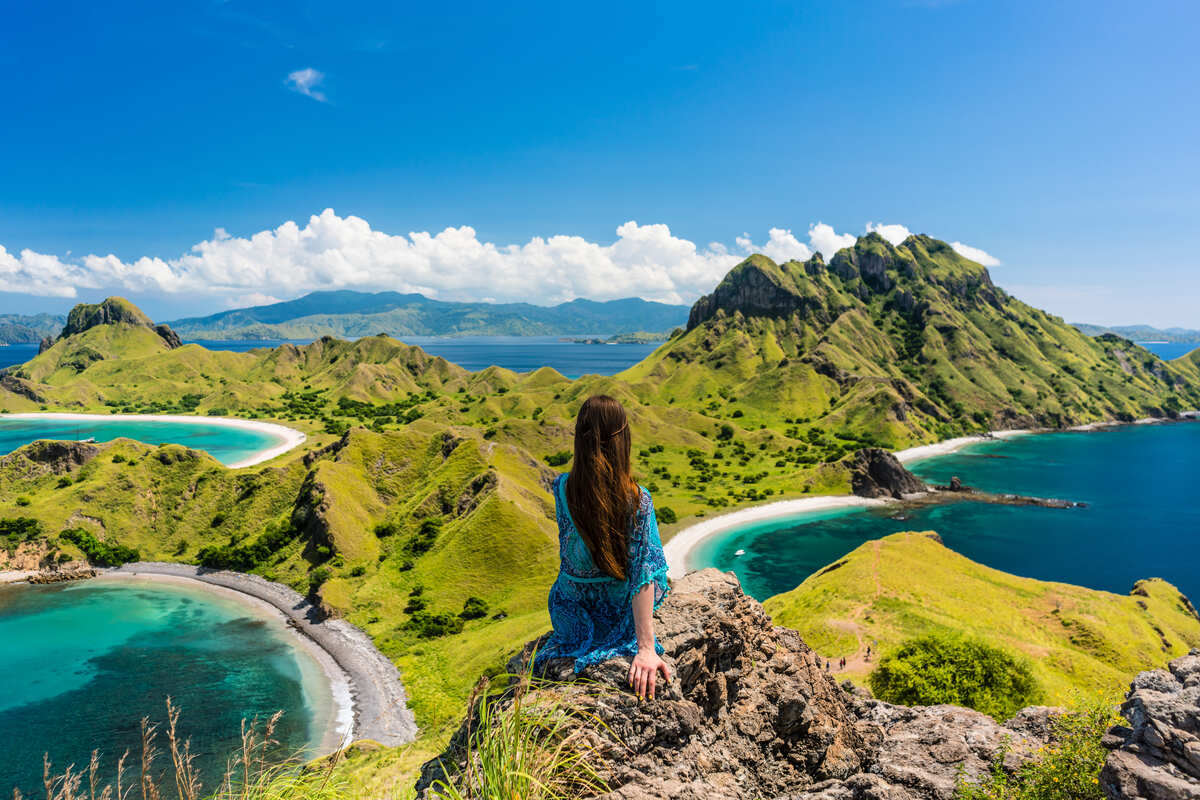
Not to mention the endless places you can visit via a quick flight from Jakarta, including Bali, Komodo, and the lesser-known Sipura.
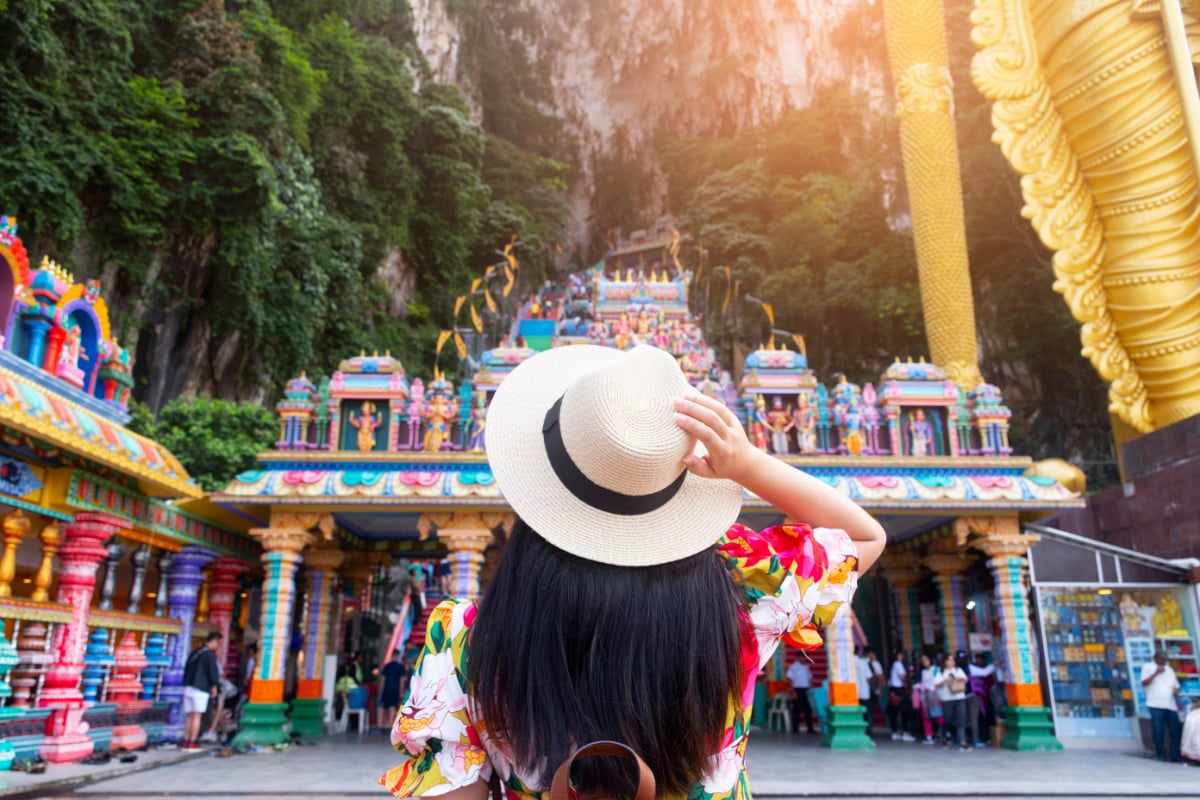
The sprawling Malaysian capital city of Kuala Lumpur is another example of a destination that most people saw as nothing more than a transit hub, yet now is starting to gain more attention for both vacationers as well as digital nomads.
It offers some pretty impressive views, fantastic day trips, and a cheap cost of living with a high, clean, and orderly way of life.
The lively Bukit Bintang is arguably the world’s best bar street, and adjoining Jalan Alor Night Food Court is where to go for arguably one of the best street food scenes in the world.
With a new digital nomad visa that is meant to be one of the easiest to obtain, more remote workers are looking to Malaysia as their next home base. If you want to explore this country before it could become overrun and potentially lose a bit of its authentic charm, now would be the time to go.
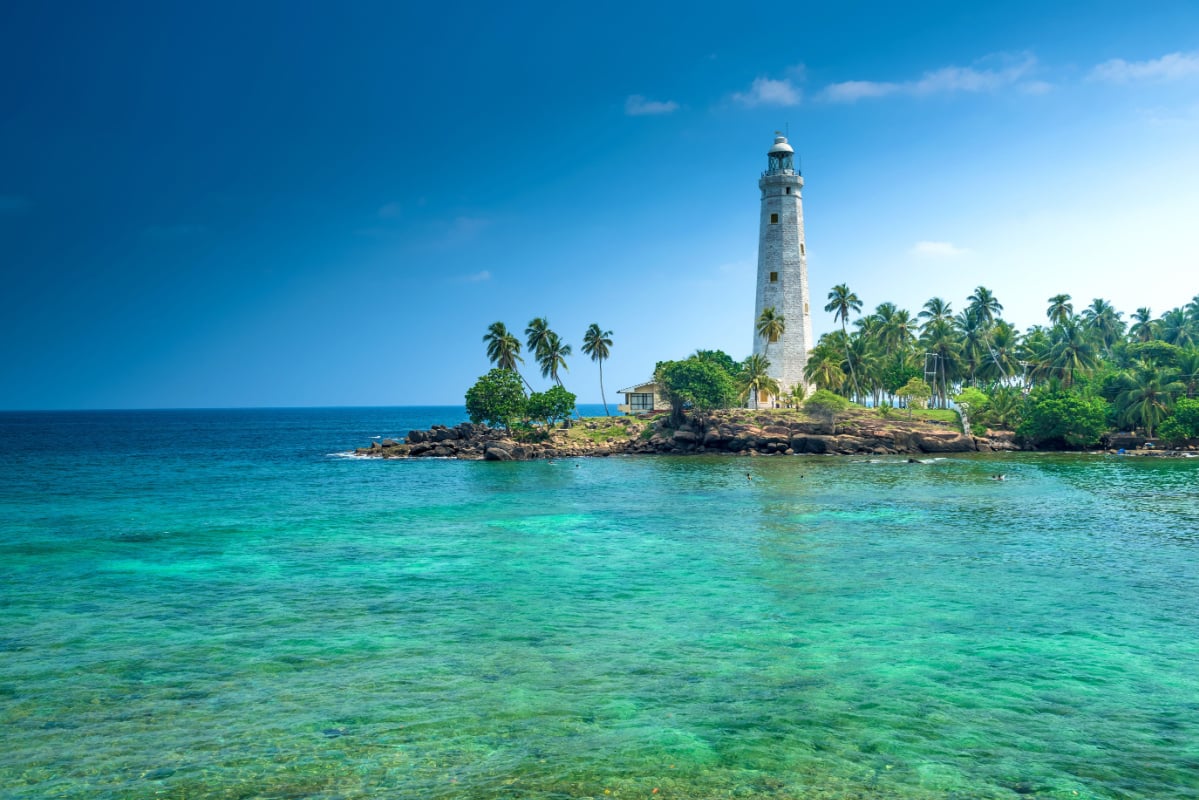
It’s been a rough couple of years for Sri Lanka, but right now is a great time to visit this rugged, tropical, and beautifully diverse country.
The Sri Lankan people are warm and welcoming, and tourism can have a hugely positive impact on the local economy.
Plus, there aren’t many countries where you can have breakfast in a lush mountaintop tea plantation and then lunch on a tropical white sand beach.
Sri Lanka is a complicated country with a rich history that only makes it a more interesting place to visit.
So why should you be visiting now? Here’s why now is the perfect time to visit Sri Lanka:
Low Tourism Numbers
Right now few Americans choose to visit Sri Lanka for tourism reasons. Global tourism numbers to the island aren’t particularly high either.
Just 140,000 foreign national arrivals were recorded arriving in the country in July. But all that is expected to change.
The Sri Lankan government has just revealed new plans to target 5 million tourist arrivals every year from next year.
They plan to introduce several tourism promotion initiatives and are expecting to see arrivals skyrocket as a result.
If you want to visit Sri Lanka before it becomes the next tourist-crammed Bali, then now is the time to book your flights and make the trip.
Good Value On The Ground
Flying to Sri Lanka will never be as cheap as flying to other closer tropical destinations like Mexico or the Caribbean.
But once you’re in Sri Lanka, the value on the ground is exceptional.
The fall in the value of the Sri Lankan rupee means that now is an incredibly good value time to visit the country. The costs of tours, transportation, and accommodation are refreshingly affordable.
What’s more, many hotels have kept their prices at pre-pandemic levels which is pretty much unheard of in any of the world’s most popular tourist destinations, though taxes have risen in the country because of the economic crisis.
The average price for all hotels in Sri Lanka is $52 per night while the average price for a budget hotel is $21 per night.
First there were the 2019 Easter bombings. Then Covid hit. Then just as there was light at the end of the tunnel, in 2022 the Sri Lankan economy collapsed.
These issues meant that there were shortages of fuel and cooking gas, as well as some medicines and essential food items. This led to widespread political unrest in the country.
When these problems were at their peak the U.S. State Department issued a level 3 travel advisory recommending that American citizens reconsider travel to Sri Lanka.
But this level has dropped to Level 2: Exercise Increased Caution. This means that Sri Lanka is considered to be a safe country to visit right now.
There are still shortages of imported goods and fuel in the country, but fuel rationing has helped to ease the situation and this has very little impact on tourists.
Even when there are frequent power outages most tourist facilities have backup generators so that you won’t really notice the impact.
If you need specific medicines, then you are advised to travel with these as there are still some medical shortages in Sri Lanka.
But in general, tourists in Sri Lanka can still feel safe and secure.
The country is uniquely placed so that it experiences two monsoon seasons, meaning when one half of the country is getting a soaking, the other is dry, and vice versa.
But the best time for exploring the whole country is considered to be the shoulder season of September and October. This period offers the best weather right across the country, plus prices are lower and crowd levels are lower too.
For nature lovers, September sees 200-plus elephants gather in one spot in Minneriya National Park. Known as ‘the gathering,’ this event can last for several weeks and is an incredible thing to see.
It is referred to as one of Asia’s greatest wildlife spectacles.
Is it the cheap cost of living, the magnificent tropical views, or living a life of luxury on a budget that attracts digital nomads to Southeast Asia?
No matter the reason, digital nomads are more than happy to call places like Indonesia and Thailand their temporary home.
Who doesn’t want to end their work day by exploring lush green forests and admiring ancient momentums and temples?
While Bali may have shown remote workers the beauty of Asia, it is not the continent’s only gem. And with over-tourism on the rise, it’s ideal to search for alternative places that offer the same luxuries and necessities as popular destinations.
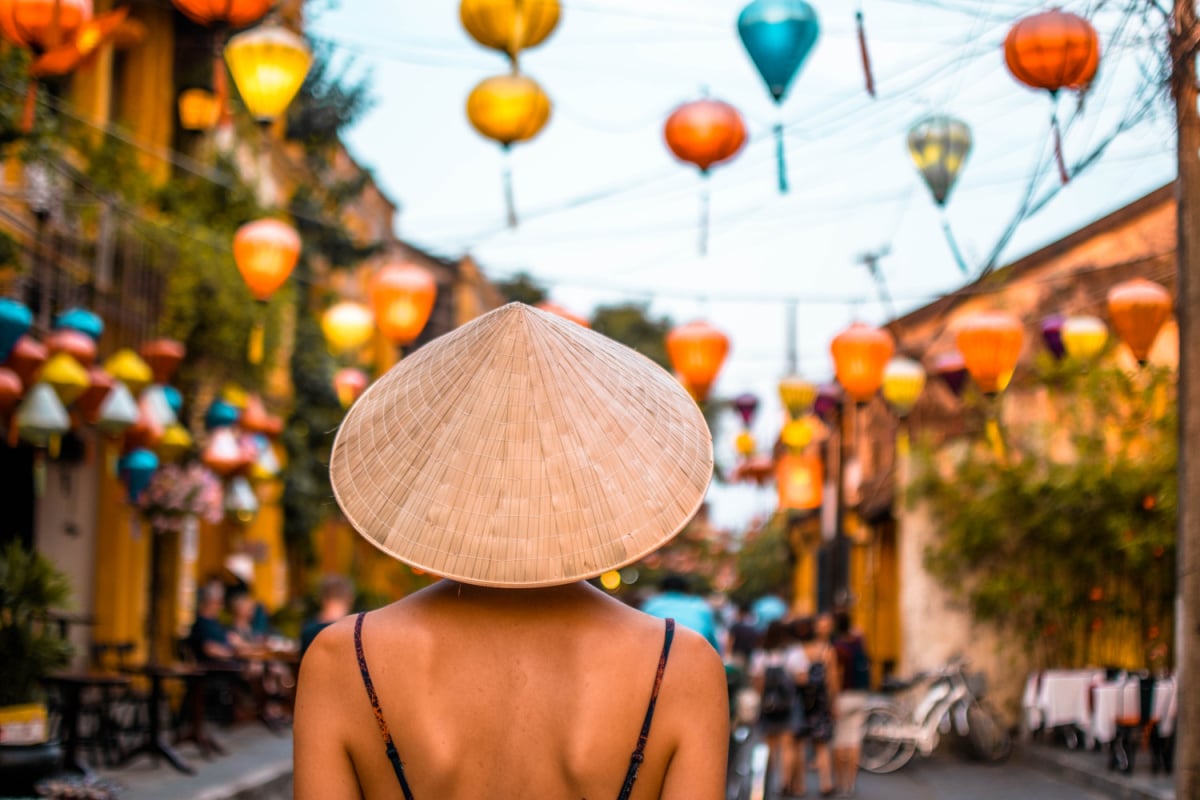
Fortunately, there’s Vietnam. This Asian country, known for its delicious Pho, is slowly becoming a top destination for digital nomads, and here’s why.
Affordable cost of living
One of the most attractive factors of Vietnam is its low cost of living. In major cities such as Ho Chi Minh City or Hanoi, you can find a suitable apartment for about $250 to $500 a month.
If you’re starting your remote journey, you don’t need a lot of money to live a good life in Vietnam. You can live comfortably on a monthly salary of between $1000-$1500.
The weather
Although Vietnam has a more tropical environment, the temperature and weather can vary depending on the region.
In the north, you are likely to get all four seasons. The further north you go, the cooler it can get. The central area can be hot and dry, with heavy rainfall from September through November.
Depending on the time of year, the south of Vietnam can be dry and hot or warm and wet. Heavy rainfall usually happens in June, July, and August.
Because of the varying weather climates within the regions, it’s easier to find a conducive environment to live in.
Besides laptops and an internet connection, coffee is one of the essential things for digital nomads. Fortunately, Vietnam is one of the largest producers of coffee, so there is a good chance of high-quality brew.
Besides its unique styles of coffee, such as coconut, and egg coffee, Vietnam provides unique elements to its coffee shops.
Suppose you’re a worker who can concentrate in a busy environment. In that case, you’ll enjoy unique contemporary cafes such as La Viet Coffee and Cafe Da Nang. Both places offer unique and calming aesthetics as a backdrop to a bustling cafe.
If you want to mix work and play, check out Rainforest Cafe in downtown Nha Trang, which is built in a treehouse with swings and slides.
The Hive has three locations in Ho Chi Minh. Besides the comfortable working spaces and air-conditioned rooms, the Hive Villa offers a special element. The Villa offers a swimming pool and garden for the perfect balance of work and zen.
Dreamplex
This co-working space has 12 different working rooms to meet the needs of any digital nomad. Its open space design, complimented by greenery, makes it the perfect place to feel rejuvenated and focused. This dreamy co-working space is located in Ho Chi Minh City and Hanoi.
Enouvo Space
Enouvo Space is the ideal place to work and meet new people. In addition to shared working spaces, there are lounge areas where you can connect with other professionals.
Hotspots for digital nomads in Vietnam
If you’re convinced to try Vietnam, here are some trendy spots to look out for.
There’s no escaping it, South Korea is becoming an increasingly popular destination for travelers.
South Korean culture has captivated the world, with more and more Americans considering a trip to this Asian nation to experience it for themselves.
With a thriving music and arts scene, a unique cuisine, and a friendly and safe way of life, it’s no wonder that visitor numbers to the country are at their highest levels for a decade.
Here are seven reasons why South Korea is becoming so popular:
It’s The King Of Cool Right Now
South Korean culture has taken the world by storm in recent years, with its unique blend of cool and quirky attracting many admirers.
Successful acts from the K-Pop scene, such as BTS and popular cult TV shows like Squid Game, have captured the imaginations of many.
Many people compare the country to nearby Japan, but South Korea has its own unique culture and a distinct vibe that make it an amazing place to visit.
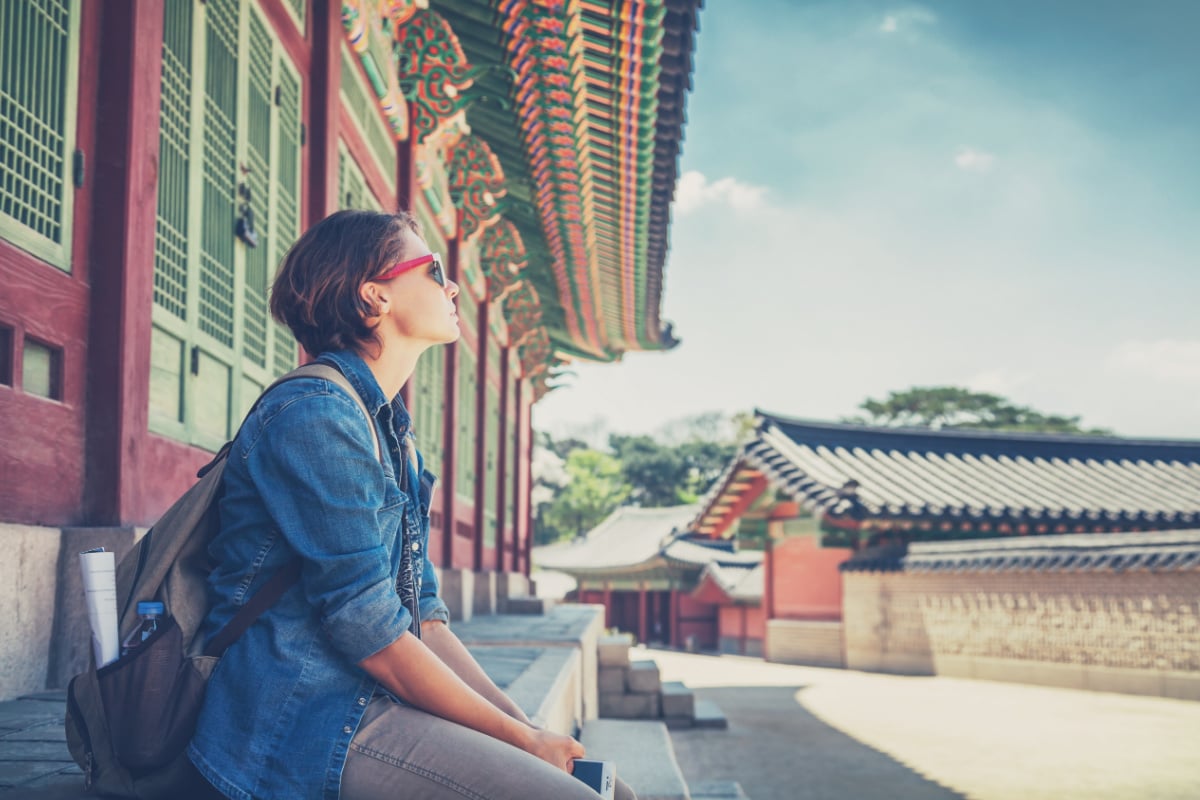
It’s not all modern trends either; there is plenty of history to soak up, such as the five grand palaces in the capital city of Seoul or the Haeinsa Temple in Gayasan National Park.
A Unique Food Scene
Another of Korea’s successful exports is its cuisine, but the best way to sample the authentic taste is by visiting yourself.
One of the most famous foods is kimchi, which is usually fermented cabbage or other vegetables in a spicy sauce.
It’s very popular and eaten with almost everything and is often served as part of banchan, which is a selection of small side dishes designed to be shared – kind of like Korean tapas.
Other favorites include bibimbap, which is a mixed rice and meat dish with many variations, and bulgogi, which is a grilled beef dish.
A huge effort has been made by the South Korean Tourism Organization to make things super easy for travelers.
It recently relaunched its Visit Korea website in English and several other languages to make planning a trip a smooth process.
The website features an interactive itinerary planner, inspirational blogs, news about events, and a live chat facility.
Traveling Around The Country Is Smooth
Once you have arrived in South Korea, you can take advantage of its excellent internal transport links, including high-speed trains, which you can get great deals on as a tourist via the Korail Pass.
While trains may be the quickest method of transport, the network of express buses can help you reach different parts of the country at a slower pace to take in the sights.
Many of the buses benefit from exclusive bus lanes to help speed up journey times.
Major cities like Seoul, Busan, and Daegu all have efficient subway systems, often with the option to buy an unlimited one or seven-day pass.
It’s Generally A Safe Country
South Korea is widely regarded as a safe country to visit for Americans.
It is ranked among the top 45 safest countries according to the Global Peace Index, and the U.S. Department of State has it ranked as a 1 on its Travel Advisory Levels scale.
The people are known for being generally friendly and helpful.
You Can Always Stay Connected
As the home to many global technology brands, it shouldn’t surprise you that South Korea is well-connected.
It claims to have one of the most expansive Wi-Fi networks in the world, with internet readily available in many public places such as subway stations, malls, and other tourist areas.
This is a great money-saving aspect and useful for digital nomads who work while traveling.
You can also pay for almost everything with a credit card in South Korea, with just a small amount of shops that only accept cash.
It’s A Year-Round Destination
Spring and autumn are generally regarded as the best times to visit South Korea, with mild weather and clear skies.
The summer can be hot and humid but is the perfect time to check out some of Korea’s beaches, such as Haeundae Beach near Busan. Be aware that from the end of June to the end of July is the rainy season, though.
It gets cold in the winter, but it’s still a great time to travel if you head over to the Gangwon-Do region in the east.
Here you’ll find impressive mountain ranges, national parks, and many ski resorts, including Pyeongchang.
Travelers wandering where they should go next may just have their answer. Thailand has long been a bucket list dream for many travelers, and the country stays busy with tourists year after year.
The bustling city of Bangkok is worth a trip in itself, where you never know where the night will take you.
Or if being outdoors in Beach Mode is more your vibe, many go to the world-famous beaches, whether it’s Phuket, Krabi or secret off-the-beaten-path getaways.
The secret is coming out now for this up-and-coming destination along the coast. It is expected to become a travel hotspot by the end of the year.
Sichon is a small coastal village in southern Thailand and will soon be ready to embrace tourists with open arms.
Here are 6 reasons why Sichon is the next travel hotspot in Asia:
A Top 10 Beach In The Country
We have all Googled what to do, where to go, and what to see on our next trip. Or maybe the trip hasn’t been booked yet.
In other words, we have probably found ourselves on Lonely Planet. The mega-popular travel site has been a mainstay for travelers for a long time, and many value their opinion.
They ranked Sichon Beach as a top 10 beach in all of Thailand with its tranquil atmosphere and stunning backdrop of the Khao Luang mountain range.
And who wouldn’t want to swim with pink dolphins? As nice as it is, this place is off the radar to a lot of travelers.
However, that is about to change. Soon, it will be much easier to reach.
New International Terminal At Nakhon Si Thammarat Airport
Nakhon Si Thammarat Airport has been serving Asia since the 90s but has only offered domestic flights within Thailand’s borders.
When the airport is set to open by year’s end, it will be so much easier to connect. As it stands now, you have to connect in Bangkok and take a lesser-known airline to get here or very lengthy ground transportation.
There is no official word on which airlines will be coming to the new terminal.
Unspoiled Nature
Every traveler has a niche. Some are magnetized by the never-ending skyscrapers of a place like Dubai, while others are completely blown away by unspoiled nature.
Sichon fits the bill for the latter and will be one of the main draws for travelers willing to give this region a fair shake.
“Far from the tourist crowds, this is life in southern Thailand as it was 30 years ago – naturally beautiful, culturally authentic and perfectly peaceful.”
-Ravi Chandran, Senior Advisor to Urasaya, a residential and hospitality development concept
Home to gorgeous mountains, beaches, and trails that lead to waterfalls, travelers will instantly fall in love with what nature has to offer here.
In fact, the breathtaking Khao Luang mountains are home to hundreds of types of orchids and hundreds of species of wildlife.
A Place To Avoid Crowds
If you told a friend you were going to Thailand, and they might respond with, “Nice! Where are you headed?”. When you reply with “Sichon”, you might get a confused look.
But if you replied, “Bangkok”, you would get a seal of approval. That’s because everybody knows it. Sichon, on the other hand, is lesser known and a great place to escape the crowds.
Travelers are setting tourism records from Texas to the Middle East and just about any other continent.
If Thailand is on your travel wishlist, this is the perfect place to have it to yourself before it becomes mainstream.
Experience A New Side Of Thailand’s Culture
Just as this region’s nature is unspoiled, so is the culture. Travelers who come here can get a true taste, both figuratively and literally, of southern Thailand’s way of life.
Whether it’s perusing the beachfront markets full of local vendors or taking a walk through the unique coconut groves, visitors will not be disappointed.
It’s a far cry from Thailand’s larger cities, and that is what Sichon is banking on travelers wanting to experience.
A City Over 1,200 Years Old
Nakhon Si Thammarat is the capital of the province and is rich in heritage and culture. It’s a must-add to your Sichon itinerary.
Basically anywhere in Thailand, travelers can find awesome Buddhist temples to visit. But the temple here is special.
Wat Phra Mahathat is the country’s oldest temple dating back to the 13th century, and will leave you in awe with its architecture and history.
Southeast Asia has long been a haven for travelers and digital nomads looking for a low cost of living and a taste of the good life. However, regional tourist visas are short and digital nomad visas are scarce.
Some countries, like Thailand, are only getting more difficult and expensive with time.
Thailand had previously offered 90-day tourist visas on arrival in 2022 but reverted back to 30 days this spring while cracking down on visa runs. Their only digital nomad visa options fall under the Thai Elite Program: nine tiers of VIP status for high-earning nomads willing to shell out $17K – $1.5M.
Other countries are taking the opposite approach, hoping to boost their post-pandemic tourist industries and encourage foreign investment.
Vietnam is in the process of extending tourist visas from 30 to 90 days. Indonesia also announced a new digital nomad visa last summer.
Malaysia has long led the pack in long-stay tourist and business visas in Southeast Asia.
The Malaysian “social visit pass” visa on arrival has allowed travelers from the US, UK, Canada, and other countries to visit for tourism or business for 90 days.
Late last year, the Malaysian government took things a step further by announcing a new digital nomad visa scheme. The DE Rantau program’s self-proclaimed goal is to secure Malaysia’s position as the top digital nomad destination in the Association of Southeast Asian Nations (ASEAN).
Now that the first few batches of digital nomad applications have been approved, it’s becoming clear that Malaysia has succeeded.
DE Rantau is undoubtedly the easiest, cheapest digital nomad visa option in Asia.
What is the DE Rantau Program?
DE Rantau is a new initiative from the government’s Malaysia Digital Economy Corporation (MDEC) investing in both local and foreign digital nomads.
The program includes DE Rantau “hubs” of pre-verified accommodation equipped for digital nomads, as well as support for digital nomad networking and community across the country.
What is the DE Rantau Nomad Pass?
The DE Rantau Pass is a visa and residency scheme for foreign digital nomads to live and work in Malaysia.
This falls under the larger category of “Professional Visit Pass” and carries a low fee of $225, of which 75% is refunded in case of application rejection.
The pass allows a stay of 3-12 months with the option for an additional 12 month renewal. Nomads in Malaysia under DE Rantau must register with Malaysia’s tax office and report their income.
The most valuable benefit of this program is that nomads will not have to pay standard Malaysian tax rates on income from foreign companies or clients.
While, unfortunately, the exact tax structure remains opaque, MDEC’s DE Rantau FAQ page lists relevant tax codes and designated points of contact for tax-specific program questions.
Who Qualifies?
Digital freelancers, independent contractors, and remote workers making at least $24,000 per year (or $2,000 per month) qualify for a DE Rantau Pass.
Qualifying applicants must work in the digital domain, which MDEC defines as:
IT, including software development, software support and sales, UX, UI, cloud, cybersecurity, blockchain, AI, machine learning, data related work, digital currencies support, etc.
Digital marketing
Digital content creation
Digital content development
What Do Applicants Need To Apply?
Applicants to this new program will submit:
Proof of Income – Latest 3 months of bank statements,either income statements or tax returns, and pay slips
Proof of Employment – Active contract with a foreign company that has been active for at least the last 3 months and is valid for future work (remote workers); or, long-term established client or combination of clients with a contract(s) for a project(s) valid for 3 months (freelancers)
Passport – 6 empty passport pages on a passport with 14 months validity
Qualifications – Educational certificates and an up-to-date resume
Proof of Tax Registration – Tax registration slip from Inland Revenue Board of Malaysia
Proof of Insurance – Medical insurance policy valid in Malaysia
Proof of Good Conduct – Certified letter from local police in your country of residence
Personal Bond – $450 payment for US citizens and $224 for UK and European citizens, refunded when your pass expires
Visa Fee – $225 for all applicants, 75% refunded if application denied
How To Apply?
Nomad Pass applications are completed entirely online. Applicants register online with MDEC’s foreign nomad portal, then submit scans and digital copies of the required documents.
Applications are processed in 6-8 weeks. There have been some reports of delayed approval (keep in view or “KIV” status) when documents or employers required additional manual verification. Still, many applicants have reported positive experiences with responsive support from MDEC while this young program blazes the trail for nomad visas in Asia.
Now that it’s reopened for tourism following two years of strict health controls, Vietnam has reclaimed its post as one of the trendiest travel destinations globally.
A seriously underrated country brimming with culture, home to pristine white-sand beaches, bounded by an azure ocean, and incredibly diverse at its core, it is once again welcoming Americans who are adventurous enough to burst out of their Western bubble.
We know most tourists would associate Vietnam with the 20th-century War and the communist values enshrined in its constitution, but a little-known fact about this Asian gem is that, aside from its turbulent past, it is a world-class sunny hub yet to be spoiled by mass tourism.
In fact, there is a lesser-known coastal town in Southern Vietnam boasting some of the most breathtaking vistas and natural scenery found in Southeast Asia, as well as one of the country’s top-rated resorts:
Vietnam’s Fastest-Growing Development Zone
Hồ Tràm, which I will Latinize as Ho Tram from now on, is not your average beach town, where the fisherman flaunt their catch, and idling away the long, scorching-hot afternoons as you stare at the East Sea is the most exciting thing you’ll do all day.
Ho Tram may have all the qualities of a sleepy Viet village, but beyond the quaintness, it is at the heart of Vietnam’s fastest-growing development area, where an up-and-coming resort scene has rekindled the interest of tourists in recent years.
As my shuttle bus left from Saigon and began traversing the Vietnamese countryside on the way to Ho Tram, I couldn’t help but wonder whether the scene unraveling before me could be compared to Tulum’s record growth all those decades ago when it went from being another small town to a global sensation:
Construction sites, sealed-off patches of land already claimed by international brands, and numerous billboards promising exciting future openings throughout this year and the next dominated the landscape, but it wasn’t until I arrived at the coast that I finally understood why Ho Tram had been gaining so much traction lately:
Some of the locals say Ho Tram Beach is the most beautiful in the region, and while I didn’t leave town on a beach-hopping adventure to explore the coastline extensively and potentially challenge their claims, I could easily take their word for it.
The sands there are essentially virgin, with a limited number of hotels lining the coast, while the waters have retained that customary bright-blue hue other resort towns along the East Sea have lost due to pollution and human interference.
Being a short two-hour drive from Ho Chi Minh City (or Saigon), the largest metropolis in Vietnam, it is the perfect getaway for those looking to unwind and escape the hustle and bustle of the big city, if only for a long weekend.
While I wouldn’t have minded just lying on the beach all day myself or enjoying all the unsurpassed facilities of the world-class resort I checked myself into (more on that further down), I still expected more than just that another melanin boost.
That is precisely why I chose to holiday in Ho Tram, as opposed to other neighboring coastal zones: beyond the sun and sand, it is dotted with historical sites that don’t often make it to mainstream travel publications, such as the Minh Dam Mountain, perhaps the main point of interest in the province.
Vietcong Caves And Monkey Sanctuaries
One of those is the Minh Dam Mountain, a protected reserve of outstanding beauty that hides some harrowing stories and an underworld of secrets beneath its scenic trails and meandering creeks.
Half a century ago, the green leaves would have been splashed with red.
Minh Dam was not only a nature park teeming with wildlife but the headquarters of Viet Cong combatants.
Climbing the mountain, you’ll walk past numerous war memorials and rock formations whose once-smooth surfaces are scarred by bullet holes:
The Viet Cong was the largest communist armed organization in then-South Vietnam prior to the Fall of Saigon and the retreat of American soldiers.
The mountain itself is ridden with war-era grottoes, connected by a complex system of nature-made underground bunkers, where the communist fighters took refuge.
Unlike the Cu Chi Tunnels in Saigon, this complex has not been fully excavated, and tourism is limited.
Only a handful of caves are open for visitation, though there is generally no indication as to where they lie in the dense forest, which is why contacting a local guide is so important.
Staying at the Melia Ho Tram, I didn’t have to worry about contacting a reputable guide, as they knew just who to call.
Besides taking me on a motorbike tour of the mountain and ensuring we never verged off-path, at least not in a way that would entail a risk of harm, Mr. Hung (my guide) introduced me to a local monkey sanctuary, a traditional fishing village, a historic Buddhist temple nestled in the lowland forests, and a number of other unlisted spots added to the itinerary.
If you like the sound of that, perhaps you should consider staying at the Melia Ho Tram yourself:
The Best Home Base For Exploring The Ba Ria-Vung Tau Province
Ho Tram is not exactly the most accessible beach destinationin Southeast Asia, in the sense that it does not have an international airport within short driving distance of the resorts nor rail connections linking a major city, such as Saigon, to the southern oceanic provinces.
Inevitably, when planning a visit to Ho Tram, you will most likely be made to include add a stopover, or preferably a couple of days in Saigon, where the international airport, and Vietnam’s busiest one at that, is located.
A sprawling financial center packed with skyscrapers and where conventional traffic rules mostly do not apply, Saigon can be a tad intimidating at first, especially if your sole goal of traveling to Vietnam is having a worry-free, peaceful vacation.
Fear it not.
Truly appreciating Ho Tram’s therapeutic qualities will require experiencing just how invariably anarchic this buzzing metropolis can be.
Once I tired myself of the concrete jungle, however, I knew immersing myself in nature was what I’d be craving.
The Melia is one of a select few five-star properties that call Ho Tram home and one of the very first international brands to arrive in the area.
Totaling over 10.000 square meters of impeccably-designed lakes and water displays, bounded by more than 4.000 tropical trees, and world-class amenities, the Melia is a quintessential part of the Ho Tram experience.
First of all, there’s the fact that this recluse town is incredibly tricky to reach on public transportation.
There are no train routes into or out of Ho Tram, and while buses seem to run regularly, finding official ticket offices or their departure point amid the urban chaos that is Saigon can be quite distressing.
Luckily for beachgoers like me, the Melia offers a direct shuttle leaving from a convenient departure point in the city’s less-busy District 2.
There are AC, USB chargers, and ice-cold water bottles available, leaving you to sink into your seat, enjoy the view, and making the short journey as pleasant as it can be.
Arriving at the Ho Tram, you can expect the highest level of customer service, with English-speaking, attentive staff ready to check you in quickly and welcome refreshers that will help you cool down from the baking weather.
After the usual formalities, I was helped onto a buggy, bag in hand, that would travel through endless rows of luxurious villas and picturesque and man-made ponds, interspersed with short yet glorious glimpses of the ocean in the distance, until we reached my destination.
Simply called ‘The Hotel’, the glistening tower block is the tallest structure on the premises, overlooking both the vast gardens below and the deep blue beyond.
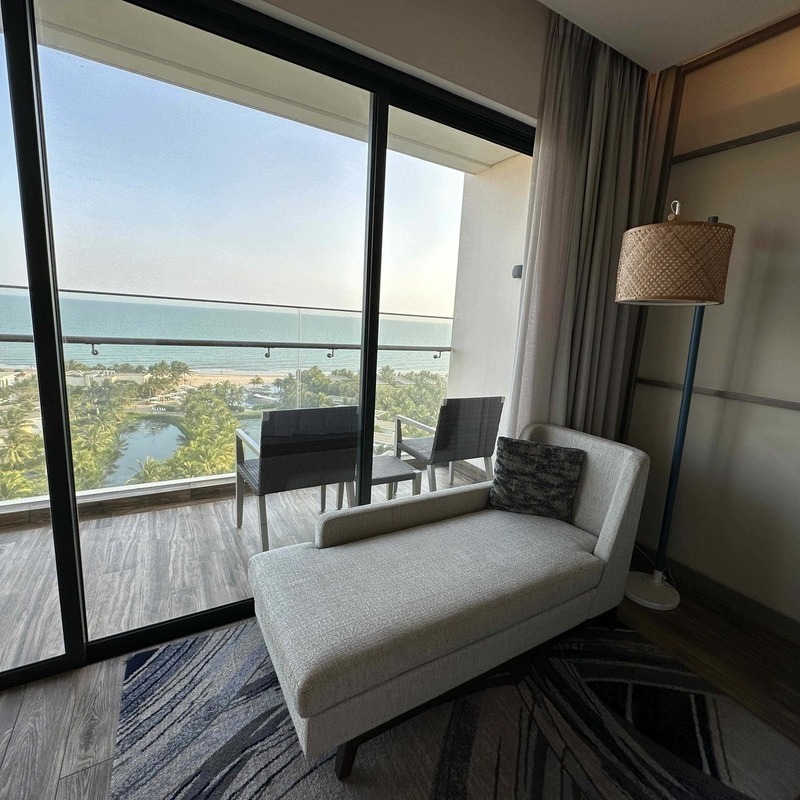
I was assigned a suite on the 15th floor, sea-facing, and with a privileged panorama of the world below.
Standing on my spacious balcony, breathing in the salt-scented air, as my feet slid comfortably into the woolly Melia slippers I had just unpacked, I knew I had made a sound decision to take a slight detour in visiting Ho Tram during my month-long Vietnam trip.
Let me show you around the place:
My Stylish Deluxe Ocean View Suite
Upon entering the room, I was first struck by the amount of natural light coming in through the balcony, dimmed by paper-thin sheer curtains hanging along the whole width of the sliding doors and the furtive peek at the privileged 15th-floor ocean vista I managed.
I instinctively walked towards it to pull it back and took a long, satisfying deep breath as the stunning view revealed itself in full to me, with the Melia below as an expanse of green alternating with rows upon rows of luxury villas, man-made lagoons, and winding footpaths.
The ocean breeze that blows up here provides some relief from the scorching heat on the ground.
The view was my favorite thing about this room, other than, of course, the spacious, extremely soft double bed I would contentedly climb up to every night.
The AC-cooled sheets provided some relief after a long day out in the sun transpiring profusely, whether it was walking the grounds or venturing out of the resort to explore the Southern Vietnamese wilderness.
The stylish shower room is another feature I loved:
Featuring integrated lighting, a walk-in shower, a separate toilet, and a glass partition for the wall, with accompanying blinds that can be pulled over it for privacy when needed, it exudes luxury while serving its most basic purposes.
Other nice touches included an espresso machine, an assortment of tea and caffeinated items, canned still water, and a minibar stocked with wine, local beer, sodas, sparkling water, and juice bottles.
With the exception of the still water, the other products were not complimentary.
The room has a huge TV set, which to my surprise, did not include smart services such as Netflix or Amazon Prime.
Casting from your device or zapping through free channels often showing Vietnamese soap operas are your only options for late-night entertainment.
The 47m² Deluxe Room Ocean View is the ideal base for young travelers on a stricter budget hoping to indulge in some luxury while exploring the Southern Vietnamese coast.
Fares start from only USD $139 for upcoming May dates on Booking.com.
The World-Class Amenities
As a destination, Ho Tram is absolutely worth exploring, but the Melia boasts enough attractions and an extensive list of activities that will keep you entertained for days.
Other than an extensive beach, which lines the hotel front.
The sea in this part of Vietnam can be a tad restless, and the sandy banks themselves were dotted with red flags indicating open water swimmers should be cautious, but I am sure water sports enthusiasts, especially surfers, would take advantage of Ho Tram’s epic waves.
Like many other guests, I was purely in search of utter relaxation, and being able to swim in the ocean was not a prerequisite for booking.
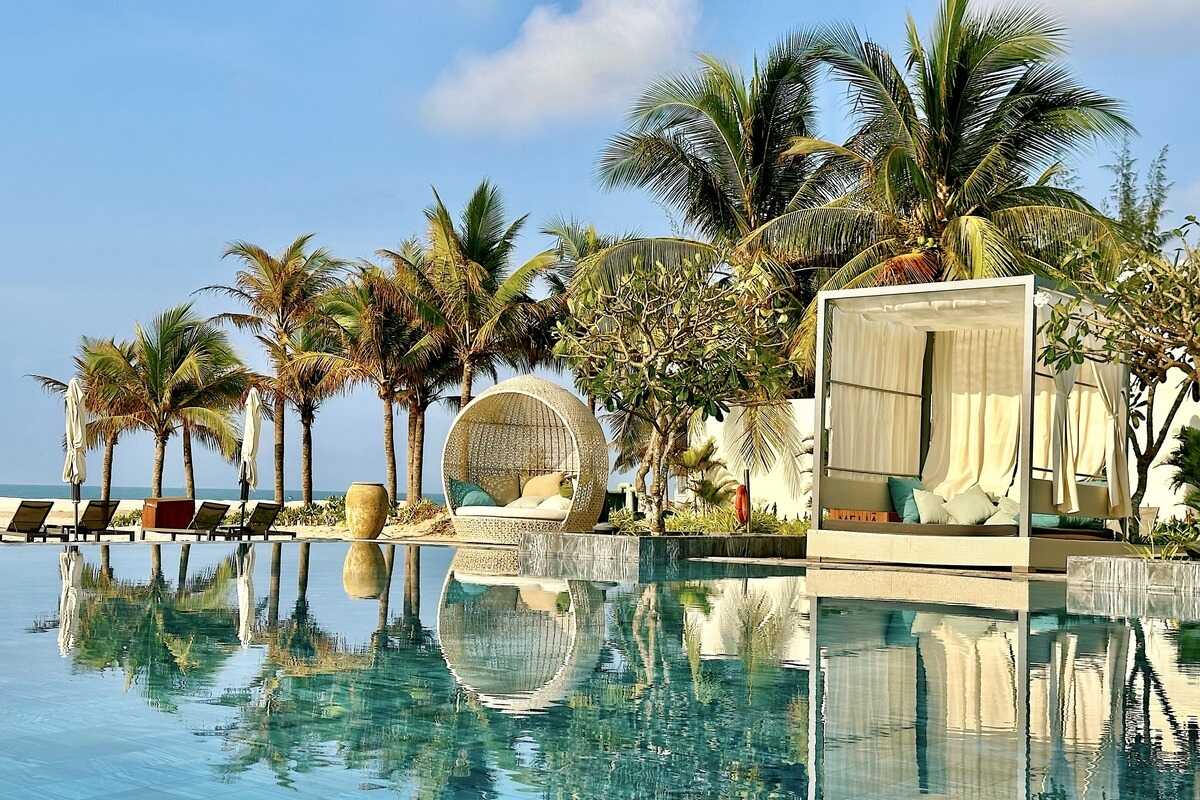
Luckily, the Melia contains two infinity pools right on the beachfront, with their faintly-outlined azure edges blending into the vastness of the ocean.
The ‘Main’ pool seemed jam-packed with visiting families.
Other than being the resort’s main meeting point, it boasts a swim-up bar at its exact center, out of which other sections of the 1,500m2-wide turquoise-colored lagoon snaked out of, leading to hydro-massage bathtubs and kid-friendly slides.
There were plenty of lounges to pick from, and advance reservation is not required.
The lounges themselves provided shade and featured a table call button, which I truly appreciated as I wasn’t expected to interrupt my reading or an early afternoon snooze to get drinks or food.
It was delivered straight to me.
If you’ve had the chance to gorge yourself with the scrumptious breakfast spread earlier, you’re unlikely to feel peckish throughout the day, but the poolside kitchen never stops: the menu includes pizza, sandwiches, milkshakes, natural juices, and other nibbles.
My favorite pool, however, has to be the much-smaller Level Pool, part of Melia’s signature ‘Level’ experience offer, and set at a quieter end of the property, a 15-minute walk from the main entertainment zone. It is an adults-only pool flanked by ultra-luxurious villas equipped with daybeds and outdoor sun loungers.
There is a bar on the premises and a pathway leading down to the beach.
Seeing that kids are not allowed in this area, the atmosphere is much more relaxed without the usual splashing and joyful screams.
It served as the perfect little nook for me to catch up with work, sip a drink or two, and listen to the soothing, not-so-distant crashing of the waves.
To be quite frank, I have probably never seen a breakfast spread as big in any resort I was a guest in before.
From the ample selection of hot dishes that felt like they would belong in an all-you-can-eat buffet – not that I’m complaining – to the chocolate-dipped pastries and exotic fruit, it is a literal feast for the eyes.
Still, on the topic of food, the Melia has four eateries guests can pick from, serving traditional Vietnamese, Italian-style Mediterranean, pan-Asian, or global cuisine.
I’m all for immersing myself in the local culture, so I became a frequent visitor to the beachfront Muoi Restaurant myself.
For my inaugural meal, I went with the classic chilly pork-stuffed rolls for starters and Pho for the main, a Vietnamese noodle-and-beef soup rich in herbs, spices, and flavor, all washed down with several avocado smoothies, my latest obsession.
The Pho tasted so good I couldn’t help but place an identical order the following night, but for the sake of my traveling experience, I did opt for the seafood rice on my final evening at the Melia.
I loved how crispy the fried garlic was and how fresh the calamari tasted, but I would take the delectable Pho over rice any day.
As for the restaurant itself, the Muoi commands beautiful views of the ocean and the main pool, and it easily became my favorite dining spot, yet the elegant, worker-friendly Elyxir Cafe was a close second with its green juices and melt-in-your-mouth fruity cheesecakes.
Luxury And Leisure
I strongly recommend you take a guided tour of the Ba Ria-Vung Tau coastline, what with its fishing villages and off-path attractions, but it’s true you’ll likely never get bored if you do decide on not leaving the resort at all.
There is a wide range of activities to fill your days irrespective of the length of your visit: archery lessons, meditation and sunrise yoga, and swimming lessons, as well as an outdoor cinema every night with free popcorn and bonfires with marshmallow roasts.
If you’re all about fitness and well-being, you’ll be glad to know there is a gym on-site, right on the ground floor of the hotel, and tennis courts, though those were closed for maintenance during my visit.
You’ll also be glad to know there is a modern spa conveniently located on the main avenue between the hotel tower and reception, and the best thing is you can book massages, hair appointments, nail care, and other luxe body treatments directly from the comfort of your room.
Another fun thing you can do is rent a bike for the day and explore the grounds and its many winding paths, lagoons, and hidden gardens at your own pace.
The first two hours are free.
Whether you’re biking, taking the buggy, or walking, you shouldn’t miss out on the newly-built Hamptons Pier, supposedly the longest pier in Asia.
At 270 meters in length, it stretches far out into the sea, where you’ll be met with postcard-worthy views of the golden sandy strip and the hotel towers in the distance.
The palm tree-lined pathway to the pier has a number of food trucks where Vietnamese street delicacies are sold and lush tropical gardens for leisurely strolls.
Soul Matters
The Ho Tram Hotel Zone is one of the fastest-growing resort strips in Vietnam and one that’s developed in record time following the country’s wider reopening for tourism in the early nineties when U.S. sanctions were lifted.
Although it is far from being the perfect sunny getaway – public transportation is effectively non-existent, tourist hotspots are far apart, and traveling outside the properties to tourist sites usually requires booking private tours in advance – I can see how the remoteness, the absence of crowds, and abundant nature would appeal to wellness seekers.
After all, as the Melia administration knows well, ‘soul matters’, and they have done a stellar job at ensuring guests feel welcome and completely at peace.
Now that travelers are ready to take to the skies, the costs associated with international travel have increased drastically. A majority of borders have reopened, but on the downside, an overpriced Europe or the Caribbean is no longer an option for many budget-conscious travelers.
Fortunately, Southeast Asia (SEA) remains a highly affordable destination. Across numerous countries, most Americans are able to enjoy a higher purchasing power and better quality of life, thanks to the strong dollar and the subcontinent’s surprisingly economical luxury amenities.
But where exactly in Southeast Asia will you get the best bang for your buck? It’s time we found out:
All Of Southeast Asia Ranked From Least To Most Expensive
There are eleven Southeast Asian countries in total, and if you’re wondering where they may be headed when attempting to stretch their dollars further, these are the safest bets: Indonesia, Myanmar, the Philippines, Vietnam, and Malaysia. According to figures posted by Numbeo, the largest crowd-sourced database for information on global cities, these are the cheapest destinations for travelers in SEA.
The complete ranking of countries can be seen below, from most to least affordable, followed by the cost of living (COL) percentage compared to the U.S average:
Indonesia – 55.9% cheaper
Myanmar – 54.9% cheaper
Philippines – 51.9% cheaper
Vietnam – 50.8% cheaper
Malaysia – 50.7% cheaper
Thailand – 42.9% cheaper
Cambodia – 39.5% cheaper
Laos – 24.7% cheaper
Brunei – 23.4% cheaper
Singapore – 18.2% cheaper
Timor Leste – Not enough data
There is not enough data on Timor Leste on Numbeo, though it could be up to 76% less expensive than the United States, according to an alternative source, Living Cost. If this were to be considered, it would place Timor Leste as the cheapest destination in all of Southeast Asia by a wide margin, almost 16 percentage points ahead of Indonesia, assuming calculation methods are similar.
Indonesia Is The Cheapest Southeast Asian For Tourists
Home to beautiful islands like Bali and Java, known for their sandy beaches, turquoise waters, and laid-back culture, as well as vibrant city breaks bustling with trade and interesting sights — with Jakarta and Yogyakarta to name a couple — Indonesia appeals to travelers of different ages and all walks of life, though it is particularly favored by long-term travelers.
While prices in Indonesia can vary drastically between provinces, rent is, on average, 80.9% lower than in the U.S. Looking at specific cities, Jakarta, the capital and largest financial center, is 63.7% cheaper to explore than New York, with rent being up to 83.3% lower. Living comfortably in the Big Apple would require a minimum of USD$9,100 per month; in Jakarta, USD$2,430 would suffice.
Indonesia’s new Digital Nomad Visa, which allows remote workers and entrepreneurs to reside in destinations like Bali effectively tax-free for five years, has also helped establish Indonesia as SEA’s number one budget-friendly vacation: it is officially the most sought-after winter sun destination on AirBnB.
Moving further down the list, the lesser-known Myanmar (previously known as Burma) takes the runner-up slot, boasting some of Asia’s oldest pagodas dating back to the 6th century and a promising city destination in Yangon, the renamed capital (formerly Rangoon). Sadly, Myanmar (Burman) remains a risky destination for tourists due to armed conflict and ongoing civil unrest.
The Philippines occupies the third spot, offering a plethora of beach sites and tropical landscapes for a small fraction of Thailand’s or Cambodia’s prices, even though they already fall within the budget category. Vietnam and Malaysia round out the top five, standing among SEA’s trendiest: other than being inexpensive to visit, they are open and restriction-free.
The least affordable in Southeast Asia is, unsurprisingly, its most developed economy: the city-state of Singapore, named the world’s most expensive in 2022.
The Triumphant Return Of Southeast Asia
Southeast Asia is one of the trendiest tourist destinations for 2023 now that most nations within the territory have loosened their once-strict COVID curbs. Traveling to a majority of them, Americans are no longer required to undergo grueling testing regimes or check into quarantine facilities. Most importantly, they no longer face vaccine discrimination, a hard no for restriction-wary Americans returning to Asia.
There’s no denying that Vietnam, Thailand, Cambodia, and Malaysia having changed their hard stance on health crisis management was a powerful driving force behind the regional tourism rebound, but it’s not the only factor behind it: all of America’s preferred holiday spots, from Mexico’s Caribbean Coast to the European Mediterranean, have seen vacation package prices soar in recent months.
In Europe, the 2023 summer season will be accompanied by further hikes, as noted by experts as early as last November, while parts of North and Central America have unashamedly begun catering exclusively to high-end customers. Amid the economic chaos, it’s clear now the SEA collective has resurged as a safe haven not only for backpackers and budget travelers but also for digital nomads.
Chiang Mai has been named the safest destination for American travelers in Southeast Asia, beating the far more developed hubs of Singapore and Kuala Lumpur to the number one spot. A culture-filled, sprawling city in Northern Thailand, it is one of the region’s top attractions, known for its imperial grandeur and perfectly-preserved Old City.
Now that Thailand is open once again for tourism, following two years of strict border checks, Americans are returning to the country in droves, drawn to its pristine nature, paradisaical islands, and laid-back atmosphere. Safety remains a top priority for those traveling abroad, though, especially in destinations where they are prone to be scammed.
Scamming and petty crimes are common across a number of Thai cities, but risks seem to be lower in Chiang Mai in particular:
Chiang Mai Is The Highest-Peaking Southeast Asian City On A Safety Perception Index
Every year, the leading crowd-sourced database for quality of life worldwide Numbeo publishes its Crime and Safety Indices by City, with crime rates compiled across 416 cities. According to the ranking, the city of Chiang Mai is one of the top 40 safest in the world, charting at number 32, and the highest-peaking in Southeast Asia (SEA).
Although Singapore is often regarded as the subcontinent’s most developed and ‘Westernized’, and thus less risky city, the overall perception of urban safety is slightly lower than Chiang Mai’s (70.8 against 75.5). It even topples Tokyo, Japan, ranking one slot lower at number 33, and in the wider East Asia it is only surpassed by Hong Kong at number 17.
When it comes to crime, the index averaged 24.5, considered ‘low’: a majority of tourists will feel safe in Chiang Mai, and most will not run into any trouble walking alone in daylight or nighttime. To draw a comparison, Bangkok’s crime index was a much higher 40.5, while safety levels were lower at 59.5 – still high enough to make it the 7th safest destination in SEA.
Three Thai Cities Feature In The Ranking
Anucha Burapachaisri, the Prime Minister’s Deputy Secretary-General for Political Affairs, was quoted saying, ‘Prime Minister Prayut Chan-o-cha is glad to see several cities in Thailand cited as having a high level of safety‘, and that the Government’s determination to eradicate crimes has created confidence among foreigners who want to travel to Thailand.
In total, three Thai cities are cited on the Numbeo list, the third being Pattaya (number 210), sharing the same crime rates as Windsor in Canada. Overall, Thailand is incredibly safe for tourists: the U.S. Department of State considers it a Level 1 destination, advising Americans to exercise ‘normal precautions’ when visiting.
The only regions where travel is strongly advised against are Yala, Pattani, Narathiwat, and Songkhla, due to the ‘ongoing insurgent activities’. These insurgencies are mostly centered in the southernmost provinces of mainland Thailand, where public dissatisfaction with the current government is notably higher.
Thailand’s Incredibly Affordable Cultural Capital
Chiang Mai is one of the most sought-after city breaks in Thailand, and a city brimming with History and imposing structures at every corner. Originally founded in the late 13th century, it replaced neighboring Chiang Rai as the capital of the historical Lanna Kingdom, a position it held until 1558, when its importance as a political center declined.
Still to this day, remnants of the bygone era are scattered around the concrete jungle, with a series of defensive walls and moats, and the Wat Phra Singh and Wat Chedi Luang temples standing among the most easily recognized landmarks. On top of its historical relevance and reinforced security, Chiang Mai is incredibly affordable:
Numbeo estimates that a single person’s monthly costs are US$518.30 without rent, about 25.6% and 10.9% lower than the capital (Bangkok) and Phuket City, two competing hubs within Thailand. Compared to the States, in order to maintain the same standards of living in Chiang Mai as you would earning US$9,000 in New York, US$2,302.70 a month would suffice.
Less crime, a higher quality of life, and significantly cheaper: it’s no wonder Thailand as a whole is the trendiest spot for young adventurers right now.
Travelers are eager to return to Asia and explore its natural wonders and colossal Buddhist temples now that it’s slowly reopening for tourism following nearly three years of closure. In fact, demand for country-hopping experiences in the continent is so high it now accounts for 7 out of the top 10 trending destinations for 2023.
Although Asia is yet to fully reinstate normality like Europe, there’s no denying it is in a much better place now than it was at the beginning of the year. For instance, several Asian countries that had completely banned tourism in response to the health crisis now welcome them with open arms, without all of the usual pandemic-era bureaucracy.
But which ones are generating the most buzz, and what are their entry requirements heading into 2023?
Is This The Definitive Comeback Of Asia?
Popular online travel agency Kayakhas named Asia and the South Pacific as the ‘region of the year’ for international travel in 2023, based on a significant increase in searches for vacations in the area, especially now that a growing number of Asian countries and other insular, Pacific destinations have lifted all of their anti-tourism measures.
According to the company’s experts, 2022 was the year of European travel after the Old World abandoned its hardline policies, granting seamless entry and newfound freedom to restriction-wary Americans who’d had enough of the social curbs imposed by their Government or simply wanted to get away from the political and ideological wars fought at home.
The fact that the U.S. has an extensive list of air routes linking it to Europe’s main entry points, no matter where you are in the country, is also a major incentive for Transatlantic tourism. In Kayak‘s opinion, however, 2023 will see travelers ‘branch out’ to lands further away, even to places where nonstop flights from their city are not available.
More specifically, to Asia. Based on their recent data, these are the top Asian destinations for you to consider in the upcoming year:
7. Tel Aviv, Israel
Technically located in Central Asia, Tel Aviv in Israel is a History-charged metropolis straddling the Mediterranean coast. Over the years, it has developed a reputation for being the ‘most liberal’ enclave in the Middle East, but a little-known fact about Tel Aviv is that it can be an incredible foodie and cultural destination if you know where to look.
Searches for Tel Aviv on Kayak are now up 134% year over year, making it the seventh most sought-after Asian city break heading into 2023. Fortunately for visitors, Israel has changed tactics and removed all of its entry requirements, returning to their pre-2020 travel guidelines: no mandatory vaccination and definitely no testing or quarantine.
6. Tokyo, Japan
The beautiful, organized chaos that is Tokyo is the next Asian hub on Kayak‘s list. Famous for its traditional temples, scenic gardens, art museums, and a modern skyline pierced by neon-lit skyscrapers, the Japanese capital has never looked more inviting now that the country has let go of its draconian measures and fully reopened.
The move has certainly helped rekindle interest in Japan, with searches for Tokyo up 150%, and if you’re a resident of the United States, you’re in luck: numerous flights that had been axed in the wake of Covid have relaunched on top of a much-needed frequency boost, including daily service between LAX and Tokyo-Haneda until March 24.
5. Bangkok, Thailand
Undoubtedly the most popular destination for Americans in Southeast Asia, tourism in Thailand continues to be headed by its bustling capital. Bangkok is an ancient queen dripping with imperial gems, such as the colossal Wat Arun Ratchawararam Ratchawaramahawihan Temple, the majestic Grand Palace, and the colorful Wat Phra Chetuphon Buddhist shrine.
Taking into account that Thailand is as open as it ever was, it should come as no surprise that Kayak searches for Bangkok are up 166%. Other than cultural immersions, the ‘Big Mango’ (as it is affectionately called by locals and tourists alike) offers short-term guests a vibrant nightlife, divine food at incredibly affordable rates, and Thai fleamarkets.
4. Hong Kong
A special administrative region of China, the city-state of Hong Kong is not quite on the same page as Japan or Thailand when it comes to pandemic management: tourists can enter, but they are subject to a strict testing regime and continued monitoring for up to 5 years following arrival, so it may not be the best of times to visit just yet.
Nevertheless, it has seen a 190% uptick in Kayak searches year-on-year. The region’s distinct Western feel, its Bohemian districts’ edginess, and relative openness to the outside world, in spite of recent attempts by mainland China to force it into a state of submission, may be a possible explanation for its popularity rise among explorers.
3. Singapore
Often referred to as the most developed nation in Southeast Asia, Singapore is yet another city-state brimming with the kind of high-tech, futuristic architecture that needs to be seen to be believed. From gorgeous fountain displays and modern marina promenades lined with beautiful Asian specimens to leisure complexes, it is truly a sight to behold.
Searches on Kayak have shot up by 201%, proving it has never been trendier. The only downside to traveling to Singapore? It has not yet lifted its health-related entry rules: all unvaccinated arrivals must present proof of a negative Covid test issued no later than two days before travel, as well as present proof of travel insurance.
2. Taipei, Taiwan
Located in the disputed territory of Taiwan, off the coast of mainland China, Taipei is a fast-paced, energetic capital that feels somewhat Chinese, though not quite – it is a democracy, for starters – and that borrows heavily from Western culture, but still feels ‘foreign’ enough for American visitors who are seeking an escape from the familiarity of home.
Year-on-year, searches have been up 289%, though Taiwan’s tougher border controls may act as a deterrent in the end for thousands of tourists planning a trip to Asia in 2023: only those who obtain a permit under one of the Government’s special programs, and who fulfill all requirements listed under said permit, can board a flight to Taipei.
1. Ho Chi Minh, Vietnam
The trendiest Asian destination for 2023, and the most sought-after destination overall, Ho Chi Minh is the cultural capital of Vietnam, known formerly by its historical name of Saigon. Here, tourists will a wide assortment of architectural influences: Buddhist, French colonial, Communist-era modernist, and so on.
In terms of Kayak searches, Ho Chi Minh is an absolute leader with a 769% increase in clicks, 480% more than Taipei, the closest competitor. Americans are heading to Vietnam in droves in 2023, and we can understand why: Covid regulations no longer apply, international flights have resumed, and most importantly, it is perfectly safe to visit.
The top ten, including destinations outside Asia, can be seen in full below:
Ho Chi Minh City, Vietnam
Taipei City, Taiwan
Auckland, New Zealand
Singapore
Hong Kong
Melbourne, Australia
Bangkok, Thailand
Tokyo, Japan
Sydney, Australia
Tel Aviv, Israel
Although they did not make the Kayak list, other three popular oriental vacation spots set to host a record number of tourists in 2023 are:
Bali, Indonesia – pristine beaches and chill island vibes
The Maldives – luxurious recluse resorts and crystal-clear oceans
Kuala Lampur, Malaysia – British colonial architecture and grand Islamic monuments