If we’re honing in on Bali, there are a lot of frustrations that come with living here and some, ironically, point the finger at the invasion of digital nomads.
More traffic, higher prices, less authenticity – you know, the dreaded G-word that comes with these sorts of things.
Sure, gentrification is a cause for concern, but the fix may be to swap the idyllic island life for the hustle and bustle of big cities used to a mix of cultures where you’ll feel welcome.
Asia ticks off all the boxes for every type of travelers, not just Taipei personalities.
Across this vast continent, digital nomads have a laundry list of options of amazing cities to make their base.
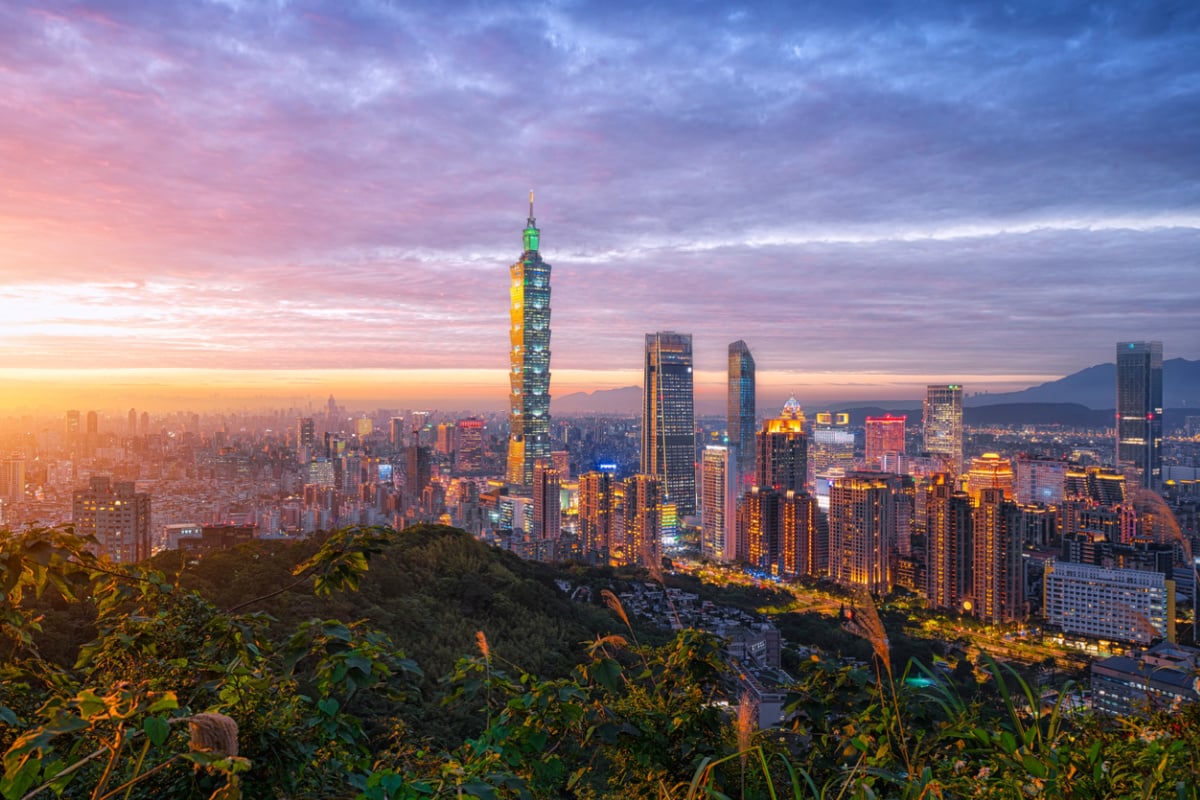
But it’s time to say goodbye to Bali and hello to the phenomenal city of Taipei, Booking’s ideal destination for digital nomads.
All That’s Missing Is A Digital Nomad Visa – Coming Soon?
Try to erase the fear-mongering narrative regarding Taipei over the past couple of years. Those talks have died down.
In actuality, Taipei has been on the receiving end of positive hype lately.
For example, Taiwan’s top destination was recently named Asia’s most affordable destination based on data from both Kayak and Travel and Leisure.
The budget category is usually a top concern for digital nomads no matter where they reside. Point being Taipei won’t break the bank across the board.
Other factors are safety, navigability, reliable Wi-Fi connections, and comfortable workspaces.
Taipei has glowing remarks for all of these, including its global reputation as an LGBTQ+ haven.
Plus, there are never-ending things to do here, including action-packed markets, relaxing hot springs, immaculate temples, and panoramic views from one of the world’s tallest buildings.
Never a dull moment between your work tasks!
The only thing missing is an official digital nomad visa, but word on the street is it’s in the works.
For now, Taiwan offers the Taiwan Employment Gold Card – a work permit, residency permit and re-entry permit wrapped in one.
90 days is more than enough time to explore Taipei and beyond. Digital nomads tend to live out of their backpacks, essentially.
You can’t pack a car, nor can you ever pack materialism, meaning sometimes you have to bear the brunt of doing things the old-school way.
Here, that means exploring by foot or rail – both are great options!
Taiwan recently released an incredible unlimited train pass for tourists valid through September.
Given the popularity, it wouldn’t be surprising to see an extension.
However, rail travel in general is very cheap, especially around the city. Tickets are as low as 61 cents!
Taipei is made to be explored day and night with astounding natural attractions like free-to-enter Yangmingshan National Park to infinite food options from street vendors to fine dining.
Taiwan may be relatively small, but ease of access allows you to visit a multitude of cool spots, leaving no stone unturned in its most sought-after city.
Tip: If you’re an adventurous eater, make sure to try local delicacy, Stinky Tofu! Smells like a barnyard, but tastes surprisingly good!
Cheap Stays And Trendy Cafes
If you’re a full-fledged digital nomad, chances are you won’t be ordering room service at nice hotels but rather whopping up dinner yourself in a cozy Airbnb or hostel.
The good news is that Taipei’s accommodations are very affordable. Expect to pay no more than $900 at most, but also keep an eye out for great values on the outskirts as low as the $200s!
While you may not want to spend your entire time in a capsule hotel, more and more of these unique stays are popping up across Asia, including Taipei.
Check out the Capsule Inn Taipei, which is equipped with a work lounge to get your Taipei trip started off right.
The city boasts dozens of new co-working spaces as well and all you have to do is scroll through #Taipei on TikTok to see all the trendy eye-popping cafes for boba and coffee.
One is Yaboo Cafe, outfitted with charging stations and zippy wifi.
Sam, our Lead Writer & Journalist based in San Diego has visited 30 countries and written over 400 articles with a focus on sharing his own travel experiences and shining a light on lesser-known gems.
Opinions expressed here are the author’s alone, not those of any bank, credit card issuer, hotel, airline, or other entity. This content has not been reviewed, approved or otherwise endorsed by any of the entities included within the post.
Bali and Thailand are the two top destinations that come to mind if you’re thinking of flying halfway across the globe to Southeast Asia.
The ancient pagodas, lush green nature, and beautiful coastal scenery all seem heavenly enough, alright, but perhaps not if you’re keen on avoiding the crowds…
Between the dollarization of prices and ongoing Westernization, both Bali and Thailand are now far from representing the idyllic, mystical Orient, and unless you’re signing up for an Ubud wellness cult, or looking to party hard in Phuket, you’re unlikely to find the spiritual awakening you seek.
Lucky for the passionate off-path explorer, not all of Southeast Asia is on the average Western Gen Z’s radar, and certainly not Cambodia, one of the region’s last hidden gems:
Why Cambodia Is Southeast Asia’s Rising Star
Though it’s been historically treated as an add-on in multi-country trips, particularly for travelers heading primarily to Thailand or Vietnam, interest in Cambodia as a stand-alone destination is increasing among Westerners:
Last year, the Asian hub hosted 5.4 million tourists, a whopping 139.5 percent increase year-on-year, and it looks set to grow even further in 2024, with 2 million arrivals registered between January and May already.
If Cambodia is nothing but a name or a vague location on a map for you, you may be wondering why Europeans and Americans alike are suddenly entertaining the idea of visiting––well, allow us to introduce you to Southeast Asia’s unspoiled kingdom.
A Charming Historic Capital
Yet to be discovered by the masses, Cambodia is nothing short of a cultural behemoth, retracing its origins back to a 9th-century Khmer civilization and having been part of several different empires over the centuries, including Greater India and France.
National capital Phnom Penh is home to an assortment of ancient and colonial-era landmarks, including the Central Market, an Art Deco-inspired markethall, Hotel Le Royal, evocative of Europe’s greatest, and the monumental Royal Palace, seat of the Cambodian royal family.
As charming as Phnom Penh, Cambodia’s true wonders lie outside its rather-compact capital city: the country is traversed by the Mekong Delta, a watercourse it shares with Vietnam, and one of the longest in the world, reaching as far as the South China Sea.
Leaving from Phnom Penh, there are several boat tours traveling down the Mekong, including this incredible sunset river cruise on GetYourGuide for as low as $9, though for the odd nature enthusiast, that’s only the starting point to a far more enthralling adventure.
This is Southeast Asia, after all, and you can expect some breathtaking natural vistas:
The Most Beautiful Nature You’ve Ever Seen
Located near the Vietnamese border, the scenic Bou Sra is one of Cambodia’s top sights, and a trio of cascading drops between 15 and 20 meters in height––for the thrill-seekers out there, you can even zip line over the waterfall for roughly $45, on the equivalent in Cambodian riel.
Elsewhere in Preah Monivong, in Cambodia’s southeastern end, tourists are greeted with emerald jungles and epic hikes, one of which leads up to Bokor Hill Station, a French-built ghost town left to crumble following their departure from Southeast Asia.
Other than paying the local Catholic church a visit, one of a handful scattered around Cambodia where Buddhism is king, the province is known for its thriving wildlife: if you’re lucky enough, you’ll be able to spot elephants, macaques, Asian tigers, and many other endangered species.
Another must-see attraction is Phnom Kulen: Thailand may lay claim to ‘The Beach’, a.k.a overtouristed Maya Bay, where Leonardo DiCaprio spent time shooting the 2000 drama, but this preserve in Cambodia had Angelina Jolie as a guest while filming her 2001 blockbuster Tomb Raider.
Hollywood features aside, let’s not forget the picturesque Battambang, a small town some 6 hours driving from Phnom Penh host to a nature-made spectacle you simply can’t miss: at sunset hours, hundreds of thousands of bats spew out of the local caves in an entrancing synchronized dance.
Cambodia also has a 275-mile-long, mostly sandy coastline along the Gulf of Thailand.
Numerous peninsulas jut out into teal-colored seas, and sleepy fishing villages tuck away cozily in remote, scenic bays, making it a literal paradise for sunseekers.
The southern coast’s number one beach getaway, however, has to be the exotic Koh Rong Island, with its 26 miles of largely-undisturbed white sands, fast-flowing waterfalls and laid-back villages yet to know the spoils of mass tourism.
Culture Buffs, You’ve Been All Sleeping On Cambodia For Far Too Long
Other than the awe-inspiring nature, Cambodia has been gaining momentum partly thanks to its ancient heritage:
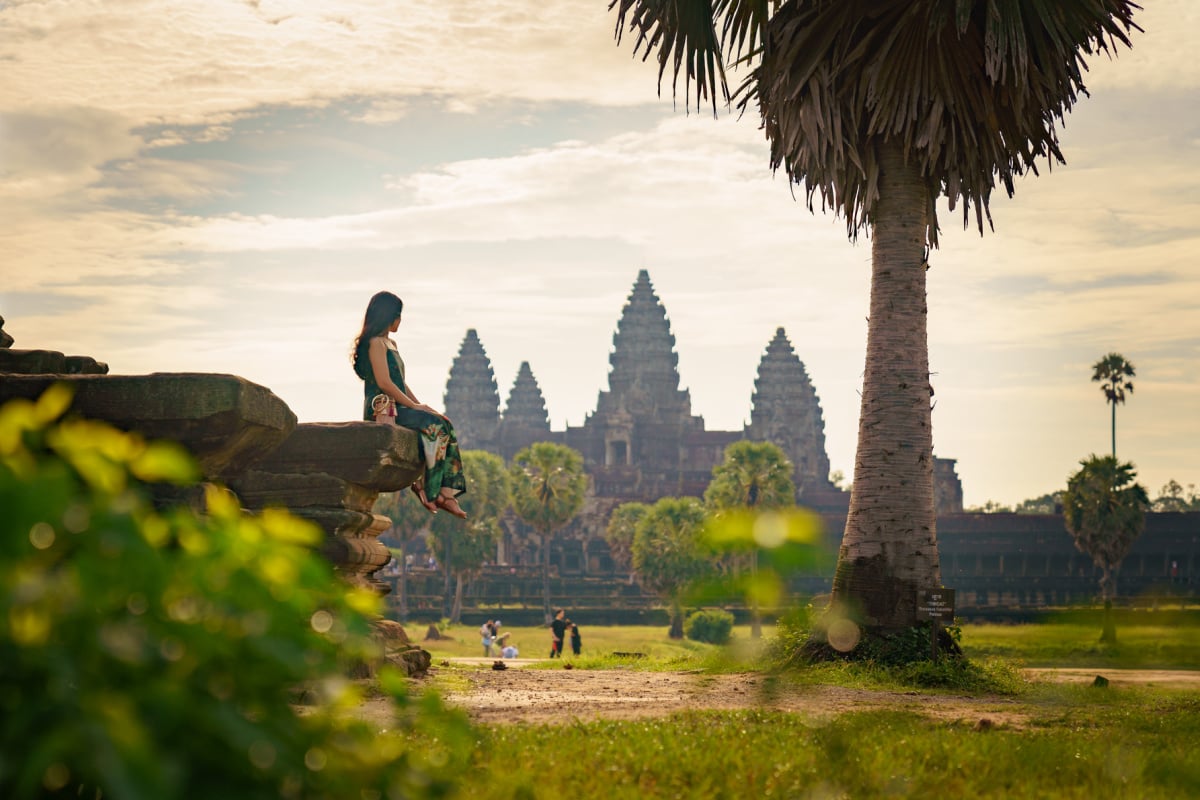
The country’s signature postcard picture, emblazoned on its own flag, the ruins of Angkor Wat draw millions of visitors every year.
Located in the peaceful resort town of Siam Reap, in the Northwest, it is an amalgamation of temples built during the Khmer Empire.
Some date as far back as 900 years, with a string of chedi towers and delicately-sculpted facades, and the best part is, unlike other historical sites in Bali or Phuket, Angkor Wat can still be enjoyed without the crowds, especially if you’re booking Viator’s small-group sunrise tour.
The even more off-path Angkor Thom, a short tuk-tuk ride away from Angkor Wat, is the site of the last and longest-surviving capital of the bygone Khmer Empire, settled in the 12th-century, and it features stunningly-preserved temples.
Best Bang For Your Buck
Not only is Cambodian culture fascinating, but the country itself is very budget-friendly:
There have been complaints from tourists that certain beach zones in Indonesia and Thailand are becoming increasingly expensive to visit as gentrification advances and luxury resorts start sealing off access to privileged beach locations.
They’re still pretty cheap to visit, but in terms of overall affordability, they’re not nearly as attractive to the budget-wary tourist as Cambodia is:
The four-star, oceanfront BeachWalk Hotel in Koh Rong Island costs $92 to book per night, and at this rate, we’re talking world-class service and exceptional catering; elsewhere in Phnom Penh, the M9 Kirirom Hotel costs a mere $33 nightly, offering sweeping views of the capital’s skyline.
In Siem Reap, the leading tourist destination in Cambodia, five-star listing The Villa by Metta will only set you back $95 per night, and if you’re really being economical, there are private double rooms (fan-only) for as cheap as $8 at the centrally-located Damnak Riverside Villa.
Food is remarkably cheap, too: whether you’re ordering their signature fish amok, or the flavorful Samlor Korkor soup, accompanied by pepper crab sides and a soft drink, it’s unlikely to cost you over $16, even at the priciest of mid-range restaurants catering to visiting foreigners.
In inexpensive eateries locals actually frequent, it can go as cheap as $4 for a meal.
Overall, the average daily cost of a one-trip to Cambodia for a single person is, believe it or not, a negligible $431 based on Budget Your Trip estimates (for a non-luxurious trip).
Flying to Cambodia may be relatively pricey for most Americans and Europeans, as it typically involves multi-stop flight routes, and availability is lower compared to tourism hotspots like Bali, but once there, you can live like a king… even on a shoestring budget.
Vini, our senior lead writer at Travel Off Path, has over 60+ countries under his belt (and currently weaving tales from Paris!), and a knack for turning off-the-beaten-path experiences into informative stories that will have you packing your bags.
Opinions expressed here are the author’s alone, not those of any bank, credit card issuer, hotel, airline, or other entity. This content has not been reviewed, approved or otherwise endorsed by any of the entities included within the post.
Bali is known as a paradise for travelers looking to enjoy laid-back island life. For decades, tourists, surfers, digital nomads, and backpackers alike have flocked to the Indonesian island.
But the long-time favorite has some competition from an unlikely newcomer.
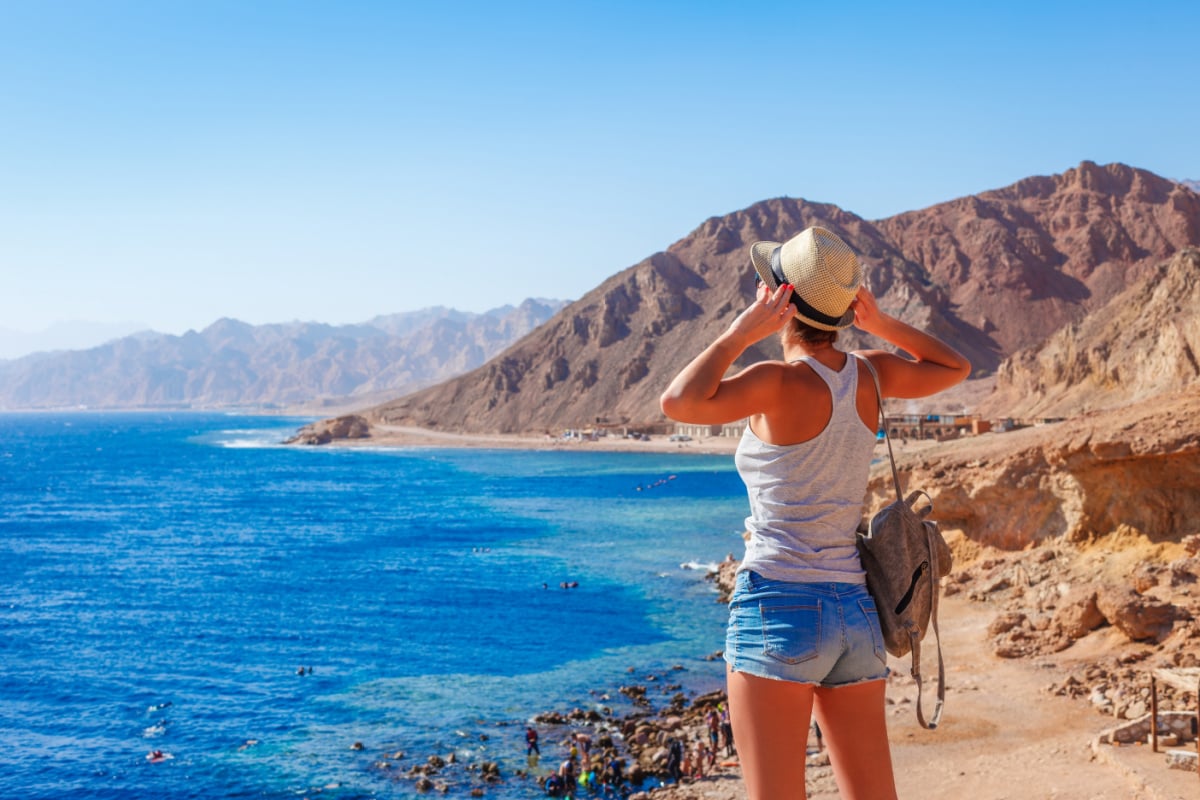
Along the untouched coastline of Egypt’s Sinai peninsula lies a sleepy town that most travelers wouldn’t suspect to be a trendy hotspot. But make no mistake – Dahab, Egypt is an up-and-coming bohemian beach destination on track to become the next Bali.
Defying Expectations
When you think of Egypt, images of ancient pyramids and bustling markets probably come to mind – not blue waters and sandy beaches. But this fantastic North African country is home to a wide variety of wonderful beaches.
From the big-name Red Sea resort towns of Sharm El-Sheikh and El Gouna to the protected reefs of Ras Mohammed National Park and Wadi el-Gemal, there’s a beach for every kind of traveler in Egypt.
Dahab ticks all the boxes for a Bali-esque hotspot. Sunny beaches, surf, adventure sports, affordability, vibrant culture, and laid-back vibes… the list goes on. But Dahab also has that alternative X-Factor; a charm impossible to quantify, but crystal clear to see after just one visit.
Travelers looking for what Bali used to be 20 years ago should look no further. Dahab is the new “it” spot.
Sleepy Beaches And Dazzling Diving
Netflix’s new documentary ‘The Deepest Breath’ has generated plenty of buzz about the Blue Hole near Dahab in the Red Sea. It’s true that this unique 100-meter deep underwater pit is a bucket list item for experienced divers, but there’s so much more to Dahab’s beaches than the Blue Hole.
Less risky and equally dazzling diving spots like The Lighthouse, Eel Garden, and The Canyon (where you can night dive underwater caves during a full moon!) are worthy of sharing the spotlight. With over twenty centers and countless dive sites for everyone from beginners to experts, it’s safe to say Dahab is a diver’s paradise.
For adventure lovers, Canyon Beach offers more than just underwater cave diving. Its colorful mountains and clear waters are great for a simple swim. Meanwhile, Lagoona Beach is the spot for a relaxing beach day or a walk along the sand.
No matter what kind of beach you’re after, Dahab’s sea sites promise the dazzle of natural beauty without big crowds.
While some travelers head to Bali to catch big waves, others flock to Dahab for world-class kitesurfing and windsurfing. Dahab is home to over a dozen kitesurfing and windsurfing schools that are especially popular with international travelers.
In fact, tourists come from all over the world specifically to kitesurf here in Dahab’s ideal conditions. With high winds 280 days of the year and calm lagoons safe for teaching beginners, Dahab is the perfect spot for these adventurous water sports.
For those who prefer to keep their adventures on land, amazing hiking is only an hour or two away in Nuweiba and St. Catherine.
Welcoming And Vibrant Culture
Egyptians are some of the most welcoming people on the planet, and Dahab is no exception to that fact. The local culture is foreigner-friendly, eco-friendly, and animal-friendly.
The pace of life in Dahab is slower and more relaxed compared to bustling Egyptian destinations like Cairo. (Bali’s infamous motorbike traffic jams are nowhere to be found in Dahab.) But chill definitely doesn’t mean boring in Dahab.
The international community here is small but active and intermingles with locals. Most of the social scene happens along the beach promenade. Artisan markets, open mic nights, and bustling restaurants offer plenty of opportunities to make connections with all types of people.
Nowhere is the international melting pot of cultures in Dahab more evident than the unbelievable variety of international food for such a small town. From German bakeries and Italian eateries to Lebanese dives and Egyptian slow-cooking joints, Dahab’s gastronomy is a microcosm of the global community.
Something about the mix of bohemian travelers, laid-back kite surfers, and hospitable Bedouin tradition sets Dahab’s unique culture apart from the rest.
Low Cost of Living
The cost of living in Dahab is nearly 50% lower than Bali, according to NomadList.
In fact, Dahab is one of the cheapest destinations in the world. Long-term travelers, expats, and digital nomads can easily enjoy Egyptian beach paradise for $700-$1,000 per month, with rents averaging $350-400 per month.
Tourists on short trips can budget for $30-40 per day, plus $200-300 per week for a scuba diving or kitesurfing course. Mid-range hotels will cost $10-25 per night, while luxury 5-star options offer great value at $50-90 per night. Local meals cost $2-5, and coffee will only set you back a dollar.
Growing Digital Nomad Hub
Given the town’s stunning beaches and laid-back global community, it’s no surprise that digital nomads and tourists alike are drawn to this hidden Sinai gem.
Dahab is growing in popularity with remote working travelers, in an upward trend mirroring the country-wide tourism boom breaking records this year. Dahab in particular is expected to explode as a top digital nomad destination in the near future.
This year, underdog Dahab competed with the likes of Capetown to make the cut for the top 10 most popular digital nomad cities in Africa, according to Business Insider. TechNext also named Dahab one of the top 7 emerging African cities for tech nomads this summer.
Working remotely from Dahab is extremely affordable. Coworking spaces start at $6 per day or $115 per month. Cafes are the most popular option for digital nomads in Dahab.
Wi-Fi can sometimes get spotty in such a remote area, so most digital nomads opt for $20 local SIM cards with dirt-cheap data top-ups to ensure they stay connected no matter what. Internet infrastructure is slowly but surely improving to meet demand.
Digital nomad and long-time solo female traveler Lara said about her time in Dahab: “As I spent my days working in cafes by the red sea, learning to free dive, and enjoying delicious meals with like-minded friends, I wondered why more people didn’t know about Dahab.”
The raw ingredients are all there. Bohemian vibes, global community, affordability, sun and surf, growing digital nomad hub, and an elusive charm.
With a little time, the sleepy Egyptian beach town of Dahab is definitely on track to become the next Bali.
Sometimes the biggest problem we run into when traveling is running into ourselves! When we book a trip to a popular destination, we should always keep in mind we aren’t the only ones with this bright idea.
Whether it’s a beach vacation in a resort town or a trip to a major city with Instagram-worthy attractions, rarely will we be the only tourist around.
This is no different for a place like Bali, where tourists often flock for new perspectives on life and culture.
In fact, local authorities are encouraging visitors to venture away from what one might typically find on someone’s itinerary and go more off-path to learn more about Balinese culture.
Bali will always be a draw to travelers, but it’s time to take a deep dive into other places that are not as commonly visited.
There are a lot of wonderful places to check off in Indonesia, but Bali is the shining light of the country. Especially since they officially ended the remaining COVID restrictions recently.
Here are the top 6 places to avoid crowds in Bali this summer:
Take In TheGitgit Waterfall
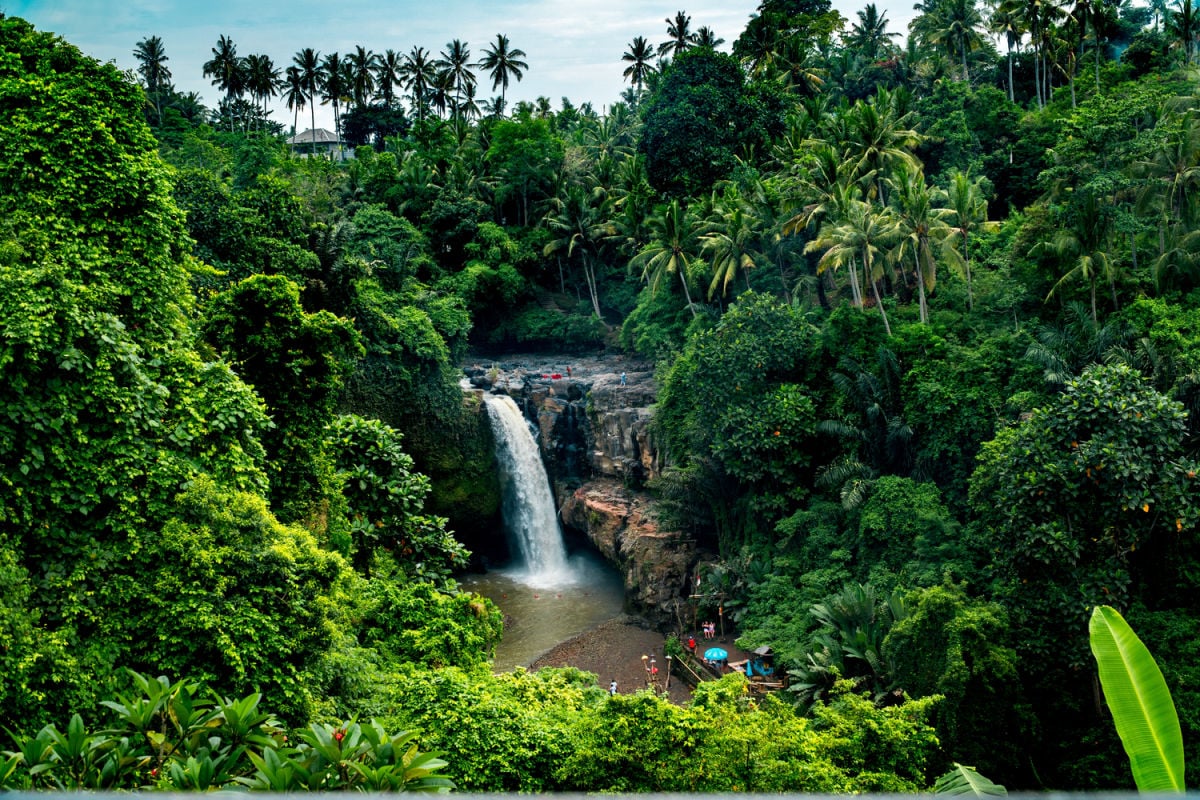
It’s perfectly okay to go chasing waterfalls here in Bali, as they are quite impressive. The Gitgit Waterfall is the tallest on the island and is a stunning sight to see.
At over 150 feet high, nature lovers and anyone who wants to show off their amazing adventures in Bali should have this waterfall at the top of their Bali to-do list.
Coming here also serves as a gateway to more adventures in nature, as there is an official waterfall hike offered by local guides.
This trek will stop at 5 waterfalls in the region:
Colek Pamor Waterfall
Ceburan Dukuh Waterfall
The Multi-Tier Waterfall
Campuhan Waterfall
and, of course, the Gitgit Waterfall
The Twin Lakes
Lake Buyan and Lake Tamblingan are a gorgeous pair of lakes, often referred to as “the twin lakes”. Visitors can come here with far less fanfare than other Bali attractions.
This area is perfect for a dreamy backdrop for your vacation photos and to just simply relax and enjoy the sights and sounds of nature.
Lake Tamblingan is surrounded by a scenic rainforest. Here, tourists can also hire a guide to visit what remains of a past civilization dating back to the 10th century.
Buleleng Regency
Lovina Beach and West Bali National Park are commonly visited areas in the Buleleng Regency region. However, there are many other places waiting to be discovered.
This area is ready to embrace tourists and show off its hidden gems and claims to have the most picturesque waterfalls in Bali.
This summer would be the perfect time to visit because if you wait too long for this region to invest in tourism, you might find yourself in the middle of a crowd on your next trip.
Banyumala Waterfall
Located near the twin lakes is the beautiful Banyumala Waterfall, worthy of a postcard. A swimming hole catches the freshwater constantly flowing from above.
It’s the perfect place to finish off an exhaustive hike through the jungles nearby and take some amazing pictures after a swim.
Out of all the waterfalls in Buleleng, this one may have the biggest crowd, but not enough to deter you from going.
West Bali
Word on the street is that West Bali is set to be the next major draw for tourists. If travelers want to see it before the crowds take over, this summer would be the time to do it!
This region is home to lush green hills, flawless coastal ecosystems, and West Bali National Park. There is a ton to offer visitors here, but not everybody knows of this side of Bali.
Visitors can find cafes, hotels and restaurants here to enjoy, but they are nowhere near as packed as the Southside of Bali.
Millions of dollars are being poured in to upgrade current facilities, but these are not expected to be complete until 2026-2027.
Padangbai
Often known as just a ferry port, this quaint fishing village is as peaceful as it gets on the east side of Bali.
Crystal clear waters all to yourself and not a care in the world about anything else. Perfect for a relaxing day on the beach or even snorkeling to check out the local marine life.
Travelers keep falling in love with Bali and many digital nomads are choosing this beautiful destination as their base.
It seems like the time this Indonesian Province had strict entry rules for tourists during the pandemic only made it more desirable, and since entry requirements were eased last year, tourists from all over the world rushed to this paradise.
However, the government is not entirely content with this tourism boom and has been implementing new rules and major changes affecting international travelers in the last few days.
Why? Well, there are multiple reasons.
One of them is that certain travelers have not been behaving properly and it has been publicly reported: from wild tourists getting naked next to sacred monuments to visitors driving scooters without a proper license.
Bali’s Governor Wayan Koster has officially announced new rules that will affect travelers in the upcoming days, including a list of Do’s and Don’ts for tourists.
These are the three main changes announced:
1) Travelers Must Carry Official Licenses To Drive Scooters
Driving scooters is one of the most popular experiences in Bali and almost anyone could do it.
Driving scooters freely—wearing only swimsuits—, without a driver’s license and dealing with the crazy scooter traffic was among the most popular videos shared by digital nomads in the province.
While it is not legal to rent a scooter without a driver’s license, it became common knowledge that visitors could rent a scooter without an official permit as rules were pretty flexible and motorbike rentals were not obliged to verify if a tourist had a driver’s license.
Travelers must have an international driver’s license or the local permit, a SIM.
According to the information shared by The Bali Sun, to ensure that rules will be obeyed, a Tourism Task Force has been deployed in Bali to fine violators, in alliance with the traffic police.
Scooters must only be rented from only certified scooter providers.
2) No One Can Step Foot On Mountains And Volcanoes
Governor Koster has made a more radical decision towards tourism activities in the mountains and volcanoes in Bali that will also affect locals.
As reported by The Bali Sun, It is now forbidden for everyone to visit any of Bali’s twenty-two mountains “unless there are religious ceremonies or disaster management and special activities that are not for tourism activities.”
This measure has been applied after foreign visitors were disrespectful towards the sacred mountains and nature.
Popular outdoor experiences like Mount Batur trekking are now banned, affecting nature lovers and locals that relied on these tourism experiences.
3) Visitors Can Only Stay At Registered Hotels And Villas
Travelers must be careful when booking their accommodation in Bali.
Officials in Bali announced there will be consequences for those staying at accommodations that do not pay taxes —including Airbnb, guesthouses, B&Bs, and guesthouses— and there could be investigations or raids taking place soon.
Tourists staying at official hotels and other registered accommodations shouldn’t have any problem.
However, it can affect digital nomads or villa renters that have arranged informal stays with friends, family or locals.
Visitors should make sure that the property has business credentials and double-check with owners that they have the right permits to avoid any risk.
Certain rules are just common sense for respectful travelers —but due to recent incidents, authorities thought they should clarify.
As mentioned in the list of “do’s’ ‘, tourists must respect sacred nature and religious symbols, as well as Balinese culture and its people, and dress accordingly when visiting holy spaces, in public spaces, and tourist attractions.
Other rules are related to the three main changes, and there’s also been a currency reminder: travelers must pay in Indonesian rupiah, use the Indonesian Standard QR Code, and exchange foreign currency at authorized businesses and banks.
Regarding the “don’ts” list, it has been mentioned that travelers can’t enter holy spaces in temples except for praying and wearing traditional Balinese clothes —women must not have their period.
Travelers can’t touch or climb sacred trees, pollute, or use single-use plastic.
Other rules mentioned just emphasize good behavior and want visitors to not spread hate speeches or act aggressively.
In general, these guidelines just reinforce existing laws and remind travelers to be respectful.
While Bali waited two years to welcome back tourists with reduced restrictions, the island was given the chance to restore some balance after its consistent onslaught of tourists showing up at its doors.
Prior to the pandemic, more than 6.3 million people visited Bali in 2019, but when this came to a halt, the country severely suffered since a large portion of its income relies heavily on tourism.
The environment, on the other hand, was able to heal. Sound pollution was kept to a minimum, and the once-congested streets were left bare.
When borders began to open, Bali was again flooded with tourists – but not always the good kind.
In February and March this year, over 170 foreigners broke traffic laws, which included drunk driving and speeding. Motorbikes are one of Bali’s main modes of transport, and with tourists wanting to enjoy the local experience, they opt to rent motorbikes under more lenient rules and with little experience.
Bali provides ample opportunities for tourists to have experiences that they typically wouldn’t be able to enjoy in their home countries since the country takes a laxer approach to certain safety standards.
While the country celebrated the return of tourists after such an impactful closure on the economy, locals couldn’t help but reminisce on the days when things were a little calmer and safer.
In an effort to restore some of the balance that was achieved during the lockout, the government has decided to ban tourists from renting motorbikes.
It seems the country has had enough of the reckless behavior that tourists participate in while riding them, so this new rule will be implemented later this year.
Governor of Bali, I Wayan Koster, is calling for tourists to act like tourists and use cars booked through travel agents instead of motorbikes.
He explained that some of the bad behaviors on motorbikes involve driving without t-shirts and clothes, not wearing a helmet, violating traffic rules, and driving without a license – which all present safety risks for locals and other travelers.
Bali is mainly Hindu, and due to its strong tourist presence, the island is known to have softer restrictions, but it is still located within a majority-Muslim country and needs to reflect the mainland.
Earlier this year, Indonesia made the controversial decision to ban pre-marital relations and living together outside of marriage, although it was caveated that this wouldn’t impact tourists.
Even if this law doesn’t apply to tourists, the country is taking a stronger stance on maintaining its traditional roots, despite the presence of rowdy and indecent tourists that have become a staple of the Bali scene.
Tourists have been known to disrespect Indonesia’s more conservative approach, and as tensions rise between locals and tourists, the country is making efforts to have more control.
Last year, the government set an example of two influencers that disrespected the country’s mask mandates by painting masks on their faces in blue paint and entering a grocery store.
The two influencers were widely criticized by locals and foreigners, and officials made the decision to deport them.
Meanwhile, after locals experienced a much quieter period with no bars and clubs blasting music until the early hours of the morning, there have been more recent calls to keep noise levels in check.
More than 8,000 locals signed a Change.org petition last year in the party district Canggu and surrounding areas complaining of noise that was compared to “worse than an earthquake.”
The petition called out tourists for being disrespectful and indecent, with drunkenness, sexual activities, and urinating on temple walls in the area.
Following the Change.org petition, a meeting was called, and officials announced a requirement for venues to limit noise to 70 decibels and close by 1 am, but locals are still waiting to see how these will be enforced since this ruling is already included in Indonesia’s environmental law.
There have been some reported changes in some areas, while other locations continue to play music until late. It doesn’t seem to be just the locals complaining, as certain blogs and articles have popped up asking if Bali is still worth it.
Last year, Bali launched a 10-year visa for tourists, which is aimed at visitors with higher net worth. One of the requirements states that the visa holder must have $128,554 USD in their bank account, while the 6-month digital nomad visa requires $2,000.
With some of these recent changes, it seems that Bali is now striving for an equal medium – a destination that encourages tourists to visit but also respects the local customs and safety standards.
It will be a matter of time to see if these changes will last, but locals are hopeful that new rules and requirements will curb some of the bad behavior that Bali has developed a reputation for.
Quickly after relaxing some of its most stringent Covid mandates and allowing vaccinated tourists to visit with few limitations, Indonesia is mulling a new package of restrictions to be introduced following a viral rebound. For the double vaccinated, this could mean showing proof of a booster when entering the country, including the province of Bali.
Recently, South East Asia has taken steps to reopen following two years of total closure, however hesitantly. Indonesia is no exception, having relaunched Visa On Arrival for a number of foreign nationals visiting Bali earlier in March, and even exempting vaccinated tourists from the dreaded pre-departure tests.
While it seemed before as if Indonesia would not deviate from its reopening path, now we are not so sure:
Indonesian Minister Hints At New Booster If Cases Continue Rising
Starting in late 2021, Indonesia has been moving away from its harsh pandemic policies, allowing immunized travelers to return without quarantine or testing, and boosting its tourism-dependent economy after months of severe stagnation. The recent relaxation led many to believe the nation would revoke even more rulings in the weeks to come.
That may no longer be the case, after Luhut Binsar Pandjaitan, the Coordinating Minister for Maritime Affairs and Investment, one of Indonesia’s top officials regarding border policies, suggested a new booster requirement for travel may be enacted in the (likely) event that Covid infections continue rising.
Prior to this month, pandemic rates in Indonesia had been on a laudable downward trend, influenced by the Government’s swift actions and comprehensive vaccination campaign. Regrettably, Covid is spreading again – fast. According to Reuters, Indonesia is reporting its highest daily averages since February 20, when cases peaked.
The case count may not be high enough yet to overwhelm the nation’s health sector – there are 1,485 new infections each day, or 3% of the peak – but the Government is determined to keep them from increasing any further. Effectively, local authorities are targeting tourists once more, even after WHO expressly told countries international travel is not a risk.
Is There An Actual Risk Indonesia Will Impose A Booster Mandate?
In Pandjaitan’s own words, should the number of cases continue climbing in July, they will introduce booster doses as a travel requirement for ‘the common good’. Despite the warning, the Minister reaffirmed the pandemic remains under control across Indonesia, even as the BA4 and BA5 Omicron sub-variants disseminate.
‘Singapore, which is close to us, sees a high increase in cases’, the Minister added, referring to the neighboring destination that has removed all testing for vaccinated travelers a couple of months ago. ‘Malaysia also reports a high case surge’, he stressed, mentioning yet another country that has eased testing rules, asking ‘all to be disciplined’.
If the data shared by Reuters is anything to go by, the Covid situation in Indonesia has a tendency to aggravate. Unless there is a clear shift in pandemic trends, vacationers with their hearts set on Bali, and who are yet to receive an additional dose, will need to update their vaccination card in order to be granted permission to travel.
So far, Bali’s entry rules have not changed. The province still considers foreigners who have been given two doses of an approved vaccine to be fully immunized, and thus eligible to bypass both testing and quarantine orders, but the fact that Indonesian Ministers are openly discussing tightening existing rules should not be overlooked.
What Are The Rules For Visiting Bali Right Now?
Currently, in order to enter Bali, travelers must show one of the following documents at the border:
A vaccination certificate (two doses are enough for now)
A recovery certificate issued up to 30 days before departure
Those who fail to produce one of the above will have to undergo testing on arrival, and observe a five-day quarantine until a second RT-PCR test is performed prior to release. We do not know, at this point, whether the non-vaccinated, or those holding a recovery certificate, will be allowed to enter Bali if a booster mandate is issued.
Entering Indonesia now, most travelers, regardless of vaccination status, must apply for a Visa On Arrival costing IDR 500.000, or USD 33.76. U.S., Canada, UK, Australia, New Zealand and European Union citizens are all eligible to obtain this entry permit once landing in Bali, or eight other entry points across Indonesia.
The full list of destinations granting this visa is available below:
Soekarno Hatta DKI Jakarta
Ngurah Rai Bali
Kualanamu North Sumatra
Juanda East Java
Hasanuddin South Sulawesi
Sam Ratulangi North Sulawesi
Yogyakarta Yogyakarta
Hang Nadim Batam, Riau Islands
Zainuddin Abdul Majid West Nusa Tenggara
The visa is valid for up to 30 days, and can be extended once a traveler is inside Indonesia. Those seeking an extension must submit an application to the Immigration Office, requesting an additional 30 days. When planning to stay longer, digital nomads will soon be able to apply for a 5-year visato reside in Bali, tax-free.
Lastly, tourists must install the Peduli Lundungi application ahead of flying to Bali, and may be subject to a temperature check once landing. There may be different requirements in place across separate provinces, including mandatory proof of a booster dose in order to travel to select domestic destinations.
For that reason, tourists planning to travel beyond Bali are advised to contact their airlines for more information.
Enter your email address to subscribe to Travel Off Path’s latest breaking travel news, straight to your inbox
Disclaimer: Current travel rules and restrictions can change without notice. The decision to travel is ultimately your responsibility. Contact your consulate and/or local authorities to confirm your nationality’s entry and/or any changes to travel requirements before traveling. Travel Off Path does not endorse traveling against government advisories
A tiny island with a big heart, booming tourism, and lots to discover – who doesn’t love Bali?
If you haven’t traveled to Bali (yet), or are planning to sometime soon, we’ve put together this guide on the top things travelers need to know before visiting this Indonesian island that’s also known as the “island of the gods.”
Whether you’re looking to plan a two-week getaway to Bali or stay for a while as a digital nomad, keep this guide that’s filled with insider tips that are important to know when visiting Bali. This post has travel tips such as:
How the WiFi is in Bali
Important customs to follow
How much to budget for your trip
The trendiest things to do in 2022
Here are the top 10 things travelers need to know before visiting Bali.
How hard is it on the wallet?
⭐⭐
Rating: 2 out of 5.
Bali is more expensive than other parts of Indonesia, and it’s one of the relatively more expensive places to travel to in Southeast Asia, but compared to Europe or North America, it’s a dream!
For long-stay tourists, the cost of living in Bali is that it will vary depending on where you’re staying. According to the website Nomadlist, the average monthly cost of living in Canggu is around $1,500 USD per month. Ubud is just a little less at $1,376 per month on average. If you head north to the town of Lovina, costs will be much lower. It depends on where you want to visit and what you want to experience in Bali. Let’s break down the costs to give you a better idea.
Hotels: A mid-range hotel (sometimes with a pool) can range between $25-50 or more per night. If you want to stay longer in Bali, there’s a possibility to rent a villa and this will help cut some costs in the longer term.
Food: A local meal can be found for less than $4, and you can also splurge at a beach-side restaurant on a $20 meal (appetizers included).
Transportation: Being an island, the main way to get around in Bali is by motorbike. A scooter rental will set you back anywhere between $40-70 per month, and daily rentals shouldn’t cost you more than $5.
How Friendly Are The Locals In Bali?
⭐⭐⭐⭐⭐
Rating: 4.5 out of 5.
In general, Balinese people are friendly, open, and welcoming people. Their traditional culture and way of life means that there are lots of customs and etiquette to abide by, but travelers to the region typically feel safe and welcomed on the island.
This is a tricky thing to generalize because everyone’s travel experience is different. But if you are respectful to the locals you will be given the same treatment right back, which is similar to most places around the world.
That being said, the expat and traveler community in Bali is very tight, so you can easily make friends with other travelers here.
Bali Customs & Culture
This is probably the most important section on our list! Bali is a sacred island with lots of customs that locals live by every day. While there’s been a massive influx of travelers and expats arriving on the island for decades now, the Balinese try to preserve their culture. 87% of the people in Bali currently identify as Hindu and it’s also the only place in Indonesia where the population is predominantly practicing Hindus.
Here’s a rundown of the top customs and etiquette practices to follow when visiting Bali:
Don’t point at anyone.
Don’t touch the head of a local (so, like, don’t go patting random kids on the head even if they are super cute).
Take off your shoes when entering a local’s home.
Don’t let your foot soles show while sitting.
Don’t cross your arms or put your hands on your tips (these are seen as aggressive postures).
Be mindful of the offerings on the ground and don’t crush them.
Don’t engage in a political discussion or activity, especially with any locals (you might be in the clear, but it is much more serious for the locals).
Temple etiquette:
Temples are superfluous in Bali, so following the right protocol when visiting a temple is super important.
Take off your shoes before entering.
Dress modestly. Keep your shoulders and legs covered.
Put on a sarong to cover your legs when entering a temple.
According to religious teachings, women on their periods can’t enter any temples or other sacred places of worship.
Top Trending Things To Do In Bali
The Monkey Forest Sanctuary: You’ve probably seen it on Instagram, and it’s also a must-do when visiting Bali. After visiting Monkey Forest, you can easily fill your days in Bali enjoying the island’s many beautiful beaches and temples. Some of the most notable temples are Gunung Kawi Temple near Ubud and Pura Lempuyang Luhur, which is located along the eastern tip of the island.
If you want to get a little under-the-radar, the West Bali National Park covers an area of over 70 square miles and serves as a sanctuary for over 100 species of birds, endangered plants, marine life, and so much more. Guides are available for hire at the park’s entrance, and most of the nearby hotels also arrange tours of the park.
Is Bali Safe For Travelers?
⭐⭐⭐⭐⭐
Rating: 4.5 out of 5.
Bali consistently rates as a safe destination for international travelers. Reported muggings and other crimes are relatively rare, but it’s still important to exercise a normal amount of caution when traveling.
The biggest safety issues that most travelers experience in Bali is actually with transportation. Bali is filled with narrow, winding roads that aren’t great for walking and can be tricky when driving a scooter. Make sure to be careful when walking along a main road and when driving a motorbike because lots of accidents do occur, especially among tourists.
Bali is also a safe destination for women travelers. Just make sure to respect the local customs and don’t dress too immodestly when venturing outside of the beach or pool area. Walking around during the day you won’t have any issues, but make sure to have your wits about you if you find yourself wandering at night.
Mount Agung, an active volcano on the island, has been sputtering throughout these past few years. While smoke and ash have halted flights and dissuaded tourists from coming at times, the danger has not reached the hotel zones.
Travel insurance tips for your trip:
Remember, travel insurance is always a good idea when going on any type of trip. Get yourself covered (at a super low cost) with the right health insurance in case of a motorbike accident or if your belongings get stolen or lost at some point during your trip.
Local Eats In Bali
While some cafes in Bali can do a pretty good smoothie bowl, that’s surprisingly not the main dish on the island.
When it comes to local Balinese food, indulge yourself in a mouth-watering satay (meat or veggie meat on a stick with a spicy peanut buttery sauce), Lawar (finely chopped meat and vegetables mixed with shredded coconut), and of course, Nasi Goreng (fried rice, Indo style). Nasi means rice in Bahasa Indonesia, one of Bali’s two main languages. So, it’s safe to say that you’ll never pass a market in Bali or the rest of Indonesia without seeing some sort of Nasi dish.
What Are The Best Apps For Bali?
Grab is the Southeast Asian version of Uber, and this app is essential when visiting Bali. Use Grab to find a motorbike taxi to take you to your destination.
Very popular in Bali, Go-Jek is your all-in-one ride share and delivery app. This app has a handy list of restaurants and grocery stores and you can order anything for delivery straight to your door.
Insider tip: Travelers should be aware that in some cities of Bali, only local taxis are allowed. Make sure to ask an experienced traveler or local before requesting a ride share because the driver might not be allowed to enter the area.
For messaging, WhatsApp is the main app used on the island. If you haven’t already, download this app to your phone before your trip.
How’s The WiFi Situation?
⭐⭐⭐
Rating: 3 out of 5.
Especially amongst the digital nomad community, Bali is well-known for its buzzing coffee shops and co-working spaces with excellent WiFi (and strong coffee to boot). That being said, the WiFi connection in Bali depends on where you are on the island.
According to Nomadlist, the average WiFi speed in Bali is 6 mgps. In general, the towns on the southern tip get much stronger connections than towns in the north.
If you really need a strong WiFi connection, consider investing in a pocket WiFi for your trip. Check with local providers XL, Telkomsel, and Smartfen and inquire about their pocket WiFi rentals.
If you’re looking for some outdoor adventure, there are plenty of tours available where you can hike up to the scenic Mount Batur with a group and with the help of a guide. For some culture, head to Uluwatu Temple and check out a local Kecak Dance performance at sunset. Or, check out this Ubud secret waterfalls & Instagram tour on Airbnb.
How Long Can I Stay?
Indonesia’s visa-on-arrival program allows tourists from the US, Canada, the UK, Australia, and a number of other nations to visit the country for 30 days, and this includes Bali. While there have been reports of tourists in the past extending their visa multiple times, this is no longer allowed.
Whether you’re a surfer always in search of the best waves, a backpacker on a mid-range budget, or a vagabond with a laptop and a yoga mat (or somewhere in between) Bali is a great place to relax, unwind, and learn about one of the world’s most fascinating and historic cultures.
And with the new 5-year digital nomad visa in the works, there might just be another reason to plan a longer trip to Bali in the near future.
Enter your email address to subscribe to Travel Off Path’s latest breaking travel news, straight to your inbox
Disclaimer: Current travel rules and restrictions can change without notice. The decision to travel is ultimately your responsibility. Contact your consulate and/or local authorities to confirm your nationality’s entry and/or any changes to travel requirements before traveling. Travel Off Path does not endorse traveling against government advisories