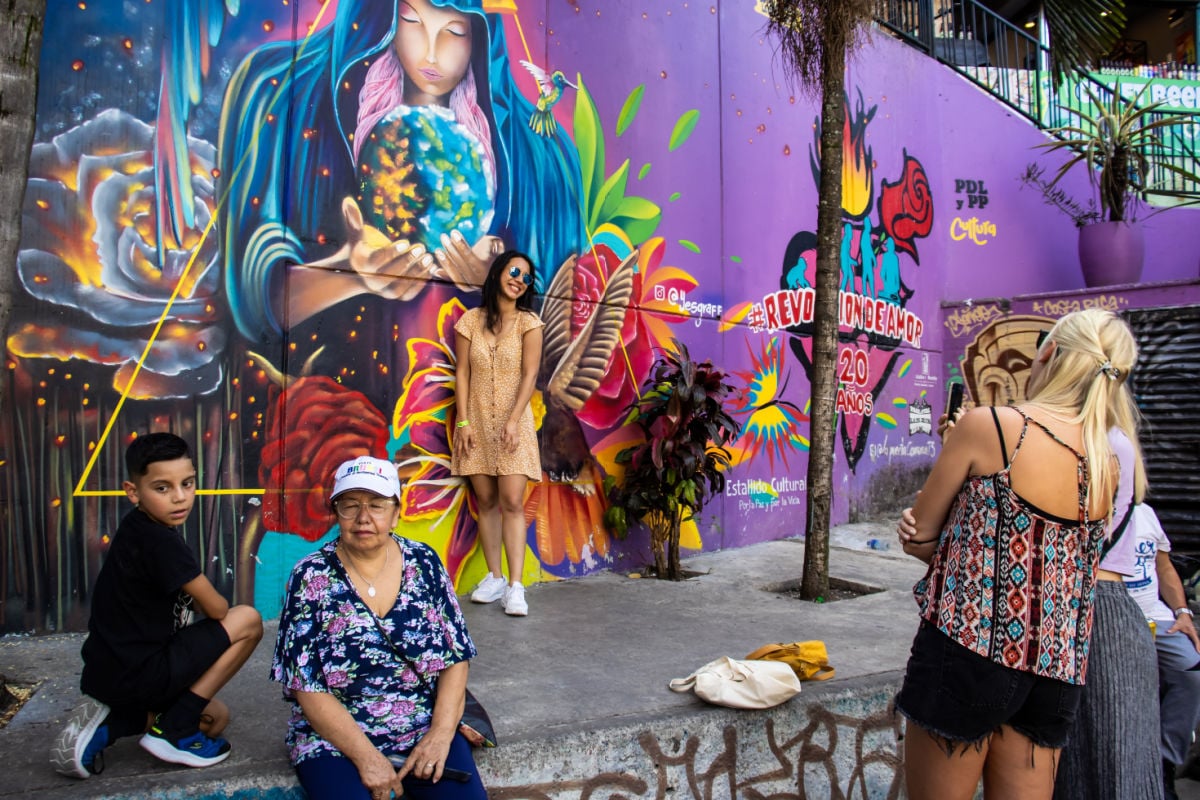
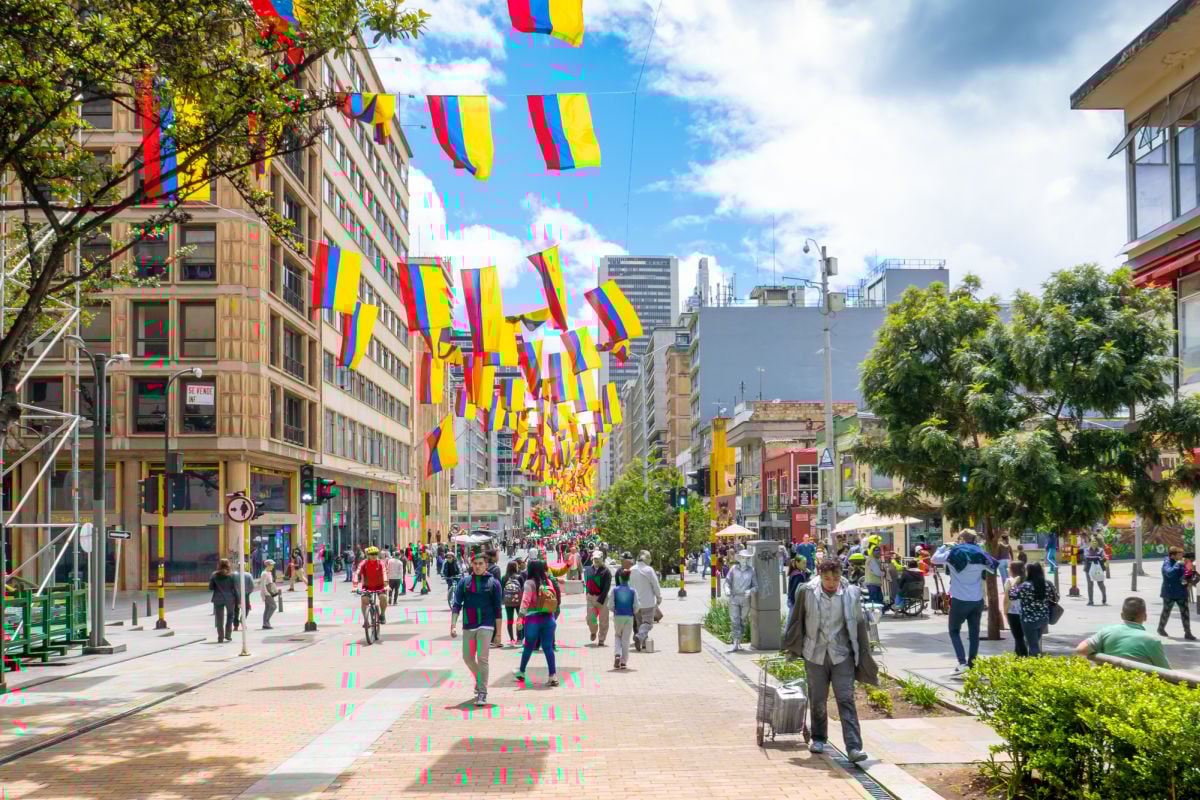
Medellin, Colombia has undergone quite the transformation in recent years. Once known for its rough reputation, the city has become a thriving destination for digital nomads and travelers searching for an affordable place to visit. Medellin is currently implementing new regulations to attract more responsible visitors and remote workers.
Once a haven for bachelor parties and all-night debauchery, the city’s Mayor, Federico Gutiérrez is transforming the tourism experience. Medellin is looking to attract visitors seeking cultural experiences and more professional digital nomads.
Over 1.4 million visitors arrived in Medellin last year, many of them American.
Medellin and Colombian immigration are now taking multiple steps to let bad behaving tourists know loud and clear, they are not welcome.
The Party Is Over
Famous for its nightlife, the district of El Poblado is filled with countless nightclubs and areas to let your hair down. Arriving in the area of Calle 10 which is known for the infamous Lleras Park, visitors will be greeted by dozens of police, security cameras and checkpoints to the well-known party areas.
The Mayor even went as far as setting a 1:00am temporary curfew on bars to tame the party. The curfew has since been lifted but the message is still loud and clear. “We have to recover control of this area — it is also very important for us to protect the community,” Federico Gutiérrez explained in a statement.
Security is strict everywhere including hotels, nightclubs and restaurants. The Mayor has banned all prostitution it in all popular tourism areas. Large billboards regarding sexual tourism and the exploitation of minors are posted warning tourists of the potential 25 years they could spend in prison. Signs are posted in all hotels and all guests are strictly checked for Identification.
Be Ready For Extra Questions & Background Checks On Arrival
Colombian authorities are now working with the US to catch unsavory tourists before they even enter the country. Arriving in at the International Airport just outside of Medellin, tourists are being asked extra questions about the purpose of their trip and those with criminal records could be turned back under the new ‘Angel Watch’ program.
US Government Warns Travelers To Avoid Dating Apps
Medellin, Colombia isn’t that place to go looking for the love of your life right now. Earlier this year the US government issued a warning that travelers are being targeted on dating apps, then drugged and robbed for their possessions. Even launching Tinder in Medellin, users are greeted with a warning that meeting people could be dangerous amid recent government warnings. The same warning goes for nightclubs and bars. Unsuspecting tourists are being targeted and drugged with Scopolamine.
28 tourists have died in Medellin so far in 2024. This includes homicides and natural causes.
According to Medellin Advisors, the homicide rate in Medellin in 2022 was 15 deaths per 100,000 inhabitants. This represents a 3% reduction compared to previous years and is lower than the national average in Colombia, which was 23 homicides per 100,000 inhabitants as of the end of 2022.
Colombia’s Digital Nomad Visa Just Got Harder
Colombia’s Digital Nomad visa has been a huge success for the country as thousands of travelers flocked to the country for affordable living and culture. When the program first launched, digital nomads were raving about how easy it was to be approved if you could provide the following:
Monthly earnings above $900 US
Health insurance that covers your stay in Colombia
Permission to work abroad
Now times have changed and message boards on Facebook and Reddit are filling up with questions regarding extra paperwork that is not the easiest to obtain. The Colombian government is permitted to require any additional information they see fit when reviewing applicants and they are doing just that for almost everyone now. New forms being asked for include:
Criminal FBI background checks with Apostille
Official proof of good standing for self-owned companies along with Apostille
Official proof of ownership for digital nomads that operate their own companies with Apostille
All Forms must be dated and issued within the past 60 days
Safety In Medellin
While the city has made huge improvements to overall safety travelers are advised to stick to well known tourist areas and avoid walking alone at night. For more information on safety, read the top 7 things travelers need to know when visiting Medellin.
Opinions expressed here are the author’s alone, not those of any bank, credit card issuer, hotel, airline, or other entity. This content has not been reviewed, approved or otherwise endorsed by any of the entities included within the post.
Colombia has long held an iffy reputation for travelers. On one hand, it’s an amazing destination to visit.
On the other hand, many travelers have claimed they feel the need to keep their head on a swivel in certain areas.
Some of the more popular cities to visit are Medellin, Bogota and Cartagena to name a select few. The U.S. Embassy just issued a nationwide security alert this morning for all travelers in Colombia.
While the U.S. Embassy surely has intel we don’t possess, travelers can dive into our in-depth report regarding the safety aspect of Medellin here.
New Security Alert
Tragically, it has been reported from November 1 – December 31, 2023 8 U.S. tourists lost their lives by being duped by criminals.
There are a variety of ways tourists are targeted in Colombia. So much so, there is a common saying in Colombia that tourists should know.
‘No Dar Papaya’ translates to ‘don’t give papaya’. Essentially, do your best to not stand out and make yourself a target.
Keep valuables out of plain sight while going about your day, and stick to tourist-friendly neighborhoods.
Advice from the U.S. Embassy:
Never physically resist a robbery attempt – your life is always more valuable than possessions
Trust your intuition – if something feels off, stick to your gut
Tell someone you trust of your plans when going out
A Fatal Scam
Colombia is no stranger to crime and the U.S. Embassy is most certainly aware. So why the sudden change in tone?
It’s quite alarming to lose 8 lives in such a short span. Medellin, in particular, has become a hotspot for U.S. tourists for its affordable costs and year-round splendid weather, among other digital nomad perks.
The world is a beautiful place, but there are bad apples everywhere. The same goes for Medellin as well as the rest of the country.
With digital nomadism and solo travel being so popular, the road can get lonely at times. With our phones glued to our hips, the easy thing to do is get on dating apps, as they are now universal.
It’s no longer a societal taboo to meet up with strangers, or even ride with them, but perhaps the latest scam will raise red flags again.
The U.S. Embassy in Bogota is sounding the alarm on dating apps in Colombia as U.S. travelers are being duped far worse than your typical ‘catfish’.
Lured in to meeting in a public place as most dates go, as the night goes on, victims were lead away from public view and assaulted, drugged, robbed and even killed in some instances.
Not all 8 reported deaths have been attributed to dating apps, but “several” have been linked.
How To Remain Vigilant Dating In Colombia
Other than keeping a heightened sense of awareness, the Embassy notes you should be one step ahead if you sense you’re on a date from hell.
Staying in public view is key as violent crimes typically take place in isolation, such as residences and hotel rooms.
When possible, inform the concierge of your hotel or residence of a visitor and ask them to obtain valid identification beforehand if you have a new visitor.
Sedatives have been used, so it’s important to keep an eye on what you’re drinking and keep your phone within reach, as electronics are a commonly stolen item.
Uptick In Crime
According to the Tourism Observatory of the District Personnel of Medellin, crime against foreigners increased 200 percent toward the end of 2023 when compared to 2022 data.
That’s a big jump that raises eyebrows. What’s even more concerning is many deaths deemed ‘violent’ were U.S. citizens in 2023.
With the latest alert, it appears these unfortunate trends are carrying over into 2024, with the dating app scam becoming the most prevalent tactic.
Here is the kicker – the U.S. Embassy admits crime often goes unreported due to victim embarrassment. While Medellin is the hotspot for crimes against tourists, with the Embassy’s knowledge of unreported crimes, they felt it was necessary to issue an alert for the whole country with Medellin, Bogota, and Cartagena being highlighted.
Colombia is currently one of the trendiest destinations in South America, owing not only to its warm culture and natural wealth but also the wide availability of flights, which make it easier for Americans to travel, and the country’s overall affordability.
It is still a rather diverse territory, comprising inland metropolises surrounded by Andean peaks, jungles, and a sunny Caribbean coast, and if it’s the latter that appeals to you the most, you may be wondering which spots to hit for the ultimate tropical experience.
Worry not: we’ve got you covered. Here are four of the best beach getaways in Colombiathat will help you escape those winter blues:
Santa Marta
A lesser-known city in the Magdalena Department, one of the Caribbean regions of Colombia, Santa Marta is a smaller city home to just under half a million inhabitants and boasts a fascinating history dating back to the Spanish colonization.
It was originally founded in 1525 by Spanish ‘conqueror’ Rodrigo de Bastidas as one of the first European settlements in modern-day Colombia. It is distinctive for being Colombia’s oldest standing and second oldest European-founded city in South America, surpassed only by Cusco in Peru.
Other than the stunning Iberian-inspiredarchitecture, Santa Marta is known for its semi-arid climate and enviable sea access. Some of the most beautiful nature reserves in Colombia are, in fact, within driving distance of the city center, including Tayrona.
A national park covering both an unspoiled section of the Sierra Nevada and the Caribbean Coast, it is a postcard-like picture of palm-lined sands and rainforests.
Within the park, tourists will also find the Pueblito ruins, dating back to the long-lost indigenous Tayrona civilization.
Cartagena
The gateway to the wider Colombian Caribbean, Cartagena is a sprawling coastal metropolis known for its Afro-Latin heritage, beautiful colonial-era architecture, and year-round warm weather.
It was established as a colony in the 16th century, though indigenous people had already called the territory home prior to the arrival of Europeans and enslaved Africans. Still to this day, the modern-day city is a fascinating mishmash of cultures and different influences.
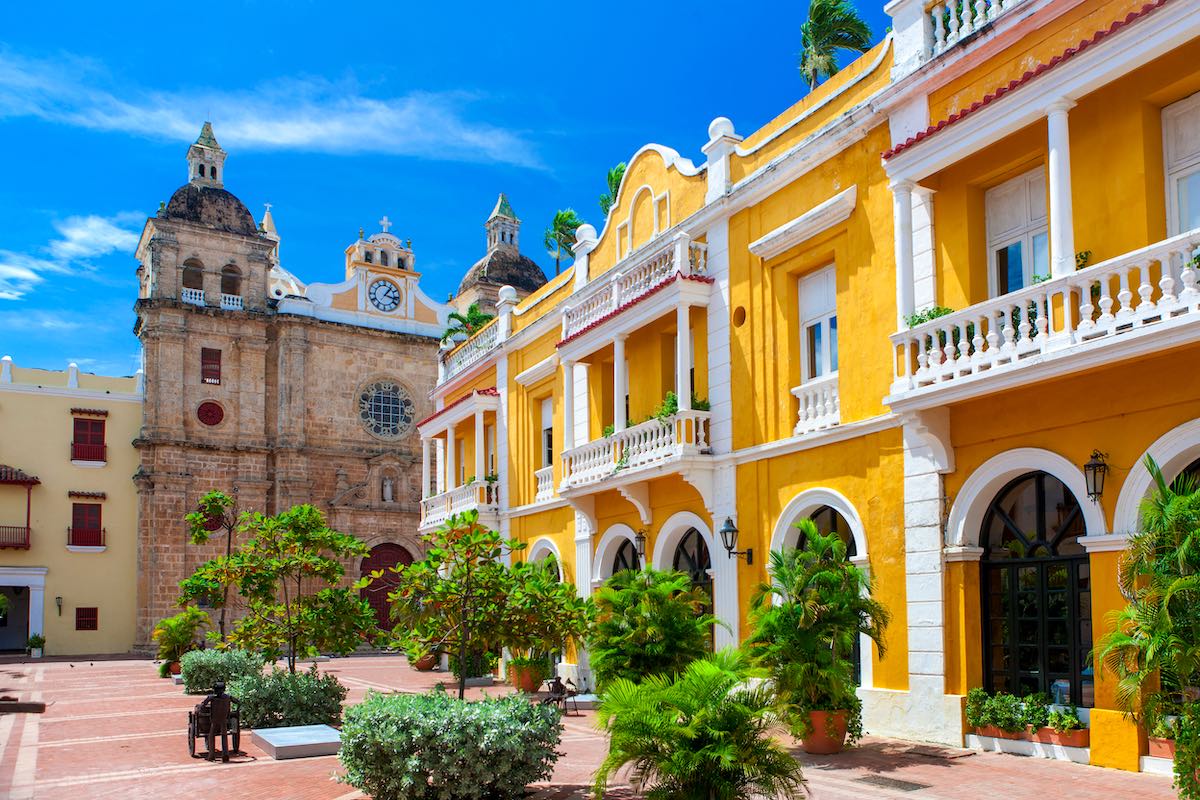
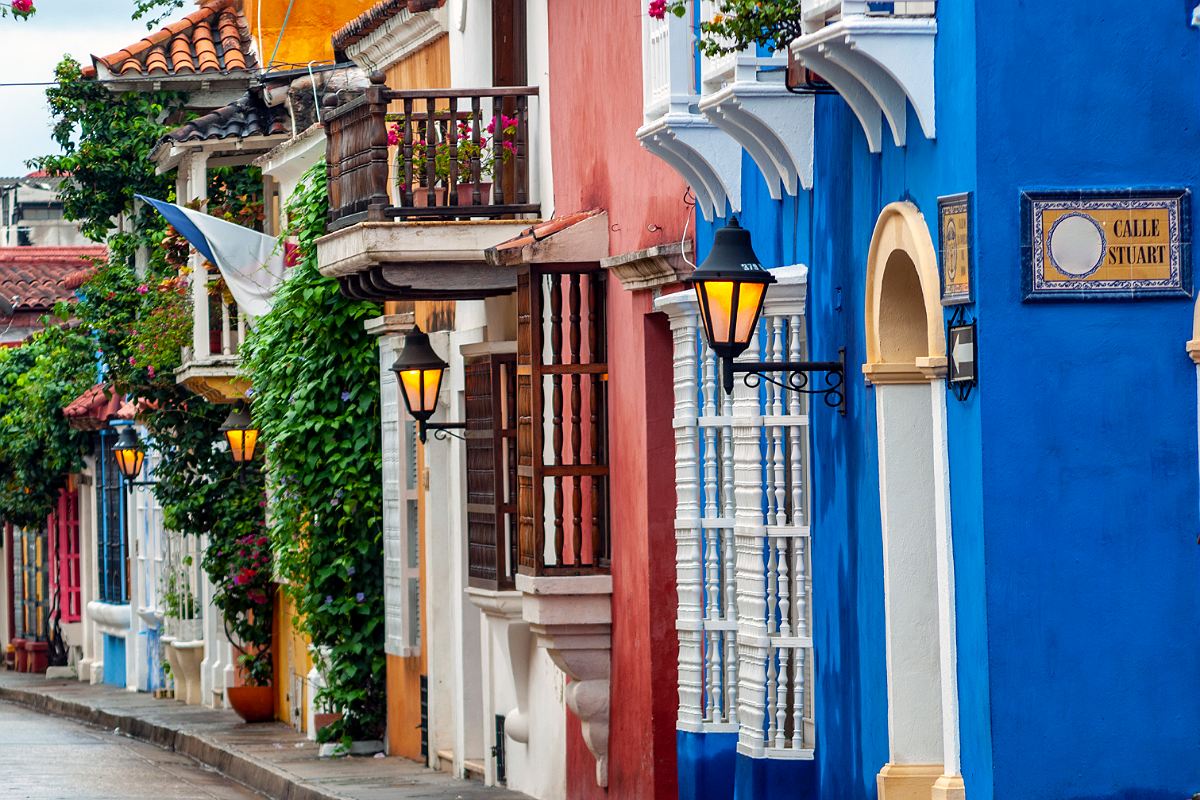
Walking the cobbled streets of ‘Ciudad Amurallada’, which comprises Cartagena’s UNESCO-listed historic center, visitors will be transported back to the golden age of the Spanish Empire, marked by stately buildings with ornate facades, a fortress, and monumental churches.
Around the Bocagrande Harbor area, sitting across the bay from the Walled Town, the historical, yellow-tinged cityscape gives way to clusters upon clusters of modern skyscrapers, providing a unique contrast between colonial traditionalism and 21st-century development.
Bocagrande is also home to a stretch of volcanic-sand beaches, bounded by the azure Caribbean Sea, though some of the best beaches on the Colombian Coast actually lie offshore:
Baru
While the seas around the Cartagenian mainland are perfectly appropriate for swimming, they can appear muddier due to the volcanic nature of the sands and are thus often skipped altogether by tourists landing in the Colombian Caribbean.
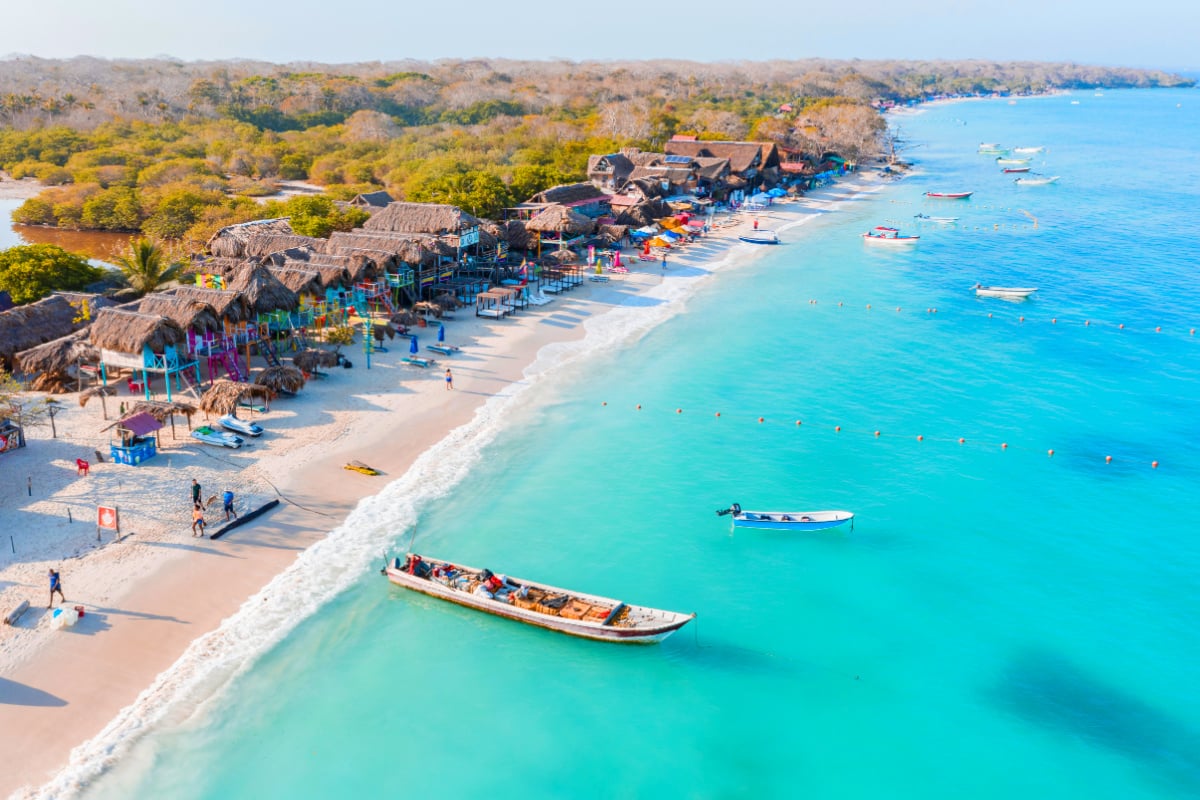
On the other hand, the tourist island of Baru, part of the Rosario island group, located just off the coast, is famous for its bright-blue oceans, thin-white sands, and impossibly tall palms providing much-needed shade from the scorching sun.
Baru is the definition of paradise on Earth, lacking the skyscrapers and busy city life that may make Cartagena less attractive to some, and being a protected reserve dotted with small, boutique hotels that put wellness at the front of the tourist offer and affordable hostels with a youthful, sociable community.
Colombia is one of the cheapest tropical destinations there are, and overnight rates in idyllic Baru, in properties straddling the landmark, aptly named Playa Blanca, start from only US$57 (though they can go as high as US$344 depending on the level of comfort and exclusivity preferred).
San Andres
Our last pick for the season, San Andres is Colombia’s most beautiful tropical island. 470 miles north of the mainland, it is a pristine coral archipelago encompassing numerous reefs, atolls, and sandbanks bounded by translucent waters.
El Centro, the region’s capital, occupies the northern end of the main island, and it’s the best-equipped town, home to major hospitality brands, a lively bar district, and some of the archipelago’s best-preserved colonial structures.
When it comes to natural beauty, it’s truly hard to summarize San Andres’ abundance of protected reserves and scenic spots. It is, after all, a UNESCO Biosphere Reserve, and there is truly no shortage of thin white-sand crescents bordered by teal-colored oceanic lagoons.
San Andres is also famous for being the Colombian capital of ecotourism, due to its rich biodiversity. Some of the most popular activities tourists can take part in while sojourning on the island include snorkeling in the reefs, sailing around the archipelago, and admiring marine life.
After three years of imposing strict health controls at its outer borders in a bid to keep COVID variants from being imported, Colombia has dropped the vaccine requirement, allowing all international travelers to visit without disclosing their immunization status.
Authorities have silently removed all vaccine and most pandemic-related mandates affecting tourists seeking entry into the South American country – as per the latest update published by IATA. This has been confirmed by one of our staffers who just entered the country without restriction.
But what does this mean in practice, and are there any requirements left for visiting Colombia now that vaccination is no longer mandatory?
What Has Changed Since The Latest IATA Update?
According to the Travel Regulations Map maintained by the International Air Transport Association (IATA), where changes in border rules are tracked, Colombia has ceased requiring foreigners to present COVID proof of entry, based on the update dated May 4, 2023.
In other words, tourists will no longer be expected to present proof of vaccination boarding a Colombia-bound flight in their home country, or instead, undergo pre-travel testing, nor be subject to further checks landing at their destination.
This is great news for unvaccinated travelers, particularly those coming from the United States, who had had their movements into and out of Colombia restricted before, from being banned to being forced to present a negative test for entry later on.
There is still one requirement that hasn’t been done away with:
The CheckMig Form Remains Mandatory, But No COVID-Related Questions
While pandemic-era entry rules are no more, the Colombian Government has kept the CheckMig form in place, and completing it is now the only requirement for flying to Colombia. Additionally, questions related to immunization have been removed from the form.
Whether you’re vaccinated or unvaccinated, you must simply fill it out at most 72 hours and up to one hour before departure.
The CheckMig platform is Colombia’s pandemic-era solution for pre-travel registration. It serves as a travel permit, seeing that without completing it, you may be denied boarding or entry into Colombia. Fortunately, it is free to apply for, and all travelers are now treated the same, irrespective of vaccination.
To sum it up, traveling to Colombia, you are no longer expected to present a:
Vaccination certificate indicating a complete vaccination course; or
A negative antigen test undertaken prior to departure; or
Undergo isolation upon arrival when unvaccinated, or having failed to complete a vaccination course; and
Present mandatory COVID health insurance
As confirmed by the Colombian Consulate in Paris, France, the country has officially reinstated its pre-pandemic entry regulations. As long as they satisfy visa requirements and present a valid and ‘undamaged’ passport, foreigners will be granted entry hassle-free.
As a matter of fact, one of our editors-in-chief has just landed in Colombia today and has been able to verify that a vaccine or test certificate is indeed not required, either upon check-in at the airport or crossing the international border.
It is worth noting U.S. and Canada passport holders can remain in Colombia for up to six months without applying for a visa in advance, making it one of the easiest South American countries to travel to, unlike neighboring Brazil, which has recently shut its doors to North Americans by imposing a new tourist visa.
Why Visit Colombia In 2023?
Home to breathtaking and surprisingly diverse scenery, which comprises Andean peaks, dense tropical jungles, including a sizable portion of the Amazon rainforest, and a pristine coastline bounded by the Caribbean Sea, Colombia is the perfect natural world destination.
In Guatape, the historical heart of the Antioquia department, guests will find colonial-era, cobblestone towns and the landmark Rock of Guatape, which boasts a stunning panorama of the lakes below, while those crossing the Tatacoa Desert will be mesmerized by a Mars-like arid landscape.
Within driving distance of the town of Nobsa, in the Valley of the Sun, tourists will be met with rolling green hills dotted with vineyards and small traditional settlements.
Those venturing as far North as the Caribbean coast, on the other hand, will find vibrant city breaks, crystal clear beaches, remote islands surrounded by turquoise waters, and a rich Afro-Colombian heritage.
Recently, Colombia also launched a Digital Nomad Visa (DNV), enabling remote workers to stay in the national territory for up to two years as long as they can prove a stable source of income and meet the remarkably low financial threshold for visa applicants.
At last, following years of uncertainty and COVID regulations, Colombia is open and eager to welcome you.
Get lost in Old Town, sample streetside empanadas in Getsemani, and dance cumbia til dawn before heading off on a boat tour to explore the bay and nearby islands…these are just some of the adventures to be had in Cartagena, Colombia.
A gorgeous and historic coastal city along Colombia’s Caribbean coast, in Cartagena you’ll be at a crossroads between the Caribbean and South America. Many travelers use it as an introduction to South America before heading east along the coast or down to the bustling destinations of Medellin or Bogota (or perhaps a quick jaunt to Ecuador or Peru?).
We’ve covered all the basics for traveling to Cartagena in this post, including:
Travel budget
Top cultural experiences in Cartagena
How fast is the WiFi?
Best local eats and drink
Ready to prep and plan for your adventure to Latin America? Here are the top 10 things you need to know before visiting Cartagena, Colombia.
How Hard Is It on the Wallet?
⭐⭐⭐
Rating: 2.5 out of 5.
Cartagena, Colombia ranks right in the middle when it comes to budget-friendly cities for travelers. Setting your travel budget will depend on what kind of excursions you want to do and where you want to stay.
For starters, staying in the middle of the historic Old Town is more expensive than the nearby neighborhood of Getsemani. Sit-down restaurants in the Old Town will also be much more on par with U.S. and Western Europe prices than other areas of the city.
Cartagena also gets a 2.5 instead of a 2 because it’s one of the pricier destinations for travelers in Colombia. If you live like a local in Bogota or Medellin, or even Santa Marta, you’ll notice that prices there are much cheaper. Also, note that the local currency is COP (Colombian pesos). Here’s a little breakdown of what to expect for costs in Cartagena, Colombia:
Accommodation: Hostels in Cartagena can still be found on the cheap for less than 50,000 COP (11 USD) per night. The city is also filled with luxury hotels, and prices are currently around 650,000 COP (150 USD) per night.
Food: Some of Cartagena’s top street foods like meat skewers and empanadas only cost about a dollar or two (higher if you’re in Old Town). Lunch or dinner at a non-touristy restaurant will set you back about 13,000 COP per person (3-4 USD). Breakfast in Cartagena can be found for cheaper, and plan to spend less than $4 on a plate of eggs, arepa, and coffee (or chocolate completo, most likely). If you want to be fancy, expect to pay about 100,000 COP for a two or three-course dinner for two.
Transportation and tours: Cartagena is pretty walkable so you don’t need to worry much about transportation costs if you’re sticking to the city. The airport is also super close to town, and a taxi ride there will set you back about 13,000 COP (about $3 USD – make sure to have exact change in pesos, though!).
If you want to get the best price on a tour, our recommendation is to head to a hotel or hostel in Getsemani and ask all about them at their information deck. You can do everything from book a private boat tour of the bay, charter a yacht to some nearby islands (a few hours off the coast), and so much more. Expect to pay about $100 per person (if you’re in a group of 4 people) to charter a boat.
Are the Locals Friendly?
⭐⭐⭐⭐⭐
Rating: 4.5 out of 5.
Colombians are lovely and welcoming, and with some knowledge of Spanish you’ll probably find yourself chatting away with just about everyone you meet during your trip.
For reference, the website Nomadlist rates Cartagena as “great” when it comes to friendliness towards foreigners. As with any destination, some knowledge of the culture and language (complete with a big smile) can go a long way.
Basic Dos and Don’ts
Each city in Colombia is unique, so your dos and don’ts list will be a little different depending on whether you’re in Bogota or a Caribbean area like Cartagena. Especially if you’re visiting Cartagena for the first time, here’s some things to keep in mind:
Don’t drink the tap water.
Don’t leave your bags unattended in touristy areas or flash your valuables while wandering the streets. This is known in Colombia as “offering up papaya”.
Don’t walk around alone at night. Old Town will be a little safer for travelers because most areas are well-lit and there’s plenty of bars and nightclubs open at all hours. If you do venture off, always make sure that you’re in a group and use a ride share app (much better than a taxi at night) to get from where you are to your hotel.
Don’t just casually ask locals about Pablo Escobar. This one goes from a huge pet peeve to an outright no-no: Colombians don’t want to hear about what you think of Pablo Escobar or talk about him at all. The country is working hard to change its reputation, so help them out a little by not bringing up the past and be happy that you’ve been welcomed in their beautiful country.
Don’t say you can’t dance. In Colombia, not dancing is really not an option. A city like Cartagena is filled with culture and dance is at the heart of it, so it’s best just to feel the rhythm and go with the flow.
This is by no means an exhaustive list of the cultural etiquette for travelers to Cartagena, but it’s a start. Make sure to read up on more dos and don’ts before your trip.
Top Trending Things to Do in Cartagena
Landed in Cartagena and ready to explore? Here are the top things to do in 2022.
Charter a yacht to nearby islands: Book a boat and an expert tour guide to explore some islands in the Caribbean that are a day trip away from the shores of Cartagena. Top picks include the Rosario Islands and Isla Grande.
Sunset tour: You can have your very own private tour guide organize a walking tour of Cartagena’s most picturesque spots in town. Enjoy some snacks, drinks, take the best pictures for golden hour, all before ending the day by the city wall to watch one of the most glorious sunsets in the Caribbean.
Walking tours: Traveling on a budget? There are a few free or low-cost walking tours you can join in Cartagena. Take advantage of the free walking tour of Cartagena’s beautiful Old Town that’s been a hit with tourists for over eight years now. Another popular tour is a walking tour of Getsemani and San Diego neighborhoods, where you can check out funky murals and some of Cartagena’s best street art.
How Safe Is It?
⭐⭐⭐⭐
Rating: 3.5 out of 5.
Cartagena has a much higher safety index compared to other cities in Colombia. Currently, the city rates at a 82 while Bogota is at a 46, nearby Barranquilla at 47, and Medellin at 46. But, there are still some things to be aware of when you visit Cartagena.
Pickpockets can be common, especially in touristy areas and if you’re visibly carrying valuable items (note the “don’t offer papaya” rule).
Watch out if you go out clubbing, because there are stories of people being drugged and then mugged. Western males between the ages of 30-45 are typically the target, and instances have even been known to occur in broad daylight, so make sure to keep your wits about you.
Travel insurance is always a good idea when going on any type of trip. Get yourself covered (and, at a super low cost!) with the right health insurance just in case you get sick or if your travel stuff gets stolen or lost at some point during your travels to Cartagena.
Local Eats and Drink in Cartagena, Colombia
With mouth-watering arepas and coffee for breakfast, fresh tropical fruits throughout the day, and all kinds of local dishes to sample for dinner, you will eat well in Cartagena. Here are the highlights:
Cazuela de Mariscos: Cartagena is by the sea, after all, so some of the city’s best dishes are seafood-related. This local dish is a seafood stew brewed in coconut milk.
Ceviche: Try this local favorite Cartagena style, which is served with coconut milk and sour cream.
Posta Negra: This uber-local dish is one of the city’s most beloved meals, which consists of beef eye rounds roasted in everything from Worcestershire sauce, brown sugar, and even coca-cola.
Cartagena also has an impressive amount of international foods, so if you want to ease into things at the start of your trip (or splurge on a meal), there are plenty of cute cafes and restaurants in the city that serve pastas, sandwiches, pizzas, and other comfort foods.
What Are the Best Apps to Use in Cartagena?
It might be handy to download these apps to your phone before your trip to Cartagena:
Tappsi: Colombia’s alternative to Uber. This local taxi app that will allow you to safely hail a ride using your phone.
WhatsApp: This is the main messenger app preferred across Latin America, so download it if you haven’t already.
Google Translate: If you need help with translation when taking a ride share or checking into your hotel.
Babbel: A great language app for learning Spanish!
How’s the WiFi?
⭐⭐⭐⭐
Rating: 3.5 out of 5.
The WiFi signal doesn’t run super quick inside the walled city of Cartagena, but it’s decent. Most hotels do have WiFi for guests and you can buy a cheap local SIM card to use data or even hotspot yourself. The average speed in Cartagena 5 Mbps. If you need an internet break for the afternoon, here are some cafes in Cartagena with good WiFi.
What Are the Top Cultural Experiences in Cartagena?
Cartagena is a city filled with culture so you can plenty of choice when it comes to unforgettable experiences. Here are some top picks:
Salsa lessons (with a view, to boot): This amazing experience in Cartagena gets you moving and shaking like a local. A true cultural encounter!
Food tour: Are you a foodie who also happens to be a book nerd? This tour will be perfect for you! Gabriel Garcia Marquez is one of Colombia’s most beloved writers, and this food tour integrates some local dishes enjoyed by the characters in his books.
Coffee tour: Cartagena is home to some amazing coffee houses and they are a great way to get to know Colombia’s iconic brew. There are a few local cafes in Getsemani that offer coffee experiences that are definitely worth checking out.
How Long Can I Stay?
Travelers from the U.S., Canada, the U.K., and more can visit Colombia for leisure without applying for a tourist visa beforehand. You can typically stay for up to 90 days for your first visit.
If you want to stay in Colombia longer, you can request to extend your stay at the local immigration authority. The current policy allows for up to 180 days in one calendar year.
See what all the buzz is about and why Cartagena is an amazing destination in Colombia for your travel radar. With so much beauty to discover, you’ll be wondering why you didn’t plan a visit to Cartagena sooner!
Enter your email address to subscribe to Travel Off Path’s latest breaking travel news, straight to your inbox
Disclaimer: Current travel rules and restrictions can change without notice. The decision to travel is ultimately your responsibility. Contact your consulate and/or local authorities to confirm your nationality’s entry and/or any changes to travel requirements before traveling. Travel Off Path does not endorse traveling against government advisories
Colombia and Malta are set to officially remove their indoor mask mandates in just a few days. The two countries look set to be the latest destinations around the world to remove their indoor mask mandates, joining the likes of Spain and Portugal who also eased their mask policies last week.
The move will undoubtedly make the idea of visiting Colombia and Malta much more appealing for some travelers, as the list of countries with a mask mandate still in effect continues to shrink.
Dropping the mask mandate looks to have come at just the right time, with a bumper summer of travel expected over the next few months, Here’s a look at both Colombia and Malta’s decision to drop their indoor mask mandate, including why the decision has been taken, when the new rules are set to come into effect and what the entry requirements are for both of these countries at present.
Colombia Removes Mask Mandate – Information For Travelers
Colombia’s decision to repeal its indoor mask mandate was announced by the country’s President Ivan Duque, on Monday. The change is set to come into effect from May 1st, and will see people in Colombia no longer having to wear a mask in places such as bars, restaurants and shops – but the change will only apply to municipalities that have more than 70% of their population fully vaccinated against Covid-19.
There are set to be exceptions to the rules, with masks still required to be worn in “care homes, hospitals and clinics, public transport and enclosed spaces at educational facilities,” according to the President. Colombia is also set to scrap its proof of vaccination requirement for entry into bars, restaurants, and large events from May 1st, as the country takes a huge stride back towards normality – a move that should see the country continue to grow in popularity.
In order to enter Colombia, travelers that are fully vaccinated will need to show proof, but will not need to take a test in order to enter – providing their vaccination occurred more than 14 days ago.
As of May 1, 2022, unvaccinated travelers will be allowed to once again enter Colombia providing they bring a 72-hour PCR or 48-hour antigen test.
Malta Drops Masks – What Travelers Should Know
According to Malta’s official tourism website, the country is set to drop the use of face masks – both indoors and outdoors – from May 2nd, making the experience of vacations in Malta almost the same as they were before the pandemic. As well as dropping the mask-wearing requirement, Malta is also set to remove the requirement for travelers to fill in a Passenger Locator Form prior to travel, with that change also coming from May 2nd.
Of course, like several other countries that have repealed their mask mandates, there are some circumstances in which travelers will still be required to wear masks in the country. These include on flights and in healthcare establishments, such as hospitals and care homes.
In order to be able to enter Malta at present, American and Canadian travelers must be able to show proof of vaccination, proof of recovery, or a negative test result. This must be a PCR test, with the results obtained no more than 72 hours before arrival. Until May 2nd, a Passenger Locator Form will also need to be submitted prior to arriving in the country.
Enter your email address to subscribe to Travel Off Path’s latest breaking travel news, straight to your inbox
Disclaimer: Current travel rules and restrictions can change without notice. The decision to travel is ultimately your responsibility. Contact your consulate and/or local authorities to confirm your nationality’s entry and/or any changes to travel requirements before traveling. Travel Off Path does not endorse traveling against government advisories