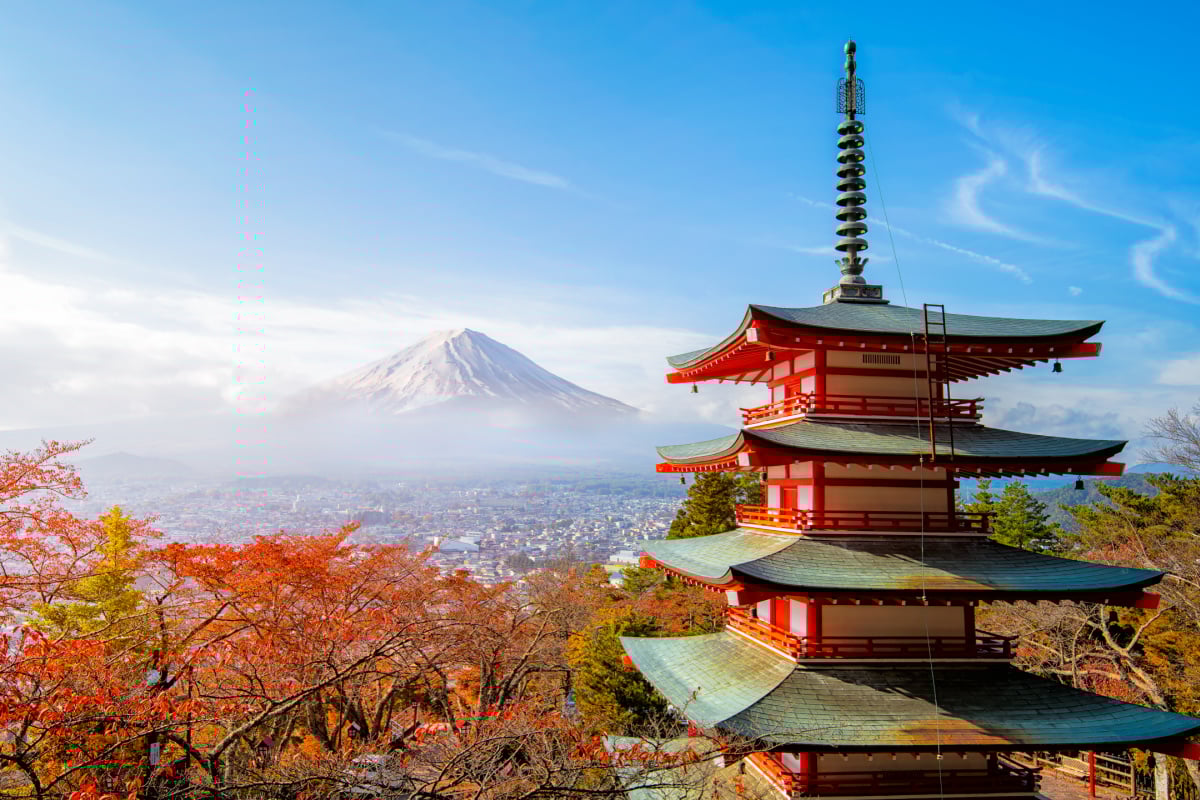
Home to some of the world’s most stunning natural wonders and vibrant metropolises, Asia has always managed to capture the imagination of wanderlust-filled souls, thus securing a rightful spot in every traveler’s bucket list.
While there’s no shortage of captivating destinations in the region, there’s one in particular that tourists seem to keep coming back to time and time again.
After claiming the prestigious title of the fastest-growing hotspot on Earth, it was only a matter of time before Japan, East Asia’s crown jewel, set a new tourism record.
Recently, news outlets reported a new high for travel in the country – this past month was the busiest October in its history, welcoming 2.52 million visitors and surpassing 2019 numbers (the previous record-holding year) by 0.8%.
One-Of-A-Kind Attractions
Japan’s unique appeal goes well beyond the run-of-the-mill parks and museums you’d find anywhere else in the world.
Kyoto, along with its historic temples (the iconic Kiyomizu-dera, for example, is not to be missed), shrines, and traditional tea houses, stands as a testament to Japan’s unmistakable identity.
A five-and-a-half-hour drive away, you’ll find Tokyo, Japan’s pulsating heart best known for its futuristic cityscape and remarkable technological prowess.
The skyline, dominated by landmarks like the Tokyo Skytree and the Tokyo Tower, reflects the kind of harmonious coexistence of tradition and progress that can only be truly experienced in Japan.
If you’re lucky enough to visit the stunning country in the spring, you won’t want to miss out on one of the many hanami parties hosted throughout the season, usually in parks along riverbanks (think Ueno Park in Tokyo and Maruyama Park in Kyoto).
During these events, locals and tourists alike gather to appreciate the fleeting beauty of Sakura, which, by that time of year, should have turned the local landscape into a pastel wonderland.
A Gastronomic Wonderland
Foodies don’t need convincing of the fact that Japan is a gastronomic wonder – that’s just common knowledge.
The local cuisine is renowned for its meticulous preparation and often breathtaking presentation, all of which can be witnessed from the delicate art of sushi-making to the sizzling delights of teppanyaki.
The bustling streets of Osaka, often referred to as the “Kitchen of Japan,” are the place to be for all food lovers.
Dotonbori, in particular, invites visitors to indulge in local favorites such as takoyaki and okonomiyaki.
For those seeking a more adventurous culinary experience, though, Kyoto’s kaiseki dining, a multi-course meal that showcases seasonal ingredients, provides just what you’re looking for.
Never A Dull Moment
While Japan is undoubtedly one of the most visually captivating destinations in the world, the country’s allure stretches far beyond its views.
The Japanese calendar is adorned with more festivals, cultural events, and nation-wide celebrations than you can count, and chances are that no matter the timing of your visit, you’ll be able to experience at least one or two of them.
Take this December, for example.
Those planning a trip to Japan before the year ends, have the Akibasan Fire Festival, Sekino Boroichi, Kasuga Wakamiya Onmatsuri, and the Chichibu Night Festival (just to name a few) to look forward to.
A Safe, Tranquil Atmosphere
Don’t let Japan’s lively spirit give you the wrong impression – the country is as safe and tranquil as they come.
After being named the safest destination in the world, Japan’s commitment to creating a peaceful atmosphere for visitors and locals alike has become that much more apparent.
The country consistently ranks high in global safety indexes and low in crime rates, so whether you’re exploring the bustling streets of Tokyo or the serene rural landscapes of Takayama, you can fully let yourself relax and take in the moment without constantly having to worry about your surroundings.
A Well-Connected Hotspot
Japan’s robust infrastructure and world-class transportation system have undoubtedly played a pivotal role in its most recent tourism boom.
The extensive network of high-speed trains, known as shinkansen, allows visitors to get in and out of the country’s major cities with remarkable efficiency, setting the scene for a more well-rounded travel experience with plenty of sightseeing opportunities.
The cities themselves are served by punctual metro and bus systems, while local airports are constantly expanding with new flights from all over the globe.
Central America has been making quite a splash lately, especially after it was confirmed last year the region has officially surpassed Europe in backpacking travel trends.
All countries in the isthmus that separates North from South are experiencing a surge in bookings, but one in particular is breaking records, having not only recovered from the crisis-led slump, but even surpassed 2019 figures.
In 2023, tourists have rediscovered and fallen in love again with Honduras, but what’s so special about this tiny nation that has them so enthralled?
Honduras Is Breaking Tourism Records
Honduras is by no means the most notorious nation in the Central American isthmus nor America’s go-to sunny getaway.
Historically overshadowed by the much more popular hub of Costa Rica and the beach hotspot of Belize, it only achieved moderate fame in recent years as interest in off-path destinations grew. Now, it is one of the fastest-recovering countries in the subgroup.
Bordered to the west by Guatemala, southwest by El Salvador, and southeast by Nicaragua, while being bounded to the south by the Pacific and north by an inlet of the Caribbean Sea, it is an overlooked gem home to an abundant, verdant nature, and a fascinating ancient culture.
After two years of limited tourism, while the likes of Mexico and the Dominican Republic, two of the biggest competitors in the Caribbean, monopolized revenue, Honduras is back to hosting 1.2 million annual visitors.
These figures are historical for Honduras, traditionally a small destination, and it already represents a 17 percent growth over 2019, the pre-pandemic reference year.
Interestingly, Americans make up a majority of foreign visitors to Honduras.
This year, they account for nearly half of all arrivals (48 percent), including both flight and cruise passengers, but you may be wondering why U.S. visitors are suddenly flocking into Honduras.
Why Is Honduras So Trendy Right Now?
Honduras is best known for its natural landmarks, comprising cloud forests, two pristine coastlines, and the largest rainforest north of the Amazon.
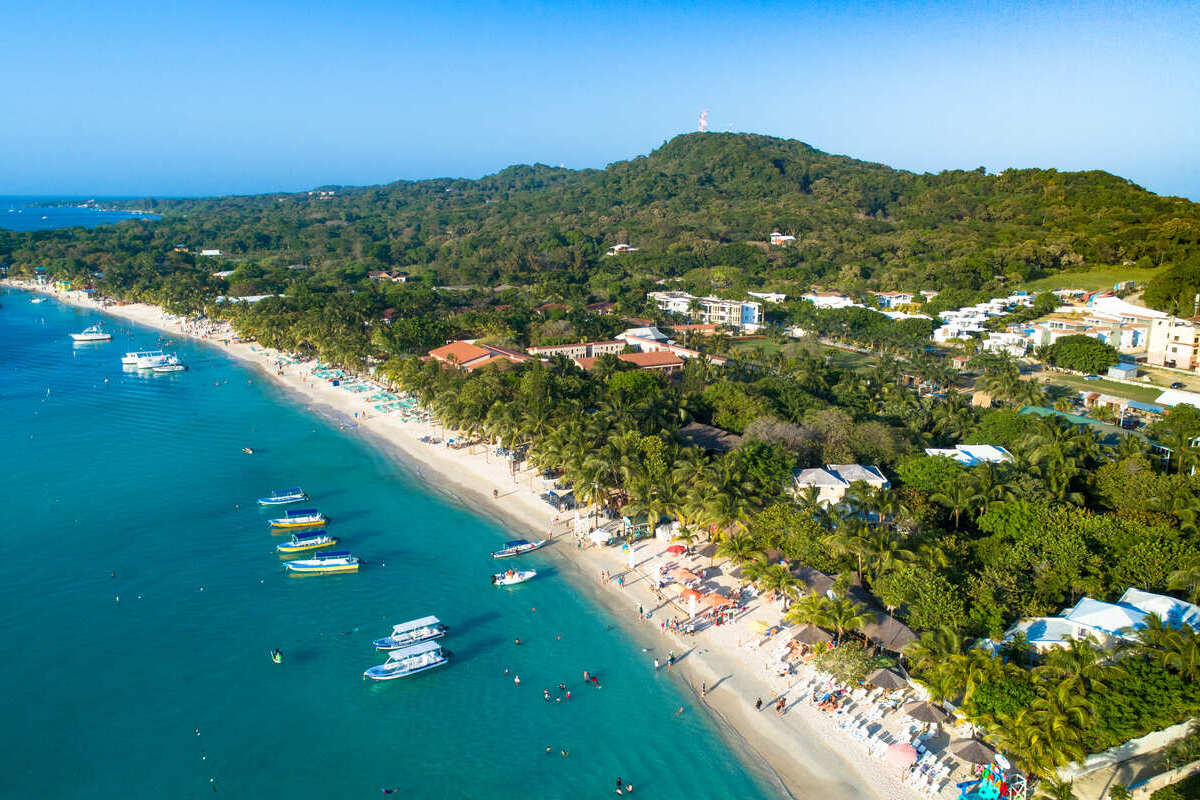
Needless to say, tourists flying to the country are mostly looking for an escape into nature, and there is no shortage of wonders to explore, from the coral reef dive sites in Roatan, a paradisaical island 65 km off the north Honduras coast, surrounded by the Caribbean, to the jungle and its lost cities.
Roatan is easily Honduras’ number one tourist attraction, as it is filled with resorts and boutique hotels offering peace and tranquility, and easy beach access.
In fact, it is now the third trendiest winter sun destination for Americans.
An Affordable Caribbean Getaway
The luxurious Paradise Beach Hotel, straddling the West Bay, has overnight rates as cheap as $184 this winter. If you’re on a budget, you can still find great getaway deals starting from $44 at local guesthouses, such as Lotos House, or the Roatan B&B Apartments.
Utila is yet another quaint island in the Caribbean provinces surrounded by reefs, where marine life enthusiasts can swim with sharks, visit an iguana research center, and even go partying in East Harbour, a trendy nightlife zone.
On the mainland, it’s all about Honduras’ colonial heritage and pre-Columbian culture.
One of the country’s largest cities, San Pedro Sula is a colonial gem concentrating several of Honduras’ most iconic Spanish-era monuments and museums, including the St. Peter the Apostle Cathedral and the Sampedrano Cultural Center.
This year, Colombian flag carrier Avianca launched nonstop flights from New York-JFK to San Pedro Sula, making it easier for U.S. visitors to reach this lesser-known Latin American destination.
Tegucigalpa, on the other hand, is Honduras’ national capital and a bustling financial center dominated by skyscrapers and business districts.
It is far from being the country’s most-visited, but it is a vibrant city break combining both colonial and modern architecture.
Las Dolores Church, an icon of the capital skyline, was built as early as 1735.
Ancient Mayan Ruins
Additionally, a little-known fact about Honduras is that it belongs to the wider Mayan World, as back then, the concept of borders was nonexistent in Central America.
The Mayans roamed the isthmus and the Yucatan Peninsula in modern-day Mexico freely, establishing trading ports and highly-developed cities as their power as a civilization grew.
One of them is Copan, which now lies mostly in ruins within Honduran territory and a UNESCO World Heritage Site considered to be of utmost importance to our understanding of the Mayans and their ancient ways.
Copan was only excavated in the 19th century, but it was founded as early as the 5th century, making it one of the oldest Mayan settlements.
Overall, Honduras is also quite affordable to visit, with travelers being expected to set aside $57 for daily expenses during their trip.
As the economic crisis deepens, it’s no wonder Americans are now picking Honduras, where their tourist dollars stretch further, and beaches are just as beautiful as other Pacific and Caribbean spots.
We tend to think that most fall and winter travel is reserved for Europe’s cultural cities and Mexico’s dreamy beaches; however, right now, there’s one particular Middle Eastern country that’s rivaling the world’s most coveted hotspots in terms of traveler interest.
After a widely successful year, Turkey is finally breaking its all-time tourism records, with trends pointing to what could very well be the country’s busiest winter in history.
In the first three quarters of 2023, Turkey hosted some 44.6 million visitors, which marks a 13.2% increase from last year, and an 8.78% increase from the previous record set in 2019.
So, what’s prompting tourists to flock to the gorgeous Middle Eastern country in never-seen-before numbers?
An Abundance Of Cultural And Historical Attractions
Turkey is one of the most historically captivating countries on Earth, boasting a long, storied past that spans thousands of years.
Today, travelers can get some fascinating insights into its traditions by visiting one of the many historical attractions in the region, including the iconic Hagia Sophia, Blue Mosque, Topkapi Palace, the well-preserved ruins of Ephesus, the Library of Celsus, as well as the Dolmabahçe Palace.
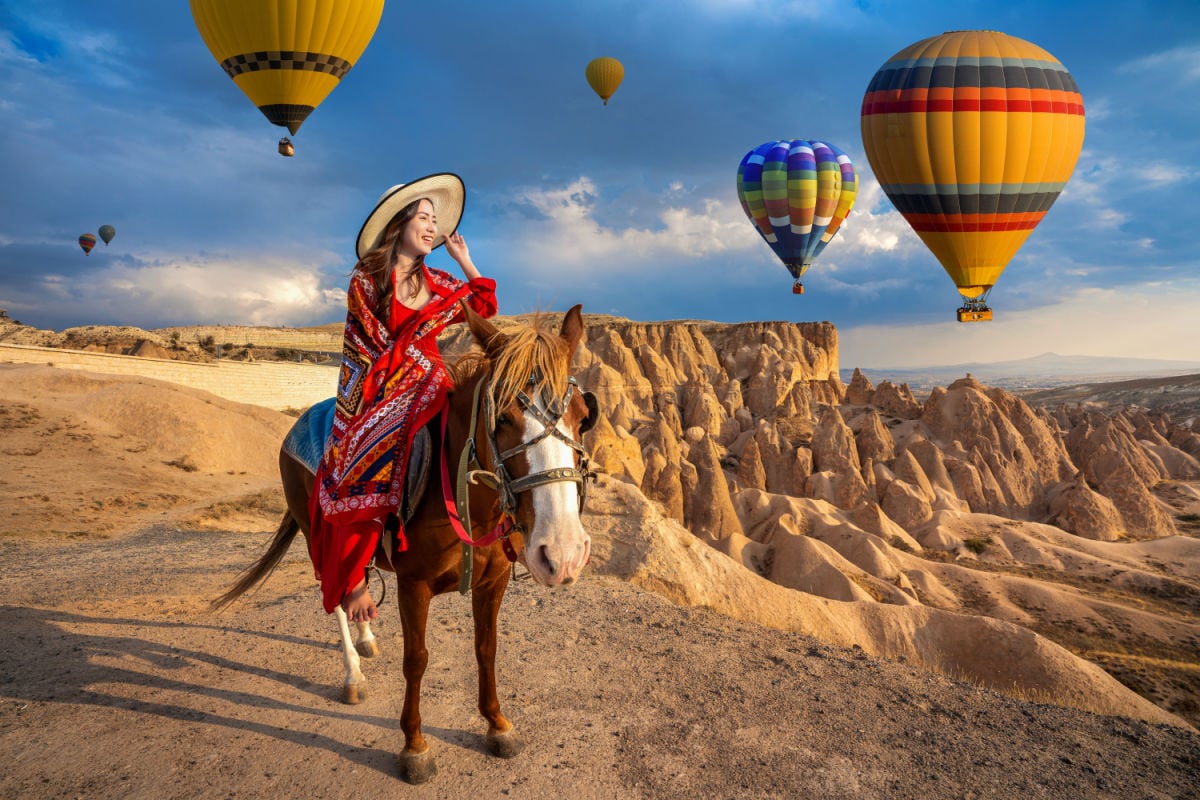
Beyond the intricately adorned buildings, you won’t want to miss out on Cappadocia, a region built on fairytale-like rock formations, which just recently broke its very own tourism record.
As far as cultural attractions are concerned, your best bet is to stick to the likes of Istanbul and Ankara, though I usually tend to favor the former.
There, you’ll find that the influences of the East and West clash into a gorgeous display of colors, providing a feast for the senses.
I’d also highly recommend taking a stroll around the bustling Grand Bazaar, just remember that having a local or professional guide beside you will make the experience go much more smoothly.
Picture-Worthy Landscapes
The breathtaking views in Cappadocia are far from the only picturesque sight you’ll come across in Turkey.
The country is a mosaic of diverse landscapes and a haven for nature enthusiasts.
All you thrill seekers out there will be happy to learn that the rugged terrain of the Taurus Mountains provides excellent opportunities for hiking and trekking.
The same goes for the Lycian Way, a long-distance hiking trail that offers travelers the chance to explore ancient ruins and charming villages, all while marveling at panoramic vistas.
If you’re looking to experience something truly unique, though, you won’t want to miss out on Pamukkale, a natural mosaic of thermal springs terraces and travertine formations, which creates a surreal landscape reminiscent of a snow-white paradise.
A Foodie’s Dream
Turkish cuisine presents a range of flavors and aromas that can’t be found anywhere else in Europe, which is why there’s no shortage of travelers flying thousands of miles just to sample some authentic kofta, börek, and baklava.
From savory kebabs and flavorful mezes to delectable desserts like Turkish delights, the country’s culinary scene is nothing short of a gastronomic wonder.
The flavors are warm, bold, and striking, mirroring the personalities of most locals you’ll come across.
What’s more, everything’s very reasonably priced, giving you the chance to enjoy a bit of everything.
If you’re ever in Turkey, though, don’t miss out on the chance to taste at least a few sips of Turkish coffee – it truly introduces you to a whole different set of flavors and aromas compared to your run-of-the-mill espresso.
So Much To Do
Turkey’s delectable dishes will prove to be especially appetizing and filling after a long day attending local events and festivals, a few of which you’re bound to come across during your travels.
Just this past month, for example, Antalya hosted its annual Film Festival, bringing together filmmakers, actors, and cinephiles from all over the globe.
If you’re planning on going to Turkey before the year ends, some events you can look forward to include the Halal Expo 2023, the UEFA Europa Conference League, as well as concerts by iconic local musicians like Ümit Yaşar and Gökhan Türkmen.
One thing’s for sure – you’ll never get bored exploring the natural, cultural, and historical wonders of Turkey.
There are some places that occupy a permanent place in your daily thoughts after visiting — especially the underrated gems of the world that exceed all your expectations.
There is one underrated Latin American country that has been racking around in my brain constantly since I visited, and I already can’t wait to go back!
Here is why this underrated Latin American country should be your next getaway:
A Country Of Many Worlds
One thing there is no arguing about is that Ecuador is home to some of the most unique landscapes on Earth together in one easy-to-explore package.
One of the things that amazed me about Ecuador the most was how many different ecosystems you could see during a 30-minute car ride.
Dry rainforest, desert, jungle, beach, a brackish river — all a quick car ride from each other!
While many destinations may leave you wondering what to do with your time, Ecuador will wow you with something as simple as a ride in the car.
During my visit, I started my journey in the country’s capital and one of its most well-known cities, Quito.
Up, Up, and Away
Quito is a gorgeous city nestled in the Andes mountains and is one of the highest capital cities on Earth with an elevation of 9,350 feet (2,850 meters). It has one of the best-preserved colonial town centers in Latin America, which is also a UNESCO world heritage site.
Admittedly, I was unable to explore much of Quito during my trip, as Quito was just an overnight stopover on my way to Manta.
However, I did get the chance to stay at one of the most unique places in Quito, Hacienda Jimenita 😍.
Even though I only spent one night here, I still think about the dreamy views and the fire crackling in my room as I drifted off into much-needed sleep after a day of flying.
Hacienda Jimenita is a super cute hotel located on a nature reserve just 15 minutes from Quito’s airport. The perfect place for a stopover (though I wished I could have stayed a few days!), and a welcome getaway to rest and connect with nature.
If you are just stopping over, be sure to walk around the grounds, check out the underground tunnel, and try the breakfast. Don’t be afraid to start a fire as you go to bed. Trust me, nothing will lull you to sleep like the sounds of crackling wood and the inviting warmth of a fire.
I had an amazing stay simply taking it all in, walking the grounds, and enjoying a morning coffee on my balcony overlooking the valley below and the city of Quito off in the distance.
Once it was time to leave, a quick 15-minute drive to the airport meant that I got to maximize my time relaxing instead of sitting around at the airport or in a long car ride.
Off To Manta
Flying in Ecuador is so much easier than in the U.S., at least in my experience. Quito Airport was quick and efficient and much more relaxed than airports back home.
I was through security in less than 5 minutes and in the lounge in another 5. Priority Pass members will get easy access to the super comfy lounge on site.
Within just a few hours I had transitioned from my cozy cabin overlooking Quito to the luxurious Ora Verde Manta hotel in Manta, Ecuador. The flight from Quito was only about an hour and was easy flying.
One thing I loved about the Ora Verde Manta hotel was how close it was to everything I needed while in Manta. It sat right across the street from the mall and was located on a massive beach for early morning walks.
The hotel itself was super comfortable, and I loved waking up early to get some work done while the sun rose, giving a wonderful view of the pool and the beach.
If you are going to make the effort to get to Manta, you should definitely drive to nearby Manabí for some of the best food you’ve had in your life!
We were lucky enough to check out Iche, a school that is actively bringing Ecuadorian cuisine to the world by training its students to blend age-old traditions with modern cooking.
Unfortunately the day we decided to tour, the restaurant itself wasn’t operating, but we were lucky enough to drive to a nearby restaurant run by one of Iche’s first graduates.
When I tell you the food was worth all the effort it took to travel there, I mean it!
We ate at a restaurant called Seleny, named after its amazing chef, Seleny Bermúdez. We were able to join in on some of the fun as she cooked a delicious meal using a centuries-old technique and cooking surface — the Manabí stove.
To be completely honest, I have no idea what the names of the dishes were 😅; I just know with every bite I was contemplating a permanent move to the Manabí province!
After such an amazing meal we started to make our way back to Manta, but did stop and check out an interesting museum and landmark called Centro Civico Eloy Alfaro, as well as visit a few straw hat shops to learn more about the famous hats and how they are made.
Centro Civico Eloy Alfaro Statue
The Road to Guayaquil
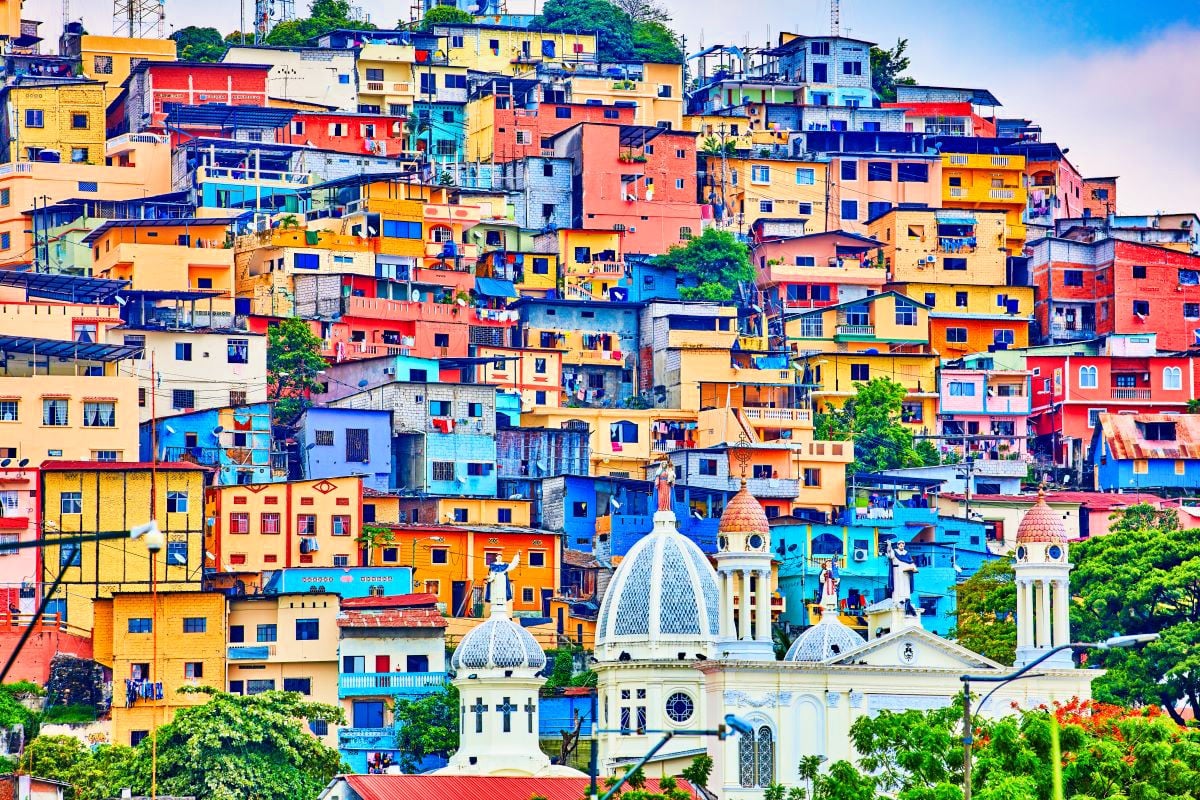
This trip was all about seeing as much of Ecuador as we could in about a week, so of course we had to visit its largest city! Guayaquil is a city of about 2.6 million people, and is a fantastic place to spend a few days.
However, we still had to get there, and the road to Guayaquil was filled with gorgeous views and fun things to explore and do. And what’s the best way to combine a gorgeous view with an exciting activity?
Paragliding.
Ecuador is full of adventurous things to do for every type of traveler, and I am not one to turn down an offer to try something new. When I learned we would have the chance to try out paragliding along the coast of Ecuador I couldn’t wait, and the experience didn’t disappoint!
If you aren’t a fan of heights I get it, I’m not super comfortable with them either. However, when something freaks me out I feel like I have to tackle it head-on, which is initially what got me into rock climbing.
But there is a big difference between climbing 80ft up a wall attached to a rope vs. strapping yourself to a parachute and soaring up hundreds of feet above the ocean! I couldn’t wait 😂.
The whole process was really simple, and you don’t need to know anything special to take to the skies. Your guide will control everything, leaving you with the lovely job of enjoying yourself and snapping photos from the sky!
Paragliding along the coast was one of the highlights of the trip, and once we landed I was already asking how long it takes to learn how to do it on your own. Bucket list item: head back to Ecuador and get certified!
No Bad Time For Wine
If you like wine, chances are you’ve had some wine from Argentina, but did you know that Ecuador also makes some delicious wines?
I didn’t, but it is definitely on my radar now. After paragliding, we made one more stop before Guayaquil at Ecuador’s finest vineyard, Bodega Dos Hemisferios.
Touring the vineyard, we learned about why the wine we were tasting had such unique flavor profiles. The microclimates of Ecuador bring out some incredible flavors in the grapes, and I am certain we will all be seeing Ecuadorian wine making its way onto the world stage over the coming years.
After our tour we had an incredible tasting with the gorgeous backdrop of the vineyard. I couldn’t have asked for a better way to spend an afternoon.
As if paragliding and a vineyard tour wasn’t enough, we still had another wonderful surprise waiting for us — the Oro Verde Guayaquil.
If you want to feel like a celeb checking into a luxury hotel in Ecuador, this is where you need to stay. From the second you walk into the Oro Verde you will feel like you are living life on another level.
The lobby is gorgeous and decked out in ornate trim, and everything your eyes land on feels fancy.
Once you get up to your room, you’ll feel cozy and ready for a quick refresh before heading back out for, you guessed it — more wine!
Bodega Dos Hemisferios has been so successful that they recently launched their own wine bar with tasty food right in Guayaquil, City Winery. The food is great, and we already knew the wine would be top-notch.
The Ultimate City Break
After spending much of our time along the coast or in more off-the-beaten-path corners of Ecuador, it was time to explore some of the hustle and bustle of the city.
I don’t know about you, but I like to check out museums, see some of the main landmarks, and eat amazing food whenever I travel.
In that vein, our first full day in Guayaquil was spent doing just that.
Before meeting up with our group, I decided I wanted to try out the Aerovía, a cable car line that allows you to take in the views of the city, or you can ride it all the way over to Durán. I didn’t stop off anywhere; instead, I just made a round trip to enjoy the experience.
Chances are, you will have the whole cable car to yourself, as the locals usually opt for the bus.
After taking in the views, I met back up with our group to walk along the Malecón 2000 and grab some lunch at one of the many restaurants available.
From here, we went on a chocolate tour and tried some desert after. The number one piece of advice I can give is to make sure you try the cocoa mucilage! The name isn’t super enticing, but trust me it is worth it!
The mucilage comes from the cocoa bean, but it doesn’t taste anything like chocolate. It is the white pulp that surrounds the cocoa beans, and it is so sweet!
You can get it in a ‘shake’ or try it in frozen form.
I would travel back to Ecuador just for this.
Reasons I’ll Be Visiting Again
Ecuador was incredible, and I think about my time there nearly every day. The country was gorgeous and the people were some of the most kind and welcoming I have ever met.
I cannot wait to go back!
Though I didn’t have enough time during my travels to see the whole country, it has definitely been put on my radar, and I can’t wait to explore more of the Amazon, the Galapagos, and the rest of Ecuador’s unique beauty.
**Travel Off Path was a guest of Ecuador Travel, who helped with the creation of this itinerary by hosting some of our accommodations and attractions. Our opinions, recommendations, and suggestions remain our own.**
When you think of the best European vacation spots you probably think of locations like France, Italy, and Greece.
But the country whose tourism sector has made the fastest record-breaking recovery from years of travel restrictions will probably surprise you.
The number of tourist arrivals in Albania was up by 56% this year compared to 2019. Albania beat better-known European destinations like Croatia, France, Greece, and Spain to this top spot.
Here’s why Albania is the fastest-growing destination in Europe:
A Rich History
The history of Albania is just as rich as that of neighboring Greece and Italy.
For 5 centuries Albania was ruled by the Ottoman Empire before proclaiming independence in 1912. Then after WWII, Albania became a Stalinist state.
The capital of Tirana boasts stunning architecture and a huge offering of museums and galleries. In Berat, you will find a 13th-century castle still standing. Travelers visit from across the world to see the UNESCO world heritage site of Butrint.
There are 4 different UNESCO World Heritage sites in Albania, while another 4 sites are currently sitting on the organization’s tentative list.
History lovers love Albania because of the wide and diverse range of historical events you can explore here.
Like other Mediterranean countries, Albania has warm and dry summers followed by mild and wet winters. That means that the winter months are a great time for sightseeing and exploring the country.
Beautiful Coastline
Albania is often considered the hidden gem of the Mediterranean. It Is located in the southeastern part of the Adriatic and the northeastern part of the Ionian Sea.
Albania boasts incredible turquoise waters and golden sand beaches. It has a prime location between Italy and Greece and its own host of idyllic beach resorts.
With 280 miles of stunning coastline, some of the best beaches in Albania include the pale pebble beach of Dhermi, and the bustling beach town of Himara. The Albanian Riviera is home to sandy lagoons and unspoiled sand beaches.
And although visitor numbers have risen significantly, Albania doesn’t get anywhere near the same number of tourists as other Mediterranean countries like Italy and Greece.
That’s not to say that summer on the beaches of Albania isn’t busy. But the summer months in Albania are nowhere near as busy here as they are in many of Europe’s other Mediterranean hot spots.
Incredible Landscapes
If you’re not interested in a beach vacation, then there are still plenty of reasons to visit Albania. The landscapes of Albania are incredibly diverse, and it boasts stunning scenery.
The north of the country is wild and untamed, making the perfect destination for adventure travelers. And outdoor explorers will enjoy the stunning national parks of Thethi and Llogara. These are great spots for hiking in the summer and for cross-country skiing or snowshoeing in the winter.
During the winter months, the snow-covered peaks of the Albanian Alps are a great spot for snow sports and a much more affordable place to take to the slopes than the Alps of France or Italy.
A Year-Round Destination
Though the summer months are considered the high season in Albania, the country is a year-round destination. In fact, many travelers believe that the off-season is the ideal time to discover Albania.
The number of tourists in the country is lower, which means that you will have many of the attractions to yourself. And because Albanians are very welcoming to visitors, this is a great time to see the authentic heart of the country and live like a local.
The months between September and November are the best time to visit Albania if you want to enjoy walking, cycling, sightseeing, and watersports.
No matter what time of year you visit Albania it is a very affordable destination to visit. You get great value for money on both food, tours, and accommodation, meaning that it is a brilliant choice for budget travelers.
Digital nomadism is taking the world by storm now that travel is easier than ever, and national governments have begun easing residence requirements for American nationals working remotely.
From the Mediterranean beaches of Spain all the way to tropical Indonesia, a new generation of workers is combining both work and leisure and attaining a higher quality of life their predecessors could not have envisioned, but one country in particular is drawing in U.S. citizens the most.
The country with the second highest number of registered digital nomads in the Americas, behind only the United States, Mexico seems to be everyone’s go-to destination for both a sunny break and a long-term move.
It is the most popular digital nomad destination in Latin America, far outpacing other regional giants like Brazil and Colombia, and it’s positioning itself as one of the trendiest ‘workcation’ spots globally.
In case you have been wondering, here are 6 reasons why Mexico is so unbelievably popular among American nomads:
Great Weather Year-Round
Undoubtedly, one of the reasons why Americans continue flocking to Mexico, irrespective of purpose, is the great weather. While a majority of states in its Northern neighbor often face harsh winters, as it is closer to the tropics, Mexico is rarely not sunny or warm.
Particularly along the Southeastern coast, which comprises most of the Yucatan Peninsula, the climate is hot year-round, including in January, considered a ‘high season’ locally, as there is less humidity, tropical storms have long dissipated along with sargassum, and the daily average is a pleasant 79°F.
When choosing a new base away from home to work remotely, not only affordability and visa rules are taken into account, but nomads have time and again shown a preference for warm countries, where they can be closer to the seaside and surrounded by nature.
Mexico is best known for its pristine, thin white-sand Caribbean beaches, unfolding for miles on end from Cancun, verdant jungles, and relaxed atmosphere, ticking all the boxes on a digital nomad’s requirement list. It’s a no-brainer.
Geographically Close To The U.S.
Mexico is also close enough to home for those who are more cautious or too wary of making a move overseas to Europe or as far away as Asia. It is a literal neighbor of the United States, and Americans can easily – and safely – travel back home from numerous Mexican airports.
When basing themselves in the Mexican Caribbean, they have at least 38 nonstop flights departing from Cancun International, one of the largest hubs in all of Latin America, linking the region to major American state capitals, as well as smaller cities.
Cancun is probably the ‘easiest’ international destination for American nomads to get to, as their local airport, however small, is likely to have either seasonal links to the Mexican Caribbean or at least one-stop connecting flights at affordable rates.
Mexico City and Los Cabos are no exception, each boasting just as robust a connectivity with the States.
Besides the wide availability of flights, Americans seldom have to worry about conflicting time zones when scheduling Zoom meetings or taking work calls when basing themselves in Mexico, as the country is in North America, as time differences are either minimal or non-existent.
A Growing Expat Community
Americans may have a reputation for being more individualistic, but as it turns out, when picking a new international home, they tend to gravitate towards areas where there is a well-established expat community, as it can make settling a lot easier.
In Mexico, there are as many as 1.6 million U.S. citizens officially registered as residents, not to mention millions more that either ‘live’ unofficially in Mexico non-continuously through several consecutive visits, or who are yet to register with the Immigration Office.
In cities like Mexico City and Tulum, in particular, there is a booming expat community, with millions participating in Facebook groups where they are able to share experiences, give each other advice on bureaucratic procedures relating to visa applications, and check for relevant updates.
It’s much simpler for an American nomad to relocate South of the border, where the road to integration is already more ‘paved’, than in other Latin American countries where the community is not so tight-knit, information is scant, and the number of foreign residents is nearly negligible.
Digital-Nomad Friendly
Due to Mexico’s soaring popularity with digital nomads, numerous Mexican cities have been investing heavily in nomad-friendly venues and infrastructure.
Last year, Mexico City and the Baja California Sur state partnered with AirBnB to attract nomads, highlighting each destination’s cultural appeal and offer, while a number of Yucatanese tourist towns began actively encouraging longer stays.
In Tulum, for instance, the digital nomad capital of the Mexican Caribbean, American workers have a plethora of co-working offices to pick from, a booming market for long-term rentals, and community events where they can build connections.
The digital nomad demand has also pushed Mexico to be better, with AirBnB and homeowners now facing stronger competition and being more likely to address major complaints, such as low internet speed, cleanliness of rooms, and modernization of AC systems.
Mexico Is Surprisingly Safe
Contrary to popular belief, Mexico is an incredibly safe country by any global standards, including the United States’ own. According to the U.S. Department of State, a majority of Mexican states are classed as either Level 1 or 2.
This means Americans are not discouraged from visiting, or pursuing long-term stay plans across most of Mexico – more specifically, roughly 59% of the country – with the exception of 13 states where travel should either be reconsidered, or avoided.
States like Quintana Roo, where Cancun, Playa Del Carmen, and Tulum are located, Baja California Sur, home to Los Cabos and La Paz, the federal capital of Mexico City, and the Nayarit Riviera are all currently at Level 2.
This means American nomads should exercise greater caution when visiting due to crime, but this relates more to general advice than a significant threat to safety.
When living in Mexico, they must first adhere to local regulations, avoid suburban zones with higher crime rates that foreigners do not usually frequent, and avoid displaying unnecessary signs of wealth in public. This means keeping expensive jewelry at home, maintaining a high situational awareness when drawing money, etc.
Mexico Has Easy Entry Requirements
The sixth and final reason why American nomads favor Mexico over anywhere else is the country’s easy entry requirements.
Interestingly, Mexico does not yet have a Digital Nomad Visa (DNV), unlike Colombia, Brazil, Ecuador, or other Latin American competitors that have jumped on the bandwagon, but it does have some of the less complex entry rules among tourist destinations.
When flying to Mexico, should they fulfill simple entry criteria, which is to present a plan for leaving the country up to six months upon entry, Americans can stay for half a year without applying for any entry or residency permit in advance.
This will usually suffice for a majority of nomads, who are country hoppers at heart, and will likely not need to extend their stay in Mexico for longer than six months at a time, but those who wish to stay and make Mexico their permanent home can apply for a regular migrant visa on the basis of income.
The process is not as straightforward as simply flying into Mexico and staying six months, but a Mexican residency visa is more accessible to obtain than European resident cards or even certain DNVs in more developed countries that have set a high, at times inaccessible financial threshold for nomads.
Additionally, American nomads and tourists enjoy the privilege of fast-track entry into Mexico, with a growing number of Mexican airports and entry points now allowing them to use eGates.
This means they can scan their passport and cross the border hassle-free, provided no safety alerts pop up and they have not previously overstayed their six-month permit.
In sum, Mexico is sunny, the expat community grows larger and stronger by the minute, the nomad facilities are great, most regions and major cities are safe, and it warmly welcomes foreigners for long-term stays.
It’s no surprise it puts all countries in LatAm – and many in the wider world – to shame.
When it comes to winter destinations, Northern Europe is one of the best places to go for many reasons. From the snowy weather to the cozy culture, there is a lot to love about this region in the cooler months.
For me, my favorite place for a winter getaway is the stunning country of Norway.
It seems that Norway is made for a winter wonderland vacation. From the Northern Lights to the snow-capped Fjords, there is so much to love here in the dreary winter months. It’s a great country for solo travelers, digital nomads, and just about everyone else (aside from the winter sun seekers and beach-goers).
The cities of Oslo and Bergen turn into something out of a postcard, and there are more than enough outdoor activities for those looking for some adrenaline. Not to mention, with more low-cost airlines, getting to Norway from the U.S. is shockingly cheap and easy.
Here’s Why Norway Is My Favorite Winter Destination:
Winter Wonderland
Norway is one of those countries that is beautiful in any weather, when the sun-drenched fjords come to life in the spring, to the hot green summers, and the pop of colors in the magical fall. But in my opinion, if there is one season when Norway’s beauty really shines, it would be winter.
When the rest of Europe is gloomy and solemn, Norway turns into a winter wonderland. For anyone looking to try some snowy activities, this place is for you.
For those just looking for a chill holiday and enjoying some seriously stunning winter scenery while cozying up by a fire afterward, this place is for you as well.
Looking at a map, you will notice just how huge the country of Norway is, and therefore, the sheer number of villages and towns scattered throughout is mind-blowing. Some are more remote than others, some more magical looking, but they are all pretty and unique.
Even Bergen, Norway’s second-largest city and officially the rainiest city in Europe, is simply adorable with a small-town feel. With its charming harbor and funicular up the mountain for some epic views over the fjords, Bergen is a crowdpleaser in the winter weather.
But it’s the smaller villages and towns dotting the fjords that most come to see, with their bright colors standing out against the white wilderness, almost beckoning you to come to visit their village and hear their stories.
Epic Train Rides
Taking the train across Norway is one amazing experience, and in the winter it’s even more magical. The rail system is easy to navigate, and the stations are mostly spotless and efficient. While certain trains are more scenic than others, even the ones that go through the less stunning bits of the countryside are still spectacular.
One can’t-miss adventure is taking the Flåm Railway; you can connect in the town of Myrdal and head down on one of the steepest train tracks in the world. You snake your way down the countryside and into the fjords and end up in the postcard-perfect village of Flåm.
After, you can take a ferry such as The Hardangerfjord Express down the fjord into other towns, or stay the night at the local cozy hotel with its on-site brewery and Viking-style restaurant, which is an experience in itself.
If you know one thing about Norway, it is probably that it is one of the best countries to spot the Northern Lights (although you don’t necessarily have to go that far), especially in the winter months. While they are visible throughout many parts of the country, it’s up north into the Arctic Circle where you will have the best luck.
One city that is a popular choice is the cozy fishing haven of Tromsø, where you can enjoy some special dishes, drink a beer at the world’s most northern brewery, and then set off on an epic tour to chase the lights when the sun goes down.
One Cool Capital
Oslo is an underrated Scandinavian city, often outshined by its more charming counterparts, such as Stockholm or Copenhagen, but there is a lot to love in this moody capital city.
First of all, getting around the city is a breeze thanks to the easy-to-use tram, connecting the cooler areas like Grünerløkka to the main part of town and beyond.
You can’t miss the iconic opera house jutting out of the water in angles and shades of grey and white that resemble ice sheets. Walk around the roofs and take in the views of the city; just be careful as it does get slippery.
The wharf district of Aker Brygge has some great waterfront restaurants, and you can walk along the water and marvel at the locals dipping in the ice-cold water, followed by their sauna around the fire.
Though Brazil, Colombia, Argentina and the like have historically led the tourism industry in South America, this alternative country has now become the trendiest to visit for both culture and affordability, attracting a growing number of foreign visitors.
Known for its incredibly welcoming locals, ancient heritage, and incredible nature, Peru is expected to grow a further 15% year-on-year as a destination, outpacing the recovery of several larger neighbors and positioning itself as a key regional player.
This is why you, too, should give the Incan heartland a chance:
Why Is Tourism Rising In Peru?
Located in Western South America, Peru has perhaps the most diverse topography and geographical features among its peers.
As it is the third largest country in the continent, with a territory that encompasses a long Pacific coastline that’s delineated by Andean peaks, it has a plethora of natural sites and a huge biodiversity that simply cannot be rivaled.
Sun-seekers often flock to the Peruvian Pacific coast for a relaxed, crowd-free sunny break, seeing it is not as hugely popular a destination as the Colombian Caribbean or Brazil’s glitzy Copacabana resort strip. That’s not to say it suffers from a lack of allure.
Believe it or not, Peru is so much more than Machu Picchu.
Beautiful Pacific Beaches
Máncora is a small resort town in the Piura province, famous nationally for its long, sandy beach and lively bar district.
Southeast of the Downtown area, visitors will also find the medicinal Poza de Barro hot springs and mud baths; while traveling to more remote, undisturbed areas along the coast, they might get the chance to spot whales migrating offshore and other marine life.
Paracas is an incredibly popular coastal destination also, with its landmark El Chaco beach unfolding along the scenic Paracas Bay.
A starting point for those heading to the uninhabited Ballestas Islands, or the wildlife sanctuary that is the Paracas National Reserve, it is a hidden gem of Peru most foreign tourists are yet to discover.
Impressive Natural Diversity
Away from the coast, popular natural reserve sites include the Colca Canyon in Southern Peru, the world’s deepest and the country’s top-rated trekking hotspot, the Cordirella Blanca, a snow-dusted highland, and the Peruvian Amazon.
Yes, Peru administers part of the cross-border Amazon, and visiting small local cities like Iquitos, full of stilt houses lining the riverbank and a European-inspired historic center, you get to experience a less-touristy side of life in the heart of the world’s greatest rainforest.
Lake Titicaca is becoming increasingly popular with tourists as well, as it is one of South America’s largest lakes. Puno, the gateway to the Titicaca reserve, is one of Peru’s cultural capitals, owing it to its folkloric tradition, colonial architecture, and numerous festivals.
The Rainbow Mountain is yet another signature postcard of Peru, with its unique geology and rainbow-colored stripes extending from the base to the peak, easily visited from Cusco.
Of course, no article on Peru would ever be complete without highlighting the former Incan capital.
Incan And Colonial Heritage
Perhaps the main reason why tourists are flocking to this South American gem, Cusco is a beautiful, ocher-tinged city jam-packed with Spanish-era buildings and resting atop yet-to-be-fully-excavated Incan ruins.
Its Plaza de Armas stands among the best-preserved in the wider Hispanic World, flanked by colonial structures and their neatly carved wooden balconies that simply could not be replicated as masterfully in this day and age, Incan walls, and the monumental Cusco Cathedral.
Originally built as an Incan temple in the 13th century, it came under the possession of Spanish Christians upon the colonization of Peru, and it now resembles any late-Gothic European cathedral.
In recognition of its fascinating History and architectural feats, Downtown Cusco is considered by UNESCO a World Heritage Site.
Though it is well-deserving of a visit based on its colonial heritage alone, most tourists use Cusco as a base for ascending to Machu Picchu, the most visited tourist attraction in Peru and one of the Seven New Wonders of the World.
If you wanna get those steps in, and you’re in good shape and don’t get altitude sickness often, you can get to Machu Picchu by foot from Cusco following the Inca Trail – something one of our writers has already attempted and found to be incredibly rewarding.
Trust us; the views over the majestic peaks and vertiginous, cliffside walking paths are to die for. No pun intended (the climb is actually quite safe).
Of course, you can opt instead for the Inca Train, which will get you to the nearest access point before you have to complete a short trail to the top of the viewpoint.
Incredible Cuisine
Naturally, we couldn’t forget Peruvian food, as it plays a massive part in the country’s tourism revival, now that culinary immersions are just as sought-after as cultural or sunny getaways, and the local cuisine, dating back to the Incan period, is unlike that of any other modern South American state.
The best place for sampling Peru’s rich, ethnic cuisine is certainly Lima, its largest city and bustling capital.
Recently described as a foodie capital, Lima offers a myriad of traditional cevicherias specializing in the classic Incan seafood-based dish, tiraditos (a type of marinated raw fish), rice with duck, and many more intangible national treasures.
Additionally, Lima is famous for its multicultural cooking practices. Like much of South America, Peru hosted numerous migrant groups, particularly Southern Europeans, but also Asians (especially Chinese and Japanese), and Africans.
As their homeland ingredients cannot be easily found in the Global South, they were forced to adapt and modify dishes with any other available condiments in Peru, giving rise to a cuisine that is a unique blend of Eurasian-African-Native Peruvian influences.
Peru Is Becoming More Tourist-Friendly
With tourism in Peru growing, the Government is ensuring development in lesser-known parts of the country and even launching secondary attractions, including a cable car traversing the Incan Choquequirao Park, set to attract over 1.2 million tourists.
Earlier this year, Peru was rocked by a fresh wave of protests that led to the closure of some airports and even the vital rail link connecting Cusco to Machu Picchu, leaving hundreds of thousands of tourists stranded and in the midst of an open clash between protesters and state authorities.
The situation has now largely subsided, and Peru is back to being a Level 2 destination, as classed by the U.S. State Department.
This means Americans are no longer urged to reconsider travel and are free to explore Peru’s manmade and natural wonders without restrictions.
Since the last few years have pushed people out of the office and into remote work, numerous sunny destinations worldwide have been witnessing a surge in digital nomads.
Countries like Mexico (home to over 1.6 million Americans), Brazil, and Colombia have flung their doors open to remote workers, and Indonesia, Thailand, and Singapore are rising in prominence as entrepreneurial hubs and are leading the nomad trend.
There’s never been this many opportunities nor incentives for you to relocate, especially when there is a plethora of Digital Nomad Visas (DNVs) in the market and easy-to-fulfill requirements, but this one country is actually calling on nomads to move there.
One of the oldest nations in Europe and the cradle of Western civilization, it is famous for its rugged beauty, paradisaical islands, millennia-old monuments and vibrant coastal cities:
Why Greece Wants You To Move There
Greece has always been one of Europe’s most popular beach destinations.
Occupying the Southern tip of the Balkan peninsula, as well as administering up to 227 inhabited islands in the bright-blue Aegean Sea, it is best known for its ancient heritage – think the Athenian Parthenon, or the temples in Delphi – and subtropical climate.
We are sure you have studied it extensively in school, or you’re at the very least familiar with the culture, some of the major Greek feats, including the birth of democracy, the Olympic Games, and Greek food.
Every year, tens of millions of tourists land in the Eastern Mediterranean country in hopes of seeing iconic Hellenic landmarks with their own eyes, hopping around whitewashed islands, or sailing into an Aegean sunset as they sip on some Assyrtiko wine.
A less-known fact about Greece, however, is that other than being a world-class tourist destination, it has been making headlines lately as a digital nomad hotspot, with the Government actively encouraging nomads to move there.
But how?
Greece Has Launched A Digital Nomad Visa
Last year, Greece officially launched its Digital Nomad Visa, enabling non-European nomads to relocate to the country on a more defined, safer migration route.
Upon its release, we covered the topic extensively and even listed the pros and cons of applying for the Greek DNV, not one of the easiest or most affordable to obtain in the market, but certainly one of the most valuable.
With a Greek DNV, you can stay in the country for longer than 90 days out of any 180-day period, as long as your visa is valid and you are not bound by Schengen Area entry or exit rules nor affected by the incoming travel permit that will apply to tourists.
On the other hand, you will be required to provide sufficient proof of funds to support yourself while in Greece, and this can be as high as €3500 a month – meanwhile, countries like Colombia allow nomads earning as little as US$684 a month to get a DNV.
Still, remote workers have been flocking to Greece, as it boasts a higher level of public safety, higher living standards, and comparably great weather (with the exception of the mild Mediterranean winter).
So far, as many as 1,693 DNVs have been issued to foreigners in Greece, making it a highly sought-after European destination for remote work.
You may be wondering why, as it can be incredibly expensive, particularly on the islands, where the tourism sector caters almost exclusively to a high-spending clientele, and overnight rates can cost as high as US$1,379 per night.
Needless to say, budget-conscious nomads are not basing themselves in Santorini, Mykonos, Rhodes, or Corfu, though the latter is wooing foreign visitors, for that matter.
Consumer prices offshore may be sky-high, but that is not necessarily the case in the mainland.
Greece Is Not As Expensive As One Might Think
Athens has a relatively low cost of living, with a single person’s monthly expenses in the capital estimated at US$864.70 without rent, making it, on average, 23.8% less expensive than Paris, yet another hugely popular nomad spot.
Rent in Athens can also be up to 60.8% lower than in Northwestern Europe, and nomads are able to find excellent long-term rental deals starting from €250 for a studio apartment away from the city center, going as high as €650 for a conveniently located, central flat.
All major Greek cities also have a plethora of work-friendly cafes and co-working offices nomads can access, with NomadList listing as many as 50 in the capital region alone and 28 in Thessaloniki, Greece’s overlooked, second-largest city and one of its fastest-growing destinations.
Other major urban areas where nomads are offered great infrastructure, easy transport links, and an inestimable cultural wealth include Patras in the Western mainland, Heraklion, the multicultural capital of the island of Crete, and Larissa, a large, historically-charged city in Thessaly.
American Nomads Love Greece
Interestingly enough, a large proportion of DNV applicants are coming from the States.
Second only to Ukrainians, who are choosing to emigrate en masse to Greece on Digital Nomad Visas amid the ongoing Russo-Ukrainian War, Americans are the second most popular nationality applying for residency permits on this basis, followed by Britons, Israelis, Brazilians, and the Lebanese.
Learn more about Greece – and which are some of the country’s most beautiful destinations – here.
The digital nomad lifestyle is a different way of traveling that allows you to get a more complete experience of what life is like in a country compared to traditional, shorter tourism trips.
Even in countries that don’t have specific digital nomad visas, staying longer and continuing your work while you travel is a great way to dive deeper into a place.
Often, the most challenging part of this lifestyle is choosing where to go – so how does the country that just ranked best in Europe for remote work sound?
That prestigious honor belongs to the underrated Scandinavian nation of Denmark, which came out on top in the 2023 Global Remote Work Index by network access provider Nordlayer.
Countries were judged on factors including cyber safety, economic safety, social safety, and digital and physical infrastructure.
Denmark is known for being a safe country. In fact, it ranked second in the whole world in the 2023 Global Peace Index.
Not only does the country have low levels of crime, but it’s also strong on issues such as social safety and digital and cyber security, which are important considerations for digital nomads.
Denmark is a modern country with great infrastructure – from its reliable public transport network to its widely available and stable internet connections.
It also has great healthcare, and English is very widely spoken, especially in and around the capital city of Copenhagen.
This solid infrastructure does, however, mean that Denmark is not the cheapest option when it comes to digital nomad destinations in Europe.
Hip And Trendy
Scandinavia is known for its unique style, with Denmark at the heart of that.
From the simple and striking architecture of its cities to social wellness concepts such as Hygge (a feeling of coziness), Denmark has been a trendsetter on the global stage for many years now.
And if you want to check out one of the trendiest places in this very hip country, then look no further than the Havnen district of Denmark’s capital city, Copenhagen, which was recently voted the fourth coolest neighborhood in the world by Time Out.
Its stylish waterfront cafés and bars are the perfect place to sit with a laptop and get through a couple of hours of work in style.
An Easy Place To Visit
While Denmark has no specific digital nomad visa, American citizens benefit from visa-free entry into the country for stays of up of 90 days, which gives you plenty of flexibility to stay for a few months.
As mentioned above, English is very widely spoken, which makes arranging places to stay and getting around the country very easy.
Many Danes help to improve their English by watching American movies and TV shows.
The currency used in Denmark is the Danish Krone, which at the time of writing had a conversion of about 7 Krone to US$1.
You can fly to Copenhagen airport directly from many American cities, including New York, Los Angeles, and Chicago.
Something For Every Taste
Whether it’s exploring the pretty and colorful waterfront boulevard of Nyhavn in Copenhagen or taking long walks on the pristine sandy beaches in the west of Jutland, Denmark has a little of something for everyone.
The country is relatively small and can be easily traversed in four or five hours via the train network.
Here are three of my favorite surprise destinations in Denmark:
Møns Klint
For those of you who thought Denmark was flat, think again.
Tucked away in the southeast corner of the country is the Møns Klint, a dramatic white cliff face that juts up more than 400 feet above the sea below.
This four-mile stretch of impressive landscape is a great place to take in some wild nature or enjoy a picnic in warmer months.
Bornholm
A remote and beautiful island located away from the Danish mainland in the Baltic Sea, Bornholm is a fantastic place for a quiet retreat.
The island boasts cute fishing villages, iconic and historic Danish architecture, and a slow-paced way of life.
It also has great food, including what the Danish Tourism Board claims could be the world’s only Michelin-starred beach shack at Dueodde Beach.
Aarhus
This region is about a three-hour drive from Copenhagen and boasts a cultural city, some fascinating museums, and also some beautiful nature.
The Mols Bjerge National Park is a fabulous place to see in this area, as is the Djursland Peninsula.