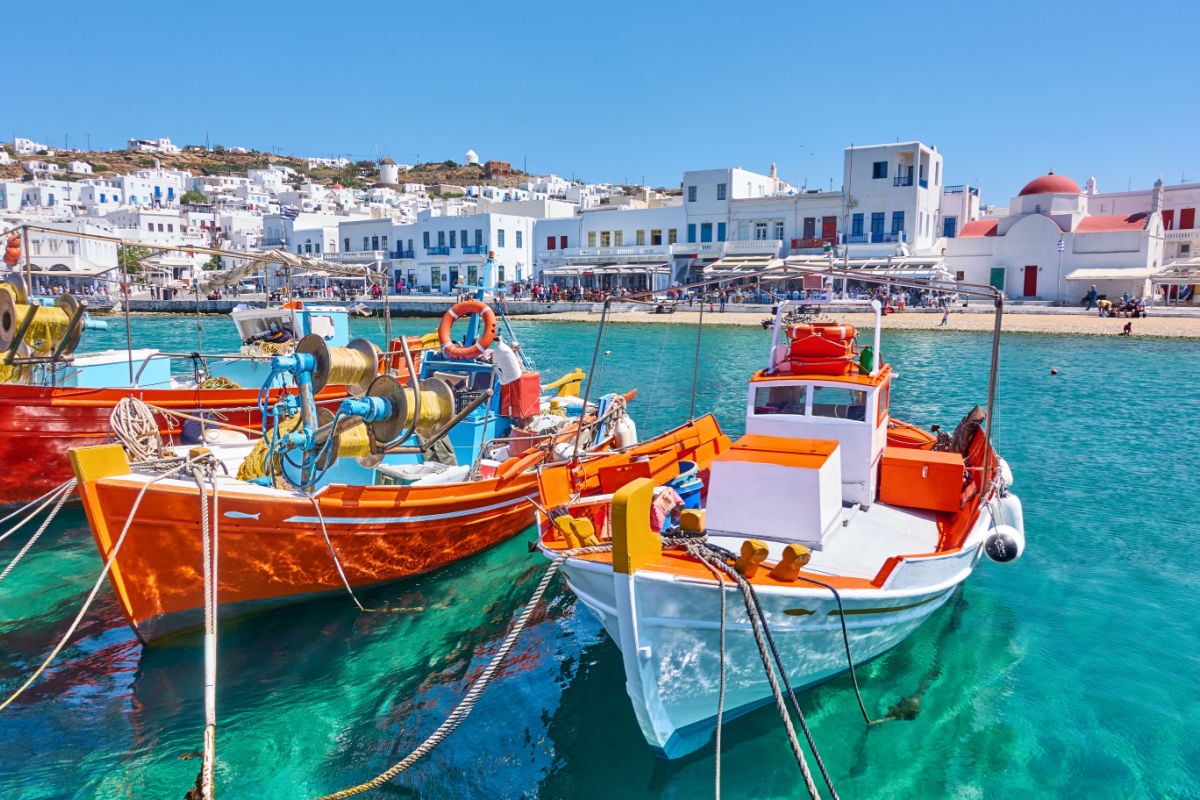
Visiting Greece is a bucket list dream for many. The whitewashed buildings punctuated with bright blue paint, the food, the friendly people, and the beautiful beaches all draw in tourists from around the globe.
But one Greek island, in particular, has caught the attention of American travelers this year.
According to AirBnB, Mykonos is the number 1 trending international destination for American travelers this summer.
This is particularly surprising because Mykonos is only 6.2 miles long and 9.3 miles wide. Unlike some of Greece’s larger islands, that means that accommodation in Mykonos can be hard to find, particularly during the peak vacation season.
Despite this, here’s why this small island is so popular:
Mykonos Is A Party Island
Although it is small in size, Mykonos is an island that is big on fun.
During the summer months, Mykonos is famed for its party atmosphere, offering visitors plenty of beach bars and an abundance of dance clubs.
Beaches such as Paradise and Super Paradise are particularly popular thanks to their bars that blare thumping music. Night clubs such as Void and Moni in the center of Chora give visitors the chance to dance ‘til dawn.
For these reasons, Mykonos is often compared to Ibiza, the Spanish island which has long had a reputation for being the best party island in Europe.
Mykonos also has a reputation for being a very LGBTQ+-friendly destination, meaning that many of the clubs and bars advertise that they are gay-friendly, and others organize drag queen parties throughout the summer months.
Mykonos Has Beautiful Beaches
It would be impossible to discuss reasons why Mykonos is so popular this summer without mentioning its beaches.
There are over 30 different beaches that are accessible to the public on the island of Mykonos. The beaches to the south of the island tend to be organized and luxurious, whilst some to the north are remote and don’t boast any facilities.
Psarou Beach is the place to be if you’re looking for decadence and celeb spotting.
Agrari Beach is the spot if you’re looking for somewhere a little calmer and quieter.
And Paradise Beach is the most popular beach on the island, attracting the youngest and trendiest crowds.
Unlike other vacation destinations, the beaches don’t empty at dusk here. You can dance from sunrise til sunset on the beach in Mykonos.
Mykonos Boasts Centuries of History
Although Mykonos is best known for its beautiful beaches to relax on during the day and clubs to dance in at night, it is also an island with a rich cultural heart.
You’ll find windmills dotted across the island, lending it an old-world feel. Adventurers can climb the Cynthus Mountain, where Greek legend says that Apollo was born.
The neighborhood of Little Venice is perhaps the most famous on the island. Here you’ll find rows of medieval fishing houses facing the water, lending the area a romantic and Venetian feel that attracts visitors from all over the world.
Mykonos Town boasts a labyrinth-style maze of tiny streets hiding colorful shops and restaurants that are each unique. There’s so much to see and do here.
Mykonos Offers The Best Greek Hospitality
The Greeks are known for being friendly and hospitable people who welcome tourists into their country.
This is particularly true in Mykonos, where locals feel that it is a great privilege to be a guest, and therefore tourists are treated very well here.
You will find that the people of Mykonos are warm and friendly to their visitors, particularly those working within the service industry.
Whether you are dining on seafood that has been freshly caught that day or sitting in a bar with a cocktail to watch the sunset, you’ll find that the people serving you are always attentive.
And because the vast majority of Mykonians speak excellent English, you won’t find any problems with the language barrier here.
Mykonos Is Where Luxury Meets Budget
What makes Mykonos both unique and appealing is that it is an island that appeals to both luxury and budget travelers.
You’ll find a huge number of five-star resorts and spas here, as well as luxury villas with private chefs and swimming pools. And the ocean is usually littered with yachts full of the rich and famous taking their annual island-hopping vacations.
But at the other end of the budget scale, you can find affordable all-inclusive hotels and quaint guest houses. Access to most of the beaches is free. And outside of the most popular and famous resorts, food and drink prices are very affordable.
There is something for every budget here. And everyone is welcome.
Few countries are as exciting and History-packed as Vietnam. One of Southeast Asia’s most underrated gems, it is not only the site of emblematic events that shaped the 20th century, but also a tropical oasis boasting an extensive coastline, a picturesque countryside, and breathtaking natural vistas.
Only a month ago, I flew to Vietnam with the goal of exploring its cultural diversity in depth, and visiting as many different provinces as I could, both North and South.
While I could probably write an entire book gushing over Vietnam and its abounding beauty, one small city in particular stole my heart.
Located in the country’s Central region, it is not only a major cultural center well-supplied with UNESCO-listed monuments, but perhaps Southeast Asia’s most surprising destination:
The Yellow City Of Vietnam
Hội An (commonly Latinized as Hoi An) is one of Vietnam’s oldest settlements, tracing its origins back to the 10th century, when it was established by the now-defunct Champa Empire as a trading port, at the strategic point where the Thu Bon River meets the East Sea.
Later on, its complex canal system would prove useful to Chinese and Japanese merchants, who saw in Hoi An an opportunity to expand their dominance across the historical Indochinese Peninsula.
In the 19th century, the French would also set up base here during their conquest of Vietnam.
Needless to say, Hoi An is a melting pot of sorts, and the countless foreign influences it was exposed to throughout the centuries, whether willingly or not, are still very much a part of the cityscape, coexisting harmoniously in a concoction of Buddhist temples and European colonial houses.
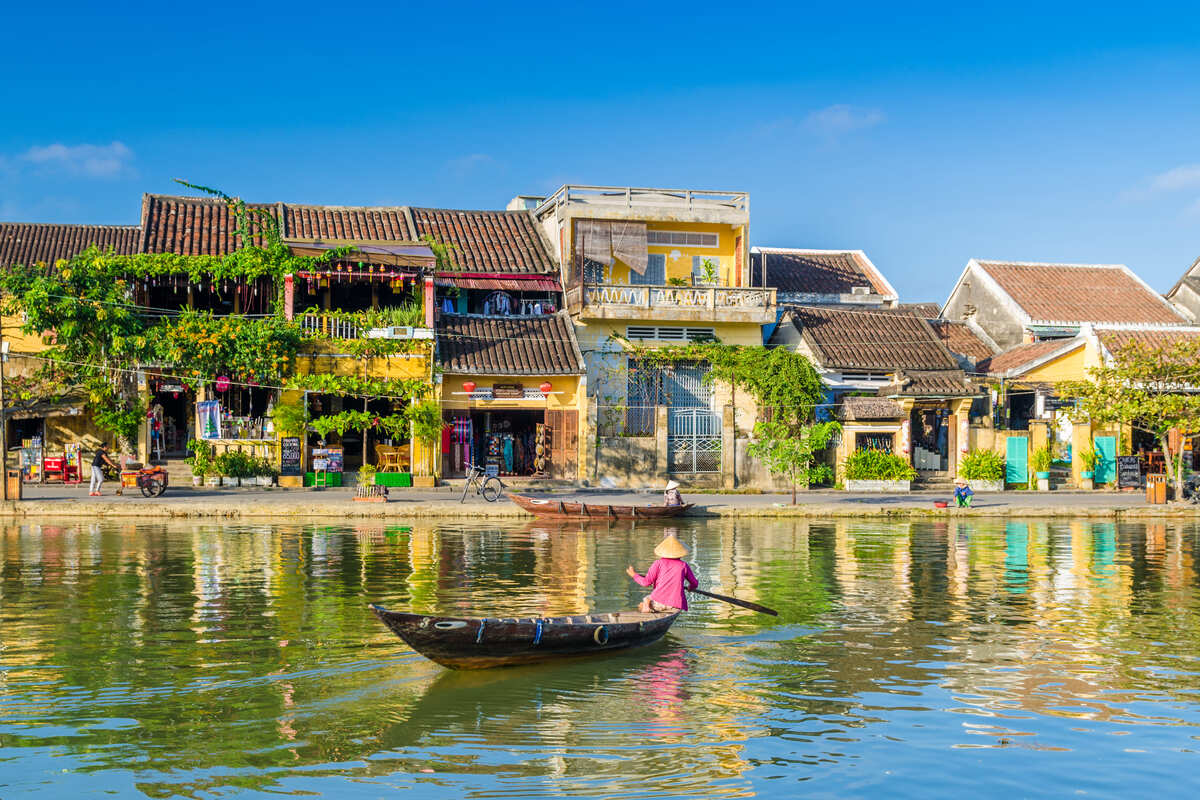
The Old Town, where a majority of the World Heritage Sites are found, is famous for its yellow shopfronts, sitting on both sides of narrow alleyways teeming with traders and curious onlookers.
Cutting through its ochre-colored heart, a waterway busy with fishing boats helps paint a picturesque scene.
If visiting an ancient Buddhist temple is on your Southeast Asia bucket list, you’ll be thrilled to learn Hoi An hosts an unusually high concentration of them, scattered all around the Old Town and beyond, each with defining architecture and an amazing History to match.
Some of the most famous ones include the Phu Kien Assembly Hall, with its large dragon-shaped fountain, the Hai Nam Assembly Temple, where visitors will find a gilded altar depicting heavenly scenes, the Quan Cong Temple, distinguished for a lively red color and decorative motifs, and my favorite out of them all: the Japanese Covered Bridge.
A footbridge housing a small temple, it was built by Japanese traders who established a permanent presence in Hoi An in the 16th century, and it’s now a major point of interest, attracting dozens of photographers who queue up by the riverbank for that signature postcard shot.
It is worth mentioning visitors must pay a symbolic entry fee of 120,000 VND, or USD$5, to enter Hoi An Old Town and explore its ochre-colored maze.
Incredible Cuisine
Vietnam was included in TasteAtlas‘ Top 20 World’s Best Cuisine ranking at number 20, outperforming other tried-and-true foodie destinations like Thailand and Malaysia, so it was hardly surprising I would stumble upon a foodie’s paradise arriving in Hoi An.
From sampling the unfamiliar street food to gorging on some delicious, homemade Pho in riverfront restaurants, every meal I had in Hoi An was an acute sensory experience, but writing this piece, somehow my thoughts keep gravitating towards one eatery in particular.
One of those places I was lucky enough to find just wandering at leisure in the Old Town, HOME Hoi An is tucked away in a quieter back street away from all the noise and trade that dominates the riverside, and a restaurant TripAdvisor-listed restaurant specializing in traditional Viet food.
Hoi An cuisine stands among Vietnam’s finest due to the city’s unique amalgamation of Western and Indochinese cultures, and the resident chef at HOME Hoi An did it justice.
Taking up on the waitress’ suggestion, I ordered some deep-fried prawn spring rolls for starters. Other than being deliciously crunchy, I particularly appreciated the way it was presented, resting on two baskets hanging from a mini Vietnamese carrying pole.
For the main, I wanted to keep it in the theme while still expanding on Hoi An’s rich seafood heritage, which seemed to be the restaurant’s main attraction. The seafood stir-fry was only a natural choice, with freshly caught prawn, pan-fried calamari, noddles, and a selection of locally-grown vegetables.
To wash it all down, and help me cool down from the 40-degree heat outside, some natural watermelon juice – no additives, just pure, iced, squeezed fruit.
My thirst for the tropical wasn’t yet entirely quenched, and although it was a tough pick between the homemade cassava tart with black pearl sago and the seasonal fruit platter, I went with the latter as I can’t seem to get enough of the lusciousness of the native fruit, particularly white-flesh pitayas.
It may not be as affordable as other cheap diners down the road, with some of the main courses costing as much as USD$30, but the cozy ambiance, the restaurant’s overall theme, paying homage to the Old Town’s warm color palette, and the English-speaking, incredibly attentive staff were absolute highlights for me.
HOME Hoi An is a multiple-story restaurant with plenty of room available, but you may want to call in advance and book a table not to miss out on this incredible experience, especially if you’re visiting Hoi An over a busy weekend.
One Of The Most Beautiful Cities During The Nighttime
After spending over a month in Southeast Asia, I came to realize cities feel livelier and truly come to life in the nighttime, when the unforgiving sun has set, and people cram into the streets looking for that cooler breeze and some relief from that overbearing heat.
I had to become a bit of a night owl myself and hit town under the cover of darkness. Well, almost.
Hoi An is anything but quiet and dark in the late hours when the traditional paper lanterns light up in a million different colors, and the quirky cafes suddenly become bars packed with revelers.
Walking the riverbank after sundown, when the lantern boats are traversing the canals, trailed by their own colorful reflection on the pitch-black water of the Thu Bon River, pop music blasting through the loudspeakers in bars, and the smell of street food filling the humid air is magical.
If you’re visiting Hoi An in the coming months, make sure you’re there on time for June 1, July 1 and 31st, and August 29th, the next dates when the Full Moon Lantern Festival will be held.
Scenic Beaches
Hoi An is not primarily a beach destination, but it is close to the ocean, and visitors do have a handful of white-sand beaches within short driving distance of the Old Town to escape for an East Sea dip when the humidity gets a bit much.
Our top 3 picks include:
An Bang, a tranquil sandy strip equipped with palapas and beachfront eateries
Cua Dai, a beach and development zone where all the top-rated resorts are located
Cham Island, an offshore swimming spot known for its virgin nature and bright-blue waters
If you’re dreaming of a Southeast Asia beach getaway, perhaps you should consider extending your stay beyond Hoi An and checking out the country’s mind-blowing South.
Unique Experiences
Besides hosting ornate temples and centuries-old shrines, Hoi An is a popular home base for travelers looking to explore the wider scenic Quang Nam countryside and immerse themselves in Central Vietnam’s distinct culture.
If you’re staying in Hoi An, you shouldn’t miss out on the chance to explore the Ba Na Hills reserve, featuring a landmark bridge arching over an area of outstanding natural beauty, supported by two giant, stone-like hands that look as if they’ve emerged from the jungle below.
Further up the coast, on the road to the bustling port city of Da Nang, the Marble Mountains make for yet another jaw-dropping nature escape, what with its otherworldly limestone caves, towering waterfalls, and winding footpaths.
If trekking isn’t your forte, and you’d rather explore and take in the local History, roughly 60km from Hoi An, you will find the Mỹ Sơn archaeological site.
A collective of Hindu structures built between the 4th and 14th centuries at the apex of Indianized Cham Empire, it is the longest-inhabited ancient settlement in mainland Southeast Asia in spite of its abandonment.
With numerous day trips to be considered, you would need a one-week stint in Hoi An to truly get a feel of the place, and the surrounding province.
Incredibly Affordable
Hoi An is one of the most affordable destinations in Southeast Asia, with everything from food prices to accommodation rates being markedly lower than in other neighboring markets, despite its rising popularity among foreigners.
It is, in essence, a backpacker destination, and the lower cost of living tends to reflect that:
Rent is 25.2% cheaper than in Hanoi, the capital of Vietnam
Restaurant prices are 36.2% lower than in Ho Chi Minh City, Vietnam’s biggest city
Groceries prices are 17.5% than in Nha Trang, the country’s busiest resort destination
Hotel rates for upcoming June dates on Booking.com start at just USD$20 per night for a three-star hotel, while those for luxurious five-star properties range between US$50 when booked in advance in the off-season with a Genius discount and USD$181.
Vietnam Is Open For Tourism Restriction-Free
Unlike Indonesia or Myanmar, Vietnam welcomes tourists restriction-free, irrespective of COVID immunization status.
It was one of the first countries in Southeast Asia to reopen for tourism following the health crisis, welcoming foreigners restriction-free at a time when its neighbors were still limiting tourism in their bid to curb the viral spread, and it’s remained indisputably pro-tourism.
Traveling to Hoi An, or any other destination within Vietnam, all you’re required to bring is a valid passport and an entry visa unless you’re from a visa-exempt country.
U.S. and Canada passport holders are not exempt from this requirement and must obtain a visa prior to travel. Luckily, it can be applied for online, though advance planning is advised as it may take a few days to issue.
A 30-day tourist visa costs USD$25,00 and can be obtained here.
The research looked at a range of costs travelers would typically incur, including hotel costs, meals, and the cost of visiting the main cultural attractions.
Here’s everything you need to know:
Cheaper Than Eastern Europe
The average costs involved in visiting Lisbon in 2023 are only 2% higher than they were in 2022. That’s a much smaller increase in costs than any other European city included in the research.
What makes this so surprising is that Eastern European destinations are typically considered the best value in Europe.
Last year, Vilnius in Lithuania was the cheapest destination to visit, but Lisbon narrowly knocked it down into second place this year.
Only four Western European cities made it into the top ten cheapest destinations in Europe list. They were Lisbon (Portugal), Athens (Greece), Porto (Portugal), and Lille (France).
It is no coincidence that two of these cities are in Portugal: Portugal is a country that offers a warm and friendly welcome alongside affordable prices.
The Average Costs In Lisbon
So, what can you expect to spend if you choose to visit Lisbon for your summer vacation?
The average price of a two-night hotel stay in the city for two people is $150, on average, which is just a 5.2% increase on 2022’s average prices. This is based on guests staying in a 3-star hotel.
For a three-course meal for two people with a bottle of house wine, you can expect to pay around $48 on average.
A cup of coffee in a café will set you back just $1.70 and a bottle of beer in a bar just $2.80.
Culture vultures can expect to pay around $5.50 to visit a top art gallery in the city and $11 for one of the highest-quality heritage sites.
Prefer to see all the attractions Lisbon has to offer via the convenience of a sightseeing city bus tour? This will cost you $22.50 per person.
Why Visit Lisbon?
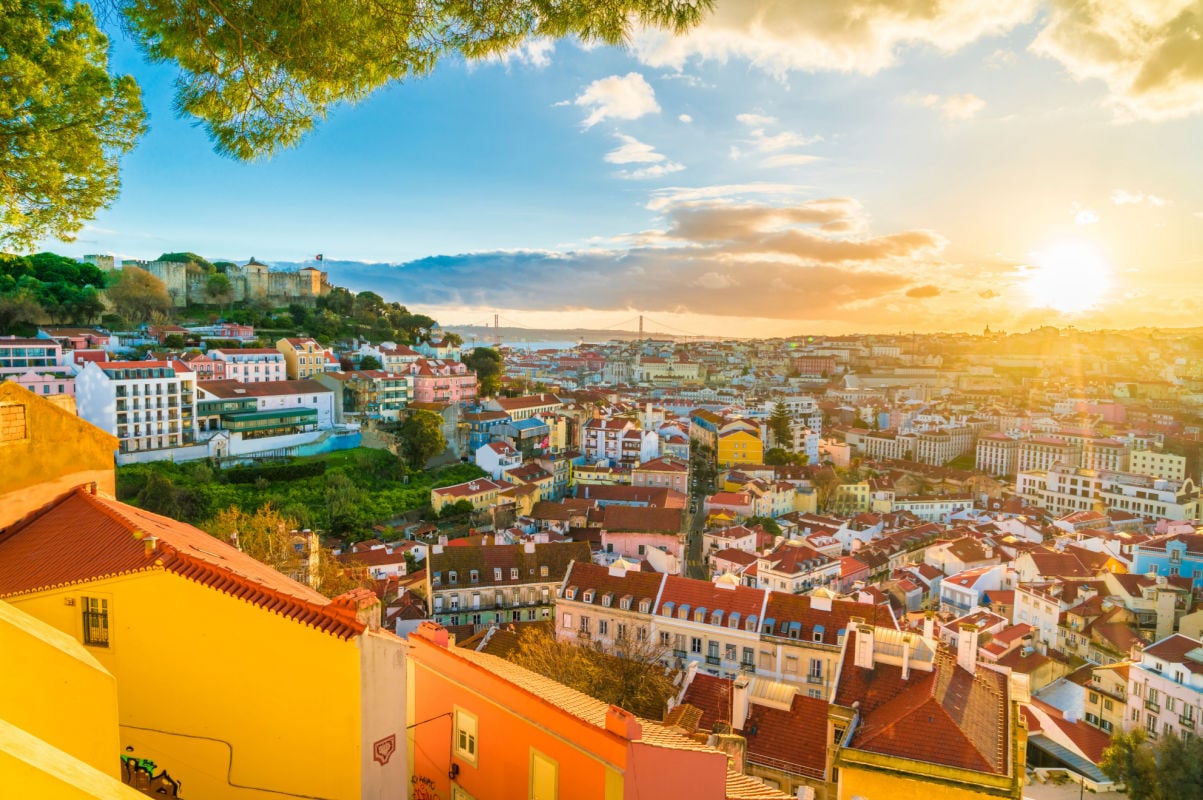
As well as being incredibly affordable, Lisbon is also a beautiful city packed full of cultural attractions.
As a capital city, it has all the modern bustle and amenities you would expect, but these are blended with an ancient, historical feel.
This is because Lisbon is one of the oldest cities in Western Europe, second only to Athens.
Lisbon is famed not only for its unique historical center but also for its incredible weather and delicious food.
While the food might be affordable here, that doesn’t mean that quality isn’t exceptional. Because Lisbon is a melting pot of cultures, this is reflected in the cuisine. Looking for dishes that are traditionally Portuguese? You can enjoy incredible seafood and delicate pastries called Pasteis de nata.
If you’re looking for a sun-soaked break, then you’re in luck because Lisbon is also the sunniest capital city in mainland Europe. If you visit in July, you’ll be able to experience an incredible 352 hours of sunshine.
From the high-octane nightlife to the incredible views, Lisbon has so much to offer travelers. Whilst it is best known as a city-break destination, Lisbon also boasts its own coastline not far from the city center.
This long stretch of golden sand beach is ideal if you’re looking to relax and unwind away from the bustle of the city. It is also the best place to eat the seafood that Lisbon is famous for, as close as possible to the source.
And thanks to the strong southerly swell, the Lisbon coast is a great place for surfing and windsurfing too. It’s an affordable destination that offers something for everyone.
Did you know it’s possible to skip customs entirely when landing back in the U.S.?
We’re not talking about some unknown loophole either — there are certain countries you can visit that allow you to go through U.S. Customs before taking off back to the States. Then when you land at home, you walk right out of the airport like you would for a domestic flight.
Best of all? One of those countries is one of the most stunning destinations in the Caribbean — ????️ Aruba????.
One Happy Island
If you’ve never been to Aruba, you aren’t alone. Many travelers flock to tourist heavyweights like Cancun or Montego Bay year after year.
But while those destinations are certainly worth returning to, a visit to Aruba might just change your annual vacation habits.
Affectionately called the “one happy island,” Aruba certainly lives up to its nickname. The moment you land on this eternally sunny island, you feel welcome and relaxed before you’ve even made it to your hotel.
Aruba is only about 20 miles long and 6 miles wide, so your ride from the airport to your hotel will be super quick no matter where you are on the island.
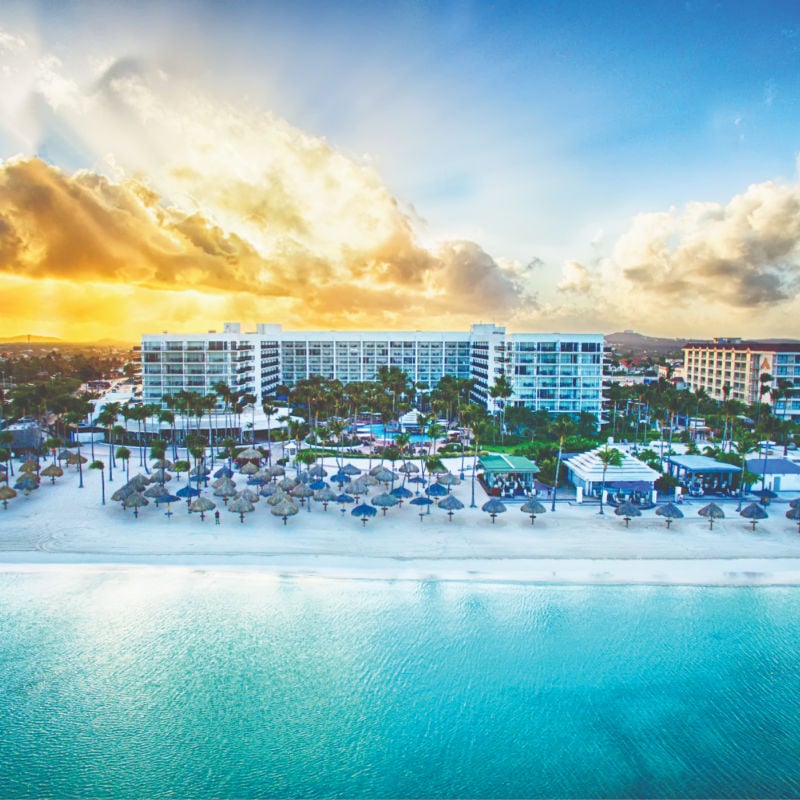
Many travelers head to Palm Beach, a breathtaking stretch of sand that many of the most popular resorts call home — including the alluring Aruba Marriott Resort & Stellaris Casino.
If you’ve never been to Aruba, I’d suggest taking your arrival day to unwind on the beach or at your resort. Nobody likes flying half the day away, but as soon as your feet hit the white sands of Aruba, you’ll forget about the time it took to get there.
For a first-time visit (and every visit after, honestly…), one of the best areas to stay is going to be Palm Beach. The beach is about 2 miles long and has everything you could possibly want on a Caribbean vacation.
Watersports, beach bars, restaurants, shops, casinos… you name it — Palm Beach has it.
You won’t ever get bored exploring this stunning stretch of sand, and that’s assuming you even want to leave your resort. When planning my stay, I wanted to be able to get everything I could possibly need without having to leave the resort property. In this case, that property was the Aruba Marriott Resort & Stellaris Casino.
While I did leave the resort during my stay, there was no need to. Everything I could possibly want or need was on site and easily accessible.
I realized an hour into my trip I’d forgotten toothpaste, deodorant, nail clippers, and my snorkel gear (amateur move, I know). I walked downstairs and found all 4 quickly and easily!
For a first-time visit to Aruba, the Marriott was a perfect fit, and I’ll definitely be back again the next time I head to Aruba.
The room was incredible, and having morning coffee while looking off the balcony as the sun came up is a memory that will be etched in my brain for the rest of my life.
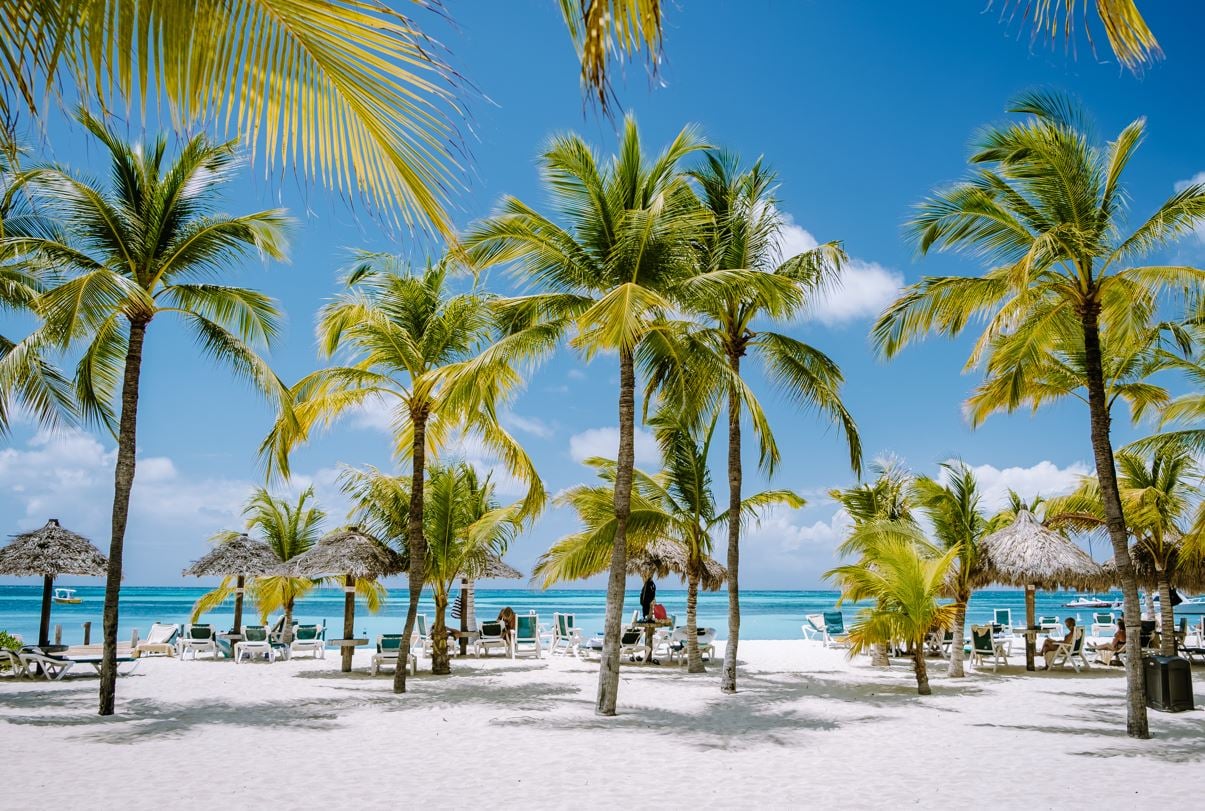
Of course, one of the highlights of heading to Aruba is going to be its gorgeous white-sand beaches. And when I say white sand, I mean it!
Aruba has some of the whitest sand in the Caribbean and, as a result, never feels hot on the feet. Everything about the sand and the beautiful blue waters screams relaxation and peace of mind.
But Aruba is more than its beaches! Aruba really is a destination for every type of traveler. Art, culture, adventure, nightlife, and more are all at your fingertips and easily accessible from anywhere on the island due to its small size.
Personally, I like to check out the local art scene and do more “off-path” things (yea, I said it).
On a different trip to Puerto Rico, one of my favorite experiences was exploring the amazing street art in Santurce. Little did I know Aruba is also home to absolutely breathtaking street art and murals!
San Nicolas Street Art
Founded in 2016 by Tito Bolivar after being inspired during a visit to Bogota, Colombia, Aruba Mural Tours in the city of San Nicolas offers travelers a glimpse into what’s possible when an idea becomes a sensation.
The first murals went up after the first-ever Aruba Art Fair, and San Nicolas’ fate was sealed.
Now, there are well over 40 murals to enjoy, and everywhere you turn your head, you will be met with art from some of the greatest muralists in the world.
I’d suggest the morning tour, as the sun won’t be as hot, and you can plan to stop and grab some great local fish on the way back to your hotel at Zeerover, a restaurant on a picturesque pier that looks out on the unbelievably blue waters where your fresh meal just came from.
There is no better way to truly get off path than by heading into the desert! I wasn’t aware that Aruba had a desert until a few days before my trip, but it’s definitely worth exploring.
Most of my experience of the Caribbean is from the time I spent living in Grenada, which is very mountainous. You can’t look too far in any direction without seeing a mountain unless you look at the ocean, of course.
In Aruba, you can see for miles. Everything is incredibly flat, and a trip into the desert really shows the unique character of this island.
What is the best way to see it?
A UTV tour! UTVs are different from ATVs; they are like a cross between an ATV, a golf cart, and a car, and they are an absolute blast to drive through the desert! We toured with De Palm Tours, and our guide was hilarious and informative.
During the tour, you’ll stop at several points in the desert to get a bit of history, a chance to stretch your legs, and the option to switch off driving to be a passenger for a while, which is the perfect time to grab some great video!
Pro-tip: Wear some really amazing sunglasses with great coverage, or bring some off-roading goggles. If you don’t have either, they have them for sale before the tour begins. There is no windshield, and there’s a lot of sand in the desert! ????
Go Home With More Than Souvenirs
One of the joys of traveling is coming back with something to remind you of your trip, but you can bring back far more than just a souvenir. Why not go home with new knowledge and an experience that will remind you of your trip again and again?
If you are staying at the Aruba Marriott, you can definitely make it happen. The best way?
I know, I know… you’re on vacation; why would you want to work at something? Don’t worry. The Marriott makes the class so easy on you that all that’s left to do is enjoy the experience (and reap the delicious rewards).
I can confidently say that I will now be eating a local dish from Aruba from the comfort of my own home for many years to come, and it’s such a tasty treat! If you’ve never had a Pastechi, you need to book your tickets to Aruba right now. Seriously, they’re that good ????
The Most Important Decision
Aside from choosing to visit Aruba in the first place, one of the biggest influences on whether you will have a great vacation is going to be where you stay. I touched on it above, and I’ll say it again, the Aruba Marriott Resort & Stellaris Casino was the perfect pick for a stress-free vacation with everything I could possibly need while enjoying all that Aruba offers.
From a delicious breakfast on the gorgeous balcony to a picture-perfect afternoon under the ocean-front palapas, the Marriott did not disappoint.
I wasn’t there long enough to try everything, but that just means that I’m more excited to go back for another visit.
In particular, I want to try the Massage de la Aruba at the on-site Mandara Spa and the Desert Bathing experience offered by the Marriott, where you can enjoy a picnic in the desert after a yoga session and some introspection.
To cap off your Aruba adventures, I highly recommend enjoying your last dinner at sunset at Atardi, where you can dine with your feet in the sand in one of the most beautiful settings in the Caribbean.
The view of the sun setting over your delicious dinner on your last night in Aruba will stick with you, and you’ll desperately want to come back the second you leave.
**Travel Off Path was a guest of Aruba Marriott Resort & Stellaris Casino, who helped with the creation of this itinerary by hosting some of our accommodations and attractions. Our opinions, recommendations, and suggestions remain our own.**
When you think of Northern Europe, you probably think of the Northern Lights, dog sledding, and cold weather year-round. These are all great things to see during a visit, but what is the best way to get there and experience those things?
Flying into places like Norway is easy enough if you’re coming from North America, but there’s more to a great holiday than just booking a ticket.
You have to plan out when and where you’re going, and that’s easier with a local guide.
Local guides know all the best-kept secrets, like the most interesting hotels, restaurants, and things to do. They won’t bog your trip down with strictly touristy things but will allow you to see the real culture of the country.
I recently went on a trip to Norway with Torunn Tronsvang from Up Norway (a local tour company that tailors your experience based on your interest to the exact tee) and had what can only be described as the most magical time ever.
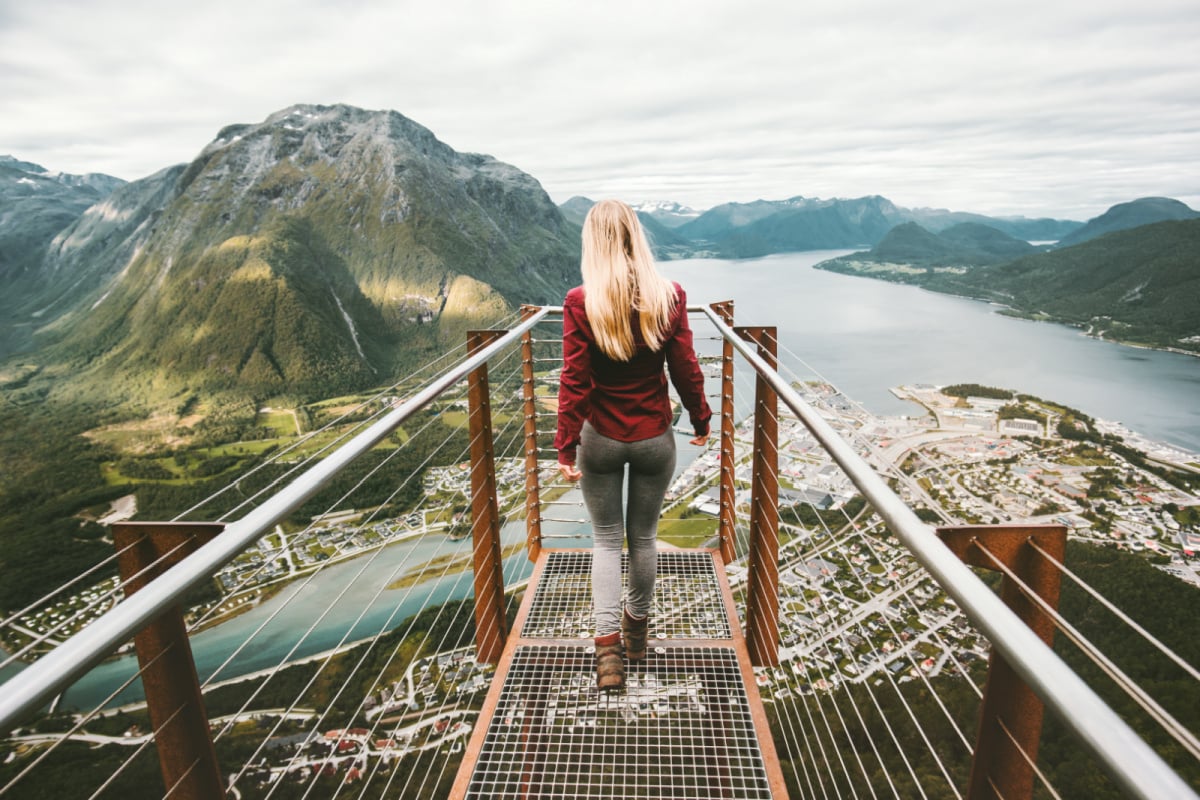
I stayed at hotels that ranged from all-out luxury to some of the best camping sites and got to enjoy different physical activities like snowshoeing, kayaking, and biking alongside fjords.
Torunn matched exactly what I like to do with my itinerary — creating an unforgettable experience I wish to emulate every time I travel. The next time you’re looking to travel to Norway, consider using Up Norway. They take on the burden of planning and ensure you have the best time possible without having to plan every detail yourself.
Find out why Norway is best experienced with a local guide:
The first leg of the trip was flying into Oslo, the capital of Norway, on Norwegian Airlines. The airline is Scandinavia’s second-largest airline, and coming from Barcelona, Spain, where springtime was in full effect, I was not expecting to see snow or feel cold brushes of wind every few seconds.
This total contrast surprised me but gave me a better appreciation for breaking the norm. Springtime in Norway is very different from springtime in places like North America or Southern Europe, and that’s part of why it’s unique.
You can still enjoy gorgeous snowy hikes and cozy saunas.
Arriving at the Sommerro, located in the hear of Oslo, I was amazed at how the hotel had recreated the interior to resemble its art deco past. Coming from places like Miami Beach, Mexico City, and Paris, I was amazed that the art deco movement from the 1920s had reached Oslo.
The building was the former headquarters of Oslo’s electric company and was built sometime in the 1930s. Each room had strong notes of art deco-inspired motifs, like a glass chandelier adorned with palm tree leaves that sat directly in the middle of the room.
While we only stayed there for two nights, I could appreciate the amenities, like the Ekspedisjonshallen dining hall, which had a bar directly in the middle with a giant original art deco fresco behind it. Dishes like truffle pasta hit the spot and, slowly, made me realize Norway was also a foodie destination.
You can’t experience Northern Europe properly without staying in a snowy mountain lodge. Our second stop of the trip was the quaint Skåbu Mountain Lodge.
It was essentially a winter wonderland located in the small village of Skåbu, known as Norway’s oldest town and the highest settlement in Northern Europe.
The hotel was built from an old grocery store and was a centerpiece for the entire community. Staying there made me understand social sustainability on a more personal level.
Social sustainability means ensuring companies preserve and maintain the community that was initially there. The owners at Skåbu were adamantly invested in relationships with the district.
This was showcased to us when we explored all the different areas where locals could show off their businesses.
On day two, Up Norway arranged snowshoe hiking and dog sledding. While my pups were a little slower than the rest, I could appreciate the scenery in what many would consider a once-in-a-lifetime opportunity.
It felt like I had stepped into a wardrobe and was transported to Narnia.
Snowy mountain hills surrounded both sides of me, and every so often, I would make a sharp turn exposing a frozen fjord in the distance. The sun made the snow glitter, and each tree had a fresh layer of snow on it.
We had some traditional Norwegian food during dinner that blew my socks off. Dishes like a rack of lamb from wild sheep with potato puree from head chef Lukasz B. Socha were so delicious that it made me want to have seconds.
Who would think that Norway had some of the best food in Europe?
Torunn from Up Norway then escorted us to our next stay, which would be to the beautiful Storfjord Hotel. Nestled on a hill facing Glomset Bay, it could only be described as a woodsy romantic fantasy.
Each room resembled a log cabin, and most were facing the bay giving the guest the most fantastic view each sunrise. If undisturbed, the water mirrored the sky, and tall mountains with snowy tops peered from behind the bay.
Up Norway arranged a kayak tour of the bay, and this was another example of the unique ways a traveler can capture Norway’s natural beauty.
Our last stop would be my favorite property.
Located on the edge of Norangsfjord and facing a fjord with two opposing giant mountains on each side, the Union Øye Hotel was a Victorian masterpiece.
Built in the late 1800s, the hotel was one of the first luxury hotels in the area and still maintains its original facade and interiors.
Each room is decorated with a specific theme, all fitting the same Victorian genre. This massive property has more than five social rooms with different purposes.
There’s a library, a palm room, and even a conservatory. Our guide Torunn gave a property tour, including a bike expedition around the fjord. During dinner, we again sampled other Norwegian classics that were equally as good as the ones I tried earlier and, lastly, we toasted to our final night together.
Why You Should Book A Local Guide
Local guides like Torunn from Up Norway are essential for a good experience, especially in countries where getting off path is an essential part of the experience.
They not only know where and when to go to certain places, they understand the different dynamics of specific cultures.
They explain how things work in ways you can understand, and they often do much of the non-fun work for you, like booking all the hotels and experiences.
Up Norway was able to attune itself to my specific wants and needs and create an itinerary that was perfect for my interests. If there was something I didn’t want to do, they could adjust it in a way that didn’t seem complicated.
Having someone who can do this is such an advantage when traveling abroad, especially when you don’t speak the native language.
Granted, you should always pick up a few words whenever you’re traveling somewhere new, but knowing how to barter isn’t always as easy for every traveler, and Torunn was able to help me in most cases.
There are plenty of English speakers in Norway, so that wasn’t much of an issue, but it was nice having someone there just in case anything happened.
Another positive aspect of getting a local guide is knowing which places to avoid. Often, we want to see the most touristy thing because that’s all we know. With a local guide, we get the heads up on what’s worth visiting and what’s not.
For example: Up Norway took me to the Skåbu village, which I would have never known about. It might not be highly touristy at first glance, but it was one of my favorite experiences, and that wouldn’t have been possible without a guide.
How Much Are Guides?
Pricing depends on what you want. If you’re looking for a luxury adventure in the mountains, that can cost more.
It all varies on what you like to do. Up Norway will ask you questions and curate a travel itinerary with pricing.
This is not a binding agreement; you can alter the itinerary as you see fit, and most airline purchases are separate from this.
Is A Guide Good For Solo Or Group Travelers?
Again, it depends on what you want to do. If you bring on the family, you let them know in advance, and they’ll create a customizable list of things to do.
If you’re traveling solo and prefer to avoid communicating with anyone, they can arrange a text-based service that allows you to keep on top of things without being around too many people.
Norway is a fantastic destination for solo and group travelers because there’s so much to do here. Working with a guide will open that up for you, and you’ll get to experience different things like dog sledding, snowshoeing, cross-country skiing, and more.
The next time you travel and want a snowy vacation check out the country of Norway. This underrated destination is best experienced with a local guide like Up Norway, which can have something for all different types of travelers.
Turkiye is becoming trendier by the minute now that international travel has resumed and its borders are open restriction-free, so much so that it’s been now named the number one leisure destination in the Middle East, surpassing tourism hotspots like the UAE and Qatar.
According to India-based travel technology firm Rategain, international arrivals in the Middle East will be 15 percent higher during summer 2023 than the peak year of 2019. Surprisingly, Turkiye is the driving force behind this recovery, not the Persian Gulf with its futuristic skyscrapers.
But how did Turkiye get here, and why is a growing number of travelers choosing to spend their vacations there? We may have the answer:
Turkiye Has A Vast Cultural Wealth
A cross-continental giant straddling both Europe and the Anatolian Peninsula, the Westernmost portion of Asia, enriched by millennia upon millennia of History, and at the meeting point of civilizations, Turkiye is a one-of-a-kind nation.
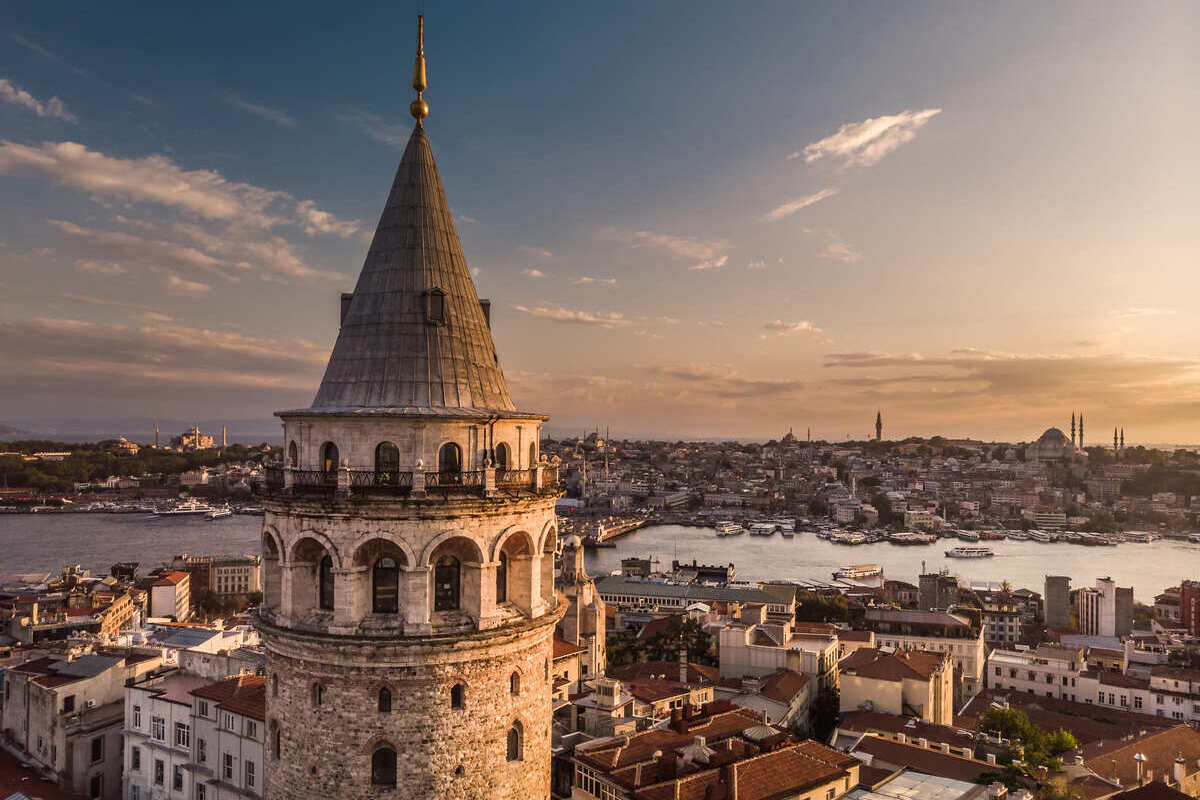
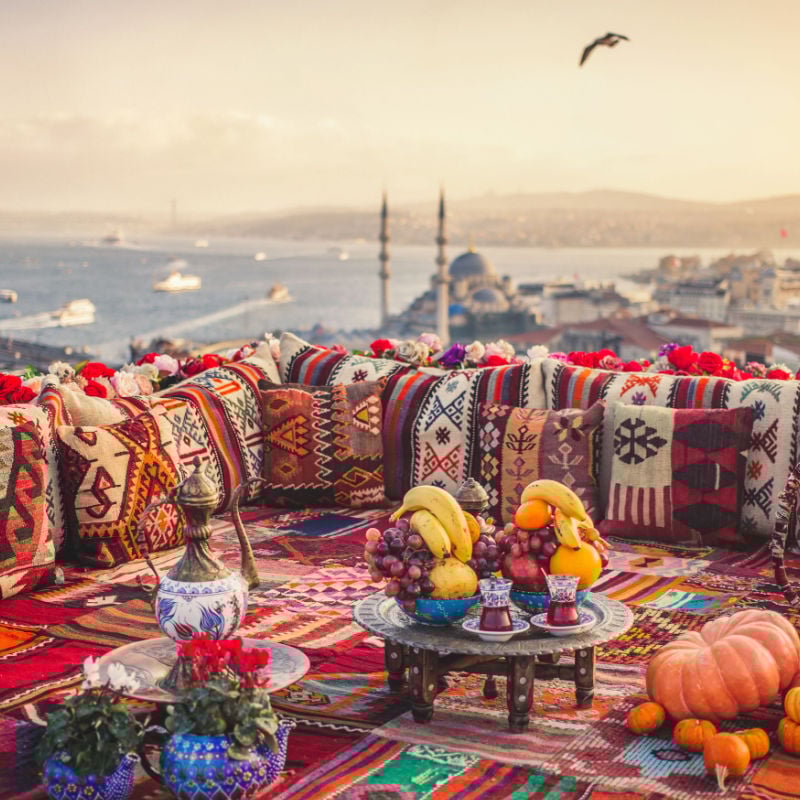
It is home to some of the most exciting city breaks out there, including Istanbul, where world-renowned sights, such as the Hagia Sophia, an Ancient Roman cathedral-turned-mosque, the Basilica Cistern, the Galata Tower, and Suleymaniye Mosque are all located.
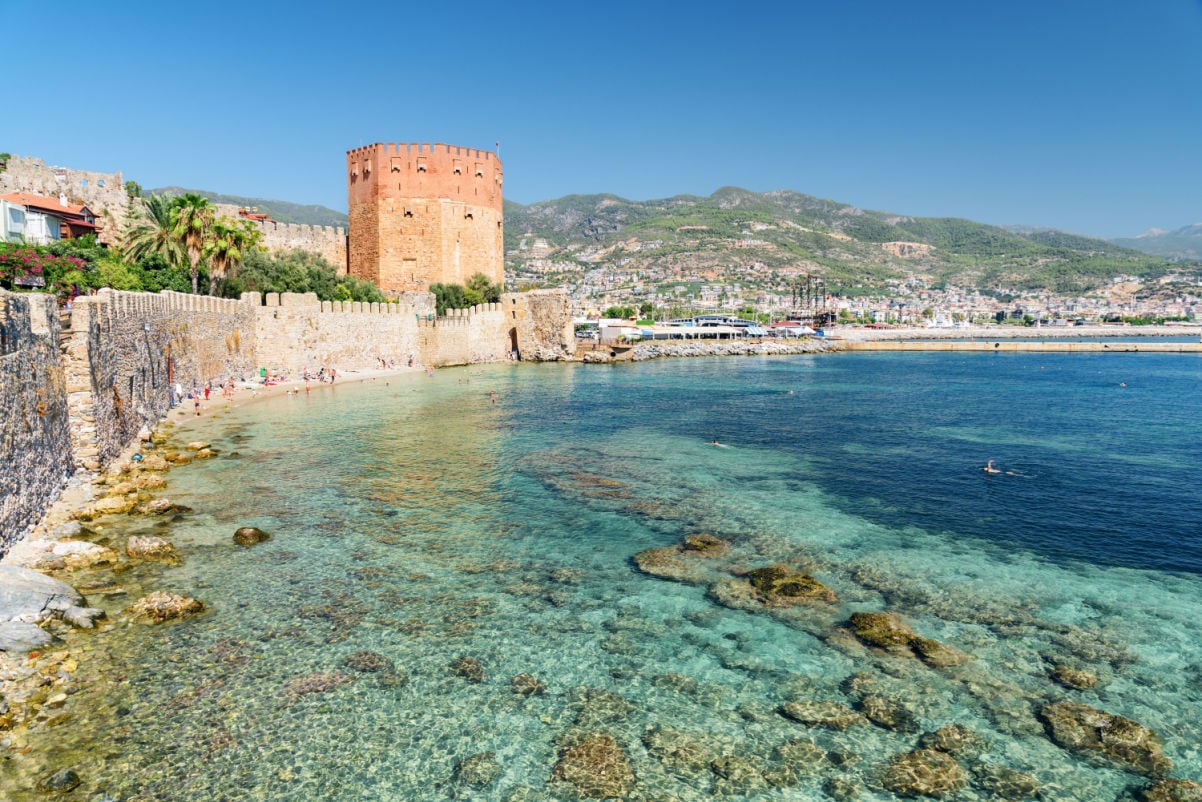
On the Aegean Coast of Turkiye, tourists will find fast-growing resort zones, from the bustling metropolis that is Izmir, best known for its landmark Ottoman-era clock, to the smaller, more exclusive beach destination of Bodrum, where a medieval castle and a picturesque Old Town await them.
All along the coast, from the upper Aegean to the East Mediterranean, where the trendy Antalya sits, there are numerous historical ruins, areas of outstanding natural beauty, and virgin-sand beaches to be explored.
Whether it’s the ruins of a biblical Ephesus, where the Gospel of John was reportedly written, the flowing thermal springs that cascade down the calcium steps of Pamukkale, or the turquoise waters of Fethiye, the Turkish coast is a mix of Ancient World and outstanding natural beauty.
The Black Sea region is also not to be overlooked, boasting an overdevelopment-free coast dotted with quaint cobblestone villages and lesser-known swimming spots, like the scenic Sinop, a rich Greco-Roman heritage, and even mountain retreats and alpine peaks (think Trabzon).
Inland, the fairy chimneys, a swarm of hot air balloons, and underground cities of Cappadocia dominate the landscape, while Eastern Turkiye, close to the borders with Georgia and Armenia, is known for its traditionalism and indigenous Anatolian culture.
As you can see, there is a lot to do and see in Turkiye to inspire not only one, but several visits, but its vast cultural wealth is not the only reason why tourists love it.
Turkiye Remains Affordable Compared To Most Of The Middle East
Despite the soaring inflation and rising prices of recent years, Turkiye is still incredibly affordable by both Western and Middle Eastern standards.
The already-cited Bodrum has been named the third cheapest Mediterranean destination this year, while the financial hub that is Ankara, Turkiye’s seriously underrated capital city, has been crowned the most affordable city for digital nomads worldwide.
As the country’s cultural capital and leading destination, Istanbul is easily one of Turkiye’s most expensive cities.
Even then, it may be 57.1% less expensive than New York, if data shared by Numbeo is to be considered, with meals at inexpensive restaurants averaging only USD $7.17, according to Numbeo contributors.
Turkiye Outpaces All Middle Eastern Destinations In Recovery Trends
As confirmed by Rategain, the Middle East (led by Turkiye) is outpacing all travel markets in recovery rates for the April-June quarter, indicating a strong summer season ahead. More specifically, the firm attributes Turkiye’s success to its friendliness and open border policy.
Unlike the Western World, it has not enacted barriers for Russian visitors, and this year, the number of arrivals from Russia jumped by more than 100 percent compared to 2022. They are not the only ones favoring budget-friendly Turkey over an overpriced Europe:
Americans and Brits are flying to the country in droves, with American arrivals up a whopping 61% in the post-crisis era. Thanks to the wider availability of transcontinental flights linking the U.S. and Turkiye, those numbers are set to climb even further.
Currently, there are three daily nonstop flights on average connecting New York’s JFK, Boston, Chicago, Los Angeles, Miami, Newark, San Francisco, and Washington D.C. to Istanbul, while at least four flights depart weekly from Atlanta, Dallas, and Houston – and more keep getting added.
Turkiye’s figures for the current quarter sit 40 to 50 percent above last year’s, as it is set to surpass the already historical year of 2022 when up to 44.5 million tourists were registered. Rategain reiterates the surge in demand for leisure travel is driven by travelers from the U.S. and Europe.
20 to 30 percent of searches for overnight stays in the broader Middle East are conducted by U.S. travelers, as confirmed by the report.
Other than Turkey, other Middle Eastern destinations* trending right now are Egypt, on the Maghreb subdivision of North Africa, the UAE, Saudi Arabia, and Israel.
*As defined by the report. It is worth noting Middle East is not a continent but a geopolitical term often used in reference to countries located in the Westernmost part of Asia, which would then include the State of Israel, or in some instances, the Turkic-Arab World.
The good news: vacation calories don’t count. The bad news: this summer’s record-breaking tourist season might take some of the sweetness out of your gelato.
Summer 2023 promises overcrowded, overheated, and overpriced destinations all across Europe’s hotspots.
According to Expedia’s 2023 travel trends report released last month, travelers are focusing on “the biggest culture capitals of the world” and flocking to favorites like Lisbon and Edinburgh. Flight searches for the June to August period are up 25%, while many airlines are forecasting price increases of 30% compared to previous summers.
Altogether, it’s not a pretty picture for travelers planning a summer trip to Europe.
So if you don’t love the idea of getting packed like sweaty sardines into a Venetian alley or blowing an entire year’s travel budget reenacting Emily in Paris, what can you do?
The lesser-known town of Prizren, Kosovo offers a relaxing and affordable European holiday this summer.
Why Prizren, Kosovo Is A Top Destination This Summer
Prizren is the true hidden gem of the Balkans.
Nestled in the southwest mountains of Kosovo near the Albanian and Macedonian borders, this under-the-radar storybook town promises a picturesque Europe holiday.
With minimal crowds, affordable prices, and plenty to do, Prizren is a true goldilocks destination.
No Crazy Crowds
Prizren is one of the best-kept secrets in Eastern Europe. Even in the peak June to August season, you won’t find its cobblestone streets overcrowded. In fact, travelers are unlikely to see any large tour groups at all.
The exception to this southern Kosovar town’s peace and quiet is the Docufest film festival every August. Still, the festival’s visitors feel that the high-energy creative environment is worth sharing this fairy tale location with a few more people.
Even in the summer season, you can find a lovely 4-star hotel room for two for $40 per night. Rental cars start at $15 per day and parking at $5 per day. Buses to and from regional cities like Tirana and Skopje range from $8-15, while taxis around the city cost $3-8.
Nice multi-course meals average $9, or you can enjoy simple local street food like burek and pide for $2. Since cappuccinos are only a dollar, you can enjoy as many lazy coffees by the river as you like.
Nightlife is just as inexpensive. A pint of local beer will cost you less than $2. Local Vranac wine from Kosovo’s Rahovec region goes for as little as $4 a glass and is absolutely worth every penny.
Of course, it wouldn’t be the Balkans without dirt-cheap rakia. Kosovar versions of this strong homemade liquor are usually made from grapes or walnuts. Expect to pay $1-2 per shot, depending on quality. (Even though this stiff fruit spirit is deceptively served in a shot glass, remember: sip, don’t shoot.)
Some of the rakia on your trip may even be free! It’s a customary welcome drink, so hosts and tour guides sometimes offer it out of hospitality.
Best of all, Prizren’s historical sites and attractions are completely free.
Lots to Do
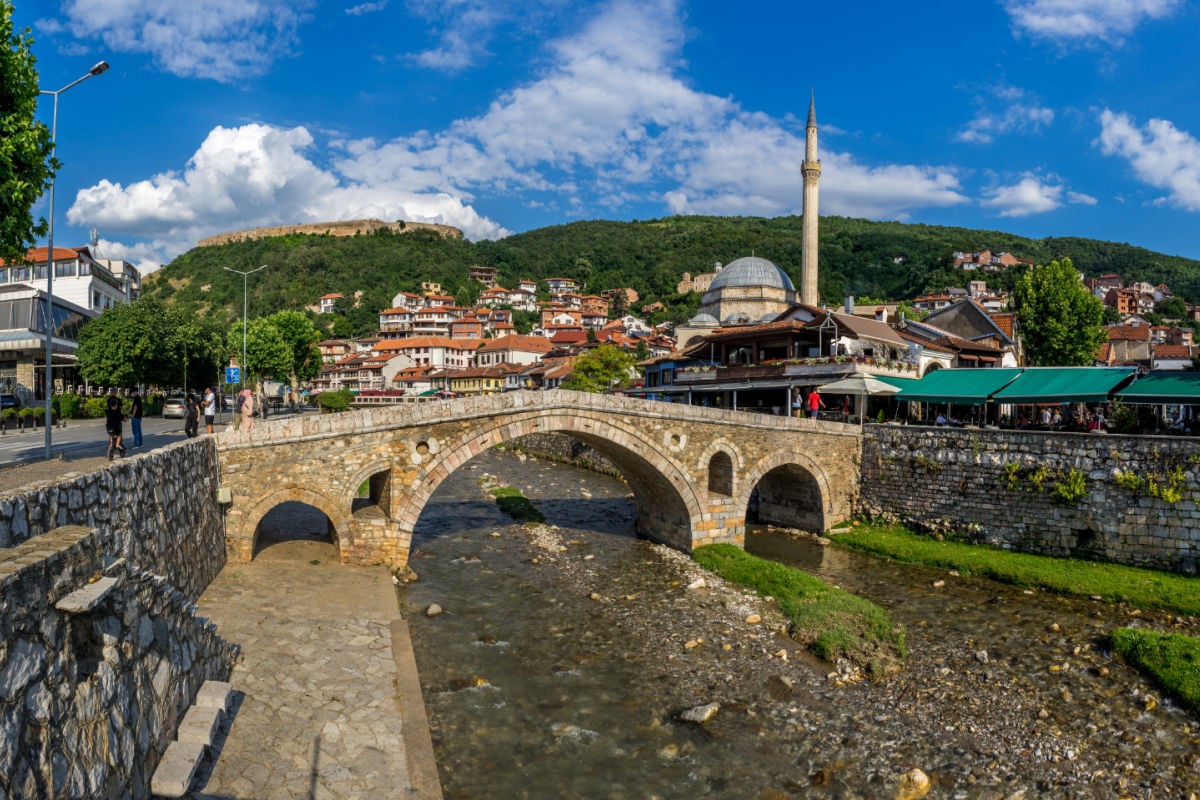
Explore the picturesque Prizren Old Town. This was the historical heart of Kosovo during Ottoman times, and remains a cultural and social center today. Take a stroll down the picturesque cobblestone streets on both sides of the Old Stone Bridge and take in the view.
Enjoy local specialty dishes like Tavë Prizren (baked lamb and vegetables with rice and yogurt) or Krempita (custard tart).
Visit Sinan Pasha Mosque, Our Lady of Ljeviš Church, and Church of St. Savior. These beautiful historical sites are free of cost and crowds. There are plenty of other small mosques and churches all over the city to discover and find your own favorite.
Climb up to Kalaja Fortress at sunset. Only a 30-minute walk from the river, Prizren’s 5,000-year-old citadel has the absolute best view in the city. Locals suggest bringing a picnic of regional Sharr cheese, fresh baked bread, and seasonal fruits to enjoy on the grassy areas all around.
Trek the Sharr Mountains. Only an hour west of Prizren, this national park has everything from day hikes like Oshlak to more challenging multi-week treks stretching into Albania.
Visit Mirusha Falls. This chain of a dozen waterfalls and pools is a great way to cool off in the summer. A car is required since there are no bus routes here. Google Maps isn’t quite accurate on the trailheads yet, so the best route is to start at Mirusha Hotel and ask for directions.
Easy To Get In and Around
Prizren is easily accessible by bus or car from the airports in both Skopje and Tirana (2.5 hours). These smaller airports shouldn’t be too crowded this summer compared to other European capitals.
Lufthansa, LOT, Austrian Airlines, and Air Serbia run regular flights from the US to these cities.
Lots of great Balkans destinations are just a few hours’ drive from Prizren:
Dubai is one of the most popular Middle East tourist destinations that has been exploding in popularity recently.
The city was named the number one most popular tourist destination in the world by TripAdvisor and tourism numbers have been steadily climbing.
According to the latest tourism data from Dubai’s government, more than 4.67 million visitors came to Dubai from January through March of this year, putting Dubai on track to break its previous tourism record of 16.73 million visitors in 2019.
While tourists are flocking to Dubai, many of them are not from the United States. Tourists from the Americas only make up 7% of Dubai’s visitors, with the majority of visitors coming from Europe and Asia.
Here are the top reasons Americans should consider visiting Dubai next:
1. Great Stopover Destination
Dubai is a great destination for a stopover. Since it’s one of the major airport hubs in the Middle East, Dubai is a popular place for flight connections.
If you have a long flight to Asia or Oceania, why not break it up with a multi-day stopover in Dubai? You can see and do a lot in just 2 or 3 days.
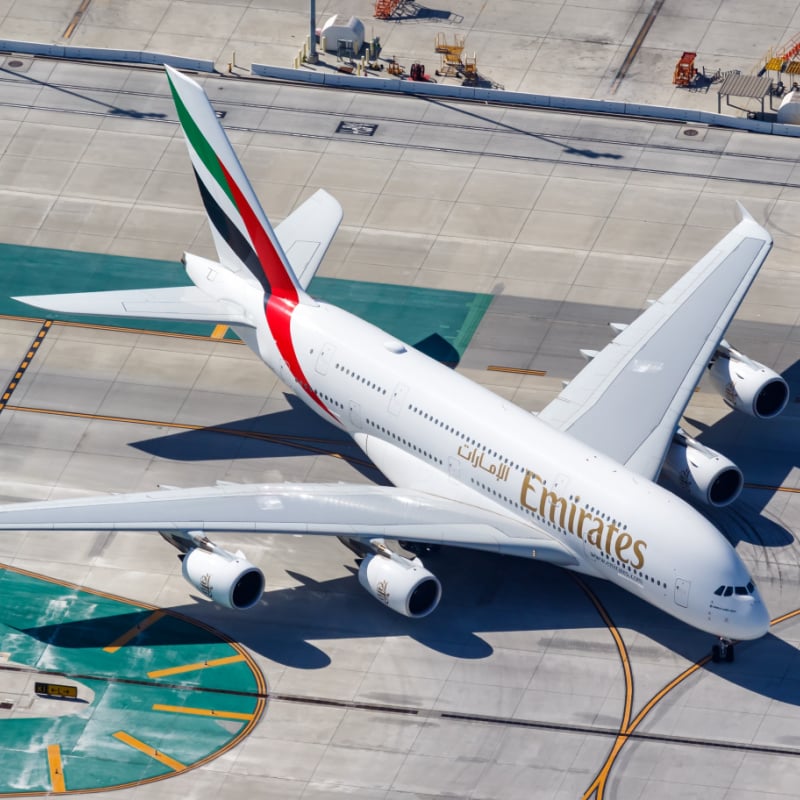
Airlines like Emirates even offer special packages for travelers with layovers of 10 to 24 hours that include a free hotel stay and airport transportation.
Dubai is known for being an ultra-luxurious travel destination, but what many people don’t realize is that it comes at a fraction of the price of comparable destinations.
For example, the cost of a five-star hotel in Dubai is often less than half what it would be in New York, London, Paris, or Tokyo.
Things like dining out and nightlife can quickly add up, but the overall cost of a luxury vacation in Dubai is still surprisingly low.
3. Unique Activities
There are so many unique activities you can do in Dubai, like visiting the Palm Jumeirah island development or Global Village, a sort of theme park representing 90 countries.
Going to the beach is another one of the best things to do in Dubai. The city is known for its beach clubs and activities like kayaking, kitesurfing, and paddleboarding in the Persian Gulf.
4. See The Desert
One of the most popular activities in Dubai is visiting the desert. The Arabian Desert is just outside Dubai. It’s amazing to watch the city fall away as you are engulfed by the vast, empty desert.
Taking a desert safari is one of the top things to do in Dubai. These day tours often include activities like riding a camel or sandboarding.
5. Unbelievable Architecture
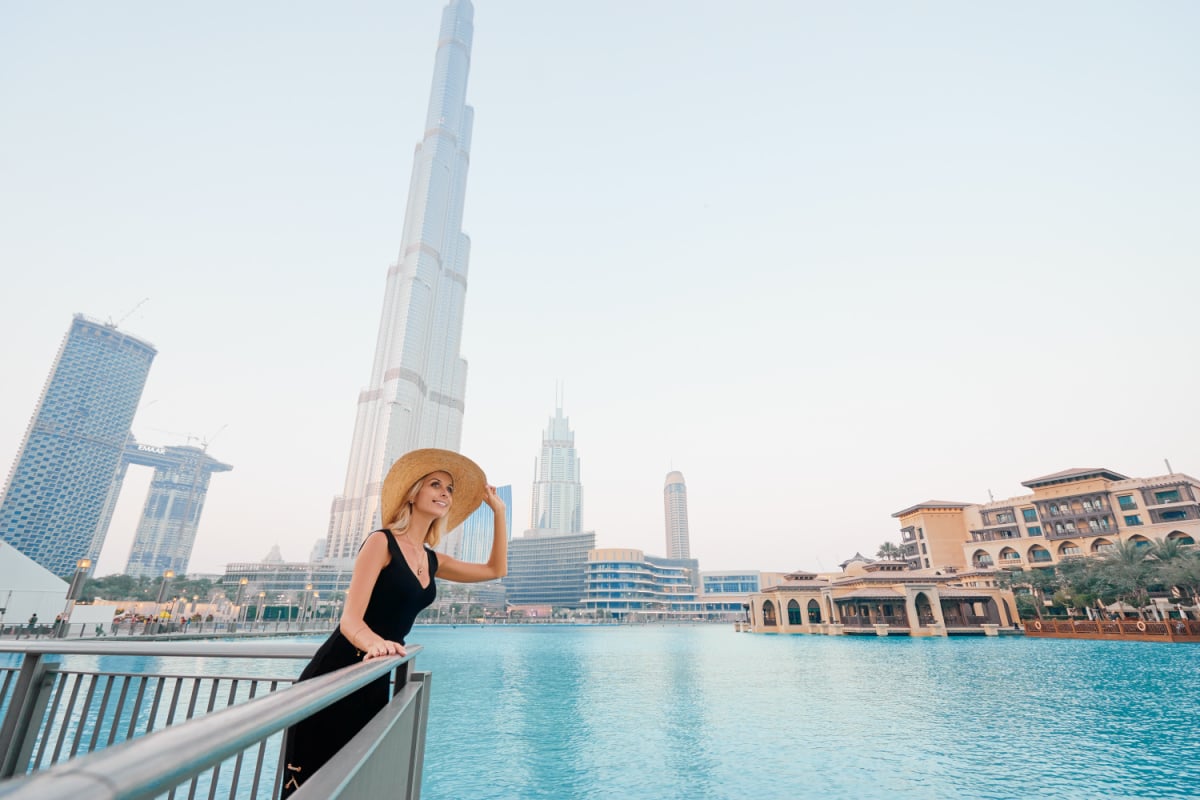
Dubai is famous for its modern, glitzy architecture. The city is home to the world’s tallest building, the Burj Khalifa. No trip to Dubai is complete without a visit to its observation decks.
The Aura Skypool, located atop The Palm Tower, is the highest infinity pool in the world and also worth a visit. You also can’t miss the famous Dubai Fountain, which puts on a nightly show.
6. Nightlife And Entertainment
Finally, Dubai is known as a great nightlife and entertainment destination. Although the UAE is a Muslim country, tourists are allowed to drink alcohol in Dubai at licensed hotels, bars, and restaurants.
Even if you aren’t interested in drinking, Dubai has plenty of great nightlife options, including world-class restaurants, shows, and attractions.
These are some of the top reasons why travelers are flocking to Dubai. Before you go, be sure to read these 7 important tips about visiting Dubai first.
Finding an affordable destination to visit in Italy can be challenging. Italy is a popular vacation spot, attracting visitors from all over the globe. And demand drives up prices!
But there is one idyllic spot in Italy where prices are still attractive to budget travelers: Naples.
Research conducted by the expert travel team at Bounce has found that the average hotel room price in Naples this summer is just $128 per night. This is considerably lower than the average prices in more popular Italian destinations such as Rome or Venice.
Naples is an incredible location that offers so much to see and do. Whether you’re looking for beautiful beaches or cultural attractions, you won’t be disappointed. Here’s everything you need to know:
Why Visit Naples
Naples is Italy’s third largest city. It is located in the Campania region, just 48km away from the considerably more expensive, and sought-after, location of Sorrento. The two cities share a coastline.
The historic center of Naples is a UNESCO World Heritage site and the largest historic center in Europe. The center is largely unchanged, so visiting feels like stepping back in time.
You can explore ancient palaces, get lost in narrow streets, and even head underground to experience a whole new landscape in the city. Naples is home to over 500 churches and has a strong Christian-Catholic heritage.
Although based in the heart of Italy, Naples still follows the plan of the ancient Greek city of Neapolis. This effectively means that visitors can explore two ancient civilizations in just one trip.
Food lovers will be delighted to learn that the world’s first-ever pizzeria was founded in the city. You can still visit for a slice today.
Naples is officially home to some of the best pizzerias globally. In fact, the pizza of Naples is so renowned that The Art of Neapolitan Pizza-making was declared a world heritage site in its own right in 2017.
Neapolitan cuisine may be world-renowned, but it is also unpretentious and affordable, making it the ideal option for visitors on a budget.
Explore The Surrounding Area
The historic center of Naples has enough attractions to hold the attention of tourists in its own right. But if you want to explore a wider range of Italian attractions, Naples is the perfect base.
One of the world’s most famous volcanoes, Mount Vesuvius, dominates the city’s skyline and is just 20km away from the heart of Naples and is easy to reach by public transport or via private taxi. It is considered the city’s symbol and is definitely worth a visit.
The first written account of a volcanic eruption was at Vesuvius, and another popular day trip for visitors to Naples is to the excavation sites of Pompeii and Herculaneum — victims of Vesuvius’ historic eruptions.
Here you can step back in time and see life from 2000 years ago preserved in stone. Pompeii is one of the most significant existing records of Roman civilization and a fascinating insight into Roman life.
Beautiful Beaches
If you’re less interested in history and more interested in kicking back on the beach with a book then Naples definitely doesn’t disappoint.
Gaiola Beach is one of the cleanest beaches along the Gulf of Naples coastline and can be easily reached from Naples city via metro line or bus, making it a great option for visitors on a budget.
Meanwhile, if you’re looking for a quiet, sandy beach then Miseno and Milliscola are great options. Slightly less easy to access by public transport, these beaches offer a great mix of relaxation and fun.
Finally, Naples is a great base for visiting some of Italy’s most beautiful beaches on its most glamorous islands.
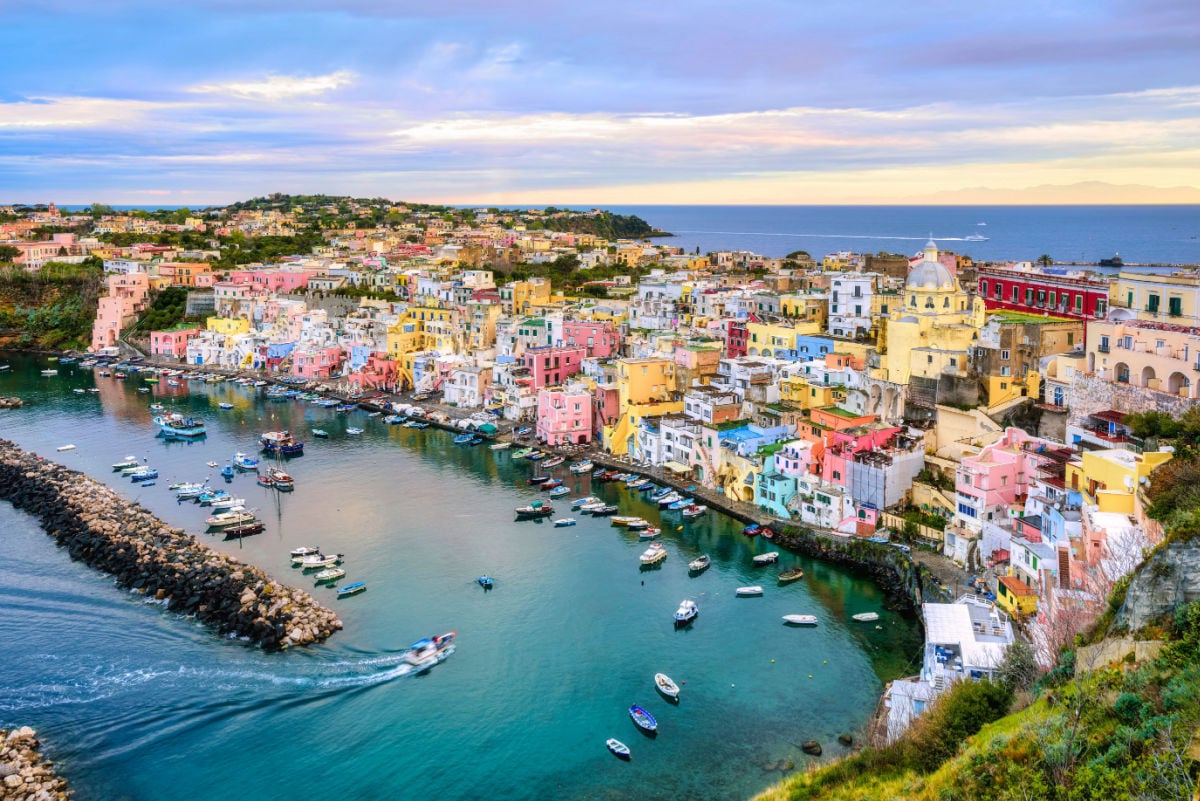
Capri, Ischia, and Procida are all easy to access from the port of Naples, and there is an abundance of providers offering day trips to each of these locations.
Tourists can visit Naples and then explore some of the most beautiful beach destinations in the world without splashing the cash.
Busy planning your summer vacation? There’s one place in Europe that a lot of people have written off due to recent events, but it’s the perfect time to return — Turkey.
Turkey was devastated by earthquakes in early February, which left more than 50,000 people dead and thousands of buildings destroyed.
But the Turkish people are resilient, and they are ready to welcome tourists again, as tourism is an essential part of the economy.
Despite this, according to a recent report, tourism in Turkey is experiencing a significant slump. Stays of two nights or more in Istanbul are down by 31% compared to the same period in 2019.
Before the earthquakes, Turkish officials had hoped for a strong year, and Turkey was leading the post-Covid travel recovery in Europe. Foreign visitors arriving in Turkey increased by a whopping 80% year-on-year to 44.56 million in 2022.
Since the earthquakes, tourism to the country has taken a nosedive. But in reality, now is the perfect time to visit Turkey. Here’s why:
All The Attractions, Without the Crowds
A sharp decline in visitor numbers may be bad news for the Turkish economy, but it’s great news for tourists planning to visit the country.
This means you can enjoy all the country’s most popular attractions but without the crowds.
There are 19 UNESCO World Heritage sites of cultural significance in Turkey, 4 of which are in Istanbul.
The country is home to an astonishing wealth of things to see and do, and during the summer months, these are often overwhelmed by tourists.
From the famous Blue Mosque to the other-worldly beauty of the Topkapi Palace Museum, it would be near-impossible to enjoy all of Turkey’s best attractions in just one visit.
A decline in visitor numbers to these attractions would provide an opportunity to explore them at your own pace and without the density of crowds that you may never get again.
A Warm And Welcoming People
Much of the Turkish economy is reliant on tourism. Tourism contributes approximately 10% to the nation’s GDP.
And the Turkish people, particularly those working within the tourism sector, are keen to see their visitors return.
That means that those visiting Turkey right now will find a warm and friendly welcome, above and beyond the usual warmth regular visitors have come to expect from the Turkish people.
Those working in the Turkish tourism sector are famously hospitable. And most are welcoming the support of the tourists who continue to travel to their country and support their livelihoods.
Turkey has so much to offer. But as well as the fabulous food and the huge wealth of cultural sites, it is the charming people that tempt repeat visitors back to the country.
Coastal Resorts Were Unaffected
The vast majority of tourists who choose to visit Turkey head to either Istanbul or to the country’s popular coastal resorts. These include Marmaris, Antalya and Bodrum.
These areas were completely untouched by the quake. In fact, the vast majority of tourists in these locations when the quakes took place remained in Turkey and continued to enjoy their vacations.
The epicenter of the earthquake was in the southeastern inland city of Kahramanmaras. This is an area rarely visited by huge numbers of tourists.
Turkey is unlikely to experience the same high-magnitude earthquakes again so soon after the tragic events of February. But it should be reassuring that, even if they do, you are unlikely to be impacted in the main tourist resorts of the country.
Great Value Vacations
Finally, a vacation to Turkey is particularly good value right now.
With occupancy in hotel rooms low, many hotels are choosing to lower their prices to attract guests. Last-minute travelers in particular are finding that Turkey is currently more affordable than ever.
The current depreciation of the Turkish lira also makes Turkey a particularly popular destination for travelers on a budget. This is particularly true for European and American travelers, where inflation is high in their home countries.
Turkey remains an all-around great vacation destination, and right now, it is an affordable one too.