If you’re a culture-hungry American planning on taking an international trip soon, it’s highly likely that Mexico is at the top of your wishlist. Best known for its warm climate, welcoming locals, and rich heritage, it is still the number one destination for U.S. travelers in 2024.
While Cancun’s upscale resorts and well-frequented beaches continue to lead booking trends by a wide margin, other lesser-known destinations are stepping into the spotlight, either due to their growing importance as wellness hubs or immense historical value.
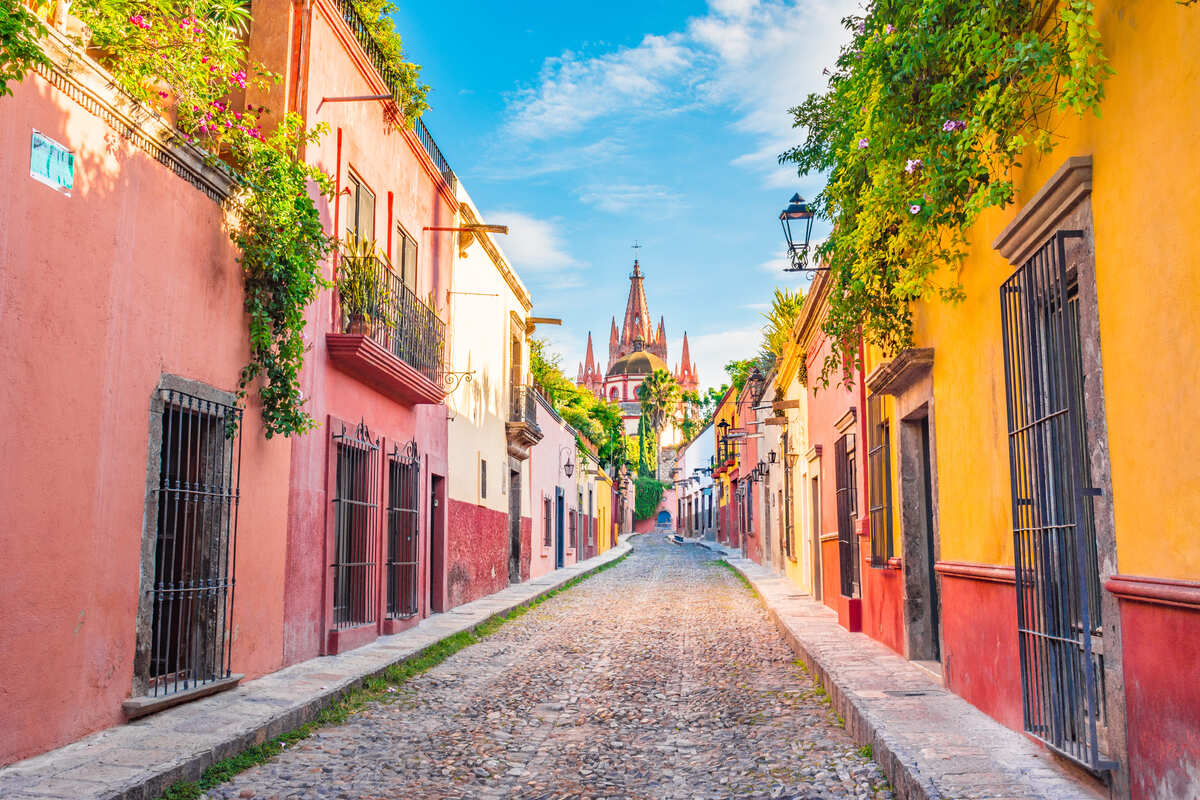
Falling under the latter category, San Miguel de Allende has been surging in popularity lately. A medium-size city home to just under 200,000 inhabitants, it is the top ‘off-path’ destination in Mexico this year, even though it does not have its own airport, and it is nowhere near the coast.
It has just been featured on American Express‘ list of Trending Destinations, and it’s accumulated tens of millions of views across social media, especially TikTok, over the previous year.
It has won the hearts of Americans, and here are 5 reasons why:
The Prettiest Small City In Mexico
San Miguel (as it is called in the short form) is not only one of the most beautiful cities in Mexico, but also one of its most culturally-charged.
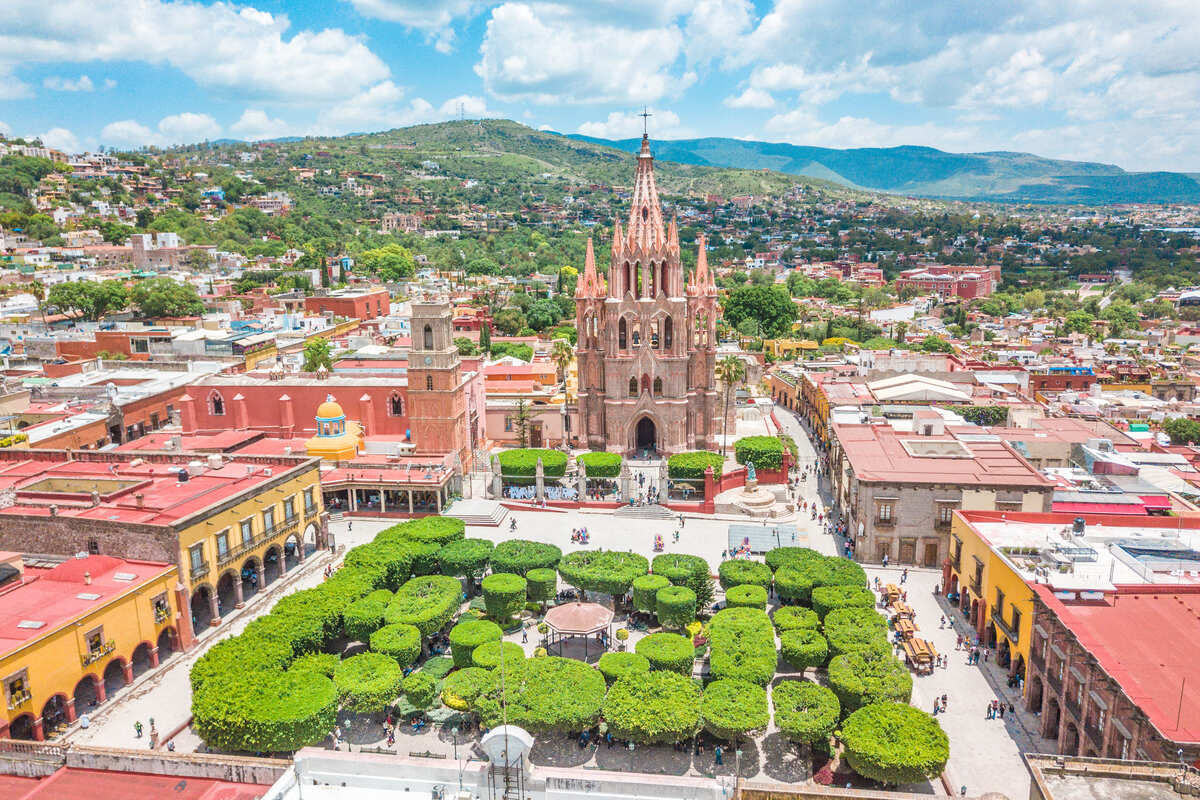
Founded in the 16th-century, it holds UNESCO World Heritage status thanks to its preserved colonial core, and impressive number of historic buildings.
Americans are eager to take culture-based trips this year, with a majority of them never having visited ancient sites, nor marveled at towering cathedrals, and for the odd History buff, San Miguel and its cobbled alleyways and fascinating museums is a no-brainer.
La Parroquia de San Miguel Arcángel is pretty hard to miss: the darling of visiting photographers, towering above the main square, it has a striking pink-washed Gothic façade, an uncommon feature for churches on both sides of the Atlantic.
Other points of interest include Casa de Allende, the previous home of infamous revolutionary Ignacio Allende, who was involved in the Mexican War of Independence, San Francisco Church, built in a flamboyant Churrigueresque style, and a vibrant Artisans Market.
Plenty Of Unique Stays To Pick From
Imagine staying in the heart of town, where the rooftop pool offers a privileged view of bell towers and the maze of colorful streets, within short walking distance from the main square, but it’s still a lush-green oasis, where you’re able to relax, and the cacophony of the outside world can’t disturb you?
Or perhaps a hacienda dating back to the period of colonization, embedded in the tradition of New Spain, with its sun-drenched, Mediterranean-style gardens, lovely inner courtyards, and charming rooms that, despite having been renovated, still somehow ooze Old World charm?
San Miguel is full of charming, unique stays, and let’s face it, if you’re staying in the center of town, you have no option but to immerse in the culture, as you are likely to be housed in a former colonial mansion turned into hotel, in a neighborhood that is hundreds-of-years-old.
According to Tripadvisor, the top three coolest and most unique hotels in San Miguel are Casa de Sierra Nevada, a Belmond listing, El Santuario, a hacienda-style guesthouse, and the rustic, reasonably-priced Villa Mirasol Hotel.
Relax While Immersing Yourself In The Culture
Other than the eclectic architecture, richly-decorated Catholic shrines, and the verdant city parks dotted with ornate fountains, San Miguel is famous for its peaceful environment and quaint, laid-back nature, compared to other colonial cities in Mexico.
If you’re looking to relax while soaking up the culture, it is definitely where you should be headed: though it boasts a plethora of colonial landmarks, neighboring Guanajuato can feel a tad too chaotic, with its incessant traffic and bustling crowds.
Mexico City is ten times worse, and pretty as it may be, Guadalajara does not have San Miguel’s highly-reputed hospitality, nor the same concentration of wellness centers and spas, offering Americans top-notch treatments.
The two top-rated spas in town are Sense, A Rosewood Spa, where contemporary relaxation techniques are infused with native, indigenous ingredients, and Liva Aqua, equipped with eight massage rooms, a sauna, steam bath and relaxation areas.
It Is Incredibly Quaint And Safe
Safety is a primary concern for Americans traveling anywhere in Mexico, and the media is largely to blame for that, having painted a bleak picture and presented the Latin gem as crime-ridden and gang-dominated for decades now.
As it turns out, not all parts of Mexico are plagued by rampant crime, and certainly not picturesque San Miguel.
Walking the city center, there is no need to get jumpy or clutch your personal belongings tightly every time you accidentally rub shoulders with a passerby:
Petty crimes and violence rates are lower than in the state capital of Guanajuato, and most American tourists report zero problems when vacationing in the municipality.
It is remarkably tourist-friendly, with well-lit streets after sundown and a year-round tranquil atmosphere.
That being said, you should not make a spectable of yourself by attending touristy spots bedecked with expensive jewelry, nor wander off towards peripheral, poverty-stricken areas, as you logically wouldn’t do in any destination, including in the States. It is pretty safe, just don’t push your luck.
It Can Be Very Affordable
On top of being safe, San Miguel is quite affordable compared to most tourist cities in Mexico. You can stay in a centrally-located, non-luxurious hotel paying between $139 and $277 per night.
Food is on the cheaper end, too.
If splurging on fine dining isn’t on the cards this time, you can go order a plate of tamales with breaded milanesa beef, rice, and a salad on the side in a local restaurant for less than $15, or grab a tasty tostada or tacos from a street market for less than five bucks.
Though this depends entirely on the preferred level of comfort in hotels, the restaurants visited, and whether you’re the kind who brings expensive souvenirs back, a 3-day trip to San Miguel can cost only $180, excluding hotels.
As you can see, San Miguel is very low-risk, it has attractive prices, the cultural value is immeasurable, and there are endless cute Instagrammable corners to be discovered. It doesn’t have an airport, but it’s only one-and-a-half hours away from both BJX and QRO.
How To Get To San Miguel From The U.S.
BJX is the main international airport serving the state of Guanajuato, with nonstop flights from a number of U.S. cities including Atlanta, starting March of this year, Chicago (Midway), Fresno, Los Angeles, Oakland, Sacramento and San Jose (California).
QRO is located near Querétaro, the capital of the state of the same name – San Miguel sits near the border – and it hosts flights from Chicago O’Hare, Dallas/Fort Worth, Houston (Intercontinental), and San Antonio in Texas.
Arriving to either Guanajuato or Querétaro, there are bus connections available to those traveling onward to San Miguel de Allende. Soon enough, a scenic train visiting the colonial cities of the region could be launched.
Following the Maya and Isthmus Trains, which launched simultaneously in 2023, local business leaders and tourism officials are now pushing for a third scenic train connecting León, Guanajuato, Querétaro and San Miguel de Allende.
The project is still on the drawing board, and as of now, there is no set date for commencement.
Opinions expressed here are the author’s alone, not those of any bank, credit card issuer, hotel, airline, or other entity. This content has not been reviewed, approved or otherwise endorsed by any of the entities included within the post.
As a digital nomad based in Europe, I have traveled extensively around the continent, working remotely from every country you can possibly name across the pond, from the tourist hotspots of France and Italy to the lesser-known Baltic states and the multicultural Balkan Peninsula.
Nope, I haven’t skipped the millionaire-owned micro-state of Monaco, war-raging Russia and its neighbors, nor newly-born Kosovo, one of the poorest states in Europe,
With over 40 European countries under my belt, I was bound to have a personal favorite by now.
That one special place that keeps pulling me back, where I could actually see myself staying longer than the usual three months or even putting down roots at some point down the line, and that somehow feels like my home away from home.
When I set out to visit every European country as a digital nomad, never would I have expected an unheard-of, post-communist state most tourists mistakenly believe to be dangerous, and even not worth seeing, to rank at the top of the list by the end of the five-year journey, yet here we are.
It’s beautiful Albania that stole my heart, and this is why I believe it is the strongest contender for European Digital Nomad Capital:
Why Albania Of All Places?
Unless you’ve been country-hopping around Europe as a tourist for a while, having had to come up with ingenious ways to extend your stay beyond the restrictive 90-day Schengen rule, it is unlikely you have passed through Albania, much less heard of it.
We’re here to remedy that together, but first, where even is Albania?
Geography isn’t everyone’s forte, so I won’t dawdle and waste your time going into the specifics of it: all you have to know it is located across the Adratic sea from Italy, and just north of Greece.
We know what you’re thinking: if it borders these two popular vacation spots, could Albania be yet another off-path Mediterranean destination waiting on the sidelines to be discovered?
The short answer is a resounding Yes!, and the shocking part is it’s been deliberately concealed for decades.
What we mean by that is it was actually kept hidden, so we wouldn’t blame you for not having the foggiest idea about Albania beforehand: as customary in Eastern Europe in the 20th century, the country was ruled by an iron-fisted communist regime.
Why Haven’t You Heard Of Albania Before?
Albania’s dictatorship was among the harshest in Europe, with very few people being allowed to leave the territory, and likewise, only a select number of visitors were allowed to enter well into the 90s, meaning this wing of the Mediterranean was virtually off-limits only three decades ago.
In case you’ve been wondering, Albania is now an open, progressive state, having adopted democratic principles since the collapse of communism and being on a firm path to aligning with the Western World: it joined NATO in 2009, and it has applied to become a member of the European Union.
The latter aspiration has not been as successful yet, but we’ll get into that soon enough – the question is, why has this unsung, troubled nation surpassed every other Southern European competitor to become my safe haven as a digital nomad?
I don’t know about you, but like any self-proclaimed Europhile, this continent’s immense cultural wealth was a decisive factor in my decision to stay a whole five years so far, and my dear fellow nomads, sure Albania has a lot going for it on the culture front:
Hospitality Is At The Heart Of Albanian Culture
Albania is a one-of-a-kind-country, in the sense that its language (Albanian) is not closely-related to any other languages on the periphery, like Serbo-Croatian or Bulgarian share similitaries, and its culture is markedly different from the Slavic-dominated Southeastern Europe.
Family is extremely important, and it’s not uncommon to find nuclei of relatives living together in the same neighborhood, or even the same street, and to them, hospitality is not only a long-standing tradition, but a national value.
In the words of renowned Albanian novelist Ismail Kadare, who couldn’t have phrased it better:
‘Of God and the guest, you see. So, before it is the house of its master, it is the house of one’s guest. The guest, in an Albanian’s life, represents the supreme ethical category, more important than blood relations. One may pardon the man who spills the blood of one’s father or of one’s son, but never the blood of a guest.’
There were certainly occasions where Airbnb hosts would invite me to partake in rounds of raki tasting shortly after we’ve made acquaintances, and hospitable locals would invite me back to theirs to share high-spirited conversations and a hot meal.
As a digital nomad traveling solo, actively seeking to distance himself from other expats to fully immerse in the local way of life, it was definitely not a challenge to befriend Albanians, even if the older generations are more proficient in Italian than they are in English.
If anything, my rusty Italian and poor attempts at mouthing basic words in Albanian would get me humorous smiles in response, friendly pats on the shoulder, and more raki invitations: I’m not sure previous writers have coined this already, but Albanians are the Latin Americans of Europe.
The Whole Of Albania Should Be A UNESCO Heritage Site
We know you’re here for some of that Old World flair, the cobbled towns with origins lost to time, and fairytale castles Disney has tried their best to emulate in kitsch theme parks, and you’ll be glad to know Albania has its fair share of manmade wonders.
From the Accursed Mountains in the north, home to the ethnic village of Theth, best known for its rustic cottages and solitary church, to the medieval citadel in Kruje, south towards a UNESCO-listed, Ottoman-built Berat, and the Stone City of Gjirokaster, this country’s beauty is truly boundless.
The 296-mile long Mediterranean coast is littered with historic port cities as well, including Durres, where a 5th-century castle still stands, the charming Vlore, with its Italian-inspired, pastel Old Town, and the hilltop, whitewashed village of Dhermi, overlooking the turquoise sea.
If you’re looking forward to wearing your Indy Jones hat again, Butrint is a vast archaeological zone dating back to the 10th century BC, encompassing flooded Byzantine palaces, partially-preserved colonnaded agoras, and a landmark Greek theater.
The point is, Albania may not be as popular as some of its closest neighbors, for the reasons already outlined above, but it certainly does not suffer from a shortage of heritage sites. In fact, it’s almost as if it’s taken a page from the book of every other Mediterranean hub in the vicinity:
A Potpourri Of Everything That’s Great About Europe
With Its Own Little Albanian Twist
Some of its settlements are as ancient as Italy’s, it is just as warm as Greece’s, beaches as pristine as Croatia’s, the local cuisine rivals Spain’s, and it is as topographically diverse as France, with a territory that comprises both towering alpine peaks and a subtropical coast.
I’m not averse to harsh winters myself, and I’m a firm believer that, in order to truly appreciate the balmy days of summer, you need to experience the changing of the seasons, but if you can live without the occasional snow, coastal Albania will not disappoint.
Temperatures can plummet to negative levels in northern Albania, but much of the coast remains perfectly sunny and a pleasant 64°F. Having visited in February myself, I was surprised to find that the additional wool coats and puffer jackets I packed ‘in case’ were not at all necessary.
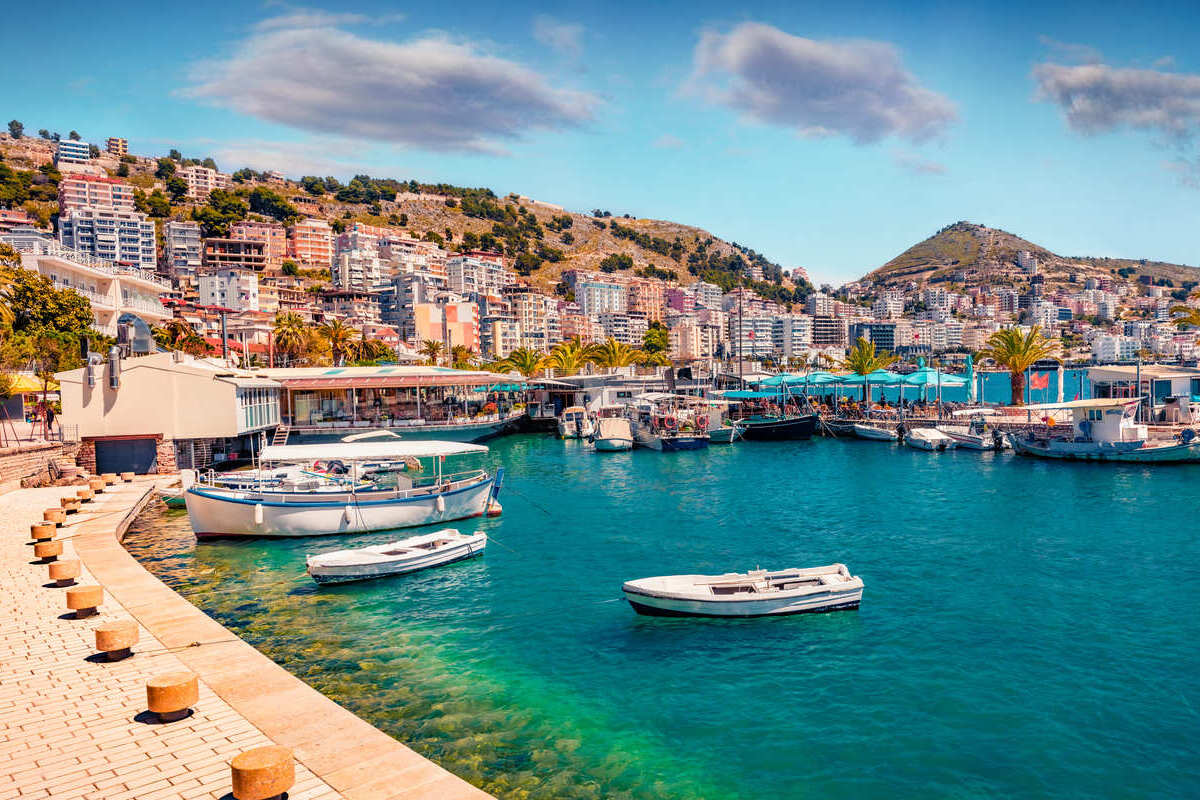
If you’re hell-bent on escaping the cold, the laid-back coastal village of Ksamil, a stone’s throw away from the lively harbor city of Saranda, is where your best bet at year-round springtime weather, with its lemon trees, soft white-sand beaches and teal-colored waters.
Don’t Come To Albania On A Strict Diet
Albania may be isolated in terms of language and culture, but the food served in Albanian homes and restaurants is typically Mediterranean and Eurasian in character, having been heavily influenced by Italy, Slavic gastronomic practices, and even Turkish cuisine.
Its cheese and spinach-filled, flaky-dough byrek pastry is a variation of the Turkish burek, the cold cucumber soup takes direct inspiration from Bulgaria’s tarator, and I could certainly draw parallels between Gjirokaster’s qifqi rice balls and the more mainstream Italian arancini.
That being said, there are a number of native delicacies only Albania can lay claim to, with my personal favorites being the deep-fried petulla fritter, crispy on the outside, soft on the inside, typically served with butter and jam, and tavë kosi, lamb baked in yogurt.
Given Albania’s ample selection of dairy and hearty meat-based dishes, not to mention the fresh seafood and fruit growing in abundance in the verdant hinterland, rest assured you’ll never go hungry here, whether you’re staying in a small qytet on the shores of the Adriatic, or the sprawling capital city of Tirana.
How Nomad-Friendly Is Albania?
How about digital nomad infrastructure, a.k.a. long-term rentals, availability of coworking cafes, foreigner-friendly services, and so on?
I’ll be honest with you: outside major urban centers, life as a remote worker can be challenging (at times).
That is particularly true in the off-season, when restaurants and guesthouses on the coast typically close down, and getting around without a car is an adventure you don’t want to embark on.
Albania is nothing short of stunning, but it’s years behind in development compared to the average European country.
For that reason, I would recommend you spend most of your time in a large city like Tirana, where there’s enough of a social scene and nighttime services to keep you entertained, as well as bus connections to the resort zones on the Adriatic coast, unless a quaint village life resonates with you.
Tirana Beyond The Grey Clusters Of Communist Apartment Blocks
Tirana may not be the prettiest of capitals – much of the old city has been razed to the ground in favor of a modernist makeover – but you can’t deny it is intriguing, with communist-era bunker museums, artifical lakes and eccentric high-rises making up the tourist offer.
If you’re a regular cafe-goer, you should probably know Albania is a global leader in the number of cafes, with around 654 such establishments per 100,000 inhabitants.
There are no Starbucks around, but there are plenty of local-owned and Mulliri Vjeter coffeehouses around.
Mulliri Vjeter is the oldest coffee chain in Albania, and stores are typically rustic in character, offering visiting nomads free WiFi and a cozy nook to work from. Central Tirana is loaded with those, and not a day goes by that I don’t miss their signature Capuccino Chocomel.
It’s truly no wonder Tirana has proudly taken up the mantle of Europe’s center for digital nomadism, hosting a Digital Nomad Conference since 2022 and with an expat community that continues to grow year after year.
The Top 5 Best Digital Nomad Destinations In Albania
The way I see it, the top five best destinations for digital nomads in Albania are:
Tirana: the exciting capital city, packed with quirky cafes, oozing urban art, and full of verdant parks for temporarily escaping the city crowds and crazy traffic
Shkoder: the cultural heart of Northern Albania, famous for its revitalized, restaurant-lined Old Town and an imposing 2,400-year-old Rozafa Castle
Durres: the busiest port, offering ferry connections to Italy and littered with Roman and Venetian-era landmarks
Saranda: the largest city in the Albanian Riviera, bounded by the teal-colored waters of the Adriatic and within short driving distance of the up-and-coming leisure zone of Ksamil
Elbasan: the fourth-largest city in Albania, and one of its food meccas, where I tried the best jani me fasule on the trip (make sure you add Taverna Kala to your list of restaurants)
Albania Is The Cheapest Country I’ve Been In Europe
It only took me a couple of days of being in Albania to understand, at least in part, why nomads like me are finding an unlikely home in this overlooked Adriatic gem: prices are the cheapest I’ve seen anywhere in Europe.
On average, Albania is 40.6% less expensive than Western Europe, with meals in inexpensive restaurants costing an acceptable $10.43, based on data gathered by Numbeo, and monthly expenses for a single person capping at roughly $700, excluding rent.
Even though accommodation costs aren’t included in this estimate, rent can be up to 69% cheaper than Paris or London, two overpriced cities that will wipe your wallet clean if you’re not careful enough. Luckily, living costs are nowhere near as exorbitant in Albania.
A quick Airbnb search led me to find seafront condos in Vlore for only $617 per month this April, whole apartments with dedicated workspaces in Saranda for a negligible $343, while in Tirana, there are private, centrally-situated flats for as cheap as $520 monthly.
It Is Incredibly Safe For Foreigners
Not only is Albania remarkably cheap to live in, it is just as safe as fellow Southern European states Italy and Spain.
That’s not my own judgment, but the U.S. State Department’s, which officially considers Albania a low-risk destination, as seen here.
Having spent most of my time between Tirana, Shkoder and Durres, never once did I feel unsafe walking the streets during the day, or get ‘jumpy’ in crowded areas, as much as I normally do in busier areas of Barcelona, or sketchy zones of South Dublin.
While I wouldn’t take my chances going for a late evening stroll in Tirana – Albanian cities are not particularly well-lit at night – crime levels are under acceptable levels, and visitors are rarely, if ever, affected by violence.
Your main concern here is pickpocketing, though I never felt the need to hide my phone when out in public, and judging by the amount of jewelry Albanian women wear and the fancy sportscars the men drive, nobody’s visibly excessively worried about petty theft, either.
Naturally, general safety advice applies, but odds are you’ll be fine. Once I was lulled to sleep by the gentle sound of crashing waves at a busy Ksamil beach, with my laptop bag by my side, and I startlingly woke up to find it still untouched where I left it.
I’m not sure this fortunate outcome was an exception to the rule, or whether Albania is really so safe your personal unattended items will be probably be left alone, but it doesn’t change the fact I’ve never felt on edge, nor remotely suspicious of people around me.
Believe it or not, I’ve saved the best for last:
Are You A U.S. Passport Holder?
You Can Stay An Entire Year In Albania
Every digital nomad based in Europe has a love-and-hate relationship with Schengen.
In case you’re not familiar with the term, it corresponds to a 27-country-strong, passport-free zone where customary cross-border checks typically do not apply.
All of Europe’s top destinations are signatories to Schengen. I’m talking France, Italy, Croatia, Greece, Spain, and the list goes on: flying, taking trains, or boarding ferries between any of the Schengen states, you will not be subject to passport control.
The only downside to Schengen? You can only be present in the Schengen territories for 90 days out of any 180-day period. In other words, if you’ve used up your 90 days in Spain, another Schengen country can’t be your next destination for another three months.
In Albania’s case, the strict Schengen policy does not apply, as it is not a member of the European Union (EU), and is not bound to join the borderless area anytime soon in the future.
Foreign nationals get a whole 90 day-stay in Albania, irrespective of time spent elsewhere in Europe.
If you’re an American citizen, however, you’re issued a whole year-long tourist visa upon arrival, on the basis of being a U.S. passport holder alone, making Albania the perfect long-term destination, if you’re not merely looking for a grey zone to wait for your Schengen clock to reset.
Despite being outside the EU, Albania remains at the heart of Europe, sharing land borders with four other countries, and boasting low-cost flight connections to the entire continent, with fares starting from $19 on Ryanair.
What Are Some Of The Main Downsides About Life As A Nomad In Albania?
What are some of the negative aspects about life in Albania as a digital nomad, you may be asking?
I have already touched on some of those throughout this article, but I would say some of the main ones include:
The lack of public transport (good luck getting from point A to B if you’re not renting a car and you have reservations about hitchhiking)
With the exception of the main motorways linking Tirana to the coastal ports and resort towns, the regional road network can be quite precarious, with lots of potholes and missing road signs (if you’re driving, I would advise against hitting the gas, especially after sundown when visibility is lower)
Reception can be poor in remote areas, particularly up in the mountains, so make sure you save your drafts working from your computer during that bumpy ride up the Accursed range, or you might have to write that 1,500-word article from scratch again (not that it’s happened to me…)
This is no spotless, idyllic, First-World European country: basically, as much as you try to turn a blind eye, you can’t easily ignore the poverty-stricken areas
Nomad-friendly facilities, like work-friendly cafes and coworking offices may be harder to come across outside cities like Tirana, Shkoder and Durres (I would add Berat and Gjirokaster, but compared to the capital city, they are not even close to being considered well-equipped)
Social attitudes in Albania are pretty carefree, considering this is one of Europe’s handful of Muslim-majority countries, but I wouldn’t encourage you to show affection with your same-sex partner in public if you don’t want to get grumpy Albanian nonos to curse you lowly, or more rarely, an unfriendly shoulder bump
If you’re flying, your only way into and out of Albania is via Tirana: mind-boggling as it may be, there are no airports yet on the Adriatic Coast, and the country’s only other operational international airport is located in Kukës, near the Kosovo border (with a single seasonal flight route to Basel in Switzerland)*
*The easiest way to get to Southern Albania is actually flying first to the Greek island of Corfu, which lies just offshore, and then take a ferry to Saranda. The journey takes just over half an hour on average.
Needless to say, the good far outweighs the bad, and I can’t wait to be back in Albania myself this summer. I’m now based in Paris, and there’s no way I’m sticking around to see how utterly anarchic this city will get once the Olympics – or should I say Hunger Games? – commence.
Opinions expressed here are the author’s alone, not those of any bank, credit card issuer, hotel, airline, or other entity. This content has not been reviewed, approved or otherwise endorsed by any of the entities included within the post.
France may be the number one tourist destination globally, hosting over 100 million annual visitors and being the proud home of the landmark Eiffel Tower, the world’s gastronomic capital and a cultural hub of the first order, but it’s far from being a popular ‘workcation’ spot for digital nomads.
If their preference for Southeast Asia or Latin America is any indication, they actively avoid expensive destinations, and to put it simply, France isn’t exactly known for being the budget alternative, especially when rent alone in Paris can set you back by $1,730 per month.
On the other hand, there is nothing quite like waking up to freshly-baked baguettes from the local boulangerie every day, strolling verdant city parks, and working from a traditional French cafe with views of remarkable architectural feats: if anything, it’s soul-elevating.
But is it possible to work remotely from France, partake in that unrivaled joie de vivre, and still not break the bank?
If it’s the charming Montpellier where you’re headed, instead of the overtouristed City of Lights, then you might just get away with it:
Montpellier Is The Digital Nomad Capital Of France
According to Nomad List, the number one platform for tracking nomad trends worldwide, Montpellier is the top-ranking nomad destination in France, beating Lyon, Nice, and even Paris, with a total score of 3.36/5. For comparison, Paris scores 2.95/5.
Unless you’re a Francophile, however, or you’ve happened to have traveled overland from Spain into France, with a stopover in Montpellier, you might not have been properly introduced to this charming city of Occitania (we must add, mainland France’s southernmost region).
So what is it about this lesser-known city that’s so special, and most importantly, what has it got to offer nomads not only on the cultural front but also in terms of infrastructure?
Also, how actually affordable is it to livein Montpellier, as opposed to visiting for a short period?
One Of The Cultural Centers Of Southern France
National borders are a relatively new concept, and in order to fully grasp the essence of Montpellier, we must first take a look at its ancient History but don’t worry, we’ll keep it light and fun for you: prior to France existing as a state, it belonged to the Crown of Aragon.
Aragon was a kingdom that existed in the Middle Ages, which evolved to become a territory in Spain.
So yes, throughout much of its early development, Montpellier was more closely associated with the neighboring sunny country than the French-speaking world proper.
It is where numerous important events took place, from the birth of James I, a Spanish king, to the establishment of one of the world’s first universities (as a matter of fact, it is still home to the oldest medical school in operation).
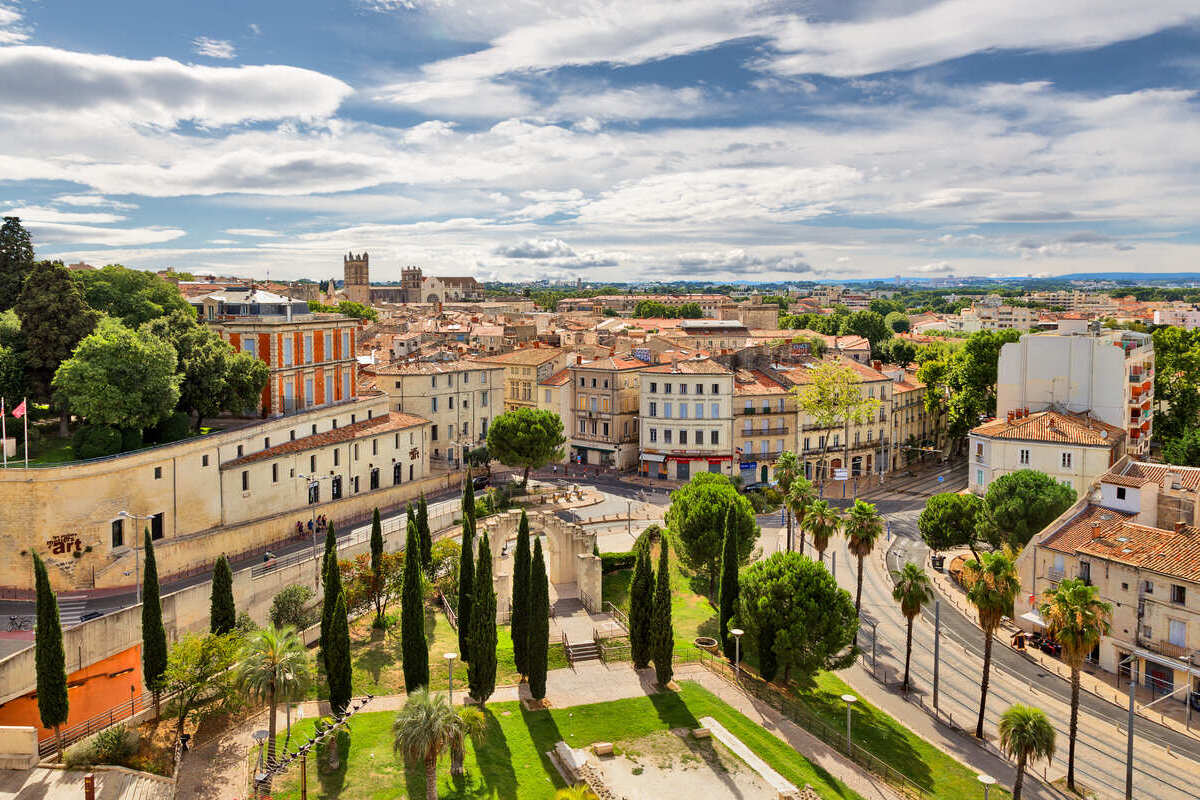
If you’re considering a temporary relocation to France as a remote worker, culture is likely to be in your scope of interest, and you’ll be glad to know that Montpellier is a culture-loving nomad’s playground with a wealth of historical monuments.
These include a majestic Gothic Cathédrale Saint-Pierre, the Tours des Pins et de la Babotte, two perfectly preserved examples of medieval fortifications, the beautiful Place de la Comédie, a car-free square flanked by stately buildings, and an Ancient Citadel.
Montpellier Is A Lot Warmer Than Paris
Remember how Montpellier was historically a Spanish city? It might have been purchased by France at the turn of the 14th century, but it still feels a lot more ‘Southern European’ than it does ‘French’: winters are pretty mild – it’s currently 60°F – and summers are scalding hot.
Montpellier is not exactly coastal, but it is only a 6.2-mile drive from the beach, and it definitely has a traditional Mediterranean climate. Other than the landmark-packed city itself, major attractions in the area include La Grand Motte, a seaside town, and the Palavas and Carnon beaches.
Motte is a bustling development zone distinguished for its pyramidal resorts and extended miles of thin, golden sand bordered by the azure Mediterranean, and it’s every Montpelliérain‘s go-to beach getaway at the weekends.
We get it, Montpellier has a lot going for it on the culture front, and it’s one of those Med – or marginally-Med – sunny hotspots Europeans love escaping to in the colder months, but why would nomads come here in the first place?
Why Do Nomads Love Montpellier?
The answer is simple: this is a youthful, diverse city, with one-fourth of its 277,000 residents being young students – Montpellier University is one of the oldest and most renowned, right? – and the environment is a lot livelier than in other historical French cities with aging populations.
Cities with a younger demographic tend to be naturally more open to foreigners, as students are likely to speak English as a second language, unlike older generations in France, and the social scene is considerably more active.
Additionally, the high quality of life is a huge draw for nomads, particularly Americans who live in sprawling cities made for cars: in Montpellier, you most certainly don’t need one, as it is the largest pedestrian zone in Europe.
This makes the city a lot greener and more pleasant to live in, and we can’t think of anything better than to swap Paris’ gritty, crime-ridden metro or Marseille’s intricate bus networks for Montpellier’s walkable, cafe-filled Old Quarter.
Speaking of cafes – us nomads always gravitate towards them in the end – Smartscrapers counts at least 80 such establishments in this conurbation, from your mainstream work-friendly Starbucks, to more authentic, local-owned spots.
Montpellier Is Not As Expensive As Paris
Montpellier can be less expensive to live in than other cities in France, as it is not on every tourist’s radar, miles away from other tourist hotspots (it’s a whole 464 miles from the capital, and 202 miles from Nice and its adjacent French Riviera).
Unless they are headed for Occtania specifically, they are unlikely to add sunny Montpellier to their itinerary. If anything, it makes it less crowded and not nearly as costly in Paris: according to Nomad List, it costs $3,715 per month to live in Montpellier.
That’s still pricey, considering living expenses in your average nomad hub are between $1,000 and $2,000. Still, if you’re keen on moving to France, you should know that, in general, it is not an affordable destination.
That being said, Montpellier is a far better deal than Paris, France’s number one city, or the traditional Azure Coast near the Italian border, where nomads set themselves back between $4,582 and $5,151 per month.
Finally, Montpellier is well-connected to other parts of France and other European countries. There are high-speed ‘TGV’ train connections to Paris, Marseille, and Nice, as well as cross-border service leaving from Montpellier towards Spain.
As for the local Montpellier–Méditerranée Airport, it hosts a number of low-cost flights from European, North African, and Middle Eastern hubs, such as Rome in Italy, Heraklion in Greece, and Istanbul in Turkiye.
Opinions expressed here are the author’s alone, not those of any bank, credit card issuer, hotel, airline, or other entity. This content has not been reviewed, approved or otherwise endorsed by any of the entities included within the post.
Mexico is a country every American traveler will have visited at least once in their lives.
It’s their direct neighbor to the south, making it a convenient spot to travel to, where they are welcomed with open arms and lower prices, and the warm weather just makes it impossible to resist.
This year, it is expecting a record-breaking 42.5 million guests, a majority of which will be coming from the United States, and besides Mexico’s long-standing reputation as the cultural center of the Latin World, this fresh surge in popularity is attributed to further developments on the tourism front.
Mexico’s Tourism Reinassance is in full swing, and these are 7 of the main reasons why it will continue being America’s favorite sunny getaway in 2024:
A New Scenic Train In The Country’s Most Scenic Peninsula Has Just Been Launched
Perhaps the biggest tourism project to have launched in recent years, the Maya Train is revolutionizing travel across the Caribbean states, not only connecting and improving the livelihoods of local communities but bringing tourists closer to the trendy beach towns and historical sites.
From this Summer onward, when all lines are expected to be up and running, tourists landing in Cancun will be able to travel to the world-famous archaeological site in Tulum, the turquoise-colored Lake Bacalar, and other beautiful colonial towns that were previously only accessible by road.
In sum, Americans will soon have more autonomy in planning multi-city trips in Mexico: other than being a safer, faster transport, the train could help erode the local taxi monopoly, and encourage local tour providers advertising day trips out of Cancun to reduce prices to retain customers.
A New Airport Serving The Trendiest Beach Town
The next major development that’s drawing Americans to Mexico is the opening of a brand new airport in Tulum, with affordable flights linking key U.S. hubs, such as New York, Chicago and Houston, to the trendiest beach zone in the Caribbean.
Home to the postcard view most commonly associated with the Mexican Caribbean – the iconic Mayan ruins perched on clifftops, overlooking a crystal-clear sea – Tulum relied almost exclusively on Cancun International Airport, which is a two-hour drive away, to host incoming guests.
Now, American vacationers desperate for some winter sun can fly nonstop to the rapidly-developing Mayan town without paying exorbitant landside transfer fees upon arriving to Cancun, and more routes keep getting added as demand grows.
Hurricane-Hit Acapulco Is Expected To Make A Comeback This Year
Last year, Hurricane Otis wreaked havoc upon Acapulco, a traditional resort town in the Mexican Pacific famous for its high-rise buildings, long miles of sandy beaches, and riotous nightlife, littering the boardwalk, closing down hotels, and essentially putting the brakes on tourism.
According to a new report issued by the Mexican Government, though damage from the event has been significant, the community is approaching a full recovery, with reconstruction underway, health brigades already done with most of the cleaning, and tourist services having resumed.
4,534 rooms are already available for booking out of 127 hotels, equaling to roughly 45% of the total occupancy, and lucky for incoming tourists, a majority of those centered around the upscale Zonas Tradicional and Dorada.
Americans Are Hungrier For Culture, And There’s No Better Place To Find It Than Mexico
Unlike the United States, where remnants of the original English colonies, or even traces of more distant civilizations are hard to come by, Mexico is littered with historical sites, with every major city featuring colonial zones, and over 200 Mayan and Aztec sites scattered around the territory.
This cultural wealth makes it inherently fascinating to Americans, who in their vast majority will have never set foot inside 500-year-old cathedrals, climbed step pyramids, admired traditional architecture, nor come into contact with any ancient culture whatsoever.
This year, Mexican authorities have made great strides in highlighting the country’s invaluable and diverse heritage, including the establishment of a Gastronomic Corridor in the colonial heart of storied Merida and reviving historical settlements through their ‘Pueblos Magicos‘ initiative.
There’s never been a better time to take a plunge into Mexican History than now, when colonial tourism is at its peak and new exciting archaeological discoveries are on the horizon: just last year, four unheard-of Mayan ruins opened to the general public for the first time ever.
2024 Is The Year Inland Mexico Gets The Attention It Deserves
Speaking of lesser-known gems, Americans have never felt as encouraged to go off-path and be more adventurous when traveling than they are now, with a growing number of them actively seeking more meaningful experiences when going abroad.
Perhaps unsurprisingly, it’s inland cities like Guadalajara, a highly reputed foodie hotspot, Campeche, dominated by striking Spanish-era landmarks, and Puebla, with its colorful townscape, exotic markets, and ethnic barrios that are at the front of the ‘deep Mexico’ revival.
Cancun and Cabo are great for a winter break, but they are hardly representative of the Latino heartland of Mexico, and tourists are starting to wake up to the fact that there is an entire country to be discovered beyond their favorite, overdeveloped resort towns.
More Than 700 Daily Flights To Mexico From The U.S.
Of course, we couldn’t discuss Mexico’s record-breaking levels of tourism heading into 2024 without bringing up connectivity: as stated in the very first paragraph of this article, it is a no-brainer thanks to the geographical proximity with the U.S. and multiple flight options.
Irrespective of where they live and fly out from, Mexico is the most accessible vacation for the average American traveler, as there are over 700 daily flightsscheduled between the United States and Mexico, and every international Stateside airport has links to the Latin American giant.
Due to the wide availability of flights, predatory pricing practices between different airlines, and the year-round demand, airfares can be quite affordable, too: according to booking platform Kayak, there are Mexico-bound flights departing from the United States for as cheap as $127 one-way.
Mexico Is Safer Than Most Latin American Countries
Finally, one of the main reasons why Mexico is poised for a further surge in popularity in 2024 is the reinforced safety. While other Latin American countries have slid into a downward spiral of violence in recent months, the AMLO-led nation has remained relatively stable.
Popular tourist zones, particularly along the Mayan Coast, are surveilled day and night by tourist battalions, a majority of Mexican states have been issued a Level 2 classification by U.S. authorities, meaning crime levels are only moderate, and very few visitors are affected by crime.
Merida, the capital of the state of Yucatan, is considered one of the safest cities in the American continent, and Cancun is easily the most tourist-friendly areas in the Caribbean: as long as they practice general safety advice, Americans have nothing to worry about.
General safety advice involves avoiding displaying unnecessary signs of wealth in public, such as wearing expensive jewelry or taking out large sums of cash, sticking to well-lit, frequented areas after sundown, and staying away from peripheral districts.
Opinions expressed here are the author’s alone, not those of any bank, credit card issuer, hotel, airline, or other entity. This content has not been reviewed, approved or otherwise endorsed by any of the entities included within the post.
When planning a spring getaway, it’s easy to be tempted by exotic choices such as Mexico or the Caribbean.
But, if you’re willing to sacrifice the beach, there are a host of amazing cities right on our doorstep here in the United States that are amazing places to travel to in the spring.
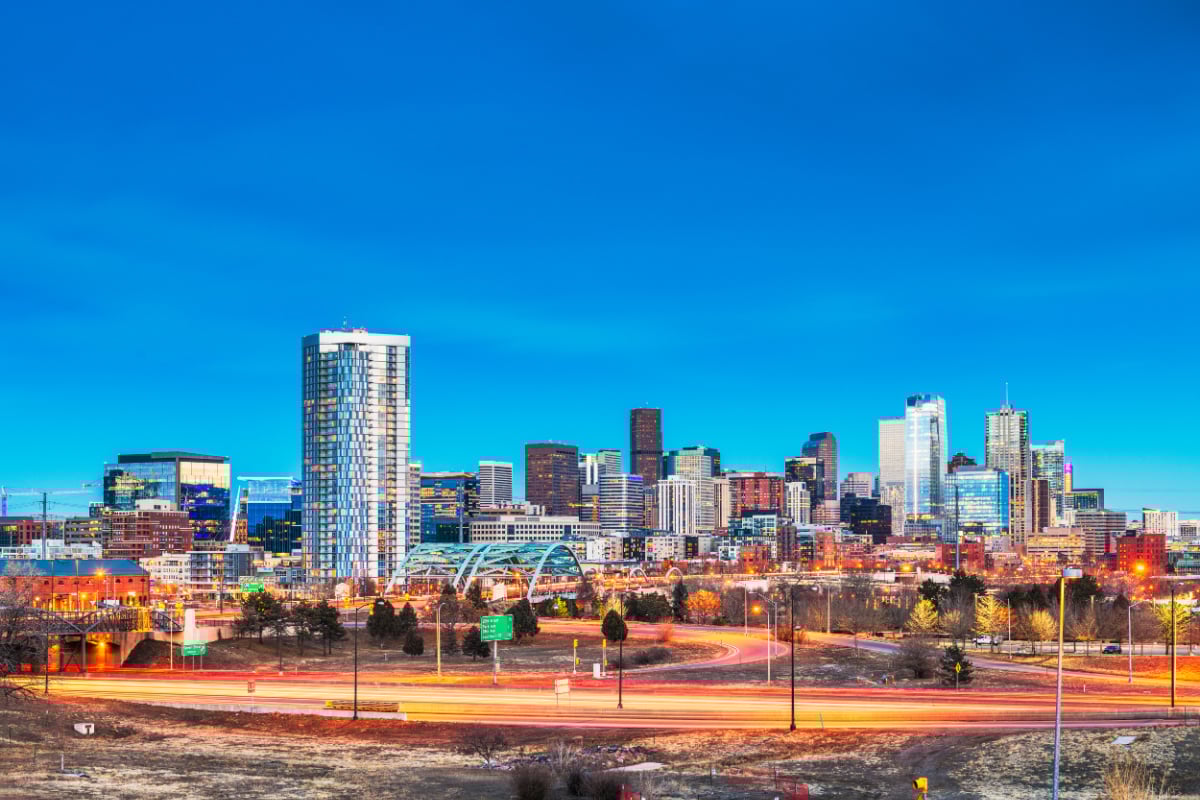
One such, perhaps underrated, city is Denver, Colorado.
It might not be the first place you’d think of for domestic travel; however, it seems like its popularity is on a very strong upward curve.
An impressive 77.8 million passengers used Denver International Airport in 2023, which is not only a new all-time record but also a 12.1% increase in 2022.
Stats like this show just how popular Denver is as a destination – so why should you consider visiting the ‘Mile-High City’ this Spring?
It’s Shoulder Season
Denver’s two main shoulder seasons are in the fall and in the spring.
Between March and May, you will find the city has more comfortable temperatures compared to the extremes of summer and winter, and it should also be less crowded.
This can lead to cheaper hotels and other accommodations in the city – you can fairly easily find a hotel in the $125 to $150 per night price bracket during the spring, possibly even cheaper if you stay a little outside the center.
And if you do decide to do that, you can easily get around on Denver’s affordable and convenient public transport.
There’s a strong bus and light rail network, and you can get tickets for each on a handy RTD app on your smartphone.
Cheap And Easy To Get To
Denver International Airport is home to two major U.S. airlines, Frontier and United, so you can be assured there is almost limitless choice when it comes to flights.
A brief check-in with Skyscanner shows that you can get flights to Denver for an average price of about $50 one-way in the spring from American locations such as Atlanta, Kansas City, Dallas, Portland, Detroit, Los Angeles, Memphis, Miami, and more.
Tasty Temptations
It might not always get the recognition it deserves on this count, but Denver is a great city for food lovers.
And between 1-10 March, the city will run its annual Denver Restaurant Week event with four specific price points to choose from: $25, $35, $45, or $55.
This means you can enjoy a multi-course meal at one of over 200 participating restaurants for a set price – it’s a great way to fully explore the food scene here.
This year will also be the 20th anniversary of the event, so expect some extra fanfare and maybe even some extra special offers.
City Of Art And Culture
Of course, Denver is well-known as a great base camp for a winter holiday, but different parts of the city come to life in the spring as things start to warm up.
In May, in particular, a host of music events will take place, such as the Five Points JazzFest and the Denver Day of Rock.
That same month will also host the Colfax Marathon and the popular Cinco de Mayo celebration.
In between all those great events, you can fill the time by checking out Denver’s excellent art scene – Denver Art Museum just re-opened one of its main buildings after renovations.
A Haven For Hikers
Denver’s location at the foothills of the Rocky Mountains makes it the perfect place to base yourself for some early-season hiking.
Hire a car, and you can find amazing trails all around the city in every direction, but did you know that the city itself is also great to hike?
There is an extensive regional trail system throughout Denver that can show you the city from a different angle and make hiking more accessible to everyone in your traveling party.
Several good books have been written about urban hiking in Denver, so take a quick search on the internet and see what you can find.
Family Friendly
There are many great family-friendly attractions in Denver that make it ideal for a long weekend in Spring.
Examples include Elitch Gardens Theme and Water Park, Denver Skatepark, and Lakeside Amusement Park.
You could even drive out of the city and visit the famous Red Rocks Park and Amphitheater.
Opinions expressed here are the author’s alone, not those of any bank, credit card issuer, hotel, airline, or other entity. This content has not been reviewed, approved or otherwise endorsed by any of the entities included within the post.
Travelers are increasingly seeking new and off path destinations to satisfy their desire for unusual and unexpected travel experiences.
And while this country is breaking all tourism records it is still relatively undiscovered by American travelers.
Compared to 2019 an incredible 56% more tourists arrived here in 2023. This means that the destination has topped the UN Tourism’s ranking for the growth of international arrivals.
Here are 7 reasons why this is the fastest-growing tourism destination in the world:
A New Destination To Explore
Saudi Arabia didn’t open its borders to tourists until September 2019.
Given that the world shut down due to the pandemic just a few months later, that means that Saudi Arabia is a relatively new country to the international tourism stage.
Travelers who think they’ve been everywhere and seen everything are unlikely to have been to Saudi Arabia, and that makes it an incredibly appealing destination for seasoned explorers.
Saudi Arabia is a hidden gem, and that it was hidden for so long only makes it more interesting. It’s a treasure trove of rich cultural experiences alongside breathtaking landscapes and an exciting destination to explore.
Outdoor Adventures
Stretching across Saudi Arabia, you will find the Rub’ al Khali desert, which is considered one of the most beautiful in the world.
As well as being a beautiful attraction in its own right where you can enjoy fascinating sand dunes and mirages, this is a great spot for outdoor adventurers.
Popular with hikers, you can walk or ride through the desert. You can also meet with and even share a meal with the local Bedouin people who call the desert home as part of a fascinating organized tour.
Desert quad biking and camel riding safaris are also popular here for adrenaline junkies looking to try something new amongst these breathtaking landscapes.
Historically Significant
Saudi Arabia is a historically significant destination and you’ll find important archeological sites showing off ancient history throughout the country.
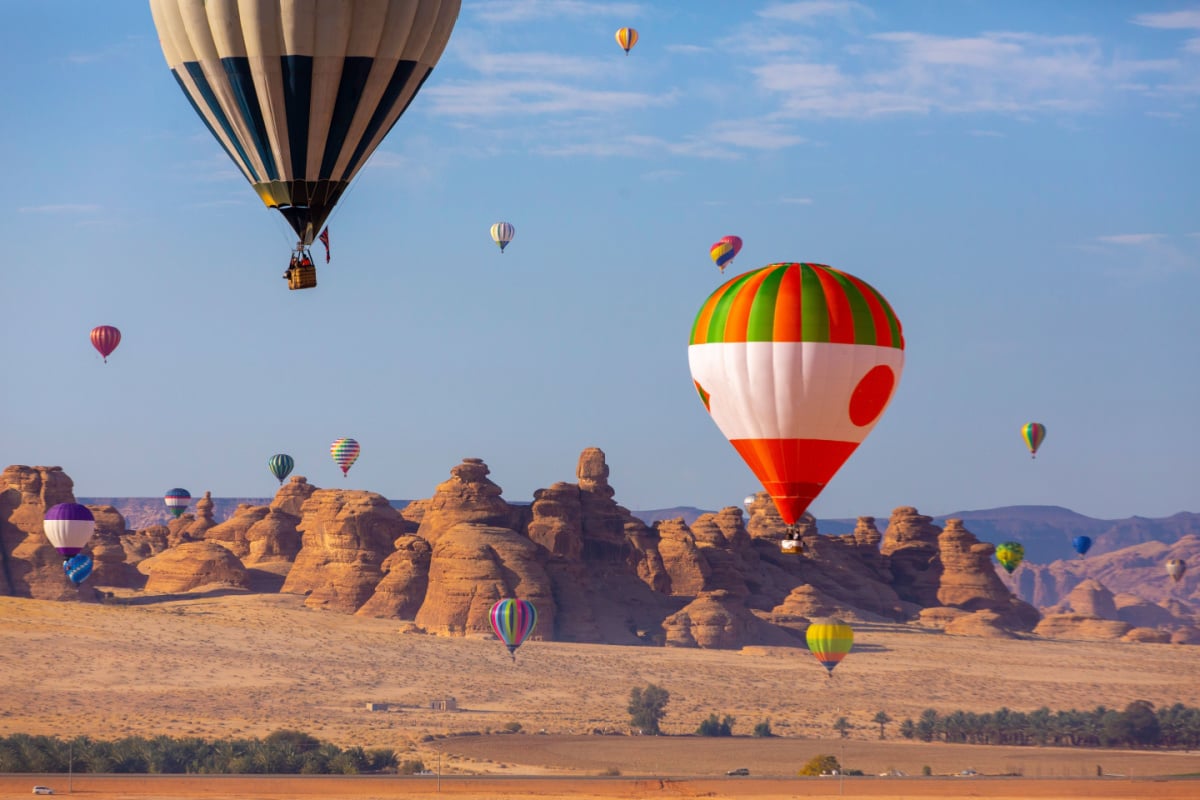
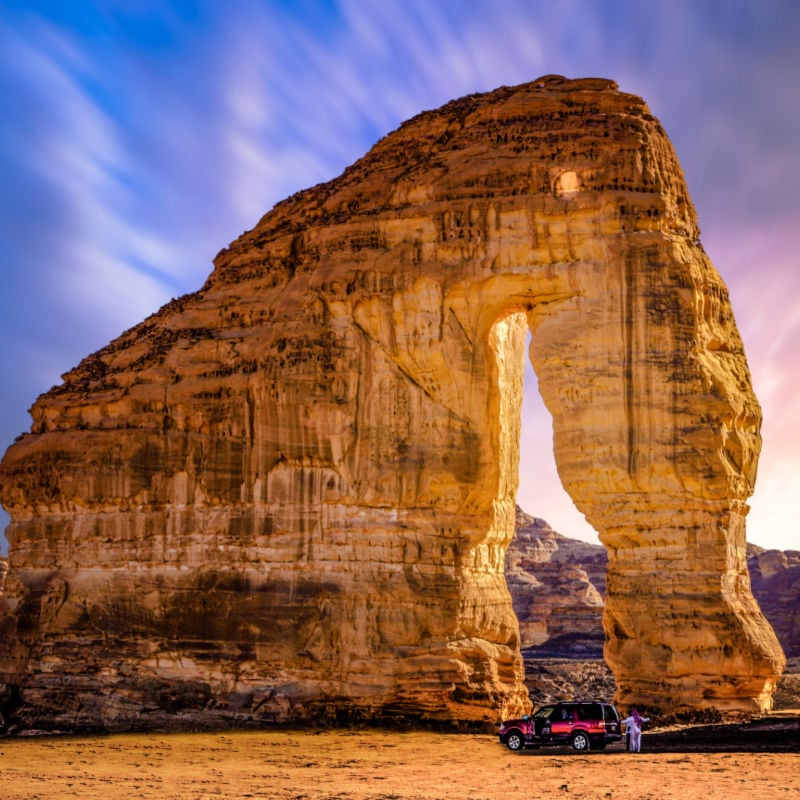
The UNESCO World Heritage site of Al Ula shouldn’t be missed. Here, you’ll find a fascinating blend of ancient tombs, old inscriptions, and surreal rock formations.
The ancient civilization of Nabateans is well represented and can be explored in Hegra. Here you’ll find well-preserved Nabatean tombs and more breathtakingly beautiful rock formations.
Head to Jubbah, where you’ll find rock paintings and carvings that depict human and animal figures and scenes that date back to 6000 BCE.
The dry climate in Saudi Arabia means that these sites of ancient importance are incredibly well preserved and there are fewer countries that have as many ancient examples to explore.
Beautiful Landscapes
The landscapes of Saudi Arabia are more diverse than you might think. While they are dominated by dry and arid deserts you will also find golden canyons, valleys filled with green palms, and modern cityscapes too.
Explore the futuristic city of Neom. Take a jeep ride through Wadi Tayeb al Ism. Climb in the Hijaz mountain range. There is something to appeal to everyone here.
An Incredible Diving Spot
Saudi Arabia has a Red Sea coastline, which means you’ll have access to some of the best and most diverse diving in the world. Many travelers visit Saudi Arabia for the quality of the diving alone.
Exquisite marine life, such as sharks and turtles, as well as the chance to spot an ancient shipwreck, all await.
Jeddah and Yanbu are the two biggest cities that attract divers and both have excellent diving facilities.
As an added bonus it is possible to dive along the Saudi Arabian coast year-round, so there’s never a bad time to visit.
Welcoming People
Some destinations are so overrun with tourists that they treat them with utter contempt (yes, I’m thinking about you Paris!), but because tourism is relatively new and travelers are novel in Saudi Arabia you can be sure of a warm welcome.
Local people show an incredibly generous level of hospitality to their foreign visitors. You will be treated with kindness and respect regardless of whether you are traveling alone or as part of a group.
It is one of the sacred duties of Muslims to show generosity to guests, and this is definitely reflected in the way that travelers are treated in Saudi Arabia. Whether you are arriving in a hotel or in a local market, you will be greeted warmly.
As an added bonus, most people working in the tourism industry in Saudi Arabia speak excellent English, so the language barrier is less of an obstacle than many people might think.
A Spiritual Spot
It would be remiss not to mention that religious tourism is one of the main reasons many travelers choose to visit Saudi Arabia. Mecca and Medina, two of Islam’s holiest cities, are both located in Saudi Arabia.
It’s important to note that non-Muslims are prohibited from entering both the city of Mecca as well as the central district of Medina. So incorporating these sites into your trip is only worthwhile if you’re Muslim and are hoping to make a religious pilgrimage.
But if this is your faith, then these are important and significant locations that make visiting Saudi Arabia all the more valuable.
Opinions expressed here are the author’s alone, not those of any bank, credit card issuer, hotel, airline, or other entity. This content has not been reviewed, approved or otherwise endorsed by any of the entities included within the post.
Located in the heart of the Caribbean, Curacao is having a moment right now.
It is soaring in popularity with global travelers but is still relatively underappreciated by American travelers.
Curacao is a fascinating melting pot of cultures, boasts some of the Caribbean’s most beautiful beaches, and has its own unique charm that makes it stand out from the crowd.
Here are 5 reasons why you should explore this lesser-known Caribbean destination:
An Authentic Caribbean Experience
In 2023, Curacao welcomed record numbers of travelers with over 1.7 million arrivals in the country. That’s 17% more than 2023 and 18% more than the pre-pandemic high of 2019.
However unlike many other Caribbean destinations that are dominated by American tourists only 20% of the visitors to Curacao last year were from the USA.
As a result Curacao has a much less touristy feel than many of its Caribbean island neighbors and retains its authenticity.
Like many other Caribbean islands Curacao has an incredible nightlife scene. You can enjoy live music, dancing in beach clubs, and street parties with the locals. It’s a classic Caribbean experience but with a personality all of its own.
A Rich Cultural Heritage
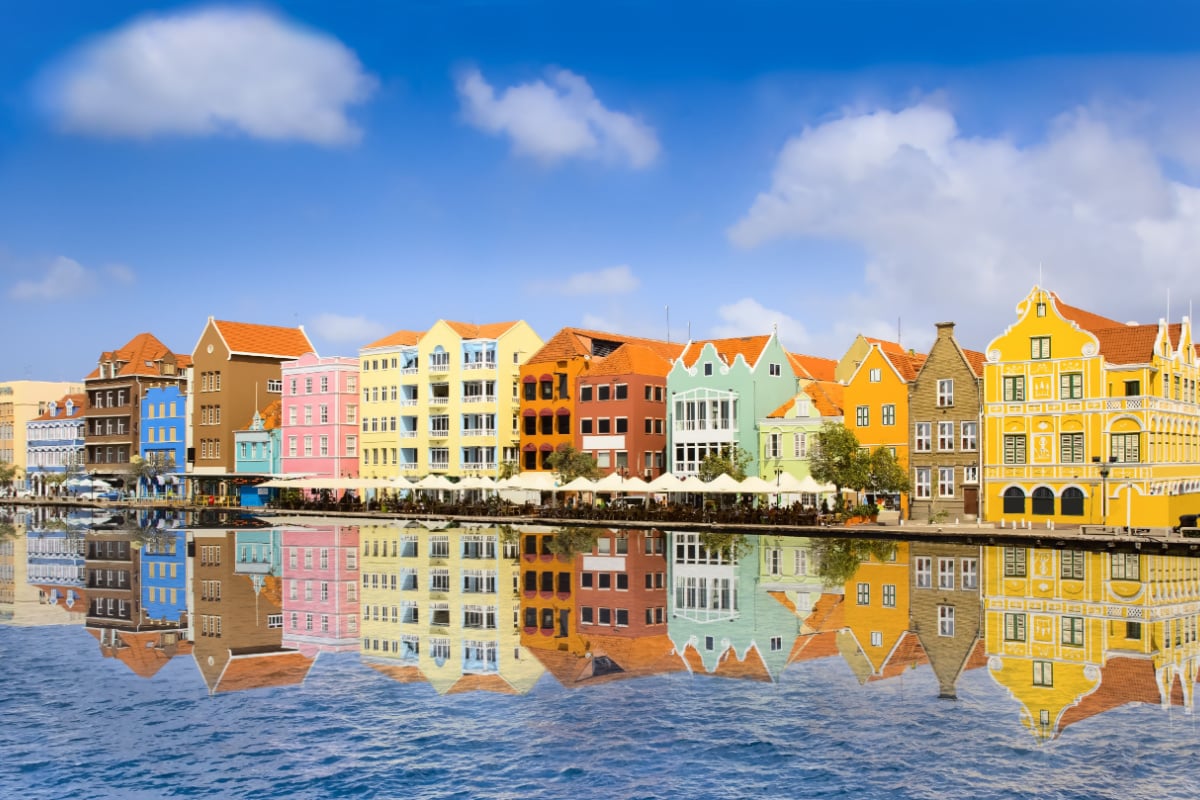
Willemstad is the capital of Curacao and downtown Willemstad is famous for its beautiful candy-colored Dutch colonial buildings.
The whole of this downtown area has been designated a UNESCO World Heritage site and is an incredible spot for history buffs.
Curaçao played a significant role in the Caribbean slave trade and there is a fascinating museum dedicated to this dark history in downtown Willemstad. The Museum Kura Hulanda is a must-visit attraction on the island.
Other not-to-be-missed cultural attractions in Curacao include the colorful street murals in the Otrobanda and Pietermaai neighborhoods and the Gallery Alma Blou, which boasts an incredible collection of art by local artists.
Beautiful Beaches
Curacao is a small island but it’s big on beaches! There are 35 of them to be exact and if you’re a beach lover then they are well worth visiting the island for.
Playa Knip is the most famous beach on the island, while the lesser-known spot of Playa Lagun regularly appears on the world’s best beach lists.
The southeast side of Curacao is the most touristed, and it is here that you will find the island’s all-inclusive resorts.
But for the best beaches, you should hit the road and head to the west side of the island. This is more rugged and remote but it is also breathtakingly beautiful.
Curacao is popular with divers, too, thanks to its crystal-clear waters and a wide array of incredible marine life.
Easy To Reach
Curacao is incredibly accessible for American travelers. JetBlue offers a daily nonstop service to the island from New York JFK.
American Airlines is also offering a nonstop daily service from Charlotte this winter, and Delta is flying nonstop from Atlanta with the same frequency.
According to the Curacao Chronicle, the strongest feeder cities for tourists from the U.S. to the island destination are for passengers from Chicago, Dallas-Fort Worth, Philadelphia, New York JFK, Washington-National, Atlanta, Boston, and Orlando.
Because it’s so easy and convenient to reach Curacao by nonstop airline, it is possible to visit the island for a long weekend if you’re short on time, though you will need much longer to explore everything this incredible destination has to offer.
Safe And Secure
Curacao’s strong political and economic stability makes it one of the safest islands in the Caribbean.
This means that it is a great spot for female travelers and solo travelers to explore without fear.
Most crime rates in Curacao are very low, and aside from taking the usual safety precautions there are big concerns for travelers and tourists to worry about on the island.
The U.S. Department of State has given Curacao a level 1 travel advisory rating which is the lowest and safest rating that can be awarded. A Level 1 travel advisory means that travelers should exercise normal precautions, while a Level 2 advisory means U.S. citizens should not travel to a destination.
By contrast, Jamaica, which is a much more popular destination with American travelers, has a Level 3: Reconsider Travel rating. U.S. travelers are advised to reconsider travel to Jamaica due to crime levels in the island nation.
Opinions expressed here are the author’s alone, not those of any bank, credit card issuer, hotel, airline, or other entity. This content has not been reviewed, approved or otherwise endorsed by any of the entities included within the post.
Spend even just a few minutes looking through a travel guide or searching online for images of Iceland, and it’s easy to see why it is one of Europe’s most popular destinations.
This northern Nordic nation has been capturing the imaginations of travelers around the world in recent times, and no more so than in the United States.
Recent data from the Icelandic Tourist Board shows that American travelers accounted for almost 30% of Iceland’s incoming tourism in 2023, the highest out of any country and a significant increase on the previous year.
So, just what is it about ‘the Land of Fire and Ice’ that is attracting American travelers in their droves right now?
One Of The World’s Safest Countries
If there’s one thing Iceland is more famous for than its glaciers, volcanoes, and beautiful scenery, it’s for being a very safe country.
Crime rates are extremely low here, and in all honesty, the main safety considerations you need to be aware of have to do with Mother Nature and not human beings.
The excellent safety record mentioned above is combined with a country where English is fairly widely spoken, and people are generally friendly and welcoming.
There are also many hostels if you’re the kind of solo traveler who likes to make friends, while many of the activities and attractions here are great if you prefer solitude – gazing out onto majestic glaciers, anyone?
Unique Scenery And Landscapes
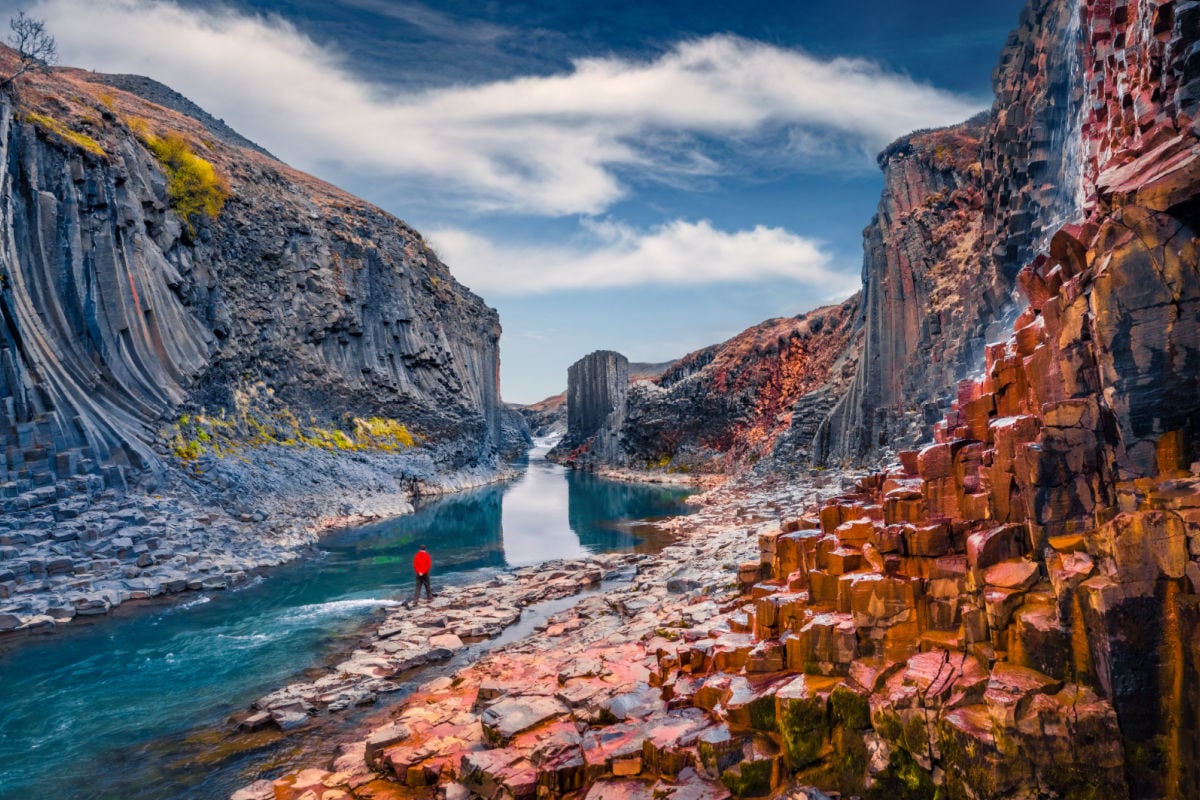
Perhaps the main reason to visit Iceland is for the unique landscapes and geological phenomena that make up this amazing island.
Made up of dramatic mountain ranges, volcanic fields, huge glaciers, and countless hot geysers and springs – Iceland leaves a long-lasting impression on almost all who visit it.
In many cases, it can feel like you’re visiting another planet, not just another country.
The country is also relatively small, so it’s easy to get around and see different parts of it, but it’s usually best to do this on guided tours, especially in the colder months when heavy snow can make driving very challenging.
And Iceland is probably one of the best places to witness this spectacle thanks to its extreme northern location and longer nights in the winter months.
Usually, the best time to see the Northern Lights in Iceland is from September to March, so if you act fast, you may still be able to catch some of that early spring action.
Fascinating Culture And People
While they can sometimes seem a little reserved at first, Icelandic people are kind-hearted and friendly in general.
The family unit is hugely important to Icelandic people and there are many national holidays that celebrate the different aspects of it, such as Men’s Day and Women’s Day.
Food is another charming part of Iceland’s culture with popular dishes including fresh fish, smoked lamb, and also a type of yoghurt known as skyr.
Cheap To Fly To
There’s no escaping that Iceland is quite an expensive country to visit; however, you can save a lot on the flight if you shop around.
We recently revealed that the capital Reykjavik is one of the cheapest European destinations you can fly to from the U.S. this spring – from as little as $140 one-way.
Iceland has also just renovated and expanded a new airport in the north of the country called Akureyri International.
While you cannot fly here directly from the U.S., you can from some European cities such as London, and it also allows you to fly internally from Reykjavik – a sometimes cheaper and quicker alternative than a road trip across the country.
Volcanoes Not Stopping Travel
There has been a well-documented increase in volcanic activity in Iceland over the past few months, with an eruption near the southwestern town of Grindavik causing evacuations.
This activity was declared to have been completed by the Icelandic Met Office on February 8 this year.
Because Iceland is so used to volcanic activity, it has a very sophisticated monitoring and warning system, so you can be reassured that unless it’s an unprecedented eruption like Eyjafjallajökull in 2010, which grounded 100,000 flights, you should be fine to visit.
Opinions expressed here are the author’s alone, not those of any bank, credit card issuer, hotel, airline, or other entity. This content has not been reviewed, approved or otherwise endorsed by any of the entities included within the post.
Traveling is one thing, but traveling solo is something that everyone should experience at least once in their life. Stepping outside of your comfort zone, trusting your instincts, and realizing you’re capable of way more than you thought is enlightening.
But once you’ve finally convinced yourself to take the leap and commit, the next big deciding factor is where do you go first?
This can be a major headache when you have the whole world to explore!
According to experts, Japan was named as the top solo travel destination for 2024, so your questions have been answered! In 2023, the country saw an increase in U.S. visitors and is only expected to continue on its growth trajectory.
In an effort to foster the relationship between the two countries, the Japan Tourism Board announced a “U.S.-Japan Tourism Year 2024” initiative in the hopes of promoting tourism and cultural exchanges between both.
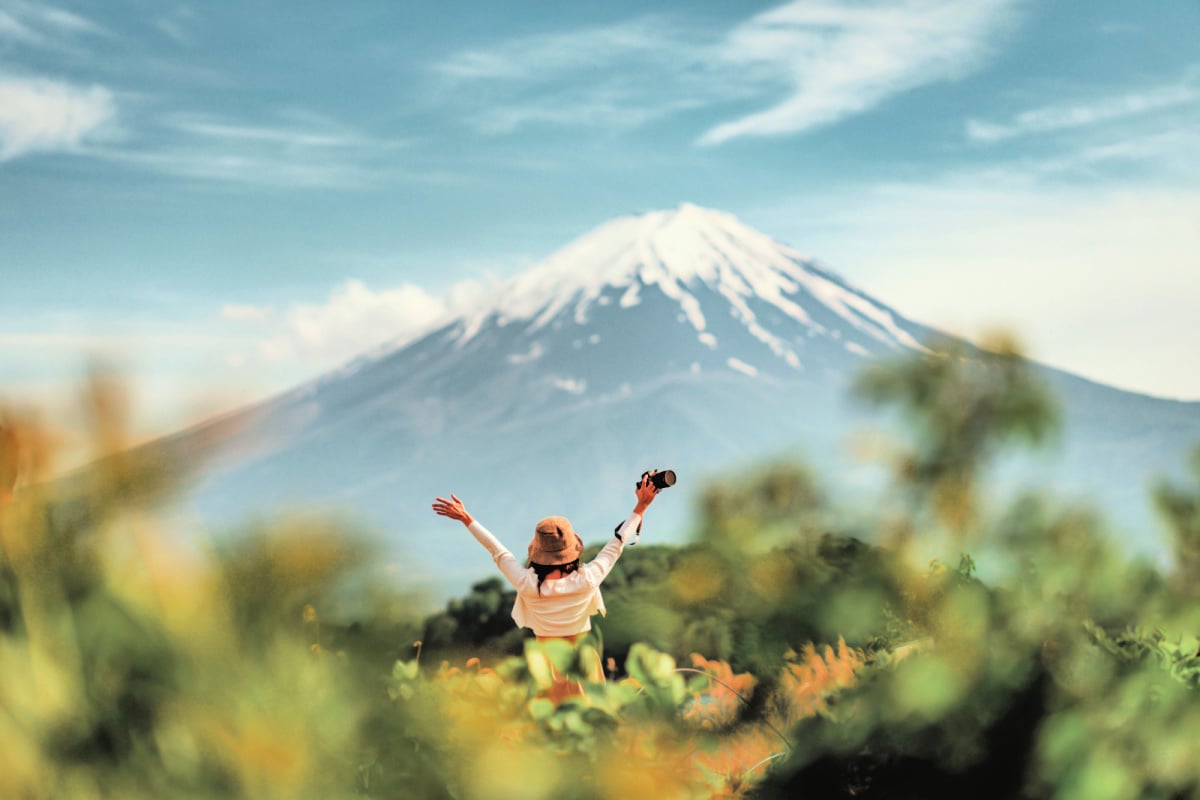
Modern sky-scrapers, snow-capped Mount Fuji, breathtaking coastal towns, it’s no surprise Japan is a popular choice for 2024.
Both Tokyo and Osaka are trending for the New Year, with an increase in searches of over 200%.
With one of the most efficient transportation systems in the world, Tokyo makes for a great starting point for solo travelers to explore the country. History lovers will adore the ornate buildings and cherry blossom-lined streets of Osaka.
While these two gems are certainly popular amongst travelers, there’s also many other picturesque spots for solo travelers to explore around Japan.
A huge draw here is no doubt the safety ratings Japan receives each year. As one of the safest destinations in the world, it’s no surprise it attracts backpackers and solo venturers.
Most areas and cities are known for being quite safe, but like anywhere, it’s important to still remain alert during your travels!
If anything does happen, you’ll notice ‘Kobans’ dotted throughout neighborhoods – which are essentially ‘Police boxes’ used for contacting the local authorities as quickly as possible.
Another win for the country is their thriving travel and nomad community. Depending on where you’re staying, dorms can be found between $15-$30.
For us solo female travelers who aren’t quite as comfortable sharing accommodations with males, Tokyo has introduced the concept of ‘female-only hostels’ – which offer some peace of mind for many ladies out there.
These capsule hostels are clean, safe, affordable, and allow women to remain comfortable during their travels. They range between $20-40, which may seem pricier for a hostel, but if safety and being comfortable are priorities, then this is the option for you.
Of course, you’re bound to find a variety of unique experiences to try in Japan – it’s another country, after all, BUT what about unique experiences for solo travelers specifically?
Besides wandering the food markets on your own (which is an experience in and of itself) or cherry blossom hunting, there’s so many options. According to Flashpack, the top choices for solo travelers include having lunch with a sumo wrestler and meditating with monks in Kyoto.. Can you imagine?!
If hotels and hostels aren’t your cup of tea, then why not immerse yourself in Japanese tradition from the get-go?
If you want a taste of normal life, there are many companies that offer homestays to travelers. Most of them are targeted towards students, but if you do a little research, there are a few options for others.
With so much going and meeting new people, wanting a little relaxation is perfectly normal. A classic solo experience involves unwinding in one of Japan’s many Hot Pools. Cultural, calming, and a good way to enjoy alone time or meet fellow travelers, these pools can be found around the country (the most visited being Kurokawa Onsen).
Opinions expressed here are the author’s alone, not those of any bank, credit card issuer, hotel, airline, or other entity. This content has not been reviewed, approved or otherwise endorsed by any of the entities included within the post.
A cultural metropolis filled with the aromas of street food, teeming with buzzing backpackers, and surrounded by beautiful surrounding islands, it’s easy to understand why this Asian country is an ideal destination for solo travelers for 2024.
And if all of that wasn’t enough, the affordable prices for those traveling alone are a huge win.
Though most travelers are drawn to the chaos of Thailand’s city centers, if you really take the time to explore the country in its entirety, there’s a lot more than meets the eye. So, why is it such a catch for the solo travelers out there?
After analyzing tickets sold throughout the year, 12Go reveals Thailand as one of the best places to visit in Asia during the winter. While there’s such diversity across the country, Chiang Mai and Bangkok are obvious standouts for solo travelers to visit.
And, of course, what’s a backpacker’s first thought when they think of Thailand? Bangkok! Analyzing over 80 capital cities, Cotswold Outdoors shows Bangkok as one of the top destinations for backpackers – and for good reason.
A cultural shock to the system, this thriving city is a solo traveler’s paradise.
With cheap food, a growing nomad community, and an extensive hostel system, it’s a great starting hub for those looking to explore more of this magical country.
With over 992 hostels throughout the city, there’s no shortage of choices for travelers. While accommodation selection is a huge draw for solo travelers, you know what’s even better? Affordable prices!
The average cost of transportation in the city is around $0.82 per journey – it’s hard to say no to that.
Wanting to meet others while solo traveling is top of the list for most (and often a cause for concern), but Thailand boasts friendly locals and an ever-growing expat community.
While cities probably seem like the best place to travel, one of the top rated spots for solo adventurers may surprise you..
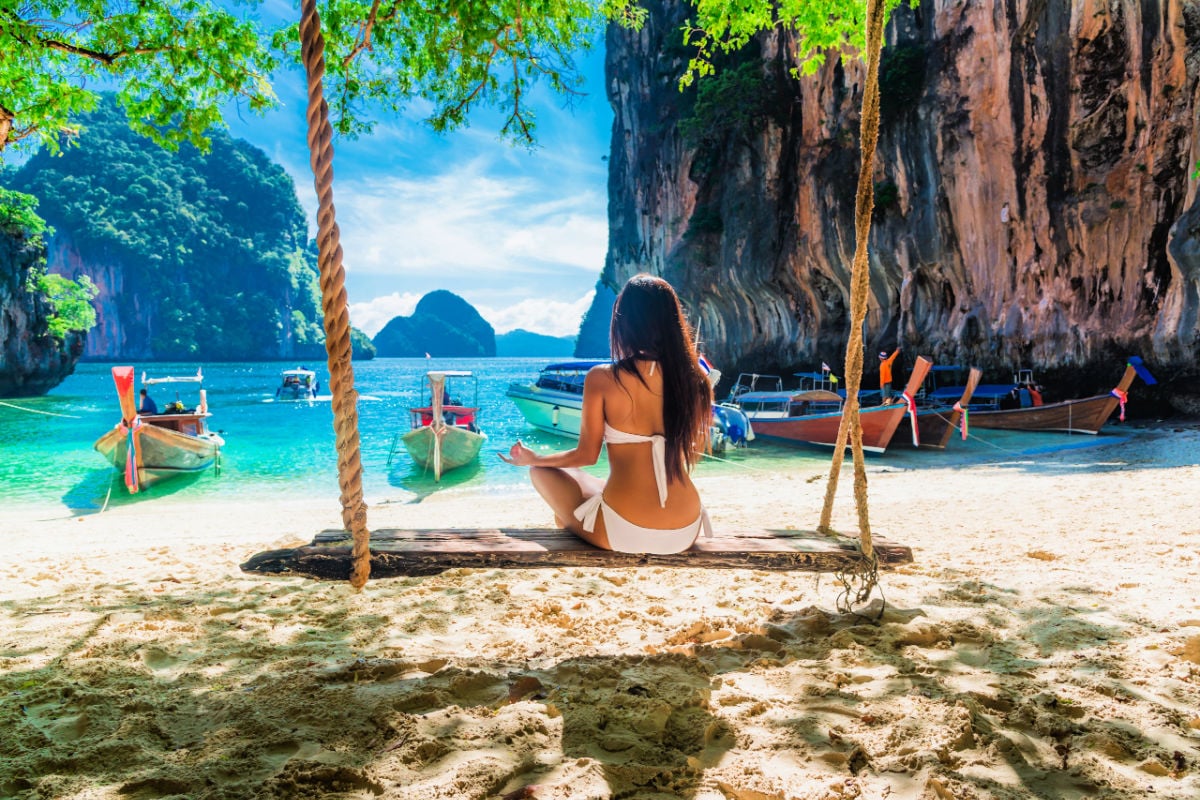
Best known for its lively Full Moon parties, Thailand’s 5th biggest island draws hoards of solo travelers, nomads, and backpackers looking for a good time.
With its white sandy beaches, festivities, and thatched bungalows along the waterfront, the island of Koh Phangan is a paradise waiting to be explored – and being one of the best for solo travelers is an added bonus!
Of course, many places have something to offer different travelers, BUT, if you’re looking to venture to Asia solo in the New Year, Thailand’s culture and history are not to be missed. A destination for thrill-seekers, history buffs, and art lovers – you’ll see it all here.
From city to sea in a few days, you’ll be in awe of just how much you can see in one trip. Wander through cultural epicenters lined with gold-detailed buildings, sail along the incredible shores in traditional thatched boats, or eat your way along street markets.
It’s relatively easy to travel around Thailand as a solo traveler, depending on your mode of transportation, but the community of expats, nomads, wanderers, and fellow solo travelers is really what makes the country a top choice.
On every corner, you’re bound to meet a friendly face, and locals have become pretty accustomed to these adventure-seeking travelers, too.
If you make it a point to stay in hostels, visit nomad cafes, or join group tours, then you won’t be alone for too long in Thailand!
Opinions expressed here are the author’s alone, not those of any bank, credit card issuer, hotel, airline, or other entity. This content has not been reviewed, approved or otherwise endorsed by any of the entities included within the post.