Digital nomadism is only continuing to grow in popularity, and more destinations than ever are making it an easy dream to pursue.
The freedom to pack up your possessions and explore the world while working whenever you stop is incredibly appealing.
But which destinations are most popular with this new breed of traveler?
CEO World ranked the best countries for expats and digital nomads based on several factors including their affordability and the quality of life they offer.
These are the top 8 countries in the world for digital nomads:
8. Mexico
Mexico is a popular hub for digital nomads, particularly those from the nearby U.S.
Digital nomads are attracted to Mexico thanks to its affordable living costs, excellent food scene, and great nightlife.
The Mexican people are generally friendly and welcoming to foreigners, which means Mexico is a great spot for digital nomads who want to meet new people while they explore new cultures.
Although Mexico does not have a special digital nomad visa, you can legally work in Mexico with a temporary or permanent resident visa.
That makes it an incredibly easy country to live in as a digital nomad.
7. Hungary
One of the main reasons that Hungary is so popular with digital nomads is because of its affordability.
You can live in a beautiful and bustling city such as Budapest, Debrecen, Pecs, and Sopron without breaking your budget.
Budapest is a popular hub for digital nomads and is home to an active nomad scene, a host of cozy cafes to work from, and one of the best public transport networks in Europe.
It’s worth noting that if you stay in Hungary for more than 183 days as a digital nomad, then you’re obliged to pay tax in the country, so you might want to consider moving on before 6 months pass so that you can avoid the tax man.
6. Turkey
Turkey is a beautiful and diverse country where you can work in the heart of a bustling city or choose to set up your laptop in a quiet village by the sea.
Istanbul is home to the highest concentration of digital nomads who are attracted by its excellent infrastructure, decent internet speed, and rich culture.
Turkey doesn’t have a specific digital nomad visa scheme in place right now but tourists can stay in the country for 90 days without a visa.
Turkey boasts 19 UNESCO World Heritage Sites so when you’re not working you’ll find plenty to see and do.
5. United Arab Emirates
The United Arab Emirates may not be the cheapest destination for digital nomads on this list but it does have an excellent infrastructure in place that makes working in the country as a digital nomad easy.
You’ll find an abundance of coworking spaces, fast internet speeds, and a host of coffee shops aimed at digital nomads that make meeting and networking with other digital nomads a breeze.
The UAE recognizes and values digital nomads, and it is a modern, exciting place to live.
4. Italy
Italy is one of the most popular countries in Europe for American travelers, and it attracts digital nomads looking for adventure. Italy is famous for its incredible architecture, rich history, and diverse landscapes.
Rome, Milan, Turin, and Florence are all popular and sought-after Italian destinations for digital nomads. You can eat delicious Italian food, enjoy the stunning scenery, and work at the same time.
Italy also has a digital nomad visa that makes working in the country easier than ever and is designed to attract remote workers and highly skilled professionals to the country.
3. Greece
If you’re looking for beautiful beaches and a laid-back way of life, then there is nowhere better to be a digital nomad than Greece.
Aside from its incredible landscapes, Greece is also home to unique landmarks and fascinating cultural experiences. It also boasts a warm year-round Mediterranean climate that is appealing to digital nomads hoping to escape the cold and rain.
The cost of living is lower than that in most Western countries but the quality of life is also higher. Paired with warm and friendly people, Greece is a fun and easy place to live as a digital nomad.
2. Spain
Spain is rapidly growing in popularity with digital nomads and is now the country with the 3rd largest number of co-working spaces in Europe.
Spain boasts a laid-back way of life, and is well known for its excellent work-life balance too. Spain has recently introduced a digital nomad visa that means you can stay in the country for up to a year as a digital nomads.
Affordable rents, high internet speeds, and excellent transport links all contribute to making Spain an incredibly desirable destination for digital nomads.
1. Portugal
The most popular country in the world for digital nomads is officially Portugal. Portugal is an incredibly affordable destination for digital nomads with a lower cost of living compared to other Western European countries.
Portugal also boasts a low crime index, great year-round weather, and a vibrant existing digital nomad community. And its relatively new digital nomad visa is only making the country more popular.
Cities like Lisbon and Porto are popular bases in the country for digital nomads, while if you’re looking for island life, then the island of Madeira also ranks highly.
Opinions expressed here are the author’s alone, not those of any bank, credit card issuer, hotel, airline, or other entity. This content has not been reviewed, approved or otherwise endorsed by any of the entities included within the post.
Are you looking for cheap cities where you can make a digital nomad base for yourself in 2024?
Despite rising costs worldwide, these 5 cities are still a bargain for digital nomads. According to data from NomadList, you can live on less than $1,000 a month in these destinations.
Here are the most affordable cities for digital nomads right now:
To qualify, applicants must demonstrate earnings of at least $2,000 per month in the “digital domain” (a broad category that applies to most digital nomads and remote workers) and pay a fee of $225.
The visa entitles you to live in Malaysia for up to 12 months.
2. Da Nang, Vietnam
Next up on this list of the cheapest cities for digital nomads is Da Nang, Vietnam. This is another city in Southeast Asia that boasts a low cost of living while offering a great quality of life.
This gorgeous coastal city is growing in popularity with travelers and digital nomads alike. It’s very safe, and it makes a great base for exploring more of Vietnam.
While there is no specific digital nomad visa for Vietnam, the country recently introduced a new 90-day tourist visa that makes it easier than ever to stay in the country for up to 3 months.
3. Phnom Penh, Cambodia
Phnom Penh is another great destination for digital nomads where you can live on less than $1,000 a month. Cambodia is one of the cheapest countries in Southeast Asia.
And in Phnom Penh, the capital city, you can enjoy affordable prices while still benefitting from all the conveniences and amenities you’d expect to find in a big city.
This has made Phnom Penh a growing hotspot for digital nomads in recent years.
While Cambodia does not have a digital nomad visa, many people stay long-term on an E-class visa, also known as an ordinary visa, which can be extended for up to 12 months.
Another option is a simple tourist visa, which is good for 30 days and can be extended for one additional month.
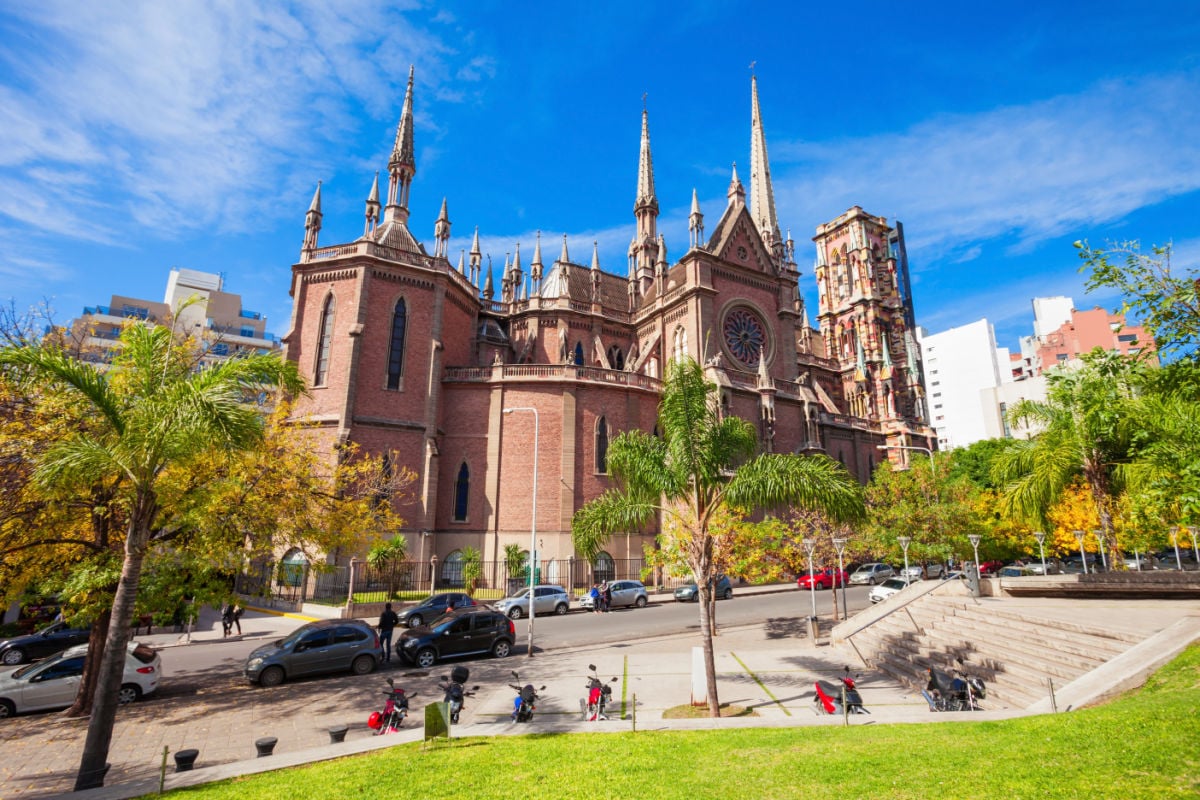
4. Cordoba, Argentina
Departing from Southeast Asia and heading to South America, we have Cordoba next on our list. Although the bustling capital of Buenos Aires is the most famous destination in Argentina, don’t overlook the country’s second-largest city, Cordoba.
Cordoba has just 1.5 million people (compared to the 13 million in Buenos Aires), so it’s a more relaxed city.
It’s also more affordable than the capital in a country that is already one of the cheapest in South America right now. And it makes a great base for exploring the rest of Argentina.
Americans can stay in Argentina for up to 90 days on a tourist visa. The country also offers a digital nomad visa that is good for up to 180 days.
5. Osijek, Croatia
Finally, the one city in Europe to make this list is Osijek, Croatia. Although Croatia has gotten more expensive in recent years, Osijek remains one of its most affordable cities for digital nomads.
This city, which is the fourth largest in Croatia, lies inland close to the border with Hungary and Serbia. It’s a charming, historic city with a laidback atmosphere, which is making it increasingly popular with digital nomads.
Croatia has a digital nomad visa which is one of the easier visas to obtain in Europe.
Applicants will need to demonstrate earnings of approximately $2,600 a month and once approved, the visa is good for up to 12 months.
Opinions expressed here are the author’s alone, not those of any bank, credit card issuer, hotel, airline, or other entity. This content has not been reviewed, approved or otherwise endorsed by any of the entities included within the post.
As more and more modern employees seek the excitement and flexibility of digital nomadism, we get closer to answering the age-old question – if people could live anywhere on Earth, where would they go?
A large study conducted by Enterprise Apps Today set out to discover the cities remote workers are favoring the most right now, and remember, for a place to be a favorite among digital nomads, it has to check many boxes, including high safety levels, good internet connectivity, state-of-the-art infrastructure, and justifiable prices.
What the study found was that the ~35 million digital nomads currently roaming around the world are heavily preferring these five stunning cities.
5. Paris, France
Not only is Paris the capital of the most popular destination among short-term travelers, but it’s quickly becoming an all-time favorite among digital nomads as well.
Being a hub for culture, art, fashion, and great food, the French capital encourages modern-day professionals to seek a better work-life balance; after all, it’s difficult to stay hidden behind closed doors all day when there’s so much around you to explore.
While going through the many iconic attractions Paris is famous for is bound to take some time, your work doesn’t have to be left on the back burner, either.
You can still go out and enjoy the gorgeous sights of the city from one of the many co-working spaces, like Anticafé or WeWork, where you can get everything done without feeling like you’ve wasted an entire day at the end of your work hours.
4. Berlin, Germany
Famous for its historic charm, cool vibe, and, more importantly, reasonably-priced lifestyle (at least compared to other cities of its caliber), Berlin proudly claims the fourth spot on today’s list.
Now, you might be wondering – how cheap can such a developed European capital really be?
According to Numbeo, Berlin is one of the cheapest destinations you’ll read about today, second only to an Asian hotspot which I’ll get to in a minute.
So, for those who want to experience the allure of Europe from a trendy, highly connected hotspot, there’s truly no better option than the German capital.
3. New York City, United States
North America’s proud (and sole) representative on the list is none other than New York, a place so talked-about and well-known that it needs no introduction.
While the unofficial capital of the world is undoubtedly one of the priciest cities to live in, many young professionals feel like its magnetic energy, cultural diversity, and, more importantly, the virtually endless array of networking opportunities are worth the high price point.
Here, modern, spacious co-working spaces are a dime a dozen, while the city’s extensive public transportation system makes navigating the concrete jungle feel far less intimidating than you’d think.
2. Bangkok, Thailand
Bangkok shares a lot of qualities with the cities mentioned thus far (vibrant atmosphere, rich cultural heritage, great business opportunities, and so on), but it’s the low cost of living that really sets it apart from other metropolises and puts it at the no. 2 spot among the most popular destinations for digital nomads.
Remote workers can expect to pay roughly 57% less on day-to-day expenses just by choosing to live in Bangkok rather than a big U.S. urban center like New York.
When it comes to rent prices, the price disparity becomes even more noticeable.
The same type of rental that would cost you $3000 in New York will only set you back around $531 in the Thai capital, leaving you with a lot more disposable income to invest, spend, or save to your heart’s desire.
1. London, United Kingdom
With U.S. travelers visiting London in never-seen-before numbers, the allure of the UK capital has never been stronger than it is right now, and the Enterprise Apps Today ranking just further proves how popular the city is.
No matter whether you’re looking for new professional opportunities or just a higher quality of life, London promises all remote workers everything they’ve been wanting and more.
Here, you can spend your days exploring world-class attractions, working in communal spaces like The Office Group, or attending the many networking events and industry conferences that take place year-round.
Opinions expressed here are the author’s alone, not those of any bank, credit card issuer, hotel, airline, or other entity. This content has not been reviewed, approved or otherwise endorsed by any of the entities included within the post.
The Caribbean may be perfect for vacationing, with its warm weather, impeccable service across hotels, and year-round tropical vibes, but its well-established status as the global capital for resort tourism does not necessarily equal success in other fields.
For instance, digital nomads are known to avoid high prices at all costs, and though it is indisputably beautiful, the Caribbean is not exactly known for its affordable prices and cheap stays, at least when American or European visitors are concerned.
Tulum in Mexico and Nassau in the Bahamas are among some of the most expensive hubs for nomads worldwide, as they cater almost exclusively to big spenders, and it’s unlikely young nomads earning up to $3,000 a month will find the low cost of living they seek in those.
Of course, there are some exceptions to the rule, and perhaps unsurprisingly, the number one nomad city in the Caribbean is a vibrant capital often bypassed by beachgoers altogether, as it is not their traditional resort zone nor its own country’s leading tourist attraction.
According to Nomad List, Santo Domingo in the Dominican Republic (commonly shortened to DR) is where nomads who are country-hopping around the turquoise sea are gathering.
Has Santo Domingo Found Its Calling As A Nomad Hub?
The Dominican capital is the number one Caribbean city for remote workers in the most popular digital nomad platform, beating Yucatan’s tried-and-true ‘workcation’ centers and Jamaica’s retreat villa-dotted, rural hinterland to the number one spot.
Santo Domingo (SD) is not the DR’s leading destination, however: status resort-packed Punta Cana has held for decades now, and other up-and-coming beach zones – La Romana and Puerto Plata to name a couple – are strong contenders for the runner-up slot.
So why exactly has SD suddenly found its calling as a digital nomad base, when it is typically overlooked by regular tourists? Part of it has to do with the infrastructure it offers and more entertainment options for residents, particularly sociable remote workers.
As beautiful as the beaches in Punta Cana may be, there is not an abundance of coworking stations nor affordable month-long Airbnb listings, mainly because, once again, it is best known for having an impressive selection of luxury resorts and beachfront cocktail bars.
SD, on the other hand, is a cosmopolitan center combining scenic coastal views, culture, and city life: with sandy beaches that stretch for miles, a colonial core, and clusters of skyscrapers sprawling in every direction, it’s easily the most exciting place for nomads to be in the DR.
Beautiful Caribbean Beaches And Some Fascinating Culture
The Dominican capital is within driving distance of some of the most beautiful beaches on Hispaniola island.
If you’re looking for a more secluded, natural environment, the beaches in Boca Chica, only half an hour away by car from Santo Domingo, are considered part of the wider metropolitan region and are increasingly popular alternatives to overpriced Punta Cana.
There are Airbnb listings in the residential part of Boca Chica for as cheap as $549 per month. It is a stone’s throw away from the capital proper, and you can always take the local bus or your rental car into town whenever you need a change of scenery.
In downtown Santo Domingo, it’s all about the hustle and bustle of the streets, the tantalizing aromas emanating from food stalls lining up the colorful Colonial Zone, and verdant city parks:
It is the oldest European-built city in the Americas and a UNESCO World Heritage Site littered with 16th-century structures, including a landmark cathedral, the first built on this side of the pond, a series of impressive city walls raised by the Spanish, and a European-style fortified castle.
Living here, nomads will experience five centuries of living tradition, a multicultural scene that combines elements of both indigenous and Iberian nature, and an overload of History not easily found anywhere else on the sunny island or even the wider Caribbean subgroup to an extent.
Santo Domingo Is Cheap To Live In
And It’s Literal Digital Nomad Heaven
Airbnbs and guesthouses in Santo Domingo are reasonably cheap, costing between $530.49 for a studio apartment with a dedicated workspace in busy Calle El Conde to $1,369.52 for an oceanview condo: it all depends on location, the amenities, and the level of comfort.
When it comes to food, Santo Domingo fits every budget, with budget-conscious backpackers expected to spend on average $11 on meals per day, average travelers $24, and high-budget tourists will still be billed an acceptable $41.
A strong cafe culture and wide availability of coworking centers are equally important for nomads when considering a move abroad, and charming SD does not disappoint, whether it’s laid-back, ‘more local’ coffee shops in the historical Plaza de España or office-style spaces.
Nomad List counts as many as 66 coworking options in Santo Domingo, giving ‘workcationers’ plenty to choose from. Compared to Mexico’s digital nomad haven, it is considerably more than Tulum’s 46 and Playa Del Carmen’s 50.
Overall, nomads participating in Nomad List define the quality of life and safety in Santo Domingo as being ‘okay’, they consider it ‘affordable’, spending on average $1,938 per month, most would say the internet is ‘good’ and the city is ‘great’ fun, and food safety levels are ‘good’.
With that being said, the U.S. State Department urges Americans to exercise greater caution when visiting Santo Domingo, as petty crime is common across touristy neighborhoods, while violence and gang activity can be widespread in suburban zones.
Residing in Santo Domingo, you must familiarize yourself with local guidelines in order to reduce the risks of being affected by urban crime.
The Dominican Republic Has Easy Visa Rules In Place
The fact that the Dominican Republic has easy visa policies in place also helps Santo Domingo be in the nomad community’s good graces, as they have a clear aversion to strict entry and stay guidelines and visa-requiring destinations.
Citizens of the United States and most European countries can enter the DR visa-free for an initial period of 30 days, though it is possible to extend the stay up to 120 days for a fee.
There is no specific remote worker visa for the Dominican Republic in place, meaning you can only reside in Santo Domingo under tourist visa rules, as defined above.
Alternatively, you may apply for a regular residence permit, usually by fulfilling certain financial requirements.
Opinions expressed here are the author’s alone, not those of any bank, credit card issuer, hotel, airline, or other entity. This content has not been reviewed, approved or otherwise endorsed by any of the entities included within the post.
If there is one country digital nomads are flocking to this year, it is Thailand, a tropical Southeast Asian gem famous for its gorgeous beaches, paradisaical archipelagos, laid-back lifestyle, and indigenous tradition.
The reasons for that are widely known and have been listed on Travel Off Path a number of times before: people are friendly, the weather is nice and warm year-round, the cultural wealth is a huge plus, and overall, it’s a steal of a deal.
Yeah, yeah, we all get it.
Nonetheless, there is one island in particular that has gone above and beyond to ensure nomads feel welcome and that, unlike other Asian hotspots, is not adding visa hurdles that make it impossible for them to stay longer: quite the contrary.
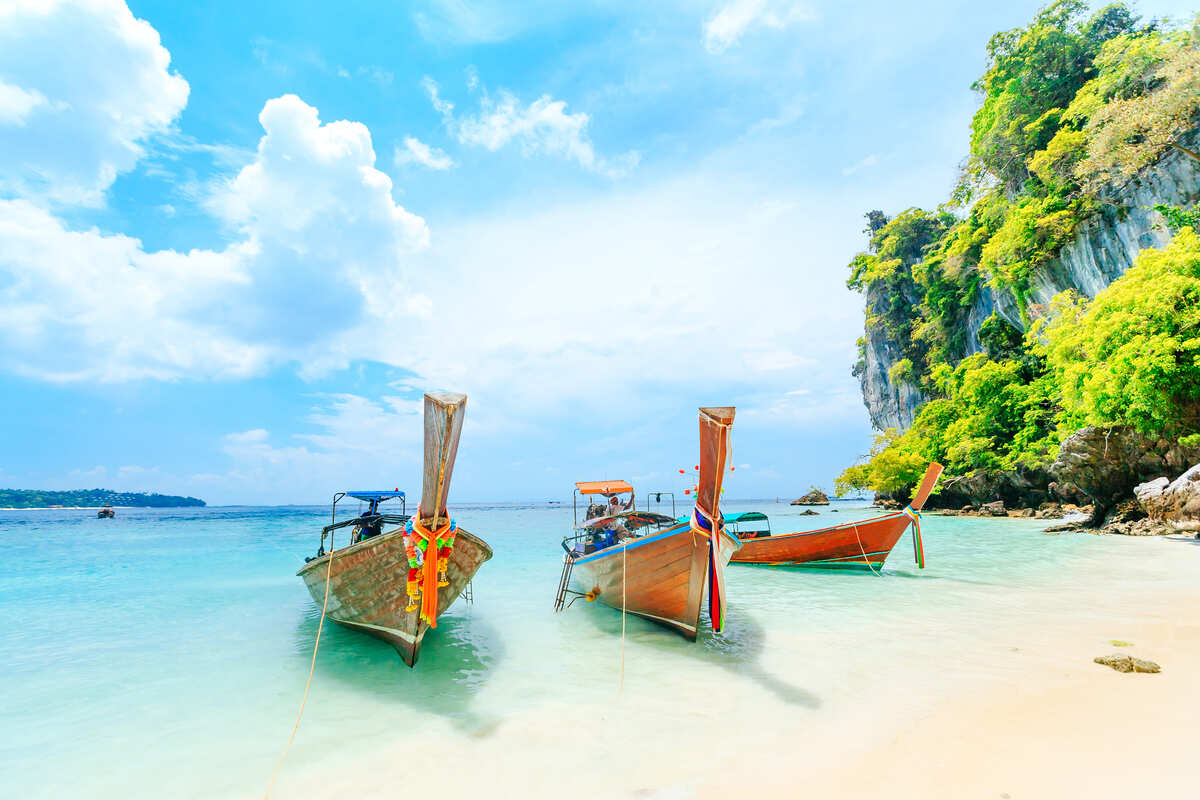
In 2024, trendy Phuket is racing towards becoming the continent’s top ‘workcation’ destination, openly challenging Bali’s decade-long rule, and if we were you, we wouldn’t be sitting this one out:
Clubber-Packed Phuket Has More To Offer Than You May Think
Over the years, Phuket may have developed a reputation for being Thailand’s party capital and a weekend getaway owing to its riotous nightlife and lively social scene, but it has so much more to offer to long-term visitors than nightclubs and hostel-hosted parties.
For starters, it is not only an island – and Thailand’s largest one at that – but a whole province comprising the main landmass and 32 smaller islands: it has everything from overdeveloped tourist zones to off-path spots and untouched nature, and it doesn’t get nearly enough credit for how diverse it is.
Are you the sociable type who likes to surround yourself with like-minded individuals, staying within short walking distance of shops and work-friendly cafes, and with plenty of options to entertain yourself after sundown? Phuket City is where you should be based:
The province’s multicultural capital city, home to a significant Chinese minority and a growing community of Western expats, it is best known for having an abundance of coworking spots and its picturesque Old Town, characterized by Portuguese-inspired buildings.
Looking to beat the tourist crowds instead? Kata, a laid-back beach town bounded by lush vegetation, or perhaps, Koh Yao Yai, a lesser-known island a short 20-minute boat ride from Phuket, hosting a limited number of hotels and guesthouses, are top recommendations.
Of course, Phuket’s majestic nature is a huge draw for big-city escapees: whether it’s the white-sand beaches in Phi Phi, or the hiking footpaths leading deep into the heart of the Khao Phra Teaw jungle, nomads have plenty of attractions to keep them busy during a prolonged stay.
Other than boasting a diverse tourist offer, Phuket ticks nearly every box on the Nomad List checklist.
Phuket Is A Top Destination On Nomad List
According to previous visitors who carried out remote work from the island, it is budget-friendly, with an average $1,874 per month required, considerably more expensive than other destinations in Thailand, such as remarkably affordable Chiang Mai, but still lower than median Western prices.
Nomads have also reported Phuket guests enjoy fast internet, more specifically, 59 Mbps, though that may vary depending on where in the province they are staying. Service seems to be more stable and reliable in larger settlements like Phuket City, Chalong, or Patong Town.
Phuket is good ‘fun’, too, with its numerous bar districts and varied adult entertainment, not to mention the level of urban safety, rated ‘good’ by nomads: violent crime is essentially non-existent, and other than occasional pickpocketing, foreigners are not overly worried about security.
The temperature is another huge bonus: with the exception of the monsoon season, which results in heavy precipitation between July and October, you are likely to be met with long hours of sunshine every day ‘workcationing’ in Phuket.
Right now, it’s a ‘perfect’ 84.2°F, making Phuket the ideal temporary homebase over winter. This leads us to our third point, and probably the most relevant one yet.
Phuket Wants You To Stay Longer
Phuket officials want you to stay longer and take your time in exploring the sunny island, and instead of empty promises, they have announced an online visa extension program targeted at visitors who wish to remain in the province for longer than 30 days.
Currently, U.S. passport holders are granted only a single month in Phuket, as well as the whole of Thailand, when traveling as tourists.
Thailand does have a Digital Nomad Visa (DNV) in place nomads can apply for when deciding to reside in the country in the long term, but the truth is a majority of them are country hoppers at heart and are unlikely to stay put in a single destination for more than three months at a time.
Even then, 30 days is hardly enough time to explore all that the main island has to offer, let alone all the gorgeous paradisaical islets and unspoiled archipelagos offshore.
And let’s be honest: DNVs can be incredibly complicated for first-time applicants, and the strict financial requirements will typically render them ineligible anyway.
Fellow nomads, the ancient Thai deities (also known as สำนักงานตรวจคนเข้าเมือง) have heard our prayers, and now it is possible to apply for tourist visa extension online when staying in Phuket, without bureaucracy-filled visits to the nearest immigration office.
Called ‘E-Extension‘, the platform enables nomads, or any visitor interested in staying longer, to submit their documents and schedule appointments online, from the comfort of their Airbnb or hostel, and only present themselves before authorities when it’s time to receive the visa extension stamp.
An extension will normally grant you an additional 30 days to stay in Thailand, for a total of 60 days.
Learn more about Phuket – and why it’s stealing the hearts of nomads – here.
Europe is every digital nomad’s go-to destination for sampling culture and country-hopping over a short period of time.
A well-connected continent, home to nations that are smaller than medium-size U.S. states, it is easy and convenient to explore, largely thanks to the Schengen Area, a passport-free zone encompassing 27 (soon to be 29) European countries.
Schengen has all but eliminated routine passport checks across most of Europe, making traveling across borders completely hassle-free.
On the downside, non-European travelers can only be present in the Schengen Area for 90 days out of any 180-day period, which means any calendar day spent in any participating country means a day less in another.
A curse and a blessing, Schengen has eased travel curbs but severely limited a nomad’s options for long-term stays in the Old Continent, especially now that two more countries are joining.
Where, then, can nomads go to extend their time in Europe? Thankfully, one of the continent’s most gorgeous regions is entirely outside the Schengen Area, and all countries are welcoming medium to long-term residents with open arms:
Europe’s Top Nomad Hotspot Is Not In Schengen
The Western Balkans are located in Southeastern Europe, surrounded by EU (European Union) and Schengen signatory states, such as Croatia and Greece, but that have not yet been accepted in either.
They are deemed Europe’s less developed region, largely due to their previous history of communism and having had their EU accession process delayed for decades, but this does not mean they are not safe nor lacking in terms of culture.
Far from that.
The Western Balkans (WB) are comprised of the following:
Albania
Bosnia and Herzegovina
Montenegro
North Macedonia
Serbia
*The disputed territory of Kosovo, a partially-recognized country Serbia claims as an autonomous region part of its own.
As they are not EU members, they tend to be ignored by visitors to the continent, particularly Americans, who associate Europe exclusively with wide Parisian boulevards, the interconnected islets of Venice, and unfinished Spanish basilicas.
They won’t find those in the underdeveloped WB, but they may have a different version of the things that make Europe great, and that makes them fascinating in their own right.
‘But where do digital nomads come into play‘, you may be wondering?
Why Will The Western Balkans Become Europe’s Next Nomad Haven?
First of all, seeing the WB are not in Schengen, they can stay for 90 days in each, and in the case of Albania, American citizens in particular are granted a one-year stay visa-free.
Then, there is the fact that all six WB destinations are shockingly cheap to live in: they are not in the Eurozone*, their national currencies are typically weaker than the U.S. dollar, and prices for food and the overall cost of living are a lot lower compared to their EU counterparts.
*Montenegro has unofficially adopted the Euro as its currency, but this has not been approved by the European Union, as it is not a member state
Let’s talk prices and tourist offers.
Albania
Gorgeous Coastline And Ancient History
According to Nomad List, it costs just under $2,000 to live in Albania, where a sumptuous three-course meal at a mid-range restaurant will set you back by a mere $15, maybe, and month-long rental agreements can be signed from $300.
As one of our writers has described, Albania is essentially Greece on a budget, as they are neighboring countries and the culture and nature are similar, except Airbnb rates are not hiked, and the cobbled medieval towns and Adriatic beaches are not as packed with foreign tourists.
The two top nomad destinations in Albania are Tirana, a modern capital city famous for having an abundance of quirky cafes and vast green spaces, and Ksamil, a laid-back coastal town within walking distance of white-sand beaches.
As noted above, Americans can stay an entire year as tourists in Albania, a privilege not extended to European nationals themselves, so you should consider that when planning a long-term relocation across the pond.
Bosnia And Herzegovina
Landmark Bridges And Friendly Locals
Elsewhere in Bosnia and Herzegovina, commonly shortened to BiH, American nomads are often surprised at how friendly and open-hearted locals are, unlike in Italy, France, or other Western countries, where they tend to find people are generally dismissive of them.
In Bosnia, you should definitely not shy away from accepting a rakija invitation nor be taken aback by the kindness of strangers: with Bosnia’s less-than-impressive visitor numbers, locals are always keen on welcoming travelers and making them feel right at home.
Basing yourself in BiH, you will be expected to budget between $1,164 to $2,173 per month, depending on where you’ll be living. Life in larger urban centers is typically more expensive, but you should bear in mind ‘expensive’ in Bosnia equals ‘cheap’ in an average U.S. city.
Tourist hotspots like Sarajevo, the Bosnian capital, home to the infamous Latin Bridge, where the murder of a Duke took place, essentially triggering World War II and a sprawling Ottoman-style bazaar, and Mostar, where what’s possibly the most famous bridge in Europe is located, are the best-rated destinations for the availability of work-friendly cafes and tourism infrastructure.
Montenegro
Laid-Back Coastal Towns And Dalmatian Culture
Next up on the list is Montenegro, a tiny Adriatic nation sandwiched between Albania and Croatia and bordered by Bosnia and Serbia. Out of the non-EU European states, it is often dubbed the most developed due to the higher quality of life it offers and its upper-middle-income economy.
It is also the one closest to joining the EU in the near future, so now is the time to visit before it inches closer to accessing the associated Schengen Area. With Montenegro’s stone-built Dalmatian towns and pristine coastline, you will want to spend 90 full days here while you still can.
For beach enthusiasts, the ancient port of Budva is the place to be, as it is surrounded by a turquoise-colored sea, and staying in the fortified part of town, it’s a short half-hour walk to unspoiled, peaceful pebbly beaches.
Culture buffs may prefer Kotor instead. Nicknamed Dubrovnik’s small sister, it is a perfectly preserved medieval settlement surrounded by walls, nestling on the shores of the Bay of Kotor, an area of outstanding natural beauty.
It costs on average $2,241 per month to live in Montenegro as a digital nomad, making it the costliest option out of all WB countries – but again, two thousand bucks a month is unlikely to discourage you from relocating to Montenegro as an American.
North Macedonia
Peaceful Lakes And Byzantine Churches
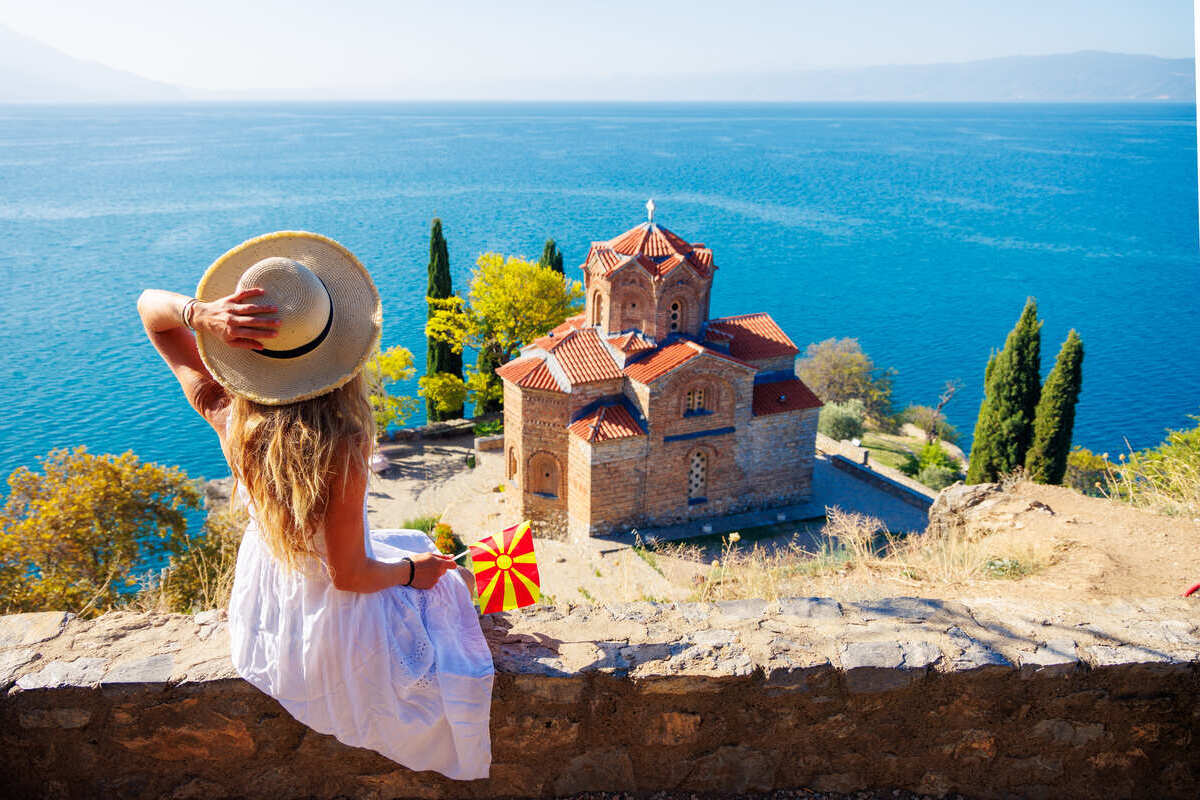
One of Europe’s least-visited countries, North Macedonia (N.M.) has struggled to make a name for itself in the tourism scene since detaching from the now-defunct Yugoslavia, but it’s certainly gaining ground as a workcation hub.
It may not have access to the Adriatic nor be as highly developed as you would expect a European country to be, but it has no shortage of stunning landmarks, from centuries-old Byzantine churches perched on cliffs facing serene lakes to cityscapes dominated by historic citadels.
Staying in N.M. for three months as you wait for your Schengen clock to reset? You might want to add Skopje, the eclectic Macedonian capital, birthplace of Mother Teresa and the country’s financial center, to your list, but also Ohrid, a charming lakeside town on the border with Albania.
In terms of affordability, N.M. is easily the most appealing destination for remote workers on the Western Balkan route, as it costs a mere $1,307, all expenses included, such as accommodation and food, to call it home for a month.
Serbia
The Landlocked Cultural Hotspot
The landlocked gem that was once at the center of Yugoslavia, Serbia is the only WB country to host nonstop flights from America, and it’s not somewhere you want to use merely as a transit hub on your way to the Balkan coast.
Serbia is becoming increasingly popular for its exciting nightlife, which rivals that of Amsterdam and Berlin, and rich history, spanning at least two millennia and several different eras, including Roman, Byzantine, Ottoman, and of course, communist rule in the 20th century.
Today, Serbia is a free, democratic country that’s swinging West and towards the European Union, but while it is not yet a member, it welcomes American tourists for three consecutive months, irrespective of where they have been in the previous half-year.
As the capital and largest city, Belgrade is the best place for nomads to be, thanks to its Bohemian scene and cafe culture, but the enchanting Novi Sad, with its traditional Old Town, and Niš, with its landmark castle and Roman heritage, are not to be missedeither.
Staying a single month in Serbia, your expenses should total $2,547 in a worst-case scenario or an even cheaper $1,580: it all boils down to which city you’re picking as base (Belgrade is costlier for expats) and your preferred level of comfort while traveling.
The Bonus Country… Or Is It?
Last but not least, you have an intriguing Kosovo as a Schengen alternative. A disputed territory that was part of Serbia up until 2007 and still claimed by the latter, it is an ethnically Albanian nation bounded by the Accursed Mountains and the Kosovo Plain.
It is widely known for its wild nature and Ottoman heritage, but nomads love it best for its delectable cuisine and tourist-free, picturesque towns. One of those, Prizren, looks cropped out of a fairytale book, with its winding alleys and meandering river running through a minaret-dotted center.
Kosovo can be cheap to live in, but you should know that much like Montenegro, they have unilaterally adopted the Euro, meaning they are not members of the European Union yet and thus cannot have it as currency, but do anyway.
As a result, prices can be somewhat higher, with the cost of living ranging from $1,212 to $2,285, but it’s worth noting Kosovo remains remarkably affordable by Western standards. As an American nomad, you can stay 90 days in the tiny country while they’re yet to ascend to Schengen.
You should know Kosovo and Serbia are yet to normalize relations following independence, and Serbian border officers may deny you entry into Serbia if you first arrive in Kosovo without passing through their country first, so bear that in mind when planning a cross-country Balkan trip.
Schengen Is Growing Larger Every Year
From March, two of the most popular non-Schengen countries, Bulgaria and Romania, will ascend to the Schengen Area, restricting long-term options for nomads even further.
Up until now, these two Eastern Balkan states have been used by digital nomads as ‘reset’ destinations, where they would commonly stay 90 days, independently of time spent in Schengen, while waiting to be re-admitted.
That is because Bulgaria and Romania applied their own immigration rules and granted tourists 90 days each, regardless of visits to other European destinations. This changes from March, once they start adopting the Schengen acquis.
In other words, if spending 60 days in Bulgaria or Romania collectively, they will only have 40 days left to use up elsewhere in Schengen, a vast territory that includes Spain, France, Italy, Croatia, Switzerland, and more.
Similarly, any days spent in the aforementioned countries will have an impact on how much time you have left in Bulgaria or Romania, dealing a major blow to digital nomads and slow travelers.
Any time spent in any Schengen country, even if it’s multiple countries in a single itinerary, counts towards the 90-day limit. Once that is reached, a traveler must exit the zone, and they are not allowed to return to any signatory country for an additional 90 days.
With 27 countries currently participating in the Schengen Area area and applying this common policy, and two more set to join later this year, you can see how digital nomads aren’t exactly thrilled Schengen is growing larger and larger.
Well, there is always the Western Balkans, one of Europe’s most beautiful yet hugely underrated regions, and where not a single country has embodied the Schengen criteria – and if you’re asking us, it is set to become the continent’s next digital nomad haven.
With that being said, every single one of the Western Balkan countries is aspiring to become full EU and Schengen members in the future, and you shouldn’t count on this loophole to exist in the next years.
Other non-Schengen states that are not in the Western Balkan region include Moldova, a small post-USSR Eastern European country between Ukraine and Romania; the United Kingdom, where Americans can stay for a full 180 days upon each entry; Ireland (an EU member with a Schengen opt-out), and Cyprus (yet another EU country that is yet to fulfill the criteria for Schengen accession).
Europe is every digital nomad’s favorite playground: nowhere in the world will they find that country-hopping is as hassle-free as in the Old Continent, where borders are essentially a non-existing concept, and the wide availability of trains and low-cost flights make it incredibly easy to travel.
The only downside to Europe, however, is how expensive it can be, particularly if you’re a budget-conscious nomad who’s looking to settle temporarily somewhere affordable and cool enough: though they may be inherently fascinating, many European countries are becoming unliveable.
Be it soaring rates of overtourism, the strength of the euro against the dollar, or the surging inflation, which is giving locals themselves plenty of reasons to complain, options keep dwindling, so where exactly can remote workers relocate that will notbreak the bank?
Here are our top five picks for European spots where it costs less than $2,000 per month to live:
Rijeka, Croatia
The third-largest urban center in Croatia, Rijeka is a surprisingly multicultural city and seaport famous for its diverse demographic and numerous cultural attractions.
Rooted in both the Croatian and Italian worlds, it is a melting pot of neighboring cultures.
Due to its proximity to Italy, more specifically Venice, which sits just across the Adriatic inlet, the city has its own unique dialect of the endangered Venetian language (Fiumian), spoken mainly among ethnic Italians living locally, as well as Chakavian, a regional dialect of Croatian.
Among the most famous landmarks, the Croatian National Theatre Ivan pl. Zajc stands out, an 18th-century effort by renowned Austrian architects Fellner & Hellner and a Venetian-inspired Old Town dominated by the medieval Church of the Assumption.
For digital nomads, Rijeka is one of the top destinations in Croatia, as it costs only $1,677 per month to live and work remotely there, as per data gathered by Nomad List, not to mention the good air quality, proximity to the seaside, and internet speed (22 mbps on average).
Gran Canaria, Spain
The main island in Spain’s autonomous Canaries archipelago, Gran Canaria is a tried-and-true winter sun hotspot, offering warm temperatures year-round, white sand beaches, nature reserves, and vibrant city breaks, most notably Las Palmas.
On the digital nomad side, it’s risen to prominence as a result of its high quality of life, easy access to nature, relaxed atmosphere, and most importantly, the lower cost of living compared to other destinations in mainland Spain.
It would naturally depend on where you are based, as prices can be higher in Las Palmas, the regional capital, than the rural, mountainous inland, but it costs on average a mere $1,974 to reside in Gran Canaria monthly.
Some of the aspects nomads love the most about Gran Canaria are the sunny, temperate climate, owing it to the geographical proximity to the African continent, the fact that English is widely spoken, especially among young people in larger cities, and the cheaper prices for food.
Antalya, Turkiye
Dubbed the Queen of the Eastern Mediterranean, Antalya is a gorgeous resort city in Turkiye with millennia upon millennia of accumulated History and a unique mixture of Old World charm and modern seaside developments to call its own.
The Old Town part, locally known as Kaleici, is a maze-like cobbled zone lined by traditional shops and restaurants, guarded by a 2,000-year-old Roman city gate, and it’s easily Antalya’s most picturesque and culturally significant district.
In Konyaalti, however, the ancient cityscape gives way to clusters of skyscrapers and residential buildings distributed along a sand-and-gravel beach strip, bounded by waters of the shiniest blue, within walking distance of Westernized eateries and leisure and shopping complexes.
Antalya is old and historical, but it is also cool and trendy, and its low cost of living – Nomad List estimates it is possible to reside here on $1,235 per month – make it a highly sought-after destination for remote workers from both Europe and the U.S.
Now that Turkiye has lifted visa requirements for Americans, Antalya has become even more attractive to the average U.S. visitor.
Split, Croatia
The second Croatian entry on this list, Split is a unique city in the sense that it originally developed around the abandoned ruins of a Roman palace built for an emperor. This means much of the so-called Old Town is still found within the remaining walls of this ancient structure.
It is made up of a series of winding alleys leading to hidden patios and family-owned bakeries, yet outside the Diocletian fortress, visitors will find a palm-flanked marina interspersed with luxurious hotels, nightclubs, and charming oceanfront cafes.
Much like Antalya in Turkiye, Split has stolen our hearts with its combination of European ‘old’ and 21st-century coastal getaway: seeing centuries-old monuments coexisting harmoniously with — is no strange sight here.
Then, there is Split’s affordability: based on 726 impressions by members of Nomad List‘s online community, nomads can expect to pay around $1,998 per month living among locals in Croatia’s second city.
Travelers are packing up their laptops and heading out high and low to find amazing new experiences, all while getting paid.
Doesn’t sound like a bad gig, right? There’s not one singular industry catered to remote workers, but some places don’t meet the mark in terms of cost of living.
Southeast Asia isn’t one of those places for the most part.
With tight budgets being a top priority for digital nomads, this is one of the best regions in the world to shuffle around country to country immersing yourself in new cultures.
One particular country is one of the most enticing for digital nomads to claim as their new work home.
Here are 6 reasons why this Southeast Asian country is so enticing for digital nomads:
An Easy Peasy Digital Nomad Visa
Malaysia launched its digital nomad visa many months ago, and it has been a success. The DE Rantau program aims at snatching both local and foreign remote workers and either stay in the country or move here from another.
Those who “work from home” can call anywhere home, but sometimes it can be a slippery slope crossing borders.
Taxes, visas, and various immigration issues can arise when earning income in a foreign country. On one hand, digital nomads love that certain countries offer visas catering to their lifestyle so they know they are both welcome and playing by the rules.
Malaysia’s visa is one of the easiest to obtain, with simple requirements to meet, such as just $24,000 annual income.
Amazing Destinations To Call Home
With stays up to 12 months, digital nomads have plenty of time to explore exciting cultural destinations in Malaysia.
Although 73% of digital nomads here make their base in the gargantuan capital city of Kuala Lumpur and the rapidly-growing, yet lesser-known region of Penang.
These two stunning yet differing destinations are among the fastest growing in all of Asia for digital nomads, behind the likes of Tokyo, Da Nang, and Seoul.
Penang is magnetizing to digital nomads as a coastal getaway full of wonders, especially the capital of the state, George Town, set on a picturesque island beaming with cultural sights.
Well-equipped for a digital nomad takeover, the invasion has begun. It’s best to move here quickly before it loses its off-the-grid appeal.
A Trio Of Unknown Gems Calling Your Name
If 73% of digital nomads are limited to a couple of areas, where are the remaining 27% in Malaysia? The truth is they are dispersed around the country.
With the ongoing success of the DE Rantau program, more destinations are wanting a piece of the pie. Kuala Lumpur may have the most recognition, but Malaysia as a whole offers so much more.
The gorgeous island of Langwaki, along with Sarawak and Sabah of Borneo, are a trio of unknown destinations ready to embrace remote workers.
Borneo is home to lush rainforests with a vast array of wildlife, while Langwaki offers stunning beaches and lavish hotels, such as St. Regis and Ritz Carlton.
Malaysia Is Super Safe And Affordable
Since many digital nomads venture off alone, going to a foreign country can always be a cause for concern in terms of safety.
The good news is there’s no need to worry about safety here. Plus, Malaysia is very diverse, and a majority of locals speak fluent English to add an extra layer of comfort.
Malaysia is currently designated at the lowest level of safety concerns as Level 1: Exercise normal precautions by the U.S. Department of State.
Affordability is key, which is why Southeast Asia has long been a backpacker’s paradise, and the visa only requires a $2000 monthly income.
Fast Internet
As an upper-middle-income nation, infrastructure should not be a concern for digital nomads. The country is well-equipped for digital nomads to complete their work assignments.
The big cities, especially Kuala Lumpur, will offer a plethora of cafes and co-working spaces with high-speed internet.
The same goes for Penang, where George Town is your best bet for a reliable internet connection. The DE Rantau program is looking to expand, so lesser-known destinations are undergoing transformations to become better equipped and more appealing to digital nomads.
As digital nomads country-hopping around the world, we’re always searching for destinations based on the cost of living, whether those hard-earned dollars can stretch furthest, and of course, on how nice the weather is, particularly this time of year.
For this very reason, Europe (and much of the Northern Hemisphere) is immediately ruled out during the colder months: though it is much cheaper to live in when it’s not peak season, the freezing temperatures can be a bit of a downer for most.
It also goes without saying many digital nomads are young entrepreneurs whose small online businesses are yet to make huge profits, and trust us, though that may be the goal for some, we know not everyone has the unlimited funds to lead a luxurious lifestyle in Ibiza or Dubai just yet.
Where, then, is the sun still shining right now, and you can save a lot of money by living on less than $1,000 a month as you sample some culture?
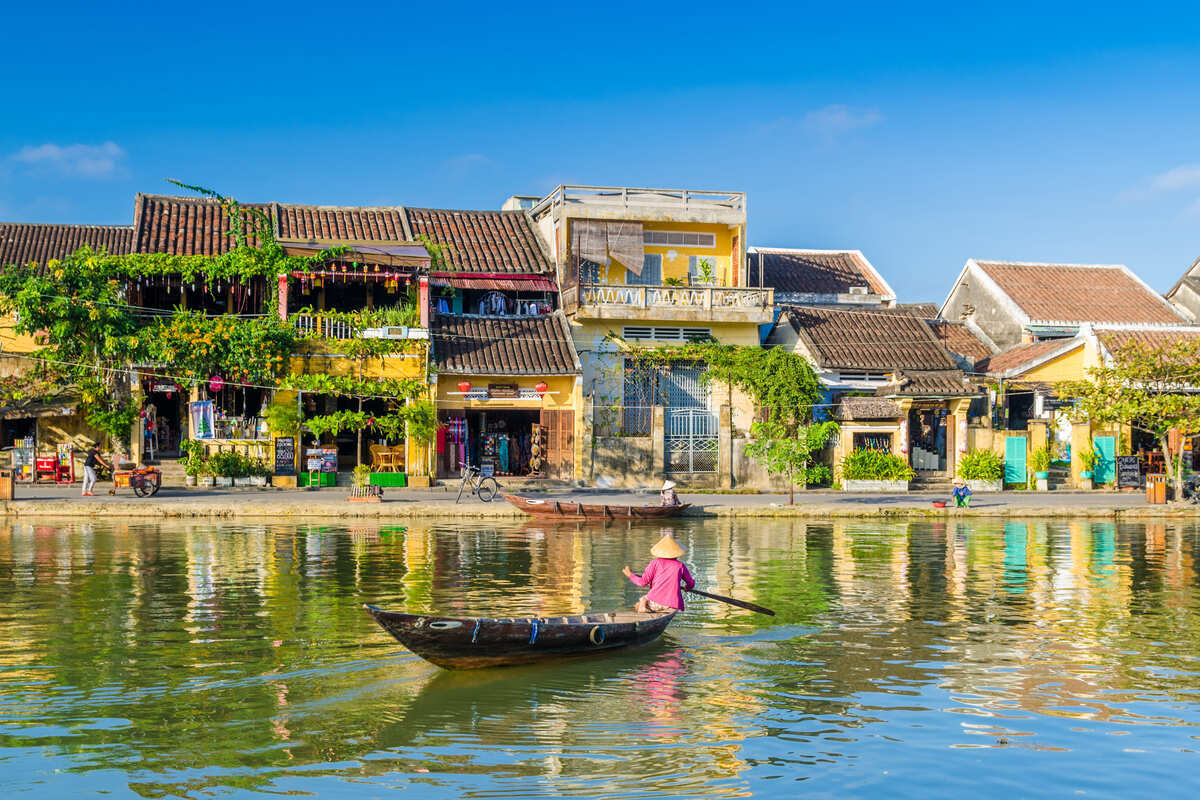
Hoi An, Vietnam
Our first pick is Hoi An, a charming town in tropical Vietnam with a History that spans back at least two millennia.
Over the centuries, it was at the center of a power struggle between Asian and European forces as a strategic port on the shores of the ‘Mother River’.
Hoi An has been influenced by several different cultures over the centuries, and it’s one of a handful of places in Southeast Asia where you will find colonial structures left behind by both the Japanese, Chinese, and French, including a 16th-century bridge pagoda and yellow-washed houses.
Other than delving into this hot melting pot, you will soon find that the UNESCO-listed Old Town is not only jam-packed with ancient temples and picturesque corners but also numerous work-friendly cafes where you sit at peace and get work out of the way while sipping a freshly-squeezed fruit smoothie.
Hoi An is also one of the cheapest sunny destinations in the world, as it costs on average only $889 a month to live there, with delectable street food sold at the negligible cost of less than a dollar, and Airbnb rentals ranging from $146 to $169 per week.
Senggigi, Indonesia
Elsewhere in Southeast Asia, in the lesser-known island of Lombok, Bali’s ‘other sister’, the small coastal town of Senggigi is drawing in a growing number of nomads with its appealing natural sights, still largely unspoiled by mass tourism and laid-back living.
The island of Lombok as a whole is rising in popularity as a cheaper, more authentic alternative to Bali since the historical island became overrun with Westerners and millennial wellness-seekers, but Senggigi in particular steals the limelight due to its natural beauty:
The High Street is easily the settlement’s liveliest spot, lined by tall palm trees interspersed with restaurants, local houses, and shops, yet a short scooter ride away, visitors will hit up the gorgeous white sand strip of Senggigi, between a protected reserve and waters of the shiniest blue.
Basing yourself in Senggigi for a month, you should expect to live comfortably off of $916 per month, making it over a thousand dollars cheaper to reside than overdeveloped Bali, where the average monthly expenses easily total $1,964.
Matara, Sri Lanka
Located on an island country off of mainland India, the medium-sized city of Matara has long been a backpacker favorite in South Asia owing to its stunning coastal scenery and awe-inspiring traditions, but it seems to have found its calling as a nomad hotspot in recent years.
Nomads are flocking to Sri Lanka and into Matara specifically for the affordable consumer prices, simple way of life, and of course, the year-round warm weather, which rarely dips below 75.2°F. In a way, it is everything budget-conscious nomads could hope for:
It is safe, with lower levels of crime compared to the Sri Lankan capital of Colombo, the internet is fast (62 Mbps on average), and air quality is considered ‘good’, a rare feat for an underdeveloped Asian destination. Then, there is Matara’s immense cultural value:
Much of its colonial architecture, dating back to periods of Portuguese and Dutch settlement, has been preserved, including a star-shaped fort and an 18th-century Reformed Church 18th-century: culture, the ocean, friendly locals, and high levels of safety, all of this for under $974 a month.
Luxor, Egypt
Luxor is an Egyptian city straddling the River Nile, and it’s best known for its impressive concentration of historical landmarks, including the manmade wonder that is Luxor Temple, an ancient complex built 3,423 years ago.
For that reason, it’s fascinated Egyptolists and wide-eyed tourists for centuries, but as of late, it’s reinventing itself as a digital nomad hub, with a more temperate climate compared to the scorching, arid Egyptian heartland, better air quality than Cairo, and crime levels within an acceptable range.
Luxor has a growing expat community, a clear indication it is foreigner-friendly, and though it is not as developed – poverty remains a widespread issue across Egypt – it offers Westerners, in particular Americans earning in dollars, a higher purchasing power.
This is directly linked to the depreciation of the local currency. Bad news for locals, for sure, but not something nomads are generally upset about when trading in their powerful dollars for Egyptian pounds. According to estimates by Nomad List, digital nomads spend roughly $860 per month in Luxor.
Are you a digital nomad looking to get inspired for your New Year travels? Here are Travel Off Path’s top digital nomad destinations for 2024.
As a travel writer and digital nomad who’s made it his life’s work to explore the world while sharing his experiences online, I have already seen over 79.1% of Europe – according to my Mark O’ Travel stats I religiously update every month – and have inevitably worked remotely from most countries on this side of the Atlantic.
From bleak mid-winters in the Balkans to the canicules of Southern France in a scorching July, and every writing session in between, be it holed up in my AirBnB room trying to keep the warmth in or lying on the edge of a beach, letting the ocean caress my feet, I feel I could put together a digital nomad guidebook for newcomers in the Old Continent.
Being close to completing my ‘European nomadic trek’, I was convinced already I had my immutable top three favorites: nowhere I would go next could ever top Georgia’s generous visa policy and high affordability, Albania’s beautiful nature and welcoming folks, or Poland’s underrated cuisine and awe-inspiring History.
As you might have guessed, I have a professed love for Eastern Europe and would normally openly avoid the Western flank, mainly because, more often than not, it does not fit the budget and it’s just too touristy.
The huge crowds are a big turn-off for me, who’s mostly looking to work in peace while sampling some culture.
As a nomad, my needs are rather primitive: I need comfort, good food, low cost of living, and sunshine.
As we approached winter, however, my options as a Europe-based, sun-loving nomad started thinning dramatically.
The Eastern bloc and its plummeting temperatures were suddenly off-limits.
I had to look elsewhere, as far South as I could.
Call it instinct, or perhaps a little push from the Instagram algorithm, but next thing I knew I was boarding a four-hour flight to a mysterious island so small you can’t see its outline on a map unless zooming in on the exact right spot.
In chasing the sun, I stumbled upon this gorgeous Portuguese archipelago that has me wondering whether I should reshuffle my own personal ranking of favorite nomad hotspots.
Madeira is the perfect year-round destination for remote workers, and here are 8 reasons why:
Madeira Is Perfect For An Escape Into Nature
If you are unsure what or where Madeira even is, it is an autonomous, archipelagic territory of Portugal located off the coast of West Africa comprising four islands, two of which are inhabited, and an additional two held as protected reserves.
From Lisbon, the Portuguese capital, to the archipelago, it is a whopping 600 miles, and in fact, it is part of the African tectonic plate, being geographically closer to Africa than Europe, and to be quite honest, it does feel worlds apart from mainland Portugal.
In terms of nature, Madeira is markedly different from the Iberian Peninsula, where mainland Portugal sits, as it is a subtropical island crisscrossed by hiking paths leading up towering mountains and dominated by an evergreen flora, including a 20-million-year-old laurel, UNESCO-listed forest.
From Curral das Freiras and its jagged peaks, down to the rugged South Coast, interspersed with quaint, hilly seaside villages and banana plantations as far as the eyes can see, to the waterfall-dotted inland, where Mother Nature is the ruling, unchallenged queen, Madeira is perfect for slowing down and practicing some inner healing.
According to research carried out Demandsage, 11% of digital nomads are openly seeking easier access to nature, and I’m not sure about you, but that’s exactly what I needed as a nomad, having jumped from country to country throughout 2023.
For the best part, I gravitated towards sprawling urban centers, as they are supposedly where you can find the best infrastructure, the internet cafes, and the largest group of expats, but the urban fatigue was quick to catch up to me.
Having constantly based myself in the largest possible city and leading a busier life anywhere the social scene is liveliest, I did not feel as that necessarily boosted my happiness levels, nor my productivity.
Deep down, I was reluctant to leave the urban center out of fear the great outdoors wouldn’t be nomad-friendly, and if you’re a fellow nomad, you know how important is having high-speed internet and a community to surround yourself with.
These are not easily found outside metropolitan areas.
Shockingly, as I landed in Madeira, I learned most of the island is nomad-friendly, and this brings me to point number two.
A Nomad-Friendly Remote Island
For an island as remote as Madeira, I was positively surprised to learn nomads are spread across the entire territory, as opposed to being concentrated in the regional capital, usually the best-equipped settlement.
Funchal is the largest city, and it is indeed the go-to spot if you’re looking for a wider range of services and better entertainment options, but Madeira as a whole is well-prepared to host slow travelers and remote workers, and even 600-people-strong villages offer long-term rental and a myriad of dining options.
I decided to get out of my comfort zone this time and left the city for a one-week stint at a small coastal town in South Madeira, aptly titled Ponta do Sol (Portuguese for ‘Sunny Tip’).
A fishing port found at the heart of a valley, bounded by sugar cane and banana terraces and lining the azure Atlantic, with winding alleys and a landmark church, it is ideal for relaxing, letting go of your mundane worries, and most importantly, getting work done without distractions.
Other than the friendly, hospitable locals and amazing food, my favorite memory of Ponta do Sol is listening to the soothing crashing of waves as I worked from my computer on the pebbly beachfront by the Sun Spot Cafe.
No traffic noise, no interruptions, and, most importantly, a stable WiFi connection (and delectable seafood food to top it off).
The next thing you know, the sun is setting and staining the sky in shades of jaune, blood orange, and purple: it is truly spectacular, and it’s no wonder the local Government has a dedicated live channel for broadcasting sunsets live to Madeirense citizens residing abroad.
I was fortunate enough to be there and see it with my own eyes, and it’s left me wondering why it is nowhere to be seen on rankings of best sunsets in the world.
It’s The Land Of Eternal Spring
The sunny climate is yet another huge plus.
You see, unlike continental Portugal, Madeira is not subject to the seasonal changes you see in mainland Europe. It is an island in the Atlantic, closer to West Africa than it is to the geopolitical entity it belongs to, and as a result of that, the weather remains relatively warm – or warmer than Europe – year-round.
It is truly never too hot nor too cold in Madeira.
I was there in early December, and temperatures averaged from 59°F in the evenings, with chilly coastal winds you can easily protect yourself from by wearing a light jacket, to pleasant highs of 75.2°F during the day.
Madeira has been aptly nicknamed the land of eternal spring, and winters are generally pretty mild, with 12mm of rainfall expected in January, the wettest month of the year, and a 47% chance of a clear sunny day, according to TUI.
If you’re a water creature, you will be thrilled to know the sea temperature around Madeira never drops below 66°F in winter, meaning you can swim off the coast irrespective of season, as the water is never gelid, though it may take you some time to get used to the naturally-colder North Atlantic.
While most of my time in Madeira was spent in Ponta do Sol, I did set out to explore other coastal areas of the island, and some of my favorite swimming sites were Seixal, one of a handful of sandy strips on the island, and where sands are dark and of vulcanic nature, and Porto Moniz, famous for its lava-formed natural pools.
Madeira Hosts The Ultimate Digital Nomad Event
Having traveled to over 60 countries while working remotely, one thing I have learned quite early on is that some of the best digital nomad destinations are the ones where a thriving expat community has been established.
There are exceptions to this rule, but it’s usually countries with a large number of alien residents that are better equipped to cater to nomads’ needs, as public services are likely to be foreigner-friendly, English tends to be widely spoken, and long-term rental options are plentiful.
Try living long-term as a digital nomad in fellow Lusophone Brazil without a local ‘CPF’ number, for instance. Spoiler: it is no fun.
Madeira is well-prepared to host us, and I have touched on that already, but something that honestly blew my mind is how the island has completely embraced this surging trend, so much so that it hosts a streak of digital nomad events every year.
In fact, the Nomad Island Fest, one of the biggest nomad retreats in Europe, takes place every December on the island, bringing together like-minded entrepreneurs, world travelers, and aspiring nomads to discuss new business ventures and common challenges they face.
I attended the Nomad Island Fest myself in Ponta do Sol, and over the course of the action-packed, week-long event, I was given the tools to boost my productivity and let go of my limiting beliefs, and connect with fellow ‘escapers’ on a deeper level – more so than any other soulless business conference I had been to before.
The fest has a different program every year, and it sets itself apart from other nomad retreats as there is a thorough screening process in place that only selects the best-suited guests.
Don’t worry: it is not a discriminatory process.
You do not have to be a self-made millionaire or even someone who’s successfully converted to a digital nomad to sign up: if anything, event organizers are looking for passionate individuals looking to grow professionally and personally, and who have an open mind and are not scared to dig deep in confronting their own fears.
That’s the whole point of the fest: it has a holistic approach, combining business and personal development.
As the recurring ‘escaper’ mantra reads, ‘work hard, play harder’:
I became a digital nomad to free myself of the shackles of corporate life and 9-to-5 jobs and trust me when I say there is nothing I would dread more than sitting in an auditorium through long, insufferable hours listening to older business moguls who know better.
Talks at the Nomad Island Fest feel more like a mutual exchange, and though invited speakers are renowned experts in their respective fields, they are keen on including spectators and are just as open to receiving input as we are willing to listen.
Add in meditation sessions, card games, lunch breaks, outdoor 4×4 excursions on dirt roads traversing a wild Madeirense nature, and riotous Gatsby-themed parties, and you might just get the gist of it.
How Much Does The Nomad Island Fest Cost?
With Basic Passes starting at just €829, or roughly $903, this is an investment not only on professional growth, but also lifelong friendships and potential life-changing encounters.
At the very least, however, you will be granted 7-day access to the event venue, all daily workshops, talks, and sessions, the fitness sessions, a coworking space in Ponta do Sol with fast-speed WiFi, and a one-year access to the Escapers Club, made up of digital nomads and industry innovators.
Accommodation is not included, but there is certainly no shortage of boutique hotels and Airbnb listings in town, within walking distance of the venue.
A Premium Ticket costs €1839, or approximately $2004, and includes all of the above, plus accommodation in a four-star hotel perched on a clifftop with privileged views of Ponta do Sol, breakfast and dinners, one-on-one coaching and more.
Other than the Nomad Island Fest, Nomad Escape offers two additional retreats to nomads based in Madeira: the Business Retreat and the Build Week, which you can learn more about here.
There Is No ‘Digital Nomad Fatigue’ In Madeira (Yet)
If anything, the fact that the Nomad Escape is based in Madeira is further proof this island has become one of Europe’s top destinations for remote workers.
Having chatted to and briefly interviewed locals during my time there, from taxi drivers to waiters in restaurants to passers-by, I realized anti-nomad sentiment is essentially non-existent.
Naturally, I did not carry out an official, extensive research – this was just me brushing up on my native Portuguese – but recent reports that nomads are being accused of contributing to gentrification and even being told to ‘leave’ Lisbon and other parts of mainland Portugal do not seem to have reverberations in this autonomous Portuguese archipelago, where they are being welcomed with open arms.
Other than shining light on this fast-growing trend, the Nomad Escape helps boost the local economy, actively encouraging visitors to stay longer and explore off-path locations – we were staying miles away from the capital’s glitzy resort strip ourselves, eating in local restaurants, and supporting local businesses.
Madeira Is A Hugely Underrated Cultural Gem
They may be great points to consider, but a sunny climate and pro-nomad sentiment are not the only metrics relevant to me.
I like my beach spots with a little bit of culture, and Madeira certainly did not disappoint: in many ways, it feels like its own territory, as it is hundreds of miles away from mainland Portugal, islanders have their own defining lingo and dialect, and the architecture is typically colonial in character.
Unlike Lisbon or Porto, Madeira was not settled thousands of years ago.
The Portuguese ‘stumbled’ upon the uninhabited archipelago during the Age of Discoveries, only a few decades before reaching the Americas (Brazil), and as a result, Madeira developed at a similar pace to that of the other colonies.
There are no ancient Roman ruins, as the Romans never got as far as the Macaronesian Islands, which Madeira is a part of, nor imposing medieval forts, as Madeira was discovered towards the very end of the Middle Ages, when building monumental castles was no longer viable, or needed.
Still, you will find whitewashed Iberian-style churches and cobbled lanes that criss-cross towns are an indelible mark of Portuguese settlement, except the surrounding scenery feels distinctly non-European, with tropical plants, rainforests, and exotic scents filling the air.
Madeirenses have their own cuisine, their own sub-culture, and their own identity, developed due to centuries of geographical isolation, and they are apparently exceedingly proud of having spawned one of Portugal’s national heroes, Cristiano Ronaldo, who was born in the outskirts of Funchal.
You can even visit his self-titled museum on the Funchal waterfront.
Among other attractions in Funchal, easily Madeira’s cultural center, there is a Municipal Square flanked by Baroque edifices, a 15th-century cathedral with a wooded-Moorish ceiling, a neatly-kept Botanical Garden with intricate flower designs, a hilltop ‘Monte’ palace with an adjacent park bedecked with Japanese-inspired torii and temples, and the 3,200-meter-long cable car, hovering above the red-tile-roofed historical city center.
If you’re looking for a cheap eat in Downtown Funchal, I strongly recommend O Giro restaurant, in the heart of the Old Town, and a short four-minute walk from the Municipal Square.
Their pork panini and ice cream churros are out of this world, and will only set you back by some $14 bucks. Speaking of affordability…
Madeira Is A Steal Of A Deal
This leads me to our fifth and final reason behind Madeira’s rising nomad population: it is very affordable to live in by Western Europe standards.
In the affordability chart, I still wouldn’t place Madeira higher than Albania, Bulgaria, Georgia and the like, but considering Portugal is not part of the Eastern flank, and it is a highly-developed country with high standards of living, Madeira is truly a steal of a deal.
Dining out in central Funchal, I would pay anywhere from $16 to $27, depending on how elaborate a meal was and the popularity of a restaurant, with some of my best dinners being in fact on the cheaper end of that range.
You just can’t beat some traditional, taberna-cooked swordfish and banana with white rice on the side, passionfruit-flavored pasteis de nata, a novelty I had never come across traveling in the mainland before, and some poncha, Madeira’s hard-hitting, distilled sugar-cane drink.
Of course, you can always opt for the well-reviewed eatery serving Portuguese dishes with a high-end twist in the fancier part of town, but the true culinary wonders of Madeira will not worsen the strain on your wallet.
On average, a basic lunchtime menu including a drink in the business district of Funchal will cost you an estimated $10.91, as per data by Expatistan.
Cheap rent is yet another important factor for nomads relocating to Madeira, with monthly rent for a 900 square-feet furnished apartment across Funchal averaging $793.99.
As Nomad List reiterates, Madeira is ‘affordable’, and if you’re earning an average $2,228 per month, chances are you will be fine.
You Can Live In Madeira On A Digital Nomad Visa
Finally, Portugal has its very own Digital Nomad Visa, allowing foreigners who make a living working remotely or who are entrepreneurs to apply for a long-term residence permit, enabling them to live in the country for an initial period of two years.
Other than presenting a clear criminal record and undergoing further checks at the Consulate interview, applicants must earn more than €3,040 to apply for this visa, which is issued for an initial period of two years, renewable for additional years.
This means a majority of digital nomads are eligible for a DNV for living in sunny Madeira, or in fact, any other Portuguese hotspot that’s been surging in popularity with nomads, such as Porto, the unofficial capital of Northern Portugal (mainland), or even the Azores, the mid-Atlantic archipelago.
We may be a bit biased, but judging by Madeira’s year-round, celebratory nomad activities, the fact that it hosts the Nomad Escape, it has some truly magnificent weather, and a comparatively low cost of living compared to the European mainland, we are inclined to say it is the most suitable option.
Alternatively, American citizens can visit Madeira and the wider Schengen Area, which the whole of Portugal and most European countries adhere to, for up to 90 days out of any 180-day period without a visa.