‘Tis pumpkin spice latte and sweater season at last, and if you’ve been counting down the seconds for your next idyllic Europe trip, without the scorching heat, and most importantly, without the crowds, you know you’ve come to the right place.
We’re Travel Off Path, after all, your leading news source for all things travel, particularly as it pertains to lesser-known destinations, and we’ve got you covered year-round, from Greek-island hopping in summer, to waking up in an ocher-colored Swiss Alps, coffee mug in hand.
Speaking of which, Switzerland is one of 5 incredible autumnal destinations across the pond you don’t want to miss now that leaves are turning fiery-red
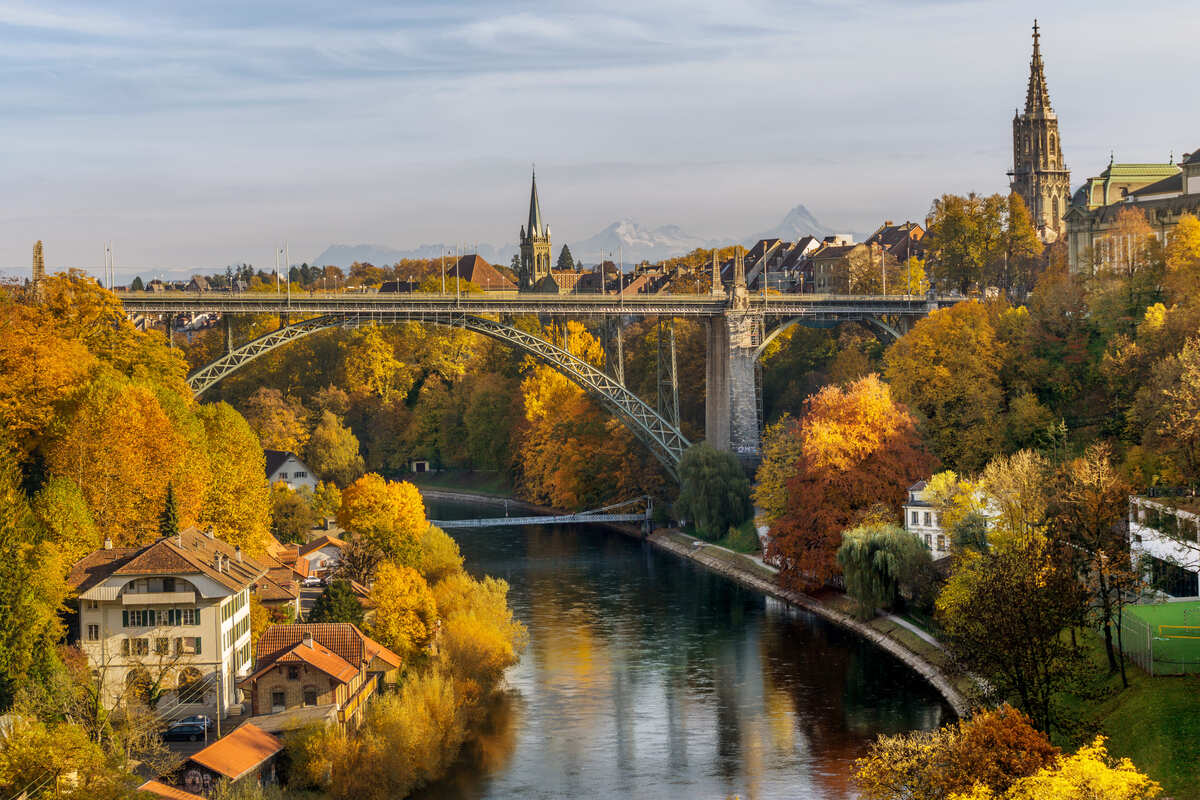
Bern, Switzerland
Although it is regarded as the capital of Switzerland, as it is home to some of the country’s main administrative bodies, Bern resembles a fairytale town in a storybook cover: picture cobbled streets, ornate fountains, a monumental cathedral, and a landmark medieval clock tower.
If you’re visiting in the fall specifically, you should know Bern is surrounded by the Bernese Alps, a chain of mountains clad in larch trees—the ones that famously turn bright-yellow before withering as we approach winter.
Looking for a pleasant stroll to breathe in the fresh alpine air and take in the warm-toned colors? Take the Bern Funicular up to Gurten, a local mountain traversed by easy forest paths, and boasting scenic views of the Alps.
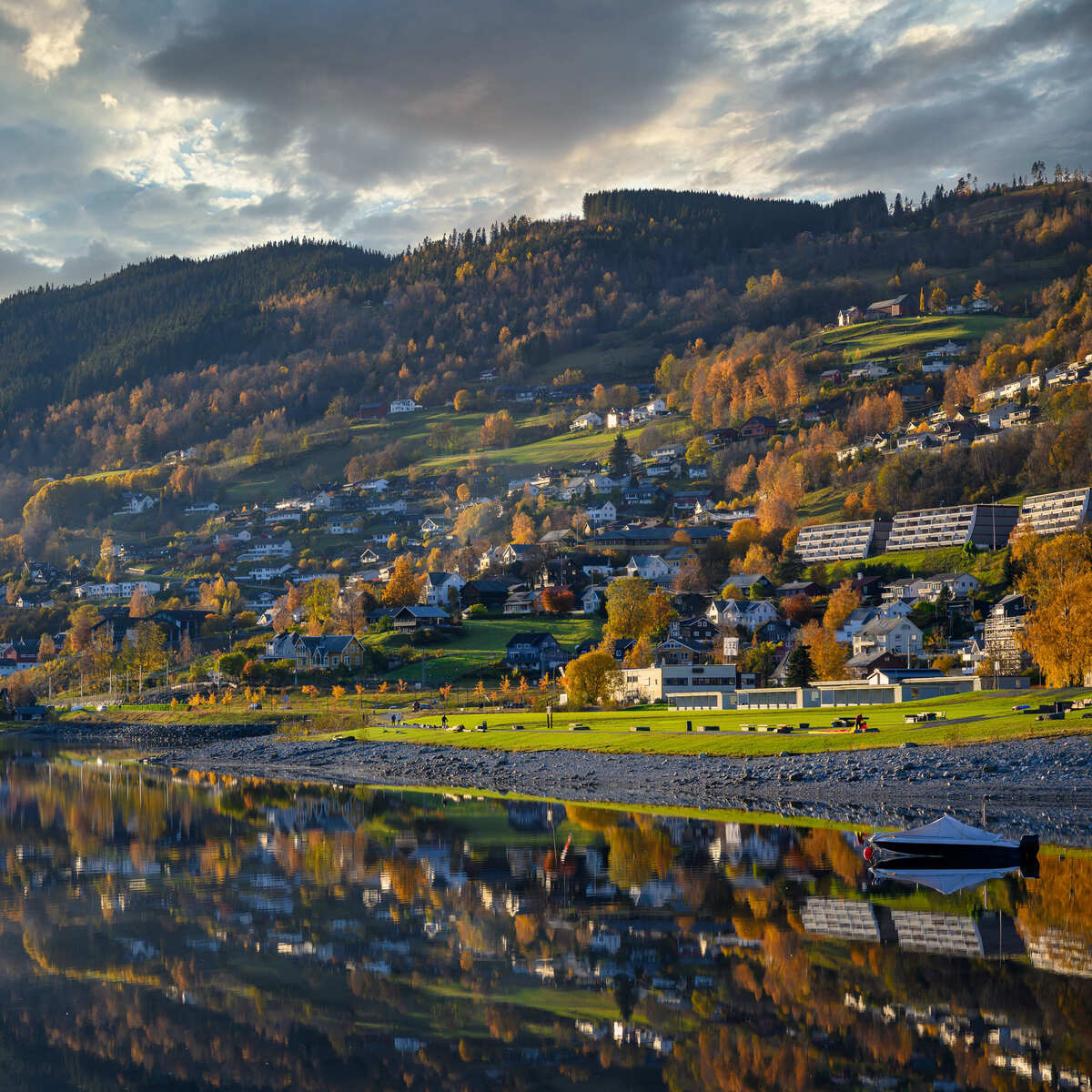
Voss, Norway
A small town near Bergen, Voss is primarily known as a winter destination, owing to its dramatic slopes and ski resorts, but very few people know it actually doubles as a gorgeous fall getaway. This is where you’ll find some of Norway’s most beautiful natural spots, after all!
Voss Lake is the most striking one: a mirror-like glacial body of water bordered by towering, golden birch trees, though if you’d like to gain a bit of a higher perspective, you should take the gondola from Voss’ town center up to the Hanguren Panorama.
There are numerous trails to set out on, and the forest is dotted with birch and pine trees. You should also plan to stop b y Tvindefossen, a cascading waterfall framed by autumn leaves, and for that much-needed morning coffee and Norwegian cinammon rolls, check out Vangen Café in the heart of town.
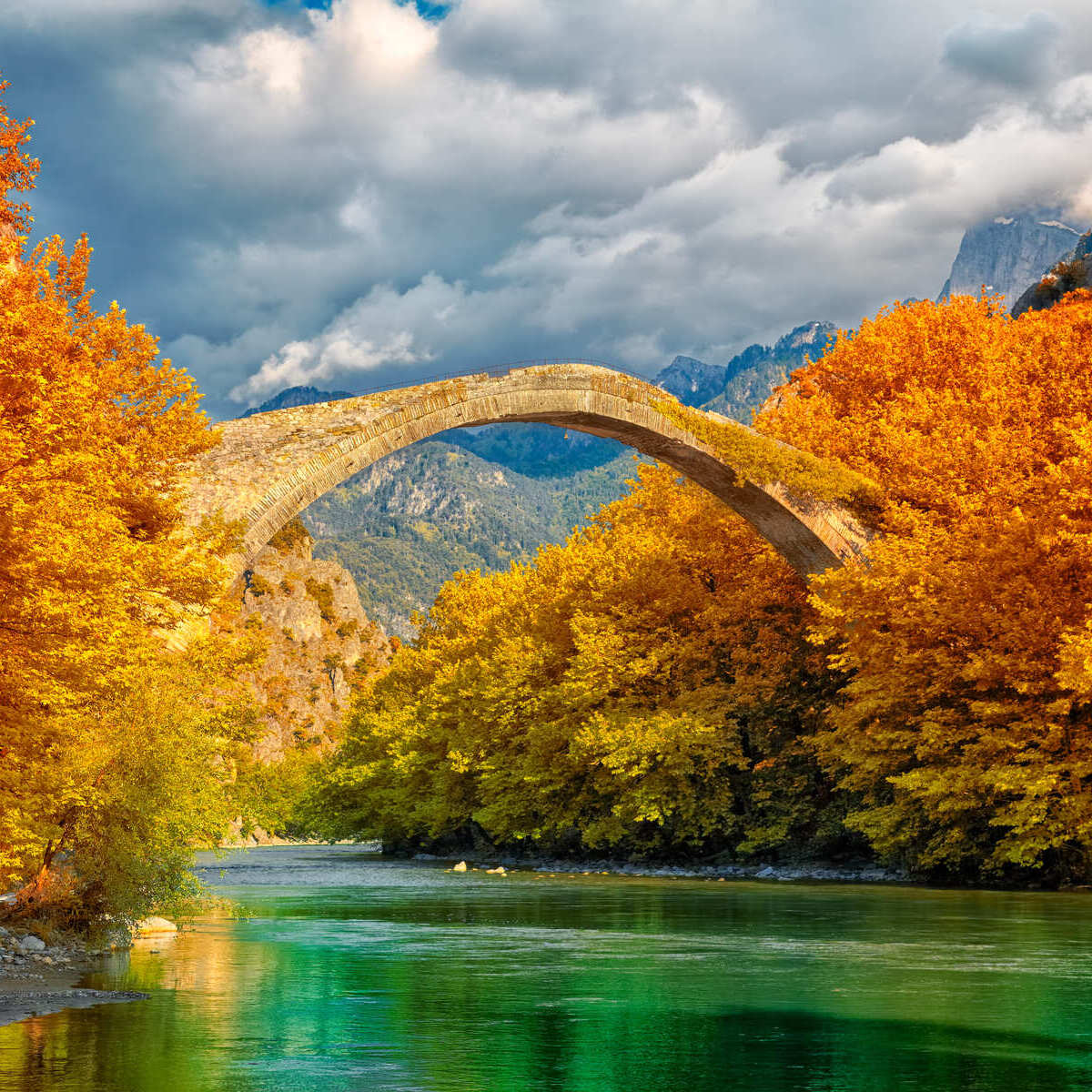
Ioannina, Greece
We know, we know, you’d rather save Greece for next summer, but before you dismiss Ioannina without a second thought, you should know it is probably one of Europe’s best-kept secrets this fall. We’re talking a perfectly preserved medieval town by a lake, backed by beautiful mountains.
The body of water you see in the pictures, Lake Pamvotis is distinguished by its small islet, accessible only by boat. It’s the perfect spot for a chill stroll amid the autumnal colors, and you can even visit an ancient Byzantine monastery or two!
In the cobblestone-paved city center, you can’t miss Ioannina Castle, a historic fortress that’s now cut through with winding alleys and peppered with taverns. On that note, Il Castello is located within the castle walls, and their hearty beef kontosouvli and blood-red Epirote are sure to keep you warm.
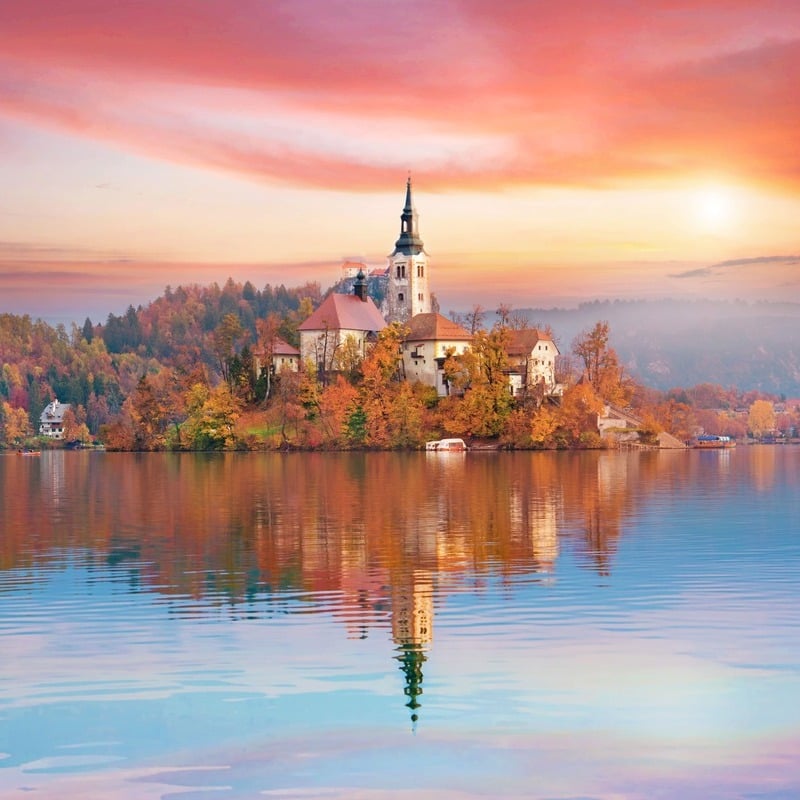
Bled, Slovenia
Set what’s possibly the most beautiful alpine lake in all of Europe, Bled is the postcard town for Slovenia, with its crystal-clear waters, medieval church nestled on a small island, and imposing hilltop fortress overlooking the scene.
It is a sight to remember regardless of season, but needless to say, September–October is the period to go. It’s not yet freezing cold out for lakeside walks, the foliage is a myriad of amber and tawny hues, and you can still attempt some kayaking and other nature-based activities.
Oh, did we mention Lake Bled is ringed by spa hotels? Spend your afternoons lounging by a heated pool, pampering yourself in a wellness center, or sipping hot chocolate on your balcony with views: there are options aplenty, but if you’re asking us, the 4-star Hotel Park is the one that ticks all those boxes.
Vendôme, France
Keen on a relaxed town break where you can alternate between some culture and nature, without the added pressure of sightseeing checklists? Our last pick, Vendôme is a tiny ville in the middle of France’s Loire Valley, characterized by its medieval architecture and quaint riverside walk.
The whole town is at the feet of Château de Vendôme, a ruined castle dating back to the Middle Ages. Down by the river, Ronsard Park is yet another highlight, with its changing leaves, a footbridge spanning a winding stream, and an idyllic ambiance.
As you explore around town, you’ll find half-timbered houses that predate the founding of America, the soaring Trinity Abbey, with a Flamboyant-Gothic façade, and a plethora of bistros to choose from—for traditional French food at reasonable prices, head straight to Le Moulin du Loir.
Vini, our senior lead writer at Travel Off Path, has over 60+ countries under his belt (and currently weaving tales from Paris!), and a knack for turning off-the-beaten-path experiences into informative stories that will have you packing your bags.
The Travel Off Path Advantage: Your Travel Toolkit
Subscribe To Our Latest Posts
Enter your email address to subscribe to Travel Off Path’s latest breaking travel news, straight to your inbox.
When you think of Portugal, it’s probably places like Lisbon, with its many hills and fado buskers in every corner, and Porto, a world capital of wine straddling a scenic riverfront, that come to mind—and unless you’re well-versed in ‘Europe’, you’re probably thinking they’re bang for your buck, too.
Portugal has always been referred as the cheapest country in Western Europe, where you could eat affordably under $10, and find gorgeous hotels with a view for under $50, but 2015 was 10 years ago.
Have you checked Lisbon prices lately?
Guimarães Is The Birthplace Of Portugal
According to Budget Your Trip, travelers have spent an average $86 per day on meals in Lisbon recently, coupled with $148 nightly on accommodation, while the average daily cost of a vacation in the Portuguese capital stands at $196.
Lucky for the budget-conscious among us who are still dreaming of pastel de nata and tile-clad houses, there is a lesser-known, yet gorgeous medieval city in Portugal where prices are still low, and the weather stays pleasant well into early October.
A picture-perfect city in northern Portugal, known as the ‘birthplace of Portugal’, Guimarães is less than an hour away by train from Porto, and characterized by its intact medieval architecture, absence of tourist crowds, and most importantly, cheaper prices:
Why Visit Guimarães This Fall
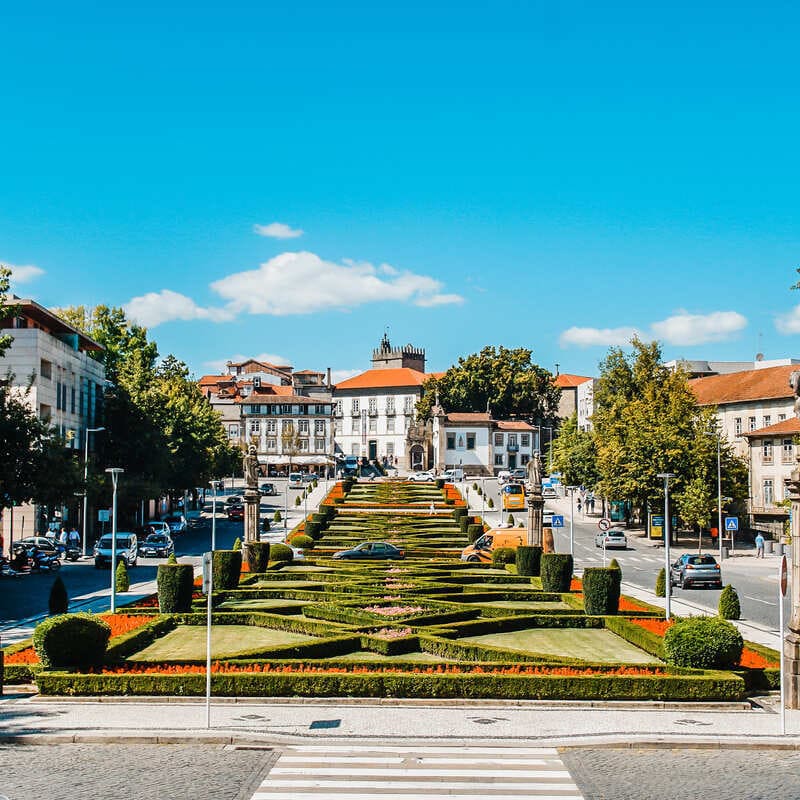
If you often associate Europe with old plazas bordered by cozy cafés, fairytale chateaux, and ornate churches with richly decorated interiors, you’re not exactly off mark when it comes to Guimarães’ Historic Center.
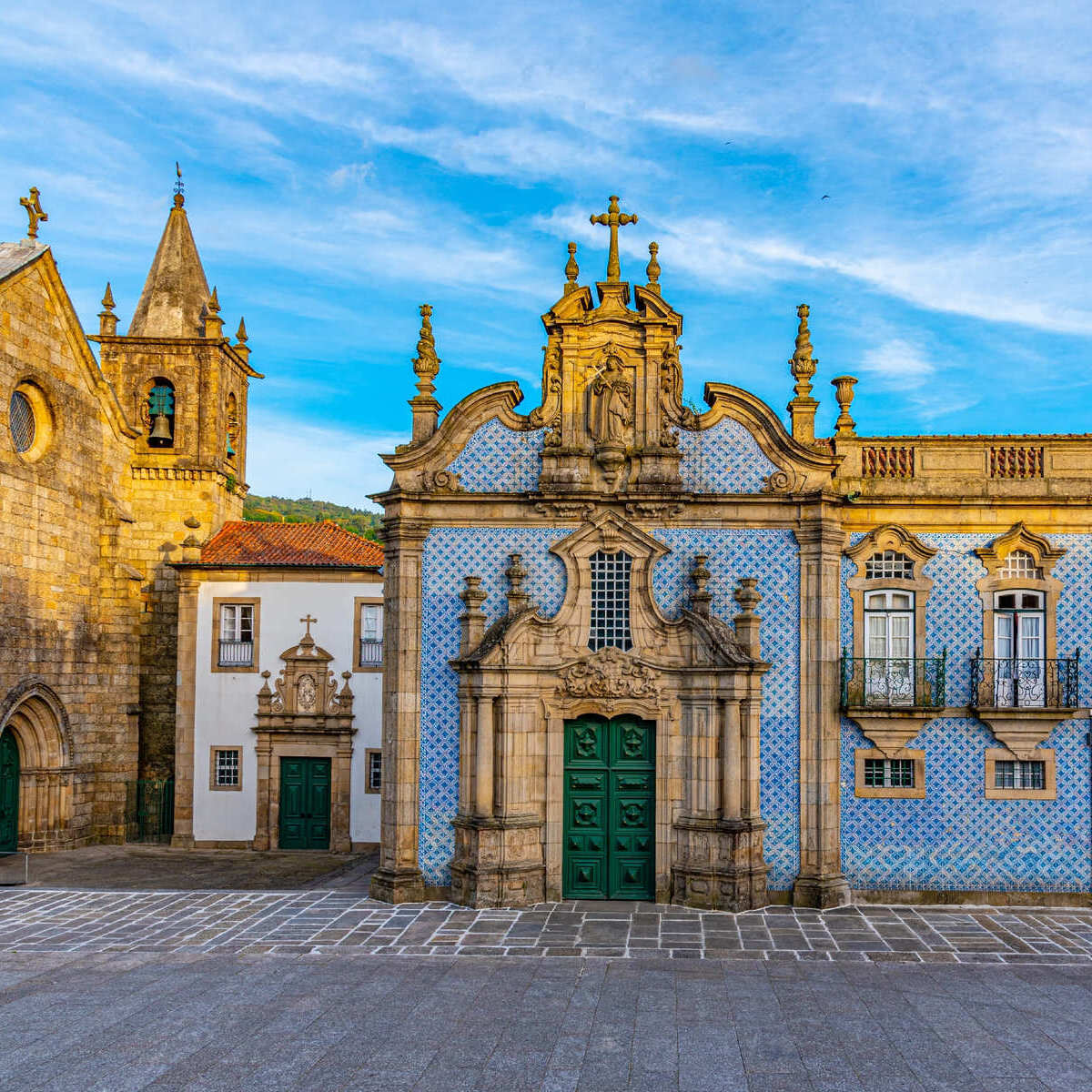
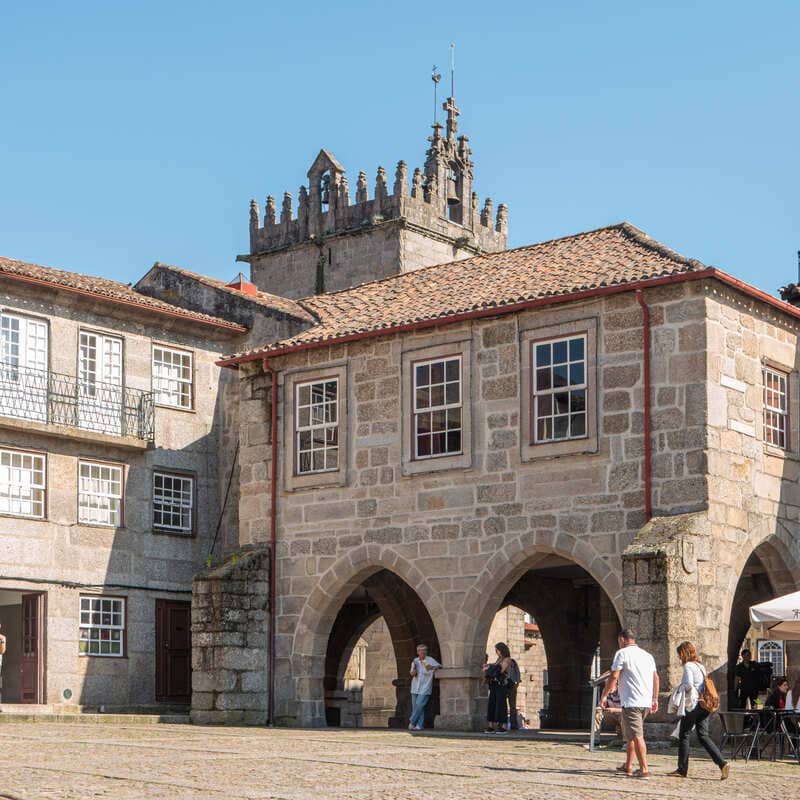
In the heart of it, there is an atmospheric square called Largo da Oliveira, dominated by an ancient olive tree (hence the name), and flanked by the medieval Nossa Senhora da Oliveira church.
If you’re curious about the tree, legend has it that an olive tree has stood on this exact spot for over seven centuries. Naturally, the current one isn’t as old, but whether you’re a firm believer in folktale or not, there’s no denying its picturesqueness.
The square is also famous for housing the Padrão do Salado, a Gothic monument with arches enclosing a Norman cross. It was built in commemoration of the Battle of Río Salado, which took place in 1340 between a Christian king of Portugal and Islamic settlers.
Medieval Wonders Galore
There are about half a dozen other medieval squares to check out, like Saint James Square (Praça de Santiago), accessible via the arches of the imposing Old Town Hall, and Largo da República do Brasil, distinguished by its flower gardens and scenic São Gualter church.
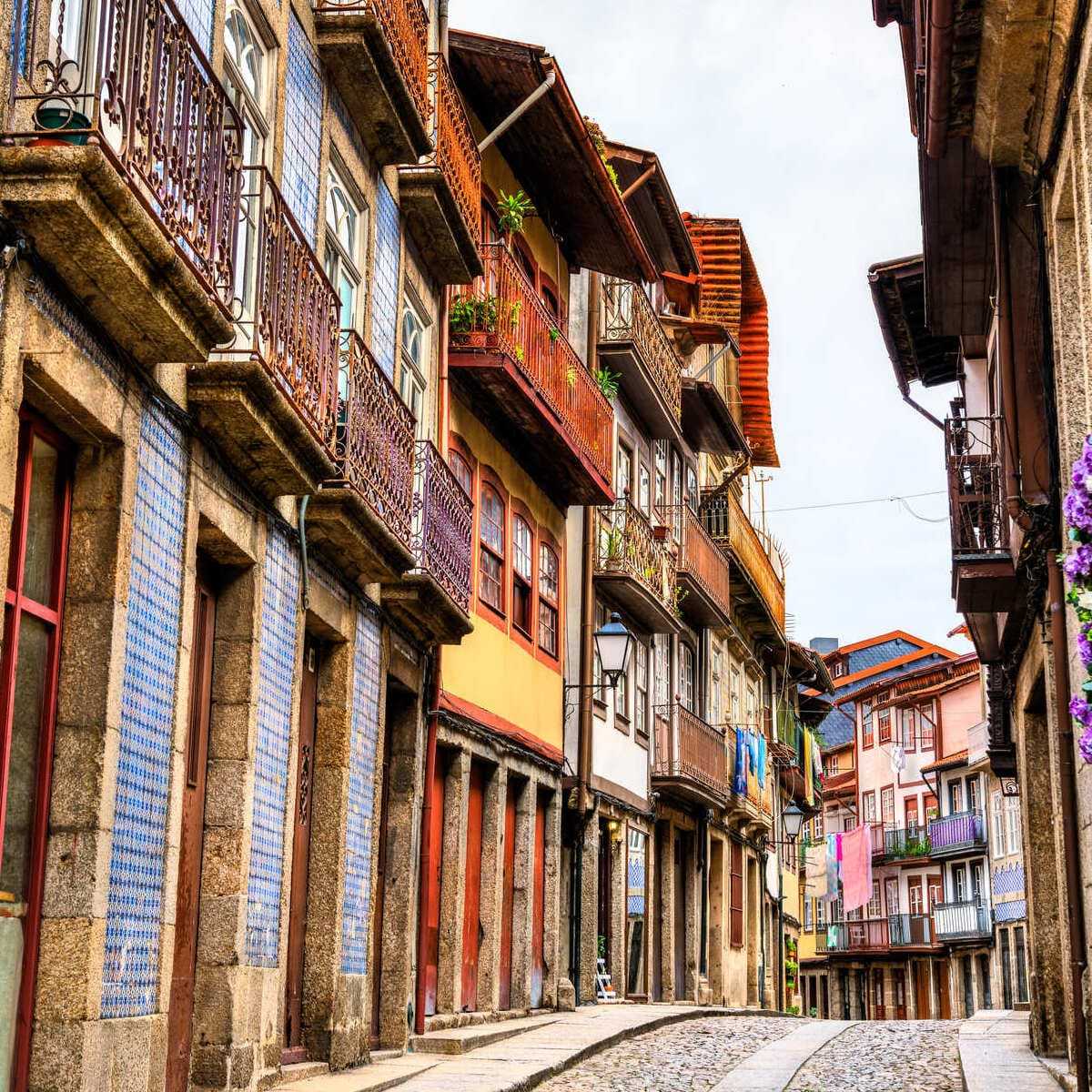
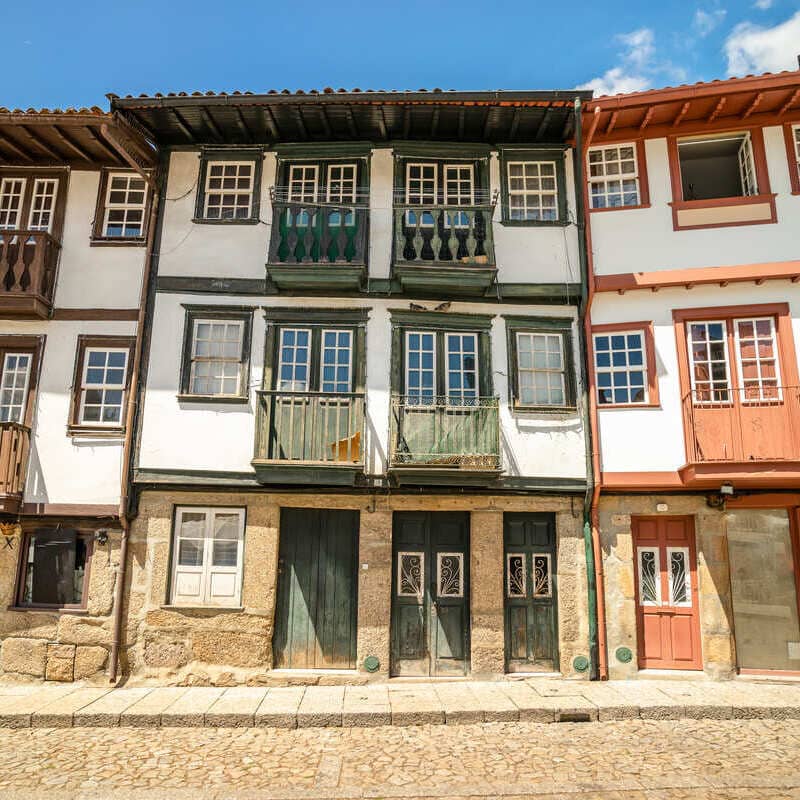
However, if you’re hoping to truly grasp the city’s unspoiled Old World charm, you should head next to Santa Maria Street:
A bustling thoroughfare lined with medieval buildings that house modern businesses, like traditional Portuguese restaurants, family-owned shops, and even pottery ateliers, it is the beating heart of Guimarães.
Over at Couros, or The Tanneries, a short walk beyond the medieval core, you will find the city’s former leather-tanning district: back in the Middle Ages, it was Guimarães’ main export, and you can still tour some of the medieval tanning tanks.
Fairytale Castles
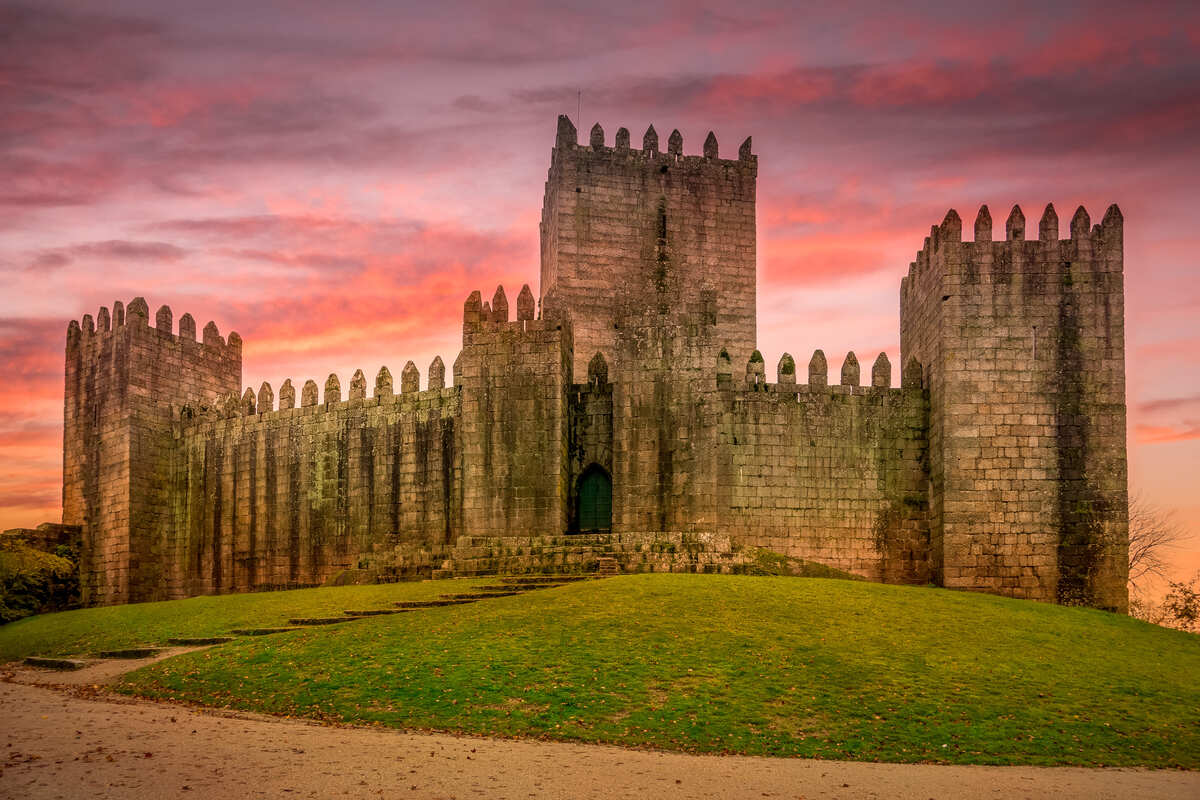
Of course, you haven’t been to Guimarães until you’ve ticked off its historic castles. The oldest one, simply called Guimarães Castle, dates back over 1,000 years, and it’s a hilltop fort boasting epic views of the 15th-century townscape at its feet.
It is distinguished for being the birthplace of King Afonso I, born in 1109, who fought for (and succeeded in) establishing Portugal as an independent state.
The second-most noteworthy of Guimarães’ medieval complexes is the Palace of the Dukes of Bragança, a French-inspired château with an arcaded inner courtyard, and virtually unchanged interior with centuries-old furnishings.
Whilst you’re at it, between the castle and palace, you might want to stop by the Romanesque São Miguel do Castelo church. You can never visit too many 13th-century buildings in one trip.
Now, if you’re looking for an epic viewpoint, even higher than Guimarães Castle, make sure you take the local cable car up Penha Hill: not only does it offer tourist-friendly trails and picnic areas overlooking the lush countryside, it is the home of the Art Deco Penha Sanctuary.
Delicious Food At Cheaper Prices
Wondering why you’ve never heard of Guimarães up until this point? That’s because it’s a hidden gem the Portuguese would like to keep a secret (especially after foreigners took cities like Lisbon and Porto by storm).
You will hardly ever come across tour groups or huge waiting lines to go into churches here, and as far as pricing goes, it still feels like Portugal before overtourism took its toll on the local cost of living.
Over at O Prato Cheio, a traditional Portuguese eatery where you can get regional favorites like francesinha and Portuguese-style codfish, a main course and a drink will set you back around $8.25 on average as part of a ‘set meal’.
Adega dos Caquinhos is yet another example of an inexpensive Guimarães dining spot, with daily specials (pratos do dia) ranging from $11–$17 (and these typically include a drink and dessert).
On the pastries and sweets front, rest assured you’ll find the custard-heavy pastel de nata, tigelinhas and pudim de ovos from as cheap as $1.80–$2.50 in any bakery around town. Some of our favorites, you ask? Try Manjar dos Docesand Nova Camir.
When it comes to accommodation, hotel rooms start from $44 on Booking.com for mid-October dates, only going as high as $152 (for 2 adults, at the 4-star Hotel Toural).
On average, budget hotels cost around $53, while mid-range to luxury hotels range from $105 to $179.
How Warm Is Guimarães In The Fall?
Last but certainly not least if you’re still hoping for some good weather in October, Guimarães may experience the occasional rainfall, as customary across much of Europe in the fall, but daytime highs typically settle at around 69,8°F.
Nighttime lows dip to about 51,8°F, so you’re advised to pack accordingly, given the unpredictability of the local weather.
Oh, and speaking of packing, make sure you use our Ultimate Pre-Flight Travel Checklist tool to verify all the travel essentials before taking off (and avoid unpleasant surprises at the airport).
Vini, our senior lead writer at Travel Off Path, has over 60+ countries under his belt (and currently weaving tales from Paris!), and a knack for turning off-the-beaten-path experiences into informative stories that will have you packing your bags.
The Travel Off Path Advantage: Your Travel Toolkit
Subscribe To Our Latest Posts
Enter your email address to subscribe to Travel Off Path’s latest breaking travel news, straight to your inbox.
With its fairytale castles that look almost cropped out of a Disney film and stone-built cities that have barely seen the passing of time, it’s no wonder Europe is on the radar of (nearly) every American out there.
However, between the surging crowds and rising prices, we’re wondering whether now’s the best time to visit the Old Continent… lucky for Americans, they don’t need to cross an entire ocean to soak up all that culture: sometimes, all it takes is a (much shorter) 2-hour flight…
Or even a short border run away if you live in a Northerly state.
Over in Canada, there are 4 historical cities with stunning architecture that are the perfect alternative to a jam-packed Europe this fall:
Victoria, BC
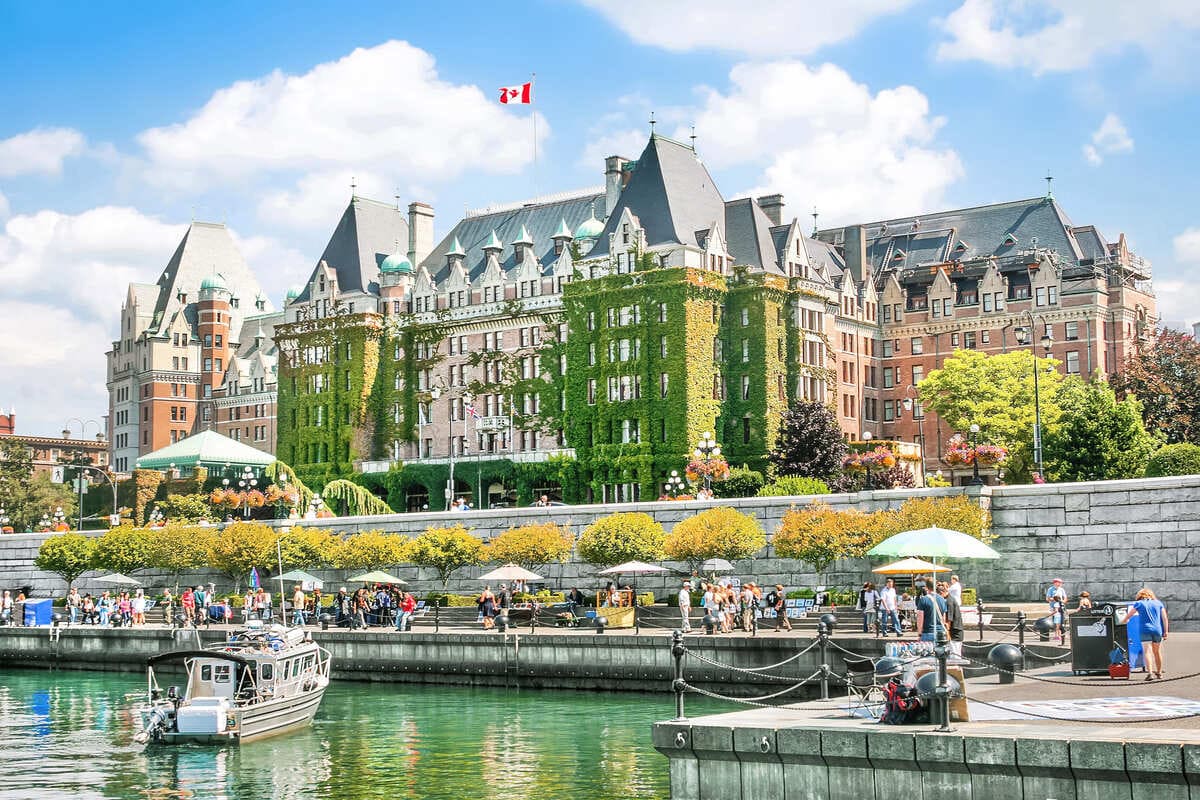
Though British Columbia is best known for the bustling cosmopolitan hub that is Vancouver, its capital and main cultural center is, in fact, Victoria, a city settled amid the early European exploration of the West Coast, one that, as the name indicates, pays homage to the Gilded Age.
It is home to a plethora of colonial landmarks that have largely avoided destruction during Canada’s development boom of the 20th century. If anything, it looks somewhat out of place on a continent where modernism prevailed over tradition.
We’re talking a late Baroque, Renaissance-Revival Parliament Building that rivals London’s in beauty, a Neo-Gothic Christ Church Cathedral, evocative of Europe’s greatest medieval triumphs, and a Craigdarroch Castle, probably the epitome of Scottish baronial architecture.
All in all, Victoria is a great destination for basking in the waning glory of the former British Empire, and what better way to step back in time, and immerse yourself in the city’s rich History than by going on a spooky, Ghostly Walking Tour from $15.79? Learn more here.
Ottawa
We’re not sure who needs to hear this in 2024, but Toronto isn’t the capital of Canada: instead, it’s Ottawa, near Montreal that lays claim to the title, and despite only being founded in 1826, it is one of the country’s most culturally-significant cities.
With a skyline dominated by stately palaces, such as the Gothic-influenced Centre Block, the main building on Parliament Hill, Rideau Hall, official residence of the governor general, and a fairytale-like Château Laurier, it could easily belong across the pond instead.
Besides the architectural mightiness, the offbeat Canadian capital is famous for its extensive canals, particularly the landmark Rideau, a UNESCO World Heritage Site and the oldest-continuously operated canal system in North America.
Whether it’s landside or from the water, Ottawa has no shortage of beautiful sights to offer, and this Amphibious Bus Tour––a bus that converts into a boat––visits all of the major points of interest, from the wide avenues to the busy waterways, costing only $33.24 to book.
Sherbrooke, QC
More of a hidden gem of Canada, tucked away in southern Quebec, a short 40-minute drive from Vermont, Sherbrooke is the textbook definition of a fairytale town, existing in a different realm altogether than that of Toronto, Vancouver and the like:
For starters, you’re unlikely to see clusters upon clusters of skyscrapers dominating the skyline; instead, picture pedestrianized streets lined by casual cafes and art galleries, Gothic Revival churches, and storied Art Deco buildings that precede the modernist takeover in North America.
Some of the landmark monuments in quaint, storybook-like Sherbrooke that could easily belong in the Old Continent include the stained-glass decorated St. George’s Anglican Church, the City Hall, a striking 1930s Art Deco ensemble, and the Italianite-style courthouse, built as early as 1862.
Oh, and bear in mind, Quebec is French-speaking, so you might want to brush up on your French skills, however lacking, to be met with the best of Québécois hospitality––visiting any local restaurant, simple sentences like Bonjour! and Merci! and je prends la poutines’il vout plaît go a long way.
Quebec City, QC
We’ve saved the best for last, and arguably the most European-looking city of all on this side of the pond: if Sherbrooke is like, just cute, we’ve definitely been saving words like ‘grand’ and ‘magnificent’ to describe the French-speaking province’s capital.
Welcome to Quebec City, one of only two cities in the New Continent that are still surrounded by 17th-century city walls––the other one being San Francisco de Campeche in Mexico––and a perfectly-preserved French colonial settlement:
We’re talking a cobblestone-laden Old Town, where winding streets lead to charming places flanked by French patisseries and lively bistros, Norman-style houses––evocative of Northern France––and of course, the Upper Town’s most striking monument, Canadian icon Château Frontenac.
And, you know, if you’re swapping overtouristed Paris with… here it comes, a magnifique, UNESCO-listed Quebec City, make sure you book this guided walking tour with a local to not miss all of the prettiest corners of town––starting from only $25.77!
Vini, our senior lead writer at Travel Off Path, has over 60+ countries under his belt (and currently weaving tales from Paris!), and a knack for turning off-the-beaten-path experiences into informative stories that will have you packing your bags.
Opinions expressed here are the author’s alone, not those of any bank, credit card issuer, hotel, airline, or other entity. This content has not been reviewed, approved or otherwise endorsed by any of the entities included within the post.
We’ve laid out the top 4 below, which one is your favorite?
4. Milan
Milan ranked as the 4th most cultural destination in Europe as well as the most cultural spot in Italy. It is noteworthy that Milan ranked above Rome in every single category within the Slasher study.
Milan was ranked highly for its film and media sites, comedy and entertainment venues, and parks and recreational spaces.
Some of the best cultural attractions not to miss in Milan include Duomo di Milano, which is Milan’s cathedral and is considered the city’s most important landmark.
You can also see da Vinci’s famous mural of The Last Supper in Milan, as well as explore the Triennale di Milano which is a museum of art and design in the Parco Sempione in Milan.
For art lovers, there are few cities better to explore in Europe. Milan deserves a spot on your bucket list!
3. Amsterdam
Amsterdam can be famously overcrowded, especially during the summer months, but that doesn’t stop it being the 3rd most cultural city in Europe. And for good reason.
Amsterdam boasts the highest number of live performance spaces of any city in Europe. And there are 94 sites of cultural interest per 100,000 residents in the city, which is the 2nd highest in Europe.
Some of the cultural highlights of a trip to Amsterdam include The Rembrandt House Museum which is located in a beautiful townhouse in the center of the city.
The Anne Frank House is also a fascinating location which gives great insight into life in the city during the Second World War.
The best way to see Amsterdam, especially if you’re short on time, is via its canals.
Amsterdam is one of my favorite European cities because, despite its reputation for debauchery, it is one of the most child-friendly European capitals.
From beautiful urban parks to fascinating canal cruises and child-focused museums, I’ve been visiting Amsterdam since I was a child and I love returning to explore all of its beautiful culture with my own kids.
2. Barcelona
The 2nd most cultural destination Europe this summer is Barcelona. And it may be an unpopular opinion, but I think it’s one of the best times to visit the city.
Barcelona in the summer is hot and sticky. But if you go off the beaten track then it can also be one of the quietest times to explore.
Many natives of the city leave during the summer months, so the streets are empty and local shops and restaurants are closed.
This means you can wander the back streets alone, which is something almost unheard of in such an overcrowded destination.
Some of the best cultural attractions to explore in Barcelona, no matter what the time of year, include the vibrant Park Güell, the Picasso Museum, and the Barcelona Museum of Contemporary Art
And it would be impossible to talk about cultural attractions in Barcelona without mentioning Gaudi’s Sagrada Família. This stunningly beautiful basilica is finally set for completion in 2026, but that doesn’t mean it’s not an amazing place to visit now.
1. Paris
It is probably no surprise that Europe’s most popular cultural destination is Paris.
Paris is known as the City of Light and has been a source of inspiration for more novels, films, and other creative works than I can count.
Paris is home to the highest number of parks and recreational spaces per 100,000 people in the whole of Europe with an incredible 1,238 green spaces to explore.
And the city also ranked highly for its number of live performance spaces.
Of course, the city’s most iconic attraction is the Eiffel Tower.
But other cultural hubs in Paris that are worth exploring include the Grand Palais des Champs-Élysées,the grandiose Petit Palace, and The Hôtel des Invalides. This is a particularly fascinating attraction if you have an interest in military history.
My favorite cultural attraction in Paris is the city’s museum of modern art (Musée d’Art Moderne de Paris). The exterior of the building is imposing, but it’s the art inside that has me going back again and again.
Tor has been writing for more than 20 years and has visited 25 countries (and counting!) She specializes in European and family travel and never says no to new adventures.
Opinions expressed here are the author’s alone, not those of any bank, credit card issuer, hotel, airline, or other entity. This content has not been reviewed, approved or otherwise endorsed by any of the entities included within the post.
Paris is having a moment this year, for better or worse.
Better as they are hosting the Summer Olympics where hordes of tourists will flock to their city for a bucket list event, and worse as Paris will surely take on a new identity shoving authentic cultural experiences to the side.
Plus, France and the U.S. Embassy issued a new travel alert in tandem where all tourists visiting the mega popular country are asked to keep their head on a swivel during their trip.
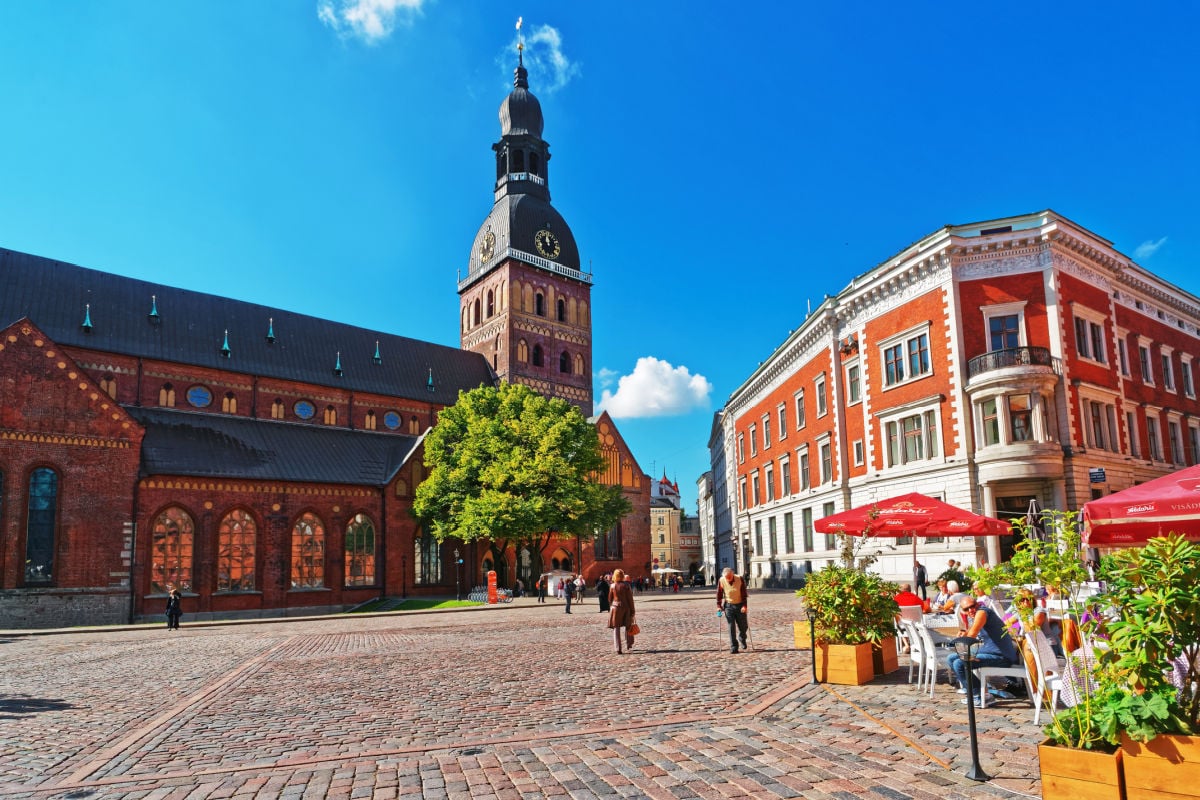
Riga, Latvia on the other hand, has been dubbed ‘The Paris of The Baltics‘ and has no such concerns for tourists visiting this beautiful, underrated city in Eastern Europe.
Here are 5 reasons why you should visit the Paris of The Baltics on your next trip to Europe:
1) A Cheaper Alternative For Paris Vibes
British author Graham Greene has been credited with dubbing Latvia’s capital city ‘The Paris of the North’, given its delightful sidewalk cafes, nouveau architecture, and booming arts scene.
A visit to Riga isn’t to take selfies with a dupe of the Eiffel Tower like Paris, Texas. Riga does have the unmissable Freedom Monument, but tourists find this city offers its own unique charm and attractions, which just so happen to rival France’s iconic city.
Of course, Riga is shrunken down compared to the vast ‘City of Light’ and will probably never host any Olympic events.
That being said, Riga is one of the most intriguing cities in the beautiful Baltics and can be enjoyed on a tight budget.
While perusing the cobbled streets, it’s hard to resist the temptation to stop at a cafe and visit a museum, which is often at least 30% cheaper than Paris.
Riga has also seen more connectivity as over 1.2 million tourists visited this city in 2023. Budget airlines like RyanAir and airBaltic can save travelers lots of money from dozens of airports.
2) A Historic City Dating Back To 1201
While we all remember partying like it’s 1999, Riga has been going at it since 1201, and it shows in the best of ways.
Riga is very well-kept and fun to explore on foot, taking in the gorgeous architecture and historical sites like the Town Hall Square, the 14th-century House of the Black Heads, and a handful of beautiful cathedrals.
The largest market and bazaar in all of Europe, Riga Central Market, is a must-stop on your trip and is also a UNESCO World Heritage Site.
Tourists can find handmade crafts and delicious food, but what tourists love is the authentic feel this massive market has. It doesn’t seem touristy.
3) Perfect For Digital Nomads
Given Riga’s affordability and cultural richness, these 2 aspects are what digital nomads commonly seek.
Factor in how small Riga is compared to other major cities, and you will feel a sense of community rather than just becoming another face in the crowd.
For long-term stays, apartments can easily be found under $500 and even cheaper away from the city center.
Transit passes and internet bills are also super cheap, but if we’re being honest, you’ll find yourself using one of the many lovely sidewalk cafes as your office.
Plus, Latvia’s digital nomad visas are one of the easiest to obtain without stringent requirements.
4) Tourists Surprised By How Much They Love Riga
Riga conducted a survey with exiting foreign tourists and the results were better than expected.
Over half of foreign tourists felt they had a much better impression of the city after visiting than before they arrived and were delighted with the city’s offerings.
Overall, 98% of survey participants left glowing reviews as Riga met or exceeded all expectations on their trip.
5) Riga Is a Beach Destination?!
Riga is still gaining steam as more tourists are adding this beautiful city to their wishlist.
What may not be known is Latvia’s capital lies along the Gulf of Riga in the Baltic Sea.
We’re not going to overhype Riga as a beachfront paradise among the likes of the Maldives or Los Cabos, but it’s definitely worth a visit as an underrated beach destination.
The city offers a variety of scenic beaches, with the most popular being Jurmala Beach, Vecaki Beach, and Vakarbuļļu Peldvieta.
Riga is also a cruise port with multiple name-brand cruise lines to choose from.
Sam, our Lead Writer & Journalist based in San Diego has visited 30 countries and written over 400 articles with a focus on sharing his own travel experiences and shining a light on lesser-known gems.
Opinions expressed here are the author’s alone, not those of any bank, credit card issuer, hotel, airline, or other entity. This content has not been reviewed, approved or otherwise endorsed by any of the entities included within the post.
With flowers starting to blossom, days getting longer, and the weather in general improving across parts of Southern Europe, you may be wondering whether now is the time to start planning your next Transatlantic trip.
The short answer is YES!
Europe should be placed at the top of your bucket list right now: not only are temperatures higher, and in the ever-warmer south, the risk of precipitation is much lower, but touristy cities feel quieter, and prices can be a lot cheaper, too.
But where will you find the summery vibes you’re looking for, minus the associated heat exhaustion and surging July crowds?
Thanks to Holidu, which gathered data from World Weather Online, now we know the 7 sunniest cities in Europe you could visit this upcoming season:
Nice, France
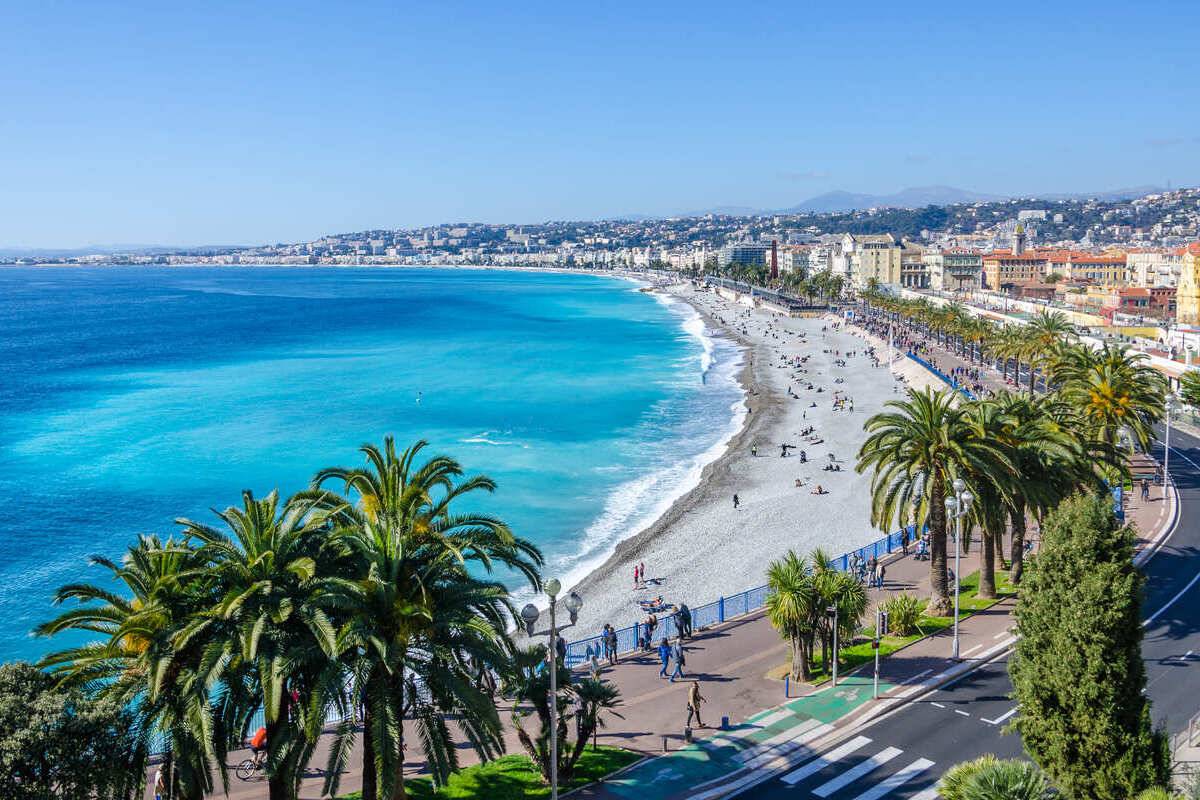
Nice is the capital of France’s aptly-titled Côte d’Azur, a stretch of coast that is as beautiful as it sounds, with its pastel-tone villages and turquoise-colored waters, and the seventh sunniest city in Europe, with an average 342 hours of sunshine every month.
The UNESCO-listed Old Town Nice is particularly beautiful, with its endless rows of yellow-washed, narrow buildings lining narrow alleyways and Italian-inspired architecture.
The best thing is that you can remove all those extra winter layers: it’s now a pleasant 62 degrees Fahrenheit outside.
Valencia, Spain
One of the largest coastal cities in Spain, Valencia has a History spanning at least two millennia, from its founding as a Roman colony in 138 BC to the prominent role it played during the Age of Discovery when it flourished as an economic and cultural hub.
It is best known for being the birthplace of the popular paella, its perfectly-preserved Old Town, dating back to the medieval period, and of course, the amazing weather: irrespective of season, temperatures rarely drop below 68°F, and the sun always seems to be at peak.
Messina, Italy
A lesser known port in Sicily, Italy’s largest and warmest island, Messina boasts a notoriously high concentration of historical landmarks, from the 12th century cathedral, to the monumental Forte del Santissimo Salvatore, to the Messina Astronomical Clock, one of the largest ever built.
Other than its fascinating regional museums, chronicling life in ancient Messina, lively harbor hosting ferries from the mainland, and charming piazzetas with ornate fountains, Messina is the fifth sunniest city in Europe, enjoying 345 hours of sunshine per month, on average.
Malaga, Spain
The second Spanish entry on the list, vibrant Malaga is one of the cultural centers of Andalusia, an autonomous province in Spain heavily influenced by North Africa, and its warmest Mediterranean metropolis, with an average temperature of 68 degrees.
The local ‘Malagueta’ beach is buzzing with beach bums year-round, being outside in shorts is possible whether it’s summer or winter, and the sprawling Centro Histórico, overlooked by a towering Muslim fortress, always has that soft, sun-kissed, ocher-colored glow.
Murcia, Spain
Spain is truly Europe’s leading sunny destination, and Murcia is further proof of that: with around 346 hours of sunshine per month, a median temperature of 68 degrees, helped by mild winters and scalding hot summers, it is your go-to beach holiday this spring.
The sands on the beaches are a lovely golden color, and the water in this section of the Mediterranean is crystal clear, giving off tropical vibes even though it’s springtime in the Northern Hemisphere. For the culture buff, Murcia offers a nearly intact Roman theater, art museums, and stately Baroque architecture.
Catania, Italy
Back to Sicily, Catania is yet another Baroque gem made popular by its offspring of artists and tall domes. It is the city that launched Renaissance painter Vincenzo Bellini and acclaimed composer Giovanni Pacini, and it’s one of the island’s most cosmopolitan and warmest cities.
Getting lost in the cobbled lanes of Via Crociferi or relaxing at a pristine Catania Beach, bounded by the azure Med, you are unlikely to feel that spring chill or see dark clouds forming overhead, as the East Coast of Sicily is blessed with 347 hours of sunshine monthly.
Alicante, Spain
Unsurprisingly, Spain takes the crown this time, or more specifically, the trendy coastal town of Alicante, characterized by modern high-rises, an elongated boardwalk lined by tall palm trees, and a more youthful atmosphere compared to other expat retirement spots on the coast.
The coldest it gets in Alicante in spring is a pleasant 66 degrees, and with its varied selection of seafood restaurants, student-frequented beach clubs, quirky tapa bars, and sun-drenched sands, it’s easy to see how it would attract partygoers and beach bums alike.
Vini, our senior lead writer at Travel Off Path, has over 60+ countries under his belt (and currently weaving tales from Paris!), and a knack for turning off-the-beaten-path experiences into informative stories that will have you packing your bags.
Opinions expressed here are the author’s alone, not those of any bank, credit card issuer, hotel, airline, or other entity. This content has not been reviewed, approved or otherwise endorsed by any of the entities included within the post.
As a digital nomad based in Europe, I have traveled extensively around the continent, working remotely from every country you can possibly name across the pond, from the tourist hotspots of France and Italy to the lesser-known Baltic states and the multicultural Balkan Peninsula.
Nope, I haven’t skipped the millionaire-owned micro-state of Monaco, war-raging Russia and its neighbors, nor newly-born Kosovo, one of the poorest states in Europe,
With over 40 European countries under my belt, I was bound to have a personal favorite by now.
That one special place that keeps pulling me back, where I could actually see myself staying longer than the usual three months or even putting down roots at some point down the line, and that somehow feels like my home away from home.
When I set out to visit every European country as a digital nomad, never would I have expected an unheard-of, post-communist state most tourists mistakenly believe to be dangerous, and even not worth seeing, to rank at the top of the list by the end of the five-year journey, yet here we are.
It’s beautiful Albania that stole my heart, and this is why I believe it is the strongest contender for European Digital Nomad Capital:
Why Albania Of All Places?
Unless you’ve been country-hopping around Europe as a tourist for a while, having had to come up with ingenious ways to extend your stay beyond the restrictive 90-day Schengen rule, it is unlikely you have passed through Albania, much less heard of it.
We’re here to remedy that together, but first, where even is Albania?
Geography isn’t everyone’s forte, so I won’t dawdle and waste your time going into the specifics of it: all you have to know it is located across the Adratic sea from Italy, and just north of Greece.
We know what you’re thinking: if it borders these two popular vacation spots, could Albania be yet another off-path Mediterranean destination waiting on the sidelines to be discovered?
The short answer is a resounding Yes!, and the shocking part is it’s been deliberately concealed for decades.
What we mean by that is it was actually kept hidden, so we wouldn’t blame you for not having the foggiest idea about Albania beforehand: as customary in Eastern Europe in the 20th century, the country was ruled by an iron-fisted communist regime.
Why Haven’t You Heard Of Albania Before?
Albania’s dictatorship was among the harshest in Europe, with very few people being allowed to leave the territory, and likewise, only a select number of visitors were allowed to enter well into the 90s, meaning this wing of the Mediterranean was virtually off-limits only three decades ago.
In case you’ve been wondering, Albania is now an open, progressive state, having adopted democratic principles since the collapse of communism and being on a firm path to aligning with the Western World: it joined NATO in 2009, and it has applied to become a member of the European Union.
The latter aspiration has not been as successful yet, but we’ll get into that soon enough – the question is, why has this unsung, troubled nation surpassed every other Southern European competitor to become my safe haven as a digital nomad?
I don’t know about you, but like any self-proclaimed Europhile, this continent’s immense cultural wealth was a decisive factor in my decision to stay a whole five years so far, and my dear fellow nomads, sure Albania has a lot going for it on the culture front:
Hospitality Is At The Heart Of Albanian Culture
Albania is a one-of-a-kind-country, in the sense that its language (Albanian) is not closely-related to any other languages on the periphery, like Serbo-Croatian or Bulgarian share similitaries, and its culture is markedly different from the Slavic-dominated Southeastern Europe.
Family is extremely important, and it’s not uncommon to find nuclei of relatives living together in the same neighborhood, or even the same street, and to them, hospitality is not only a long-standing tradition, but a national value.
In the words of renowned Albanian novelist Ismail Kadare, who couldn’t have phrased it better:
‘Of God and the guest, you see. So, before it is the house of its master, it is the house of one’s guest. The guest, in an Albanian’s life, represents the supreme ethical category, more important than blood relations. One may pardon the man who spills the blood of one’s father or of one’s son, but never the blood of a guest.’
There were certainly occasions where Airbnb hosts would invite me to partake in rounds of raki tasting shortly after we’ve made acquaintances, and hospitable locals would invite me back to theirs to share high-spirited conversations and a hot meal.
As a digital nomad traveling solo, actively seeking to distance himself from other expats to fully immerse in the local way of life, it was definitely not a challenge to befriend Albanians, even if the older generations are more proficient in Italian than they are in English.
If anything, my rusty Italian and poor attempts at mouthing basic words in Albanian would get me humorous smiles in response, friendly pats on the shoulder, and more raki invitations: I’m not sure previous writers have coined this already, but Albanians are the Latin Americans of Europe.
The Whole Of Albania Should Be A UNESCO Heritage Site
We know you’re here for some of that Old World flair, the cobbled towns with origins lost to time, and fairytale castles Disney has tried their best to emulate in kitsch theme parks, and you’ll be glad to know Albania has its fair share of manmade wonders.
From the Accursed Mountains in the north, home to the ethnic village of Theth, best known for its rustic cottages and solitary church, to the medieval citadel in Kruje, south towards a UNESCO-listed, Ottoman-built Berat, and the Stone City of Gjirokaster, this country’s beauty is truly boundless.
The 296-mile long Mediterranean coast is littered with historic port cities as well, including Durres, where a 5th-century castle still stands, the charming Vlore, with its Italian-inspired, pastel Old Town, and the hilltop, whitewashed village of Dhermi, overlooking the turquoise sea.
If you’re looking forward to wearing your Indy Jones hat again, Butrint is a vast archaeological zone dating back to the 10th century BC, encompassing flooded Byzantine palaces, partially-preserved colonnaded agoras, and a landmark Greek theater.
The point is, Albania may not be as popular as some of its closest neighbors, for the reasons already outlined above, but it certainly does not suffer from a shortage of heritage sites. In fact, it’s almost as if it’s taken a page from the book of every other Mediterranean hub in the vicinity:
A Potpourri Of Everything That’s Great About Europe
With Its Own Little Albanian Twist
Some of its settlements are as ancient as Italy’s, it is just as warm as Greece’s, beaches as pristine as Croatia’s, the local cuisine rivals Spain’s, and it is as topographically diverse as France, with a territory that comprises both towering alpine peaks and a subtropical coast.
I’m not averse to harsh winters myself, and I’m a firm believer that, in order to truly appreciate the balmy days of summer, you need to experience the changing of the seasons, but if you can live without the occasional snow, coastal Albania will not disappoint.
Temperatures can plummet to negative levels in northern Albania, but much of the coast remains perfectly sunny and a pleasant 64°F. Having visited in February myself, I was surprised to find that the additional wool coats and puffer jackets I packed ‘in case’ were not at all necessary.
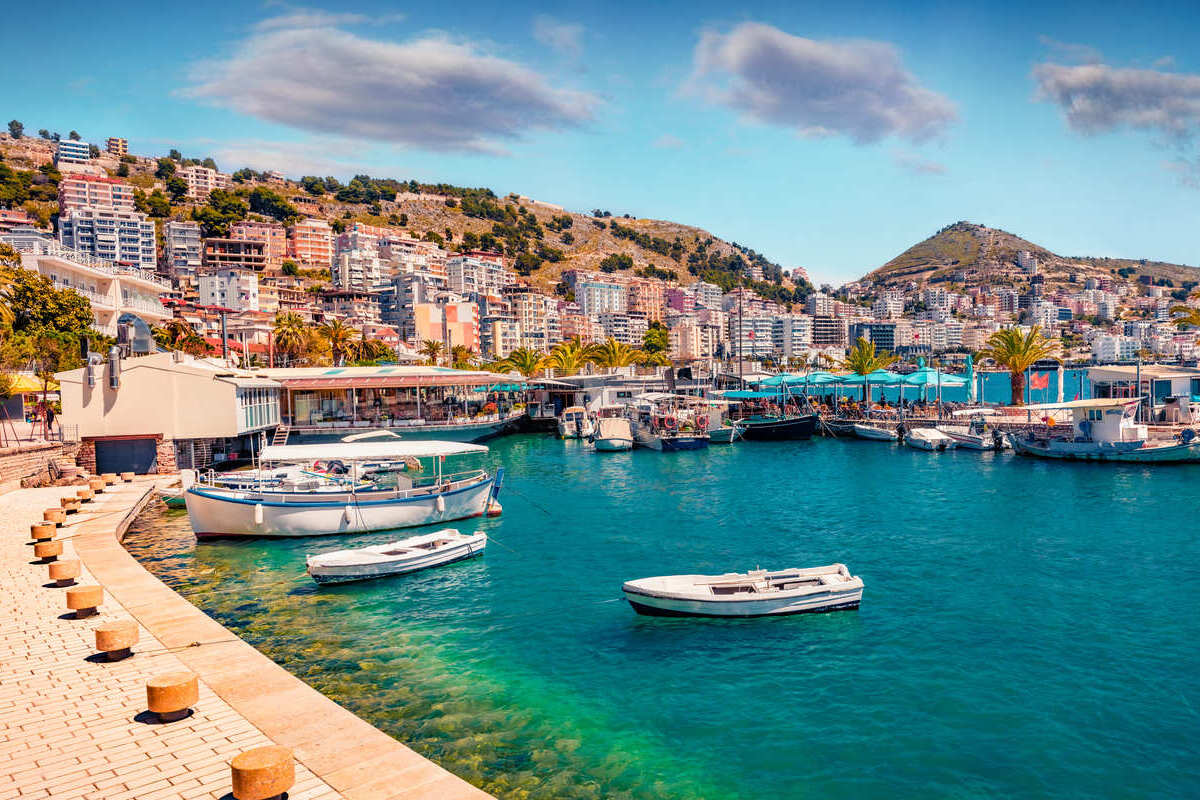
If you’re hell-bent on escaping the cold, the laid-back coastal village of Ksamil, a stone’s throw away from the lively harbor city of Saranda, is where your best bet at year-round springtime weather, with its lemon trees, soft white-sand beaches and teal-colored waters.
Don’t Come To Albania On A Strict Diet
Albania may be isolated in terms of language and culture, but the food served in Albanian homes and restaurants is typically Mediterranean and Eurasian in character, having been heavily influenced by Italy, Slavic gastronomic practices, and even Turkish cuisine.
Its cheese and spinach-filled, flaky-dough byrek pastry is a variation of the Turkish burek, the cold cucumber soup takes direct inspiration from Bulgaria’s tarator, and I could certainly draw parallels between Gjirokaster’s qifqi rice balls and the more mainstream Italian arancini.
That being said, there are a number of native delicacies only Albania can lay claim to, with my personal favorites being the deep-fried petulla fritter, crispy on the outside, soft on the inside, typically served with butter and jam, and tavë kosi, lamb baked in yogurt.
Given Albania’s ample selection of dairy and hearty meat-based dishes, not to mention the fresh seafood and fruit growing in abundance in the verdant hinterland, rest assured you’ll never go hungry here, whether you’re staying in a small qytet on the shores of the Adriatic, or the sprawling capital city of Tirana.
How Nomad-Friendly Is Albania?
How about digital nomad infrastructure, a.k.a. long-term rentals, availability of coworking cafes, foreigner-friendly services, and so on?
I’ll be honest with you: outside major urban centers, life as a remote worker can be challenging (at times).
That is particularly true in the off-season, when restaurants and guesthouses on the coast typically close down, and getting around without a car is an adventure you don’t want to embark on.
Albania is nothing short of stunning, but it’s years behind in development compared to the average European country.
For that reason, I would recommend you spend most of your time in a large city like Tirana, where there’s enough of a social scene and nighttime services to keep you entertained, as well as bus connections to the resort zones on the Adriatic coast, unless a quaint village life resonates with you.
Tirana Beyond The Grey Clusters Of Communist Apartment Blocks
Tirana may not be the prettiest of capitals – much of the old city has been razed to the ground in favor of a modernist makeover – but you can’t deny it is intriguing, with communist-era bunker museums, artifical lakes and eccentric high-rises making up the tourist offer.
If you’re a regular cafe-goer, you should probably know Albania is a global leader in the number of cafes, with around 654 such establishments per 100,000 inhabitants.
There are no Starbucks around, but there are plenty of local-owned and Mulliri Vjeter coffeehouses around.
Mulliri Vjeter is the oldest coffee chain in Albania, and stores are typically rustic in character, offering visiting nomads free WiFi and a cozy nook to work from. Central Tirana is loaded with those, and not a day goes by that I don’t miss their signature Capuccino Chocomel.
It’s truly no wonder Tirana has proudly taken up the mantle of Europe’s center for digital nomadism, hosting a Digital Nomad Conference since 2022 and with an expat community that continues to grow year after year.
The Top 5 Best Digital Nomad Destinations In Albania
The way I see it, the top five best destinations for digital nomads in Albania are:
Tirana: the exciting capital city, packed with quirky cafes, oozing urban art, and full of verdant parks for temporarily escaping the city crowds and crazy traffic
Shkoder: the cultural heart of Northern Albania, famous for its revitalized, restaurant-lined Old Town and an imposing 2,400-year-old Rozafa Castle
Durres: the busiest port, offering ferry connections to Italy and littered with Roman and Venetian-era landmarks
Saranda: the largest city in the Albanian Riviera, bounded by the teal-colored waters of the Adriatic and within short driving distance of the up-and-coming leisure zone of Ksamil
Elbasan: the fourth-largest city in Albania, and one of its food meccas, where I tried the best jani me fasule on the trip (make sure you add Taverna Kala to your list of restaurants)
Albania Is The Cheapest Country I’ve Been In Europe
It only took me a couple of days of being in Albania to understand, at least in part, why nomads like me are finding an unlikely home in this overlooked Adriatic gem: prices are the cheapest I’ve seen anywhere in Europe.
On average, Albania is 40.6% less expensive than Western Europe, with meals in inexpensive restaurants costing an acceptable $10.43, based on data gathered by Numbeo, and monthly expenses for a single person capping at roughly $700, excluding rent.
Even though accommodation costs aren’t included in this estimate, rent can be up to 69% cheaper than Paris or London, two overpriced cities that will wipe your wallet clean if you’re not careful enough. Luckily, living costs are nowhere near as exorbitant in Albania.
A quick Airbnb search led me to find seafront condos in Vlore for only $617 per month this April, whole apartments with dedicated workspaces in Saranda for a negligible $343, while in Tirana, there are private, centrally-situated flats for as cheap as $520 monthly.
It Is Incredibly Safe For Foreigners
Not only is Albania remarkably cheap to live in, it is just as safe as fellow Southern European states Italy and Spain.
That’s not my own judgment, but the U.S. State Department’s, which officially considers Albania a low-risk destination, as seen here.
Having spent most of my time between Tirana, Shkoder and Durres, never once did I feel unsafe walking the streets during the day, or get ‘jumpy’ in crowded areas, as much as I normally do in busier areas of Barcelona, or sketchy zones of South Dublin.
While I wouldn’t take my chances going for a late evening stroll in Tirana – Albanian cities are not particularly well-lit at night – crime levels are under acceptable levels, and visitors are rarely, if ever, affected by violence.
Your main concern here is pickpocketing, though I never felt the need to hide my phone when out in public, and judging by the amount of jewelry Albanian women wear and the fancy sportscars the men drive, nobody’s visibly excessively worried about petty theft, either.
Naturally, general safety advice applies, but odds are you’ll be fine. Once I was lulled to sleep by the gentle sound of crashing waves at a busy Ksamil beach, with my laptop bag by my side, and I startlingly woke up to find it still untouched where I left it.
I’m not sure this fortunate outcome was an exception to the rule, or whether Albania is really so safe your personal unattended items will be probably be left alone, but it doesn’t change the fact I’ve never felt on edge, nor remotely suspicious of people around me.
Believe it or not, I’ve saved the best for last:
Are You A U.S. Passport Holder?
You Can Stay An Entire Year In Albania
Every digital nomad based in Europe has a love-and-hate relationship with Schengen.
In case you’re not familiar with the term, it corresponds to a 27-country-strong, passport-free zone where customary cross-border checks typically do not apply.
All of Europe’s top destinations are signatories to Schengen. I’m talking France, Italy, Croatia, Greece, Spain, and the list goes on: flying, taking trains, or boarding ferries between any of the Schengen states, you will not be subject to passport control.
The only downside to Schengen? You can only be present in the Schengen territories for 90 days out of any 180-day period. In other words, if you’ve used up your 90 days in Spain, another Schengen country can’t be your next destination for another three months.
In Albania’s case, the strict Schengen policy does not apply, as it is not a member of the European Union (EU), and is not bound to join the borderless area anytime soon in the future.
Foreign nationals get a whole 90 day-stay in Albania, irrespective of time spent elsewhere in Europe.
If you’re an American citizen, however, you’re issued a whole year-long tourist visa upon arrival, on the basis of being a U.S. passport holder alone, making Albania the perfect long-term destination, if you’re not merely looking for a grey zone to wait for your Schengen clock to reset.
Despite being outside the EU, Albania remains at the heart of Europe, sharing land borders with four other countries, and boasting low-cost flight connections to the entire continent, with fares starting from $19 on Ryanair.
What Are Some Of The Main Downsides About Life As A Nomad In Albania?
What are some of the negative aspects about life in Albania as a digital nomad, you may be asking?
I have already touched on some of those throughout this article, but I would say some of the main ones include:
The lack of public transport (good luck getting from point A to B if you’re not renting a car and you have reservations about hitchhiking)
With the exception of the main motorways linking Tirana to the coastal ports and resort towns, the regional road network can be quite precarious, with lots of potholes and missing road signs (if you’re driving, I would advise against hitting the gas, especially after sundown when visibility is lower)
Reception can be poor in remote areas, particularly up in the mountains, so make sure you save your drafts working from your computer during that bumpy ride up the Accursed range, or you might have to write that 1,500-word article from scratch again (not that it’s happened to me…)
This is no spotless, idyllic, First-World European country: basically, as much as you try to turn a blind eye, you can’t easily ignore the poverty-stricken areas
Nomad-friendly facilities, like work-friendly cafes and coworking offices may be harder to come across outside cities like Tirana, Shkoder and Durres (I would add Berat and Gjirokaster, but compared to the capital city, they are not even close to being considered well-equipped)
Social attitudes in Albania are pretty carefree, considering this is one of Europe’s handful of Muslim-majority countries, but I wouldn’t encourage you to show affection with your same-sex partner in public if you don’t want to get grumpy Albanian nonos to curse you lowly, or more rarely, an unfriendly shoulder bump
If you’re flying, your only way into and out of Albania is via Tirana: mind-boggling as it may be, there are no airports yet on the Adriatic Coast, and the country’s only other operational international airport is located in Kukës, near the Kosovo border (with a single seasonal flight route to Basel in Switzerland)*
*The easiest way to get to Southern Albania is actually flying first to the Greek island of Corfu, which lies just offshore, and then take a ferry to Saranda. The journey takes just over half an hour on average.
Needless to say, the good far outweighs the bad, and I can’t wait to be back in Albania myself this summer. I’m now based in Paris, and there’s no way I’m sticking around to see how utterly anarchic this city will get once the Olympics – or should I say Hunger Games? – commence.
Opinions expressed here are the author’s alone, not those of any bank, credit card issuer, hotel, airline, or other entity. This content has not been reviewed, approved or otherwise endorsed by any of the entities included within the post.
Europe may be the global capital for railway travel, with new exciting cross-border journeys launching this year, including a Sleeper Train visiting 7 of its most beautiful cities, but flying remains by far and large the easiest and cheapest way to explore the culturally-charged continent.
Even the most environmentally-conscious of travelers will throw caution to the wind when tempted with ten-dollar flights to Spain or a last-minute sunny getaway offer to Cyprus that costs less commuting within a single country, but flying in Europe does not come without its challenges.
While it’s true you can save a substantial amount of money traveling low-cost, you’ll have to master the art of carry-on packing, observe strict luggage policies, and you might have to allow for some flexibility in your travel plans (you know, just in case there’s some delay involved).
In case you’ve been wondering, and if you’re the kind who likes to make better-informed decisions when it comes to booking flights, a new Which? survey has revealed the top 3 worst airlines for short-haul flights in Europe (and it includes the leading budget carrier):
Iberia
With an approval score of 49%, Spain’s Iberia is not only the third worst airline for flights within Europe but the worst-ranking full-service carrier based on the Which? survey. That’s not to say it’s bad, as around 87% of flights will arrive on time.
Still, on-time performance is not the only metric to factor in, with the lack of complimentary food and personalized service on short-haul routes, which comprise the bulk of Iberia’s flight map, likely to be perceived negatively by customers.
This wouldn’t be a problem with Ryanair, Vueling, or easyJet, as resorting to aggressive fare wars while maintaining operational costs as low as possible seems to be their business model. Iberia, on the other hand, has higher ticket prices compared to budget carriers.
Flying from London to Madrid, tickets start from $86 one-way, no luggage added, compared to only $25 on Ryanair. At those rates, you’d expect Iberia to offer more comfort, or even provide free snacks onboard, and that is almost never the case short-haul.
Ryanair
Speaking of Ryanair, the Irish giant is the single-largest budget carrier in Europe, reaching 227 international destinations. Its short-haul flights serve not only European but also North African, Middle Eastern, and Western Asian hubs, with Morocco, Türkiye, Egypt, and Armenia, to name a few.
When it comes to customer service, you get what you pay for: you can’t expect pampering, well-cushioned seats, free nibbles, or even reclination, for that matter, on a $20 flight from Paris-Beauvais to Gdansk, one of the prettiest cities in Poland, or Malaga, in Spain’s warm Costa Del Sol.
At an approval rate of 47%, complaints include stiff seats and (at times) disdainful staff. Compared to the United States, it’s almost impossible to sack contract employees based on their performance and/or treatment of customers unless it’s something major due to Europe’s robust labor rights.
Don’t expect Ryanair flight attendants to go out of their way to be accommodating of your needs, nor the airline itself to show understanding, or issue refunds if you can’t make your flight due to personal reasons. On the bright side, their punctuality is not suboptimal, with most departures happening on time.
Wizz Air
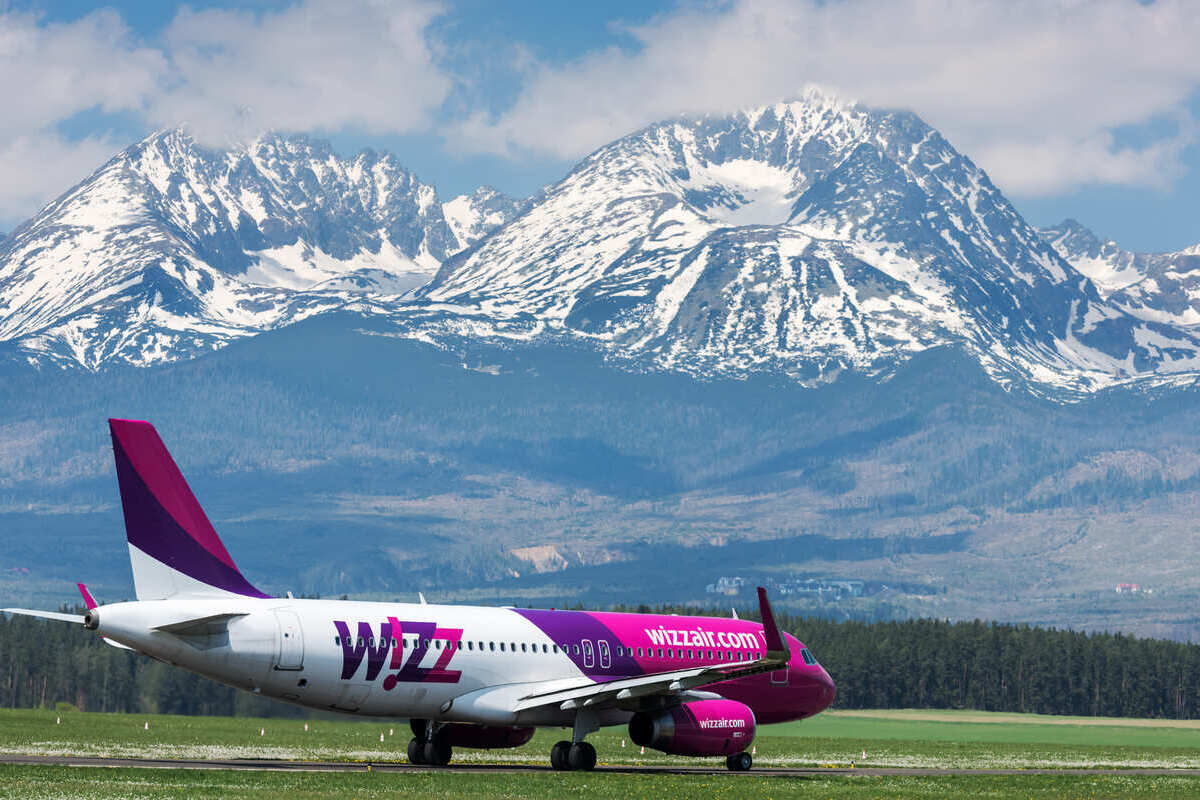
The title of the worst airline in Europe currently goes to Hungary-based Wizz Air, with a customer score of only 44%. Issues are similar to those of Ryanair, as it scores low for seat comfort, food and drinks, and it’s essentially a Business and First Class customer’s worst nightmare.
It will get you where you need to be, and there’s no denying cheap last-minute tickets starting from as low as $34 are hard to come by in other airlines, but you definitely shouldn’t expect the typically indifferent staff to adhere to the highest standards of customer service.
Once again, this is not America, where it’s all smiles and pleasantries. That being said, Wizz Air flights departed on time for the most part throughout 2023, with only 2% being delayed by over three hours, higher than most of its competitors, yet not alarmingly high.
The company has fought back against the classification, declaring the survey methodology as ‘misleading’ and stating the results are ‘not representative’, pointing out that only 1.15% of respondents said they flew with Wizz Air during that period.
Bottomline
Wizz Air, Ryanair, and Iberia are three of the most popular airlines in Europe, and though the customer experience is not stellar, based on the Which? survey, it’s relatively satisfactory. Once again, you shouldn’t expect outstanding service paying the equivalent to a meal on flight tickets.
Being low-cost carriers, they will of course attract both fierce defenders and staunch detractors, and the latter is particularly true for those who have had a particularly bad experience flying low-cost in Europe, be it as a result of mishandled luggage, flight delays, or unhelpful staff.
This does not mean you should expect the worst yourself or that your own customer journey will be fully reflective of the results of this survey, which, as Wizz Air officials remarked, may have had its results affected by the underrepresentation of certain targeted audiences.
The full list of best-performing airlines on short-haul European routes, ranked from best to worst based on Which?‘s findings, can be seen below, alongside their respective customer scores:
Opinions expressed here are the author’s alone, not those of any bank, credit card issuer, hotel, airline, or other entity. This content has not been reviewed, approved or otherwise endorsed by any of the entities included within the post.
Before booking that flight, it’s always a good idea to consider what your priorities are when choosing a destination.
Perhaps this trip is to be all about cultural immersion, or maybe you simply want a relaxing beach escape.
No matter what kind of travel experience you are looking for, it’s always crucial to consider safety, especially if you’re traveling solo.
Not all destinations are created equal in terms of the risks of crime or political instability.
The good news is there’s a world full of safe destinations for all kinds of travelers.
With a little research and common sense, you can stay assured your experience of a place will be positive.
It’s no secret Americans can’t get enough of Europe, and a recent report based on Global Peace Index scores from the Institute of Economics and Peace has revealed the 10 safest European cities in 2024.
For the following list, the lower the scores, the better:
Lisbon, Portugal
Global Peace Index Score: 1.333
Perceived Criminality of Society Score: 1.694 out of 5
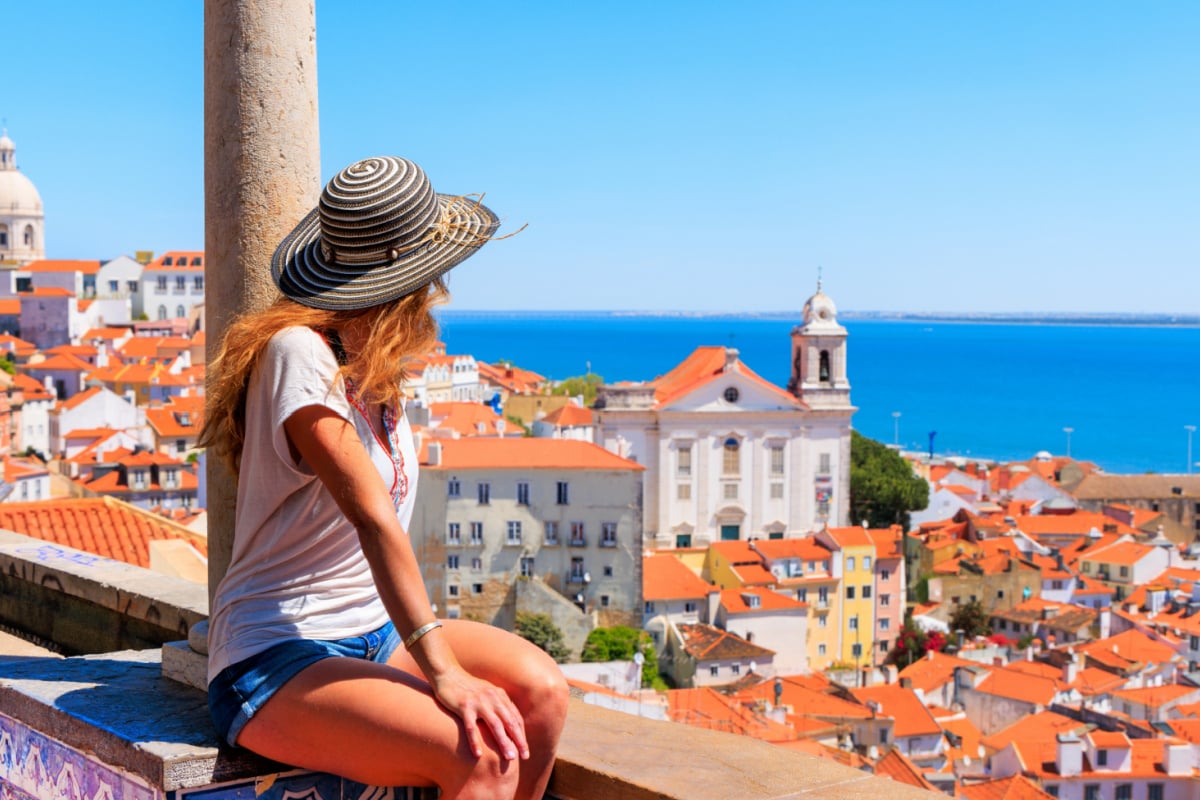
This sunny, colorful European capital has been the darling of the travel world as of late.
We definitely understand why pictures of Lisbon’s rainbow architecture and sweeping hilltop views have been taking over social media!
This city has everything to offer its visitors, from the classically beloved European architecture and cobblestoned streets to lively nightlife and culture.
It also never hurts that Lisbon is one European destination that won’t break your budget.
With its friendly locals and magnetic appeal to backpackers and solo travelers, Lisbon is an excellent choice for both solo travelers and those wishing to feel safe abroad.
Vienna, Austria
Global Peace Index Score: 1.316
Perceived Criminality of Society Score: 2.037 out of 5
Austria is much more than its iconic Alps, and Vienna is a city you won’t regret adding to your itinerary.
The country’s capital has excellent public transportation, is easy to navigate, and is extremely safe for tourists.
Vienna’s baroque architecture, imperial palaces, and gorgeous gardens will leave you feeling you’re in a storybook.
Culturally, Vienna is renowned as the birthplace of classical music, and catching a performance at one of the city’s grand music venues makes a memorable experience.
Dublin, Ireland
Global Peace Index Score: 1.312
Perceived Criminality of Society Score: 2.376 out of 5
This lively city is safe, great for solo travelers, and has plenty of history, museums, and interesting landmarks to check out.
Knocking a beer at a proper Irish pub is an experience you really have to have for yourself!
Whether you want to take a tour of the centuries-old Guinness brewery or a day trip to the nearby Wicklow Mountains or seaside cliffs, there’s something here to impress everyone.
Copenhagen
Global Peace Index Score: 1.31
Perceived Criminality of Society Score: 1.542 out of 5
It is most definitely worth venturing north to check out this charming Scandinavian capital!
As well as being one of the safest cities in the world, Copenhagen is known for being one of the most bike-friendly cities anywhere.
One of my favorite memories from my own European adventure was feeling the wind against me as I rode along the colorful streets of this city.
Bicycles are the city’s favorite form of transportation, and once you master the art of bike traffic, you’ll be riding all over the city in search of the best smørrebrød–the favorite open-faced sandwich of the Danes.
This gorgeous city delights its visitors with its 19th-century theme park, Tivoli Gardens, lavash palaces, and adorable wharf houses and canals.
Reykjavik
Global Peace Index Score: 1.124
Perceived Criminality of Society Score: 1.619 out of 5
Iceland consistently tops the charts for being among the safest countries in the world and its capital has claimed the title of safest city in Europe.
Visiting the Nordic country is the adventure of a lifetime, and Reykjavik is the perfect first stop.
The city offers plenty of interesting attractions, including Hallgrimskirkja Church, as well as being the perfect base for nature-centered excursions.
In addition to the city’s timeless draw and awe-inspiring nature, 2024 is an excellent year to go due to increased solar activity that will make for peak northern lights viewing.
Rounding out the top 10 safest cities in Europe are:
Ljubljana, (Slovenia)
Bern, (Switzerland)
Prague (Czech Republic)
Helsinki (Finland)
Zagreb (Croatia)
While it’s always advisable to keep valuables close, and your passport somewhere secure while traveling, you can feel confident your safety won’t be at risk traveling these beautiful cities.
Opinions expressed here are the author’s alone, not those of any bank, credit card issuer, hotel, airline, or other entity. This content has not been reviewed, approved or otherwise endorsed by any of the entities included within the post.
Other than a wide availability of foreigner-friendly services, a lively social scene, and of course, the cultural aspect, affordable accommodation is a key factor for digital nomads heading to Europe, as it is possibly the most expensive destination for long-term travelers… or is it?
There’s no denying rent across parts of Western Europe is incredibly expensive, with tenants expected to fork out a shocking monthly $2,600 for tiny flats in central London and anything between $1,200 and $1,800 for a one-bedroom apartment in a non-glamorous arrondissement of Paris.
Luckily, options are not limited to your typical touristy cities: in these four alternative destinations, you’ll experience all of that Old World charm and get a taste of the Old Continent’s famous quality of life without spending half or more of your income on rent.
Don’t worry, we’re not sending you off to an unheard-of, backwater country in the Eastern flank where of course house prices will be cheaper due to the low living standards.
No, no, no: there are truly exciting places you’ll actually want to live in, starting with…
Portimão, Portugal
If you’re an avid Travel Off Path reader, you’ve probably heard of The Algarves already.
A sunny region in Souhern Portugal with an extensive sandy coastline, bright-blue oceans, and year-round balmy weather, it is one of the trendiest spots for sunseekers this spring.
Something you might not know, however, is that Portimão, a small seaside resort straddling a particularly warm stretch of the Atlantic, is a digital nomad haven offering a lower cost of living than other Southern European hotspots and some laid-back living for those who need it.
Renting a one-bedroom apartment away just outside the city center, you can expect to pay an acceptable $727 per month, while a well-equipped, three-bedroom apartment in the cobbled Old Town sets you back by $1,831 (see here what two grand a month would get you in the British capital).
Other than affordable housing, Portimão residents enjoy cheap groceries, a plethora of inexpensive restaurants to pick from on a night out in town, with simple yet delicious meals in traditional Portuguese cafeterias costing as little as $10.78, and three-dollar beers.
Not only will it not break the bank to call Portimão home for between one and three months, but the endless miles of thin, white sands, the architectural wealth, and the thriving expat community make it an incredibly exciting place to be.
Budapest, Hungary
Why take your chances working remotely from crowded, overpriced Paris when you can live a comfortable life, eat lavishly paying only a small fraction of what you would in France, and admire buildings that are just as grandiose in the Paris of the East instead?
Budapest indisputably sits in a Pantheon of Europe’s most beautiful cities, home to a Neo-Gothic Parliament with an iconic red dome reflecting on the fast-flowing Danube River, a monumental Buda Castle, and a number of stately opera houses and ornate medieval churches.
Between the cozy internet cafes serving delicious traditional pastries and the seriously underrated nightlife that could put Berlin’s to shame – picture underground raves and exclusive parties in ‘ruin’ bars – you’ll find there are plenty of reasons to love Budapest as a digital nomad.
The best thing is, you can have all of this while spending only $496 on accommodation per month, making the Hungarian capital one of the most affordable ‘workcation’ destinations in the European Union (in a way, you have the forint and Hungary’s protective policies to thank for).
Hungary retains its own national currency, and it hasn’t yet been Euroized, which means wages are lower and consumer prices aren’t as high; inflation seems to be better controlled, too, not to mention it is much safer than the average Western European country.
Sofia, Bulgaria
Located at the south-easternmost edge of the European Union, sharing borders with Greece and Türkiye, and straddling the trendy Black Sea, Bulgaria is one of those countries you might have heard being mentioned recently, but you don’t know an awful lot about.
There are entire articles detailing how Bulgaria is the perfect digital nomad destination, but when it comes to Sofia specifically, we feel it hasn’t been given its flowers or appreciated enough for the incredibly diverse, quirky, exciting capital it is.
With a History of three millennia, Sofia is the third or fourth-oldest city in Europe, depending on the source you’re pulling from, and it has an eclectic architectural heritage like no other, with Thracian, Roman, Ottoman, and Soviet-inspired structures combining to form a unique cityscape.
It is probably the only place where you could admire medieval Orthodox churches, explore archeological zones lying just beneath the modern city, and stroll communist-era boulevards lined by Brutalist palaces and apartment blocks in the same day.
Additionally, Sofia has a strong cafe culture: our fave coworking spots are Cafe 1920, a boujee, vegan-inclusive eatery facing the famous Lions’ Bridge, and The Apartment, housed in an actual fully-furnished apartment, where you can relax in a homely environment and taste home-cooked morsels.
Speaking of apartments, let’s not forget the most important bit: there are one-bedroom flats in residential areas for renting from $378 per month, and taking into account Sofia’s efficient metro system and extensive bus network, chances are you’ll be a short half-hour commute to the center, tops.
Athens, Greece
We know what you’re thinking: ‘Athens is a dump’, ‘it’s jam-packed with tourists’, ‘you’d be bored to death spending longer than two days there’, or ‘good luck making it out of scammer-ridden Monastiraki Square unscathed’, and basically every other apocalyptical warning.
Now, listen. We get it.
Athens may be a bit disappointing if you’re visiting as a tourist, particularly when there’s excess littering involved, visible illicit drugs, and an irregular migration problem, and you’re averse to waiting in lines to access all of the main points of interest.
As a digital nomad spot, however, it can be surprisingly pleasant:
The point of long-term travel is not to tick off as many attractions as possible in the shortest amount of time – in Athens, that won’t take you longer than a couple of days, anyway – nor retrace the steps of fellow Instagrammers all the way to the nauseatingly-pink Fairytale Cafe.
Living and working remotely from Athens, away from the tourist-dominated districts of Plaka, Monastiraki, and Syntagma, you have an actual shot at experiencing life in a Greek metropolis beyond the ruined temples and bustling central bazaars.
Picture yourself going for a cup of morning coffee in a Greek-frequented kafenio, where English chattery is rare to overhear, or walking the rather peaceful, tree-lined avenues of Koukaki as you munch on some freshly-baked bougatsa, petting passerby cats and watching local scenes unfold.
Elsewhere in Metaxourgeio, hippy cafes, artful streets oozing character, and tspirou bars await discovery, and it’s in youthful, student-dominated Keramikos and Exarchia where Athenian nightlife is at its most vibrant.
Did you know also that Athens is a stone’s throw away from the sand-fringed Attica coast, where waters are crystal-clear and warm throughout most of the year, except winter? Lucky you those Kalamaki Beach-bound M2 buses leave from Omonia, in the city center, multiple times every hour.
Oh, have we already mentioned how affordable Athens can be? Forget your popular cruising port calls of Mykonos, Santorini, and Rhodes, where renting an Olympian-divine, whitewashed villa long-term is an unattainable dream for mere mortals like us:
In the capital, comfortable, centrally-situated flats cost an average $597 to rent per month.
As you’ll soon learn, there is an entire 3-million-people-strong cosmopolitan hub lying at the foot of Acropolis Hill, and it’s truly got a lot going for it on the digital nomad front.
Opinions expressed here are the author’s alone, not those of any bank, credit card issuer, hotel, airline, or other entity. This content has not been reviewed, approved or otherwise endorsed by any of the entities included within the post.