While Europe’s status as one of the most popular travel destinations on Earth hasn’t changed, there’s been a huge shift in the dynamics of the continent’s tourism industry, with old-school hubs garnering a reputation as tourist traps and smaller, lesser-known countries emerging as the region’s trendiest destinations.
That’s exactly what the latest Statista report on European travel showed, too.
The German data-gathering company set out to discover the fastest-growing regions within the continent, and travelers have made their preferences pretty clear – Central and Eastern Europe are leading the way by a large margin.
Five countries, in particular, are drawing in visitors like never before:
Poland
Poland has always been considered one of those great, budget-friendly destinations that fly a bit under the radar, but if these recent numbers are anything to go by, that’s about to change pretty soon.
Travelers are growing tired of the suffocating crowds of Paris and the littered attractions of Venice, and, in contrast, Poland’s gorgeous landscapes and undiscovered charm seem like a breath of fresh air.
Whether you’re planning to explore the gothic, baroque, and neoclassical buildings of Warsaw (which, frankly, are not too far off from what you’d find in Prague) or the winding streets of Krakow, one thing’s for sure – Poland will exceed even your wildest expectations.
Hungary
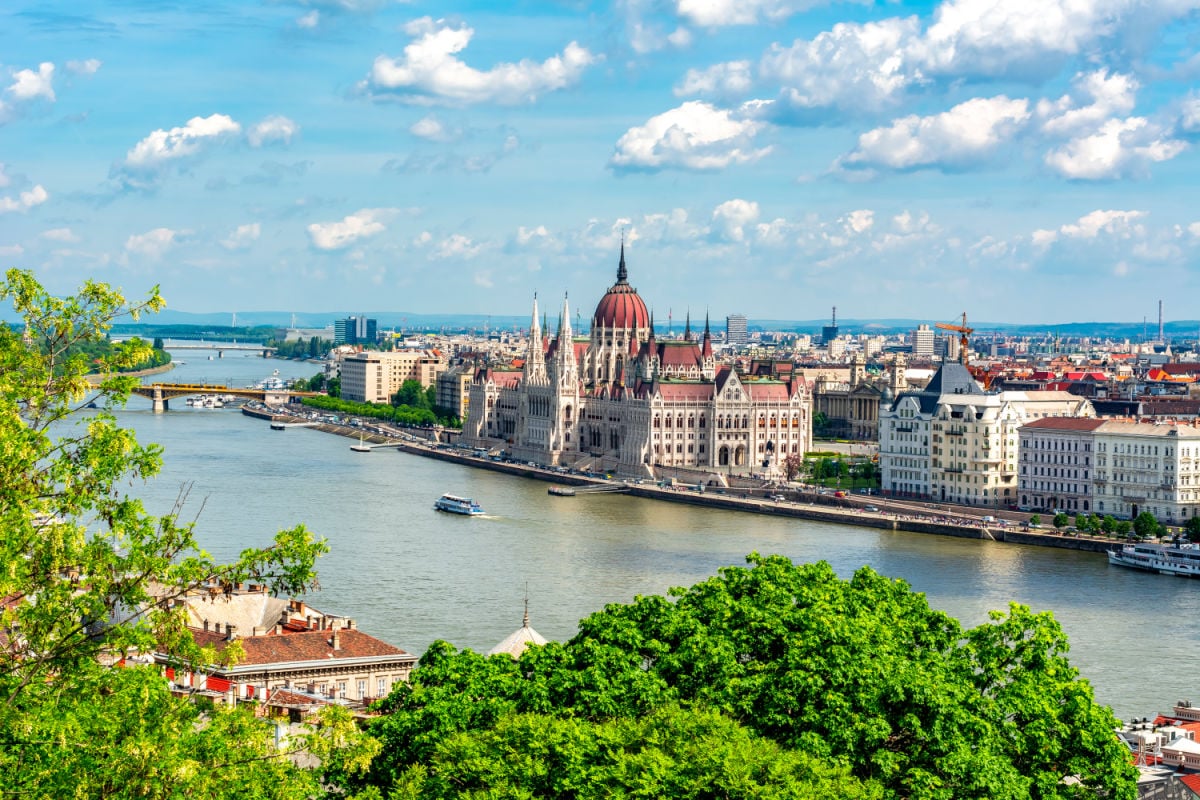
Though Hungary is mainly known for its capital, Budapest, the country is currently undergoing a tourism renaissance that extends beyond the wonders that lie on the shores of the iconic Danube River.
Don’t get me wrong, there’s a lot to love about Budapest – from the fairytale-like skyline to St. Stephen’s Basilica and the stunning Buda Castle – but if you’re planning a trip to Hungary, don’t overlook the dreamy countryside, either.
The wine regions of Eger and Tokaj, for example, are the perfect melting pot of warm-hearted people, surreal views, and world-class food.
Pécs and the serene landscapes of Lake Balaton are not to be missed, either.
Czech Republic
While Prague has long been a staple of every European city break itinerary, the gorgeous Goth hub along with the rest of the country it represents is currently breaking all-time tourism records.
Since the capital’s many, many unmissable attractions are already famous enough (think
Prague Castle, Charles Bridge, Old Town Square, St. Vitus Cathedral, Wenceslas Square, and Astronomical Clock), I’m going to focus on the underrated allure of the likes of Český Krumlov, Olomouc, and Telč instead.
It’s places like these where you can truly take in the timeless beauty of the Czech Republic in its most authentic form, so if you’re lucky enough to explore Central Europe anytime soon, make sure to venture beyond the well-trodden paths of Prague.
Georgia
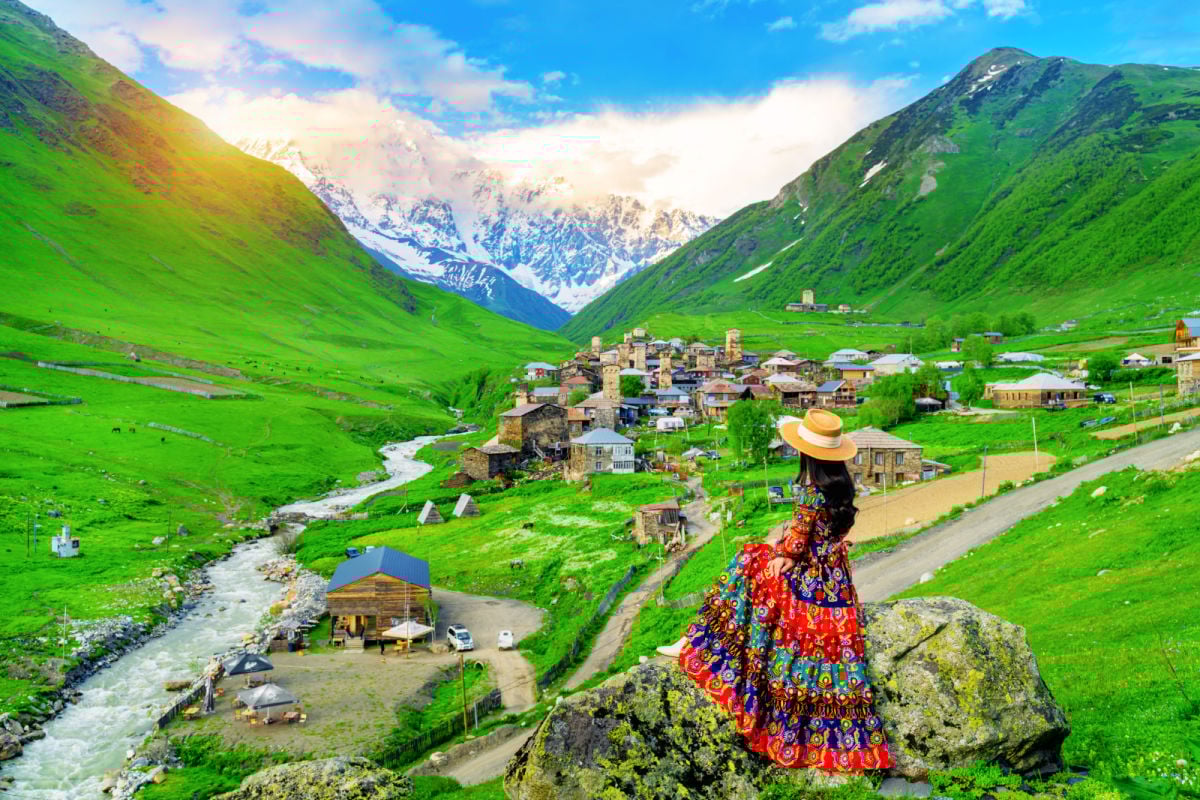
Having welcomed over 7 million international travelers in the past year alone, Georgia has officially left its “off-the-beaten-path” reputation behind.
Travelers coming to Europe are starting to appreciate the country’s warm hospitality, breathtaking landscapes, and unique cultural heritage, probably best experienced through the ancient cave city of Uplistsikhe.
City trippers can still find all of the trendy bars and restaurants in Tbilisi, the capital, whereas those eager to explore the wilderness of the local nature can’t go wrong with a hike through Svaneti.
Romania
When most of us think of Romania, our minds immediately go to the iconic Dracula Castle, which has long been a draw for curious travelers and movie lovers alike.
In reality, though, there’s a lot more to love and admire about this southeastern European country than just the centuries-old tales of vampires – Bucharest, in particular, is one of the most charming, attraction-filled capitals you’ll find in the entire continent.
Here, you’ll get to take in the sights of the Romanian Athenaeum, the Herastrau Park, the Triumphal Arch, and the Palace of Parliament, places that not only provide the perfect background for some truly one-of-a-kind travel pictures but also hold a long, fascinating history that’s worth exploring.
Aside from the vivid city scene, travelers coming to Romania have to explore the country’s remarkably diverse landscapes, from the Carpathian Mountains and the Black Sea coast to the medieval towns of Sibiu and Sighișoar.
Opinions expressed here are the author’s alone, not those of any bank, credit card issuer, hotel, airline, or other entity. This content has not been reviewed, approved or otherwise endorsed by any of the entities included within the post.
A shoulder-season vacation is the perfect way to get out of that wintery mindset and relieve yourself from the stresses of day-to-day life; however, there’s a catch.
Prices are skyrocketing and summer travel plans always take priority, which leaves those trying to get out of their hometown rut this spring on a pretty tight budget, especially when it comes to flying overseas.
Luckily for us, Europe, one of the world’s most coveted hotspots this time of year, is filled with stunning yet reasonably-priced destinations, granted, so long as you look beyond massively popular destinations like London or Paris.
In fact, Statista just came out with its own list of the cheapest European cities you can visit this spring based on their daily price index, and these were the 5 places that dominated the ranking:
5. Sarajevo
The Bosnia and Herzegovina capital is one of Eastern Europe’s most underrated destinations, and I’m sure that everyone who’s gotten to see just how much value you get for your money here will agree.
With average daily costs evaluated to be just under $50, Sarajevo is the ideal city for travelers who want to experience the region’s rich history and culture on a budget.
Here, you can stroll through the cobbled streets of the Old Bazaar (otherwise known as Baščaršija), go on a free sightseeing tour of the Latin Bridge and the Eternal Flame, and even take a few breaks in between to try some of the mouthwatering local dishes, like gulaš, burek, and ćevapi, oftentimes for less than what you’d pay here in the U.S. for a single cup of coffee.
4. Budapest
Famous for its stunning architecture, thermal baths, and impressive nightlife, the “Pearl of the Danube” adds yet another win to its long list of successes – being named one of the best budget-friendly destinations in all of Europe.
One thing I loved about visiting Budapest is the fact that even though you’ll be paying far less than what you would in bigger, better-known destinations, the sights you’ll get to experience here are akin to what you’d see in the likes of Prague or Vienna.
That’s why those dying to take a picture of that quintessential European city skyline will find Budapest to be everything they’d wished for and more.
Iconic landmarks like the Buda Castle, the Fisherman’s Bastion, and the Hungarian Parliament Building can be visited either completely free of charge or by paying a modest entry fee (the most expensive is the latter, which charges non-EEA citizens roughly $30 per adult).
3. Krakow
Though Krakow is slowly but surely getting out of the shadow of its more famous counterpart, Warsaw, its status as a charming, great-value destination where tourists can experience the European city charm in its most authentic form remains as strong as ever.
By paying just a little over $47 a day, you’ll get to not only stay in one of the many gorgeous accommodation options across the Polish city but also view some world-class attractions like the St. Mary’s Basilica, the Cloth Hal, the Auschwitz-Birkenau, the Wawel Royal Castle, and Planty Park.
2. Bucharest
People like to lovingly call the Romanian capital “the Paris of Eastern Europe,” but the comparison doesn’t really do either of these gorgeous cities justice – they both hold a unique type of charm.
While the allure of Paris, along with its history attractions, is undeniable, there’s a level of warmth, authenticity, and affordability to Bucharest that makes the latter, dare I say, better in some contexts than the famous French capital.
Here, you’ll discover that stunning attractions like the Romanian Athenaeum, the Lipscani District, and Herastrau Park don’t have to set you back a fortune.
1. Sofia
With daily costs that don’t even reach the $40 mark and picture-perfect landmarks like the Alexander Nevsky Cathedral, Vitosha Mountain, and the National Palace of Culture, Sofia has rightfully earned its title as the best, cheapest city to visit in Europe this spring.
Bulgaria is particularly lovely this time of year, as temperatures range between 15°C (59°F) and 20°C (68°F) – otherwise known as the perfect springtime weather.
Opinions expressed here are the author’s alone, not those of any bank, credit card issuer, hotel, airline, or other entity. This content has not been reviewed, approved or otherwise endorsed by any of the entities included within the post.
While there’s really no bad time to take that European vacation you’ve been dreaming about, spring might just be the best season to actually book the tickets.
The weather becomes warm and inviting while the most coveted attractions have yet to be overrun by the chaotic summer crowds.
While picking the best time to visit Europe isn’t too difficult, choosing a destination is a whole other ballgame; after all, there’s a lot to consider.
If you don’t feel like going through the impossible decision-making process, you can always rely on data-backed rankings like the one recently released by European Best Destinations, an annual list based on the experiences of over 1 million travelers from 172 countries.
The poll set out to discover the top European destinations that international travelers deemed to be “the best,” and below, you’ll find the places that made it to the top 3 out of 500+ options.
This time, though, the small but mighty country has come to the center of international attention thanks to the impeccable impression it has left on the people lucky enough to explore its wonders.
Don’t let the island’s small size fool you, I once spent a week trying to see and do as much as possible in Malta, and I still missed out on many of the places I’d put in my must-visit list.
Luckily, though, I still got to explore two of the country’s most gorgeous hotspots: Valletta, the capital, and Mellieħa, a large village just off the northern coast of the main island that’s famously home to one of the most beautiful beaches in all of Europe, Għadira Bay.
Between the two, you won’t have to choose between the quintessential European city break and the Mediterranean beachy experience – you’ll get the best of both worlds.
Valletta will stun you with its elaborate baroque buildings overlooking the royal blue-colored water, while the long stretches of white-sanded beaches in Għadira Bay will have you feeling like you’re somewhere in the Maldives.
2. Monaco
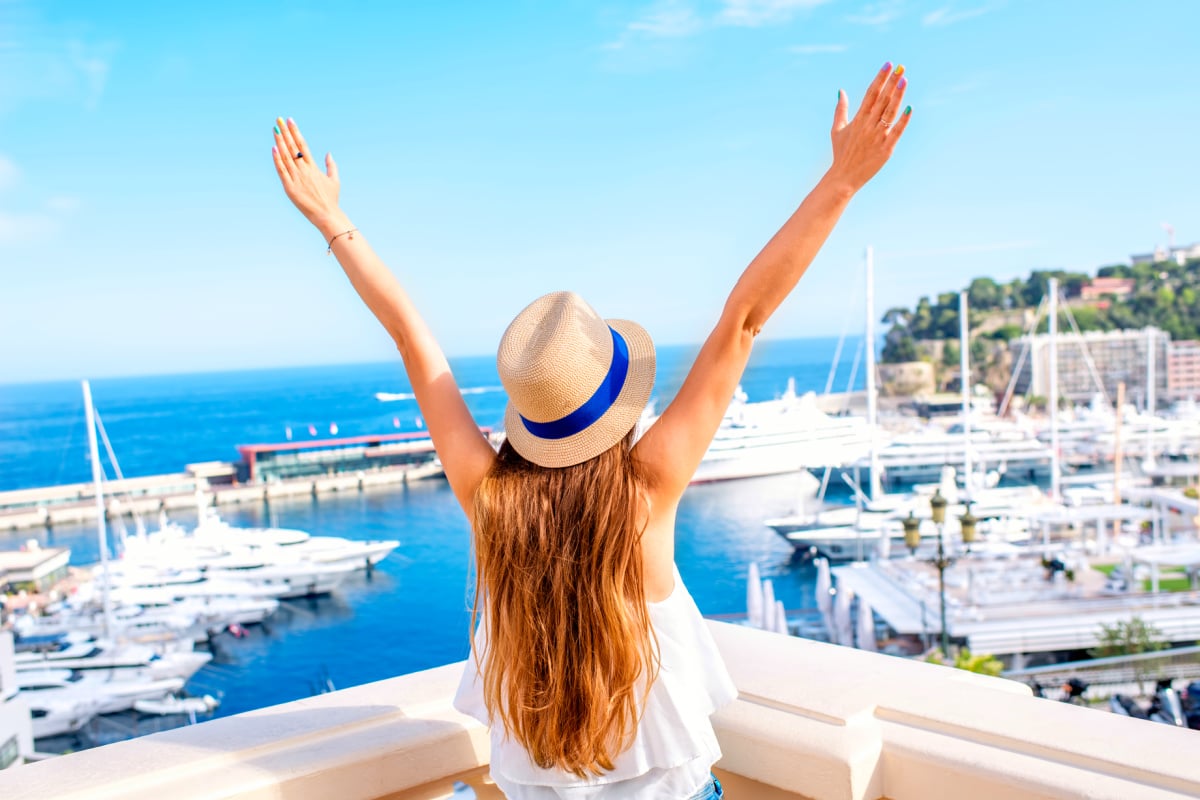
One of the biggest mistakes travelers make when choosing their next European destination is overlooking Monaco as yet another overpriced, overcrowded destination when, in reality, that couldn’t be further from the truth.
The microstate nestled along the French Riviera is much more than just another place to marvel at expensive-looking buildings and yachts.
Culture seekers will love exploring the Prince’s Palace, the famous Monaco Courthouse, and the Saint Nicholas Cathedral, whereas those looking to experience something new can try their luck in one of the iconic high-stakes casinos or time their visit so they can see the prestigious Formula 1 Grand Prix firsthand.
What’s more, a trip to Monaco doesn’t have to be too expensive, either (assuming that you’re not planning to go too heavy-handed on your gambling).
Return tickets from the U.S. start at $500 per person, whereas accommodation options are varied in both price point and style, with many great options costing as little as $100-$120 per night.
1. Marbella, Spain
With Spain recently setting one of its most impressive visitor records to date, the fact that one of its stunning beach cities holds the number one spot on today’s list should come as no surprise.
Once a small fishing village, Marbella has now evolved into one of the most coveted warm-weathered hotspots in the entire world, and considering how many dreamy places of the sort there are, that’s saying a lot.
In Marbella, visitors will spend their days taking in the Spanish sun at some breathtakingly beautiful beaches and their evenings strolling around the famous Old Town, complete with narrow cobblestone streets, whitewashed buildings, and vibrant-colored flowers that graze their walls.
The Orange Square otherwise known as the heart of the Old Town, is surrounded by more cafes, shops, and historical landmarks than you can count, so make sure to leave a little bit of time in your itinerary for everything.
Opinions expressed here are the author’s alone, not those of any bank, credit card issuer, hotel, airline, or other entity. This content has not been reviewed, approved or otherwise endorsed by any of the entities included within the post.
Some travelers go to Hawaii, while others go to the “Hawaii of Europe”. Either way, you’re destined to make lifelong memories in paradise.
While these two destinations have completely different cultures (and passport requirements), the European “Hawaii” is more of an adventure and well worth the journey.
As so many travelers are ready to embrace sunshine, sand, and crystal blue waters, there are few places on the planet more eye-popping than one of Portugal’s most treasured islands.
Since Madeira is breaking tourism records, “hidden gem” would be an overstep at this point in describing this trendy paradise.
No matter what you call Madeira, wintertime equals winter sun for travelers in need of a dreamy vacation.
Paradise In Every Which Way
Paradise is more than just a word in Jimmy Buffet songs; there are real-life places that don’t take 5 connecting flights to reach a remote island you’ve never even heard of.
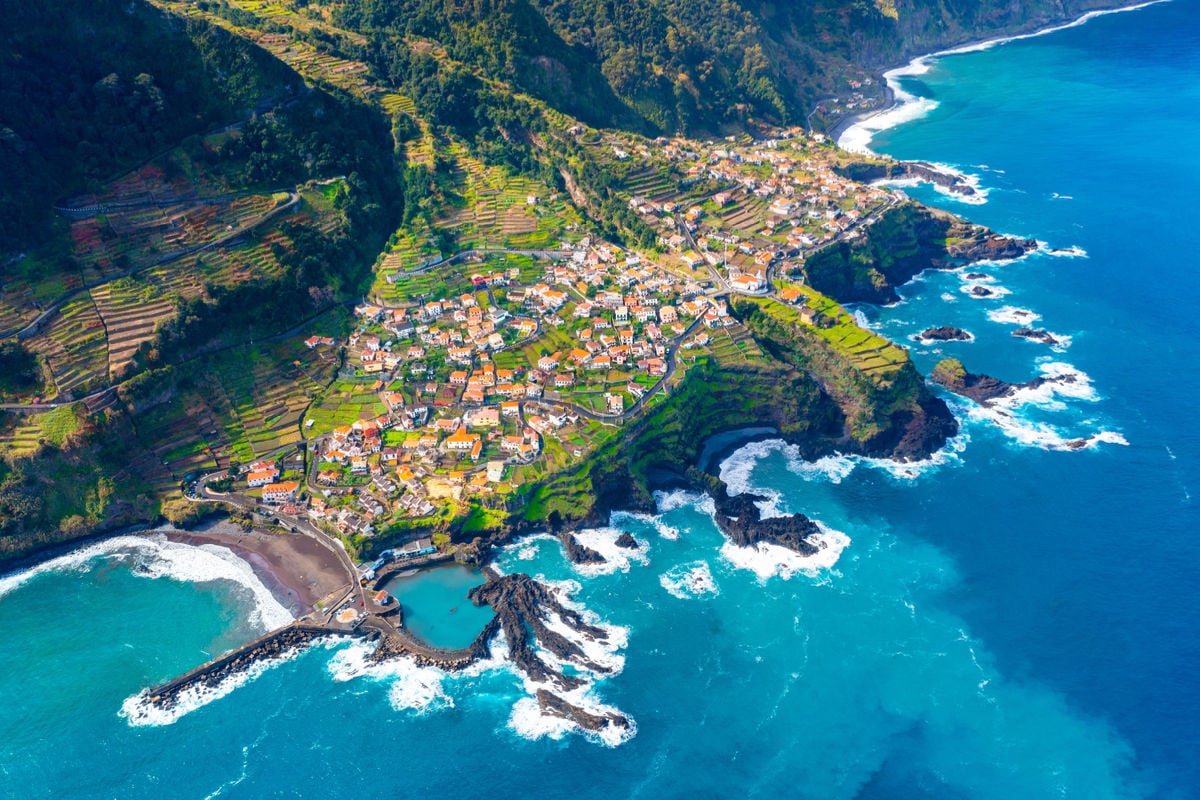
Located south of mainland Portugal’s phenomenal cultural cities, Madeira is an easy-to-reach island paradise with incredible beaches and majestic mountains.
Yes, there are direct flights from the U.S. via Azores Airlines, making connectivity all the more appealing for an adventure to one of Europe’s most pristine destinations.
Madeira is a draw year-round, but the weather is splendid in winter, too, with average temperatures hovering in the high 60s throughout January and February.
Visitors to Madeira can enjoy the ocean breeze through its seemingly endless peaks and valleys reminiscent of Hawaii.
Although, you may want to brush up on Portuguese rather than Lion King songs.
Made For Exploring
While some of us want to handle life’s stresses by booking a vacation and doing absolutely nothing but lounge around, Madeira will draw you in to explore its wonders and charming towns.
Pack your hiking shoes along with your swimwear, and you will be all set. The island’s walking trails are a must, each with different levels of difficulty.
Known as levadas and veredas – these two different options will take you zigging and zagging through lush greenery, scenic coastal paths and mountain springs.
It sure beats shoveling your driveway back home, doesn’t it?
Fun In Funchal
Madeira is an autonomous region of Portugal, but it does have a capital. Vacationers can put the ‘fun’ in ‘Funchal’ by spending time in this picturesque town.
Travelers don’t have to venture off to Lisbon or Porto to get a sense of the country’s famous architecture; Funchal does it justice without having to step foot on the mainland.
The sights are amazing in and around town, such as the gorgeous Funchal Cathedral. For the best views, ride on the tramways to the top where you may not want to come back down.
But, when you’re inevitably back on the ground, you can head out for a night on the town with buzzing bars and laid-back wine cellars – one of many reasons digital nomads love to call Madeira home.
Affordable Luxury
Oftentimes, the most beautiful places come with a premium price tag. That’s not the case for Madeira, which is a key reason why this island has gained so much attention recently.
How many paradisal locations can you stay in a 4-star hotel under $100? Not many, right? Then add Madeira to the exclusive list of budget stays at luxury accommodations.
And not just luxury accommodations – we’re talking beachfront stays overlooking otherworldly blue waters.
Some even offer all-inclusive packages, such as Hotel Riu and Calheta Beach, but these will cost a tad bit more.
Resorts aren’t limited to one area either; they are wrapped around the island from Funchal to Seixal.
It’s not just hotels where you get the best bang for your buck. The cost of living in Portugal is generally affordable across the board with Madeira following closely behind the rest of the country.
Wining and dining won’t break the bank and neither will public transportation. If digital nomads can afford this magical place for long-term stays, you can certainly handle a winter vacation.
Opinions expressed here are the author’s alone, not those of any bank, credit card issuer, hotel, airline, or other entity. This content has not been reviewed, approved or otherwise endorsed by any of the entities included within the post.
Long gone are the days when we spend a heaping amount of money on short-haul plane rides under 3 hours.
In today’s day and age, travelers are looking for ease of travel on a budget. To keep up with the wants and needs of tourists, this travel trend is making that possible.
Wouldn’t it be nice to wake up in the morning and you’ve arrived at your next spot overnight? Train travel has always been a popular way to hop from city to city in Europe, but now there are 3 new routes launching… and we’re here for it all!
More and more travelers are looking for impactful ways to become sustainable tourists in today’s world, and train travel certainly solves that problem.
BUT, this type of travel isn’t for those who want something quick. Most European train journeys are definitely on the shorter side; however, long-distance travel across countries typically includes an overnight journey.
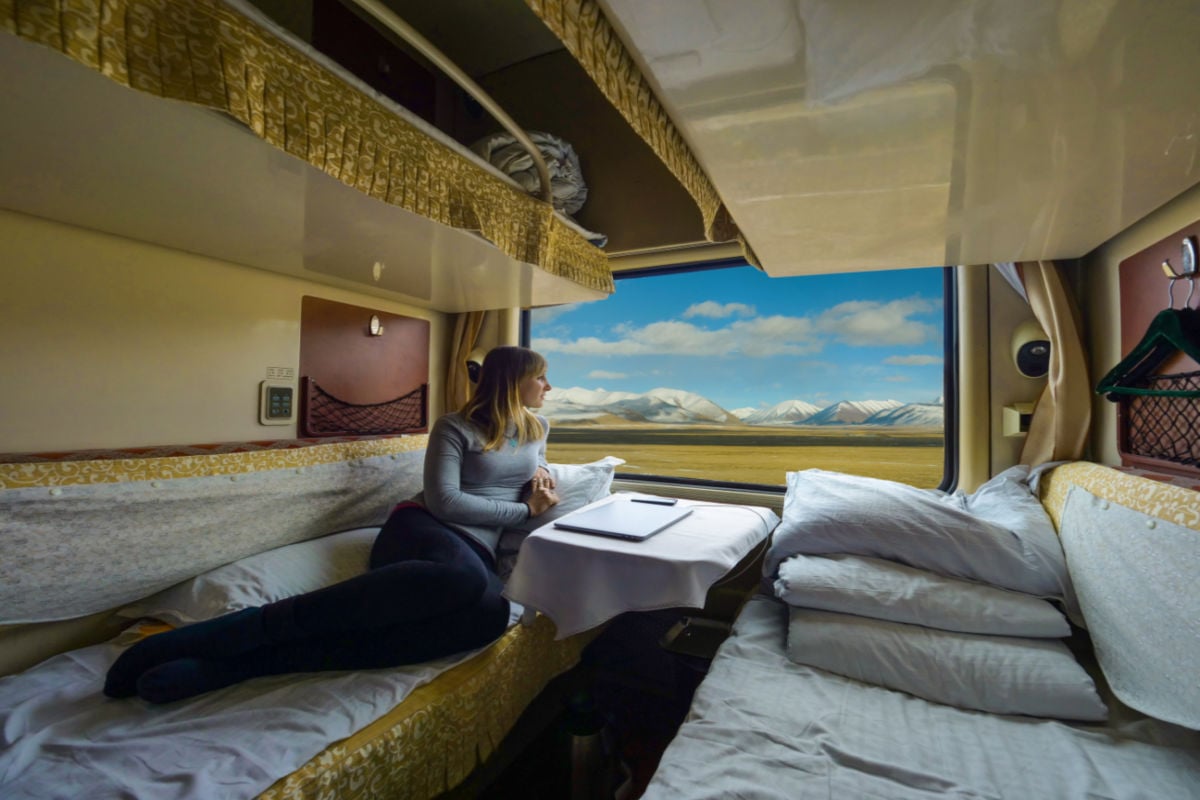
Train travel no longer consists of tight cabins and stuffy conditions… These new trains are setting the bar high for wanderers. Think comfy cabins for solo travelers, multiple fare options to choose from, and enough space to fit everything needed on your trip.
Vienna to Hamburg
Run by Austrian rail company ÖBB, the Nightjet Sleeper Train is a modern update on the past sleeper trains under this company. Only launching in December, there’s still many unknowns, but what we do know is that this route will get you from Vienna to Hamburg overnight.
Ideal for solo female travelers, the new model offers mini cabins with lockable doors. Believe it or not, most sleeper trains don’t have this option, but the Nightjet provides ease of mind for those who seek out the safety of a lockable cabin.
With varying fares depending on your journey and comfort level, prices fluctuate from $44 to $125 per person. Travelers can expect a sheet, blanket, and pillow in their cabins, along with some storage space and portable USB outlets.
Paris to Berlin
ÖBB heard the buzz around train travel… And they delivered! Along with the launch of its Vienna to Hamburg route, the company also has a Paris to Berlin route owned by Nightjet.
Trains will depart from Paris and make stops along the way to Strasbourg, Frankfurt, Erfurt, and Berlin Südkreuz before reaching Berlin’s main train station.
Taking off from Paris at 7:12pm and arriving in Berlin by 8:26am, you’ll be in your new city before you can say Sleeper Train. For now, the train will run 3 times a week, but come autumn there will be daily service options for travelers.
Brussels to Prague
If two European routes weren’t enough, there’s a third! With a set launch date of March 25, 2024, Rail start-up European Sleeper has announced their Brussels to Prague option.
An extension of the Brussels to Berlin ride, the train will have a few noteworthy stops along the way, including: Antwerp, Amsterdam, Rotterdam, and Berlin. While official prices haven’t yet been announced, the company will be accepting interrail tickets – so get reserving!
While these are a handful of the new launches in Europe, there are more exciting announcements across the train world. Driven by the climate crisis, countries across the EU are shelling out in an effort to provide sustainable options for tourists.
With new designs, comfort, and safety in mind for those possibly traveling alone, Sleepers are back in action and we’re all about it. Arguably more modern than past models, these trains offer a slick way for travelers to hop around Europe in a sustainable way.
As a travel writer and digital nomad who’s made it his life’s work to explore the world while sharing his experiences online, I have already seen over 79.1% of Europe – according to my Mark O’ Travel stats I religiously update every month – and have inevitably worked remotely from most countries on this side of the Atlantic.
From bleak mid-winters in the Balkans to the canicules of Southern France in a scorching July, and every writing session in between, be it holed up in my AirBnB room trying to keep the warmth in or lying on the edge of a beach, letting the ocean caress my feet, I feel I could put together a digital nomad guidebook for newcomers in the Old Continent.
Being close to completing my ‘European nomadic trek’, I was convinced already I had my immutable top three favorites: nowhere I would go next could ever top Georgia’s generous visa policy and high affordability, Albania’s beautiful nature and welcoming folks, or Poland’s underrated cuisine and awe-inspiring History.
As you might have guessed, I have a professed love for Eastern Europe and would normally openly avoid the Western flank, mainly because, more often than not, it does not fit the budget and it’s just too touristy.
The huge crowds are a big turn-off for me, who’s mostly looking to work in peace while sampling some culture.
As a nomad, my needs are rather primitive: I need comfort, good food, low cost of living, and sunshine.
As we approached winter, however, my options as a Europe-based, sun-loving nomad started thinning dramatically.
The Eastern bloc and its plummeting temperatures were suddenly off-limits.
I had to look elsewhere, as far South as I could.
Call it instinct, or perhaps a little push from the Instagram algorithm, but next thing I knew I was boarding a four-hour flight to a mysterious island so small you can’t see its outline on a map unless zooming in on the exact right spot.
In chasing the sun, I stumbled upon this gorgeous Portuguese archipelago that has me wondering whether I should reshuffle my own personal ranking of favorite nomad hotspots.
Madeira is the perfect year-round destination for remote workers, and here are 8 reasons why:
Madeira Is Perfect For An Escape Into Nature
If you are unsure what or where Madeira even is, it is an autonomous, archipelagic territory of Portugal located off the coast of West Africa comprising four islands, two of which are inhabited, and an additional two held as protected reserves.
From Lisbon, the Portuguese capital, to the archipelago, it is a whopping 600 miles, and in fact, it is part of the African tectonic plate, being geographically closer to Africa than Europe, and to be quite honest, it does feel worlds apart from mainland Portugal.
In terms of nature, Madeira is markedly different from the Iberian Peninsula, where mainland Portugal sits, as it is a subtropical island crisscrossed by hiking paths leading up towering mountains and dominated by an evergreen flora, including a 20-million-year-old laurel, UNESCO-listed forest.
From Curral das Freiras and its jagged peaks, down to the rugged South Coast, interspersed with quaint, hilly seaside villages and banana plantations as far as the eyes can see, to the waterfall-dotted inland, where Mother Nature is the ruling, unchallenged queen, Madeira is perfect for slowing down and practicing some inner healing.
According to research carried out Demandsage, 11% of digital nomads are openly seeking easier access to nature, and I’m not sure about you, but that’s exactly what I needed as a nomad, having jumped from country to country throughout 2023.
For the best part, I gravitated towards sprawling urban centers, as they are supposedly where you can find the best infrastructure, the internet cafes, and the largest group of expats, but the urban fatigue was quick to catch up to me.
Having constantly based myself in the largest possible city and leading a busier life anywhere the social scene is liveliest, I did not feel as that necessarily boosted my happiness levels, nor my productivity.
Deep down, I was reluctant to leave the urban center out of fear the great outdoors wouldn’t be nomad-friendly, and if you’re a fellow nomad, you know how important is having high-speed internet and a community to surround yourself with.
These are not easily found outside metropolitan areas.
Shockingly, as I landed in Madeira, I learned most of the island is nomad-friendly, and this brings me to point number two.
A Nomad-Friendly Remote Island
For an island as remote as Madeira, I was positively surprised to learn nomads are spread across the entire territory, as opposed to being concentrated in the regional capital, usually the best-equipped settlement.
Funchal is the largest city, and it is indeed the go-to spot if you’re looking for a wider range of services and better entertainment options, but Madeira as a whole is well-prepared to host slow travelers and remote workers, and even 600-people-strong villages offer long-term rental and a myriad of dining options.
I decided to get out of my comfort zone this time and left the city for a one-week stint at a small coastal town in South Madeira, aptly titled Ponta do Sol (Portuguese for ‘Sunny Tip’).
A fishing port found at the heart of a valley, bounded by sugar cane and banana terraces and lining the azure Atlantic, with winding alleys and a landmark church, it is ideal for relaxing, letting go of your mundane worries, and most importantly, getting work done without distractions.
Other than the friendly, hospitable locals and amazing food, my favorite memory of Ponta do Sol is listening to the soothing crashing of waves as I worked from my computer on the pebbly beachfront by the Sun Spot Cafe.
No traffic noise, no interruptions, and, most importantly, a stable WiFi connection (and delectable seafood food to top it off).
The next thing you know, the sun is setting and staining the sky in shades of jaune, blood orange, and purple: it is truly spectacular, and it’s no wonder the local Government has a dedicated live channel for broadcasting sunsets live to Madeirense citizens residing abroad.
I was fortunate enough to be there and see it with my own eyes, and it’s left me wondering why it is nowhere to be seen on rankings of best sunsets in the world.
It’s The Land Of Eternal Spring
The sunny climate is yet another huge plus.
You see, unlike continental Portugal, Madeira is not subject to the seasonal changes you see in mainland Europe. It is an island in the Atlantic, closer to West Africa than it is to the geopolitical entity it belongs to, and as a result of that, the weather remains relatively warm – or warmer than Europe – year-round.
It is truly never too hot nor too cold in Madeira.
I was there in early December, and temperatures averaged from 59°F in the evenings, with chilly coastal winds you can easily protect yourself from by wearing a light jacket, to pleasant highs of 75.2°F during the day.
Madeira has been aptly nicknamed the land of eternal spring, and winters are generally pretty mild, with 12mm of rainfall expected in January, the wettest month of the year, and a 47% chance of a clear sunny day, according to TUI.
If you’re a water creature, you will be thrilled to know the sea temperature around Madeira never drops below 66°F in winter, meaning you can swim off the coast irrespective of season, as the water is never gelid, though it may take you some time to get used to the naturally-colder North Atlantic.
While most of my time in Madeira was spent in Ponta do Sol, I did set out to explore other coastal areas of the island, and some of my favorite swimming sites were Seixal, one of a handful of sandy strips on the island, and where sands are dark and of vulcanic nature, and Porto Moniz, famous for its lava-formed natural pools.
Madeira Hosts The Ultimate Digital Nomad Event
Having traveled to over 60 countries while working remotely, one thing I have learned quite early on is that some of the best digital nomad destinations are the ones where a thriving expat community has been established.
There are exceptions to this rule, but it’s usually countries with a large number of alien residents that are better equipped to cater to nomads’ needs, as public services are likely to be foreigner-friendly, English tends to be widely spoken, and long-term rental options are plentiful.
Try living long-term as a digital nomad in fellow Lusophone Brazil without a local ‘CPF’ number, for instance. Spoiler: it is no fun.
Madeira is well-prepared to host us, and I have touched on that already, but something that honestly blew my mind is how the island has completely embraced this surging trend, so much so that it hosts a streak of digital nomad events every year.
In fact, the Nomad Island Fest, one of the biggest nomad retreats in Europe, takes place every December on the island, bringing together like-minded entrepreneurs, world travelers, and aspiring nomads to discuss new business ventures and common challenges they face.
I attended the Nomad Island Fest myself in Ponta do Sol, and over the course of the action-packed, week-long event, I was given the tools to boost my productivity and let go of my limiting beliefs, and connect with fellow ‘escapers’ on a deeper level – more so than any other soulless business conference I had been to before.
The fest has a different program every year, and it sets itself apart from other nomad retreats as there is a thorough screening process in place that only selects the best-suited guests.
Don’t worry: it is not a discriminatory process.
You do not have to be a self-made millionaire or even someone who’s successfully converted to a digital nomad to sign up: if anything, event organizers are looking for passionate individuals looking to grow professionally and personally, and who have an open mind and are not scared to dig deep in confronting their own fears.
That’s the whole point of the fest: it has a holistic approach, combining business and personal development.
As the recurring ‘escaper’ mantra reads, ‘work hard, play harder’:
I became a digital nomad to free myself of the shackles of corporate life and 9-to-5 jobs and trust me when I say there is nothing I would dread more than sitting in an auditorium through long, insufferable hours listening to older business moguls who know better.
Talks at the Nomad Island Fest feel more like a mutual exchange, and though invited speakers are renowned experts in their respective fields, they are keen on including spectators and are just as open to receiving input as we are willing to listen.
Add in meditation sessions, card games, lunch breaks, outdoor 4×4 excursions on dirt roads traversing a wild Madeirense nature, and riotous Gatsby-themed parties, and you might just get the gist of it.
How Much Does The Nomad Island Fest Cost?
With Basic Passes starting at just €829, or roughly $903, this is an investment not only on professional growth, but also lifelong friendships and potential life-changing encounters.
At the very least, however, you will be granted 7-day access to the event venue, all daily workshops, talks, and sessions, the fitness sessions, a coworking space in Ponta do Sol with fast-speed WiFi, and a one-year access to the Escapers Club, made up of digital nomads and industry innovators.
Accommodation is not included, but there is certainly no shortage of boutique hotels and Airbnb listings in town, within walking distance of the venue.
A Premium Ticket costs €1839, or approximately $2004, and includes all of the above, plus accommodation in a four-star hotel perched on a clifftop with privileged views of Ponta do Sol, breakfast and dinners, one-on-one coaching and more.
Other than the Nomad Island Fest, Nomad Escape offers two additional retreats to nomads based in Madeira: the Business Retreat and the Build Week, which you can learn more about here.
There Is No ‘Digital Nomad Fatigue’ In Madeira (Yet)
If anything, the fact that the Nomad Escape is based in Madeira is further proof this island has become one of Europe’s top destinations for remote workers.
Having chatted to and briefly interviewed locals during my time there, from taxi drivers to waiters in restaurants to passers-by, I realized anti-nomad sentiment is essentially non-existent.
Naturally, I did not carry out an official, extensive research – this was just me brushing up on my native Portuguese – but recent reports that nomads are being accused of contributing to gentrification and even being told to ‘leave’ Lisbon and other parts of mainland Portugal do not seem to have reverberations in this autonomous Portuguese archipelago, where they are being welcomed with open arms.
Other than shining light on this fast-growing trend, the Nomad Escape helps boost the local economy, actively encouraging visitors to stay longer and explore off-path locations – we were staying miles away from the capital’s glitzy resort strip ourselves, eating in local restaurants, and supporting local businesses.
Madeira Is A Hugely Underrated Cultural Gem
They may be great points to consider, but a sunny climate and pro-nomad sentiment are not the only metrics relevant to me.
I like my beach spots with a little bit of culture, and Madeira certainly did not disappoint: in many ways, it feels like its own territory, as it is hundreds of miles away from mainland Portugal, islanders have their own defining lingo and dialect, and the architecture is typically colonial in character.
Unlike Lisbon or Porto, Madeira was not settled thousands of years ago.
The Portuguese ‘stumbled’ upon the uninhabited archipelago during the Age of Discoveries, only a few decades before reaching the Americas (Brazil), and as a result, Madeira developed at a similar pace to that of the other colonies.
There are no ancient Roman ruins, as the Romans never got as far as the Macaronesian Islands, which Madeira is a part of, nor imposing medieval forts, as Madeira was discovered towards the very end of the Middle Ages, when building monumental castles was no longer viable, or needed.
Still, you will find whitewashed Iberian-style churches and cobbled lanes that criss-cross towns are an indelible mark of Portuguese settlement, except the surrounding scenery feels distinctly non-European, with tropical plants, rainforests, and exotic scents filling the air.
Madeirenses have their own cuisine, their own sub-culture, and their own identity, developed due to centuries of geographical isolation, and they are apparently exceedingly proud of having spawned one of Portugal’s national heroes, Cristiano Ronaldo, who was born in the outskirts of Funchal.
You can even visit his self-titled museum on the Funchal waterfront.
Among other attractions in Funchal, easily Madeira’s cultural center, there is a Municipal Square flanked by Baroque edifices, a 15th-century cathedral with a wooded-Moorish ceiling, a neatly-kept Botanical Garden with intricate flower designs, a hilltop ‘Monte’ palace with an adjacent park bedecked with Japanese-inspired torii and temples, and the 3,200-meter-long cable car, hovering above the red-tile-roofed historical city center.
If you’re looking for a cheap eat in Downtown Funchal, I strongly recommend O Giro restaurant, in the heart of the Old Town, and a short four-minute walk from the Municipal Square.
Their pork panini and ice cream churros are out of this world, and will only set you back by some $14 bucks. Speaking of affordability…
Madeira Is A Steal Of A Deal
This leads me to our fifth and final reason behind Madeira’s rising nomad population: it is very affordable to live in by Western Europe standards.
In the affordability chart, I still wouldn’t place Madeira higher than Albania, Bulgaria, Georgia and the like, but considering Portugal is not part of the Eastern flank, and it is a highly-developed country with high standards of living, Madeira is truly a steal of a deal.
Dining out in central Funchal, I would pay anywhere from $16 to $27, depending on how elaborate a meal was and the popularity of a restaurant, with some of my best dinners being in fact on the cheaper end of that range.
You just can’t beat some traditional, taberna-cooked swordfish and banana with white rice on the side, passionfruit-flavored pasteis de nata, a novelty I had never come across traveling in the mainland before, and some poncha, Madeira’s hard-hitting, distilled sugar-cane drink.
Of course, you can always opt for the well-reviewed eatery serving Portuguese dishes with a high-end twist in the fancier part of town, but the true culinary wonders of Madeira will not worsen the strain on your wallet.
On average, a basic lunchtime menu including a drink in the business district of Funchal will cost you an estimated $10.91, as per data by Expatistan.
Cheap rent is yet another important factor for nomads relocating to Madeira, with monthly rent for a 900 square-feet furnished apartment across Funchal averaging $793.99.
As Nomad List reiterates, Madeira is ‘affordable’, and if you’re earning an average $2,228 per month, chances are you will be fine.
You Can Live In Madeira On A Digital Nomad Visa
Finally, Portugal has its very own Digital Nomad Visa, allowing foreigners who make a living working remotely or who are entrepreneurs to apply for a long-term residence permit, enabling them to live in the country for an initial period of two years.
Other than presenting a clear criminal record and undergoing further checks at the Consulate interview, applicants must earn more than €3,040 to apply for this visa, which is issued for an initial period of two years, renewable for additional years.
This means a majority of digital nomads are eligible for a DNV for living in sunny Madeira, or in fact, any other Portuguese hotspot that’s been surging in popularity with nomads, such as Porto, the unofficial capital of Northern Portugal (mainland), or even the Azores, the mid-Atlantic archipelago.
We may be a bit biased, but judging by Madeira’s year-round, celebratory nomad activities, the fact that it hosts the Nomad Escape, it has some truly magnificent weather, and a comparatively low cost of living compared to the European mainland, we are inclined to say it is the most suitable option.
Alternatively, American citizens can visit Madeira and the wider Schengen Area, which the whole of Portugal and most European countries adhere to, for up to 90 days out of any 180-day period without a visa.
Though Europe boasts the kind of charm and geographical diversity that keeps travelers hooked all year long, its many cultural hotspots are particularly popular during fall and winter, providing travelers with the city break of their dreams.
While the likes of France, Italy, and the UK have been and will always remain among Europe’s most popular destinations, they’re still coming up a bit short when it comes to reclaiming their pre-pandemic glory.
In contrast, a few of their (once underrated) counterparts are seeing record numbers of international visitors entering their borders, quickly establishing themselves as the fastest-growing hotspots in the continent.
Just this week, ACI Europe released its monthly traffic report for October 2023, showcasing the four European destinations that are currently experiencing double-digit growth rates.
1. Ireland
Air travel to Ireland this October grew a whopping 25% from the same period in 2019, proving once again that the stunning European island is finally claiming its well-deserved title as one of the continent’s most popular destinations.
Those who’ve never been here before have no idea just how breathtaking, not to mention fascinatingly diverse, the local scenery is.
From the dramatic cliffs of Moher to the serene beauty of the Ring of Kerry, Ireland offers the type of views that not even the highest-quality camera can do justice to – the sharp contrast in colors, heights, and textures can only truly be appreciated firsthand.
It’s worth noting, though, that a good percentage of the tourists flocking to Ireland are primarily interested in exploring its fascinating history.
The country’s storied past, believed to have originated over 33,000 years ago, can now be (at least partly) relived through the enchanting castles and ancient ruins, of which Blarney, Bunratty, and the Rock of Cashel are all must-sees.
2. Greece
The dreamy Mediterranean country is enjoying what can only be described as one of the most successful years in its tourism history, breaking records left and right and re-establishing itself as Europe’s ultimate beachy getaway.
However, the 21% increase seen in international arrivals this October has very little to do with Greece’s idyllic shores, seeing as temperatures across most of the country have dropped below what’s deemed appropriate for swimming or sunbathing.
Instead, travelers are immersing themselves in the region’s ancient history, lively atmosphere, and world-class cuisine.
All this goes hand in hand with the fact that there’s been a global shift towards experiential travel – we’re now looking for more than just sightseeing opportunities; we’re craving immersive experiences that connect us with local cultures and traditions, and Greece happens to offer just that.
Having had the chance to explore most of the country’s natural, historical, and cultural wonders, I can confidently say that Greece’s reputation as a sunny beach hub doesn’t do it justice.
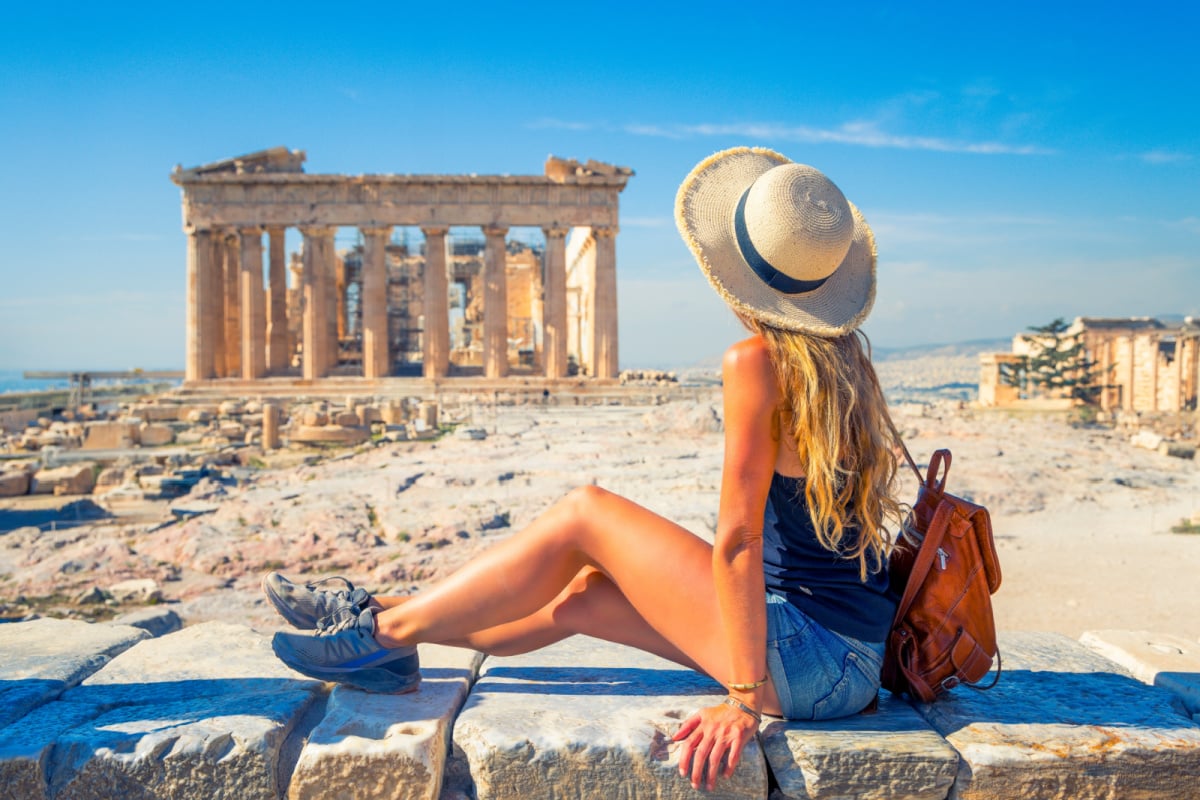
Between the ancient ruins of Athens, the lively streets of Thessaloniki, and the snow-covered slopes of Falkaro, Greece offers something for every type of tourist all year long.
3. Slovenia
Nestled between Italy, Austria, Hungary, and Croatia, Slovenia has quietly emerged as Europe’s best-kept secret.
Don’t let the country’s modest size fool you – between the majestic Julian Alps, pristine Lake Bled, and stunning Ljubljana, there’s so much to see around the country that you won’t even know where to start.
Slovenia’s meticulously preserved natural beauty combined with some of the most reasonable prices you’ll find in Central Europe always seem to leave travelers wondering how the country has managed to go under the radar for so long.
4. Portugal
At this point, no list of the top European destinations, no matter the context, would be complete without Portugal, a country that’s having what can only be described as the best tourism year in history.
With that perfect blend of coastal charm, historic wonders, vibrant cities, and, best of all, reasonable prices, the country’s rise as one of the top European destinations is multi-faceted and well-deserved.
Those looking to gain some insight into the country’s biggest attractions can head over here, though, generally speaking, most tourists are flocking to Lisbon, Porto, or the dreamy coastal region of Algarve.
As the country gains newfound levels of popularity, more investments are being made towards expanded flight options, better public transport services, and overall improved connectivity, leading us to believe that this is just the start of a long-lasting trend that’ll put Portugal among the world’s most corvette destinations.
We all have places we love and that we want to visit again and again.
Places where the weather is always perfect, the people are as warm and welcoming as the water, and there’s always something different to see and do.
For me that place is the Canary Islands. I love the Canary Islands so much that I am currently visiting them for the third time in 12 months!
Here’s why these stunning islands are my favorite winter getaway in Europe:
Year-Round Sunshine
One of the main attractions of the Canary Islands is that they boast year-round sunshine. This makes them a great place to escape to if you want to get away from the relentlessly cold winters of Northern Europe and North America!
Even in the coldest months of January and February the temperatures rarely drop below 21 degrees centigrade (70 degrees Fahrenheit) and the sea temperatures average 22 degrees centigrade (72 degrees Fahrenheit) so it’s warm enough to swim in the sea year-round too.
As an added bonus, the sun rises at around 6.30 am, sets at around 7.30 pm, and it rarely rains on the Canary Islands.
Despite this winter is the low season in the Canary Islands so crowd levels are very low. This means that you’ll have many of the best beaches to yourself and you can explore without any crowds.
Visiting this week as the winter season begins the weather is beautiful, the crowd levels are very low, and I haven’t needed reservations for any of the restaurants I wanted to eat in or activities I wanted to book. This includes snorkeling tours, surfing lessons, and even a camel safari.
Though there are public transport options available, I always hire a car in the Canary Islands. This is because some of the most beautiful beaches can be remote and difficult to access without one.
It also gives you the freedom to explore the islands at your own pace and to find hidden gems that are off the beaten path.
You can pass a sign advertising a renowned hiking trail, beautiful beach, or even that spontaneous camel ride, and just turn off if you want to experience something new.
Bufadero in Gran Canaria is a great example of this. This inlet forms a stunning natural swimming pool at low tide and is the perfect place for a beach day but is best accessed by car.
Fuerteventura is home to the famous ‘popcorn beach’, and this can also only be accessed by taking a car down a bumpy and narrow dirt track.
This unusual beach isn’t covered in sand but in dead algae, which looks prettier than it sounds! It takes on the appearance of kernels of popcorn. It’s an amazing natural phenomenon and makes a fab spot for a photo opportunity.
Endless Activities
The Canary Islands are a great location for active adventurers and each island offers something slightly different.
I love Fuerteventura because it offers the best surfing in Europe, especially during the winter when surfers descend on the island to catch its highest waves.
Corralejo is considered the island’s surf capital and Fuerteventura’s north shore is referred to as Europe’s Hawaii thanks to its huge swells. The surf community in Fuerteventura is huge and incredibly welcoming, even to enthusiastic beginners.
If you are a beginner keen to take to the waves then try Protest Surf School which is one of the most highly regarded on the island. The instructor I worked with was friendly and funny and made me feel incredibly at ease.
Tenerife is the island best for hikers and it has the most marked trails too. All of the Canary Islands are volcanic which means that the landscapes are exceptionally rugged and beautiful for hikers and walkers.
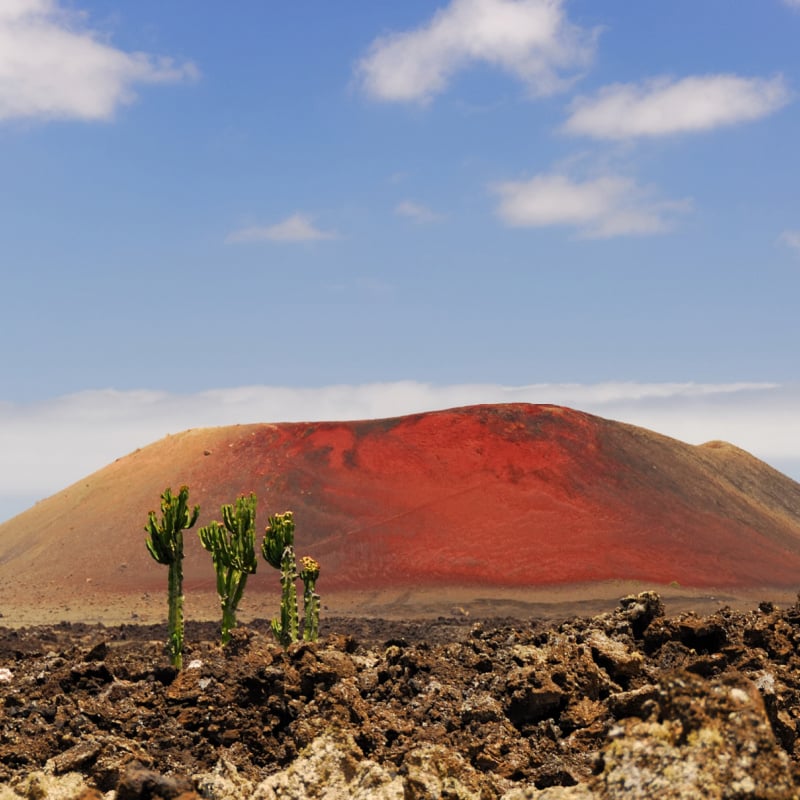
Lanzarote is home to Europe’s first underwater sculpture museum which I’m reliably informed is incredible for scuba divers.
Lanzarote is the most famous of the Canary Islands for divers and the underwater sculpture gallery is a unique experience away from the norm that you might expect when diving. But you’ll also find a spectacular array of underwater fauna to explore if you’re looking for something more traditional.
Inter-Island Travel
There are 8 main Canary Islands but only 4 of these are considered large tourist hubs. These are Fuerteventura, Gran Canaria, Lanzarote, and Tenerife. Tenerife is the largest island in the chain.
The islands are well-connected and easy to travel between. There are regular inter-island flights but the most economical and often fastest way to travel is by ferry.
The journey between Fuerteventura and Lanzarote is a great example of this. These two islands are incredibly close together, meaning the ferry ride takes just 25 minutes and prices range between 20-35 euros ($21-37 USD) depending on the operator you choose.
You can travel between islands for day trips or choose more than one vacation spot, allowing you to see as much of the Canary Islands are possible in a relatively short period of time.
If you’re staying in Fuerteventura then one of my favorite activities is to take the ferry from Corralejo to Timanfaya National Park on Lanzarote to visit the active volcano.
This is a popular excursion option and allows you to experience two of the different Canary Islands in a relatively short vacation.
Although the Canary Islands are officially a part of Spain geographically they sit close to the African coast. This explains why the weather is much warmer here than on mainland Spain and why the islands are often referred to as “the eternal spring.”
There’s nowhere I’d rather go to escape a long and cold winter.
Whether you’re a culture enthusiast or you’re simply dreaming of one day witnessing firsthand the timeless magic of a cobblestone-laden medieval town, Europe is probably at the top of your bucket list.
While a majority of travelers deliberately avoid winter, taking Transatlantic trips in summer instead when it’s warmer, the colder months are in fact some of the best to experience the Old Continent, as they concentrate a large number of events and cities that would normally be jam-packed suddenly become eerily quiet.
If you don’t mind the cold weather, or you think red-roofed old towns look even more picturesque when dusted with snow, we bring you 4 of the most beautiful yet less-obvious European spots to visit this winter:
Strasbourg, France
The so-called ‘Europole’, Strasbourg is a French city straddling the border with Germany. In fact, you can effortlessly travel between downtown Strasbourg to Kehl, a German border town across the River Whine, along which the frontier runs, in just under half an hour.
Needless to say, due to its proximity to Germany, and its status as a former German city lost following a succession of wars, Strasbourg has retained a Germanic character, seen in the many half-timbered houses that line the narrow alleys of the Old Town and the locals’ strong preference for beer over wine.
With its landmark Cathedral, with gigantic flying buttresses and a magnificent Gothic clock, and bucolic canal district of Petite France, it is one of France’s most beautiful cities, and each season has its very own charm, but we’re inclined to say Strasbourg looks its prettiest in winter.
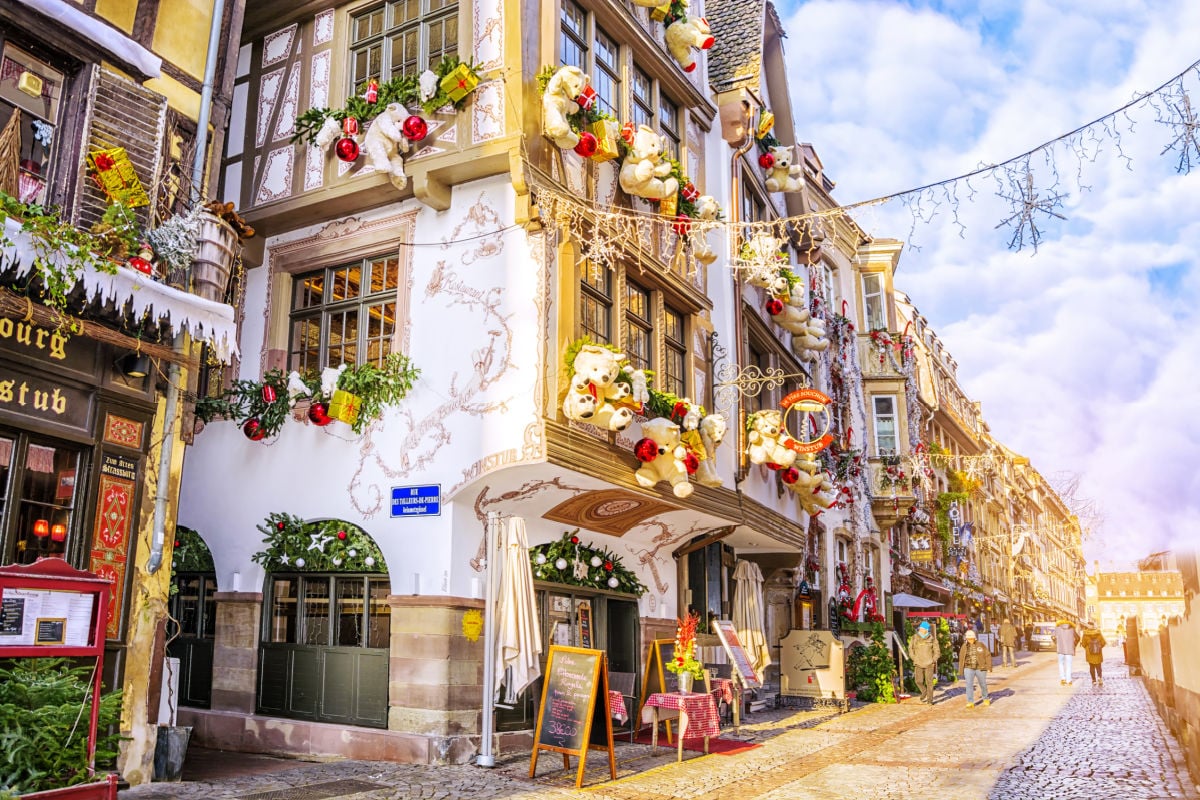
It’s when the world-famous Christkindelsmärik, or Christmas market is held, between the Cathedral and Place Kléber. One of the largest in Europe, it draws millions of tourists every year, drawn to the Franco-German delicaces, the smell of rich Alsatian sausages, and mulled wine.
Thousands of Christmas lights are also distributed along the Old Town, creating an enchanting atmosphere not easily found at other times of the year.
Though Strasbourg does not host nonstop Transatlantic flights, it is easy to reach from Paris, with fast-speed TGV trains operating between both cities and shortening the commute time to just under two hours – faster than the five-hour drive.
Freiburg, Germany
Not too far from Salzburg, on the German side of the border and at the gateway of the mysterious Black Forest, lies Freiburg im Breisgau, most commonly shortened to Freiburg.
Home to a pastel-colored Old Town, an imposing Cathedral that survived two World Wars, one of the oldest universities in Germany, and runnels that travel along the whole extent of the historic district, and according to urban legend, will result in you marrying a local should you ever accidentally step into one, it is a small German city full of intrigue.
As it is not as popular as Nuremberg or Rothenburg ob der Tauer, two of Germany’s other best-preserved medieval-era cities, Freiburg can feel less touristy and thus more pleasant to stroll, especially in winter when the summer and autumn crowds are gone.
If you’re lucky enough, you might visit during a snowy day, when the red tonality of the roofs is only barely visible through the virgin white, and street vendors selling hot sausages and melted chocolate by the Little Venice canal will help you feel warm and cozy inside.
Much like Strasbourg, Freiburg has a historical Christmas market that’s not to be missed, open daily from 10 am to 8:30 pm from early winter through mid-January.
The closest major airport to Freiburg is Frankfurt International, an entry point for several Americans flying into Europe in the low season.
Tallinn, Estonia
In the far Eastern reaches of Europe, right before Russia, Estonia is a country most Americans tend to skip altogether when planning a winter trip across the continent, either due to misconceptions relating to safety or sheer lack of knowledge on its inestimable cultural wealth.
It may share a border with an unfriendly state, but it is a member of both the European Union and NATO, officially safer than many Western countries as it is considered a Level 1 destination by U.S. authorities, and with a medieval heritage that puts other European nations to shame.
Tallinn is the cultural heart of Estonia and a city that strangely seems to truly come to life in winter; when medieval fairs are held, and natives dress up accordingly, the Christmas lights are on, and there is a high chance snow will settle along the winding cobbled ways.
Tallinn Old Town is a UNESCO World Heritage Site and one of Europe’s best preserved medieval cores, and it’s a magical setting to get lost in and explore in winter.
Zagreb, Croatia
Croatia is a country best known for its pristine Adriatic beaches, ocher-colored ancient citadels, and Game of Thrones filming locations, but it can make for an incredibly idyllic winter getaway.
Zagreb, the hugely overlooked capital, was crowned multiple times as one of the best Christmas destinations in acknowledgment of its massive Christmas market, among the largest in the Balkan Peninsula, and festive decoration.
Old Town Zagreb is divided between the Upper and Lower parts, and taking the funicular ride to Lotrscack Tower, you will be met with a sweeping panorama of the majestic domes and stately buildings, and tall, modern skyscrapers lying beyond the medieval core.
Some of the best things to do in Zagreb in winter include waking up early to buy local produce at the Dolac Market, climbing the Lotrsack watchtower for a privileged view of the Old Town and its red roofs, visiting St Mark’s Church, easily recognized for its colorful tiles depicting the Croatian coat of arms, and going for dinner at Tkalciceva Street, a Bohemian corner filled with quirky bars and restaurants.
Zagreb is a great starting point for exploring Central Croatia, also:
In order to escape the agitated city life, you can always take a bus out to the Sljeme mountain, a hiking spot often covered in snow, the frozen-over Plitvice Lakes, and Varazdin, a small traditional Northern Croatian town near the border with Hungary.
Learn more about incredible European winter destinations that are not overrun with tourists and that will not break the bank here.
When you think of the best European vacation spots you probably think of locations like France, Italy, and Greece.
But the country whose tourism sector has made the fastest record-breaking recovery from years of travel restrictions will probably surprise you.
The number of tourist arrivals in Albania was up by 56% this year compared to 2019. Albania beat better-known European destinations like Croatia, France, Greece, and Spain to this top spot.
Here’s why Albania is the fastest-growing destination in Europe:
A Rich History
The history of Albania is just as rich as that of neighboring Greece and Italy.
For 5 centuries Albania was ruled by the Ottoman Empire before proclaiming independence in 1912. Then after WWII, Albania became a Stalinist state.
The capital of Tirana boasts stunning architecture and a huge offering of museums and galleries. In Berat, you will find a 13th-century castle still standing. Travelers visit from across the world to see the UNESCO world heritage site of Butrint.
There are 4 different UNESCO World Heritage sites in Albania, while another 4 sites are currently sitting on the organization’s tentative list.
History lovers love Albania because of the wide and diverse range of historical events you can explore here.
Like other Mediterranean countries, Albania has warm and dry summers followed by mild and wet winters. That means that the winter months are a great time for sightseeing and exploring the country.
Beautiful Coastline
Albania is often considered the hidden gem of the Mediterranean. It Is located in the southeastern part of the Adriatic and the northeastern part of the Ionian Sea.
Albania boasts incredible turquoise waters and golden sand beaches. It has a prime location between Italy and Greece and its own host of idyllic beach resorts.
With 280 miles of stunning coastline, some of the best beaches in Albania include the pale pebble beach of Dhermi, and the bustling beach town of Himara. The Albanian Riviera is home to sandy lagoons and unspoiled sand beaches.
And although visitor numbers have risen significantly, Albania doesn’t get anywhere near the same number of tourists as other Mediterranean countries like Italy and Greece.
That’s not to say that summer on the beaches of Albania isn’t busy. But the summer months in Albania are nowhere near as busy here as they are in many of Europe’s other Mediterranean hot spots.
Incredible Landscapes
If you’re not interested in a beach vacation, then there are still plenty of reasons to visit Albania. The landscapes of Albania are incredibly diverse, and it boasts stunning scenery.
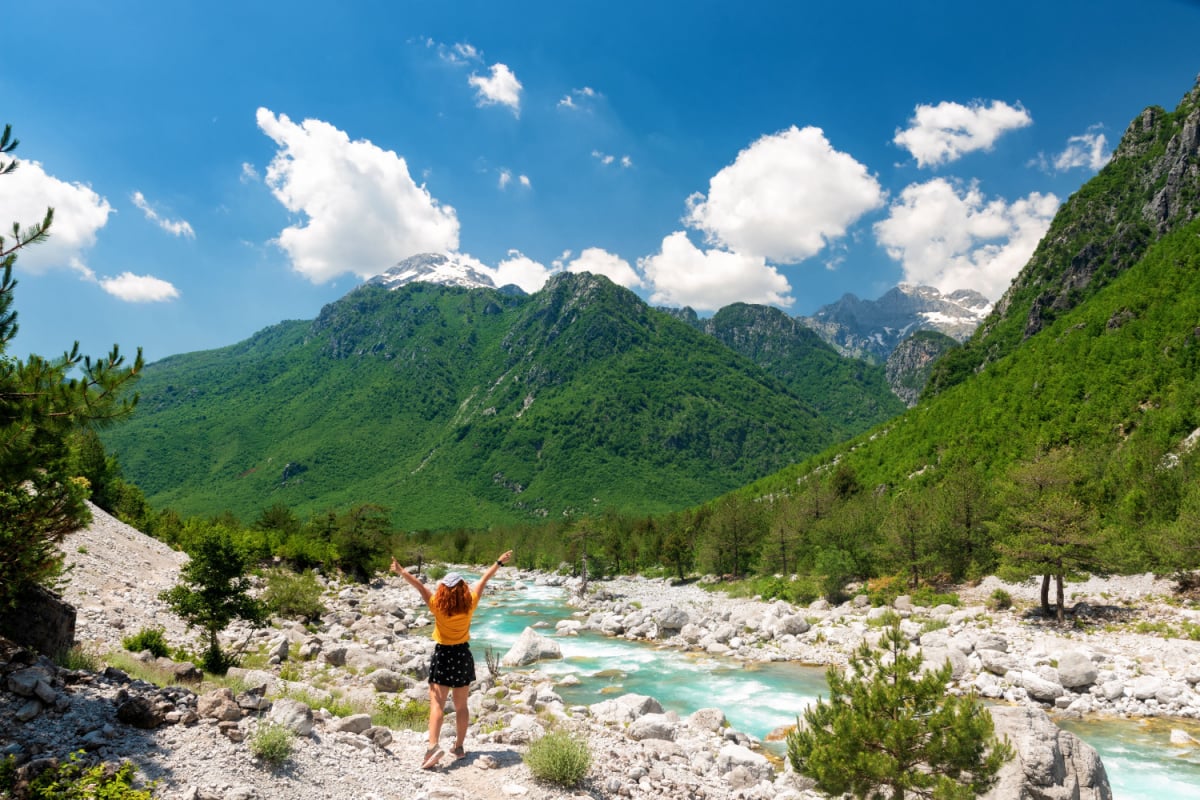
The north of the country is wild and untamed, making the perfect destination for adventure travelers. And outdoor explorers will enjoy the stunning national parks of Thethi and Llogara. These are great spots for hiking in the summer and for cross-country skiing or snowshoeing in the winter.
During the winter months, the snow-covered peaks of the Albanian Alps are a great spot for snow sports and a much more affordable place to take to the slopes than the Alps of France or Italy.
A Year-Round Destination
Though the summer months are considered the high season in Albania, the country is a year-round destination. In fact, many travelers believe that the off-season is the ideal time to discover Albania.
The number of tourists in the country is lower, which means that you will have many of the attractions to yourself. And because Albanians are very welcoming to visitors, this is a great time to see the authentic heart of the country and live like a local.
The months between September and November are the best time to visit Albania if you want to enjoy walking, cycling, sightseeing, and watersports.
No matter what time of year you visit Albania it is a very affordable destination to visit. You get great value for money on both food, tours, and accommodation, meaning that it is a brilliant choice for budget travelers.