Tag: Europe

  • This Flight-Free Route From London To Morocco Is Gaining Popularity In Europe

    This Flight-Free Route From London To Morocco Is Gaining Popularity In Europe

    [ad_1]

    Share The Article

    Last Updated

    Trains and slow travel are gaining a lot of popularity in 2023, especially in Europe. There are new train routes that make it easier and more comfortable for travelers to explore different countries this year, and many visitors prefer to take a sleeper train over a plane as it offers many advantages and a unique experience. Now, there is a special and exciting rail adventure connecting to Northern Africa that everyone is talking about. 

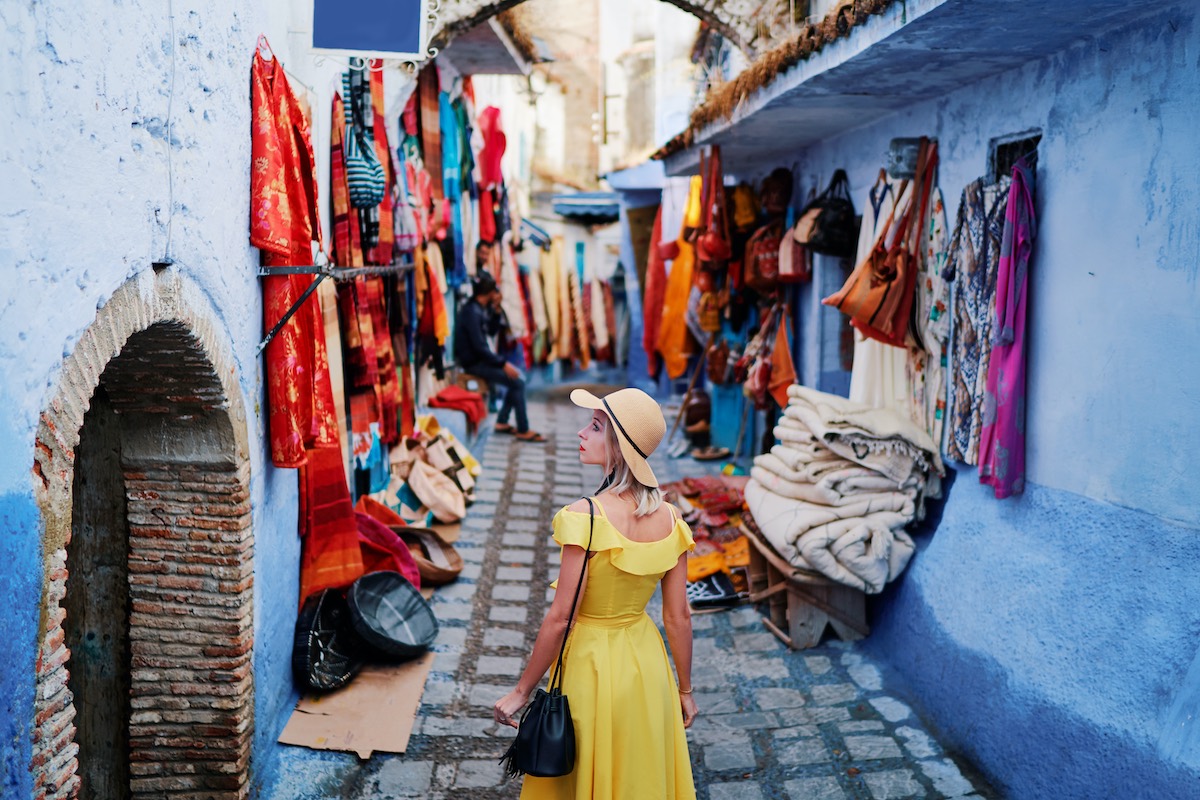
    Woman with yellow dress exploring streets in Chefchaouen, Morocco

    There’s a new 16-day-flight-free route connecting London to Morocco that includes trains, buses, and a ferry. The travel company Byway is offering a new multi-stop itinerary that allows travelers to organize their trip from the two main cities and suggests the best dates and stops for those interested in this exciting route. 

    The itinerary includes stops at Nîmes in France, Madrid, and Cádiz in Spain, and then explores Tangier, Chefchaouen, Fez, and Casablanca in Morocco. Byway has a “trip builder” feature that creates the route, but travelers can adapt it to their needs and preferences. 

    yellow train over bridge in the south of France

    According to the information shared, there’s an increasing interest among travelers for long-haul train trips as an alternative to short-haul flights. In 2022, 30% of Byway’s holiday bookings surpassed 10 days, while in 2021, these long trips only reached 5%. 

    Train travel offers travelers unique experiences and a different way to enjoy a destination away from long security lines at the airport and long waiting times before gates and at check-in counters. Those who want to get the most out of a city enjoy train travel as they only need to arrive a few minutes in advance, and the routes and travel opportunities seem endless in Europe.

    Top 5 Travel Insurance Plans For 2023 Starting At $10 Per Week

    View of the cathedral in Cadiz, Spain

    What Travelers Can Expect From Byway’s Itinerary

    Byway focuses on slow travel and sustainable experiences. The company is currently offering a popular itinerary for 16 days, starting at around $2,175 per person, from London to Casablanca roundtrip. The price includes accommodation with breakfast, travel tickets, guides to selected local activities, Whatsapp support, and a 100% COVID-19 refund. 

    Woman admiring lamps in Morocco

    This is the full itinerary of the journey to Morocco, and here’s what travelers can explore: 

    • London: The journey begins in this city. American travelers can arrive at this fascinating destination, enjoy the London Eye, visit Buckingham Palace, take a selfie with Big Ben, and then take the Eurostar train for two hours to France and let the adventure begin.
    Union Jack Being Waved In Front Of Westminster Palace, Elizabeth Tower With Big Ben Clock Appearing Blurred In The Background, London, England, United Kingdom
    • Nîmes: The Eurostar train stops in Paris, and then travelers must continue by train for two more hours to Nîmes, where they get to enjoy beautiful views of the French countryside. This city has impressive Roman monuments and picturesque streets that travelers get to enjoy as they spend a night here.
    • Madrid: The next day, it’s time to cross borders and reach Spain. The train stops in Barcelona, and then travelers must continue the journey to Madrid, where they stay for a night and explore the museums and taste delicious Spanish food during the day. 
    Madrid, Spain cityscape at Calle de Alcala and Gran Via
    • Cadiz: The port city Cadiz —one of the most budget-friendly cities in Spain— is the next destination. Travelers can explore its fascinating buildings and castles and beautiful historic streets. 
    • Tangier: From Cadiz, travelers must take a bus to Tarifa for almost two hours and then board the ferry to Tangier and cross the waters for about an hour. At Tangier, visitors can stay for two nights to get the most out of this fascinating city. 
    • Chefchaouen: the next stop can be reached by bus. At Chefchaouen, tourists get to see the impressive blue buildings and enjoy the rich local culture. Byway recommends staying here for two nights. 
    Blue houses in Chefchaouen, Morocco
    • Fez: Just four hours away by bus from Chefchaouen, travelers can visit Fez, where they can stay for three nights to learn more about the impressive Moroccan crafts, spiritual centers, museums, and the fascinating architecture of this 1,200-year-old city. 
    • Casablanca: The last Moroccan city offers a beautiful skyline, historic buildings, and an impressive cultural mix. Travelers can stay for a night before heading back to London.
    Man walking camels in the desert

    For the way back, Byway suggests spending two more nights in Cadiz and one night in Madrid, and another night in Nîmes. The journey includes time to rest and explore in a unique adventure. 

    Traveler Alert: Don’t Forget Travel Insurance For Your Next Trip!

    ↓ Join Our Community ↓

    The Travel Off Path Community FB group has all the latest reopening news, conversations, and Q&A’s happening daily! 

    Travel-off-Path-group-1-1
    SUBSCRIBE TO OUR LATEST POSTS

    Enter your email address to subscribe to Travel Off Path’s latest breaking travel news, straight to your inbox

    This article originally appeared on TravelOffPath.com

    [ad_2]

    Source link

  • This Is One Of The Top Destinations In Europe For Sun, Sand, And Culture In 2023

    This Is One Of The Top Destinations In Europe For Sun, Sand, And Culture In 2023

    [ad_1]

    Share The Article

    Last Updated

    It’s still only January, but anticipation for summer is at an all-time high in Europe now that it has entered the post-pandemic phase. Popular countries like France, Italy, and Greece are all seeing a rise in demand — as expected — but this hidden gem, in particular, is stealing the show as one of the top destinations for sun, sand, and culture in 2023:

    Welcome To Cyprus

    Aerial View Of Paramlini, A Resort Town In The Famagusta District Of Cyprus, An Island In The Eastern Mediterranean, Southern Europe

    Cyprus is an island nation in the Mediterranean and the Southeasternmost member of the European Union (EU). Although it is indisputably European, its closest neighbors geographically are Turkey (the Anatolian peninsula is only 50 nautical miles north), Syria, Lebanon, and Egypt. Due to its unique status, it sits at the crossroads of Europe and Western Asia.

    It is also one of the most ethnically diverse states in Europe, home to Cypriots of Greek, Turkish, Armenian, Maronite, and Latin origin. Although the ethnic Greek population forms an overwhelming majority – over 78% of the island – the cultural contributions of minority groups are evident, whether it’s the local folklore, cuisine, or customs.

    Greek Blue Dome Church Agios Nikolaos In Protaras Town, Facing The Eastern Mediterranean Sea, Cyprus, Southern Europe

    As a tourist destination, Cyprus boasts a scenic Mediterranean coastline, untouched nature, and a fascinating History. From Ayia Napa, in the East, to Paphos out West, it offers a plethora of sandy beaches, heavenly turquoise-water bays, and marine parks, all interspersed with quaint fishing villages and lively urban developments.

    During the health crisis, international arrivals dropped to a historical low of 663,000, a 79.57% decline from 2019. Similarly to other EU member states, the Republic of Cyprus enacted some of the strictest anti-tourism measures in their attempt to keep Covid variants from being imported, including banning entry to most non-EU nationals.

    Top 5 Travel Insurance Plans For 2023 Starting At $10 Per Week

    Male Traveler Wearing A Face Mask As He Opens His Passport On The Photo Page Before Undergoing Border Control Arriving At A New Country, Airport

    It only reopened for the wider public in 2021, though its vaccination, multiple testing, and mandatory quarantine requirements discouraged a majority of tourists from visiting. Once the virus came under control across the Union, however, Cyprus became one of the first European countries to lift all border measures as early as May 2022.

    Cyprus Is Nearing Pre-Pandemic Levels

    Greek Ruins Facing The Mediterranean Sea In The Island Of Cyprus, Southern Europe

    Following two years of self-imposed isolation, the move was warmly received by tourism officials, who feared the Cypriot Government’s tough stance would harm its competitivity in the Mediterranean region in the long term. Indeed, arrival figures are below 2019’s nearly a year into reopening, but they are nearing pre-pandemic levels fast.

    According to the latest data published by the Statistical Service, between January and December 2022, 3,201,080 foreigners arrived in Cyprus, up from 1,936,931 tourists the year before. So far, 2019 retains the all-time record for yearly arrivals, with close to 4 million holidaymakers registered that year.

    Young Woman Wearing Beach Attire And A Straw Hat Lying On The Sand As She Looks Out At A Turquoise Colored Ocean In A Tropical Location, Beach Vacation

    From 2020, the year-on-year growth is rather impressive, taking into account that border curbs were only lifted in 2022 Q2 (second quarter), and the war in Ukraine led to a sharp decrease in the number of tourists from Russia and Ukraine, two of Cyprus’ most lucrative markets. To put it simply, Cyprus is totally smashing it on the post-pandemic scene.

    Despite its popularity within Europe, Cyprus is still relatively unknown among Americans. They are nowhere to be seen in the top 10 nationalities visiting Cyprus every year, though the Government is investing heavily in online campaigns aimed at introducing the beautiful island to the world, reaching, on average, a billion smartphone users per year.

    Cape Greco, Cyprus

    Why Is Cyprus Your Best Bet For A Relaxed European Summer?

    More challenging to reach from the mainland U.S. than Italy or Spain due to non-existing nonstop flight options, Cyprus is largely ignored by U.S. passport holders heading to Southern Europe. For the crowd-wary traveler looking for alternatives off the beaten path, it is one of the best bets for a slow-paced, truly relaxing Mediterranean vacay.

    Young Female Traveler Sitting On The Steps Of The Ancient Kourion Theatre, Near Limassol, Cyprus

    If it’s all-inclusive packages you’re into, Protaras and Ayia Napa, on the Southeastern tip, have an extensive portfolio of luxurious beachfront resorts and villas. Looking for a lively social scene and the island’s best nightlife? Head to the coastal Limassol, the country’s second-largest city dubbed the ‘mini Dubai’. You’re a History aficionado? No problem:

    Some of the top sights include Romanesque cathedrals dating back centuries, incredibly well-preserved Hellenic ruins, such as the UNESCO-protected Tombs of the Kings in Paphos, and cobblestone towns tucked away in a mountainous inland, famous for their tradition and winemaking. On top of that, Cyprus is the birthplace of Aphrodite in Greek mythology.

    Traditional Stone Houses And Cobblestone Streets In The Village Of Lofou, Inland Cyprus

    North vs. South Cyprus

    Traveling to Cyprus, non-European tourists are reminded the island remains divided between the internationally-recognized Republic of Cyprus, an EU member, and the breakaway, unrecognized state of the Turkish Republic of Northern Cyprus (TRNC). A UN buffer zone runs along the northern third of the island and splits the Cypriot capital Nicosia in half.

    Barricaded Street Along The Green Line In Nicosia, Cyprus

    For tourism purposes, there are only two official entry points into the Republic of Cyprus: the airports in Larnaca (LCA) and Paphos (PFO). The third airport, Ercan (ECN), is controlled by TRNC authorities. Foreigners landing first in Ercan will be denied entry to the Republic of Cyprus when attempting to cross from North to South.

    Read more about the Cypriot division and other important travel tips here.

    Traveler Alert: Don’t Forget Travel Insurance For Your Next Trip!

    ↓ Join Our Community ↓

    The Travel Off Path Community FB group has all the latest reopening news, conversations, and Q&A’s happening daily! 

    Travel-off-Path-group-1-1
    SUBSCRIBE TO OUR LATEST POSTS

    Enter your email address to subscribe to Travel Off Path’s latest breaking travel news, straight to your inbox

    This article originally appeared on TravelOffPath.com

    [ad_2]

    Source link

  • 4 Of The Most Beautiful Medieval Cities In Europe To Visit For 2023

    4 Of The Most Beautiful Medieval Cities In Europe To Visit For 2023

    [ad_1]

    Share The Article

    Last Updated

    Medieval History is one of the reasons behind Europe’s popularity among Americans. Be it castles evocative of Disney movies or cobblestone-laden streets, every traveler wants to experience that Old World charm. While the entire continent is packed with landmarks, four cities in particular are known for their striking beauty, looking almost frozen in time.

    4 Of The Most Beautiful Medieval Cities In Europe To Visit For 2023

    Now that international travel has been reinstated, that old familiar urge to explore new destinations, supressed for three long years, is finally back, and being home to some of the world’s most iconic sights, Europe is at the front of the global tourism revival. In fact, cultural expeditions are on track to become one of the most sought-after experiences in 2023,

    One could spend decades exploring the continent’s rich heritage and gorgeous Old Towns, but these four are certainly not to missed:

    Circus Lane, Edinburgh, Scotland, United Kingdom

    Carcassone

    The Fairytale French Town

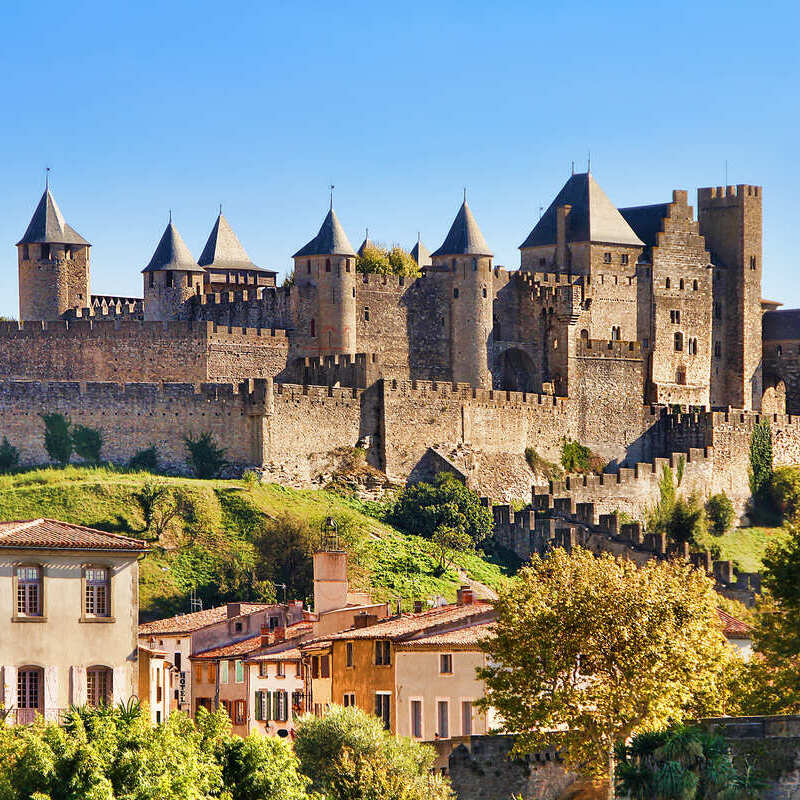
    Perhaps Europe’s most impressive medieval citadel still in use, Carcassone is a small ville in the South of France, hidden away in the idyllic, vineyard-packed département of Aude. Looking at its breathtaking panorama from a distance, atop the rolling green hills opposite, visitors will soon understand why UNESCO claimed it as part of its World Heritage Sites:

    Top 5 Travel Insurance Plans For 2023 Starting At $10 Per Week

    Medieval City Of Carcassone In The Aude Departement Of France, A Well-Preserved Medieval Citadel Of Europe

    Massive moated fortifications and a series of defensive walls and ramparts, one layer higher than the other, surround the entire city, in itself a sophisticated maze of early 14th century stone-built buildings, including centuries-old bakeries and artisan shops, inner citadels and hidden passageways leading to secret patios shielded by tall trees.

    The city’s top sights include the restored Château Comtal, the Church of Saints Nazaire and Celse, embellished on the inside by a large expanse of stained glass, and Pont Vieux, a stone bridge built in the Middle Ages. As for the beautiful round towers distributed along the outer walls, good luck trying to count them: there are 53 in total, all perfectly preserved.

    Rothemburg ob der Tauber

    One Of Germany’s Last-Surviving Medieval Towns

    Bearing a long and hard-to-pronounce name, Rothemburg (in its shortened form) is a Bavarian gem easily recognized for its incredibly picturesque Old Town, and 12th century walls, a rare feat for any German stadt, considering most of the country would have been flattened, or badly damaged beyond repair during both World Wars.

    Medieval Town Of Rothemburg ob der Tauber In Bavaria, Germany

    Rothenburg was lucky enough to be spared most of the widespread destruction which rained down on other major targets like Cologne and Berlin. That’s not to say it wasn’t hit hard, with up to 30% of the monuments in the center being a modern-day replica of much older versions. Even then, the bucholic appeal is still there, as if no conflict has taken place.

    Strolling the narrow streets, tourists will find plenty of the classic half-timbered houses of Bavaria, except Rothenburg’s are easily distinguishable for being vibrant-colored and livelier, pubs and taverns serving traditional food and craft beer, and a majestic Gothic church whose slender belfry has dominated the skyline for 711 years.

    Edinburgh

    Scotland’s Quaint Capital City

    The surprisingly quaint capital of Scotland, and the most liked city in all of the United Kingdom, Edinburgh has stolen the hearts of short-term guests, and proved a source of inspiration for artists, oral poets, and renowed writers for well over ten centuries now. Just make sure you pick up your jaw from the floor stepping out of Waverley Station in the heart of town.

    Edinburgh Skyline Seen From Calton Hill, Scotland, United Kingdom

    You’ll be immediately welcomed with a panorama of the somber-looking Old Town, dotted with Gothic spires and ‘closes’ that zigzag their way up a hill before culimating in a massive stronghold – Edinburgh Castle – casting a long shadow over the Victorian-era ‘New’ Town below. ‘Auld Reekie’, as it is affectionately called by locals, is truly a sight to behold.

    Other than its picture-perfect skyline, Edinburgh’s tourist offer is consolidated through state-of-the-art museums, such as the National Museum of Scotland, where a stuffed Dolly the Sheep is exhibited, alongside weaponry and pagan Highland crosses. It is also the birthplace of Harry Potter, having extensively inspired settings in the books.

    Bruges

    The Venice Of The North

    Nicknamed ‘Venice of the North’, due its city center traversed by winding canals, Bruges has enough medieval wonders to keep History buffs like you entertained for days. Sitting on the Flemish, Dutch-speaking side of Belgium’s internal borders, it is both an important trading port and one of Europe’s prettiest cities.

    Picturesque Canal In Old Town Bruges, In The Flemish Half Of Belgium, Europe

    Taking a canal tour of Bruges, tourists will be able to tick off numerous items off their bucket list: Audrey Hepburn’s former house, the 11th century Saint John’s Hospital, and the scenic Rosary Quay. On land, some of the main point of interests include the City Hall, a tall belfry erected in the Middle Ages, and the Michelangelo-decorated Church of Our Lady Bruges.

    Once they have their share of historical sights for a trip, it will be time to quench a different kind of thirst. No cultural visit to Bruges would be complete without a weekend pub crawl, seeing that it has a long-standing brewing tradition, and an extensive list of beers are named after it, with Brugge Blond, Brugge Tripel and Brugs to name a few.

    Belgian Beer Set On A Table Overlooking A Canal In Bruges, Belgium

    If you’re heading to Europe in the near future, don’t forget to check out these other 3 winter destinations that are not only gorgeous, overlooked medieval gems, but super budget-friendly on an extent.

    Traveler Alert: Don’t Forget Travel Insurance For Your Next Trip!

    ↓ Join Our Community ↓

    The Travel Off Path Community FB group has all the latest reopening news, conversations, and Q&A’s happening daily! 

    Travel-off-Path-group-1-1
    SUBSCRIBE TO OUR LATEST POSTS

    Enter your email address to subscribe to Travel Off Path’s latest breaking travel news, straight to your inbox

    This article originally appeared on TravelOffPath.com

    [ad_2]

    Source link

  • These 5 National Parks Are Considered The Best In Europe

    These 5 National Parks Are Considered The Best In Europe

    [ad_1]

    Share The Article

    Last Updated

    Visiting a new country and admiring its natural beauty is one way to make a vacation unforgettable. More travelers are looking to connect with nature in 2023 and are considering digital detox experiences. One of the best ways to do it while exploring a new destination is by visiting national parks. 

    The are amazing national parks in the United States, and Europe also has impressive biodiversity and fantastic hikes for those interested in mindfulness and taking a break from social media and high-internet speed.

    Man walking in beautiful park in Switzerland

    According to a survey performed by Money.co.uk and shared on Euro News, these are Europe’s best national parks: 

    5) ​​Plitvice Lakes, Croatia

    This impressive 295-sq.-km forest reserve is located in central Croatia, the Bosnian-Herzegovina border, and has spectacular lakes connected by waterfalls, and peculiar caves that can easily amaze visitors. The turquoise water changes color depending on the minerals and the time of the day. 

    Travelers walking over bridge in ​​Plitvice Lakes, Croatia

    Croatia’s largest National park is also home to bears, wolves, and different bird species. The lake system and its impressive landscapes make it a must-visit park in Europe. The Plitvice Lakes park was included on UNESCO World Natural Heritage List in 1979.

    This park can be visited at any time of the year. Travelers must bear in mind that it is prohibited to swim in the lakes —even during hot summer days— and it can get crowded during peak season. Now that Croatia was included in the Schengen zone and is becoming a very popular destination in Europe, travelers can include this park on their must-visit list. 

    Top 5 Travel Insurance Plans For 2023 Starting At $10 Per Week

    Wooden bridge at Plitvice Lake in Croatia

    4) Lake District, United Kingdom

    One of the best places for a digital detox in England is the  Lake District, already considered by millions of brits as a great natural environment to decompress. It’s popular for its glacial ribbon lakes and great activities. Visitors are allowed to swim in the lake and can also rent boats, ride bikes on cycling routes—travelers can rent bikes on site—, just go for a walk or participate in stargazing activities at night. 

    VIew of the Lake District in the united Kingdom

    This park, in the administrative county of Cumbria, is open to the public at all times and there are numerous events and guided tours. Lake District has an official website with relevant information for travelers and great tips to make the most out of your visit. 

    3) Cinque Terre National Park, Italy

    This beautiful coastal region in Italy is known for its fresh and delicious seafood, and fascinating unique villages. Cinque Terre National Park is located in northern Italy, in in the province of La Spezia, Liguria, and is home to gorgeous landscapes and popular towns. 

    View if the beautiful coastal village Cinque Terre in Italy

    This is one of Italy’s smallest parks, and the government has been promoting sustainable tourism at this location. Travelers can visit organic farms, admire local flora and fauna, and connect with local customs and the local community. Cinque Terre National Park was considered a UNESCO World Heritage Site in 1997.

    2) Göreme National Park, Turkey

    The popular image of the sky crowded with hot-air balloons takes place at this wonderful park. The Göreme National Park has an impressive landscape sculpted by erosion over an extinct volcanoes area that extends to  39 square miles. 

    Hot air balloon flying over Cappadocia Turkey

    Travelers can explore its beautiful valleys, and admire the various rock formations, and historic churches. Its history and beauty made it earn UNESCO World Heritage status: “The incomparable beauty of the decor of the Christian sanctuaries makes Cappadocia one of the leading examples of the post-iconoclastic Byzantine art period.”

    1) The Swiss National Park, Switzerland

    And finally, the first place goes to the Swiss National Park. This place is home to charming lakes, villages, and the impressive alps. Visitors can admire its spectacular landscapes and also the medieval quarters, 

    naked in the alps

    It has been considered one of the best parks for mindfulness in the world since it’s a very protected area with rich biodiversity,  low pollution, and great activities to unwind and relax—There are 83 spaces and wellness centers.

    A view of the blue lakes and mountains of Switzerland with buildings in the foreground

    Traveler Alert: Don’t Forget Travel Insurance For Your Next Trip!

    ↓ Join Our Community ↓

    The Travel Off Path Community FB group has all the latest reopening news, conversations, and Q&A’s happening daily! 

    Travel-off-Path-group-1-1
    SUBSCRIBE TO OUR LATEST POSTS

    Enter your email address to subscribe to Travel Off Path’s latest breaking travel news, straight to your inbox

    This article originally appeared on TravelOffPath.com

    [ad_2]

    Source link

  • These Are The Safest Countries In Eastern Europe For Tourists

    These Are The Safest Countries In Eastern Europe For Tourists

    [ad_1]

    Share The Article

    Last Updated

    Eastern Europe is one of the most underrated, yet fascinating regions to explore as a tourist. Sadly, misinformation regarding safety levels, and the notion that Eastern countries are a hotbed of wars, with weak democracies, and where pickpockets run amok have certainly not helped their cause – but to which extent are these beliefs true? In other words, where in Eastern Europe tourists will be the safest?

    These Are The Safest Countries In Eastern Europe For Tourists

    What Is The Exact Definition Of A Safe Country?

    According to the United Nations (UN), there are 23 countries in Eastern Europe (EE), which begins somewhere along the former Soviet border, and extends as far East as Western Russia. Out of those, 13 have been deemed completely safe to travel by the U.S. Department of State – more specifically, they were awarded the lowest-possible Level 1 badge on the entity’s Travel Advisory listings.

    This means that, when visiting Level 1 states, Americans do not face heightened safety threats, or any particular health risk unrelated to the ongoing Covid pandemic. In fact, some of these destinations are much safer than the United States even, enjoying significantly lower rates of petty crimes, armed robbery and murder, and a high human development index.

    Old Town Ljubljana Including Ljubljanica River, The Iconic Triple Bridge, And The Red Franciscan Church In Ljubljana, Slovenia, Eastern Europe

    Since the fall of the Berlin Wall, numerous EE nations made great strides in their quest for peace, tilting Westward, at least when it comes to foreign policy, and joining intergovernment military alliances like NATO, and the European Union (EU). Thanks to their efforts, the times when Eastern Europe was an obscure landmass where crime was rampant, and civil liberties curbed is but a distant memory.

    Interestingly, Eastern countries that have assimilated into Western institutions form a majority among those classed as ‘safe’ by the U.S., with the complete list seen below:

    Top 5 Travel Insurance Plans For 2023 Starting At $10 Per Week

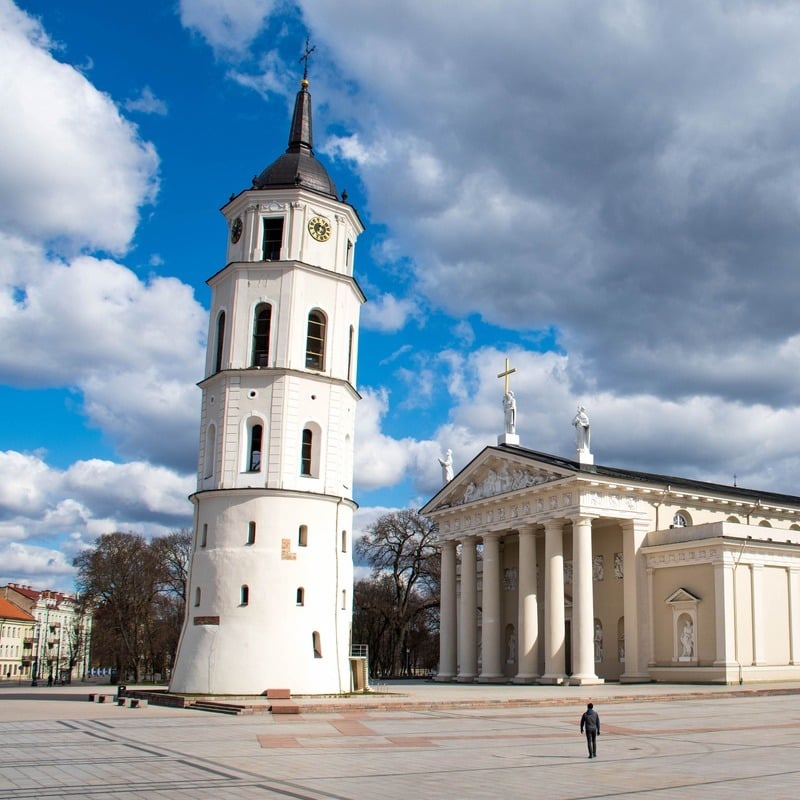
    Male Tourist Walking In An Empty Main Square In Old Town Vilnius, Where A White Medieval Tower And The Cathedral Is Located, Vilnius, Lithuania, A Country In Eastern Europe On The Baltic Coast

    Eastern European Countries In Level 1

    • Bulgaria
    • Croatia
    • Czech Republic
    • Estonia
    • Georgia
    • Hungary
    • Latvia
    • Lithuania
    • Montenegro
    • North Macedonia
    • Poland
    • Romania
    • Slovakia
    • Slovenia
    Panoramic View Of Old Town Tbilisi, Georgia, Transcontinental Caucasus Region Between Europe And Asia

    Out of those, only Georgia is neither in NATO, nor the EU. Others like Montenegro and North Macedonia have not yet succeeded in finalizing their EU accession talks, but they have been NATO members since 2017 and 2020, respectively. All countries listed under the Level 1 category are perceived as ‘low-risk’ destinations.

    Which Eastern European States Travelers Should Avoid?

    Aerial View Of Lviv Ukraine

    Sadly, not all former Soviet Eastern countries have managed to shake off the ghosts of communism, and their dark past as easily as others, becoming authoritarian regimes where the rule of law is only loosely enforced, or at best, fragile democracies with widespread urban violence and a poor record of upholding human rights.

    It’s a widely-known fact large swathes of Europe’s Far East are either engulfed by war, or facing huge democratic backslidings. This has led many tourists to wonder whether now is the right time to visit, especially when the invasion of Ukraine has shown no signs of slowing down, and tensions remain high.

    Church Of The Savior On Spilled Blood In St Petersburg, Russia

    That is the case with Belarus and Russia, commonly referred as Europe’s last-surviving dictatorships, and the hostile agents in the latest invasion of Ukraine. Due to the conflict, all three countries – Belarus, Russia and Ukraine – are considered no-go zones, being singled out as the only Level 4 destinations in the entire continent.

    At Level 4, U.S. citizens are warned to refrain from traveling due to serious threat to life or health, the highest possible, ‘least safe’ level a country can reach. Luckily, a majority of EE destinations that have failed to qualify for Level 1 are instead a Level 2: essentially, visitors must maintain a higher situational awareness, but tourism is not discouraged:

    EE Countries That Are Still Safe, But Where Increased Caution Is Advised

    Stari Most, Mostar Old Town And The Neretva River On A Sunny Day Seen From Atop The Minaret At Koski Mehmed Pasha Mosque, Mostar, Herzegovina Part Of Bosnia And Herzegovina, Eastern Europe

    Eastern European Countries In Level 2

    • Albania
    • Armenia
    • Azerbaijan
    • Bosnia and Herzegovina
    • Kosovo*
    • Moldova
    • Serbia

    *Kosovo is recognized as a sovereign country by the United States, but wider UN recognition is limited; it is however included here.

    Ottoman Houses In Old Town Prizren, Kosovo, Eastern Europe

    Out of those listed above, Americans must do extensive research, and be particularly vigilant when touring Kosovo, a partially-recognized territory in the Balkan Peninsula, due to Kosovo’s strained relations with Serbia, which lays claim to the area. Conflicts in border zones have been known to erupt without warning, and cross-border travel between both may have its limitations.

    Armenia and Azerbaijan are yet another pair at loggerheads over the status of a number of provinces, and they are extremely unlikely to re-establish diplomatic ties anytime soon. For that reason, Americans must not travel to the Armenian-Azerbaijani border, as well as the Nagorno-Karabakh region of Armenia ‘due to recent hostilities’.

    Aerial View Of An Armenian Church On The Shores Of A Lake In Armenia, Caucasus Region Between Western Asia And Eastern Europe

    Lastly, Moldova is widely regarded as safe, with the exception of Transnistria, a breakaway state sponsored by Russia, where Moldovan law and authority does not apply de facto. Most Americans visiting Transnistria will not encounter any problems, but the Department of State urges them to ‘reconsider travel’ now there’s a war in neighboring Ukraine.

    Contrary To Popular Belief, Nearly 90% Of Eastern Europe Is Safe For Travel

    Old Town In Riga, Latvia, Eastern Europe

    In total, 58% of EE countries are at a tourist-friendly Level 1, while a further 87.5% are at either Level 1 or Level 2. There are no Level 3 destinations (where travel plans should be reconsiderered) in Eastern Europe, proving it is just as safe, if not safer, than these far more popular Western European hubs.

    Of course, crime can still occur anywhere, and traveling abroad to countries where the culture is foreign, and the language is unfamiliar, Americans should make sure they take the necessary measures to improve their own security and reduce risks of being robbed, scammed, or finding themselves in dangerous situations.

    Official advice for individual destinations can be found here.

    Traveler Alert: Don’t Forget Travel Insurance For Your Next Trip!

    ↓ Join Our Community ↓

    The Travel Off Path Community FB group has all the latest reopening news, conversations, and Q&A’s happening daily! 

    Travel-off-Path-group-1-1
    SUBSCRIBE TO OUR LATEST POSTS

    Enter your email address to subscribe to Travel Off Path’s latest breaking travel news, straight to your inbox

    This article originally appeared on TravelOffPath.com

    [ad_2]

    Source link

  • These 3 Gorgeous Winter Destinations In Europe Are Also Super Budget Friendly

    These 3 Gorgeous Winter Destinations In Europe Are Also Super Budget Friendly

    [ad_1]

    Share The Article

    Last Updated

    Thinking of flying across the pond this season for a dreamy European vacay, but you’re not too sure about Switzerland’s overpriced ski resorts or the buzzing crowds in Austria’s alpine towns? Perhaps you should be considering these 3 alternative destinations in Europe that are not only just as gorgeous but super budget-friendly.

    These 3 Gorgeous Winter Destinations In Europe Are Also Super Budget Friendly

    Now that Europe’s borders are fully open for the first time since early 2020, demand keeps growing exponentially, pushing up the cost of flights and accommodation across the continent. Still, there are a handful of locations off the beaten path where visitors can be shielded from the crippling effects of inflation and where tourism has only begun to grow.

    This time, you better pack those extra layers of clothing: we’re headed East.

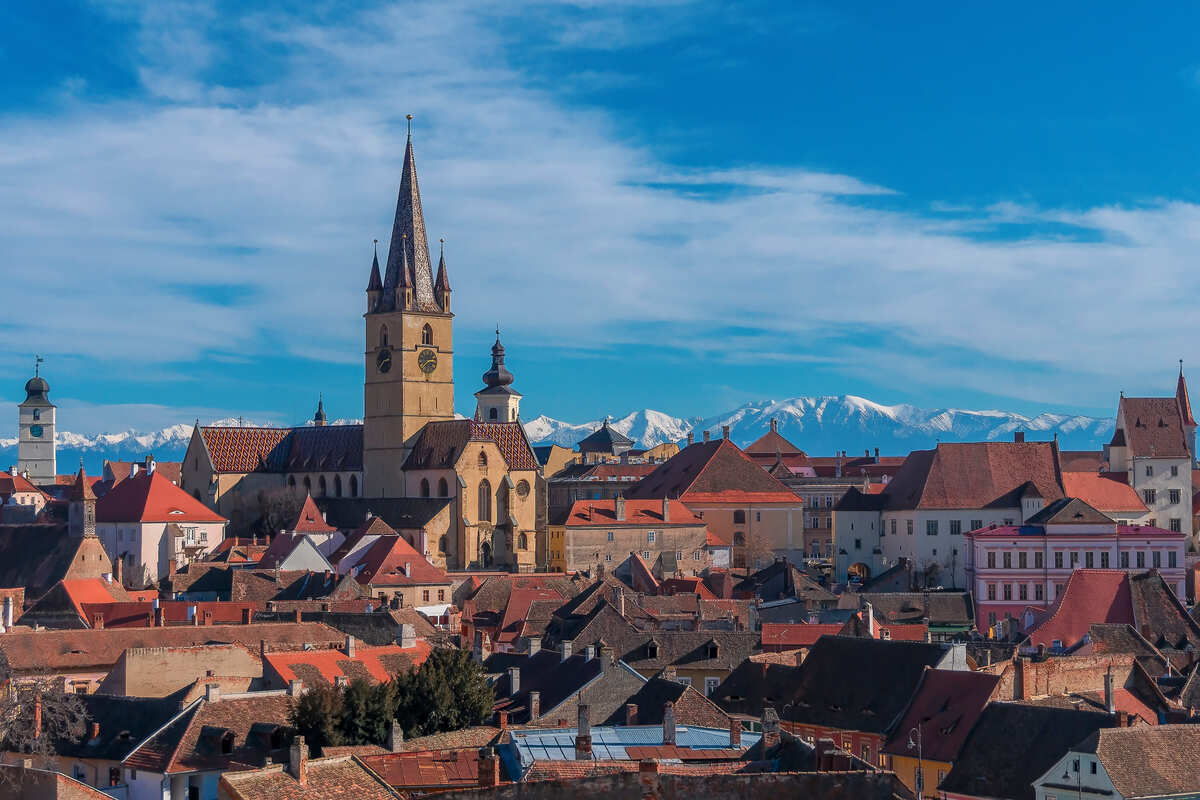
    Sibiu, The Romanian City With Eyes

    Nestled in the heart of Transylvania in Romania, not far away from the tourist hotspots of Brasov and Cluj-Napoca, Sibiu is a small city shrouded in mystique with a History spanning dating back nearly a millennia — and one that is incredibly affordable by European standards. On average, a one-month stint will cost USD $497 without rent.

    Famous for the eyebrow-shaped dormers that adorn several of the houses within the old walled town, and that has inspired its nickname ‘City with Eyes’ over the years, it is an important cultural center for the Transylvanian Saxons, an ethnic minority originating from Saxony, in Germany, that have lived in the area since the Middle Ages.

    Aerial View Of Old Town Sibiu And The Bridge Of Lies Blanketed By Snow, Transylvania, Romania

    Exploring its winding alleyways with a ciocolată caldă in hand, admiring the baroque architecture, the city’s well-preserved watchtowers, and the open-air markets selling local produce amid an early-morning snow flurry certainly feels like stepping into the pages of a children’s fairytale book, except the colors in real life are much more vibrant.

    Within short driving distance from Sibiu, tourists will find the Cindrel and Fagaras Mountains, which rank among the best ski destinations this far East in Europe, and a quaint countryside dotted with medieval fortified churches, stunning castles, and traditional Saxon settlements where German remains the lingua franca.

    Top 5 Travel Insurance Plans For 2023 Starting At $10 Per Week

    Bansko, Bulgaria’s Leading Ski Resort Town

    Bordering Romania to the South, Bulgaria is yet another budget-friendly haven for those looking to stretch their dollars further and access quality services without being charged revoltingly high fees. In fact, digital nomads are heading en masse to this small town in Bulgaria this winter, and the high affordability may be (part of) the reason why.

    In Bansko, a ski resort town surrounded by the snow-capped Pirin Mountains, nomads can get by on USD $745 a month, and you can certainly benefit from the low fares as a visitor yourself. Couples on a six-night sejour at a 3-star hotel will pay, on average, $333; on top of that, $26 for expenses each time they have dinner at a local restaurant.

    Main Street In Bansko, An Alpine Bulgarian Town At The Foot Of The Pirin Mountains, Bulgaria, Eastern Europe

    Affordable rates are not the only thing that makes Bansko a great late winter getaway deal, though: the Pirin mountain range, where it is located, is an area of outstanding natural beauty. Think densely-forested ridges, glacial lakes that completely freeze over in the dead of winter, snowboard slopes, cozy wooden chalets, and sweeping mountain views.

    From Bansko, popular day trips include the Bulgarian capital itself, Sofia, known for its striking modernist architecture and leafy boulevards, the Rila Monastery, often regarded as one of the country’s most important architectural monuments due to its 10th-century frescoes, and Dobrinishte, a village and a spa center home to mineral springs and welcoming locals.

    Quaint Town Of Bansko, An Alpine Town In The Piri Mountains Of Bulgaria, Eastern Europe

    Tallinn, Europe’s Overlooked Medieval Masterpiece

    Capital to the Easternmost Baltic state, Tallinn does not get half as much credit as it should for simply being the most magical winter wonderland in Europe. Often overlooked when paired with Prague or Budapest, this compact medieval gem has enough points of interest to keep you busy for days, and when it sees snow, it’s like a scene straight out of a movie.

    Tallinn’s beauty lies in a complex maze of cobblestone streets, encircled by defensive towers and packed with antique shops and stone taverns that have stood there for centuries, probably passed down through generations of Estonian families, historical stone churches and 13th-century piazzas where medieval-themed fairs are still held.

    Aerial Cityscape Of The Medieval Walled City Of Tallinn, Capital Of Estonia In The Baltic States Of Europe

    In case you were wondering, Estonia is also one of the cheapest European destinations for a winter vacation: according to the latest data on prices published by Expatistan (on December 26, 2022), the cost of living in Tallinn is cheaper than in 68% of the world, translating into cheaper food, accommodation, and tourist attractions in general.

    Staying one week in a reasonably-priced hotel in Old Town Tallinn, you should budget at least USD $57 per night, though fares can vary dramatically depending on the level of comfort. For young backpackers country-hopping in Europe, hostels can be as cheap as $70 for the week, while luxury travelers should expect to pay up to $1260.

    Winter Market In The Main Public Square Of Tallinn, Where The Medieval City Hall Is Located, All Covered In Snow During Winter, Estonia

    Heading to Europe in the coming weeks, but you’re not exactly thrilled with the prospect of snow? Maybe the Transylvanian heartland of Romania, Bulgaria’s towering peaks, and Estonia’s plummeting temperatures are not for you: check out instead these five other European cities for low crowds, low prices, and, most importantly, mild weather heading into winter.

    Traveler Alert: Don’t Forget Travel Insurance For Your Next Trip!

    ↓ Join Our Community ↓

    The Travel Off Path Community FB group has all the latest reopening news, conversations, and Q&A’s happening daily! 

    Travel-off-Path-group-1-1
    SUBSCRIBE TO OUR LATEST POSTS

    Enter your email address to subscribe to Travel Off Path’s latest breaking travel news, straight to your inbox

    This article originally appeared on TravelOffPath.com


    [ad_2]

    Source link

  • This Is How Long You Can Stay In Europe As A Digital Nomad Without A Visa

    This Is How Long You Can Stay In Europe As A Digital Nomad Without A Visa

    [ad_1]

    Share The Article

    Last Updated

    Are you a digital nomad dreaming of a move to Europe, but you’re not entirely sure how long you can stay in the continent without a DNV (Digital Nomad Visa)? We love that more and more countries are offering DNVs, but we also know they’re not necessarily easy to apply for, and the process can be very expensive and, at times, excessively bureaucratic.

    So what about going at it visa-free?

    Woman looking out over a city in europe, digital nomad

    Many nomads are not even aware, but you don’t even need a DNV to reside in Europe. Long-term tourists have been doing it for decades, even prior to the advent of digital nomadism, and while you certainly won’t have the same rights visa-holders do, there are still ways to remain in the continent for a prolonged time – even years – without breaking any immigration laws.

    This is how:

    What Is The Schengen Area, And Why Is This Relevant For Nomads?

    A Person Stands Behind A White Line And An European Union EU Flag Painted On The Ground Alongside Their Backpack

    There is a lot of misinformation online regarding how long foreigners are allowed to remain in Europe as digital nomads. We’re going to make it simpler to understand: if you haven’t applied for a European Digital Nomad Visa, which enables you to stay in the territory for a number of years, or an indefinite period, you are officially a tourist.

    This means you must follow entry rules applying to short-term visitors, even if you intend to move there temporarily. As a general rule, we already know tourists can only remain in Europe for 90 days out of any 180-day period, but the rule only applies to countries enforcing the Schengen acquis, and who are, consequently, members of the Schengen Area.

    But what does this even mean?

    Top 5 Travel Insurance Plans For 2023 Starting At $10 Per Week

    Male Remote Worker Or Digital Nomad Wearing Summery Clothes As He Works From A Balcony In A Coastal Location With Some Fruit And Croissant On The Table, Spain

    Schengen is a European Treaty allowing for the lifting of internal controls between signatory countries, ensuring the smooth flow of goods and individuals across the so-called Schengen Zone. In essence, driving from France into Spain, or Belgium into Luxembourg, Germany into Poland, and so forth, is as easy as going from California to Nevada.

    There are no border formalities traveling between Schengen countries: passport control is already carried out at the external border only (e.g. when arriving from the U.S. into France, Spain, or any Schengen member). This makes Schengen the preferred ‘workcation’ spot for Americans in Europe, not only due to the lack of borders, which makes traveling less challenging and more fun but because it is where a majority of tourist destinations are located.

    Small Italian Town On The Amalfi Coast Of Italy, nomad concept

    Today, there are 27 Schengen countries, with Croatia set to be the newest member from January 1. The full list can be seen below:

    • Austria
    • Belgium
    • Croatia
    • Czech Republic
    • Denmark
    • Estonia
    • Finland
    • France
    • Germany
    • Greece
    • Hungary
    • Iceland
    • Italy
    • Latvia
    • Liechtenstein
    • Malta
    • Netherlands
    • Norway
    • Poland
    • Portugal
    • Slovakia
    • Slovenia
    • Sweden
    • Switzerland
    Hallstatt, A Small Alpine Town In Austria Seen At Dusk, Austria

    The only downside to the Schengen Agreement? Member states only allow visitors, and this includes digital nomads without a long-term visa, to remain for 3 months in a 6-month period: not individually per country, but as a whole.

    In other words, if you have used up 30 days in France, then a further 30 in Italy, and a final 30 in Germany, you must exit all of Schengen immediately in order to avoid breaking immigration rules. You can only return to the 27-country strong Schengen Area once a further 90 days have elapsed. But where are you going to go?

    us traveler passport

    This is where things start to get truly interesting: Schengen is a collective of only 27 countries, right? But the continent of Europe has 44 countries in total. What about the others? Does the 90 day-rule apply to them as well, or do they have different provisions in place? Ladies and gents, here’s the secret to spending longer than 3 months at a time in Europe:

    You Don’t Need To Leave Europe After Using Up Your 3 Months In Schengen

    Historic City Of Mostar, With The Neretva River And Stari Most Bridge Shown, Herzegovina Region Of Bosnia and  Herzegovina, Eastern Europe

    Ever wondered how other nomads manage to bypass the 3-month rule and stay for months on end in the European continent? For starters, there is no ‘bypassing’ whatsoever. They are merely carefully planning their days inside and outside the Schengen Area in order to travel Europe for longer.

    Any stays in a non-Schengen country do not count towards the 90-day limit; even if they’re European. Once you have hit the 90th-day mark, you have 18 other countries you can travel to, each for 3 months at a time, as you wait to be readmitted into the Schengen Area. If your aim is to live in Europe for a number of years, you can continue doing so repeatedly, never once being on the wrong side of the law.

    Young Female Waving An Albanian Flag In Downtown Tirana, Albania

    In case you were wondering, these are the European countries that currently are not in Schengen:

    • Albania
    • Andorra*
    • Belarus
    • Bosnia and Herzegovina
    • Bulgaria
    • Cyprus
    • Georgia
    • Ireland
    • Kosovo
    • Monaco*
    • Moldova
    • Montenegro
    • North Macedonia
    • Romania
    • Russia
    • San Marino*
    • Serbia
    • Turkiye
    • United Kingdom (England, Wales, Scotland, and Northern Ireland)
    • Ukraine
    • Vatican City*
    Young Female Tourist Crossing Hadrian's Gate In Kaleici, Old Town Antalya, Turkey

    *These European micro-states are not officially in Schengen, but since they do not maintain border controls with the Schengen states that surround them (France and Italy), Schengen rules unofficially applies to them. Thus, any stays in Monaco, San Marino, and Vatican City count towards the 90-day limit. Andorra, on the other hand, still maintains border controls with Spain and France, but access is only possible via land from other Schengen states.

    Forget The 3 Months:

    You Can Stay For However Long You Want In Europe

    Historic Dalmatian Town Of Perast On The Bay Of Kotor, Montenegro, Balkan Peninsula

    Unless you hold a Digital Nomad Visa for one of the above countries, you will usually be granted a 90-day per 180-day limit to remain, similar to Schengen. The only difference is that, being outside the border-free bloc, the above countries enforce the rule individually:

    After spending 90 days in an alpine digital nomad retreat in Bulgaria, you are permitted to fly onward to Turkiye for a 90-day beach break in gorgeous Antalya, then the trendy Mediterranean island of Cyprus for a further 90, etc.

    Lala Mustafa Pasha Mosque In Famagusta, Northern Cyprus

    Some countries are far more generous than others, such as Albania and Georgia, which both allow U.S. passport holders to stay as tourists for an entire year visa-free, and the United Kingdom, where short-term visitors are issued a 6-month permit.

    Regarding the latter, there is also no fixed time period you must wait until you are eligible for return: if you use up 6 months in the U.K. and you decide to leave only for a week before flying back for a new 6-month period, there is no impediment, as long as you observe a simple rule:

    Elizabeth Tower Containing The Big Ben Clock, Westminster, Central London, England, United Kingdom

    You must never spend longer than 180 consecutive days at a time in the Common Travel Area, a customs union comprising all four U.K. nations, namely England, Wales, Scotland, and Northern Ireland, and then the crown dependencies of Jersey and Guernsey (the Channel Islands), the Isle of Man, and the Republic of Ireland.

    To answer your question: you can remain in Europe for as long as you want to as a non-visa holder digital nomad if you plan your stay wisely.

    You Don’t Need A Digital Nomad Visa To Be A Digital Nomad

    Female Digital Nomad By The Beach, Remote Work Concept

    Naturally, if you’d prefer traveling the Schengen Area, or the U.K., or any individual non-Schengen country without having a date set to leave fixed to your passport, you’ll be better off applying for a DNV in the end. If that’s the route you’re taking, prepare well in advance for visa fees and financial requirement thresholds – they can be quite hefty – and gather all the relevant paperwork.

    Alternatively, if you’re looking for more diversity and you don’t necessarily want to spend an entire year somewhere specific, now you know Europe is so much more than just the Schengen states, and there are countless ways to extend your stay without breaking the rules (while continuing to explore this History-packed continent). And, of course, without going to the trouble of applying for a visa at a Consulate.

    Traveler Alert: Don’t Forget Travel Insurance For Your Next Trip!

    ↓ Join Our Community ↓

    The Travel Off Path Community FB group has all the latest reopening news, conversations, and Q&A’s happening daily! 

    Travel-off-Path-group-1-1
    SUBSCRIBE TO OUR LATEST POSTS

    Enter your email address to subscribe to Travel Off Path’s latest breaking travel news, straight to your inbox

    This article originally appeared on TravelOffPath.com

    [ad_2]

    Source link

  • This Is One Of The Trendiest Beach Destinations In Europe For Summer 2023 – And It’s Not In The Mediterranean

    This Is One Of The Trendiest Beach Destinations In Europe For Summer 2023 – And It’s Not In The Mediterranean

    [ad_1]

    Share The Article

    Last Updated

    We know summers in Europe are almost exclusively associated with scenic drives along France’s Côte d’Azur, Italy’s street corner gelaterias and art galleries, and leisurely afternoon strolls in Spain’s ocher-tinged small towns – as some might call it, the quintessential Mediterranean starter package. But what if we told you one of the trendiest beach destinations in the continent right now is, in fact, not located in the famous basin?

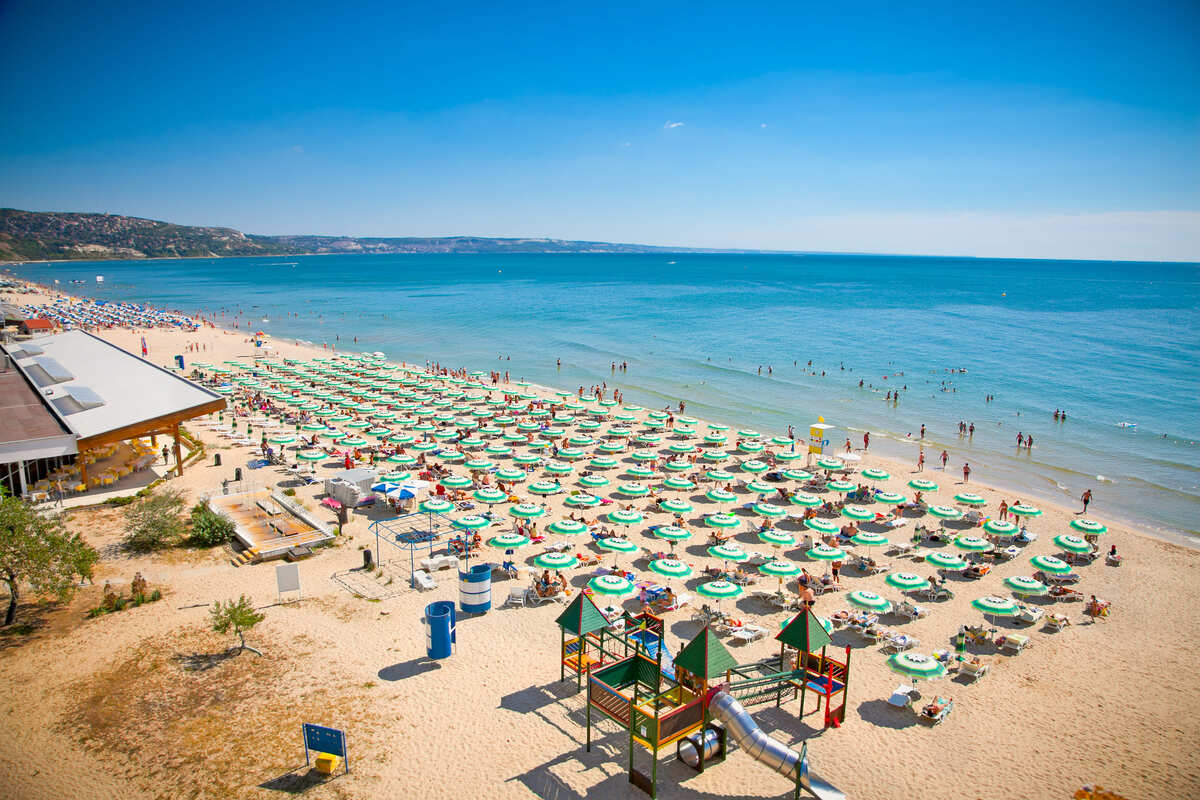
    Panoramic View Of Golden Sands Beach In The Black Sea Coast Of Bulgaria, Southeastern Europe

    We haven’t even seen the first snow of the season yet, but our hearts and minds are already set on the hotter months to come. Now that pandemic-related restrictions have been dropped and normal tourism has resumed, demand for travel to Europe has skyrocketed, particularly over the summer holidays – and it is set to reach new historical heights next year.

    Interestingly, there is a slow-burner of a coastal attraction emerging as a far more attractive alternative:

    Meet Bulgaria’s Gorgeous Black Sea Coast

    Seafront Restaurant In The Black Sea Coast Of Bulgaria During Sunset, Southeastern Europe

    In case you weren’t aware, the Eastern European nation of Bulgaria does have a coast, and quite an extensive one at that, running for 378 km from its southernmost point, where it meets Turkey, to the North, bordering the fellow Balkan country of Romania – and contrary to popular belief, the Southern Mediterranean is not the only warm ocean in Europe.

    The Black Sea can reach temperatures of up to 82.4°F (28°C) in summer, and despite its peculiar name, it couldn’t be a prettier shade of blue. It may not be crystal clear like the Adriatic branch of the Mediterranean or a bright azure like the French Riviera, but it is just as warm, if not warmer, and its calm waters are incredibly pleasant to swim in.

    Top 5 Travel Insurance Plans For 2023 Starting At $10 Per Week

    Iconic Windmill In The Nessebar Peninsula, Old Historic City Of Messambria On The Black Sea Coast, Bulgaria

    The Bulgarian Coast is also dotted with UNESCO-listed monuments and historical ruins, such as the insular Nessebar, referred to as the ‘Pearl of the Black Sea’. Nessebar dates back more than three millennia, and its collection of ancient landmarks, Romanesque churches, and well-preserved city walls, fully encircling the islet, are truly a sight to behold.

    On top of that, white and golden sandy beaches comprise 130 km of the coastline, with the Varna and Burgas provinces, the latter of which includes Nessebar and its adjacent Sunny Beach, listed as the leading resort complexes in the country. On average, tourists can expect highs of 30 degrees from May through August in the Black Sea region.

    A Hidden Treasure Recently Rediscovered

    Young Woman Seen From Behind As She Gazes At The Ocean From A Pier, Wearing A Flowery Dress And A White Hat, Sunny Beach, Bulgaria

    For decades, Bulgaria’s coastal gems remained concealed from foreigners due to the years the nation spent as a Communist regime and obscure satellite state for the Soviets. International tourism really began to flourish upon the country’s democratization and reopening to the outside world in the early nineties, in a move that ushered a rapid ‘Europeanization’.

    Following the fall of the Berlin Wall and the collapse of the Soviet Union, Bulgaria began tilting westward, having succeeded in joining NATO and, more recently, in 2007, the European Union. While domestic visitors used to account for the largest share of tourism revenue in the past, now the balance has shifted dramatically.

    Drone View Of The Varna Coastline, Varna Province In The Black Seat Coast Of Bulgaria, Southeastern Europe

    In 2019, prior to Covid, 70% of Black Sea resort guests were foreigners, coming mostly from Germany and Eastern Europe, proving awareness of Bulgaria as a sunny hotspot is growing. In the first ten months of this year, passenger traffic in the airports of Varna and Burgas rose by 59% (jointly), as reported by Germany’s Fraport Group.

    Individually, Varna is up by 43% annually, with 1.3 million tourists recorded between January and October; Burgas takes the lead, surging by 74% (1.63 million arrivals). It may not seem like much, but we must take into account the heavy competition Bulgaria faces on the Mediterranean front and the fact that it is not a first choice for a majority of travelers.

    Is It Because It’s Cheap?

    Sunny Beach, A Resort Strip In The Black Sea Coast Of Bulgaria, Southeastern Europe

    Of course, Bulgaria’s affordability as a destination may be partly to blame for its astronomical rise in recent years: on average, the cost of living is 44.32% lower than in the United States, making it a safe haven for budget travelers, especially digital nomads looking to save money as they country-hop across Europe, while still accessing luxuries they wouldn’t elsewhere.

    Booking ahead of time, vacationers can find week-long stays in five-star, all-inclusive hotels for as little as BGN 2,866.00, or only USD 1,565.94 – some high-end Sicilian resorts will charge that per night. If you want to bag a real bargain and, on top of that, avoid the crazy summer crowd, you better hurry: Bulgaria’s Black Sea Coast will not remain ‘off-path’ for long.

    View,Of,A,Restaurant,Table,With,Red,Sunshade,In,Sozopol,

    Its surprising growth rates alone are enough proof that the Black Sea is becoming more popular each passing year. Surely it will not be different in 2023, now that Bulgaria has removed all entry requirements pertaining to Covid, allowing travelers to cross the border freely without presenting vaccine certificates or undergoing testing.

    Bulgaria Is Geographically Diverse

    Modern Holiday Homes In Bansko Covered By Snow, Bulgaria, Eastern Europe

    Bulgaria isn’t a place people would normally associate with sandy beaches and warm weather, being part of the South Slavic world, located in the Far East of Europe, and home to alpine peaks and packed with ski stations. A surprising fact many do not know, however, is that it is culturally and geographically diversemore so than any of its neighbors.

    To the West, close to the borders with Serbia and North Macedonia, the landscape is dominated by mountain ranges and deep valleys, frequently blanketed by snow over winter. In Central-South Bulgaria, the weather stays pleasant year-round, resembling that of Tuscany; as for the coast, it normally enjoys cool to mild winters and scorching summers.

    Young Female Tourist Taking A Picture Of The Philippopolis Roman Theatre In Plovdiv, Bulgaria, Southeastern Europe, Balkans

    There are no direct U.S. flights to Bulgaria, but once they are in Europe for their extended summer vacation, Americans can easily travel to Varna or Burgas using any major European city as a transit hub. Nonstop routes are available from Frankfurt, Dublin, London, Amsterdam, Copenhagen, Stockholm, Brussels, and dozens of other airports during the peak season.

    Traveler Alert: Don’t Forget Travel Insurance For Your Next Trip!

    ↓ Join Our Community ↓

    The Travel Off Path Community FB group has all the latest reopening news, conversations, and Q&A’s happening daily! 

    Travel-off-Path-group-1-1
    SUBSCRIBE TO OUR LATEST POSTS

    Enter your email address to subscribe to Travel Off Path’s latest breaking travel news, straight to your inbox

    This article originally appeared on TravelOffPath.com

    [ad_2]

    Source link

  • 5 Cities In North America That Feel Like You’re Visiting Europe

    5 Cities In North America That Feel Like You’re Visiting Europe

    [ad_1]

    Share The Article

    Last Updated

    These unique North American cities will make you feel as if you’ve been transported to Europe.

    Most cities in North America are very new in comparison with their European counterparts, and they lack the Old World charm that can only be found across the Atlantic.

    woman tourist walking down a street away from camera in a place that looks like europe

    In North America, you won’t find many thousand-year-old castles, towering cathedrals, or cobblestone streets.

    But there are some cities that have a decidedly European flair to them, whether it’s real (in the case of 500-year-old colonial cities) or manufactured (in the case of 50-year-old “themed” cities.)

    These are five cities in North America that feel like visiting Europe:

    narrow cobblestone street in montmarte, europe at sunset

    1. Quebec City, Canada

    Quebec City tops the list of the most European-feeling cities in North America. It’s no surprise that this Canadian city has a strong European feel to it, given the French influence on Quebec.

    Known for its rich history, cobblestoned streets, and beautiful architecture, Quebec City is a slice of Europe in North America. Adding to the sensation that you’re actually in Europe is the fact that 95% of Quebec residents are French speakers.

    One traveler was amazed by the parallels between Quebec City and other European destinations such as Switzerland, Germany, and Austria. Quebec City is a top destination for food, arts, and culture in Canada.

    Top 5 Travel Insurance Plans For 2023 Starting At $10 Per Week

    A french chateau at sunset in europe

    2. Leavenworth, Washington

    For one of the most unique places in the Pacific Northwest, head to Leavenworth, Washington. This town will make you feel as if you’ve stepped directly into a quaint Bavarian village.

    Leavenworth, which is located in the Cascade Mountains, didn’t always have its unique German theming, with Alpine-style buildings and German beer halls. It actually began as a civic initiative in the 1960s to attract tourists.

    Now, Leavenworth is a popular winter destination, when the town is transformed into a winter wonderland filled with twinkling lights. They are also known for hosting Oktoberfest in the fall.

    German themed restaurants in leavenworth

    3. Solvang, California

    Solvang is one of the most intriguing places in the United States. Visitors to this town might find it hard to believe that they’re actually in Southern California and not Denmark.

    That’s because Solvang is known as the “Danish Capital of America.” Settled by a group of Danish Americans in the early 1900s, they wanted to escape the cold winters of the Midwest, where most Danish immigrants lived.

    Solvang has a unique Danish-style architecture and flair that cannot be found anywhere else in the U.S. The Elverhøj Museum of History & Art explores the city’s Danish heritage. The town is also known for its many wineries, making it a popular day trip in Southern California.

    Building in solvang california
    B

    4. Mexico City, Mexico

    Mexico City is a bustling, world-class city that rivals any European capital. It’s a vibrant and multicultural city known for its architecture, museums, food, nightlife, and culture.

    European influence can be glimpsed around the city. Picturesque, tree-lined avenues in neighborhoods like La Condesa and Roma Norte lend an especially European feel to the city.

    Mexico City is often compared to Paris because of its status as a hub of arts and culture. It’s not hard to see why many artists, writers, and filmmakers have been inspired by Mexico City over the years.

    mexico city historic building

    5. Guanajuato, Mexico

    The city of Guanajuato is often described as one of the most beautiful cities in Mexico. Its colonial architecture and colorful buildings give it a decidedly European feel.

    Guanajuato’s historic center is a designated UNESCO World Heritage Site, and its cobblestoned streets are lined with beautiful colonial buildings, museums, galleries, and shops.

    Narrow, mazelike alleyways open up into squares with stunning churches, while underground, Guanajuato has a hidden system of tunnels dating back to its copper mining history. These tunnels are open to tourists today and are one of the most interesting things to see in the city.

    Aerial View Of Guanajuato, Mexico

    Traveler Alert: Don’t Forget Travel Insurance For Your Next Trip!

    ↓ Join Our Community ↓

    The Travel Off Path Community FB group has all the latest reopening news, conversations, and Q&A’s happening daily! 

    Travel-off-Path-group-1-1
    SUBSCRIBE TO OUR LATEST POSTS

    Enter your email address to subscribe to Travel Off Path’s latest breaking travel news, straight to your inbox

    This article originally appeared on TravelOffPath.com

    [ad_2]

    Source link

  • 6 Beaches in Europe That Are Actually Warm During Winter

    6 Beaches in Europe That Are Actually Warm During Winter

    [ad_1]

    Share The Article

    Last Updated

    Europe isn’t usually the first option for travelers looking for warm beaches during winter. However, there are fascinating sunny destinations that attract many visitors. These cozy beaches are a paradise for northern Europeans, and Americans can definitely understand why when they visit. 

    Beach in Malaga at sunset, beaches in europe

    From Portugal to Greece, there are breathtaking coasts with pristine water and white sand to enjoy, without the stressful summer crowds, that could add warmth and freshness to your upcoming Eurotrip. Here’s a list of the top 6 beaches in Europe that are actually warm during winter, based on data provided by Holidu:

    1. Los Cristianos, Tenerife, Spain

    When it comes to warm weather and beaches in Europe, Spain usually has the best offer. It will probably require an extra flight to visit the warmest ones since these are in the spectacular Tenerife, the largest of Spain’s Canary Islands. 

    Umbrellas in Los Cristianos beach in Tenerife, beaches in europe

    The best and warmest beach is Los Cristianos, with an average winter temperature of 20.6 ºC —around 69 ºF— and many sunny hours. There are other nearby beaches with very similar temperatures, like Adeje, Las Galletas, El Medano, Granadilla De Abona, Los Gigantes, and Guia De Isora. No wonder why Tenerife is one of the top destinations for digital nomads this winter

    2. Gzira, Malta

    The beautiful coastal town of Gzira has great swimming spots, restaurants, hotels, beautiful architecture to explore—tourists can even take a Game of Thrones tour— and plenty of things to do!

    Don’t Forget Travel Insurance For Your Next Trip!

    Travel Off Path Recommends These 5 Fast and Easy Travel Insurance Plans To Sign up For Now

    Plans starting at only $10 per week

    Street view of Gzira, Malta.

    Near Gzira, travelers can also visit beaches like Stone Beach to admire the great views or enjoy the incredibly clear blue water at Fond Għadir Beach. The average temperature during winter is 18ºC—around 64.4 ºF—, and the coldest month is February.

    3. Syracuse, Sicily, Italy

    When it comes to traveling to Europe, Italy is always a wise option. Now that new high-speed trains are connecting more cities, moving around this country is getting easier for travelers. When it comes to warm destinations, of course, going south is always wise. 

    Coastal view of the city Syracuse, Sicily, Italy

    In Syracuse, Sicily, travelers will find the coziest spots on the Italian coast. This destination offers fascinating historical buildings, beautiful public beaches like Oasi Gelsomineto with clean water and nice sand, and nice weather above 16ºC —61ºF— with sunny days.

    4. Agios Nikolaos, Crete, Greece

    Crete is perfect to visit all year round, and there are extraordinary beach destinations like Agios Nikolaos that are also wonderful to visit during winter. This resort town has a beautiful lake, vibrant nightlife, and gorgeous beaches like Ammoudi B, Kitroplatia B, Ammos B, and Gardoros B.

    woman on coast with ocean in background

    If you are looking for a special mix of glamour, history, and great beaches, this is the perfect spot! The mild climate makes it extra enjoyable during winter —average temperatures around 16.4 ºC or 61.5ºF— with multiple activities, events, and places to explore.

    5. Luz, Algarve, Portugal

    Those taking advantage of the cheap winter tickets to Lisbon can go a little more to the south and reach the spectacular Praia da Luz. This quaint fishing village has great beaches with calm and clear blue waters and sand, very pleasant in December and January. 

    Aerial View Of Carvoeiro Beach, Algarve, Portugal

    It’s perfect to enjoy the ocean views, the gorgeous sunsets, and the sunny hours. The average winter temperature in this location is 15.8 ºC —60.4ºF— and the local atmosphere is perfect for a calm and relaxing vacation. 

    6. Malaga, Spain

    Malaga, another great winter destination in Spain, has all the ingredients for a perfect vacation. While the average winter temperature is 16ºC —60.8ºF— there are many winter days where the temperature can go above 20ºC or 68ºF. 

    Aerial View Of Malaga Bullring Harbor, Malaga, Spain

    This fascinating coastal city is extremely popular during the summer but also has a lot to offer during winter. Some of its main attractions are sunny days with clear blue skies—rainy days aren’t common during winter— and, of course, beaches like the famous Playa la malagueta. There are also fascinating places to visit, like the Picasso museum, stunning castles, and delicious restaurants.

    Beach Lounges In Malaga, Andalusia, Spain

    Traveler Alert: Don’t Forget Travel Insurance For Your Next Trip!

    ↓ Join Our Community ↓

    The Travel Off Path Community FB group has all the latest reopening news, conversations, and Q&A’s happening daily! 

    Travel-off-Path-group-1-1
    SUBSCRIBE TO OUR LATEST POSTS

    Enter your email address to subscribe to Travel Off Path’s latest breaking travel news, straight to your inbox

    This article originally appeared on TravelOffPath.com

    [ad_2]

    Source link