Europe is one of the safest and easiest regions to explore as a solo female traveler.
So if you want to explore the world, then there’s no need to wait for someone to go with you.
Just go it alone!
I’ve visited dozens of cities solo, but this unexpected European capital captured my heart. Its rich history, affordable prices, and excellent safety record all mean that it’s a city I would love to visit again and again.
Here’s why this European capital is my favorite solo female travel destination:
An Underrated Travel Destination
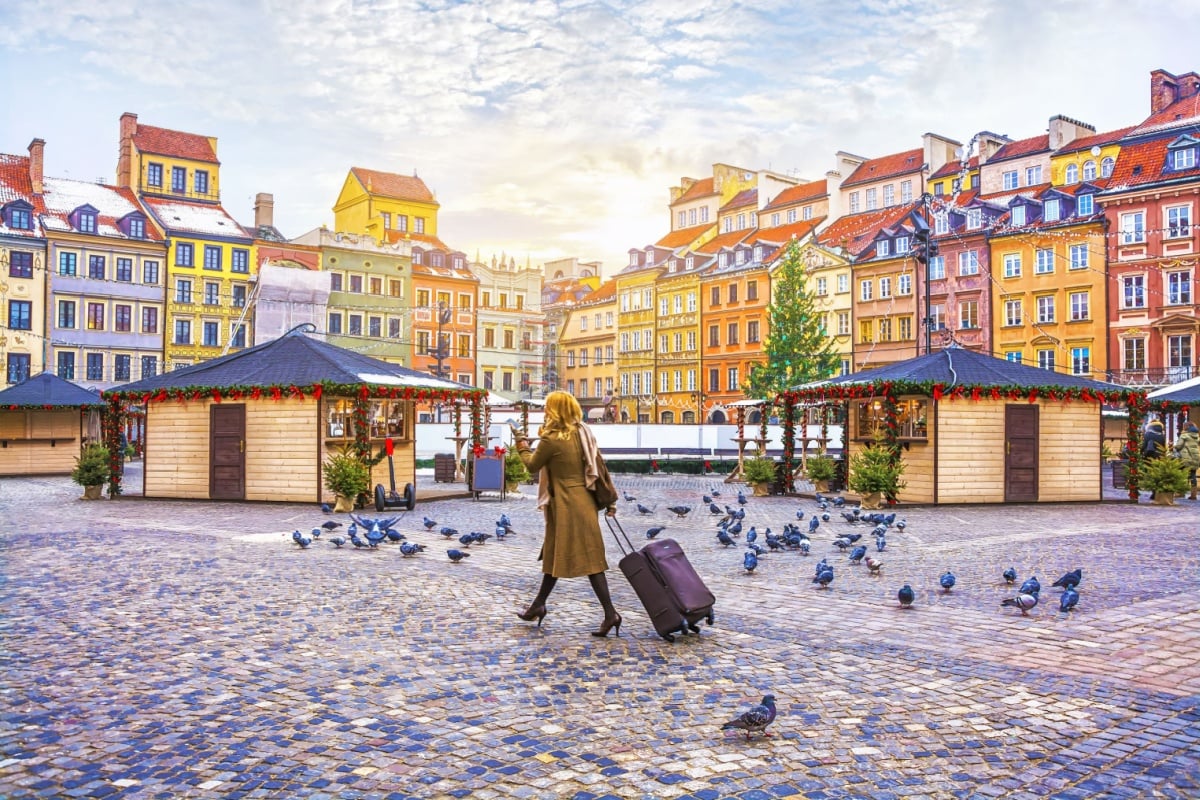
Warsaw is such an underrated travel destination, and despite being the capital of Poland, many travelers prefer to visit Krakow instead. In fact, Krakow is the most popular tourist destination in Poland.
Despite this, Warsaw is my favorite solo female travel destination for so many reasons.
Warsaw is varied and beautiful and you’ll find history on every corner.
As an official history nerd, I found it a fascinating place to explore.
You can see the remains of the city’s Ghetto Wall or wander around the newest Old Town in Europe.
So much of Warsaw’s Old Town was destroyed during WWII that it was almost completely reconstructed in the post-war era.
But the reconstruction is so faithful to the original that you almost forget you’re not exploring ancient history.
The best way to find out more about the impact WWII had on the city is with a tour, especially if you’re flying solo.
I took a tour of the Warsaw Ghetto and learned so much about the horrors that impacted the history of Jewish people both in the city and in wider Europe.
Warsaw’s detractors often mention its ugly Soviet-era buildings, but even these are interesting in their own way.
The Palace of Culture and Science was Stalin’s last gift to the city before the iron curtain fell.
My hotel was right next door, and if you’re nearby I recommend paying the 20 PLN ($5) to visit the building’s 30th floor observation deck and enjoy the views of the city.
There’s so much to see and do in the city and it is this abundance of activity that makes Warsaw one of my favorite travel spots.
Safe And Secure
Warsaw is a destination with an impeccable safety record. I felt incredibly safe and secure in the city as a solo female traveler, even at night while having a cocktail or two.
Warsaw isn’t known for having the most happening nightlife scene in Europe but there are plenty of places to let your hair down. I recommend The Roots Cocktail Bar which is the number 1 cocktail bar in the city according to Tripadvisor and according to me!
The city is well-lit, there is a visible police presence across the city after hours, and the locals are helpful and friendly (if not a little blunt).
While I felt safe walking back to my hotel at night, the city has an amazing public transportation system that gives you easy and safe transport from pretty much anywhere in the city at all hours.
Don’t feel comfortable using public transportation as a solo female traveler?
I’ve never been in a city where traveling by Uber is so affordable! A 20-minute Uber ride cost me just 25 PLN ($6).
There are also plenty of electric scooters on almost every street corner, and it’s easy to download the relevant app and hop on. There are several different companies available, but I used Bolt because they offered a 50% discount on your first 3 journeys.
The U.S. Department of State has given Poland a Level 1 travel advisory which is the lowest level available, and is a clear sign of just how safe the country is.
While you should exercise normal precautions, such as keeping an eye on your bag in crowds, spending time in Warsaw is likely to be just as safe as spending time in your home city.
And feeling safe is so important when traveling solo.
I’ve already mentioned just how cheap nearly every kind of transportation is which means that getting around will barely put a dent in your budget.
Want to see as much of the city as possible without opening your wallet?
There are a huge choice of city tours offered by locals available in English completely free of charge. Just make sure you have some cash to tip your tour guide.
Other free activities worth enjoying in Warsaw include enjoying the laser show at the Fountain Park, visiting the city’s many parks and green spaces, and many of Warsaw’s museums are free too.
You’ll find live street performances in the Old Town and across the city’s parks no matter what the time of year.
Art lovers will be fascinated by Warsaw’s murals and street art which are on some of the cities most prominent locations.
You can see the work of world-famous street artists in every district of Warsaw.
I paid just 11 PLN ($2.70) for a cake and coffee break, 40 PLN ($10) for an artisan pizza and 8 PLN ($2) for a pastry and bottle of water from a local bakery.
Entrance to the Royal Palace cost 50 PLN ($12.60) and this was the most expensive activity I signed up for in the city.
Warsaw is a great place to travel if you don’t want to worry about breaking the bank or checking price tags. And a great place for solo female travelers.
Opinions expressed here are the author’s alone, not those of any bank, credit card issuer, hotel, airline, or other entity. This content has not been reviewed, approved or otherwise endorsed by any of the entities included within the post.
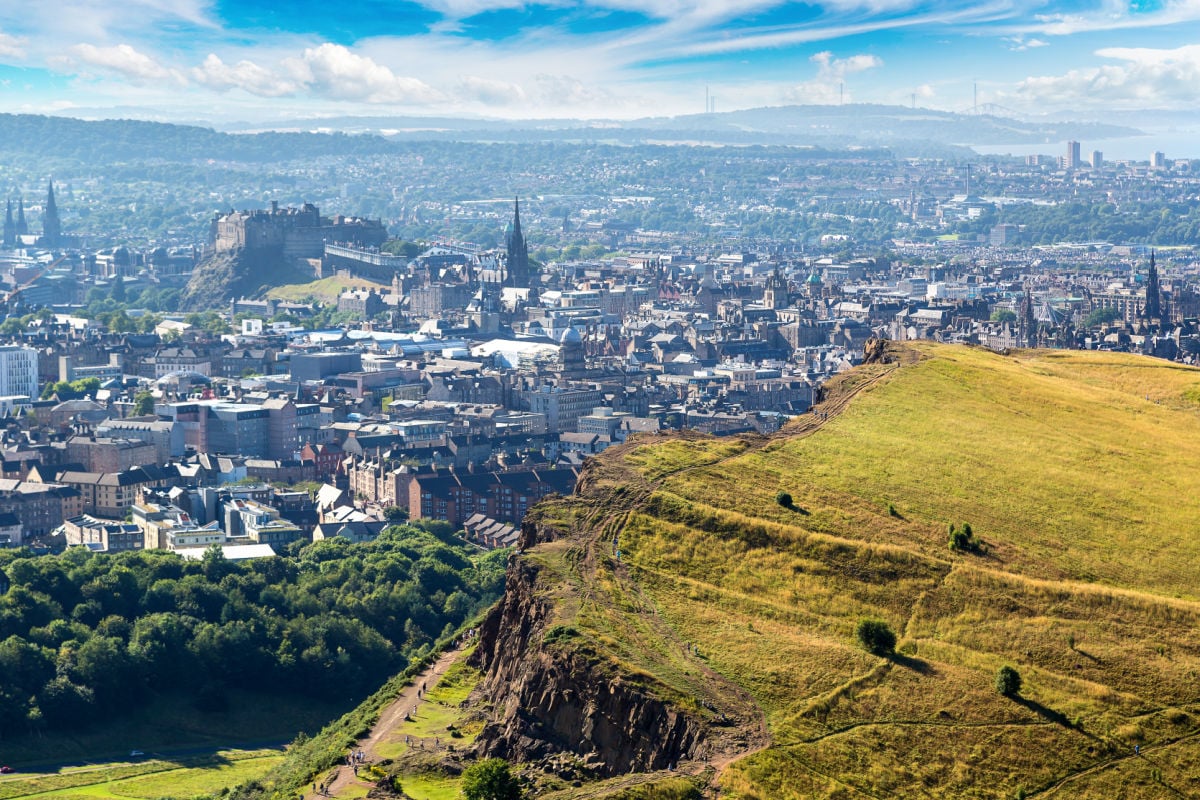
London might be the most popular destination in the United Kingdom, attracting around 20 million visitors each year, but another UK city stole my heart recently.
Edinburgh, Scotland has quickly become one of my all-time favorite destinations for solo travel.
I’ve been to London countless times over the years, as well as other destinations in England, but somehow I had never ventured further north to Scotland.
So on a recent trip, I decided to change that and I took the train up to Edinburgh from London.
Here’s why the Scottish capital is the perfect city for your next solo trip:
It’s Small And Easy To Get Around
After the hustle and bustle of sprawling London, I was shocked when I arrived at Waverley train station in Edinburgh and realized I was right in the heart of the city.
The compact nature of Edinburgh makes it perfect for solo travelers.
You can get almost anywhere on foot, or if you’re tired of walking, you can hop on a bus across the city.
On my trip to Edinburgh, I was hosted by hotels in both the Old Town and the New Town. These are the most central neighborhoods I would recommend for first-time visitors.
Old Town is a bit closer to many of the most popular tourist attractions, but there’s not a huge difference between the two.
In the Old Town, I stayed at House of Gods, which was literally just steps away from the Royal Mile, the main street in Edinburgh.
Although this hotel is well-suited for a romantic getaway with its decadent atmosphere and moody decor, its cozy rooms and central location also make it perfect for solo travelers.
One of my favorite things about this hotel? There’s literally a button you can press to have milk and warm cookies delivered directly to your room!
Photo courtesy of House of Gods
In the New Town, I stayed at RÌGH Residences, luxury serviced apartments in an amazing location.
This property is also great for solo travelers who want some extra space and all the comforts of home — every apartment is fully equipped with a kitchen and living area.
I loved staying at RÌGH Residences because I felt like I was living like a local in Edinburgh.
The location was extremely convenient, just a few minutes from the Old Town.
Photo courtesy of RÌGH Residences
Fun Things To Do For Solo Travelers
Edinburgh is truly a fairytale city. As I strolled around the Old Town on my first afternoon, I couldn’t stop snapping photos of the charming streets, each more picturesque than the last.
There’s plenty to do in Edinburgh for solo travelers, and I didn’t get bored once during my trip there.
Edinburgh is full of amazing museums. My favorites were:
Scottish National Gallery: A great art museum with a collection of European and Scottish art
Scottish National Portrait Gallery: A smaller art museum focused on portraits, located in a stunning historic building
The Writer’s Museum: A cool little museum dedicated to famous Scottish writers
National Museum of Scotland: A large museum about Scottish history and culture with an amazing rooftop terrace
And best of all, each of these museums is completely free to visit.
You also can’t miss visiting Edinburgh Castle, the iconic hilltop castle that was used as a royal residence beginning in the 11th century.
And one of my favorite things to do in Edinburgh was simply strolling around the city.
Two of my favorite areas were Circus Lane (an extremely photogenic street) and Dean Village (a picturesque little neighborhood with a waterfront footpath you can follow.)
Easy To Meet Others
Even if you’re traveling solo, you can leave Edinburgh with new friends.
Scottish people as a whole are very friendly and welcoming — more so than the English, at least according to many Scots!
It’s also easy to meet other travelers in Edinburgh. There are several popular walking tours in Edinburgh where you can meet other people, some of whom might also be solo travelers.
One of those is a Harry Potter walking tour (a must for any Potterhead!), which will show you the exact spots that inspired J.K. Rowling when she was writing the series. This is the free tip-based tour I did.
The same tour company also offers a free ghost tour that’s very popular (Edinburgh has a lot of haunted history!) as well as a fun weekend pub crawl.
It’s Extremely Safe
One thing that really struck me about Edinburgh is how safe it felt.
Not that other cities in the UK feel dangerous, but Edinburgh just felt very safe to me as a solo female traveler, especially the Old Town and New Town.
The one “dodgy” area of Edinburgh used to be the waterfront port neighborhood of Leith, but even this area has been revitalized and is now a hip and trendy hotspot.
Of course, you should always take basic precautions to stay safe wherever you travel, especially as a solo traveler, but Edinburgh is not a place where you have to worry!
It’s also a great introduction to travel in Scotland.
Since Edinburgh is so small and easy to get around, it’s perfect for a quick solo trip.
I would love to explore more of Scotland in the future, but many places further north require renting a car to get to, and that’s not something I’m comfortable with as a solo traveler.
Getting To Edinburgh
While getting to London is easy for American travelers since there are nonstop flights from so many cities in the U.S., getting to Edinburgh can be a little trickier.
There aren’t as many nonstop flights from the U.S. to Edinburgh (New York, Boston, Washington, Chicago, Atlanta, and Orlando all have seasonal flights), and sometimes they can be significantly more expensive than nonstop flights to London.
Your best bet might be flying to London, then taking a short 1 hour and 15 minute flight from London to Edinburgh.
You can also take the train from London to Edinburgh, which is what I did.
This takes approximately 4.5 hours and is a great option if you want to combine these two UK cities in one trip.
Dale is a full-time traveler and writer with over 6 years of experience. She’s traveled to more than 55 countries around the globe and specializes in covering solo travel and digital nomadism.
**Travel Off Path was a guest of House of Gods & RÌGH Residences who helped with the creation of this itinerary by hosting some of our accommodations and attractions. Our opinions, recommendations, and suggestions remain our own.**
Opinions expressed here are the author’s alone, not those of any bank, credit card issuer, hotel, airline, or other entity. This content has not been reviewed, approved or otherwise endorsed by any of the entities included within the post.
After traveling to every Latin country in South America as a solo traveler, there’s one that stands out to me as being the best.
It’s really hard to choose when South America is full of so many diverse and beautiful countries, but if I had to recommend just one country, this would be it.
Argentina is my favorite country in South America, and I think it’s the best destination on the continent for solo travelers as well.
Here’s why I love Argentina so much, and what makes it perfect for solo travelers.
Along with neighboring Chile and Uruguay, Argentina is among the safest countries in South America. Especially for solo female travelers, this is very important.
I felt very safe the entire time I was in Argentina as a solo female traveler.
The only thing you really have to watch out for is petty theft in certain areas of Buenos Aires — always be vigilant and keep your purse, wallet, phone, and other valuables close.
A Beautiful And Vibrant Capital City
Buenos Aires is where I spent the most time in Argentina (over a month) and I can easily say that it’s one of my favorite cities in the world!
It’s a world-class capital city that is often referred to as the “Paris of the South” because of its European influences in culture and architecture. I also found that it reminded me a lot of New York — it’s also a city that never sleeps!
You can never be bored in Buenos Aires because there’s always something going on.
As a solo traveler, you can explore the city’s many museums and stroll through its parks and gardens, dive into a new neighborhood through a walking tour, or experience the city’s nightlife.
Some of my favorite spots in the city include the Museo de Arte Latinoamericano de Buenos Aires (MALBA), a great art museum, and the Jardín Japonés, a tranquil Japanese garden that’s an oasis in the middle of the busy city.
Easy To Make Friends
One thing I loved about Argentina was how easy it was to make friends, both locals and other travelers.
Argentinians as a whole are very warm and friendly, and in Buenos Aires, it was really easy to connect with locals and meet new friends.
I also found it easy to meet other travelers, some of whom were just visiting Argentina for a short time and others who were digital nomads and expats staying long-term.
Some great ways to meet friends while traveling are to stay in hostels or join group activities such as walking tours, cooking classes, tango lessons, language exchanges, and so on.
Stunning Natural Beauty
Argentina is an amazing country filled with diverse landscapes and natural beauty — although as the eighth largest country in the world, you could spend many months exploring and still not see it all!
Since Argentina is such a large country, you will probably need to take domestic flights to get around (unless you enjoy 18-hour bus rides that won’t even save you that much money!)
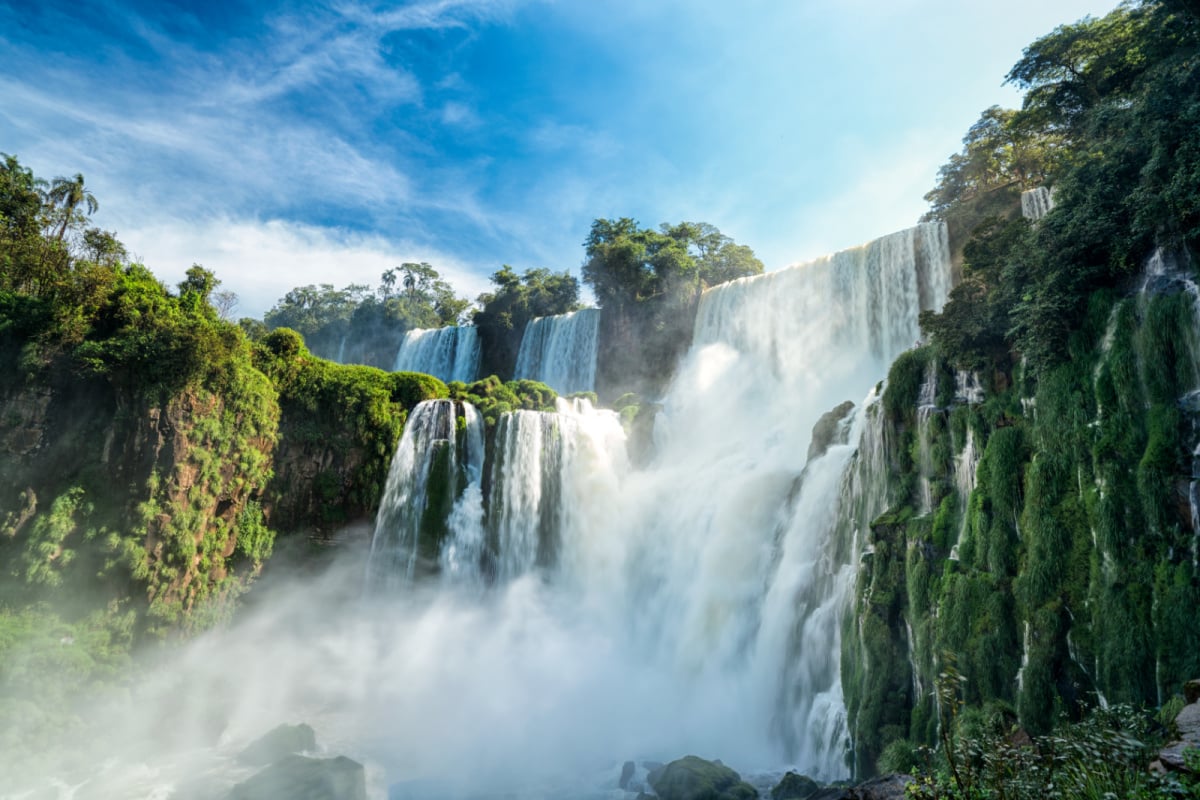
Some of the best places to visit in Argentina are the Patagonia region in the south (especially if you love hiking), Iguazu Falls which is on the border of Argentina and Brazil, and the otherworldly desert landscapes around Salta in the north.
My personal favorite place in Argentina was Iguazu Falls — it’s easy to visit independently from Buenos Aires, just hop on a short flight to Puerto Iguazu and spend a couple of days exploring the national parks on the Argentinian and Brazilian sides of the falls.
Affordable Prices
Finally, you can’t talk about Argentina without mentioning how affordable it is.
Argentina has experienced an ongoing financial crisis for years now that has caused extreme inflation and currency fluctuations for locals.
However, for travelers, this has made Argentina extremely cheap thanks to the unofficial “Dolar Blue” and the preferential “Dolar MEP” exchange rates that effectively double your money.
I was shocked by how affordable Argentina was, with nice meals out in Buenos Aires often costing less than $10 and Uber rides anywhere in the city costing just $2-3.
Opinions expressed here are the author’s alone, not those of any bank, credit card issuer, hotel, airline, or other entity. This content has not been reviewed, approved or otherwise endorsed by any of the entities included within the post.
As a digital nomad based in Europe, I have traveled extensively around the continent, working remotely from every country you can possibly name across the pond, from the tourist hotspots of France and Italy to the lesser-known Baltic states and the multicultural Balkan Peninsula.
Nope, I haven’t skipped the millionaire-owned micro-state of Monaco, war-raging Russia and its neighbors, nor newly-born Kosovo, one of the poorest states in Europe,
With over 40 European countries under my belt, I was bound to have a personal favorite by now.
That one special place that keeps pulling me back, where I could actually see myself staying longer than the usual three months or even putting down roots at some point down the line, and that somehow feels like my home away from home.
When I set out to visit every European country as a digital nomad, never would I have expected an unheard-of, post-communist state most tourists mistakenly believe to be dangerous, and even not worth seeing, to rank at the top of the list by the end of the five-year journey, yet here we are.
It’s beautiful Albania that stole my heart, and this is why I believe it is the strongest contender for European Digital Nomad Capital:
Why Albania Of All Places?
Unless you’ve been country-hopping around Europe as a tourist for a while, having had to come up with ingenious ways to extend your stay beyond the restrictive 90-day Schengen rule, it is unlikely you have passed through Albania, much less heard of it.
We’re here to remedy that together, but first, where even is Albania?
Geography isn’t everyone’s forte, so I won’t dawdle and waste your time going into the specifics of it: all you have to know it is located across the Adratic sea from Italy, and just north of Greece.
We know what you’re thinking: if it borders these two popular vacation spots, could Albania be yet another off-path Mediterranean destination waiting on the sidelines to be discovered?
The short answer is a resounding Yes!, and the shocking part is it’s been deliberately concealed for decades.
What we mean by that is it was actually kept hidden, so we wouldn’t blame you for not having the foggiest idea about Albania beforehand: as customary in Eastern Europe in the 20th century, the country was ruled by an iron-fisted communist regime.
Why Haven’t You Heard Of Albania Before?
Albania’s dictatorship was among the harshest in Europe, with very few people being allowed to leave the territory, and likewise, only a select number of visitors were allowed to enter well into the 90s, meaning this wing of the Mediterranean was virtually off-limits only three decades ago.
In case you’ve been wondering, Albania is now an open, progressive state, having adopted democratic principles since the collapse of communism and being on a firm path to aligning with the Western World: it joined NATO in 2009, and it has applied to become a member of the European Union.
The latter aspiration has not been as successful yet, but we’ll get into that soon enough – the question is, why has this unsung, troubled nation surpassed every other Southern European competitor to become my safe haven as a digital nomad?
I don’t know about you, but like any self-proclaimed Europhile, this continent’s immense cultural wealth was a decisive factor in my decision to stay a whole five years so far, and my dear fellow nomads, sure Albania has a lot going for it on the culture front:
Hospitality Is At The Heart Of Albanian Culture
Albania is a one-of-a-kind-country, in the sense that its language (Albanian) is not closely-related to any other languages on the periphery, like Serbo-Croatian or Bulgarian share similitaries, and its culture is markedly different from the Slavic-dominated Southeastern Europe.
Family is extremely important, and it’s not uncommon to find nuclei of relatives living together in the same neighborhood, or even the same street, and to them, hospitality is not only a long-standing tradition, but a national value.
In the words of renowned Albanian novelist Ismail Kadare, who couldn’t have phrased it better:
‘Of God and the guest, you see. So, before it is the house of its master, it is the house of one’s guest. The guest, in an Albanian’s life, represents the supreme ethical category, more important than blood relations. One may pardon the man who spills the blood of one’s father or of one’s son, but never the blood of a guest.’
There were certainly occasions where Airbnb hosts would invite me to partake in rounds of raki tasting shortly after we’ve made acquaintances, and hospitable locals would invite me back to theirs to share high-spirited conversations and a hot meal.
As a digital nomad traveling solo, actively seeking to distance himself from other expats to fully immerse in the local way of life, it was definitely not a challenge to befriend Albanians, even if the older generations are more proficient in Italian than they are in English.
If anything, my rusty Italian and poor attempts at mouthing basic words in Albanian would get me humorous smiles in response, friendly pats on the shoulder, and more raki invitations: I’m not sure previous writers have coined this already, but Albanians are the Latin Americans of Europe.
The Whole Of Albania Should Be A UNESCO Heritage Site
We know you’re here for some of that Old World flair, the cobbled towns with origins lost to time, and fairytale castles Disney has tried their best to emulate in kitsch theme parks, and you’ll be glad to know Albania has its fair share of manmade wonders.
From the Accursed Mountains in the north, home to the ethnic village of Theth, best known for its rustic cottages and solitary church, to the medieval citadel in Kruje, south towards a UNESCO-listed, Ottoman-built Berat, and the Stone City of Gjirokaster, this country’s beauty is truly boundless.
The 296-mile long Mediterranean coast is littered with historic port cities as well, including Durres, where a 5th-century castle still stands, the charming Vlore, with its Italian-inspired, pastel Old Town, and the hilltop, whitewashed village of Dhermi, overlooking the turquoise sea.
If you’re looking forward to wearing your Indy Jones hat again, Butrint is a vast archaeological zone dating back to the 10th century BC, encompassing flooded Byzantine palaces, partially-preserved colonnaded agoras, and a landmark Greek theater.
The point is, Albania may not be as popular as some of its closest neighbors, for the reasons already outlined above, but it certainly does not suffer from a shortage of heritage sites. In fact, it’s almost as if it’s taken a page from the book of every other Mediterranean hub in the vicinity:
A Potpourri Of Everything That’s Great About Europe
With Its Own Little Albanian Twist
Some of its settlements are as ancient as Italy’s, it is just as warm as Greece’s, beaches as pristine as Croatia’s, the local cuisine rivals Spain’s, and it is as topographically diverse as France, with a territory that comprises both towering alpine peaks and a subtropical coast.
I’m not averse to harsh winters myself, and I’m a firm believer that, in order to truly appreciate the balmy days of summer, you need to experience the changing of the seasons, but if you can live without the occasional snow, coastal Albania will not disappoint.
Temperatures can plummet to negative levels in northern Albania, but much of the coast remains perfectly sunny and a pleasant 64°F. Having visited in February myself, I was surprised to find that the additional wool coats and puffer jackets I packed ‘in case’ were not at all necessary.
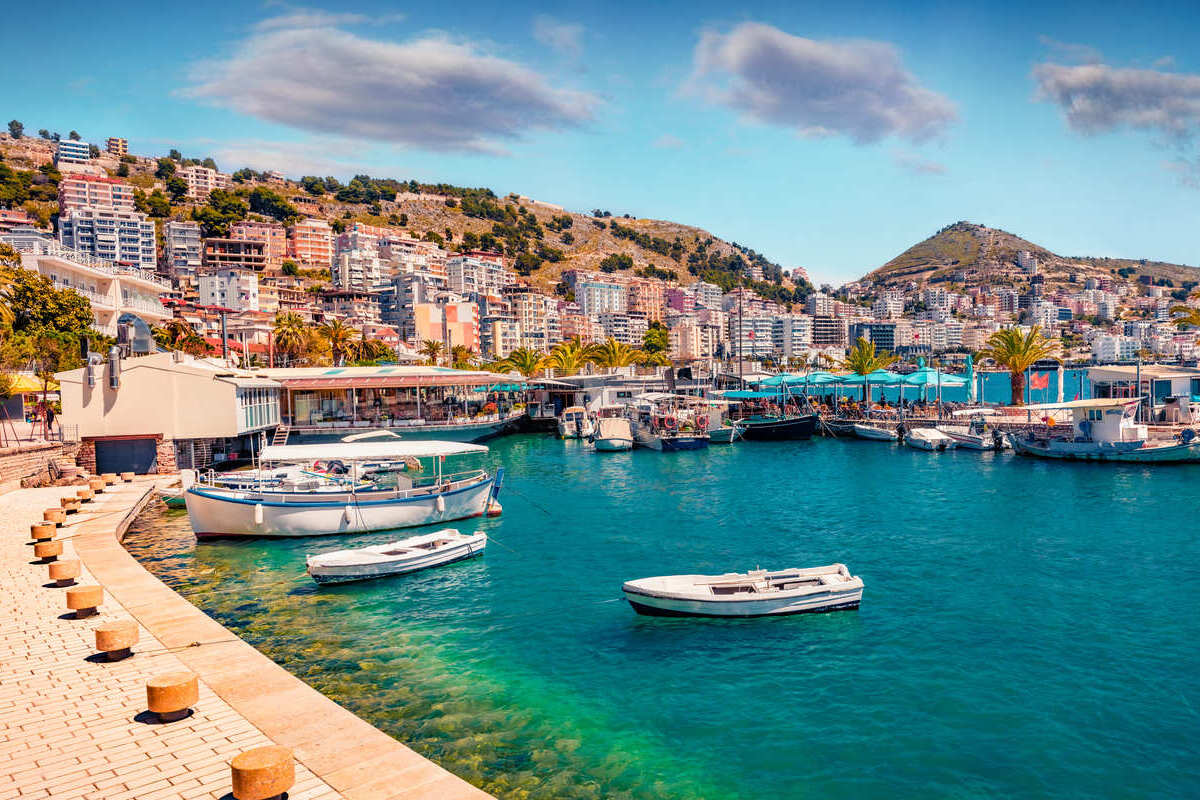
If you’re hell-bent on escaping the cold, the laid-back coastal village of Ksamil, a stone’s throw away from the lively harbor city of Saranda, is where your best bet at year-round springtime weather, with its lemon trees, soft white-sand beaches and teal-colored waters.
Don’t Come To Albania On A Strict Diet
Albania may be isolated in terms of language and culture, but the food served in Albanian homes and restaurants is typically Mediterranean and Eurasian in character, having been heavily influenced by Italy, Slavic gastronomic practices, and even Turkish cuisine.
Its cheese and spinach-filled, flaky-dough byrek pastry is a variation of the Turkish burek, the cold cucumber soup takes direct inspiration from Bulgaria’s tarator, and I could certainly draw parallels between Gjirokaster’s qifqi rice balls and the more mainstream Italian arancini.
That being said, there are a number of native delicacies only Albania can lay claim to, with my personal favorites being the deep-fried petulla fritter, crispy on the outside, soft on the inside, typically served with butter and jam, and tavë kosi, lamb baked in yogurt.
Given Albania’s ample selection of dairy and hearty meat-based dishes, not to mention the fresh seafood and fruit growing in abundance in the verdant hinterland, rest assured you’ll never go hungry here, whether you’re staying in a small qytet on the shores of the Adriatic, or the sprawling capital city of Tirana.
How Nomad-Friendly Is Albania?
How about digital nomad infrastructure, a.k.a. long-term rentals, availability of coworking cafes, foreigner-friendly services, and so on?
I’ll be honest with you: outside major urban centers, life as a remote worker can be challenging (at times).
That is particularly true in the off-season, when restaurants and guesthouses on the coast typically close down, and getting around without a car is an adventure you don’t want to embark on.
Albania is nothing short of stunning, but it’s years behind in development compared to the average European country.
For that reason, I would recommend you spend most of your time in a large city like Tirana, where there’s enough of a social scene and nighttime services to keep you entertained, as well as bus connections to the resort zones on the Adriatic coast, unless a quaint village life resonates with you.
Tirana Beyond The Grey Clusters Of Communist Apartment Blocks
Tirana may not be the prettiest of capitals – much of the old city has been razed to the ground in favor of a modernist makeover – but you can’t deny it is intriguing, with communist-era bunker museums, artifical lakes and eccentric high-rises making up the tourist offer.
If you’re a regular cafe-goer, you should probably know Albania is a global leader in the number of cafes, with around 654 such establishments per 100,000 inhabitants.
There are no Starbucks around, but there are plenty of local-owned and Mulliri Vjeter coffeehouses around.
Mulliri Vjeter is the oldest coffee chain in Albania, and stores are typically rustic in character, offering visiting nomads free WiFi and a cozy nook to work from. Central Tirana is loaded with those, and not a day goes by that I don’t miss their signature Capuccino Chocomel.
It’s truly no wonder Tirana has proudly taken up the mantle of Europe’s center for digital nomadism, hosting a Digital Nomad Conference since 2022 and with an expat community that continues to grow year after year.
The Top 5 Best Digital Nomad Destinations In Albania
The way I see it, the top five best destinations for digital nomads in Albania are:
Tirana: the exciting capital city, packed with quirky cafes, oozing urban art, and full of verdant parks for temporarily escaping the city crowds and crazy traffic
Shkoder: the cultural heart of Northern Albania, famous for its revitalized, restaurant-lined Old Town and an imposing 2,400-year-old Rozafa Castle
Durres: the busiest port, offering ferry connections to Italy and littered with Roman and Venetian-era landmarks
Saranda: the largest city in the Albanian Riviera, bounded by the teal-colored waters of the Adriatic and within short driving distance of the up-and-coming leisure zone of Ksamil
Elbasan: the fourth-largest city in Albania, and one of its food meccas, where I tried the best jani me fasule on the trip (make sure you add Taverna Kala to your list of restaurants)
Albania Is The Cheapest Country I’ve Been In Europe
It only took me a couple of days of being in Albania to understand, at least in part, why nomads like me are finding an unlikely home in this overlooked Adriatic gem: prices are the cheapest I’ve seen anywhere in Europe.
On average, Albania is 40.6% less expensive than Western Europe, with meals in inexpensive restaurants costing an acceptable $10.43, based on data gathered by Numbeo, and monthly expenses for a single person capping at roughly $700, excluding rent.
Even though accommodation costs aren’t included in this estimate, rent can be up to 69% cheaper than Paris or London, two overpriced cities that will wipe your wallet clean if you’re not careful enough. Luckily, living costs are nowhere near as exorbitant in Albania.
A quick Airbnb search led me to find seafront condos in Vlore for only $617 per month this April, whole apartments with dedicated workspaces in Saranda for a negligible $343, while in Tirana, there are private, centrally-situated flats for as cheap as $520 monthly.
It Is Incredibly Safe For Foreigners
Not only is Albania remarkably cheap to live in, it is just as safe as fellow Southern European states Italy and Spain.
That’s not my own judgment, but the U.S. State Department’s, which officially considers Albania a low-risk destination, as seen here.
Having spent most of my time between Tirana, Shkoder and Durres, never once did I feel unsafe walking the streets during the day, or get ‘jumpy’ in crowded areas, as much as I normally do in busier areas of Barcelona, or sketchy zones of South Dublin.
While I wouldn’t take my chances going for a late evening stroll in Tirana – Albanian cities are not particularly well-lit at night – crime levels are under acceptable levels, and visitors are rarely, if ever, affected by violence.
Your main concern here is pickpocketing, though I never felt the need to hide my phone when out in public, and judging by the amount of jewelry Albanian women wear and the fancy sportscars the men drive, nobody’s visibly excessively worried about petty theft, either.
Naturally, general safety advice applies, but odds are you’ll be fine. Once I was lulled to sleep by the gentle sound of crashing waves at a busy Ksamil beach, with my laptop bag by my side, and I startlingly woke up to find it still untouched where I left it.
I’m not sure this fortunate outcome was an exception to the rule, or whether Albania is really so safe your personal unattended items will be probably be left alone, but it doesn’t change the fact I’ve never felt on edge, nor remotely suspicious of people around me.
Believe it or not, I’ve saved the best for last:
Are You A U.S. Passport Holder?
You Can Stay An Entire Year In Albania
Every digital nomad based in Europe has a love-and-hate relationship with Schengen.
In case you’re not familiar with the term, it corresponds to a 27-country-strong, passport-free zone where customary cross-border checks typically do not apply.
All of Europe’s top destinations are signatories to Schengen. I’m talking France, Italy, Croatia, Greece, Spain, and the list goes on: flying, taking trains, or boarding ferries between any of the Schengen states, you will not be subject to passport control.
The only downside to Schengen? You can only be present in the Schengen territories for 90 days out of any 180-day period. In other words, if you’ve used up your 90 days in Spain, another Schengen country can’t be your next destination for another three months.
In Albania’s case, the strict Schengen policy does not apply, as it is not a member of the European Union (EU), and is not bound to join the borderless area anytime soon in the future.
Foreign nationals get a whole 90 day-stay in Albania, irrespective of time spent elsewhere in Europe.
If you’re an American citizen, however, you’re issued a whole year-long tourist visa upon arrival, on the basis of being a U.S. passport holder alone, making Albania the perfect long-term destination, if you’re not merely looking for a grey zone to wait for your Schengen clock to reset.
Despite being outside the EU, Albania remains at the heart of Europe, sharing land borders with four other countries, and boasting low-cost flight connections to the entire continent, with fares starting from $19 on Ryanair.
What Are Some Of The Main Downsides About Life As A Nomad In Albania?
What are some of the negative aspects about life in Albania as a digital nomad, you may be asking?
I have already touched on some of those throughout this article, but I would say some of the main ones include:
The lack of public transport (good luck getting from point A to B if you’re not renting a car and you have reservations about hitchhiking)
With the exception of the main motorways linking Tirana to the coastal ports and resort towns, the regional road network can be quite precarious, with lots of potholes and missing road signs (if you’re driving, I would advise against hitting the gas, especially after sundown when visibility is lower)
Reception can be poor in remote areas, particularly up in the mountains, so make sure you save your drafts working from your computer during that bumpy ride up the Accursed range, or you might have to write that 1,500-word article from scratch again (not that it’s happened to me…)
This is no spotless, idyllic, First-World European country: basically, as much as you try to turn a blind eye, you can’t easily ignore the poverty-stricken areas
Nomad-friendly facilities, like work-friendly cafes and coworking offices may be harder to come across outside cities like Tirana, Shkoder and Durres (I would add Berat and Gjirokaster, but compared to the capital city, they are not even close to being considered well-equipped)
Social attitudes in Albania are pretty carefree, considering this is one of Europe’s handful of Muslim-majority countries, but I wouldn’t encourage you to show affection with your same-sex partner in public if you don’t want to get grumpy Albanian nonos to curse you lowly, or more rarely, an unfriendly shoulder bump
If you’re flying, your only way into and out of Albania is via Tirana: mind-boggling as it may be, there are no airports yet on the Adriatic Coast, and the country’s only other operational international airport is located in Kukës, near the Kosovo border (with a single seasonal flight route to Basel in Switzerland)*
*The easiest way to get to Southern Albania is actually flying first to the Greek island of Corfu, which lies just offshore, and then take a ferry to Saranda. The journey takes just over half an hour on average.
Needless to say, the good far outweighs the bad, and I can’t wait to be back in Albania myself this summer. I’m now based in Paris, and there’s no way I’m sticking around to see how utterly anarchic this city will get once the Olympics – or should I say Hunger Games? – commence.
Opinions expressed here are the author’s alone, not those of any bank, credit card issuer, hotel, airline, or other entity. This content has not been reviewed, approved or otherwise endorsed by any of the entities included within the post.
They say the West Coast is the best coast and I will back up that claim any day of the week. I may have been born and raised in Texas, but some of the best years of my life have been spent in California.
I’m not going to sugarcoat the frustrations of living here, but at the end of the day, there is no other place I’d rather call home.
And I know so because I’ve left before and the grass truly wasn’t greener both literally and figuratively.
The Golden State may not get everything right, but it’s one of the best places to travel in the country.
I have lived here for 10 years and visited every city. These are my 5 favorite destinations:
5) San Francisco
I know, I know – San Francisco has changed. We even included this awesome city as a place not to visit this year and with good reason.
If Tony Bennett left his heart in San Francisco today someone would steal it and sell it on the black market.
The crime waves and unsightly zombie apocalypse-esque streets are something I’m able to overlook because I love it so much and have never had a bad time.
Even as unfortunate as the city has changed, the cultural neighborhoods, amazing views, fun attractions and phenomenal food scene remains, which is why it barely cracks my top 5.
Having traveled to about 30 countries, my favorite restaurant on the planet is still Terra Cotta Warrior located in the Outer Sunset neighborhood.
It’s a no-frills, yet authentic, Chinese restaurant specializing in cuisine from the Shaanxi province. If this place ever shuts down, SF may not even crack my top 10. That’s how good it is!
4) Malibu
Spoiler alert: Los Angeles proper will never crack my favorites list for anything. Personally, I believe it’s the most overhyped city in America, but outside of the city limits is where LA is at its best.
Malibu is so much more than a Miley Cyrus song. This ritzy beach town is a place where average Joe’s like me can blend in and hobnob with the rich and famous, unlike Beverly Hills where I feel looked down on after making a Target run.
Lined with delicious upscale restaurants, really nice beaches and the scenic Topanga State Park for incredible views and hikes, Malibu is an awesome place to visit.
The coastal drive itself is amazing. Just plan ahead for traffic during Spring Break and summer.
Speaking of summer, who is coming to the always popular Malibu Chili Cook-Off with me?
3) Sequoia National Park
My favorite place in California to immerse myself in nature beyond the state’s incredible beaches is without a doubt Sequoia National Park.
While you can fly into Fresno (definitely not a favorite), a road trip makes the adventure more fun with stops in charming small towns like Kernville.
Sequoia’s backroads are indescribably beautiful. Just prepare better than I did by renting a Toyota Yaris.
Regardless, a trip to Sequoia should honestly be bucket-list worthy. Few places have given me a sense of appreciation for nature more than this park.
Seeing pictures of the mountains and massive trees online are one thing, but seeing them in person is a whole different level.
2) Orange County (Beaches)
Orange County covers a lot of ground in southern California with cities such as Santa Ana, Irvine, and Anaheim, but I’m not here to promote Disneyland anymore than it needs to be.
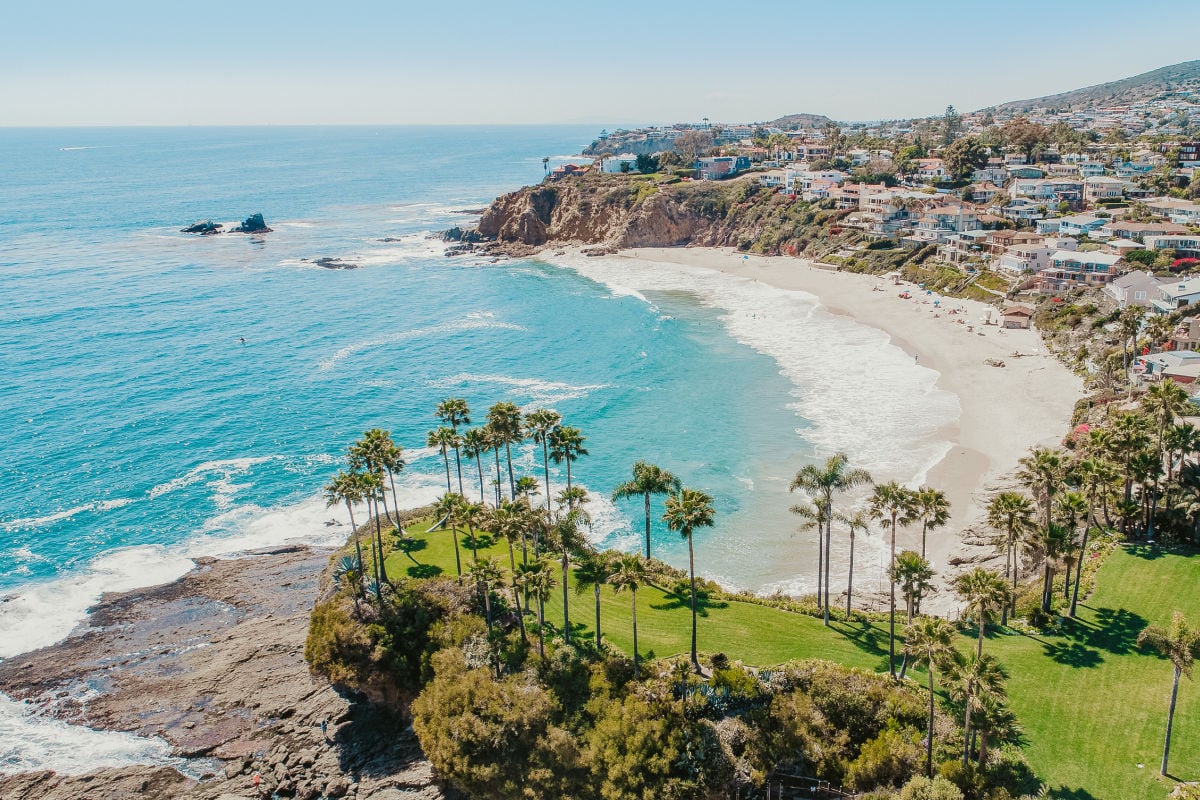
Orange County’s quaint beach towns are gorgeous and it’s honestly hard to pick just one. Each of them tends to have its own unique vibe, such as luxurious Laguna Beach to more laid-back Dana Point and San Clemente.
If I had to pick one it would depend on my budget for the day, but it would be a toss-up between Laguna Beach and San Clemente.
You can’t go wrong with either, although San Clemente definitely has much more of a local feel as a surfer’s favorite hangout.
1) San Diego
My home for 10 years and hopefully many more, San Diego is without question my favorite destination in California.
Traveling is my first love and one of few passions in life, but no matter where I am or how long I’ve been there, I always look forward to coming back home to this beautiful city.
Often overshadowed by the gargantuan size of Los Angeles, San Diego is still a major city with plenty to do beyond planning beach days from Coronado to Oceanside.
With historic districts such as Old Town known as the “birthplace of California” to cultural neighborhoods like City Heights where more than 80 dialects of languages are spoken, San Diego isn’t just a “beach town” per se.
While it’s definitely no digital nomad haven with a high cost of living, my favorite part about San Diego other than Mexican Food, of course, is you can go hiking in the mountains, hit up the beach and see the snow all in the same day.
There is always something to do outside in the city, but the delightful small towns like Julian being in close reach make for an easy escape for a change of pace when needed.
And after a night in the wild Gaslamp District downtown, you will definitely need a change of pace.
Opinions expressed here are the author’s alone, not those of any bank, credit card issuer, hotel, airline, or other entity. This content has not been reviewed, approved or otherwise endorsed by any of the entities included within the post.
Before you scroll through to the next article on sunny Mexico, bear with me a second:
I know Europe is not everyone’s idea of fun in winter, especially if they’ve been saving up the entire year to splurge on that customary, all-inclusive beach getaway.
Between the incessant London rain, the gray Parisian skies, and Italy’s plummeting temperatures, I can see how the idea of embarking on a Transatlantic trip right now could sound unappealing, but what if you don’t have to escape winter to have a cracking time on your next vacation?
Allow me to explain why winter is my favorite season to visit Norway, one of the world’s most Northerly countries – and one of the safest ones at that – and why you should give it a chance yourself:
Why Is Norway Becoming So Popular As A Winter Destination?
Norway is surging in popularity in 2024, and I can’t say I’m surprised: one of the reasons why I fell in love with it in the first place was how unspoiled and abundant the nature is.
Though it boasts a high Human Development Index and Quality of Life, much of the country is comprised of forested areas and rural hinterlands, and irrespective of where you’re headed, be it the Arctic North or the fjord lands, there is no shortage of natural wonders to be found here.
From the minute you step out of the plane and breathe in the crisp, fresh mountain air, without having cast a single glance at the nearest mahoosive peak yet, you know you’re not in terminally-industrialized Germany, nor overpolluted France anymore.
Caribbean beaches are great, but I am sure most would agree ice-skating on mirror-like frozen lakes, relaxing in saunas, skiing down winding slopes, and cozy late nights sitting by a fire, hot chockie in hand, watching the snow fall from the window can be just as alluring a prospect.
Why Fly To Norway For A Winter Wonderland When You Can Go To Aspen Instead?
You may be wondering why exactly I’m trying to convince you to fly halfway across the globe for a winter holiday when you could just go to Colorado instead: as beautiful as it may be, the Centennial State lacks Norway’s mystique, ancient culture, scenic railways and hearty ‘Scandi’ food.
Still, this is a big country we’re talking about, with a fjord-traversed coastline extending for 1,100 miles along the North Sea, and if you’re warming up to the idea of going on a little off-season Viking adventure, you may be wondering where to go for the most epic scenery.
Away from the big cities and off the beaten path, here are four incredible winter destinations in Norway (and why they should be added to your bucket list):
4 Incredible Destinations To Visit In Norway In The Colder Months
Flåm
Flåm, a small village at the innermost part of the historical Aurlandsfjord, is one of Europe’s best-hidden secrets this winter, home to the four-star Fretheim Hotel, built in classic chalet style, an award-winning microbrewery, and the world-famous Flåmsbana train.
Rattling up a steep 2,841 feet ascent, with wide panoramic windows offering views of deep valleys, narrow fjords, majestic waterfalls and isolated, colorful villages with chimneys and lampposts poking out in the virgin snow, it is a $50 round-trip worth embarking on.
Sauna culture is not as prevalent in Norway as it in fellow incredible winter wonderland Finland, where it originated, but in Flåm it just happens to be one of the top attractions, with FjordSauna welcoming guests onboard floating steam rooms at the edge of the ice-covered fjord.
If you’re a fan of the Vikings, you could take a day trip out to Gudvangen to see a Norsemen village functioning as a folk park, or go for some beer tasting and fish supper at Ægir, a pub and restaurant modeled after pagan messhalls of the 10th-century.
Voss
The unofficial ski capital of Western Norway, just over an hour away from Bergen, Voss is a small settlement resting at the bottom of an elongated valley dotted with lakes, where colorful houses and a medieval stone church make for a picturesque townscape.
Popular for its gondola rides, varied selection of Haute cuisine restaurants, and surprisingly wide range of entertainment options – it has its very own skydiving center – this laid-back alpine village is not a place you’ll want to skip when paying Norway a visit in the colder months.
Additionally, it is where the highly-reputed Myrkdalen Ski Resort is located, boasting 22 ski trails, 9 ski lifts, 2 of which are express chairlifts, unique stays – think repurposed barns and homely, self-catering wooden cabins – and three distinguished restaurants for either fine or casual dining.
Prices for double rooms start at $239 this season, and if skiing isn’t your thing, Myrkdalen is still the perfect base for exploring the surrounding nature, as it is a stone’s throw away from UNESCO-listed Nærøyfjord, and mystical Gudvangen (Norwegian for ‘Valley of the Gods’).
By the way, ski season in this part of Norway can last as late as April.
Bodø, Norway
A charming fishing port in Northern Norway, Bodø was recognized by the European Commission as one of the continent’s Cultural Capitals in 2024, and with over a thousand events planned to celebrate the town’s rich heritage, starting this winter, it is definitely somewhere you don’t want to miss in 2024.
Bodø is best known for its walkable, museum-packed historic center, vibrant art scene, with innovative installations and awe-inspiring street art lurking in every corner, and in recent years, it’s developed a reputation for being a foodie hotspot.
Reindeer is commonly served in restaurants, in line with Northern Europe’s staple diet, and it’s Kjelen kafé in Bodø where you’ll find the most delicious møsbrømlefse, a Norwegian flatbread stuffed with camarelized goat cheese, and other local delicacies.
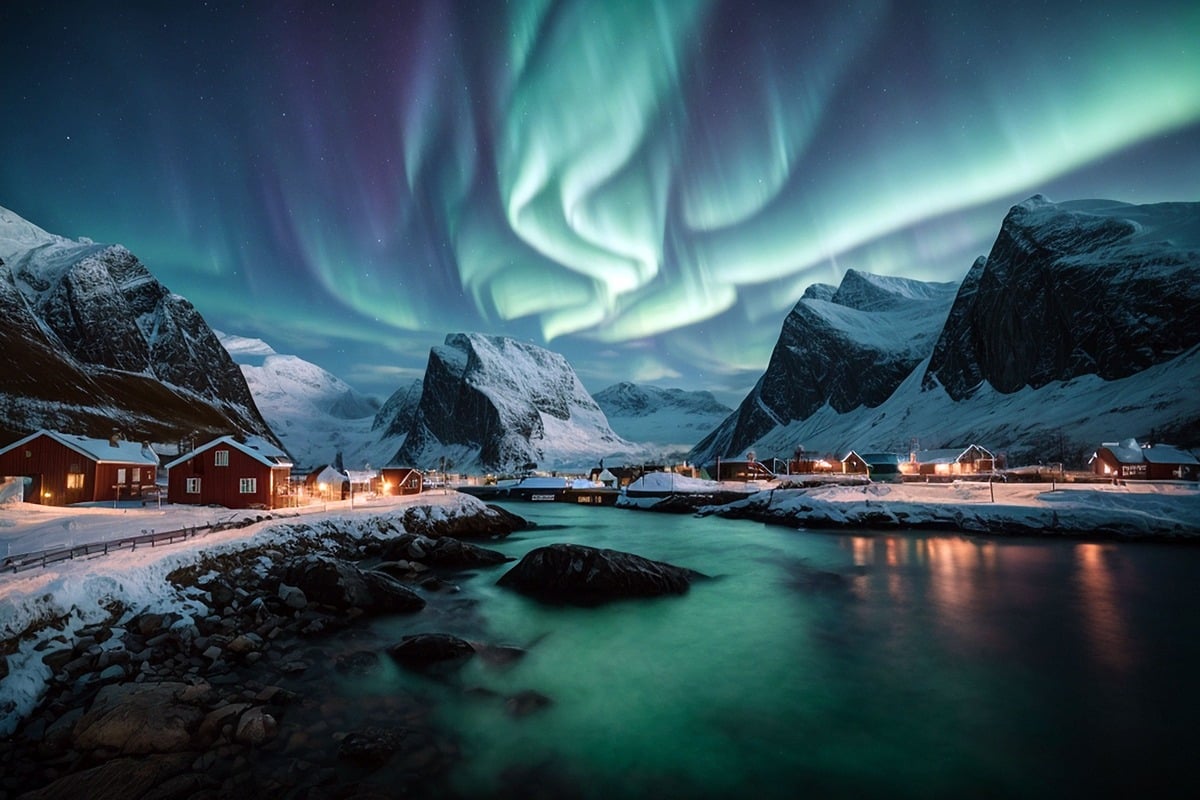
Winters in Nordland can be harsh, with freezing temperatures and limited sunlight through March, but it’s typically in the darkest of nights the sky bursts into a million different shades of green and purple (yes, we’re talking about Aurora sightings).
Lofoten
My final entry on this list is Lofoten, a grouping of islands connected by a series of bridges and undersea tunnels further North from Bodø that feel almost otherwordly, with jagged peaks shooting up to the stars, and fishing villages sitting on rugged coasts.
Three of the most sought-after winter activities among visitors to the archipelago include horse riding, taking sea eagle safaris to Trollfjord, an area of outstanding natural beauty, and hunting down the elusive Northern Lights.
Village-hopping around the islands is also a must-do: Reine and Nusfjord are particularly beautiful, with their centuries-old fishing tradition and Instagram-ready, brightly-painted cottage houses lining quaint, snow-dusted harbors.
To top it off, Lofoten enjoys a much more mild winters compared to other destinations on the mainland: as it is surrounded by the North Sea, the climate is typically maritime, meaning you are unlikely to be caught knee-deep in snow when snowshoeing in the wild.
That’s not to say it is warm. By all means, do wear multiple layers.
Why Is Norway Surging In Popularity Despite The Harsh Winters?
According to the latest data, reservations for Norway – more specifically, freezing cold Northern Norway – have skyrocketed this winter, so much so that European airlines are launching new direct routes to secondary airports like Harstad/Narvik, Evenes, and Alta.
Alta is Norway’s remote capital for aurora sightings, and its Northern Lights Cathedral, eclectic architecture and Arctic lifestyle have been on our radar since last winter; now, new flights arriving from Frankfurt with Lufthansa have greatly improved connectivity in the area.
Similarly, an increase in arrival figures for Tromsø Airport, serving the most Northerly major settlement in mainland Norway, has led to the construction of an additional terminal.
Wintertime guest bookings between 105 travel companies all over Norway now total 350,000 so far, with Best Arctic CEO Trond Arne Kongsli claiming his company alone had ‘triple’ the amount of reservations this season compared to the 2022-2023 period.
Norwegian authorities have citedNorway’s diverse tourist offer, amazing food, and growing popularity as a cultural destination as three of the main drives behind the increase in demand, in spite of its harsh winters.
What I Think As Someone Who’s Been To Norway In Winter
Personally, I would add tourist-friendliness as a major factor contributing to Norway’s surging popularity as a year-round destination.
Having traveled solo in Norway in the dead of winter, when service availability is typically lower and many attractions are shut down, I still had a remarkable time.
Naturally, you should manage your expectations: going hiking in most trails is not possible due to the heavy snowfall and poor visibility, so you can scrap the iconic Trolltunga or leave it for the warmer months, but there is still plenty to keep you entertained on the nature front.
Norway’s ‘Right to Roam’ is a freedom enshrined in the constitution that is quite telling of this historic nation’s appreciation for the great outdoors. In Norway, everyone has the right to enjoy and make reasonable use of nature without paying to access it.
In essence, you can go roam freely across nature preserves, camp out in the open, attempt hiking, and even live off of any uncultivated land so long as you’re not carrying out commercial activities, starting dangerous fires, or polluting.
Exercising the right to roam in winter is trickier, as I wouldn’t be sleeping outside in negative temperatures myself, but as you can attest from the destinations listed above, nature in Norway is always breathtaking, and it can be particularly beautiful when it’s frozen and glistening white.
Finally, Norway is an incredibly safe country to explore – one of the safest in the world, at that.
According to the U.S. Department of State, it is one of a handful of destinations globally to enjoy a Level 1 status, meaning tourists do not have to be overly concerned about their safety when visiting.
Violent crime rates are negligible, pickpocketing is not common, unlike in other European states, and poverty levels are very, very low. Whether you’re in a major urban center like Oslo or Bergen or the vast countryside and fjordlands, you can put your worries about personal safety aside.
The biggest threat facing Norway nowadays is recurring terrorist attacks, like most Western countries, but even these do not happen on a significant scale.
Caught the travel bug? Read on about Norway, and start planning your frozen adventure here.
Opinions expressed here are the author’s alone, not those of any bank, credit card issuer, hotel, airline, or other entity. This content has not been reviewed, approved or otherwise endorsed by any of the entities included within the post.
I’ve worked remotely as a digital nomad in many countries across Europe, but the following 4 destinations have been my favorites.
These cities are perfect for digital nomads and remote workers who are looking for a place to base themselves for a few weeks to a few months (or longer.)
All of these digital nomad hotspots offer an affordable cost of living and digital nomad-friendly services (like speedy WiFi and plenty of cafes, coffee shops, and co-working spaces where you can work on your laptop.) They’re also vibrant destinations with lots of things to do.
Here are my top picks for the best digital nomad destinations in Europe:
1. Seville, Spain
My favorite digital nomad destination in Europe is Seville. Spain’s fourth-largest city, Seville is located in the southern region of Andalusia and famous for its traditions like flamenco and bullfighting.
Seville is more affordable than cities like Barcelona and Madrid — and in my opinion, more beautiful and fun! It’s a laidback city that really comes alive at night. It’s not uncommon to go out to dinner as late as 10 or 11 p.m. in Seville.
Spain now offers a digital nomad visa, so you can live and work in Seville for up to a year as long as you earn at least €2,160 per month.
Tip: Seville is best visited from October through May. During the summer, it’s unbearably hot (regularly over 100° F), but it’s mild during the winter and pleasantly warm in the late fall and early spring.
2. Bucharest, Romania
Bucharest is another one of my favorite digital nomad destinations. Out of all the cities on this list, it’s also the most affordable.
Romania’s capital city is incredibly cool, with an eclectic mix of architecture ranging from spectacular Belle Epoque style to bleak Communist blocs. Bucharest often reminded me of Paris (where I previously lived), but a bit of a grittier version of Paris.
This is a great city for digital nomads and remote workers — interestingly, Romania has some of the fastest WiFi speeds in the world, perfect for those who work online.
Since Romania is not yet part of the Schengen Zone, American travelers can stay in the country for up to 90 days without a visa (and without counting against time spent in other Schengen Zone countries.)
3. Split, Croatia
Another great city for digital nomads in Europe is Split, Croatia. This coastal city is known for its beautiful Old Town and Adriatic Sea beaches.
Croatia is one of the top digital nomad destinations in the world. Although prices have been skyrocketing in Croatia, it’s still more affordable than many countries in Western Europe.
And there are so many amazing things to do in Split. From day trips to stunning Krka National Park to boat rides out to the islands of Hvar and Vis to parties on the beach, you’ll never be bored here. Croatia also has a one-year digital nomad visa with an income requirement of €2,300 per month.
4. Lagos, Portugal
Finally, Lagos is the perfect digital nomad hotspot for beach bums. It’s smaller than all of the other cities on this list, with a population of just 31,000. Located on the southern coast of Portugal in the beautiful Algarve region, Lagos has some of the best beaches in Europe.
It’s growing in popularity as a destination for digital nomads, who are attracted to the laidback lifestyle, amazing beaches, and affordable cost of living.
Portugal is still much cheaper than other countries in Western Europe (including neighboring Spain) and Lagos is especially affordable if you visit during the off-season outside of summer.
Italy had a record-breaking summer. More visitors than ever headed to the land of pizza, pasta and piazzas so far this year.
But if you think that the vacation season in Italy is over, then you’re mistaken.
There’s never a bad time of year to visit in Italy, but it is a particularly great destination to visit during the winter months.
When you visit Italy during the winter months you’ll feel like a local. The main attractions aren’t overrun with tourists, and there’s very little queuing. Low visitor numbers mean that prices are much lower too.
The weather is cold and wet in the north but still relatively mild in the south. Meaning that you can enjoy both snow sports and a glimpse of the Mediterranean winter sun on the same trip.
Here’s why these 3 cities are my favorite destinations in Italy during the winter months:
Rome
Rome is considered to be Italy’s cultural heart as well as its capital city, and the whole city feels like an open-air museum.
Some of the top historical sites in the city include the Colosseum, the Pantheon, and the Roman Forum. While you can visit these attractions no matter what the time of year, you will find that the weather is much more comfortable for exploring in the winter.
Tourist numbers are lower anyway during the winter months but you’ll find that there are much fewer tourists again if you visit early in the morning. Some days it feels like you’ll have the whole place to yourself.
Because the attractions are quieter in the winter, you can see so much more of the city, which is great if you want to cram as much as possible into a relatively short trip!
My favorite month to visit Rome is in December when the city has a special kind of magic. Cool but not uncomfortable. Christmas is in the air all month, and it feels like everyone is in a good mood.
The nativity scene and Christmas décor in front of Saint Peter’s Basilica are my favorite in the city, and the Piazza Venezia is also famed for its beautiful Christmas decorations and festive atmosphere.
Visit the Roman Christmas market in Piazza Navona which feels like an immersive winter wonderland. You’ll find traditional gifts in wooden huts, delicious traditional foods, and twinkling lights.
During the summer months, visiting Venice can be very stressful. The canal paths are crammed with people. Queues for Bato buses can be incredibly long. And the temperatures mean that much of the city has a very unpleasant smell.
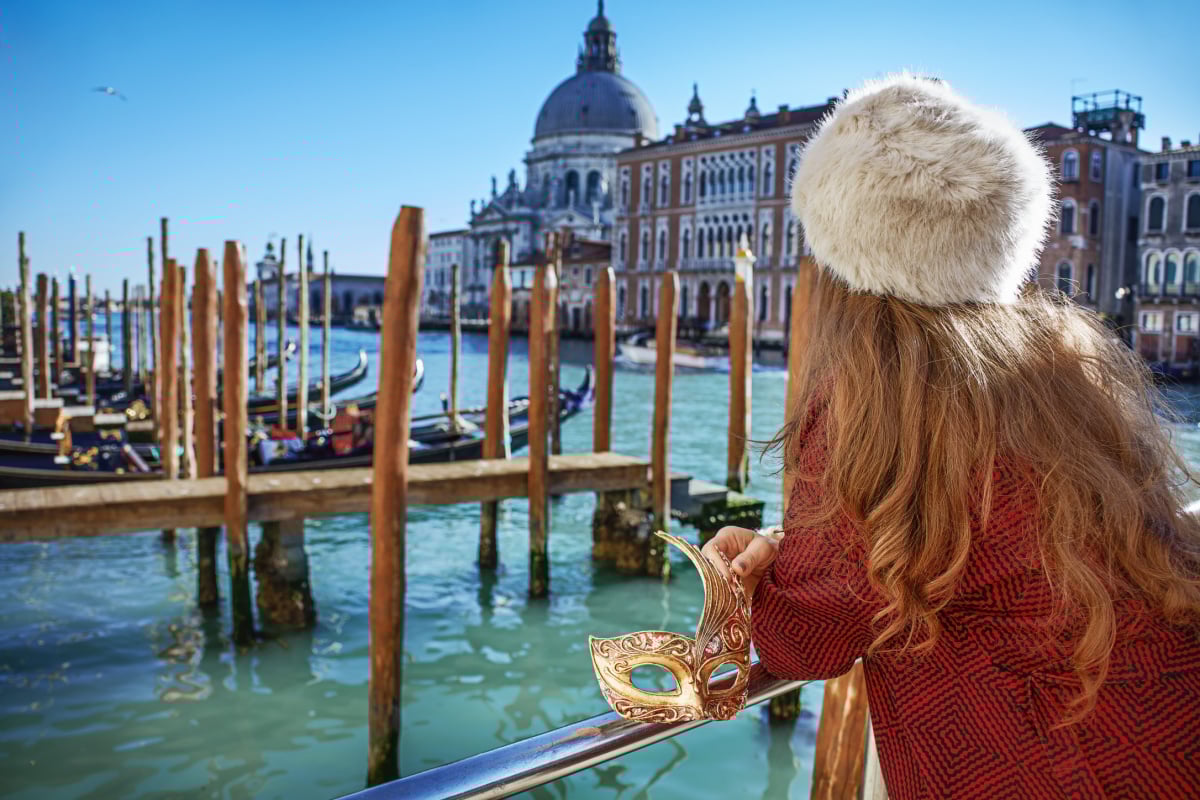
By contrast, the winter months in Venice are quieter, easier, and feel so much more romantic. The whole city is often covered with a lingering fog and during the coldest month of January it sometimes snows which makes the city look especially beautiful.
Winter in Venice can be very cold, but that just gives you a great excuse to stop for coffee and pastries in one of the many cafes along deserted alleyways as you watch the world go by.
On December 8 the city’s Christmas lights are officially lit. This day is also the Feast of the Immaculate Conception and the whole city has an air of celebration. Even the famous gondolas will be decorated with lights for the festive season.
Take the time to visit the Venice Christmas market and indulge in the traditional Italian food stalls.
Alternatively, visit after Christmas where the Feast of the Epiphany on January 6 is celebrated with a boat race that is unique to Venice. Members of the city’s rowing club with dress up as witches and race from San Toma to the Rialto Bridge.
It’s a big celebration and there are fairs and festivals throughout the city. This unique experience is well worth visiting Venice for.
Turin
If you’re visiting Italy during the winter months for the snow sports scene, then Turin is a great place to visit. Turin acts as a gateway to Italy’s best ski resorts and is close to the slopes of both Switzerland and France too.
But if like me you’re more interested in après ski than in hitting the slopes, then this is still an incredible city to visit in the winter months.
Turin is often overshadowed by the nearby northern city of Milan, and its beautiful historical attractions and high-fashion scene means that Milan is a great place for solo travel.
But Turin deserves to be seen as a top destination in its own right. The breathtakingly beautiful Royal Palace was declared a UNESCO World Heritage site in 1997 and looks particularly beautiful when dusted with snow.
The historic 18th and 19th-century cafes in the city are an attraction in their own right, thanks to their flamboyant decoration and abundance of gold, marble, and chandeliers. They look more like museums (or Liberace’s living room) than cafes, but they are a great place to stop and warm up with an indulgent hot chocolate or rich coffee.
My favorite attraction in Turin is the city’s Egyptian Museum (Museo Egizio) which is considered to be the best Egyptian museum outside of Cairo, and its sheer size is overwhelming.
Add in the open-air ice skating in the city center during the winter months, the beautiful skyline, and some of Italy’s best markets, and you have one of the best Italian winter destinations.
We all have places we love and that we want to visit again and again.
Places where the weather is always perfect, the people are as warm and welcoming as the water, and there’s always something different to see and do.
For me that place is the Canary Islands. I love the Canary Islands so much that I am currently visiting them for the third time in 12 months!
Here’s why these stunning islands are my favorite winter getaway in Europe:
Year-Round Sunshine
One of the main attractions of the Canary Islands is that they boast year-round sunshine. This makes them a great place to escape to if you want to get away from the relentlessly cold winters of Northern Europe and North America!
Even in the coldest months of January and February the temperatures rarely drop below 21 degrees centigrade (70 degrees Fahrenheit) and the sea temperatures average 22 degrees centigrade (72 degrees Fahrenheit) so it’s warm enough to swim in the sea year-round too.
As an added bonus, the sun rises at around 6.30 am, sets at around 7.30 pm, and it rarely rains on the Canary Islands.
Despite this winter is the low season in the Canary Islands so crowd levels are very low. This means that you’ll have many of the best beaches to yourself and you can explore without any crowds.
Visiting this week as the winter season begins the weather is beautiful, the crowd levels are very low, and I haven’t needed reservations for any of the restaurants I wanted to eat in or activities I wanted to book. This includes snorkeling tours, surfing lessons, and even a camel safari.
Though there are public transport options available, I always hire a car in the Canary Islands. This is because some of the most beautiful beaches can be remote and difficult to access without one.
It also gives you the freedom to explore the islands at your own pace and to find hidden gems that are off the beaten path.
You can pass a sign advertising a renowned hiking trail, beautiful beach, or even that spontaneous camel ride, and just turn off if you want to experience something new.
Bufadero in Gran Canaria is a great example of this. This inlet forms a stunning natural swimming pool at low tide and is the perfect place for a beach day but is best accessed by car.
Fuerteventura is home to the famous ‘popcorn beach’, and this can also only be accessed by taking a car down a bumpy and narrow dirt track.
This unusual beach isn’t covered in sand but in dead algae, which looks prettier than it sounds! It takes on the appearance of kernels of popcorn. It’s an amazing natural phenomenon and makes a fab spot for a photo opportunity.
Endless Activities
The Canary Islands are a great location for active adventurers and each island offers something slightly different.
I love Fuerteventura because it offers the best surfing in Europe, especially during the winter when surfers descend on the island to catch its highest waves.
Corralejo is considered the island’s surf capital and Fuerteventura’s north shore is referred to as Europe’s Hawaii thanks to its huge swells. The surf community in Fuerteventura is huge and incredibly welcoming, even to enthusiastic beginners.
If you are a beginner keen to take to the waves then try Protest Surf School which is one of the most highly regarded on the island. The instructor I worked with was friendly and funny and made me feel incredibly at ease.
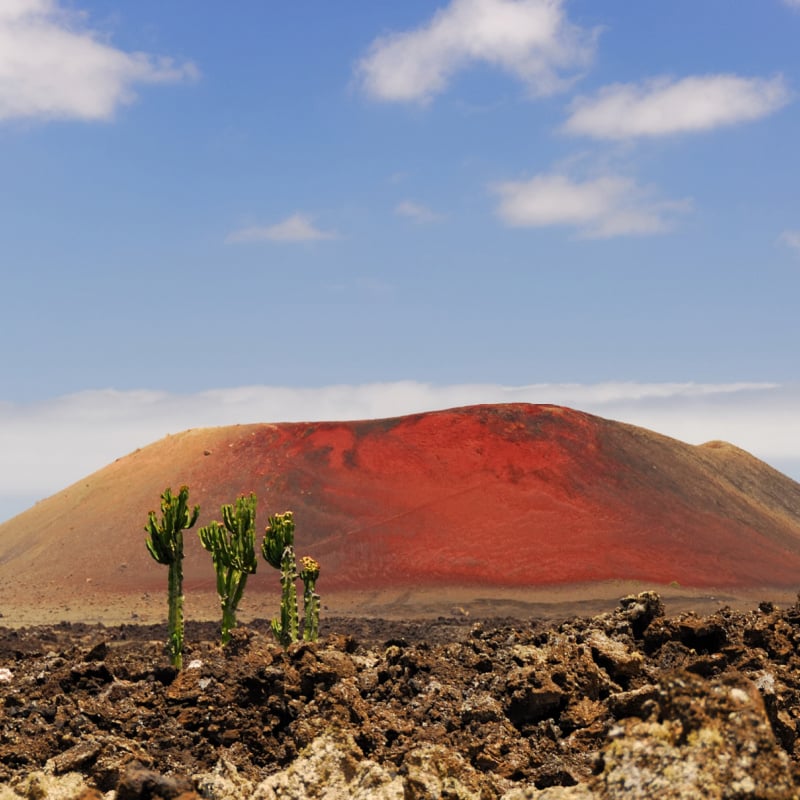
Tenerife is the island best for hikers and it has the most marked trails too. All of the Canary Islands are volcanic which means that the landscapes are exceptionally rugged and beautiful for hikers and walkers.
Lanzarote is home to Europe’s first underwater sculpture museum which I’m reliably informed is incredible for scuba divers.
Lanzarote is the most famous of the Canary Islands for divers and the underwater sculpture gallery is a unique experience away from the norm that you might expect when diving. But you’ll also find a spectacular array of underwater fauna to explore if you’re looking for something more traditional.
Inter-Island Travel
There are 8 main Canary Islands but only 4 of these are considered large tourist hubs. These are Fuerteventura, Gran Canaria, Lanzarote, and Tenerife. Tenerife is the largest island in the chain.
The islands are well-connected and easy to travel between. There are regular inter-island flights but the most economical and often fastest way to travel is by ferry.
The journey between Fuerteventura and Lanzarote is a great example of this. These two islands are incredibly close together, meaning the ferry ride takes just 25 minutes and prices range between 20-35 euros ($21-37 USD) depending on the operator you choose.
You can travel between islands for day trips or choose more than one vacation spot, allowing you to see as much of the Canary Islands are possible in a relatively short period of time.
If you’re staying in Fuerteventura then one of my favorite activities is to take the ferry from Corralejo to Timanfaya National Park on Lanzarote to visit the active volcano.
This is a popular excursion option and allows you to experience two of the different Canary Islands in a relatively short vacation.
Although the Canary Islands are officially a part of Spain geographically they sit close to the African coast. This explains why the weather is much warmer here than on mainland Spain and why the islands are often referred to as “the eternal spring.”
There’s nowhere I’d rather go to escape a long and cold winter.
With the temperatures slowly decreasing and a slight chill in the air, we’re all looking to escape the winter blues by venturing to somewhere with warmer weather and a beach.
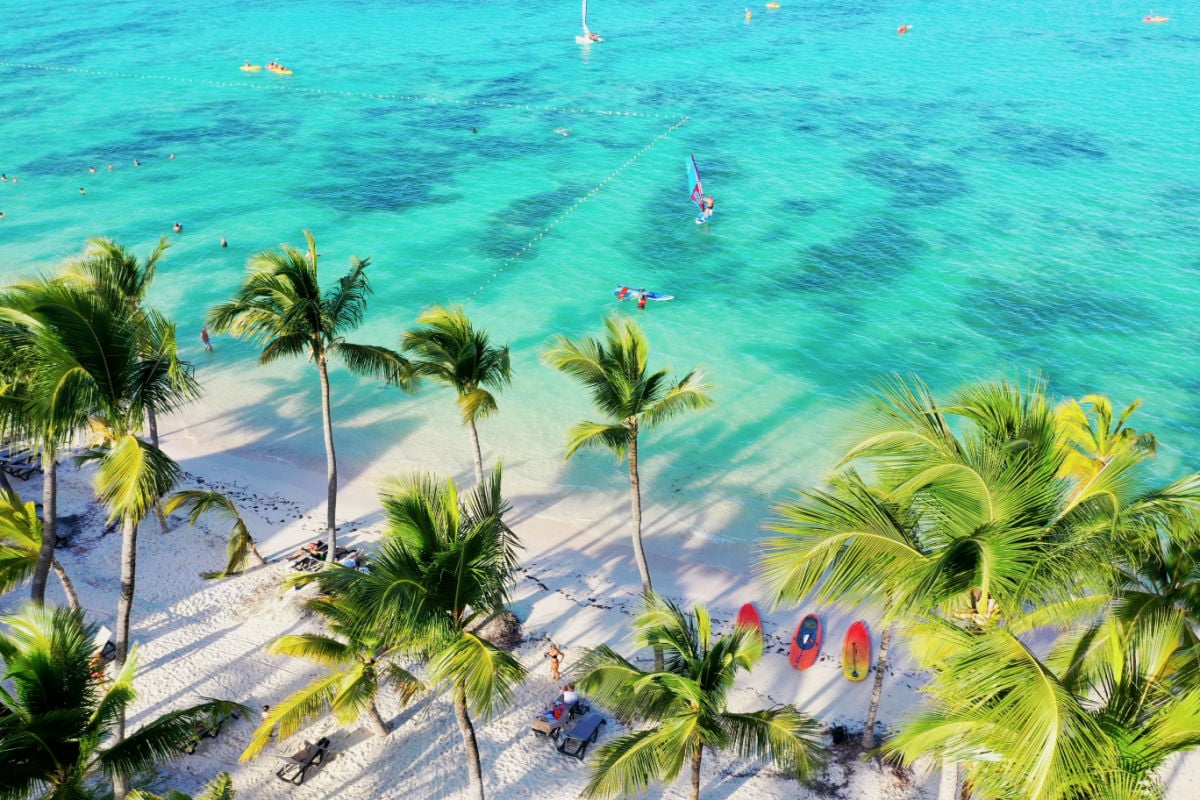
With white sandy beaches, crystal-clear waters, and an almost ideal climate, it’s no wonder this popular resort town in the Dominican Republic welcomes an influx of Americans each year.
A little something for everyone:Punta Cana🌴 is the perfect tropical location this winter!
Nature At Its Finest
Nature-lovers rejoice! Did you know Punta Cana is one of the best spots for wildlife spotting? With its diverse climate and landscapes, keep an eye out because you just may see an animal or two.
Between December and March every year, hundreds of humpback whales migrate to the warm waters of the Dominican Republic — AKA the best time to sign up for a little whale watching!
If you’re in the area for a while, it’s worth taking a short drive or boat to the incredible Samana Bay. The whale capital of the Dominican, the biodiverse area should be on everyone’s bucket list.
It’s also recommended to go through local agencies, but in the meantime, here are a few day tour options.
The Weather Gods Answered
With a tropical climate and warm weather throughout the year, Punta Cana has it all. With these warm temperatures comes warm seas (Perfect for a couple of laps through the blue waters).
In December, the sunny spot sees average temperatures of 78 degrees, with highs some days reaching over 85 degrees (YES!) With this type of climate, it’s no secret why hordes of American tourists flock to this beachy location in the winter months.
An All-Inclusive Haven
The ultimate mecca of all-inclusive properties and resorts, Punta Cana offers a huge selection for those looking for a tailored stay along the sandy shores. With accommodations targeted towards every age, there’s no shortage of amazing places to choose from.
With so many standout places to choose from, how does a property truly stand out? By building the first themed park in the Caribbean. Opened in early 2023, Falcon’s Resort by Melia offers a unique experience for all, by having the interactive Katmandu Park on site!
Ocean-front properties, resorts with children’s water-parks, beach-side yoga… Every property is bringing forth new ideas in an effort to stay current and stand out from the crowd.
Where will you choose to stay?
Flight Route Options
Punta Cana is fairly easy and reasonably priced most of the time from locations around the U.S.
As of now, Newark, New York, Miami, and Fort Lauderdale offer nonstop flights to this sunny spot year-round.
Nonstop flights from New York in the winter can be found for under $300, while some flights from Miami nonstop are under $240- WHAT A BARGAIN! It’s no wonder this is one of the most popular winter destinations for American travelers.
It’s good to always use Google flights to keep track of flights to Punta Cana because they tend to change a lot depending on the time of year you’re planning to visit.
What’s Better Than A Tropical Paradise?
Palm trees, sandy shores, beach-front bars. With Punta Cana’s tropical location also comes many tropical perks. Think adventure activities, some of the best marine life, and relaxation options for all.
We mentioned whale watching above, but did you know there’s so much more to do in Punta Cana if you’re looking to fill your days with a little fun? Take a catamaran to secluded islands, visit monkey land, zipline over the treetops, or go on an ATV ride through some of nature’s best landscapes!
There’s so much to do in Punta Cana for every type of traveler!