Children under the age of 12 pay less, but the cost is still $100 per child when the new pay system is introduced.
If you are an Ecuadorian resident then you will pay a reduced rate, but this has also been increased substantially from $5 per person to $30 per person.
This is a one-off fee, and tourists can spend up to 60 days on the Galapagos islands without a visa.
That means you will pay the same amount regardless of whether you are visiting for a day trip with a cruise liner or spending 30 days exploring the islands independently.
Mass tourism has had a negative impact on the delicate eco system here.
According to the local authorities the increase is ‘long overdue’ and the additional funds raised will be used to introduce more sustainable tourism practices, update infrastructure, and contribute to ongoing conservation schemes.
By increasing the entrance fee and increasing the conservation schemes on the islands, the elements that attract so many tourists can be preserved for years to come.
Why Visit The Galapagos Islands?
Tourist arrivals to the Galapagos Islands hit a record high in 2023.
And it’s easy to see why so many people are keen to experience and explore this beautiful destination.
One of the main reasons people visit the Galapagos Islands is for the incredible wildlife spotting opportunities.
From giant tortoises to penguins, marine iguanas to the blue-footed boobie bird, which is perhaps one of the most famous animals on the Galapagos islands.
Because the wildlife on the Galapagos Islands has been exposed to little human contact or major predators over the past century, it is both abundant and unique.
There’s nowhere better to visit as a wildlife lover.
Away from the wildlife, you can relax on pristine white sand beaches which are always in perfect condition thanks to the isolation of the islands, as well as the conservation efforts in place all over the islands.
Another incredibly popular reason visitors choose to travel to the Galapagos islands is to snorkel. And for good reason.
Snorkeling here is said to be some of the best in the world, especially when you are hoping to spot sea turtles.
You can often find them swimming and basking on the surface of the water in groups here.
Some of the best snorkeling spots in the Galapagos include Los Tuneles, Bartolome Island, Black Beach, and La Loberia.
Marine life is abundant here, and the waters are pristine.
The Galapagos are also a popular destination for small ship cruise lines so if you want to explore these islands within a larger group setting and as part of a more extensive trip then cruising is also a great way to visit The Galapagos.
Whether you want to walk in Charles Darwin’s footsteps, take to the beautiful turquoise waters, or visit a destination that feels relatively underexplored, there are plenty of reasons to visit the Galapagos Islands.
Tor has been writing for more than 20 years and has visited 25 countries (and counting!) She specializes in European and family travel and never says no to new adventures.
Opinions expressed here are the author’s alone, not those of any bank, credit card issuer, hotel, airline, or other entity. This content has not been reviewed, approved or otherwise endorsed by any of the entities included within the post.
Europe’s plan to launch an Electronic Travel Authorization, which will require Americans to pay a fee every three years in order to travel, has just been pushed back until 2024 as Brussels continues to grapple with operational issues and the complexities of the system’s implementation. The ETIAS, as it’s been dubbed, was initially set to come into force at some point this year.
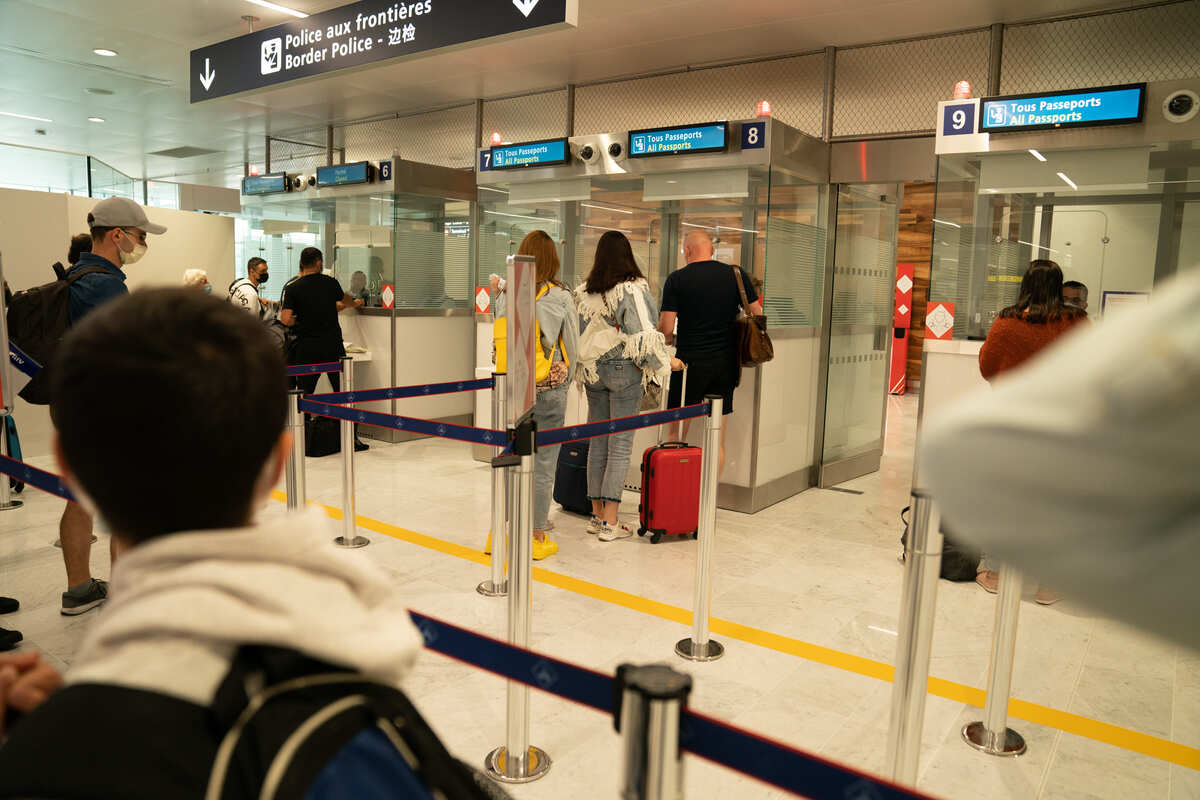
As things stand, Americans are not required to apply for a permit in order to enter Europe. In fact, authorities have made border crossings an incredibly smooth experience for U.S. citizens, allowing them to cross freely via several e-Gate entry points, with no other requirement other than carrying a valid biometric passport.
Once ETIAS come into force, however, they will need more than simply providing ID:
What Is A Travel Authorization System?
Europe is preparing for a major overhaul of its existing border rules, and Americans will be among those affected. Soon enough, tourists who are currently exempt from applying for a short-term visa traveling to Europe will be expected to obtain a travel permit in advance or an Electronic Travel Authorization – but what exactly does that mean?
ETAs, in their short form, have become widely popular since the United States introduced its ESTA in 2008 as part of an array of measures aimed at increasing national security. Other countries like Australia and New Zealand have also implemented their own, with Australia being a pioneer in launching the Electronic Travel Authority as early as 1996.
Even though it’s not a visa, and it’s normally issued online in a matter of minutes, ETAs have been a stone in the shoe of travelers who are growing wary of border formalities, especially in a post-pandemic context. After all, unless they hold a valid permit for an ETA-requiring country, they risk being barred from boarding or even refused entry into that territory.
Interestingly, Europe – more specifically, the European Union (EU) – never introduced an ETA, despite talks that it would be enforced circulating in the media for years. Confirming the rumors, the European Commission finally set an introductory date for the permit in 2020 – and then, of course, the pandemic hit. Ever since, several postponements have taken place.
When Will Europe Launch Its ETIAS?
The most recent date, announced in August 2022, had been set for the May-November 2023 period, but the launch will no longer be going ahead as planned. Apparently, the EU Directorate-General for Migration and Home Affairs silently kicked the can down road further by removing any mentions of a November 2023 launch from the official website.
Now, it simply reads 2024, though more details were not given, such as an exact month or reason behind the latest postponement. While this is merely guesswork at this point, we suspect it may be due to the ongoing challenges of enforcing a complex, cross-national border strategy when there are 26 countries involved.
Based on the information provided, the ETIAs will apply to visa-exempt travelers seeking entry into the Schengen Area, a customs union and border-free zone within Europe that comprises not only a majority of EU member states but also the nations of Norway, Iceland, Switzerland, and Liechtenstein. Other than improving security, the main goal is to track every tourists’ move into and out of Schengen.
Americans can visit Europe hassle-free, but they must observe one simple rule: never staying longer than 90 days out of any 180-day period. This means that, when using up an entire three months inside Schengen, including any time spent in any of the participating countries, they must immediately leave the territory of all member states and wait three additional months to be readmitted.
Over the years, the enforcement of this rule has led to some confusion, especially when newcomers are unsure whether their date of entry counts as day 1, or if the date of exit counts towards the 90-day limit, and ended up overstaying, amid other uncertainties. Luckily, the Commission developed a calculator that helps Americans verify the legality of their stay.
How Expensive Is The Fee?
ETIAS applicants must pay a €7 fee through the official ETIAS website or app. The EU has reminded tourists the system is not yet operational and that any third parties offering travel permits are scammers. For now, and until 2024 at the latest, Americans are not subject to EES or ETIAS rules, being allowed to enter Europe requirement-free.
Besides the Travel Authorization, Europe is also introducing a new Entry-Exit System (or EES), already being trialed in a number of external borders ahead of a wider rollout. This means that, from late 2023/early 2024, all foreigners entering the bloc will be expected to register fingerprints for stricter border checks on top of presenting their ETIAS at the check-in desk.
For a complete list of all the countries Americans must pay to enter in 2023, please read our accompanying article.
More than six years since it unveiled its plan to launch a U.S.-style Travel Authorization scheme, which many now deem a ‘tourist fee’, Europe has decided to push back the date – once again – on top of multiple previous postponements dating back to 2020. Instead of early 2023, the so-called ETIAS will now be operational only from November 2023.
For more than half a decade, the European Union has mulled over the introduction of the measure, set to tighten rules for travel into the bloc. Currently, Americans, Canadians and many other non-EU citizens only need valid passports visiting the continent. Once the ETIAS are launched, they will need to apply for an additional online permit in advance.
Why, then, has the roll-out been so slow? More importantly, will the ETIAS ever be launched at all?
How Does The Travel Authorization Work?
While it was set to debut as early as January 2023, the ETIAS launch date has now been moved to November. In fact, it won’t be an official requirement in 2023 at all: a six-month grace period will be observed, meaning Americans won’t need to formally apply for a Travel Authorization possibly until May 2024.
According to ETIAS Visa, a platform specialized in Europe and ETIAS News, the European Commission has chosen November as the definitive date for the roll-out, though it will be gradual. As noted above, applying for an ETIAS will not be mandatory until after six months have elapsed from the implementation date.
Application will possibly involve filling out an online form, with details such as full name, nationality, age, as well as truthfully answering questions pertaining to character, immigration, and criminal records. It may sound burdensome, but it is anincredibly straightforward process, usually taking a few minutes to complete.
Of course, travelers who are curious to find out how the new EU ‘e-permit’ works are more than welcome to request their first ETIAS in November. As ETIAS Visa reports, the Travel Authorization will remain active for 3 years from issuance, or it may be rendered invalid sooner if the permit holder’s passport expires before that. Of course, it will not be free.
Much like the U.S., which only recently doubled the fee for its own Travel Authorization, Europe expects Americans and other foreigners to pay in order to be granted a leave to enter. At this moment, a single ETIAS will cost $8, much cheaper than other e-permits required by America, Canada, Australia or New Zealand.
How Does The ETIAS Change Europe Travel?
Europe is known to be have a tough stance on immigration. Even though they already carefully monitor every movement into and out of the Schengen Area, their famous border-free zone, the continent’s leaders are stepping up security efforts now that international travel has resumed. This includes the controversial ETIAS.
First of all, how does Schengen even work? In summary, it is an agreement signed by 26 European countries allowing people to move freely without any identity checks. Essentially, driving from Spain to France is as bureaucratic as crossing the California-Nevada border. Normally, there are no identity checks whatsoever, as all Schengen countries share a continuous customs territory.
Once they have cleared security at their initial point of entry, Americans can come and go as they wish within the Schengen Area. However, as per EU rules, they can remain in Schengen for up to 90 days only, out of every 180-rolling period. In other words, when staying for a full three months in Schengen, U.S. citizens must then leave the zone for a further three until they can be allowed back in.
This gives the clock time to reset, and a brand new 3-month period to start. Countries belonging to the Schengen Area include the popular tourist hotspots of Italy, Spain, Portugal, Germany and The Netherlands, and will soon feature Europe’s most sought-after destination: yes, Croatia is joining the group soon.
More importantly, these rules will not change once the ETIAS starts being enforced. Americans will still only be allowed to visit Europe within the time-frame mentioned above, regardless of the three-year validity of their travel permit. You can learn more about the Schengen Area, and the freedoms it promotes, visiting the official website.
Will The ETIAS Really Be Launched In November 2023?
Well, that is a tricky question. The ETIAS is a multi-million project whose impacts will be felt across the entire EU and EU-associated countries, such as Switzerland, Norway, Iceland, and others. To put it simply, it is not as simple as merely setting up a random web-page to accommodate the service: it is a mechanism that will change Europe travel forever.
Preparations have been underway for years, and the fact that countless delays have occurred are a testament to how complex, and challenging, reforming an immigration system is, especially in a collective as unique as the EU, where major decisions must have unanimous approval of all members.
Taking this into account, the ETIAS is in fact moving pretty quickly. Perhaps not as fast as Brussels would have hoped, after two years of stagnation due to Covid and other intra-EU disagreements, but the EU does look determined to deliver on this project sooner rather than later. Whether it’s 2023 or 2024, the ETIAS is being brought in.
That said, there may be some operational issues that could be slowing down the process more than the Commission would have liked. One of them may be, surprise, Brexit, a term referring to the UK’s withdrawal from the bloc which was finalized in 2020 after a painful five-year divorce. Prior to Brexit, Brits were able to move freely across the EU.
Now, their passports must be checked thoroughly at every entry point, like Americans’ and any non-European citizens. This has proven a problem, considering that UK-EU traffic is heavy, particularly via land: in recent weeks, the UK’s Dover Port, a gateway to France, has declared a ‘critical incident‘ due to the extremely long wait times travelers are facing.
Brits can’t just scan their way into the EU anymore: border officials must ensure they comply with the bloc’s rules, such as not having been present in the Schengen Area for longer than 90 days in the last 180 days, checking they have enough funds to support themselves during their stay, having a return ticket etc – and this has created a massive backlog.
Is The EU Prepared For The Extra Documentation Check?
Now that tourism has resumed, the impact of Brexit is finally being felt at the EU’s external borders with the UK, with the French Transport Minister blaming Brexit directly for the travel chaos. You can see what we are getting at: Europe is probably not prepared for further border checks right now, including ETIAS. More worryingly, the UK impasse is only one example.
Several other non-EU citizens that travel to Europe frequently – Serbians, Montenegrins, Bosnians, Albanians – will be subject to the ETIAS system, not to mention those coming from across the pond. From our understanding, Europe can’t take any chances in aggravating the current travel disruption by adding new border requirements when airports are already crumbling under pressure.
After all, this crisis could last another year, exactly the amount of time the ETIAS launch has been delayed for. This is, of course, our view on the topic. The EU has not issued a formal statement detailing why the launch was delayed. At the same time, it is clearly visible the continent is struggling with infrastructure and staffing issues due to a pent-up travel demand, besides dealing with other major concerns.
Needless to say, Europe already has a lot in their plate right now, and we can understand why something as monumental as a Travel Authorization scheme is not an immediate priority. As things stand, the ETIAS will start receiving applications in November 2023, and all eligible, non-visa requiring tourists will be encouraged to obtain one.
Enter your email address to subscribe to Travel Off Path’s latest breaking travel news, straight to your inbox
Disclaimer: Current travel rules and restrictions can change without notice. The decision to travel is ultimately your responsibility. Contact your consulate and/or local authorities to confirm your nationality’s entry and/or any changes to travel requirements before traveling. Travel Off Path does not endorse traveling against government advisories
In recent weeks, we’ve seen a huge furor on the internet after Europe announced tourists will be charged an entry fee from 2023. Millions of U.S. citizens, who had been allowed to travel to the continent for years requirement-free, were not exactly thrilled at the prospect… Except they should be. On this article, we will explain why this is good news.
And while you read it, you may find out things about your own country that may surprise you…
For years, Europe has been mulling over the introduction of a travel authorization system, which would require non-European travelers to apply online for a permit to visit ahead of flying to the region. After dealing with several delays resulting from Covid and other internal issues, it seems like European lawmakers’ new priority is introducing this scheme.
Trust us, although it feels like being picked on by the cold-hearted politicians in Brussels, Americans will in fact benefit from this:
What Exactly Is Europe’s New Entry Fee?
The ETIAS, an acronym for European Travel Information Authorization, is a system the European Union and its Schengen Area-associates will put in place starting in 2023, aimed at increasing security at their external borders and cutting down irregular migration. On top of that, it aims making the screening process easier for foreigners.
Once it launches, the ETIAs will have an official website, as well as a mobile app, where visitors will be able to apply. Americans (as well as Canadians and Brits) who were allowed to travel to the Schengen Area with only their passports, as of now, will not be allowed to board their flights unless they hold a valid travel authorization.
It will cost €7 (or roughly $8) and it will be valid for up to 3 years. This means that, once you have obtained your first ETIAS in January 2023, you will be able to travel to Europe as many times as you want until January 2026, provided that you respect other Schengen Area rules, such as not staying for longer than 90 days out of every 180-day period.
So Why Should Americans Europe Is Charging Them?
Europe is overhauling its whole immigration policy. Besides bringing in the ETIAS, it may also be moving its cumbersome visa application process online, in a move that would make it easier for visa-requiring nationals (like Indians, the Chinese, Turkish) to submit applications via the internet. Americans have, luckily, been exempt from the latter.
Many U.S. passport holders do not know, but the travel freedom they enjoy is not shared by all other nationalities. Americans can visit up to 186 countries either visa-free, or by paying for a visa on arrival – Iran citizens are not so privileged, being welcome in only 42 other countries without visa restrictions.
Applying for one is not the easiest task either. Unless they are traveling to an obscure African or Asian nation that demands visas, Americans will never have to fill out an application form, schedule a visa appointment at a Consulate, fly thousands of miles all the way to D.C. to attend a scrutinizing interview, surrender their passport, and then still risk getting a hard ‘no’.
That is the reality for many travelers, usually those coming from low-income countries when they seek entry into the Western World, namely the U.S., Canada and Europe. It is not as straightforward or simple as it is for Americans. In order to enter the Schengen Area, those subject to this regime currently need to apply for a new visa every single time they travel.
Even if they have a layover in Europe, or a short four-day vacation in Barcelona or Athens, certain categories of travelers are subject to the grueling procedure we have detailed above. Not once, but on every individual trip they take, and refusal rates are getting higher. Fortunately, Americans are not among them.
Instead, they can simply pack their passport, other travel essentials and hop on a plane the day after booking a ticket. Doesn’t freedom feel awesome? Well, believe it or not, Europe is in truth extending that freedom through its ETIAS scheme. Once the new border regulations are rolled in, all nationalities who will not require a visa will need instead an ETIAS.
By being subject to a Travel Authorization, Americans are being granted the privilege to continue visiting Europe visa-free. Unlike other media news outlets have wrongly pointed out lately, the ETIAS is far, very far from being equivalent to tourist visas. As you have learnt today, those are much harder to obtain.
Main Differences Between Schengen Visas And ETIAS
Here’s a quick comparison between both:
Actual visas
Face-to-face interviews are usually required
A visa sticker is glued to the passport page every time an applicant seeks entry into Europe, making they run out of pages faster
Visa nationals are granted the right to travel for the exact amount of dates they inform the Consulate, whether it’s 7 days, 14 days, etc
It costs $81 to apply
Refusal rates are high and a majority of fees are non-reimbursable
ETIAS
It is a simple online form that can be filled out in a matter of minutes
You can use a single ETIAS for travel up to the 3 years
The fee is only $8
If your 7-day vacation plans change, you can still stay in Europe for up to 90 days without being penalized
95% of ETIAS will be automatically granted, while the remaining 5% will be processed within a few days, and an even smaller percentage denied
The ETIAS will facilitate screening once arriving to Europe. Were you ever welcomed by one of those grumpy border guards that grilled you about the purpose of your trip? Those holding a Travel Authorization will still need to go through customs, but they will have an ‘approved traveler’ status, dramatically reducing wait times.
You get it now? As strange as it may seem, Americans are not being punished by Europe’s new entry conditions: they are being included on the ‘fast-track’ group. ETIAS in hand, they will be allowed to keep country-hopping across a restriction-free Europe – as will Canadians, Brits (now that they are out of the EU), Australians and New Zealanders.
The U.S. Has A Travel Authorization Scheme Of Its Own
Europe is not the only destination that has a travel authorization scheme in place. Many Americans will not be aware of this, but the U.S. has its own, called the ESTA, which Europeans themselves have had to apply for years. Of course, U.S. passport holders (as well as Canadians) do not need an ESTA for travel, but it still applies to all of these countries.
America’s ESTA has been in place since 2009, much earlier than Europe’s, and has proved a powerful tool in stopping ‘undesirable’ foreigners, such as criminals, from visa-waiver countries from entering. Europe is merely ‘returning the favor’, and that is not necessarily a bad thing for travelers on both sides of the pond.
Countries like Australia and New Zealand also demand a travel authorization of visa-exempt nationals, and they are not necessarily a bad thing. They are a pact of mutual trust between countries, seeing that, beyond the Western World bubble, most of the world still requires traditional visas.
Earlier this year, the U.K. was the latest to announce its own ‘ETA‘, signalling this online pre-approval form is the future of travel. So Americans, rejoice: Europe has not identified you as risky travelers who might overstay their time as tourists and will, thus, need visas starting in 2023. All that’s needed is a quick, easy-to-fill online form, a negligible $8 fee, and that’s you.
For more information on ETIAS, including its implementation date, please visit this page.
Enter your email address to subscribe to Travel Off Path’s latest breaking travel news, straight to your inbox
Disclaimer: Current travel rules and restrictions can change without notice. The decision to travel is ultimately your responsibility. Contact your consulate and/or local authorities to confirm your nationality’s entry and/or any changes to travel requirements before traveling. Travel Off Path does not endorse traveling against government advisories
The United States is increasing the cost of the ESTA waiver visa for incoming tourists. There have been rumors of a price increase for several months, but the final rule is effective from May 20, 2022.
The ESTA is an online system whereby nonimmigrant visitors planning to visit the United States under the Visa Waiver Program (VWP) must obtain an electronic travel authorization before traveling to the United States.
The New ESTA Price
The Department of Homeland Security will increase the price of the ESTA from $14 to $21. The Federal Register announced the increased fee—which contains a $4 operational fee—in a recent statement.
The Department of Homeland Security said the travel promotion part of the charge was rising from $10 to $17. The additional $7 of the ESTA fee will support Brand USA. They are a public-private organization created to promote the United States as a tourism destination.
The new fee will begin on May 26, 2022.
It’s the first increase since 2015, and it will continue until 2027.
What Is The ESTA?
The ESTA is an automated system that judges the eligibility of travelers to the U.S.A under the Visa Waiver Program. The ESTA application contains biographic information and answers which help the Department of Homeland Security decide upon a traveler’s eligibility.
All travelers must submit their ESTA application before traveling to the United States. However, the Department of Homeland Security recommends travelers apply for an ESTA way before their journey begins.
Some travelers wait until the last minute, witness delays in approval, and have to postpone their trip. Travelers can avoid this by sorting their ESTA out early.
Travelers from the following nations can apply for an ESTA visa:
Andorra
Australia
Austria
Belgium
Brunei
Chile
Czech Republic
Denmark
Estonia
Finland
France
Germany
Greece
Hungary
Iceland
Ireland
Italy
Japan
Republic of Korea
Latvia
Liechtenstein
Lithuania
Luxembourg
Malta
Monaco
Netherlands
New Zealand
Norway
Portugal
San Marino
Singapore
Slovakia
Slovenia
Spain
Sweden
Switzerland
Taiwan
The United Kingdom
FAQ Questions About The ESTA
What Do I Need For An ESTA?
Travelers must have an E-passport to apply for an ESTA visa; this rule started on April 1, 2016.
In addition, the passport must have a machine-readable zone on the biographic page.
An E-passport includes an embedded electronic chip, which enables U.S. border officials to identify the ESTA. If you have an E-passport—which most travelers do in 2022—you’ll see a unique international symbol on the front cover.
How Do I Apply For The ESTA?
Travelers should visit the ESTA website to apply for the ESTA. Travelers don’t need to visit their local U.S. embassy or consulate; it’s a completely web-based system.
Is The ESTA Waiver A Visa?
No. Travelers with an approved ESTA don’t have a visa. Travelers with valid visas don’t need to apply for an ESTA.
Who Needs To Apply For An ESTA?
All nations of eligible ESTA countries (as listed above) can apply for an ESTA to travel to the United States, including Alaska, Hawaii, Puerto Rico, Guam, the Virgin Islands of the United States, and the Commonwealth of the Northern Mariana Islands.
How Does It Take For The ESTA To Be Approved?
It can take up to 72 hours for your ESTA to be approved. If there are problems with your application, it may take longer.
That’s why we recommend you apply for an ESTA as soon as you book your trip to the United States. Sometimes, your ESTA may be approved within minutes, but you shouldn’t risk it.
Final Thoughts
Despite the small price increase, the ESTA remains an excellent way for tourists to enter the United States with little stress.
Enter your email address to subscribe to Travel Off Path’s latest breaking travel news, straight to your inbox
Disclaimer: Current travel rules and restrictions can change without notice. The decision to travel is ultimately your responsibility. Contact your consulate and/or local authorities to confirm your nationality’s entry and/or any changes to travel requirements before traveling. Travel Off Path does not endorse traveling against government advisories
The ETIAS will be required next spring and once approved will be valid for three years
Traveling will be a little more expensive as more fees are emerging in different destinations.
Now, European authorities have announced the implementation of the European Travel Information and Authorization System (ETIAS), a platform where most non-European visitors will have to register and pay a 7 euros fee (around $7.50) to enter any of the 26 European countries included in the program.
This new measure applies to US citizens and other 62 nationalities that usually don’t need visas for tourism but will need to supply an online application starting in May 2023.
It is now a new idea, it has been suggested since 2016, but now, due to the increasing amount of tourists in the region, local authorities have decided to implement it soon.
The European Union has stated on ETIAS’s official website that the new system has been created to protect and strengthen borders: “The main goal of the ETIAS visa waiver for Europe is to identify possible threats or risks associated with visitors traveling to any of the Schengen Area countries.”
Now that many COVID-related travel restrictions have been eased, more travelers are interested in visiting Europe, but now they must stay up to date with ETIAS and any other new rules that they might have to consider on their next trip.
What You Must Know About ETIAS
ETIAS—now popularly known as “visitor tax”— is similar to the U.S. Electronic System for Travel Authorization entry approval system, non-European travelers will have to register online, fill out a form, and complete an electronic process in order to enter the European Schengen Zone and stay for up to 90 days.
The countries that will require ETIAS for certain travelers are Austria, Belgium, The Czech Republic, Denmark, Estonia, Finland, France, Germany, Greece, Hungary, Iceland, Italy, Latvia, Liechtenstein, Lithuania, Luxembourg, Malta, The Netherlands, Norway, Poland, Portugal, Slovakia, Slovenia, Spain, Sweden, and Switzerland. Other countries, like Ireland,
At the moment, a list of over 60 countries —which includes the United States and Canada— are part of the visa-free agreement with the EU, and now all travelers from those nations will have to register prior to arrival. Those between 18 and 70 years old will have to pay the 7 euros fee unless they have applied for another type of visa.
In May 2023 ETIAS will be fully implemented. These are the main considerations regarding the process:
ETIAS online application will only take about 10 minutes.
Authorities will request personal information, travel documents information, destination details, and background questions.
Travelers between 18 and 70 years old will have to pay the 7 euros fee.
Once the application is submitted, an automated system will validate the information. 95% of applications will get a response within minutes.
If approved, the travel authorization will be valid for 3 years or until the travel document—such as a passport— expires.
If denied, the traveler will receive a justification and information in case someone wants to appeal.
Carriers will request ETIAS’s travel authorization and once at the Schengen area border the guard will finally allow or deny the traveler’s entry.
According to the information shared by the European Commission, all revenues from the fees will go to the EU budget.
On ETIAS’s official site it has been announced that the launching of the ETIAS system will begin on January 01, 2023, but it will not be mandatory until May. This permit will not allow travelers to work or study in the European Schengen Zone, it’s only for tourism. Those who want more information can visit ETIAS’s site and stay tuned with the European Commission news.
Enter your email address to subscribe to Travel Off Path’s latest breaking travel news, straight to your inbox
Disclaimer: Current travel rules and restrictions can change without notice. The decision to travel is ultimately your responsibility. Contact your consulate and/or local authorities to confirm your nationality’s entry and/or any changes to travel requirements before traveling. Travel Off Path does not endorse traveling against government advisories