As if nonstop flights to Malta hadn’t been big news enough, Delta continues to build up on their European network by adding the first-ever nonstop service between the United States and…
Sardinia!
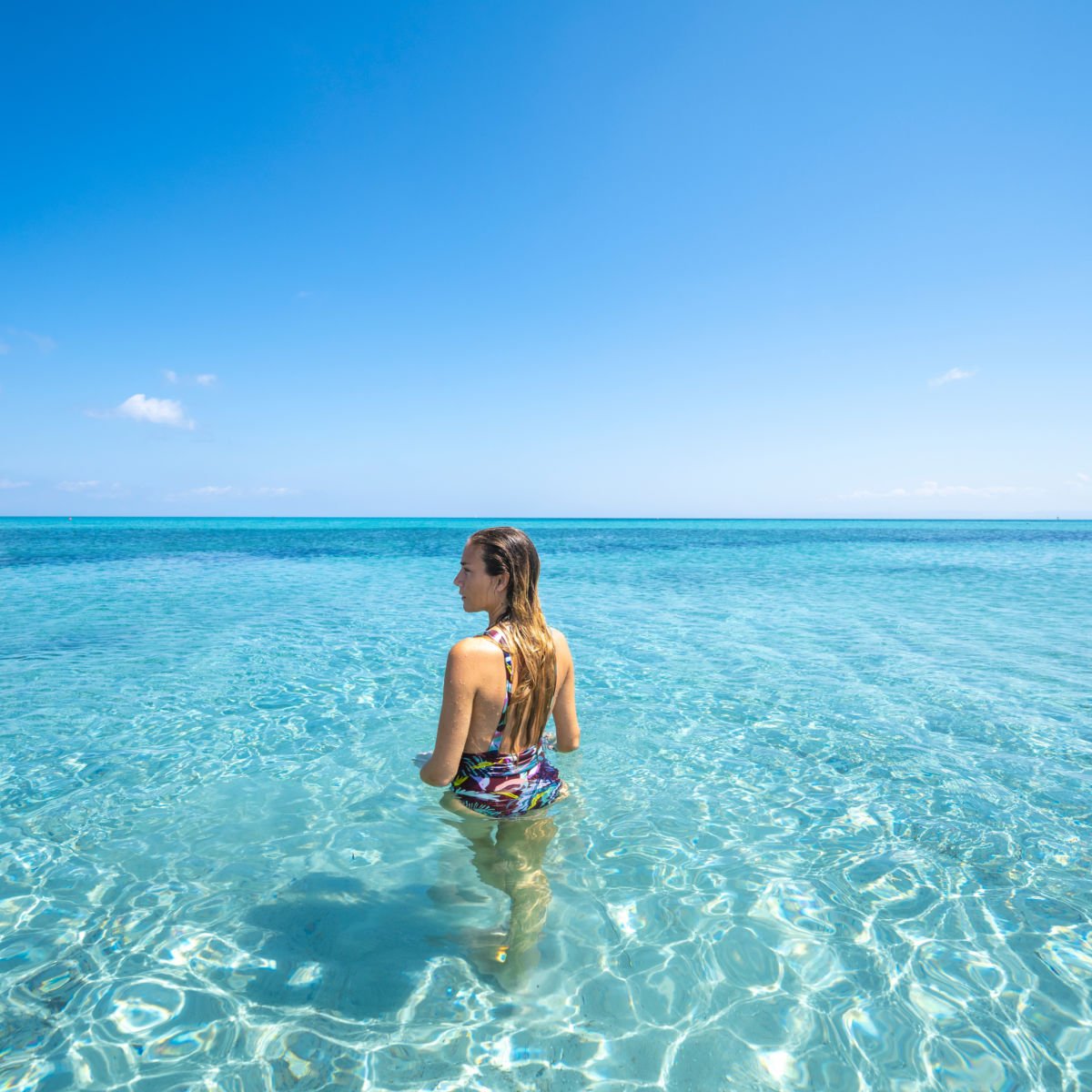
Italy’s second-largest island (after Sicily), and one of the leading beach destinations in the Mediterranean, Sardinia is famous for its Caribbean-like white sand beaches, ancient heritage, hearty food, and rolling vineyards.
Despite its undeniable popularity among Europeans, Sardinia remains a relatively hidden gem across the pond. That’s largely due to its lack of transatlantic connectivity.
Starting May 20, 2026, this will no longer be the case:
As confirmed in a press release issued this week, Delta will become the first airline to service an inaugural U.S. to Sardinia route. More specifically, they will offer nonstop flights from their New York (JFK) hub to Olbia-Costa Smeralda (OLB), in the north of Sardinia.
The route will be operational four times a week, on the wings of the Boeing 767-300ER, equipped with Delta One, Delta Premium Select, Delta Comfort and Delta Main.
Their equivalent to First Class, Delta One features lie-flat seats, chef-signed meals to be washed down with Taittinger champagne, and Missoni amenities. The remaining seating categories may not be as well-resourced, but they do include curated dining and Delta Studio entertainment.
26 seats are reserved for Delta One, 18 for Premium Select guests, 21 in Comfort, and 151 in Main. Timetables are yet to be announced; however, we do know round-trip fares will average $1,100 for the latter (economy).
Considering Sardinia’s relative anonymity among Americans, Delta’s announcement took many by surprise. If you were wondering how this offbeat Italian island got picked out of numerous other Mediterranean hotspots, this is what we went down:
Delta held a so-called Route Race, inviting both Delta stakeholders and employees, and SkyMiles Members to vote on their preferred new destination for summer 2026.
Sardinia ranked in a highly-competitive top three, alongside Malta and Ibiza. Following five days of voting, with over 150,000 SkyMiles member votes cast, Sardinia surprisingly raced ahead of Spain’s party-centric island.
Simultaneously, Delta people chose Malta. Thus, they were elected as Delta’s new European destinations, both previously unserved from the U.S., and in Sardinia’s case, the first-ever direct Transatlantic connection.
If you’ve got so far in reading, and you’re wondering why pick Sardinia over Rome, the Amalfi Coast, or even Sicily, here’s the briefest summary of what makes the ‘European Caribbean’ so fascinating—as if that title weren’t enough indication.
You’ll be flying to Olbia, a small ciy in the north of Sardinia acting as a gateway to the stunning Costa Smeralda. As the name suggests, picture turquoise-colored seas lining white-sand shores.
Costa Smeralda is also peppered with lively Sardinian towns, like Porto Cervo, distinguished by its luxury shopping scene, yacht-dominated marina, and upscale resorts.
Looking for something a little more off-the-beaten-path? Check out San Pantaleo, a rustic mountain village overlooking the coast, criss-crossed by cobblestone streets, and home to a plethora of family-owned trattorie serving freshly-caught seafood and homemade pasta.
Trattoria Balbacana is particularly popular among locals.
Keen on some island-hopping? Take a day trip to the Maddalena archipelago, just off the Emerald Coast. The main landmass in the island chain, La Maddalena, is a short 15-minute boat ride from Palau port, and it’s known for its collection of pastel-painted buildings.
They come in every color under the sun: pink, ocher, yellow, green, coral, you name it.
Although Olbia is primarily known for being in the vicinity of Costa Smeralda, you can travel beyond the Blue Flag coast towards Bosa, yet another color-burst of a city built on the banks of a scenic river, and at the foot of a monumental ancient castle.
On the northwest coast, Alghero is a must-see stop. A unique walled city influenced by Catalan architecture, it has prominent sea walls, an incredible selection of restaurants, and the nearby Capo Caccia play host to the myth-enveloped Neptune’s Grotto.
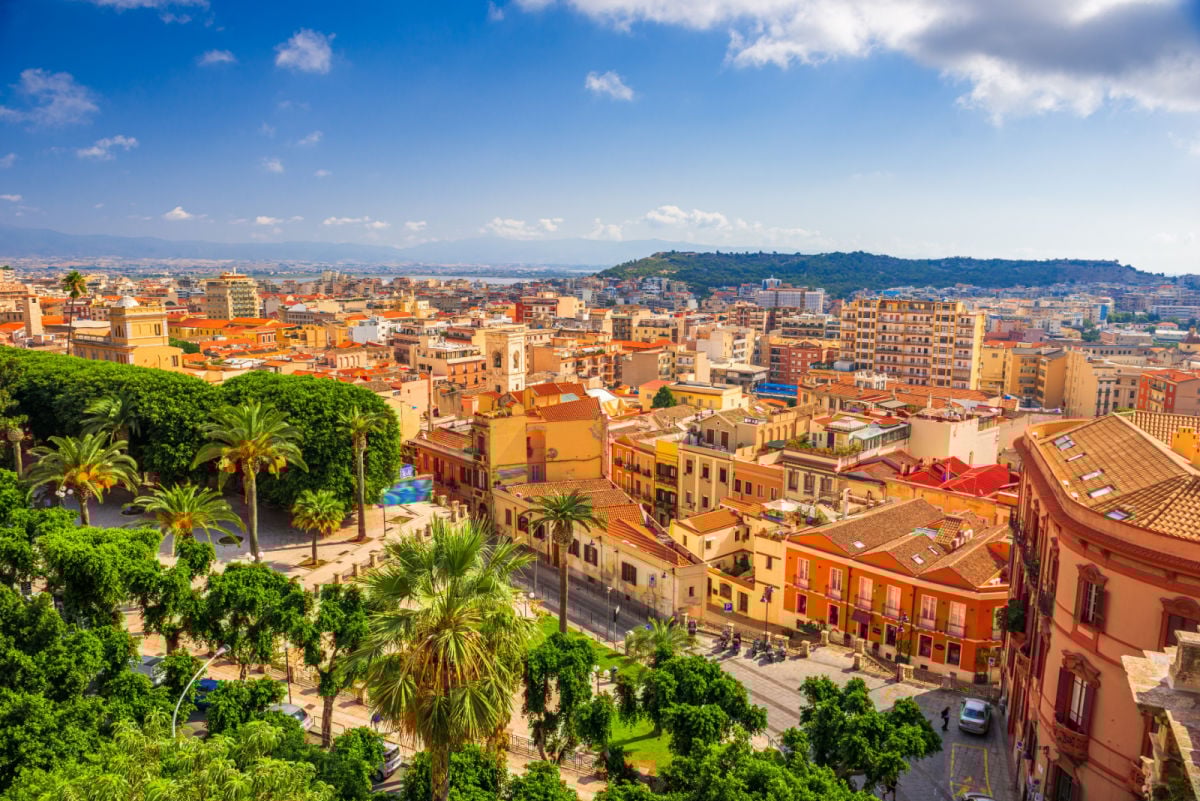
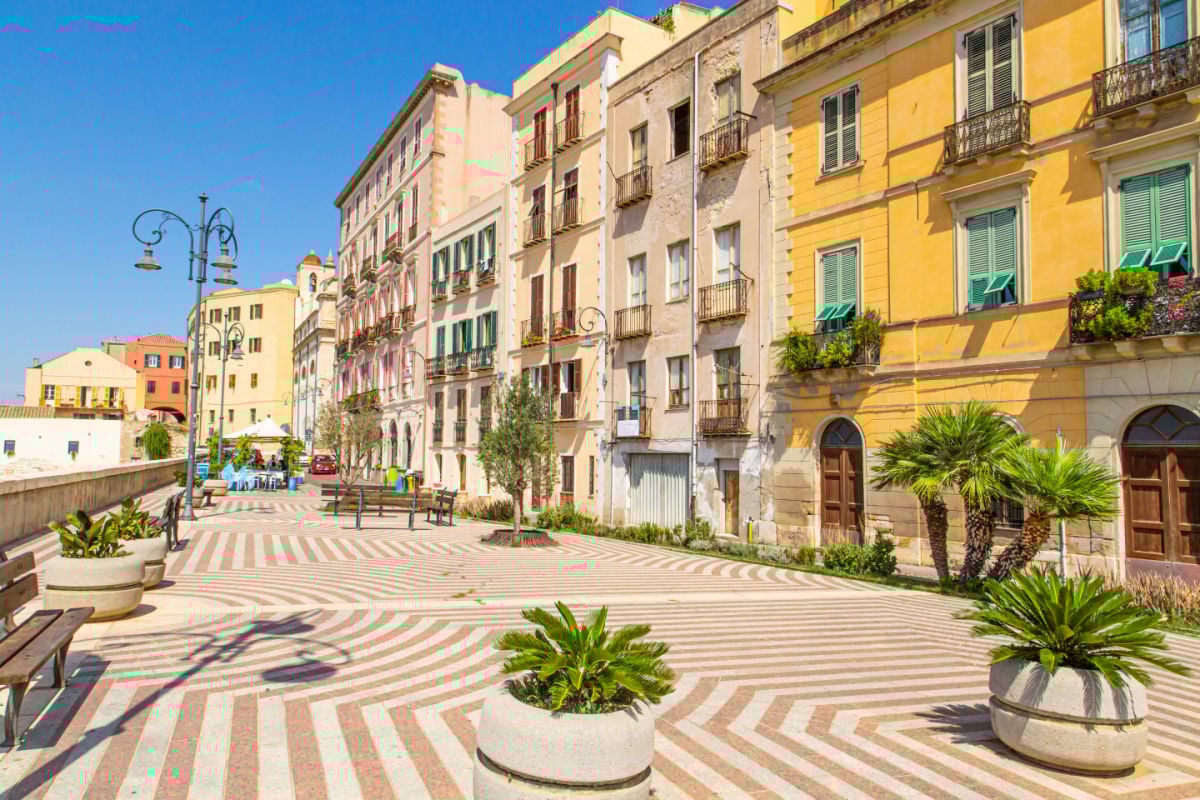
In the event you’re continuing your journey south, make sure you add the bustling Sardinian capital, Cagliari, to your list. With its wall-encircled center, traversed by medieval pathways, historic towers, and Roman amphitheater carved into hard rock, it just exudes Old World charm.
A short 30-minute drive out of Cagliari, Cantine Argiolas is one of the most notorious family wine producers on the island, and they offer wine tasting tours.
Though not as famous as the northern beaches, the coastal stretch in southern Sardinia is equally-gorgeous, with Chia and Villasimius in particular standing out with their soft cream-colored sands, and teal, warm seas.
Need any more convicing? Read further about Sardinia—and its natural and manmade wonders—here.
Vini, our senior lead writer at Travel Off Path, has over 60+ countries under his belt (and currently weaving tales from Paris!), and a knack for turning off-the-beaten-path experiences into informative stories that will have you packing your bags.
The Travel Off Path Advantage: Your Travel Toolkit
Subscribe To Our Latest Posts
Enter your email address to subscribe to Travel Off Path’s latest breaking travel news, straight to your inbox.
When you think of Portugal, it’s probably places like Lisbon, with its many hills and fado buskers in every corner, and Porto, a world capital of wine straddling a scenic riverfront, that come to mind—and unless you’re well-versed in ‘Europe’, you’re probably thinking they’re bang for your buck, too.
Portugal has always been referred as the cheapest country in Western Europe, where you could eat affordably under $10, and find gorgeous hotels with a view for under $50, but 2015 was 10 years ago.
Have you checked Lisbon prices lately?
Guimarães Is The Birthplace Of Portugal
According to Budget Your Trip, travelers have spent an average $86 per day on meals in Lisbon recently, coupled with $148 nightly on accommodation, while the average daily cost of a vacation in the Portuguese capital stands at $196.
Lucky for the budget-conscious among us who are still dreaming of pastel de nata and tile-clad houses, there is a lesser-known, yet gorgeous medieval city in Portugal where prices are still low, and the weather stays pleasant well into early October.
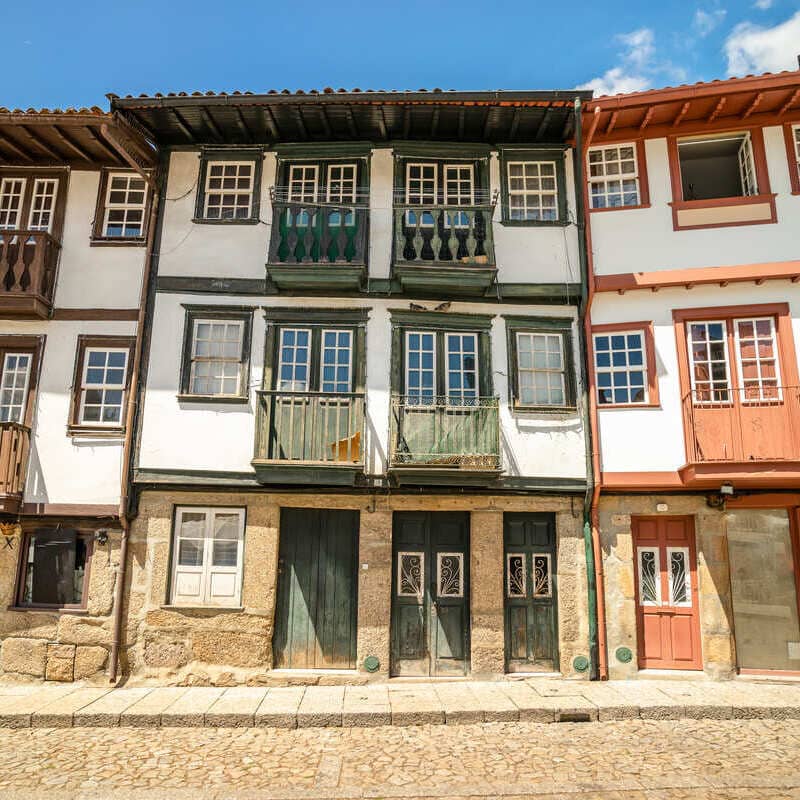
A picture-perfect city in northern Portugal, known as the ‘birthplace of Portugal’, Guimarães is less than an hour away by train from Porto, and characterized by its intact medieval architecture, absence of tourist crowds, and most importantly, cheaper prices:
Why Visit Guimarães This Fall
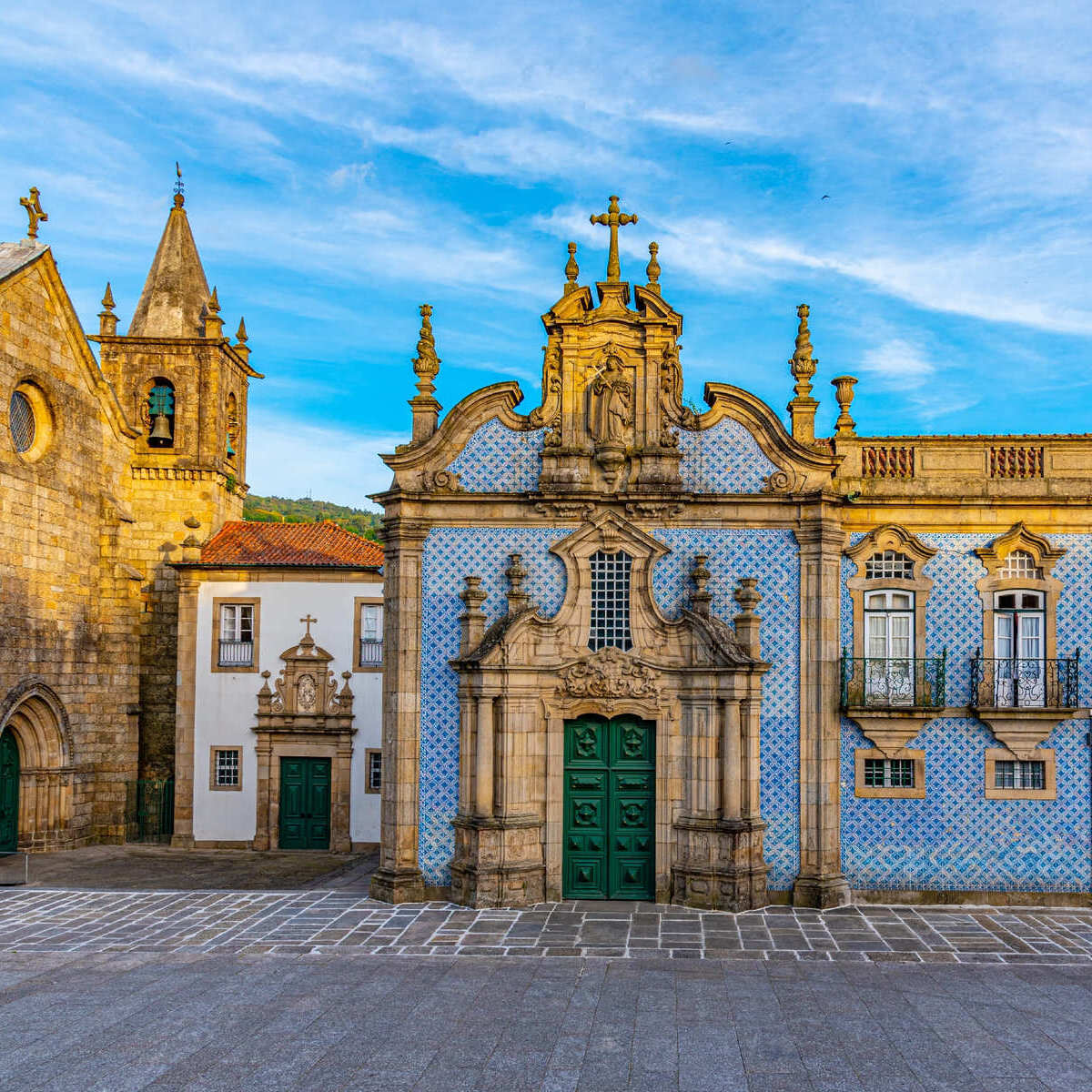
If you often associate Europe with old plazas bordered by cozy cafés, fairytale chateaux, and ornate churches with richly decorated interiors, you’re not exactly off mark when it comes to Guimarães’ Historic Center.
In the heart of it, there is an atmospheric square called Largo da Oliveira, dominated by an ancient olive tree (hence the name), and flanked by the medieval Nossa Senhora da Oliveira church.
If you’re curious about the tree, legend has it that an olive tree has stood on this exact spot for over seven centuries. Naturally, the current one isn’t as old, but whether you’re a firm believer in folktale or not, there’s no denying its picturesqueness.
The square is also famous for housing the Padrão do Salado, a Gothic monument with arches enclosing a Norman cross. It was built in commemoration of the Battle of Río Salado, which took place in 1340 between a Christian king of Portugal and Islamic settlers.
Medieval Wonders Galore
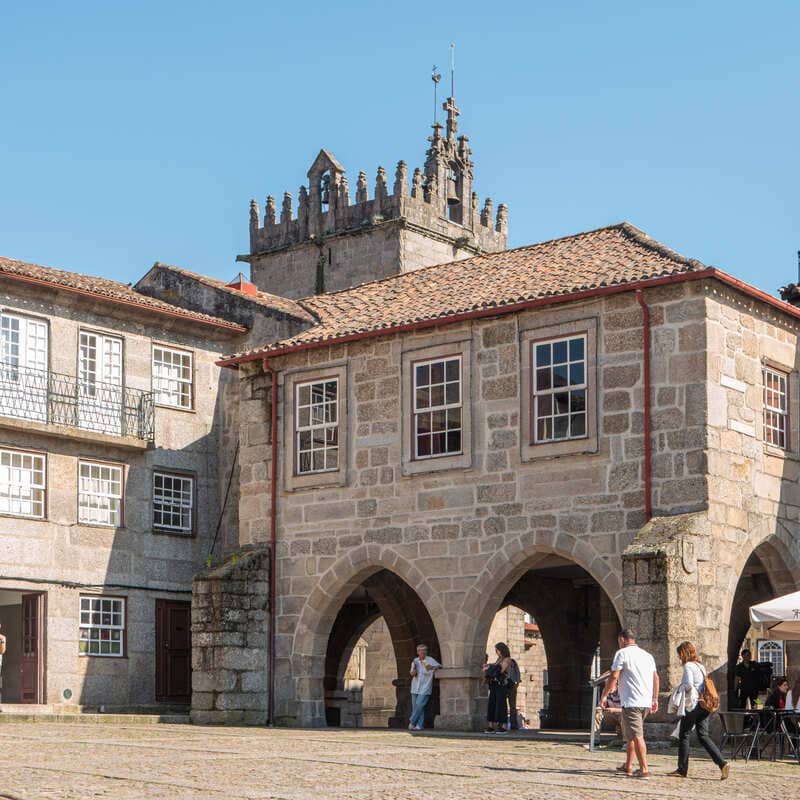
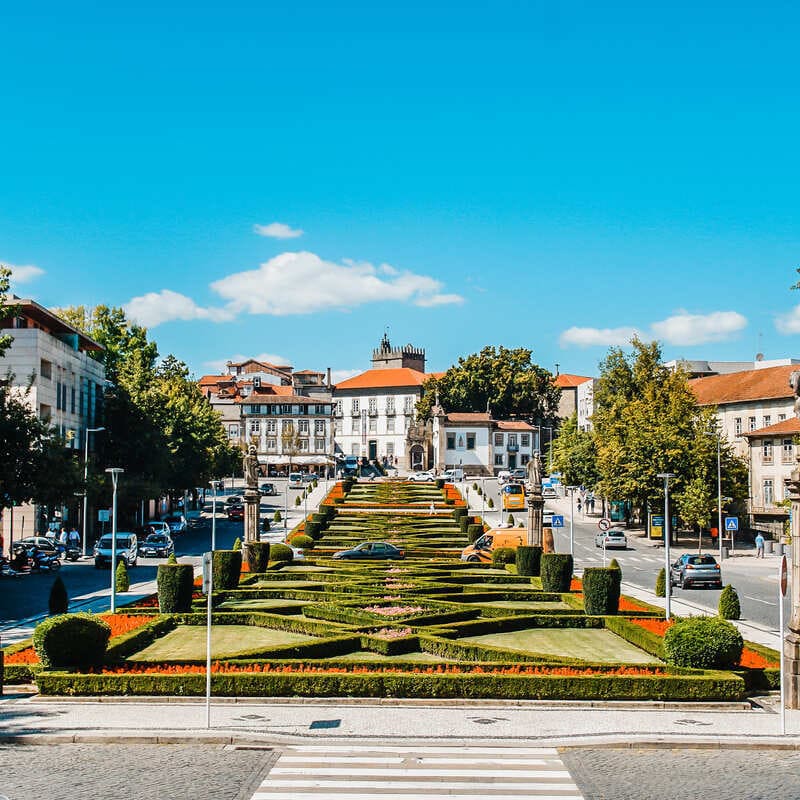
There are about half a dozen other medieval squares to check out, like Saint James Square (Praça de Santiago), accessible via the arches of the imposing Old Town Hall, and Largo da República do Brasil, distinguished by its flower gardens and scenic São Gualter church.
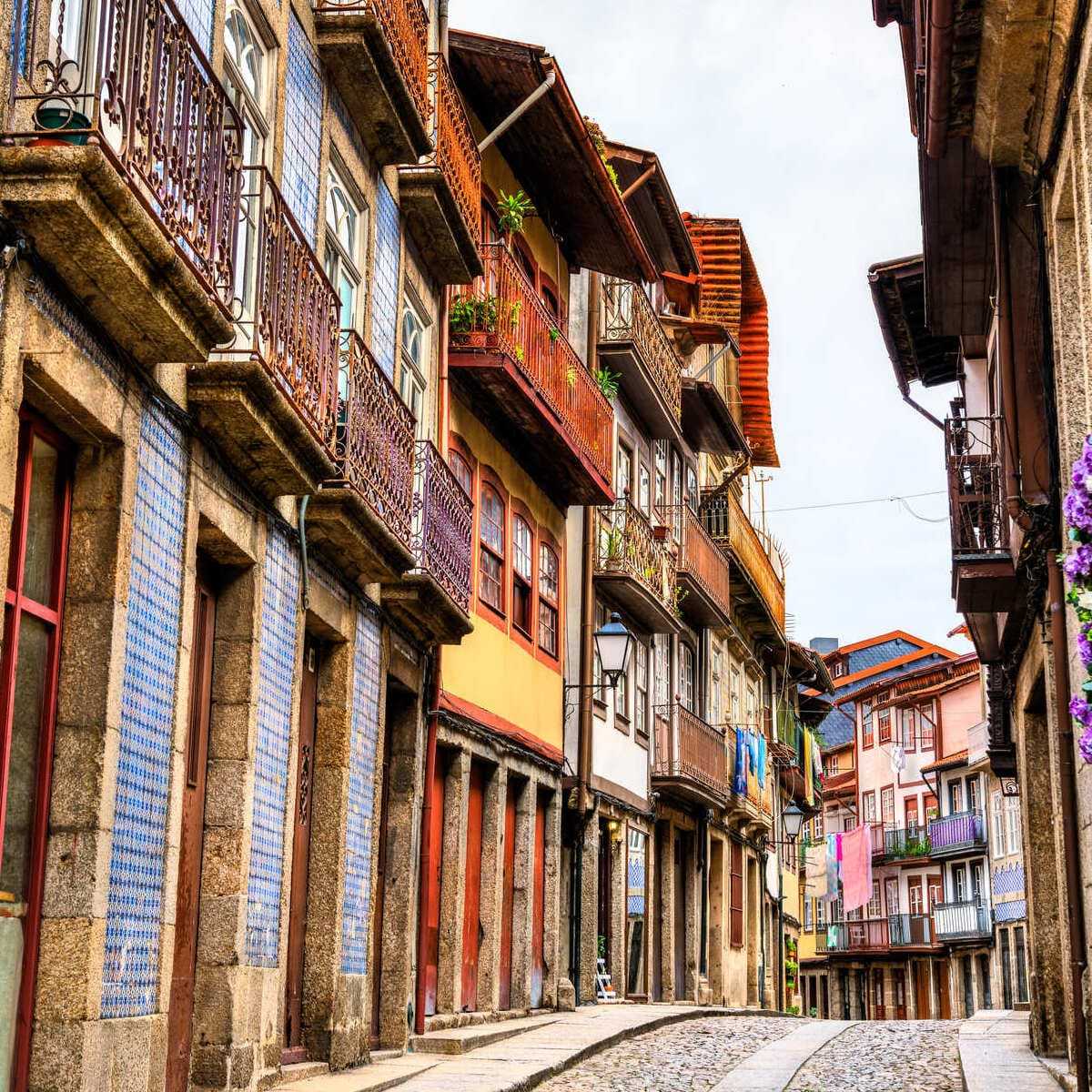
However, if you’re hoping to truly grasp the city’s unspoiled Old World charm, you should head next to Santa Maria Street:
A bustling thoroughfare lined with medieval buildings that house modern businesses, like traditional Portuguese restaurants, family-owned shops, and even pottery ateliers, it is the beating heart of Guimarães.
Over at Couros, or The Tanneries, a short walk beyond the medieval core, you will find the city’s former leather-tanning district: back in the Middle Ages, it was Guimarães’ main export, and you can still tour some of the medieval tanning tanks.
Fairytale Castles
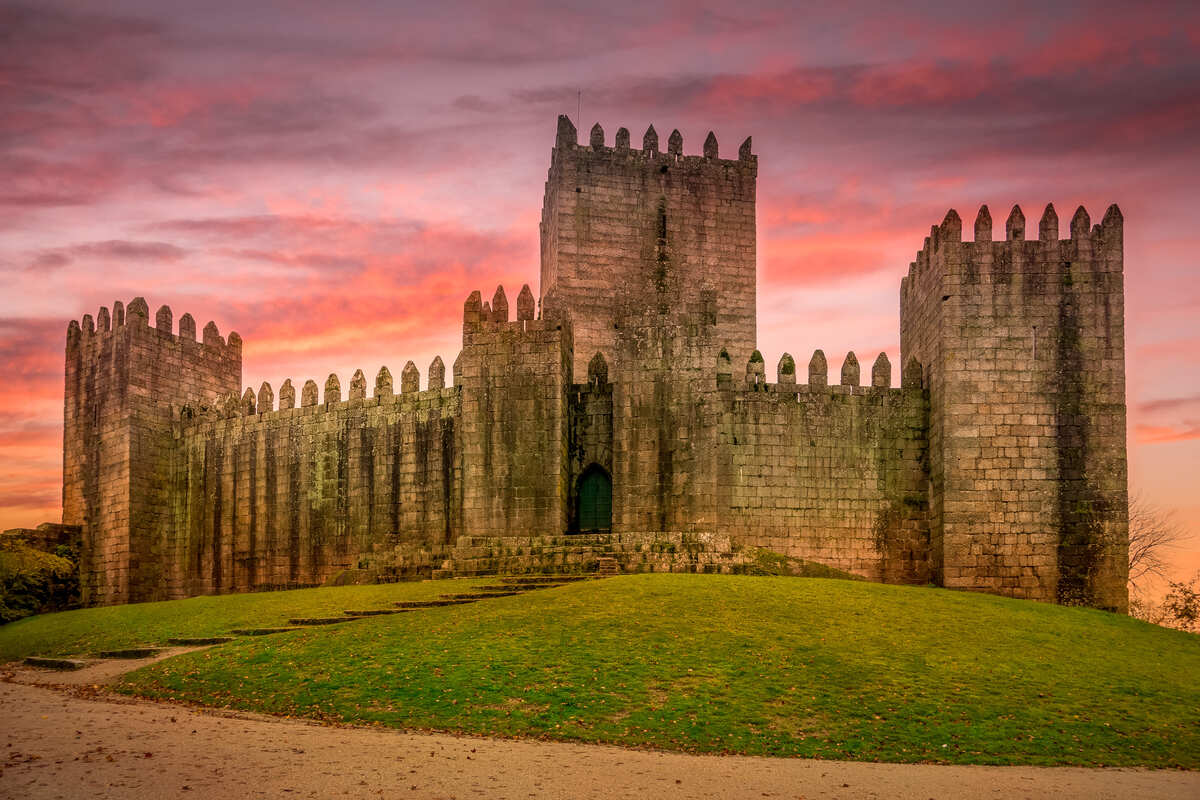
Of course, you haven’t been to Guimarães until you’ve ticked off its historic castles. The oldest one, simply called Guimarães Castle, dates back over 1,000 years, and it’s a hilltop fort boasting epic views of the 15th-century townscape at its feet.
It is distinguished for being the birthplace of King Afonso I, born in 1109, who fought for (and succeeded in) establishing Portugal as an independent state.
The second-most noteworthy of Guimarães’ medieval complexes is the Palace of the Dukes of Bragança, a French-inspired château with an arcaded inner courtyard, and virtually unchanged interior with centuries-old furnishings.
Whilst you’re at it, between the castle and palace, you might want to stop by the Romanesque São Miguel do Castelo church. You can never visit too many 13th-century buildings in one trip.
Now, if you’re looking for an epic viewpoint, even higher than Guimarães Castle, make sure you take the local cable car up Penha Hill: not only does it offer tourist-friendly trails and picnic areas overlooking the lush countryside, it is the home of the Art Deco Penha Sanctuary.
Delicious Food At Cheaper Prices
Wondering why you’ve never heard of Guimarães up until this point? That’s because it’s a hidden gem the Portuguese would like to keep a secret (especially after foreigners took cities like Lisbon and Porto by storm).
You will hardly ever come across tour groups or huge waiting lines to go into churches here, and as far as pricing goes, it still feels like Portugal before overtourism took its toll on the local cost of living.
Over at O Prato Cheio, a traditional Portuguese eatery where you can get regional favorites like francesinha and Portuguese-style codfish, a main course and a drink will set you back around $8.25 on average as part of a ‘set meal’.
Adega dos Caquinhos is yet another example of an inexpensive Guimarães dining spot, with daily specials (pratos do dia) ranging from $11–$17 (and these typically include a drink and dessert).
On the pastries and sweets front, rest assured you’ll find the custard-heavy pastel de nata, tigelinhas and pudim de ovos from as cheap as $1.80–$2.50 in any bakery around town. Some of our favorites, you ask? Try Manjar dos Docesand Nova Camir.
When it comes to accommodation, hotel rooms start from $44 on Booking.com for mid-October dates, only going as high as $152 (for 2 adults, at the 4-star Hotel Toural).
On average, budget hotels cost around $53, while mid-range to luxury hotels range from $105 to $179.
How Warm Is Guimarães In The Fall?
Last but certainly not least if you’re still hoping for some good weather in October, Guimarães may experience the occasional rainfall, as customary across much of Europe in the fall, but daytime highs typically settle at around 69,8°F.
Nighttime lows dip to about 51,8°F, so you’re advised to pack accordingly, given the unpredictability of the local weather.
Oh, and speaking of packing, make sure you use our Ultimate Pre-Flight Travel Checklist tool to verify all the travel essentials before taking off (and avoid unpleasant surprises at the airport).
Vini, our senior lead writer at Travel Off Path, has over 60+ countries under his belt (and currently weaving tales from Paris!), and a knack for turning off-the-beaten-path experiences into informative stories that will have you packing your bags.
The Travel Off Path Advantage: Your Travel Toolkit
Subscribe To Our Latest Posts
Enter your email address to subscribe to Travel Off Path’s latest breaking travel news, straight to your inbox.
Some people live for summer, and others can’t wait for it to end. If you’re in the second group, you’ve been eyeing your flannel shirts and waiting for pumpkin spice to drop. Guess what? Your time is now!🍂
The urge for a perfect fall getaway is real, but the thought of fighting through crowds in the usual New England towns can be a buzzkill. But what if we told you there’s a state with just as stunning foliage, way more to do, and a much friendlier price tag?
Here at Travel Off Path, we’re all about finding the smart alternative. This year, all signs are pointing to Virginia. It’s the perfect fall state for most travelers, offering a chill vibe for those looking to sip on some wine and a world-class adventure for those ready to hit the mountains.
1. The Foliage Is Absolutely World-Class
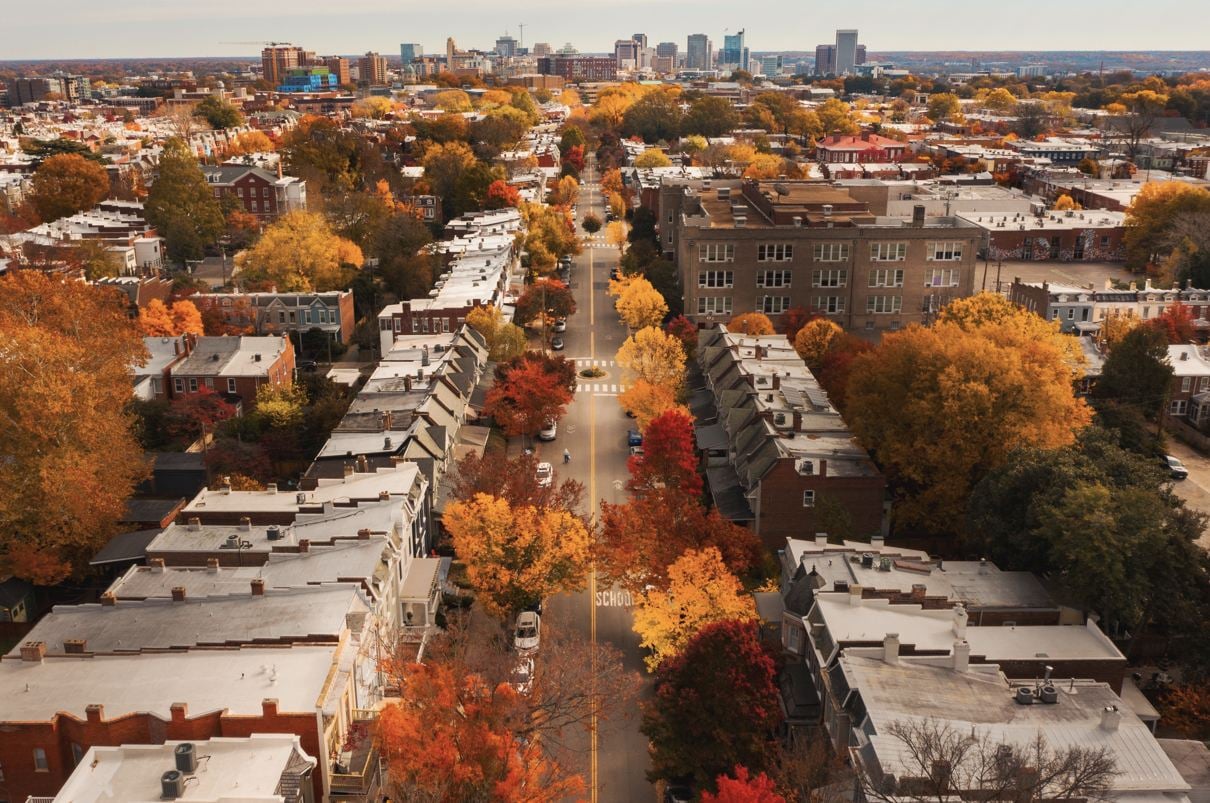
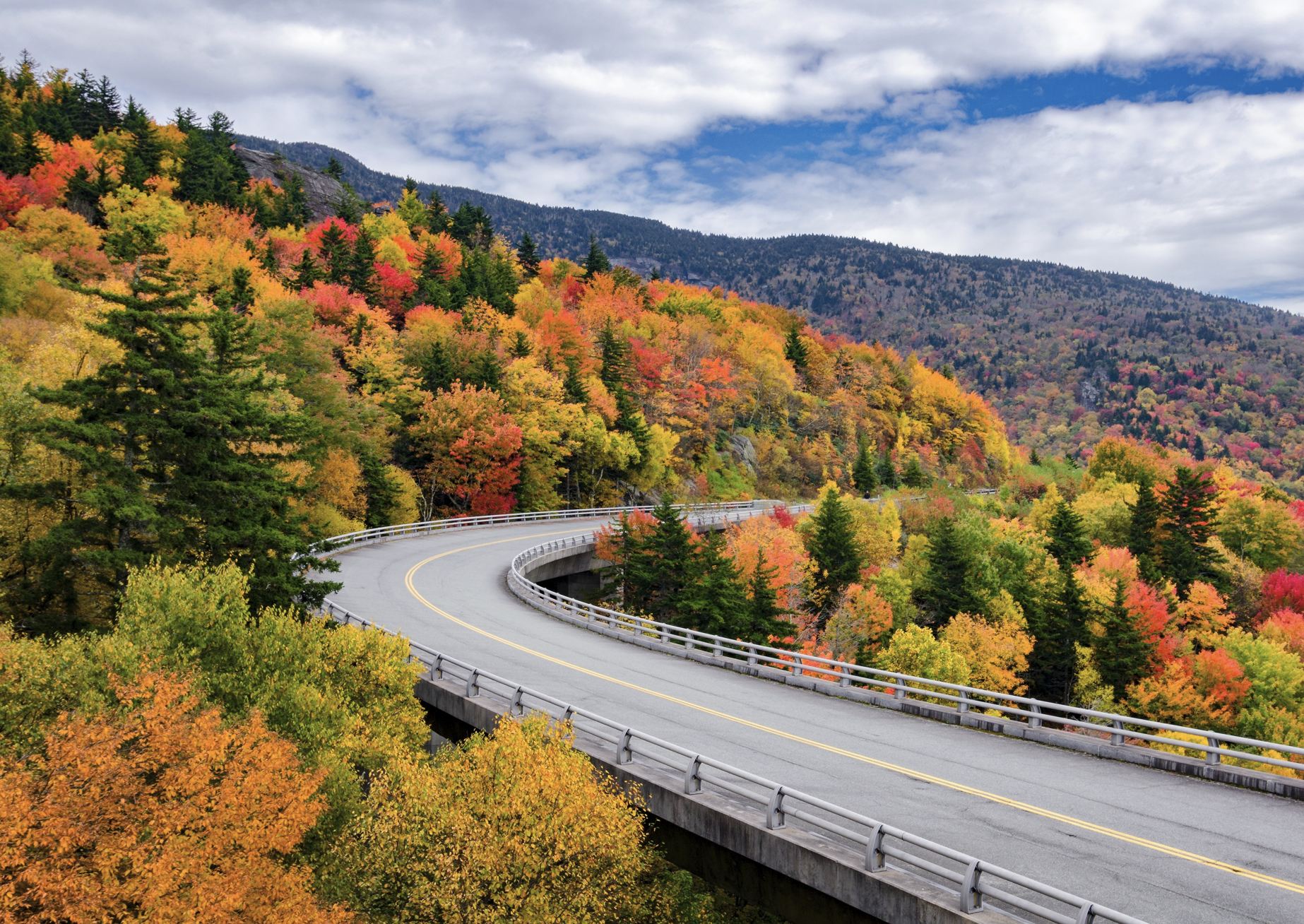
Let’s be clear: Virginia’s fall color show is a national treasure. The state is home to the legendary Shenandoah National Park and a huge stretch of the Blue Ridge Parkway, two of the most iconic foliage destinations in the entire country.
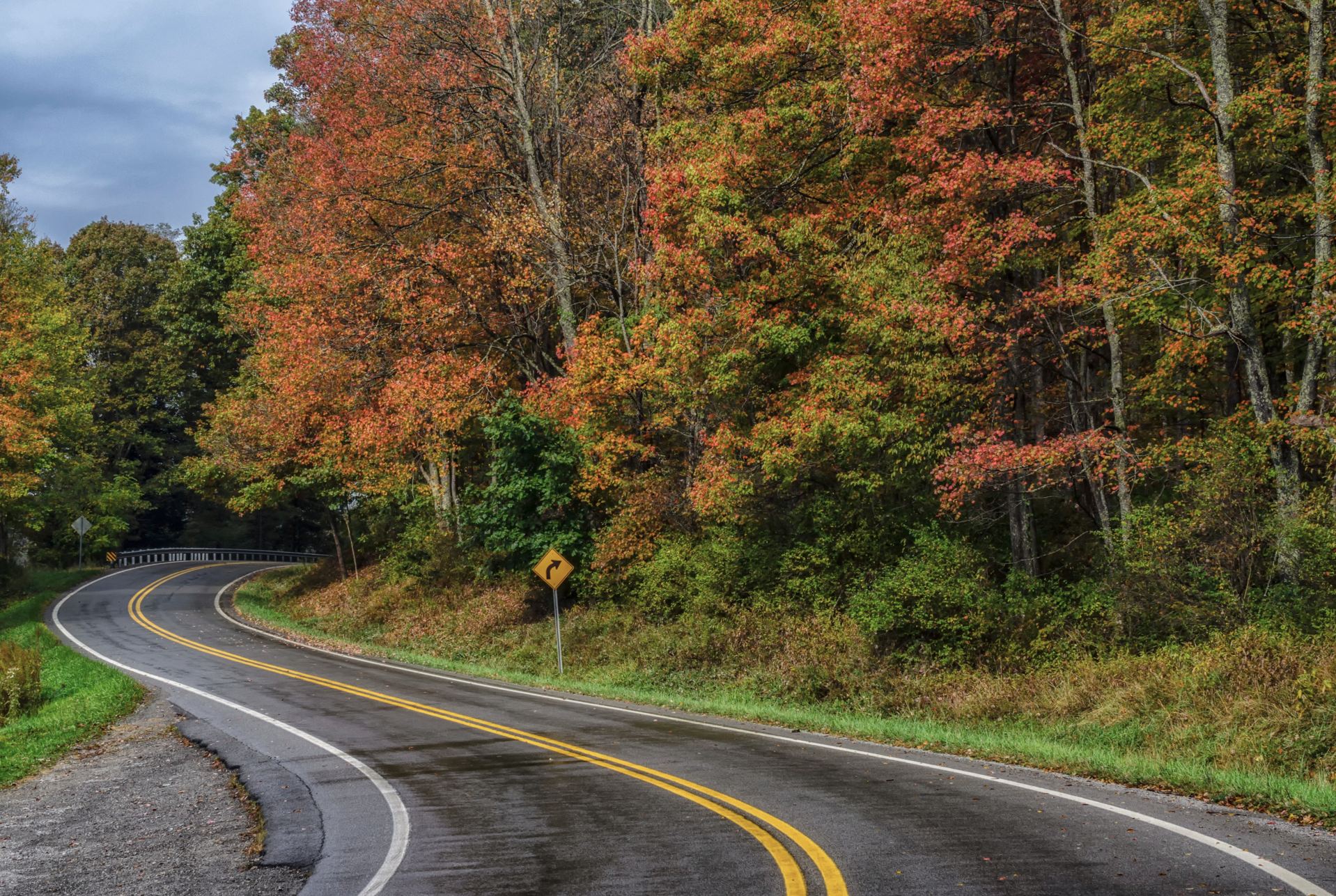
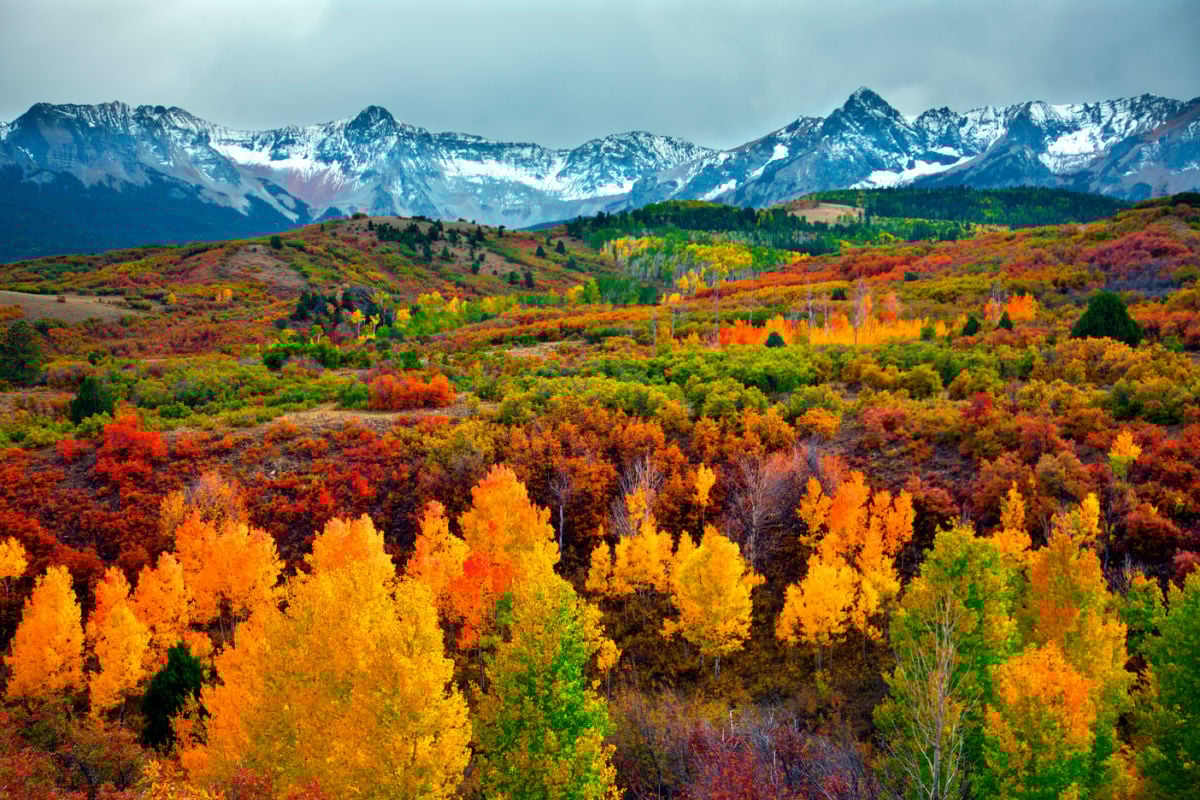
In mid-to-late October, the mountains explode into a breathtaking panorama of fiery reds, oranges, and yellows. Unlike some other destinations where you have to hike for miles to get a good view, Virginia makes it incredibly easy to find those jaw-dropping vistas. It’s a top-tier foliage experience that still feels like an insider’s secret compared to the more crowded spots up north.
2. Wineries and Breweries Galore 🍷
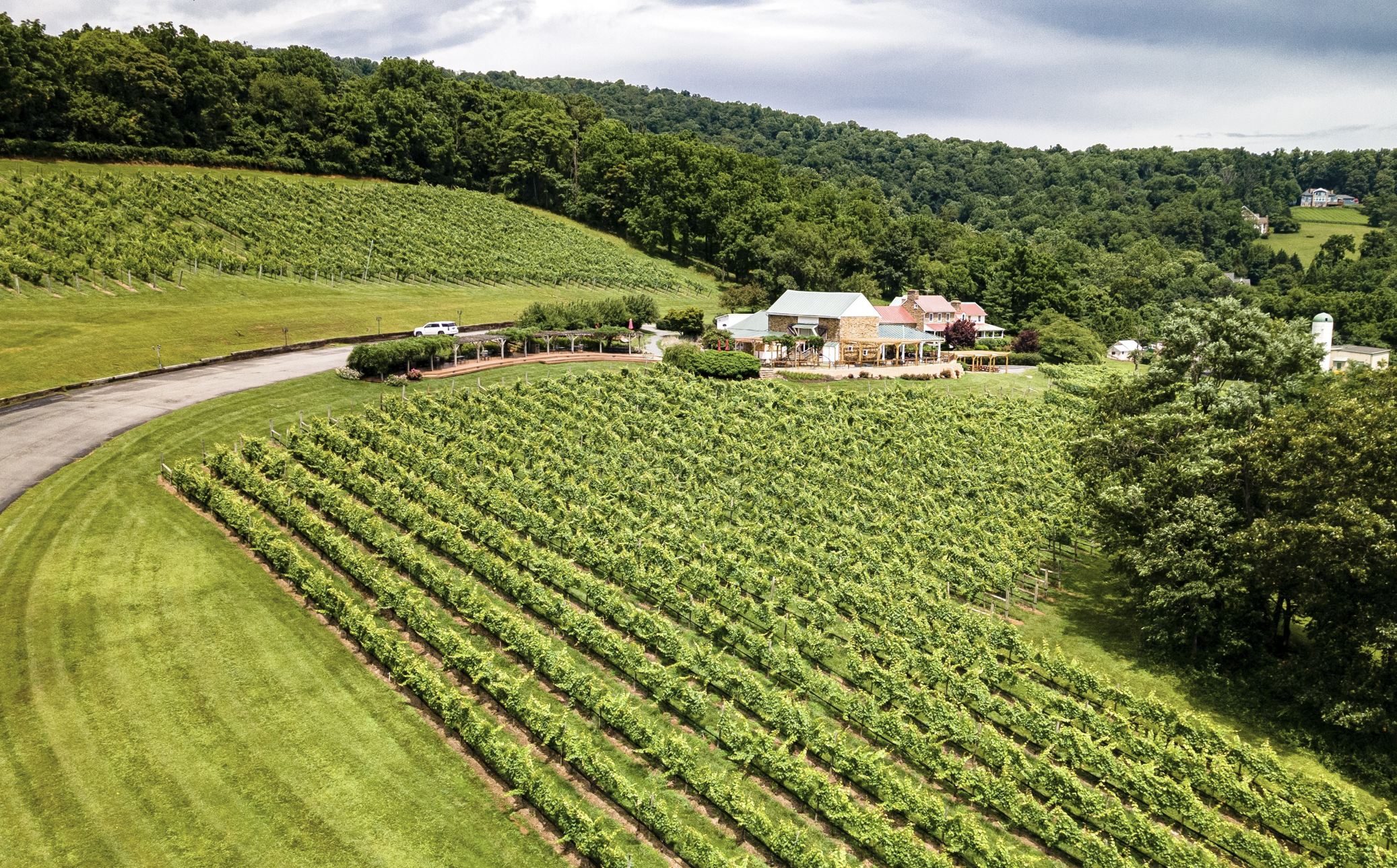
Forget pumpkin patches; Virginia’s fall activities are on another level. The state has a massive and surprisingly trendy wine scene, with hundreds of beautiful vineyards offering tastings with incredible mountain backdrops. The Monticello Wine Trail near Charlottesville is a must-do.
More of a beer person? Virginia has you covered. The craft beer scene is booming, especially along the Brew Ridge Trail, a scenic route that connects a half-dozen amazing breweries at the foot of the Blue Ridge Mountains. It’s the perfect way to spend a crisp fall afternoon.
3. Home to America’s Favorite Fall Road Trip
While some states have scenic trains, Virginia has the undisputed king of fall drives: Skyline Drive. This 105-mile road runs the entire length of Shenandoah National Park, winding along the crest of the mountains.
It’s a bucket-list experience, with 75 overlooks offering stunning views of the colorful valley below. You can spend a whole day cruising, pulling over for photos, and taking short, easy hikes to spectacular viewpoints. For an easy hike with a huge payoff, check out the Stony Man trail—it’s a gentle 1.6-mile loop that leads to one of the most incredible vistas in the park.
Virginia’s Fall Vibe Check
Explore Shenandoah National Park and the Blue Ridge Parkway for some of the most iconic fall color shows in the entire country.
Sip your way through hundreds of scenic vineyards on the Monticello Wine Trail or check out the booming craft beer scene on the Brew Ridge Trail.
Cruise the legendary Skyline Drive, a 105-mile road with 75 overlooks offering breathtaking views of the colorful Shenandoah Valley.
Get a premium, New England-style fall experience for a fraction of the cost, with great deals on flights and hotels.
Use a cozy and historic town like Charlottesville or Staunton as your perfect home base for exploring the mountains and wineries.
4. It’s Surprisingly Affordable
This is the best part. Virginia offers a premium, New England-style fall experience for a fraction of the cost. Because it flies under the radar for many leaf-peepers, the prices for hotels and Airbnbs haven’t skyrocketed.
Getting there is cheap, too. We’re seeing amazing flight deals into centrally located airports like Charlottesville (CHO) and Richmond (RIC) for this fall.
Nonstop, roundtrip flights from New York City (LGA) start at just $180.
Nonstop, roundtrip flights from Atlanta (ATL) can be found for as low as $160.
5. The Charming Towns Are The Perfect Home Base
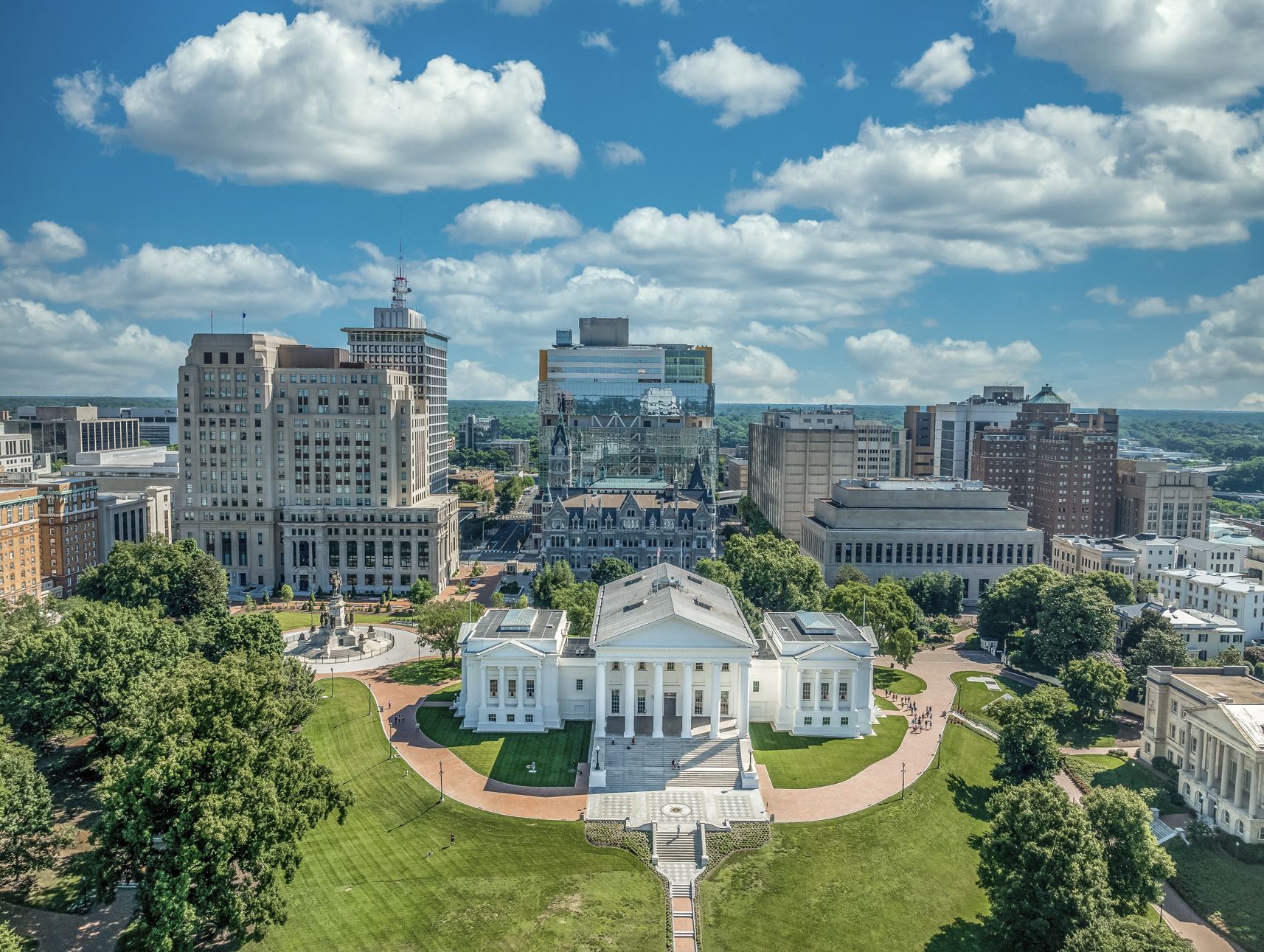
Beyond the mountains, Virginia is full of charming, historic towns that are perfect for a weekend getaway. Charlottesville is a top choice, with its beautiful historic downtown mall, amazing restaurant scene, and proximity to both wineries and Shenandoah National Park.
For a cozier vibe, check out a town like Staunton or Lexington in the Shenandoah Valley. They offer that perfect small-town fall feeling, with historic inns, cozy cafes, and easy access to the best of the Blue Ridge Parkway. It’s the perfect way to round out your trip.
So this fall, skip the usual tourist traps and make some memories in a state that feels like a real discovery. Happy travels, and enjoy all the autumn vibes! 🍂
The Travel Off Path Advantage: Your Travel Toolkit
Subscribe To Our Latest Posts
Enter your email address to subscribe to Travel Off Path’s latest breaking travel news, straight to your inbox.
For many decades now, Barcelona has been the leading destination in Spain for Americans. Surpassing Mallorca and Ibiza, and even the country’s own capital, Madrid, it draws in tens of millions of tourists every year with its Gaudí monuments and coastal location.
Gorgeous as Barcelona may be, however, there is a strange storm on the horizon…
From the overtly anti-tourist stance authorities have taken to the widespread local protests and every accommodation tax increase in between, Barcelona no longer feels as welcoming as it once must have been, and even U.S. travelers are starting to feel the heat.
Not the good kind of heat.
Perhaps it’s not too far-fetched say that, soon enough, Barcelona could be overtaken by another Spanish gem, and if there was ever a runner-up, it’s surely Seville:
Americans Are Flocking To Seville In 2025
The vibrant capital of Andalusia, a culture-loaded region in Southern Spain known for its Moorish heritage and sun-drenched coast, Seville is attracting a growing number of American guests as of late.
More specifically this summer, Americans have logged 39,943 nights in the city, only behind the Czechs, that accomplished 49,476, according to new data shared by Spain’s National Statistics Institute (INE).
In other words, the U.S. is already one of the most important sources of tourism revenue for the Andalusian hub, and that’s no small feat, considering Seville does not host nonstop Transatlantic flights, and it’s a whole 50 miles inland from the Mediterranean.
You heard it, no beaches. If that’s what you’re looking for, try Malaga. Now, if you love vibrant city breaks, epic European architecture, and you’re a devoted foodie, you’ve come to the right place:
Moorish Charm & Grandiose Squares
Without question, a huge part of Seville’s appeal is its ensemble of architectural marvels, which feature among some of the most impressive not only in Spain, but all of Europe.
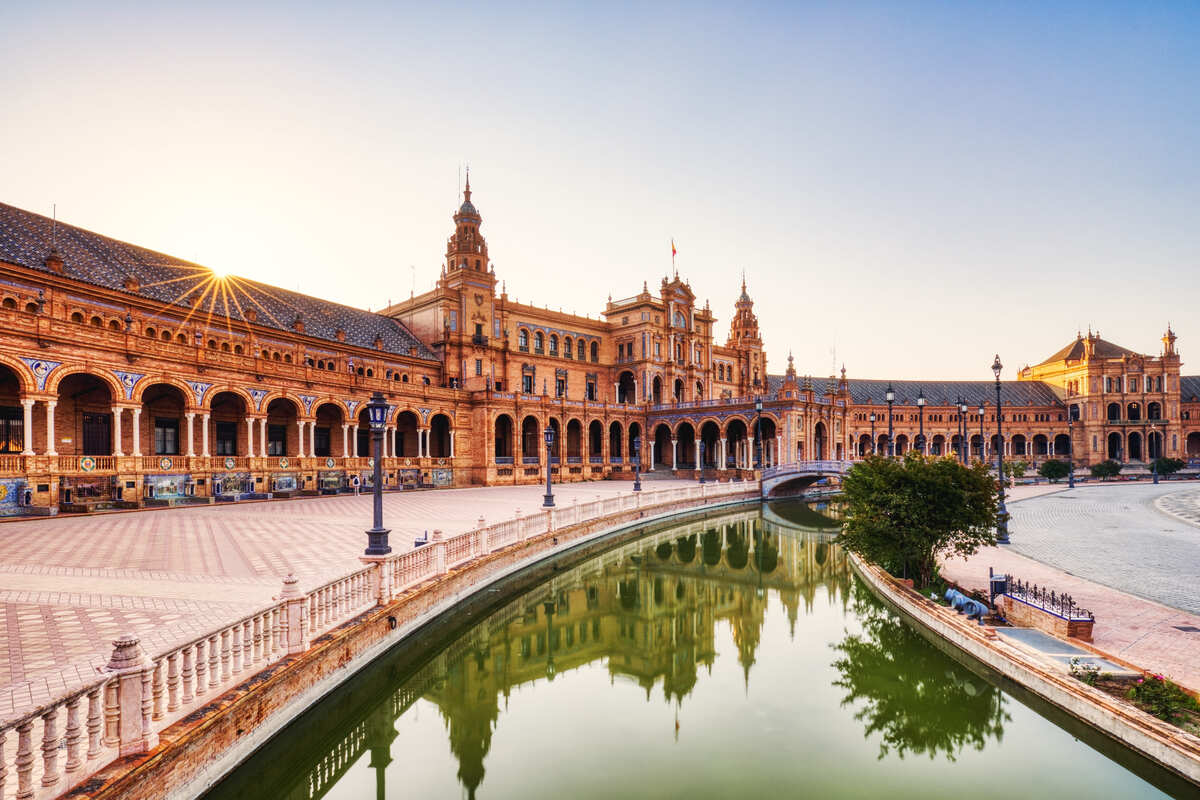
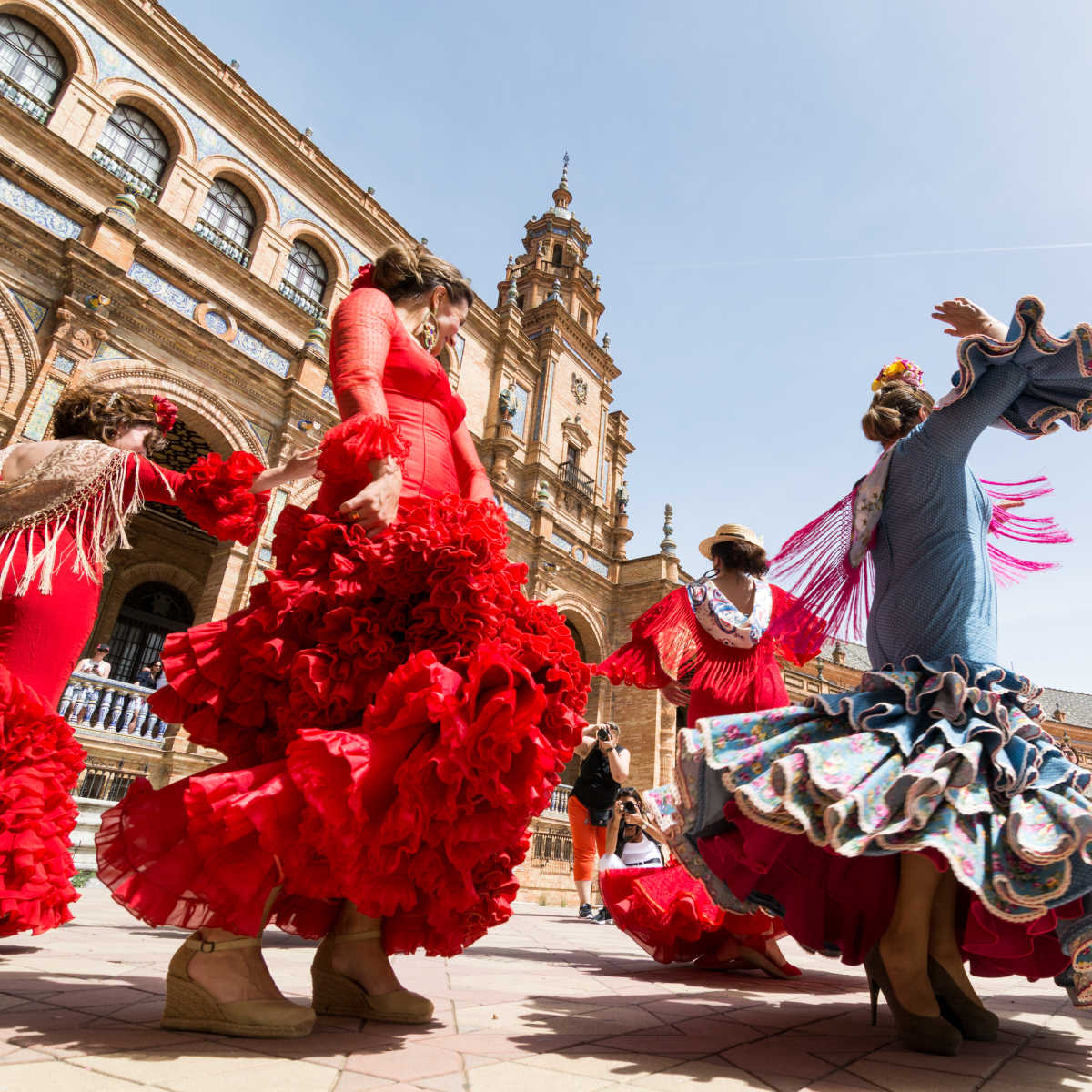
Think a grandiose Plaza de España, a public square that’s often described as the most beautiful in the country, with its tiled alcoves representing Spain’s different provinces, and a half-moon, navigable canal.
Then there’s Seville Cathedral, with its Giralda, a former minaret that’s been converted into a belfry: in case you didn’t know, North African rulers controlled large swathes of Spain for many centuries, and the square-shaped tower is an important leftover of the Muslim era.
Seville’s pride and joy, however, has to be the Alcázar: an Islamic royal palace with ornate stuccowork and lush Mediterranean gardens, it is the most memorable Moorish structure still standing today.
Further afield, in Barrio Santa Cruz, you’ll find a vibrant Jewish Quarter criss-crossed by narrow lanes that lead to hidden patios and tapas bars, and if it’s some fun you’re looking for, with flamenco shows and a lively nightlife, try Triana across the Guadalquivir River.
Is Andalusian Food The Best In Spain?
Barcelona may get all the fame for its paella and Catalan stews, but little do they know Seville is the true gastronomy capital of Spain.
Say what you will, the cuisine here is truly on a whole other level, thanks to its combination of native Iberian flavors, characterized by seafood-heavy and fresh local ingredients, and Moroccan influences: Andalusia is, after all, the closest point between Spain and Africa.
For salt cod and gambas tapas from only $3, check out the traditional Andalusian bodega of Dos de Mayo, in the heart of the Historic Center. Craving Iberian meat cannelloni instead? We couldn’t recommend Bar Sal Gorda highly enough.
Seville is popular for its herb-heavy patatas bravas(think French fries, but the spicier Spanish version), and there’s truly nowhere better to try those than at Duo Tapas Bar. Of course, no visit to Andalusia is complete without trying salmorejo:
Seville’s coup de coeur, this cold tomato soup is your best bet at an easy-on-the-tummy, refreshing meal amid the scorching heat, and if we’re keeping it within tradition, El Rinconcillo is the place to go. Established in 1670, it’s proclaimed the oldest tapas bar in Seville, and they serve a killer salmorejo.
How to Get To Seville From The U.S.
As we noted previously, there are no direct flights between Seville and the United States as of right now, though given the city’s rising popularity, this is likely to change at some point in the future.
Meanwhile, there are a handful of inventive ways Americans have used to get there with the least possible transfers. They can involve flying into a Spanish (or European) hub that offers direct flights to Seville, or combining flights and trains.
Landing in Madrid or Barcelona, for example, you can find train tickets from as cheap as $25 one-way booked in advance. From Madrid, it’s a short 2h33 ride to Seville, whereas from Barcelona, it’s a significantly longer 5h33, and tickets tend to be on the pricier end.
Alternatively, you may fly from as cheap as $26 roundtrip from either cities, or when landing in other European countries:
Paris to Seville: direct flights from as cheap as $36 roundtrip
Rome to Seville: direct flights from as cheap as $25 roundtrip
London to Seville: direct flights from as cheap as $50 roundtrip
Amsterdam to Seville: direct flights from as cheap as $52 roundtrip
Vini, our senior lead writer at Travel Off Path, has over 60+ countries under his belt (and currently weaving tales from Paris!), and a knack for turning off-the-beaten-path experiences into informative stories that will have you packing your bags.
The Travel Off Path Advantage: Your Travel Toolkit
Subscribe To Our Latest Posts
Enter your email address to subscribe to Travel Off Path’s latest breaking travel news, straight to your inbox.
Home to world-renowned cities like Madrid and Barcelona, blessed with year-round warmer weather and boasting endless miles of coastline, it’s no wonder Spain is one of the top destinations for Americans flying across the pond.
The entire country is a hotspot for tourism, from the culturally-charged north-westernmost provinces to the resort-dominated Costa del Sol, but one island in particular seems to be fueling tourism growth the most (and stealing the hearts of visiting Americans).
How does eating heladitos as you walk down a palm-lined boardwalk, swimming in turquoise waters, and exploring postcard-ready medieval towns sound for a vacation?
Mallorca Is A Major Force Behind Spain’s Tourism Boom
According to Spain’s AIReF, the entity responsible for GDP-related stats, the Balearic island of Mallorca is a huge contributor to Spain’s tourism rebound, with the local economy (mostly tourism-based) having grown 3.2% in 2023, above the national average of 2%.
In total, it hosted 11.6 million tourists last year, a growing number of which are Americans, who have enjoyed nonstop flights to the paradisaical island since 2022; this year, it could break all-time records, as flight frequency from key markets increases and demand soars.
Racing for the number one spot in Spain, it challenges Malaga and nearby Marbella, voted a top destination this year, the tropical Canary Islands, Barcelona, famous for its Gaudí heritage and soon-to-be-finished Sagrada Familia Basilica.
Still, with so many destinations in Spain to choose from, you may be wondering why it’s Mallorca where they’re headed.
What Makes Mallorca So Special?
The largest island of a Mediterranean archipelago known as the Balearics, and the seventh-largest in this sea, Mallorca has been inhabited since at least the 3rd millennium BC, and though it is primarily a leisure destination in the modern age, it is a cultural site of the first order.
A Beautiful Ancient Capital
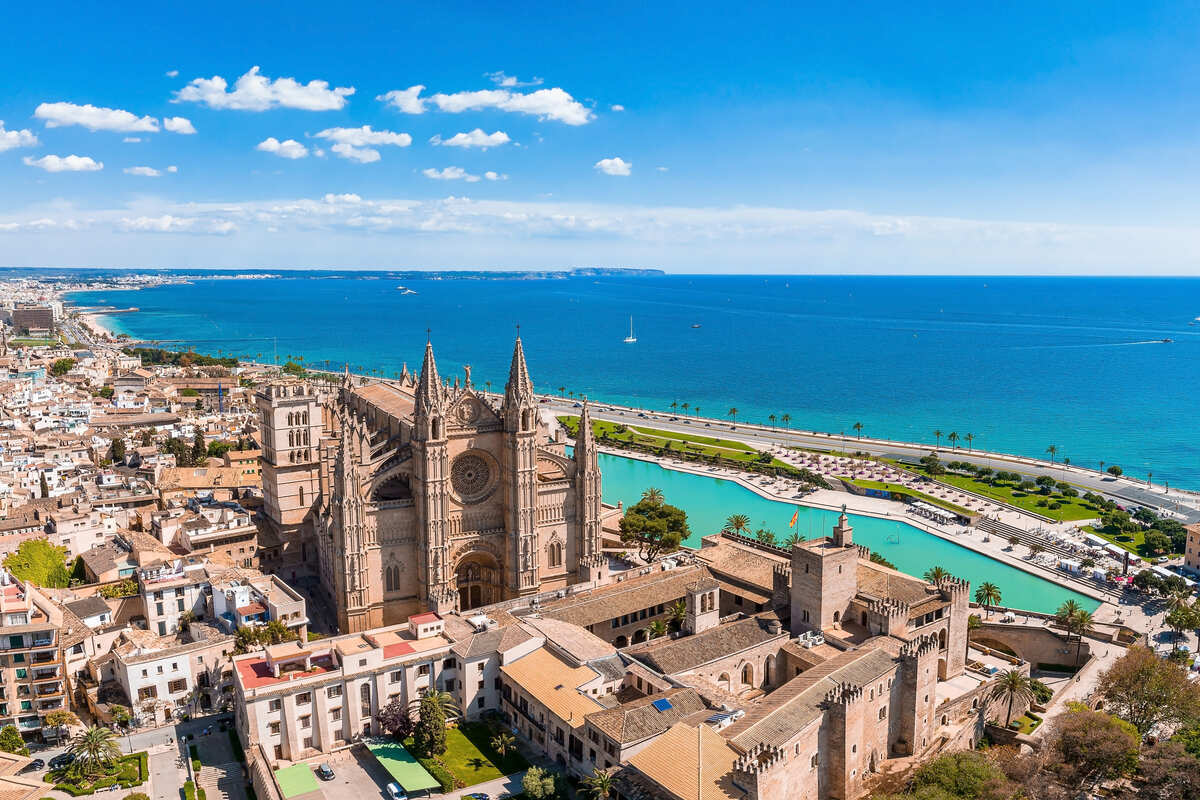
Its beautiful, compact capital of Palma de Mallorca concentrates a number of historical landmarks, from a fortified cathedral, to Bellver (one of Europe’s last-surviving circular castles), to the monumental Royal Palace of La Almudaina, to the UNESCO-listed, Gothic Silk Exchange.
Similarly to other settlements in Palma, the cityscape is ochre-hued, giving it an enticing ancient flair, and there are several Mallorcan restaurants and traditional tapa bars serving cheap tintos and flavorful tidbits to satisfy the food connoisseur in you.
Magaluf Is The European Cancun
Palma’s true charm, however, lies in its unique combination of European, Old World charm and modern resort strips: a short 23-minute drive from the capital, straddling a section of the Bay of Palma where the sea is crystal-clear, Magaluf is where you’ll find your perfect all-inclusive stay.
Nestled in a Caribbean-style development zone, with tourist-friendly facilities and hotel complexes distributed along a sandy coast, it is where Germans and Brits flock into for their sunny getaways irrespective of season; it is, as we like to call it, the European Cancun.
The overnight average at Magaluf Beach resorts is only $123 ahead of the peak season, top Expedia picks including Hotel Spa Flamboyan Caribe, Leonardo Royal Hotel Mallorca, and the VIP, adults-only Ibero Star Selection Jardín del Sol Suites, at an entry-level rate of $314.
Scenic Coastal Scenes
Magaluf may be Mallorca’s ‘Cancun’, but you should bear in mind there is a whole island to be discovered, from highly-developed beach zones to unspoiled fishing villages with origins lost to time, not to mention a verdant, hilly hinterland dotted with charming historic towns.
Encompassing Palma’s tallest peak and unique geological formations, the Tramuntana Range is a sustainable tourism center rich in biodiversity, while the northwestern edge of the island is best known for its scenic coastal drives and charming port towns.
No visit to Mallorca is complete without Port de Sóller, popular for its historic tramway and imposing Romanesque-Gothic church, the stone-built settlements of Deià, Fornalutx, and Valldemossa, with their narrow streets and terracotta roofs, or the medieval Port of Pollença (and all its pristine calas).
Mallorca Is An Affordable European Getaway
When it comes to prices, Mallorca is incredibly affordable by Mediterranean standards, as a one-week stay will set you back by $1,045 per person, including accommodation, meals and transportation between different municipalities.
Most of the food served in restaurants is locally-sourced, and thanks to Palma’s fertile terrain and balmy climate, there is an abundance of tropical fruit and vegetables and freshly-caught seafood in markets; the cost of living outside resort towns is pretty low, too.
On average, restaurant menus in Palma are half the price of New York’s, with prices for inexpensive meals in local eateries set at $14, and more elaborate, three-course dinners for two people in mid-range spots costing $53.87, or the equivalent in euros.
Nonstop U.S. Flights Returning This Year
Furthermore, there will be an increase in capacity for United’s New York-Palma flights this year, proving demand keeps growing among Americans: starting May 25, the carrier will operate a 240-seat Boeing 767-400 ER on this route, 26 more than last year’s.
In the wake of United’s success, American Airlines is also planning on operating this Transatlantic route at some point this year, with flights from Miami to Palma expected to be announced soon, though at the time of writing, no further details have been unveiled.
With nonstop flights returning, and as many as three weekly flights scheduled, on Mondays, Wednesdays and Fridays, from late May through September 25, not to mention a frequency increase for intra-Europe low-cost flights, we expect Palma to become one of the top destinations in 2024.
Opinions expressed here are the author’s alone, not those of any bank, credit card issuer, hotel, airline, or other entity. This content has not been reviewed, approved or otherwise endorsed by any of the entities included within the post.
Europe is every digital nomad’s go-to destination for sampling culture and country-hopping over a short period of time.
A well-connected continent, home to nations that are smaller than medium-size U.S. states, it is easy and convenient to explore, largely thanks to the Schengen Area, a passport-free zone encompassing 27 (soon to be 29) European countries.
Schengen has all but eliminated routine passport checks across most of Europe, making traveling across borders completely hassle-free.
On the downside, non-European travelers can only be present in the Schengen Area for 90 days out of any 180-day period, which means any calendar day spent in any participating country means a day less in another.
A curse and a blessing, Schengen has eased travel curbs but severely limited a nomad’s options for long-term stays in the Old Continent, especially now that two more countries are joining.
Where, then, can nomads go to extend their time in Europe? Thankfully, one of the continent’s most gorgeous regions is entirely outside the Schengen Area, and all countries are welcoming medium to long-term residents with open arms:
Europe’s Top Nomad Hotspot Is Not In Schengen
The Western Balkans are located in Southeastern Europe, surrounded by EU (European Union) and Schengen signatory states, such as Croatia and Greece, but that have not yet been accepted in either.
They are deemed Europe’s less developed region, largely due to their previous history of communism and having had their EU accession process delayed for decades, but this does not mean they are not safe nor lacking in terms of culture.
Far from that.
The Western Balkans (WB) are comprised of the following:
Albania
Bosnia and Herzegovina
Montenegro
North Macedonia
Serbia
*The disputed territory of Kosovo, a partially-recognized country Serbia claims as an autonomous region part of its own.
As they are not EU members, they tend to be ignored by visitors to the continent, particularly Americans, who associate Europe exclusively with wide Parisian boulevards, the interconnected islets of Venice, and unfinished Spanish basilicas.
They won’t find those in the underdeveloped WB, but they may have a different version of the things that make Europe great, and that makes them fascinating in their own right.
‘But where do digital nomads come into play‘, you may be wondering?
Why Will The Western Balkans Become Europe’s Next Nomad Haven?
First of all, seeing the WB are not in Schengen, they can stay for 90 days in each, and in the case of Albania, American citizens in particular are granted a one-year stay visa-free.
Then, there is the fact that all six WB destinations are shockingly cheap to live in: they are not in the Eurozone*, their national currencies are typically weaker than the U.S. dollar, and prices for food and the overall cost of living are a lot lower compared to their EU counterparts.
*Montenegro has unofficially adopted the Euro as its currency, but this has not been approved by the European Union, as it is not a member state
Let’s talk prices and tourist offers.
Albania
Gorgeous Coastline And Ancient History
According to Nomad List, it costs just under $2,000 to live in Albania, where a sumptuous three-course meal at a mid-range restaurant will set you back by a mere $15, maybe, and month-long rental agreements can be signed from $300.
As one of our writers has described, Albania is essentially Greece on a budget, as they are neighboring countries and the culture and nature are similar, except Airbnb rates are not hiked, and the cobbled medieval towns and Adriatic beaches are not as packed with foreign tourists.
The two top nomad destinations in Albania are Tirana, a modern capital city famous for having an abundance of quirky cafes and vast green spaces, and Ksamil, a laid-back coastal town within walking distance of white-sand beaches.
As noted above, Americans can stay an entire year as tourists in Albania, a privilege not extended to European nationals themselves, so you should consider that when planning a long-term relocation across the pond.
Bosnia And Herzegovina
Landmark Bridges And Friendly Locals
Elsewhere in Bosnia and Herzegovina, commonly shortened to BiH, American nomads are often surprised at how friendly and open-hearted locals are, unlike in Italy, France, or other Western countries, where they tend to find people are generally dismissive of them.
In Bosnia, you should definitely not shy away from accepting a rakija invitation nor be taken aback by the kindness of strangers: with Bosnia’s less-than-impressive visitor numbers, locals are always keen on welcoming travelers and making them feel right at home.
Basing yourself in BiH, you will be expected to budget between $1,164 to $2,173 per month, depending on where you’ll be living. Life in larger urban centers is typically more expensive, but you should bear in mind ‘expensive’ in Bosnia equals ‘cheap’ in an average U.S. city.
Tourist hotspots like Sarajevo, the Bosnian capital, home to the infamous Latin Bridge, where the murder of a Duke took place, essentially triggering World War II and a sprawling Ottoman-style bazaar, and Mostar, where what’s possibly the most famous bridge in Europe is located, are the best-rated destinations for the availability of work-friendly cafes and tourism infrastructure.
Montenegro
Laid-Back Coastal Towns And Dalmatian Culture
Next up on the list is Montenegro, a tiny Adriatic nation sandwiched between Albania and Croatia and bordered by Bosnia and Serbia. Out of the non-EU European states, it is often dubbed the most developed due to the higher quality of life it offers and its upper-middle-income economy.
It is also the one closest to joining the EU in the near future, so now is the time to visit before it inches closer to accessing the associated Schengen Area. With Montenegro’s stone-built Dalmatian towns and pristine coastline, you will want to spend 90 full days here while you still can.
For beach enthusiasts, the ancient port of Budva is the place to be, as it is surrounded by a turquoise-colored sea, and staying in the fortified part of town, it’s a short half-hour walk to unspoiled, peaceful pebbly beaches.
Culture buffs may prefer Kotor instead. Nicknamed Dubrovnik’s small sister, it is a perfectly preserved medieval settlement surrounded by walls, nestling on the shores of the Bay of Kotor, an area of outstanding natural beauty.
It costs on average $2,241 per month to live in Montenegro as a digital nomad, making it the costliest option out of all WB countries – but again, two thousand bucks a month is unlikely to discourage you from relocating to Montenegro as an American.
North Macedonia
Peaceful Lakes And Byzantine Churches
One of Europe’s least-visited countries, North Macedonia (N.M.) has struggled to make a name for itself in the tourism scene since detaching from the now-defunct Yugoslavia, but it’s certainly gaining ground as a workcation hub.
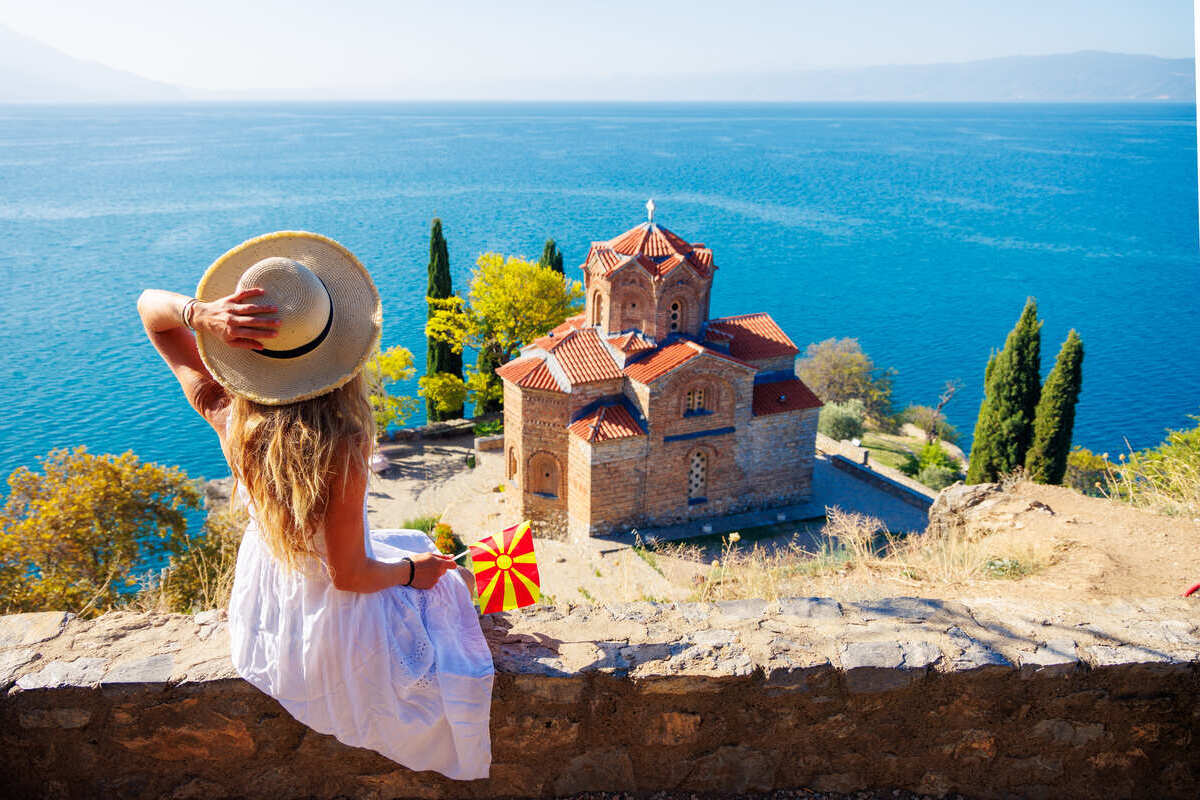
It may not have access to the Adriatic nor be as highly developed as you would expect a European country to be, but it has no shortage of stunning landmarks, from centuries-old Byzantine churches perched on cliffs facing serene lakes to cityscapes dominated by historic citadels.
Staying in N.M. for three months as you wait for your Schengen clock to reset? You might want to add Skopje, the eclectic Macedonian capital, birthplace of Mother Teresa and the country’s financial center, to your list, but also Ohrid, a charming lakeside town on the border with Albania.
In terms of affordability, N.M. is easily the most appealing destination for remote workers on the Western Balkan route, as it costs a mere $1,307, all expenses included, such as accommodation and food, to call it home for a month.
Serbia
The Landlocked Cultural Hotspot
The landlocked gem that was once at the center of Yugoslavia, Serbia is the only WB country to host nonstop flights from America, and it’s not somewhere you want to use merely as a transit hub on your way to the Balkan coast.
Serbia is becoming increasingly popular for its exciting nightlife, which rivals that of Amsterdam and Berlin, and rich history, spanning at least two millennia and several different eras, including Roman, Byzantine, Ottoman, and of course, communist rule in the 20th century.
Today, Serbia is a free, democratic country that’s swinging West and towards the European Union, but while it is not yet a member, it welcomes American tourists for three consecutive months, irrespective of where they have been in the previous half-year.
As the capital and largest city, Belgrade is the best place for nomads to be, thanks to its Bohemian scene and cafe culture, but the enchanting Novi Sad, with its traditional Old Town, and Niš, with its landmark castle and Roman heritage, are not to be missedeither.
Staying a single month in Serbia, your expenses should total $2,547 in a worst-case scenario or an even cheaper $1,580: it all boils down to which city you’re picking as base (Belgrade is costlier for expats) and your preferred level of comfort while traveling.
The Bonus Country… Or Is It?
Last but not least, you have an intriguing Kosovo as a Schengen alternative. A disputed territory that was part of Serbia up until 2007 and still claimed by the latter, it is an ethnically Albanian nation bounded by the Accursed Mountains and the Kosovo Plain.
It is widely known for its wild nature and Ottoman heritage, but nomads love it best for its delectable cuisine and tourist-free, picturesque towns. One of those, Prizren, looks cropped out of a fairytale book, with its winding alleys and meandering river running through a minaret-dotted center.
Kosovo can be cheap to live in, but you should know that much like Montenegro, they have unilaterally adopted the Euro, meaning they are not members of the European Union yet and thus cannot have it as currency, but do anyway.
As a result, prices can be somewhat higher, with the cost of living ranging from $1,212 to $2,285, but it’s worth noting Kosovo remains remarkably affordable by Western standards. As an American nomad, you can stay 90 days in the tiny country while they’re yet to ascend to Schengen.
You should know Kosovo and Serbia are yet to normalize relations following independence, and Serbian border officers may deny you entry into Serbia if you first arrive in Kosovo without passing through their country first, so bear that in mind when planning a cross-country Balkan trip.
Schengen Is Growing Larger Every Year
From March, two of the most popular non-Schengen countries, Bulgaria and Romania, will ascend to the Schengen Area, restricting long-term options for nomads even further.
Up until now, these two Eastern Balkan states have been used by digital nomads as ‘reset’ destinations, where they would commonly stay 90 days, independently of time spent in Schengen, while waiting to be re-admitted.
That is because Bulgaria and Romania applied their own immigration rules and granted tourists 90 days each, regardless of visits to other European destinations. This changes from March, once they start adopting the Schengen acquis.
In other words, if spending 60 days in Bulgaria or Romania collectively, they will only have 40 days left to use up elsewhere in Schengen, a vast territory that includes Spain, France, Italy, Croatia, Switzerland, and more.
Similarly, any days spent in the aforementioned countries will have an impact on how much time you have left in Bulgaria or Romania, dealing a major blow to digital nomads and slow travelers.
Any time spent in any Schengen country, even if it’s multiple countries in a single itinerary, counts towards the 90-day limit. Once that is reached, a traveler must exit the zone, and they are not allowed to return to any signatory country for an additional 90 days.
With 27 countries currently participating in the Schengen Area area and applying this common policy, and two more set to join later this year, you can see how digital nomads aren’t exactly thrilled Schengen is growing larger and larger.
Well, there is always the Western Balkans, one of Europe’s most beautiful yet hugely underrated regions, and where not a single country has embodied the Schengen criteria – and if you’re asking us, it is set to become the continent’s next digital nomad haven.
With that being said, every single one of the Western Balkan countries is aspiring to become full EU and Schengen members in the future, and you shouldn’t count on this loophole to exist in the next years.
Other non-Schengen states that are not in the Western Balkan region include Moldova, a small post-USSR Eastern European country between Ukraine and Romania; the United Kingdom, where Americans can stay for a full 180 days upon each entry; Ireland (an EU member with a Schengen opt-out), and Cyprus (yet another EU country that is yet to fulfill the criteria for Schengen accession).
Did you know one of the most beautiful destinations to visit in the fall is right here in the United States? If you’re looking for mountainous views, every seasonal color, and a few craft breweries here and there — we have the place for you!
You’re probably thinking you can get all of those things in Europe, right? But this spot is waaay cheaper than venturing to an international destination, has multiple flights per day from most U.S. cities, and is picture-perfect this time of year.
Colorado is the perfect fall state for most travelers, offering a slower pace of life for those looking to sip on some craft brews and enjoy the cascading streams or an adventurer-lover’s haven for those looking to live life on the edge.
The Centennial State offers so much to its visitors: from mountain hiking to cliff camping, Colorado really takes things to the next level. And what better time to experience it all than in the fall, when the State is truly at its prime!
Voted Best For Foliage
Leaf-peeping season is upon us, and if you want some of the best places to see the colors change in Colorado, then you’re in luck!
In a recent report, Country Living Mag compiled the best towns for fall foliage — and 3 Colorado towns made it on the list.
Across the state, peak time is considered to begin in mid-September — so it’s time to start booking if you want to see those colors.
Charming Breckenridge came in at #6, and if you’ve had the luxury of visiting before, it’s easy to see why. With its snow-capped mountains, tree-lined streets, and beautiful lakes, this Rocky Mountains town is a must-visit stop.
The 35th and 45th spots were taken by the lesser-known Estes Park and Ridgway. Though not as popular with tourists, these 2 destinations have a whole lot of beauty between them.
Located close to Rock Mountain National Park, Estes is a great area for those who love the outdoors. Ridgway can be found in the San Juan Mountains and is covered in pops of red and orange throughout the season.
Activities Galore
If you’ve been to Colorado before, then you know they love a good celebration… or 3. This vibrant state is buzzing year-round with good people, good food, and a good mentality!
While summer crowds are beginning to wind down, there’s still always something happening here. As the air becomes cooler and the colors change, there’s something magical about visiting Colorado during this time and celebrating with the locals.
Oktoberfests and Pumpkin Patches, the Centennial State sure knows how to do fall. Denver’s German celebration has become a family outing for many locals and visitors. Food vendors, dancing, sing-a-longs, it’s the best way to experience the Colorado spirit!
A large state with diverse landscapes, the best way to see Colorado is to make the most of the train rides. While there are train routes throughout the year, the fall is the perfect time to sit back, relax, and enjoy the colors from your seat.
Sometimes, the best places to see foliage are further out than we’d like. Throughout Colorado, some of the best colors are over an hour away from inhabited spots and require a long car ride. If you want to take the stress out of leaf-peeping, these are some of the best train routes:
Royal Gorge Route
Rocky Mountaineer
California Zephyr
Georgetown Loop
Cumbres and Toltec
Cripple Creek and Victor Narrow Gauge
Depending on the price and duration you want, there’s a large variety of rides to choose from that’ll show you the best leaves in town! There are also alternative activities for travelers who rent a car or want to backpack around the state. (Here’s a list of a few more train routes).
Affordable Prices
Technically, it’s shoulder season in most places, which means.. CHEAPER PRICES — and Colorado is no exception to the rule. Prices of hotels and Airbnbs tend to dwindle in the fall, so it’s best to snag the good deals while you can!
What’s even better than affordable hotels? Affordable flights! Thanks to its prime location, it’s pretty easy to travel here from most U.S. States (some even offer direct routes). Boston to Denver in October can be found for around $200, and Texas to Denver for under $180, so keep an eye out.
Have you thought about visiting Central America and you’re not quite sure where you want to visit? You should absolutely check out San Juan del Sur, Nicaragua.
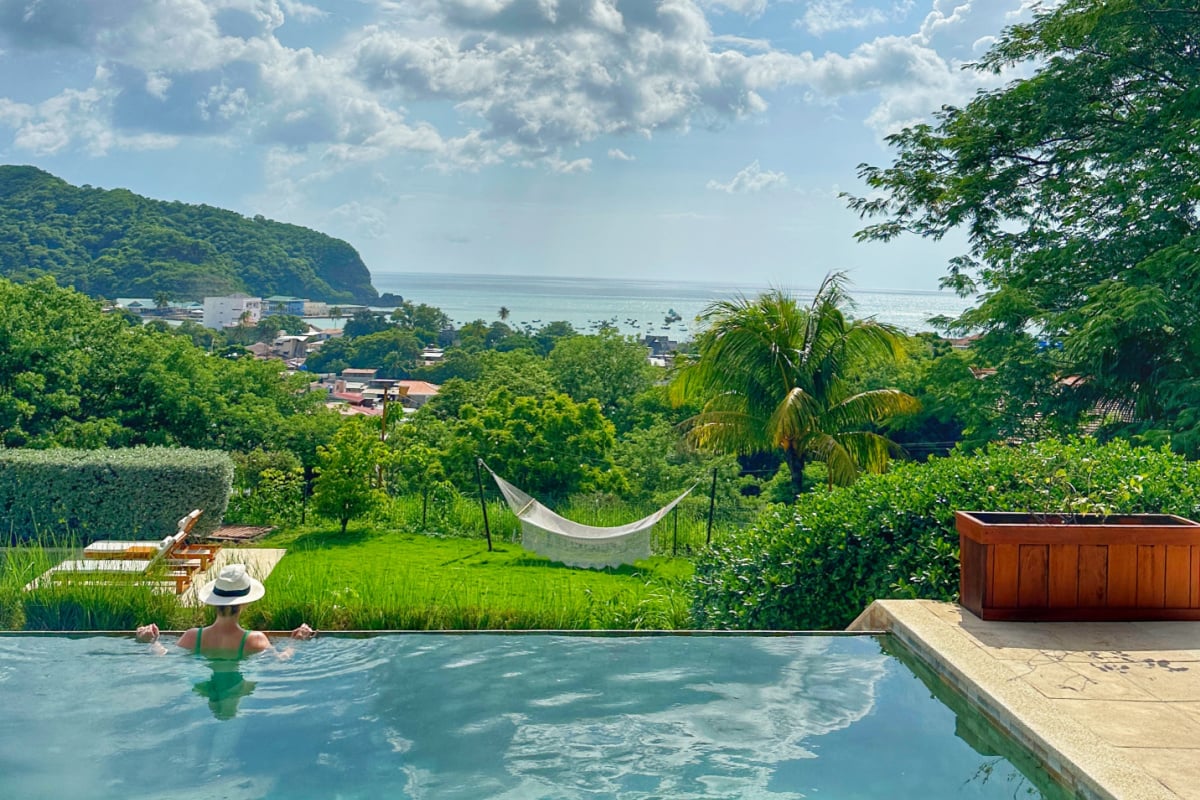
Whether you’re a digital nomad, looking for an extended stay, or just visiting Nicaragua for the week – La Santa Maria Resort in the heart of San Juan del Sur is the perfect place for you to stay.
This luxurious property has everything you need and more. Here are 6 reasons why it is perfect for your next trip:
Incredible Staff & Amenities
If you’ve traveled much, you know how big of a difference having friendly faces around can make for your trip.
Everyone we met and talked to at La Santa Maria was extremely kind and happy to help us with anything at a moment’s notice. They were even kind enough to drive us down to the main streets of San Juan del Sur and give us a tour of the most popular places to eat and things to do.
We felt right at home and like we were in very safe hands from the moment we checked in to the moment we checked out.
One of the best things about the property was the beautifully modern and luxurious apartments. The apartment we stayed in was incredibly spacious with vaulted ceilings, two large bedrooms, two full bathrooms, a living room, and a full kitchen. We felt like we could have lived there comfortably for years.
Our apartment had an incredible view of San Juan del Sur and the Cristo de la Misericordia monument.
During one night of our stay, a thunderstorm passed over the area, and we watched as the dark, ominous clouds rolled over us as thunder and lightning struck in the distance. Luckily, it wasn’t raining in our area, and we got to witness the beautiful storm from our private balcony.
If you’re anything like me, then you like the option for peace and quiet, but you don’t want to be too far away from the heart of the city or town.
La Santa Maria is perched peacefully above the heart of San Juan del Sur but is a super short walk from the main strip.
You’re also a short drive away from the main surf spots (like Playa Remanzo) and a beautiful hike up to Cristo de la Misericordia for an incredible view of San Juan del Sur.
Even though there are countless foodie spots within a short walk from La Santa Maria, it’s sometimes really nice to have a place right outside your door where you can find delicious food.
The clubhouse on the property offers plenty of fresh and delicious snacks.
The avocado toast and fruit and yogurt granola bowl are just two of the must-have items on their clubhouse menu.
Great For Nomads
Whether you are a seasoned or budding digital nomad, La Santa Maria Resort is the ideal place to set up basecamp in San Juan del Sur for your next trip. The internet connectivity is great, and where better to get your work done for the day than the best overlook in town?
If you find yourself getting stressed, simply look up from your monitor for the best view of San Juan del Sur.
Want to get out of your room but still need to get work done? No worries! La Santa Maria has an onsite coworking space with a great view of the pool and the rest of the town.
Great For Families
If you have a family, then you will absolutely love La Santa Maria. They have plenty of space to explore around their gorgeous grounds and a fun playground tucked into the gardens. Plus, you can even book a room with a private pool for playtime anytime.
On your way through the gardens, you will pass the beautiful parrots that live on the property. You can even enjoy the peaceful garden while lying on hammocks right next to the parrots.
There are even more beautiful birds and animals scattered around the property at any given time. From parrots to peacocks to ponies, there’s always some amazing animal just around the corner.
As if the beautiful views, lively grounds, and stunning pools weren’t enough – the clubhouse even hosts movie nights with popcorn and snacks that the families get very excited about – especially the kids!
It’s Safe
When you’re on La Santa Maria’s property, you feel completely safe any time of day or night. There are on-site security guards, cameras, and gates.
The grounds feel peaceful and inviting even if you’re walking around super late at night.
Once you cross the threshold onto the property, you feel completely at peace knowing you can totally let your guard down.
Thinking of flying across the pond this season for a dreamy European vacay, but you’re not too sure about Switzerland’s overpriced ski resorts or the buzzing crowds in Austria’s alpine towns? Perhaps you should be considering these 3 alternative destinations in Europe that are not only just as gorgeous butsuper budget-friendly.
Now that Europe’s borders are fully open for the first time since early 2020, demand keeps growing exponentially, pushing up the cost of flights and accommodation across the continent. Still, there are a handful of locations off the beaten path where visitors can be shielded from the crippling effects of inflation and where tourism has only begun to grow.
This time, you better pack those extra layers of clothing: we’re headed East.
Sibiu, The Romanian City With Eyes
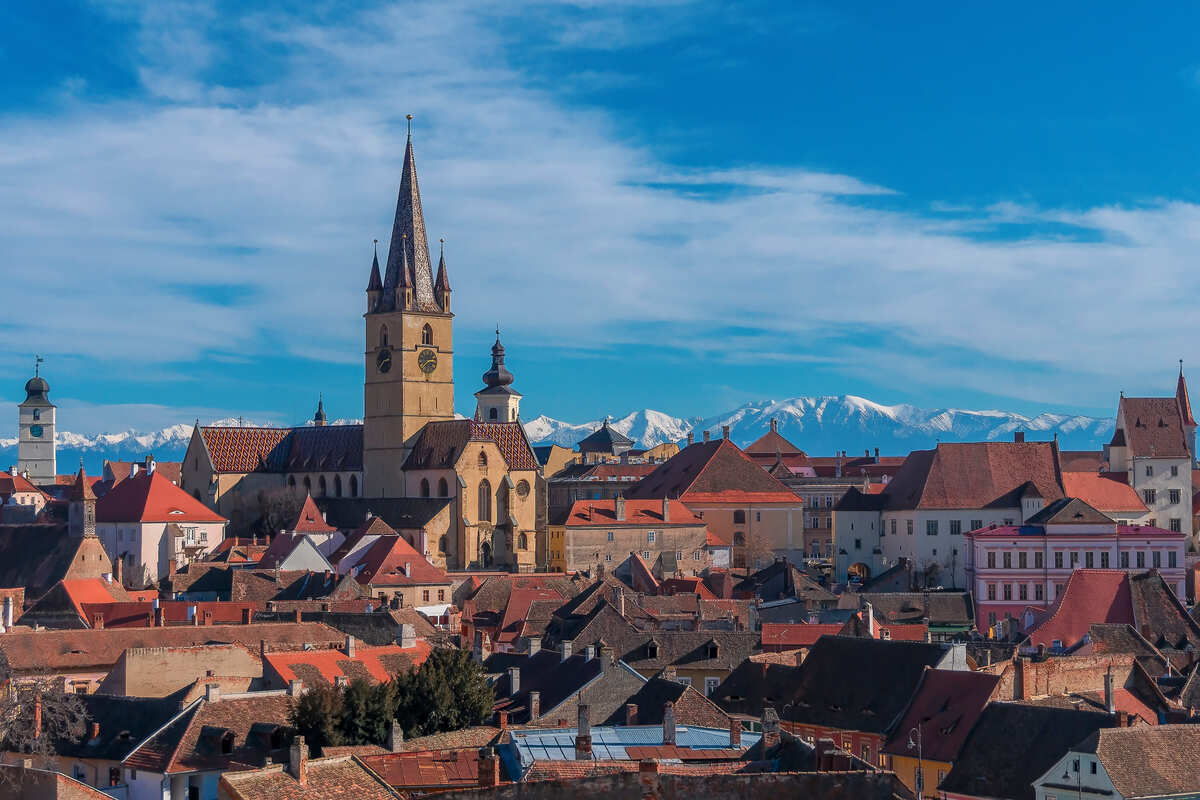
Nestled in the heart of Transylvania in Romania, not far away from the tourist hotspots of Brasov and Cluj-Napoca, Sibiu is a small city shrouded in mystique with a History spanning dating back nearly a millennia — and one that is incredibly affordable by European standards. On average, a one-month stint will cost USD $497 without rent.
Famous for the eyebrow-shaped dormers that adorn several of the houses within the old walled town, and that has inspired its nickname ‘City with Eyes’ over the years, it is an important cultural center for the Transylvanian Saxons, an ethnic minority originating from Saxony, in Germany, that have lived in the area since the Middle Ages.
Exploring its winding alleyways with a ciocolată caldă in hand, admiring the baroque architecture, the city’s well-preserved watchtowers, and the open-air markets selling local produce amid an early-morning snow flurry certainly feels like stepping into the pages of a children’s fairytale book, except the colors in real life are much more vibrant.
Within short driving distance from Sibiu, tourists will find the Cindrel and Fagaras Mountains, which rank among the best ski destinations this far East in Europe, and a quaint countryside dotted with medieval fortified churches, stunning castles, and traditional Saxon settlements where German remains the lingua franca.
Bordering Romania to the South, Bulgaria is yet another budget-friendly haven for those looking to stretch their dollars further and access quality services without being charged revoltingly high fees. In fact, digital nomads are heading en masse to this small town in Bulgaria this winter, and the high affordability may be (part of) the reason why.
In Bansko, a ski resort town surrounded by the snow-capped Pirin Mountains, nomads can get by on USD $745 a month, and you can certainly benefit from the low fares as a visitor yourself. Couples on a six-night sejour at a 3-star hotel will pay, on average, $333; on top of that, $26 for expenses each time they have dinner at a local restaurant.
Affordable rates are not the only thing that makes Bansko a great late winter getaway deal, though: the Pirin mountain range, where it is located, is an area of outstanding natural beauty. Think densely-forested ridges, glacial lakes that completely freeze over in the dead of winter, snowboard slopes, cozy wooden chalets, and sweeping mountain views.
From Bansko, popular day trips include the Bulgarian capital itself, Sofia, known for its striking modernist architecture and leafy boulevards, the Rila Monastery, often regarded as one of the country’s most important architectural monuments due to its 10th-century frescoes, and Dobrinishte, a village and a spa center home to mineral springs and welcoming locals.
Tallinn, Europe’s Overlooked Medieval Masterpiece
Capital to the Easternmost Baltic state, Tallinn does not get half as much credit as it should for simply being the most magical winter wonderland in Europe. Often overlooked when paired with Prague or Budapest, this compact medieval gem has enough points of interest to keep you busy for days, and when it sees snow, it’s like a scene straight out of a movie.
Tallinn’s beauty lies in a complex maze of cobblestone streets, encircled by defensive towers and packed with antique shops and stone taverns that have stood there for centuries, probably passed down through generations of Estonian families, historical stone churches and 13th-century piazzas where medieval-themed fairs are still held.
In case you were wondering, Estonia is also one of the cheapest European destinations for a winter vacation: according to the latest data on prices published by Expatistan (on December 26, 2022), the cost of living in Tallinn is cheaper than in 68% of the world, translating into cheaper food, accommodation, and tourist attractions in general.
Staying one week in a reasonably-priced hotel in Old Town Tallinn, you should budget at least USD $57 per night, though fares can vary dramatically depending on the level of comfort. For young backpackers country-hopping in Europe, hostels can be as cheap as $70 for the week, while luxury travelers should expect to pay up to $1260.
Heading to Europe in the coming weeks, but you’re not exactly thrilled with the prospect of snow? Maybe the Transylvanian heartland of Romania, Bulgaria’s towering peaks, and Estonia’s plummeting temperatures are not for you: check out instead these five other European cities for low crowds, low prices, and, most importantly, mild weather heading into winter.
Imagine winding through the snow-capped Swiss Alps on a heated seat enjoying champagne and caviar while you take in the sights. That is now possible thanks to the launch of the GoldenPass Express, Switzerland’s newest scenic train. The seamless train ride connects the Swiss cities of Montreux and Interlaken and the 12 stops in between and takes 3 hours and 15 minutes.
The announcement of the GoldenPass Express is a big deal. The gorgeous journey is made possible by new components that allow the train to travel on two different width tracks, something that has not been done to this extent before. The project is said to have cost $96 million dollars. Operators hope this journey will join the ranks of other famous tourist trains like the Glacier Express and Bernina Express.
A Long Time Coming
The idea for this train has been in the works since 1873. In 1916 the GoldenPass Line was established making travel possible between Montreux and Lucerne. However, the rail network was built with two different gauge widths, meaning passengers needed to make 2 transfers throughout the journey. There were high hopes that building a third rail line could solve the problem, but the project’s expense was prohibitive.
Fancy New Train Technology
The problem faced by the engineers had to do with the size of the tracks that were built specific to the terrain they travel through. The mountain railways were built with metric gauges, while the long-distance tracks were standard gauges.
A game-changing resolution came when it was decided to modify the trains themselves, rather than the tracks. The resulting solution was to have the trains “jump” the two tracks. This is accomplished by using variable gauge bougies (the structure under the train that holds the axles and wheels in place ) and a gauge adapting ramp that can accommodate both sets of tracks, as well as the different platform heights. This is all done in seconds while passengers remain comfortably in their seats.
A Swiss Trian Journey With Breathtaking Scenery
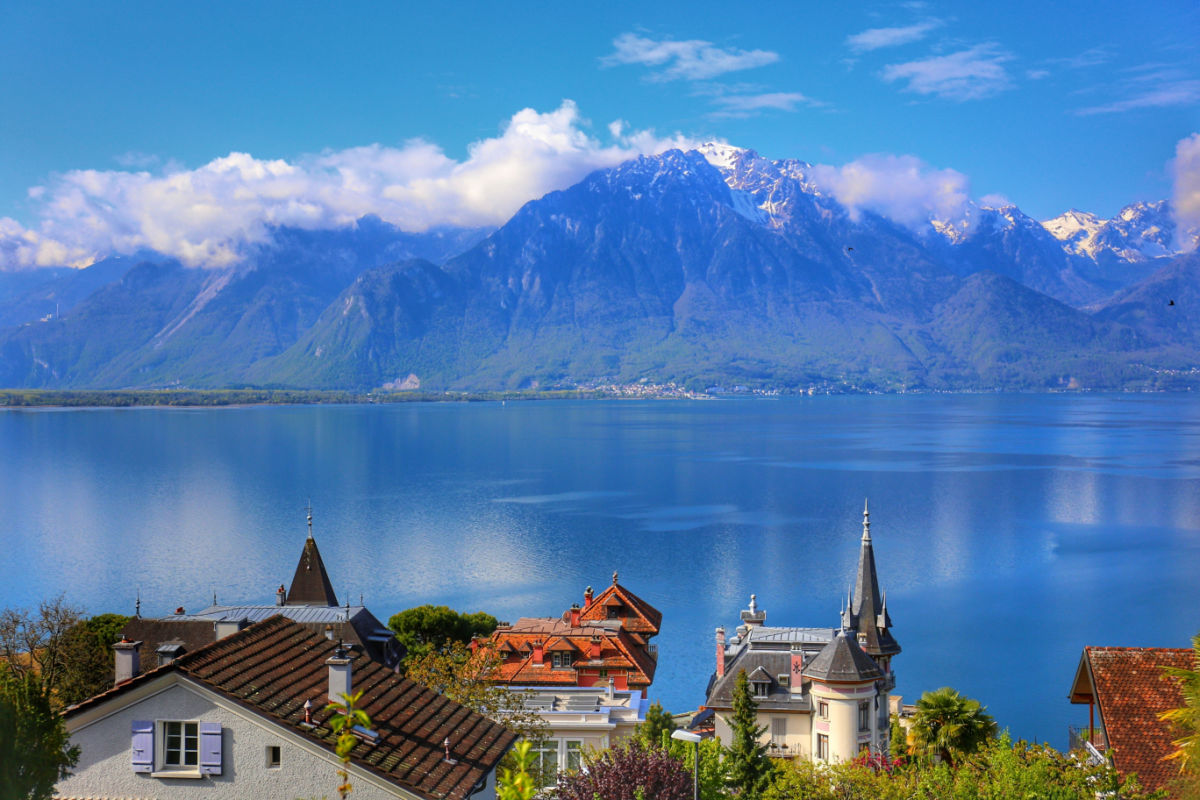
The journey between Montreux and Interlaken is simply stunning. Passengers travel through the Vaud Riviera past the Bernese Alps and Pays-d’Enhaut. Advocates for the line had long dreamt of a seamless journey from “palm trees to glaciers” within the diverse mountain region.
The train now seamlessly connects the French and German-speaking regions, the rural areas to the cities, and lakes with the mountains and glaciers. The train’s launch is not only a dream come true for long-term supporters, it is also an engineering feat and world-first because of the new equipment used.
Passengers Can Enjoy The Ride In Luxury
The GoldenPass Express can carry 184 passengers in its five coaches. There are three different classes of seats available to purchase. While the majority of seats are in 2nd class, passengers can upgrade to 1st or Prestige class and truly ride in style.
Prestige class has 18 exclusive seats that are heated and can rotate so that passengers are always facing the direction of travel. The seats are extra roomy and comfortable and raised up by 15 inches so that passengers feel like they are part of the surrounding nature. All of the coaches offer panoramic views of beautiful Swiss nature.
GoldenPass Express has prioritized local purveyors in its food and beverage selection. Wines are from Swiss winemakers Testuz, and beer from the Rugenbräu brewery is also served. Charcuterie platters from a local Swiss butchery are available, as well as a selection of locally farmed Oona caviar.
Prices vary by class and passenger type and currently cost $78 for a second-class ticket, $122 for 1st class, and it costs an additional $38 to upgrade to a prestige class. Tickets can be purchased on the GoldenPass Express website. The train currently operates once a day in each direction. Beginning in June there will be four round-trip journeys.