Looking for an affordable place to live as a digital nomad? These are the cheapest digital nomad hotspots in Asia right now!
Many of the world’s most popular digital nomad destinations don’t come cheap.
Even in Asia, where you can find some of the cheapest cities for digital nomads, you have to know where to look.
Both Japan and South Korea just announced new digital nomad visas, but with prohibitively high income requirements and a steep cost of living in both countries, these will not be an option for budget-conscious digital nomads.
Fortunately, there are still plenty of affordable destinations for digital nomads! According to Nomad List, these are the cheapest cities in Asia for digital nomads right now.
1. Hoi An, Vietnam: $794
Vietnam has been exploding in popularity with digital nomads lately, and it’s not hard to see why. This country is one of the cheapest in Southeast Asia and it’s packed full of cool cities and natural beauty.
Hoi An is the perfect base for digital nomads. It’s conveniently located on the country’s central coast, giving you easy access to the rest of the country. It’s a smaller city packed with historic charm and influences from cultures ranging from Chinese to French to Japanese.
And best of all, Hoi An is one of the most affordable places in the world to live, with Nomad List estimating a monthly cost of living of under $800 for one person.
2. Denpasar, Bali, Indonesia: $871
It’s no secret that Bali has become extremely trendy in recent years. And prices reflect that — the chicest areas of this gorgeous Indonesian island have become extremely expensive!
However, there’s one city in Bali that is still affordable, and that is Denpasar. It’s Bali’s capital, and so it’s not as focused on tourism as the popular areas of Canggu, Seminyak, or Ubud.
It’s not as popular with digital nomads as the aforementioned areas either, but it’s where you’ll find the cheapest prices on the island with an average cost of living under $900 per month.
3. George Town, Penang, Malaysia: $951
Another affordable city in Asia for digital nomads is George Town. This is a fast-growing digital nomad hotspot known for its vibrant culture, delicious food, beaches, and historic sites.
George Town is the colorful capital of the Malaysian island Penang. It’s a diverse, multicultural city that has something for everyone.
It’s also very affordable, so you won’t break the bank basing yourself here as a digital nomad. Americans can stay in Malaysia for up to 90 days.
4. Da Nang, Vietnam: $967
Another Vietnamese city that you can live in for under $1,000 a month is Da Nang. This coastal city is actually only 40 minutes away from Hoi An.
The difference is that Da Nang is a major metropolis with over 1 million inhabitants. It’s also known for being more of a lively beach destination than quaint, historic Hoi An.
So if that’s more of your vibe, Da Nang is the perfect place to stay as a digital nomad. Americans can stay in Vietnam for up to 90 days.
5. Chiang Mai, Thailand: $1,002
Finally, Chiang Mai is a great city for digital nomads who don’t want to spend a lot of money.
This charming city in the mountainous north of Thailand is extremely popular with digital nomads. It’s a great place to live and gives you easy access to exploring the rest of Thailand.
Another thing to love about Thailand? It’s the country with the cheapest Airbnb prices in the world, so you can easily find a good deal on a nice apartment in Chiang Mai.
Opinions expressed here are the author’s alone, not those of any bank, credit card issuer, hotel, airline, or other entity. This content has not been reviewed, approved or otherwise endorsed by any of the entities included within the post.
Other than a wide availability of foreigner-friendly services, a lively social scene, and of course, the cultural aspect, affordable accommodation is a key factor for digital nomads heading to Europe, as it is possibly the most expensive destination for long-term travelers… or is it?
There’s no denying rent across parts of Western Europe is incredibly expensive, with tenants expected to fork out a shocking monthly $2,600 for tiny flats in central London and anything between $1,200 and $1,800 for a one-bedroom apartment in a non-glamorous arrondissement of Paris.
Luckily, options are not limited to your typical touristy cities: in these four alternative destinations, you’ll experience all of that Old World charm and get a taste of the Old Continent’s famous quality of life without spending half or more of your income on rent.
Don’t worry, we’re not sending you off to an unheard-of, backwater country in the Eastern flank where of course house prices will be cheaper due to the low living standards.
No, no, no: there are truly exciting places you’ll actually want to live in, starting with…
Portimão, Portugal
If you’re an avid Travel Off Path reader, you’ve probably heard of The Algarves already.
A sunny region in Souhern Portugal with an extensive sandy coastline, bright-blue oceans, and year-round balmy weather, it is one of the trendiest spots for sunseekers this spring.
Something you might not know, however, is that Portimão, a small seaside resort straddling a particularly warm stretch of the Atlantic, is a digital nomad haven offering a lower cost of living than other Southern European hotspots and some laid-back living for those who need it.
Renting a one-bedroom apartment away just outside the city center, you can expect to pay an acceptable $727 per month, while a well-equipped, three-bedroom apartment in the cobbled Old Town sets you back by $1,831 (see here what two grand a month would get you in the British capital).
Other than affordable housing, Portimão residents enjoy cheap groceries, a plethora of inexpensive restaurants to pick from on a night out in town, with simple yet delicious meals in traditional Portuguese cafeterias costing as little as $10.78, and three-dollar beers.
Not only will it not break the bank to call Portimão home for between one and three months, but the endless miles of thin, white sands, the architectural wealth, and the thriving expat community make it an incredibly exciting place to be.
Budapest, Hungary
Why take your chances working remotely from crowded, overpriced Paris when you can live a comfortable life, eat lavishly paying only a small fraction of what you would in France, and admire buildings that are just as grandiose in the Paris of the East instead?
Budapest indisputably sits in a Pantheon of Europe’s most beautiful cities, home to a Neo-Gothic Parliament with an iconic red dome reflecting on the fast-flowing Danube River, a monumental Buda Castle, and a number of stately opera houses and ornate medieval churches.
Between the cozy internet cafes serving delicious traditional pastries and the seriously underrated nightlife that could put Berlin’s to shame – picture underground raves and exclusive parties in ‘ruin’ bars – you’ll find there are plenty of reasons to love Budapest as a digital nomad.
The best thing is, you can have all of this while spending only $496 on accommodation per month, making the Hungarian capital one of the most affordable ‘workcation’ destinations in the European Union (in a way, you have the forint and Hungary’s protective policies to thank for).
Hungary retains its own national currency, and it hasn’t yet been Euroized, which means wages are lower and consumer prices aren’t as high; inflation seems to be better controlled, too, not to mention it is much safer than the average Western European country.
Sofia, Bulgaria
Located at the south-easternmost edge of the European Union, sharing borders with Greece and Türkiye, and straddling the trendy Black Sea, Bulgaria is one of those countries you might have heard being mentioned recently, but you don’t know an awful lot about.
There are entire articles detailing how Bulgaria is the perfect digital nomad destination, but when it comes to Sofia specifically, we feel it hasn’t been given its flowers or appreciated enough for the incredibly diverse, quirky, exciting capital it is.
With a History of three millennia, Sofia is the third or fourth-oldest city in Europe, depending on the source you’re pulling from, and it has an eclectic architectural heritage like no other, with Thracian, Roman, Ottoman, and Soviet-inspired structures combining to form a unique cityscape.
It is probably the only place where you could admire medieval Orthodox churches, explore archeological zones lying just beneath the modern city, and stroll communist-era boulevards lined by Brutalist palaces and apartment blocks in the same day.
Additionally, Sofia has a strong cafe culture: our fave coworking spots are Cafe 1920, a boujee, vegan-inclusive eatery facing the famous Lions’ Bridge, and The Apartment, housed in an actual fully-furnished apartment, where you can relax in a homely environment and taste home-cooked morsels.
Speaking of apartments, let’s not forget the most important bit: there are one-bedroom flats in residential areas for renting from $378 per month, and taking into account Sofia’s efficient metro system and extensive bus network, chances are you’ll be a short half-hour commute to the center, tops.
Athens, Greece
We know what you’re thinking: ‘Athens is a dump’, ‘it’s jam-packed with tourists’, ‘you’d be bored to death spending longer than two days there’, or ‘good luck making it out of scammer-ridden Monastiraki Square unscathed’, and basically every other apocalyptical warning.
Now, listen. We get it.
Athens may be a bit disappointing if you’re visiting as a tourist, particularly when there’s excess littering involved, visible illicit drugs, and an irregular migration problem, and you’re averse to waiting in lines to access all of the main points of interest.
As a digital nomad spot, however, it can be surprisingly pleasant:
The point of long-term travel is not to tick off as many attractions as possible in the shortest amount of time – in Athens, that won’t take you longer than a couple of days, anyway – nor retrace the steps of fellow Instagrammers all the way to the nauseatingly-pink Fairytale Cafe.
Living and working remotely from Athens, away from the tourist-dominated districts of Plaka, Monastiraki, and Syntagma, you have an actual shot at experiencing life in a Greek metropolis beyond the ruined temples and bustling central bazaars.
Picture yourself going for a cup of morning coffee in a Greek-frequented kafenio, where English chattery is rare to overhear, or walking the rather peaceful, tree-lined avenues of Koukaki as you munch on some freshly-baked bougatsa, petting passerby cats and watching local scenes unfold.
Elsewhere in Metaxourgeio, hippy cafes, artful streets oozing character, and tspirou bars await discovery, and it’s in youthful, student-dominated Keramikos and Exarchia where Athenian nightlife is at its most vibrant.
Did you know also that Athens is a stone’s throw away from the sand-fringed Attica coast, where waters are crystal-clear and warm throughout most of the year, except winter? Lucky you those Kalamaki Beach-bound M2 buses leave from Omonia, in the city center, multiple times every hour.
Oh, have we already mentioned how affordable Athens can be? Forget your popular cruising port calls of Mykonos, Santorini, and Rhodes, where renting an Olympian-divine, whitewashed villa long-term is an unattainable dream for mere mortals like us:
In the capital, comfortable, centrally-situated flats cost an average $597 to rent per month.
As you’ll soon learn, there is an entire 3-million-people-strong cosmopolitan hub lying at the foot of Acropolis Hill, and it’s truly got a lot going for it on the digital nomad front.
Opinions expressed here are the author’s alone, not those of any bank, credit card issuer, hotel, airline, or other entity. This content has not been reviewed, approved or otherwise endorsed by any of the entities included within the post.
If spending a little longer in a place while working as a digital nomad is on the cards then we may have the inspiration you need to find your next favorite location.
South America is fast emerging as one of the best places for digital nomads to explore and keep things affordable, so we’ve examined five of the cheapest major cities that can help you do just that.
This picturesque city lies in Colombia’s beautiful Aburra Valley at the very northern part of the Andes Mountains and is known as the city of eternal spring, thanks to its mild and pleasant year-round weather.
Its popularity as a digital nomad destination means costs have slightly increased in recent years, however you should be able to get by on around $1,500 per month or less by being savvy.
The city has a great community of digital nomads, memorable nightlife, and a high number of shared working spaces – it’s also well-known for fast and reliable internet connections.
And if you’re still on the fence, then maybe Medellin being named as one of Travel Off Path’s top digital nomad destinations for 2024 in our annual awards will persuade you?
Fortaleza, Brazil
This city sits on the northern coast of Brazil’s State of Ceara and is lined with a beautiful sandy beach and is known for its very vibrant nightlife.
The city has a tropical climate that offers temperatures between 75 and 85F pretty much all year round.
It also benefits from an affordable metro system, excellent internet and remote working spaces, and some wonderful green spaces to help you unwind, such as Parque do Coco.
There is a digital nomad visa available to apply for that can allow you to stay for up to two years if you meet the relevant criteria, such as having proof of accommodation, proof of onward flight ticket, and proof of proper travel insurance.
If you can handle that level of administration, then you’ll be rewarded with a city that costs around $1,500 per month to live in as a digital nomad.
Lima, Peru
This one may be a bit of a curveball, but with estimated living costs as a digital nomad set at around the $1,300 per month bracket, it’s easy to see why the capital of Peru is gaining in popularity.
Peru is expecting a big year for travel in 2024, helped by its weak currency compared to the U.S. Dollar, its fascinating culture, amazing cuisine, and awe-inspiring nature.
You can get a glimpse of most of these things in Lima, alongside plenty of remote working spaces and stunning views out onto the Pacific Ocean.
Buses can cost less than $1 per journey in Lima, and the city also benefits from ride apps such as Uber if you want to get somewhere in a hurry.
Peru had some issues with protests and public disturbances in 2023, but things seem to have settled now, with the U.S. Department of State rating the country at Level 2 – not the safest place on this list, but fine to travel to if you are cautious and sensible.
For around $1,300 per month, you can stay in Colombia’s capital for up to two years.
The country’s accessible digital nomad visa only requires you to earn around $700 per month to achieve a stay of this length – and Bogota is one of the best places to do just that.
It’s a bustling city thriving with Colombian culture, and despite not having the best reputation with regards to safety, it is very cheap, has great internet, offers ideal weather, and is generally LGBTQ+-friendly.
Latest data from Nomad List indicates that life as a digital nomad in the Argentinian capital, Buenos Aires, should cost you around $1,000 per month, and the Global Peace Index rates Argentina as the second safest country in all of South America – second only to Uruguay.
The city is still emerging as a digital nomad destination; however, it has a solid community and excellent nightlife and dining options.
It’s a very walkable city, and when you do need it, the public transport is excellent – you can get around the city for less than $2 per day on the reliable buses.
Americans can stay in Argentina with no visa for up to 90 days, and if you want to stay longer, the Argentinian digital nomad visa is very easy to apply for and can help you stay for 180 days.
The monthly costs in this article are estimates based on the latest available data and are intended as a guide – in some cases it may cost more (or, most likely, less). Happy nomading!
Opinions expressed here are the author’s alone, not those of any bank, credit card issuer, hotel, airline, or other entity. This content has not been reviewed, approved or otherwise endorsed by any of the entities included within the post.
Sunny Mexico has always been the go-to spot for American remote workers looking for a change of scenery. It is close enough to the U.S. to still feel like home, the culture – and climate – are arguably warmer, and the infrastructure is great.
With that being said, not all destinations in Mexico are cheap to be a digital nomad, with overnights in cities like Los Cabos averaging U.S. $600 a night, and the cost of living in the Mexican Caribbean rising dramatically, leaving those contemplating a move South of the border wondering:
Where should they be headed that will not break the bank?
Luckily for them, banking firm GOBankingRates has ranked some of the top Mexican destinations for expats on a budget based on living costs, and based on their own list, we have come up with the five cheapest where you can live on under US$1200 a month:
Ensenada
Population: 443,000+
State: Baja California
Single Person Average Monthly Expenses With Rent: $1,195.85
A lesser-known gem of Baja California (the state), Ensenada is an up-and-coming tourist town owing its trediness to paradisaical beaches, a beautiful Downtown, and most importantly, a slow-paced lifestyle, which is sure to attract remote workers escaping the hustle and bustle of the big cities.
Surfing practices are strong here, with beaches like Playa San Miguel and Playa Hermosa providing epic waves for watersports enthusiasts. Looking to unwind instead? The more tranquil El Faro, near Downtown Ensenada, and Playa Estero are great spots for sunbathing and swimming.
As it borders the Bahia de Todos Santos, a sheltered bay and popular migration point for several marine life, Ensenada is the perfect homebase for exploring the wider Northern Atlantic coast of Mexico, not to mention soaking up the culture, heavily influenced by – believe it or not – Russian settlers.
Have we mentioned the world-class food scene yet?
The city’s nationwide-famous fish tacos, a local specialty, its shrimp wraps, delectable ceviches and rich wines are some of the reasons why you should extend your stay here, other than, of course, how unbeliavably affordable it is, with monthly expenses averaging $1,195.85.
Puebla de Zaragoza
Population: 6,583,000+
State: Puebla
Single Person Average Monthly Expenses With Rent: $1,067.49
Up there with Guanajuato and Guadalajara, which do not make the top five, Puebla is one of the prettiest colonial-era cities in Mexico, only taking newcomers a short walk around the well-preserved cobbled streets of Centro Historico to fall irremediably in love with it.
Its skyline is incredibly unique, with a UNESCO-protected, monument-packed Old Town bordered by a sea of skyscrapers. Basing themselves in Angelopolis, the modern, ‘business’ part of town, nomads will find a plethora of cafes and co-working spots to choose from.
Simultaneously, while exploring the historical part, and especially neighboring Cholula, a picturesque colorful town in Puebla’s Metropolitan Area, famous for its jaune church perched atop an ancient Mayan pyramid, they will feel as if time has been frozen for centuries.
With its mix of old and new, Puebla has an atmosphere unlike that of any other Mexican city, and it’s relatively affordable to live in, with monthly expenses coming in at a reasonable US$1,067.49 – as much as rent alone in a central apartment in major U.S. city would cost.
Veracruz
Population: 405,000+
State: Veracruz
Single Person Average Monthly Expenses With Rent: $1,000.31
The second coastal entry on this list, Veracruz straddles the Gulf of Mexico, and it’s one of the smallest cities home to a population of under half a million. Its distinction comes from its status as the largest Atlantic trading hub in Mexico, historically, and an untarnished colonial core.
It is the cultural heart of its state, settled as early as 1519, and due to its relevance to the Transatlantic Spanish Empire, it flourished as a prominent mercantile port, at times rivaling the economic importance of Mexico City. Needless to say, the cultural wealth of Veracruz cannot be easily estimated.
Other than the numerous Instagrammable houses that line the port, visitors will find a Baroque Municipal Palace, the oldest of its kind in Mexico, an 18th-century cathedral with Neoclassical features, and the Castle of San Juan de Ulúa, a monumental fortress built to protect residents from pirate attacks.
As it sits on the Gulf of Mexico, Veracruz offers easy access to pristine, gringo-free Gulf beaches, particularly along the aptly-named Emerald Coast, and nomads get to experience all of this for just over a thousand bucks a month, rent included.
Saltillo
Population: 807,000+
State: Coahuila
Single Person Average Monthly Expenses With Rent: $884.74
Located in the heart of the Chihuahuan Desert, Saltillo is a 445 year old city dating back to the Spanish ‘Conquista’ of Mexico. As one of the first European settlements in the territory, it boasts an elevated concentration of historical sites.
This includes an 18th-century cathedral – Santiago Apóstol – easily recognized for its Neo-Romanesque belfry and ornate facade, the Neoclassic Fernando Soler City Theater, and the centrally-situated Plaza de la Nueva Tlaxcala, bounded by stately civic buildings.
The city, as well as its metropolitan region, is both a hugely underrated cultural capital and an industrial hub, housing General Motors, Magna, Nemak, and even Tesla plants, making it an incredibly exciting place for culture seekers and young entrepreneurs alike.
Despite its signs of development, it is one of the least expensive nomad destinations in Mexico, with the cost of monthly rent for a one-bedroom apartmanet in the city center averaging a mere $264.94, and expenses totalling $884.74.
Aguascalientes
Population: 934,000+
State: Aguascalientes
Single Person Average Monthly Expenses With Rent: $861.59
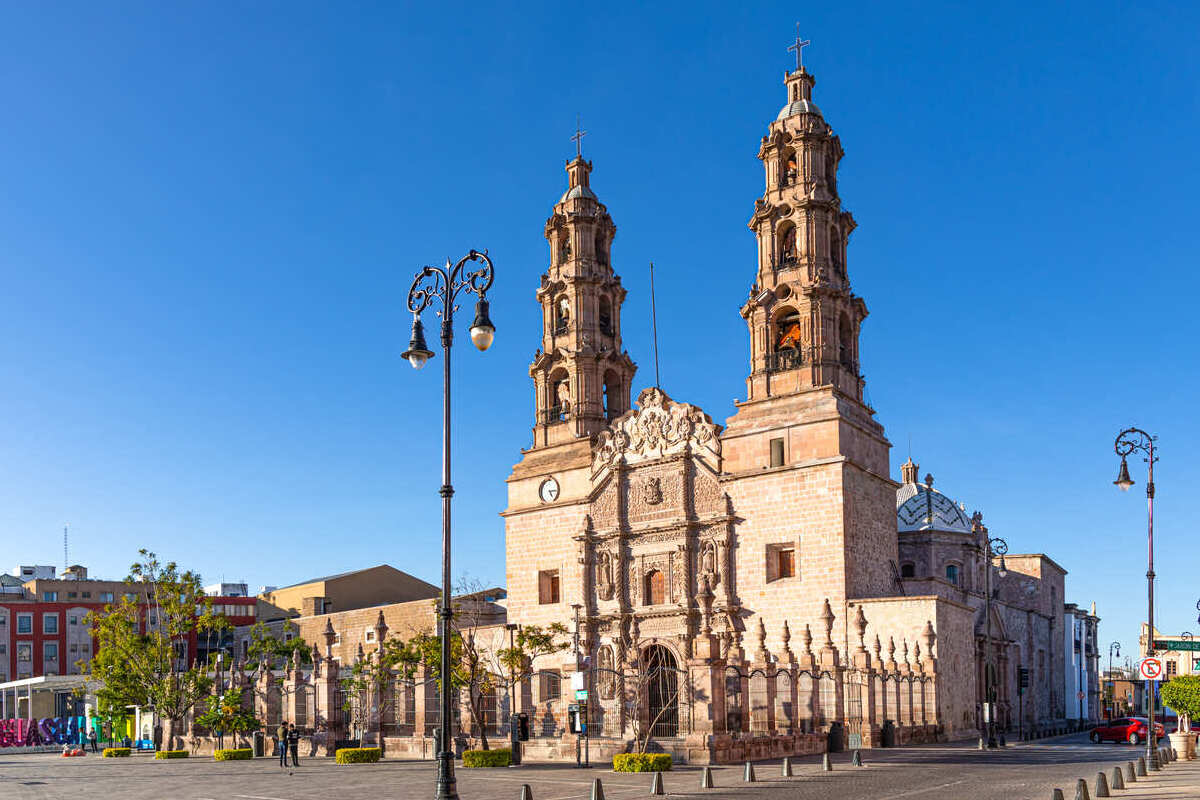
The least expensive, but certainly not the least attractive Mexican city to be as a digital nomad, Aguascalientes is nestled near the center of the country, and it’s best known for its architectural heritage, balmy weather, hot springs, and multicultural populace.
With magnificent structures like the San Antonio de Padua Church, La Exedra (the European-inspired main square), the regal Government Palace, and a Brutalist Opera House to its name, Aguacalientes is easily one of the prettiest cities in Mexico.
Every year, it hosts the San Marcos Fair, simply the largest festival in Mexico with an annual attendance of over 7 million, when the city’s Spanish-imported bullfighting and cockfighting culture is celebrated.
According to GOBankingRates, Aguascalientes has the lowest cost of living in all of Mexico, with a three-bedroom apartment in the city center costing as little as $384.31 per month, on average, and total monthly expenditures sitting at $861.59.
Now you know: you don’t need to be behind a million-dollar business, nor have a hefty amount of money in your savings account to move temporarily to, and work remotely from Mexico, where Americans get to stay for 6 months visa-free.
With its absence of borders, high levels of safety and development, and unparalleled cultural offer, Europe is still the go-to destination for digital nomads, though the latest surge in prices, particularly in the Eurozone, might have discouraged some from moving across the pond.
While it’s true European countries are getting increasingly expensive, including those that have historically been perceived as ‘affordable’ options, there are still some exciting alternatives left if you’re a remote worker on a budget dreaming of a country-hopping adventure in the Old World.
Basing yourself in any of these four cities, you can live comfortably on less than 2 thousand dollars a month, and with their vast cultural offer, odds are you’ll never get bored:
Bucharest, Romania
The Paris of the East
Average monthly expenses: US$1,945
Average internet speed: 38Mbps
Quality of life: Good
Safety: Good
Liked by 84% of NomadList members
Disliked by 16% of NomadList members
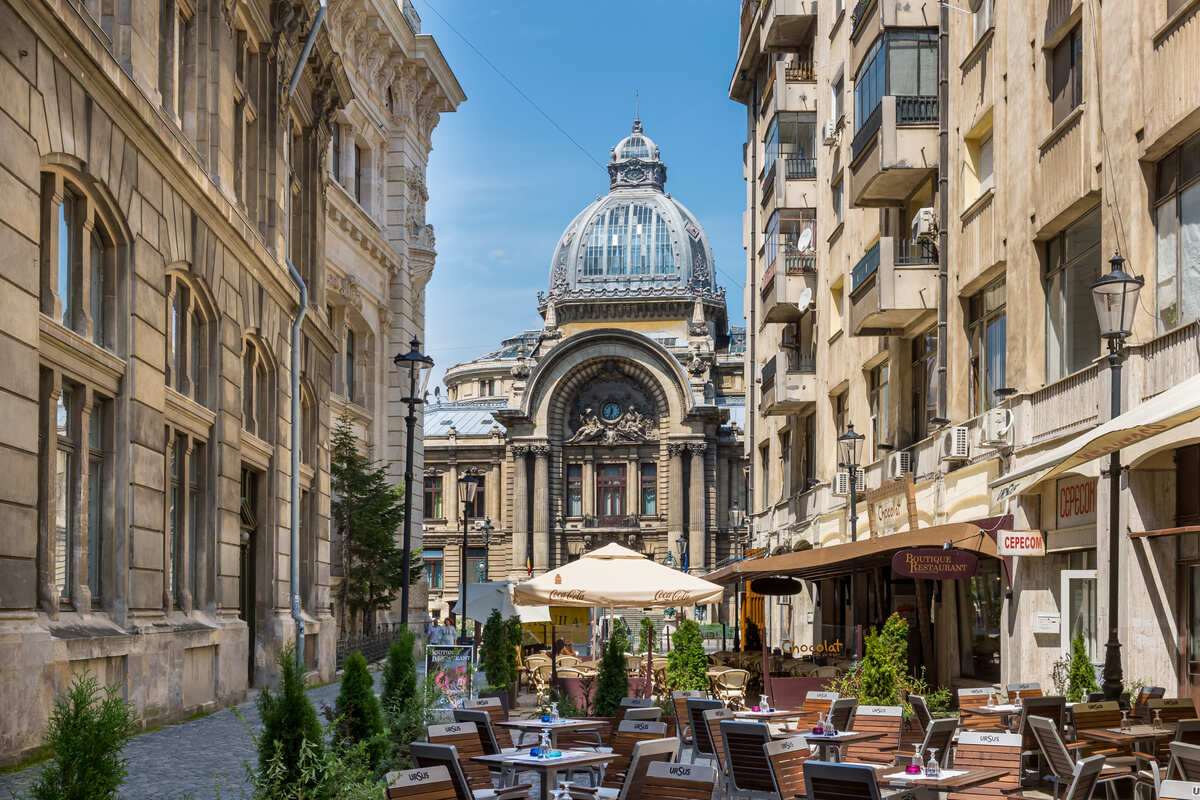
The beating heart and largest urban conurbation in the Eastern European nation of Romania, Bucharest is nicknamed ‘Paris of the East’, though both capitals exist on polar opposites, at least in terms of affordability.
According to NomadList, Bucharest is very affordable, with remote workers based in the city, who are members of the increasingly-popular platform, reporting monthly expenses of US$1,945. This sum might hardly be enough to cover rent/utility bills alone in central New York.
In Bucharest, it is not rare to find well-equipped long-term AirBnB rentals on the market for less than US$700 a month, nor cheap places to eat – lavishly at that – on less than twenty dollars.
Nomads have also reported a higher quality of life upon moving here, highlighting the city’s overall greenery and walkability, the abundance of co-working spots, and the internet speed (38Mbps on average).
As for the Paris comparison, it is mostly attributed to a handful of Haussman-style buildings centered in the cobbled Old Town, so don’t expect Brutalist-ridden Bucharest to carry the same weight of architectural tradition; yet this does not mean it has a shortage of monuments or attractions.
Some of the most iconic landmarks include the huge concrete mass that is the Romanian Parliament, the heaviest building in the world weighing 4.10 million tons, the Arcul de Triumf, Bucharest’s own Paris-style triumphal arc, and the Neoclassical ‘Athenaeum’ concert hall.
Antalya, Turkiye
The Eastern Mediterranean Queen
Average monthly expenses: US$1,518
Average internet speed: 7Mbps
Quality of life: OK
Safety: Good
Liked by 86% of NomadList members
Disliked by 14% of NomadList members
Though it is technically located in Western Asia, the Turkish coastal city of Antalya is generally considered a European hub due to its historical links with the neighboring continent and the locals’ more liberal approach to both religion and life.
The rising star of Turkiye’s Tourism Reinassance, Antalya is an ancient queen best known for its rich Greco-Roman heritage and trendy resort zone.
Back in ancient times, it was one of the most important trading ports in the Eastern Mediterranean, and though you are unlikely to spot Greek traders unloading heavy cargo before Antalya’s fortified seafront in this day and age, strolling its Kaleiçi (Old Town) will certainly feel like traveling back in time.
A maze of romantic cobbled streets, spanned by arching, flowery vines, that either lead to a traditional restaurant housed in a centuries-old Ottoman mansion, or much older Byzantine churches (turned mosque), the Kaleiçi is sure to steal your heart.
For a taste of Antalya’s vibrant modern life, nomads often head to Konyaalti, a development zone with a modern promenade lining the Mediterranean, full of bars, cafes, and leisure centers. It is where the city’s most frequented beach, Konyaalti Plaji, is located.
In the affordability chart, Antalya scores even higher than Bucharest. NomadList members have agreed that US$1,518 is enough for a salary to live reasonably well in the city, though the internet speed appears to be lower at 7Mbps on average.
The safety parameters were ‘good’ as well, and the temperature is ‘perfect’, with highs of 95 Fahrenheit in summer, lows of 59 in the off-season, and sunny days year-round.
Zagreb, Croatia
The Forgotten Habsburg Gem
Average monthly expenses: US$1,489
Average internet speed: 11Mbps
Quality of life: Good
Safety: Great
Liked by 100% of NomadList members
Disliked by 0% of NomadList members
Croatia is one of the busiest summer destinations in Europe, though strangely enough, its capital ranks among some of the least-visited cities. As it is not on the coast and often portrayed in the media as a ‘financial center’, it is often skipped by sun-seekers.
While we could write an entire article on the under-appreciation of Zagreb as a cultural hotspot, we will focus instead on its soaring popularity among digital nomads and slow travelers.
It is brimming with life in this respect, having re-surged from the COVID pandemic a European magnet for remote workers, who are drawn to its numerous work-friendly cafes, lush municipal parks, medieval landmarks, riotous nightlife, and eccentric museums – ever heard of a certain Museum of Broken Relationships?
No, it doesn’t have access to Croatia’s crystal-clear Adriatic, unlike the far more popular sunny getaways of Zadar, Split, or Dubrovnik, but it doesn’t need the ocean to be a great home base in Europe.
This Central European, formerly-Habsburg jewel is awaiting discovery, and there seems to be unanimity among those who have visited, either for a short or long period, with 100% of NomadList members having a positive impression.
They are particularly pleased with the affordability of Zagreb, as earning US$1,489 a month may be enough to cover necessary expenses, the ‘fast’ internet speed (11Mbps), and the lack of crime.
On the downside, it can feel too hot in summer, when temperatures soar above 100 degrees, or too cold in winter, when snow is usually expected, and the LGBTQ+ friendliness indicator is ‘bad’.
Skopje, North Macedonia
The Quirky One
Average monthly expenses: US$1,322
Average internet speed: 9Mbps
Quality of life: OK
Safety: Good
Liked by 71% of NomadList members
Disliked by 29% of NomadList members
The least-expensive entry on this list, Skopje is the quirky capital of North Macedonia, a country that’s changed name more times than we can count in the last two decades.
As one of our writers and collaborators has described herself in this article, it is simply ‘ideal’ for digital nomads, ticking all of the boxes on the nomad checklist:
It is not crowded, like, at all
Prices are shockingly cheap
The nomad scene is booming
Safety levels are ok
It is well-connected to other European cities
Mass tourism is yet to ruin it
In fact, Skopje is still one of the least-visited capitals in Europe, and we honestly cannot fathom why.
Its medieval historic center is incredibly picturesque, with Ottoman-style bazaars and cobbled paths that lead up to an imposing hilltop fortress. Across the Vardar River, the main public square, aptly-named Macedonia Square, houses a monumental statue of Alexander the Great.
It’s been dubbed the ‘Balkan Times Square’ due to the digital screens and large billboards that surround it, and it certainly lives up to its title (though the surrounding buildings may look somewhat more dilapidated or in need of renovation).
All in all, Skopje is perhaps the most underdeveloped city to feature here.
It is one of several Balkan countries that remain outside the European Union, and poverty rates in North Macedonia are higher than in more well-off European states.
That’s not to say it lacks charm or that it should be ignored.
If anything, it means there is a lot of unexplored potential and room to grow; unlike in other over-crowded capitals where young entrepreneurs are leaving in droves due to the prohibitive cost of living.
In Skopje, the quality of life is just ‘ok,’ but it excels in affordability (US$1,322 per month), temperate weather, and a high perception of safety.
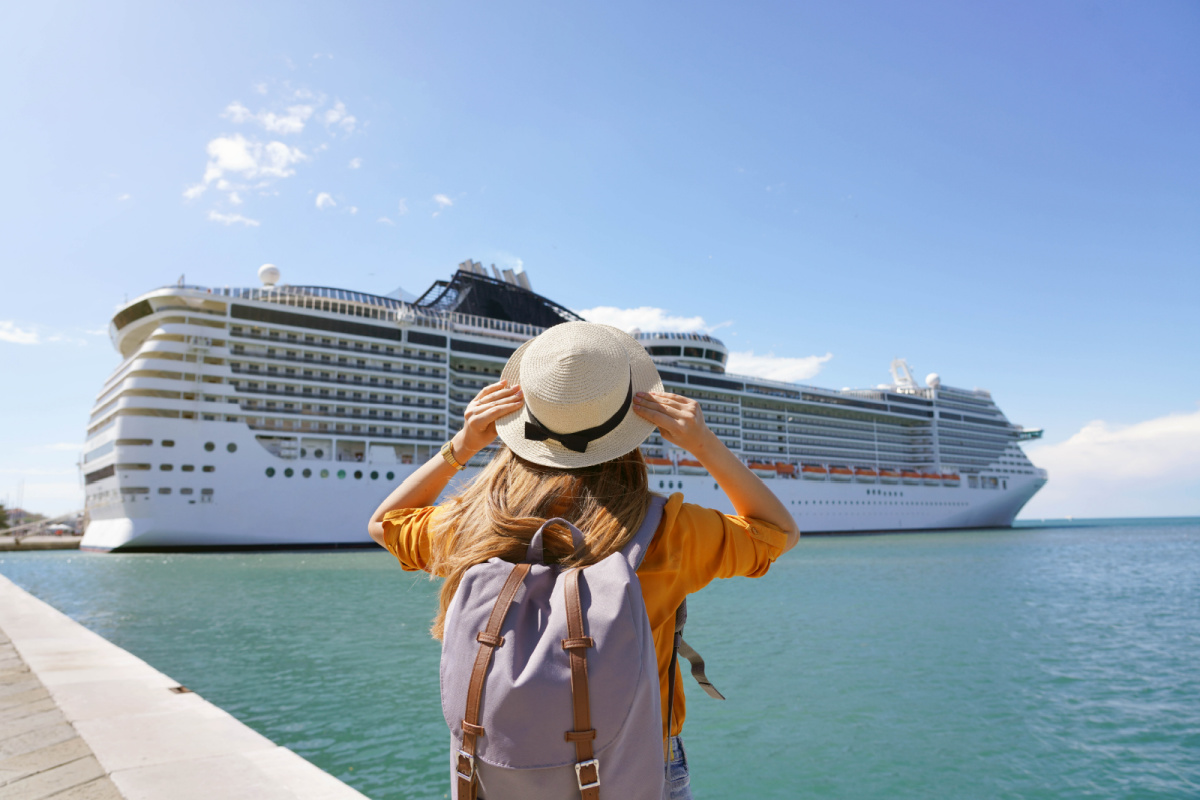
A cruise ship might not seem like the ideal home for a digital nomad. With small cabins and notoriously bad internet service, it can be hard to imagine living aboard a cruise ship for any length of time, much less getting any work done. But Miray Cruises is launching a brand new kind of ship to do just that.
Their MV Gemini ship is being remodeled to become a long-term floating home geared towards remote workers. The ship will set sail in the fall of this year and will visit every continent throughout its journey, taking along over 1,000 lucky passengers.
Onboard Amenities
The company has gone to great lengths to adapt the ship to meet the needs of digital nomads. Along with high-speed WiFi throughout, the ship is equipped with a full-scale business center, offices, meeting rooms, and a business library and lounge. There is also a 24-hour hospital with medical visits at no extra cost. Passengers will be treated to more spacious cabins and onboard community-building initiatives for a more comfortable long-term experience.
Due to the extended nature of the cruise, there will also be longer stops at various ports throughout the journey. With 208 overnight stops out of the 375 planned ports, guests will have more time to explore onshore.
In addition to these welcome changes, passengers can expect all of the typical cruise amenities, such as a swimming pool, wellness center, sundeck, auditorium, spa, and salon.
A better question might be, “Where won’t it go?” The ship is set to embark on a 130,000-mile journey, stopping at hundreds of ports along the way. There are 135 countries included on the itinerary, spanning all 7 continents. It is the ultimate around the world sailing trip.
The ship will stop at several ports throughout the Caribbean, sail the entire coastline of South America, up the west coast of the United States before hitting both Hawaii and then Alaska, and then over to Asia. It will then make stops in Japan and South Korea before continuing throughout Southeast Asia, then around Australia and New Zealand. Finally, it will pass India, loop the entire coastline of Africa, then make its way up to the Mediterranean and Europe.
How Much Does It Cost?
Cruises can range from very affordable to quite expensive, depending on the location, amenities, and level of luxury that you desire. You might think a cruise around the world would lean towards the expensive side, and for that, you would be both right and wrong. The Life at Sea Cruise is not a cheap vacation. However, taking all factors into account, it could come up to less than your life at home.
The lowest-priced room, a standard inside cabin at 130 square feet, comes up to $30,000 per person per year. That’s around $2500 a month, which is lower than the average rent for major U.S. cities like Los Angeles and New York.
It’s also not much more than what many remote workers already pay for coliving or digital nomad groups that move around month to month. On top of all that, this is meant to be both long-term and all-inclusive, so there are no grocery bills, utilities, or other similar costs people typically spend in their home country.
Prices do vary by cabin, with the largest being a 322-square foot balcony room at $110,000 per person for the year. The prices are more ideal for couples, but single travelers do get a small discount – 15% off the double occupancy rate. Financing options are available, but a pretty hefty downpayment of $45,000 is required. Although the monthly rate could be enough for some to handle, the downpayment might be a dealbreaker.
What’s The Catch?
The cost, itinerary, and amenities seem very straightforward. However, there is one very big catch. Travelers must commit to the entire journey – not one, not two, but three years. Yes, the ship will sail for a solid three years, and passengers are expected to sign on for the whole time. Though there is an option to split your cabin with other passengers (somewhat like a timeshare), even one year aboard a cruise ship is a huge commitment for most to make. Another drawback is that the Life at Sea sets sail from Istanbul on November 1, 2023, leaving very little time to get your affairs in order.
It’s 2023, and digital nomadism is evolving. Asia has been done, and Central and South America came next. Now it’s time to look elsewhere and think a bit bigger.
Think so big that you look around and can’t see another person for miles in each direction. Think the biggest sand dunes in the world; think spotting the big 5 on your daily travels. Think of tribes and children with smiles so big they light up the room and people so diverse it’s impossible to classify them into groups. If any of this is intriguing to you, then it’s time to think about Arica as your next destination.
Although it’s been a longtime favorite for travelers on their dream holiday, Africa is becoming more and more popular, with digital nomads looking to set up a longer-term base for themselves. While some areas have been plagued by civil unrest in the past, and some still are off-limits for this very reason, the majority of this vast continent is peaceful and perfect for those looking to get off the beaten path.
The good news is that it seems Africa is ready to embrace digital nomads with open arms, with more countries starting to offer digital nomad visas. So which bucket list country should you choose? For many reasons, Namibia is high at the top of the list.
Let’s Talk About: Namibia
From its compact and easy-to-navigate capital city of Windhoek to its mysterious skeleton coast, Namibia is truly out of this world. Its natural beauty and friendly people should be reason enough to choose this southwestern African country as a place to call home for a while.
The name Namibia itself comes from the word Nama, meaning vast place, and it’s likely you have never stood in such vastness until you begin to discover Namibia. Explore the oldest desert in the world, The Namib. Wander among Sossusvlei’s salt and clay pans and climb the largest sand dune in the world, affectionally referred to as “Big Daddy”.
While Namibia is not technically considered a ‘big five’ destination, the options for spotting big game are endless at Etosha National Park, where animals gather around the rare watering holes of this arid country. Other things to check out are the Zambezi region, Swakopmund beach town along the skeleton coast, and the small fishing town of Lüderitz and the surrounding region. Those who look hard enough can find entire mining towns that have been abandoned and are slowly being swallowed up by the desert.
Safety
While the very mention of moving to Africa might raise some eyebrows among your friends and family, they can rest assured knowing that Namibia is one of the safest countries in Africa. In fact, Namibia is one of the 16 safest countries to visit in Africa right now. While petty crime can be a bit common in the city of Windhoek, overall, the country is one of the top 93 safest in the world.
In addition to safety, Namibia’s official language is English, making daily life easier for digital nomads. Another important factor for remote working, of course, is the internet, and Namibia was one of the first countries in sub-Saharan Africa to become fully connected with widespread internet. And while it might not rank very highly globally, the service is expanding and becoming faster and more reliable every day.
Namibia’s Digital Nomad Visa
While Africa might be considered the next big thing for digital nomads, the majority of its countries do not offer any digital nomad visas yet. Meaning if you want to explore the Serengeti or the wine country of South Africa, you are limited as to how long you can stay in one place. Namibia, however, is the first African country to offer a visa for those who work remotely. Allowing people who qualify to live in the country for up to six months, the Namibian digital nomad visa is a great choice for anyone looking to settle down for a bit in this country of endless horizons.
In order to qualify for this Namibian digital nomad visa, you must have a valid passport, be working remotely, have a clean criminal record, show proof of health insurance, and earn at least $2,000 a month. These criteria should not be too difficult for most nomads, and the entire application can be completed online. The ease of application and eligibility help to entice those looking to call Namibia home for at least six months.
Now that going abroad is no longer associated with jumping through endless hoops and excessive bureaucracy, travelers are eager to explore the world, preferably at their own pace. When looking for some sun, sand, and culture, their best bet may be the beautiful Seychelles, where all foreigners can stay for a whole year, irrespective of nationality.
Long-term travel is one of the top trends in the post-Covid scene, closely related to digital nomadism, though not all long-term tourists could be classed as nomads themselves. Regardless of the trend’s nuances, one thing is for certain: more national governments are warming up to the idea and adapting migration laws to fit in with the times.
That is the case with this beach destination off the East Coast of Africa, commonly known as the Pearl of the Indian Ocean:
Africa At Its Finest
Although relatively unknown by the American public, Seychelles is one of a handful of high-income countries in Africa, as per data released by the World Bank, and the second-highest ranking country in the African Human Development Index, behind Mauritius. In terms of population, it is the least populous, home to only 98,462 residents as of 2020.
Beyond the accolades it has earned as a well-developed society and economy, it is a paradisaical archipelago consisting of 115 islands scattered in the Indian Ocean. Home to white sand beaches, turquoise waters, and virtually undisturbed tropical jungles, it is one of the world’s top destinations for natural world experiences, despite its lack of notoriety.
Additionally, it is entirely visa-free, which means all foreigners are welcome to visit irrespective of the state where their travel document was issued: Americans, Canadians, the British, Europeans, Mexicans, and everyone else. Unlike the U.S., which maintains a strict policy of requiring visas of certain nationalities, Seychelles is fully open.
Landing in Seychelles, all tourists* will be warmly received by border guards as long as they fulfill four simple requirements:
They are not a persona non grata, meaning they have not been banned from entering the territory previously
They are able to present a valid return ticket or proof of onward travel
They have confirmed accommodation for the duration of their stay
They have sufficient funds**
*There is an exception for Kosovo passport holders, as this travel document is not recognized by Seychellois authorities (learn why here)
**The official Government website explicitly defines ‘sufficient funds’ as being US$150 or higher per day
Tourists Can Stay For Up To A Year
Upon arrival, visitors are normally issued a three-month-long single-entry visa for free. This might be enough for vacationers looking to escape the harsh wintery conditions at home for a week or two ahead of returning to the States or Canada, but for digital nomads, three months may feel rushed, especially when there are so many islands to explore.
Even before Digital Nomad Visas (DNVs) were a ‘thing’, this country had its own version of a remote worker visa, though it is slightly different than the permits offered by other states. For instance, applicants do not need to obtain authorization in advance: they can enter as a tourist and submit their ‘visa extension‘ application before the three months are up.
The Visitor’s Permit, as it is called, can be renewed for successive periods of three months up to a maximum of twelve months, without requiring a new entry into the national territory, ‘provided that the person still meets the criteria of a bona fide visitor‘. In other words, unless you have committed a crime or you’re a threat to national security, you’re good to go.
Further renewals must be requested within the current three-month period, not after its expiration, and authorities may expect to see proof of accommodation once more and your revised travel plans for leaving Seychelles once the year elapses. It is worth noting that while the initial period is free of charge, renewals incur a fee of roughly US$73.
Filling out the renewal form, applicants must provide:
Their full name
Passport number and expiry date
Full residential address in Seychelles
Reasons for requiring a visa renewal
Expected date of departure following renewal, accompanied by a valid ticket
Proof of funds
Applications must be made at an Immigration Office, usually in the capital city of Victoria.
Why Extend Your Stay In Seychelles?
Seychelles is asurprisingly eclectic country, whose influences, cuisine, and customs draw heavily on French culture – who became the first inhabitants of the previously-deserted islands, alongside enslaved Africans brought to the territory — but also British and then Chinese and Indian, due to its strategic position on the Indian Ocean.
Still to this day, the colonial heritage is evident in the smaller Seychellois towns straddling the coast, particularly the capital city of Victoria, where a clock tower modeled after London-Vauxhall’s and an English-inspired Botanical Garden can be found. Other than a cultural melting pot, French-speaking Seychelles is simply the perfect sunny spot:
If you want to unwind and distance yourself from the crowds and chaos of the outside world as you bury your feet in the sand and admire the breathtaking Indo-African nature, it truly doesn’t get any better than this. Did we mention already temperatures rarely drop below 80 degrees in winter as well? Trust us, it is really quite warm all year-round.
Some of the top attractions in the archipelago include:
Eden, an artificial island where most of the luxury resorts and leisure complexes are centered
Victoria, the charming colonial-era capital
Anse Lazio, a sandy beach with some of the clearest water
Valle de Mai (Praslin), a recluse nature reserve brimming with wildlife
Morne Blanc, a hiking trail boasting panoramic views of the Seychellois coast
Curieuse, a tiny island famous for its giant tortoises
Domaine de Val des Pres, a quaint craft village
Still not convinced? In case you need further encouragement, Seychelles is one of the 16 safest destinations in Africa, with a very low crime rate and rated a Level 1 country by the U.S. Department of State – the lowest risk category a foreign state can achieve. More information about Seychellois visas, including the Visitor’s Permit, can be accessed here.