Mexico seems to constantly be at the top of every list of best travel destinations. Between all the gorgeous beach destinations and underrated gems, this country is hard to pass up for any type of traveler.
However, the beautiful Mexican Caribbean is becoming a hotspot for digital nomads. Beyond the ritzy resorts and blue waters is a thriving remote work scene across the whole region.
As one might imagine, travelers working from their laptops enjoy the same vacations as anyone else.
What better place to get paid to work on the road than the Mexican Caribbean?
Here are 7 reasons why the Mexican Caribbean Is Trending With Digital Nomads:
No Need To Get Confused By Visas
Some countries digital nomad visa requirements can turn your brain into mush reading through all the requirements.
Make X amount of money, bring this many IDs, show this many bank statements and so on and so on.
Mexico, on the other hand, is very straightforward and wants to entice people to come work here and put money back into the economy.
That being said, U.S. citizens need not worry as long as they are staying in Mexico for under 6 months.
If that’s the case, the 6-month tourist visa will suffice.
Amazing Weather
Obviously, the Mexican Caribbean wouldn’t be a top beach destination without some amazing weather.
The best part is the weather is awesome year-round. Temps average about 75 degrees Fahrenheit throughout the year.
Of course, summer is a little hotter, but as Fall is just around the corner, digital nomads can still enjoy a beautiful day after work. Maybe even find a nice patio to enjoy the ocean breeze while getting paid for it.
Reliable Internet Connections
No matter if you are in Cancun, Tulum, or Cozumel, travelers will be able to access reliable Internet to complete their tasks.
Each city has a variety of co-working spaces and reliable cafes, including Starbucks if you need a taste of home.
With consistent speeds of 35Mbps, digital nomads don’t have to worry about lagging behind in work. Some beaches in the area will soon be equipped with public Wi-Fi making for a perfect backdrop to make your co-workers jealous on video chats.
Low Cost Of Living
Digital nomads’ paychecks can be all over the map, both literally and figuratively. There are so many jobs that can be performed remotely these days; it’s not always high-end professions.
Many freelancers and side hustlers may be able to support themselves but may not be raking in boatloads of cash.
That’s why budgeting tends to be a high priority for those who take the lounge into digital nomadism.
Mexico is known for having a low cost of living, including popular beach destinations.
Welcoming Locals
Given that this region is a travel hotspot bringing in tourists all year, the locals are accustomed to having visitors in their neck of the woods.
Digital nomads blend in and feel right at home with the warmth of friendly locals embracing them. In fact, having visitors here tends to help the economy.
The more people who come to visit, the more money is spent. Mexico thrives on the tourism industry and has many workers who rely on having travelers visit.
It’s no different from digital nomads, who tend to stay longer than the average traveler.
Endless Things To Do
No matter where you are in the Mexican Caribbean, there’re ample things to do and see to keep busy. If Tulum doesn’t pique your interest one day, it’s easy to hop over to Cancun or anywhere in between.
From amazing archeological sites spread out across the region to pristine beaches to spend the day in the sun, it’s hard to be bored here.
And just wait until the Maya train opens to make it even more efficient and fun to get around!
Excellent Long-Term Accommodations
Unless you have a garden full of money trees, it’s probably best not to book monthly stays at all-inclusive resorts, as nice as they are.
Better options are Airbnb, hostels, and other local vacation rental agencies. Many accommodations are in very convenient locations.
There are some great options that have amenities that are very beneficial to remote workers, including workstations and reliable wifi.
This extensive high-speed train project will connect 17 locations that are home to culturally rich towns, Mayan ruin sites, and beautiful beaches.
Undoubtedly this will bring an even larger number of tourists through the region by making them more accessible.
These 6 lesser-known Mexican destinations are set to explode in popularity with the creation of the new Tren Maya route:
Palenque
Palenque is located in Mexico’s southeastern state of Chiapas, one of the least visited states, and is the first stop on the new Tren Maya route.
It’s a somewhat remote place to visit currently as it only has a small airport with few flights, meaning that most people choose to arrive by car or bus. The addition of the train will make the location much more accessible for travelers.
Although the town itself may not be as charming as popular destinations like San Miguel de Allende, Oaxaca, or nearby San Cristóbal de las Casas, there are still many reasons why travelers will want to visit.
When most people think of Palenque, they think of the Mayan ruins of the same name. The Palenque Ruins are a UNESCO World Heritage Site that was once one of the Mayan civilization’s most important cities.
It’s located in a national park offering a stunning jungle landscape filled with howler monkeys and toucans, and if you go early enough, you can often see the temples shrouded in mist.
The cost to enter is only 110 MXN ($6.50 USD) and includes access to the onsite museum, which is less than half of what it costs to visit the popular Chichén Itzá ruins.
Palenque is one of Mexico’s best historical sites offering travelers access to three amazing Mayan ruins, Palenque, Yaxchilan, and Bonampak. It is also home to the gorgeous waterfalls of Agua Azul, Misol Ha, and the crystal clear pools at Roberto Barrios, which only costs $30 MXN ($1.50 USD)
Once you finish exploring the town of Palenque, its quaint streets, and local markets, you can take a trip to nearby San Cristobal or hop back on the Tren Maya and head towards its next stop.
Campeche
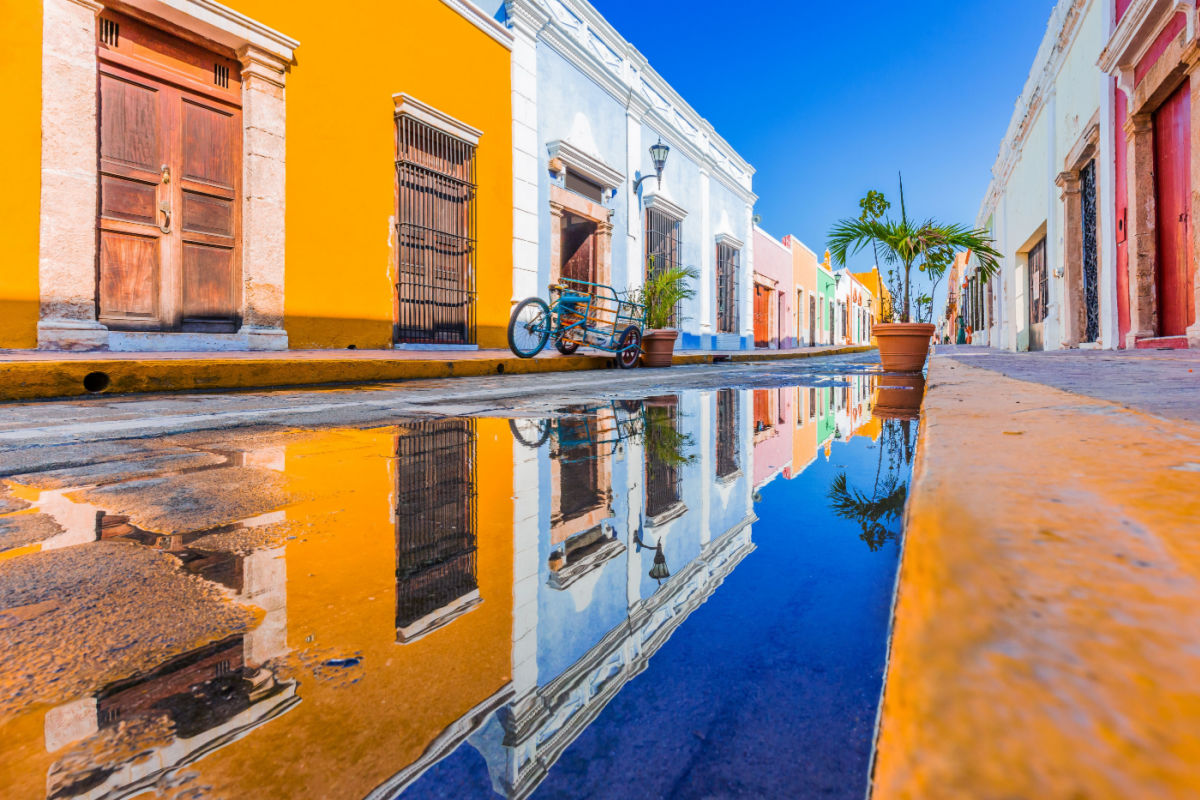
San Francisco de Campeche, called Campeche for short, is located in the second section of the Tren Maya route. It is known for its colorful colonial architecture, historic center, and nearby Mayan ruins.
The city is the only walled fortress in Mexico and one of its 35 UNESCO World Heritage Sites.
One of the best things about Campeche is that you can explore most of it on foot, and since it’s still relatively underrated, you will be able to find better prices and smaller crowds than other more popular destinations.
While visiting the city, you can wander through the historic center, have a meal on the pedestrian-only street Calle 59, stroll along the malecon (waterfront boardwalk), or visit one of its two fortresses: Fuerte San Miguel and Fuerte San Jose el Alto.
The fortresses are each located on small hills overlooking the city and the ocean, that you will need to take a taxi to get to. They both have a small fee to enter, which provides visitors access to their museums filled with information on how Campeche was built to protect itself from pirate invasions.
Outside of the city, Campeche is also known for its nearby Mayan sites of Calakmul and Edzna.
The latter is less than an hour outside the historic center and is said to be influenced by the family who built Chichen Itzá with its layout copying that of Mexico City’s famous Teotihuacán.
Two historically interesting reasons to visit, and if you need another reason, you can often find yourself wandering the site alone without the crowds of other locations.
Whether you stay within the walled city, adventure out to the ruins, drive to Bécal to see Panama hats being made, or head to the nearby beaches like Sabancuy and Isla Aguada, you will find that Campeche is one of Mexico’s hidden gems.
The locals, or Campechanos, which translates as hearty, kind, and cordial, are exactly that. It’s easy to see how this small city is set to explode in popularity.
Mérida
You may have already heard of Mérida, as it has been steadily growing in popularity over the last several years. It’s known for being one of the safest cities in the world, for its colorful colonial architecture in the historic center, and for its proximity to nature.
The announcement of the new Tren Maya has already spurred an increase in development and intrigue into Mexico’s White City, as it’s affectionately called.
The train station will be located near Mérida’s international airport and will have an electric tram to bring travelers into the new Gran Parque La Plancha. The park is set to contain an artificial lake, areas to relax, repurposed trains with places to eat at, and will connect travelers to the popular culinary row of Calle 47.
Once in the historic center, visitors can stroll along the pretty tree-lined Paseo de Montejo, a two-mile long street filled with cute cafes and restaurants.
On Sunday mornings, the city closes down one side of the street for the Biciruta, an event where you can rent a bicycle for 20 MXN per hour ($1 USD) and ride through the main plaza and into the cobblestone streets of La Ermita.
The historic center is a great place to wander around and take in the beautiful architecture, discover local shops, and find hidden speakeasies and restaurants.
One of the best things about Mérida is that you never know what you might discover behind a building’s façade as they often open into stunning interiors and leafy courtyards.
After exploring all that the city has to offer, travelers can adventure into nature. Within an hour of the city, there are a variety of beautiful beach towns like Sisal, Progresso, and Telchac Puerto.
You can visit flamingos in Celestun, swim in one of the many cenotes in Homún, tour an abandoned hacienda from the old henequen production days, or see an ancient Mayan ruin.
Mérida is a large city with a small-town feel that has much to offer. It comes as no surprise as to why this destination is going to continue to grow in popularity.
Izamal
The final station within the third section of the Tren Maya will be in the unique small town of Izamal, one of Mexico’s Pueblo Magicos.
Located in the state of Yucatán and only an hour and a half by car from Mérida, this town is the perfect stopping point for travelers on their way towards popular Quintana Roo destinations like Cancun or Tulum.
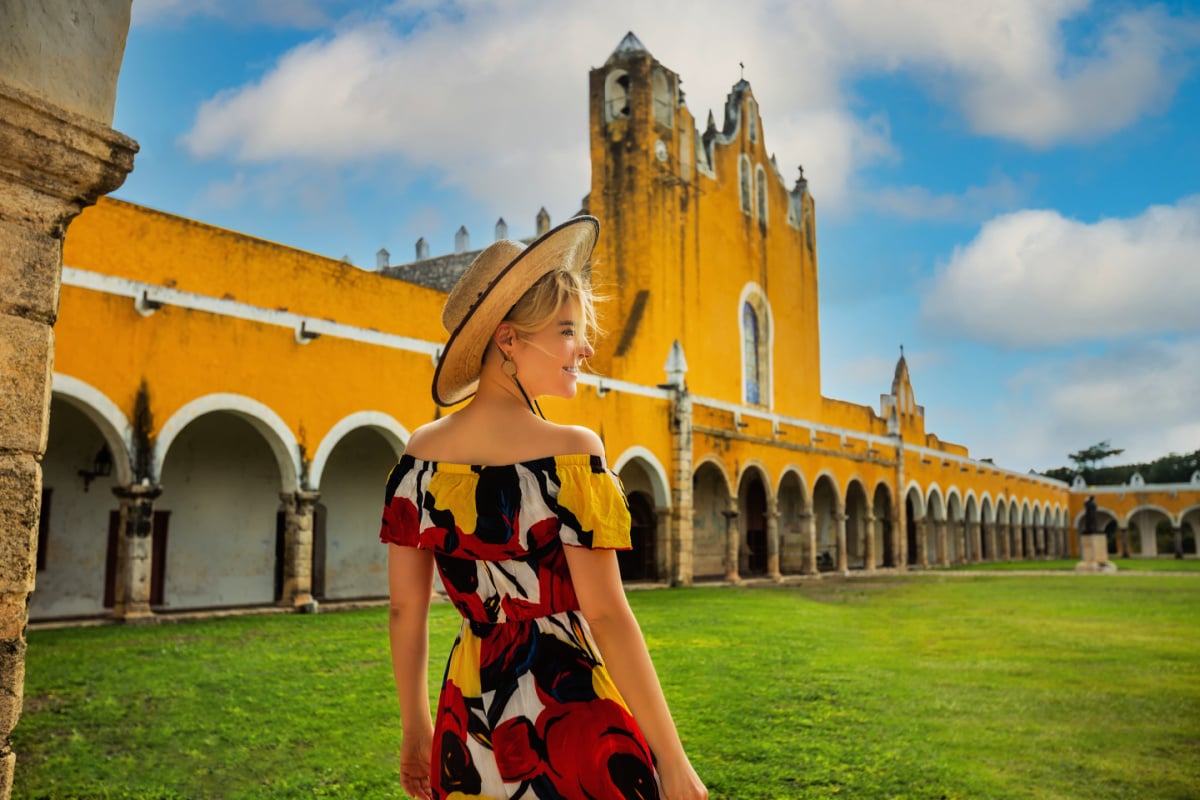
Izamal is famous for historic colonial architecture that is all painted the same color yellow. It’s hard to say for sure why this is the agreed-upon color scheme for the town. However, it is rumored to have been done for the visit of the Pope in the 90s or to honor the Mayan sun god of Kinich Kakmó.
Whatever the reason, these yellow buildings make for the perfect backdrop for photographers and social media enthusiasts. It’s almost impossible to take a bad picture in the adorable town.
Izamal is a safe and authentic Mexican town that can easily be explored in a day. Its main attraction is the Convento de San Antonio Padua containing the second-largest atrium in the world outside of St. Peters.
The other popular thing to do is to walk to the top of the Mayan Ruins of Kinich Kakmó. The entrance is free to the site, and the view from the top is amazing.
After a day of exploring the town and its artisan shops, a trip to Izamal wouldn’t be complete without stopping for a meal at the famous Restaurante Kinich, known for its local Yucatecan cuisine and freshly made corn tortillas.
Visitors can opt to spend the night in a local Airbnb, one of the surrounding haciendas, or continue on toward their next destination.
Valladolid
This small town has a decidedly European vibe to it and is famous for its proximity to Chichén Itzá. Its charm comes from its laid-back atmosphere and traditional colonial architecture.
Valladolid is great for a day trip or a weekend getaway. You can see all of its main attractions in one day. However, there are a lot of interesting destinations nearby as well.
As with any Mexican city, the Plaza Grande is always a must-see for its little shops, restaurants, and nightly cultural shows.
The most popular street in Valladolid is Calzada de los Frailes, or Calle 41A, which is home to some of the best boutiques and hotels, like the famous Coqui Coqui.
At the end of the street sits the convent of San Bernadino of Siena, an impressive church and fortress you are able to explore for only 30 MXN ($1.25 USD).
Valladolid is also a popular spot to explore some cenotes. These freshwater sinkholes or caverns come in a variety of shapes and sizes. Some are open to the air, some are relatively untouched, and others have been modified greatly for tourist appeal.
The town has its very own cenote that is only 10-minute from its centre. Cenote Suytun is one of the most Instagram famous cenotes, known for its man-made stone ledge and perfectly positioned hole in the cavern ceiling that illuminates it.
Other popular nearby attractions include: Ek Balam, a lesser-known Mayan ruin but easily one of the best sites to visit, and Las Coloradas, which is a small fishing village that has a salt field with pink lakes.
With the amount of things to see surrounding Valladolid and its close proximity to Cancun and Tulum, it makes sense that the new Tren Maya station will undoubtedly bring even more travelers to experience this beautiful little town.
Bacalar
The town of Bacalar is located in the state of Quintana Roo, just two hours south of Tulum and an hour from the border of Belize. It’s been a long-time favorite destination for locals but still remains relatively laid back and devoid of Mexico’s usual tourist crowds.
This is likely to change soon as the new Tren Maya station there will make accessing this destination easier than ever.
Bacalar is a Pueblo Magico best known for its “Lagoon of Seven Colours”, a lake that was originally formed by combining several cenotes and now offers many stunning shades of blue and turquoise.
The lagoon is pretty much the main attraction of Bacalar, and there are a lot of water-based activities to enjoy.
Renting a boat or joining a tour is the most popular way to experience the lagoon. The excursions are for 3 or more hours and take you to see the cenotes and the well-known Canal De Los Piratas. This small shallow waterway connects the Bacalar lagoon to another smaller lagoon and was once used as a trade route between Belize and Mexico.
Another popular activity is to spend the day at Los Rapidos, although not technically in Bacalar, it’s just a short drive away. The site is a narrow channel within the lagoon that is lined by stromatolites and mangroves and has a current you can float down.
To enter, you have to pay a 150 MXN fee ($7.50 USD) at the attached restaurant, and this allows you access for the entire day.
Some articles have been claiming that Bacalar is the new Tulum. With its sleepy laid back town and sparkling blue waters, it is bound to continue to grow in popularity.
If you’re looking for a place to unwind without the tourist crowds, then you need to head to Bacalar now before it explodes on the international scene.
Mexico continues to be a mega-popular destination, particularly for American travelers this summer. It’s always wise to check the latest travel advisories before packing up and boarding your flight.
While travel hasn’t slowed down at all to Mexico’s beach destinations, local officials in 3 of the most popular beach cities are increasing their security presence.
Crime is always a tricky topic because nobody knows when or what will happen. It’s just a general consensus of what has happened lately.
Unfortunately, certain crimes take over headlines and can make a very safe place seem like a bad idea to visit, which hurts local economies and deprives travelers of wonderful experiences.
The last thing a country that thrives on tourism would want is a bad image to deter tourists from spending their dollars.
While most would say Mexico is generally safe to visit in many areas, the country is not taking any chances to alter that narrative.
Mexico is increasing security forces in these 3 beach destinations to protect tourists:
Playa Del Carmen
Municipal President Campos Miranda is taking action to protect tourists in Playa Del Carmen. Not only will 20 elements be added to current forces, but she wants the Navy to create a stronger presence too.
This has happened once before, but the state of Quintana Roo overruled military strong-arming.
What is different now is more tourist areas are seeing an increase in crime, which not only makes tourists uneasy but has also sadly been fatal in rare instances.
It’s the classic “wrong place, wrong time” situation. According to Governor Lezama, head of the state of Quintana Roo, a minuscule percentage of tourists are actually victims.
The National Guard was deployed to Playa Del Carmen during a previous crime surge but has since left, but they are wanted back.
Whatever ultimately happens in the near future, tourists should know visiting Playa Del Carmen might look a little different with Navy ships in the background, more security officers, and the National Guard on patrol.
Cabo
Cabo is no stranger to adding security personnel to keep tourists safe. This is one of the most popular vacation destinations in North America, after all.
Crime goes up and down, but Cabo is well-positioned to keep its positive reputation. The summer season is here, which means travelers are scratching their itch for some beach time!
Cabo consistently assigns security enforces to ensure tourist safety, especially during a travel rush like Mexico is experiencing right now.
That’s why two dozen police officers are currently being trained and readied to keep Cabo as safe as it normally is.
One of the reasons Cabo is generally safe to visit is simply geography. It’s at the very southernmost point of Baja, separated by the Gulf of California away from mainland Mexico.
So, this region already had an edge compared to other Mexican hotspots. However, there are certain neighborhoods in Cabo not recommended for visitors:
Santa Rosa
Las Palmas
Los Cangrejos
Cancun
Cancun continues to be a top destination for Western tourists, with Americans and Canadians flocking here throughout the year.
Those who have not been to this extremely popular beach escape probably picture amazing resorts and blue water.
These expectations are very true, but they also might see a heavy presence of police and military cruising the streets in and around the tourist zone.
Cancun is one of Mexico’s most prized possessions, so any bad word that leaks out can cause harm. Tourists to Cancun should feel safe knowing they are priority #1 here in terms of safety.
It is estimated approximately 100 new officers are being trained to continue to keep tourists safe. But an additional 100 officers is the goal, according to Municipal President Ana Patricia Peralta.
Cancun is not known for being a city with high numbers of crime, but sometimes tourists can be caught in the crosshairs of a bad situation.
Most often, violent crime stays outside the hotel zone, away from popular tourist attractions. With a higher-than-usual police presence expected, the likelihood of severe criminal acts taking place should decrease even more.
Vacationers might notice an increase in security cameras, drones, and watchtowers throughout the city later this summer as well.
Cancun is still the number one destination for Americans taking an international vacation this year, surpassing popular tourist hotspots like South America and Mediterranean Europe.
Famous for its world-class resort strips, which straddle the turquoise ocean, and unparalleled luxury scene, the city has seen a record surge in bookings for the June-August period.
If you’re one of those people who couldn’t resist spending another year in the Riviera Maya, but you’re now craving for something more than just lounging by the pool all day sipping mimosas, and you’ve made it your goal to have a more authentic Mexican experience this time, we’ve got you covered.
Here are 4 incredible small towns near Cancunwhere development is more limited and that still feels like the Mexico ‘of old’:
Valladolid
Population: 56,494
Distance driving from Cancun: 2h09
Valladolid is a great option for a weekend getaway if you’re hoping to witness firsthand a colonial-era settlement where centuries-old customs are maintained.
Originally settled by the Mayans, Valladolid was captured by the Spanish in the mid-16th-century, who named it after an already-existing city in Spain, and it would be under the control of the colonizers that it would flourish as an important trading and cultural hub in the Yucatan Peninsula.
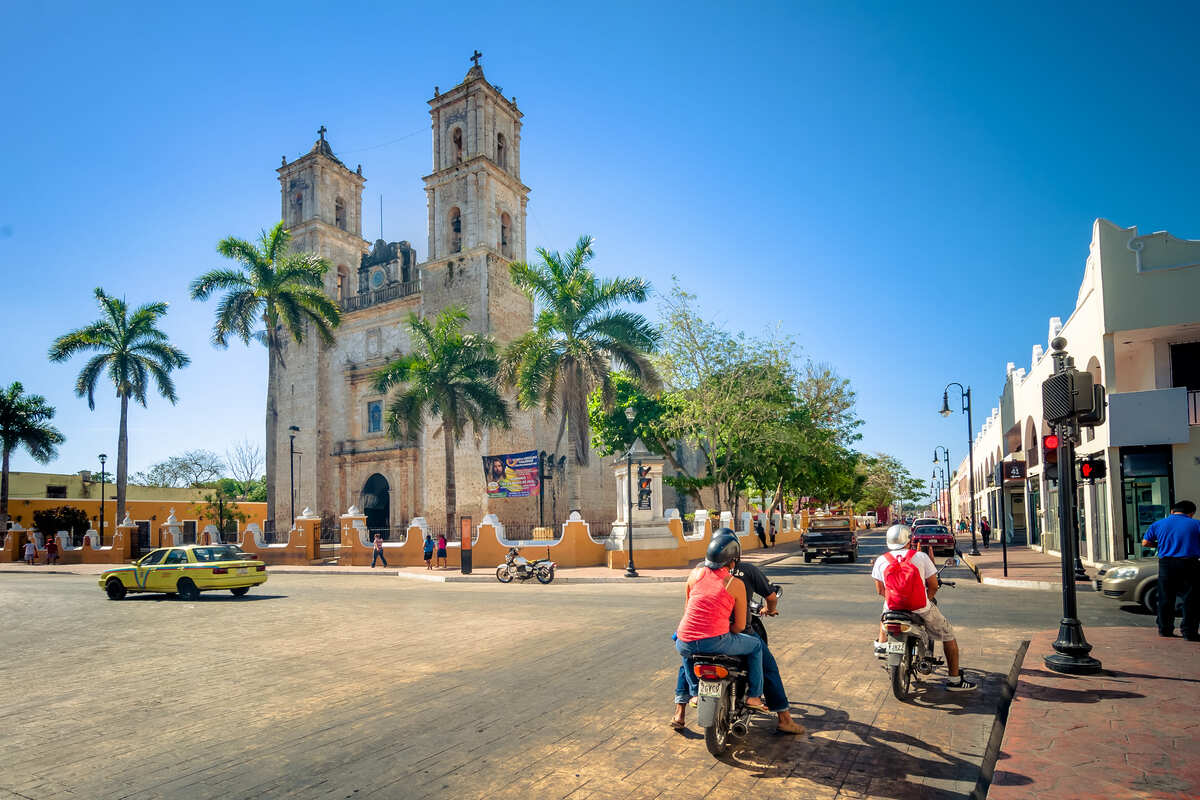
Tourists often pinpoint the beautiful Cathedral of San Servacio, towering high over the town square, and Valladolid’s well-organized grid-like structure, a remnant of the Spanish period, as some of the main landmarks to be seen.
Within short driving distance of the town, there are a handful of world-class attractions, including one of the seven New Wonders of the World, the Mayan archaeological complex of Chichen Itza, and the pristine Cenote Zaci, which unlike other swimming pits closer to Cancun, such as Cenote Azul and Cenote Dos Ojos, receives very few tourists.
Felipe Carrillo Puerto
Population: 25,744
Distance driving from Cancun: 2h45
Less than three hours driving South of Cancun along the coast, Felipe Carrillo Puerto may take its name after a Spaniard, but it remains a quintessentially Mayan enclave in essence.
Sitting on the edge of the famous Sian Ka’an Reserve, yet relatively unknown to most day-trippers, it is one of a handful of towns in the overtouristed Riviera not yet ruined by over-development, and a ‘family first,’ traditional community where Mayan dialects continue to be spoken by some locals, besides Spanish.
The linguistic heritage is, in fact, a huge part of Felipe Carrillo Puerto’s tourist offer, with a visit to the Na’atik Language and Culture Institute ranking as the number one to-do activity on TripAdvisor.
It is credited with helping keep Mayan culture alive and bridging gaps between foreigners and locals.
The town is also home to the Holy Cross Catholic Church, an important part of post-colonial Mayan History, and the folk Museo Maya Santa Cruz Xbaalam Naj, a free museum chronicling the History of the natives during the Caste War when the Mayan populace revolted against Hispanic settlers.
Izamal
Population: 15,101
Distance driving from Cancun: 3h53
Yet another treasure of the state of Yucatan, easily reachable from Cancun, in the neighboring Quintana Roo, Izamal is a postcard-ready ‘yellow city’ that’s been stealing the hearts of visitors for years now.
It is the furthest one out, at just under 4 hours of driving, but it can be toured as a day trip if you time wisely, though it is best visited as an overnight destination.
Stroll its cobbled streets, flanked by vibrant-colored buildings dating back centuries, and you’ll be transported back to the 16th century when the Spanish first made landfall and chased the native Mayans out of the land.
Though at least five pre-Columbian structures are visible in Izamal to this day, including a Mayan pyramid, the main attraction on site is the Franciscan Monastery, with an open atrium second in size only to the Vatican’s.
El Cuyo
Population: 1,567
Distance driving from Cancun: 2h36
The smallest settlement on this list, El Cuyo, is a quaint spot on the shores of the Caribbean that has successfully eluded city planners and international brands.
Located in the state of Yucatan but only two and a half hours away from Cancun, it was recently named by The Cancun Sun, the largest independent website on Riviera Maya news, a ‘traveler’s paradise’, and we’re inclined to agree.
Described as having sandy streets and a ‘fishing village ambiance’, it offers resort guests basing themselves in Cancun a much-needed escape from the agitated atmosphere of the chaotic metropolis and its tourist-filled sands.
El Cuyo may lack the Riviera Maya’s more advanced infrastructure, but it’s made great strides towards improving its attractiveness to guests in recent years, from the investment in better internet connectivity to the opening of ten boutique hotels and preservation of the town’s beaches.
Soon enough, El Cuyo could be inscribed on Mexico’s list of Magical Towns, recognized for their historical significance and/or inestimable value to the tourism industry.
Many travelers who consider going to Mexico opt for the more trendy destinations over finding somewhere new.
Depending on whether they are looking for a fun beach vacay or wanting to immerse themselves in Mexico’s beautiful culture, they may choose places like Oaxaca, Cancun or Mexico City.
The latter has become quite a trendy place for travelers in recent years. Those who come to the capital of Mexico will also be in close proximity to an overlooked gem.
Puebla is a city within approximately a 2-hour drive. Those who have already discovered Puebla’s magic often consider it to be a day trip or weekend getaway from Mexico City.
There is so much to explore here, so those who have only stayed for a short time are cutting themselves short on what this charming, historical city has to offer.
The City Of Puebla
A simple search online about Puebla will result in multiple weekend guides and how to take the perfect Instagram photo with the backdrop of Puebla’s infamous volcano, Popocatépetl.
The problem with that is there is more to experience in just two full days! The endless food options would be almost impossible to take in on a 48-hour trip.
Puebla is also the name of the state, but the city of Puebla is the main gastronomical hub of the region.
This area of Mexico is home to some of the most authentic traditional Mexican cuisine known to man.
According to the Minister of Tourism in Puebla, “The state’s capital is the second municipality with more museums in Mexico, and gastronomy is our heritage with Chiles en Nogada, Rib Mole, and Mole poblano, among many others.”
To truly get a taste of all the culinary offerings here, one would need to stay for an extended time.
Two of the more common food items on local menus are Mole Poblano and Chiles en Nogada, which might have foodie travelers salivating from looks alone.
Mole Poblano typically derives from turkey, chocolate and a mix of various peppers totaling dozens of ingredients.
Chiles en Nogada is a vibrant dish that is a signature staple of Puebla. It is made from locally sourced ingredients, such as poblano peppers and a unique sauce made from nuez de Castilla.
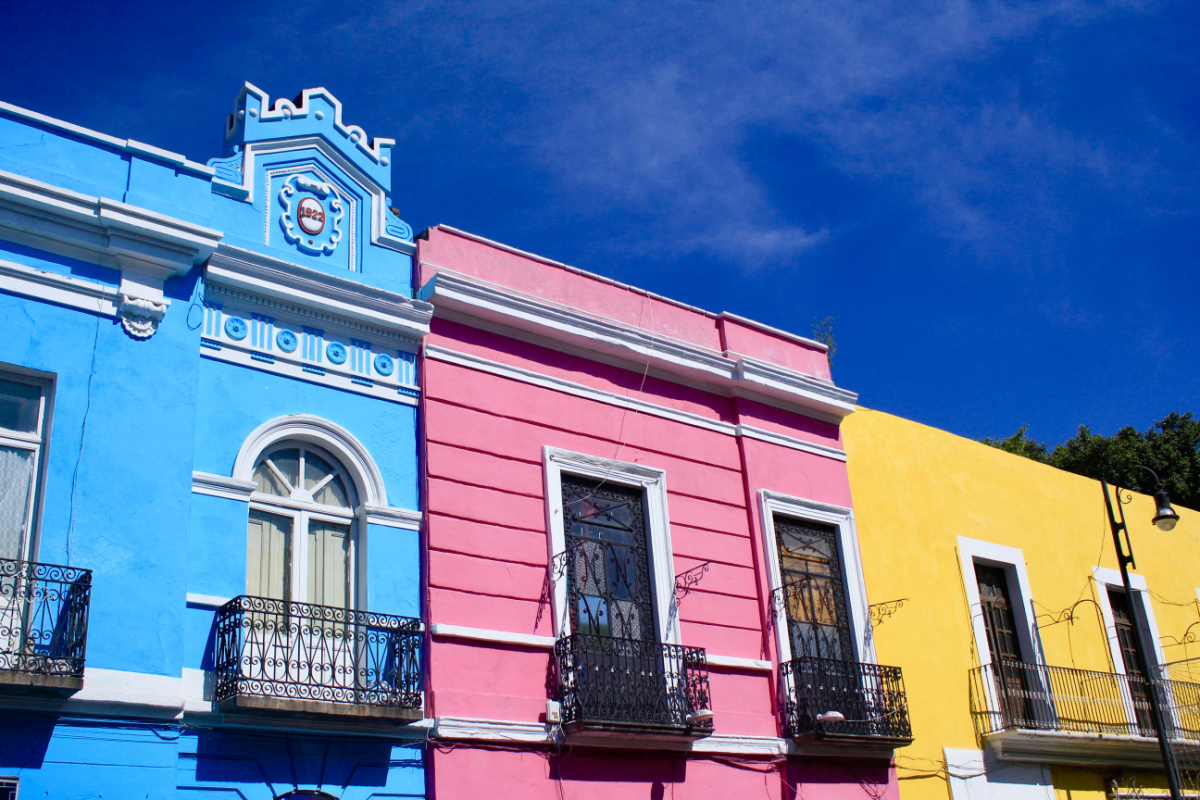
It might be advised to wander the colorful streets of the city before eating as it would be extremely hard not to indulge in the spectacular flavors of Puebla.
The city itself is a proud historical destination and a UNESCO World Heritage Site as it was a highly important piece of Mexican history dating back all the way to the 16th century.
Back then, over 280 temples were constructed to satisfy various sects of religious beliefs. Travelers will find some beautifully preserved architecture still standing today across the region.
Visitors to the city will find a vast array of comfortable hotel options ranging from high-end hotels to remodeled boutique accommodations in the historic buildings.
Many are located near the city’s main museums to gain a better understanding of how Puebla came to be what it is today.
Beyond The City Limits
While there is nothing wrong with spending the majority of time in the city of Puebla, travelers would be remised if they didn’t take time to explore some of the region’s Pueblos Magicos.
There are 10 Magical Towns worth seeing:
Huauchinango
Xicotepec de Juarez
Chignahuapan
Cuetzalan
Cholula
Atlixco
Zacatlan
Tlatlauquitepec
Tetela
Pahuatlan
Each town is unique in its own way and acceptable for all ages. Cholula might be the most well-known as it sits toward the base of the picturesque Iztaccíhuatl and Popocatépetl volcanoes.
Sadly, there is no Cholula hot sauce factory to tour as the popular condiment has no relation to the town.
What travelers will find is a small community happy to have them visit and be able to explore important landmarks, such as pyramid ruins and numerous colonial temples.
Many visitors come for the scenic nature of the state of Puebla. Not only is there gorgeous scenery outside the city limits, but travelers will also find the culinary scene is still superb on the outskirts.
Those wanting a taste of neighboring Oaxaca can easily double dip in Mexican culture through this loophole.
Tour guides take travelers to the nature reserve of Tehuacán-Cuicatlán, a region neighboring the state of Oaxaca.
Here, tourists will get to experience expansive food options. Through Mezcal Aislados, traditional alcoholic beverages as well.
Mezcal is a pillar of Oaxacan culture. Travelers can get a taste of the agave-based booze without stepping foot in Oaxaca while also taking in Puebla’s natural beauty.
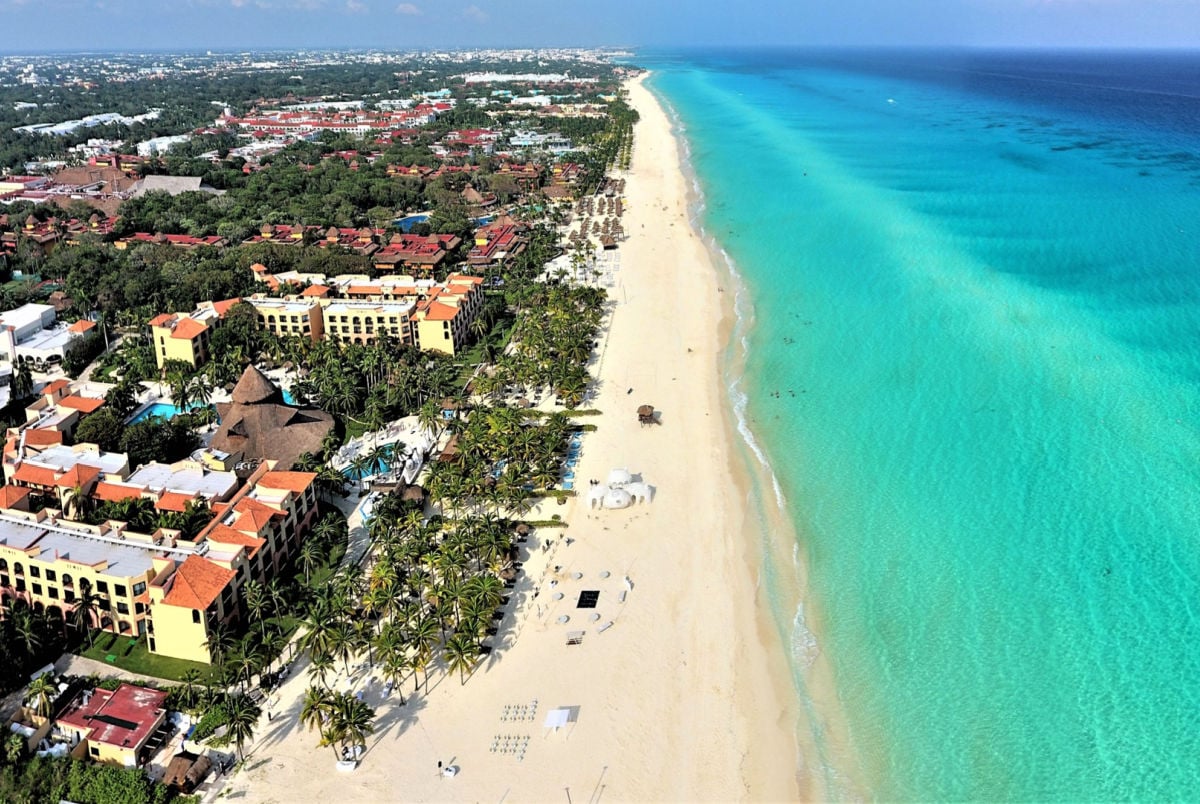
It’s not hard to see why the Mexican Caribbean is one of the world’s top-selling vacation packages worldwide: from Cancun to Chetumal, it boasts a stunning coastline bounded by the most translucent of waters, bestrewn with ancient Mayan sites and luxurious resorts.
Due to the area’s popularity, however, beaches can get a bit crowded, particularly in Northern Quintana Roo, closer to Cancun, where a majority of international tourists land, not to mention the sargassum situation, which worsens with every passing year.
Fortunately, there are still some pristine swimming spots to be found that are not only free of overtourism but that are also known for their striking beauty:
Punta Maroma Is One Of The Most Beautiful Beaches Close To Cancun
Punta Maroma is a sandy strip located 35 km from Cancun, south of the far more popular resort zone Puerto Morelos. It is considered by many the Mexican Caribbean’s best-kept secret due to its relative remoteness.
Unlike Playa Marlin or Playa Delfines, which are popular day trips for vacationers basing themselves in Cancun’s jam-packed Hotel Zone, Maroma is not as famous, despite being on the Highway 307 route, part of the tourist zone commonly known as Mayan Riviera.
Although it is certainly not development-free, it lacks the crowds and riotous nightlife that have transformed numerous sunny hotspots for the worse. Instead, Maroma is surprisingly quaint, having been named one of the most beautiful beaches in the Mexican Caribbean by México Desconocido.
According to the local travel publication, due to its distance from central Cancun, the sands are ‘almost virgin’, allowing visitors who venture this far out to experience a different side of Mexico, where they can find peace and enjoy their beach day ‘calmly’.
A Crowd-Free Tropical Oasis
Other than walking the soft, warm white sands and swimming in the crystalline waters, they can practice diving and try and spot marine life, which includes dolphins, sea turtles, and other emblematic species that inhabit the Riviera.
Among other activities available, tourists can go on a 4×4 or horseback tour of the dunes, hike in the jungle enclosing the beach, snorkel, or fish, though the latter will require renting the necessary equipment and obtaining permission from beach authorities on-site.
If you’re hoping to relax, bury your feet in the sand, and have a stress-free afternoon, you can do that too: the magazine mentions ‘excellent’ restaurants and spas in neighboring hotels. TripAdvisorlistsSecrets Maroma, El Dorado Maroma, Catalonia Playa Maroma, and Belmond’s Maroma as some of the best resorts on the premises.
For a unique experience, guests who are either traveling solo or as a couple can book a rustic overwater bungalow in an all-inclusive, adults-only five-star resort.
Beach Access Is Not Free
While the beach is indeed a tropical oasis shielded from mass tourism, its seclusion is definitely not free of charge: there are no public access points, meaning only resort guests or those who purchase a day pass at one of the resorts are permitted entry.
When it comes to accessibility, Punta Maroma can easily be reached by taxi or car, but public transportation options may be more limited. One-way transfers cost, on average, USD $20 from Playa del Carmen and between USD $60 and USD $80 from Cancun.
Visiting with a rental car, tourists must take Highway 307 towards Chacala on the Cancun-Tulum route. Alternatively, those staying in a local resort can contact the concierge about arranging a shuttle from Cancun International Airport, some 35.3 km away.
Guided tours and excursions leaving from Cancun and other departure points along the Riviera are also an option. For instance, this USD$150 scuba-diving tour by Maroma Adventures will grant you access to the beach, as well as its protected coral reef. Hotel pickup is usually offered.
You can find out more about the Mexican Caribbean’s many off-path gems here.
This week, Mexico’s reputation as a safe tourist destination was challenged once more following the kidnapping and murder of two U.S. citizens who had just crossed the border in Matamoros.
The grave incident is the first of its kind to make headlines in months, but it’s been enough for Mexico to come under the scrutiny of the U.S. media – yet again.
As the situation gets out of hand, with Texan authorities going as far as advising citizens not to travel to Mexico as it is ‘too dangerous‘, the Mexican President has decided to step in and address Americans himself, claiming Mexico is ‘safer’ than the United States.
This is not the first time the local Government has criticized the media’s tone when reporting crime in Mexico, but it seems as if things have reached a tipping point:
What Happened Exactly?
On March 3, four South Carolinians entered Mexico via land at the Matamoros checkpoint in the state of Tamaulipas.
Matamoros is a popular destination for medical tourism, but it is also a border town plagued by violence and mysterious disappearances.
It is where Mark Kilroy was abducted and killed in 1989, and numerous other violent crimes took place.
Only hours after crossing the border, their van was intercepted by attackers wearing protective vests, who went on to fire at the vehicle and kidnap them.
Mexican forces were able to rescue Eric Williams and Washington McGee alive, but their friends Shaeed Woodard and Zindell Brown were found dead in a roadside shack on a dirt track leading to Playa Bagdad.
The captors are believed to be connected to a local gang that operates in the area and may have mistaken the Americans for their rivals.
It is worth noting investigations are still ongoing, but much like Kilroy’s gruesome murder in the eighties, this violent abduction has soured diplomatic relations between the United States and Mexico.
Mexico And The U.S. Enter New Diplomatic Feud
The U.S. Department of State promptly renewed its travel warning advising Americans to avoid ‘certain parts’ of Mexico, including Tamaulipas, where ‘violent crime – such as homicide, kidnapping, carjacking, and robbery – is widespread and common‘.
Canada joined in and issued its own warning, reminding citizens that levels of crime are ‘high‘ throughout Mexico.
Republicans in the States took a step further and called for military intervention into Mexico’s gang activity, with Sen. Lindsey Graham, R-S.C. stating that if Mexico ‘does not get tougher’ and accept military aid, then it is an ‘enemy’ of the United States.
Responding to the serious allegations, Mexican President Andrés Manuel López Obrador, or AMLO, claimed his country is ‘safer’ than the U.S. and that ‘there is no problem with traveling safely around Mexico’.
Obrador denounced an ‘anti-Mexico’ campaign by Conservative American politicians and threatened to urge Mexican Americans not to vote Republican should the criticism continue.
He went on to affirm that both American tourists and expats living in Mexico are ‘well aware’ of how safe the country is. Otherwise, they wouldn’t be making the move South in record numbers.
Indeed, Mexico has recently been namedthe best country for Americans moving abroad in a report published by InterNations.
Offering further comments, AMLO asserted that, were the U.S. warnings to be followed strictly, Americans would only be able to travel to two states in Mexico: Campeche and Yucatan, as they are the only ones listed as Level 1, or ‘safe’ destinations.
‘So, what is happening? Why the paranoia?‘, he retorted when questioned about the alleged security crisis during a press conference.
AMLO Accuses U.S. Politicians Of Being ‘Anti-Mexico’
Answering the repressive remarks by U.S. politicians, Obrador concluded that ‘this is a campaign against Mexico by Conservative politicians of the United States who do not want the country to continue transforming for the good of Mexicans‘.
Last year, a record number of international tourists vacationed in Mexico, bringing in tourist dollars and helping accelerate development.
30 million were recorded in Cancun alone, while several other tourism hubs, both in the sunny Yucatan Peninsula and beyond, set new arrival records, and security standards have been surprisingly high.
Between January and September 2022, only one kidnapping case was reported in Quintana Roo, the number one destination for Americans going South of the border.
Security efforts were also ramped up, with the Marines, the National Guard, and local police deployed to beach areas and tourist zones in order to ensure public order.
Mexico has been spending millions of dollars on the modernization of the country and strengthening of security, so it’s no surprise AMLO is clapping back hard at critics.
Is Mexico Actually Safer Than The United States?
Mexico’s tourist cities are very safe for American visitors.
The likes of Cancun, Mexico City, Puerto Vallarta, and Los Cabos, only to name a few, all enjoy a low level of crime and extensive surveillance, and despite the occasional incidents, which are to be expected as these are very populous cities, the vast majority of visits to Mexico are trouble-free.
According to data shared by SECTUR, the Mexican Secretary of Tourism, 66 million international visitors arrived in the country in 2022, a sizeable percentage of those being Americans looking for some sun and sand.
Out of tens of millions, only 25 U.S. nationals were killed in Mexico last year, the lowest figure in about two decades.
With that being said, Mexico’s murder rate continues to be around four times higher than the U.S. average, at 28 for every 100,000 people (as verified by the World Bank).
Nevertheless, the national average often does not reflect the reality on the ground in many cities, particularly places like St. Louis (Missouri), where the cost of crime per capita is exceedingly high.
The same applies to America’s southern neighbor: some crime hotspots and non-touristy border zones may lead to an ‘inflation’ of the crime rate, but in actuality, any of the major cities and tourist destinations in Mexico are just as safe as large metropolises and urban centers in the U.S. — and unlike the U.S., where crime and gun violence continues to surge, Mexico’s homicide rate fell by about 7% in 2022.
Of course, there are parts of Mexico that can be quite dangerous, and Americans should indeed avoid them, but there are also others where security barriers are close to impenetrable, and crime rates are low — at times, much lower than the U.S. average.
Overall, Mexico is comparatively safe for tourism as long as you avoid no-go zones and follow safety advice where needed.
Mexico, in general, is becoming extremely popular amongst expats and digital nomads. Its mild weather, affordability, and diverse natural beauty make it ideal for a laid-back and easygoing lifestyle. In recent years, Mexico City has become a major hub for digital nomads, and Tulum has been attracting beachgoing crowds for a while.
However, there’s one small town on the Pacific Coast that is relatively unknown outside of the backpacker and digital nomad community.
Puerto Escondido, literally meaning “hidden port,” is an up-and-coming beach town on Oaxaca’s Pacific coastline known for its surf spots, relaxed atmosphere, and vibrant nightlife. Its beautiful beaches are lined with boutique hotels, surf schools, and seafood restaurants.
Visitors express that they like how calm and uncrowded it is. Many who plan to visit for a short time end up staying for much longer. Although it has flown relatively under the radar to the masses, Puerto Escondido is starting to appear more and more on social media and in travel publications.
Here are some of the reasons Puerto Escondido is one of the favorite spots amongst digital nomads in Mexico:
Laid-back Atmosphere
Digital nomads love Puerto Escondido because of its laid-back beach vibe, excellent surf opportunities, and incredible natural beauty. Aside from its gorgeous beaches and lush jungles, visitors mention friendly locals and a lack of pushy vendors.
Accommodations are usually smaller boutique hotels, coliving spaces, and surf hostels. Big resort hotels have not yet invaded the beaches, although this is a worry for those who fear that Puerto Escondido will become the next Tulum.
Being that the crowd is mostly backpackers and digital nomads, it’s not bringing in tourists on a short holiday. Even during busy times, it is said that it is far less crowded than other popular beach towns in Mexico.
Puerto Escondido has plenty of things to do when you close your laptop for the day. Of course, surfing is the number one activity, but if you’re not a surfer, you can relax on one of the many beautiful beaches, take a boat tour, or take a jungle hike to find waterfalls.
One popular event that happens every evening is the baby turtle release. Volunteers can participate in this unique opportunity and learn about the conservation of turtles in the area.
Nightlife
Although the relaxed beach atmosphere is one of its draws, Puerto Escondido also has a vibrant nightlife. There are plenty of bars, clubs, and restaurants to choose from.
There are lively beach bars, great music, and delicious food. You can find activities such as live music and karaoke, or just sit back and relax, enjoying a cocktail and the stunning sunset.
Affordability
Compared to many other popular beach towns, Puerto Escondido is considered much more affordable. It is smaller, a little off the beaten path, and brings in far fewer visitors than, for example, Tulum.
Accommodations and restaurants have a more local feel, rather than the big resorts and franchises elsewhere. With the cost of living relatively low, it is an ideal place to live and work remotely.
Great Base For Day Trips
Nomads and slow travelers often have a “home base” that they will then make shorter trips from during weekends or days off. Puerto Escondido is a perfect place for this, as there are so many amazing locations nearby.
Mazunte and Zipolite are two such places where you can find even more pristine and secluded beaches.
You can also head to the Punta Cometa viewpoint to get some amazing views of the Pacific Ocean.
Another popular option is to visit the Manialtepec Lagoon to see bioluminescent plankton or the Chacahua Lagoon for mangroves, wildlife, and the crocodile hatchery.
It’s important to note that while many cafes and coworking spaces are popping up throughout the little town, it is somewhat rural, and the internet can be slow and unreliable compared to what most digital nomads are used to. If you plan to spend some time here, be sure to familiarize yourself with coworking space options and have a backup internet source like a data plan or portable hotspot.
This Winter, many American travelers have been flocking to the Caribbean to escape snowstorms and freezing weather with the hope of finding comfort and more fun at the warm and beautiful beaches of Cancun. But there is another special destination that is getting a lot of attention for its beauty and advantages — Isla Mujeres.
This spectacular island in the Mexican Caribbean used to be a popular destination for full-day tours from Cancun and Playa del Carmen, but now more visitors have been extending their stay, and the island has been experiencing a boom in tourism this year.
Isla Mujeres has a lot to offer, and here are a few reasons why travelers are falling in love with this destination:
Sargassum Free BeachesIn The Mexican Caribbean
Imagine saving money for months or years to avoid the cold winter and enjoy the crystal blue waters of Cancun and instead finding miles and miles of shoreline covered in smelly brown algae. That’s what many visitors have been experiencing in the Mexican Caribbean for the past few weeks.
Unexpectedly, this winter, the unpleasant sargassum seaweed has been arriving off-season in Cancun and its surroundings. The sargassum’s peak season is usually between April and October, and now tons of this algae are already being cleaned and removed from shorelines.
Fortunately, Isla Mujeres is usually free from sargassum and has become travelers’ best bet when it comes to finding sargassum-free beaches. There are a few beaches where travelers might encounter this seaweed, but its most beautiful beach, Playa Norte, is usually clean and ready to become any traveler’s paradise.
Getting to Isla Mujeres usually involves a boat activity. International visitors arrive in Cancun and then take a 15-minute ferry ride—which costs around $15— to get to the island. And the journey is absolutely beautiful.
For those who just want to relax in paradise after their trip, Playa Norte is considered the best beach in all of Mexico — with beautiful white sand and warm blue calm waters. The perfect weapon against stress. But there are also great bars, restaurants, and cool places to visit.
Visitors can rent a bike or a golf cart to explore the island — which is only approximately 5 miles long — go shopping, compare beaches, and grab a bite at any of its tasty restaurants.
Travelers can also snorkel and admire an amazing underwater museum with large sculptures and colorful fishes nearby. There are also different tours and beach clubs available with activities for all kinds of travelers.
New Hotels And Beach Clubs
International travelers’ interest in Isla Mujeres has made more hospitality companies invest in this island. There are resorts and hotels for all budgets and with a great reputation, such as the 5-star hotel Mia Reef or the hostel and beach club Nomads Hotel. Just a few months ago, Secrets announced a new adults-only all-inclusive resort in Isla Mujeres, Secrets Impression Isla Mujeres, featuring 8 restaurants, 9 bars, a spa, and four pools.
There are also great beach clubs available, such as the exclusive Green Demon Beach Club — travelers recommend making a reservation in advance — or the Guru Beach Club with great pools and beach access, where travelers can enjoy an amazing day with pleasing amenities in front of a gorgeous beach.
Perfect For Special Events
Isla Mujeres has all the best ingredients for a unique vacation and an unforgettable life experience. This is probably why it has also been a popular wedding destination. In 2022 there were 56% more weddings compared to the previous years, and authorities expect to see even more celebrations in 2023.
At the moment, there are special events for carnival celebrations—which had been suspended for two years due to the pandemic— and local authorities and organizers are hosting a big celebration under the theme “Soy Caribe” (I am Caribbean, in English). Travelers visiting Isla Mujeres at the moment will get to enjoy special activities like concerts, local king and queen crownings, and more.
Travel to Mexico is more popular than ever before. In 2022 alone, more than 20 million international tourists visited Mexico, with over 13 million coming from the United States. So what are the best Mexican towns that are under the radar?
With the majority of visitors flocking to the popular resort areas of Cancun, Los Cabos, and Puerto Vallarta, it is not surprising that those areas are frequently at capacity and full of tourists.
But Mexico is so much more than tourist-centered beach towns and all-inclusive hotels. If you are interested in exploring more of Mexico and don’t know where to start, why not try one of these culturally rich under the radar Mexican towns this year?
Guanajuato City
Guanajuato City is a vibrant, artsy, colonial city in central Mexico, about 5 hours from Mexico City. It has long been a popular destination for Mexicans and has recently been gaining popularity with international tourists. Packed with cobblestone streets and colorful buildings, Guanajuato City is begging visitors to wander and explore.
Visitors to Guanajuato City enjoy snapping romantic photos in the Alley of the Kiss, taking in the sights during a walk down Calle de Sopeña, and exploring the old mining tunnels under the city. Tourists who enjoy the darker side of life have options too. Popular dark tourist sites include the Museum of the Mummies and the haunted Calle del Truco.
Pátzcuaro
The charming colonial town of Pátzcuaro in the state of Michoacan is a popular Day of the Dead destination for domestic and international tourists. Each day, artisans, greengrocers, and food vendors set up fantastic markets throughout the town. Additionally, visitors can shop in Casa de los Once Patios and buy snacks and souvenirs straight from the producers.
Lake Patzcuaro and its picturesque Janitzio Island are just north of the town center and are popular day trips for visitors. The island is topped with a giant statue of Jose Maria Morelos, a revolutionary hero whose likeness you can climb up and take in spectacular views of the surrounding lake and towns.
Comitán de Dominguez
Comitán is one of four Pueblos Mágicos in Chiapas, and it is one that truly lives up to its reputation. Packed with museums, incredible food, and a colorful and welcoming town center, Comitán is a great place to visit. Its location in southern Chiapas also makes it a great base for exploring other nearby sights.
Visitors who spend time in Comitán rave about the food at the many street vendors and restaurants throughout the town. The museums are also popular with tourists and are a great way to learn more about the region’s culture and history. Most popular is Dr. Belisario Dominquez’s Home Museum, which tells the story of its famous past resident and town hero.
San Cristobal de las Casas
Just a 2-hour drive north of Comitán is the city of San Cristobal de las Casas. This medium-sized city is home to some well-preserved colonial architecture and offers a diverse array of activities. From city sightseeing to exploring beautiful nature, San Christobal has it all.
Fit visitors enjoy the 100-step climb to quaint Guadalupe Church, where they have views of the entire city. Also popular with adventure seekers is El Arcotete park, with beautiful hiking trails, caves, and a river to explore. Additionally, nature lovers enjoy visits to the botanical gardens, where they can learn all about the plants native to the area.
Tepoztlán
46 miles south of Mexico City is the mountain town of Tepoztlán. Located in a gorgeous alpine setting 5,380 feet above sea level, this diverse and welcoming town is worth a visit. Its beautiful natural environment is known as a place for healing and rejuvenation, making it a great place to reset and recharge.
Visitors love the food and artisan markets in Tepoztlán in the town’s colonial center. Also popular is a visit to Piramide del Tepozteco, a nearby Aztec archaeological site that overlooks the valley. But one of the main reasons many visit the town is for its renowned health, well-being, and alternative therapies, including massage, Reiki, and Temazcal, an Aztec steam bath therapy.
Campeche City
Located on the opposite side of the Yucatan Peninsula from Cancun, UNESCO-listed Campeche City is a great place to explore. Situated on the Gulf of Mexico, this city is full of rich history and nightlife and is a great base for exploring the surrounding area. The city’s old town is a rainbow of colors, making it a photographer’s delight.
Many of the city’s historic homes have been converted into boutique hotels which are very popular with visitors looking for unique accommodations. Tourists also rave about the nightlife in Campeche with its lively bars and open-air salsa parties.