Tag: Moving

  • Remote Workers Don’t Need A Digital Nomad Visa Moving To These European Countries

    Remote Workers Don’t Need A Digital Nomad Visa Moving To These European Countries

    [ad_1]

    Share The Article

    Last Updated

    Now that digital nomads are taking over the scene, numerous countries around the world have begun relaxing immigration rules to better accommodate them, whether it’s treating them as long-term tourists and offering tax exemptions or launching Digital Nomad Visas (DNV).

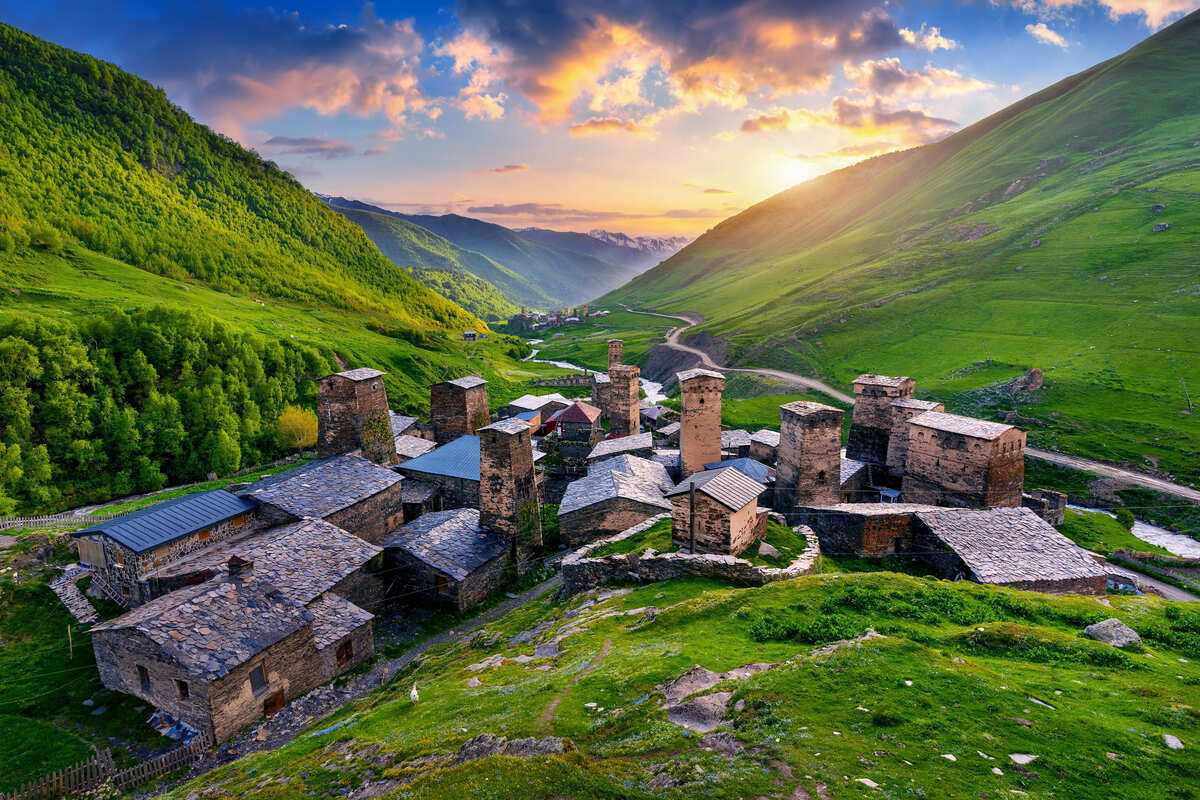
    Ushguli Village Dotted With Medieval Historical Towers In Northern Georgia, Caucasus, Eastern Europe

    Europe is at the forefront of this exciting trend, with an ever-expanding list of nations announcing DNVs, but while this is great news for remote workers looking to relocate, wider availability of visas does not necessarily mean they are easy to apply for.

    With higher financial thresholds to be met, their DNVs are some of the hardest to obtain, but not all European nations are establishing strict eligibility requirements. In fact, 3 of them allow nomads to remain as tourists for extensive periods of time without having to worry about visa rules at all.

    If you’re a U.S. passport holder traveling full-time, all you need is a valid passport to relocate, only if temporarily, to these destinations:

    The United Kingdom

    Victorian Era Manchester City Hall In Manchester, Northern England, United Kingdom

    One of the top 4 European destinations Americans want to visit the most, the United Kingdom has a surprisingly relaxed border policy, taking into account the country’s reputation for taking control of its own borders very seriously.

    Unlike the confusing 90/180-day rule which applies to Americans entering the Schengen Area, the U.K. grants visitors leave to remain for up to six months following each new entry. This means a U.S. citizen will not be expected to leave after only three months in the country.

    Once the 6-month period is up, a U.S. passport holder can, in theory, exit the territory, spend a day in a neighboring country such as France, and return to Britain immediately after that. As long as they never stay for longer than 180 days following each entry, they will continue on the right side of the law.

    Top 5 Travel Insurance Plans For 2023 Starting At $10 Per Week

    Kilchurn Castle In The Isle Of Skye, Highlands Of Scotland, United Kingdom

    For example: entering the U.K. on June 1, 2023, you will be granted permission to stay continuously until December 1, 2023. However, should you take a day trip to France* on September 1, returning on September 2, a new six-month reference period will start from that date, allowing you to remain in the country until March 2, 2024.

    Non-residents are advised against living permanently in the U.K. through various consecutive visits, as border authorities could be suspicious of your intentions, but it is possible to have a temporary home base in Britain as you explore Europe without worrying too much about complex visa rules.

    The U.K. is a collective of four historic nations: England, Scotland, Wales, and Northern Ireland, and there is a lot to explore outside of London.

    *Day trips to Ireland will not reset your clock, as both Ireland and the U.K. form a single Common Travel Area, where border checks mostly do not apply.

    Armenia

    Etchmiadzin Cathedral In Armenia, The Oldest Cathedral In The World, Caucasus Region

    Georgia’s direct neighbor to the South, Armenia, is just as friendly to digital nomads, with some of the most dramatic natural scenery seen anywhere in the Caucasus and a rich cultural heritage to match.

    Although it is not technically a European country, unlike cross-continental Georgia, as it sits South of the Caucasus dividing line, Armenia is traditionally perceived as a geopolitically-European nation.

    Entering Armenia without having applied for long-term residence, Americans can stay for up to six months in a calendar year, whether continuously or through various successive visits within the fixed 12-month period.

    Aerial View Of An Armenian Church On The Shores Of A Lake In Armenia, Caucasus Region Between Western Asia And Eastern Europe

    With a sprawling Soviet-era capital, set against the dramatic background of the Ararat Mountain, and a high concentration of UNESCO World Heritage Sites and other historically-relevant structures, such as the Hellenic Temple of Garni, the only surviving Greco-Roman building in the ex-USSR, Armenia is a beautiful hidden gem worth exploring.

    Georgia

    Georgia has risen to prominence in recent years as Europe’s nomad hub for a reason: much like the U.K., it grants tourists permission to stay for longer than just 3 months, but while the British cap it at six, Georgian authorities grant foreigners an entire year of visa-free access.

    You read that right.

    Colorful traditional houses with wooden carved balconies in the Old Town of Tbilisi, Georgia

    If you’re a digital nomad who’s grown wary of excessively complicated DNV procedures, you will have no issue relocating to Georgia, the northernmost state in the Caucasus, at the junction between Eastern Europe and Western Asia.

    This small, often overlooked nation is home to an ancient capital city, Tbilisi, with a History spanning several millennia. It is also where wine originated from 6000 years ago and the birthplace of Stalin.

    Panoramic View Of Old Town Tbilisi, Georgia, Transcontinental Caucasus Region Between Europe And Asia

    On top of its friendly visa policy, Georgia is one of the cheapest countries for digital nomads, with a low cost of living compared to much of the Western World and affordable housing, though rent has increased in recent months due to the influx of Russians and Ukrainians fleeing the conflict in their home countries.

    Entering Georgia at any checkpoints, both via land and airports, you will be issued a one-year entry stamp, enabling you to take up local residency with minimal hassle and explore the dozens of cobblestoned cities and picturesque countryside without rush.

    Traveler Alert: Don’t Forget Travel Insurance For Your Next Trip!

    ↓ Join Our Community ↓

    The Travel Off Path Community FB group has all the latest reopening news, conversations, and Q&A’s happening daily! 

    Travel-off-Path-group-1-1
    SUBSCRIBE TO OUR LATEST POSTS

    Enter your email address to subscribe to Travel Off Path’s latest breaking travel news, straight to your inbox.

    This article originally appeared on TravelOffPath.com

    [ad_2]

    Source link

  • More Americans Are Moving To Exotic Locations For Lower Living Costs And Legally Reduced Taxes

    More Americans Are Moving To Exotic Locations For Lower Living Costs And Legally Reduced Taxes

    [ad_1]

    Share The Article

    Last Updated

    Have you ever dreamed of ditching the 9 to 5 and taking off to an exotic beach to live in the sun and sand? What if you could do so while saving money on rent and reducing your tax burden? Believe it or not, more Americans than ever are doing just that!

    Remote work and digital nomadism are here to stay and only expected to grow. By 2025, 36.2 million Americans are expected to be working from home. About 16% of U.S. companies are already fully remote, and as more workers seek out the flexibility that remote work offers, more companies will have to follow suit to attract top talent.

    As a result, jetting off to locations with more favorable living costs and tax laws is becoming an attractive option for Americans who are tired of their dollar not going as far at home.

    Inflation hurts less when implementing something called ‘geo-arbitrage’, which basically means earning dollars in a strong economy, and living/spending them somewhere with a lower cost of living.

    Man looking out over a pool and ocean

    Paying less for a higher quality of life and lowering your tax burden may seem like a pipe dream, but it doesn’t have to be! There are ways to almost entirely eliminate your tax burden while reaping the benefits of living in an area with a lower cost of living, better weather, and more things to do. In fact, Travel Off Path has interviewed two Americans who are doing just that!

    First, Some Tax Background

    Before catching up with our interviewees, it’s important to understand the tax benefit being referenced and discussed. All Americans can take advantage of this tax exclusion, called the Foreign Earned Income Exclusion program (FEIE), which is a completely legal and simple way to reduce your taxable income.

    Meet the Foreign Earned Income Exclusion.

    Man working on his laptop on a day bed next to a pool

    Essentially, Americans who meet specific requirements can use this exclusion when filing their taxes to reduce their taxable income by  $120,000 (for 2023, the amount is adjusted yearly for inflation). In order to take advantage of this, Americans must meet one of the following requirements:

    • Be a valid resident of a foreign country for the entire tax year.
    • Be a national or citizen of a country that has an income tax treaty in effect with the U.S. and who is a resident of a foreign country (or countries) for an entire tax year.
    • Reside outside of the U.S. and be physically present in another country (or countries) for 330 days out of a calendar year.

    For full details of the exclusion, check HERE.

    Top 5 Travel Insurance Plans For 2023 Starting At $10 Per Week

    Woman working on laptop in a hammock over the sand next to the ocean

    Latin America Is The Place To Be

    While the FEIE can be used in many countries, Latin America is a great place to call home as a digital nomad. Since most nations within Latin America have attractive ‘territorial tax’ laws, meaning there is 0% tax owed when the income is from a foreign source, they make the FEIE program extremely attractive. Combine that with a lower cost of living, vibrant people, and gorgeous destinations. What’s not to love? It’s a popular choice for digital nomads and is also where our first interviewee, Vance, spends the majority of his time.

    Vance started the popular podcast My Latin Life, where our CEO Kashlee Kucheran recently spent some time as a guest outlining her path to digital nomadism and running a travel news website. He spends most of his year in Latin America, “bouncing between Mexico, Panama, and Paraguay,” and his reasoning is unsurprising.

    Skyline of panama city in panama

    “The low cost of living is amazing – earn dollars, spend pesos. I feel more alive in Latin America. Maybe it’s the sun and increased levels of vitamin D. My Spanish is also very good now, and I am happy to have built the lifelong skill of speaking a foreign language. I am very thankful to be able to spend winters on the beach in Mexico instead of commuting to an office in the freezing cold.”

    Vance lived in the Northeastern U.S., working in I.T. before learning about becoming a digital nomad and working towards building a skillset that allowed him to take the leap. One of the most influential factors was the tax benefits of becoming a digital nomad.

    Tourists Walking Along The Malecon, A Beachfront Path In Puerto Vallarta, On The Pacific Coast Of Mexico

    “I knew I was going to be a digital nomad anyway, but the FEIE really made it a no-brainer. The taxes on $112,000 of income works out to around $17,000 in federal taxes alone. You can really reduce your tax bill to 0% by implementing this one exclusion. It’s like the IRS is telling you they’ll pay you $17,000 a year to stay outside of the United States and travel the world! It can be scary to submit a tax return where you owe $0 in taxes, but it’s more common than you think and totally legit.”

    Want To Live This Way Yourself? Earning an Income Online is the Key.

    Vance’s story is just one of many. Now more than ever, Americans are flocking to exotic locations to take advantage of the lower cost of living and tax benefits that come with living outside of the United States. However, most people, especially those who’ve always had a more traditional career, wonder how to get started. Dylan Madden, an online marketer and entrepreneur, gives us some really great advice on how to start making an income that can follow you globally.

    Young Female Remote Worker Enjoying A Coconut Drink While Working On Her Laptop From An Island In Indonesia, Southeast Asia, Digital Nomad Visa Concept

    Firstly, “use your current day job to pay your bills, while you focus on your business during your free time. Don’t just quit your job. Make sure to focus on providing a skill to others who will happily pay you for. Of course, there are many options for earning income online as a digital nomad. However, one of the easiest and longest-lasting methods is freelancing. As there are always people looking to save their time and are willing to pay you if you can do that plus help increase their income.”

    Dylan got started doing just this in 2014 when he began to write for various blogs. In 2019, he landed his first email copywriting gig, eventually leading to his current state of running two companies, including his business motivation brand Calm and Collected, and hiring more team members. For those who genuinely want it, digital nomadism is achievable with the right skills, mindset, and dedication.

    Remote Worker Working With A Computer On A Beach Location

    Why Are Americans Leaving The U.S. To Live And Work Abroad?

    In Dylan’s words, “more Americans are choosing to live and work abroad because we’re tired of rising costs of living for not much of a boost in our lifestyle. When we live a much higher quality life abroad for much cheaper.”

    To prove his point, he went on to give an eye-opening example. “I have one of the best apartments in Paraguay. It’s only $1,600 a month. If I lived in the USA, the equivalent apartment would cost me upwards of $4k to $6k. Not only that, but a good steak dinner for 2 is only $45. The same meal would cost me easily $100+ in the USA.”

    Tourists Withdrawing Money From An ATM, Bankomat In Dubrovnik, Croatia

    Becoming a digital nomad and moving out of the U.S. has allowed Dylan to live a more stress-free life, retire his mother, give to animal shelters, see 17 different countries, and build up his team so they can also live the life they want.

    Where Are The Best Countries To Start Nomading For Americans?

    The best places to start your digital nomad journey will depend on your budget, preferred climate, personal interests, and of course, which nations can be tax-friendly. Some of the most loved and popular for entrepreneurial nomads include:

    • UAE (Dubai)
    • Mexico
    • Paraguay
    • Panama
    • Colombia
    • Brazil
    • Croatia
    • Albania
    • Georgia

    It’s not hard to see the appeal. As more Americans begin to realize there are more options than sticking it out in a 9-5 for 30 years and then retiring, they will start to take advantage of the many benefits of living and working outside of the U.S.

    The above interviewees are only two examples proving the effectiveness of working remotely in another country and taking advantage of completely legitimate tax incentives. There are tens of thousands more. The only question is, are you ready to join them?

    Traveler Alert: Don’t Forget Travel Insurance For Your Next Trip!

    ↓ Join Our Community ↓

    The Travel Off Path Community FB group has all the latest reopening news, conversations, and Q&A’s happening daily! 

    Travel-off-Path-group-1-1
    SUBSCRIBE TO OUR LATEST POSTS

    Enter your email address to subscribe to Travel Off Path’s latest breaking travel news, straight to your inbox

    This article originally appeared on TravelOffPath.com

    [ad_2]

    Source link