You’ve finally landed the remote job you’ve dreamed of. All documents are in order. Bags are packed and ready to go.
But, the question is “where to?”.
As we enter the final stages of 2025, so many countries across the globe have launched their own variations of digital nomad visas by now.
Some seem too good to be true, with an unbelievably low bar to obtain, and others have you scratching your head, wondering how on Earth people meet said requirements.
And then there’s another category of destinations that are downright surprising, offering visas to attract remote workers, seemingly welcoming them with open arms despite government-backed campaigns to deter tourists from visiting.
That’s the case for one of Europe’s most iconic countries that we at Travel Off Path have covered too many times to count in terms of overtourism concerns, yet an insightful new report from the Global Intelligence Unit just featured it as the #2 spot in the world for digital nomads.
Are Digital Nomads Welcome In The Netherlands?
Where does the Netherlands stand in terms of tourism in general right now? The last time we checked, they were essentially pulling the welcome mat out from tourists’ feet.
Whether any particular visitor was “up to no good” in Amsterdam’s famous pockets of dark tourism, or if they’re your typical run-of-the-mill tourist enjoying more palatable delights of one of Europe’s prettiest cities, seemed pre-determined by the government with a ‘one size fits all’ approach.
As recently as early summer, well-respected Fodor’s was still reporting how locals are fed up with tourists in The Netherlands (mainly Amsterdam) hence we have tried to dig up the best alternatives for you, such as canal-lined Rotterdam and Dordrecht.
So, is there a difference between digital nomads and tourists in the eyes of locals?
Well, if they’re aligned with Mexico City residents, the answer would be no, which is why the Netherlands being crowned 2nd best in the world was quite a shocker.
Given how tourists may be in town as short as a weekend getaway compared to digital nomads paying rent each month, let’s look into the benefits of making your base in the Netherlands.
The downside is certainly Amsterdam’s unwelcoming “Karens”, at least from the outside looking in…
The Netherlands’ “Self-Employed Residence Permit”
Who knew the Netherlands even had its take on a digital nomad visa?
Described as “gross profit per month (with holiday allowance)” this permit only requires a minimum monthly income of $2011 as of today, meaning it’s actually remarkably easy to obtain from that standpoint.
Though business plan submissions can be a hassle, they’re not as much of a headache as they can be to maintain a decent quality of life if you’re scraping by on roughly $2000 per month.
As the same report implies, the cost of living here is high, especially if you’re dead set on Amsterdam.
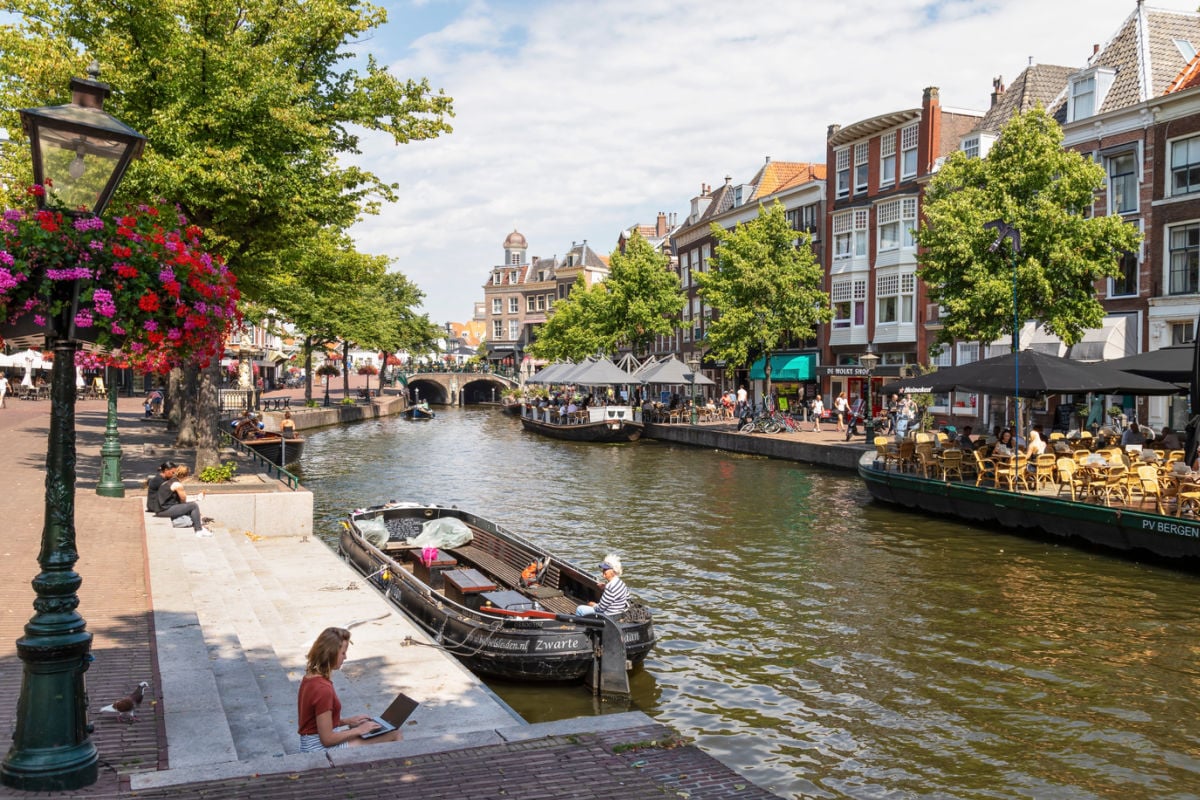
Other lesser-known cities, arguably just as pretty and far less crowded, like Haarlem, Utrecht, and Leiden, are all built along scenic canals with vibrant storefronts and welcoming cafes — and we all know cafe culture is a staple across the nation.
Known as the “Self Employed Residence Permit”, once granted, nomads can stay here up to 2 years and can be used as a gateway to permanent residency if that’s your end goal.
Online application fees total approximately $480 for first-time applicants and your job must pass a 3-step ‘points test‘ if you’re not an American, Japanese, or Bolivian citizen.
To sum up the benefits of this permit, you’re applying to a country highlighted by these features:
Largely proficient in English
Clear-cut instructions to obtain ‘permit’
Low income requirement
Popular café culture
2-year validity (with possible extensions)
Zippy internet speeds
High quality of life
Growing startup scene
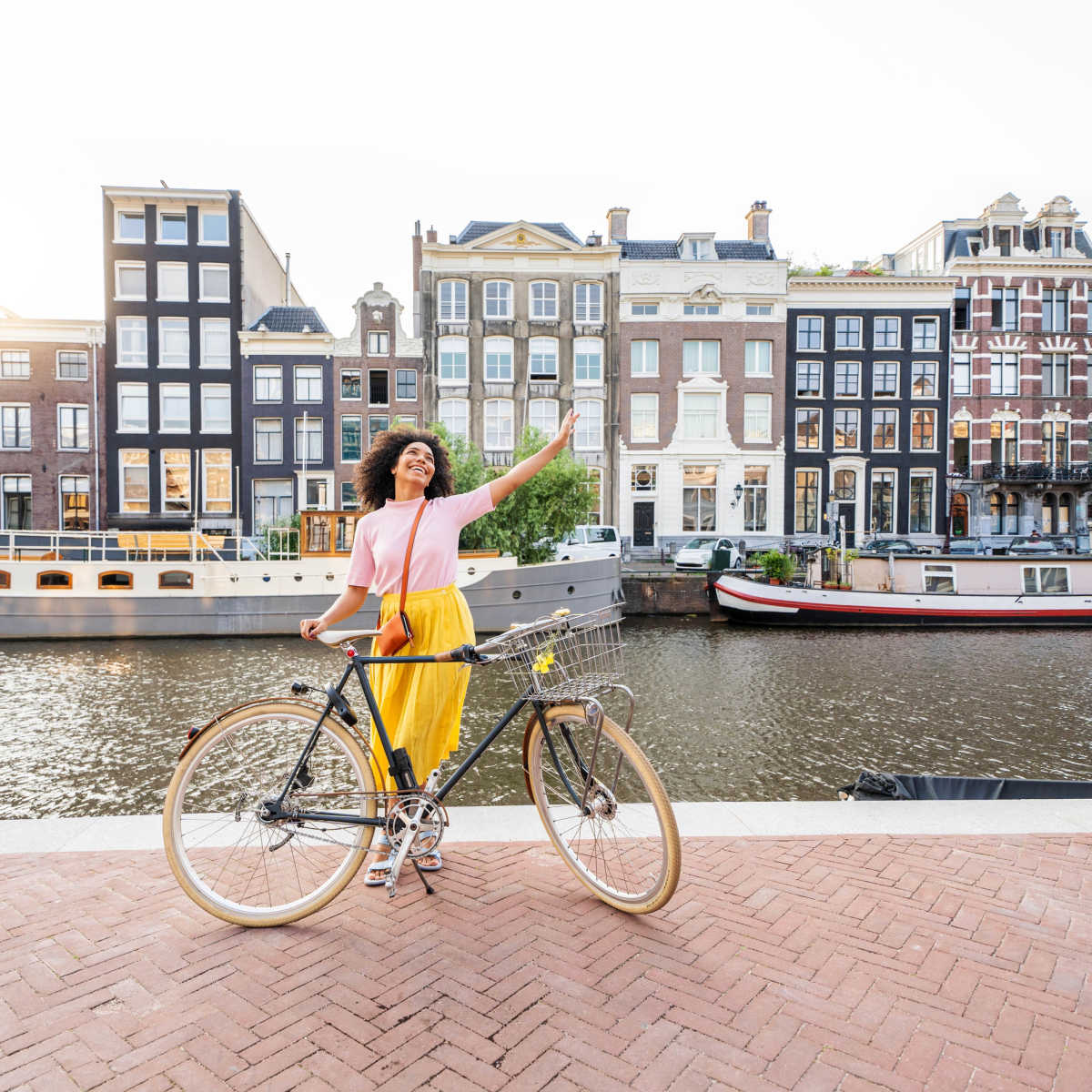
Bicycle friendly everywhere (save Uber money!)
There’s also the option of DAFT (Dutch-American Friendship Treaty), catered toward U.S. citizens who prefer opening a business in the Netherlands.
It does come with a hefty $5335 investment requirement, but more flexible terms with stays up to 5 years.
Top 5 Dutch Cities For Nomads
If you’re willing to risk irritable locals not approving your presence, and you have deeper pockets than $2011 per month, Amsterdam is certainly a top choice.
Lined with trendy cafes perfect to use as your office, ample co-working spaces, safe cycling routes, and no shortage of vibrant parks and world-class museums, this iconic city undoubtedly lives up to the hype.
One of our favorite sources to determine the latest trends with digital nomads is Nomads.com, where, currently, Amsterdam ranks #5 in the Netherlands.
This ranking is almost solely based on high costs across the board as there are 4 other cities (2 of which we mentioned above) that top Amsterdam for the nomad lifestyle:
5) Amsterdam
4)The Hague
3) Leiden
2) Utrecht
1) Groningen (listed as the most affordable Dutch destination)
Sam, our Lead Writer & Journalist based in San Diego has visited 36 countries and written over 1000 articles with a focus on sharing his own travel experiences and shining a light on lesser-known gems.
The Travel Off Path Advantage: Your Travel Toolkit
Subscribe To Our Latest Posts
Enter your email address to subscribe to Travel Off Path’s latest breaking travel news, straight to your inbox.
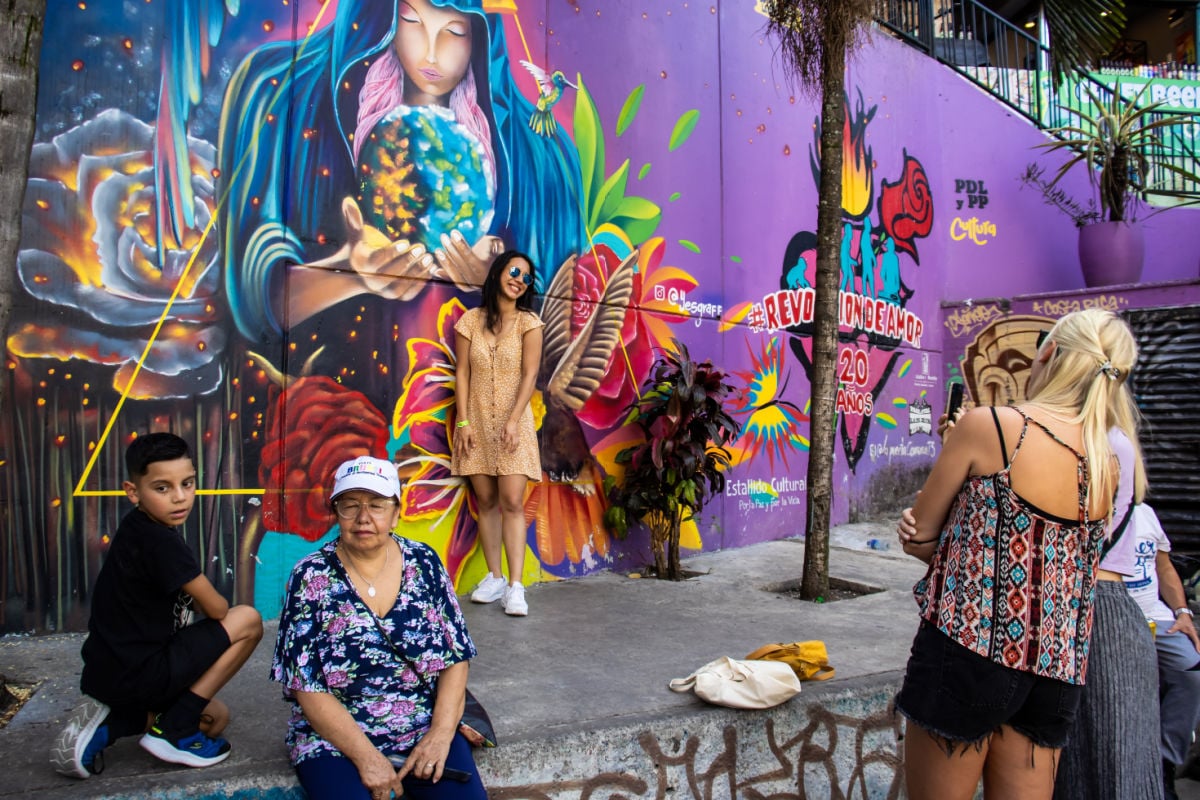
Medellin, Colombia has undergone quite the transformation in recent years. Once known for its rough reputation, the city has become a thriving destination for digital nomads and travelers searching for an affordable place to visit. Medellin is currently implementing new regulations to attract more responsible visitors and remote workers.
Once a haven for bachelor parties and all-night debauchery, the city’s Mayor, Federico Gutiérrez is transforming the tourism experience. Medellin is looking to attract visitors seeking cultural experiences and more professional digital nomads.
Over 1.4 million visitors arrived in Medellin last year, many of them American.
Medellin and Colombian immigration are now taking multiple steps to let bad behaving tourists know loud and clear, they are not welcome.
The Party Is Over
Famous for its nightlife, the district of El Poblado is filled with countless nightclubs and areas to let your hair down. Arriving in the area of Calle 10 which is known for the infamous Lleras Park, visitors will be greeted by dozens of police, security cameras and checkpoints to the well-known party areas.
The Mayor even went as far as setting a 1:00am temporary curfew on bars to tame the party. The curfew has since been lifted but the message is still loud and clear. “We have to recover control of this area — it is also very important for us to protect the community,” Federico Gutiérrez explained in a statement.
Security is strict everywhere including hotels, nightclubs and restaurants. The Mayor has banned all prostitution it in all popular tourism areas. Large billboards regarding sexual tourism and the exploitation of minors are posted warning tourists of the potential 25 years they could spend in prison. Signs are posted in all hotels and all guests are strictly checked for Identification.
Be Ready For Extra Questions & Background Checks On Arrival
Colombian authorities are now working with the US to catch unsavory tourists before they even enter the country. Arriving in at the International Airport just outside of Medellin, tourists are being asked extra questions about the purpose of their trip and those with criminal records could be turned back under the new ‘Angel Watch’ program.
US Government Warns Travelers To Avoid Dating Apps
Medellin, Colombia isn’t that place to go looking for the love of your life right now. Earlier this year the US government issued a warning that travelers are being targeted on dating apps, then drugged and robbed for their possessions. Even launching Tinder in Medellin, users are greeted with a warning that meeting people could be dangerous amid recent government warnings. The same warning goes for nightclubs and bars. Unsuspecting tourists are being targeted and drugged with Scopolamine.
28 tourists have died in Medellin so far in 2024. This includes homicides and natural causes.
According to Medellin Advisors, the homicide rate in Medellin in 2022 was 15 deaths per 100,000 inhabitants. This represents a 3% reduction compared to previous years and is lower than the national average in Colombia, which was 23 homicides per 100,000 inhabitants as of the end of 2022.
Colombia’s Digital Nomad Visa Just Got Harder
Colombia’s Digital Nomad visa has been a huge success for the country as thousands of travelers flocked to the country for affordable living and culture. When the program first launched, digital nomads were raving about how easy it was to be approved if you could provide the following:
Monthly earnings above $900 US
Health insurance that covers your stay in Colombia
Permission to work abroad
Now times have changed and message boards on Facebook and Reddit are filling up with questions regarding extra paperwork that is not the easiest to obtain. The Colombian government is permitted to require any additional information they see fit when reviewing applicants and they are doing just that for almost everyone now. New forms being asked for include:
Criminal FBI background checks with Apostille
Official proof of good standing for self-owned companies along with Apostille
Official proof of ownership for digital nomads that operate their own companies with Apostille
All Forms must be dated and issued within the past 60 days
Safety In Medellin
While the city has made huge improvements to overall safety travelers are advised to stick to well known tourist areas and avoid walking alone at night. For more information on safety, read the top 7 things travelers need to know when visiting Medellin.
Opinions expressed here are the author’s alone, not those of any bank, credit card issuer, hotel, airline, or other entity. This content has not been reviewed, approved or otherwise endorsed by any of the entities included within the post.
Looking to continue your digital nomad adventure without breaking the bank?
Europe is an incredible place for digital nomads, but it can also be a pricey place to live.
But that’s all set to change as one of the cheapest countries in the world has launched a digital nomad visa.
Digital nomad visas are so important for digital nomads, giving them an official opportunity to stay in the countries they love for longer than they could on a regular tourist visa.
So this is big news!
Here’s what you need to know about this exciting new digital nomad visa from one of the cheapest countries in the world — Turkiye:
What Are The Requirements?
Like all digital nomad visas, you will have to jump through a few hoops to secure this new visa in Turkiye. These include:
Having an employment or business contract that proves you are a digital nomad with a steady source of income.
Demonstrating a monthly income of at least $3,000 (or an annual income of $36,000).
Being between the ages of 21-55.
One unusual requirement of Türkiye’s digital nomad visa that isn’t needed in most other European countries is that applicants will need to hold a university degree.
Türkiye’s Digital Nomad Visa
A digital nomad visa from Turkiye is great news for digital nomads from the USA, Canada, UK, and EU, who are all eligible to apply.
The Turkish Culture and Tourism Ministry is poised for so many applicants that they have launched a dedicated website where digital nomads can apply for this new visa.
You can complete your application online and from anywhere in the world, but you will have to visit your nearest Turkish embassy to collect your work permit and visa once it’s been granted.
If you’re already in Turkey, then you can apply online and register with the nearest local police department in the county.
We don’t know how long the application will take because this visa is so new, but the fast online application process is good news for nomads who don’t want to spend their days filling in paperwork.
Türkiye’s Best Spots For Digital Nomads
Turkiye is an incredible country with a wide range of diverse landscapes and experiences.
Whether you’re looking to work in a bustling city, sit with your laptop on the beach, or find your own country retreat, you can find it all in Türkiye.
Istanbul is the most popular spot for both tourists and digital nomads in the country.
This mega-city, which is home to more than 20 million people and is located on two continents, is a must-see for all travelers.
Eating out is incredibly cheap here, and many of the best attractions in the city are free. Accommodation is also much lower in Istanbul than the European average.
In fact, Istanbul has a reputation for being one of the most affordable cities in Europe, so if you want all the bustle and activity of city life without the pressure on your bank account, this is a great place to be.
Attracting Digital Nomads
Other Turkish destinations that the Turkish government is keen to promote as part of their drive to attract digital nomads include Dalaman, Izmir, Marmaris, Bodrum, Antalya, and Fethiye.
Most of these are coastal locations, and attracting digital nomads year-round would help to boost the economy and promote these regions as 24/7 destinations, especially during the winter months when tourist footfall typically slows down.
Turkiye already has a strong infrastructure in place for digital nomads, including fast and reliable internet access, a host of cafes and working spaces for digital nomads to get to work, and great transport connections across the country too.
What’s more, getting to Türkiye is easy.
Türkiye has a total of 35 airports with international links, so you’ll be spoilt for choice when it comes to deciding where in this beautiful country you want to call your short-term home.
Tor has been writing for more than 20 years and has visited 25 countries (and counting!) She specializes in European and family travel and never says no to new adventures.
Opinions expressed here are the author’s alone, not those of any bank, credit card issuer, hotel, airline, or other entity. This content has not been reviewed, approved or otherwise endorsed by any of the entities included within the post.
Europe is a great place for digital nomads thanks to its rich heritage and range of diverse cultures in a relatively small geographical area.
You’ll find welcoming digital nomad communities in every corner of Europe.
But where is the easiest place to start?
Timeout magazine has created a list of the easiest digital nomad visas to get in Europe.
These are the top 5:
5. Norway
The Norwegian digital nomad visa is valid for a very generous 2 years and has a relatively low 35,179 euro ($37,665) minimum annual income requirement.
Applicants will also need to secure their own private health insurance and have proof of self-employment. So far so simple!
So what’s the catch?
The reason Norway doesn’t top the charts is because of one tricky requirement of their digital nomad visa. Each successful applicant must have at least one Norwegian client, with a valid contract for the duration of your visa.
If you can jump through this hoop, then Norway is a great place to live as a digital nomad.
It has some of the fastest wi-fi in Europe, excellent coffee shops and co-working spaces, and is an incredibly beautiful country with plenty of opportunities for outdoor adventure.
4. Greece
The digital nomad visa in Greece allows nomads to live and work in the country for up to 12 months. If you stay for less than 6 months you won’t have to pay any tax on your earnings.
You’ll need to earn at least 42,000 euros a year ($44,942) to be eligible but the application process is wonderfully straightforward.
The visa application process only takes around 30 days from start to finish.
So why should you choose Greece for your digital nomad adventures?
As well as being breathtakingly beautiful it’s also an affordable place to live (living costs in Greece are 33% lower than in the UK, for example) and in the larger Greek cities you’ll find welcoming digital nomad communities and plenty of co-working spaces too.
3. Malta
Malta’s digital nomad visa allows digital nomads to live in the country for a very generous four years.
Unless you transfer your earnings into a Maltese bank, you won’t have to pay a penny of your income in local taxes for the first twelve months.
You’ll need an annual income of at least 42,000 euros ($44,942) a year which is one of the higher figures on this list, and you’ll also need employment contracts that demonstrate your continued source of income.
The application process is incredibly straightforward, but it can be time-consuming, taking up to 5 months.
So why is Malta so appealing to digital nomads? It’s a beautiful Mediterranean destination that is also an affordable place to live.
And the small size of the country means that the pace of life is slow, making it ideal for nomads looking for a laidback lifestyle.
2. Croatia
Croatia is an incredibly popular destination for digital nomads, and one of the most appealing aspects of this visa is its relatively low income requirements.
You’ll need a monthly salary of 2,539 euros per month ($2,719) to be eligible for this visa, and the application process is straightforward too, as you can apply online with no time consuming in-person meetings.
Croatia failed to make the top spot because this visa applications comes with additional fees, such as an online admin charge (45 euros/$48) and residency card charge (40 euros/$42). You’ll also need to have proof that you’ve arranged accommodation for the duration of your stay as part of your application.
But there are so many great reasons to choose Croatia as a digital nomad. Croatia has a laid-back lifestyle, great weather, a rich cultural heritage, and plenty of workspaces and cafes aimed at digital nomads.
The reason? Because of how quick and easy the application process is!
You can apply for your Romanian digital nomad visa online and, provided you meet all the requirements, your visa will be issued within 2 weeks ready for you to get to work.
The salary requirement of the Romanian digital nomad visa is 3,700 euros per month ( $3,965), which is 3 times the average monthly salary in the country.
However, provided you are a taxpayer in your home country, you will be exempt from income tax in Romania.
Romania is a great country for digital nomads thanks to its affordable cost of living, warm and welcoming people, and abundance of co-working spaces (as well as other digital nomads) all over the country.
The Complete List
Here is the complete list of Europe’s most popular digital nomad visas ranked from easiest to secure to hardest to secure, according to Timeout.
Tor has been writing for more than 20 years and has visited 25 countries (and counting!) She specializes in European and family travel and never says no to new adventures.
Opinions expressed here are the author’s alone, not those of any bank, credit card issuer, hotel, airline, or other entity. This content has not been reviewed, approved or otherwise endorsed by any of the entities included within the post.
Europe seems to be every digital nomad’s playground these days, not only due to its diverse cultures and multiple options of countries but also its lower cost of living in some areas compared to much of the United States, impressive levels of safety, and higher quality of life.
Sadly, across much of the continent’s well-known hotspots, nomads are encountering some issues, such as prices increasing dramatically and locals becoming more hostile to them (this includes former nomad hotspot Lisbon, in Portugal, and Spain’s overpriced Barcelona).
If it’s still your dream to relocate to Europe, even if temporarily, but you’re unsure where to go now that ‘nomad fatigue’ is on the up, you should consider these 5 new surging nomad destinations, that are both great value for money and yet to be ruined by the masses.
But hey… You didn’t hear it from us.
Bucharest, Romania
The capital city of Romania, Bucharest is the fifth highest-charting on Nomad List‘s ranking of cheap rising cities in Europe, and whatever it lacks in value as a tourist destination, with its run-down Old Town and overly-gray, communist-era cityscape, it makes up for in nomad infrastructure.
For instance, it’s quite easy to get around the city with its comprehensive network of metros and buses, and if you’re staying centrally, chances are you’ll be a short five to ten-minute walk of metro stations, one of the ‘big four’ European supermarkets, convenience stores, city parks and restaurants.
Bucharest isn’t the most exciting city to visit (it isn’t as monumental as Budapest, as beautiful as Paris, and definitely not as spotless as Zurich), but it can be a great place to live, with its plethora of work-friendly cafes, lively social scene – if you’re partying well into your 30s, this is the place to be.
It’s remarkably affordable, too, with living costs capping at only $1,962 per month (average rent is between $426 – $644), and though pickpocketing may happen on occasion, armed robbery and violence are not at all common, and the city is quite safe in general.
Istanbul, Turkiye
The largest city in Turkiye (formerly spelled Turkey), Istanbul may seem intimidating at first, with its 20+ million population, immense size (it’s so big it surpasses Europe’s continental divide with Asia), and chaotic traffic, but it’s precisely this urban mess that makes it fascinating.
Contrary to popular belief, no, it is not the Turkish capital (not since the 1920s, at least), but it is undoubtedly the nation’s cultural heart, dating back at least two millennia and being formerly known as Constantinople – yes, the Constantinople.
Nomads based in Istanbul have numerous ancient sites to discover, including the world-famous Hagia Sophia, the Basilica Cistern, and the formerly impenetrable, still-majestic Walls of Constantinople.
Yet at the same time, a modern, cosmopolitan metropolis awaits them.
Istanbul has 136 coworking spaces on Coworker, and the entrepreneurial atmosphere of its fast-growing districts is sure to inspire you. This is all the better for the budget-conscious, as living here will only set them back a maximum of $1,844 per month.
Las Palmas, Gran Canaria (Spain)
The capital of Gran Canaria, the largest of Spain’s lesser-known Canaries archipelago, Las Palmas is best known for its year-round, spring-like temperate climate – it’s never too hot nor too cold – golden-sand Las Canteras Beach, and most importantly, its laid-back living.
Yes, it is a mid-size city over 378,000 Canary Islanders (and expats) call home, but for the most part, you’ll feel that the combination of ocean and rugged nature – everywhere to be seen in Las Palmas in stark contrast with its clusters of high-rises – can seriously reduce your stress levels.
From biting away at some churros dipped in chocolate in storied Triana in the morning to going for strolls down the lengthy, palm-lined promenade – maybe even an afternoon swim? – to partying till dawn in a vibrant Vegueta, life in Las Palmas feels like an (ocean) breeze.
It’s no surprise a vast majority of respondents on Nomad List (82%) like it, especially when it can be pretty affordable to live compared to the average Spanish destination: in total, you’re expected to set aside $1,852 per month living on the island.
Split, Croatia
Split is the second fastest-rising nomad destination in Europe, and we can definitely see why: the off-season climate is mild, at best, it’s a lot smaller than every other city on this list, it’s Mediterranean-coastal, and it combines ancient heritage and beaches.
What more could you ask for? Strolling the centuries-old Old Town, housed in a Roman palace built for an emperor, you’ll come upon historic Romanesque churches, well-preserved ruins lying out in the open alongside quirky alfresco cafes, charming bakeries, and inviting gelato shops.
Moving away from the cobbled center, however, there’s a beautiful palm-dotted boardwalk lined by turquoise waters, leading to tranquil residential zones further down the coast and isolated pebbly beaches where naturism is sometimes practiced.
With its architectural wonders, casual vibes and blood orange-tinged sunsets, Split is an absolute gem of Europe, and we’re glad to inform that, if it appeals to you as a nomad, the most you’re likely to pay monthly residing here, rent and all expenses included, is an affordable $1,967.
Skopje, North Macedonia
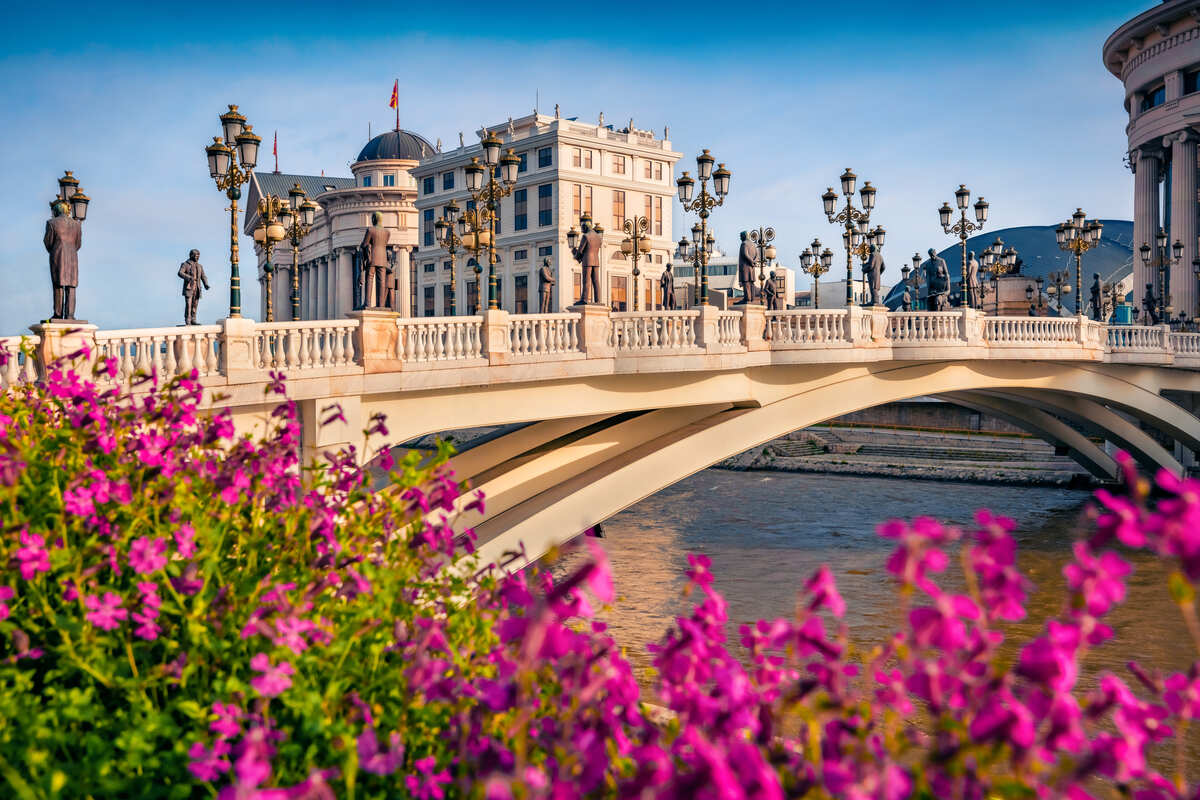
Believe it or not, the number one nomad destination ‘surging’ right now is an unheard-of, post-communist, seriously underrated city that is most likely not on your travel radar this year: Skopje, the quirky, statue-packed capital of landlocked North Macedonia.
It is distinct for its delectable South Slavic cuisine, Macedonian culture, and association with the legendary Alexander the Great, who they claim, to the dismay of Greeks, and whose golden-washed sculpture mounting his horse stands proudly in the center of town and medieval landmarks.
Skopje ticks all the boxes for what makes a European capital great: the cobbled historic zone, lined by traditional eateries and souvenir shops, the ancient castle, perched on a hill overlooking the conurbation below, and the wide, leafy boulevards, except it is not prohibitively expensive.
Based on Nomad List estimates, living in Skopje will cost you between $830 if you’re the frugal type who doesn’t eat in restaurants often and is fine with one-bedroom rentals, and $1,349 if you don’t mind treating yourself to a spacious apartment and nice dinners in the Centar on occasion.
Vini, our senior lead writer at Travel Off Path, has over 60+ countries under his belt (and currently weaving tales from Paris!), and a knack for turning off-the-beaten-path experiences into informative stories that will have you packing your bags.
Opinions expressed here are the author’s alone, not those of any bank, credit card issuer, hotel, airline, or other entity. This content has not been reviewed, approved or otherwise endorsed by any of the entities included within the post.
South America is one of the top digital nomad destinations right now, highly sought-after not only for its tropical climate and Luso-Hispanic heritage but also its affordability, especially if you’re an American getting paid in dollars and, most importantly, friendly visa policies.
Several South American countries now offer the increasingly popular Digital Nomad Visa (DNV), which allows for extended stays in a national territory while also sometimes exempting holders from regular taxation and the deeper level of economic integration regular expats are subject to.
If you’re considering relocating as a remote worker, you’ll be glad to know these four hugely affordable countries offer simple, easy-to-apply-for DNVs valid for the long-term:
Peru
The newest addition to the ever-expanding DNV list, Peru has confirmed a nomad visa will be introduced sometime soon, and while further details are yet to be outlined, we know already it will be valid for an initial 365 days, renewable ahead of expiration.
Applying for a DNV will typically require presenting a valid passport, having a clean criminal background, and earning above a certain income threshold, which, in Peru’s case, is unlikely to be discriminatorily high, taking into account the country’s average cost of living of $872 per month.
While the visa isn’t yet launched, most foreign nationals, including American citizens, can base themselves in Peru for up to 90 days visa-free, and while this is hardly enough time to explore the Incan gem thoroughly, you will certainly get a feel for the country ahead of traveling onward.
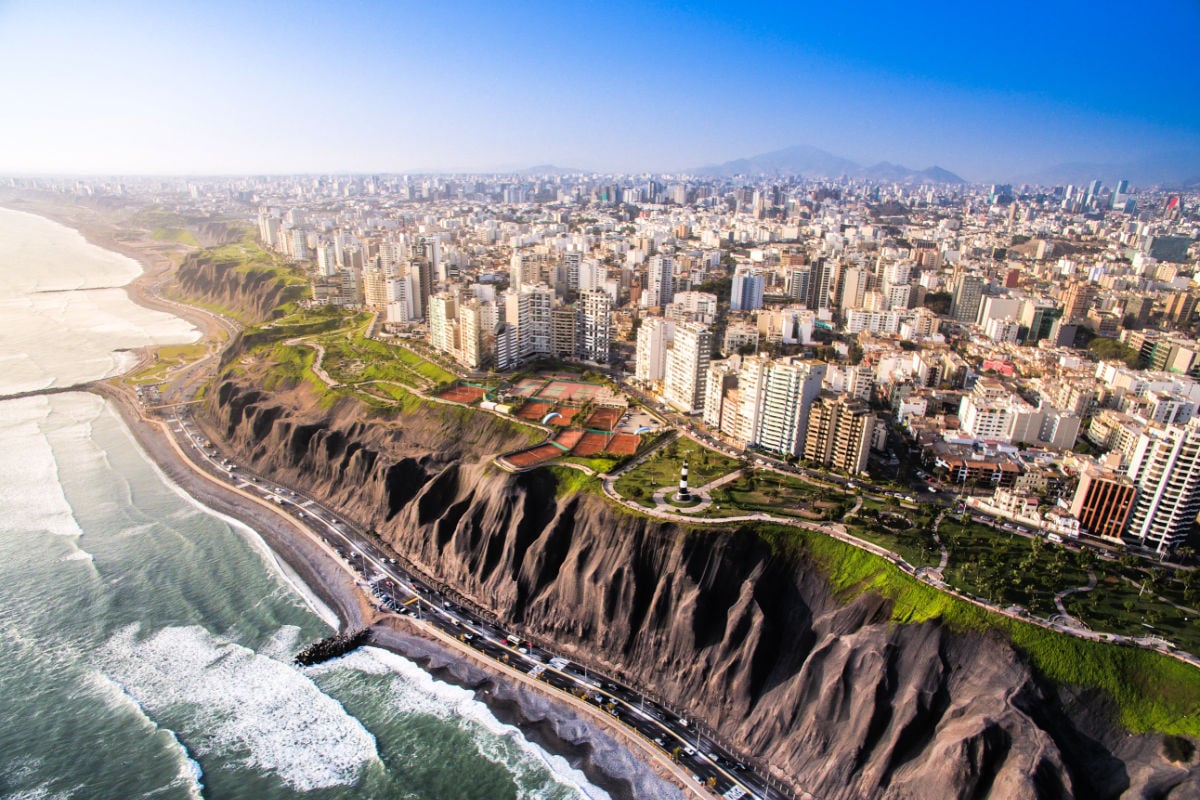
Some of the best nomad destinations in Peru are Lima, a metropolitan coastal capital within short driving distance of gorgeous Pacific beaches, Cusco, gateway to the Peruvian Andes and the World Wonder that is Machu Picchu, and Arequipa, filled with volcanic stone-built, Baroque buildings.
Argentina
Considered the second best digital nomad visa in the world, Argentina’s DNV is certainly one of the easiest to get: officially called a ‘Transitory Residence‘, it enables any nomad who is of good character, has entered the country legally and presents a current valid passport to stay for 180 days.
This period can be extended, provided the same conditions are met and nomads are not required to apply ahead of traveling.
In fact, this visa can only be obtained while you’re already in Argentina as a tourist, making this an incredibly enticing option for visitors hoping to extend their stay.
Argentina’s immigration rules are pretty non-severe, to put it simply, and though we wouldn’t recommend pushing your luck, even if you enter as a tourist, fail to apply for an extension to your initial 90 days, and simply overstay, all you’re required to do is pay a small fee of $14.92.
When it comes to choosing the perfect ‘workcation’ spot, options are commonly narrowed down to beautiful Buenos Aires, with its varied selection of work-friendly cafes and high levels of safety (it’s called the Paris of the South for a reason) and vibrant colonial city of Cordoba.
In terms of affordability, Argentina is incredibly cheap by American standards, with monthly expenses for budget-conscious nomads totalling only $706, on average.
Living in Buenos Aires, U.S. travelers can stretch their dollars a lot further thanks to a seriously-depreciated Argentine peso.
Brazil
Brazil is one of the most popular nomad spots right now, with laid-back beach towns like Trancoso and Arraial d’Ajuda being flooded by foreign residents, and of course, exciting metropolises Rio and Sao Paulo ranking high on Nomad Listfor the ‘great’ fun and multicultural scene they offer.
The cost of living in Brazil can vary depending on where you’re based—Sao Paulo can cost as much as $2,089, while Northeastern Salvador is much cheaper at $835—but all in all, South America’s largest and most diverse country is pretty affordable for American visitors.
The Brazilian DNV is valid for up to two years, and to qualify, all that is required is, not to sound repetitive, a pristine criminal record, citizenship of an eligible country, which the U.S. and Canada are, and, most importantly, earnings of at least $1,500 per month.
Applications can be made online ahead of traveling, or alternatively, nomads may try to fly to Brazil first as tourists and change their status once inside the country; however, if you’re an American or Canadian citizen, you should know that will no longer be possible from April.
Brazil is re-introducing visa requirements for U.S. and Canada passport holders, which means you will no longer be able to obtain a visa on arrival.
Find out more about the decision, and how it affects you reading this accompanying article.
Colombia
Launched as early as 2022, Colombia’s DNV has been touted as one of the easiest to apply for, as it does not require advance application: all you need to present is your valid tourist stamp, bank statements proving funds of only $684 per month, a passport and health insurance.
Unlike Brazil, Colombia’s tourist visa policies are not tightening up, and Americans can still fly visa-free and get a 90-day entry stamp, renewable for an additional three months, when not in need of a long-term visa as described above.
Top nomad hubs to consider are Medellin, possibly the most thrilling city break in the continent, Bogota, a sprawling capital with a concentration of museums and historical landmarks so impressive it’s earned an ‘Athens of the South’ monicker, and the walled Caribbean port of Cartagena.
When living in Colombia, foreigners are advised to familiarize themselves with local safety guidelines, as it is the only country in this list the U.S. State Department advises Americans to ‘reconsider’ visiting, due to the uncontrolled levels of crime across major cities.
Due to its amazing weather, rich biodiversity, and low prices – it can cost as little as $686 to live frugally in Colombia – it is still a nomad favorite, but extra caution is urged, particularly if you easily stand out as a ‘gringo’, as locals would say.
By keeping a low profile, avoiding peripheral districts with higher poverty rates, and not flashing valuable items in public – this includes iPhones and watches – you can increase your chances of not being targeted by criminals.
Vini, our senior lead writer at Travel Off Path, has over 60+ countries under his belt (and currently weaving tales from Paris!), and a knack for turning off-the-beaten-path experiences into informative stories that will have you packing your bags.
Opinions expressed here are the author’s alone, not those of any bank, credit card issuer, hotel, airline, or other entity. This content has not been reviewed, approved or otherwise endorsed by any of the entities included within the post.
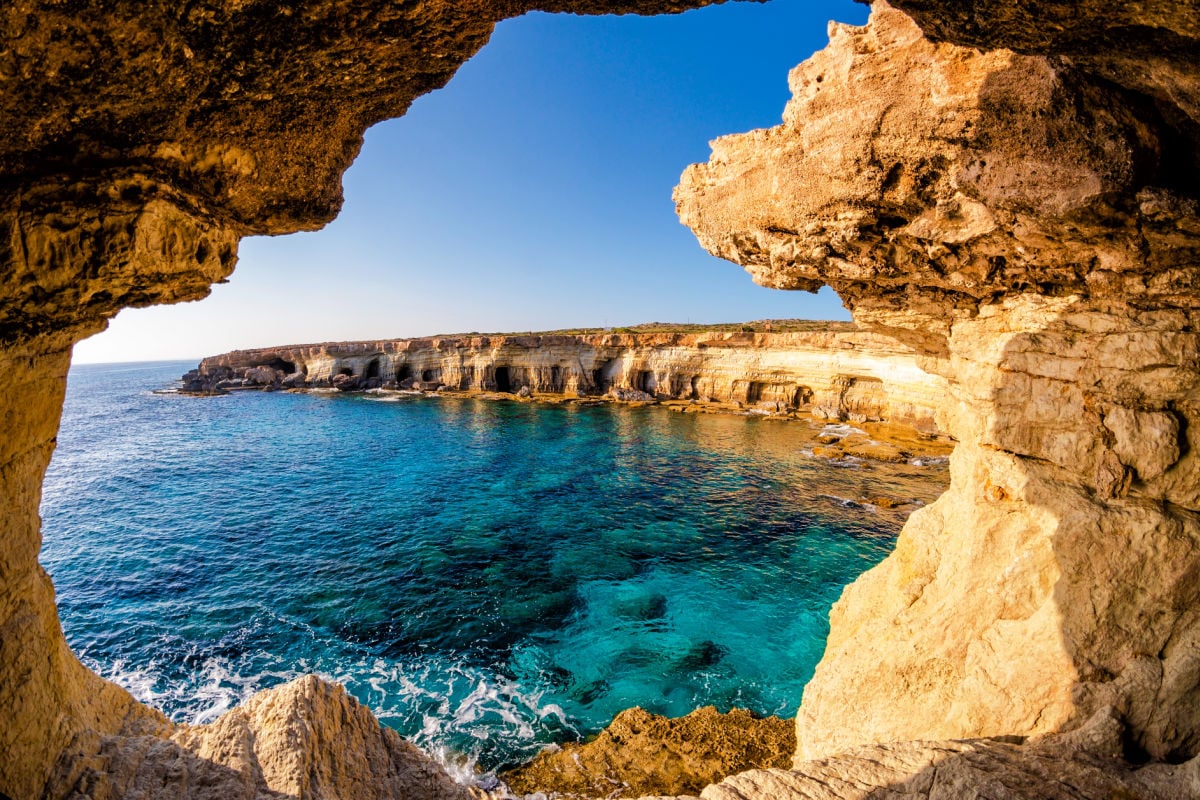
Cyprus is one of the best up-and-coming digital nomad destinations for 2024.
This beautiful, peaceful Mediterranean island is geographically located in the Middle East, but culturally and politically, it’s a part of Europe.
It has already been growing in popularity with tourists, and it’s also set to become a top destination for digital nomads.
Here’s why Cyprus will become the next digital nomad hotspot this year:
1. Beautiful Weather Year-Round
If you’re looking to escape the cold and work from paradise, Cyprus is the perfect place to do it!
With its warm Mediterranean climate and around 330 days of sunshine per year, Cyprus is a great destination for digital nomads who want sunny weather and proximity to the beach.
Cyprus gets extremely hot during the summer (with temperatures regularly exceeding 95° F to 100° F) but it’s an absolute dream the rest of the year.
Even in the winter, it rarely drops below 60° F — and with the sun out, this still feels quite warm!
2. It’s Not In The Schegen Zone
Most countries in the EU are part of the Schengen Zone, and Americans can only stay in the Schengen Zone for up to 90 days out of every 180 days without a visa.
Although Cyprus is part of the EU, it’s not part of the Schengen Zone.
It’s one of the few remaining countries in the EU where you can stay for up to 90 days without counting against your 90-day Schengen Zone allotment. So for example, you could spend 90 days in Cyprus, then immediately go spend another 90 days in Greece (which is in the Schengen Zone.)
Now that countries like Croatia are part of the Schengen Zone, and countries like Romania and Bulgaria are joining next month, Cyprus is one of only two EU countries (the other being Ireland) still not part of it.
3. Affordable Cost Of Living
Another reason Cyprus is great for digital nomads is because it offers an affordable cost of living.
With many of the most popular countries in Europe experiencing soaring prices and a cost of living crisis, Cyprus remains comparatively affordable.
In particular, the capital Nicosia is the most affordable city in Cyprus. However, it’s not on the beach — but it is less than an hour away. If you want close proximity to the beach, it might cost you a little more.
Paphos, Larnaca, and Limassol are the three most popular beachfront cities in Cyprus, and all make a great base for digital nomads. And you can still enjoy living by the beach for less than it would cost in many other European destinations.
4. It’s Extremely Safe
As a solo female traveler, I felt very safe in Cyprus. Overall, it’s an extremely calm and peaceful place.
You might look at a map and notice Cyprus’s proximity to Israel, Lebanon, and Syria, but this Mediterranean island could not feel more isolated and far away from conflicts in nearby countries.
If safety is a top priority for you, you don’t have anything to worry about in Cyprus.
5. Enjoy A High Quality Of Life
Finally, digital nomads can enjoy a high quality of life in Cyprus.
The majority of people in Cyprus are Greek, and the laidback Mediterranean mentality of Greece extends to Cyprus too. You can enjoy a slower pace of life here.
Family and community are important, friends linger over a big meze meal together, and it’s very much a “work to live” not “live to work” mindset. If that sounds like something you’re looking for, Cyprus just might be the perfect digital nomad base for you!
Opinions expressed here are the author’s alone, not those of any bank, credit card issuer, hotel, airline, or other entity. This content has not been reviewed, approved or otherwise endorsed by any of the entities included within the post.
This underrated Balkan country is among the cheapest destinations in Europe, so you can live an awesome life here without having to pay a fortune.
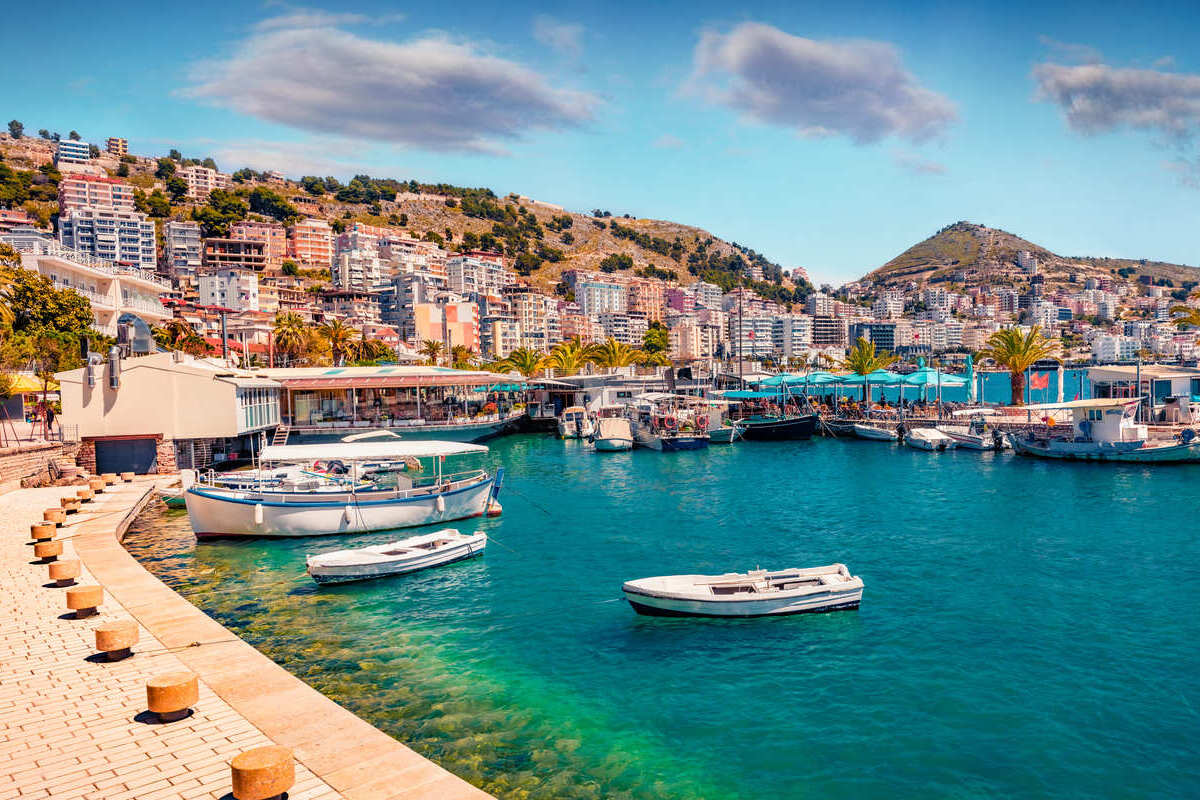
Albania also has some of the most gorgeous beaches in all of Europe, and the lively resort town Sarandë has become a popular digital nomad hotspot.
The digital nomad visa offered by Albania requires a minimum annualincome of only $9,800. It’s valid for one year, but you can renew it annually for up to five years, at which point you can qualify for permanent residency in Albania.
And even with a visa, many nationalities including Americans can remain in Albania for up to 365 days, making this a very accessible destination for digital nomads.
2. Spain
Spain is another great country for digital nomads in Europe.
There are so many amazing cities in Spain that are perfect for digital nomads. Personally, my favorite is Sevilla, a gorgeous city located in the Andalucia region of southern Spain. I found it to be more affordable than both Madrid and Barcelona, and more beautiful and fun!
Spain’s digital nomad visa is easy to qualify for because you only need to demonstrate monthly earnings of approximately $2,360, on the lower end for digital nomad visas in Europe.
The visa is valid for one year and renewable for up to five years.
Spain is a great place to be a digital nomad if you want to enjoy a slower, more relaxed pace of life. Although Spain is definitely more expensive than, say, Albania, it’s still one of the cheaper countries in Western Europe.
3. Croatia
Another country that is excellent for digital nomads is Croatia.
This European country has it all, from amazing Adriatic Sea beaches to charming historic towns to stunning national parks.
Although it has gotten more expensive recently (especially in popular destinations like Dubrovnik and Split), Croatia can still be very affordable in comparison with Western Europe.
Croatia’s digital nomad visa is also one of the easier ones in Europe to obtain, with a monthly income requirement of approximately $2,520.
This visa is good for one year, but unlike Albania or Spain, you are not able to extend it.
More European Digital Nomad Visas
These are three of the best digital nomad visas in Europe that offer a mix of attainable requirements, a lower cost of living, and awesome destinations.
Here’s a look at some more options for digital nomad visas in Europe:
Portugal: Income requirement of approximately $3,060 per month, good for one year with the ability to renew
Malta:Income requirement of approximately $2,960 per month, good for one year with the ability to renew
Greece:Income requirement of approximately $3,835 per month, good for one year with the ability to renew
As you can see, these visas are a bit more restrictive with higher income requirements, but they can still be a good option if you’re looking for an amazing European destination to live in with a relatively low cost of living and you meet the requirements.
Opinions expressed here are the author’s alone, not those of any bank, credit card issuer, hotel, airline, or other entity. This content has not been reviewed, approved or otherwise endorsed by any of the entities included within the post.
As a digital nomad based in Europe, I have traveled extensively around the continent, working remotely from every country you can possibly name across the pond, from the tourist hotspots of France and Italy to the lesser-known Baltic states and the multicultural Balkan Peninsula.
Nope, I haven’t skipped the millionaire-owned micro-state of Monaco, war-raging Russia and its neighbors, nor newly-born Kosovo, one of the poorest states in Europe,
With over 40 European countries under my belt, I was bound to have a personal favorite by now.
That one special place that keeps pulling me back, where I could actually see myself staying longer than the usual three months or even putting down roots at some point down the line, and that somehow feels like my home away from home.
When I set out to visit every European country as a digital nomad, never would I have expected an unheard-of, post-communist state most tourists mistakenly believe to be dangerous, and even not worth seeing, to rank at the top of the list by the end of the five-year journey, yet here we are.
It’s beautiful Albania that stole my heart, and this is why I believe it is the strongest contender for European Digital Nomad Capital:
Why Albania Of All Places?
Unless you’ve been country-hopping around Europe as a tourist for a while, having had to come up with ingenious ways to extend your stay beyond the restrictive 90-day Schengen rule, it is unlikely you have passed through Albania, much less heard of it.
We’re here to remedy that together, but first, where even is Albania?
Geography isn’t everyone’s forte, so I won’t dawdle and waste your time going into the specifics of it: all you have to know it is located across the Adratic sea from Italy, and just north of Greece.
We know what you’re thinking: if it borders these two popular vacation spots, could Albania be yet another off-path Mediterranean destination waiting on the sidelines to be discovered?
The short answer is a resounding Yes!, and the shocking part is it’s been deliberately concealed for decades.
What we mean by that is it was actually kept hidden, so we wouldn’t blame you for not having the foggiest idea about Albania beforehand: as customary in Eastern Europe in the 20th century, the country was ruled by an iron-fisted communist regime.
Why Haven’t You Heard Of Albania Before?
Albania’s dictatorship was among the harshest in Europe, with very few people being allowed to leave the territory, and likewise, only a select number of visitors were allowed to enter well into the 90s, meaning this wing of the Mediterranean was virtually off-limits only three decades ago.
In case you’ve been wondering, Albania is now an open, progressive state, having adopted democratic principles since the collapse of communism and being on a firm path to aligning with the Western World: it joined NATO in 2009, and it has applied to become a member of the European Union.
The latter aspiration has not been as successful yet, but we’ll get into that soon enough – the question is, why has this unsung, troubled nation surpassed every other Southern European competitor to become my safe haven as a digital nomad?
I don’t know about you, but like any self-proclaimed Europhile, this continent’s immense cultural wealth was a decisive factor in my decision to stay a whole five years so far, and my dear fellow nomads, sure Albania has a lot going for it on the culture front:
Hospitality Is At The Heart Of Albanian Culture
Albania is a one-of-a-kind-country, in the sense that its language (Albanian) is not closely-related to any other languages on the periphery, like Serbo-Croatian or Bulgarian share similitaries, and its culture is markedly different from the Slavic-dominated Southeastern Europe.
Family is extremely important, and it’s not uncommon to find nuclei of relatives living together in the same neighborhood, or even the same street, and to them, hospitality is not only a long-standing tradition, but a national value.
In the words of renowned Albanian novelist Ismail Kadare, who couldn’t have phrased it better:
‘Of God and the guest, you see. So, before it is the house of its master, it is the house of one’s guest. The guest, in an Albanian’s life, represents the supreme ethical category, more important than blood relations. One may pardon the man who spills the blood of one’s father or of one’s son, but never the blood of a guest.’
There were certainly occasions where Airbnb hosts would invite me to partake in rounds of raki tasting shortly after we’ve made acquaintances, and hospitable locals would invite me back to theirs to share high-spirited conversations and a hot meal.
As a digital nomad traveling solo, actively seeking to distance himself from other expats to fully immerse in the local way of life, it was definitely not a challenge to befriend Albanians, even if the older generations are more proficient in Italian than they are in English.
If anything, my rusty Italian and poor attempts at mouthing basic words in Albanian would get me humorous smiles in response, friendly pats on the shoulder, and more raki invitations: I’m not sure previous writers have coined this already, but Albanians are the Latin Americans of Europe.
The Whole Of Albania Should Be A UNESCO Heritage Site
We know you’re here for some of that Old World flair, the cobbled towns with origins lost to time, and fairytale castles Disney has tried their best to emulate in kitsch theme parks, and you’ll be glad to know Albania has its fair share of manmade wonders.
From the Accursed Mountains in the north, home to the ethnic village of Theth, best known for its rustic cottages and solitary church, to the medieval citadel in Kruje, south towards a UNESCO-listed, Ottoman-built Berat, and the Stone City of Gjirokaster, this country’s beauty is truly boundless.
The 296-mile long Mediterranean coast is littered with historic port cities as well, including Durres, where a 5th-century castle still stands, the charming Vlore, with its Italian-inspired, pastel Old Town, and the hilltop, whitewashed village of Dhermi, overlooking the turquoise sea.
If you’re looking forward to wearing your Indy Jones hat again, Butrint is a vast archaeological zone dating back to the 10th century BC, encompassing flooded Byzantine palaces, partially-preserved colonnaded agoras, and a landmark Greek theater.
The point is, Albania may not be as popular as some of its closest neighbors, for the reasons already outlined above, but it certainly does not suffer from a shortage of heritage sites. In fact, it’s almost as if it’s taken a page from the book of every other Mediterranean hub in the vicinity:
A Potpourri Of Everything That’s Great About Europe
With Its Own Little Albanian Twist
Some of its settlements are as ancient as Italy’s, it is just as warm as Greece’s, beaches as pristine as Croatia’s, the local cuisine rivals Spain’s, and it is as topographically diverse as France, with a territory that comprises both towering alpine peaks and a subtropical coast.
I’m not averse to harsh winters myself, and I’m a firm believer that, in order to truly appreciate the balmy days of summer, you need to experience the changing of the seasons, but if you can live without the occasional snow, coastal Albania will not disappoint.
Temperatures can plummet to negative levels in northern Albania, but much of the coast remains perfectly sunny and a pleasant 64°F. Having visited in February myself, I was surprised to find that the additional wool coats and puffer jackets I packed ‘in case’ were not at all necessary.
If you’re hell-bent on escaping the cold, the laid-back coastal village of Ksamil, a stone’s throw away from the lively harbor city of Saranda, is where your best bet at year-round springtime weather, with its lemon trees, soft white-sand beaches and teal-colored waters.
Don’t Come To Albania On A Strict Diet
Albania may be isolated in terms of language and culture, but the food served in Albanian homes and restaurants is typically Mediterranean and Eurasian in character, having been heavily influenced by Italy, Slavic gastronomic practices, and even Turkish cuisine.
Its cheese and spinach-filled, flaky-dough byrek pastry is a variation of the Turkish burek, the cold cucumber soup takes direct inspiration from Bulgaria’s tarator, and I could certainly draw parallels between Gjirokaster’s qifqi rice balls and the more mainstream Italian arancini.
That being said, there are a number of native delicacies only Albania can lay claim to, with my personal favorites being the deep-fried petulla fritter, crispy on the outside, soft on the inside, typically served with butter and jam, and tavë kosi, lamb baked in yogurt.
Given Albania’s ample selection of dairy and hearty meat-based dishes, not to mention the fresh seafood and fruit growing in abundance in the verdant hinterland, rest assured you’ll never go hungry here, whether you’re staying in a small qytet on the shores of the Adriatic, or the sprawling capital city of Tirana.
How Nomad-Friendly Is Albania?
How about digital nomad infrastructure, a.k.a. long-term rentals, availability of coworking cafes, foreigner-friendly services, and so on?
I’ll be honest with you: outside major urban centers, life as a remote worker can be challenging (at times).
That is particularly true in the off-season, when restaurants and guesthouses on the coast typically close down, and getting around without a car is an adventure you don’t want to embark on.
Albania is nothing short of stunning, but it’s years behind in development compared to the average European country.
For that reason, I would recommend you spend most of your time in a large city like Tirana, where there’s enough of a social scene and nighttime services to keep you entertained, as well as bus connections to the resort zones on the Adriatic coast, unless a quaint village life resonates with you.
Tirana Beyond The Grey Clusters Of Communist Apartment Blocks
Tirana may not be the prettiest of capitals – much of the old city has been razed to the ground in favor of a modernist makeover – but you can’t deny it is intriguing, with communist-era bunker museums, artifical lakes and eccentric high-rises making up the tourist offer.
If you’re a regular cafe-goer, you should probably know Albania is a global leader in the number of cafes, with around 654 such establishments per 100,000 inhabitants.
There are no Starbucks around, but there are plenty of local-owned and Mulliri Vjeter coffeehouses around.
Mulliri Vjeter is the oldest coffee chain in Albania, and stores are typically rustic in character, offering visiting nomads free WiFi and a cozy nook to work from. Central Tirana is loaded with those, and not a day goes by that I don’t miss their signature Capuccino Chocomel.
It’s truly no wonder Tirana has proudly taken up the mantle of Europe’s center for digital nomadism, hosting a Digital Nomad Conference since 2022 and with an expat community that continues to grow year after year.
The Top 5 Best Digital Nomad Destinations In Albania
The way I see it, the top five best destinations for digital nomads in Albania are:
Tirana: the exciting capital city, packed with quirky cafes, oozing urban art, and full of verdant parks for temporarily escaping the city crowds and crazy traffic
Shkoder: the cultural heart of Northern Albania, famous for its revitalized, restaurant-lined Old Town and an imposing 2,400-year-old Rozafa Castle
Durres: the busiest port, offering ferry connections to Italy and littered with Roman and Venetian-era landmarks
Saranda: the largest city in the Albanian Riviera, bounded by the teal-colored waters of the Adriatic and within short driving distance of the up-and-coming leisure zone of Ksamil
Elbasan: the fourth-largest city in Albania, and one of its food meccas, where I tried the best jani me fasule on the trip (make sure you add Taverna Kala to your list of restaurants)
Albania Is The Cheapest Country I’ve Been In Europe
It only took me a couple of days of being in Albania to understand, at least in part, why nomads like me are finding an unlikely home in this overlooked Adriatic gem: prices are the cheapest I’ve seen anywhere in Europe.
On average, Albania is 40.6% less expensive than Western Europe, with meals in inexpensive restaurants costing an acceptable $10.43, based on data gathered by Numbeo, and monthly expenses for a single person capping at roughly $700, excluding rent.
Even though accommodation costs aren’t included in this estimate, rent can be up to 69% cheaper than Paris or London, two overpriced cities that will wipe your wallet clean if you’re not careful enough. Luckily, living costs are nowhere near as exorbitant in Albania.
A quick Airbnb search led me to find seafront condos in Vlore for only $617 per month this April, whole apartments with dedicated workspaces in Saranda for a negligible $343, while in Tirana, there are private, centrally-situated flats for as cheap as $520 monthly.
It Is Incredibly Safe For Foreigners
Not only is Albania remarkably cheap to live in, it is just as safe as fellow Southern European states Italy and Spain.
That’s not my own judgment, but the U.S. State Department’s, which officially considers Albania a low-risk destination, as seen here.
Having spent most of my time between Tirana, Shkoder and Durres, never once did I feel unsafe walking the streets during the day, or get ‘jumpy’ in crowded areas, as much as I normally do in busier areas of Barcelona, or sketchy zones of South Dublin.
While I wouldn’t take my chances going for a late evening stroll in Tirana – Albanian cities are not particularly well-lit at night – crime levels are under acceptable levels, and visitors are rarely, if ever, affected by violence.
Your main concern here is pickpocketing, though I never felt the need to hide my phone when out in public, and judging by the amount of jewelry Albanian women wear and the fancy sportscars the men drive, nobody’s visibly excessively worried about petty theft, either.
Naturally, general safety advice applies, but odds are you’ll be fine. Once I was lulled to sleep by the gentle sound of crashing waves at a busy Ksamil beach, with my laptop bag by my side, and I startlingly woke up to find it still untouched where I left it.
I’m not sure this fortunate outcome was an exception to the rule, or whether Albania is really so safe your personal unattended items will be probably be left alone, but it doesn’t change the fact I’ve never felt on edge, nor remotely suspicious of people around me.
Believe it or not, I’ve saved the best for last:
Are You A U.S. Passport Holder?
You Can Stay An Entire Year In Albania
Every digital nomad based in Europe has a love-and-hate relationship with Schengen.
In case you’re not familiar with the term, it corresponds to a 27-country-strong, passport-free zone where customary cross-border checks typically do not apply.
All of Europe’s top destinations are signatories to Schengen. I’m talking France, Italy, Croatia, Greece, Spain, and the list goes on: flying, taking trains, or boarding ferries between any of the Schengen states, you will not be subject to passport control.
The only downside to Schengen? You can only be present in the Schengen territories for 90 days out of any 180-day period. In other words, if you’ve used up your 90 days in Spain, another Schengen country can’t be your next destination for another three months.
In Albania’s case, the strict Schengen policy does not apply, as it is not a member of the European Union (EU), and is not bound to join the borderless area anytime soon in the future.
Foreign nationals get a whole 90 day-stay in Albania, irrespective of time spent elsewhere in Europe.
If you’re an American citizen, however, you’re issued a whole year-long tourist visa upon arrival, on the basis of being a U.S. passport holder alone, making Albania the perfect long-term destination, if you’re not merely looking for a grey zone to wait for your Schengen clock to reset.
Despite being outside the EU, Albania remains at the heart of Europe, sharing land borders with four other countries, and boasting low-cost flight connections to the entire continent, with fares starting from $19 on Ryanair.
What Are Some Of The Main Downsides About Life As A Nomad In Albania?
What are some of the negative aspects about life in Albania as a digital nomad, you may be asking?
I have already touched on some of those throughout this article, but I would say some of the main ones include:
The lack of public transport (good luck getting from point A to B if you’re not renting a car and you have reservations about hitchhiking)
With the exception of the main motorways linking Tirana to the coastal ports and resort towns, the regional road network can be quite precarious, with lots of potholes and missing road signs (if you’re driving, I would advise against hitting the gas, especially after sundown when visibility is lower)
Reception can be poor in remote areas, particularly up in the mountains, so make sure you save your drafts working from your computer during that bumpy ride up the Accursed range, or you might have to write that 1,500-word article from scratch again (not that it’s happened to me…)
This is no spotless, idyllic, First-World European country: basically, as much as you try to turn a blind eye, you can’t easily ignore the poverty-stricken areas
Nomad-friendly facilities, like work-friendly cafes and coworking offices may be harder to come across outside cities like Tirana, Shkoder and Durres (I would add Berat and Gjirokaster, but compared to the capital city, they are not even close to being considered well-equipped)
Social attitudes in Albania are pretty carefree, considering this is one of Europe’s handful of Muslim-majority countries, but I wouldn’t encourage you to show affection with your same-sex partner in public if you don’t want to get grumpy Albanian nonos to curse you lowly, or more rarely, an unfriendly shoulder bump
If you’re flying, your only way into and out of Albania is via Tirana: mind-boggling as it may be, there are no airports yet on the Adriatic Coast, and the country’s only other operational international airport is located in Kukës, near the Kosovo border (with a single seasonal flight route to Basel in Switzerland)*
*The easiest way to get to Southern Albania is actually flying first to the Greek island of Corfu, which lies just offshore, and then take a ferry to Saranda. The journey takes just over half an hour on average.
Needless to say, the good far outweighs the bad, and I can’t wait to be back in Albania myself this summer. I’m now based in Paris, and there’s no way I’m sticking around to see how utterly anarchic this city will get once the Olympics – or should I say Hunger Games? – commence.
Opinions expressed here are the author’s alone, not those of any bank, credit card issuer, hotel, airline, or other entity. This content has not been reviewed, approved or otherwise endorsed by any of the entities included within the post.
France may be the number one tourist destination globally, hosting over 100 million annual visitors and being the proud home of the landmark Eiffel Tower, the world’s gastronomic capital and a cultural hub of the first order, but it’s far from being a popular ‘workcation’ spot for digital nomads.
If their preference for Southeast Asia or Latin America is any indication, they actively avoid expensive destinations, and to put it simply, France isn’t exactly known for being the budget alternative, especially when rent alone in Paris can set you back by $1,730 per month.
On the other hand, there is nothing quite like waking up to freshly-baked baguettes from the local boulangerie every day, strolling verdant city parks, and working from a traditional French cafe with views of remarkable architectural feats: if anything, it’s soul-elevating.
But is it possible to work remotely from France, partake in that unrivaled joie de vivre, and still not break the bank?
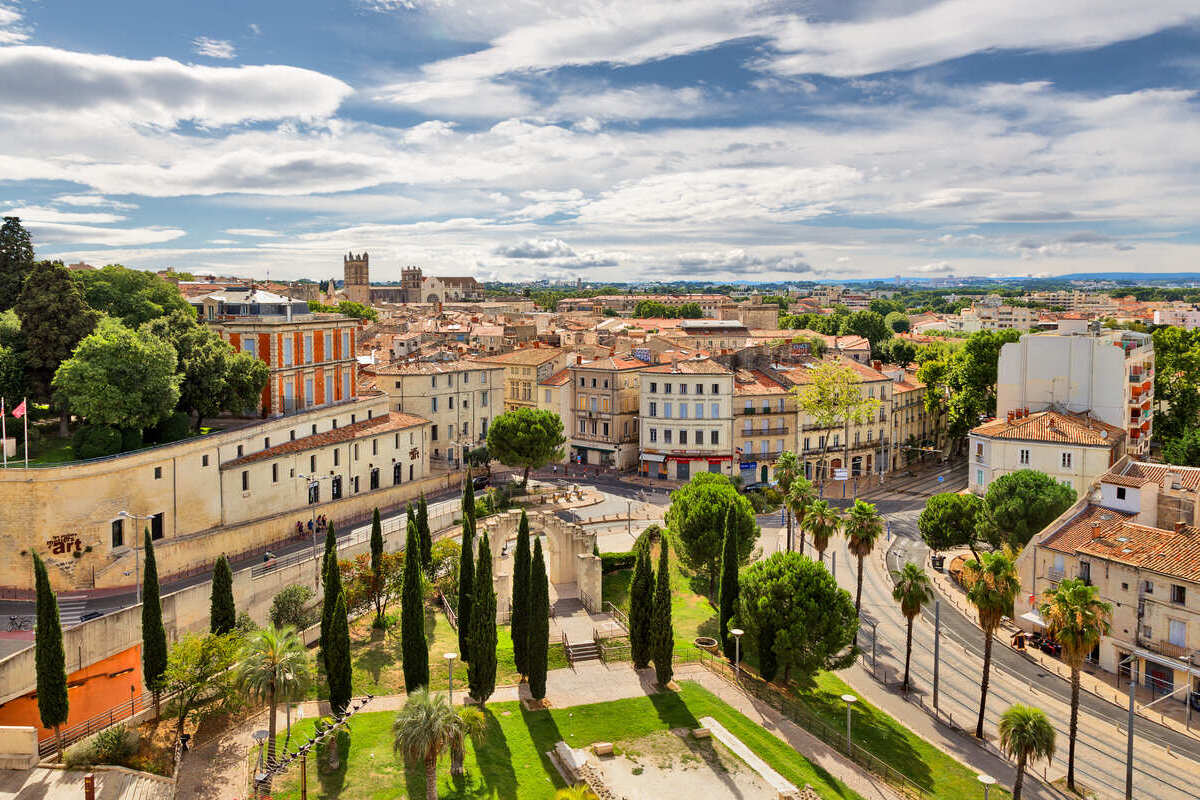
If it’s the charming Montpellier where you’re headed, instead of the overtouristed City of Lights, then you might just get away with it:
Montpellier Is The Digital Nomad Capital Of France
According to Nomad List, the number one platform for tracking nomad trends worldwide, Montpellier is the top-ranking nomad destination in France, beating Lyon, Nice, and even Paris, with a total score of 3.36/5. For comparison, Paris scores 2.95/5.
Unless you’re a Francophile, however, or you’ve happened to have traveled overland from Spain into France, with a stopover in Montpellier, you might not have been properly introduced to this charming city of Occitania (we must add, mainland France’s southernmost region).
So what is it about this lesser-known city that’s so special, and most importantly, what has it got to offer nomads not only on the cultural front but also in terms of infrastructure?
Also, how actually affordable is it to livein Montpellier, as opposed to visiting for a short period?
One Of The Cultural Centers Of Southern France
National borders are a relatively new concept, and in order to fully grasp the essence of Montpellier, we must first take a look at its ancient History but don’t worry, we’ll keep it light and fun for you: prior to France existing as a state, it belonged to the Crown of Aragon.
Aragon was a kingdom that existed in the Middle Ages, which evolved to become a territory in Spain.
So yes, throughout much of its early development, Montpellier was more closely associated with the neighboring sunny country than the French-speaking world proper.
It is where numerous important events took place, from the birth of James I, a Spanish king, to the establishment of one of the world’s first universities (as a matter of fact, it is still home to the oldest medical school in operation).
If you’re considering a temporary relocation to France as a remote worker, culture is likely to be in your scope of interest, and you’ll be glad to know that Montpellier is a culture-loving nomad’s playground with a wealth of historical monuments.
These include a majestic Gothic Cathédrale Saint-Pierre, the Tours des Pins et de la Babotte, two perfectly preserved examples of medieval fortifications, the beautiful Place de la Comédie, a car-free square flanked by stately buildings, and an Ancient Citadel.
Montpellier Is A Lot Warmer Than Paris
Remember how Montpellier was historically a Spanish city? It might have been purchased by France at the turn of the 14th century, but it still feels a lot more ‘Southern European’ than it does ‘French’: winters are pretty mild – it’s currently 60°F – and summers are scalding hot.
Montpellier is not exactly coastal, but it is only a 6.2-mile drive from the beach, and it definitely has a traditional Mediterranean climate. Other than the landmark-packed city itself, major attractions in the area include La Grand Motte, a seaside town, and the Palavas and Carnon beaches.
Motte is a bustling development zone distinguished for its pyramidal resorts and extended miles of thin, golden sand bordered by the azure Mediterranean, and it’s every Montpelliérain‘s go-to beach getaway at the weekends.
We get it, Montpellier has a lot going for it on the culture front, and it’s one of those Med – or marginally-Med – sunny hotspots Europeans love escaping to in the colder months, but why would nomads come here in the first place?
Why Do Nomads Love Montpellier?
The answer is simple: this is a youthful, diverse city, with one-fourth of its 277,000 residents being young students – Montpellier University is one of the oldest and most renowned, right? – and the environment is a lot livelier than in other historical French cities with aging populations.
Cities with a younger demographic tend to be naturally more open to foreigners, as students are likely to speak English as a second language, unlike older generations in France, and the social scene is considerably more active.
Additionally, the high quality of life is a huge draw for nomads, particularly Americans who live in sprawling cities made for cars: in Montpellier, you most certainly don’t need one, as it is the largest pedestrian zone in Europe.
This makes the city a lot greener and more pleasant to live in, and we can’t think of anything better than to swap Paris’ gritty, crime-ridden metro or Marseille’s intricate bus networks for Montpellier’s walkable, cafe-filled Old Quarter.
Speaking of cafes – us nomads always gravitate towards them in the end – Smartscrapers counts at least 80 such establishments in this conurbation, from your mainstream work-friendly Starbucks, to more authentic, local-owned spots.
Montpellier Is Not As Expensive As Paris
Montpellier can be less expensive to live in than other cities in France, as it is not on every tourist’s radar, miles away from other tourist hotspots (it’s a whole 464 miles from the capital, and 202 miles from Nice and its adjacent French Riviera).
Unless they are headed for Occtania specifically, they are unlikely to add sunny Montpellier to their itinerary. If anything, it makes it less crowded and not nearly as costly in Paris: according to Nomad List, it costs $3,715 per month to live in Montpellier.
That’s still pricey, considering living expenses in your average nomad hub are between $1,000 and $2,000. Still, if you’re keen on moving to France, you should know that, in general, it is not an affordable destination.
That being said, Montpellier is a far better deal than Paris, France’s number one city, or the traditional Azure Coast near the Italian border, where nomads set themselves back between $4,582 and $5,151 per month.
Finally, Montpellier is well-connected to other parts of France and other European countries. There are high-speed ‘TGV’ train connections to Paris, Marseille, and Nice, as well as cross-border service leaving from Montpellier towards Spain.
As for the local Montpellier–Méditerranée Airport, it hosts a number of low-cost flights from European, North African, and Middle Eastern hubs, such as Rome in Italy, Heraklion in Greece, and Istanbul in Turkiye.
Opinions expressed here are the author’s alone, not those of any bank, credit card issuer, hotel, airline, or other entity. This content has not been reviewed, approved or otherwise endorsed by any of the entities included within the post.