Tag: Sargassum

  • 4 Paradise Beach Destinations To Escape Sargassum Season This Summer

    4 Paradise Beach Destinations To Escape Sargassum Season This Summer

    [ad_1]

    Share The Article

    Last Updated

    Sargassum is making a comeback sooner than expected this year, and a powerful one at that, threatening to ruin vacation plans for thousands of travelers.

    It may not be life-threatening, but for the average beachgoer, it does something even worse:

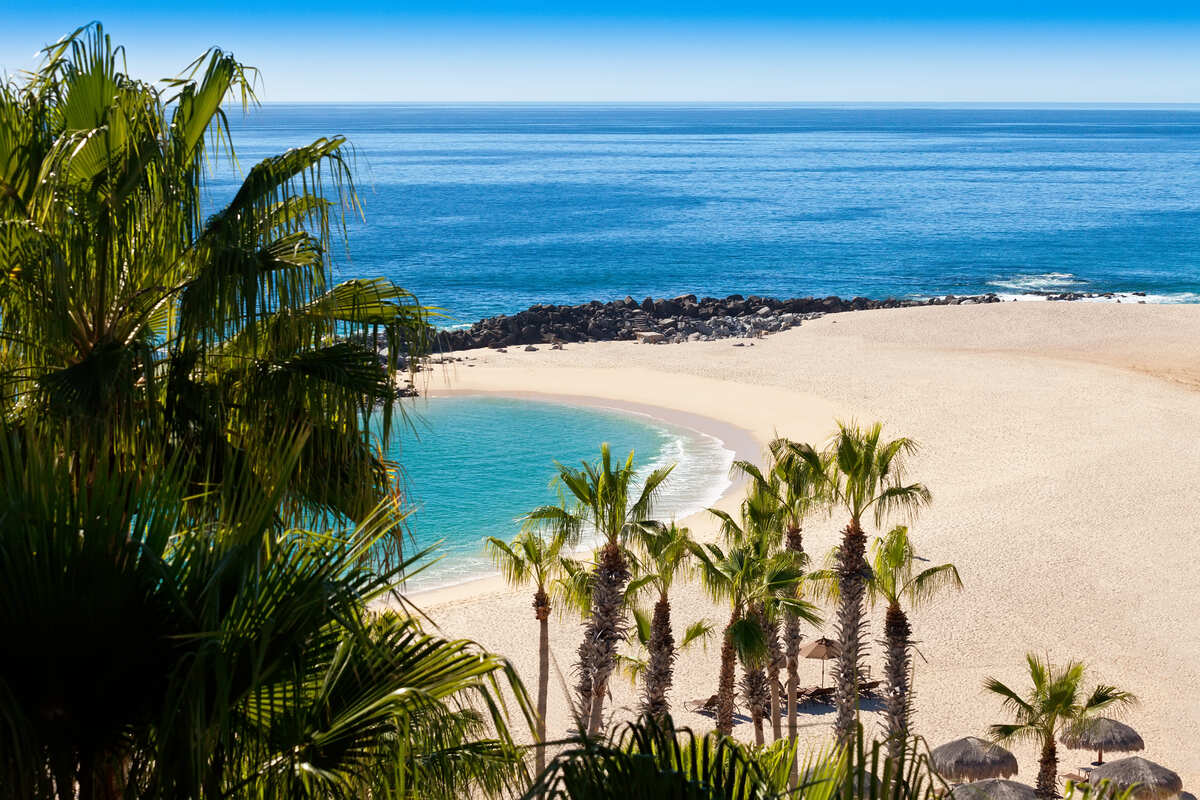
    Picturesque Beach In Cabo San Lucas, Los Cabos, Mexico, Latin America

    The proliferation of the foul-smelling seaweed tarnishes the typically-pristine beaches, accumulating in large deposits on the white sands like stains, and at times, they spread so disruptively beaches have to be closed so more intense cleaning can be carried out.

    Still, there are four incredible beach hotspots where sargassum is unlikely to be a major concern for you if it will be a concern at all:

    Los Cabos

    Beautiful Beach In Los Cabos, Mexico, Latin America

    A laid-back leisure destination in the Mexican Pacific, the twin cities of Cabo San Lucas and San Jose del Cabo, which together form the upscale ‘Los Cabos‘, are best known for their luxury hotels, world-renowned wellness scene and abundant nature.

    It is where several iconic natural wonders are located, including marine preserve Cabo Pulmo and the ‘Arco’ in Cabo San Lucas, an arched rock formation rising out of the azure waters, and it’s been challenging Cancun for the title of Mexico’s number one resort spot for a while now.

    los cabos beach

    The fact that Cabo does not see any seaweed may help it overtake the Quintana Roo giant in the coming months, as the Pacific is colder than the tropical Caribbean, which is part of the Atlantic, where sargassum originates.

    In short, the worrying phenomenon is not observed in Cabo, and the beaches remain an unspoiled shade of gold year-round.

    Mazatlan

    A fast-growing beach destination in the state of Sinaloa, Mazatlan also straddles the Pacific coast, meaning sargassum should be the last of your concerns when vacationing here.

    Man walking along beach in Mazatlan

    Additionally, the beaches are remarkably clean, as ‘Maz’ is nowhere near as popular as jam-packed Cancun.

    If you’re looking for charming coastal zones to bask in that Mexican sun, the Golden Zone and Cerritos should be at the top of your bucket list.

    Teeming with sunbathers and swimmers this time of year, they offer foreign visitors a lively social scene, as well as a high concentration of beachfront restaurants, with the best seafood you’ll ever have, and relatively affordable condo rentals.

    beach boardwalk in Mazatlan

    Besides being sargassum-free, Mazatlan’s true charm lies in its mix of Modern and Old Worlds: the historic center is dominated by colorful colonial-era buildings dating back centuries, yet the beachfront is lined by high-rises and Mexico’s usual palm-lined malecon.

    Puerto Vallarta

    Our third pick is, surprise, another Pacific gem: Puerto Vallarta has zero sargassum this summer.

    On the other hand, it is teeming with life and activity, with trendy bars that overflow with young, sociable tourists, and an upscale, well-frequented boardwalk leading to one of Mexico’s most scenic beaches.

    puerto vallarta from above

    The heart of town is the Bohemian Zona Romantica, where most of the entertainment venues and winding cobbled streets are, as well as the beautiful traditional architectural and landmark buildings, such as the magnificent Church of Our Lady of Guadalupe.

    Beaches in PV (as it is known in its short term) may be protected against the invading seaweed, but that’s not to say they are perfectly serene.

    Beach conditions can vary day to day, where one day might be perfect and the next may have undercurrents ready to wash you away. Travelers are being urged to be more cautious when swimming in the area, as there may be strong undercurrents.

    Playa Las Animas in Mexico. It is a beautiful beach in the southern zone of Puerto Vallarta.

    Regrettably, there have been some casualties lately, especially tourists who are not fully aware of the risks, or who choose to ignore the black and red flags perched on the sands.

    Learn more about the risks, and how to improve your safety on local PV beaches here.

    Isla Mujeres

    We know what you’re thinking.

    Isla Mujeres is a Caribbean destination, so it can’t possibly be free of sargassum at the peak of seaweed season when, well, the Caribbean is the most heavily affected sea… right?

    palm tree on isla mujeres beach

    We’re glad to report that’s a common misconception, as despite the Caribbean’s long-standing issue with the smelly algae, Isla Mujeres in particular is largely cordoned off due to its strategic geographical location.

    Much of the sargassum that will batter the mainland coast will generally miss Mujeres altogether, as it the ocean currents that pass the island do not carry the seaweed, the small amount that does make landfall is a lot less noticeable.

    Additionally, Isla Mujeres is a tiny island, only 4.3 miles long and 2,130 feet wide, meaning beaches do not extend for miles on end as far as the eyes can see, and there’s not a lot of cleaning to do every morning following whatever moderate overnight arrival of sargassum.

    ↓ Join Our Community ↓

    The Travel Off Path Community FB group has all the latest travel news, conversations, and Q&A’s happening daily! 

    Travel-off-Path-group-1-1
    SUBSCRIBE TO OUR LATEST POSTS

    Enter your email address to subscribe to Travel Off Path’s latest breaking travel news, straight to your inbox.

    This article originally appeared on TravelOffPath.com

    Opinions expressed here are the author’s alone, not those of any bank, credit card issuer, hotel, airline, or other entity. This content has not been reviewed, approved or otherwise endorsed by any of the entities included within the post.

    [ad_2]

    Source link

  • Tourists Warned That Sargassum Will Invade Mexico And Florida Beaches This Spring

    Tourists Warned That Sargassum Will Invade Mexico And Florida Beaches This Spring

    [ad_1]

    Share The Article

    Last Updated

    If you are on your own way or have already taken a trip to the beautiful beaches of Florida or Mexico this month, you couldn’t have timed your vacation better.

    Travelers fork over huge amounts of money to visit the best beaches, but sometimes Mother Nature has other plans.

    Hurricanes or untimely rain are one thing, but icky, smelly sargassum can ruin the whole vibe of a picture-perfect sunny beach getaway.

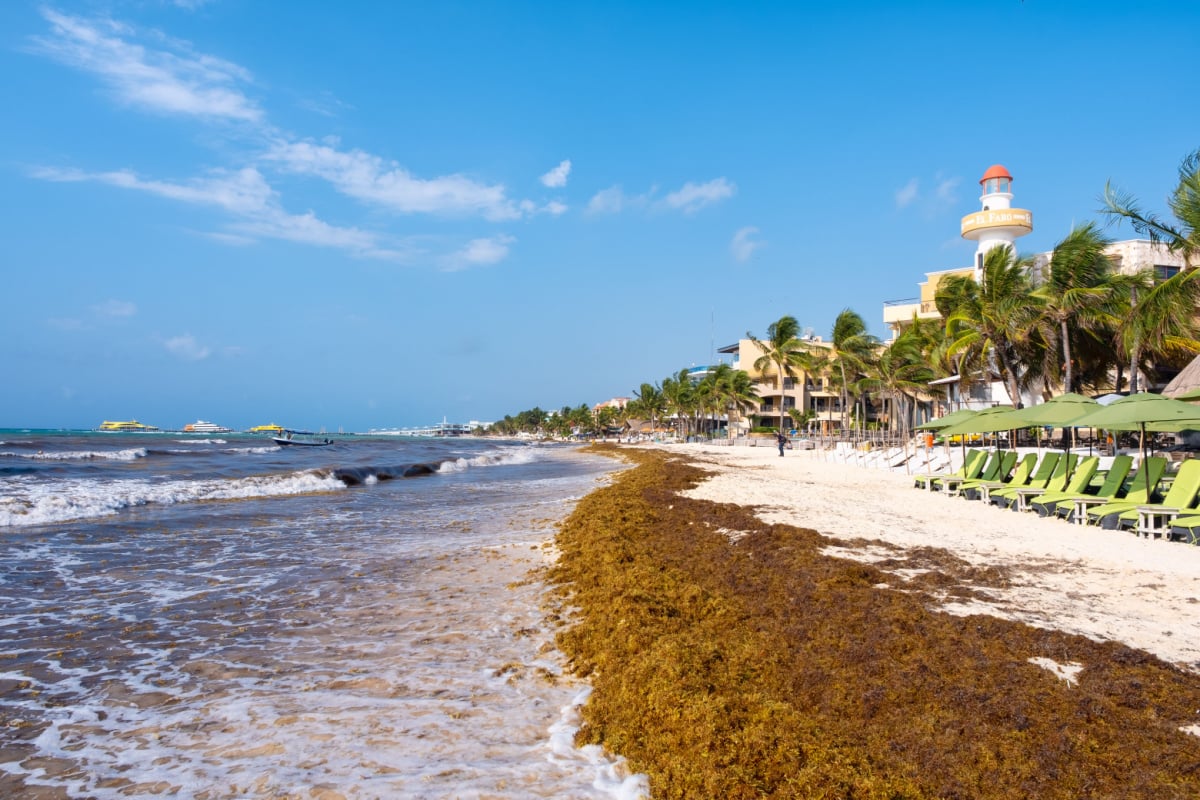
    sargassum on beach in playa del carmen

    Bits of seaweed are bound to wash up from time to time, but sargassum is an unsightly brown seaweed that tends to be more like an aquatic invasion.

    For those planning on heading to Florida or Mexico, experts from the University of South Florida (USF) have been monitoring the sargassum blooms and providing reports each month.

    Popular Beaches Affected This Spring

    tourists and sargassum on florida beach

    Whether you’re packing a passport or not, some of the most popular beaches this spring are expected to see brown goop wash ashore.

    Spring Breakers, in particular, always seem to have Florida and Mexico at the top of the list and that’s exactly where tourists are being warned about.

    As the giant blobs of sargassum make their way to land through the Caribbean, travelers still have time to alter their plans or, at the very least, change their expectations.

    Florida is expected to be directly impacted by April, according to USF. Although, southwest Florida, including the Keys, may not see sizable amounts until late April or May.

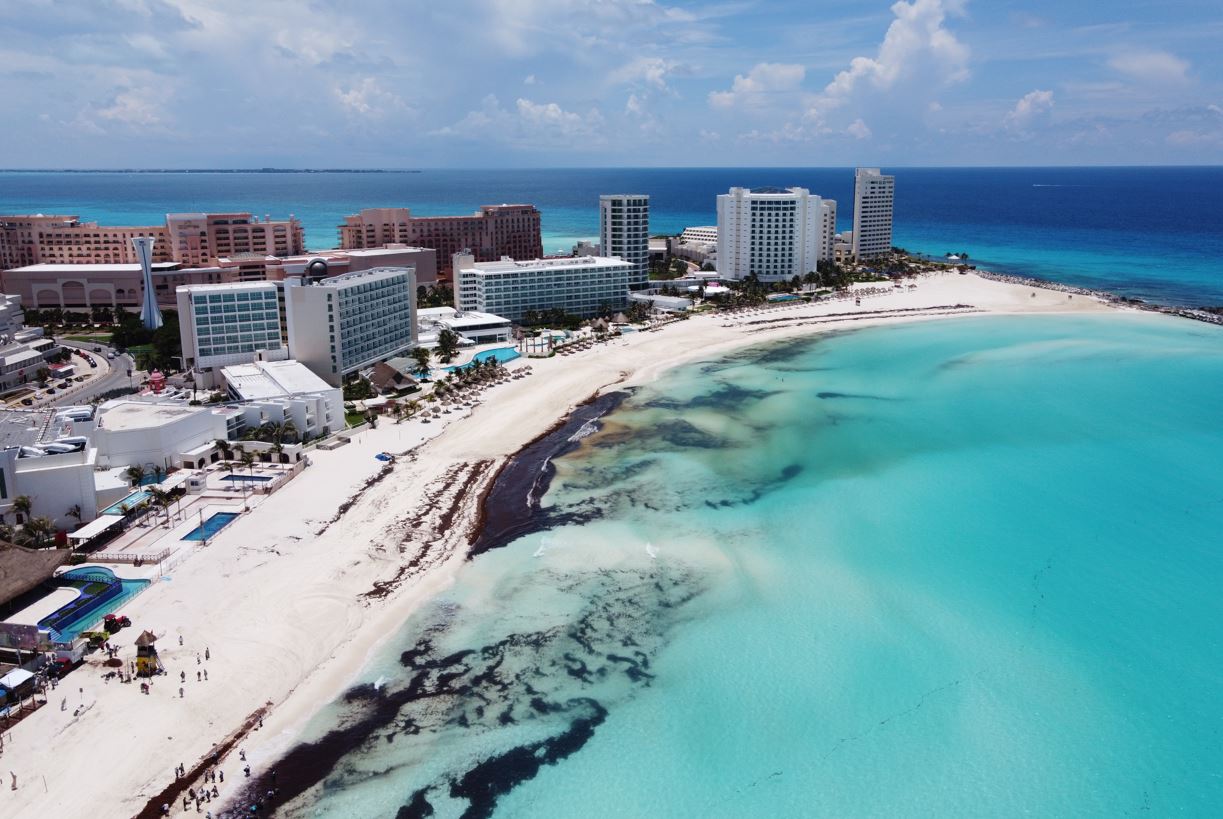
    cancun beach lined with piles of sargassum

    Cancun, for example, has already been hit earlier than expected.

    Mexico’s top beach destination has some of the most out-of-this-world blue waters imaginable, and it is close to the States.

    Given it’s the most popular international vacation spot for Americans to visit, many will surely be disappointed with the eyesore of sargassum ruining their ocean views.

    Even though beaches are being impacted, sargassum is no stranger to Mexico’s shores; Tulum and Playa del Carmen are always affected, too.

    The Good News

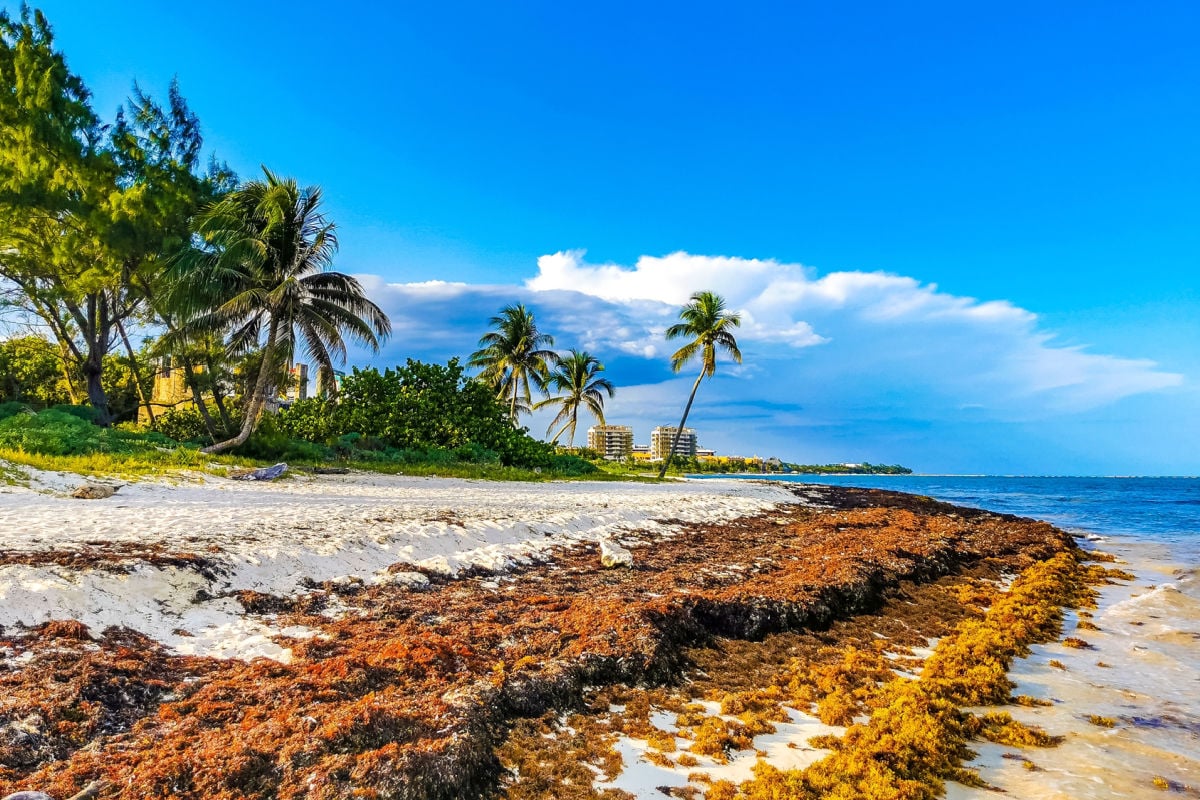
    sargassum washed up on beach in mexico

    This isn’t the first rodeo for these destinations. When spring arrives, somebody somewhere across major beach destinations is preparing for worst-case sargassum scenarios.

    As these vacation spots thrive on tourism, it’s not like they want to deal with the bad press of ugly, stinky beaches.

    While there doesn’t seem to be a bulletproof solution, there are some strategies being implemented, including the installation of barriers and cleanup crews.

    Even the Mexican Navy is getting involved to better protect beaches to give tourists the best possible vacation experience.

    sargassum in miami

    Sargassum arriving on popular beaches is inevitable, but the good news is substantially less is expected to arrive this spring than previous years.

    Experts Continue To Monitor Sargassum Movement

    Each destination handles sargassum invasions their own way, but experts will continue to monitor its movement across the ocean and update accordingly.

    Until then, it’s wise to check the latest reports on whichever destination you’re planning a beach trip to and temper expectations just in case.

    playa del carmen sargassum

    Mother Nature is undefeated, after all. For now, the biggest blooms seem to be expanding through the East Atlantic and Caribbean Sea, which just so happens to have some incredible beaches in its path.

    USF has issued some very insightful reports, but the March bulletin has not yet been issued.

    What About The Gulf?

    Florida may be super popular but the U.S. is home to some awesome beach getaways, including Florida’s neighbor Alabama, which is surging in popularity already.

    The latest reports show minuscule amounts of sargassum in the Gulf of Mexico, where there are many beach vacation destinations to choose from.

    coastline of gulf shores alabama

    Of course, there is no guarantee, but this region may serve as a great alternative beach spot. With some highly underrated and super cheap beach getaways, sargassum-free vacations are not hard to find with just a little digging.

    As for Mexico, Los Cabos is one of the most popular beach destinations for Americans and not at risk of seeing sargassum given its prime location on the southern tip of Baja.

    ↓ Join Our Community ↓

    The Travel Off Path Community FB group has all the latest travel news, conversations, and Q&A’s happening daily! 

    Travel-off-Path-group-1-1
    SUBSCRIBE TO OUR LATEST POSTS

    Enter your email address to subscribe to Travel Off Path’s latest breaking travel news, straight to your inbox.

    This article originally appeared on TravelOffPath.com

    Opinions expressed here are the author’s alone, not those of any bank, credit card issuer, hotel, airline, or other entity. This content has not been reviewed, approved or otherwise endorsed by any of the entities included within the post.

    [ad_2]

    Source link
  • These 3 Destinations Could See Record-Breaking Sargassum Invading Beaches Soon 

    These 3 Destinations Could See Record-Breaking Sargassum Invading Beaches Soon 

    [ad_1]

    Share The Article

    Last Updated

    At certain times of the year sargassum seaweed is unavoidable in many Caribbean beach destinations. But a massive seaweed invasion has the potential to ruin your vacation.  

    These 3 Destinations Could See Record Breaking Sargassum Invading Beaches Soon

    Sargassum seaweed can impact the appearance of your favorite beach; it can be smelly, and in some cases, it can even create a hazardous environment for humans.  

    Hoping to plan your next vacation to avoid sargassum? 

    A new report has found that these 3 destinations could see record-breaking sargassum seaweed invading beaches soon:  

    Mexico

    The unattractive and inconvenient sargassum is expected to arrive in Mexico by April or May.

    This could result in beaches that are overrun with brown seaweed and are difficult for travelers to enjoy.  

    The good news is that Mexican authorities take sargassum seaweed very seriously

    Cleaning the beach with wheelbarrow pitchfork Mexico Caribbean

    The Quintana Roo Technical Council for Sargassum Management is already following the path of this year’s sargassum mass and plans to deal with this seaweed before it reaches the most popular beaches in the region.  

    Tulum has invested heavily in 5 new anti-sargassum vessels and other equipment to stop any of the sargassum from reaching the shore.  

    If you want to plan a sargassum-free vacation to Mexico in April or May then you could consider traveling to Mexico’s Pacific coast and destinations like Puerto Vallarta rather than to the Mexican Caribbean. 

     seaweed sea weed grass sargazo in Playa del Carmen Quintana Roo Mexico.

    Pacific beaches aren’t impacted by sargassum seaweed in the Atlantic because this seaweed doesn’t migrate to the Pacific. Some of the prettiest beaches in Mexico are also located here, although the waters are a darker blue color and not quite as warm as they are in the Caribbean.   

    Florida  

    Florida is the U.S. State most widely impacted by sargassum, and just like in Mexico, the report says that it will arrive on Floridian beaches by April or May this year.  

    Most municipalities have plans in place for the removal of sargassum. This includes the use of tractors to manually remove as much sargassum from the beaches as possible. But when too much sargassum piles up on Florida’s beaches this can restrict beach access.  

    Sargassum on Florida beach

    Sargassum is unpredictable. Though forecasters can say when they think it might appear, it is impossible to know exactly when, where, and how much seaweed will wash up on Florida’s beaches at any given time.  

    But you might want to consider booking a resort with a good pool complex so you’ll still have somewhere to relax and unwind by the water if sargassum makes relaxing on the beach impossible.  

    Caribbean 

    Although less widely publicized than in Mexico, the Caribbean struggles with sargassum seaweed on its beaches.  

    The large sargassum mass is expected to arrive in the northern Antilles by the beginning of February and will reach the Dominican Republic in March.  

    Dominican Republic Bavaro Punta cana provinces La Altagracia. Seaweed on the beach. Algae sargassum. Caribbean ecological problem.

    Jamaica, The Bahamas, and the Dominican Republic are 3 of the Caribbean islands most impacted by sargassum, but relatively few areas of the Caribbean aren’t affected.  

    Both manual labor and machinery are used to remove sargassum from beaches in the Caribbean before being moved to locations away from the beach.  

    Why Is Sargassum Problematic?  

    Sargassum seaweed is a naturally occurring brown algae bloom. Wondering whether you should still plan a vacation if your chosen resort beach is covered in sargassum seaweed?  

    Sargassum and beach chairs on laya del Carmen beach

    While sargassum serves an important purpose when it is in the ocean on the shore, it is unattractive and releases a smell that is similar to either manure or rotten eggs. Not exactly the relaxing beach vacation you were dreaming of!  

    As well as being unsightly, there are also risks when beaches are covered in sargassum. Although sargassum beaches are generally safe to swim in, they look brown and uninviting. The sargassum can also feel uncomfortable when it scratches against your skin.  

    After 48 hours of being on the beach, sargassum starts to rot. When it rots it releases hydrogen sulfide which is a skin irritant and can also be hazardous to anyone with a respiratory problem like asthma.  

    Sargassum Filled Beach, Sargassum Season Concept

    But many resorts work hard to remove sargassum from their beaches for the comfort and convenience of their guests.  

    You should consider checking with your hotel or the local authorities that your closest beach is located in to make sure they have a management plan in place for the sargassum’s removal. 

    Beach webcams can also be handy for assessing what the current sargassum situation is in your chosen destination. And arrange to spend time by the pool or other activities away from the beach so that your vacation won’t be ruined if the beach isn’t accessible during your trip.  

    Read More:

    Top 5 Travel Insurance Plans Starting At $10 Per Week

    How To Easily Earn Points For Free Travel

    ↓ Join Our Community ↓

    The Travel Off Path Community FB group has all the latest reopening news, conversations, and Q&A’s happening daily! 

    Travel-off-Path-group-1-1
    SUBSCRIBE TO OUR LATEST POSTS

    Enter your email address to subscribe to Travel Off Path’s latest breaking travel news, straight to your inbox.

    This article originally appeared on TravelOffPath.com

    [ad_2]

    Source link

  • Sargassum Seaweed Has Arrived On Florida Beaches And Will Get Worse

    Sargassum Seaweed Has Arrived On Florida Beaches And Will Get Worse

    [ad_1]

    Share The Article

    Last Updated

    For weeks, experts have been warning about giant masses of sargassum coming to Florida, the largest ever seen, and it has already started to hit the coasts. 

    Footsteps next to sargassum seaweed on the shore

    According to the information shared by Fox 35 Orlando, piles of this seaweed are covering the American coast, and it is not even peak season yet. 

    Usually, the brown algae begin to appear on shorelines by the end of May or June, but it has come a bit earlier than expected this year.

    Travelers visiting the beaches affected by sargassum seaweed are not having the vacation experience they expected, and the situation is already creating problems for locals, tourists, businesses, and the government since the safe removal of seaweed requires large investments.

    Experts do not recommend touching the seaweed as it can be home to sea creatures that can produce rashes, and when it rots, it can emit toxic gases.

    Sunset in Naples Beach

    Florida isn’t alone, as other popular destinations like Cancun in Mexico have also experienced early sargassum seaweed arrival

    Sargassum In Florida

    The presence of sargassum seaweed has already been reported on multiple beaches in Florida.

    On the East Coast, Cocoa Beach has been one of the most popular beaches now covered with Sargassum seaweed. According to travelers at the beach, it is there in large amounts.

    TikTok users have also shared recent videos with proof of the current situation. 

    Top 5 Travel Insurance Plans For 2023 Starting At $10 Per Week

    @blakelodolce Seaweed in cocoa beach #seaweed #seaweedblob #trending #fypシ #cocoabeach #florida #cocoabeachflorida #beachvibes #beachlover #oceanlife #gross #ewww #waves #surf #cops #911calls ♬ original sound – Blake LoDolce

    The algae have also reached the west of Florida and arrived at the Gulf Coast beaches.

    The account AllThingEmeraldCoast has also shared a video of Pensacola Beach, from just a few days ago, with the text: “Sargassum is starting to show up on Pensacola Beach 4/11/23, this year is the largest bloom in recorded history—I have a feeling it’s about to get a lot worse.”

    @allthingsemeraldcoast Yikes! #sargassum #seaweed #seaweedtiktok #pensacolabeach #emeraldcoast #allthingsemeraldcoast #beach #florida ♬ Creepy and simple horror background music(1070744) – howlingindicator

    South Beach in Miami also has piles of sargassum across the coast. 

    The account South Beach Helicopters shared recent aerial views of the seaweed washed up off the coast and beachgoers walking and swimming next to large masses of sargassum.

    @southbeachhelicopters Miami is experiencing Sargassum! ????????️???? #miami #sargassum #florida #learnontiktok #learnwithtiktok #fyp #foryou #viral ♬ Spooky, quiet, scary atmosphere piano songs – Skittlegirl Sound

    More Seaweed Expected

    This is just the beginning of the sargassum seaweed season, and experts predict that once we approach the hot summer months, more algae will be found at the beaches. 

    Oceanography professor Dr. Chuanmin Hu said: “When we enter the summer months, by end of May or early June, I’d expect more sargassum along the ocean side of the Florida Keys and the east coast of Florida.”

    More masses of sargassum seaweed could be coming from the eastern Atlantic. It’s hard to determine exactly how much and when, but local authorities are already taking measures to remove the seaweed from the beaches. 

    sargassum seaweed from underwater

    Experts are still researching and trying to understand this phenomenon, as it is getting worse than in previous years.

    Is It Dangerous?

    This type of macroalgae is usually not dangerous, but it can be under certain circumstances. 

    When it reaches the shore and rots, after a few days under the sun, it produces hydrogen sulfide, and besides smelling very bad, this gas can cause respiratory problems in some people that are sensitive to it.

    This seaweed is also home to certain sea creatures that can produce rashes and blisters on the skin, so it is not advised to touch it. 

    Hands holding sargassum

    Another risk is related to wildlife. While in the sea, the sargassum can provide shelter and help certain species breed, large piles of this alga on the coast can also threaten turtle nests in Florida. 

    And, while many consider a solution to eating these algae and there are multiple tutorials and videos online on how to cook it, experts have warned about the presence of plastic and metals—like arsenic and cadmium in it.

    Ed Phlips, an algae researcher at the University of Florida, said that  “it picks up all sorts of bacteria and algae and small plants and animals as it moves around.”

    Truck removing sargassum in Miami

    Traveler Alert: Don’t Forget Travel Insurance For Your Next Trip!

    ↓ Join Our Community ↓

    The Travel Off Path Community FB group has all the latest reopening news, conversations, and Q&A’s happening daily! 

    Travel-off-Path-group-1-1
    SUBSCRIBE TO OUR LATEST POSTS

    Enter your email address to subscribe to Travel Off Path’s latest breaking travel news, straight to your inbox.

    This article originally appeared on TravelOffPath.com

    [ad_2]

    Source link

  • Brown Smelly Seaweed Called Sargassum Invading Most Popular Caribbean Destinations

    Brown Smelly Seaweed Called Sargassum Invading Most Popular Caribbean Destinations

    [ad_1]

    Share The Article

    Last Updated

    A brown, smelly seaweed called sargassum is invading most popular destinations in the Caribbean, potentially ruining the vacations of millions of travelers this summer. Whilst most travelers head to the Caribbean in search of soft sand, clear blue seas and a vacation that’s a treat for all the senses, the reality this summer could be quite different – with top destinations such as Cancun, Punta Cana and Jamaica all recently succumbing to long, tough battles with the foul smelling algae. 

    Whilst it isn’t exactly a new problem, the unfortunate timing of the sargassum invasion comes just as many travelers were looking forward to going overseas once more after years of travel hell during the pandemic, meaning their long awaited travels are in serious jeopardy of being spoiled by the seaweed. Here’s a look at what sargassum is, which destinations have been affected by it and how the battle to remove it from beaches is going. 

    What Is Sargassum? Information For Travelers

    Sargassum is a type of brown algae that frequently washes up on beaches across the Caribbean and even the United States. As the mountains of beached seaweed rots, it releases hydrogen sulfide – a gas which has an unpleasant odor similar to rotten eggs. Despite being completely harmless to humans, the unsightly and stinky nature of the rotting sargassum means that it runs the risk of ruining beach based activities for potentially millions of travelers this summer. 

    Where Is Sargassum Causing Problems? What Travelers Should Know

    Sargassum is a serious issue in Mexico, where the presence of the seaweed has a huge negative impact on tourism. Cancun is expecting its worst sargassum season in five years, which is bound to affect local tourism levels and see travelers pick more sargassum-free areas to visit instead, such as Los Cabos. Extreme solutions have been mooted, such as the installation of a 60km-long sea barrier, as the country works to address the issue.

    The Mexican Navy has also been working to prevent the seaweed from reaching the beach for years, with little success. This year, by using tools such as boats and nets, the Navy only managed to collect around 1% of the total amount of sargassum from the coast. The Navy cited equipment failures as the reason they have failed to prevent more from washing up on the beach, and lead them to conclude that they have failed in their efforts.

    However, Mexico isn’t the only country to be suffering from the stinky seaweed. Sargassum has also invaded several beaches in Punta Cana, Dominican Republic, with large concentrations found near the Iberostar Selection Bavaro and the Bahia Principe Punta Cana hotels in particular. Rather than the pristine beaches travelers are used to in the region, they are faced with unappealing, smelly, brown beaches – with the problem expected to worsen in the coming months.

    Sargassum washed up on beach

    Like Mexico, the Dominican Republic has tried in vain to control the spread of sargassum. A 12.7km barrier was installed to prevent it from reaching beaches, and armies of hotel workers attempted to clean them up, but it is expensive and time-consuming work. Like it has in previous years, the prevalence of sargassum is expected to have a negative impact on the number of hotel bookings in the region. 

    Jamaica’s National Environment and Planning Agency (NEPA) also warned that the country could be set for a significant influx of sargassum over the coming months. Several beaches in the parishes of St. Mary, Portland, St. Thomas and St. Catherine are already suffering from its presence, with the agency explaining that the prevalence of sargassum in the Caribbean is part of the “new normal”. Barbados too is also suffering from a sargassum invasion, with the problem expected to spread further throughout the region this summer. 

    Read More:

    Top 10 Destinations Americans Can Travel To Without Any Testing This Summer

    Travel Insurance That Covers Covid-19 For 2022

    The Most Recent Travel Advisories For Your Favorite Caribbean Destinations

    ↓ Join the community ↓

    The Travel Off Path Community FB group has all the latest reopening news, conversations, and Q&A’s happening daily! 

    Travel-off-Path-group-1-1
    SUBSCRIBE TO OUR LATEST POSTS

    Enter your email address to subscribe to Travel Off Path’s latest breaking travel news, straight to your inbox

    Disclaimer: Current travel rules and restrictions can change without notice. The decision to travel is ultimately your responsibility. Contact your consulate and/or local authorities to confirm your nationality’s entry and/or any changes to travel requirements before traveling.  Travel Off Path does not endorse traveling against government advisories

    [ad_2]

    Source link