Tag: Seaweed

  • Sargassum Seaweed Has Arrived On Florida Beaches And Will Get Worse

    Sargassum Seaweed Has Arrived On Florida Beaches And Will Get Worse

    [ad_1]

    Share The Article

    Last Updated

    For weeks, experts have been warning about giant masses of sargassum coming to Florida, the largest ever seen, and it has already started to hit the coasts. 

    Footsteps next to sargassum seaweed on the shore

    According to the information shared by Fox 35 Orlando, piles of this seaweed are covering the American coast, and it is not even peak season yet. 

    Usually, the brown algae begin to appear on shorelines by the end of May or June, but it has come a bit earlier than expected this year.

    Travelers visiting the beaches affected by sargassum seaweed are not having the vacation experience they expected, and the situation is already creating problems for locals, tourists, businesses, and the government since the safe removal of seaweed requires large investments.

    Experts do not recommend touching the seaweed as it can be home to sea creatures that can produce rashes, and when it rots, it can emit toxic gases.

    Sunset in Naples Beach

    Florida isn’t alone, as other popular destinations like Cancun in Mexico have also experienced early sargassum seaweed arrival

    Sargassum In Florida

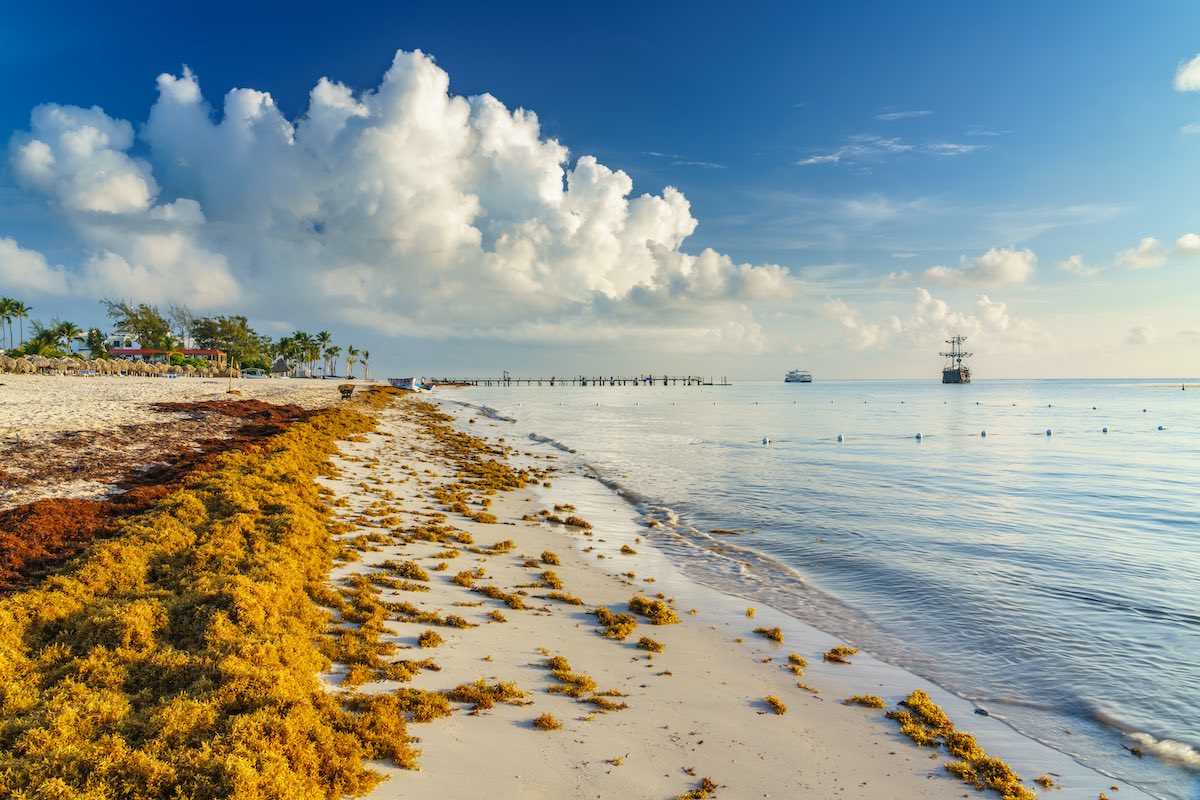
    The presence of sargassum seaweed has already been reported on multiple beaches in Florida.

    On the East Coast, Cocoa Beach has been one of the most popular beaches now covered with Sargassum seaweed. According to travelers at the beach, it is there in large amounts.

    TikTok users have also shared recent videos with proof of the current situation. 

    Top 5 Travel Insurance Plans For 2023 Starting At $10 Per Week

    @blakelodolce Seaweed in cocoa beach #seaweed #seaweedblob #trending #fypシ #cocoabeach #florida #cocoabeachflorida #beachvibes #beachlover #oceanlife #gross #ewww #waves #surf #cops #911calls ♬ original sound – Blake LoDolce

    The algae have also reached the west of Florida and arrived at the Gulf Coast beaches.

    The account AllThingEmeraldCoast has also shared a video of Pensacola Beach, from just a few days ago, with the text: “Sargassum is starting to show up on Pensacola Beach 4/11/23, this year is the largest bloom in recorded history—I have a feeling it’s about to get a lot worse.”

    @allthingsemeraldcoast Yikes! #sargassum #seaweed #seaweedtiktok #pensacolabeach #emeraldcoast #allthingsemeraldcoast #beach #florida ♬ Creepy and simple horror background music(1070744) – howlingindicator

    South Beach in Miami also has piles of sargassum across the coast. 

    The account South Beach Helicopters shared recent aerial views of the seaweed washed up off the coast and beachgoers walking and swimming next to large masses of sargassum.

    @southbeachhelicopters Miami is experiencing Sargassum! ????????️???? #miami #sargassum #florida #learnontiktok #learnwithtiktok #fyp #foryou #viral ♬ Spooky, quiet, scary atmosphere piano songs – Skittlegirl Sound

    More Seaweed Expected

    This is just the beginning of the sargassum seaweed season, and experts predict that once we approach the hot summer months, more algae will be found at the beaches. 

    Oceanography professor Dr. Chuanmin Hu said: “When we enter the summer months, by end of May or early June, I’d expect more sargassum along the ocean side of the Florida Keys and the east coast of Florida.”

    More masses of sargassum seaweed could be coming from the eastern Atlantic. It’s hard to determine exactly how much and when, but local authorities are already taking measures to remove the seaweed from the beaches. 

    sargassum seaweed from underwater

    Experts are still researching and trying to understand this phenomenon, as it is getting worse than in previous years.

    Is It Dangerous?

    This type of macroalgae is usually not dangerous, but it can be under certain circumstances. 

    When it reaches the shore and rots, after a few days under the sun, it produces hydrogen sulfide, and besides smelling very bad, this gas can cause respiratory problems in some people that are sensitive to it.

    This seaweed is also home to certain sea creatures that can produce rashes and blisters on the skin, so it is not advised to touch it. 

    Hands holding sargassum

    Another risk is related to wildlife. While in the sea, the sargassum can provide shelter and help certain species breed, large piles of this alga on the coast can also threaten turtle nests in Florida. 

    And, while many consider a solution to eating these algae and there are multiple tutorials and videos online on how to cook it, experts have warned about the presence of plastic and metals—like arsenic and cadmium in it.

    Ed Phlips, an algae researcher at the University of Florida, said that  “it picks up all sorts of bacteria and algae and small plants and animals as it moves around.”

    Truck removing sargassum in Miami

    Traveler Alert: Don’t Forget Travel Insurance For Your Next Trip!

    ↓ Join Our Community ↓

    The Travel Off Path Community FB group has all the latest reopening news, conversations, and Q&A’s happening daily! 

    Travel-off-Path-group-1-1
    SUBSCRIBE TO OUR LATEST POSTS

    Enter your email address to subscribe to Travel Off Path’s latest breaking travel news, straight to your inbox.

    This article originally appeared on TravelOffPath.com

    [ad_2]

    Source link
  • These Are The Best Beaches to Visit Around Cancun For Less Seaweed

    These Are The Best Beaches to Visit Around Cancun For Less Seaweed

    [ad_1]

    Share The Article

    Last Updated

    Having their beach holidays ruined by seaweed is one of the main concerns for Americans heading to Cancun. Authorities may have implemented a number of measures to ensure that the sea retains its turquoise hue, but the arrival of some sargassum is still inevitable. Fortunately, there are four beaches in the area expecting less seaweed for the season.

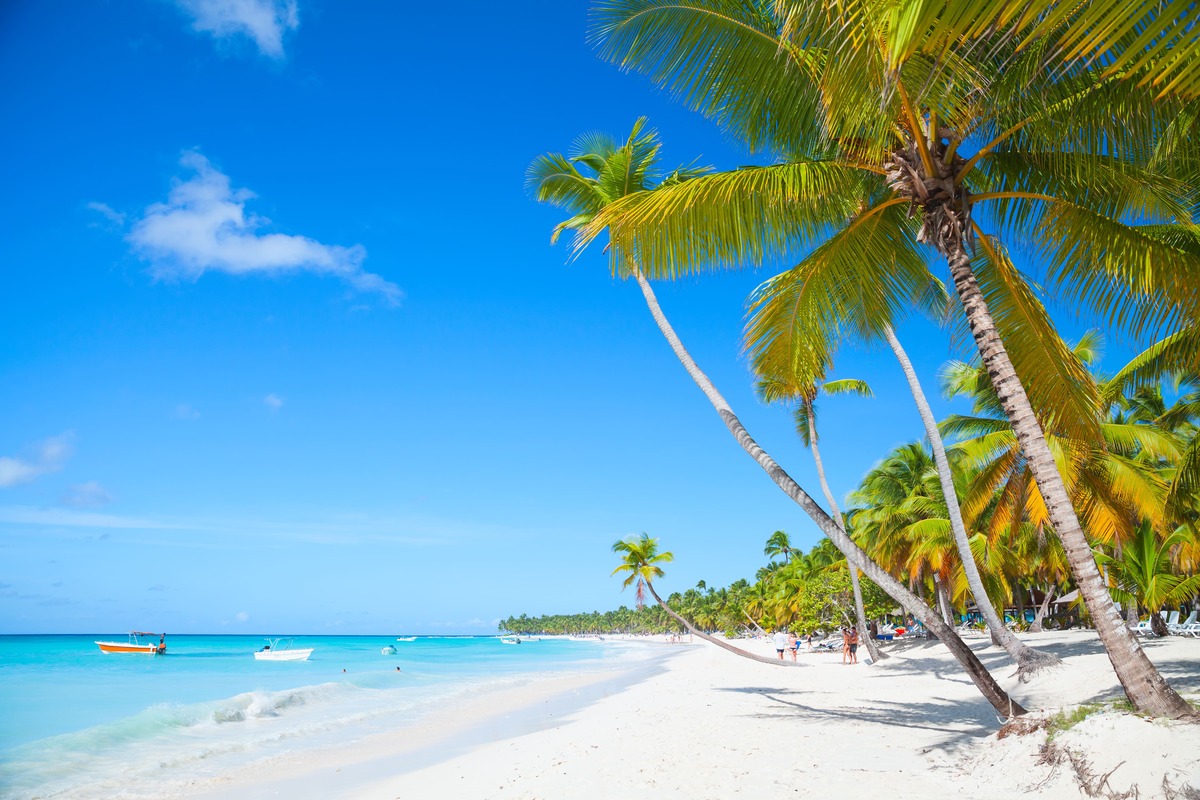
    Beautiful White Sand Beach Lined With Palm Trees Facing A Crystal Clear Sea Somewhere In The Caribbean, Unspecified Location

    Sargassum is a smelly brown algae that reproduces and makes landfall along the Mexican Caribbean when sea temperatures begin rising between April and October. Despite being harmless, beachgoers often complain about the algae’s putrid smell, compared to rotten eggs, and how it ruins the pristine look of the white sands.

    This year, the phenomenon recurred earlier than expected, but there are still a handful of swimming spots the invading agent has missed:

    Sargassum Arrives Earlier To Cancun

    A Beach In Isla Mujeres With Moderate Seaweed Gathering Ashore As People Swim In The Distance, Mexican Caribbean, Quintana Roo State, Mexico

    Whether it’s adding new barriers, investing in state-of-the-art technology, or manually removing the algae, the Quintana Roo Government has made fighting sargassum a top priority, especially after reports showed a record increase in algae levels would impact vacations in the Mexican Caribbean in 2023.

    Sargassum season usually begins in April, culminating in the Northern Hemisphere summer before fading in winter, when landfall rates are negligible. This year, however, the seaweed arrived two months sooner, with the Cancun Sun reporting that some beaches in and around Cancun are facing ‘unprecedented quantities’ of the algae for the month of February.

    Top 5 Travel Insurance Plans For 2023 Starting At $10 Per Week

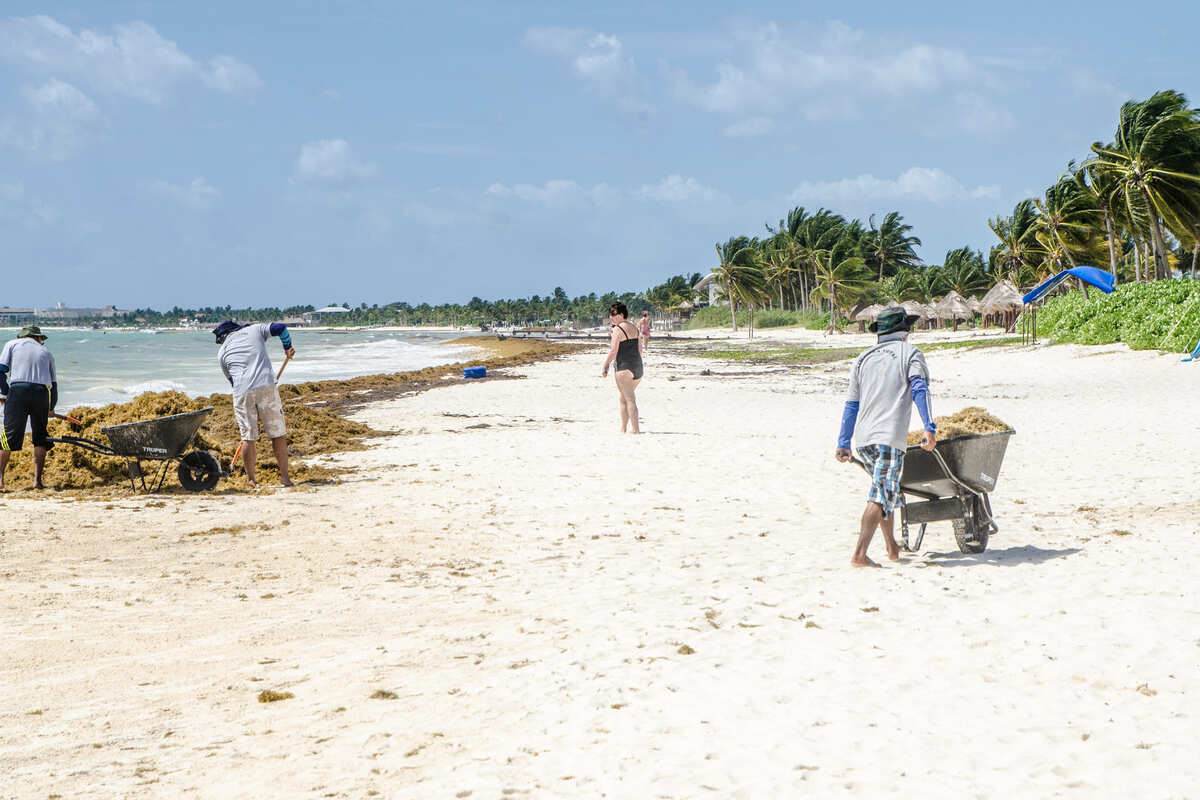
    Mexican Worker Removing Sargassum Seaweed From A Beach In The Mexican Caribbean, Mexico, As A Beachgoer Walks Into The Sea

    According to the latest update issued by the Quintana Roo Sargassum Monitoring Network, Playa Ballenas and Playa Delfines, two of the most popular beaches within driving distance of Cancun, have ‘abundant‘ levels of seaweed, which could be high enough to disrupt vacations and lead to closures. Four beaches seem to have been naturally shielded from the dreaded macro-organism, though.

    They are:

    • Playa Centro
    • Playa Sur
    • Playa Las Pedras
    • Playa Langosta
    Crystal Clear Ocean And A White Sand Beach In Isla Mujeres, Mexican Caribbean, Mexico

    These Four Beaches Will Be The Least Affected This Season

    Both Playa Centro and Playa Sur are beaches in Isla Mujeres, an island municipality off the coast of Cancun famous for its laid-back nature and luxury resorts that are more recluse. Due to its strategic location in an area where currents are not as powerful, Mujeres sees very little, if any, brown algae lining its shore.

    But why? seeing that it is so close to shore and the Cancun coastline is normally lined with dark patches?

    Cancun Coastline Shown Following A Sargassum Seaweed Landfall, Quintana Roo, Mexico

    One of the highest risk factors for sargassum landfall is strong winds and agitated seas, which bring the sargassum deposits ashore. Not only the aforementioned sandy crescents but the whole of Isla Mujeres has the least amount of sargassum in the entire Riviera Maya this season, making it the ideal destination for American sunseekers heading south of the border.

    On the mainland, the other two beaches, Las Perlas and Langosta, have been reporting ‘manageable’ sargassum levels. This means that seaweed cannot be avoided, but the impact is not so serious as to require the deployment of a round-the-clock cleaning task force or the introduction of heavy machinery to tackle the issue.

    Beach Cleaner Removing Sargassum Seaweed From A Beach

    The report also indicated ‘low to non-existent’ sargassum in Holbox, yet another small island close to Cancun. Holbox is famous for being a car-free haven, and it’s been recently recognized by Travel Off Path as one of Quintana Roo’s top five underrated beach destinations.

    In sum, your best bet for escaping the smelly algae when vacationing in the Mexican Caribbean is picking one of its paradisaical islands.

    How Well-Equipped Is Cancun?

    Tourists Chilling By The Beach In Cancun, Mexico

    Sargassum is a natural phenomenon in the tropics that regularly affects the Caribbean coast of Mexico, as well as neighboring countries, particularly in the lead-up to the humid summer months when the sea becomes warmer, and algae tend to spread at a faster rate. Other studies have suggested that, as a result of numerous factors, including global warming, 2023 might be ‘even worse’ than previous years.

    Luckily, Cancun and the surrounding towns have risen up to the challenge and are better equipped to manage the crisis. Over 150 cleaners have been employed in Cancun in the last few months to keep beaches untarnished, while Playa Del Carmen, where the concentration of sargassum is usually higher, has seen the installation of containers to store the material.

    Female Tourist With A Sun Hat Looking Happy On A Beach In The Mexican Caribbean, Mexico

    One thing is for certain: the local Government is sparing no effort in ensuring sands are as white as they can be and the oceans remain crystal-clear.

    Traveler Alert: Don’t Forget Travel Insurance For Your Next Trip!

    ↓ Join Our Community ↓

    The Travel Off Path Community FB group has all the latest reopening news, conversations, and Q&A’s happening daily! 

    Travel-off-Path-group-1-1
    SUBSCRIBE TO OUR LATEST POSTS

    Enter your email address to subscribe to Travel Off Path’s latest breaking travel news, straight to your inbox

    This article originally appeared on TravelOffPath.com

    [ad_2]

    Source link

  • Record Amount Of Seaweed Washing Up On Miami Beaches

    Record Amount Of Seaweed Washing Up On Miami Beaches

    [ad_1]

    Share The Article

    Last Updated

    Tons of sargassum seaweed have been invading the most popular beaches, including top destinations like Cancun and Puerto Rico, and ruining travelers’ vacations— or at least their beach expectations. 

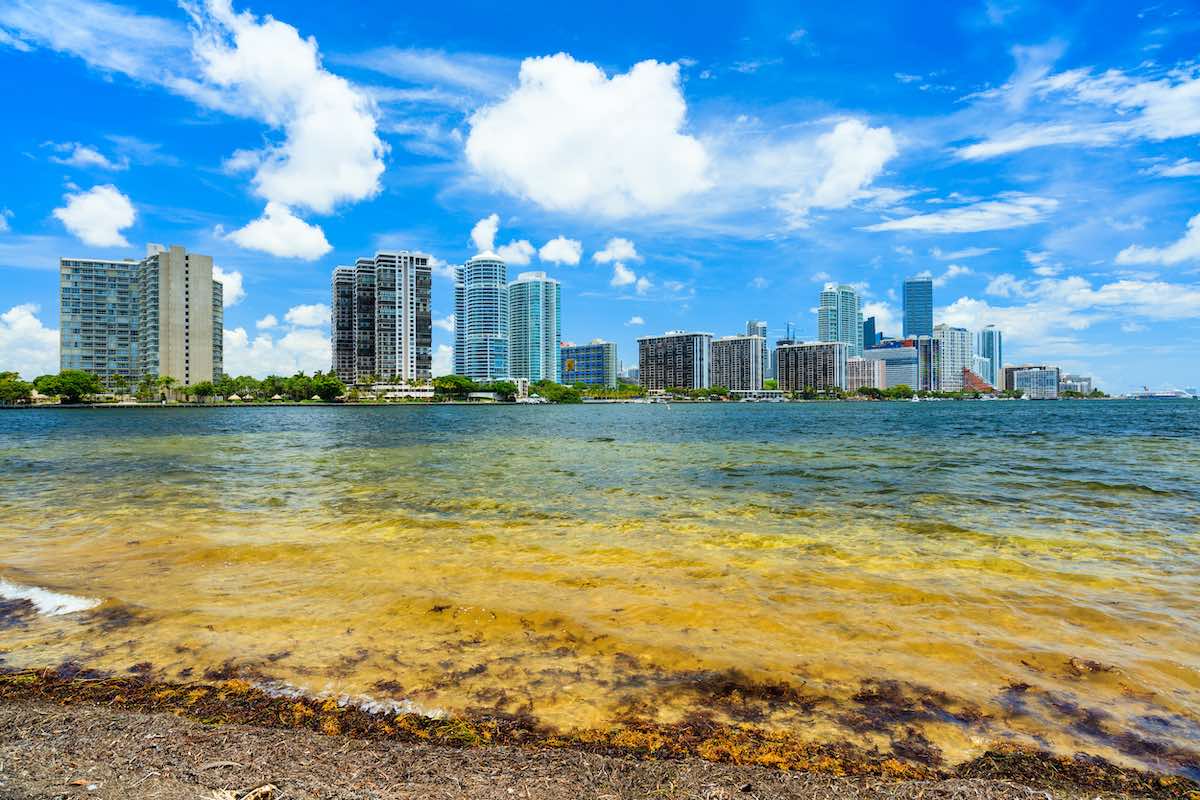
    These algae have also arrived in South Florida. Miami Beach has been one of the places where the sargassum has covered its white sand and pristine water, annoying tourists with its smell and unpleasant presence.

    Only in June, more than 24 tons of this seaweed were collected across the Atlantic coast, a record high compared to the previous year. 

    NBC News Channel interviewed beachgoers in Miami that weren’t impressed by the sargassum. Tana Suarez had spent some time on the beach this week and tried to swim but said: “It’s all over the place. We tried to go farther but the farther you get the more seaweed you’re gonna get all over.”

    Gigi Rodriguez, another frequent visitor said: “I’ve never seen it like this. Never.” Seasonal seaweed has been reaching the coast of Florida for a long time and has been significantly growing since 2011, but it has considerably increased its size and presence this year.

    The large amounts of sargassum across the Atlantic have been causing concern among authorities and experts worldwide. 

    What Travelers Must Know About Seaweed In Miami

    The Miami-Dade county recently published guidelines and relevant information about the sargassum seaweed on their official website. These are the most important facts and recommendations for travelers: 

    • Seaweed season in Miami is from March through October.
    • Coastal areas worldwide experience two tides per day. The second tide arrives in the afternoon and, if there is wind, it can bring the seaweed to the shoreline.
    • Authorities and workers at Miami-Dade Parks tackle the sargassum very early in the morning before beachgoers arrive. So, if you are in Miami, the best time to go to the beach would be in the morning after the seaweed has been cleaned out. 
    • According to experts, the great sargassum belt could be the “new norm” and should be expected in the following years. Miami lovers should consider the sargassum season when planning their trips to this fascinating destination.
    • The seaweed itself cannot harm people, but small creatures living in it can cause rashes or blisters on the skin. Travelers should avoid touching it. 
    • When sargassum decomposes it gives off hydrogen sulfide, a substance that smells like rotten eggs and can also irritate the eyes, nose, and throat. Visitors with asthma or breathing illnesses should take precautions although the current levels of hydrogen sulfide at the beach are not considered harmful.
    • Special permits are required to manage this seaweed on the beach since it could affect turtle nesting season which takes place during the same period. Before the cleaning operation of the 17 miles of coastline begins every morning, the Miami Dade County Parks’ Sea Turtle team must survey and mark sea turtle nests for their protection.
    • The sargassum cannot be removed from the water before it reaches the shoreline. The water is under the jurisdiction of the Department of Environmental Resource Management and the “The Sargassum Fishery Management Plan” approved in 2003 prohibits and limits the seaweed harvest.
    • The seaweed removed is transported to a special landfill where it dries and is composted and recycled into fertilizer.
    • Radical measures to avoid or remove sargassum from the coastline cannot be taken considering that this seaweed provides crucial habitat for many species including sea turtles.

    Travelers must consider these algae when planning their vacations and understand that the sargassum belt is here to stay. It not only affects the coast of Florida. Other destinations like Cancun, Costa Rica, Puerto Rico, the Dominican Republic, and Barbados have beaches covered by this seaweed as well.

    It is an international matter and organizations across the world, including the United Nations, are working on sustainable solutions to contain and reduce seaweed growth.

    ↓ Join the community ↓

    The Travel Off Path Community FB group has all the latest reopening news, conversations, and Q&A’s happening daily! 

    Travel-off-Path-group-1-1
    SUBSCRIBE TO OUR LATEST POSTS

    Enter your email address to subscribe to Travel Off Path’s latest breaking travel news, straight to your inbox

    Disclaimer: Current travel rules and restrictions can change without notice. The decision to travel is ultimately your responsibility. Contact your consulate and/or local authorities to confirm your nationality’s entry and/or any changes to travel requirements before traveling.  Travel Off Path does not endorse traveling against government advisories

    [ad_2]

    Source link

  • Record Amounts Of Seaweed Invading Top Destinations Including Cancun And Puerto Rico

    Record Amounts Of Seaweed Invading Top Destinations Including Cancun And Puerto Rico

    [ad_1]

    Share The Article

    Last Updated

    Masses of sargassum seaweed have been invading popular and touristic Caribbean destinations—from Puerto Rico to Barbados— for months, ruining travelers’ vacations and worrying local authorities about economic and environmental consequences. 

    “This year has been the worst year on record,” said the researcher and faculty member with Florida Sea Grant Lisa Krimsky as reported by the news agency Associated Press (AP). 

    Krimsky, also Water Resource Regional Specialized Agent based in southeast Florida added:  “It is absolutely devastating for the region.”

    Over 18.8 million tons in May and over 24 million tons of these brown algae spread across the Atlantic Ocean this year and during July authorities informed that the sargassum keeps arriving non-stop and numbers have not decreased. 

    This year’s numbers have been considered by the University of South Florida’s Optical Oceanography Lab as “a new historical record” in a report recently published. 

    Oceanography professor Chuanmin Hu said that according to the data analyzed, the previous record was noted in May 2018 and this year the sargassum levels were higher by 20%. The professor confessed his reaction: “I was scared.”

    Over 800 tons of sargassum were collected in June only from Cancun beaches. The different authorities in the Caribbean have been dealing with this problem by applying different strategies to protect local nature and prevent tourism chaos.

    What Travelers Should Know About Sargassum

    The large brown seaweed is considered harmless to humans but gives off an unpleasant smell —similar to rotten eggs— when it decomposes, covers beautiful sands and pristine waters, and can affect the local ecosystem.

    Some people have reported rashes and blisters after being in contact with this seaweed. According to Florida Health’s report, this is caused by sea creatures that live within this algae. So, it’s better to avoid contact with it. 

    The sargassum creates island-like masses in the ocean that help animals migrate and has an important role in our ecosystem, but it gives off hydrogen sulfide that can irritate the eyes, throat, and nose. Travelers with asthma or other breathing illnesses might be more affected or could have trouble breathing after being exposed to it.

    These are general recommendations when visiting a beach with sargassum:

    • Avoid touching it.
    • Use gloves if you have to handle it.
    • Close doors and windows if you are staying near beaches or coasts with sargassum.
    • Avoid the beach or staying for too long if you have asthma or respiratory problems.
    • Do not cook it or eat it. It is not edible, it can contain metals like arsenic and cadmium.

    Another strategy for travelers is to plan their Caribbean vacations during times when they can avoid these algae or consider locations where it doesn’t usually sit.

    The best times to visit the Caribbean are between November and March, sargassum’s peak season is usually between May and September.

    Top Destinations Dealing With Sargassum

    Cancun authorities have assigned local workers to collect sargassum away from there to beaches. Travelers have opted for beaches and locations that do not have these algae like Isla Mujeres or visit spectacular Cenotes around the Quintana Roo state.

    In Puerto Rico, local authorities worry about sargassum because they believe that it can affect one of the hottest spots on the island, the bioluminescent bay Fajardo. Tourism kayak companies and the government are studying the sargassum and working on solutions while cleaning it from their coasts.

    In Costa Rica, authorities assigned a team to take care of the algae and protect the nesting process of sea turtles. The government also worries about the offshore industry and has been working in collaboration with other nations.

    International organizations, including the United Nations, are studying the sargassum, trying to understand why it keeps growing, and working on the best solutions. 

    Also, different local companies are turning sargassum into new products —from gas to cosmetic products to vegan leather— to use its excess and turn it into innovative solutions.

    Read More:

    3 Popular Beaches In Mexico Considered Unsafe For Swimming Due To Bacteria

    Travel Insurance That Covers Covid-19 For 2022

    Digital Nomad Scene In Mexico City Exploding In Popularity

    ↓ Join the community ↓

    The Travel Off Path Community FB group has all the latest reopening news, conversations, and Q&A’s happening daily! 

    Travel-off-Path-group-1-1
    SUBSCRIBE TO OUR LATEST POSTS

    Enter your email address to subscribe to Travel Off Path’s latest breaking travel news, straight to your inbox

    Disclaimer: Current travel rules and restrictions can change without notice. The decision to travel is ultimately your responsibility. Contact your consulate and/or local authorities to confirm your nationality’s entry and/or any changes to travel requirements before traveling.  Travel Off Path does not endorse traveling against government advisories

    [ad_2]

    Source link

  • Brown Smelly Seaweed Called Sargassum Invading Most Popular Caribbean Destinations

    Brown Smelly Seaweed Called Sargassum Invading Most Popular Caribbean Destinations

    [ad_1]

    Share The Article

    Last Updated

    A brown, smelly seaweed called sargassum is invading most popular destinations in the Caribbean, potentially ruining the vacations of millions of travelers this summer. Whilst most travelers head to the Caribbean in search of soft sand, clear blue seas and a vacation that’s a treat for all the senses, the reality this summer could be quite different – with top destinations such as Cancun, Punta Cana and Jamaica all recently succumbing to long, tough battles with the foul smelling algae. 

    Whilst it isn’t exactly a new problem, the unfortunate timing of the sargassum invasion comes just as many travelers were looking forward to going overseas once more after years of travel hell during the pandemic, meaning their long awaited travels are in serious jeopardy of being spoiled by the seaweed. Here’s a look at what sargassum is, which destinations have been affected by it and how the battle to remove it from beaches is going. 

    What Is Sargassum? Information For Travelers

    Sargassum is a type of brown algae that frequently washes up on beaches across the Caribbean and even the United States. As the mountains of beached seaweed rots, it releases hydrogen sulfide – a gas which has an unpleasant odor similar to rotten eggs. Despite being completely harmless to humans, the unsightly and stinky nature of the rotting sargassum means that it runs the risk of ruining beach based activities for potentially millions of travelers this summer. 

    Where Is Sargassum Causing Problems? What Travelers Should Know

    Sargassum is a serious issue in Mexico, where the presence of the seaweed has a huge negative impact on tourism. Cancun is expecting its worst sargassum season in five years, which is bound to affect local tourism levels and see travelers pick more sargassum-free areas to visit instead, such as Los Cabos. Extreme solutions have been mooted, such as the installation of a 60km-long sea barrier, as the country works to address the issue.

    The Mexican Navy has also been working to prevent the seaweed from reaching the beach for years, with little success. This year, by using tools such as boats and nets, the Navy only managed to collect around 1% of the total amount of sargassum from the coast. The Navy cited equipment failures as the reason they have failed to prevent more from washing up on the beach, and lead them to conclude that they have failed in their efforts.

    However, Mexico isn’t the only country to be suffering from the stinky seaweed. Sargassum has also invaded several beaches in Punta Cana, Dominican Republic, with large concentrations found near the Iberostar Selection Bavaro and the Bahia Principe Punta Cana hotels in particular. Rather than the pristine beaches travelers are used to in the region, they are faced with unappealing, smelly, brown beaches – with the problem expected to worsen in the coming months.

    Sargassum washed up on beach

    Like Mexico, the Dominican Republic has tried in vain to control the spread of sargassum. A 12.7km barrier was installed to prevent it from reaching beaches, and armies of hotel workers attempted to clean them up, but it is expensive and time-consuming work. Like it has in previous years, the prevalence of sargassum is expected to have a negative impact on the number of hotel bookings in the region. 

    Jamaica’s National Environment and Planning Agency (NEPA) also warned that the country could be set for a significant influx of sargassum over the coming months. Several beaches in the parishes of St. Mary, Portland, St. Thomas and St. Catherine are already suffering from its presence, with the agency explaining that the prevalence of sargassum in the Caribbean is part of the “new normal”. Barbados too is also suffering from a sargassum invasion, with the problem expected to spread further throughout the region this summer. 

    Read More:

    Top 10 Destinations Americans Can Travel To Without Any Testing This Summer

    Travel Insurance That Covers Covid-19 For 2022

    The Most Recent Travel Advisories For Your Favorite Caribbean Destinations

    ↓ Join the community ↓

    The Travel Off Path Community FB group has all the latest reopening news, conversations, and Q&A’s happening daily! 

    Travel-off-Path-group-1-1
    SUBSCRIBE TO OUR LATEST POSTS

    Enter your email address to subscribe to Travel Off Path’s latest breaking travel news, straight to your inbox

    Disclaimer: Current travel rules and restrictions can change without notice. The decision to travel is ultimately your responsibility. Contact your consulate and/or local authorities to confirm your nationality’s entry and/or any changes to travel requirements before traveling.  Travel Off Path does not endorse traveling against government advisories

    [ad_2]

    Source link

  • Cancun Expecting Its Worst Seaweed Season In 5 Years

    Cancun Expecting Its Worst Seaweed Season In 5 Years

    [ad_1]

    Share The Article

    Last Updated

    Cancun is expecting its worst seaweed season in five years – with record amounts of Sargassum expected to be washed ashore along its coastline and beaches.

    With Mexico’s Navy Secretary, José Ojeda, having recently described the situation as “alarming” – the nation’s officials are bracing themselves for what could be the largest amount of the seaweed-like algae seen on beaches in the Mexican tourist hotspot of Cancun, since 2018.

    Seaweed washed ashore a Mexican Beach

    And, with Cancun having recently been ranked as the most popular destination for American travelers, the news that the city could soon be experiencing record amounts of sargassum smothering its beaches could be catastrophic.

    What Is Sargassum?

    Sargassum washed up on beach

    Sargassum is a type of seaweed that is brown in color and stringy with regards to its feel and texture.

    It is often found in large amounts – and due to it not becoming attached to the seafloor – it constantly floats on top of the sea, which is why it gets continually washed up onto the shores of the Mexican Caribbean. 

    Large amounts of Sargassum on Mexican beach

    Although sargassum is not toxic for humans, it can cause a considerable stench when present in large amounts along the coastline – with its bad smell being comparable to that of rotten eggs.

    You can find out a bit more about Sargassum by clicking here.

    The Mexican Navy Has Already Removed Record Amounts Of Seaweed 

    Seaweed in trailor having been cleared from beach in Mexico

    Not that long ago, Mexico’s Navy Minister announced that the nation’s navy had already removed 97 tons of sargassum from its seas – with more than 9,000 of the seaweed being cleared from the country’s beaches.

    How Much More Sargassum Is Expected?

    It has since been reported that a further 32,000 tons of sargassum is being monitored not that far from the coast of Quintana Roo – which is a Mexican state located on the Yucatán Peninsula.

    Hotels in the area of Quintana Roo, Mexico

    And, this is why Cancun is bracing itself for an overwhelming amount of the algae – which is expected to appear in its largest amount since 2018 – which saw the Mexican Caribbean experience its worst encounter with Sargassum – which completely covered its beautiful white sand beaches.

    One Of Mexico’s Most Popular Beaches Was Recently Closed Due To Sargassum

    Seaweed covering beach in Playa del Carmen

    Just a matter of weeks ago we reported that one of the most popular beaches in the coastal resort town of Playa del Carmen – El Recodo – had been closed due to an accumulation of Sargassum along its coast.

    And, the news came following the announcement that local authorities in the area were to create seaweed barriers in the popular tourist hotspot of Playa del Carmen and Cancun.  

    Arches along the beach in Playa Del Carmen

    How Does Mexico Plan To Deal With The Large Amounts Of Sargassum? 

    With Cancun having already seen an 83% recovery in its tourism figures – since the start of the Covid-19 pandemic – at the end of last year (2021), the first few months of 2022 has seen Cancun welcome even more tourists. 

    Mexican Navy

    Therefore, with the nation becoming ever-popular amongst international travelers, the authorities inside the country are implementing measures to try and cope with the battle against sargassum.

    At this moment in time, Mexico’s navy is operating 11 boats in the worst-hit areas – which have the capability of collecting sargassum before it reaches the nation’s shores and beaches.

    Workers clear sargassum from a beach in Cancun

    However, it has recently been reported that the amount of sargassum being collected by these vessels at present is in fact less than the amount that they were able to collect in previous years.

    In 2020, the navy was reported to have collected 4% of the seaweed-like algae before it reached the Mexican shores – with the remaining 96% having to be cleared from the nation’s beaches.

    Man clearing away sargassum using wheelbarrow

    So far this year, though, authorities are said to have only managed to collect up to 1% of the Sargassum from the sea – with almost all of it being washed ashore the coastline.

    Hotels Are Also Helping To Clear The Beaches

    As well as Mexico’s Navy working hard to battle the nation’s sargassum problem, hotels in the local area are also doing their part to help.

    Beach staff clearing Sargassum from beach in Mexico Caribbean.

    Some resorts have been using machinery such as tractors to sweep away the sargassum from the beaches close to their accommodation, whereas hotels that do not have such resources are adopting a more ‘manual’ approach – with workers using rakes to clear away the algae.

    Read more:

    Travel Insurance That Covers Covid-19 For 2022

    Mexico Adding Seaweed Barriers To Popular Tourist Hotspots Including Cancun And Playa Del Carmen

    Cancun Beaches Are Safe, Clean And Ready For Tourists

    Is Cancun A Safe Destination To Visit For 2022?

    Cancun Ranked As The Most Popular Destination For U.S. Travelers This Summer

    ↓ Join the community ↓

    The Travel Off Path Community FB group has all the latest reopening news, conversations, and Q&A’s happening daily! 

    Travel-off-Path-group-1-1
    SUBSCRIBE TO OUR LATEST POSTS

    Enter your email address to subscribe to Travel Off Path’s latest breaking travel news, straight to your inbox

    Disclaimer: Current travel rules and restrictions can change without notice. The decision to travel is ultimately your responsibility. Contact your consulate and/or local authorities to confirm your nationality’s entry and/or any changes to travel requirements before traveling.  Travel Off Path does not endorse traveling against government advisories

    [ad_2]

    Source link
  • Popular Playa Del Carmen Beach To Remain Closed To Tourists Due To Seaweed

    Popular Playa Del Carmen Beach To Remain Closed To Tourists Due To Seaweed

    [ad_1]

    Share The Article

    Last Updated

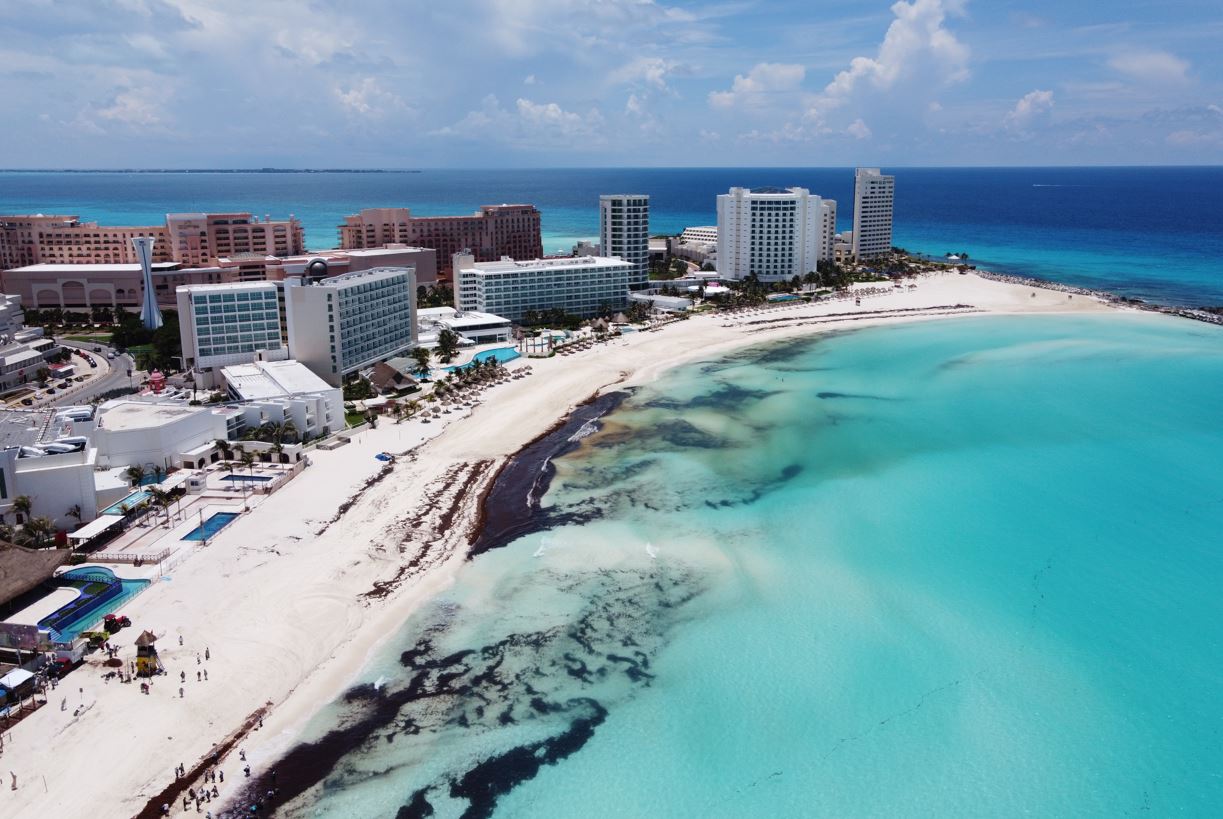
    `Sargassum seaweed continues to accumulate along Mexico’s Caribbean coast, with a number of beaches in the area battling an excessive landfall. Playa El Recodo, one of the most popular beaches in Playa Del Carmen, is one of those greatly affected, with local authorities announcing the natural attraction will remain off-limits temporarily.

    Recently, Mexico has quickly started adding seaweed barriers to popular destinations around Quintana Roo, including Playa Del Carmen, in a desperate attempt to save other beaches from meeting the same fate.

    Beachgoers Strolling Down A Seaweed Infested Beach While Workers Clean The Area

    El Recodo Most Affected Beach In Playa Del Carmen

    While several tourist hotspots up and down Quintana Roo have all been affected by seaweed to some extent, it’s Playa Del Carmen that’s been making the headlines lately, as the natural phenomenon intensifies in the area.

    In fact, local authorities have just announced that El Recodo beach, one of the top-rated in the resort town, will be closed for visitors and sunseekers for the whole of the upcoming Easter holidays, and until the cleaning work has been finished.

    Seaweed On A Tropical Beach

    Currently, the Sargassum removal has been carried out daily, though the overwhelming volume of seaweed has led Playa Del Carmen officials to determine ‘it is not in a condition to be used by bathers‘.

    Despite the town’s best efforts in preventing similar closures, it cannot completely avoid the arrival of seaweed, as temperatures rise and the algae reproduce on a larger scale. In late March, as much as 80 tonnes of seaweed were collected from beaches in Playa Del Carmen, and the situation has remained dramatic since.

    Tropical Punta Esmeralda Beach In Riviera Maya, Mexico

    Playa Del Carmen Ramping Up Cleaning At Popular Beaches

    Zofemat, the Federal Maritime Terrestrial Zone, which oversees natural phenomena in the area, has sent both workers and more machinery have been deployed to clean the beach, but decided not to re-open it to bathers for the time being.

    Playa El Recodo features the iconic sandy beaches and crystal clear waters that are characteristic of the Mexican Caribbean, which makes its closure ahead of the highly-anticipated Eastern weekend all the more troubling.

    Beach Closed Sign

    Besides Playa El Recodo, the equally popular Punta Esmeralda beach will also remain closed to tourists, in order to allow the local dunes to regenerate and mitigate impacts on the color of the water.

    Even though it received its first seaweed barrier as soon as early April, and ahead of other neighboring destinations, Playa Del Carmen has not managed to completely thwart the threat to its busy tourism season, with vacationers arriving for Mexico’s Semana Santa now having fewer beaches to choose from.

    Arches Along The Beach In Playa Del Carmen, Mexico

    As reported by La Jornada Maya, over 200 workers have joined the Zofemat brigade in collecting Sargassum from the beaches. Other measures have also been taken, including the recruitment of several researchers, academics and scientists to assist the local government in managing the crisis.

    Is Seaweed Dangerous To Bathers?

    It is worth noting Sargassum is not particularly dangerous to beachgoers, unless they are swimming in seaweed-infested deep waters, as people have been known to get entangled in them and subsequently drowning.

    Red Seaweed At Tropical Mexican Beach, Mexico

    Usually, it simply leaves beaches with a more unpleasant ‘polluted’ look, although its reproduction, which leads to accumulation on beaches, is a natural process attributed to a warmer water temperature. As they are bound to become hotter in the upcoming months, this will continue being a concern for tourists visiting the coastline of Mexico.

    Local Ecology And Environment Secretary, Efraín Villanueva, has confirmed several sea vessels have been positioned strategically in the area to speed up cleaning, and a further 9-thousand meter barrier will be installed around the beach, on top of the already installed 2,700 meters.

    Coconut Palm Trees Path To An Idyllic White Sand Beach At Cozumel Island, Mexico

    Additionally, 4 tractors with sweepers will make sure any Sargassum that does reach the sandbanks is cleared, besides the usual monitoring of the Oceanographic Institute of the Gulf and the Caribbean Sea.

    Is Mexico’s Tourism Season Under Threat?

    Besides seaweed, the US Department of State also published a map detailing Mexican states Americans should avoid.

    Famous Playa Del Carmen 5th Avenue Tourist District At Mayan Riviera, Mexico

    While Quintana Roo, which houses Playa Del Carmen, Cancun, Tulum, and many others was not classed as a particularly dangerous destination, US authorities now urge Americans to ‘exercise an increased degree of caution’ when traveling to the state.

    An increase in crime in tourist zones is the main reason behind the revised travel advisory, and the seaweed itself, as previously stated, does not present a particular health threat to tourists. It should also not affect tourism in Quintana Roo, as destinations like Cancun are already sold out for the Easter period.

    In spite of recent setbacks, Mexico has been increasing policing in beaches across the Riviera Maya lately, and taking other measures to ensure arrivals feel safe and have the best possible experience during their breaks.

    Read More:

    Travel Insurance That Covers Covid-19 For 2022

    Mexico President Proposes New Cruise Port For Playa Del Carmen

    New Airline Connecting Canada To The United States And Mexico

    These Mexico Destinations Have Finally Removed Mandatory Face Masks Outdoors

    Mexico Removes All COVID-19 Entry Requirements Including Health Form

    ↓ Join the community ↓

    The Travel Off Path Community FB group has all the latest reopening news, conversations, and Q&A’s happening daily! 

    Travel-off-Path-group-1-1
    SUBSCRIBE TO OUR LATEST POSTS

    Enter your email address to subscribe to Travel Off Path’s latest breaking travel news, straight to your inbox

    Disclaimer: Current travel rules and restrictions can change without notice. The decision to travel is ultimately your responsibility. Contact your consulate and/or local authorities to confirm your nationality’s entry and/or any changes to travel requirements before traveling.  Travel Off Path does not endorse traveling against government advisories

    [ad_2]

    Source link