Mexico is the most popular destination for American travelers right now. Hot spots like Cancun and Puerto Vallarta are attracting record numbers of visitors.
But if you’re always looking for the next big thing and don’t want to go to the same places as everyone else then why not consider visiting Costalegre instead?
Here’s why this coastal region of Mexico is set to become the next tourism hotspot:
Outstanding Natural Beauty
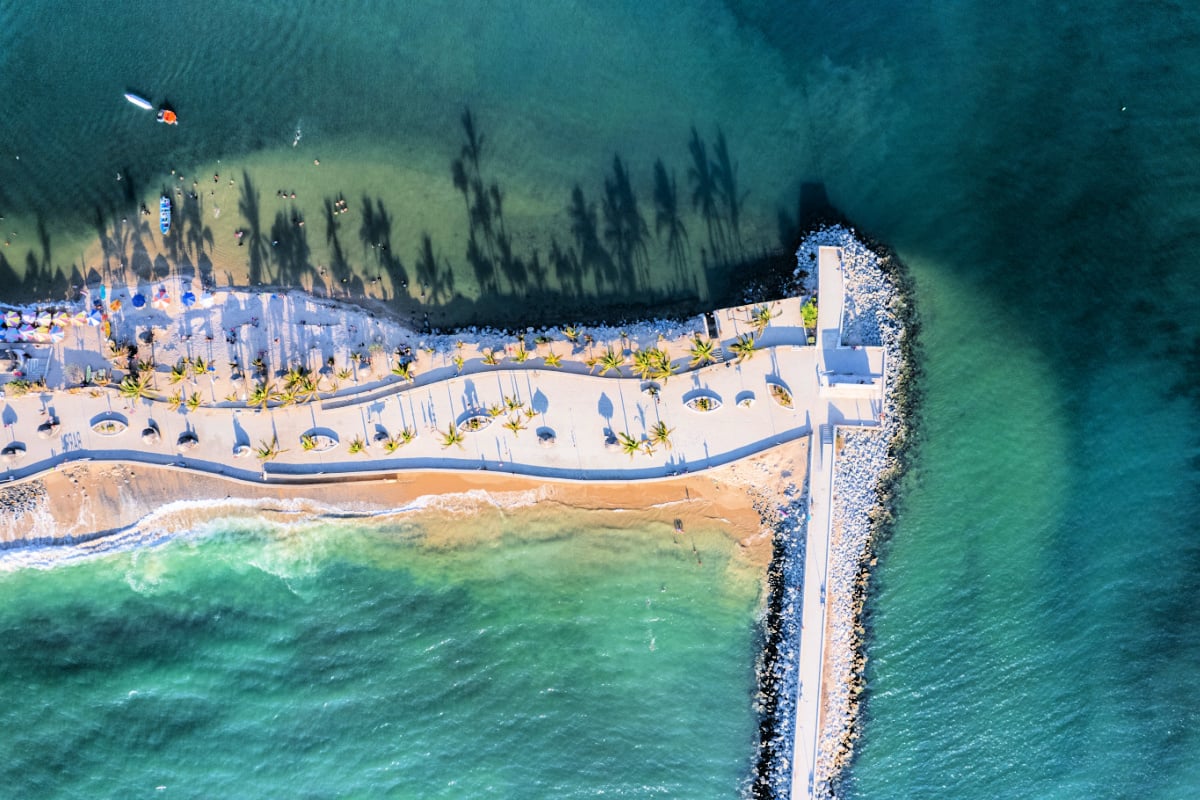
Costalegre translates to mean ‘the happy coast’ and it is a fascinating coastal region as well as an area of outstanding natural beauty.
Away from the crowded beaches of Cancun you’ll find relaxing and secluded beaches here. You’ll find a 238-mile stretch of coastline in the region.
Costalegre also boasts lush jungles, rugged cliff tops, and verdant scenery. The Yelapa waterfalls are in the region and the opportunity to hike to the top or swim in its pools is a particular highlight.
The Costalegre region is an incredible base for outdoor adventurers hoping to indulge in activities such as hiking, biking, and horseback riding. Water sports enthusiasts will enjoy scuba diving, snorkeling, and SUP or canoeing along the coast.
Easy Access By Air Travel
If you choose to visit Costalegre right now, then the best way to access the region is to fly into either Licenciado Gustavo Diaz Ordaz International Airport in Puerto Vallarta or Manzanillo-Costalegre airport and then transfer via bus or taxi to your resort.
But by mid-2024, visitors to this emerging hotspot will have direct access to the best resorts by flying into the Chalacetepec International Airport, which is currently in development.
This airport will be an international hub, making access to the Costalegre region easier than ever and driving tourism here.
The Chalacetepec airport will sit midway between Careyes and Punta Perula. It will be less than 20 miles away from the towns of Tomatlan and Chamela and just 40 miles north of La Manzanilla. This airport should completely revolutionize travel to the region and it is when this airport opens that we expect to see visitors to the region really explode.
Once you arrive in Costalegre getting around is easy too. Highway 200, also known as Carretera Pacífico is a well-maintained highway that will take you to all of the region’s best sites. Why not rent a car, hit the road, and explore?
New Luxury Developments
At the end of 2022, the Four Seasons Resort Tamarindo opened in Costalegre.
In 2026, the Six Senses Xala will also open in the region, bringing more rooms and opportunities to a region that is already home to a robust collection of luxury resorts.
The Las Alamandas is considered the best Costalegre resort according to Tripadvisor, followed by the Cabo Blanco Hotel and Marina and the Cuixmala resort.
The region’s four municipalities are Cabo Corrientes, Tomatlán, La Huerta, and Cihuatlán. Each offers something unique but appealing to their visitors.
Further development is coming to Costalegre too. In December 2023 it was announced that Xala would break ground on a $1 billion development spanning 3,000 acres. This is set to become one of Mexico’s premier destinations and will sit along the rugged Pacific coastline of Costalegre. The scope of the project is to include two luxury boutique hotels and 100 estate-style vacation homes.
Environmental Focus
If you consider the environmental impact of your travel then Costalegre is a sustainable and environmentally sound destination to choose right now.
Costalegre’s main priority is the preservation of the land. This means that when planning and boosting their tourism offerings the local community still have providing a low-impact and environmentally-minded visitor experience at the forefront of their priorities.
Costalegre is known for its traditional Mexican towns that boast robust eco-tourism offerings, stunningly beautiful architecture, and have a reputation for the quality of their traditional cuisine too. This eco-philosophy will be kept at the forefront of any further development in the region.
Southeast Asia is a treasured region of the world full of vast wonders. Going country to country and experiencing new cultures, jaw-dropping scenery, and pristine beaches makes for a trip of a lifetime.
You can spin a globe and eeny-meeny-miney-mo where to go in Asia and will surely make lasting memories just about anywhere.
Thailand may stand out the most, however. One of the sunniest destinations in Asia has it all – affordability, immense cultural sites, stunning landscapes, and so much more.
While travelers often stick to the names they’re familiar with, the world is constantly growing. There is one lesser-known stunning beach destination in Thailand ready to make leaps and bounds in terms of tourism growth.
As more travelers seek new experiences, 2024 is surely the year to embrace Asia’s newest tourism hotspot – the province of Nakhon Si Thammarat.
Avoid The Chaos
First-timers often visit Asia wide-eyed with fascination with every step they take. Each Asian country has its own unique feel.
Some, like Japan, are a mix of vast crowds but seemingly under control. Others, not so much. The vast city of Bangkok stands out as one of the most action-packed cities not only in Asia but the planet.
There are multiple household names when it comes to Thailand’s destinations. While Bangkok is probably the most recognizable, Phuket is a close second.
What do they have in common this winter season? Frustrated travelers!
Bangkok is always busy, but Phuket is seeing 2024 as the year of “carmaggedon”. Traffic and crowds are expected to only intensify as the high season unfolds, adding to this phenomenal country’s allure of lesser-known destinations.
The congestion in the hotspots of Phuket, Pattaya, and Hua Hin are all expected to stick in travelers’ craw this season with no immediate solution other than to explore further into Thailand.
A Rise In Tranquil Tourism
It might be a stretch to say Thailand’s most popular destinations have their appeal, but it’s safe to bring up the ‘O word’.
Over-tourism is a real thing, and it’s bound to happen in places such as the third most visited country, for example.
Fortunately, Thailand is a vast country with plenty of lesser-known escapes to venture off to as an alternative.
With the country seeing a rise in “silent travel”, the coastal province of Nakhon Si Thammarat tops the list this year as the next best thing for serenity, sustainability and just simply a new adventure.
New International Terminal
Some unknown destinations aren’t worth the trip with the multiple connections and jet lag you’ll experience just to get there.
The new international terminal at the Nakhon Si Thammarat International Airport was recently revealed, which will bring travelers to this pristine beach getaway with ease.
At least 4 million passengers can be accommodated yearly at the new terminal with expected connecting hubs through Singapore, Malaysia, China and Taiwan.
The beauty of flying into Nakhon Si Thammarat is you won’t be greeted by gridlock traffic; you’ll have open roads, incredible beaches, lavish resorts and historical sites all within reach.
What To See In This Untapped Region Of Thailand
Those in the know consider Sichon as the highlight of the region, not that you can really go wrong at any of the beaches in this province.
While the region is growing, Sichon is the most developed and ready to immediately embrace tourists with open arms.
Beach resorts line the coast up and down along Sichon’s white sand and crystal clear waters, offering seclusion and exclusivity, unlike other resorts lacking elbow room.
Sichon was named one of the best beaches in the world by Lonely Planet, but other beaches are well worth visiting, too, such as Seava Beach, Hummingbird’s Beach, and Khanom Beach, to name a few.
Further inland are even more unexpected gems for nature lovers, such as wondrous caves and picturesque waterfalls.
Those who love historical sites will surely fall in love with the 13th-century Wat Phra Mahathat Buddhist temple, which is an absolute must-see.
This extensive high-speed train project will connect 17 locations that are home to culturally rich towns, Mayan ruin sites, and beautiful beaches.
Undoubtedly this will bring an even larger number of tourists through the region by making them more accessible.
These 6 lesser-known Mexican destinations are set to explode in popularity with the creation of the new Tren Maya route:
Palenque
Palenque is located in Mexico’s southeastern state of Chiapas, one of the least visited states, and is the first stop on the new Tren Maya route.
It’s a somewhat remote place to visit currently as it only has a small airport with few flights, meaning that most people choose to arrive by car or bus. The addition of the train will make the location much more accessible for travelers.
Although the town itself may not be as charming as popular destinations like San Miguel de Allende, Oaxaca, or nearby San Cristóbal de las Casas, there are still many reasons why travelers will want to visit.
When most people think of Palenque, they think of the Mayan ruins of the same name. The Palenque Ruins are a UNESCO World Heritage Site that was once one of the Mayan civilization’s most important cities.
It’s located in a national park offering a stunning jungle landscape filled with howler monkeys and toucans, and if you go early enough, you can often see the temples shrouded in mist.
The cost to enter is only 110 MXN ($6.50 USD) and includes access to the onsite museum, which is less than half of what it costs to visit the popular Chichén Itzá ruins.
Palenque is one of Mexico’s best historical sites offering travelers access to three amazing Mayan ruins, Palenque, Yaxchilan, and Bonampak. It is also home to the gorgeous waterfalls of Agua Azul, Misol Ha, and the crystal clear pools at Roberto Barrios, which only costs $30 MXN ($1.50 USD)
Once you finish exploring the town of Palenque, its quaint streets, and local markets, you can take a trip to nearby San Cristobal or hop back on the Tren Maya and head towards its next stop.
Campeche
San Francisco de Campeche, called Campeche for short, is located in the second section of the Tren Maya route. It is known for its colorful colonial architecture, historic center, and nearby Mayan ruins.
The city is the only walled fortress in Mexico and one of its 35 UNESCO World Heritage Sites.
One of the best things about Campeche is that you can explore most of it on foot, and since it’s still relatively underrated, you will be able to find better prices and smaller crowds than other more popular destinations.
While visiting the city, you can wander through the historic center, have a meal on the pedestrian-only street Calle 59, stroll along the malecon (waterfront boardwalk), or visit one of its two fortresses: Fuerte San Miguel and Fuerte San Jose el Alto.
The fortresses are each located on small hills overlooking the city and the ocean, that you will need to take a taxi to get to. They both have a small fee to enter, which provides visitors access to their museums filled with information on how Campeche was built to protect itself from pirate invasions.
Outside of the city, Campeche is also known for its nearby Mayan sites of Calakmul and Edzna.
The latter is less than an hour outside the historic center and is said to be influenced by the family who built Chichen Itzá with its layout copying that of Mexico City’s famous Teotihuacán.
Two historically interesting reasons to visit, and if you need another reason, you can often find yourself wandering the site alone without the crowds of other locations.
Whether you stay within the walled city, adventure out to the ruins, drive to Bécal to see Panama hats being made, or head to the nearby beaches like Sabancuy and Isla Aguada, you will find that Campeche is one of Mexico’s hidden gems.
The locals, or Campechanos, which translates as hearty, kind, and cordial, are exactly that. It’s easy to see how this small city is set to explode in popularity.
Mérida
You may have already heard of Mérida, as it has been steadily growing in popularity over the last several years. It’s known for being one of the safest cities in the world, for its colorful colonial architecture in the historic center, and for its proximity to nature.
The announcement of the new Tren Maya has already spurred an increase in development and intrigue into Mexico’s White City, as it’s affectionately called.
The train station will be located near Mérida’s international airport and will have an electric tram to bring travelers into the new Gran Parque La Plancha. The park is set to contain an artificial lake, areas to relax, repurposed trains with places to eat at, and will connect travelers to the popular culinary row of Calle 47.
Once in the historic center, visitors can stroll along the pretty tree-lined Paseo de Montejo, a two-mile long street filled with cute cafes and restaurants.
On Sunday mornings, the city closes down one side of the street for the Biciruta, an event where you can rent a bicycle for 20 MXN per hour ($1 USD) and ride through the main plaza and into the cobblestone streets of La Ermita.
The historic center is a great place to wander around and take in the beautiful architecture, discover local shops, and find hidden speakeasies and restaurants.
One of the best things about Mérida is that you never know what you might discover behind a building’s façade as they often open into stunning interiors and leafy courtyards.
After exploring all that the city has to offer, travelers can adventure into nature. Within an hour of the city, there are a variety of beautiful beach towns like Sisal, Progresso, and Telchac Puerto.
You can visit flamingos in Celestun, swim in one of the many cenotes in Homún, tour an abandoned hacienda from the old henequen production days, or see an ancient Mayan ruin.
Mérida is a large city with a small-town feel that has much to offer. It comes as no surprise as to why this destination is going to continue to grow in popularity.
Izamal
The final station within the third section of the Tren Maya will be in the unique small town of Izamal, one of Mexico’s Pueblo Magicos.
Located in the state of Yucatán and only an hour and a half by car from Mérida, this town is the perfect stopping point for travelers on their way towards popular Quintana Roo destinations like Cancun or Tulum.
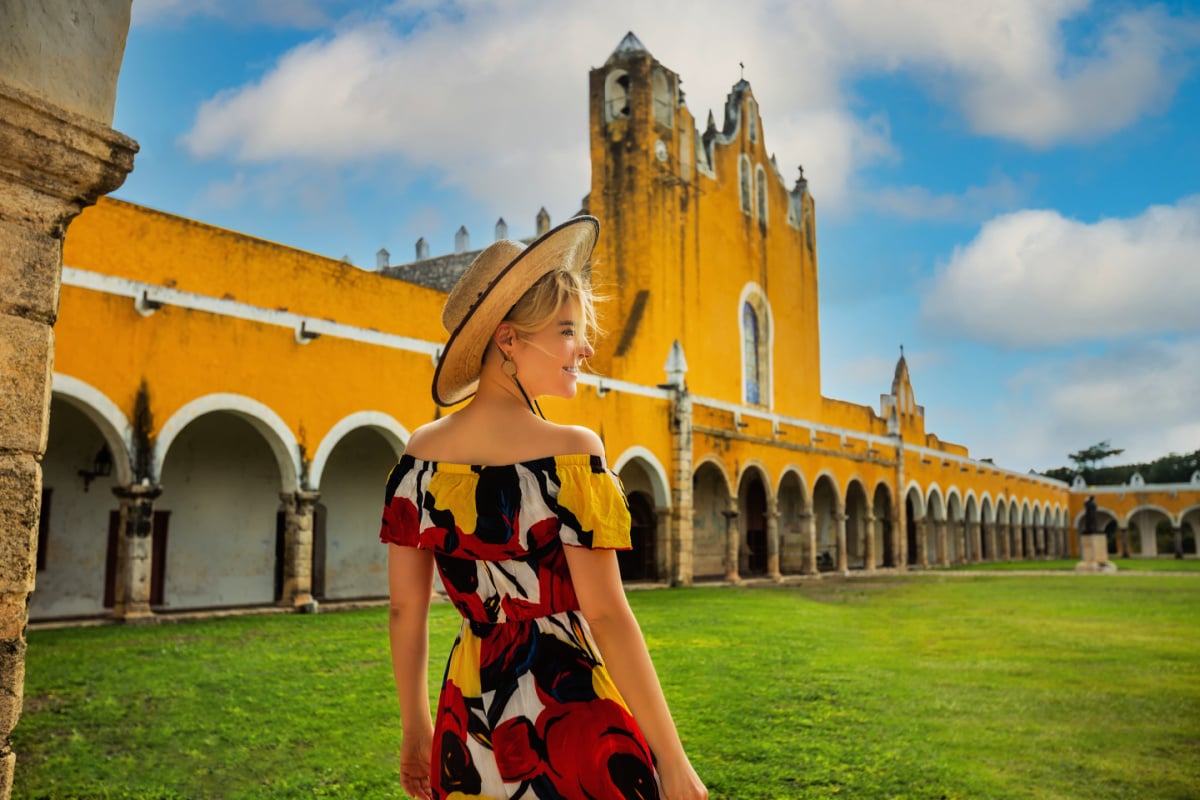
Izamal is famous for historic colonial architecture that is all painted the same color yellow. It’s hard to say for sure why this is the agreed-upon color scheme for the town. However, it is rumored to have been done for the visit of the Pope in the 90s or to honor the Mayan sun god of Kinich Kakmó.
Whatever the reason, these yellow buildings make for the perfect backdrop for photographers and social media enthusiasts. It’s almost impossible to take a bad picture in the adorable town.
Izamal is a safe and authentic Mexican town that can easily be explored in a day. Its main attraction is the Convento de San Antonio Padua containing the second-largest atrium in the world outside of St. Peters.
The other popular thing to do is to walk to the top of the Mayan Ruins of Kinich Kakmó. The entrance is free to the site, and the view from the top is amazing.
After a day of exploring the town and its artisan shops, a trip to Izamal wouldn’t be complete without stopping for a meal at the famous Restaurante Kinich, known for its local Yucatecan cuisine and freshly made corn tortillas.
Visitors can opt to spend the night in a local Airbnb, one of the surrounding haciendas, or continue on toward their next destination.
Valladolid
This small town has a decidedly European vibe to it and is famous for its proximity to Chichén Itzá. Its charm comes from its laid-back atmosphere and traditional colonial architecture.
Valladolid is great for a day trip or a weekend getaway. You can see all of its main attractions in one day. However, there are a lot of interesting destinations nearby as well.
As with any Mexican city, the Plaza Grande is always a must-see for its little shops, restaurants, and nightly cultural shows.
The most popular street in Valladolid is Calzada de los Frailes, or Calle 41A, which is home to some of the best boutiques and hotels, like the famous Coqui Coqui.
At the end of the street sits the convent of San Bernadino of Siena, an impressive church and fortress you are able to explore for only 30 MXN ($1.25 USD).
Valladolid is also a popular spot to explore some cenotes. These freshwater sinkholes or caverns come in a variety of shapes and sizes. Some are open to the air, some are relatively untouched, and others have been modified greatly for tourist appeal.
The town has its very own cenote that is only 10-minute from its centre. Cenote Suytun is one of the most Instagram famous cenotes, known for its man-made stone ledge and perfectly positioned hole in the cavern ceiling that illuminates it.
Other popular nearby attractions include: Ek Balam, a lesser-known Mayan ruin but easily one of the best sites to visit, and Las Coloradas, which is a small fishing village that has a salt field with pink lakes.
With the amount of things to see surrounding Valladolid and its close proximity to Cancun and Tulum, it makes sense that the new Tren Maya station will undoubtedly bring even more travelers to experience this beautiful little town.
Bacalar
The town of Bacalar is located in the state of Quintana Roo, just two hours south of Tulum and an hour from the border of Belize. It’s been a long-time favorite destination for locals but still remains relatively laid back and devoid of Mexico’s usual tourist crowds.
This is likely to change soon as the new Tren Maya station there will make accessing this destination easier than ever.
Bacalar is a Pueblo Magico best known for its “Lagoon of Seven Colours”, a lake that was originally formed by combining several cenotes and now offers many stunning shades of blue and turquoise.
The lagoon is pretty much the main attraction of Bacalar, and there are a lot of water-based activities to enjoy.
Renting a boat or joining a tour is the most popular way to experience the lagoon. The excursions are for 3 or more hours and take you to see the cenotes and the well-known Canal De Los Piratas. This small shallow waterway connects the Bacalar lagoon to another smaller lagoon and was once used as a trade route between Belize and Mexico.
Another popular activity is to spend the day at Los Rapidos, although not technically in Bacalar, it’s just a short drive away. The site is a narrow channel within the lagoon that is lined by stromatolites and mangroves and has a current you can float down.
To enter, you have to pay a 150 MXN fee ($7.50 USD) at the attached restaurant, and this allows you access for the entire day.
Some articles have been claiming that Bacalar is the new Tulum. With its sleepy laid back town and sparkling blue waters, it is bound to continue to grow in popularity.
If you’re looking for a place to unwind without the tourist crowds, then you need to head to Bacalar now before it explodes on the international scene.
Latin America is increasingly being hailed as a top destination for digital nomads, who come from all around the world to experience the wonders that this continent can bring.
Some come for warm weather or the interesting blends of cultures, some come for stunning landscapes, while many more digital nomads come to this continent to stretch their dollar further.
The good news is that the countries of Latin America are offering more and more digital nomad visas, providing the chance for remote workers to stay longer than a traditional tourist visa would allow.
Some counties, such as Colombia and, more recently, Argentina and Ecuador, have become digital nomad hotspots, while others are just starting to follow suit.
The latest Latin American country to offer a digital nomad visa? Uruguay.
Why Uruguay?
You can find Uruguay on the South Atlantic Coast, nestled between its more famous neighbors of Brazil and Argentina. Some might confuse it with Paraguay, but rest assured, this country very much has its own identity.
The best time to visit is in the summer from November to April, when the weather is warmer. Those who have lived here mention that the vibe during the rest of the year can feel a bit more subdued when the cooler weather keeps most inside.
Now, if you are coming from anywhere in the Northern Hemisphere, you are likely used to this and will find ways to keep yourself busy and can duck into the numerous cafes to get some work done while warming up.
One thing that those who come here mention quite often is the level of freedom you will feel in Uruguay as compared to other countries in Latin America. This, coupled with the friendliness of the locals, really helps digital nomads feel at home.
As many with real-life experience of living here will tell you, Uruguay is not a budget designation for digital nomads, although any internet search might tell you otherwise. Digital nomads who have called this country home for a while will be the first to tell you that the actual costs they faced in their day-to-day life are much higher than a simple Google search will lead you to believe.
However, those who are coming from the U.S. or U.K. will likely still find lower prices on just about everything than they would back home.
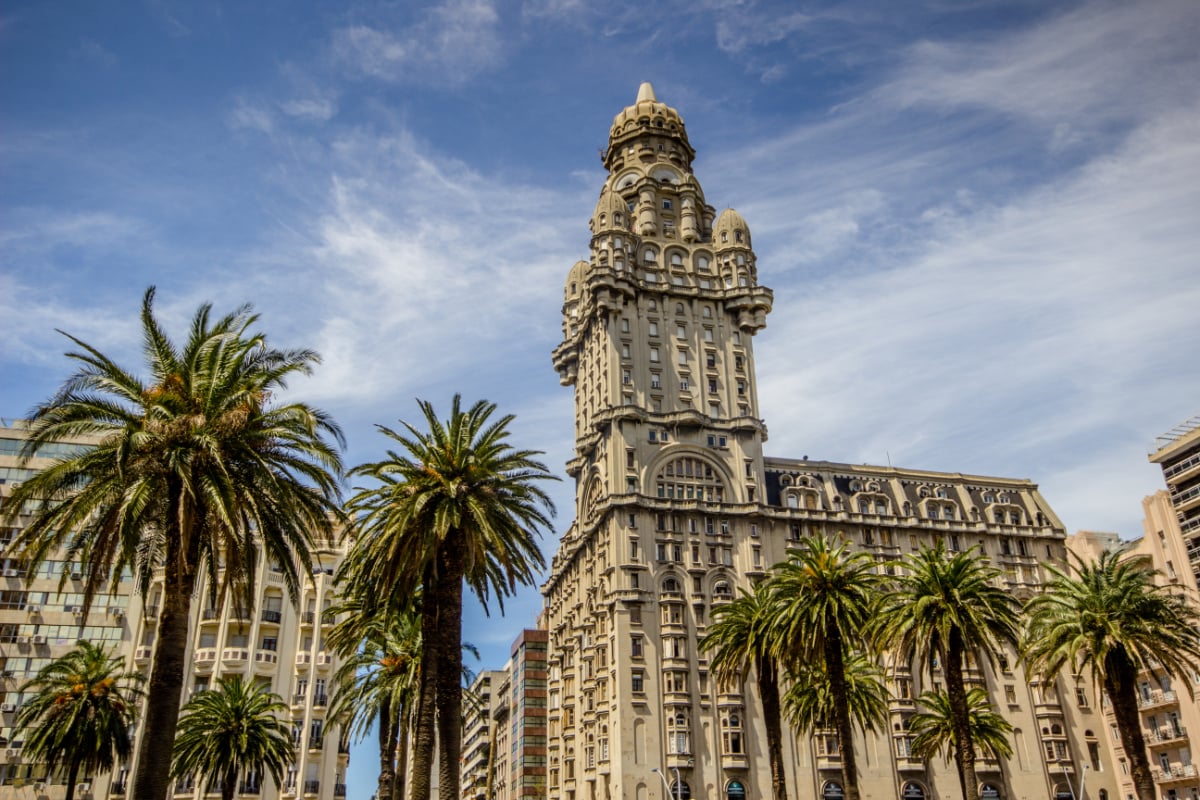
Most digital nomads base themselves in the coastal capital city of Montevideo, a city that offers most of the creature comforts from back home with a much different vibe.
There are many reasons Uruguay is perfect for digital nomads, and the new digital nomad visa adds just another reason to give this diverse country a try.
The Fine Print
As the latest country to pass legislation that will allow digital nomads to stay in the country while they work remotely, Uruguay’s digital nomad visa is an attractive choice for those looking to log on from somewhere different than home.
While not officially coined a digital nomad visa, what the county offers is a Provisional Identity Card, or “Hojas de Identidad Provisoria”. Once only offered to those who worked for a company within Uruguay, they are now expanded for anyone who works remotely for any company, foreign or national.
This Identity Card allows those who receive it to stay and work in Uruguay for six to twelve months, with the possibility of applying for permanent residency.
The process for Uruguay’s Provisional Identity Card is a bit different than other countries, and to be honest, it seems much easier and more straightforward.
You enter the country on a tourist visa and then apply online for the identity card once you are already in the country. The online application has been noted to be quite simple, and you must sign an affidavit that states you can financially support yourself while in the country.
This is much different from most countries that want actual proof of income falling within a certain bracket.
With no actual salary requirement, this opens up Uruguay as a great home for those who freelance or do any job that you cannot prove on paper you make a certain amount of money.
Once granted, you are allowed to stay in the country for six months, and to extend for another six you must show proof of vaccination in Uruguay as well as a clean criminal record for any place you have lived longer than six months in the previous five years.
For more information on the Uruguay Provisional Identity Card, it’s best to refer to its official website (Spanish).
A new $500 million mega golf resort is set to open in Texas next year – which is currently the largest resort under construction in the United States of America.
The resort will go by the name of Omni PGA Frisco Resort, and is owned by Omni Hotels and Resorts – who currently operate hotels and resorts throughout 23 U.S. states – as well two properties in the Canadian cities of Montreal and Toronto, and one in Cancun, Mexico.
Credit – Omni Hotels and Resorts
And, there is no doubt that once complete – and open for business – Omni PGA Frisco Resort is going to instantly become one of the top hotels and resorts in and around the city of Dallas, Texas.
So, with their new – and highly anticipated – mega golf resort due to open in Texas in the Spring of 2023, here is what we know so far about the latest addition to the portfolio of Omni Hotels and Resorts.
Where Is The New Mega Golf Resort Located?
The new Omni PGA Frisco Resort is located in the city of Frisco – which is around 30 miles north of downtown Dallas, Texas
What Should We Expect From The New Mega Golf Resort?
There is no doubt that once complete – and welcoming guests through its doors – Omni PGA Frisco Resort is sure to not disappoint.
Credit – Omni Hotels and Resorts
Not only will the resort feature 500 luxury rooms for guests to choose from, there will also be two 18-hole championship golf courses on site – which can be enjoyed by all visitors.
Here is a list of what guests can expect when they step foot onto Omni Hotels and Resorts’ incoming mega golf resort:
Credit – Omni Hotels and Resorts
500 guest rooms and suites
10 four-bedroom ranch houses
three swimming pools – including a rooftop infinity pool which is only available to adult guests
a destination spa – which is set to feature 20 treatment rooms, a steam room and sauna, a Spa Café, as well as a private swimming pool for spa guests
13 dining outlets
indoor and outdoor meeting and event space – which is set to span over an area of 127,000 square feet
Lounge by Top Golf – which offers the opportunity to play golf on one of Top Golf’s high-tech driving ranges, whilst enjoying the comforts of a lounge serving drinks and snacks
an extensive entertainment district and retail village – which is set to feature a variety of shops, as well as a selection of dining and drinking options
Credit – Omni Hotels and Resorts
an outdoor stage – which is set to host a variety of different events, including music concerts.
This Resort Is Sure To Excite The Golf Enthusiasts
As already mentioned, the new resort is sure to impress those who have a keen interest in playing golf – as Omni PGA Frisco Resort is to feature three golf courses on site, including two 18-hole championship courses and a shorter 10-hole course, as well as a golf performance center.
This basically means that visitors will have the opportunity to play 46 different holes of golf during their stay at the resort – which have all been designed by golf course designers, Beau Welling and Gil Hanse.
Golfers will also be able to work on their putting skills on the resort’s two-acre putting green.
And, we can certainly expect ‘big things’ when Omni PGA Frisco Resort begins welcoming guests – with the president of Omni Hotels and Resorts, Peter Strebel, having this to say about the company’s new mega golf resort:
“Residents of Frisco will have access to some of the most extraordinary golfing facilities in the country, not to mention fabulous dining, spa, and more.”
Those wanting to get a sneak peek at the new mammoth Omni PGA Frisco Resort can do so by clicking here to watch a short 5-minute video – and clicking here to check out an online brochure featuring some eye-watering images of the spectacular golf resort.
Credit – Omni Hotels and Resorts
When Is Omni PGA Frisco Resort Due To Open?
Although no specific opening date has been revealed as of yet, Omni PGA Frisco Resort is expected to begin welcoming guests through its doors in less than twelve months’ time – in the Spring of 2023.
Enter your email address to subscribe to Travel Off Path’s latest breaking travel news, straight to your inbox
Disclaimer: Current travel rules and restrictions can change without notice. The decision to travel is ultimately your responsibility. Contact your consulate and/or local authorities to confirm your nationality’s entry and/or any changes to travel requirements before traveling. Travel Off Path does not endorse traveling against government advisories