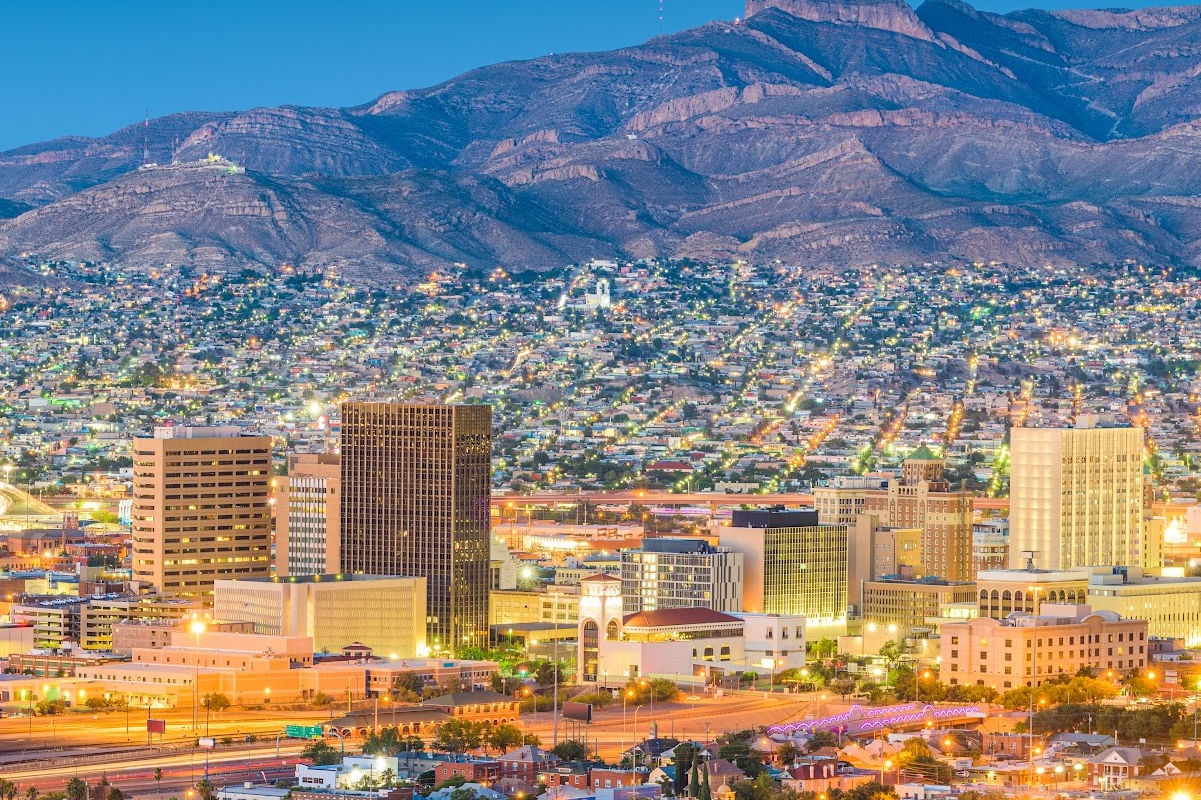
Located on the southwestern point of Texas lies a cultural gem waiting to be discovered. This off-path city is often overlooked or even purposely ignored due to politics and nonfactual assumptions.
But those who truly love to travel typically have the special ability to come up with their own opinions about a place rather than be sold by headlines.
“El Paso” translates in English as “the pass,” and that fits its reputation. For many, El Paso, Texas is often just a pass-through town on the way to somewhere else. Some would say to somewhere better.
Mainstream news and those who have simply passed through may tell you at surface level, “It’s brown, it’s ugly, and it’s unsafe”, given it’s a desert border town next to notoriously crime-ridden Juarez.
Even TikTok doesn’t always paint the Sun City in the brightest light. But this desert city is so much more than meets the eye.
Especially more than what is presented by clickbait headlines and misguided TikToks. El Paso is a safe, cultural gem ready to be put on the map for travelers.
Solo travelers, in particular, will be shocked by how much they will fall in love with this place. Here are 7 reasons why:
Endless Hiking Opportunities
Home to scenic mountains surrounding the city and across the border into Mexico, El Paso has plenty to offer in terms of nature.
You can explore trails with caves, wildlife and amazing views of the vast landscape. Look past its ‘brown’ reputation and you’ll see it’s actually quite green in some places, such as the highlight for El Paso hiking – Franklin Mountain State Park.
In fact, President Biden recently declared Castner Range a National Monument. This mountainous land is over 6,600 acres and is known to bloom colorful Mexican Poppies perfect for the ‘gram.
Revitalized Downtown District
Downtown El Paso was absolutely crushed during the COVID-19 pandemic. The good news is they are making a strong comeback, slowly but surely.
This area is very walkable and easy to find lively rooftop bars, trendy coffee shops, and new bar concepts and restaurants.
El Paso Street is full of thrift shops, Mexican imports, and a quirky pawn shop. You might even run into celebrities when they’re in town for a show.
El Paso’s First Capsule Hotel
Boxtel is located in a sub-district of downtown known as Union Plaza, which was also wrecked by the pandemic.
This region is gaining traction again with new restaurants and the newly opened Boxtel, the first-of-its-kind accommodation in El Paso with 4 different room types, all private, including free Wi-Fi.
Those who stay here will be in one of the most walkable areas of downtown. You can wake up and get a coffee nearby, explore the weekend farmer’s market, or hit up the newly opened Tiki bar for cocktails.
Affordability
Whether you’re concerned with overspending on accommodations, transportation or food, none of the above should be a major concern.
Airbnb’s are easy to find for under $50 per night if a Capsule Hotel isn’t your vibe. El Paso has Uber and Lyft but there is also free transportation.
The city-owned Streetcar, running since the 1950s, is free to ride to some really cool spots for nightlife and sporting events.
Since solo travelers don’t have someone to split the bill, El Paso should be at the top of your list!
Amazing Food
El Paso is a bit of Texas, New Mexico, and Mexico all combined in one. So, the food here is unmatched.
Whether you go to a dive bar for their classic nachos, a hole-in-the-wall for an authentic bowl of menudo, or a James Beard nominee for some mouth-watering tacos and margs, you won’t be disappointed.
The beer scene is thriving too with breweries all across town. As a solo traveler, your phone is your friend, and there are few places ahead of El Paso to brag on Instagram about what you just ate.
Statistically, El Paso is one of the safest cities in the nation. Out of all major cities in Texas, it’s the safest in the state, according to a report this year from SmartAsset.
While it does neighbor Juarez, a city with a reputation for violent crime, El Paso and its neighbor are apples and oranges.
Even small towns outside of El Paso were reported as being some of the safest in the state, according to a report from Safewise.
El Paso has very unique geography as it is sandwiched between New Mexico and Mexico. Many cross into New Mexico to have a fun time at a casino just across the Texas state line.
But further into New Mexico is the charming, quiet town of Mesilla, where infamous outlaw Billy the Kid was sentenced.
Solo trippers will love wandering through various shops, bars and restaurants around the main square only 40 minutes from El Paso.
It’s an even better trip taking back roads through the picturesque pecan farms. In the opposite direction, East of El Paso is the 9-mile Mission Trail with churches dating back centuries.
Ranging from the charming towns of Socorro to San Elizario, which was recently awarded Best Historic Small Town.
El Salvador was one of the biggest surprises when I spent around 4 months traveling around Latin America this spring.
The country is so often skipped because of bad media coverage and misconceptions, but I never felt unsafe and was really blown away by this beautiful, misunderstood country.
It’s been said that the country of El Salvador will be the next big tourist hotspot for Latin America, and with increased flights from the U.S., it’s clear this is starting to happen. In my time there, I didn’t encounter too many other tourists, especially Americans.
That’s not to say people don’t come, as 2022 brought 2.5 million visitors to the country, a number which indicates that their tourism industry is nearly operating at 100% again after the pandemic.
Those who know about El Salvador are likely hikers or surfers since the coast is gaining more and more attention for its laid-back surf vibe and epic swells, and the volcanos and peaks offer great hiking. I was there for neither, deciding instead to chill and explore the capital city of San Salvador and nearby attractions.
The people of El Salvador will likely benefit from an increase in tourism dollars, but I am so glad I got the chance to visit El Salvador before the masses descend upon it and the tourism influx changes its authenticity forever.
4 Reasons Why El Salvador Shocked Me The Most On My Trip To Latin America:
As a country with a history of gang violence and known for having one of the highest crime and homicide rates in the world, I was more than a bit skeptical about visiting El Salvador.
However, all the travelers that I met thought my Central America trip spoke highly of it (as they did about Honduras also), especially when they heard that people were planning on skipping El Salvador. “Don’t Skip El Salvador” became a common phrase we heard in our travels, so we listened and went to find out for ourselves.
El Salvador has gone through a recent (somewhat controversial) crackdown on gang violence, and while it’s made worldwide news for its mega prisons and somewhat questionable ethical practices, there is no denying that it has made the country safer. We spoke to many locals who had nothing but praise for the new way of life.
After all, this county was literally controlled by violent gangs for years, a fact which is evident when you notice all the middle-aged men going about their daily lives with missing limbs, a sobering sight in a country that is trying to rebuild itself after years of hardship.
While there is level 3: Reconsider Travel U.S. travel advisory for El Salvador, it seems most of the crime you might encounter would be gang-related, and therefore not an outward threat to tourists. Even walking around downtown San Salvador seemed safer than many cities in America, and although I wouldn’t go out at night or alone, I never felt unsafe in the daytime.
While I was apprehensive about visiting El Salvador, one thing I was not worried about was the people. In our traveling throughout Latin America, we had heard many stories about the people of El Salvador being the nicest of all the countries, and I am inclined to agree.
I would say we met more locals here than we did in neighboring countries, but of course, that doesn’t mean Guatemalans and Nicaraguans are not also lovely as well.
One event that sticks out in my mind is when we got into a minor car accident in an area outside of San Salvador, in a neighborhood in which I wouldn’t normally suggest spending too much time in. The damage was minimal, but the young man who hit our van clearly had no money to pay on the spot (as we learned is common practice there).
In order to get moving, we finally offered to pay the company for his damages, and the emotions and tearful responses that followed were heartwarming and sincere, not to mention all the locals came to check on us and offer food and water.
I honestly felt so well looked after in El Salvador that I would not hesitate to go back in a heartbeat and explore more, especially the Pacific coast, which we did not have time for on this trip.
Natural Beauty
When a country carries the nickname of the Land of Volcanos, you know you are in for some serious landscapes, and El Salvador doesn’t disappoint in this area. Most come to hike the famous Santa Ana volcano, and while I didn’t attempt this, I met many who had nothing but good things to say about it.
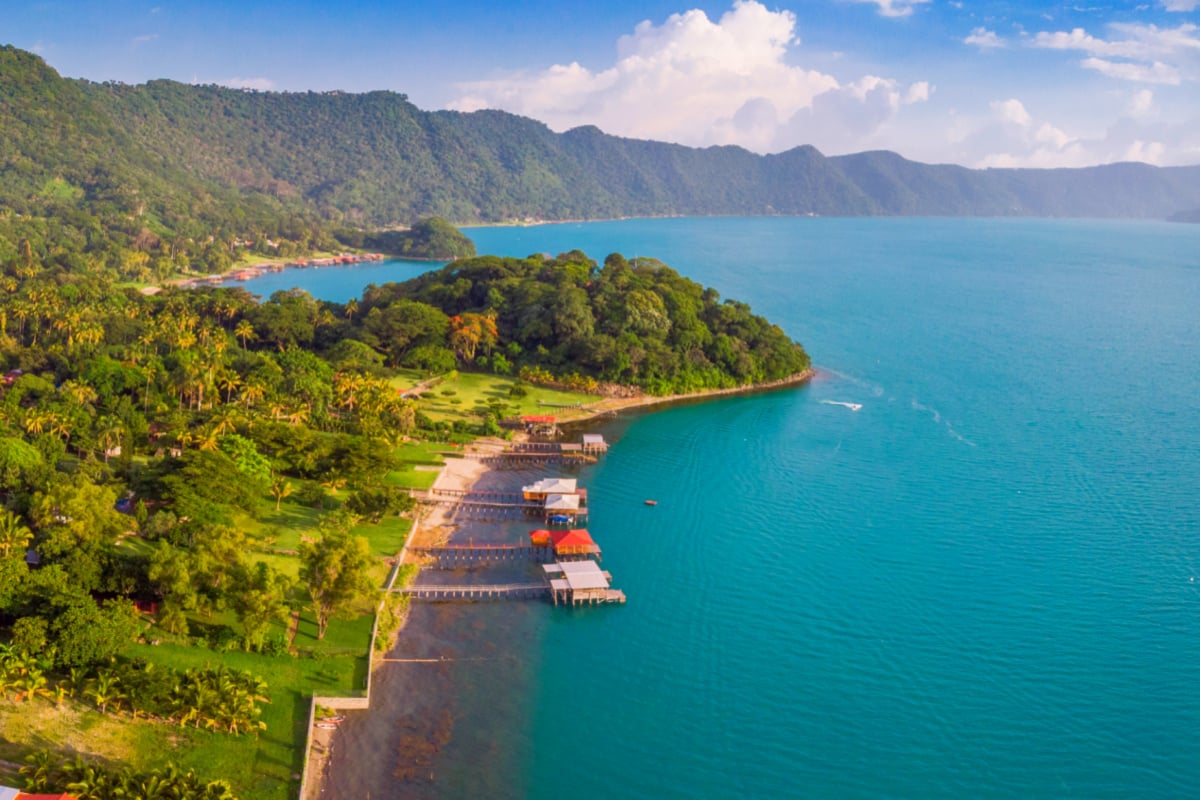
As the only Central American country that doesn’t border the Caribbean Sea, the county makes up this with its famed surfing spots on the Pacific side. I was especially impressed by the clear waters of Lake Coatepeque, having never been in a crater lake inside a volcano before.
Besides the volcanos, craters, and lakes, the small towns dotting the countryside are a main draw here. I was lucky enough to travel along the popular Ruta De Flores and saw highlights such as Nahuizalco, Juayua, Apaneca, and Ataco, all charming and bustling with life.
Another highlight that you can’t miss is Succhitoto, the county’s old capital city and one of the most well-persevered cities in all of Central America. I didn’t stay a few days here but wished I had, wandering the cobblestone stress and gazing into the man-made lagoon of Lago Suchitlán just outside of town.
USA Friendly
As one of El Salvador’s main economic and political partners, America is held in high regard here. This is evident in the way in which they treat American tourists and the amount of El Salvadorians who have either returned home from living in the U.S. or have family in the United States.
The alliance with America is especially noticeable if you look at migration factors; when the country was ravaged by an almost 12-year-long civil war, almost 50 percent of El Salvadorians traveled to the United States to seek refuge.
The official currency in El Salvador is the US Dollar, although be aware most are unlikely to accept $50 or $100 bills, so small notes are a must when traveling here. One thing that personally surprised me was the amount of Sacagawea Golden Dollars I saw being used every day. My local friend explained to me that since Americans didn’t want them and refused to use them, they were all sent to El Salvador.
While my four-month trip working as a digital nomad around Latin America was full of surprises, El Salvador is one country that deserves special mention.
If you are thinking of a Latin America trip or just looking for an underrated great place for a holiday, I have to repeat the famous mantra, please please do yourself a favor and “Don’t Skip El Salvador”
I am just over halfway through a Central American trip, after starting in Panama and working my way up to Mexico, a trip which I am completing in 5 months while working full-time online as a digital nomad.
While every country has been amazing (I am writing this from the absolutely stunning Antiqua, Guatemala) one country has stood out as an unexpected highlight.
I am talking about The Land of Lakes and Volcanoes itself, Nicaragua.
Being American, most of everything I had heard about Nicaragua before planning this trip was not positive, to say the least.
Let me wholeheartedly say that I am so glad I didn’t listen to the misguided warnings and that I was able to spend a month traversing my way across this stunning Central American gem.
Nicaragua is certainly not the only country in Central America that remains a bit undiscovered, and there are many in this region that you should add to your travel plans this year.
Every day and every new place in Nicaragua was a pleasant surprise, but here are 8 things that really shocked me:
The Safety
Let’s start with the one thing that comes to mind when you first hear about traveling in Nicaragua. Is it safe?
While some media coverage on the country and its leadership doesn’t paint the country in the best light, as a traveler there for a month, I never experienced anything that made me feel unsafe.
That being said, I wouldn’t walk around many places after dark, but I wouldn’t do this in most countries today. Some studies have shown that Nicaragua has a lower crime rate than its much more popular neighbor of Costa Rica (another country I never felt unsafe in).
Nicaragua is the second poorest country in the Western Hemisphere, and traveling from one location to the next, you will see this firsthand.
There is a lot of poverty here, although from what I saw, it was mostly in the countryside, and the cities did not seem to have too bad of a homeless problem.
Currently, Nicaragua has a level 3 travel advisory from the U.S. State Department, mostly due to limited healthcare availability and poor law enforcement issues.
As a traveler, if you stay in the main tourist areas such as San Juan Del Sur, Granada, Ometepe Island, Leon, and the Corn Islands, you should be fine, although I would absolutely carry health insurance with you.
The Nature and Wildlife
For a country that is known as the land of lakes and volcanoes, it sure has… well, a lot of them. One activity many do here is volcano boarding down the impressive Cerro Negro, easily reachable from Leon.
I opted for a more laid-back experience and headed to Laguna de Apoyo just outside Granada, where you can chill and swim all day in the volcanic lagoon and then take an easy hike up to the top of Masaya Volcano to see the sunset and the bubbling lava (one of the only places in the world you can see this!)
Nicaragua has about 7% of the world’s biodiversity, and you will see beautiful nature everywhere you turn. The birds, fish, mammals, reptiles, and everything in between will surprise you.
I experienced most of this on the amazing Ometepe Island, where I was awoken by howler monkeys, saw spiders bigger than my hand (in my shower, no less) and massive iguanas just chillin’ around the lawn.
Aside from these creatures, the sheer amount of colorful and fascinating birds I saw in Nicaragua really gave Costa Rica a run for its money.
The Colors
On a walk in the little town of Moyogalpa one evening, I commented on all the paint stores that this small town had. To which my husband replied, “Have you seen the houses?!”
I had to laugh because, yes, of course there is a paint store on every corner, because every house in this country is painted some neon bright color, one after the next.
The whole city of Granada, for example, looks like it might have been painted to be an Instagram backdrop, but nope. They are just colorful here.
The colors of places like this in Central America are one thing I will definitely miss when this trip is done.
The Beaches
Let me get this out of the way right now; I am in no way a surfer. I am much more of a let’s grab a drink and watch the sunset kind of traveler.
That being said, I do appreciate a good beach town with a surfing vibe. The southern town of San Juan Del Sur is exactly that and makes an easy start for any trip through Nicaragua, as it’s just over the border from Costa Rica.
With a Jesus statue that will remind you of a mini Rio De Janeiro and more places to eat and drink than you could possibly get through, this beach town is one to stay a while and chill.
On the coast along the Pacific you will find other smaller towns, such as Playa Mardras and Playa El Coco, both nice options for a very quiet vibe. In the northern part of Nicaragua’s Pacific coast, you can find another popular beach town of Las Penitas.
Across the country, located about 50 miles into the Caribbean, you will find the idyllic Corn Islands, and while I couldn’t include them in this trip due to time, they are definitely on my radar for another visit.
The Ease Of Travel
Before this trip, I had a lot of reservations about traveling around Central America. I was unsure if it would be easy to navigate the transportation and how to reach all the (ever-growing) number of places I wanted to include.
However, the best thing about Central America is that getting from point A to point B can be as easy or as cheap as you make it.
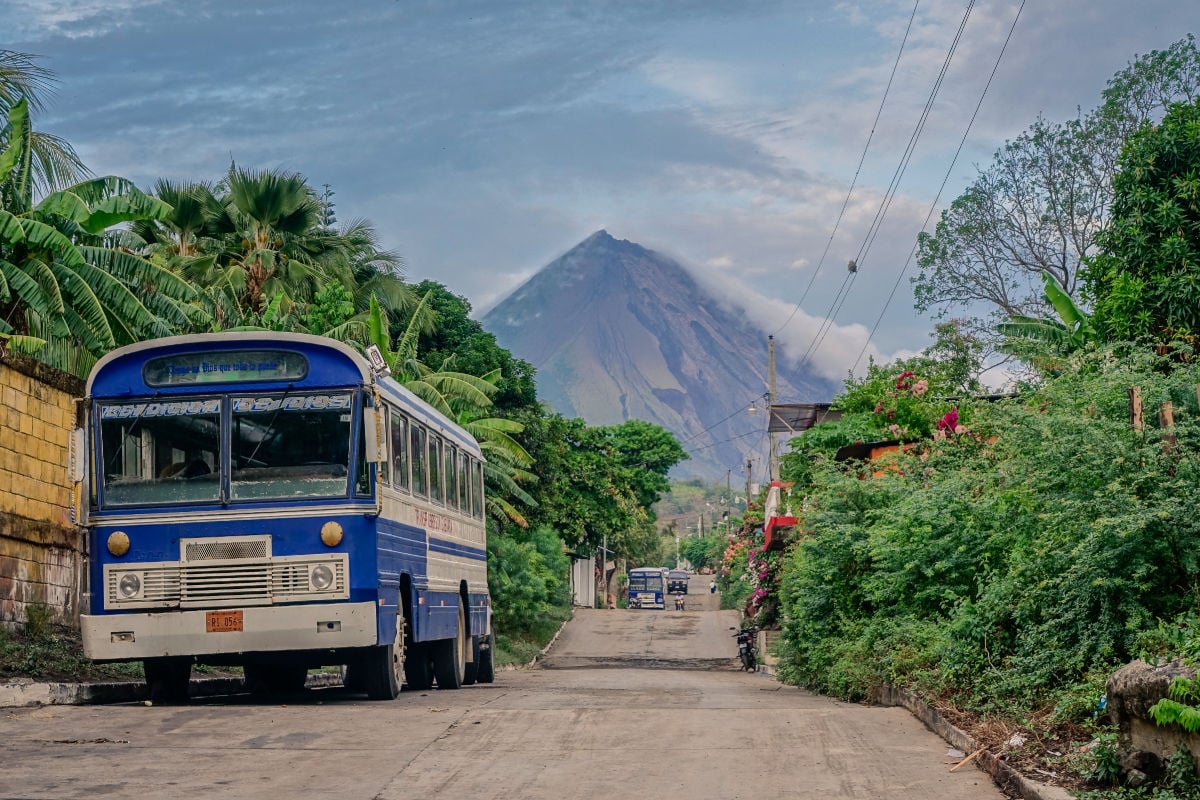
Chicken busses connect the entire sub-continent more or less and oftentimes cost less than a cup of coffee.
Next up is shared shuttles, which I used 99% of the time, mostly due to time restraints and being old and cranky and not wanting to carry my (also ever-growing) backpack around.
Where any visitor will likely want to go in Nicaragua is well connected by transportation, and shuttle busses often cost less than $30 a person, with door-to-door drop-off.
It’s worth noting that private drivers can also be quite cheap here as well, and I used them a few times when I couldn’t make shuttle times due to work. The best tip is to get a card from one you like and keep using them.
Undiscovered Gem
One thing that really surprised me in Nicaragua (and in El Salvador as well) is the number of tourists it seems to receive. Now, there were tourists everywhere we went; yes, this country is not a secret anymore, and people do come here.
However, what did surprise me was where these tourists were coming from. In my month of meeting people, I must have only come across four other American travelers. Many I met came from Australia, some from Germany and France, and a few Canadians.
It seems to me that Americans might still consider Nicaragua not interesting enough or too dangerous to visit.
Both of which couldn’t be further from the truth.
Also, with more and more flight options from the States, it couldn’t be easier to reach this fascinating destination.
Additionally, Nicaraguans could desperately use some more tourist dollars in their economy, and they deserve it.
The History
One claim to fame of Nicaragua is that it gave the world one of the greatest names in Spanish literature, Ruben Dario. After spending his life as a diplomat, poet, and journalist, Daio is now a national hero.
If you want to see some beautiful preserved historic cities, Leon, Granada, and Ciudad Antigua were the first established by Spaniards after they reached the shores of Nicaragua.
Wander their historic centers and take in the architecture and culture; just remember to look both ways for the numerous horse and buggies that zip around these streets all hours of the day.
The Price-tag
Going into this trip, I knew some counties in Central America would be cheaper than others. For example, I was prepared for Costa Rica and Panama to be more pricey than Nicaragua and El Salvador.
And yet, just how cheaply you could get by in Nicaragua still surprised me.
Now, some locations definitely cost more than others. For example, San Juan Del Sur didn’t seem all that cheap to me, especially when it came to accommodation.
However, it’s possible to find lodging on the otherworldly island of Ometepe for next to nothing, and Granada also has many cheap options available.
Aside from lodging, daily expenses such as transportation, sim cards, food and drinks all also cost less than I anticipated.
Next door to the trendy United Arab Emirates and to the north of Yemen lies a country full of unexpected beauty that I fell in love with.
Oman. I had barely heard the name before visiting and knew almost nothing about it. To give the best example of how little I knew, I used to be able to name every country in alphabetical order as a kid. Oman just happens to be the only country that starts with the letter “O.” Beyond that, I knew it was a majority Muslim nation in the Middle East. That’s about it.
When I flew to a much more popular destination in the UAE, I just happened to see a $40 flight to Muscat, the sprawling capital city. Since Oman altered their visa requirements for American tourists, this was the perfect time to visit. I bought the ticket, and it was one of the best travel decisions I’ve ever made!
Oman Is Safe
Any mention of traveling to the Middle East can be met with concern and confused looks. While there are countries in the region that can be deemed ‘unsafe,’ Oman certainly isn’t one of them. While their neighbors to the south are in a horrendous war, Oman is a thriving nation and becoming increasingly popular. Not once did I ever feel unsafe or unwelcome, even when wandering the streets late at night for the best kabob you’ll ever have.
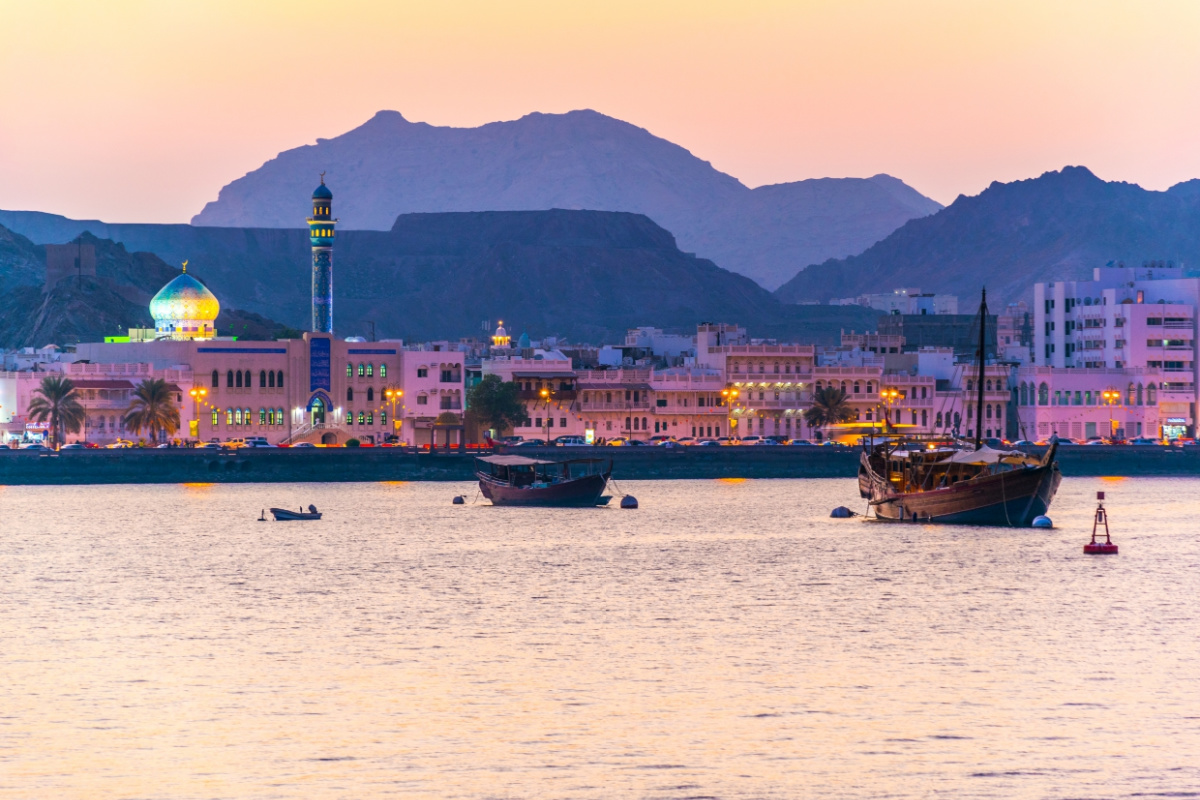
I went on a 3-week backpacking trip to 5 European and Middle Eastern countries, where Oman was my second to last stop. Honestly, I was tired at this point and now wish I had stayed here longer and explored further. But for the duration of my time in Oman, I stayed in Mutrah. I have no regrets about that, as it was my favorite district in Muscat. From gorgeous mosques to well-preserved historical forts, the architecture in this area is stunning and takes you back in time.
The surrounding scenery is eye-popping, the local cuisine is immaculate anywhere you go, and the popular souq will activate all of your senses. You experience the unique Omani buildings in all directions, the delicious cafes with Turkish and Omani coffee, the aromas of freshly cooked street food, and the bright colors of various decor illuminating the sidewalks. It was shocking how quickly I fell in love with this place.
There are many hills in Mutrah, which are honestly fun to wander. You never know what type of shops or hole-in-the-wall restaurants you’ll find in the alleyways. When you reach the bottom of the hill, the streets open up at the corniche, and the whole atmosphere changes. The chaos of the market quickly turns into picture-perfect serenity with waves crashing into the seawall and beautiful mountains in each direction, especially at sunset.
It truly is a wonderful place.
The Welcoming Nature Of Omani People
As an American tourist, I often stood out like a sore thumb. As a frequent traveler, I’ve learned it’s normal to be pestered by vendors trying to make a sale, but what isn’t normal is for them to be so nice after rejecting their pitches.
One lasting memory that stands out is when I declined to purchase traditional Omani clothing at a small shop within the souq. The vendor quickly changed subjects with a smile on his face, all to show me his world currency collection. He said he had currency from over 100 countries, but his most prized possession was an American two-dollar bill. The kind man couldn’t care less if he made a sale. What he cared about was making a human connection.
This happened all over Oman time and time again. One morning, I met another American at my hotel, and he told me Omani beaches are stunning, so I decided to go. To fuel up for the day, I stopped at a coffee shop and used their wi-fi for a bit. When I was wrapping up some work, the shop owner noticed me and asked me to join him at his table. He was from Kenya but, like me, fell in love with Oman and never looked back. He wanted to know my life story, why I visited Oman, and if there was anything he could do to make my trip more enjoyable.
To some reading this, they might wonder if this was some sort of shady sales pitch to make money off “the American.” It wasn’t. He gave me a complimentary Turkish coffee, and we added each other on Instagram. Just another warm-hearted person in this amazing place.
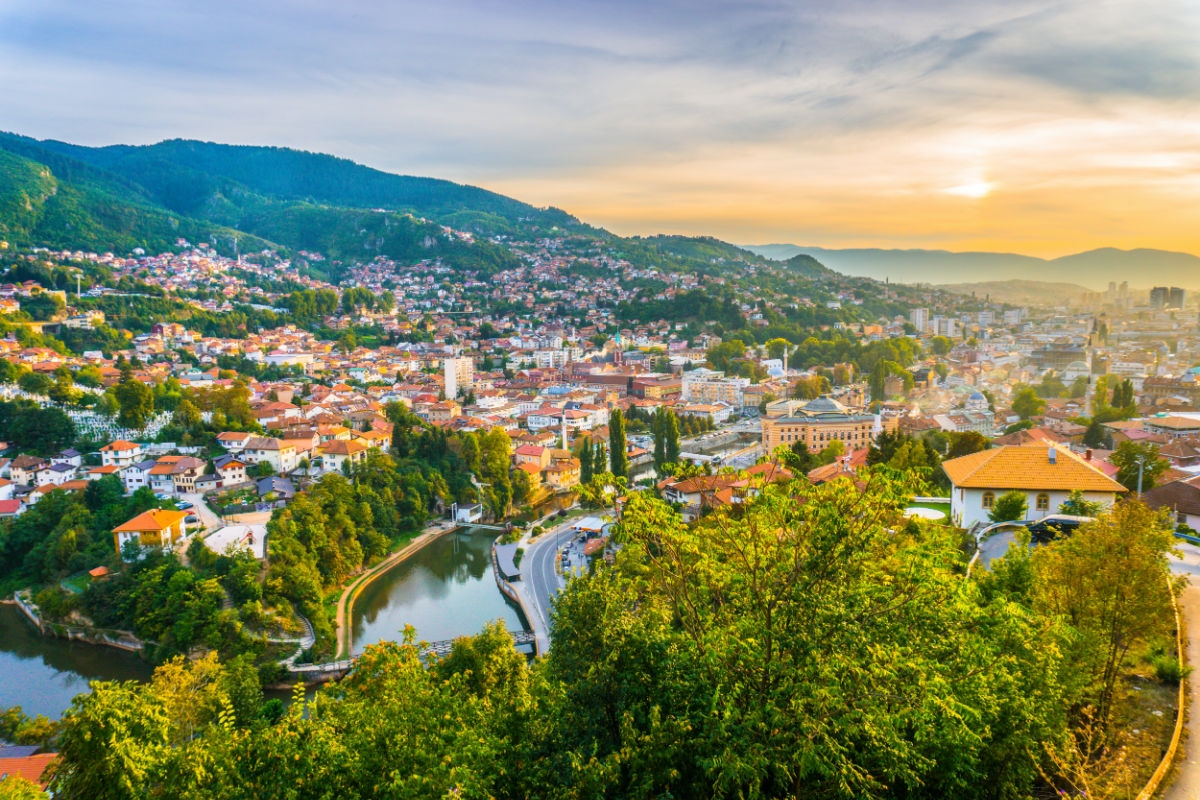
The capital of Bosnia and Herzegovina, Sarajevo is a city with a troubled past but a very bright future. This small Balkan capital is full of history, colorful locals, amazing food, and endless cobblestone alleys to explore.
Recently named a best value destination for 2023, the reasons to visit Sarajevo just keep growing. I spent 4 days exploring this city and left with a strong impression of not only Sarajevo, but Bosnia and Herzegovina as a whole.
Sometimes referred to as the Jerusalem of Europe, Sarajevo is a city of contrasts around every corner. In the same afternoon, you can visit a Mosque, a Synagogue, an Orthodox Church, and a Catholic Church. Turn a corner in this city, and you can see hints of Vienna and Istanbul in its architecture and history everywhere you look.
Is It Safe?
The very mention that you are traveling to Sarajevo might be met with some trepidation or worry from your loved ones, as it’s known for its violent past. While the infamous siege from 1992 -1996 is one of the main things people know about Sarajevo, today, it’s safe to visit.
The Balkan region is no stranger to politically complex cities, and Sarajevo is no exception. The complexities of the political situation that led to the Siege of Sarajevo in 1992 are a history lesson in itself, so I won’t get into it here. There are numerous resources to learn about the longest siege in military history and how it came to be. A visit to Sarajevo is a history lesson in itself, and the many local guides who lived through it will be your best way to learn about this major historical event.
So, why did I venture to Sarajevo, and what kind of impression did it leave on me?
Let’s just say that after an 8-month trip exploring the Balkans, this city was one place that really stuck with me for many reasons.
5 Reasons You Should Consider A Trip To Sarajevo
Historical Importance
Did you know World War I technically started right in the center of Sarajevo?
The Latin Bridge in the middle of town is where Archduke Franz Ferdinand and his wife were assassinated while riding in his motorcar. This event triggered a political crisis among the major European superpowers and led to a domino effect of decisions leading to the start of WWI.
Endless Things To Do
There is just so much to see and do in this small capital city, and my 4 days were not enough time to explore everything. The entire city is basically a history lesson in itself, with many walking tours dedicated to the siege, history, architecture, or street art. When you are exploring, make sure to look for the Sarajevo Roses. I won’t spoil it for you here, but let’s just say they are not what you think.
While there is SO much to do in Sarajevo, here is a brief list of things I did and 100% recommend:
Take a siege tour to really get the full experience of what happened when the city was blocked off from the rest of the world in the 90s. I went with FunkyTours, and they are known as the most reputable agency in town for a good reason. Our guide spoke passionately about his experience, and the tour was very eye-opening.
You cannot miss the war tunnel experience, where you can witness the drastic measures locals took to move goods in and out of their city.
Head up Trebević Mountain and walk along the abandoned bobsled track used in the 1984 Winter Olympics.
Check out the historic Sarajevo Brewery, taste the local brews and learn why this brewery is considered to have saved the city.
Spend hours wandering around the old bazaar, full of metal works and other stalls. Sit in Baščaršija Square and sip a Bosnian Coffee next to the famous Sebilj Fountain. I spent far longer than I care to admit watching the locals and tourists feed, photograph, and get bombarded by the famous pigeons that call this area home.
Head up past the striking Alifakovac cemetery to the Yellow Bastion for a great sunset over the city. While you are up there, check out the little hidden Kamarija cafe nearby. This place has amazing views over the valley, nestled in the trees of the hillside.
A City Full Of Characters
The people of Sarajevo have been through a lot, that goes without saying. The siege was not all that long ago and most of the residents are old enough to remember the daily terror they lived through for 4 years, and every local I spoke with had lost family or friends in the violence.
Despite their bloody past, the people of Sarajevo are absolute characters. I couldn’t believe the smiles, belly laughs, and overall happiness that I saw in this city. I was expecting rough and tough and was blown away by the opposite. Sarajevo is full of talkative, friendly, and yes sometimes solemn locals. If you ask questions, they are eager to answer and educate foreigners on the complexity of their city’s past. After 8 months of traveling throughout the Balkans, I quickly listed Sarajevans as the friendliest people I had encountered.
Connectivity
Sarajevo is becoming increasingly connected to the U.S. and Canada, with more airlines including it in their 2023 routes, and this is one of the main reasons I was able to sneak it into the end of my Balkan trip.
Finding ourselves in Split, Croatia, and needing to get back to New York rather quickly, the best flights I could find were actually out of Sarajevo. After a quick search, I realized that reaching Sarajevo from split was fairly straightforward, cost-effective, and allowed us to stop in Mostar on the way. So not only did we save hundreds of dollars on flights, we also got to explore Bosnia and Herzegovina a bit.
Aside from flying, Sarajevo is well connected to the rest of the Balkan region via bus and rail, and traveling these methods is easy and cheap. Located between Belgrade and Croatia, the city makes a logical stopping point to explore.
One thing not to miss when talking about Sarajevo transportation is the tram network. In fact, this might be where my love of tram travel started. Sarajevo’s trams crisscross the city and into the suburbs. Some are quite old and rustic, while others are a bit more modern. A local told us that the Sarajevo tram network is actually one of the oldest in Europe and was used as the model for other famous tram systems, such as Vienna.
One Word: Mostar
As I mentioned before, our trip from Split, Croatia to Sarajevo required a stop in the small town of Mostar. Being one of those places I have always wanted to see for myself, there was no way I was settling for just an afternoon in this little gem tucked into the southwest corner of Bosnia and Herzegovina. While we stayed 3 days and had to pry ourselves away, Mostar is an easy day trip from Sarajevo if you want to get out of the city for a bit.
Reachable in under 2 hours from the city by bus or train, a day trip to Mostar is a must when visiting Sarajevo. Amble among the hilly cobblestone streets and market stalls, and head for Stari Most (Old Bridge), easily the most famous landmark in Mostar. If you are lucky, there will be high-rise divers on the day of your visit, collecting money and taking the death-defying plunge into the shallow Neretrva River below.
I just spent a whole day exploring one of Europe’s poorest countries, where there are no shimmery Eiffel Towers, Mediterranean sunsets, or wide leafy boulevards lined with designer shops – and I almost couldn’t believe I was still in the same continent.
Comprising Southeastern Europe, the Balkan Peninsula is officially home to 12 nations, which all share a common culture and an intertwined History. It is also my go-to destination, home to gorgeous beaches and UNESCO-listed sites, the tastiest food, and beautiful, incredibly affordable citiesyet to be discovered, far away from the Instagram hordes.
Having been to Croatia, Albania, and Western Turkey, I decided it was time to go deeper into the heart of the region and explore what is perhaps its least-visited state:
Welcome To Kosovo, Europe’s Youngest Nation
Out of 12 countries that are either fully, or partially Balkan, the small, newly-independent Kosovo was the one nation I kept avoiding as I country-hopped across the peninsula. While I had the opportunity to visit twice since first arriving in the territory all the way back in 2019, both misinformation and misleading travel advisories always discouraged me.
Although it is certainly not fighting a full-fledged war, at least not anymore, Kosovo is yet to establish amicable relations with Serbia, from which it declared independence unilaterally in 2007. The latter has repeatedly refused to accept Kosovar sovereignty, and to this day, some maps include Kosovo as a Serbian autonomous province.
But why does Kosovo’s independence claim continue to be challenged by Serbia more than a decade later?
For most of the 20th century, these two countries formed the now-defunct federal entity of Yugoslavia alongside Croatia, Slovenia, Bosnia and Herzegovina, Montenegro, and North Macedonia. Beginning in the 90s, Yugoslavia began to crumble, and one after the other, the federal republics within it seceded, rejecting Serbian rule, though not without struggle.
Carrying the scars of the 90s war, responsible for re-shaping Balkan borders and establishing at least six new countries, and expressing a strong will to re-assert its Albanian identity, Kosovo was the last former Yugoslav territory to hold an independence vote only 15 years ago: Europe’s youngest (partially recognized) nation.
Regrettably, the Kosovar referendum was deemed illegal by Serbian lawmakers on the basis that Kosovo was never a constituent republic within Yugoslavia, unlike Croatia, Slovenia, or the others. Fast forward a decade, and the legal imbroglio continues to have repercussions, with Kosovo’s international recognition being limited and disputes extending well into 2023.
There are four main reasons why the people of Kosovo do not feel attached to Serbia and may want to untangle themselves from the persisting ghosts of the Yugoslav era:
Kosovo is inhabited by Albanians, who form the vast majority of the populace (92%)
Naturally, the most widely-spoken language in Kosovo is Albanian, an Indo-European language markedly different from Serbian
The most followed religion in Serbia is Eastern Orthodoxy (69.9%); Kosovo is 95.6% Muslim
For most of the 20th century, the Kosovar demand for more autonomy within Yugoslavia was largely overlooked and violently repressed by Serbian-controlled Yugoslav forces, giving rise to a strong anti-Serbian sentiment within the territory
Now that you know why Kosovo’s status is disputed, it is time we understood how actually underdeveloped it is as a nation standing on its own and why that came to be:
Kosovo Is The Third Poorest Country In Europe
Due to its complex recent past, assuming that it is independent from Serbia, Kosovo has been named the third-poorest country in Europe, with almost 30% of the population, or 550,000 Kosovars, falling below the poverty line. In 2016, it had an unemployment rate of 34.8%, and a majority of families earned less than €6,000 per year.
In addition to a low Human Development Index, Kosovars struggle from:
Not being members of the European Union and having their movement in Europe severely restricted
Not being a part of NATO, which puts them at an increased risk of attacks by neighboring belligerent countries
Having the weakest passport in Europe; as of 2022, Kosovo passport holders need visas to enter most European countries, and they are only granted visa-free access to 41 countries worldwide
Refused admission in countries that do not recognize Kosovar independence and thus Kosovar-issued travel documents (Georgia, Moldova, Cuba, and others)
Kosovo, and the wider Balkan Peninsula, are indisputably European, being an integral part of the continent’s multicultural, multi-ethnic, and multi-faith character. However, they are a different flavor of Europe, lying outside the Brussels sphere of control and occasionally resembling Western Asia in terms of urban planning, culture, and infrastructure.
For the most part, there are no wide, tree-lined Belle epoque boulevards to be found here. Instead, you should expect streets crammed with overhead power cables and overflowing garbage in the style of Latin America’s run-down hoods. Additionally, Kosovo isn’t the ideal destination for tourists looking for the quintessential European sightseeing experience:
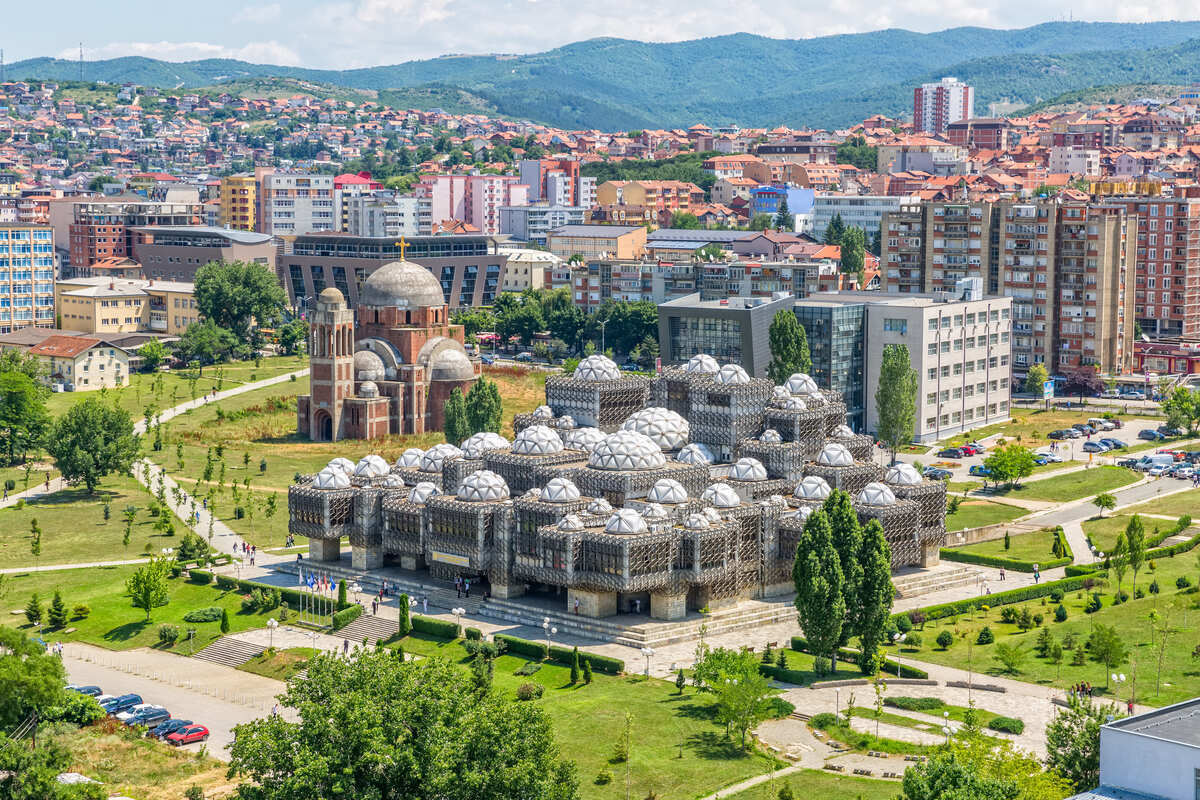
Several historical buildings in Pristina have either been destroyed or heavily damaged by bombing, and what’s left are a handful of medieval mosques and Serbian Orthodox Churches, modernist apartment blocks evocative of the communist years, and war memorials paying homage to the Kosovar Albanians who lost their lives fighting for autonomy.
So why, then, is Kosovo worth visiting?
Six Reasons Why Kosovo Should Be On Your Radar For 2023
Incredibly Welcoming Locals
The hospitality of Albanians precedes them, and upon arriving in Pristina, my first destination on this day tour, I was reminded why they have a reputation for being one of the most friendly people in Europe. Whether you’re shopping for souvenirs or simply asking for directions, you will feel their warmth and be greeted by genuine smiles.
From the few interactions with Kosovars I had during my excursion, I felt as if they were as elated as they were puzzled I was traveling there in the first place. Locals will go out of their way to make sure you feel welcome, be it eagerly sharing their customs and traditions, or pausing whatever it is they’re doing to help a tourist in need of assistance, without expecting anything in return.
We must remind ourselves this is a newborn country hosting less than 200,000 foreign tourists on average per year, and ensuring tourists have a good impression is in their best interest.
It Is Home To Beautiful Historical Sites
Kosovo may have been ravaged by war, and it’s true several of its historical monuments are either undergoing reconstruction or were razed to the ground, giving way to modernist buildings that wouldn’t be totally out of place in the bygone Soviet Union, but this does not mean there’s no architectural beauty to be found here, or an inestimable cultural value at that.
The Balkans are perhaps the most History-charged region in all of Europe, and Kosovo is no exception. One of the main points of interest in the country is the beautiful 14th-century Serbian Orthodox Gracanicka Monastery. Embellished by vibrant frescoes and atmospheric candles, it is one of a handful of UNESCO World Heritage Sites in Kosovo.
Yet another example of Orthodox architecture that’s been enlisted by UNESCO is the Patriarchal Monastery of Pec, located near the city of Peja, famous for its striking red exterior. Elsewhere in Kosovo, visitors can also admire the remnants of well-preserved 18th and 19th-century Ottoman houses.
Wandering the cobblestone streets of Prizren to the bewitching chants emanating from the nearby minarets, you will be transported back to the Anatolian heartland of Turkiye. Distinctly oriental in character, Prizren features an old Ottoman bridge arching over a clear river and imposing mosques glistening white against the surrounding green hills.
Some call it the prettiest city in Kosovo, and one of the prettiest in Southeastern Europe.
It must be something in the water… In recent years, Kosovo has been spawning an impressive streak of pop stars that are crossing over to the mainstream and making it big in America. Two of the most easily recognized artists whose families hail originally from here are the multi-platinum British artists Dua Lipa and Rita Ora.
Dua is, in fact, one of the most successful female artists of the streaming era with several top ten hits under her belt – with Don’t Start Now, Levitating, New Rules, and Physical to name a few – and other successful collaborations with world-renowned DJs and industry veterans like Elton John. Other than advancing the Kosovar cause, she’s been credited for ‘putting Kosovo’s name on the map‘ and reviving the country’s dying cultural scene.
Now, visitors to Pristina can attend an annual international music festival held in summer organized by Sunny Hill Foundation, headed by Dua Lipa herself and her father, Kosovo-born businessman Dukagjin Lipa. While she’s on tour, the singer is usually included in the line-up, which features other international acts and local Albanian artists.
Out of all 37 European countries I have set foot in, Kosovo has to be the one where my tourist dollars stretched the furthest. Even if you’re ready to splurge after being locked down at home for nearly three years, and you’re ordering every possible appetizer on the menu, getting a bill of more than 20 euros per person at a mid-range restaurant will be virtually impossible.
Additionally, entry to cultural attractions is, on average, €2 to €5 (such as the Gracanicka Monastery), making it incredibly affordable to explore over a few days or even a longer period of time. On average, the cost of living in Kosovo is 61.68% lower than in the United States, with monthly expenses without rent estimated at €359, or roughly $382.
An important piece of info: Kosovo has no official currency of its own, and they have adopted the euro unilaterally. It is by far the most widely accepted currency in the country, though it may be possible to find businesses that accept or exchange U.S. dollars, British pounds, or other popular currencies.
It’s Every Foodie’s Idea Of Paradise
Albanian food ranks among my favorite in Europe, mainly because it resembles other ethnic dishes concocted by the Turkish or the Greek, with ingredients that are always fresh, melt-in-your-mouth meat rolls, soup rich in spices and unique Balkan condiments, and a wide assortment of locally-sourced fruit and salted, soft cheeses.
Whether you’re in Kosovo, Albania, or any other Albanian-majority region of North Macedonia or Greece, rest assured you will be well looked after by your Albanian hosts. Some of my favorite picks are:
Fergese, a flavorful paste made mainly of tomato sauce, cottage cheese, green peppers, and garlic, served traditionally with bread
Byrek (the Albanian equivalent to the pan-Balkan burek), a flaky dough pastry filled with potatoes, spinach, meat, or cheese
Tarator, a cold soup containing sour yogurt, shredded cucumber, a few squeezes of lemon, and several teaspoons of salt
Speca te mbushura, rice-stuffed green peppers. In some Albanian regions, chopped lamb and/or tomatoes can be added
Qofte, meatballs that can be grilled, fried, or baked
Tave kosi, lamb baked in a melting pot of homemade yogurt, rice and eggs
Kosovo Is A Unique Country To Explore
Having traveled Albania extensively, I had the impression it borrows heavily from Italian and Greek cultures, resting cozily in its Southern European, Adriatic nook. To all effects, the Republic of Albania effortlessly fits all the Mediterranean criteria: pristine beaches, freshly caught seafood, Greco-Roman monuments, and laid-back vibes throughout.
Kosovo, on the other hand, is landlocked, and not only its cuisine but the locals’ way of life as a whole is entirely defined by its geographical features. You will not find an abundance of seafood here, though the traditional meat-heavy shqiptarë diet remains a defining trait, as does Albanian folklore and ethnic attire.
At the same time, it has incorporated other Turkish and Slavic influences, having spent centuries under Ottoman rule, and later in a state union with the South Slavic communities. The constant redrawing of the borders and influx of immigration from neighboring countries has given rise to a unique Kosovar identity that is closely related to Albania’s, but not exclusively Albanian.
This small, overlooked territory is, in essence, the Balkan Peninsula and all of its contrasting identities in a nutshell.
How To Get To Kosovo In 2023
Notably, there are no direct flights from the United States or Canada. Reaching Pristina from the Americas, U.S. travelers must change flights at least once. When it comes to one-stop connections, options are limitless: most of Europe’s major transit hubs, such as London Heathrow, Vienna, and Frankfurt, have established year-round air links to Kosovo.
Geographically, the closest country Americans can fly into is, ironically, Serbia. Belgrade is served by direct Air Serbia flights leaving from New York (JFK), with one-way fares starting at $618 this winter. Landing in Serbia, Kosovo-bound travelers are required to travel via land to the disputed territory (which Serbia continues to claim as its own).
Alternatively, international buses to Pristina depart from Skopje, in North Macedonia, and Tirana, Albania, as well as other select cities in the Balkans. Timetables may change depending on the date of the week, and tickets are normally purchased from the ticket office at bus stations. Fares range between $25 and $30 for return trips, though they can be more expensive depending on the transportation provider.
If you’re planning on taking the bus from Belgrade, the journey is usually hassle-free for those entering Kosovo after crossing into Serbia first. Americans who first cross into Kosovo, either via Pristina Airport or any other border crossing points with North Macedonia or Albania, and continue traveling onward to Serbia, will be barred.
The Problem With Entering Serbia After Crossing Into Kosovo First
As Belgrade considers Kosovo an integral part of its territory, border authorities have ruled that all non-Serbian nationals entering from the latter without a valid Serbian stamp on their passports will have crossed into Serbia illegally. Americans attempting to do should expect to be turned away at the border unceremoniously.
In sum:
Traveling from Serbia into Kosovo with Serbia as the initial entry point: perfectly legal in Serbia’s view (the same applies to re-entering Serbia after visiting Kosovo)
Traveling from Kosovo into Serbia without an initial Serbian entry stamp on your passport: illegal on Serbia’s part
Unless you are planning on visiting Serbia after Kosovo, you should not worry about these border disputes and complex technicalities. However, if you’re backpacking across the Balkans, and you would prefer not to get on the wrong side of a Serbian immigration officer, you must ensure you are stamped by them first.
To the best of my knowledge, previous visits to Kosovo that did not involve an accompanying visit to the northern neighbor should not pose an impediment for entry into Serbia in the future, unless you’re unlucky enough to run into hostile border staff, who may take their time questioning you over a fading stamp.
Want To Avoid All These Confusing Border Rules? Consider Booking A Private Tour Of Kosovo Instead
As I booked a private day tour of Kosovo leaving from Skopje, the capital of North Macedonia, located a short one hour and a half away, I entered via a land crossing point. The experience was rather smooth, and my incredible guide, Smile, from Skopje Daily Tours, handled all border formalities so I could worry about appreciating the scenery instead.
I am not an enthusiast of guided tours myself, particularly those involving a group. Personally, I prefer exploring new destinations at my own pace, and usually with enough time to have a couple of days at leisure. Unfortunately, this time round, I would be flying out of the Balkans on the very next day, and being so short on time, booking this private visit was the right call:
It is considerably more expensive than an excursion, but you have more freedom to personalize your itinerary and get to know your driver/guide a little better
Guides working for Skopje Daily Tours are Historians, or Geopolitics experts with extensive knowledge of Kosovo – and you’re free to ask them any questions you may have about the Balkan conflict
Traveling by car with an authorized guide, there is less waiting at land borders – buses are normally checked thoroughly to ensure there are no smugglers and that they meet certain standards until they are allowed to cross
No stops at the usual tourist traps or overpriced souvenir shops: your guide will ensure time is optimized and that you have the best possible experience, eating in reasonably-priced restaurants and seeing truly relevant sites
Prices for a private day tour of Pristina and Prizren, two of Kosovo’s main cities, start at €55.
Safety
Reading travel advisories on Kosovo, I’d be surprised if anyone decided to visit at all. In general, Western countries make notes on the unsolved Serbo-Albanian quarrel, warning their citizens of higher crime levels, ‘high tensions’ along the border with Serbia, and the threat of terrorism and violent demonstrations.
Kosovo is indeed a country with deep-rooted issues that is yet to fully achieve peace and normalize relations with its Slavic neighbor, but visiting the main tourist zones, namely the cities of Pristina and Prizren, phone in hand and speaking English unashamedly, I felt as safe here as anywhere else (in the Balkans).
Walking in Pristina, my limited knowledge of Albanian was my only concern being approached by friendly, smiling natives at local cafes or shops, who seemed as delighted to be running into a foreign guest as I was for visiting. One must bear in mind Kosovo is definitely not one of these European hotspots suffering from overtourism – on the contrary.
With that being said, I refrained from touring North Mitrovica, Leposavic, Zubin Potok, and Zvecan, where confrontations between Albanians and Kosovo’s ethnically Serbian residents have been known to erupt with little warning and restricted my movements to Pristina’s city center and the Old Town in Prizren, popular sightseeing areas.
On top of that, I was accompanied by an experienced guide who ensured I would not deviate from the touristic path and put myself in harm’s way. Unless you are directly involved with paramilitary groups or extremist organizations, and you’re not actively looking for trouble (e.g. wandering heavily patrolled borders), trouble will not come to find you.
Rules For Entering Kosovo In 2023
Kosovo has removed all of its Covid entry requirements since May 2022.
Vaccination is no longer a prerequisite for entry
There is no testing regime in place prior to, upon, or after arriving
Travelers are not expected to stay in isolation for a period of time after arriving
There are no online forms or pre-flight registrations to be made flying to Kosovo
Bottomline
This tiny, newly-independent state, plagued by ethnic conflicts and that’s yet to fully recover from a bloody war, is finally finding its footing as an off-path tourism hub. Although it is quite a way-off from other more developed neighbors, it has a lot of unexplored potential to charm tourists who usually flock to Western Europe.
Yes, it has somewhat of a reputation for being a little rough around the edges, but Kosovo is a beautiful place to explore… If you know where to look.