Tag: Traveling

  • The 8 Most Challenging Things About Traveling In South America

    The 8 Most Challenging Things About Traveling In South America

    [ad_1]

    Share The Article

    Last Updated

    The Trials and Tribulations of Traveling Through Latin America

    South America is an astonishing continent. Vibrant culture, astounding natural beauty, and a unique flair all collide, whichever country you find yourself in. But after five months of working my way down its western coast, I can also tell you it can be an unforgiving place too.

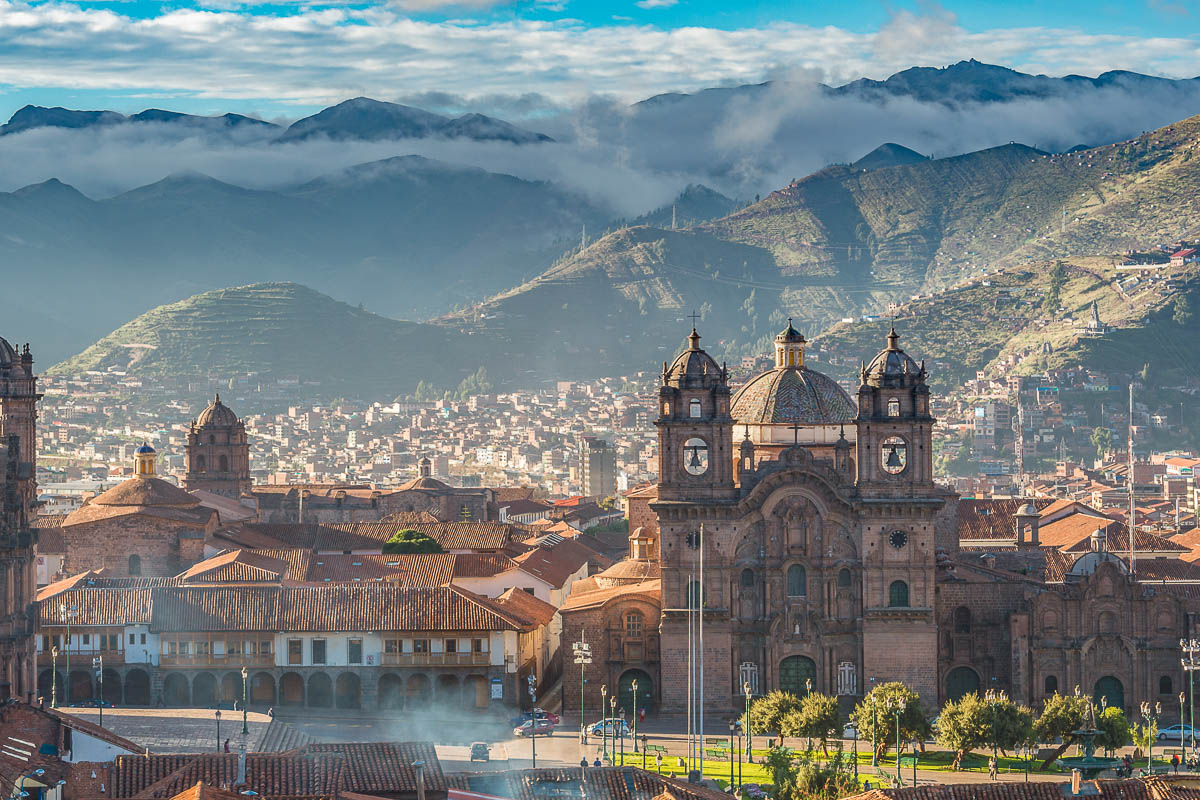
    cusco skyline

    I spent the first half of 2022 exploring Colombia, Ecuador, Peru, and Argentina, scaling mountains, exploring the jungle, and getting to grips with the ins and outs of South American culture. It’s been unforgettable, but it’s also left me with a sense of relief at leaving I haven’t felt anywhere else.

    South America should be on your bucket list, but being prepared is key to enjoying this vast continent. With that in mind, here are the eight most challenging things about traveling in South America.

    1. Safety

    Let’s get the elephant in the room out of the way first. Is South America safe? Yes, it can be safe for those taking proper care. With that said, it’s by far and away the least comfortable I’ve felt in years of full-time travel.

    medellin barrios

    Until South America, I’d never seen a mugging before, and I’m lucky enough to never have been pickpocketed or had anything stolen. In my time there, I witnessed two violent muggings in broad daylight, had my own bag slashed, and met countless people who had been held at gun or knife point. There’s no getting around it; crime (and violent crime, in particular) is more prevalent here than anywhere else I’ve been.

    Colombia and Ecuador were particularly problematic. I was warned never to wander around with a camera, phone, or anything valuable in sight. We were told never to walk around at night outside of the busy downtown areas and to always get an uber if possible.

    Being careful makes it unlikely you’ll fall victim to anything serious, but it’s important not to dilute the fact that crime is far more prevalent than anywhere you may visit in Europe or Asia.

    With that said, Buenos Aires in Argentina felt like a massive exception to this rule, as well as Cusco, Peru, where pickpocketing and petty crime pose the only major threats.

    2. The Transport

    Deciding how to get around South America is tough problem to solve. Flights, especially this year, can be expensive with awkward layovers, while the buses are brutally long. Our own experience was a mixed bag. After spending days trying to get the bus from Medellin to Quito, we chose to fly. Every bus option was over thirty hours long and worked its way through some unstable areas. The flights weren’t cheap and had to fly North to Panama City and then back South to Quito.

    bus in south america

    Other buses in Ecuador and Peru were amazing in terms of comfort. Lay flat seats, good air conditioning, and even snacks made the 20-hour bus journey much easier. Finding the buses, on the other hand, was a nightmare unless using the specific apps. Try to plan ahead instead of booking in person. It’ll save you many headaches. 

    With that said, there’s no shortage of options in each country. Domestic buses were much easier to navigate and super cheap too.

    3. The Climate is sneaky

    Complete ignorance on my part is to blame for this challenge. As far as my limited knowledge was concerned, Ecuador, on the equator, was always hot right? False. Sure, down by the beach, the weather is always pretty good. But in Quito, at over 2,000 meters high, it got chilly in April. 

    weather buenos aires

    Two days later, in the Amazon, I’m sweating. A week later, in Banos, I’m perfectly comfortable. Peru’s northern regions were hot and dry, while Lima was a gloomy 60 degrees. Pick your clothes wisely, and dress for every kind of weather. If you’re exploring the whole continent, you’re going to come up against everything.

    4. The Altitude

    If you’ve never been at altitude before, some of South America is going to be a shock for you. Several of the continent’s most prominent tourist destinations and cities are some of the highest settled points in the world.

    Ecuador’s capital, Quito, sits just shy of three thousand meters, Cusco is at a whopping 3,400 meters, and La Paz in Bolivia is a breathtaking 3,625 meters. This means it can get super cold in all of these places, but more importantly, it’s going to seriously affect your wellbeing.

    quit skyline

    Altitude sickness is very real, and it’s not uncommon for visitors to feel a bit sick during their first few days in any of these cities. Even after that, simple tasks like walking up stairs might suddenly seem a little more complicated and leave you short of breath. It’s super important to acclimatize a little and make sure to take a few days before you undertake anything strenuous like mountain climbing.

    5. The Spanish

    I learned French at school, so I was coming in blind with regard to Spanish in South America. I did my best to pick up the basics and was getting comfortable ordering things, listening for instructions, using numbers, and other day-to-day lingo.

    But then I moved from Colombia to Ecuador, and it sounded like a different language. Then again, from Ecuador to Peru. And then Argentinian Spanish is completely different sounding. Each country and even regions within them have their own variations of Spanish. While these usually only take shape in pronunciation tendencies, like the “double-l” sound, some words and phrases are completely different.

    Do your best to read up on a few differences when you visit each one so you can prepare yourself to listen for the nuanced phrasing. They didn’t teach you this in high school, that’s for sure.

    6. The Water

    Always ask about the drinking water. If there’s no answer to be found, assume you can’t drink from the tap in South America and go for the bottle. Even in some cases, locals may drink it, but their bodies are used to it, while ours may reject it a little.

    I was able to drink in some apartments we stayed in, but they were usually fitted with individual filters that allowed us to do so. In other cities, we only used bottled water. It’s tough, especially if you’re inclined to be more environmentally conscious, but you don’t want to be sick on your trip.

    7. When it’s touristy, it’s very touristy

    A lot of South America is pleasantly free of mass tourism in the way we understand it. While this has its drawbacks in regards to convenience, it makes for a wonderful experience and lets you get a little more in tune with the culture.

    cusco central square

    But in tourist towns, it’s extremely touristy, and it can be anger-inducing at times. Cusco, where most tourists base themselves for a trip to the famous Machu Picchu, has an economy based on tourism. Because of this, anywhere around the center square is packed with vendors and other tourist-centric salespeople peddling their wares, drugs, or tours.

    It’s virtually impossible to walk across Plaza de Armas without being stopped by five or six people selling jewelry, paintings, or even having a baby alpaca handed to you. Sitting at any of the street side tables in a restaurant means you’ll spend a significant portion of your meal waving them away. Don’t make a lot of eye contact, politely decline, and keep walking. Be firm, but try not to be rude, even after multiple solicitations. They are trying to make a living, after all.

    8. The toilets…

    In most of the more developed cities, the toilets are great! Even once you get out into the countryside, you don’t need to use squatty toilets too much like in Asia, where it’s the norm in some countries. But public toilets can have an aversion to toilet paper. Some, mainly in tourist spots, will have someone nearby selling by the sheet, but many won’t have any at all.

    toilet south america

    Having some with you in your bag, especially for the girls, is a great idea to help you out of an icky situation. Also, be very careful with what you flush down the toilet. Many of the plumbing systems in the region can’t cope with toilet paper and require you to toss it in the bin. As much as you might not enjoy it, just do it. You don’t want to be the gringo that clogged the toilet.

    Conclusion

    South America is wonderful. It was truly one of the best few months of travel we’ve had, as well as the most exhausting. It’ll test you but reward you in equal measure. Just make sure to take a little extra care than you’re used to.

    ↓ Join the community ↓

    The Travel Off Path Community FB group has all the latest reopening news, conversations, and Q&A’s happening daily! 

    Travel-off-Path-group-1-1
    SUBSCRIBE TO OUR LATEST POSTS

    Enter your email address to subscribe to Travel Off Path’s latest breaking travel news, straight to your inbox

    Disclaimer: Current travel rules and restrictions can change without notice. The decision to travel is ultimately your responsibility. Contact your consulate and/or local authorities to confirm your nationality’s entry and/or any changes to travel requirements before traveling.  Travel Off Path does not endorse traveling against government advisories

    [ad_2]

    Source link

  • What To Do If You Get COVID While Traveling In Europe

    What To Do If You Get COVID While Traveling In Europe

    [ad_1]

    Share The Article

    Now that COVID-19 travel restrictions have been eased and only a few countries in Europe still have restrictions, travelers from all over the world are eager to explore the old continent and enjoy a wonderful summer vacation. 

    However, they might not be able to avoid getting COVID-19, especially while visiting landmarks and tourist destinations. According to recent data, popular destinations have been recording significant rises in cases, and the Omicron variant BA.5 has been spreading quickly.

    But what can travelers do if they get COVID while traveling? Well, it depends on the country they are visiting. These are the current rules in the most popular countries: 

    Italy: Strict Quarantine Rules

    Even though there are no entry restrictions, Italy still has a few rules regarding COVID. Here’s what travelers should know:

    • FFP2 masks are still mandatory in public transportation, including buses, planes, and trains. In hospitals and health centers masks are also required.
    • If you have COVID-related symptoms or had contact with someone with the virus, local authorities recommend to self-isolate and contact a doctor. Travelers can contact the national COVID hotline (1500) or regional hotlines.
    • The government assists travelers with COVID-19 tests.
    • According to the US Embassy in Italy, antigen tests cost around $20 and PCR tests around $70.
    • Travelers who test positive will have to self-isolate, at the travelers’ own expense, for 7 to 21 days. Only vaccinated travelers —or those who recovered from COVID in the last 120 days— can quarantine for 7 days, non vaccinated travelers must quarantine for at least 10 days.
    • In order to leave self-isolation, travelers must have had over 3 days without symptoms and test negative. Only after 21 days testing positive travelers can leave quarantine.

    UK: No restrictions

    The UK has also removed entry requirements, but this is what travelers must bear in mind:

    • Travelers with symptoms or COVID-19 do not have to self-isolate.
    • Local authorities recommend avoiding contact with people for 5 days.
    • Travelers under 18 should stay at their accommodation for three days.
    • Covid-19 tests aren’t free, and prices can vary a lot: from  $47 to $594 depending on the type of test, location, and time delivering results. 

    France: Self-Isolation Required

    France still requires travelers to be vaccinated or show a recent negative test result and fill in a health form. These are the main considerations for travelers:

    • Masks are not mandatory but highly recommended in crowded places and in public transportation.
    • Travelers are encouraged to download the local COVID-related app called “TousAntiCovid”.
    • Vaccinated travelers who test positive for COVID-19, must self-isolate for 7 days from the first day of symptoms or from the day they got the positive result. If travelers feel well on day 5 and don’t have symptoms they can leave quarantine sooner with a negative test result.
    • Non-vaccinated travelers who test positive must quarantine for 10 days. If they feel better on day 7 and obtain a negative COVID-19 test result, they can stop self-isolating.

    Spain: Just A Few Restrictions

    Spain requires international travelers —outside the EU— to show proof of vaccination or a negative test result. These are the current rules for travelers who get COVID:

    • Those who are asymptomatic or don’t feel very sick are not required to quarantine. Travelers should self-isolate if they don’t feel well.
    • Those who tested positive for COVID-19 are recommended to wear a face mask for 10 days in crowded places, public transportations, and public indoor spaces, and practice social distancing.

    Portugal: Self-Isolation Required

    Many people walking around historical riverside of Douro river, sunny day

    Travelers don’t have entry restrictions, but, if they get COVID there are a few considerations:

    • Travelers who test positive must self-isolate for 7 days at their own expense.
    • In Madeira, the Azores, and Porto Santo self-isolation is required only for 5 days.
    • Travelers can get assistance from local hotlines or call 112 in case of an emergency.
    • Masks are mandatory on public transportation, taxis, hospitals and pharmacies.

    Germany: Self-Isolation Required

    Young Female Tourist Posing In Front Of The Berliner Dom, Berlin, Germany

    There are no entry restrictions for travelers, but here’s what they should know:

    • Facemasks are mandatory in public transportation and health centers.
    • Travelers with COVID-19 symptoms should call the hotline 116 117 or a doctor.
    • Those who test positive must self-isolate for at least five days. After getting a negative result, travelers can stop quarantining.

    Read More:

    Malta Finally Removes All Covid Entry Requirements

    Travel Insurance That Covers Covid-19 For 2022

    8 Tips for Navigating Travel Chaos and Flight Delays This Summer

    ↓ Join the community ↓

    The Travel Off Path Community FB group has all the latest reopening news, conversations, and Q&A’s happening daily! 

    Travel-off-Path-group-1-1
    SUBSCRIBE TO OUR LATEST POSTS

    Enter your email address to subscribe to Travel Off Path’s latest breaking travel news, straight to your inbox

    Disclaimer: Current travel rules and restrictions can change without notice. The decision to travel is ultimately your responsibility. Contact your consulate and/or local authorities to confirm your nationality’s entry and/or any changes to travel requirements before traveling.  Travel Off Path does not endorse traveling against government advisories

    [ad_2]

    Source link

  • Traveling Internationally This Summer May Be Cheaper Than Domestic Trips

    Traveling Internationally This Summer May Be Cheaper Than Domestic Trips

    [ad_1]

    Share The Article

    Last Updated

    A recent study has revealed that jetting off on an international trip this summer could actually be cheaper than heading away on a domestic vacation. The study is bound to come as a big surprise for travelers, having heard for several months about how expensive flight tickets and hotel stays are at present – but it could well have travelers scrambling to find their passports and book a trip overseas for the coming few months. 

    Having been made possible by a range of different factors, the study shows that an affordable international vacation isn’t just a thing of the past like many think it is right now, but a feature of travel today as well. Here’s which destinations the study claims American travelers can save money by visiting this summer – plus a look at which other international destinations represent good value for money at present. 

    International Travel Not Always Extortionate

    Despite frequent news stories telling travelers otherwise, international travel doesn’t have to break the bank – or at least that’s what a recent travel study is telling us. A study carried out by the travel booking platform Hopper found that several top destinations for American travelers could be well within budget – and, in many cases, even cheaper than going on a domestic staycation. 

    The reason why? The strength of the dollar compared to other currencies. Today, one US dollar can purchase ~0.94 Euros, making it one of the few occasions that the two currencies have almost reached parity – all whilst flights and hotel in the US are rising in price. In layman’s terms, that means a traveler’s budget in Europe will stretch 15% further than last summer and 6% further than at this time in 2019 thanks to the strength of the dollar – which will more than help offset the expensive air fare. 

    The survey also reveals that whilst flight tickets have generally risen across the board, that isn’t the case for every destination. Despite a general increase of almost 15% for international flights and more than 30% for domestic air travel compared to 2019, there are some destinations in Europe that have actually seen their ticket prices fall over the past few years. 

    Airfare to Portugal has fallen by 11% compared to 2019, with tickets to Croatia also falling 8.4% over the same period. Other countries, such as Ireland and Greece will cost more or less the same they paid for back in 2019, with airfare increases below 1%. Outside of the EU, key countries to target for cheap vacations include Chile, Sweden, Denmark and Norway, where both flight prices have fallen and the dollar is performing well against the local currency. 

    Male Tourist Sightseeing In Stockholm, Sweden

    Despite low overall price rises, travel to Europe can still be expensive for travelers. Flights to Mexico and the Caribbean are cheaper, and have also seen a much lower rise in airfare prices compared to domestic flights and flights to Europe, meaning that trips to top destinations such as Mexico, Jamaica and the Dominican Republic are even more attractive now than they were before. 

    The study also offered some general money saving tips both before and during a vacation. These included ordering currency from a bank before a trip to get the best exchange rate and, when abroad, paying in the local currency where possible to get the best exchange rate and price. Travel abroad may still cost a penny – but it may now cost less than you were previously expecting. 

    Read More:

    Thailand Becomes The First Destination In Asia To Lift Ban On Cannabis 

    Travel Insurance That Covers Covid-19 For 2022

    Top 10 Destinations Americans Can Travel To Without Any Testing This Summer 

    ↓ Join the community ↓

    The Travel Off Path Community FB group has all the latest reopening news, conversations, and Q&A’s happening daily! 

    Travel-off-Path-group-1-1
    SUBSCRIBE TO OUR LATEST POSTS

    Enter your email address to subscribe to Travel Off Path’s latest breaking travel news, straight to your inbox

    Disclaimer: Current travel rules and restrictions can change without notice. The decision to travel is ultimately your responsibility. Contact your consulate and/or local authorities to confirm your nationality’s entry and/or any changes to travel requirements before traveling.  Travel Off Path does not endorse traveling against government advisories

    [ad_2]

    Source link

  • CDC Issues Travel Advisory Traveling To These Countries Due To Monkeypox

    CDC Issues Travel Advisory Traveling To These Countries Due To Monkeypox

    [ad_1]

    Share The Article

    Last Updated

    Are we in the early days of a new global health emergency? After several monkeypox outbreaks were registered across Europe this week, and Belgium going as far as imposing a strict 21-day quarantine for travelers with a confirmed infection, the CDC has now issued a travel warning to a number of destinations due to the emerging threat.

    Monkeypox is a disease classed by the World Health Organization as being of ‘global public health importance‘. Although it mostly affects countries in West and Central Africa, it is also present in other parts of the world, and the identification of new clusters in Europe and North America, where it is not yet endemic, is worrying health experts.

    CDC Formally Recognizes The New Global Health Threat

    Adding weight to the other health warnings issued by countries like the UK, the U.S. Centers for Disease Control and Prevention – CDC has formally recognized monkeypox as a potentially disruptive pathogen, and emitted its own travel alert to a number of destinations in Europe and beyond. According to the CDC, cases have been reported in the following states:

    • Australia
    • Austria
    • Belgium
    • Canada
    • England
    • France
    • Germany
    • Israel
    • Italy
    • Netherlands
    • Portugal
    • Scotland
    • Spain
    • Sweden
    • Switzerland
    Gaudi's La Sagrada Familia In Barcelona, Catalonia, Spain

    Besides the above, monkeypox has already reached the United States as well, less than a month after the first infection clusters were identified in Europe. For that reason, the CDC has added the affected countries to the Level 2 category, stopping short of slapping a Level 3 travel warning due to monkeypox.

    This means that, when traveling to all European countries listed, as well as Australia, Canada and Israel, U.S. citizens should now ‘practice enhanced precautions’ to avoid monkeypox. This is a first for these destinations, as monkeypox had been mostly limited to a number of African nations up until recently.

    Young Man Wearing A Face Mask On A Balcony In An Unspecified European City

    Out of the CDC-flagged countries, Belgium has been the first to act, enacting a mandatory 21-day quarantine requirement for travelers with a confirmed monkeypox infection. The ECDC, the European equivalent to the CDC, is also monitoring the situation closely, as the case count across Europe exceeds 100 – with a large concentration of those in Spain and Portugal.

    Curiously, recent cases have not been linked to travel to Central or West African countries, ‘where monkeypox usually occurs’, such as the Democratic Republic of the Congo and Nigeria. This is a strong indication there is community transmission within Europe and North American continents.

    Young Female Traveler By The Boarding Gate At The Airport

    LGBTQ+ Americans Should Exercise Increased Caution When Traveling From Now On

    Corroborating other findings by health authorities in foreign countries, the CDC mentions a considerable portion of cases have been reported among men who have sex with men, as sexual interaction with an infected individual increases transmission dramatically. In fact, the first European clusters were likely spread by risky sexual behavior at 2 raves.

    Because of early infection trends, gay travelers should exercise increased caution, considering Spain happens to be one of the safest destinations for them, and thus a leader in LGBTQ+ tourism. That said, anyone can be infected, regardless of gender or sexual orientation, as ‘cases were also reported in people live in the same household as an infected person’.

    Couple Of Young Men Embracing Themselves While Holding Up An LGBTQ+ Flag At The Beach Seen From A Car Boot

    How Is Monkeypox Transmitted And What Does The CDC Now Advises?

    All it takes is coming into close contact with a person with an active infection, and particularly visible rashes and scabs caused by the disease. It can also be transmitted via bodily fluids such as pus or blood from open lesions, which are common throughout the course of infection. Scientists have not yet established whether it can be passed on through semen.

    While most patients will recover without any long-term complications, monkeypox scabs can leave scars behind once they fall off, and seriously disrupt travel plans. Following in the steps of Belgium, the Dominican Republic, one of the preferred vacation spots for Americans, has also issued a preventive alert due to monkeypox.

    Female Traveler Watching Her Phone While Wearing A Face Mask At The Airport

    As the World Health Organization states, people are most infectious when they have symptoms, much like Covid, and ‘normally for between two and four weeks’. Touching clothing, bedding, towels and contaminated objects such as cutlery and dishes have been equally recognized as precursors to infection.

    When visiting Spain, France, Portugal, or any other destination on the list, the CDC now advises travelers to avoid:

    • Close contact with sick people, particularly those with skin or genital lesions;
    • Touching any dead or live wild animals, such as rats, squirrels, monkeys and apes;
    • Handling all materials used by monkeypox-infected individuals as they could be contaminated.
    Young Female Traveler Looking Concerned At An Airport

    Risk To The General Public Remains Low As Of Now

    Despite the warnings, the CDC maintains that the ‘risk to the general public is low’. Regardless, travelers are advised to seek immediate medical attention when developing any known monkeypox symptoms. Those can manifest through fever, chills, tiredness and new, syphilis-like lesions on any part of the body.

    The latest CDC advice deals a fresh blow to Europe, which only recently started reopening following the Covid crisis. While monkeypox is not a novel virus like Covid, it has the potential to spread quickly and trigger a new era of tightened health protocols for travelers. So far, the World Health Organization has not declared it a global health emergency.

    Read More:

    Travel Insurance That Covers Covid-19 For 2022

    Germany Removes All Entry Requirements For Summer

    Record Number Of Direct Flights Happening Between The U.S. And Greece This Summer

    Mexico Expecting 40 Million Visitors This Year – How It Will Impact Your Trip

    Barbados Lifts Testing Requirement For Vaccinated Americans

    ↓ Join the community ↓

    The Travel Off Path Community FB group has all the latest reopening news, conversations, and Q&A’s happening daily! 

    Travel-off-Path-group-1-1
    SUBSCRIBE TO OUR LATEST POSTS

    Enter your email address to subscribe to Travel Off Path’s latest breaking travel news, straight to your inbox

    Disclaimer: Current travel rules and restrictions can change without notice. The decision to travel is ultimately your responsibility. Contact your consulate and/or local authorities to confirm your nationality’s entry and/or any changes to travel requirements before traveling.  Travel Off Path does not endorse traveling against government advisories

    [ad_2]

    Source link

  • What’s It Like Traveling To Canada Right Now

    What’s It Like Traveling To Canada Right Now

    [ad_1]

    Share The Article

    Last Updated

    Since Canada simplified entry rules for tourists as of April 1st, the nation looks to recover over two years of lost tourism, finally welcoming back visitors with fewer restrictions. As both the rules at the border and local mandates, such as mask-wearing, have been loosening – Canada expects to welcome more foreign arrivals this spring – especially American neighbors from the south.   

    This article will take a look at Canada’s most recent entry rules, what local restrictions are like in some of the most visited areas, and what foreign tourists can expect this spring.

    Canada’s Updated (and easier!) Entry Requirements

    Yes, foreign international tourists are welcome to enter Canada, but with a few rules in place.

    As of April 1, 2022, the government of Canada removed the requirement for fully vaccinated arrivals to show proof of a negative pre-flight test, either a 1-day antigen or a 72-hour PCR test. Yes, all foreign arrivals will have to be vaccinated in order to enter Canada, only Canadian citizens or residents are permitted to return home unvaccinated.

    Here is what tourists can expect when entering Canada this spring

    • Download and fill out the ArriveCan app within 72 hours of arrival in Canada
    • Upload proof of being fully vaccinated to the app
    • Know there is a possibility of being randomly selected for a PCR test on arrival
    vancouver downtown

    Tourists should be aware of two things from the above list

    1. if they are randomly selected for testing at land border crossings or in airports, they do not have to quarantine while waiting for results of their test.
    2. The ArriveCan app will ask if the traveler has a 14-day quarantine plan, should their arrival test be positive.

    What’s considered fully vaccinated? The definition of fully vaccinated in Canada means you’ve received the full course of your dose (2 for Pfizer, Moderna, etc, and 1 for J&J) at least 14 days before entering. At this time, Canada does not require a booster and does not have an expiry timeline on the first full course.

    Canada’s Inter-Provincial Travel Rules

    While there are no current restrictions on traveling from one province to another, foreign visitors might be surprised to learn that all passengers must show proof of vaccination to get on a plane, train, bus, or ferry, even domestically. Canada is one of the only countries in the world with such a mandate, and it’s been in place since October 2021 with no news of being removed.

    Since all tourists must be fully vaccinated to enter Canada anyway, this rule won’t really hinder any domestic travel plans, but it’s good for visitors to be aware of the rule so they can show up prepared. Bring your proof of vaccination with you, and be ready to show it, in almost every situation of transportation.

    train travel canada

    Mask Rules Across Canada

    Most provinces and municipalities have removed indoor mask mandates throughout the entire country.

    Ontario, British Columbia, Alberta, Saskatchewan, Nova Scotia, New Brunswick, Newfoundland, and Manitoba have all removed their indoor mask mandates. However, a rule to wear a mask on public transit, or in high-risk health care settings (like a retirement home for example) may still be in place.

    Quebec, Prince Edward Island, Northwest Territories, and Nunavut still have some sort of indoor mask mandate in place.

    Foreign tourists should be aware that the official government site states all international tourists should wear a mask indoors, regardless of local mandate removals, for their first 14-days inside the country.

    Woman wearing mask on bus

    Vaccine Passports inside Canada

    Throughout the second half of 2021 and into the start of 2022, many provinces within Canada were requiring patrons of cinemas, restaurants, shopping centers, and many other indoor spaces to show proof of vaccination to enter.

    As of April 2022, almost all internal vaccine passport programs have been scrapped. Again, foreign tourists still have to be fully vaccinated to enter the country, but the removal of the checkpoints to enter stores and eateries makes for a much easier vacation.

    Traveling to and from Canada

    As of April 2022, there are now more flight routes in operation to and from Canada than the country has seen since 2019. Major Canadian airlines WestJet and Air Canada have very successfully reinstated popular international routes, and have even added new ones due to higher than expected demand. Other international airlines have also started increasing the number of flights to Canada, especially since the easier test-free entry rules recently came into place.

    International tourists will not have an issue finding many flight paths to and from Canada.

    Cruise ship travel just returned to Canada in April 2022, with the first ship docking in Victoria, BC on April 9th.

    canada plane

    Occupancy Rates

    Hotels in Canada, while just starting to recover, still have much lower occupancy rates than in 2019. Many cities are still ranging in a 20% to 45% lower occupancy rate in 2022 than in the same month period in 2019.

    This is good news for tourists who want to see top tourist cities in Canada without the record number of crowds in pre-pandemic years.

    banff springs hotel canada alberta

    Is Canada welcoming to foreign tourists right now?

    Yes, international tourists are now being encouraged to visit Canada.

    However, throughout 2020 and 2021, the majority of Canadians were very pro border rules, pro-vaccine passports, pro masks, and at times, quite anti-travel. Early on in the pandemic, travelers were widely perceived as being irresponsible and were not welcomed by many outside the tourism industry. Now with the government having officially removed most border and internal rules, the majority of Canadians are once again ready to accept foreign visitors and travel abroad themselves.

    Tourism providers and tourism-based industries have been vocal with a pre-travel message over the past few years and have been advocating on the safe return of tourism to Canada is possible and very greatly needed. Not only those in the tourism industry, but also small business owners and entrepreneurs, are very keen to see a rebound in tourism from coast to coast.

    Read More:

    Travel Insurance That Covers Covid-19 For 2022

    New Airline Connecting Canada To The United States And Mexico

    U.S. State Department Lowers Travel Advisory Risk For Canada

    ↓ Join the community ↓

    The Travel Off Path Community FB group has all the latest reopening news, conversations, and Q&A’s happening daily! 

    Travel-off-Path-group-1-1
    SUBSCRIBE TO OUR LATEST POSTS

    Enter your email address to subscribe to Travel Off Path’s latest breaking travel news, straight to your inbox

    Disclaimer: Current travel rules and restrictions can change without notice. The decision to travel is ultimately your responsibility. Contact your consulate and/or local authorities to confirm your nationality’s entry and/or any changes to travel requirements before traveling.  Travel Off Path does not endorse traveling against government advisories

    [ad_2]

    Source link

  • What It’s Like Traveling In Europe Right Now

    What It’s Like Traveling In Europe Right Now

    [ad_1]

    Share The Article

    Last Updated

    Europe is a popular destination for American tourists. It’s home to some of the most famous landmarks in the world like the Eiffel Tower, The Roman Coliseum, The Brandenburg Gate, and more. As popular as Europe is for tourism, it has been very hard for Americans to enter the continent for the last couple of years due to strict COVID restrictions. Finally, it seems like Europe is opening up to full capacity with a few caveats. Some countries are a bit more relaxed than others and it’s not always clear what rules you have to follow where. 

    EU Flags

    Let’s run through a few European countries that have vastly different COVID and travel restrictions, even though they might be neighbors…

    Austria

    Make sure you have your KN95/FFP2 mask ready when you visit Austria because they strictly observe their masking rules. Masks are still required everywhere in Austria and it’s very rare to see this rule not followed. Proof of vaccination is required to eat anywhere (even outside). The good news is, the CDC white card is accepted but expect a few strange looks from waiters while they decipher the handwritten proof. Entry into Austria is a breeze if you’re vaccinated, if you are not…there are stringent testing rules that apply. You can find out more here.

    Restaurants, bars, and cafes are open throughout the country with limited restrictions in place as far as capacity. Austria still feels like it is very much in the midst of a pandemic. 

    Vienna from Above

    Slovenia

    Slovenia was one of the first countries in Europe to drop all of its entry requirements. At the time this was unheard of for the continent. This makes entering Slovenia feel like it was before the pandemic. Masking is still technically required on transit but not 100% observed. Overall, traveling through Slovenia feels much like it did before the pandemic. 

    River in Slovenia

    Germany

    If you take the above two examples and combined them…you get Germany. As of this past Friday, masks are no longer required anywhere but the public continues to wear them. In fact, large activism groups and NGOs have come out against the repealing of the mask mandate, citing some of the surges caused by the new variant.

    castle in Germany

    Besides the gray area surrounding masks, Germany is largely finished with pandemic restrictions. Proof of vaccination is no longer required anywhere and large events are being allowed to take place again. Entering the country can be tricky if you are unvaccinated though as you’ll need to prove that you have a reason to visit. 

    Croatia

    The above three countries are all located within the Schengen Area. Meaning that once you’re in one of them, you can enter the rest without going through border control. Think of driving from state to state in the U.S. Now let’s take a look at a country outside of this visa area.  

    Croatia has been an interesting example of pandemic rules. The country was one of the first to reopen to Americans in the summer of 2020. It became a hotspot for tourism of all kinds because of the diversity of destinations within the country. Whether you want a beach vacation or to explore a picturesque European city, Croatia has it all. 

    croatia

    Entry into Croatia has been simple throughout the pandemic and currently. If you are vaccinated, you can just walk in. If you’re not vaccinated, they require a negative test. Once inside the country, everything is pretty much back to normal. Masks are still required, but not always worn and all restaurants are opened to full capacity. 

    A Busy Summer

    To summarize, Europe is opening up. Maybe at different paces, but all moving in the same direction. This summer is shaping up to be a huge tourism season for the continent and the relaxing of these requirements is making it possible. If you plan on visiting Europe this summer, book soon or you might find yourself paying some hefty prices. 

    ↓ Join the community ↓

    The Travel Off Path Community FB group has all the latest reopening news, conversations, and Q&A’s happening daily! 

    Travel-off-Path-group-1-1
    SUBSCRIBE TO OUR LATEST POSTS

    Enter your email address to subscribe to Travel Off Path’s latest breaking travel news, straight to your inbox

    Disclaimer: Current travel rules and restrictions can change without notice. The decision to travel is ultimately your responsibility. Contact your consulate and/or local authorities to confirm your nationality’s entry and/or any changes to travel requirements before traveling.  Travel Off Path does not endorse traveling against government advisories

    [ad_2]

    Source link