Travel has exploded in the last year and shows no signs of stopping. People are constantly on the lookout for the next trendy spot to visit so they can experience it before it’s too mainstream.
Luckily for travelers, the world is a big place! There will always be places to go that are more off-path, but there is one in Latin America you should visit soon before the secret is out – El Salvador.
A gorgeous country on the Pacific in Central America, El Salvador is attracting tourists from all over with its stunning beaches, affordable prices, welcoming people, and incredible landscapes.
But why should you travel to El Salvador now?
It’s Safe
Firstly, let’s address the elephant in the room. When I told family and friends we were heading to El Salvador, the very first question I was asked was whether or not it would be safe to visit.
The short answer? Yes.
As a tourist in El Salvador, you will be one of the safest people in the country. Tourism is heavily protected in the country, and if you are sticking to well-known tourist areas and guided tours you have absolutely nothing to worry about.
If you do venture a bit more off-the-beaten-path on your own, just be sure to follow general safety advice as you would anywhere else while traveling and you will be fine.
The State Department currently has El Salvador listed as a Level 3: Reconsider Travel country due to crime. However, all the crime listed rarely affects tourists, and travelers looking to vacation in the country have nothing to worry about.
Off Path Yet Welcoming
While El Salvador may not be the first place to come to mind when you think about a tropical vacation, you should definitely move it up your mental list of places to go.
It is off-path enough that it feels like you are going on an epic and unique adventure (you are) but welcoming and accessible enough that you will feel right at home enjoying the black-sand beaches of this gorgeous slice of Central America.
Incredible Stays
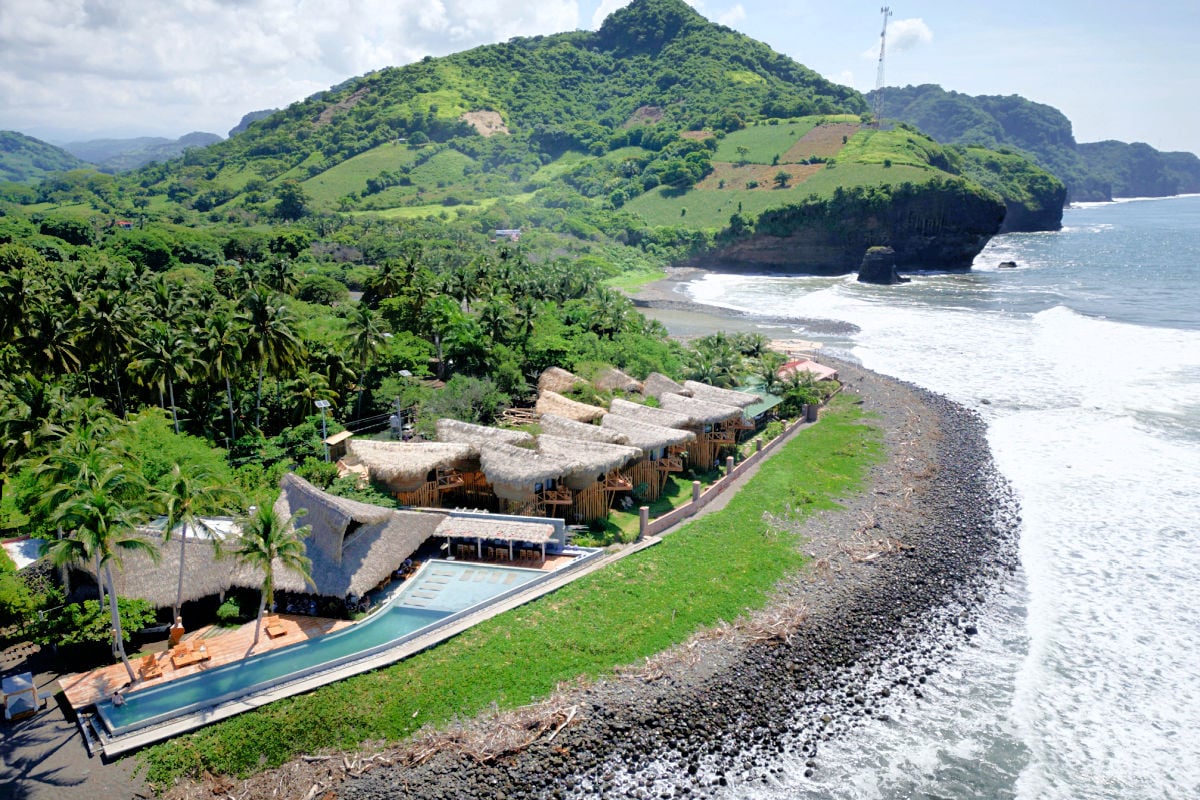
Speaking of welcoming, we recently stayed at MIZATA in La Libertad and could not have asked for a more incredible experience. From the moment you step foot on the property you feel welcome and like you can let all your worries melt away.
Check-in was a breeze and we were quickly whisked away to our incredible Treehouse, where we instantly fell in love with El Salvador’s coast. Looking out over the balcony was an experience all on its own, and seeing the mist of the ocean collide with the cliffs to our left at sunset made it feel like we were living in a movie.
Aside from the incredible room, having the NAWI Beach House right next door made it so easy to enjoy drinks by the pool, eat delicious food, and enjoy the music at night. When we felt like exploring, MIZATA had an activities board that we could reference to see what kinds of adventures we could have.
We highly suggest surfing, horseback riding, and checking out the Tamanique Waterfalls. If you’ve never been surfing or riding, don’t worry; MIZATA has people who can teach you how to do both!
Getting to El Salvador is easier than ever. As the destination continues to grow in popularity, more direct flights will surely follow.
Currently, Americans can fly nonstop to San Salvador from 15 U.S. cities.
Stunning Beaches & Incredible Activities
El Salvador isn’t the biggest country, but it still boasts nearly 200 miles of coastline! Along the coast you can find gorgeous beach after gorgeous beach.
You can’t drive too far along the coast without stumbling upon another stunning stretch of sand, but our favorite was definitely Playa Mizata since it was right outside our room at our resort. The volcanic sand is absolutely gorgeous during sunset, and the waves are perfect for surfing.
Surfing with MIZATA
We booked a lesson through MIZATA, and it was our first time ever trying to surf. Our instructor was fantastic and we were able to stand up on our first lesson!
The waves right next to the resort are perfect for new surfers, and it feels amazing to get out in the water.
One of our favorite activities we were able to book through MIZATA was definitely the horseback ride. We were able to mount up right at the resort and ride around the area to take everything in from a unique perspective.
Our horses were super responsive, and you could tell they enjoyed the ride just as much as we did!
If riding isn’t your thing but you still want to test it out, you can take an easy ride down the beach while your horse is on a lead. Once you get to the end you can pause to get the perfect shot for your followers.
El Salvador is beautiful at every turn. Yes, the ocean and the beaches are amazing, but so is the rest of the country!
Heading further inland will offer travelers another chance to see just how gorgeous El Salvador truly is.
For a really fun way to take it all in, we booked an ATV day trip through MIZATA. The ride to get there was only about 25 minutes, and then we were zipping through the mountain on our ATVs in no time.
For many, the secret is already out — El Salvador is an incredible place to visit. And more than that, MIZATA is one of the best places you can stay!
Don’t miss the opportunity to take the trip of a lifetime before this lesser-known country becomes the next tourist hotspot.
**Travel Off Path was a guest of MIZATA, who helped with the creation of this itinerary by hosting some of our accommodations and attractions. Our opinions, recommendations, and suggestions remain our own.**
In the heart of Mexico City, where modernity and tradition coexist harmoniously, there is a new luxurious and elegant boutique hotel with a perfect location in the capital’s most exclusive and vibrant neighborhood.
The VOLGA hotel has just opened its doors to the public, providing a unique and personalized experience that allows you to immerse yourself in luxury from the moment you step inside the hotel.
Usually, we tend to look for hotels with all the possible amenities included to make the most of our vacation and get the most out of our stay.
However, that’s not quite the approach of a “boutique hotel.” VOLGA is more about creating special moments than extended vacations.
From the carefully designed and luxurious architecture and accommodations to the distinct rooftop pool deck that provides panoramic views encompassing every corner of the city, VOLGA creates an atmosphere of both novelty and tranquility. Similarly, the culinary delights curated by Chef Juan Manuel González offer a blend of novelty and comforting familiarity.
Be among the first to be part of this new adventure in the city.
Mexico City is renowned for several distinctive aspects that make it unique and prominent nationally and internationally.
Some of the main aspects for which it is known are:
History and culture: Mexico City has a rich and diverse history that spans from the ancient Aztec civilization to the Spanish colonial era and the present day. This is reflected in its architecture, historic monuments, museums, and cultural festivals.
Cuisine: Mexican cuisine, particularly that of Mexico City, is famous worldwide. From tacos and tamales to enchiladas and pozole, the city’s gastronomy is a sensory delight.
Nightlife: The City comes alive at night with vibrant and diverse offerings, providing a wide range of options for all tastes. From bars and nightclubs to elegant lounges and nocturnal restaurants, the city comes to life after dark. Neighborhoods like Polanco, Condesa, Roma, and Zona Rosa are renowned for their nightlife entertainment options.
Music enthusiasts will find a variety of genres to enjoy, from live music performances in intimate venues to concerts by international artists in stadiums. Additionally, Mexico City is renowned for its culture of cantinas and mezcalerías, where you can sample a wide selection of local beverages and relish an authentic atmosphere.
Cultural events also find their place in the city’s nightlife, with theaters, cinemas, and art galleries offering special screenings and exhibitions. And if you’re a food lover, you won’t be disappointed: many restaurants and street vendors remain open late, serving traditional and contemporary culinary delights.
VOLGA is a sensory experience that combines gastronomy, art, sounds, and culture.
You will interpret each space through your senses, experiencing the integration of unique gastronomic offerings, visuals that delight, and captivating sounds.
The surrounding neighborhood is an artistic and culinary destination unlike any other in the city, located just one block from Reforma Avenue, one of the most iconic thoroughfares in Latin America.
The Cuauhtémoc neighborhood – where VOLGA resides – has undergone a profound transformation since its origins. The area’s renaissance has resulted in a vibrant array of offerings for those who explore and inhabit its streets.
From the moment you step through VOLGA’s doors, you will be immersed in an ambiance of sophistication and comfort. It’s designed to provide guests with an exquisitely refined and carefully curated lodging experience. From its elegant and spacious rooms to its personalized services, every detail is meticulously considered to ensure an unforgettable stay.
Their attention to detail is impeccable, and every corner of the hotel is a space designed with an atmosphere of luxury, reflecting elegance in its interior design.
The limitation of space is not an issue because through creativity, they have managed to integrate everything the guest needs for a memorable stay.
The staff stands out for their professionalism and friendliness. They are trained to efficiently and courteously meet the needs and desires of the guests. The aim is to provide impeccable service and make visitors feel pampered and attended to at all times.
In summary, this 5-star hotel is synonymous with luxury, exceptional service, and a lodging experience that surpasses expectations. It’s the ideal place for those seeking the highest level of comfort and exclusivity during their journey.
The answer is simple: VOLGA is an escape from the outside world, where you won’t just arrive at a safe and quiet space but where every moment will be unique. Personalized service isn’t something you come across easily everywhere.
They offer an exclusive range of amenities, making it more exclusive and boutique.
Introducing a brand-new offering in the realm of luxury boutique hotels, VOLGA is all set to make a striking impression on artists, food enthusiasts, design aficionados, and visitors from both within Mexico City and around the world. As the summer unfolds, VOLGA will be unveiling an array of new programming and experiences, building up to the highly anticipated Formula 1 events later in the fall. With forthcoming additions including captivating nightlife offerings and an Omakase restaurant, VOLGA is poised to provide an unparalleled haven for those seeking the ultimate Mexico City experience this season.
You have 24-hour room service with the same restaurant menu, and at no extra charge since your stay includes breakfast.
VOLGA boasts 49 rooms. Personally, my room was impressive from the moment they opened the door. It had a distinct aroma that immediately brought about a sense of peace upon entering.
The high-quality lighting further enhanced this feeling of serenity.
The architecture mirrors the hotel’s exterior—modern, minimalist, and meticulous. It’s a space where you can work and a space where you can enjoy fresh air. Having a balcony adds to its uniqueness, as often we just seek a breath of fresh air outside our rooms, and there you have a spot to unwind without being confined, have a coffee, smoke a cigarette, write, or meditate.
Moreover, the concept of all the balconies resembling a theater makes it even more special and artistic. There’s no noise; it’s very quiet… which is why, if you plan to work, it’s the perfect place for you.
They offer 33 deluxe rooms, 14 suites, and 2 Master suites. Prices differ based on your room choice, the number of occupants, and the location.
Breakfast is included at the Elora by Edo Kobayashi restaurant (Mediterranean cuisine). The cuisine is exquisite… the best avocado toast I’ve tasted in years.
VOLGA also features a rooftop: The Rooftop Bar & Lounge — where you feel like you’re stepping into another realm, an outdoor world where lush vegetation takes center stage, accompanied by lounge-style music and an extensive bar offering high-quality and creative cocktails.
It’s divided into different sections akin to a beach club, with a pool in the middle to enjoy Mexico City’s summer and provide an escape from the city’s chaos, all the while knowing you’re within the city but in a different setting.
When we talk about a boutique hotel, we’re talking about tranquility and privacy.
Volga is designed exclusively for adults, couples who come to enjoy Mexico City but want a secure space to stay, or those who prefer not to venture out for sightseeing and can dine in the restaurant or unwind on the rooftop with a drink.
However, the majority of visitors anticipated at VOLGA are travelers/nomads/ businesspeople seeking new adventures all in one place. They’re passionate about discovering new spots and being the first to find a great place for coffee or to listen to music. They define luxury on their own terms, not bound by anything, and remain faithful to their desires for innovation and experimentation, transforming the spaces they find themselves in.
Children are not accepted; therefore families cannot stay there. For this reason, it should be couples or individuals, perhaps on a work trip or attending a conference, staying for a day or at most two, in my opinion.
The hotel doesn’t offer many amenities to enjoy on the premises, but it does allow you to fully experience Mexico City without missing out on anything within the hotel, providing a relaxing space when you return to your room.
VOLGA is the ideal place for those seeking an unforgettable stay filled with luxury, elegance, and personalized attention that provides an exceptional experience to its guests, surpassing all expectations.
So, if you’re looking for a top-notch lodging experience in Mexico City, I highly suggest you experience a stay at VOLGA.
**Travel Off Path was a guest of VOLGA, who helped with the creation of this itinerary by hosting some of our accommodations and attractions. Our opinions, recommendations, and suggestions remain our own.**
Croatia is the go-to sunny spot for Americans taking Transatlantic trips this summer and fall, and while the walled Dubrovnik and vibrant Split have dominated headlines in recent weeks, other lesser-explored parts of the country have continued to fly under the radar of most.
That is the case with Pula, a smaller city in Croatia’s Istrian Peninsula, far away from the busy and over-touristed Dalmatia, and one that tourists often tended to ignore as they traveled South to the resort zone of Neretva County.
You may have never heard of it before, but trust us when we say Pula is one of the trendiest Mediterranean destinations this year, and it should definitely make your bucket list:
The Most Italian Of Croatia’s Cities
With a metropolitan area home to over 90,000 people, Pula is the largest city in the Istria region and one of Croatia’s most culturally-charged ports.
Historically a part of the Itallic world – Pula was in fact an Italian city up until the Second World War – it is more closely related to the Latin World than Slavic proper.
Much like the Dalmatian coast, which had also remained primarily Venetian over the centuries, up until Croatia came to be, Pula has retained Italy’s traditional pastel colors and green shutters, and the ancient monuments, including the 6th-century Romanesque Mary Formosa church, leave no room for doubt:
It may now be part of Croatia, but its origins cannot be erased.
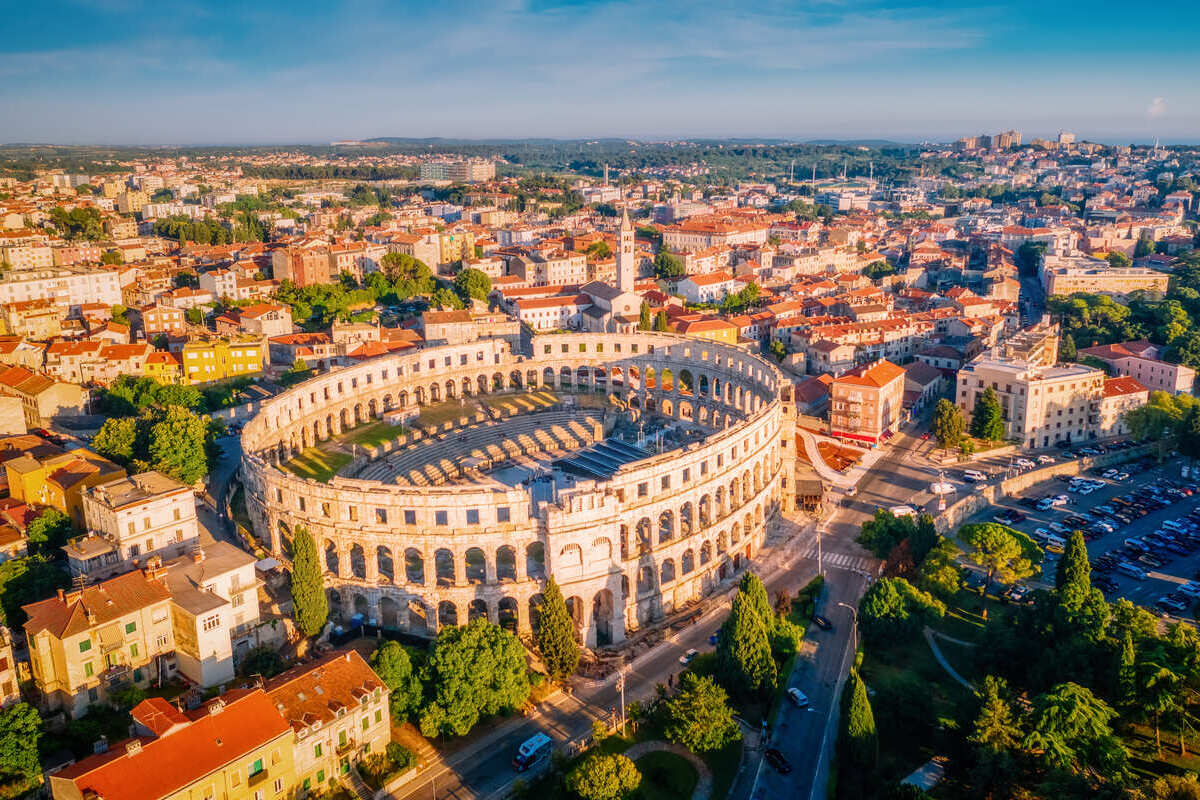
Pula’s most famous landmark, in fact, is a Roman Amphitheater, one of the most impressive of the wider Roman World and one that rivals Rome’s Colosseum in beauty. For instance, it is the only Roman structure of its kind to have its arena ring and side towers entirely preserved.
Known as the Pula Arena, it was erected between the years 27 BC and 68 AD, and it’s both one of the last six largest surviving arenas of the Roman period, as well as Croatia’s best-preserved ancient monument.
A Booming Cultural Scene
Though gladiator games no longer take place inside the arena, it is still a house of entertainment to this day. It hosts the Pula Film Festival, one of Europe’s most prestigious cinematography events, and Pula Music Week, when partygoers gather inside the ring to attend performances of world-renowned DJs.
These events are traditionally held in July and August, but that’s not to say Pula’s tourist offer is restricted to the summer months. It is a regional capital of culture, known for its intact Roman temples, historic forts, and colorful Venetian-era houses.
If it’s some of that Old World charm you’re after, rest assured you will find it in Pula.
Additionally, the city is the gateway to the wider Istrian Peninsula, where vineyards dot the rolling green hills, pebbly beaches straddle the turquoise waters of the Adriatic Sea, perhaps the clearest arm of the Mediterranean, and marine parks extend for miles on end.
Pula has got so trendy in recent years that it is now planning on strengthening infrastructure amid a new influx of young visitors. Despite the recent price surges observed across Croatia, especially after the country joined the Eurozone, Pula seems to always be on the brink of ‘selling out’.
Is Pula Croatia’s Next Hotspot?
As reported by Total Croatia News, the city of Roman wonders and festivals has hosted up to 25 thousand guests at a time, and as early as May 2023, private accommodation units were all sold out and bars and restaurants full.
As a hotel owner from Pula stated, visitors to Croatia stay in ‘one destination for a shorter period’, cramming as many coastal attractions as they can into a single itinerary, so Pula is ‘reduced to a type of station tourism’.
This means accommodation providers have had to level up and provide the best possible service so to attract the most short-term visitors, and despite the rising prices, a direct result of the aforementioned tourism model which creates ‘additional costs’ for hoteliers, Pula continues to grow.
They weren’t common before, but now hostels are also popping up along the Istrian coast, and there are about 20 of them in Pula proper, making this destination more accessible to young travelers on a stricter budget.
Are Transatlantic Flights Next?
Finally, yet another proof Pula is set to become Croatia’s next hotspot is the lengthening of the airport’s runway in a bid to host Transatlantic flights for the first time ever in the coming years. Should the local authorities’ plan materialize, Pula will be only the third in Croatia to do so.
Right now, Air Transat operates flights from Zagreb, the country’s capital and financial center to Toronto in Canada, carrying passengers on an Airbus A330-200. Additionally, Drubovnik is served by a United Airlines Boeing 767-300 seasonally, with flights departing from Newark.
Connectivity between the U.S. and Canada and the Balkan Peninsula (excluding mainland Greece) is generally poor, with very limited flight options and flight itineraries generally including a stopover in a larger international hub elsewhere in Europe.
The only Balkan country to host year-round nonstop flights from North America is Serbia, yet it remains one of the least-visited destinations by Americans in the continent. Should Pula attain its goal, it will be a game-changer for Istria – and Croatia as a whole.
No plans for an official launch date, which American hubs would be served, nor which airlines could possibly operate on this route have been revealed yet, as this is still early stages, with construction underway and development plans yet to be laid out, but the news are very promising.
Read more on Croatia’s historical post-crisis tourism surge here.
Europe’s borders are fully open, and all pandemic-related restrictions have been lifted, causing travel demand to skyrocket in response, but while a majority of tourists will be fighting for a spot in the sun in Ibiza or Santorini, very few have set their hearts on this beautiful summer hotspot — especially Americans.
An island nation located in the basin’s far East, a stone’s throw away from Turkey, it is rising further in popularity due to its burgeoning resort scene and a pristine coastline lapped by azure waters.
But there is more to Cyprus than meets the eye, as it houses not one but two countries, the Northernmost of which doesn’t even technically exist. Sounds confusing?
Allow us to explain:
The Complex History Of North Cyprus
Cyprus’ recent History is one of conflict.
While we won’t bore you with detail, one thing you should know is that the island is split in two between the internationally-recognized Republic of Cyprus, and a breakaway state, the Turkish Republic of Northern Cyprus, which occupies a third of the territory.
While the Republic, lying to the South of a United Nations Buffer Zone, is a member of the European Union and home to Greek-speaking Cypriots, a majority of Turkish-speaking Cypriots, as well as Turks who have emigrated from mainland Turkey, live in the unrecognized, heavily-embargoed North.
Cyprus has been at the heart of a centuries-old conflict between Greece and Turkey, aggravated since Turkish forces invaded and occupied the Northern portion of Cyprus in the seventies, and the current status quo is often considered an unsolvable quandary in geopolitics.
Despite continued militarization on the island since the invasion, particularly along border zones, Cyprus is considered safe to visit, and both Southern Cypriots and Northern Cypriots live peacefully on their respective sides of the dividing line in spite of a lack of integration.
Cyprus is, after all, a super trendy Mediterranean spot, hosting millions of guests every year.
Interestingly, a majority of tourists only ever visit the Greek-speaking South, either rapidly glossing over or skipping the North altogether due to its reputation of being underdeveloped and simply ‘not worth the hassle’.
The truth of the matter is these widely-disseminated misconceptions could not be further from the truth.
Is This Southern Europe’s Most Underrated Destination?
The North of Cyprus is perhaps the island’s most fascinating region.
The de facto state extends from the tip of the Karpass Peninsula, the Northeasternmost point of Cyprus, where some of the best beaches and marine parks are located, to Cape Kormakitis on the Northwestern coast.
Aside from a handful of exclaves, the border with the South runs along the heart of Nicosia, the island’s capital and a city claimed by both the Turkish Cypriot administration and the Greeks.
North Nicosia is jam-packed with tourist attractions, such as the Selimiye Mosque, the largest and oldest Gothic structure in Cyprus that used to be a church, to the 16th-century Büyük Han caravansarai, and an Ottoman bazaar bustling with trade.
Beyond Nicosia, adventurous tourists are drawn to the city of Kyrenia (called Girne in Turkish), straddling the North Cypriot coast. With its heavily fortified harbor, medieval castle, and cobblestone streets edged by traditional Greek-style whitewashed houses, it is really the stuff of fairy tales.
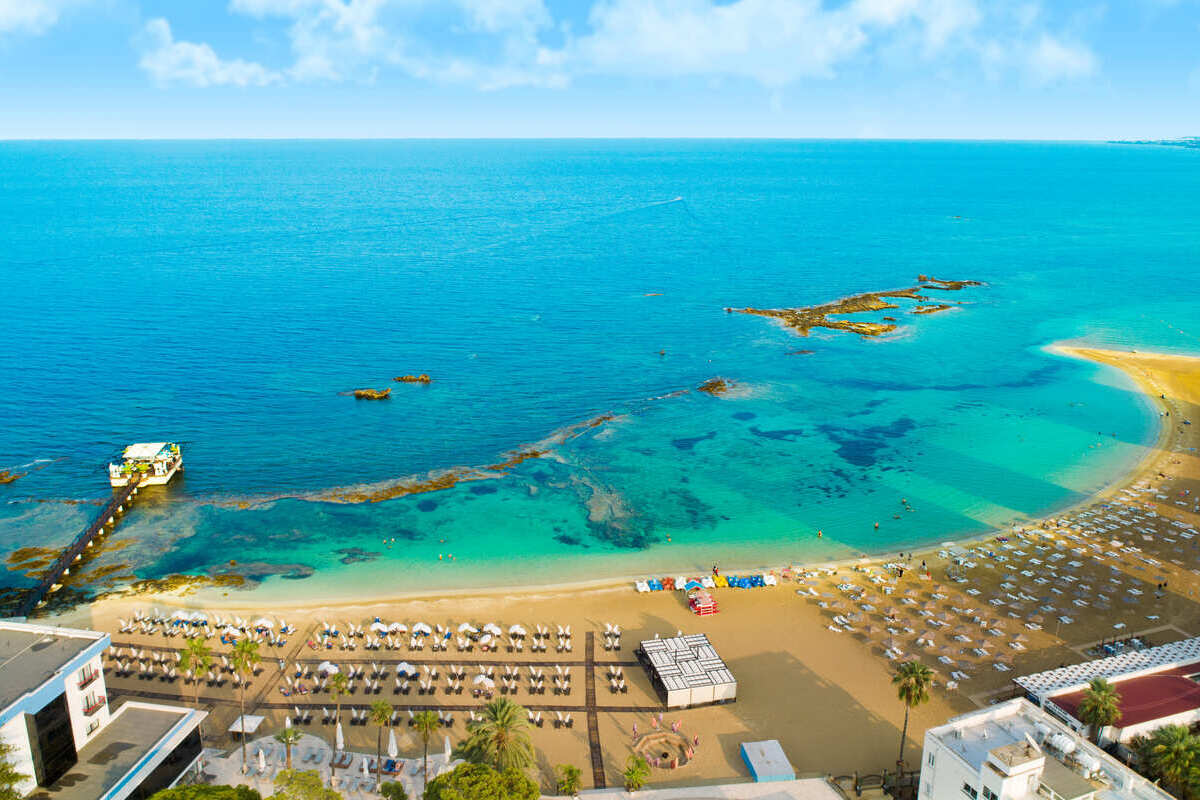
Kyrenia is also within short driving distance of gorgeous coastal spots, most notably the Alagadi Turtle Beach, highly sought-after by wildlife spotters, and Diana Beach, a tiny, secluded bay bounded by the azure waters of the East Mediterranean.
Outside the major urban settlements, the breakaway North has retained the postcard-ready 13th-century Bellapais Monastery, nestled between the lush green mountains, only 3 miles southeast of Kyrenia.
The hilltop ruined Saint Hilarion Castle, set against a dramatic rugged landscape, is yet another gem worth exploring.
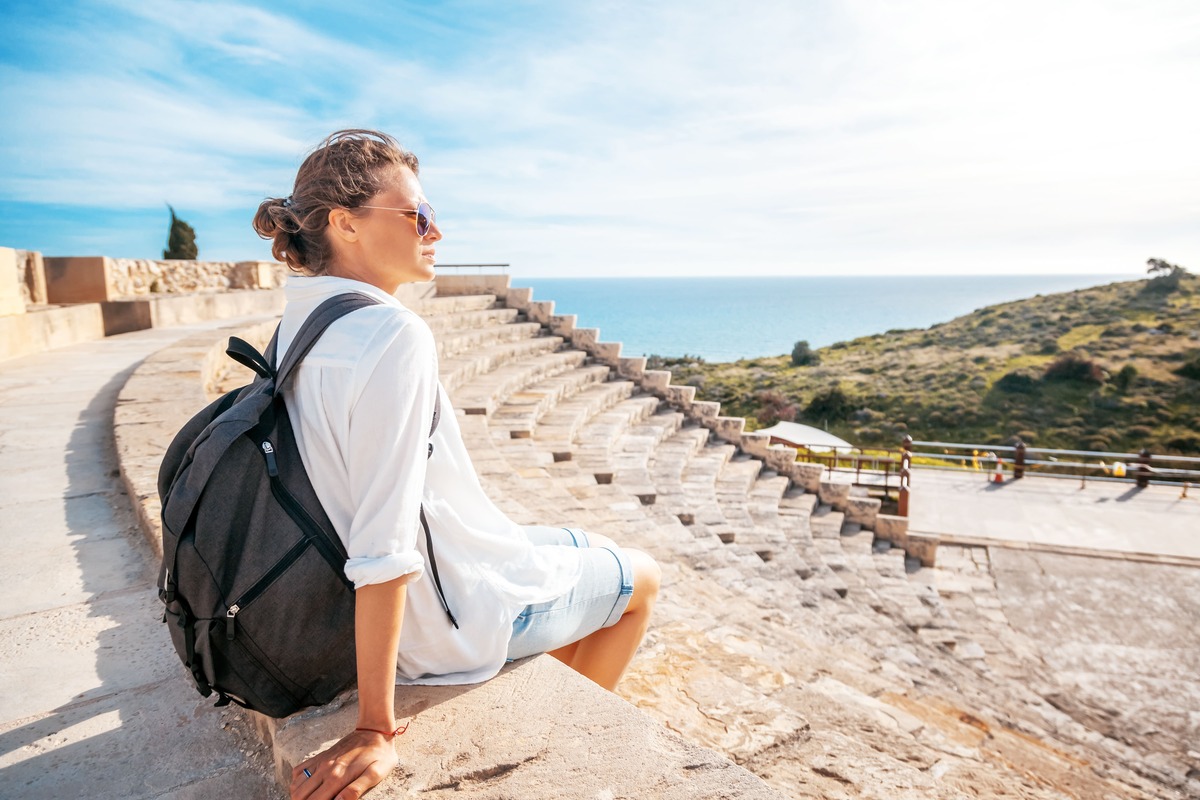
Also not to be missed: the archaeological complexes of Soli and Salami, comprising the remnants of two ancient Greek cities which still feature an amphitheater, a colonnaded agora, and remarkably well-preserved mosaics.
If it’s some beach fun you’re after, the Karpass Peninsula is where you should be headed. Expect to find beach clubs, an up-and-coming resort scene with affordable overnight stays, and less crowds in comparison to South Cyprus’ resort town of Ayia Napa.
In the Famagusta Province, which took the brunt of the conflict in the seventies, dark tourism is blooming, particularly in the Ghost Town of Varosha, cleared in the seventies following the invasion, and the shelled city of Famagusta itself.
How To Safely Visit North Cyprus
Some important info you should know ahead of visiting North Cyprus:
Despite not being recognized as a country, it issues passports*, it has a national flag, a different language (instead of Greek, Turkish is the most widely-spoken language), currency (the Turkish Lira is in use), and of course, it’s established border posts with the South and its own police force.
*International recognition of travel documents issued by the Turkish Republic of Northern Cyprus is limited
The depreciated Turkish Lira is partly the reason why Turkey is such a popular budget destination for American travelers, and the fact that the North of Cyprus has adopted it means it is much cheaper than the Euroized South.
According to a recent report published by North Cyprus International, prices are on average 25% lower in the North, with most of the food being locally produced and hotel fares being similar to those in the sister nation of Turkey.
The cost of living in North Nicosia and Kyrenia may be higher, as they are important tourism and trading hubs, but Northern Cypriot cities remain incredibly cheap by European standards.
Careful Not To Be Banned From Entering The South
The best way to get to North Cyprus is flying to the South first.
You can only fly to North Cyprus directly via Turkey, as all other countries have suspended flights to North Nicosia since the conflict erupted all those decades ago.
There is a catch, though: arriving directly in the North, you will be unable to cross to the South afterward, as the Republic’s authorities will deem you have entered Cypriot territory illegally.
In order to avoid problems, it’s best to land first in Larnaca, the main international airport serving the Republic of Cyprus, and get a shuttle bus to South Nicosia. Once in the capital city, you can cross the border at one of the many checkpoints splitting Nicosia in half.
The busiest of them, the one on Ledra Street, Nicosia’s main shopping avenue, is the preferred crossing point for tourists.
You will have no issue going back and forth between the Republic of Cyprus, and the Turkish Republic of Northern Cyprus, as long as you are stamped in the Republic of Cyprus (the Greek South) first.
The easiest way to travel around North Cyprus is driving, as public transportation options are limited, and some intercity buses do not run on a fixed schedule, departing only when full. There are no trains in the island of Cyprus.
Luckily, regular bus services link major cities like Nicosia (North) and Kyrenia/Girne.
Cyprus Is A Level 1 Destination
Cyprus is perfectly safe for tourists, with the State Department listing it as a Level 1 destination in spite of the unsolved dispute.
As long as you do not attempt to enter the Buffer Zone or militarized areas, you will have no issue exploring this fascinating island, both North and South.
Have you also been dreaming of a balmy Southern European summer, with that youthful atmosphere, amazing culture, and of course, postcard-ready swimming spots with medieval castles for view just begging to be explored?
Ibiza may sound like the most obvious pick, with its azure waters and year-round events, but if you’re looking for a Mediterranean island that can be both quaint when it’s sunny out, and bustling with activity when night falls, perhaps you should consider this lesser-known Croatian island instead:
Is Hvar Bound To Become Europe’s Party Island?
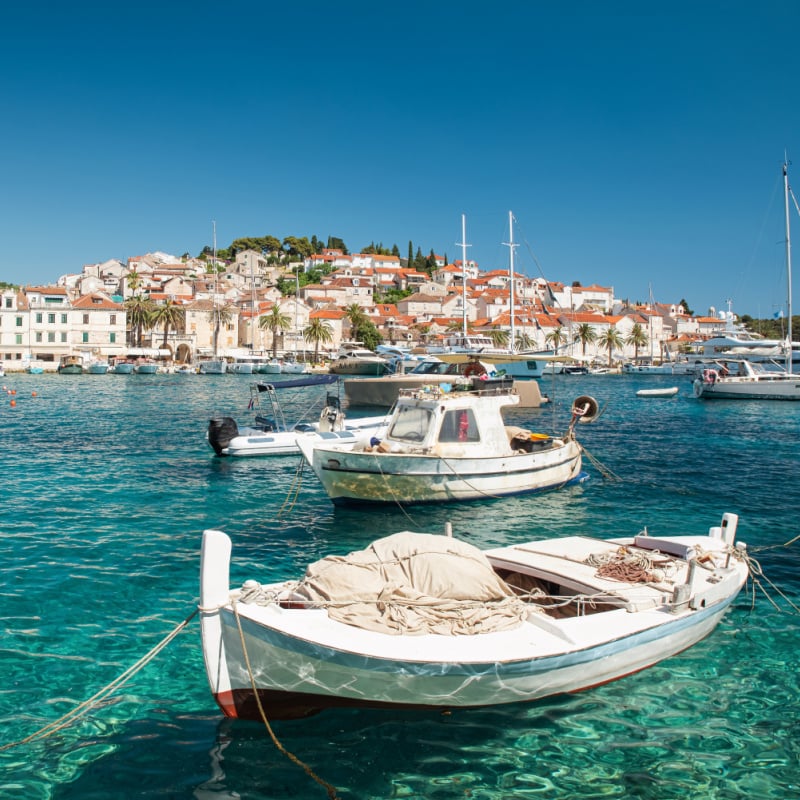
Hvar is a small offshore Adriatic settlement that’s often touted as the ‘next Ibiza’.
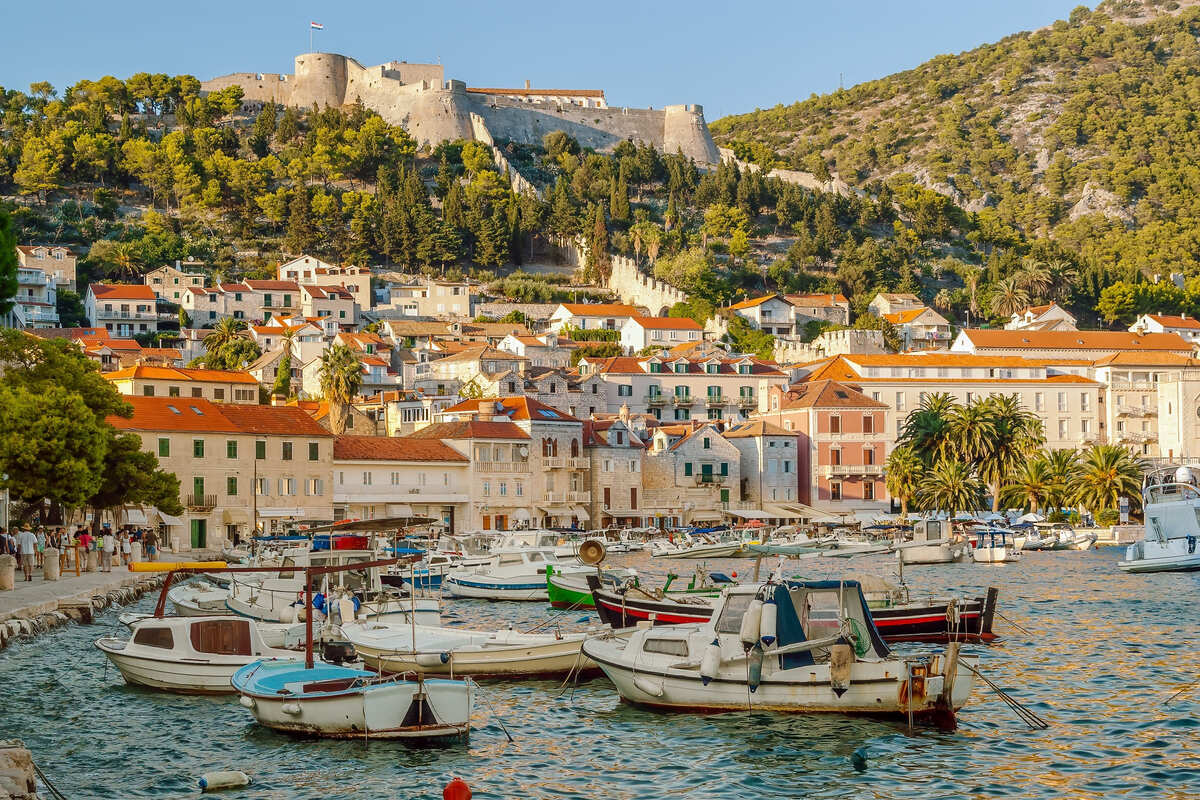
Similarly to the famous Spanish island, it has a historic capital sitting at the bottom of a heavily-fortified citadel, where most of the action is centered, scenic beaches, and a rural hinterland.
Unlike Ibiza, however, Hvar is much smaller.
While Spain’s Balearic island covers an area of 221 square miles, jam-packed with luxurious enclaves, danceterias, and leisure centers, Hvar is only 42 miles long, though the tourist offer is by no means limited.
Hvar Town has a burgeoning party scene, with numerous bars, beach clubs, and all-night discos to pick from.
One of the island’s trendiest, Carpe Diem, is open from 9 AM to 2 PM, operating as an upscale restaurant and cocktail dar by day and as a club by night.
The Veneranda Club is also a favorite among locals and tourists alike. A short 2km walk from downtown Hvar, it hosts techno parties and DJ sets led by household names like Tom Novy, Norman Doray, and Dirty Dutch.
Other nightlife spots include the atmospheric Nautica disco, Hula Hula, a well-frequented oceanfront beach bar with an energetic crowd and thrilling music, and Central Park Club, highly sought-after among live music and jazz lovers.
If you’d rather hit a local bar for a chill night instead, whether you’re alone or joined by friends, then the Atelier (most commonly known as Archie’s Bar) is where you should be headed.
The friendly staff will make sure you feel welcome, and we’re sure you’ll enjoy the creative cocktails on the menu.
Hvar Is One Of The Most Beautiful Islands On The Adriatic
When it comes to beaches, the top-rated ones on Google are:
Pokonji dol Beach, a sandy crescent just outside Hvar Town
Strand Mekićevica, a quieter bay with heavenly-blue seas
Žukova, a pebbly cove bounded by turquoise waters tourists
Jagodna, a lesser-known, paradisaical spot only 2.6km away from the town of Sveta Nedjelja
Bonji Beach, a development zone lined by resorts offering access to the Adriatic
Whether you’re basing yourself in Hvar Town or staying farther away in a more secluded area, accommodation options are varied, from budget guesthouses to luxurious private villas and oceanfront wellness retreats.
June rates for the newly-opened Hotel Moeesy, Blue & Green Oasis average USD $4,000 weekly, while more modest B&B stays range between USD $550 and USD $1,745 when booked in advance through Booking.com.
Although it is smaller and not necessarily cheaper than Ibiza now that Croatia has joined the Eurozone – quite the contrary – Hvar is still a gem worth exploring, if not for the beaches and nightlife, then for its inestimable cultural wealth.
An Underrated Cultural Destination
Though it’s been inhabited since prehistoric times, it only flourished as an Adriatic port under Greek control in 384 BC, when Pharos, now called Stari Grad (Serbo-Crotian for Old Town), was founded.
The Greeks were responsible for laying out the well-structured agricultural divisions of the Sari Glad Plain, which is still visible to this day and listed as a World Heritage Site by UNESCO.
Other points of interest on the island include the Fortress of Petar Hektorović, the Franciscan Monastery, St Stephen’s Cathedral, and the Tvrdava Fortress towering over Hvar Town.
The closest airport to Hvar is located on the neighboring island of Brač, though it hosts only a handful of domestic flights and chartered international flights from smaller European hubs over the summer.
The easiest way to get to Hvar is by flying in via Split, the largest city on Croatia’s Dalmatian coast and the second-busiest airport in Croatia after Zagreb International.
From Split, a fast-ferry to Hvar Town takes just over an hour and costs on average of USD $10. Ferries remain operational year-round, linking the island to the Croatian mainland, though frequency is usually higher over summer, with daily service and more competitive fares.
Important Changes Travelers Should Know Ahead Of Flying To Croatia
If you’re flying to Croatia this summer, you should know the country has recently adopted the Euro, which has led to an increase in prices in touristy spots like Hvar, Split, and Dubrovnik.
Additionally, it ascended to the borderless Schengen Area. When traveling between a fellow European country signatory to the Schengen Treaty and any Croatian airport, you will no longer have to undergo border control.
Arriving from outside the Schengen Area, such as flying direct from the U.S. to Croatia, you will need to present yourself before border officers in order to get an entry stamp.
It is also worth reminding that, since Croatia joined Schengen, any visits to other Schengen countries count towards your 90-day visa limit as an American or Canadian national traveling in Croatia.
You are only allowed to remain in Schengen for 90 days out of any 180-day period.
Now that the health crisis has subsided and the world has reopened for business as usual, all of the top global destinations are once again awash with tourists.
From France’s gorgeous Mediterranean coast to Italy’s most iconic cities, overtourism is back to haunt the travel industry, so much so that these exact hotspots are now limiting the number of visitors.
Luckily for crowd-wary travelers, particularly those who are keen on escaping the price surge resulting from overdevelopment in some of the world’s most popular markets, these 4 lesser-known, yet super-trendy countries have not been affected by this worrying phenomenon… for now.
Here’s why you should visit them before the Instagram and TikTok hordes get wind of them and they become too popular:
Azerbaijan
Perhaps the least-visited nation in the Caucasus, the natural border between Eastern Europe and Asia, Azerbaijan sits on the shores of the Caspian Sea, with its distinct Turkic origins and Muslim-majority populace setting it apart from neighboring Georgia and Armenia.
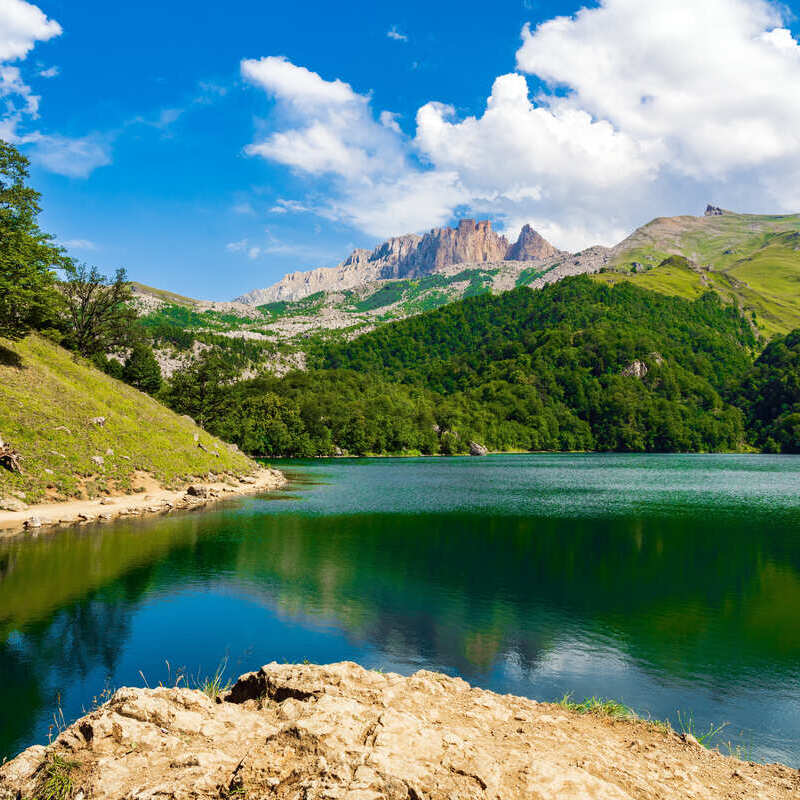
Last year, only 1.6 million foreigners visited Azerbaijan, roughly 50% below pre-pandemic levels, despite the country’s unmatched tourist offer, which comprises modern, futuristic metropolises, a bucolic countryside dotted with ancient ruins, and astonishing nature.
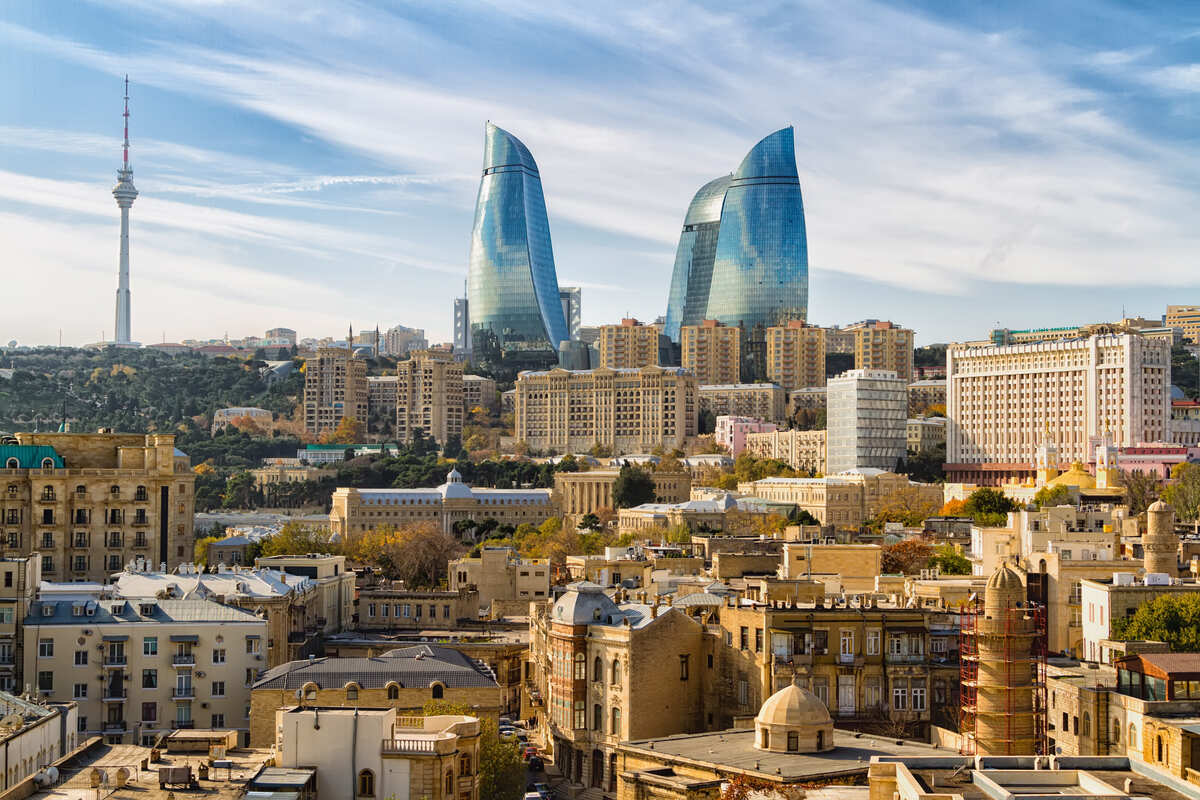
The capital city of Baku is easily Azerbaijan’s main attraction, famous for its UNESCO-listed walled Old City, originally settled in the 7th century AD, a trio of skyscrapers designed to resemble dancing flames housing a Fairmont Hotel and Soviet architecture.
The flame symbolism is not purposeless: Azerbaijan is nicknamed the ‘Land of Fire’, and outside Baku, visitors can marvel at the Burning Mountain, or Yanar Dagh, where a natural gas fire has been blazing incessantly for decades.
Americans can obtain Azerbaijani e-Visas online for visits of up to 30 days.
On the Mediterranean coast of North Africa lies a historic country graced with unruffled sandy beaches, aqua waters, a rich Arab-Berber cuisine, and quaint little towns a majority of Americans might not have even heard of: welcome to Tunisia.
Tunisia has recently dropped all health-related entry restrictions, enabling U.S. passport holders to travel requirement-free within the country for up to three months, though you will certainly wish they’d allow visitors to stay longer:
There is so much to see and do in Tunisia that you may struggle to put together a comprehensive itinerary, though our top picks include Tunis, the exciting capital, where the traditional Ancient World clashes head-on with the fast urban spread of the 21st century, the UNESCO-protected medina of Sousse, and the blue-and-white resort town of Sidi Bou Said.
Tunisia is rising in popularity in 2023, and it won’t be long until it is no longer an untarnished, cheap alternative to other Mediterranean powers on the European side of the basin:
UK-based airline easyJet has revealed demand for travel to the country has risen the most out of all destinations they serve since 2019.
Laos
Southeast Asia’s only landlocked country, Laos is often overlooked by tourists who expect tropical beaches, otherwordly karst formations, and ocean vistas traveling in the subcontinent, but as you’re about to find out, it doesn’t need the sea to be awe-inspiring.
Cut through by the Mekong River, Laos has a scenic mountainous terrain bestrewn with Buddhist monasteries, rice paddies, and hillside settlements that may well be a portal to 19th-century rural Asia.
Due to its underdeveloped, largely unexplored lands, it is the perfect location to escape the hustle and bustle of the modern world.
Vientiane, the capital straddling the border with Thailand, is effectively the only major urban center in the entire territory, providing urbanites some relief from the greenery and cicada sounds with its French colonial architecture, quirky cafes, and a handful of leisure centers.
Laos is also open for tourism without any entry curbs, unlike the far more popular vacation spots of Indonesia or the Philippines.
Americans can apply for an e-Visa in advance or obtain a Visa On Arrival (VOA) at authorized checkpoints and will not be made to disclose their vaccination status nor undergo testing.
Bulgaria
One of the most promising Digital Nomad hubs in Europe, the Balkan nation of Bulgaria is renowned for its ancient History spanning more than six millennia, majestic Eastern Orthodox churches, high affordability, and amazing summer weather.
In Sofia, the capital and largest city, tourists will find an improbable combination of Roman ruins and Communist-era Brutalism, numerous cafes oozing with character, a lively nightlife, and the country’s best museums and art galleries.
Further afield, Plovdiv is Europe’s criminally underratedoldest continuously-inhabited city, predating Athens, Rome, and the like by thousands of years.
Full of charm, it features a Roman theater in a near-perfect state of preservation and a cobblestone Old Town jam-packed with colorful wooden houses and craft markets.
Veliko Tarnovo, in North Central Bulgaria, is the former imperial capital, spanning three hills and housing two medieval fortresses that stand among the continent’s largest and most monumental.
On the Black Sea Coast, the sandy beaches are lined with budget hotels and guesthouses, and temperatures can easily hit the 86°F mark between the months of June and August.
Mediterranean islands are commonly associated with beach getaways, translucent, teal waters and breathtaking sunsets, and they usually compete with each other for the title of leading summer destination every year. There’s just too many to name, and we’re sure you’ve heard all about Ibiza, Santorini, Mallorca, Malta and the like…
But what about the Eastern Mediterranean island of Cyprus? Cyprus is gaining popularity fast and travelers may want to get there soon before everyone else has the exact same idea.
Move over, Italy
We can already see our British and European readers rolling their eyes at this, with Cyprus having been a major vacay hotspot for years. We totally get it, it is hardly Albania or one of those unheard-of, severely underrated countries most people can’t even pinpoint on a map. It is, in fact, one of Europe’s favorite summer islands.
Unfortunately, from our side of the pond, Cyprus is still not nearly as successful as Greece or Spain: the U.S. did not rank anywhere in the top ten of tourist arrivals into this country back in 2019, with fewer Americans visiting than Romanians, Poles, Ukrainians – and even the blacklisted Russians.
After two years of Covid and strict border rules, that have only recently been dropped completely, we will take a wild guess here and presume U.S. arrivals have dropped even lower on the list. While this may be attributed to a lack of nonstop flights between the two countries, this has never discouraged Americans from traveling to faraway locations before.
Thailand has been a major Asian destination for years, and direct flights have only returned recently after 10 years of pause; not to mention the Pacific islands, where connecting flights are the norm. No matter how far you go, you will find an American snoozing at the beach, beer cup hanging from the classic neck strap, in places as remote as Fiji.
So why have most Americans still not heard of Cyprus, one might wonder? On this article, you will find out why, as a U.S. citizen, you may be one of the few in the Western World still sleeping on this Mediterranean jewel – and of course, why it should definitely be as big a summer destination as other Southern European countries:
Where is Cyprus to begin with?
That’s a tricky question, and there is no simple answer. Let’s start with a few facts: first, Cyprus is a Mediterranean island, and over the ten millennia it has been inhabited it has received a large influx of immigration from neighboring kingdoms and Empires, such as Greeks, Persians, Turks, Armenians and whatnot.
It is a member of the European Union, even though it is located 226 miles from the nearest Greek island. Regardless of the distance, Greece is still Cyprus’ nearest fellow EU member. Comparatively, Turkey’s southern coast is only 50 miles away from the Northern Cypriot shore, and other closer neighbors include Lebanon, Syria and Israel.
While it is indisputably culturally European, Cyprus may be geographically placed in either Europe or Western Asia, due to its remote location in the East Mediterranean, only a stone’s throw away from several Middle Eastern nations. But then again, the line that divides the continents is blurry and has changed over time.
Today, despite surviving numerous invasions and being subject to the rule of every single superpower you can name, Cyprus has remained loyal to its Ancient Greek origins. The vast majority of Cypriots speak, and some even identify purely as Greek, meaning the island is Greek in (nearly) all aspects – despite being its own country.
Some takeaways from this:
Cyprus is a Mediterranean island, and a country
Although it is technically in Western Asia, it is a definitely a European nation and an EU member*
Its official currency is the Euro
1.2 million people live there
The vast majority of islanders speak Greek, although some speak Turkish (more on that later)
*Think the Canary Islands, that are an integral part of Spain and have been for centuries, but are geographically located in Africa
Ok, but what exactly are Americans missing out on?
1. First of all, Cyprus is warmer than most of Europe all-year round
Cyprus is hot. And we mean sizzling hot. In the words of the country’s own tourism board, it has an ‘intense’ Mediterranean climate. The long dry summer extends from mid-May to mid-October, when temperatures can reach over 100 degrees in many coastal cities. Luckily, the sea is never too far away for a refreshing dip.
Temperatures can easily reach triple digits as early as late April, though, and winters remain pretty mild, to say the least: the coldest it usually gets on the coast is an average 16 degrees. We’re of course not taking into account the island’s towering mountains, where snow falls profusely and skiing activities are widely promoted over winter.
The point is: Cyprus is the ultimate paradise island. For those who grew up facing the harsh Northeastern American winter, even January in Cyprus will feel like a summer break. It enjoys between 300 to 340 sunny days per year, and the sea remains considerably warmer than most other Mediterranean hubs, even in the low season.
If you would still rather experience that classic Mediterranean summer, make sure you bring enough sunscreen to avoid burns, limit your time at the beach, especially during peak sun hours, and drink plenty of water, maybe double the amount you would normally at home. Trust us, the Cypriot heat is no joke.
2. 402 miles of coastline with turquoise waters
Unlike most Southern European countries that are only partially on the Mediterranean – Spain, France, Croatia, Turkey and others – Cyprus is fully surrounded by it. More precisely, it has 402 miles of either sandy beaches or scenic coastal rides where the turquoise glow of the ocean dominates the landscape for miles on end.
This means Cyprus is one of the few European nations with just enough beaches to counter overtourism. Don’t get us wrong, we are definitely not saying it does not get crowded. Many of the most popular beaches in the country like Ayia Napa and Protaras are absolutely packed in summer, but if you’re looking for quieter spots, it won’t be too hard to find them.
With so many beaches and other bathing areas inland available, including calm water rivers and waterfalls, you will be surprised at how many unblemished natural sites Cyprus still hides. Some of the best ones are situated on the island’s Northern coast, and they do not receive half as many tourists as the South.
We will explain why that is further below, but many of the seaside towns and sandy beaches on Cyprus’ Karpas Peninsula, that one crooked finger stretching out on the map that gives the island its distinct geography, are virtually unspoiled by mass tourism. The same cannot be said about other Medi competitors like Italy.
Before item No. 3, the shortest History lesson possible
So why is the North not as popular among tourists? In sum, Cyprus has been a divided island from 1974 onward, when an attempt to unite the island with Greece was violently hampered by a Turkish invasion. Due to its proximity to Turkey – the Cypriot coast can be seen from the Turkish mainland with the naked eye – the North was seized by the latter’s troops.
Prior to that, both of Cyprus’ Greek-speaking and Turkish-speaking populations lived somewhat peacefully in mixed communities. After the invasion, Turkish Cypriots were forced to move to the North, and the Greeks living in the North had to flee South. Fast forward a few decades, and a second de facto country now claims 36% of the island: the TRNC.
TRNC is an acronym for Turkish Republic of Northern Cyprus, a ‘country’ whose independence has only been recognized by – tee-hee – Turkey! The entire international community, including the United States, considers the North to be an integral part of the Republic of Cyprus (the South) that has been under an illegal occupation since the division took place.
For that reason, Turkish-speaking Cyprus has not enjoyed the same economic boom the Greek side has, maintaining official diplomatic relations only with Turkey and being under harsh economic sanctions. Even though visitors are welcome, and the Northern Cypriot administration strongly encourages tourism, very few actually venture far North.
Off path travel, anyone?
3. Here you will find the last divided capital in the world
Curiously, the UN-established Buffer Zone separating the internationally recognized Republic of Cyprus from the self-proclaimed TRNC runs along the heart of Nicosia, the island’s capital, dividing it between both states. Greek Cypriots claim the entire city – at the same time, Turkish Cypriots consider Northern Nicosia their capital.
Due to this complex situation, checkpoints have been installed in the city, including on the main street, effectively functioning like international borders. Because of that, in order to cross from the Greek part into the Turkish, you will need to present your passport, even though the Cypriot Government considers the TRNC a part of Cyprus.
Much like Berlin in the 1980s, prior to fall of the wall, Nicosia is a city plagued by division. Sad as it might be, and we are sure this is not easy for Cypriots raised there, it is the barbed wire-protected streets, the political murals lining up the Buffer Zone, and the constant clash between the Greek and Turkish worlds that make it such a unique, fascinating city break.
You could be having a sumptuous Turkish breakfast in the morning on the Northern side, as you listen to the Quran being recited out of the nearest minaret, and then cross to the South in the afternoon to try some traditional Greek pastries and visit museums where you’ll learn about the island’s Greek origins. Quite literally, Nicosia offers the best of both worlds.
4. Wine tours. Yes, in Cyprus.
Those coming to Europe with their hearts set on a winery tour will hardly ever think of Cyprus as their first pick. After all, how could Cyprus even compete when France has Bordeaux, Champagne and the Loire Valley, right? That’s when Cyprus becomes massively underestimated – even among Europeans that have been visiting for years.
It has the ideal climate for growing grapes, and Cypriot wine is among the best quality wine in the whole of Europe, ranking 50th in the world in terms of total production. A majority of visitors may want to head straight to the nearest beach straight out of the plane, but little do they know Cyprus has a whole wine industry that is yet to be discovered.
An off the path thing to do in the country – we love those – is going wine tasting in any of the inland villages, particularly those on the slopes of Troodos Mountains. This range sits on the exact center of the island and features the highest Cypriot peak: the aptly titled Mount Olympus, evocative of the Ancient Greek mythology.
As for the wine produced here… It is the drink of the gods. Among some of the best wine-producing villages, we have Lofou, where the busy seaside life is replaced by mountainside town views, with cobblestone streets and a more laid-back feel. Other mandatory stops include the picturesque Omodos and Pera Pedi, only a few miles north of the city of Limassol.
5. Cyprus is much more affordable than other Medi vacations
Minimum wages are a strong indication of a country’s purchase power and how expensive things are. In Spain, the minimum wage is roughly $1,068.84, beaten by France’s whopping $1,566.62, and both of these countries expect tourists to provide proof of at least $101 in spending money per day for the duration of their stay.
Even though Cyprus does not have a minimum wage, the average Cypriot makes about $940 a month, proving living costs are far less exorbitant than France’s, where the bare minimum a worker is paid is still 60% higher. Naturally, these figures have a direct influence on the price of basic items (meals, a bottle of still water, sunblock, insect repellent etc).
We won’t lie to you: Cyprus is not an ultra cheap summer destination. It is surely no obscure Balkan country where tourists can go by with $`100 dollars a whole week, or the budget-friendly Central America, that has even overtaken Europe lately in total hostel bookings. But it is cheaper than the Western Mediterranean.
Paphos, a city on the country’s West Coast, has been named this year the fourth most affordable summer destination in Europe, where tourists can live comfortably off of $72.78 on average per day. Needless to say, Paphos beats old summer favorites like Italy’s Amalfi Coast, Spain’s Costa del Sol and France’s Côte d’Azur in terms of affordability.
6. Oh, and Cyprus is not that far away
There may be no direct flight connections between the U.S./Canada and Cyprus, but North Americans can easily reach this summer dreamland via short stopovers in a number of European countries. An Austrian Airlines flight leaving from JFK, final destination Larnaca (Cyprus), with an air-side transit in Vienna only takes about 12 hours.
In addition to Austrian Airlines, other European carriers like AirSerbia (Serbia), Swiss Airlines (Switzerland), and Lufthansa (Germany) offer non-direct links to Cyprus, with transfers usually lasting less than two hours. But hey, even if you have a long layover ahead, this is not necessarily a bad thing, at least on certain routes.
Plus, Cyprus just needs that much-needed U.S. tourism boost. Prior to HBO’s Game of Thrones, that introduced Croatia to a wider American public, there were no direct flights between the Balkan country and the States. Now, United has a successful summer route connecting Newark and Dubrovnik. Who knows… Maybe Cyprus will follow suit one day?
Now that you know all about Cyprus, and what makes it a serious contender for the best Mediterranean summer ever, how about booking those tickets right away? Just make sure that you also get insured for flight delays and cancellations: in case you haven’t heard, U.S. travel is in turmoil and we don’t want your dreamy Cyprus trip to turn nightmarish.
One last thing… and this is VERY important
In case this piece of information has already slipped your mind – we forgive you, as the wonders of Cyprus do take precedence over anything else – the island is split in two. To the South, you have the Greek-speaking Republic of Cyprus, a UN member. To the North, lies the Turkish Republic of Northern Cyprus (TRNC), which occupies the territory illegally.
The island of Cyprus has three airports, though only two of those are under the control of the Republic of Cyprus. Those are the airports in the cities of Larnaca (Southeast Coast) and Paphos (West Coast), where most international flights arrive. The third airport, Ercan, served the capital of Nicosia until it was split in half.
Now, it is under the control of the TRNC. As a result of an international embargo, all flights to Ercan have a layover in Turkey, the only other UN member that has recognized the TRNC as an independent state. If you are planning on visiting Nicosia on your trip to Cyprus, make a mental note to NEVER book flights through Ercan.
Foreigners arriving in the island via the North will be turned away at the border when attempting to cross into the South afterwards, as the Republic of Cyprus considers any entry into the territory through Ercan, or any of the sea ports in the Turkish-controlled North, to be illegal. Cypriot and European citizens are exempt from this restriction.
If you’re an American, in order to avoid problems, just fly into Larnaca or Paphos instead. There are several shuttle buses, as well as public transport, linking the capital to the Republic’s airports, though Larnaca is the closest hub to Nicosia (33.6 miles away). Oh, and please: do not let this discourage you from visiting the North!
This rule does not go both ways: Americans who land in the South, and then enter the North are allowed back in the South any time, without any issues, no matter how many times they cross in one trip. Just remember to always keep your passport on you if you’re visiting the TRNC – or, in the case of Europeans traveling without their passports, a national ID card.
A Quick Recap
Always use Larnaca or Paphos as your point of entry into Cyprus
The Euro is the official currency in the South
The Turkish Lira is the currency in use in the North*
Never enter military, no-go zones without permission
*Euros may be accepted in North Nicosia, but not other cities in the Turkish-controlled North
Main Sights In Cyprus
The Church of St. Lazarus in Larnaca, the oldest in all of Cyprus dating back to the 9th century
Hala Sultan Tekke Mosque, on the shores of the Larnaca Salt Lake, one of the holiest sites in Islam
Cape Greco for scenic views of the Mediterranean and sea caves
Ayia Napa and Protaras, where some of the clearest waters in the island can be found
Nicosia, the last divided capital city in the world
The Kyrenia medieval castle in Kyrenia/Girne (Northern Cyprus)
The Lala Mustafa Pasha Mosque in Famagusta (Northern Cyprus)
Varosha, a ghosttown in the North left in ruins in the aftermath of the Turkish Invasion (Northern Cyprus)
Limassol, Cyprus’ second largest and most modern city
Lofou, a traditional inland Cypriot village
Mount Olympus
Nea Paphos, an archaeological site housing the ruins of an ancient Greek city in Paphos
The Tombs of the Kings in Paphos
The Akamas National Park
The Adonis Baths
The Blue Lagoon
What Are Cyprus’ Entry Requirements?
Since May 28, 2022, Cyprus has no Covid entry requirements. In other words, Americans can enter the country regardless of vaccination status, without testing and quarantine. Visiting is as simple as it was prior to the pandemic, though other requirements, such as indoor mask wearing once inside the country, may still apply.
Americans (and Canadians) can stay in Cyprus – both the South and the Turkish-occupied North – up to 90 days out of every 180 day period. As the country is not yet a member of Europe’s Schengen Area, any visits to other EU countries, or Schengen-associated states, do not count towards your visa limit in Cyprus.
Enter your email address to subscribe to Travel Off Path’s latest breaking travel news, straight to your inbox
Disclaimer: Current travel rules and restrictions can change without notice. The decision to travel is ultimately your responsibility. Contact your consulate and/or local authorities to confirm your nationality’s entry and/or any changes to travel requirements before traveling. Travel Off Path does not endorse traveling against government advisories