Tag: Venice

  • 5 Reasons Why You Should Not Visit Venice This Year

    5 Reasons Why You Should Not Visit Venice This Year

    [ad_1]

    Share The Article

    Last Updated

    Out of all European destinations, Venice is perhaps the most sought-after among American tourists.

    Having featured extensively in the media and existing in our collective imagination as Italy’s magical city on water, it draws in millions of tourists every year.

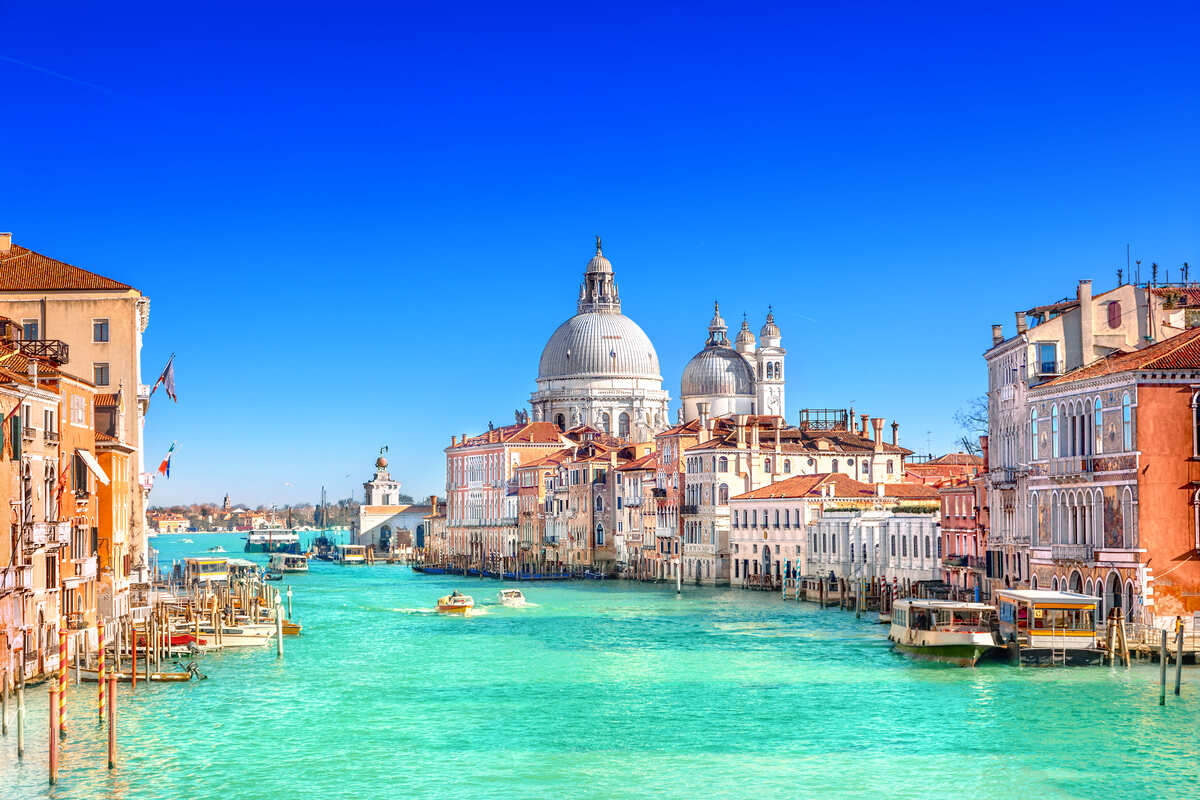
    Grand Canal In Venice, Italy

    Sadly, Venice has been battling its own serious issues lately, and it seems to be failing to overcome them, making it an increasingly less attractive destination in what’s already an overcrowded country.

    But how exactly is the maritime power meeting its downfall – once again – and why should you avoid it?

    In this article, we will give you 5 reasons why Venice is best avoided this year (and early fall):

    Pickpockets Are Out In Droves

    A Tourist Carrying A Camera And Backpack Having His Wallet Stolen Unbeknownst To Him, Pickpocketing In Europe

    Unless you’ve been living under a rock in the last few weeks, you’ve probably scrolled past a series of videos of an enthusiastic Italian woman denouncing ‘borseggiatori’ in Venice.

    The infamous ‘pickpockets’ roam the canal city targeting newcomers who are not yet familiar with local safety measures.

    Recently, Italy was named the absolute worst for pickpocketing in Europe, and a majority of occurrences seem to be centered in the tourist hotspots of Rome, Milan, Florence, and of course, Venice, as it is one of the country’s leading destinations.

    Top 5 Travel Insurance Plans For 2023 Starting At $10 Per Week

    Crowded gondolas on the Venice canals

    Overall, there are 463 pickpocketing mentions across Italian cities for every million visitors, the highest figure in Europe.

    As Venice accounts for a sizable percentage of those petty crimes, which tend to soar over summer, it is probably not the best place to be right now.

    Locals Can’t Stand Tourists

    If there’s one thing Italians, and in particular Venetians, disapprove of more than pineapple on pizza is tourists. Well, let us rephrase this: hordes of tourists.

    Though Italy is heavily reliant on American dollars, with tourism accounting for close to 10% of its GDP, locals and authorities alike have repeatedly expressed their dislike of gentrification and price fluctuations caused by mass tourism and the crowding of historic centers.

    Photographer in Venice 800

    Venice is no different, as it gets jam-packed not only in summer but year-round, with iconic points of interest such as the Piazza San Marco seeing excessive crowding day and night.

    Speaking in an American or British accent, you will soon notice some Venetians may look at you as if they’re rolling their eyes internally, or you could even get a taste of their world-renowned rudeness towards tourists.

    Don’t get us wrong, Italians are incredibly warm, friendly people, but they are navigating a fine line between being receptive to tourism, as it is part of their income, and having their livelihoods disrupted due to an uncontrolled increase in the number of visitors – and they have made their dissatisfaction known a number of times before.

    Crowded cafe in Venice, Italy

    There Is A Ticketing System Coming

    Venice is so fed up with tourists that it now wants to introduce a ticketing system set to affect all American, British, and European passport holders visiting the lagoon and its many islands.

    In other words, you will need to buy a ticket to enter the city, which only adds to the cost of visiting, as tourists are already subject to a visitor tax, and a ban on day trips when traveling as cruise passengers. Though the measure is yet to be implemented, it has already been confirmed.

    venice italy canals

    Once implemented, tickets will be issued as QR codes to be checked upon entry at one of the city’s to-be-designated entry points. As you can see, this is a destination that has made it clear tourists should reconsider visiting unless they are willing to stay longer and pay up.

    Venice Is Mad Expensive

    On the topic of affordability, Venice is probably one of the most expensive cities for tourists not only in Italy but all of Southern Europe.

    According to the popular crowd-sourced database Budget Your Trip, a peak-season trip to Venice will cost on average $253 per day, with tourists expected to spend on average $71 for meals per day at mid-range restaurants and around $30 on public transportation.

    boats in venice

    Additionally, hotel prices for two individuals average $265 per night, increasing the cost of a week-long sejour in Venice to roughly $3,542.

    Unless you’re saving up by not eating out most nights, staying in a shared room in a hostel, and skipping museums, a Venice vacay surely has the potential to break the bank if you’re a budget traveler.

    Venice Risks Becoming A World Heritage Site In Danger

    Finally, UNESCO has recommended adding Venice to its list of World Heritage Sites in danger, largely due to overtourism concerns and the city’s failed attempts at adapting to the climate crisis.

    Female Tourist Holding Her Hat As She Stares At The Grand Canal In Venice, Northern Italy, Southern Europe

    As you should know by now, Venice is built on a complex ecosystem of islands scattered around a shallow lagoon, and it often sees either flooding or disruptive droughts depending on the season that often leave its picturesque canals drained for days on end.

    These disturbances continuously threaten to damage the city’s architectural treasures, not to mention the scale of tourism it experiences, which contributes to more littering, the degradation of public spaces, and overall deterioration as a result of human interference.

    UNESCO now believes Venice, one of our civilization’s greatest feats, faces ‘irreversible damage’, and proposes it is added to the organization’s in-danger listing from September. This means tourists should expect heightened surveillance and even more restrictive measures to curb visitation.

    cruise ship

    All in all, it’s not the best time to pay the Queen of the Adriatic a visit, but there are always lesser-known alternatives in Northern Italy that receive far fewer tourists and are just as charming and rich in History as Venice is.

    Traveler Alert: Don’t Forget Travel Insurance For Your Next Trip!

    ↓ Join Our Community ↓

    The Travel Off Path Community FB group has all the latest reopening news, conversations, and Q&A’s happening daily! 

    Travel-off-Path-group-1-1
    SUBSCRIBE TO OUR LATEST POSTS

    Enter your email address to subscribe to Travel Off Path’s latest breaking travel news, straight to your inbox.

    This article originally appeared on TravelOffPath.com

    [ad_2]

    Source link

  • 4 Lesser Known Destinations With Canals To Avoid The Crowds Of Venice This Summer

    4 Lesser Known Destinations With Canals To Avoid The Crowds Of Venice This Summer

    [ad_1]

    Share The Article

    Last Updated

    Venice stands among Europe’s most iconic destinations.

    Traversed by centuries-old canals lined with pastel-colored buildings and beautiful, ornate churches, it is indeed one of humanity’s greatest feats, but there are some huge downsides to Venice first-time visitors often fail to take into account when planning a vacation:

    It can get jam-packed with tourists — so much so that local authorities are mulling over introducing a ticketing system to reduce overtourism, on top of already enforcing a cruise ship ban, implementing strict policies governing vacation rentals, and worse even, struggling with drying canals.

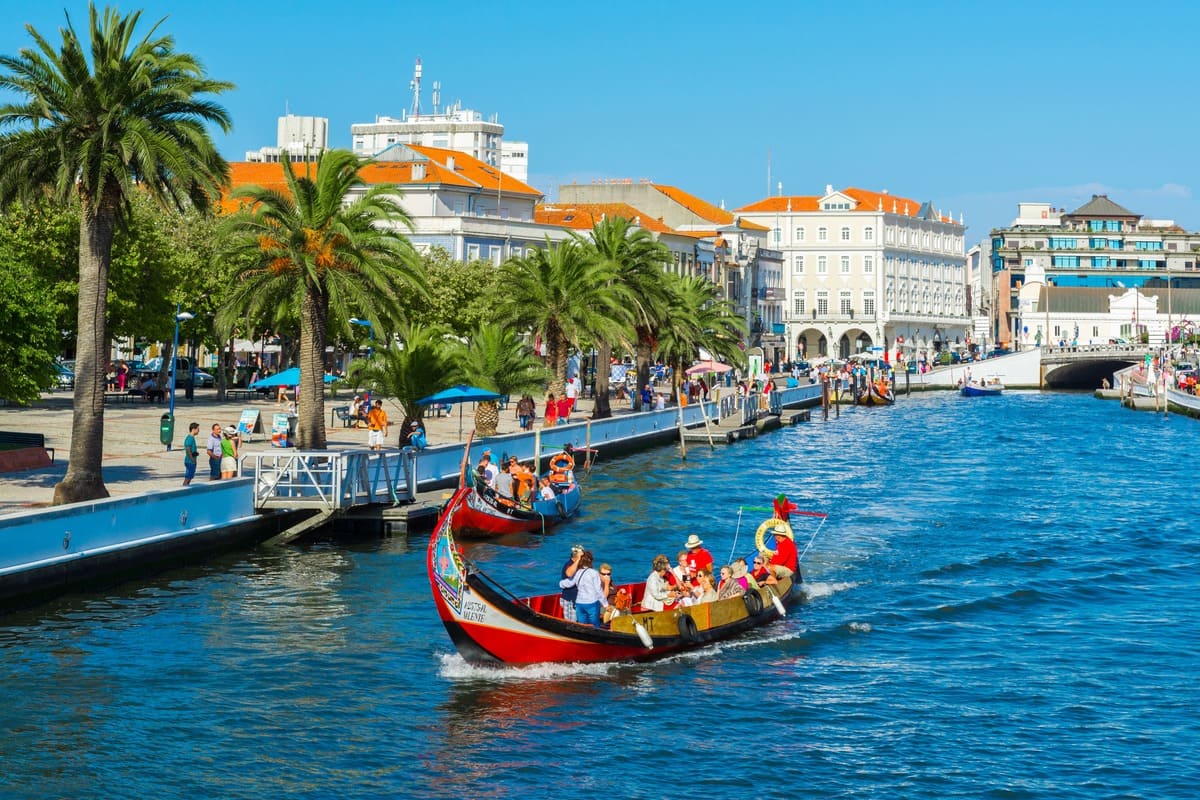
    Traditional Barcos Moliceiros, Or Portuguese Gondolas, Traveling Up The Main Canal In Aveiro, A Venice-Style City In Northern Portugal, Iberia, Southern Europe

    Yep, the legendary Venice canals are running dry.

    This is one hot, crowded city, but luckily for canal enthusiasts, it is far from being the only one of its kind in the old continent.

    Here are 4 great alternative destinations with their own canal systems you can visit instead of Venice this summer:

    Aveiro, Portugal

    Aptly nicknamed the ‘Portuguese Venice’, Aveiro is an ancient city in Northern Portugal, only one hour’s drive South of trendy Porto.

    Much like Venice, it is best known for its various canals, except Aveiro’s were built artificially in the 18th century as a means to bolster local economic growth.

    Sitting on the shores of the Atlantic, this medium-sized port is inhabited by around 80,000 people, against the Italian counterpart’s 261,000, making it less densely populated, and more pleasant to stroll in the hot summer months

    Top 5 Travel Insurance Plans For 2023 Starting At $10 Per Week

    The Traditional Colorful Gondolas Of Aveiro, A Venice-Style City In Northern Portugal, Iberia, Southern Europe

    Additionally, while the latter’s cityscape is ocher-colored, Aveiro’s is more distinct for its vibrant tones.

    You will find several Iberian-style houses painted in lively hues of red, yellow, and green lining the main canal front, where the traditional barcos moliceiros, the Portuguese gondolas, travel carrying tourists and goods from the Atlantic Sea.

    Besides taking a boat tour around the canals, visitors should pay the beautiful Cathedral of Aveiro a visit, a 15th-century Catholic monument in a perfect state of preservation. The historic Aveiro Museum, housed within a medieval convent where a Portuguese princess is entombed, is also not to be missed.

    Gondolas Traveling Up The Main Canal In Aveiro, Northern Portugal, Iberia Peninsula Of Southern Europe

    Bruges, Belgium

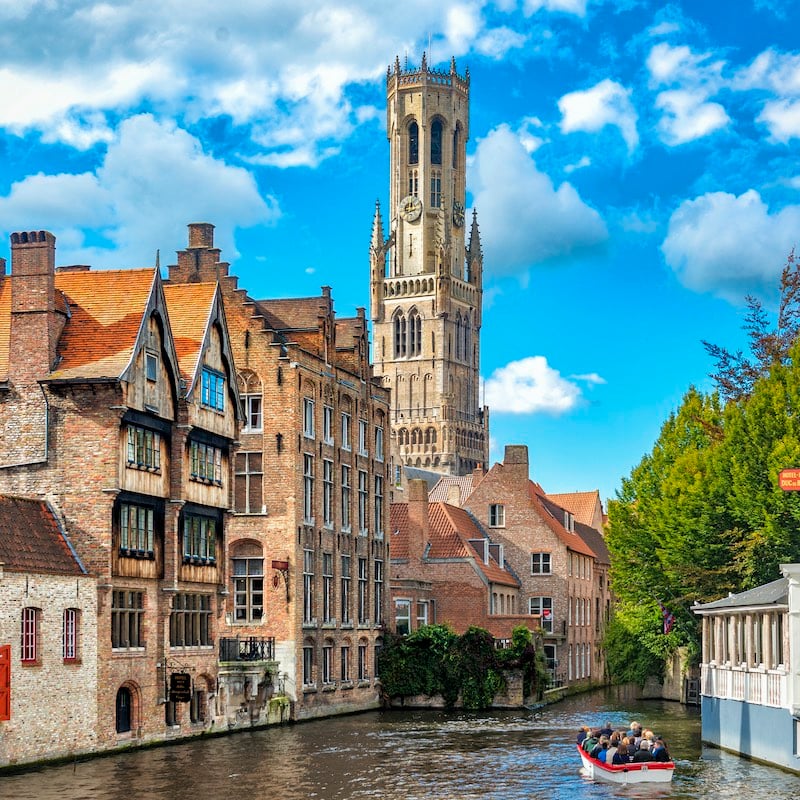
    In the Flemish North of Belgium, where Dutch is the most widely-spoken language, Bruges has been historically dubbed ‘Venice of the North’ due to its masterfully-engineered canals, instrumental to European trade as late as the 20th century, and boundless medieval treasures.

    The city center has been listed by UNESCO as one of its World Heritage Sites, and taking a quick glance at its grand canal, bordered by stone buildings, 15th-century churches and their gorgeous belfries, and cobbled promenades, you’ll soon understand why.

    bruges canal in belgium

    Close to 117,000 people live permanently in Bruges, though only 20,000 reside in the compact, walkable, oval-shaped center, meaning it is not as crowded and certainly not as polluted as the sprawling Old Venice.

    Bruges is not exactly a hidden gem, featuring on several travel brochures on Belgium and Central Europe, but it is more quaint, arguably more romantic than its more famous Mediterranean competitor, and enjoys a small town feel we are sure couples on a belated, post-COVID honeymoon will appreciate.

    Belgian Beer Set On A Table Overlooking A Canal In Bruges, Belgium

    Empuriabrava, Spain

    Perhaps the least famous entry on this list, Empuriabrava is an affluent residential marina in Spain’s Costa Brava, within the autonomous province of Catalonia, encompassing more than 24 km of navigable waterways and up to 40 km of canals in total.

    You read that right.

    Although the area has been inhabited since immemorial times, Empuriabrava only flourished as a tourist destination in the mid-seventies, when work on the canals was finished, and guesthouses and luxury stays started popping up.

    Aerial View Of The Empuriabrava Canals, Costa Brava, Catalonia, Southern Spain, Iberia, Southern Europe

    Unlike Venice, however, it is not a historic city, serving instead as a resort destination.

    Although History buffs will appreciate the Roman archaeological zone of Sant Martí d’Empúries located nearby, holidaymakers spending their summers in Empuriabrava are simply searching for some relaxation and quality time in the sun, and there’s nothing wrong with that.

    This incredibly exclusive, high-end community has its canals arching along the Gulf of Roses, bounded by the azure waters of the Mediterranean, and the Aiguamolls de l’Empordà, a protected reserve popular among nature seekers.

    The Canals Of Empuriabrava, An Upscale Community In Costa Brava, Southern Spain, Iberia, Southern Europe

    Wrocław, Poland

    The fourth-largest city in Poland, claiming an area of 292.8 km² with over 673,000 residents, Wrocław (Anglicized as Wroclaw) is often overlooked among visitors to this Eastern European country, despite being as cosmopolitan as Warsaw, and just as charming as Krakow or Gdansk.

    On top of that, a little-known fact about Wroclaw is that it is an urban conurbation spread across twelve islands on the wide Odra River. With many canals fed by tributaries of the Odra and over 200 bridges, it’s no wonder it is sometimes called the ‘Polish Venice’.

    Aerial View Of The Wroclaw Cityscape, Capital Of Silesia, A Region Of Poland, Eastern Europe

    Similarly to Venice, other than the busy watercourses, Wroclaw has a host of world-class attractions on land, such as a Gothic town hall erected as early as the 13th century, the towering Wroclaw Cathedral, sitting imposingly on Ostrów Tumski island, and a pedestrianized Market Square.

    If you’ve been to Poland already, you know most of what you see around its Old Towns has been rebuilt or renovated following the devastating bombings of World War II.

    Wroclaw is no exception, but a majority of the structures flanking Market Square have remained intact, making it a unique heritage site for Poland.

    Wroclaw Cathedral Seen From The Odra River, Poland, Eastern Europe

    Heading to Europe this summer?

    Find more unique off-path destinations to explore here.

    Traveler Alert: Don’t Forget Travel Insurance For Your Next Trip!

    ↓ Join Our Community ↓

    The Travel Off Path Community FB group has all the latest reopening news, conversations, and Q&A’s happening daily! 

    Travel-off-Path-group-1-1
    SUBSCRIBE TO OUR LATEST POSTS

    Enter your email address to subscribe to Travel Off Path’s latest breaking travel news, straight to your inbox.

    This article originally appeared on TravelOffPath.com

    [ad_2]

    Source link
  • Americans Will Not Have To Buy Ticket To Enter Venice – For Now

    Americans Will Not Have To Buy Ticket To Enter Venice – For Now

    [ad_1]

    Share The Article

    Last Updated

    Heavily affected by overtourism, the Italian port of Venice infamously decided to introduce a ticketing system for visitors in recent years in hopes of mitigating the impacts of the crowds. Originally due to come into effect on January 16, it has now been delayed, which means Americans will not have to buy a ticket to enter the city at least for now.

    Gondola Pictured Before Rialto Bridge In Grand Canal Of Venice, Italy

    Venice is one of a number of cities in Europe ramping up their efforts to combat mass tourism. While Mexico, the Dominican Republic, and the like are looking to capitalize on the ongoing travel frenzy as much as possible and have been actively promoting themselves as tourist-friendly destinations, the Old Continent is going the opposite way entirely.

    Moving on from Covid, Europe does not want a return to the hectic pre-pandemic days, and Venice’s entry fee is a strong indication of that:

    Americans Will Not Need To Pay A Fee Entering Venice From January

    St Marks Square In Venice, Italy

    In exciting news for bureaucracy-wary travelers, the City of Venice has again delayed plans to introduce a fee for tourists, scrapping the previous launch date of January 16, 2023. The new system, set to turn Venice into a literal open-air museum that requires reservation months in advance, has been described as ‘the first of its kind in the world’.

    Implementation was never going to be easy, as it applies to an entire city – one of Italy’s most important – and not a well-enclosed archaeological site or park. Needless to say, surrounding Venice with sea walls like in Medieval times has never been a plausible alternative, even for the hardline anti-tourism Venetian.

    Top 5 Travel Insurance Plans For 2023 Starting At $10 Per Week

    Gondola In A Narrow Canal Lined With Colorful Houses In Venice, Italy

    As reported by Forbes, local authorities have been struggling to enact the changes ‘as they grapple with logistics‘, though more details were not given at this point. In a way, this reminds us of Europe’s back and forth with its future ETIAS requirement, a mandatory online Travel Authorization applying to Americans that will be enforced beginning November 2023.

    The ETIAS, alongside its associated Entry and Exit System, is a multi-million euro project that has proved challenging to materialize, despite being years in the making already, and Venice’s own ticketing system is no exception. It involves more than simply setting up a web page for the collection of a visitor’s tax: this will dramatically change tourism in Venice for future generations.

    How Will The Ticketing System Work?

    Couple Of Happy Travelers Riding In A Gondola In Venice, Italy

    Currently, the only thing tourists have to monitor carefully traveling to the Floating City is room availability. They are allowed to come and go as they wish, even as day-trippers, but finding reasonably affordable accommodation last-minute can be close to impossible. This is particularly true in the peak of summer, though Venice remains busy all year round.

    The record year of 2019 saw a concerning 36 million foreigners arrive in Venice, a city of about 270.000 inhabitants only. To draw a comparison, that is the exact same number of tourists the country of Mexico has hosted throughout the whole of 2022. Looking at it from this angle, we can’t even be mad at Venetians for wanting to shut down their doors – if only slightly.

    Crowd Of Tourists Crossing Bridge In Venice, Italy, Overtourism

    Once the ticketing system is formalized, visitors to the historic center of Venice, which comprises all the main medieval canals and points of interest, such as Rialto Bridge, St Mark’s Square, and Doge’s Palace, will need to book their visit, possibly months in advance to avoid getting locked out amid overwhelming demand.

    If you’re a day-tripper, a single ticket will cost €3, though it can rise to €10 in ‘particularly busy periods’. On the other hand, those staying overnight in the city will be exempt from paying the fee as their ‘tourist tax’ will be collected by their accommodation provider, but not from booking a visit through the official online portal.

    Chioggia glimpse from the arcades.

    Tickets are valid for Venice itself and any of the islands and municipalities in the Venetian Lagoon, including the colorful towns of Murano and Burano. Those traveling to see family, or staying at a friend’s house, will obviously not be charged for the duration of their sejour, but will be subject to the reservation process, as confirmed by Forbes.

    Tickets will be issued in the form of a QR code, that will be checked upon arrival at one of the city’s entry points by ‘ticket controllers’. At this time, we were not able to find information on the penalties for non-compliance, but we assume day-trippers not staying overnight without a paid reservation will be prevented from accessing the historic center.

    What’s The New Launch Date?

    Crowd In Front Of Doges Palace, Venice, Italy

    So now that January 16 is no longer the launch date, when will the ticketing system start applying? This time around, the Venice City Council refrained from offering a final date, suggesting instead that the delay will be of ‘at least six months’. This leads us to believe the system will be fully operational by summer or fall 2023.

    Funnily enough, the ‘under-touristed’ Trieste, a city close to the Slovenian border, is covering the transportation costs of Americans visiting for a minimum of two nights up to May 31, 2023, as long as they arrive from within Italy. If you’re feeling discouraged by Venice’s drastic measures, perhaps you should consider exploring the beautiful region of Friuli Venezia Giulia instead.

    Traveler Alert: Don’t Forget Travel Insurance For Your Next Trip!

    ↓ Join Our Community ↓

    The Travel Off Path Community FB group has all the latest reopening news, conversations, and Q&A’s happening daily! 

    Travel-off-Path-group-1-1
    SUBSCRIBE TO OUR LATEST POSTS

    Enter your email address to subscribe to Travel Off Path’s latest breaking travel news, straight to your inbox

    This article originally appeared on TravelOffPath.com

    [ad_2]

    Source link