Tag: Visa

  • One Of The Cheapest Countries In The World Launches New Digital Nomad Visa

    One Of The Cheapest Countries In The World Launches New Digital Nomad Visa

    [ad_1]

    Share The Article

    Last Updated

    Looking to continue your digital nomad adventure without breaking the bank?  

    Europe is an incredible place for digital nomads, but it can also be a pricey place to live.

    But that’s all set to change as one of the cheapest countries in the world has launched a digital nomad visa.  

    Woman working on laptop and watching hot air baloons in Turkiye

    Digital nomad visas are so important for digital nomads, giving them an official opportunity to stay in the countries they love for longer than they could on a regular tourist visa.

    So this is big news! 

    Here’s what you need to know about this exciting new digital nomad visa from one of the cheapest countries in the world — Turkiye:  

    What Are The Requirements?  

    Like all digital nomad visas, you will have to jump through a few hoops to secure this new visa in Turkiye. These include: 

    • Having an employment or business contract that proves you are a digital nomad with a steady source of income.  
    • Demonstrating a monthly income of at least $3,000 (or an annual income of $36,000).  
    • Being between the ages of 21-55.  
    An Old Street In Kaleici Replete With Vines And Flowers, Lined With Historical Ottoman Era Houses, Kaleici, Antalya Old Town, East Mediterranean Coast Of Turkiye, Western Asia

    One unusual requirement of Türkiye’s digital nomad visa that isn’t needed in most other European countries is that applicants will need to hold a university degree.  

    Türkiye’s Digital Nomad Visa  

    A digital nomad visa from Turkiye is great news for digital nomads from the USA, Canada, UK, and EU, who are all eligible to apply.  

    Girl in red dress and hat posing and watching panorama landscape of Kaputas Beach, Turkiye.

    The Turkish Culture and Tourism Ministry is poised for so many applicants that they have launched a dedicated website where digital nomads can apply for this new visa.  

    You can complete your application online and from anywhere in the world, but you will have to visit your nearest Turkish embassy to collect your work permit and visa once it’s been granted.  

    If you’re already in Turkey, then you can apply online and register with the nearest local police department in the county.  

    Hagia Sophia dome and minaret old town, Istanbul, Turkiye

    We don’t know how long the application will take because this visa is so new, but the fast online application process is good news for nomads who don’t want to spend their days filling in paperwork.  

    Türkiye’s Best Spots For Digital Nomads  

    Turkiye is an incredible country with a wide range of diverse landscapes and experiences.

    Whether you’re looking to work in a bustling city, sit with your laptop on the beach, or find your own country retreat, you can find it all in Türkiye.  

    Balat district street view in Istanbul. Balat is popular tourist attraction in Istanbul, Turkey.

    Istanbul is the most popular spot for both tourists and digital nomads in the country.

    This mega-city, which is home to more than 20 million people and is located on two continents, is a must-see for all travelers. 

    Eating out is incredibly cheap here, and many of the best attractions in the city are free. Accommodation is also much lower in Istanbul than the European average.  

    Young woman-blogger-freelancer working on a laptop in a cafe in Istanbul and calling by phone. View from the window to the world-famous Blue Mosque

    In fact, Istanbul has a reputation for being one of the most affordable cities in Europe, so if you want all the bustle and activity of city life without the pressure on your bank account, this is a great place to be.  

    Attracting Digital Nomads 

    Other Turkish destinations that the Turkish government is keen to promote as part of their drive to attract digital nomads include Dalaman, Izmir, Marmaris, Bodrum, Antalya, and Fethiye.  

    Most of these are coastal locations, and attracting digital nomads year-round would help to boost the economy and promote these regions as 24/7 destinations, especially during the winter months when tourist footfall typically slows down.  

    aegean sea, bodrum, turkey

    Turkiye already has a strong infrastructure in place for digital nomads, including fast and reliable internet access, a host of cafes and working spaces for digital nomads to get to work, and great transport connections across the country too.  

    What’s more, getting to Türkiye is easy.

    Türkiye has a total of 35 airports with international links, so you’ll be spoilt for choice when it comes to deciding where in this beautiful country you want to call your short-term home.  

    For more details and how to apply, check out the official website here.

    ↓ Join Our Community ↓

    The Travel Off Path Community FB group has all the latest travel news, conversations, and Q&A’s happening daily! 

    Travel-off-Path-group-1-1
    SUBSCRIBE TO OUR LATEST POSTS

    Enter your email address to subscribe to Travel Off Path’s latest breaking travel news, straight to your inbox.

    This article originally appeared on TravelOffPath.com

    Opinions expressed here are the author’s alone, not those of any bank, credit card issuer, hotel, airline, or other entity. This content has not been reviewed, approved or otherwise endorsed by any of the entities included within the post.

    [ad_2]

    Source link

  • These Are The 5 Easiest European Digital Nomad Visa According To Timeout  

    These Are The 5 Easiest European Digital Nomad Visa According To Timeout  

    [ad_1]

    Share The Article

    Last Updated

    Europe is a great place for digital nomads thanks to its rich heritage and range of diverse cultures in a relatively small geographical area.  

    You’ll find welcoming digital nomad communities in every corner of Europe.  

    Digital nomad on laptop in Santorini, Greece

    But where is the easiest place to start?  

    Timeout magazine has created a list of the easiest digital nomad visas to get in Europe.  

    These are the top 5: 

    5. Norway 

    Woman blogger using smartphone navigation application traveling in Norway digital nomad

    The Norwegian digital nomad visa is valid for a very generous 2 years and has a relatively low 35,179 euro ($37,665) minimum annual income requirement.  

    Applicants will also need to secure their own private health insurance and have proof of self-employment. So far so simple!

    So what’s the catch?  

    The reason Norway doesn’t top the charts is because of one tricky requirement of their digital nomad visa. Each successful applicant must have at least one Norwegian client, with a valid contract for the duration of your visa.  

    If you can jump through this hoop, then Norway is a great place to live as a digital nomad.

    It has some of the fastest wi-fi in Europe, excellent coffee shops and co-working spaces, and is an incredibly beautiful country with plenty of opportunities for outdoor adventure.  

    4. Greece 

    Digital nomad  with bright scenic view of the Mediterranean Sea ,Greece

    The digital nomad visa in Greece allows nomads to live and work in the country for up to 12 months. If you stay for less than 6 months you won’t have to pay any tax on your earnings.  

    You’ll need to earn at least 42,000 euros a year ($44,942) to be eligible but the application process is wonderfully straightforward.

    The visa application process only takes around 30 days from start to finish.  

    So why should you choose Greece for your digital nomad adventures?

    As well as being breathtakingly beautiful it’s also an affordable place to live (living costs in Greece are 33% lower than in the UK, for example) and in the larger Greek cities you’ll find welcoming digital nomad communities and plenty of co-working spaces too.  

    3. Malta  

    Man sitting by a pool in Malta

    Malta’s digital nomad visa allows digital nomads to live in the country for a very generous four years.

    Unless you transfer your earnings into a Maltese bank, you won’t have to pay a penny of your income in local taxes for the first twelve months.  

    You’ll need an annual income of at least 42,000 euros ($44,942) a year which is one of the higher figures on this list, and you’ll also need employment contracts that demonstrate your continued source of income.  

    The application process is incredibly straightforward, but it can be time-consuming, taking up to 5 months.  

    So why is Malta so appealing to digital nomads? It’s a beautiful Mediterranean destination that is also an affordable place to live.

    And the small size of the country means that the pace of life is slow, making it ideal for nomads looking for a laidback lifestyle.  

    2. Croatia 

    Young Blonde Remote Worker Wearing A White Shirt As She Types On Her Laptop While Sitting At An Alfresco Cafe In Split, Croatia, Digital Nomad

    Croatia is an incredibly popular destination for digital nomads, and one of the most appealing aspects of this visa is its relatively low income requirements.  

    You’ll need a monthly salary of 2,539 euros per month ($2,719) to be eligible for this visa, and the application process is straightforward too, as you can apply online with no time consuming in-person meetings.  

    Croatia failed to make the top spot because this visa applications comes with additional fees, such as an online admin charge (45 euros/$48) and residency card charge (40 euros/$42). You’ll also need to have proof that you’ve arranged accommodation for the duration of your stay as part of your application.  

    But there are so many great reasons to choose Croatia as a digital nomad. Croatia has a laid-back lifestyle, great weather, a rich cultural heritage, and plenty of workspaces and cafes aimed at digital nomads.

    The internet speed is excellent here too.  

    1. Romania 

    People enjoy spring time downtown Lipscani Street in Bucharest, Romania

    Officially the easiest digital nomad visa to get in Europe can be found in Romania.

    The reason? Because of how quick and easy the application process is! 

    You can apply for your Romanian digital nomad visa online and, provided you meet all the requirements, your visa will be issued within 2 weeks ready for you to get to work. 

    The salary requirement of the Romanian digital nomad visa is 3,700 euros per month ( $3,965), which is 3 times the average monthly salary in the country.

    However, provided you are a taxpayer in your home country, you will be exempt from income tax in Romania.  

    Romania is a great country for digital nomads thanks to its affordable cost of living, warm and welcoming people, and abundance of co-working spaces (as well as other digital nomads) all over the country.  

    The Complete List  

    Young Woman Digital Nomad Working From Her Laptop As She Sits On A Boardwalk In A Coastal Town In Montenegro, Balkan Peninsula, South Eastern Europe

    Here is the complete list of Europe’s most popular digital nomad visas ranked from easiest to secure to hardest to secure, according to Timeout.  

    • 1. Romania 
    • 2. Croatia 
    • 3. Malta  
    • 4. Greece  
    • 5. Norway 
    • 6. Spain 
    • 7. Hungary  
    • 8. Estonia 
    • 9. Portugal 
    • 10. Czechia 
    • 11. Iceland 
    • 12. Cyprus 

    ↓ Join Our Community ↓

    The Travel Off Path Community FB group has all the latest travel news, conversations, and Q&A’s happening daily! 

    Travel-off-Path-group-1-1
    SUBSCRIBE TO OUR LATEST POSTS

    Enter your email address to subscribe to Travel Off Path’s latest breaking travel news, straight to your inbox.

    This article originally appeared on TravelOffPath.com

    Opinions expressed here are the author’s alone, not those of any bank, credit card issuer, hotel, airline, or other entity. This content has not been reviewed, approved or otherwise endorsed by any of the entities included within the post.

    [ad_2]

    Source link

  • 8 Popular Tourist Destinations That Require A Visa For All American Travelers

    8 Popular Tourist Destinations That Require A Visa For All American Travelers

    [ad_1]

    Share The Article

    Last Updated

    American travelers do not need a visa to travel to most countries around the world.

    Having a U.S. passport means that American travelers can breeze right into many international destinations without having to worry about applying for and paying for a visa.

    However, there are a handful of destinations that do require visas for American travelers.

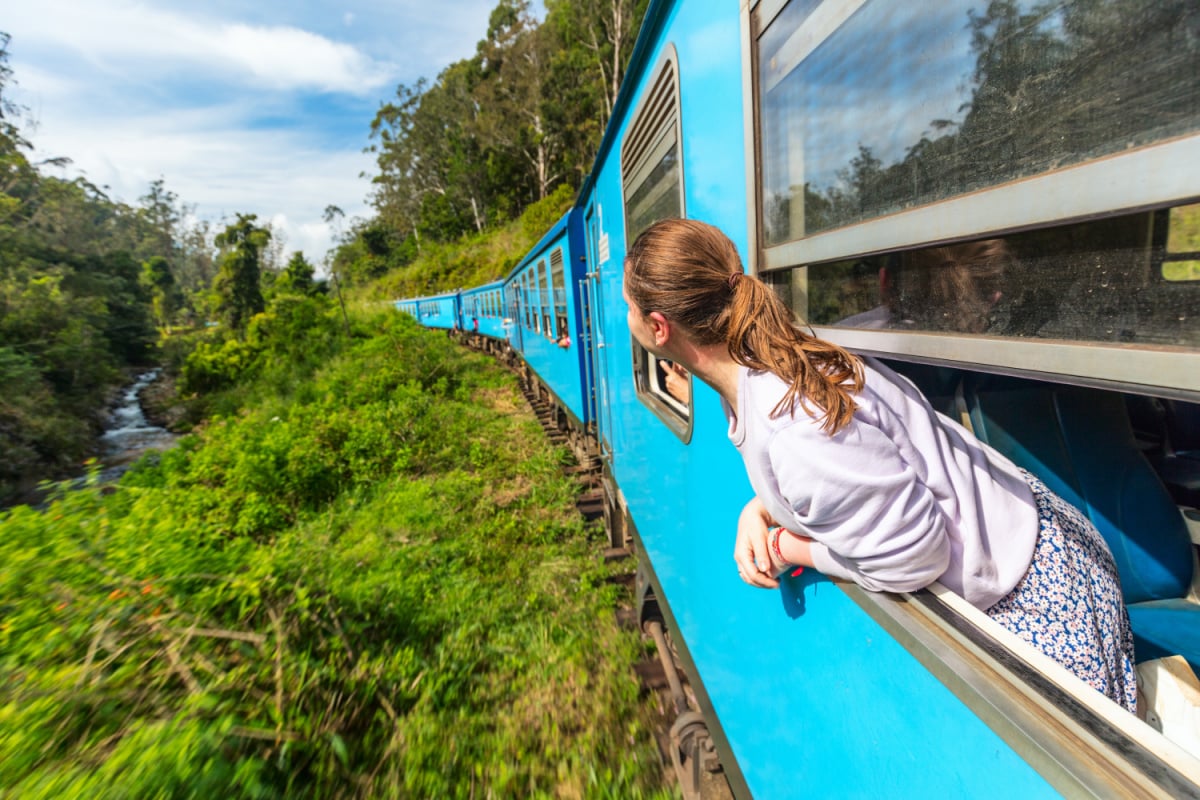
    Woman riding the Ella train in Sri Lanka

    Although this is not meant to be an exhaustive list (always check a country’s entry requirements independently before you travel), these are some of the most popular tourist destinations around the world that require a visa for American travelers.

    Some countries on this list require simple visas with a quick online application process, while others are more drawn out and require a visit to the country’s embassy or consulate.

    Woman on Safari

    1. Brazil

    Beginning October 1, Brazil will require a visa for American travelers.

    In 2019, the visa requirement was removed in an effort to boost tourism, but unfortunately, it is now returning. However, it’s expected that an electronic visa application will be introduced to simplify the process rather than requiring travelers to visit a Brazilian embassy or consulate.

    Top 5 Travel Insurance Plans For 2023 Starting At $10 Per Week

    Beach in Brazil

    2. Australia

    Many Americans don’t realize that a visa is needed to travel to Australia.

    It’s called the Electronic Travel Authorization (ETA), and you must apply for it online in advance of your trip. The cost is $20 AUD (approximately $13 USD.)

    Australia Beach

    3. Egypt

    Egypt is a country that has been growing in popularity lately.

    However, if you want to see the ancient pyramids of Egypt, ride a camel in the desert, or journey down the Nile, you’ll need to apply for a tourist visa first.

    The Egyptian tourist visa should be applied for online at least a week in advance of your trip, and the cost is $25 USD.

    Young Woman Watching The sunset Over The Pyramids Of Giza, Cairo, Egypt, North Africa

    4. Bolivia

    Bolivia is an underrated destination in South America perfect for adventurous travelers, but American travelers do need a visa to enter.

    Although it’s possible to apply for a visa on arrival into the country, it’s not recommended due to how much material is needed for the application.

    It’s better to apply in advance at any Bolivian embassy or consulate to make sure you get the visa. The cost is $160 USD.

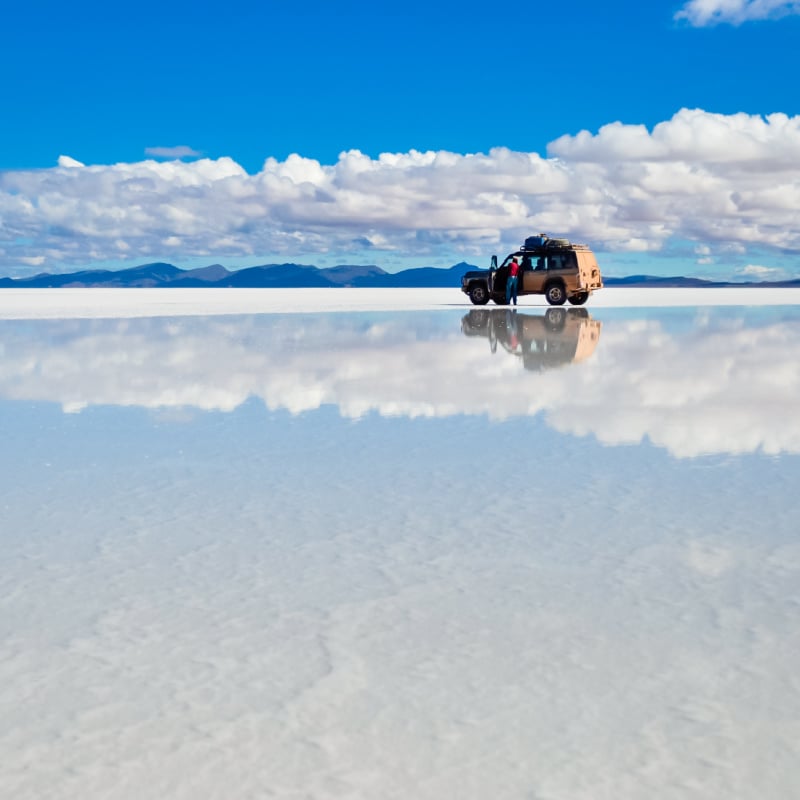
    Uyuni Salt Flats

    5. India

    Another country that requires a visa for American travelers is India.

    India offers an online visa application that you should apply for at least one week in advance of your trip. The Indian tourist visa costs $25 USD.

    Woman at the Taj Mahal in India

    6. Kenya

    If you’re dreaming of going on a safari and spotting wildlife in Kenya, you’ll need to secure a visa first. Kenya requires American travelers to apply for the East Africa Tourist Visa, which encompasses the countries of Kenya, Rwanda, and Uganda.

    Alternatively, you can apply for a single-entry visa just for Kenya.

    The cost for an East Africa Tourist Visa is $100 USD, and the cost for a Kenyan visa is $51 USD. Both offer online visa applications.

    Masai Villager In Kenya, Africa

    7. Sri Lanka

    Sri Lanka is a fascinating destination that packs a lot of unique sights and culture into a small island in the Indian Ocean.

    American travelers hoping to explore Sri Lanka will need to obtain a visa first, though. The current cost for an electronic visa is $35 USD.

    colorful fishing boats on the beach in sri lanka

    8. Turkey

    Turkey is a destination that’s booming in popularity among international travelers lately. However, Americans do need a visa in order to visit.

    The online visa should be applied for at least a few days in advance of your trip, and the cost is $50 USD.

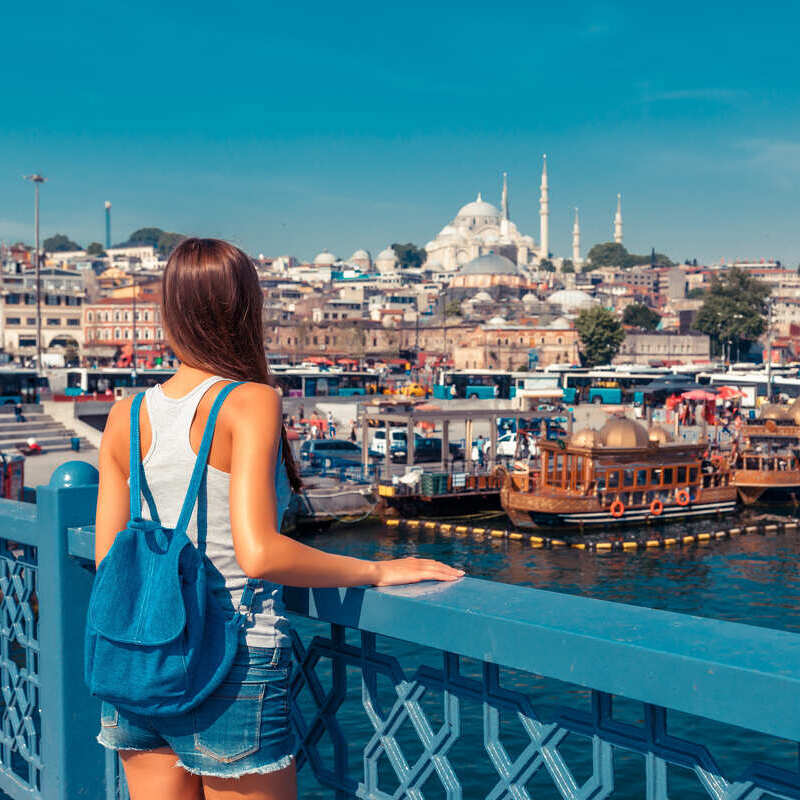
    Young Female Tourist Pictured With Her Backpack As She Stands On Galata Bridge Looking At The Historical Peninsula Of Istanbul, Turkyie, Turkey, Eurasia, Middle East, Eastern Europe

    Traveler Alert: Don’t Forget Travel Insurance For Your Next Trip!

    ↓ Join Our Community ↓

    The Travel Off Path Community FB group has all the latest reopening news, conversations, and Q&A’s happening daily! 

    Travel-off-Path-group-1-1
    SUBSCRIBE TO OUR LATEST POSTS

    Enter your email address to subscribe to Travel Off Path’s latest breaking travel news, straight to your inbox.

    This article originally appeared on TravelOffPath.com

    [ad_2]

    Source link

  • This Country In South America Will Require A Visa For Americans In October

    This Country In South America Will Require A Visa For Americans In October

    [ad_1]

    Share The Article

    Last Updated

    The U.S. passport is one of the most powerful globally, granting its bearer access to over 180 countries visa-free, but there are some infamous exceptions.

    From Cuba to Turkey, a select number of destinations requires Americans to present either a pre-issued tourist visa, or a travel authorization in order to travel.

    To the dismay of some, this infamous will keep growing this year, with the addition of one of the world’s top sunny destinations from October.

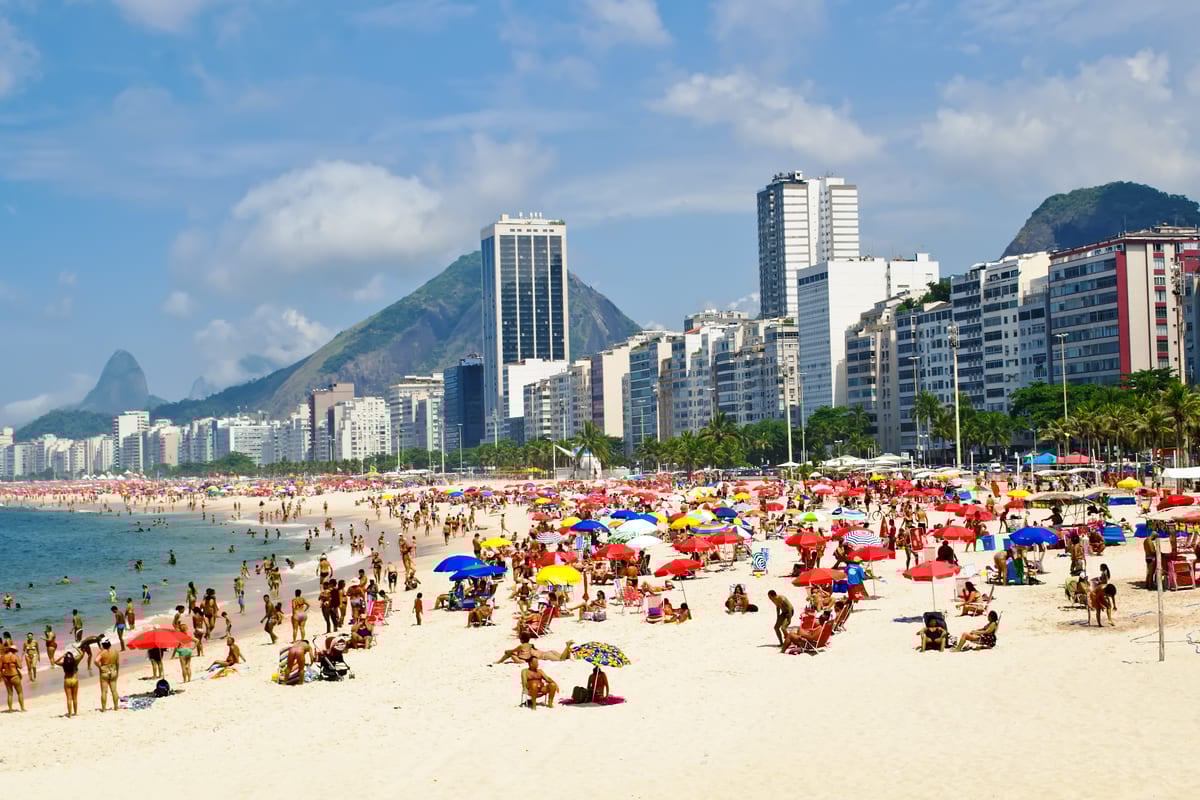
    View Of Copacabana Beach In Rio de Janeiro, Brazil, South America

    As soon as October 1, Brazil will suspend visa-free access to U.S. citizens, reversing a decision taken in 2019 to exempt them from the bureaucratic hurdle. This means that, if you’re an American, your days of enjoying unrestricted access to Brazil are numbered.

    On this article, we will give you a quick rundown of why a visa is being implemented, how difficult it will be to apply, and why you should book your flights to Brazil before the new rule comes into force:

    Why Is The Rule Changing?

    Since Brazil’s newly-elected Government came into power, the country has shifted from its open-door policy and began enacting stricter curbs.

    Candelaria Church In Rio de Janeiro, Brazil, South America

    One of those changes has been, in fact, a reversal to a previous visa regime.

    Back in 2019, Brazil’s approach to tourism was based on reciprocity. Unlike the European Union, the United Kingdom, New Zealand, and much of the international community, Washington does not grant Brazilians visa-free access to the United States.

    As a result of the lack of a bilateral visa suppression agreement, Americans flying to Brazil were required to obtain a visa prior to boarding, which could be applied for at the Brazilian Consulate or mission closest to them.

    Top 5 Travel Insurance Plans For 2023 Starting At $10 Per Week

    Aerial View Of Christ The Redeemer In Rio de Janeiro, Brazil, South America

    The South American giant abandoned the reciprocity measure temporarily in a bid to boost tourism, but due to a political decision, it is once again being reinstated from October 1.

    How Hard Will It Be To Apply?

    Beginning October, if you’re an American national, you will only be allowed to board a Brazil-bound flight, or any flights connecting in Brazil for that matter, holding a valid tourist visa.

    Unlike what was previously reported when the news came out, the visa application could move online.

    A Woman Holding Up A Passport As She Types On Her Computer

    While there is a lot of speculation at the moment, the local Government is expected to launch a new easy-to-apply eVisa, enabling American applicants to continue traveling to Brazil with minimal hassle – as well as Canadians, Australians, and the Japanese*, who will also automatically lose their privilege of visa-free travel due to their respective country’s visa restrictions imposed on Brazilians.

    So far, no further details have been divulged, but the fact that an electronic visa is being discussed, as opposed to a traditional Consulate-issued visa, is surely encouraging news for bureaucracy-wary tourists, as this means it will be a lot easier to apply.

    Praia Dos Anjos In The State Of Rio de Janeiro, Brazil, South America
    *The Japanese may be exempt from any visa requirements that may come into force as Tokyo is currently working with Brasilia on a visa-waiver agreement between both countries.

    Why Should You Visit Brazil Ahead Of The Visa Implementation?

    Visiting Brazil before October 1, Americans will only be required to present a valid biometric passport.

    They will not be expected to fill out visa forms, pay a fee, nor submit their travel information ahead of flying, as the visa suppression continues valid up until that date.

    In other words, visiting Brazil now is less complicated than it will be in four months.

    Colorful Favela Or Slums In Rio de Janeiro, Brazil, South America

    Although an eVisa is hardly an impediment, with countries like Turkey and Vietnam all having similar procedures in place, visa applications, no matter how simple, are always an anxiety-inducing process, especially when there is a backlog of requests, or the official application website presents problems.

    Best to tick Brazil off the list while there are less hurdles standing in your way.

    3 Of The Most Beautiful Off Path Locations To Explore In Brazil

    Tourist Couple Admiring The Historical City Of Ouro Preto, Minas Gerais, Brazil

    Brazil is an incredibly diverse destination, home to a multi-ethnic populace whose nationhood is shaped by Southern European, African, and indigenous-Brazilian influences. Rio is merely the tip of a colossal iceberg.

    If you’re in need of some inspiration, some of our favorite off-path destinations in Brazil include:

    Balneario Camboriu

    Dubbed by some the ‘Brazilian Dubai’, it is a rapidly-developing coastal city in Southern Brazil, known for its skyscraper-dotted skyline, sandy crescents, and pristine nature.

    Walking the modern ocean boulevard Avenida Atlantica, you will find upscale beachfront restaurants, international brands, and luxurious shopping centers. Balneario’s top attraction, however, is the Unipraias cable car, linking the busy port to a preserved enclave of the Atlantic forest.

    woman at beach in Mexico

    Ouro Preto

    A UNESCO World Heritage Site and one of the best-preserved colonial towns in the Americas, Ouro Preto is famous for its cobbled streets, centuries-old churches embellished by ornate goldwork and colorful frescoes still looking fresh, and distinct mineiro cuisine.

    Nestled in the hills of Minas Gerais, one of Brazil’s most traditional states, this picturesque settlement will make you feel as if you’re in the Portuguese hinterland – no surprise, judging by both countries’ familial links.

    Panoramic View Of Ouro Preto, Minas Gerais, Brazil

    Belem do Para

    One of Brazil’s oldest cities, Belem do Para was settled by the Portuguese as early as 1616, and serves as one of the main gateways to the landmark Amazon River.

    A hugely overlooked gem of the Brazilian North, it was the first European colony established in the Amazon, and due to its historical importance, it’s retained much of that colonial-era charm, an attribute lost in sprawling urban centers like Rio or Sao Paulo.

    You will still find canopied streets, European piazzas surrounded by trees, churches with traditional Portuguese-style blue tiles, among other architectural treasures, as well as development zones, and lush green parks. This is the Amazon region after all.

    Bolivia Amazon Rainforest

    No COVID-Related Requirements

    Brazil may be imposing visa requirements on US citizens soon, but on the brightside, it has recently lifted all COVID-related mandates.

    Flying to Brazil, you are no longer expected to present either a vaccination certificate or a negative test: entry is once again as simple as it was prior to 2020.

    Read more about Brazil here.

    Traveler Alert: Don’t Forget Travel Insurance For Your Next Trip!

    ↓ Join Our Community ↓

    The Travel Off Path Community FB group has all the latest reopening news, conversations, and Q&A’s happening daily! 

    Travel-off-Path-group-1-1
    SUBSCRIBE TO OUR LATEST POSTS

    Enter your email address to subscribe to Travel Off Path’s latest breaking travel news, straight to your inbox.

    This article originally appeared on TravelOffPath.com

    [ad_2]

    Source link

  • Remote Workers Don’t Need A Digital Nomad Visa Moving To These European Countries

    Remote Workers Don’t Need A Digital Nomad Visa Moving To These European Countries

    [ad_1]

    Share The Article

    Last Updated

    Now that digital nomads are taking over the scene, numerous countries around the world have begun relaxing immigration rules to better accommodate them, whether it’s treating them as long-term tourists and offering tax exemptions or launching Digital Nomad Visas (DNV).

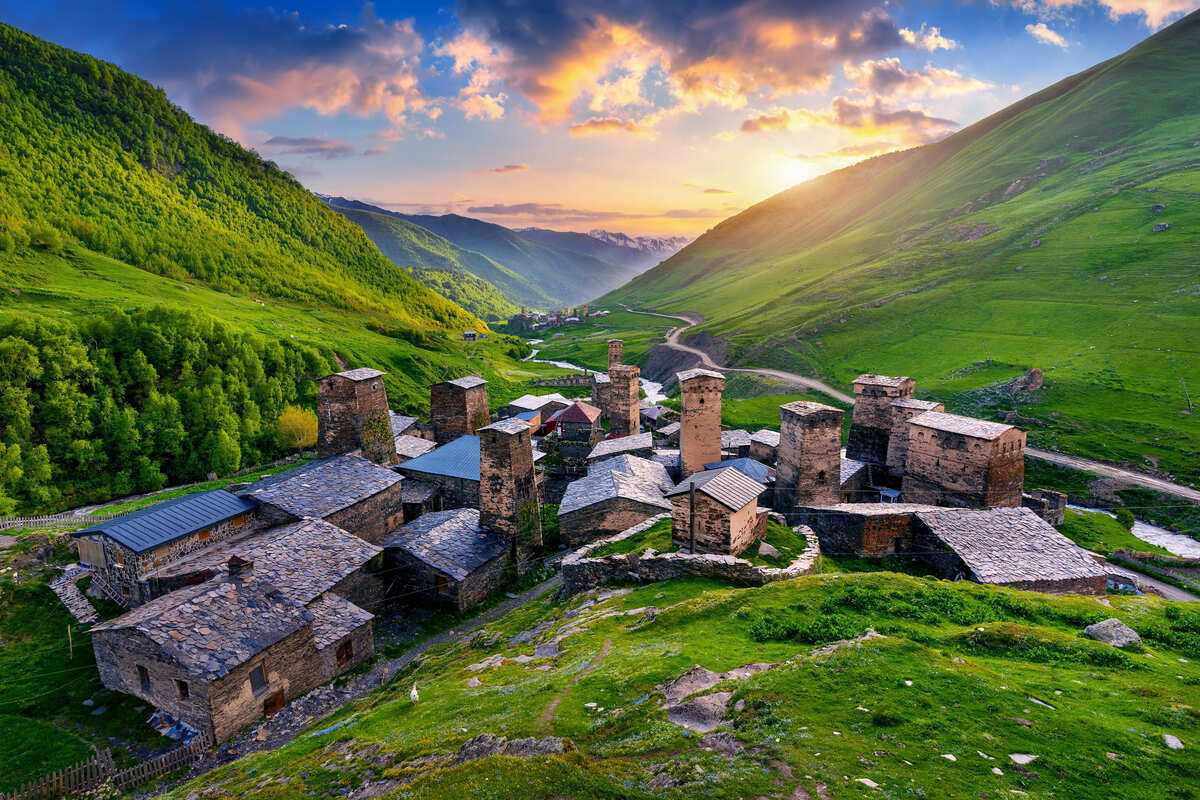
    Ushguli Village Dotted With Medieval Historical Towers In Northern Georgia, Caucasus, Eastern Europe

    Europe is at the forefront of this exciting trend, with an ever-expanding list of nations announcing DNVs, but while this is great news for remote workers looking to relocate, wider availability of visas does not necessarily mean they are easy to apply for.

    With higher financial thresholds to be met, their DNVs are some of the hardest to obtain, but not all European nations are establishing strict eligibility requirements. In fact, 3 of them allow nomads to remain as tourists for extensive periods of time without having to worry about visa rules at all.

    If you’re a U.S. passport holder traveling full-time, all you need is a valid passport to relocate, only if temporarily, to these destinations:

    The United Kingdom

    Victorian Era Manchester City Hall In Manchester, Northern England, United Kingdom

    One of the top 4 European destinations Americans want to visit the most, the United Kingdom has a surprisingly relaxed border policy, taking into account the country’s reputation for taking control of its own borders very seriously.

    Unlike the confusing 90/180-day rule which applies to Americans entering the Schengen Area, the U.K. grants visitors leave to remain for up to six months following each new entry. This means a U.S. citizen will not be expected to leave after only three months in the country.

    Once the 6-month period is up, a U.S. passport holder can, in theory, exit the territory, spend a day in a neighboring country such as France, and return to Britain immediately after that. As long as they never stay for longer than 180 days following each entry, they will continue on the right side of the law.

    Top 5 Travel Insurance Plans For 2023 Starting At $10 Per Week

    Kilchurn Castle In The Isle Of Skye, Highlands Of Scotland, United Kingdom

    For example: entering the U.K. on June 1, 2023, you will be granted permission to stay continuously until December 1, 2023. However, should you take a day trip to France* on September 1, returning on September 2, a new six-month reference period will start from that date, allowing you to remain in the country until March 2, 2024.

    Non-residents are advised against living permanently in the U.K. through various consecutive visits, as border authorities could be suspicious of your intentions, but it is possible to have a temporary home base in Britain as you explore Europe without worrying too much about complex visa rules.

    The U.K. is a collective of four historic nations: England, Scotland, Wales, and Northern Ireland, and there is a lot to explore outside of London.

    *Day trips to Ireland will not reset your clock, as both Ireland and the U.K. form a single Common Travel Area, where border checks mostly do not apply.

    Armenia

    Etchmiadzin Cathedral In Armenia, The Oldest Cathedral In The World, Caucasus Region

    Georgia’s direct neighbor to the South, Armenia, is just as friendly to digital nomads, with some of the most dramatic natural scenery seen anywhere in the Caucasus and a rich cultural heritage to match.

    Although it is not technically a European country, unlike cross-continental Georgia, as it sits South of the Caucasus dividing line, Armenia is traditionally perceived as a geopolitically-European nation.

    Entering Armenia without having applied for long-term residence, Americans can stay for up to six months in a calendar year, whether continuously or through various successive visits within the fixed 12-month period.

    Aerial View Of An Armenian Church On The Shores Of A Lake In Armenia, Caucasus Region Between Western Asia And Eastern Europe

    With a sprawling Soviet-era capital, set against the dramatic background of the Ararat Mountain, and a high concentration of UNESCO World Heritage Sites and other historically-relevant structures, such as the Hellenic Temple of Garni, the only surviving Greco-Roman building in the ex-USSR, Armenia is a beautiful hidden gem worth exploring.

    Georgia

    Georgia has risen to prominence in recent years as Europe’s nomad hub for a reason: much like the U.K., it grants tourists permission to stay for longer than just 3 months, but while the British cap it at six, Georgian authorities grant foreigners an entire year of visa-free access.

    You read that right.

    Colorful traditional houses with wooden carved balconies in the Old Town of Tbilisi, Georgia

    If you’re a digital nomad who’s grown wary of excessively complicated DNV procedures, you will have no issue relocating to Georgia, the northernmost state in the Caucasus, at the junction between Eastern Europe and Western Asia.

    This small, often overlooked nation is home to an ancient capital city, Tbilisi, with a History spanning several millennia. It is also where wine originated from 6000 years ago and the birthplace of Stalin.

    Panoramic View Of Old Town Tbilisi, Georgia, Transcontinental Caucasus Region Between Europe And Asia

    On top of its friendly visa policy, Georgia is one of the cheapest countries for digital nomads, with a low cost of living compared to much of the Western World and affordable housing, though rent has increased in recent months due to the influx of Russians and Ukrainians fleeing the conflict in their home countries.

    Entering Georgia at any checkpoints, both via land and airports, you will be issued a one-year entry stamp, enabling you to take up local residency with minimal hassle and explore the dozens of cobblestoned cities and picturesque countryside without rush.

    Traveler Alert: Don’t Forget Travel Insurance For Your Next Trip!

    ↓ Join Our Community ↓

    The Travel Off Path Community FB group has all the latest reopening news, conversations, and Q&A’s happening daily! 

    Travel-off-Path-group-1-1
    SUBSCRIBE TO OUR LATEST POSTS

    Enter your email address to subscribe to Travel Off Path’s latest breaking travel news, straight to your inbox.

    This article originally appeared on TravelOffPath.com

    [ad_2]

    Source link

  • This Latin American Country Has No Set Income Requirement For Its Digital Nomad Visa 

    This Latin American Country Has No Set Income Requirement For Its Digital Nomad Visa 

    [ad_1]

    Share The Article

    Last Updated

    Latin America is increasingly being hailed as a top destination for digital nomads, who come from all around the world to experience the wonders that this continent can bring.

    Some come for warm weather or the interesting blends of cultures, some come for stunning landscapes, while many more digital nomads come to this continent to stretch their dollar further. 

    Building int Montevideo

    The good news is that the countries of Latin America are offering more and more digital nomad visas, providing the chance for remote workers to stay longer than a traditional tourist visa would allow. 

    Some counties, such as Colombia and, more recently, Argentina and Ecuador, have become digital nomad hotspots, while others are just starting to follow suit. 

    The latest Latin American country to offer a digital nomad visa? Uruguay.

    Colourful Street Market Selling Fruits, Vegetable and Produce. Montevideo, Uruguay Flag

    Why Uruguay?

    You can find Uruguay on the South Atlantic Coast, nestled between its more famous neighbors of Brazil and Argentina. Some might confuse it with Paraguay, but rest assured, this country very much has its own identity.

    The best time to visit is in the summer from November to April, when the weather is warmer. Those who have lived here mention that the vibe during the rest of the year can feel a bit more subdued when the cooler weather keeps most inside.

    Now, if you are coming from anywhere in the Northern Hemisphere, you are likely used to this and will find ways to keep yourself busy and can duck into the numerous cafes to get some work done while warming up.

    Top 5 Travel Insurance Plans For 2023 Starting At $10 Per Week

    Woman using a laptop during a coffee break, hands close up

    One thing that those who come here mention quite often is the level of freedom you will feel in Uruguay as compared to other countries in Latin America. This, coupled with the friendliness of the locals, really helps digital nomads feel at home. 

    As many with real-life experience of living here will tell you, Uruguay is not a budget designation for digital nomads, although any internet search might tell you otherwise. Digital nomads who have called this country home for a while will be the first to tell you that the actual costs they faced in their day-to-day life are much higher than a simple Google search will lead you to believe.

    However, those who are coming from the U.S. or U.K. will likely still find lower prices on just about everything than they would back home. 

    Woman biking on the boulevard along Pocitos beach in Montevideo, Uruguay. Montevideo is the capital and the largest city of Uruguay

    Most digital nomads base themselves in the coastal capital city of Montevideo, a city that offers most of the creature comforts from back home with a much different vibe.

    There are many reasons Uruguay is perfect for digital nomads, and the new digital nomad visa adds just another reason to give this diverse country a try. 

    The Fine Print

    As the latest country to pass legislation that will allow digital nomads to stay in the country while they work remotely, Uruguay’s digital nomad visa is an attractive choice for those looking to log on from somewhere different than home. 

    Whitewashed Villa Casapueblo In Punta Ballena, Close To Punta Del Este, Uruguay, South America

    While not officially coined a digital nomad visa, what the county offers is a Provisional Identity Card, or “Hojas de Identidad Provisoria”. Once only offered to those who worked for a company within Uruguay, they are now expanded for anyone who works remotely for any company, foreign or national. 

    This Identity Card allows those who receive it to stay and work in Uruguay for six to twelve months, with the possibility of applying for permanent residency. 

    Aerial View Of Punta Del Este, Uruguay, South America

    The process for Uruguay’s Provisional Identity Card is a bit different than other countries, and to be honest, it seems much easier and more straightforward. 

    You enter the country on a tourist visa and then apply online for the identity card once you are already in the country. The online application has been noted to be quite simple, and you must sign an affidavit that states you can financially support yourself while in the country. 

    This is much different from most countries that want actual proof of income falling within a certain bracket. 

    Cobblestone Laden Street Lined With Historical Colonial Era Houses In Colonia Del Sacramento, Uruguay, South America

    With no actual salary requirement, this opens up Uruguay as a great home for those who freelance or do any job that you cannot prove on paper you make a certain amount of money. 

    Once granted, you are allowed to stay in the country for six months, and to extend for another six you must show proof of vaccination in Uruguay as well as a clean criminal record for any place you have lived longer than six months in the previous five years. 

    For more information on the Uruguay Provisional Identity Card, it’s best to refer to its official website (Spanish). 

    Traveler Alert: Don’t Forget Travel Insurance For Your Next Trip!

    ↓ Join Our Community ↓

    The Travel Off Path Community FB group has all the latest reopening news, conversations, and Q&A’s happening daily! 

    Travel-off-Path-group-1-1
    SUBSCRIBE TO OUR LATEST POSTS

    Enter your email address to subscribe to Travel Off Path’s latest breaking travel news, straight to your inbox.

    This article originally appeared on TravelOffPath.com

    [ad_2]

    Source link

  • Malaysia’s New Digital Nomad Visa Is Now The Easiest To Qualify For In Asia

    Malaysia’s New Digital Nomad Visa Is Now The Easiest To Qualify For In Asia

    [ad_1]

    Share The Article

    Last Updated

    Southeast Asia has long been a haven for travelers and digital nomads looking for a low cost of living and a taste of the good life. However, regional tourist visas are short and digital nomad visas are scarce. 

    Kuala Lumpur Malaysi Skyline

    Some countries, like Thailand, are only getting more difficult and expensive with time.

    Thailand had previously offered 90-day tourist visas on arrival in 2022 but reverted back to 30 days this spring while cracking down on visa runs. Their only digital nomad visa options fall under the Thai Elite Program: nine tiers of VIP status for high-earning nomads willing to shell out $17K – $1.5M.

    Other countries are taking the opposite approach, hoping to boost their post-pandemic tourist industries and encourage foreign investment.

    Vietnam is in the process of extending tourist visas from 30 to 90 days. Indonesia also announced a new digital nomad visa last summer.

    Malaysia has long led the pack in long-stay tourist and business visas in Southeast Asia.

    Langkawi Malaysia Beach

    The Malaysian “social visit pass” visa on arrival has allowed travelers from the US, UK, Canada, and other countries to visit for tourism or business for 90 days.

    Late last year, the Malaysian government took things a step further by announcing a new digital nomad visa scheme. The DE Rantau program’s self-proclaimed goal is to secure Malaysia’s position as the top digital nomad destination in the Association of Southeast Asian Nations (ASEAN). 

    Now that the first few batches of digital nomad applications have been approved, it’s becoming clear that Malaysia has succeeded. 

    DE Rantau is undoubtedly the easiest, cheapest digital nomad visa option in Asia.

    Visa Application

    What is the DE Rantau Program?

    DE Rantau is a new initiative from the government’s Malaysia Digital Economy Corporation (MDEC) investing in both local and foreign digital nomads. 

    The program includes DE Rantau “hubs” of pre-verified accommodation equipped for digital nomads, as well as support for digital nomad networking and community across the country.  

    Two online workers

    What is the DE Rantau Nomad Pass?

    The DE Rantau Pass is a visa and residency scheme for foreign digital nomads to live and work in Malaysia. 

    This falls under the larger category of “Professional Visit Pass” and carries a low fee of $225, of which 75% is refunded in case of application rejection.

    The pass allows a stay of 3-12 months with the option for an additional 12 month renewal. Nomads in Malaysia under DE Rantau must register with Malaysia’s tax office and report their income. 

    The most valuable benefit of this program is that nomads will not have to pay standard Malaysian tax rates on income from foreign companies or clients.

    While, unfortunately, the exact tax structure remains opaque, MDEC’s DE Rantau FAQ page lists relevant tax codes and designated points of contact for tax-specific program questions.

    Woman On Computer

    Who Qualifies?

    Digital freelancers, independent contractors, and remote workers making at least $24,000 per year (or $2,000 per month) qualify for a DE Rantau Pass. 

    Qualifying applicants must work in the digital domain, which MDEC defines as:

    • IT, including software development, software support and sales, UX, UI, cloud, cybersecurity, blockchain, AI, machine learning, data related work, digital currencies support, etc.
    • Digital marketing
    • Digital content creation
    • Digital content development
    internet connectivity technology

    What Do Applicants Need To Apply?

    Applicants to this new program will submit:

    • Proof of Income – Latest 3 months of bank statements, either income statements or tax returns, and pay slips
    • Proof of Employment – Active contract with a foreign company that has been active for at least the last 3 months and is valid for future work (remote workers); or, long-term established client or combination of clients with a contract(s) for a project(s) valid for 3 months (freelancers)
    • Passport – 6 empty passport pages on a passport with 14 months validity
    • Qualifications – Educational certificates and an up-to-date resume
    • Proof of Tax Registration – Tax registration slip from Inland Revenue Board of Malaysia
    • Proof of Insurance – Medical insurance policy valid in Malaysia
    • Proof of Good Conduct – Certified letter from local police in your country of residence
    • Personal Bond – $450 payment for US citizens and $224 for UK and European citizens, refunded when your pass expires
    • Visa Fee – $225 for all applicants, 75% refunded if application denied
    women working remotely tropical

    How To Apply?

    Nomad Pass applications are completed entirely online. Applicants register online with MDEC’s foreign nomad portal, then submit scans and digital copies of the required documents. 

    Applications are processed in 6-8 weeks. There have been some reports of delayed approval (keep in view or “KIV” status) when documents or employers required additional manual verification. Still, many applicants have reported positive experiences with responsive support from MDEC while this young program blazes the trail for nomad visas in Asia.

    Traveler Alert: Don’t Forget Travel Insurance For Your Next Trip!

    ↓ Join Our Community ↓

    The Travel Off Path Community FB group has all the latest reopening news, conversations, and Q&A’s happening daily! 

    Travel-off-Path-group-1-1
    SUBSCRIBE TO OUR LATEST POSTS

    Enter your email address to subscribe to Travel Off Path’s latest breaking travel news, straight to your inbox.

    This article originally appeared on TravelOffPath.com

    [ad_2]

    Source link

  • 5 Destinations Allowing American Nomads To Stay For 6 Months Or More Without A Visa

    5 Destinations Allowing American Nomads To Stay For 6 Months Or More Without A Visa

    [ad_1]

    Share The Article

    Last Updated

    Digital nomadism is on the rise now that (most of) the world has fully reopened for tourism. From the Americas to the Easternmost reaches of Asia, more and more countries are issuing Digital Nomad Visas (DNVs). The only downside to this trend? Sometimes, applying for a visa can be very expensive, not to mention a long and extremely complex process. Luckily for American nomads, these 5 destinations have pledged to welcome them for 6 months or more visa-free:

    Young Female Digital Nomad Smiling As She Works From Her Laptop By The Poolside With A Breakfast Tray By Her Side And A View Of The Mediterranean Sea Behind Her, nomads

    Albania

    Stay permitted for up to a year

    An under-visited Mediterranean country that’s gone viral on TikTok for its rugged beauty, pristine coast, and cheap prices, Albania allows U.S. passport holders to remain in the national territory for up to a whole year without applying for any sort of permit in advance. You read that right: you can relocate to Albania (temporarily) completely bureaucracy-free.

    There are no other entry requirements in place, health or non-health related: vaccination is not mandatory, and nomads are usually not required to present proof of funds crossing the border, nor take out mandatory insurance, though we still advise you to. Entry to Albania is a breeze: the only issue is you may never want to leave.

    A Sandy Beach Full Of Parasols In Himare, A Coastal Resort Town In The Albanian Riviera, On The Mediterranean Sea, Albania, South Eastern Europe,  nomads

    Top Spots In Albania For Digital Nomads

    • Tirana, the edgy, incredibly affordable capital
    • Himarë, a multicultural Greco-Albanian coastal town straddling the Adriatic Sea
    • Durres, a financial center and busy port packed with high-rise buildings and work-friendly cafes
    • Berat, an Ottoman-era settlement known for its quaint atmosphere
    • Gjirokaster, a charming Old Town developed around a 12th-century castle
    Clock Tower In The Inner Citadel Of Gjirokaster Castle Set Against The Backdrop Of Green Mountains, In The Old Town Of Gjirokaster, Albania, South Eastern Europe,  nomads

    United Kingdom

    6 months following each entry

    Believe it or not, in spite of the recent Brexit imbroglio, The United Kingdom (UK) is one of the most ‘open’ nations in Europe for nomads. Unlike the Schengen Area, where American nomads can only travel for 90 days every 180 days without residency, British authorities allow them to remain for six full, continuous months following every entry.

    This means you can base yourself in the UK for prolonged periods of time – of course, at the discretion of the border officer in charge of stamping you in – as long as you never overstay the permitted six-month period. With its four constituent nations, world-class cities, and stunning natural scenery, Britain truly has a lot going for it (especially outside London):

    View Of The Medieval York Cathedral And Old Town York From The City Walls And Fortifications, York, In Northern Yorkshire, England, United Kingdom

    Top Spots In The UK For Digital Nomads

    • Edinburgh, the quaint Scottish capital and best-rated destination in the UK
    • York, an ancient settlement with perfectly-preserved walls in Northern England
    • Manchester, an iconic industrial city known for its nightlife, and music and art venues
    • Cornwall, a historical county in the southernmost tip of England where sandy beaches and crystal-clear waters can be found
    • Bristol, a youthful university town famous for its suspension bridge and yearly hot air balloon festival
    Bristol Suspension Bridge Pictured On A Clear Sunny Day During The Hot Air Balloon Fiesta, City Of Bristol In Southwestern England, United Kingdom

    Mexico

    6 months on a visitor visa

    The number one destination for American expats, Mexico’s greatest strengths lie in the friendliness of locals, a fast-developing wellness culture centered in coastal areas, particularly the Pacific, year-round sunny weather, and rich Mesoamerican-Hispanic tradition – it’s no surprise up to 25% of U.S. citizens traveling internationally are heading to Mexico.

    Thanks to a new pilot program launched in Cancun last year, nomads are now guaranteed up to 180 days of visiting the Mexican Caribbean visa-free. Nevertheless, overstayers and those breaking immigration law, such as working for a Mexico-based company without applying for an appropriate visa in advance, still risk being issued fines or even entry bans.

    beachgoers in cancun get some sun

    Top Spots In Mexico For Digital Nomads

    • Mexico City, often regarded as the Digital Nomad capital of Mexico
    • Bacalar, an under-visited lakeside town in Southern Quintana Roo touted as the new, better Tulum
    • Mazatlan, an up-and-coming resort destination on the Pacific Coast foreigners are yet to discover
    • Cabo San Lucas, a laid-back city within driving distance of several untarnished, tranquil beaches
    • Guanajuato, a sprawling urban center distinguished for its UNESCO-protected historical core and award-winning cuisine
    Aesthetic Picture Of Young Woman Having A Drink From A Mexican Style Mug With The Colorful Houses Of Guanajuato Pictured In The Background, Mexico

    Georgia

    Visa-free entry for 365 days

    Nestled in the heart of the Caucasus, a transcontinental region linking Europe and Asia, Georgia is a seriously underrated nation the world should be more thankful for. Well, for the most part. It may have given us Stalin, but it is also the birthplace of wine, and where some of the oldest continuously-inhabited cities on Earth are located.

    Whether they’re basing themselves in vibrant Tbilisi, steaming down the Black Sea coast, or taking a mental health break in medieval Orthodox monasteries up in the Stepantsminda mountains, nomads will never run out of love for Georgia. It is, after all, one of the easiest countries to move to: Americans are granted visa-free entry for 365 days at a time.

    Gergeti Orthodox Church Set Against Snowy Peaks In Stepantsminda, An Alpine Town In The Country Of Georgia, Located In The Caucasus, A Region Between Eastern Europe And Western Asia

    Top Spots In Georgia For Digital Nomads

    • Tbilisi, filled with art nouveau buildings and Modernist architecture
    • Kutaisi, a medium-sized hub dotted with medieval structures, including the 11th-century Bagrati Cathedral
    • Mtskheta, a stone-built town set against the backdrop of a flowing river and lush green hills
    • Sighnaghi, an adorable bucolic village characterized by its red-tile roofs and vast vineyards
    • Batumi, an increasingly trendy summer destination on the shores of the Black Sea
    Batumi's Europe Square, Georgia

    Colombia

    6 months within any calendar year, subject to approval

    Colombia already has the most accessible DNV available in the market: eligibility is broad, and applicants benefit from comparatively low financial requirements and expedited checks. However, even those who are in a hurry to begin their journey, and unwilling to undergo application will find the lack of a long-term visa is not an impediment:

    They may reside in Colombia as digital nomads without first applying for a permit for up to 6 months in any calendar year (subject to an extension approval of the initial 3-month stamp). Colombia’s immigration policy is much more lax than its South American neighbors, and as long as they follow certain rules, American nomads shall be received with open arms.

    Female Tourist Admiring The Landscape From Atop Penol De Guatape, The Landmark Rock In Guatape, Antioquia Region Of Colombia

    Top Spots In Colombia For Digital Nomads

    • Bogota, whose skyline is an incongruent yet fascinating mixture of 21st century skyscrapers and neoclassical monuments
    • Medellin, the land of Eternal Spring, celebrated for its distinct Paisa culture and lively social scene
    • Cartagena, an old colonial-era Queen surrounded by Spanish-era walls, perched on the Northern Caribbean coast
    • San Andres, a paradisaical island home to white sand beaches and coral reefs
    • Guatape, a small town supplied with enchanting winding alleyways and colorful heritage houses
    Colorful Houses In Guatape, Colombia, Latin America

    It is worth noting entry rules defined in this article concern only U.S. citizens. They do not necessarily apply to Canadian, British, European, or other non-American nomads. If you’re currently working remotely as you travel, or looking for somewhere to set up camp for a while, don’t forget to check out our list of the Top 5 Easiest Digital Nomad Visas to get in 2023.

    Traveler Alert: Don’t Forget Travel Insurance For Your Next Trip!

    ↓ Join Our Community ↓

    The Travel Off Path Community FB group has all the latest reopening news, conversations, and Q&A’s happening daily! 

    Travel-off-Path-group-1-1
    SUBSCRIBE TO OUR LATEST POSTS

    Enter your email address to subscribe to Travel Off Path’s latest breaking travel news, straight to your inbox

    This article originally appeared on TravelOffPath.com

    [ad_2]

    Source link

  • This Is How Long You Can Stay In Europe As A Digital Nomad Without A Visa

    This Is How Long You Can Stay In Europe As A Digital Nomad Without A Visa

    [ad_1]

    Share The Article

    Last Updated

    Are you a digital nomad dreaming of a move to Europe, but you’re not entirely sure how long you can stay in the continent without a DNV (Digital Nomad Visa)? We love that more and more countries are offering DNVs, but we also know they’re not necessarily easy to apply for, and the process can be very expensive and, at times, excessively bureaucratic.

    So what about going at it visa-free?

    Woman looking out over a city in europe, digital nomad

    Many nomads are not even aware, but you don’t even need a DNV to reside in Europe. Long-term tourists have been doing it for decades, even prior to the advent of digital nomadism, and while you certainly won’t have the same rights visa-holders do, there are still ways to remain in the continent for a prolonged time – even years – without breaking any immigration laws.

    This is how:

    What Is The Schengen Area, And Why Is This Relevant For Nomads?

    A Person Stands Behind A White Line And An European Union EU Flag Painted On The Ground Alongside Their Backpack

    There is a lot of misinformation online regarding how long foreigners are allowed to remain in Europe as digital nomads. We’re going to make it simpler to understand: if you haven’t applied for a European Digital Nomad Visa, which enables you to stay in the territory for a number of years, or an indefinite period, you are officially a tourist.

    This means you must follow entry rules applying to short-term visitors, even if you intend to move there temporarily. As a general rule, we already know tourists can only remain in Europe for 90 days out of any 180-day period, but the rule only applies to countries enforcing the Schengen acquis, and who are, consequently, members of the Schengen Area.

    But what does this even mean?

    Top 5 Travel Insurance Plans For 2023 Starting At $10 Per Week

    Male Remote Worker Or Digital Nomad Wearing Summery Clothes As He Works From A Balcony In A Coastal Location With Some Fruit And Croissant On The Table, Spain

    Schengen is a European Treaty allowing for the lifting of internal controls between signatory countries, ensuring the smooth flow of goods and individuals across the so-called Schengen Zone. In essence, driving from France into Spain, or Belgium into Luxembourg, Germany into Poland, and so forth, is as easy as going from California to Nevada.

    There are no border formalities traveling between Schengen countries: passport control is already carried out at the external border only (e.g. when arriving from the U.S. into France, Spain, or any Schengen member). This makes Schengen the preferred ‘workcation’ spot for Americans in Europe, not only due to the lack of borders, which makes traveling less challenging and more fun but because it is where a majority of tourist destinations are located.

    Small Italian Town On The Amalfi Coast Of Italy, nomad concept

    Today, there are 27 Schengen countries, with Croatia set to be the newest member from January 1. The full list can be seen below:

    • Austria
    • Belgium
    • Croatia
    • Czech Republic
    • Denmark
    • Estonia
    • Finland
    • France
    • Germany
    • Greece
    • Hungary
    • Iceland
    • Italy
    • Latvia
    • Liechtenstein
    • Malta
    • Netherlands
    • Norway
    • Poland
    • Portugal
    • Slovakia
    • Slovenia
    • Sweden
    • Switzerland
    Hallstatt, A Small Alpine Town In Austria Seen At Dusk, Austria

    The only downside to the Schengen Agreement? Member states only allow visitors, and this includes digital nomads without a long-term visa, to remain for 3 months in a 6-month period: not individually per country, but as a whole.

    In other words, if you have used up 30 days in France, then a further 30 in Italy, and a final 30 in Germany, you must exit all of Schengen immediately in order to avoid breaking immigration rules. You can only return to the 27-country strong Schengen Area once a further 90 days have elapsed. But where are you going to go?

    us traveler passport

    This is where things start to get truly interesting: Schengen is a collective of only 27 countries, right? But the continent of Europe has 44 countries in total. What about the others? Does the 90 day-rule apply to them as well, or do they have different provisions in place? Ladies and gents, here’s the secret to spending longer than 3 months at a time in Europe:

    You Don’t Need To Leave Europe After Using Up Your 3 Months In Schengen

    Historic City Of Mostar, With The Neretva River And Stari Most Bridge Shown, Herzegovina Region Of Bosnia and  Herzegovina, Eastern Europe

    Ever wondered how other nomads manage to bypass the 3-month rule and stay for months on end in the European continent? For starters, there is no ‘bypassing’ whatsoever. They are merely carefully planning their days inside and outside the Schengen Area in order to travel Europe for longer.

    Any stays in a non-Schengen country do not count towards the 90-day limit; even if they’re European. Once you have hit the 90th-day mark, you have 18 other countries you can travel to, each for 3 months at a time, as you wait to be readmitted into the Schengen Area. If your aim is to live in Europe for a number of years, you can continue doing so repeatedly, never once being on the wrong side of the law.

    Young Female Waving An Albanian Flag In Downtown Tirana, Albania

    In case you were wondering, these are the European countries that currently are not in Schengen:

    • Albania
    • Andorra*
    • Belarus
    • Bosnia and Herzegovina
    • Bulgaria
    • Cyprus
    • Georgia
    • Ireland
    • Kosovo
    • Monaco*
    • Moldova
    • Montenegro
    • North Macedonia
    • Romania
    • Russia
    • San Marino*
    • Serbia
    • Turkiye
    • United Kingdom (England, Wales, Scotland, and Northern Ireland)
    • Ukraine
    • Vatican City*
    Young Female Tourist Crossing Hadrian's Gate In Kaleici, Old Town Antalya, Turkey

    *These European micro-states are not officially in Schengen, but since they do not maintain border controls with the Schengen states that surround them (France and Italy), Schengen rules unofficially applies to them. Thus, any stays in Monaco, San Marino, and Vatican City count towards the 90-day limit. Andorra, on the other hand, still maintains border controls with Spain and France, but access is only possible via land from other Schengen states.

    Forget The 3 Months:

    You Can Stay For However Long You Want In Europe

    Historic Dalmatian Town Of Perast On The Bay Of Kotor, Montenegro, Balkan Peninsula

    Unless you hold a Digital Nomad Visa for one of the above countries, you will usually be granted a 90-day per 180-day limit to remain, similar to Schengen. The only difference is that, being outside the border-free bloc, the above countries enforce the rule individually:

    After spending 90 days in an alpine digital nomad retreat in Bulgaria, you are permitted to fly onward to Turkiye for a 90-day beach break in gorgeous Antalya, then the trendy Mediterranean island of Cyprus for a further 90, etc.

    Lala Mustafa Pasha Mosque In Famagusta, Northern Cyprus

    Some countries are far more generous than others, such as Albania and Georgia, which both allow U.S. passport holders to stay as tourists for an entire year visa-free, and the United Kingdom, where short-term visitors are issued a 6-month permit.

    Regarding the latter, there is also no fixed time period you must wait until you are eligible for return: if you use up 6 months in the U.K. and you decide to leave only for a week before flying back for a new 6-month period, there is no impediment, as long as you observe a simple rule:

    Elizabeth Tower Containing The Big Ben Clock, Westminster, Central London, England, United Kingdom

    You must never spend longer than 180 consecutive days at a time in the Common Travel Area, a customs union comprising all four U.K. nations, namely England, Wales, Scotland, and Northern Ireland, and then the crown dependencies of Jersey and Guernsey (the Channel Islands), the Isle of Man, and the Republic of Ireland.

    To answer your question: you can remain in Europe for as long as you want to as a non-visa holder digital nomad if you plan your stay wisely.

    You Don’t Need A Digital Nomad Visa To Be A Digital Nomad

    Female Digital Nomad By The Beach, Remote Work Concept

    Naturally, if you’d prefer traveling the Schengen Area, or the U.K., or any individual non-Schengen country without having a date set to leave fixed to your passport, you’ll be better off applying for a DNV in the end. If that’s the route you’re taking, prepare well in advance for visa fees and financial requirement thresholds – they can be quite hefty – and gather all the relevant paperwork.

    Alternatively, if you’re looking for more diversity and you don’t necessarily want to spend an entire year somewhere specific, now you know Europe is so much more than just the Schengen states, and there are countless ways to extend your stay without breaking the rules (while continuing to explore this History-packed continent). And, of course, without going to the trouble of applying for a visa at a Consulate.

    Traveler Alert: Don’t Forget Travel Insurance For Your Next Trip!

    ↓ Join Our Community ↓

    The Travel Off Path Community FB group has all the latest reopening news, conversations, and Q&A’s happening daily! 

    Travel-off-Path-group-1-1
    SUBSCRIBE TO OUR LATEST POSTS

    Enter your email address to subscribe to Travel Off Path’s latest breaking travel news, straight to your inbox

    This article originally appeared on TravelOffPath.com

    [ad_2]

    Source link

  • Spain Is Launching A Digital Nomad Visa In 2023 – Find Out If You’re Eligible

    Spain Is Launching A Digital Nomad Visa In 2023 – Find Out If You’re Eligible

    [ad_1]

    Share The Article

    Last Updated

    After teasing it for months, Spain is looking set to finally write into law its long-awaited Startup Act in early 2023, opening a new migration route for foreign workers who might fancy a move to the country, including digital nomads. While it doesn’t carry this particular name, the new regulation is, in effect, an equivalent to a Digital Nomad Visa (DNV).

    Male Remote Worker Or Digital Nomad Wearing Summery Clothes As He Works From A Balcony In A Coastal Location With Some Fruit And Croissant On The Table, Spain

    This year, several countries in Europe began opening up to nomads, including the tourist hotspots of Greece, Italy, Croatia and Albania, who all have the advantage of being located in the continent’s sunny south, and a pleasant, temperate climate year-round. Spain, on the other hand, had been the only missing piece on this wider Mediterranean puzzle.

    Luckily for nomads enamored with the Iberian nation, they will soon be able to stay longer than 3 months, as long as some requirements are met:

    Are You Eligible For Spain’s DNV?

    Historical Bridge In Ronda, A Small Town In Andalusia, Spain

    Spain’s Startup Act had been making the rounds for years before a final draft was finally adopted in late 2021, triggering a ratification process that saw long debates, and multiple delays as the Spanish Parliament sought to perfect it. Now, it has passed the ‘lower’ House of Government, and should finally enter into force in January 2023. But what does this mean?

    The Ley de Startups will allow foreigners from outside Spain and the European Economic Area to apply for a residence visa on the basis of being a remote worker, either self employed, or an employee in a non-Spanish company registered outside Spain. That’s the sum of it, but there are other requirements that are worth going over:

    Traditional White Houses Of Triana, A Historical Neighborhood In Seville, Andalusia, Spain

    For instance, unlike employees, self-employed nomads are allowed to offer their services to Spanish companies, but only partially, with up to 20% of all declared income originating from within Spain. There is a reason for that: this law is being approved in order to attract foreign investment without taking jobs away from locals, which leads us to the next item.

    There are, of course, income requirements to be met. According to law firm Global Citizen Solutions, visa applicants must earn at least twice the amount the average worker in Spain is paid. This means having at least €2100 (or USD2207.78 at the current conversion rate) of ‘verifiable income’ monthly, though the actual financial threshold could be even higher.

    Female Digital Nomad By The Beach, Remote Work Concept

    Global Citizen Solutions suggests a round figure – €3000 – but this is yet to be confirmed by Spanish authorities. While it is certainly more bureaucratic, and harder to obtain than a developing country’s DNV, Spain’s new visa is bound to be a hit, seeing that the coastal city of Valencia has just been named the best destination for expats worldwide.

    A Summary Of Spain’s Digital Nomad Visa Requirements

    Top 5 Travel Insurance Plans For 2023 Starting At $10 Per Week

    Young Female Traveler With A Backpack Sat On The Plaza Before The Cathedral Of Santiago De Compostela In Northeastern Spain

    As for the duration of the visa itself, it is still up to speculation, though other DNVs issued by Spain’s EU counterparts range between one and two years, and they are usually renewable for more years once the initial period has elapsed. We are not able to verify these information right now, seeing that the visa is yet to be launched, but Global Citizen Solutions reiterates that:

    • First and foremost, European citizens are not eligible: they can already live and work from Spain requirement-free*
    • Applicants cannot be employed by a company based in Spain
    • Self-employed nomads can only have 20% of their income originating from Spanish sources
    • Nomads cannot have been residents in Spain in the past five years
    • They must have had a stable source of income for at least one year ahead of submitting their application
    us passport macbook laptop
    • They must present a clean criminal record
    • Applicants who have been refused entry to Spain and the wider Schengen Area are not eligible to apply
    • Health insurance is mandatory throughout the entirety of their stay in Spanish territory
    • Proof of accommodation in Spain is required (short-term rentals are generally accepted)

    *If you’re an American, but hold a second EU, EFTA (Norway, Iceland, Liechtenstein) or Swiss nationality, you do not need visas to move to Spain

    Aerial View Of Historical Buildings In Central Madrid, Spain, In The Iberian Peninsula Of Europe

    A DNV Visa For Spain Is A Free Pass To The Whole Of Europe

    Spain is also an expensive country to live in, so it’s understandable they would expect nomads to earn well above the minimum wage. After all, the whole point of nomad visas is to attract self-sufficient entrepreneurs with enough money to positively impact local communities, without increasing the burden on an already-stretched public sector.

    Perhaps the best thing about applying for a DNV in an EU member – or rather, a Schengen Area state – is the fact that it grants the visa holder unlimited access to all 27 countries in the border-free zone. In other words, once your DNV is approved, you have a free pass to travel most of Europe without worrying about overstaying and being punished for it.

    A Person Stands Behind A White Line And An European Union EU Flag Painted On The Ground Alongside Their Backpack

    As a common rule, Americans can only remain in Spain, and on an extent, the territories of the European countries applying the Schengen acquis, for only 90 days in every 180-day period. Once those three months are used up within any six months, they are required to exit the area, and are unable to return to any of the 27 members for a further 90 days.

    If traveling Europe as you work remotely is your goal, then a Digital Nomad Visa, be it Spain, or Greece, or Portugal, or any country participating in Schengen, could prove extremely useful to you. We do not know at this point, however, whether visa holders will be required to maintain a residence in Spain specifically for a certain number of months every year.

    Spain Square (Plaza de Espana), Seville, Spain, built on 1928, it is one example of the Regionalism Architecture mixing Renaissance and Moorish styles.

    Top Destinations To Work Remotely From Spain

    Some of the top destinations to consider when moving to Spain are:

    • Valencia, an often overlooked coastal gem with a growing population of American and British expats
    • Gran Canaria and Tenerife, two ‘workcation’ hubs in the Canaries that have partnered with AirBnB recently to attract more digital nomads
    • Barcelona, the historical capital of the autonomous Catalonia, where La Sagrada Familia and countless works by Gaudi can be found
    A popular view of Barcelona in the summer
    • Seville, the largest city in Andalusia and one of Spain’s most culturally-charged, home to La Giralda and the landmark Plaza de Espana
    • Formentera, the smaller of the Balearic islands and Ibiza’s smaller, southern neighbor, packed with marine parks and pristine beaches
    • Bilbao, a vibrant metropolis in Northern Spain, more specifically Basque Country, famous for its world-class museums and colorful Old Quarter

    Traveler Alert: Don’t Forget Travel Insurance For Your Next Trip!

    ↓ Join Our Community ↓

    The Travel Off Path Community FB group has all the latest reopening news, conversations, and Q&A’s happening daily! 

    Travel-off-Path-group-1-1
    SUBSCRIBE TO OUR LATEST POSTS

    Enter your email address to subscribe to Travel Off Path’s latest breaking travel news, straight to your inbox

    This article originally appeared on TravelOffPath.com

    [ad_2]

    Source link