When you think of a winter getaway, do you imagine sunning yourself on some exotic sands, or perhaps navigating your way through the twinkling lights of an unfamiliar metropolis?
It seems that American travelers value both kinds of trips at this time of year, according to new data released by Allianz Partners.
The travel insurance expert has analyzed more than three million itineraries for roundtrips from the U.S. during a key winter holiday period to determine which international destinations are the most popular.
The top 10 is a pretty enticing list of some of the best destinations in Mexico, the Caribbean, and Europe.
I know where I’d choose (Mexico, I’m looking at you), but what about you?
1. Cancun, Mexico
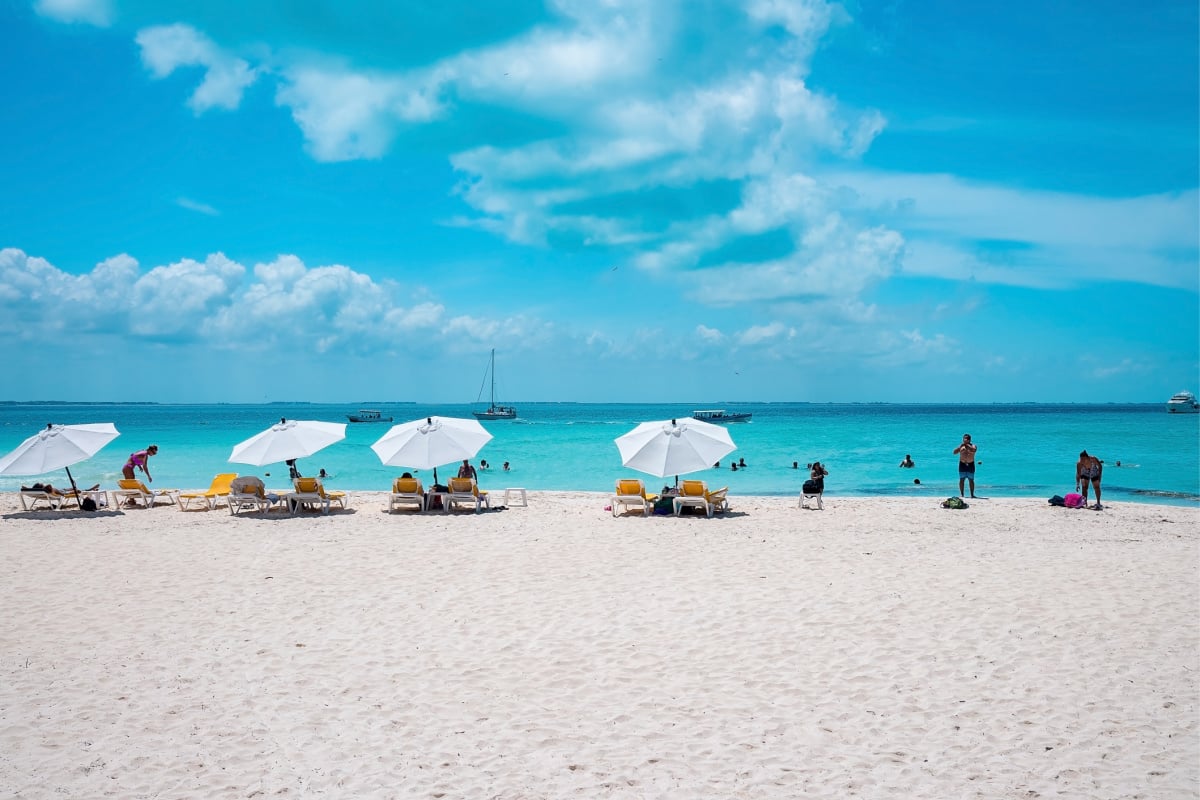
Like you really need someone to tell you that Cancun is an awesome destination for a winter escape.
Why not get in there early and take advantage of a winter trip in January or February?
The new Maya train has just begun operations and there’s a new airport in nearby Tulum, making the entire region around Cancun even easier to explore.
There’s also a plethora of new hotels and resorts in the region soon to open – so there’ll be more choice and probably slightly cheaper prices due to the competition.
2. London, United Kingdom
I’m British, so you don’t need to tell me how much it rains in the United Kingdom, but let me tell you that the winter is still a magical time to visit the capital city of London.
The city is iconic, and in reality, it’s more like visiting multiple cities in one if you take the time to tour around.
Sure, the headline acts such as the Houses of Parliament, Buckingham Palace, and the London Eye are worth your time, but you can enjoy a more off-path experience by checking out some of the trendier neighborhoods – each with their own distinct vibe.
My advice would be to explore places like Bermondsey for its indie breweries, Hackney for its vibrant culture, and Shoreditch for some great nightlife, including one of the best blues bars you will find on this side of the Atlantic.
3. San Jose Del Cabo, Mexico
There aren’t too many better places to get the Mexican winter sun experience than on the southern tip of the Baja California peninsula in San Jose Del Cabo.
Luxury resorts, unrivaled wellness spas, affordable accommodation for digital nomads – San Jose Del Cabo really does have it all, not to mention perfect winter weather and a slightly quieter and slower pace of life than Cancun.
It has the idyllic beaches and the luxury resorts, but it also has bustling markets where you can experience a more genuine taste of Jamaican culture too.
There are also outdoor experiences to be had, such as a hike up to the world-famous Dunn’s River Falls, a 180-foot high and 600-foot-long waterfall that is the perfect place for taking in the luscious scenery of this magical island.
5. Punta Cana, Dominican Republic
Punta Cana may play second fiddle in terms of popularity to some of Mexico’s iconic locations, but it makes up for it with arguably even more beautiful beaches and more affordable prices.
The all-inclusive hotels here are as legendary as the white sands and sparkling seas that run around the coastline.
Following years of being sealed off for tourism as a result of the health crisis, Southeast Asia re-emerged this year as one of the trendiest and most sought-after destinations among Westerners.
From the nightlife hotspots of Phuket and Pattaya in Thailand to the up-and-coming coastal resort of Mui Ne in Vietnam, both Americans and Europeans have been flocking to the subcontinent for a tropical vacation that won’t break the bank.
Other than the traditional tourist hotspots, this lesser-known, equally incredible, and ridiculously cheap country has also been surging in popularity lately, and it could be set for a historical 2024 now that it has just been confirmed as the home to the 8th Wonder of the World:
This Is Why Cambodia Should Be On Your Bucket List For 2024
Often forgotten in the grander scheme of things, the Kingdom of Cambodia is becoming an increasingly popular alternative to the jam-packed beach zones of Indonesia and Thailand as they hit new peaks of overtourism.
Bordered by Thailand to the Northeast, the landlocked Laos to the North, Vietnam to the East, and straddling the Gulf of Thailand, which provides its only access to the sea, it is one of the most ancient, traditional states in Southeast Asia.
Cambodia has retained a distinct character since at least the 9th century, when the Khmer Empire was formed, though it would later come under French influence following colonization attempts in the 19th century.
Though Cambodians, as a group, share a unique set of traits that set them apart from their immediate neighbors, whether it’s their Indian-influenced, flavorful cuisine or predominantly Buddhist demographic, they’ve also absorbed Western culture to some extent.
Colonial Heritage And Ancient Ruins
The decades under European control resulted in the makeover of many settlements across the then-mostly rural Cambodia, including in the capital city, Phnom Penh, remodeled with French-style buildings, wide boulevards, and an abundance of green spaces.
Still, Phnom Penh remained very much the cultural heart of Cambodia, and that foreign powers couldn’t erase: founded as early as the year 1372, it has an impressive selection of ancient temples, imperial palaces, and historical ruins dating back to the Khmer Empire.
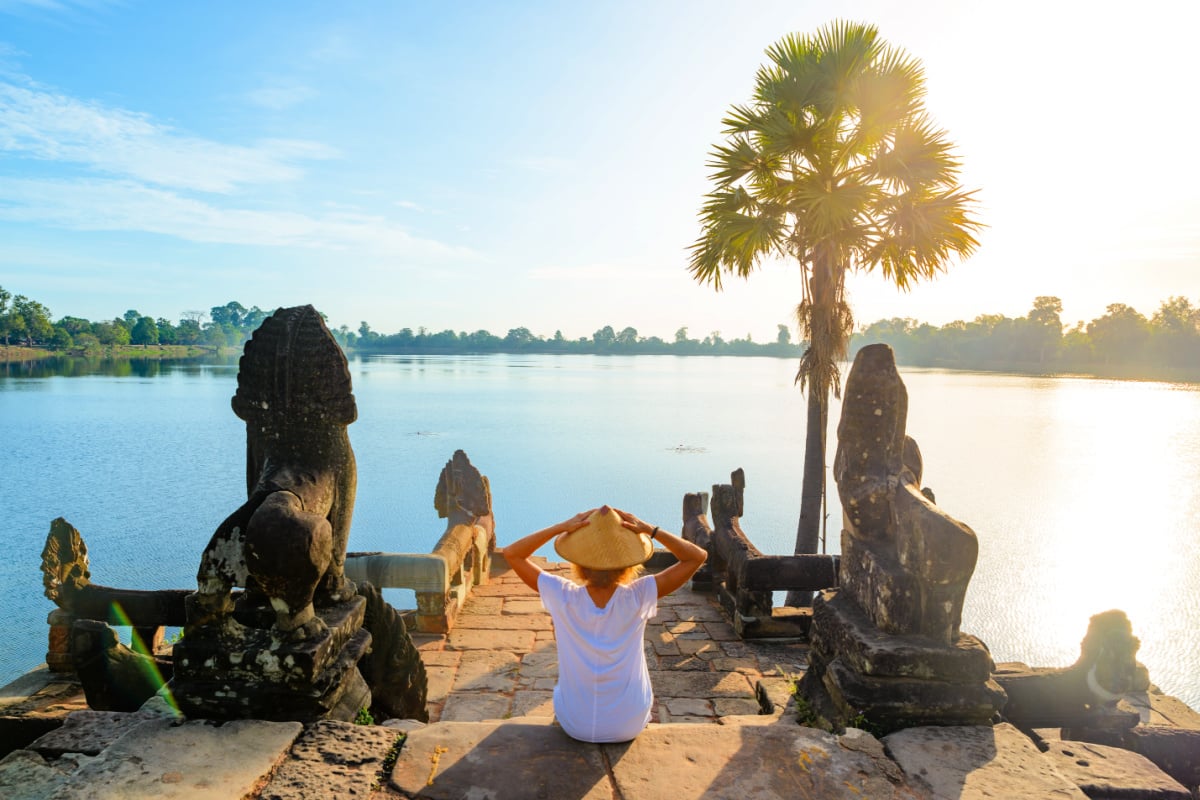
Siem Reap, a resort town in the Northwestern region, is yet another major point of interest for visiting Americans, as it concentrates some of the most impressive stone buildings of the Khmer Kingdom, including Angkor Wat, which features on the Cambodian flag.
In fact, Angkor Wat has just been awarded the unofficial title of Eighth Wonder of the world, beating the ruins of Pompeii in Italy to claim this position.
A UNESCO World Heritage Site, the rediscovery of this complex is one of the main reasons why tourists are returning en masse to Cambodia lately, as it is the largest religious monument in the world and a massive fortification built with purpose and precision.
It was assembled by 12th-century King Suryavarman II and dedicated to the Hindu deity Vishnu, with five perfectly-symmetrical lotus-shaped towers representing Mount Meru, the ‘Olympus’ of the Hindu and Buddhist gods.
Beautiful Unspoiled Coastal Areas
On the Cambodian coast, the main destinations to visit are Sihanoukville, a small, laid-back city sitting on a peninsula stretching out into the Gulf of Thailand, bounded by an elongated, thin-sand beach, and Koh Rong, an island just off the mainland.
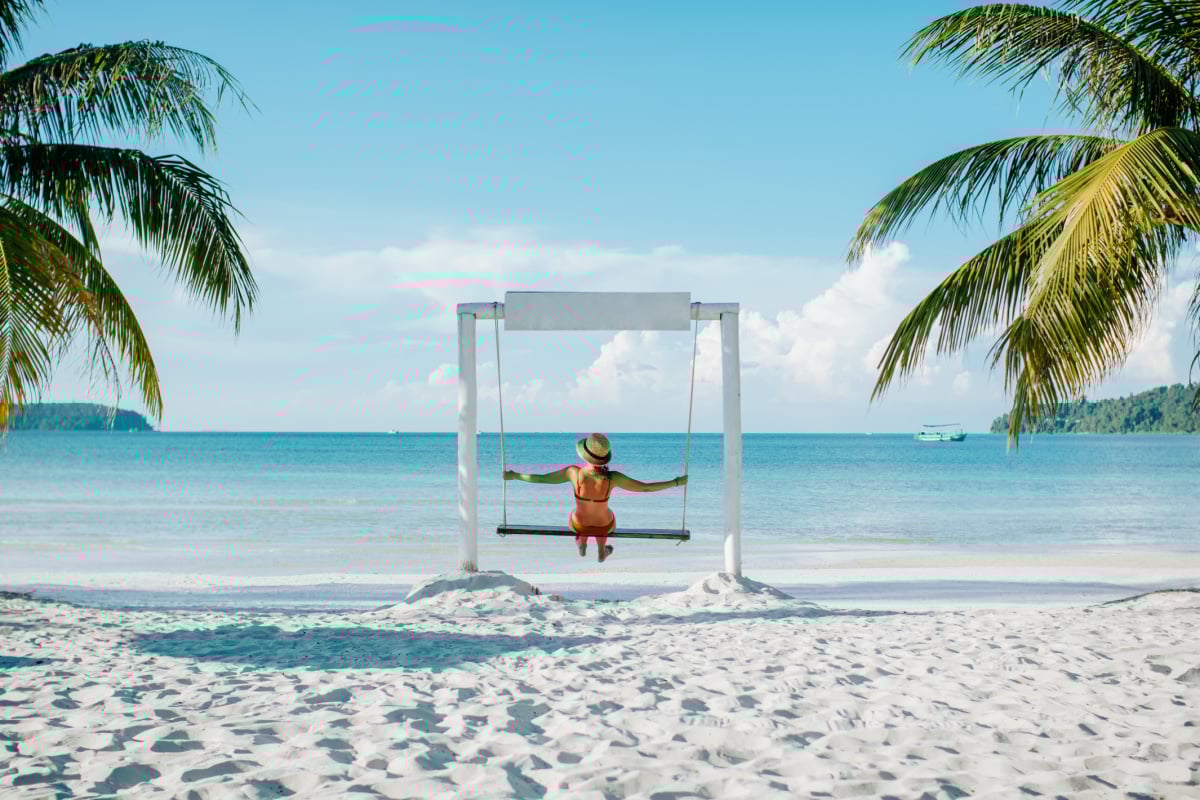
Full of sandy coves and dense patches of jungle and surrounded by a colorful coral reef, this hidden gem of an island is one of the last truly unspoiled nature reserves in Southeast Asia and a new favorite in the adventurous backpacking community.
There is a party beach at Police Beach, a small zoo in the island’s south, and the landmark High Point Rope Park, which is full of suspension bridges.
Tourists can also walk on rope crossings and zip line across the verdant landscape below.
One Of The Cheapest Tropical Getaways In Asia
With all this to offer, the crowd-free beaches, ancient cities and gorgeous nature trails, you would think Cambodia would be teeming with tourists from all over the world, but it is in fact one of the least-visited countries in Southeast Asia.
While its neighbors routinely welcome tens of millions, Cambodia hosted an all-time high 6.6 million tourists in 2019, and this year, though it’s on a recovery path following the pandemic, it still barely reached the 3 millionth mark.
This means it remains largely protected from the downsides of gentrification and overtourism, and prices can be much lower and far more attractive than Thailand, Bali, or any other regional sunny spot – which are already incredibly cheap compared to Western standards.
The beachfront Scarlet Sails Villa, located on a quaint, picturesque beach in Koh Rong Island costs only $63 to book per night this December, while the luxurious Plantation Urban Resort & Spa, in the forested Daun Pehn district of the capital region, has overnight rates starting from $97.
If you’re on a stricter budget, you can go even cheaper, with the House Boutique Eco Hotel in central Phnom Penh costing $24 to book, and non-luxurious yet moderately comfortable rooms at Le Casablanca Hotel available for a mere $14 on Booking.com.
Whether you’re on a luxurious getaway or you’re simply hoping to find a decent place to sleep as you set out to explore during the day, prices in Cambodia will not heavily impact your wallet.
On average, travelers have spent $16 per day on meals when traveling the country, $45 per night on accommodation, and a negligible $7.41 on transportation.
In total, a one-week trip to Cambodia that’s not too frugal will cost $865, making it one of the cheapest tropical destinations not only in Southeast Asia but the entire world.
Cultural activities are soaring in popularity now that a growing number of Americans are actively seeking more meaningful experiences when traveling within the United States.
However, with most historical destinations being concentrated on the East Coast, where some of the oldest settlements in America are, it’s only natural that California wouldn’t be your first choice for a cultural getaway – unless, of course, you’re thinking Hollywood and the world of cinema.
It is, after all, best known for its nature, with a scenic coastline and massive snow-capped peaks being popular postcard shots, yet it is so much more than a mere beach or hiking hotspot or the glitz and glamor of LA.
Here are 3 incredible destinations to immerse yourself in Californian culture and experience a different side of the Golden State:
Old Town San Diego
San Diego is a bustling coastal metropolis straddling the Pacific, most commonly known for its golden-sand beaches, epic waves, which draw surfers and watersports enthusiasts from all over the world, and of course, its gateway into Tijuana, a shopping hub just over the border in Mexico.
Though these already make San Diego an attractive destination, very few tourists know it is one of California’s most historically-charged cities; as a matter of fact, it is the oldest European settlement in the Western United States, established by Spaniards as early as 1769.
Its Old Town district is one of California’s unsung gems, home to a plethora of colonial structures dating back to the Spanish period, including a Franciscan-founded church (Mission San Diego de Alcalá), and two major areas listed on the National Register of Historic Places:
The Old Town San Diego Historic Park, encompassing some of the oldest buildings still standing in the States, dates as far back as the early 19th century, and Presidio Park, where a defensive fort once stood, marking the founding of the Western settlements.
Carmel-By-The-Sea
Dubbed California’s prettiest village, Carmel-by-the-Sea was founded only in 1902, centuries after Spanish settlers first arrived on the scene, but what it lacks in historical weight, it makes up for in tradition and charm.
With houses that adhere strictly to European architecture revivalism, including neo-castles, English-style cottages, and half-timbered dwellings, and a population that seems fully devoted to the arts, and the embellishment of their place of residence, Carmel is truly a one-of-a-kind settlement.
Strolling the perfectly Instagrammable downtown, tourists will also come upon craft shops, family-owned restaurants where they can sample some amazing seafood – this is coastal California, after all – and of course, numerous local art galleries.
In a way, Carmel is a Californian Capital for the Arts, as the town has spawned a number of poets, such as writer and actor Perry Newberry and renowned writer Jack London, and at one point, it even had a living legend himself, actor-director Clinton Eastwood serve as mayor.
Solvang
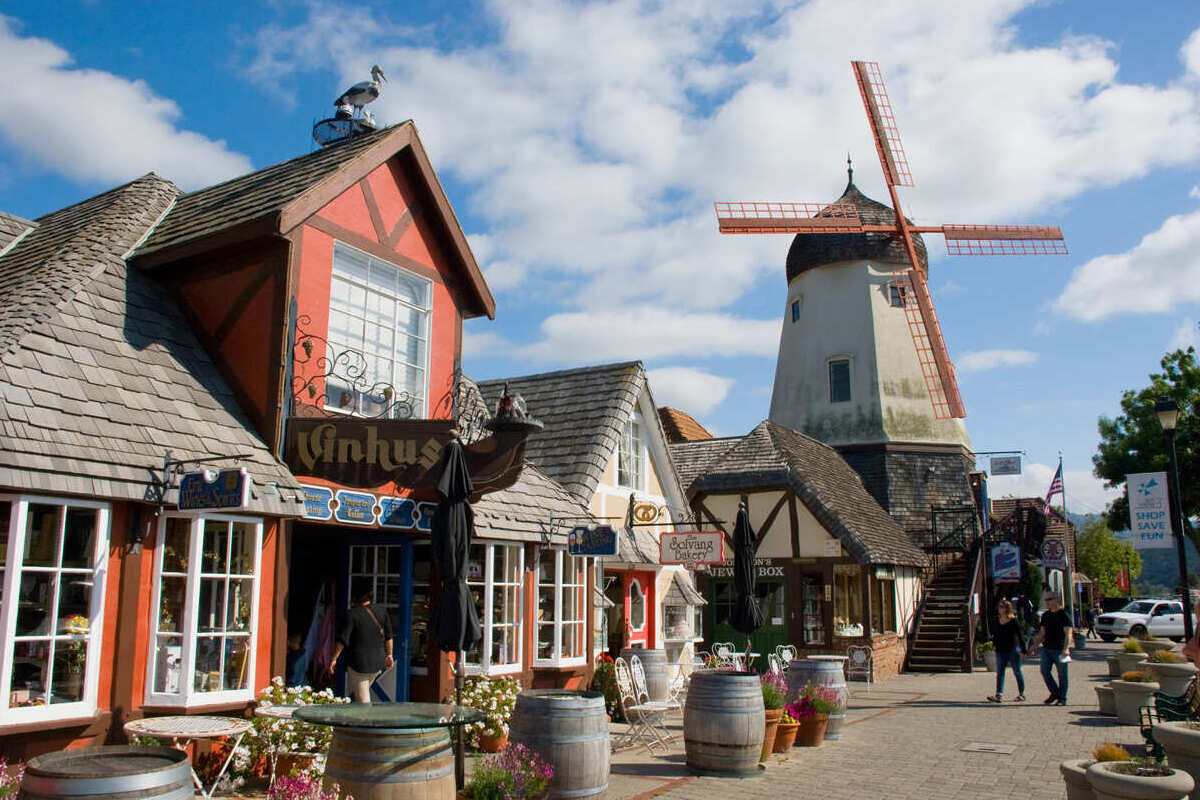
The third and final entry on our list is Solvang, the unofficial ‘Danish Capital of America‘.
Though its origins can be traced back to 1804, upon the Spanish colonization of the West Coast, it fell into abandonment until a group of Danes purchased and resettled the land in 1911.
Unsurprisingly, they rebuilt the town in the likeness of their homeland, with construction continuing well into the 1950s.
Today, the six thousand-people-strong town is an extension of Denmark on the West Coast, with its Scandi-inspired Tivoli Square, Lutheran churches, and landmark windmill.
After decades of defunding and even the closure of some railway lines, trains are making an unexpected comeback in 2023, including in Latin America, a subcontinent where reviving this mode of transportation was considered a lost cause.
Other than being incredibly romantic, as it is evocative of times past, often traversing beautiful scenery normally inaccessible to private vehicles, the rail is much safer, as road congestions and accidents are obviously not impactful events.
While train journeys are not yet as popular in Latin America, or even to a wider extent, the entire American continent as they are in Europe, they are becoming more popular among visitors clamoring for more unique experiences.
If you’re one of them, and you too are enamored with trains, here are four of the most exciting rail journeys you can embark on traveling across Latin America this winter:
Brazil’s Colonial Railway
One of the lesser-known entries on the list, Brazil’s Trem da Vale links the historical towns of Ouro Preto and Mariana, some of the oldest European settlements not only in the country but all of South America.
Though the steam locomotive has been present in the territory as early as the 19th century, it fell into disuse as cars were introduced and Brazil modernized itself, only re-launching in 2006 in an effort to revive the heritage railway.
Back then, it proved crucial for the transportation of passengers and goods between the two settlements, only 8 miles apart, but now it mostly operates as a tourist train, deliberately taking the long route through the deep valleys bounded by the towering jagged peaks of Minas Gerais.
The locomotive travels for a total duration of one hour, slowly rattling along the tracks for some of the best views of Brazil’s unspoiled nature, making this route a favorite among photographers and honeymooners hoping to get a taste of what traveling felt like back in the day.
A seat in the conventional carriage costs only R$70, or US$13.91 for the roundtrip, while a return trip on the panoramic carriage costs only US$5 more.
The train runs year-round from Wednesdays to Sundays, between 8:30 AM and 5 PM, and tickets can be purchased directly at the station up to 10 minutes before departure.
Ouro Preto itself is one of the most beautiful towns of the Americas and one of Brazil’s most famous postcards. A whitewashed town full of cobbled streets, historical Baroque churches, and Portuguese colonial mansions, it was at the center of Brazil’s slave trade and gold mining.
A UNESCO World Heritage Site, it is much more quaint and safer than major cities like Rio de Janeiro or Sao Paulo, and as it is surrounded by verdant mountains, it offers easy access to hiking trails, protected reserves, and majestic waterfalls.
Its even smaller sister, Mariana, is just as picturesque, having been established in the late 17th century.
It’s retained all of the attributes of a Portuguese Baroque colonial settlement, with narrow alleyways lined by two-story buildings and their colorful shutters and ornate church facades.
Luckily for Americans, they can again fly to this bucolic part of Brazil, as Azul Airlines now offers nonstop service to Belo Horizonte, the state capital, just under two hours away from Ouro Preto.
Colombia’s Capital Region Heritage Train
Currently the only passenger train in Colombia, the Tren Turistico de la Sabana helps tourists commute from the bustling metropolis that is Bogota to the small, colonial-era town of Zipaquira, sitting 26 miles North in the heart of the Cundimarca district.
At the peak of the Spanish Empire, the railway was used to transport salt and minerals mined from Zipaquira to the Colombian capital.
Needless to say, the exploration has been discontinued, but if you’re keen on a true cultural immersion, you can still take the heritage train.
The bus may be a lot quicker, completing the journey in under two hours, but it certainly will not be as scenic as the train, departing from the architectural gem that is the Sabana Station in Bogota and traveling across a lush green Colombian hinterland before calling at Zipaquira 2h45 later.
From the window, you will slowly cross vast open fields and small Colombian pueblos untouched by the over-development and rising crime rates that have plagued Bogota in recent years, all the while being serenaded by a marching band playing traditional live music – and if you’re feeling hungry, you can always grab a snack from one of the food trolleys when they pass.
Passengers aged 13-59 will be charged only COP$70,000 for a roundtrip ticket departing from and returning to Bogota. This equals roughly $17.20, though fares could increase.
For updated information, as well as timetables, tourists are advised to check the official webpage.
Arriving in Zipaquira, you will find a small town with a central plaza from which smaller, stone-laden streets snake out of. Though it is charming already as it is, Zipaquira is in fact best known for its landmark Salt Cathedral, an underground temple built within a salt mine.
The salt deposits were formed 250 million years ago, and the sediments still line the walls and footpaths as you descend deeper into the shrine. It’s a fascinating attraction tourists exploring Colombia have to visit at least once, with tickets costing only COP$98,000, or around US$24 at the current exchange rate.
Ecuador’s Tren Crucero
Ecuador is one of the trendiest tourist destinations this year, having attracted attention among solo explorers and backpackers, and even digital nomads staying longer due to its natural wealth and slow-paced lifestyle.
A little-known fact among them, however, is that Ecuador also has a passenger train, linking the capital (Quito) to Guayaquil, the country’s second-largest city, and the gateway to the Ecuadorian Pacific – but it is definitely not for those who are in a hurry.
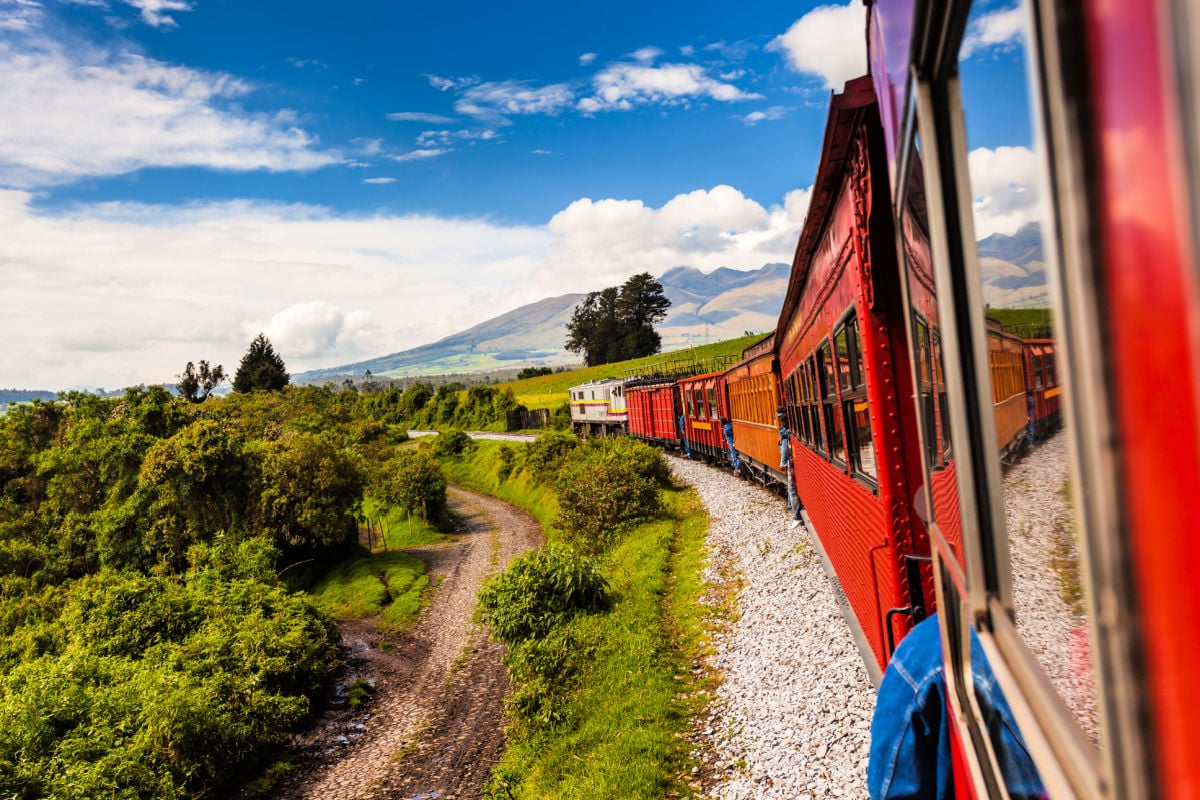
The Tren Crucero takes the most scenic route across the Andean peaks of Ecuador, all the way Southwest to the Guayaquil Coast, completing the trip in no less than four days.
Of course, when in possession of a valid ‘full boarding’ ticket, you can hop on and off.
That is because the train does not have sleeper cabins, and passengers must instead make intermediate stops in small towns along the way, where they will get to see a more rural side to Ecuador, as well as off-path towns visitors basing themselves in the busy Quito normally cannot reach as easily.
This includes Balbanera, home to one of the oldest churches in Ecuador, erected as early as 1534, and Alausi, where you will descend into the Andean valleys ahead of hitting the coast, dotted with more bright-colored colonial towns.
The train itself has a capacity of 54 passengers, with departures taking place on select dates every season, and it is divided in 4 categories, evocative of different architectural periods: the Baroque, the Neoclassical, the Hispanic/Andean, and the panoramic Classical Style coach.
Overnight stays in each of the stops can be purchased in advance along with the train ticket, with a Luxury Class single journey, paired with a single room in centrally-located hotels, starting from US$2,082.
The ‘Orient Express’ of Ecuador, the luxurious train is not exactly affordable by South American standards, but it is a memorable, once-in-a-lifetime experience worth shelling out the extra dough for.
Mexico’s Maya Train
The only train route on this list that is yet to be complete – it is instead launching soon on December 15 – Mexico’s Maya Train will link all of the major tourist attractions around the Yucatan Peninsula, and as many as five Mexican states.
The busiest route will be, however, the Cancun-Tulum line, connecting Quintana Roo’s top two resort spots. This line is expected to be complete in February 2024.
Departing from the Cancun Terminal, the train will jottle along tracks bounded by the bright-blue Caribbean Sea, until calling at Tulum.
One of the most historically-charged towns in Mexico, it was founded by the Mayans prior to the arrival of the European settlers, and it still houses some of the best-preserved pre-colonial structures found anywhere in the country.
These can be seen around the Tulum archaeological zone, with the landmark Castillo, a fortress perched on a clifftop facing the turquoise waters being a prime example of Late Mayan architecture.
Prices for the Maya Train have not yet been revealed, nor have timetables, but it is set to be one of the most affordable, and safest transportation modes in the wider LatAm, offering tourists based in Cancun, the number one beach getaway for Americans, easy links to cultural attractions further afield.
Winter is coming, and with temperatures plummeting and the days getting darker and darker, we know you might already be thinking of your next sunny getaway – preferably somewhere in the warm, tropical Caribbean.
If you’re looking to beat the winter blues, there’s truly no better place than Cancun and its glitzy resort zones.
If freezing temperatures don’t faze you, however, you’re more the cultural type, and you’re actively looking for a white winter in a unique destination farther away from home, then it’s maybe this incredible Nordic country where you should be headed:
Why Nordic Finland Is Incredible In Winter
Located in the far Northeast of Europe, Finland is one of those unusual countries that are, in fact, best experienced in cold weather.
While summers in the Nordic states are pleasantly warm, and you certainly don’t feel as if you’re going to get frostbitten if you step outside for longer than five minutes in June, there is truly nothing like Finnish winters, when snow blankets Scandi-style towns, the Northern lights dance in the pitch black night sky, and sauna culture is at its peak.
Finland may be a great year-round destination, but as unusual as it sounds, it truly comes alive in the colder months.
Here’s why:
Helsinki Is Perfect For Solo Traveling
Helsinki may not be the most obvious pick for a European city break, particularly in winter, when most Americans who are traveling across the pond are flocking into Spain, Portugal, and just warmer destinations in general.
A less-known fact among country hoppers in Europe during that time of year is that there is nowhere better to feel that cozy Christmas atmosphere than the overlooked capital of Finland.
The jewel of the Baltic is the proud home to the Helsinki Christmas Market, one of Europe’s oldest and largest, where tourists are welcome to sample reindeer meat, salmon pastries and savory pancakes, and other Nordic delicacies they can’t find easily in the imports section of their local market back home.
Strolling colorful Huvilakatu Street with an Espresso Café caramel hot chocolate in hand, they will have some souvenir scavenging to do in the numerous Christmas shops, as well as stately Scandi-style buildings to admire.
Other sights to see include Helsinki’s Christmas tree, lit up ceremoniously every year at Senate Square, the city’s striking whitewashed cathedral, and the Jugend-Art Noveau central district.
See The Northern Lights In Lapland
Finland may not be every American’s go-to pick for some Northern Lights hunting, with Alaska and Iceland easily taking the lead in bookings, but it still stands among Europe’s top aurora sightsing hotspots.
More specifically, the historical ethno-region of Lapland, which sits mostly north of the Arctic Line, close to the borders with Sweden and Norway, is your best bet at witnessing the elusive light show.
Lapland is best known for its indigenous culture, as it is home to the Sami people, a group of historically nomadic people who have lived in the challenging environment for over 10,000 years, a rich cuisine, and of course, breathtaking Arctic nature.
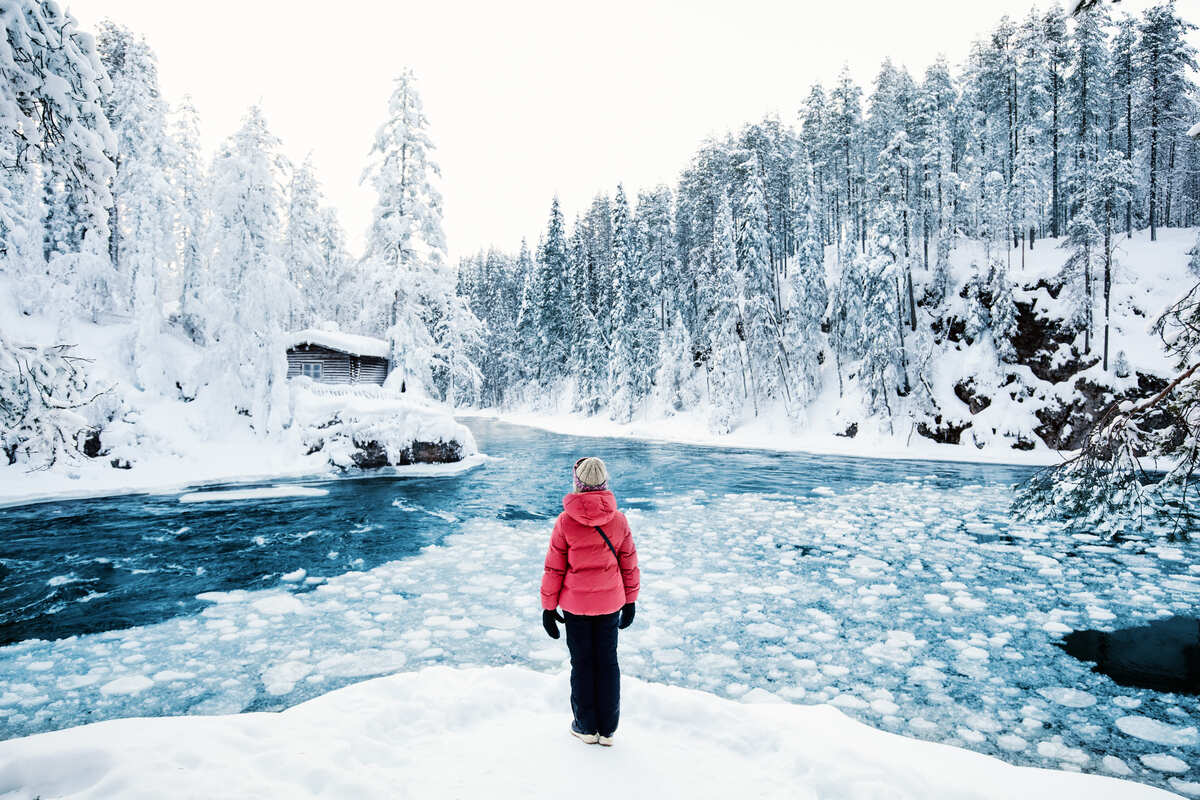
Traveling in Lapland, you will be met with sweeping views of picturesque frozen lakes, painting-like, and brightly-painted, solitary houses set against the dramatic background of snow-blanketed pine forests.
Popular activities include dog-sledding in the snowy hinterland while chasing the aurora, and visiting traditional Sami settlements and camps.
Tourists also have a plethora of unique stays to choose from visiting Lapland, from resort spas in Rovaniemi, the regional capital and largest city, to remote igloo hotels located in deep Lapland, under the dancing lights.
Oh, and in case you weren’t aware, Lapland is where the legend of Santa Claus originates from.
Needless to say, the good-hearted bearded Northern man is celebrated all around the frosty hinterland, with local homeowners decorating their wooden porches with Christmas adornments in anticipation of his arrival.
Santa Claus Village, a winter theme park a short 7-minute drive from Downtown Rovaniemi, home to Santa’s office, house of snowmobiles, and traversed the actual Arctic Circle line, makes Lapland all the more a bucket list destination.
Experience The Finnish Sauna At Its Peak
Finally, winter is the absolute best period to dive into Finland’s sauna culture. The practice of sauna was, after all, invented in the territory of modern-day Finland several centuries ago.
An immaterial cultural heritage recognized by UNESCO, the Finnish sauna is the country’s top tourist activity, and it seems to be as inherent to Finnish nation-making and psyche as a national anthem, a flag, and a national language would be.
No joke.
In every residential building you enter, every home, every flat, you will find an embedded home sauna, not to mention the hundreds of public saunas scattered over large cities like Helsinki, Tampere, and Turku.
The concept of a Finnish sauna involves taking a dip in the ice-cold Baltic Sea – hence why winter is ideal for visiting Finland – and rushing back inside into a steam room to seek some comfort from the bone-chilling cold.
It’s the extremities on both ends of the experience that make it worthwhile: you’re either feeling too warm being cooked alive in a 100-degree cubicle, or you’re standing outside where strong Northern winds are blowing – a pint of draft black beer in hand to keep you warm and more cheerful, of course.
And believe us when we say it feels amazingly rejuvenating, and it’s the best feeling when you step into a fuming sauna after being out in the cold, and vice versa.
How To Get To Finland This Winter
This winter, Finnair is offering nonstop flights to Helsinki-Vantaa International Airport (HEL) from Dallas-Fort Worth, Los Angeles, and New York-JFK, making it easy for Americans to reach the Nordic country.
If it’s a multi-country trip you’re thinking of, you’ll be glad to know Helsinki boasts flight connections to several popular European winter destinations, including Paris, London, Prague, and Budapest, as well as ferry connections to at least two other countries: Sweden and Estonia.
Traveling by ferry between Helsinki and Tallinn, the medieval capital of Estonia, takes only two and a half hours, making it a feasible day trip for tourists staying longer in Helsinki.
Combining Finland with a trip to fellow Nordic country Sweden, Americans can hop on the overnight Tallink ferry, traveling for a total duration of 18 hours, and calling at the cruise port in Stockholm, where they can also board return flights to the States.
While some travelers are counting the days until they can indulge in a cup of hot cocoa and take in the views of snow-laced peaks, others are dreaming of a warm beachy escape that’ll provide a much-needed break from the plummeting temperatures back home.
If that sounds like you, there’s one particular European island that should be moved right to the top of your travel bucket list.
Gran Canaria, part of Spain’s iconic Canary Islands archipelago, is one of the region’s crown jewels, beckoning travelers with open arms and sunny shores despite winter being just a hop, skip, and jump away.
So, if you’re still on the search for your next travel destination, what you’ll find below might just persuade you to head off to Gran Canaria this winter.
Dreamy Weather
One of the most defining features that sets Gran Canaria apart from other winter getaway destinations across Europe is its dreamy weather that continues to keep travelers warm even this time of year.
According to TUI, the UK’s largest tour operator, average temperatures on the island are expected to hover around 20°C (68°F), which, while not quite ideal for sunbathing, are perfect for pleasant sightseeing excursions where you won’t have to wear anything more than a light t-shirt.
However, beach enthusiasts will be delighted to learn that swimming is still very much on the table, as the part of the Atlantic that meets the island’s shores is remarkably warm, even as air temperatures start to drop.
This upcoming month, water temperatures are expected to average 21° C (70°F), making it the best time to go in for a pleasant yet refreshing swim.
Moreover, predictions speak of a 63% chance of a perfect sunny day this December and a 37% chance of seeing a few clouds, so chances are that you’ll get to soak under the Spanish sun more than once during your time here.
So Much To See
One of the main reasons why you’ll come to appreciate the pleasant weather in Gran Canaria is the fact that you’ll have a long itinerary to complete before you leave the island.
The region is a microcosm of diverse landscapes and ecosystems, and the island’s interior, a Unesco Biosphere Reserve, is home to the iconic Roque Nublo, a towering volcanic rock formation whose panoramic views are not to be missed.
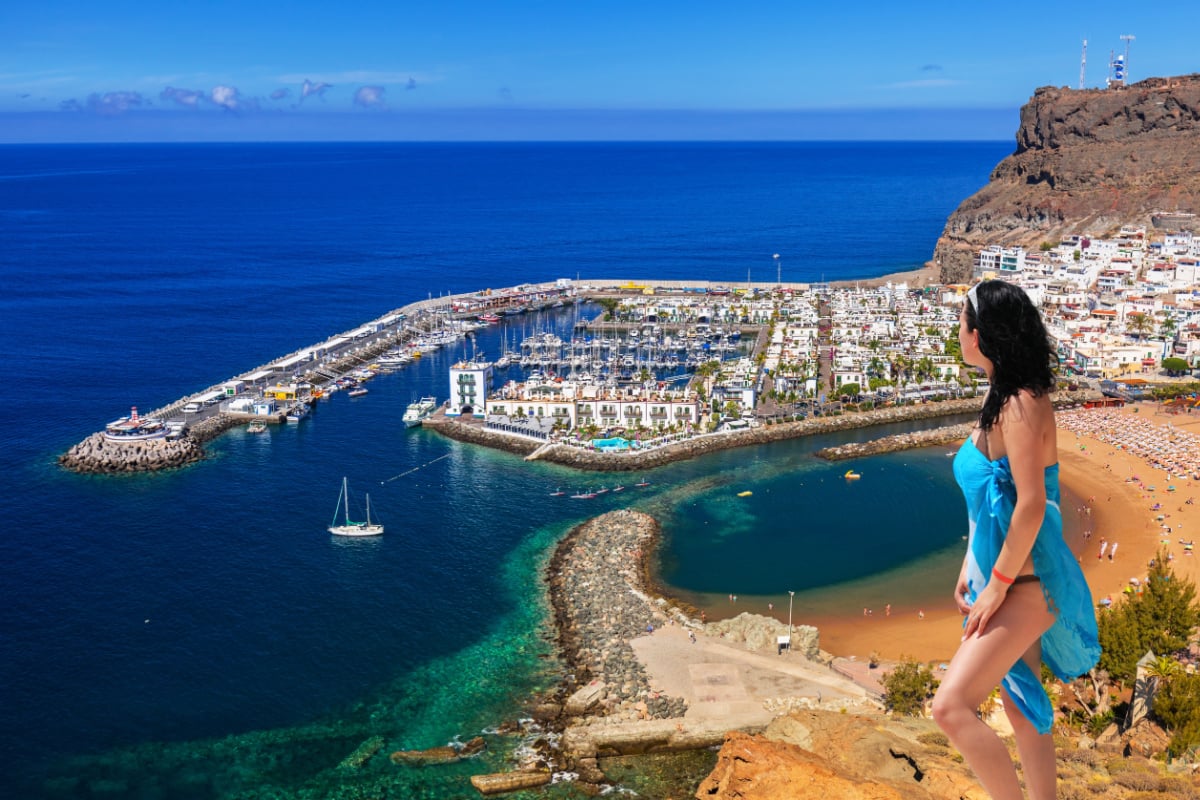
On the other hand, those looking to get a tan this winter can still take advantage of Gran Canaria’s 146-mile-long (236 km) coastline.
Here, you’ll find the idyllic gold-sanded beaches of Playa del Ingles and Maspalomas, where you can not only take in the spectacular views but also explore the buzzing underwater world of the region.
An Event-Filled Winter
If hiking or diving isn’t really your thing, you can always stick to the cultural events that take place all over the island this time of year.
Attend the Christmas Eve concert at Santa Ana Square, experience the exhilarating music played at the concerts on Las Canteras Beach, walk through the old town of Las Palmas, or visit one of the many Christmas Markets scattered across Gran Canaria – the choices are virtually endless.
Exceptional Cuisine
Though this might be expected when visiting Southern Europe, it’s still worth mentioning – Gran Canaria’s culinary scene is a marvel waiting to be explored.
Drawing inspiration from Spanish, African, and Latin American cuisines, the bold, flavorful dishes served by local tavernas serve as a testament to the island’s diverse influences throughout its past.
From fresh seafood caught right off the coast to arrugadas, mojo sauces, and the renowned Canarian black pig, the region promises to take every palate through the journey of a lifetime.
A Gateway To Other Idyllic Islands
If you’re looking to indulge in an island-hopping experience this upcoming winter, setting up base in Gran Canaria is one of the best choices you can make.
Whether you want to explore the volcanic landscapes of Lanzarote or the lush forests of La Gomera, the island serves as the perfect gateway to an exciting, well-rounded exploration of the entire Canary archipelago.
With winter approaching, days getting shorter, and winds blowing colder by the minute, we understand why taking a Transatlantic trip to Europe, where the gray season can feel rather gloomy, might not seem the most attractive thought.
A majority of Americans will be heading instead to the Caribbean, South America, or if feeling particularly adventurous, Southeast Asia, but little do they know that not all of the Old Continent will face low temperatures and snow flurries in the upcoming weeks.
In fact, one of the trendiest European destinations remains relatively warm throughout winter, and it’s actually best experienced in the off-season:
Why Sicily Is One Of The Most Underrated Winter Hotspots In Europe
Recently, Lonely Planet went as far as naming Sicily one of the best destinations in Europe for winter sun.
As the largest island not only in Italy but the entire Mediterranean Sea, it has been one of the most popular European getaways this year, particularly over summer.
Home to beautiful beaches, millennia-old cities, a rugged nature, and a vibrant culture that’s distinct within the wider Italy, it has drawn in millions of vacationers who were either hoping to live out their White Lotus fantasy, relax and enjoy the subtropical vibes, or immerse themselves in History.
As any of you who have paid Sicily a visit earlier this year will now already, however, is that it can be impossibly hot, and unbearably crowded in the high season – which, believe it or not, can begin as early as May, and end as late as November.
Much like Andalusia in Spain, Sicily is one of the naturally hottest regions of Europe due to being located closer to the tropic lines and near the African continent, and this brings us to point one.
Unlike most of the continent, especially tourist hotspots like Paris, London, and Amsterdam, winters in Sicily can be rather mild.
Sicily Is Not Your Usual European Winter Destination
Don’t get us wrong: it does get cold, but it’s usually in the evenings.
Locals still enjoy plenty of long hours of sunshine every day and an average temperature 59°F in January, the peak of winter, though this can vary depending on elevation and location on the island (generally, the coast is warmer).
The risk of precipitation is quite low in Sicily year-round.
It may increase in winter, but even in January, the worst month for weather-based activities, tourists can still expect an average of 50-60mm (2~2.5 in) of rainfall spread over 9 to 10 rainy days.
That’s not much at all, and then it only gets progressively better from February onward.
A Crowd-Free Taormina Is Possible
Then we have point two: as Sicily is mostly treated as a summer getaway, as opposed to a year-round destination, crowds tend to dissipate over winter.
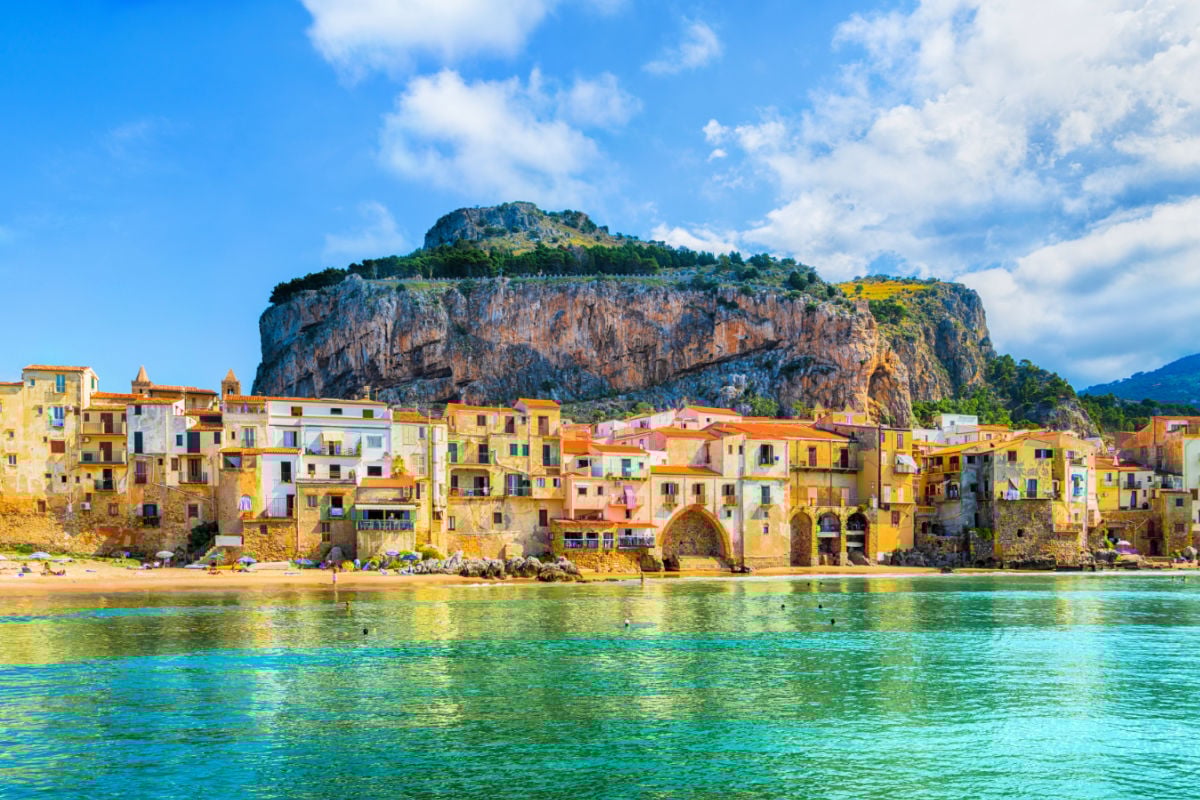
This means you will essentially have the beautiful streets of Taormina, a hillside town featuring an iconic Greek theater overlooking the Mediterranean, the charming alleyways of Syracuse, and the quaint harbor of Cefalù (mostly) all to yourself.
You may expect locals to continue flocking into those places, but the concentration of foreign tourists this time of year in Europe is normally elsewhere, in Spain’s autonomous Canary Islands or Portugal’s up-and-coming Madeira.
In bigger cities, like the metropolitan Sicilian capital Palermo or its second-largest conurbation Catania, you may notice points of interest remain busy, but these are major urban centers with a fast-paced life anyway.
And trust us when we say, Sicily is every bit as fascinating a destination in winter as it is in summer or the fall.
Sicily In Winter Is Not For Swimming, But It’s Perfect For Sightseeing
Whether it’s exploring the ancient Greco-Roman temples in the Valley of the Kings, sightseeing in Palermo, easily one of Italy’s most exciting city breaks, home to a plethora of architectural gems, or visiting quaint villages with a snow-capped Etna for backdrop, you will find sunny Sicily makes for a great winter escape.
The only downside really is the temperature of the water this time of year.
The Mediterranean cools off around Sicily in the shoulder months, which means it is certainly not as warm or attractive for swimming in winter, but the breathtaking panoramic views of the coastline are the same, and the coastal drives into blood orange-tinged sunsets are just as mesmerizing.
If you’re going to Sicily in winter, bear in mind it is first and foremost a cultural destination, and while you won’t be required to pack heavy winter jackets, and you may even feel comfortable wearing shorts in the daytime, it is not a year-round beach destination.
If it’s a Mediterranean beach getaway you’re after, it’s best you put off visiting until early May at the earliest.
However, if it’s the historic temples that attract you the most, you’re appreciative of the delectable Sicilian cuisine, which includes Italian classics like arancini and caponata, and you’re looking instead for a slow-paced, relaxing vacation that does not necessarily involve the sea, you will not be disappointed.
There aren’t many better times to head to Southeast Asia than the winter, and one country you simply cannot miss off any itinerary in that part of the world is Cambodia.
This exotic, historic, and enchanting nation has some of the friendliest people you’ll ever meet, a wonderfully warm and dry climate from November through to March, and the perfect blend of bustling cities like the capital Phnom Penh and quiet, exotic islands.
A little rougher around the edges than its near neighbor Thailand, many travelers think that Cambodia can help you capture the feeling of what traveling around Southeast Asia was like in the ‘good old days’.
While I’m not quite old enough to have a proper opinion on that claim, I can tell you that Cambodia is a place that can easily capture your heart.
Here’s why you should check it out this winter:
Island Hopping Paradise
While Thailand tends to steal the limelight in terms of beautiful beaches and tropical islands, there is an underrated and less-discovered world of similar destinations in Cambodia.
Cambodia’s relatively short coastline faces the warm waters of the Gulf of Thailand, and while there are some cool attractions on the mainland such as Preah Monivong Bokor National Park, the offshore islands are where to get the real Cambodian beach experience.
Koh Ta Kiev is a romantic and secluded island for those who wish to get away from it all, while Koh Rong has more of the traditional party vibe that you may expect from Southeast Asia.
Meanwhile, Koh Thmei offers a nature escape with a beautiful mangrove forest and nearby Ream National Park.
World Famous Attractions
It’s hard to think of Cambodia and not think of its world-famous Angkor Wat temple complex.
This historical icon is so synonymous with the country that it’s even on the national flag.
Located in the north of Cambodia, close to the city of Siem Reap, this is one of the world’s most important archaeological sites and covers an area of around 400 acres in total.
Photo by David Guest
It was built by the ancient Angkor civilization and comprises multiple temples and ruins, the most prominent of which are Angkor Wat itself, Angkor Thom, and Bayon Temple.
Many tourists rush to get there early each morning to avoid the crowds and catch the sun rising over the main temple complex each day.
Photo by David Guest
For a relatively modest fee, you can hire a guide and tuk-tuk for the day, who will show you everything you want to see, take you for lunch, and make sure you have the right ticket where the money benefits the restoration and preservation of the ruins.
Affordable And Adaptable
Cambodia is an affordable country to visit, in many cases cheaper than nearby Thailand and Vietnam.
According to Lonely Planet, a hostel bed can cost as little as $10 a night, while a self-catering apartment can average about $30 a night.
Food and drink are very cheap, especially if you sample the local street food – but even middle-of-the-road restaurants offer great value.
Transport is also very affordable with tuk-tuks being the cheapest, and buses and taxis also not setting you back too much.
One strange thing about Cambodia is that despite having its own currency, the Cambodian Riel, U.S. dollars are widely accepted by many establishments.
In fact, it’s not unusual to pay for something in dollars and get the change in riels, just remember to keep the latest conversion in mind so you don’t get short-changed.
At the time of writing, it was about 4,100 riels to one dollar
A Brand-New Airport
Visiting Cambodia could become easier in the future, especially as the country recently opened a brand new airport near Siem Reap, as reported by local media.
Siem Reap Angkor International Airport (SAI) is expected to be able to handle around 7 million passengers per year, a 5 million increase from the old airport.
It also has the capacity for further expansion because it is situated further away from both Siem Reap and the Angkor Wat temple complex, with more land around it.
Photo by David Guest
While you probably won’t be able to catch a direct flight from North America to here, it will at least mean there are more connecting flight options available for future trips.
This airport will also make it easier to use internal flights to get around Cambodia – while the buses may be cheaper, the journeys can sometimes be a little hair-raising!
Colombia is currently one of the trendiest destinations in South America, owing not only to its warm culture and natural wealth but also the wide availability of flights, which make it easier for Americans to travel, and the country’s overall affordability.
It is still a rather diverse territory, comprising inland metropolises surrounded by Andean peaks, jungles, and a sunny Caribbean coast, and if it’s the latter that appeals to you the most, you may be wondering which spots to hit for the ultimate tropical experience.
Worry not: we’ve got you covered. Here are four of the best beach getaways in Colombiathat will help you escape those winter blues:
Santa Marta
A lesser-known city in the Magdalena Department, one of the Caribbean regions of Colombia, Santa Marta is a smaller city home to just under half a million inhabitants and boasts a fascinating history dating back to the Spanish colonization.
It was originally founded in 1525 by Spanish ‘conqueror’ Rodrigo de Bastidas as one of the first European settlements in modern-day Colombia. It is distinctive for being Colombia’s oldest standing and second oldest European-founded city in South America, surpassed only by Cusco in Peru.
Other than the stunning Iberian-inspiredarchitecture, Santa Marta is known for its semi-arid climate and enviable sea access. Some of the most beautiful nature reserves in Colombia are, in fact, within driving distance of the city center, including Tayrona.
A national park covering both an unspoiled section of the Sierra Nevada and the Caribbean Coast, it is a postcard-like picture of palm-lined sands and rainforests.
Within the park, tourists will also find the Pueblito ruins, dating back to the long-lost indigenous Tayrona civilization.
Cartagena
The gateway to the wider Colombian Caribbean, Cartagena is a sprawling coastal metropolis known for its Afro-Latin heritage, beautiful colonial-era architecture, and year-round warm weather.
It was established as a colony in the 16th century, though indigenous people had already called the territory home prior to the arrival of Europeans and enslaved Africans. Still to this day, the modern-day city is a fascinating mishmash of cultures and different influences.
Walking the cobbled streets of ‘Ciudad Amurallada’, which comprises Cartagena’s UNESCO-listed historic center, visitors will be transported back to the golden age of the Spanish Empire, marked by stately buildings with ornate facades, a fortress, and monumental churches.
Around the Bocagrande Harbor area, sitting across the bay from the Walled Town, the historical, yellow-tinged cityscape gives way to clusters upon clusters of modern skyscrapers, providing a unique contrast between colonial traditionalism and 21st-century development.
Bocagrande is also home to a stretch of volcanic-sand beaches, bounded by the azure Caribbean Sea, though some of the best beaches on the Colombian Coast actually lie offshore:
Baru
While the seas around the Cartagenian mainland are perfectly appropriate for swimming, they can appear muddier due to the volcanic nature of the sands and are thus often skipped altogether by tourists landing in the Colombian Caribbean.
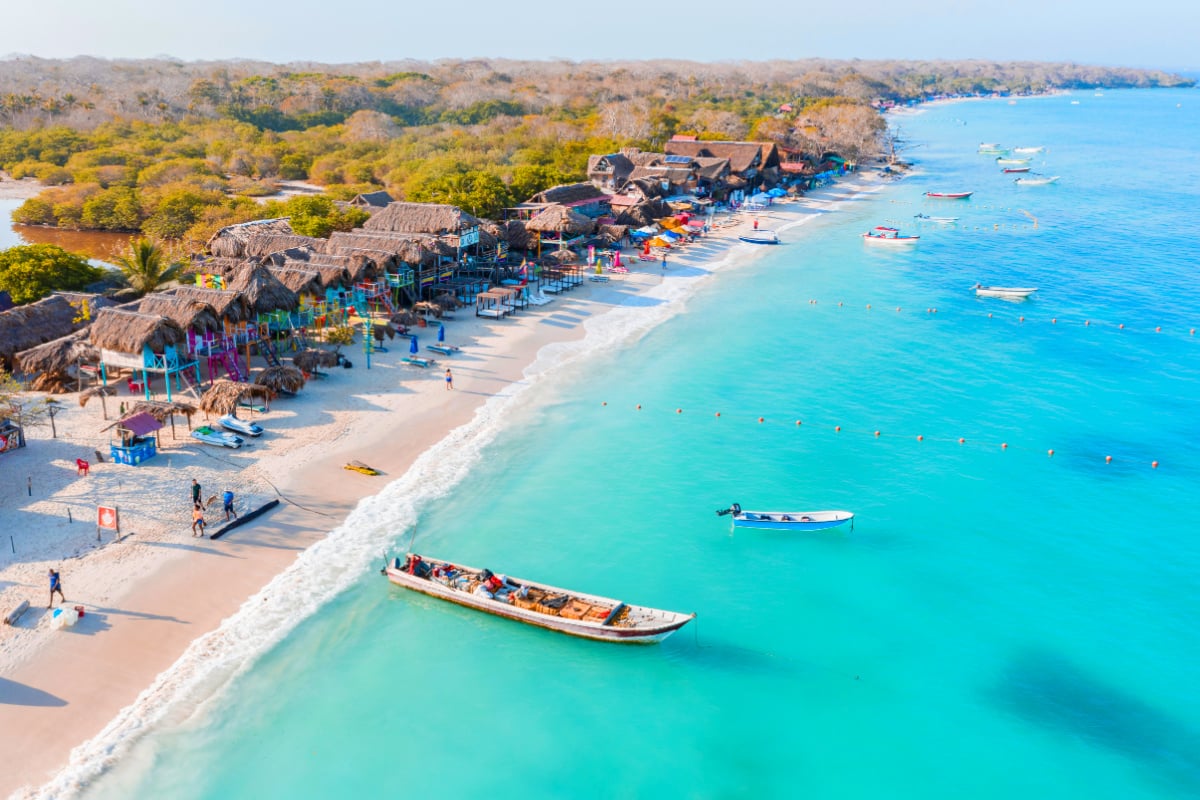
On the other hand, the tourist island of Baru, part of the Rosario island group, located just off the coast, is famous for its bright-blue oceans, thin-white sands, and impossibly tall palms providing much-needed shade from the scorching sun.
Baru is the definition of paradise on Earth, lacking the skyscrapers and busy city life that may make Cartagena less attractive to some, and being a protected reserve dotted with small, boutique hotels that put wellness at the front of the tourist offer and affordable hostels with a youthful, sociable community.
Colombia is one of the cheapest tropical destinations there are, and overnight rates in idyllic Baru, in properties straddling the landmark, aptly named Playa Blanca, start from only US$57 (though they can go as high as US$344 depending on the level of comfort and exclusivity preferred).
San Andres
Our last pick for the season, San Andres is Colombia’s most beautiful tropical island. 470 miles north of the mainland, it is a pristine coral archipelago encompassing numerous reefs, atolls, and sandbanks bounded by translucent waters.
El Centro, the region’s capital, occupies the northern end of the main island, and it’s the best-equipped town, home to major hospitality brands, a lively bar district, and some of the archipelago’s best-preserved colonial structures.
When it comes to natural beauty, it’s truly hard to summarize San Andres’ abundance of protected reserves and scenic spots. It is, after all, a UNESCO Biosphere Reserve, and there is truly no shortage of thin white-sand crescents bordered by teal-colored oceanic lagoons.
San Andres is also famous for being the Colombian capital of ecotourism, due to its rich biodiversity. Some of the most popular activities tourists can take part in while sojourning on the island include snorkeling in the reefs, sailing around the archipelago, and admiring marine life.
As the cold weather creeps in, we’re all looking for a warm escape with plenty to do and price tags to match. Luckily for us, Americans are fortunate to be close to some of the best winter getaways, where the temps remain hot and cultures are thriving.
Central America has so many remarkable destinations to visit, but these 3 countries are the best to visit this winter season if you want a slice of paradise.
Costa Rica
As one of Central America’s leading destinations, Costa Rica is of course on the list. Known for its biodiverse landscapes, adventure activities, and scenery, it’s a nature-lovers playground. The country is filled with forests waiting to be explored and incredible beaches.
Aside from ziplining over tall trees, diving, and beach-hopping, did you know Costa Rica is home to a unique attraction, voted by U.S. tourists as one of their favorites in Central America?
Located on the Poas Volcano, The Hacienda Alsacia Starbucks Coffee Farm is a magical place to visit if you want to explore a different neighborhood and surround yourself with the smell of coffee beans and passionate people.
We’ve covered activities, day trips, and landscapes, but what about the weather? Luckily, the best time of year to visit Costa Rica is during the winter, as it’s considered dry season! Which means warm days, ocean swims, and hopefully no rain.
Panama
A buzzing metropolis with all the pleasures of a beach getaway, Panama offers a little something for everyone. City vibes on one side and sweeping beaches on the other, it’s a top contender for best winter destinations in Central America.
Voted one of the best spots for digital nomads, this vibrant country has so much to offer! For solo travelers over the holidays, it’s incredibly easy to meet people here.
If you’re planning to stop in Panama City during your stay, the well-developed public transportation system (the metro is actually a key highlight for most tourists!) makes it easy to get around and explore various neighborhoods too- and with the rainy season ending in November, there’s no excuse not to roam!
Aside from skylines, silky sands, and friendly faces, you know what else is a key selling point here? Prices! That’s right… Panama is one of the most affordable destinations for winter travel, and we’re all looking to save a little when traveling.
Belize
With Jetblue’s exciting announcement that they’re adding a direct route from JFK to BZE this December, jetting off to paradise has just become so much easier!
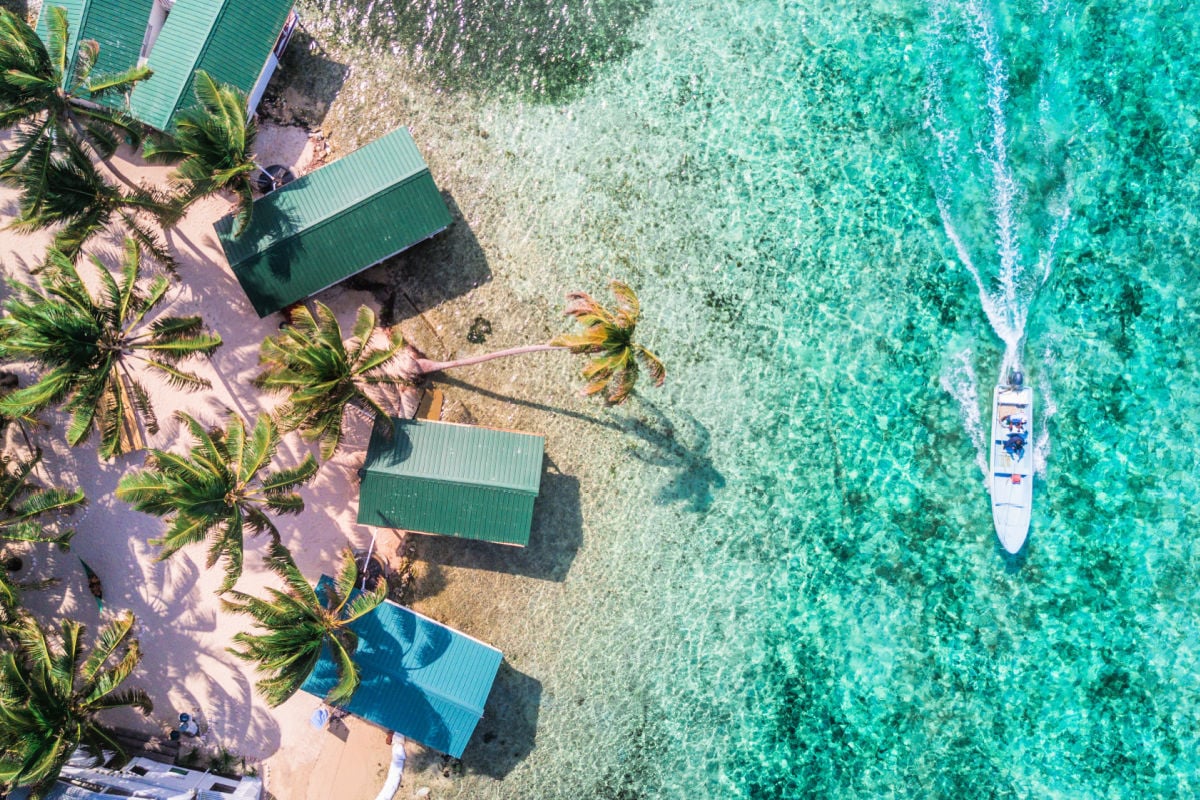
A tropical haven surrounded by crystal-blue waters, Belize is home to some of the most picturesque resorts you can imagine. The Cayo Espanto private island resort ensures guests have access to a slew of unique activities: from diving in the Great Blue Hole to helicopter tours from above.
Since the weather is in ideal form, why not get out and explore some of the many caves, ruins, and boat excursions this oasis has on offer? Belize is a showstopper when it comes to winter getaways… Have we convinced you to book your flight? 😉