The U.S. Department of State is currently recommending against travel to six states in Mexico, giving them a Level Four – Do Not Travel travel advisory.
Seven additional states in Mexico have been given a Level Three – Reconsider Travel warning.
These travel advisories may give Americans pause when considering whether or not to plan a trip to Mexico.
But should Americans actually be concerned about these travel warnings and avoid travel to Mexico?
Here’s what you need to know about the current travel advisories for Mexico:
“Do Not Travel” Advisories for Mexico
It’s important to note that a Level Four – Do Not Travel alert is not a travel restriction. It just means that the U.S. Department of State strongly recommends against travel to a specific destination.
However, Americans are still free to travel to these places.
Currently, the U.S. Department of State suggests avoiding all travel to six Mexican states: Colima, Guerrero, Michoacán, Sinaloa, Tamaulipas, and Zacatecas.
While there are certainly areas in each state that Americans would want to avoid, these are places that tourists would not be visiting in the first place.
Applying a broad “Do Not Travel” warning to entire states ignores that there are many places within these states that are very safe and offer lots of tourist value.
For example, although the entire state of Sinaloa is designated as Level Four – Do Not Travel “due to crime and kidnapping” threats, there are a number of places in Sinaloa, like Mazatlán, that are very safe and beautiful.
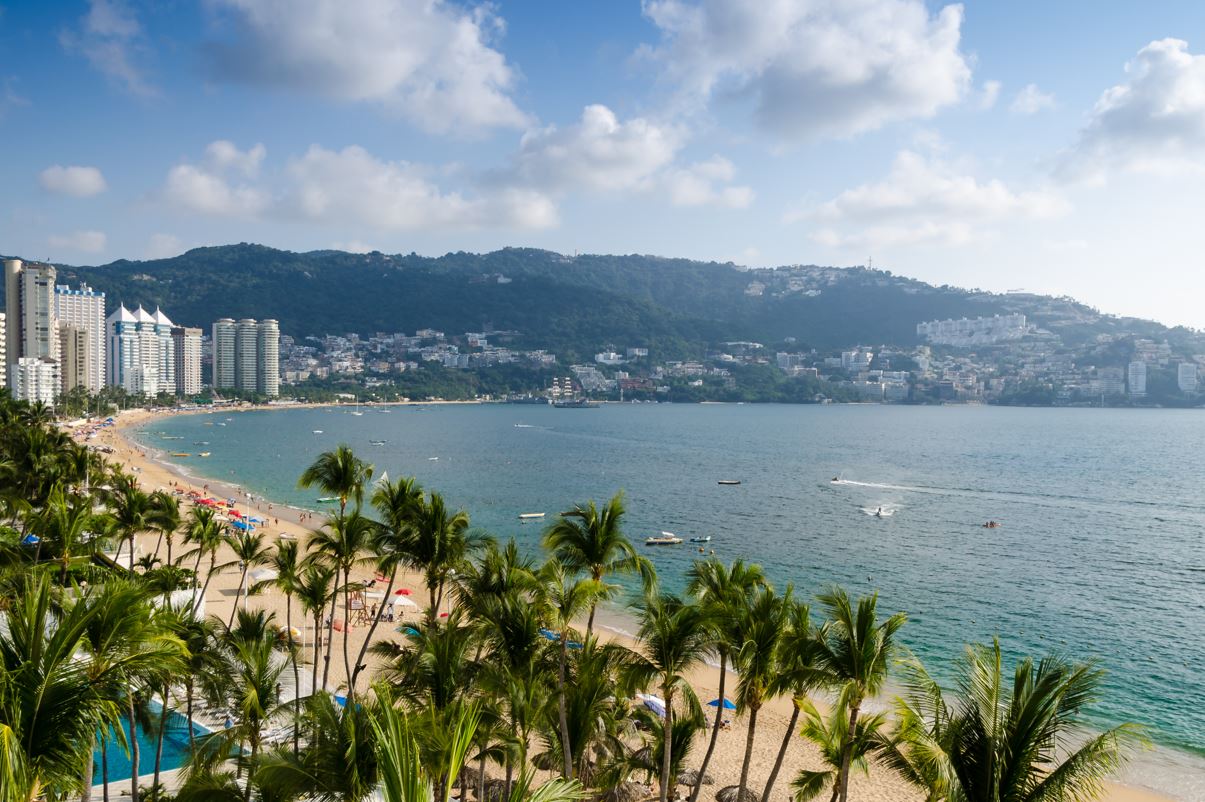
Similarly, Acapulco and Zihuatanejo in Guerrero, the monarch butterfly reserve in Michoacán, and Colima city in Colima are safe for tourists to visit.
“Reconsider Travel” Advisories For Mexico
Like with Level Four – Do Not Travel alerts, a Level Three – Reconsider Travel alert from the U.S. Department of State is not a restriction but rather a recommendation to avoid non-essential travel to certain places.
In Mexico, seven states currently fall under a “Reconsider Travel” alert, including several that are extremely popular with tourists, like Baja California and Guanajuato.
If American travelers were to “reconsider travel” to these places, they might miss the stunning beauty of the colorful city of Guanajuato or the magnificent beaches of Cabo, which was recently ranked as the best destination in Mexico.
Once again, these travel advisories lack nuance and are overly cautious regarding destinations that are completely safe for tourists to visit.
Should Americans Worry About U.S. Travel Alerts For Mexico?
According to Kashlee Kucheran, founder of Travel Off Path and long-time Mexico expat, the answer is no:
“I feel that the U.S. Department of State has unfairly placed a Level Four – Do Not Travel advisory on the entire state of Sinaloa, including the touristic city of Mazatlán, which definitely does not deserve such a harsh warning.
I’ve been living in Mazatlán for four years now, and I personally feel much safer here than I do in the majority of the United States. Crime in general, but especially against tourists, in Mazatlán is almost nonexistent. The people here are extremely polite, welcoming to foreigners, and very interested in a peaceful, happy life.”
While it’s always important to exercise caution and take basic safety precautions while traveling in Mexico or anywhere else in the world, Americans should not be scared off from visiting worthwhile destinations just because of U.S. Department of State travel alerts.
It seems Cancun’s never-ending war on scammers is intensifying once more after reports of fake Uber drivers targeting tourists in central areas started circulating. Now, authorities are urging them to be cautious when booking rides through the popular app, as they could be extorted, or even put their lives in serious danger.
This year, Cancun has taken additional steps to ensure visitors feel safe and enjoy a stress-free vacation in the city, deploying more police units to beach hotspots and increasing surveillance in the Hotel Zone, all the while under the scrutiny of the mass media and the U.S. Government. Naturally, when actual security concerns do arise, tourism officials react swiftly.
For now, you may want to reconsider using rideshare applications in Cancun, where taxi scams are becoming increasingly common:
Scammers In Cancun Are Hacking Into The Uber Platform For Personal Gain
Following multiple reports online, including a number of TikTok videos where tourists claim to have fallen victim to scammers, the President of the Mexican Association of Travel Agencies confirmed those who use Uber in Mexico ‘could be in danger’, as the service remains poorly regulated across the country, and criminals have been known to operate in the field.
Mr. Eduardo Paniagua stated ‘personal safety’ is endangered, taking into account Uber’s restricted reach in the Mexican Caribbean, attributed to the ongoing resistance of the regional taxi monopoly, has paved the way for scammers to present themselves as drivers, especially in recent months, when fares in Cancun and Tulum began spiraling out of control.
At present, a large number of taxis are deliberately overcharging tourists or running on inflated fares higher than Manhattan‘s, thus influencing tourists to seek other cheaper alternatives for moving around the zone. Ironically, they are resorting to unlicensed Ubers and putting themselves in danger as a result of the local taxis’ own corrupt practices.
Is Lack Of Competition To Blame For The Phenomenon?
In the words of Travel Noire, the conflict between taxi unions, whose members would like to stave off the competition at all costs, and budget-friendly rideshare apps have led ‘hackers’ to clone Uber accounts for illicit purposes. Cancun’s beaches may be the most secure (and cleanest) they have ever been, but road safety is a different matter altogether.
Essentially, the aforementioned hackers are cracking into the WhatsApp account of certified drivers and accessing the Uber database to prey on naive passengers. Travel Noire notes that, unless a customer acts carefully, they could be entering an ‘unknown vehicle’ driven by someone who has not been inspected nor approved by Uber.
Interestingly, the Government is yet to outline a strategy to combat scammers, in stark contrast with its previous, well-documented, and effective actions to quash crime in tourist spots, after a number of gang-related shootings took the headlines by storm earlier this year.
Comparatively, the lack of competition on the transportation front, and its subsequent effects, are yet to be addressed.
Americans Must Avoid Using Ridesharing Apps In Cancun
Customers are being urged to cancel an Uber ride immediately after realizing it could be a scam and reporting any dodgy accounts to the relevant authorities. Booking Ubers, in general, is now strongly discouraged, but in case they decide to take their chances, American tourists must beware of some red flags and keep a high level of situational awareness.
A simple way to spot a fake Uber driver is to pay attention to unnecessary questioning. Drivers do not need to ‘verify’ any of your personal details other than perhaps confirming your name, and to an extent, you should never share your own credit card details or other sensitive information either in person or online chats.
Additionally, checking the car plate and that the car matches the description on the booking is, of course, advised. Until the state of Quintana Roo cracks down both on ill-intended drivers, and the loopholes left open amid the fierce opposition of taxi unions to external competition, it’s best if you stick to hiring private drivers or booking transportation in advance.
That is particularly true arriving at Cancun Airport, where travelers must walk through the infamous shark tank, or ‘gauntlet’, an arrival hall lined with yelling drivers who will do anything to grab your attention, including standing on your way and snapping their fingers.
The best way to avoid feeling overwhelmed by this and taken advantage of is, again, to arrange transportation beforehand. Currently, as a result of resisting taxi drivers who rely heavily on the ‘shark tank corridor’, there is no Uber service leaving from Cancun Airport.
There are many reasons why people seek citizenship and passports from other countries – be it political preferences, financial opportunities, to evade travel restrictions, or just to have more flexibility for tourism and work. Citizenship to an EU country is particularly valuable because it allows the freedom to travel, study, and work in any of the 27 member countries. According to a report from Forbes, up to 40% of Americans could be entitled to EU Citizenship by ancestry. Are you eligible?
American applications for EU passports have been on the rise in recent years. In Ireland alone, 3,284 Americans applied for an Irish passport during the first half of 2022, more than double the amount from the same period in the year prior. According to Bloomberg.com, citizenship consultancy firms are seeing increased demand from Americans seeking citizenship in other EU nations, including Italy and Germany.
Routes one can take to gain EU citizenship include through ancestry, naturalization, or by investment. There are no standard criteria across all of Europe, but rather each country sets its own rules on citizenship eligibility. If you think you might be eligible, we recommend checking with the respective country’s government website or contacting your local consulate to determine your suitability.
Many Americans are eligible to acquire an EU passport based on ancestry. This typically requires the completion of administrative paperwork (some countries require these to be translated), and the sourcing of relevant documents (birth, death, and marriage certificates) to prove lineage. Some of the top countries where Americans can gain citizenship through ancestry include:
Ireland: 33 million Americans claim to have Irish ancestral roots. If you have a parent or grandparent that was born in Ireland, you can submit the required paperwork and documents to have your birth entered into the Foreign Births Registry. There is no residency requirement, and applicants can expect a shiny new red passport in 6-24 months.
Italy : Americans with Italian ancestors can obtain Italian citizenship in 18 months or less via Jure Sanguinis (Latin for the right of blood) by applying through an Italian embassy or consulate and showing their link to the ancestor. There are no established generational limits meaning your last Italian ancestor could have died well over a hundred years ago, but they must have migrated away from Italy after March 17, 1861. There is no residency requirement in Italy.
Portugal: Portuguese citizenship can be obtained by anyone with a grandparent born in Portugal, but applicants must prove they have knowledge of the culture and language or be resident in Portugal for a length of time.
Spain: 75 million Americans could be eligible for Spanish citizenship. For anyone with Spanish-born parents, the process is quick and easy. Others with grandparents or of certain ethnic backgrounds are also eligible but will need to meet residency requirements. This includes Latino Americans, Brazilians, and Sephardic Jews.
Poland: Polish citizenship can be obtained by anyone with an ancestor who was born and lived in Poland after 1920.
Germany: Americans with German-born parents are eligible for citizenship, as are some Jewish Americans whose ancestors fled Germany during the Nazi regime.
Citizenship by Naturalization
For Americans who can’t trace their roots back to Europe, citizenship by naturalization is a good option. This typically comes with a residency and/or marriage requirement, which varies by country. For instance, you need to live in Liechtenstein for 10 years before applying for citizenship, but in Sweden, the requirement is only 5 years. The U.S. and the Netherlands have signed a Friendly Nation Treaty which allows Americans to apply for citizenship after 3 years of residence.
EU Citizenship By Investment
Don’t qualify for an EU passport via lineage or residency but have deep pockets? Several EU countries will grant citizenship to foreigners who make significant investments. Austria requires a hefty investment starting at $2 million, while the tiny island of Malta costs nearly $1 million. Many of the EU’s “golden visas” have strict residency and investment requirements. In Bulgaria, one would need to invest at least $1 million and be resident in the country for a minimum of 5 years.
Only a couple of years ago, the number of countries offering Digital Nomad Visas (DNVs) could be counted on the fingers of one hand. Now that governments are warming up to the idea and realizing nomads help boost their economic recovery, the once-limited list is already 45countries long. But where to go? Where’s more affordable? Which destination has the best weather? How receptive to foreigners are locals?
Based on these concerns, we have rounded up the top destinations offering Digital Nomad Visas for 2023, what long-term travelers can expect moving to these countries, and how exactly DNVs can be obtained:
The Rise Of Digital Nomadism
Digital nomadism is, perhaps, the number one travel trend moving forward, with an entire generation keen on being outdoors and exploring new destinations while still having a stable income. Quicker than we ever expected, authorities are seeing the unexplored potential in young, self-sufficient country-hoppers.
They are occasionally described as long-term tourists, seeing that they stay for a prolonged period of time and are involved enough with the local community to be considered more than mere visitors, but are usually exempt from stricter tax regulations or other rules applying to the usual long-term resident or national.
There are various countries offering DNVs as of 2023, and the number keeps growing, but here we have narrowed down the five best based not only on their vast cultural wealth but also their straightforward visa application process and, most importantly, amazing year-round weather, with winters ranging from tropical to a Mediterranean mild.
Croatia
The first one on the list is Croatia, straddling the Adriatic Coast of the Balkan Peninsula, part of the Mediterranean basin, and one of Europe’s culturally richest. Croatia has been issuing DNVs since late 2020, famously becoming the first country in Europe to formally embrace the trend and welcome young nomads.
Having existed as a collective of city-states and minor kingdoms, under the rule of several different empires over the centuries, with the coastal area dominated by the Romans and later on the Venetians; on the other hand, the northern half was heavily influenced by the Habsburg Monarchy, Croatia is more diverse than it gets credit for.
You could be strolling cobblestone streets and having gelato in the scorching hot Dalmatia seaside, where the Roman nature of ancient ports like Zadar and Split is still evident, or marveling at the Austrian-Hungarian-inspired architecture of Zagreb and Varazdin, two cities that have historically been Central European in character. It truly has it all.
Digital Nomad Visa Requirements For Croatia:
Earn at least U.S. $2,600 monthly
Purchase health insurance
Undergo a criminal record check
Pay the temporary residence permit fee of U.S. $55 – $65
Ensure your passport will remain valid for at least three months from the intended date of departure from Croatia
*Visas are valid for up to two years and may be extended.
Some of the best cities to base yourself in being a nomad in Croatia include:
Zagreb, the inland capital, full of medieval landmarks and charming cafes
Pula, a small hub on the Istrian Peninsula featuring a Roman arena and other historic buildings
Zadar, a pearl of the Adriatic particularly favored by Alfred Hitchcock himself, who described sunsets here as the most beautiful in the world
Split, Croatia’s second-largest city born from within the walls of a 4th-century palace
Dubrovnik, the legendary former Republic of Ragusa, where an incredibly well-preserved medieval town and pristine beaches can be found
Montenegro
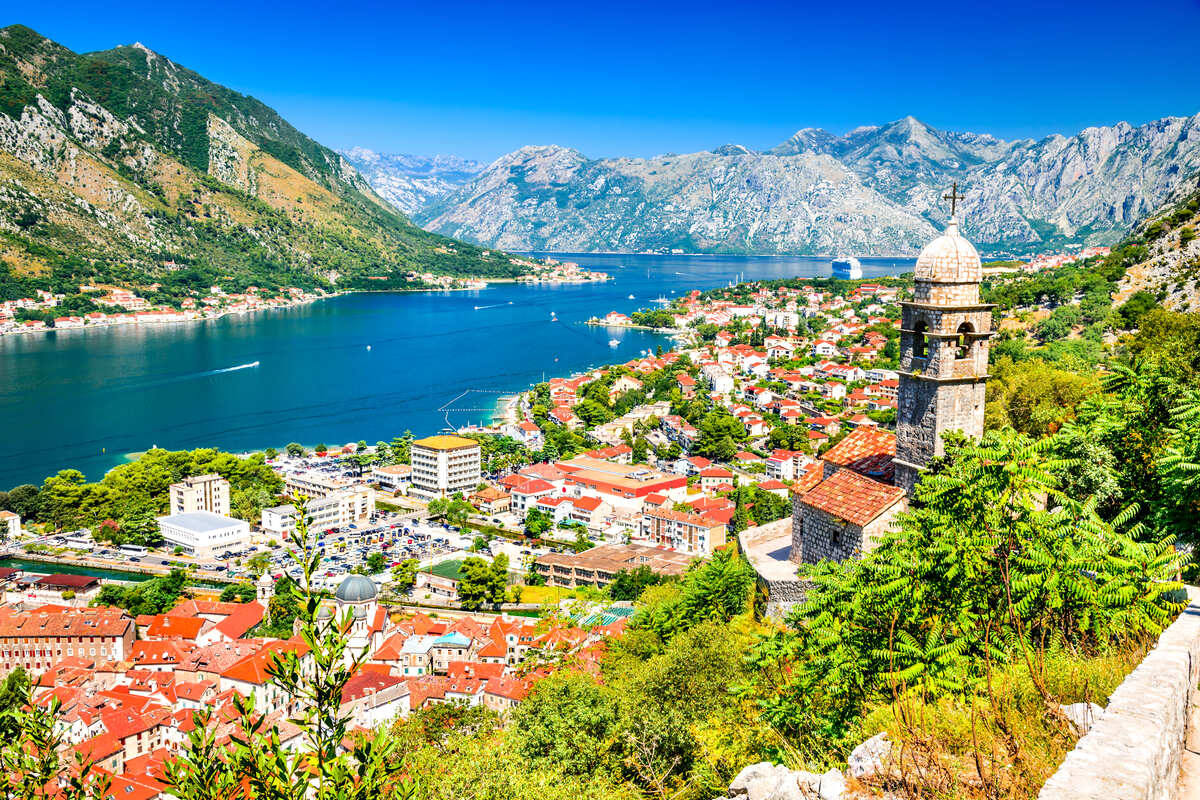
Traveling further south along the Dalmatian Coast, you’ll hit the tiny country of Montenegro. Although it is very similar to Croatia culturally, having been part of a federation with the latter up until the 1990s, this unheard-of gem does not get half as many visitors, and we cannot understand why.
Being part of the wider Dalmatia, Montenegro’s Bay of Kotor shares the charm of neighboring Dubrovnik, with the same narrow winding alleyways, traditional stone houses, and green window shutters. The fact that it is largely overlooked by tourists also means it normally sees fewer crowds than Croatia, though its popularity keeps growing.
Details about the Montenegrin DNV are still being finalized, but we can expect the visa to launch officially in 2023 once official requirements are set out. So far, the Government has yet to confirm important information such as the financial criteria that must be met, whether taxation applies to nomads, and who is de facto eligible.
Digital Nomad Visa Requirements For Montenegro:
Earn all, or most of your income from foreign-based sources (to be confirmed)
Provide proof of sufficient funds to support yourself for the duration of your stay in Montenegro
*Visas may be issued for up to two years once the visa applications open
Our favorite picks in Montenegro are:
Kotor, a medieval walled city, guarded by a hilltop fortress where you’ll find incredible views of the adjacent Bay
Tivat, a modern, trendy resort town located on the Bay of Kotor
Budva, a small historic port part of the Budva Riviera, where some of the clearest beaches of the Adriatic are located
Colombia
Moving over to the Global South, Colombia has been issuing DNVs since August of this year, and unlike Europe, where stricter rules must be observed, it is probably one of the easiest visas for Americans to obtain, with both a low minimum income requirement and far less bureaucracy. On top of that, who wouldn’t want to move to Colombia?
Home to a beautiful Caribbean coast with numerous Spanish colonial-era settlements, including Cartagena, and the world-class cities of Medellin and Bogota, the country has a lot to offer to those looking to linger a tad longer than the usual three months. Additionally, it is super affordable, making it an ideal destination for nomads on a budget.
The new permit allows remote workers from outside Colombia to stay in the national territory for up to two years initially, as long as their income originates from abroad and they are able to fulfill very simple criteria, as defined by the Colombian Government when they first announced the visa. Those are listed below:
Digital Nomad Visa Requirements For Colombia:
A valid passport not set to expire during the temporary residence
Proof of earnings of only US $684.00 per month
Take out health insurance
Undergo a background check
Pay an application fee of US $22.80
When moving to Colombia on a Digital Nomad Visa, perhaps you should consider the following destinations:
Bogota, the metropolitan capital best-known for its historic center – La Candelaria – and vibrant nightlife
Medellin, perhaps Colombia’s number one destination, nicknamed the ‘City of the Eternal Spring’ and a recognized cultural center
Cartagena, a popular beach retreat on the coast, surrounded by a UNESCO-listed Spanish defensive wall and packed with 16th-19th century monuments
Costa Rica
Costa Rica has historically been theleading backpacker destination in Central America, and in recent months it’s taken center stage again in the nomad scene. Moving forward from Covid, both ‘millennials’ and ‘Gen Zs’ have expressed a strong desire to unplug and reconnect with nature, and Costa Rica has certainly been at the forefront of their minds.
Enjoying a year-round warm climate, it has an extensive tropical jungle dotted with untarnished waterfalls and other natural wonders safely tucked away from civilization that provides an escape from the hustle and bustle of the 21st century. Moreover, it boasts scenic, development-free sandy beaches lining both its Caribbean and Pacific coastlines.
Costa Rica’s DNV launched back in July with the easiest rules yet. Hoping to woo young explorers, local authorities have scrapped the usual background checks, proof of income within the next two years, and even face-to-face appointments. Applications are processed online, and visas will be issued immediately so long as the below requirements are met:
Digital Nomad Visa Requirements For Costa Rica:
Prove you’re employed in a company based outside Costa Rica, or your status as an entrepreneur
Make a minimum U.S. $36,000 per year
Submit proof of health insurance comprising the whole stay in Costa Rica
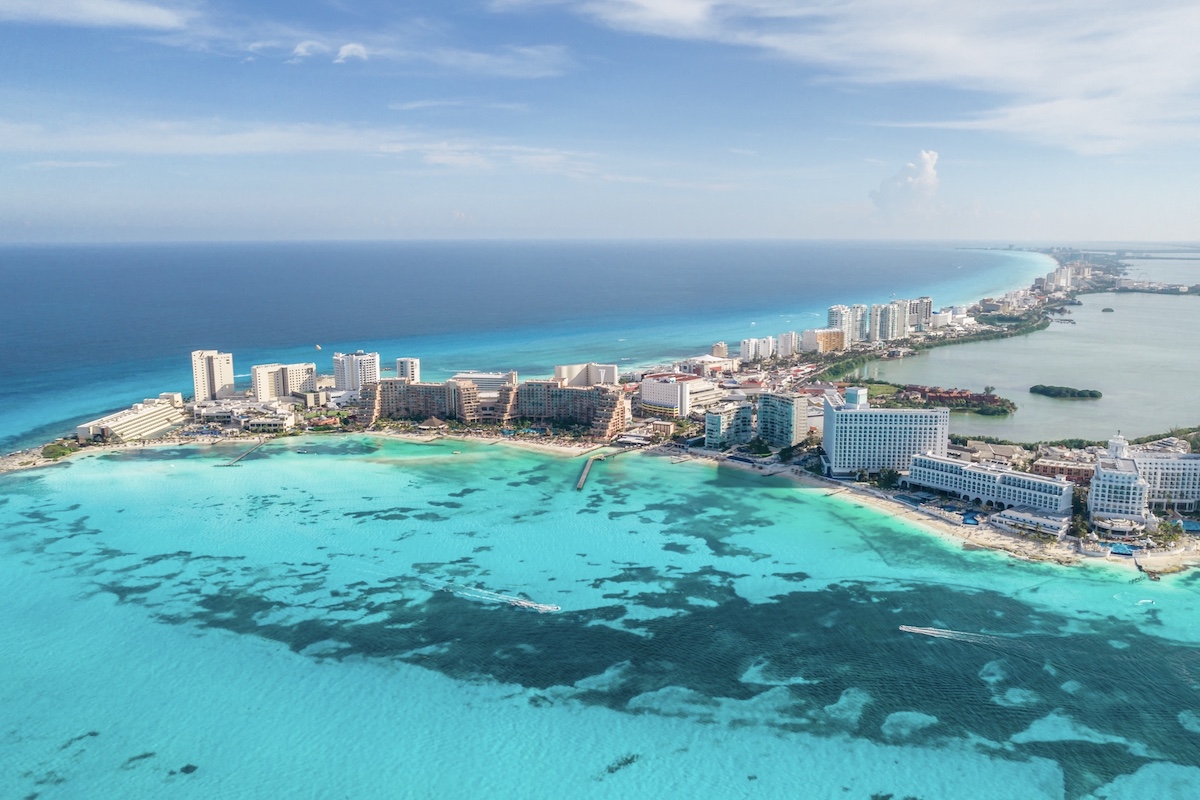
Cancun is a highly sought-after international destination that sees millions upon millions of tourists arriving all-year round. Its massive popularity would lead you to think the quality of local beaches is decreasing dramatically – after all, more tourists generally result in more waste and, subsequently, beach pollution. That is shockingly not the case, as Cancun has, in fact, the highest number of clean beaches in all of Mexico.
Overtourism is one of the biggest threats facing Cancun, but local authorities have risen to the challenge and are not only encouraging Americans to visit but keeping the city safe and all of its popular swimming areas spotless. Crowding risks aside, the oceans bordering Cancun and the wider Riviera Maya are as beautiful and crystal-clear as ever.
You don’t have to believe us. The proof is in the numbers:
No Other Coastal City In Mexico Has More Blue Flag Beaches
As reported by our sister website, The Cancun Sun, no other coastal destination in Mexico has more ‘Blue Flag’ beaches than Cancun. The status, which is the highest a natural landmark within this category can achieve, is only awarded to those with the best quality standards and environmental controls, also serving as an unofficial ‘safe for tourism’ badge.
A huge part of Cancun’s global fame has always been attributed to its pearl-white sands and warm, turquoise-colored seas, though the city’s visible transformation in light of mass tourism has been an ongoing concern for environmentalists. They are often critical of the Government’s development plans, particularly the upcoming Tren Maya, and have shown skepticism at their promises to protect the surrounding nature.
As it turns out, their apprehensiveness is unfounded, at least when it comes to the preservation of marine life, after seven beaches in Cancun were awarded a Blue Flag certificate at an event recently held by the Foundation for Environmental Education (FEE) in Playa Delfines. This proves the city has managed to maintain the beachfront perfectly clean in spite of the overwhelming number of visitors.
Cancun Authorities Want To Keep Tourists Coming Back
Officially, Cancun outnumbers Los Cabos and Puerto Vallarta, its partners in the triad of Mexico’s world-class destinations, as well as any other beach hub when it comes to Blue Flag beaches. For months on end, authorities have worked around the clock to ensure the Pearl of the Caribbean wouldn’t lose its sparkle amid the landfall of sargassum and a rise in crime.
This year, the Quintana Roo Government has surely stepped up its game when it comes to improving the tourist experience. Over the summer, 300 army soldiers were deployed to keep visitors safe, despite the fact that violent incidents occur almost exclusively in suburban areas, while beach cleaners worked tirelessly throughout the fall to manually remove the dreaded seaweed.
Few destinations value tourism as much as Cancun does, a quality recognized by Joaquín Díaz Ríos, head of the FEE. According to Ríos himself, Cancun is Mexico’s ‘Blue Flag capital’, meaning it has passed all the cleanliness, safety, and water quality tests with flying colors. More specifically, the below spots have attained the honor:
Del Nino
Las Perlas
Chach Mool
Ballenas
Marlín
Delfines
Coral
Additionally, three private beaches were certified ‘Blue’: Fiesta Americana Condesa’s, Hotel Live Aqua’s, and Iberostar’s.
Overtourism Major Threat To Blue Flag Status Moving Forward
This will undoubtedly prove challenging, considering Cancun is close to selling out for the peak season, with occupancy reaching 95% and packed beaches equal littering. In preparation for the phenomenon, more than 150 full-time cleaners have been hired to ensure beaches look pristine at all times, on top of increased surveillance by patrol units.
Winter is fast approaching, and you can certainly expect the Pearl of the Mayan Riviera to get busier by the minute. This may involve waiting longer in line arriving at the airport, finding it more difficult to arrange a hotel transfer unless you have pre-booked one ahead of traveling, and even staying in a sub-optimal location far from the trendy Hotel Zone due to low room availability.
Remember: if overtouristed destinations are not a big turn-off for you and a Blue Flag-certified Cancun remains your dream getaway, you should be booking that vacation package right away before rooms and airplane seats sell out. Other destinations in Mexico close to being booked up this winter are Playa Del Carmen, south of Cancun, and the insular municipality of Isla Mujeres.
The term 5-star hotel conjures up images of luxury: a magnificent lobby, bellhops and a concierge ready to assist you, room service and white fluffy bathrobes in your hotel room, and fancy amenities like a spa and gym.
But what do hotel star ratings actually mean?
What’s the real difference between a 5-star hotel and a one-star hotel (and all the ratings in between?)
While star ratings are extremely common to see on hotel booking websites and travel guides, you might be wondering exactly what they mean.
Here’s an overview of hotel star ratings and what you can actually expect when staying in a 5-star hotel.
Who Sets Hotel Star Ratings?
There’s no universal system for scoring hotels and assigning them a star rating, which means star ratings vary from country to country.
In the United States, Forbes Travel Guide and AAA are the two organizations that are most known for their hotel ratings.
Forbes Travel Guide rates thousands of upscale hotels worldwide with the designation Five-Star, Four-Star, and Recommended (Three-Star.) AAA uses a Diamond Rating system, with hotels receiving between One Diamond (Budget-Oriented) and Five Diamonds (Ultimate Luxury.)
However, hotel star ratings work differently in other countries.
In France, for example, there is an official government rating system, and hotels are required by law to display their star rating, from one to five stars. Many other countries have official star rating systems that are utilized by the government or the tourism board to classify hotels.
While the standard scale used around the world ranks hotels from one to five stars, some ultra-luxury hotels have gone as far as to claim they are actually six-star hotels.
The Burj Al Arab hotel in Dubai even claims to be the world’s only seven-star hotel, boasting luxury amenities like a private butler service, Rolls-Royce chauffeur, and suites that cost upwards of $20,000 per night.
What Hotel Star Ratings Mean
Although there’s no standard rating system worldwide, the general meaning of each star rating is fairly consistent.
Here’s what to expect with each star rating a hotel has:
One-Star
Basic, no-frills accommodation. Don’t expect any amenities like room service or daily housekeeping at a one-star hotel. In the United States, think along the lines of a Motel 6.
Two-Star
Two-star hotels are still pretty basic and affordable, but may have some additional amenities, especially if they are newer. This could be something like a Fairfield Inn by Marriott or La Quinta Inn by Wyndham.
Three-Star
Typically, a three-star hotel is a standard, comfortable hotel with a good range of amenities. Swimming pools, fitness centers, and on-site restaurants are common. Think Courtyard by Marriott or Hyatt Place.
Four-Star
Four-star hotels are luxury hotels with all the amenities of a three-star hotel, plus extras like a valet car service or concierge service. This is something like a Marriott or Hyatt Regency.
Five-Star
This is the most luxurious hotel you can stay at, with even more high-end amenities and services. Examples of five-star hotels are the Ritz-Carlton and the Four Seasons.
Are Hotel Star Ratings Accurate?
Hotel star ratings can be a good baseline for judging the quality of a hotel, but it’s not the only measure you should use.
It’s a good idea to always read guest reviews for a hotel on a platform like Tripadvisor or Booking.com rather than just relying on the hotel’s star rating.
It’s also important to note factors like location, price, and newness of a hotel.
A modern, newly-constructed SpringHill Suites by Marriott that’s only a two-star hotel can easily be a nicer stay than an older, dated, full-service Marriott hotel with a four-star rating.
While hotel star ratings can be helpful when planning for travel, it’s not the only factor you should consider.
Heavily affected by overtourism, the Italian port of Venice infamously decided to introduce a ticketing system for visitors in recent years in hopes of mitigating the impacts of the crowds. Originally due to come into effect on January 16, it has now been delayed, which means Americans will not have to buy a ticket to enter the city – at least for now.
Venice is one of a number of cities in Europe ramping up their efforts to combat mass tourism. While Mexico, the Dominican Republic, and the like are looking to capitalize on the ongoing travel frenzy as much as possible and have been actively promoting themselves as tourist-friendly destinations, the Old Continent is going the opposite way entirely.
Moving on from Covid, Europe does not want a return to the hectic pre-pandemic days, and Venice’s entry fee is a strong indication of that:
Americans Will Not Need To Pay A Fee Entering Venice From January
In exciting news for bureaucracy-wary travelers, the City of Venice has again delayed plans to introduce a fee for tourists, scrapping the previous launch date of January 16, 2023. The new system, set to turn Venice into a literal open-air museum that requires reservation months in advance, has been described as ‘the first of its kind in the world’.
Implementation was never going to be easy, as it applies to an entire city – one of Italy’s most important – and not a well-enclosed archaeological site or park. Needless to say, surrounding Venice with sea walls like in Medieval times has never been a plausible alternative, even for the hardline anti-tourism Venetian.
As reported by Forbes, local authorities have been struggling to enact the changes ‘as they grapple with logistics‘, though more details were not given at this point. In a way, this reminds us of Europe’s back and forth with its future ETIAS requirement, a mandatory online Travel Authorization applying to Americans that will be enforced beginning November 2023.
The ETIAS, alongside its associated Entry and Exit System, is a multi-million euro project that has proved challenging to materialize, despite being years in the making already, and Venice’s own ticketing system is no exception. It involves more than simply setting up a web page for the collection of a visitor’s tax: this will dramatically change tourism in Venice for future generations.
How Will The Ticketing System Work?
Currently, the only thing tourists have to monitor carefully traveling to the Floating City is room availability. They are allowed to come and go as they wish, even as day-trippers, but finding reasonably affordable accommodation last-minute can be close to impossible. This is particularly true in the peak of summer, though Venice remains busy all year round.
The record year of 2019 saw a concerning 36 million foreigners arrive in Venice, a city of about 270.000 inhabitants only. To draw a comparison, that is the exact same number of tourists the country of Mexico has hosted throughout the whole of 2022. Looking at it from this angle, we can’t even be mad at Venetians for wanting to shut down their doors – if only slightly.
Once the ticketing system is formalized, visitors to the historic center of Venice, which comprises all the main medieval canals and points of interest, such as Rialto Bridge, St Mark’s Square, and Doge’s Palace, will need to book their visit, possibly months in advance to avoid getting locked out amid overwhelming demand.
If you’re a day-tripper, a single ticket will cost €3, though it can rise to €10 in ‘particularly busy periods’. On the other hand, those staying overnight in the city will be exempt from paying the fee as their ‘tourist tax’ will be collected by their accommodation provider, but not from booking a visit through the official online portal.
Tickets are valid for Venice itself and any of the islands and municipalities in the Venetian Lagoon, including the colorful towns of Murano and Burano. Those traveling to see family, or staying at a friend’s house, will obviously not be charged for the duration of their sejour, but will be subject to the reservation process, as confirmed by Forbes.
Tickets will be issued in the form of a QR code, that will be checked upon arrival at one of the city’s entry points by ‘ticket controllers’. At this time, we were not able to find information on the penalties for non-compliance, but we assume day-trippers not staying overnight without a paid reservation will be prevented from accessing the historic center.
What’s The New Launch Date?
So now that January 16 is no longer the launch date, when will the ticketing system start applying? This time around, the Venice City Council refrained from offering a final date, suggesting instead that the delay will be of ‘at least six months’. This leads us to believe the system will be fully operational by summer or fall 2023.
Funnily enough, the ‘under-touristed’ Trieste, a city close to the Slovenian border, is covering the transportation costs of Americans visiting for a minimum of two nights up to May 31, 2023, as long as they arrive from within Italy. If you’re feeling discouraged by Venice’s drastic measures, perhaps you should consider exploring the beautiful region of Friuli Venezia Giulia instead.
Travel Off Path has always been a source of news and travel information that is written by travelers, for travelers. Travel is in our blood. Between all of our writers and staff, we’ve visited almost every country in the world.
As the new year approaches, travelers are eagerly planning their trips for 2023, and we at Travel Off Path are no exception.
We wanted to do something a bit different in this article, so we asked our staff what the top destination they wish to visit in 2023 is so that we could share it with you.
Many “top destinations” articles across the internet simply report search data from booking platforms or are sponsored lists. For our Top Destinations Of 2023, we wanted to share the most wish-listed destinations of our well-traveled staff.
When the question “What is the destination you most want to visit in 2023” was sent out, we were not surprised to find out that many of us couldn’t pick just one! After all, we are all traveling all the time, so why limit ourselves?
With that in mind, read on to find out the destinations we are dreaming about most for next year!
Kashlee Kucheran, CEO
Mexico
“There are so many cultural and historical experiences beyond the normal resort vacation that travelers need to see for themselves. You could spend 10 years exploring Mexico and not even scratch the surface of what it has to offer. For anyone thinking Mexico is just all-inclusives, I beg you to look closer.”
-Kashlee
Albania
“Albania truly has all the best of what Europe has to offer for a fraction of the price and with a much safer and more welcoming environment. It’s a wonderful gem, mostly unknown to westerners, and one that deserves to be top of your 2023 destination list.”
-Kashlee
Turkey
“Turkey is a sensational country filled with Bucket List experiences. Everything from bustling cities to quiet seaside towns awaits, with amazing food, language, and weather. If you want the seaside, try Izmikr, Kas, and Bodrum. For cities, you can’t go wrong with Istanbul and Ankara.”
-Kashlee
Trevor Kucheran, Director
Mexico
“Mexico is the ultimate destination. It has the landscapes of the entire world, all located in just one country. Mountains, deserts, rivers, jungles, and oceans. One day you could be surfing in Puerto Escondido; the next day, you could be in a cozy snow-covered cabin in Durango.
As far as Tourism is concerned, Mexico is the king. With incredible beachfront cities like Cancun and Cabo, visitors will never be disappointed with their vacations.
For digital nomads and slow travelers, Mexico has dozens of charming and affordable towns and cities with an incredible quality of life brimming with culture. For the last decade, it’s always been my number one choice, and I feel like my love for Mexico is just beginning.”
-Trevor
Tyler Fox, Managing Editor
Having the freedom to work from anywhere comes with serious advantages… and temptations. Temptations like packing it all up and moving to another country! My top destinations for 2023 are all areas I would like to explore more to see if I would like to live there long-term.
Istanbul, Turkey
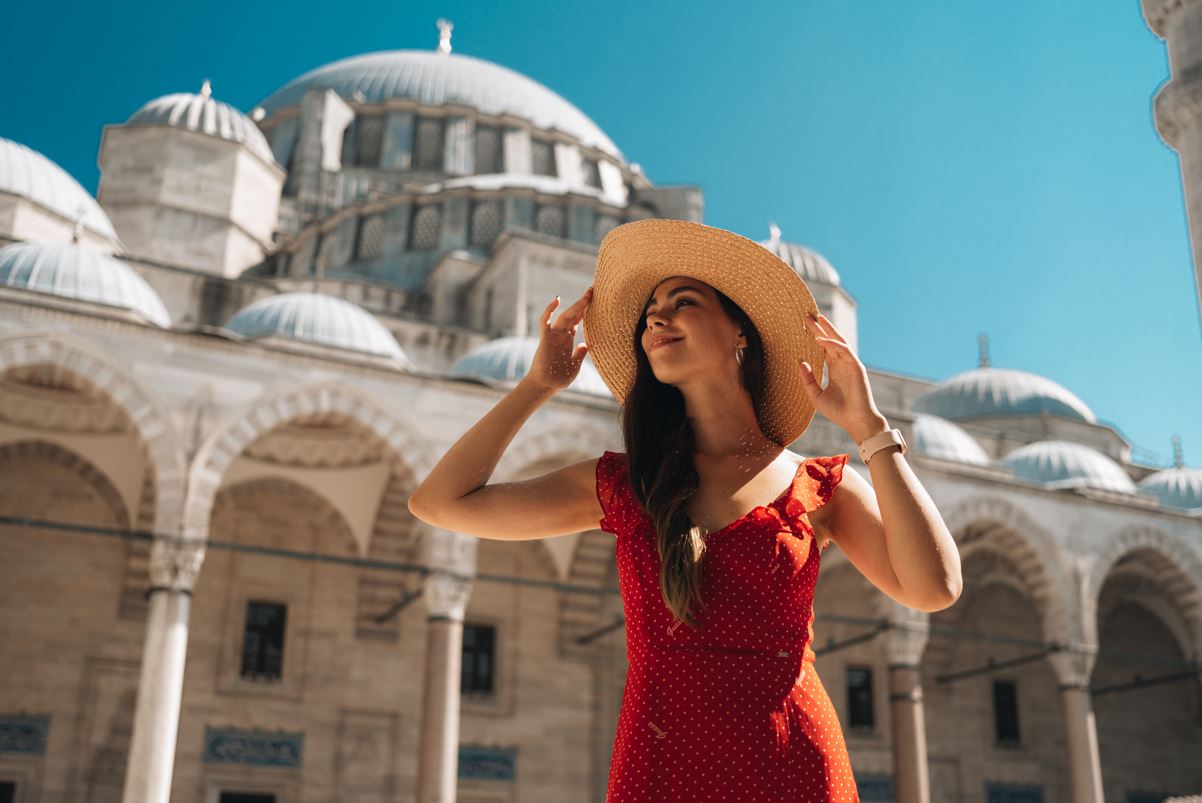
“Istanbul has always seemed like a fascinating destination, and I can’t wait to see it for myself. One of my favorite things to do while traveling is explore the historical attractions in the area, and Istanbul is filled to the brim with them. The Hagia Sophia, the Topkapi Palace, and the Basilica Cistern are all musts during my trip.”
-Tyler
Tirana, Albania
“Tirana is a place I would love to check out. Albania’s digital nomad visa is definitely something that I’ve considered, and I’m very curious to see what life would be like in the capital city. Also, Tirana seems like an excellent place to call home base, especially because Americans can stay for up to a year without a visa.”
-Tyler
Mexico
“Whenever we write about Mexico, I want to book the next flight out! I’ve been before, but there is so much more to the country than a resort stay in the Riviera Maya. Cancun, Tulum, Bacalar, Mexico City, Puerto Vallarta, Mazatlan, Los Cabos, La Paz… Mexico has so many destinations, and I want to see them all!
The people I’ve met at conferences who are from Mexico were some of the nicest people there, and they are another big reason for me wanting to see more of the country.”
-Tyler
Vinicius Costa – Senior Writer
Sofia, Bulgaria
“Serving as capital to one of Europe’s less visited and most mysterious countries, Sofia is Bulgaria’s financial and cultural center, where communist-era monuments and far more ancient Romanesque ruins are constantly battling for dominance in an incongruent, yet beautiful cityscape. It is also one of the continent’s oldest cities, making it an ideal destination for Historophiles.”
-Vinicius
São Paulo, Brazil
“A largely overlooked metropolitan behemoth, Latin America’s largest city may not be necessarily famous for its collection of historic landmarks, which is understandably limited, but it truly shines as a foodie destination and a diverse, multicultural hub. Here, you will see Japanese, Jew, Arab, Lithuanian, Polish and Italian neighborhoods clumped together, still retaining their ethnic character and cuisine – just to name a few – and perhaps Brazil’s most vibrant nightlife and social scene.”
-Vinicius
Istanbul, Turkey / Turkiye
“One of the most mystical cities on the planet, Istanbul’s greatness knows no borders: it has districts in Europe and Asia, with the former’s imperial Balkan charm often overlapping with the latter’s Anatolian-oriental flair. As Philip Mansel puts it, it is the “city of the world’s desire” with views to be admired for days.”
-Vinicius
Andrea Miliani – Travel Writer
Italy
“Call me a romantic, but Italy has that unique, flirty charm that you won’t find in another country. I am especially interested in off-the-beaten-path destinations I haven’t visited before, like Cinque Terre and Elba Island—where my ancestors are from. That mix of fascinating historical architecture, delicious gastronomy, and stunning landscapes that you find in Italy make it a wonderful travel experience for anyone.”
-Andrea
Albania
“I’m so curious about Albania! This destination became very popular this year, and the videos and photos are truly impressive. The beaches have spectacular turquoise waters, the Albanian Alps seem to have amazing trails, and the museums look very interesting. I want to visit while it’s still affordable and before it gets too popular.”
-Andrea
Laura Taylor – Travel Writer
Yellowstone National Park
“Yellowstone is one of my absolute favorite places in the world – with the rainbows, bubbling hot springs, herds of bison roaming free, and seemingly endless expanses of wilderness, it’s always felt magical to me. There are also so many things to do and see there (and in the border communities, like catching a movie at the IMAX theatre over in West Yellowstone!), I feel like it never gets old.”
-Laura
Megan Gibbons – Travel Writer
Georgia
“Over the past year, I have volunteered with a group that helps asylum seekers and refugees in my community. Through this work, I have gotten to know so many kind, brave, and resilient families from all over the world and have been exposed to cultures I didn’t know much about before. So my top choice of places I’d like to visit in 2023 is inspired by an amazing group of women who have shown me the beauty of their culture – the country of Georgia. Georgia is my top pick for three specific reasons: the people, the land, and the food (my favorite reason for travel).
The Georgian families I have come to know are so kind and hospitable that I’d imagine traveling to their country would be a very welcoming experience. When we talk about Georgia, they all light up and excitedly explain how beautiful of a country it is, and the photos I’ve seen are stunning. And finally, after a few very special home-cooked Georgian meals, I have come to the conclusion that Georgian food should be as popular and well-known as Italian food. It is absolutely delicious and truly unique. I look forward to eating my way through Georgia in 2023.”
-Megan
Nicolin Collingridge – Travel Writer
El Salvador
“With waves from a surfer’s dream, epic volcanoes to climb, and a fascinating history to absorb, this country often gets overlooked compared to the larger countries in Central America (which means fewer tourist crowds). Every person I’ve spoken to has only sung this country’s praises, so I can’t wait to see what everyone is talking about in 2023.”
-Nicolin
Dale Peterson – Travel Writer
Nicaragua
“Nicaragua is a diverse country with many adventurous things to do. Great beaches for surfing, outdoor activities like volcano hikes and volcano boarding, and exploring colonial cities like León and Granada are reasons I’m hoping to visit Nicaragua in 2023.”
Imagine this: you’ve found an enticing flight deal for your dream destination, but you don’t have the funds currently in your account. You’ll need to wait until your next paycheck – but by this time, the deal would have passed. If this sounds familiar and you’re looking to give the credit card a break, there are other options to purchase flights with several airlines that could offer you a better interest rate.
Uplift is an option for travelers that provides a buy now, pay later option, with some loans collecting zero interest if you qualify. It allows you to spread the cost of your purchase over fixed monthly payments that you agree to with no late fees or prepayment penalties. The application is straightforward and only takes a few minutes, unlike the approval processes known with some credit cards.
Uplift has partnered with a variety of airlines for a buy now, pay later option and recently just added Emirates to its portfolio. Beyond flights, it can also be used on purchases from accommodations to cruises, tourist packages, and retail.
Which Major Airlines Offer Buy Now, Pay Later With Uplift?
Once you’ve found a flight with one of the participating airlines above, you go through the booking process as you would normally if you were paying for a flight. When you reach the payment screen, the airline will give you the option to select Uplift as a payment option, where you will then fill out a few personal details (like your mobile number, date of birth, if you are a U.S. resident, and your Social Security Number).
Uplift will then provide your payback rate, which can range from 0% to 36%, based on things like your credit history, purchase amount, current loan activity, and more. You will also be presented with different payment plans that work with your budget and timeline, which varies from 3 months to 2 years.
Once you choose the plan that works for you, you will be able to complete the payment. You can arrange automatic payments with the plan to ensure that you are never late or miss a payment, while Uplift also sends emails and texts to remind you.
Will Uplift Affect My Credit Score?
For both U.S. and Canadian residents, Uplift uses a “soft” credit check to verify your identity and determine your credit history, which doesn’t affect your credit score. For Canadian residents, once you submit the application, the soft credit inquiry is updated to a hard credit inquiry, which could affect your credit score.
Uplift also reports your payments to the credit bureaus, so if you are late on payments, this will impact your credit score. It also means you can build credit if your payments are on time.
Who Can Qualify For Uplift
Be a resident of the U.S. or Canada
Be aged 18 years and over
Have a valid U.S. number
Can submit a few personal details
What If My Flight Circumstances Change?
If you have a change of plans and decide to cancel your flight, the process works just as if you paid with your own funds. You will need to arrange for a refund with the airline and find out what their cancellation policy is (you can get a full refund within the first 24 hours on all U.S. flights).
If the airline allows you to get a refund, Uplift will apply the full refund amount to your account balance within ten days of receiving the funds from the airline. If you are not eligible for a refund, you will still be responsible for repaying the payment in full.
How Does It Differ From Credit Cards
Some credit cards will charge interest on interest, while Uplift charges simple interest, which is only on the principal amount and it has no additional fees. Unlike credit card statements, the amount you need to repay with interest is very clear, and it makes it easier to predict your payments (some credit cards also have a plan it option, but you should check the fine print on what the interest rate is to compare). You can also pay off an Uplift loan early without incurring prepayment penalties.
Keep in mind that since you are taking out a loan, you won’t earn rewards, points, or miles as you would with using a credit card, and certain credit cards also offer additional benefits, such as trip insurance, delayed/lost baggage protection and trip delay per diem.
At the end of the day, the best way to avoid additional fees is the money you already have, but Uplift provides an option for travelers when you need it.
As we continue to deal with rising inflation and a high cost of living, tourists are aware that every penny counts when planning a vacation. With budget-conscious travel more important than ever, travelers are looking for destinations that offer good value within their price range. That is why travel booking company Omio did the research to uncover the best budget-friendly European cities.
The study categorized 12 different metrics to determine the costs of activities, food, and drink, and infrastructure in 100 popular travel destinations in Europe. Cities in Belgium, Germany, France, Italy, the Netherlands, Austria, Switzerland, and Spain were all included in the study.
While their research didn’t take into consideration the cost of accommodation, which can often be the most expensive part of a vacation, it did expose a number of interesting metrics for tourists to take note of if they are trying to figure out the most economical way to visit.
Looking for a cheap beer? Head to Sevilla, Spain where the average cost of a pint is $2.25. Or did you know that Madrid has 1,857 public drinking fountains making it easy to cut down on the cost of bottled water? Spain has at least 5 cities where a 24-hour public transportation ticket is less than $2, and tourists can take a city bus tour of Edinburgh for just over $11.
One of the most popular tourist activities is visiting museums and attractions in one’s destination city. Admission prices to these sites can add up quickly, especially if traveling in a group or if your plans include checking out multiple museums during your vacation.
The Van Gogh Museum in Amsterdam costs $20.65 per person for admission, and access to the Vatican Museum and Sistine Chapel is $17.55. Popular tourist attractions can be even more expensive. Tickets to the Guinness Storehouse in Dublin start at $27, and admission to Italy’s Leaning Tower of Pisa starts at $20 per person.
So which European cities offer the most options for free museums and attractions? According to Omio’s study, there are 3 cities that have more than 400 free attractions and museums each, and they all happen to be located in the countries that Americans want to visit the most.The 3 cities with the highest number of free museums and attractions are Rome,London, and Paris. This ranking was determined by combining Omio’s count of free museums and free sightseeing attractions.
Rome
With a whopping 553 free sightseeing attractions and 34 free museums, Rome tops the list. If you are on the hunt for a culture-filled vacation that can be done on a budget, Rome is a great option.
Consider Visiting: Rome’s Pantheon, one of the city’s most popular tourist stops, dates way back to 25 BC. Cat lovers will enjoy visiting the Torre Argentina Cat Sanctuary to watch cats roam about ancient ruins, including the square where Caesar was assassinated.
London
London is a great destination for museum fanatics who don’t want to break the bank with the cost of admission. The city has 95 free museums and 487 free sightseeing attractions.
Consider Visiting: The Tate Modern, a must-see for art lovers with an impressive collection of British works from 1500 – the present. For nature lovers, Holland Park is home to a beautiful Japanese Garden to bring a little tranquillity to your vacation.
Paris
Some of Paris’ top tourist spots do charge admission, but you’ll still find 27 free museums and 394 free sightseeing attractions in the beloved City Of Lights.
Consider Visiting: The Père-Lachaise Cemetery, Paris’ largest cemetery and home to many well-known graves, including Jim Morrison and Oscar Wilde. History buffs will love exploring the city’s storied past at Musée Carnavalet.
Tips To Save More:
The study did not take into account the price of accommodations, which can be expensive in all these locations, but given the size of each city, there are lots of options and plenty of ways to save on hotels. Rome, London, and Paris all have good public transportation.
Look for hotels outside of the city center along public transportation lines for easy access to the city. You’ll often find much cheaper rates if you are willing to stay outside of the hustle and bustle. Another way to save is to be flexible with dates. Hotel prices fluctuate throughout the year, so traveling during the shoulder or off-seasons can save a significant amount of money and result in a vacation with fewer crowds.