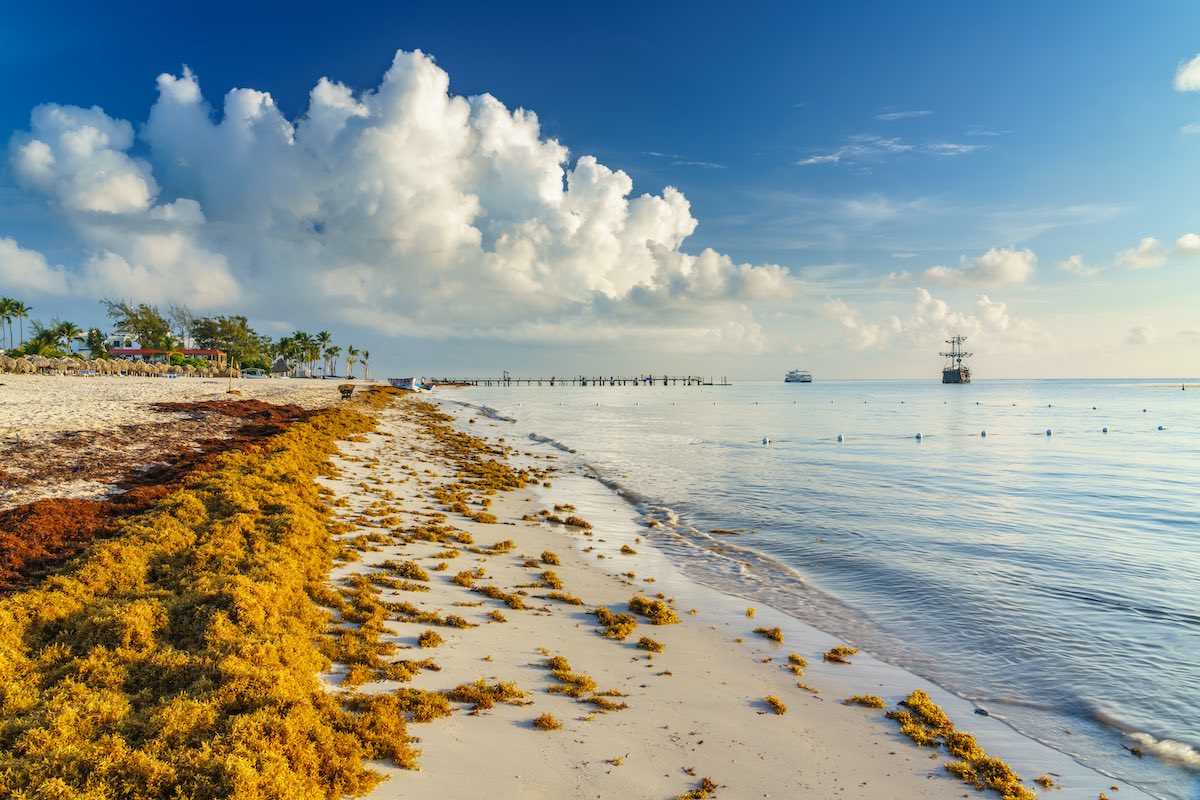
Masses of sargassum seaweed have been invading popular and touristic Caribbean destinations—from Puerto Rico to Barbados— for months, ruining travelers’ vacations and worrying local authorities about economic and environmental consequences.
“This year has been the worst year on record,” said the researcher and faculty member with Florida Sea Grant Lisa Krimsky as reported by the news agency Associated Press (AP).
Krimsky, also Water Resource Regional Specialized Agent based in southeast Florida added: “It is absolutely devastating for the region.”
Over 18.8 million tons in May and over 24 million tons of these brown algae spread across the Atlantic Ocean this year and during July authorities informed that the sargassum keeps arriving non-stop and numbers have not decreased.
This year’s numbers have been considered by the University of South Florida’s Optical Oceanography Lab as “a new historical record” in a report recently published.
Oceanography professor Chuanmin Hu said that according to the data analyzed, the previous record was noted in May 2018 and this year the sargassum levels were higher by 20%. The professor confessed his reaction: “I was scared.”
Over 800 tons of sargassum were collected in June only from Cancun beaches. The different authorities in the Caribbean have been dealing with this problem by applying different strategies to protect local nature and prevent tourism chaos.
What Travelers Should Know About Sargassum
The large brown seaweed is considered harmless to humans but gives off an unpleasant smell —similar to rotten eggs— when it decomposes, covers beautiful sands and pristine waters, and can affect the local ecosystem.
Some people have reported rashes and blisters after being in contact with this seaweed. According to Florida Health’s report, this is caused by sea creatures that live within this algae. So, it’s better to avoid contact with it.
The sargassum creates island-like masses in the ocean that help animals migrate and has an important role in our ecosystem, but it gives off hydrogen sulfide that can irritate the eyes, throat, and nose. Travelers with asthma or other breathing illnesses might be more affected or could have trouble breathing after being exposed to it.
These are general recommendations when visiting a beach with sargassum:
Avoid touching it.
Use gloves if you have to handle it.
Close doors and windows if you are staying near beaches or coasts with sargassum.
Avoid the beach or staying for too long if you have asthma or respiratory problems.
Do not cook it or eat it. It is not edible, it can contain metals like arsenic and cadmium.
Another strategy for travelers is to plan their Caribbean vacations during times when they can avoid these algae or consider locations where it doesn’t usually sit.
The best times to visit the Caribbean are between November and March, sargassum’s peak season is usually between May and September.
Top Destinations Dealing With Sargassum
Cancun authorities have assigned local workers to collect sargassum away from there to beaches. Travelers have opted for beaches and locations that do not have these algae like Isla Mujeres or visit spectacular Cenotes around the Quintana Roo state.
In Puerto Rico, local authorities worry about sargassum because they believe that it can affect one of the hottest spots on the island, the bioluminescent bay Fajardo. Tourism kayak companies and the government are studying the sargassum and working on solutions while cleaning it from their coasts.
In Costa Rica, authorities assigned a team to take care of the algae and protect the nesting process of sea turtles. The government also worries about the offshore industry and has been working in collaboration with other nations.
International organizations, including the United Nations, are studying the sargassum, trying to understand why it keeps growing, and working on the best solutions.
Also, different local companies are turning sargassum into new products —from gas to cosmetic products to vegan leather— to use its excess and turn it into innovative solutions.
Enter your email address to subscribe to Travel Off Path’s latest breaking travel news, straight to your inbox
Disclaimer: Current travel rules and restrictions can change without notice. The decision to travel is ultimately your responsibility. Contact your consulate and/or local authorities to confirm your nationality’s entry and/or any changes to travel requirements before traveling. Travel Off Path does not endorse traveling against government advisories
Three beaches in a top resort destination in Mexico have failed cleanliness tests, a story that’s bound to come as a blow to travelers who have plans to visit these areas. Whilst the vast majority of beaches passed the cleanliness guidelines put forth by the World Health Organization (WHO), the three beaches that failed have taken the headlines, and could have an impact on the overall levels of beach tourism in Mexico going forward.
It’s been a troubling few months for the beaches of Mexico, with authorities not only battling hard against the spread of the stinky seaweed sargassum for weeks, but now also having to contend with this latest development. However, there’s no need to go ahead and cancel your travel plans just yet. Here’s everything travelers need to know about the three beaches that failed the WHO’s cleanliness test, plus a look at how the situation regarding the spread of sargassum is at present.
Beaches Fail Cleanliness Tests – Information For Travelers
When it comes to determining the cleanliness of beach water, a range of standard bacterial indicators are used, testing for a range of issues such as E. Coli, fecal matter and enterococci. According to the WHO’s guidelines, beaches must have fewer than 200 enterococcus faecalis – that’s bacteria from a fecal origin – per every 100 milliliters of water. Unfortunately for Mexico, three of its beaches exceeded these limits, making them unsafe for recreational use and potentially jeapordizing the travel plans of many travelers.
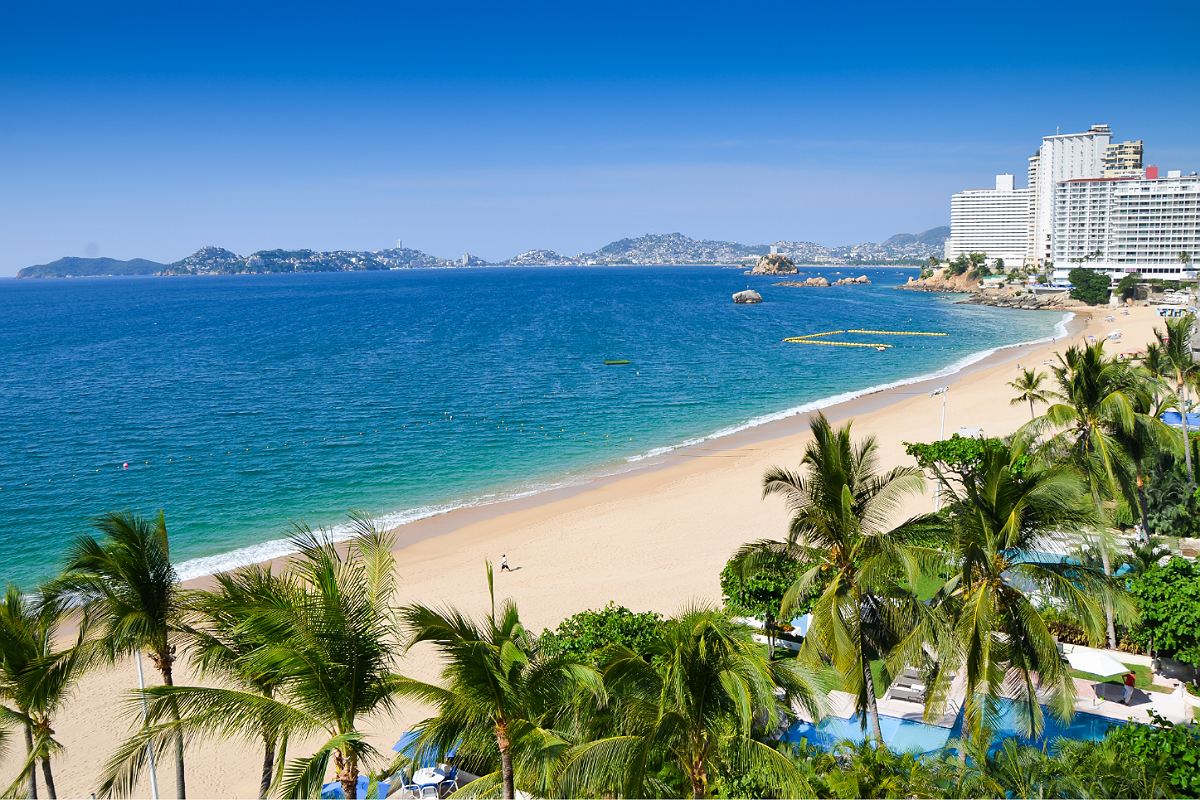
The investigation, which was completed by COFEPRIS (the Federal Commission for the Protection against Sanitary Risk), found that the three beaches to exceed the limit were all in the same city, Acapulco – a destination that had recently posted tourist arrivals figures higher than the likes of Cancun and Mexico City. The beaches in question are Manzanillo, Hornos and Suave, and their levels of enterocci were 373, 292 and 241 respectively – figures that put them way above the permitted allowance of 200 needed to vacation there safely.
Last Easter, only one beach was deemed unsafe to visit, yet whilst the situation may appear to be getting worse, that’s not how travelers should see it. Avoiding the three beaches in Acapulco may be a pain for travelers who have already booked to visit that region, however there are plenty of other beaches across the country that are perfectly safe to visit, with an overwhelming majority of Mexican beaches deemed clean enough to enjoy.
A total of 98.96% of the beaches tested by COFEPRIS passed the analysis – meaning travelers really won’t have to go far to find a clean beach. Some destinations proved particularly clean, such as Yutucan and Tamaulipas, whilst the ever-popular destination Quintana Roo – home to Cancun, Playa Del Carmen and Tulum – was also found to have impressively low levels of enterococci on its beaches.
The 10 beaches that had the most bacteria are as follows:
Manzanillo, Acapulco – 373 enterococci per 100ml water
Hornos, Acapulco – 292 enterococci per 100ml water
Mild, Acapulco – 241 enterococci per 100ml water
Icacos I, Acapulco – 199 enterococci per 100ml water
Nexpa 1, Aquila Michoacán – 194 enterococci per 100ml water
Caleta, Acapulco – 193 enterococci per 100ml water
Yelapa, Jalisco – 181 enterococci per 100ml water
Tumbao II, Veracruz – 173 enterococci per 100ml water
El Bosque, Tabasco – 172 enterococci per 100ml water
Quimixto, Jalisco – 172 enterococci per 100ml water
Unfortunately, fecal matter isn’t the only thing to blight Mexican shores this year. The country has been beseiged by high levels of sargassum – a harmless, yet unsightly and stinky seaweed that has been washing up all over the Caribbean but has landed in Quintana Roo in particularly large volumes. Whilst help in containing the seaweed has come in the shape of an army of hotel workers and the Navy, travelers should brace themselves for its sulphuric stench and aesthetic-damaging properties.
Enter your email address to subscribe to Travel Off Path’s latest breaking travel news, straight to your inbox
Disclaimer: Current travel rules and restrictions can change without notice. The decision to travel is ultimately your responsibility. Contact your consulate and/or local authorities to confirm your nationality’s entry and/or any changes to travel requirements before traveling. Travel Off Path does not endorse traveling against government advisories
Are you going on an Euro backpacking trip anytime soon?
You may want to reconsider whatever itinerary you have planned, as we have just come across an irresistible deal that will make your travels much simpler. Instead of multiple, ultra-expensive flights that will likely get delayed in the end, how about booking a single train ticket enabling you to travel across 33 countries for a whole month, or longer, for less than $200?
The Eurail Pass is a Europe-wide initiative aimed at boosting train ridership at a time when carbon emissions are rising, especially after the resumption of international flights, and strengthening connectivity within the continent. Essentially, pass holders are allowed to hop on and off trains as many times as they wish, within a pre-determined period of time, as per existing fare rules.
Pretty exciting, right? Here’s everything you need to know about the increasingly popular ‘Europe train pass’:
Travel All Of Europe With A Single Ticket
Known as the Eurail Pass, this ticket grants unrestricted travel to 33 countries within the European region, including both European Union (EU) and non-EU member states, such as Turkey and Serbia. In sum, it grants its holders the right to hop on any train of their liking for a number of days within a specific timeframe (e.g. 7 days within 1 month).
Effectively, it is a pretty good deal for backpackers visiting Europe for longer, as it allows them to travel the continent with a single pass, as opposed to booking separate tickets for each section of their trip. There’s more: if you’re a young traveler, aged 12 to 27, you get a 25% discount off the fare, regardless of the longevity of the pass.
This means you may be eligible for a minimum of 4 days of unlimited travel within Europe for only $188.
Train Travel Is The Way Forward
If there is one trend picking up momentum now that the aviation industry has descended into chaos is long-distance train travel. Originally a transport modality that only a niche of travelers used, either for environmental concerns or for the scenic views, trains are getting more and more affordable now that flight prices have gone through the roof.
The crisis is hitting some countries harder than others, particularly in Europe, where a number of airports have been forced to cap the number of daily flights due to the overwhelming demand, mostly to no avail. Luckily, unlike the Americas, Europe has a well-developed rail system offering links between multiple cross-border destinations.
Surpirisngly, many Americans are not aware the Eurail Pass exists, but one of the best ways to travel Europe is booking this multi-journey ticket valid between one to three months, or the exact amount of time tourists are normally allowed to stay in Europe. Needless to say, train travel is the way forward.
What Are The Eurail Fares And Validity?
Eurail Pass Fares
Unlimited Travel Days Within 1 To 2 Months
12-27 years
4 unlimited travel days within 1 month – $188 (2nd class) / $250 (1st class)
5 unlimited travel days within 1 month – $215 (2nd class) / $287 (1st class)
7 unlimited travel days within 1 month – $255 (2nd class) / $341 (1st class)
10 unlimited travel days within 2 months – $306 (2nd class) / $408 (1st class)
15 unlimited travel days within 2 months – $376 (2nd class) / $502 (1st class)
28-59 years
4 unlimited travel days within 1 month – $250 (2nd class) / $334 (1st class)
5 unlimited travel days within 1 month – $287 (2nd class) / $383 (1st class)
7 unlimited travel days within 1 month – $341 (2nd class) / $454 (1st class)
10 unlimited travel days within 2 months – $408 (2nd class) / $544 (1st class)
15 unlimited travel days within 2 months – $502 (2nd class) / $669 (1st class)
60+ years
4 unlimited travel days within 1 month – $225 (2nd class) / $300 (1st class)
5 unlimited travel days within 1 month – $258 (2nd class) / $344 (1st class)
7 unlimited travel days within 1 month – $307 (2nd class) / $408 (1st class)
10 unlimited travel days within 2 months – $367 (2nd class) / $490 (1st class)
15 unlimited travel days within 2 months – $452 (2nd class) / $602 (1st class)
Continuous Travel
12-27 years
15 consecutive days of unlimited travel – $338 (2nd class) / $451 (1st class)
22 consecutive days of unlimited travel – $396 (2nd class) / $527 (1st class)
28-59 years
15 consecutive days of unlimited travel – $451 (2nd class) / $601 (1st class)
22 consecutive days of unlimited travel – $527 (2nd class) / $702 (1st class)
60+ years
15 consecutive days of unlimited travel – $406 (2nd class) / $540 (1st class)
22 consecutive days of unlimited travel – $474 (2nd class) / $632 (1st class)
If you are traveling within a single European country, there is a separate Eurail One Country Pass that can be purchased. Unlike the standard Eurail Pass, prices vary among countries. In Italy, for instance, they start at $107 for 3 days of unlimited travel within 1 month, though it can be as expensive as $326 for a 5-day pass.
What Countries Are Included In The Pass?
A total of 33 European countries participate in the Eurail scheme. Those are:
Map of European countries where Eurail Passes are valid, highlighted in green. Image by Eurail via the Eurail official website.
Austria
Belgium
Bulgaria
Croatia
Czech Republic
Denmark
Estonia
Finland
France
Germany
Greece (including islands)
Great Britain (England, Scotland and Wales)
Hungary
Italy
Ireland
Latvia
Lithuania
Luxembourg*
The Netherlands*
North Macedonia
Norway
Poland
Portugal
Romania
Serbia
Slovakia
Slovenia
Spain*
Sweden
Turkey
*Only these countries still have Covid entry requirements in place. If you’re flying into Europe via Luxembourg, The Netherlands or Spain, make sure you carry valid health documentation. This may include a mandatory vaccination certificate and/or negative test issued prior to departure.
Eurail passes are also valid for bus and ferry journeys in select locations, such as Spain, where AML, Balearia and Grimaldi Ferry Lines are included. In Sweden, some of the participating ferry operators are Finnlines, Fjord Line, Stena Line and Viking Line, among others. Tourists can find the complete list of participating transport operators on this link.
How Do I Buy And Use An Eurail Pass?
In order to be eligible to buy an Eurail Pass, you must fulfill two simple requirements:
*This does not mean Europeans are barred from traveling by train without limits – they are simply required to apply for the Interrail Pass instead, which works just like the Eurail.
Tickets can be purchased via the official website, where tourists will be expected to create an account, providing details such as age, nationality and country of residence (for eligibility purposes). They will also be required to select the exact duration of their pass. The process is quite straightforward and the product is delivered directly to their Eurail account.
The pass can also be sent by post, in paper form, to their home in the U.S., Canada, or other locations ahead of their flight to Europe. Personally, we would recommend sticking to the online ticket as it is delivered within seconds of buying, and you won’t risk your mail getting lost, or damaging the actual ticket during your travels.
Once they have the Eurail Pass in hands, Americans are free to explore the whole of Europe by train, North to South, East to West and Central, according to their pre-selected number of travel days. It is worth noting it may be necessary to make a free seat reservation on some routes in advance, or at the station prior to departure.
This applies mostly to high-speed and night trains, where seating availability may be limited. Using the pass is super easy as well: if you’re carrying a paper ticket, you’ll need to have an official ‘activate’ it before your first trip, preferably at larger train stations such as Paris Gare du Nord, London’s King Cross, or Amsterdam Centraal. Activation includes getting a stamp indicating the ‘start and end day’ of the pass.
Alternatively, e-pass holders can simply activate it themselves after ordering from the official website. Lastly, it is of utmost importance that all Eurail customers manually fill in their travel diary, which is usually attached to their paper ticket or their online booking, detailing their departure station, departure time and destination for each trip.
In case they don’t keep a record of their traveling in the Eurail diary, including online, their pass will not be considered ‘valid’ by staff, and fines may incur. For more information on how to use the pass and fill in the correct travel information, travelers are advised to contact Eurail or qualified staff at stations. Once the Pass is validated ahead of the inaugural trip, the ‘clock’ starts running.
What Are Some Of The Recommended Train Journeys?
The Highlands of Scotland, where incredible natural scenery can be found, including the mystical Loch Ness and Great Britain’s highest peak, Ben Nevis
The night train from Vienna to Budapest, famous for being one of the most scenic train rides in Europe
The dreamy Turkey trip between Ankara, Turkey’s capital, to the historical Kars, with breahtaking views o the Anatoliann highlands
The relaxing 7-hour journey from Paris to Milan with the world-class Frecciarossa, passing through the idyllic French countryside
The Glacier or Bernina Express, traveling through the majestic Swiss Alps into Northern Italy
Enter your email address to subscribe to Travel Off Path’s latest breaking travel news, straight to your inbox
Disclaimer: Current travel rules and restrictions can change without notice. The decision to travel is ultimately your responsibility. Contact your consulate and/or local authorities to confirm your nationality’s entry and/or any changes to travel requirements before traveling. Travel Off Path does not endorse traveling against government advisories
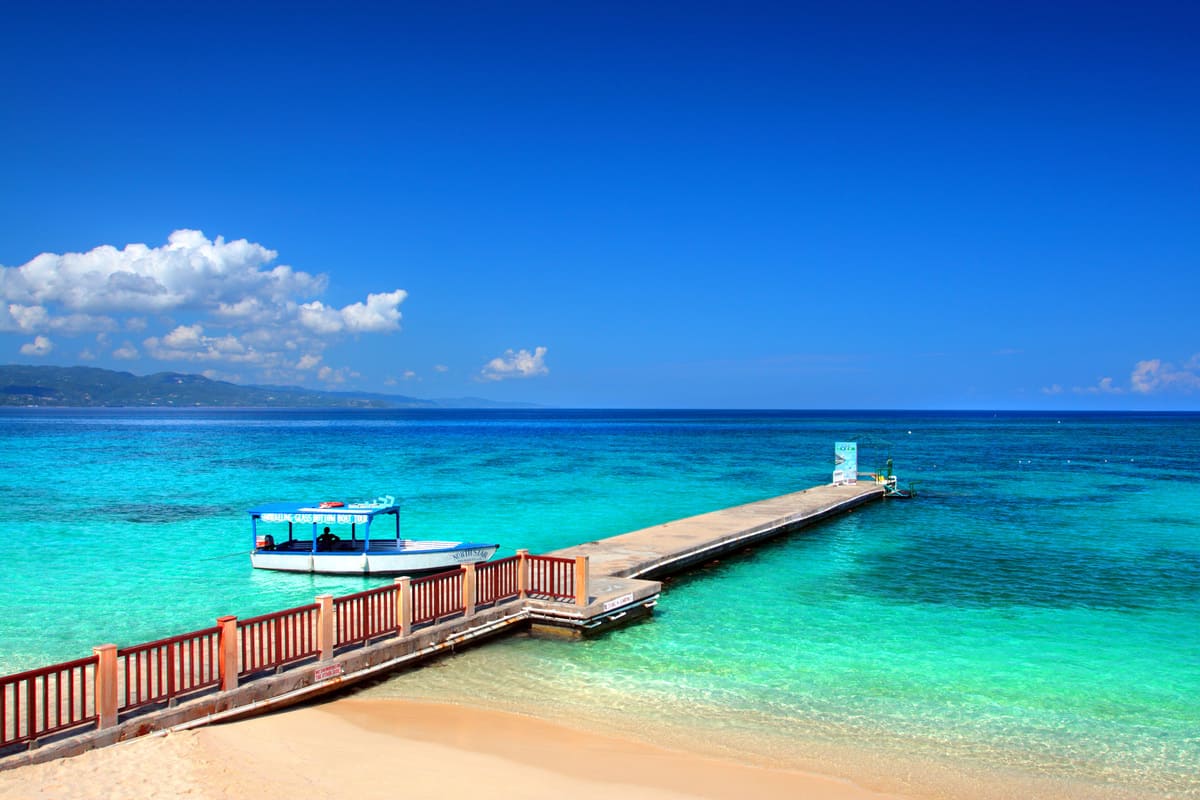
Now that the world has started to move on from Covid, and more countries have reopened following two years of harsh rules, the first tourism statistics are in with some surprising results. The trendiest destination for 2022 is not Cancun, and definitely not former tourism leader Paris: Montego Bay, Jamaica, has claimed the top spot.
During the pandemic, most of the world came to a standstill as a majority of national governments resorted to lockdowns and travel curbs in a bid to slow down the virus. Consequently, the tourism industry was hit the hardest, namely in overly conservative places like Canada, where arrival figures have hit historical lows.
Interestingly, some countries are recovering much faster than others, and we may have found something in common between them:
Montego Bay Leads The Summer Travel Recovery Ranking
According to the Outlook Report published by the World Travel Market (WTM), Jamaica’s Montego Bay is the top city in terms of post-Covid recovery. The study, conducted by ForwardKeys, a company specializing in travel data, noted that the hub has experienced a ‘positive growth’ of 23 per cent this summer, comprising the third yearly quarter, more than any other on the list.
This means Jamaica’s once-secondary destination, after the metropolitan Kingston, is now perhaps the most sought-after vacation spot in the world, out of the twenty cities that appeared on this specific ranking. The study’s conclusion should come as no surprise to some, seeing that, as soon as late 2021, Jamaica already outpaced other countries in arrival figures.
At the time, more specifically in November, demand for Jamaica stood at 38 per cent of 2019 levels – still far lower than the pre-pandemic years, but much higher than the global average of 24 per cent. When this data came out, the Caribbean country still required incoming tourists to present a negative test for entry.
As of April 14, however, all mandates barring the entry of tourists have been fully scrapped, including that of testing, suggesting this new growth may be attributed to the lack of health regulations. While the latest report does not provide a precise comparison, it does assert that Montego Bay is one of the ‘most resilient’ cities in the post-pandemic world, based on tourist numbers for summer 2022, and the pre-Covid 2019.
Why Is Montego Bay So Popular Among Tourists?
So now that Jamaica is open, and it has cemented its status as a freedom haven, why are so many travelers flocking into Montego Bay specifically, and not Kingston or Ocho Rios? Part of that may be attributed to a unique mix of busy city life and a picturesque seaside, making it a place where visitors can get the best of both worlds.
A majority of Montego Bay-bound vacationers are heading to all-inclusive resorts as well, and there are plenty of them to choose from, such as Sandals Montego Bay, Secrets St. James, and the phenomenal Jewel Grande Montego Bay Resort & Spa. In sum, the city simply has one of the best developed hospitality sectors in all of the Caribbean.
The Top 5 Trendiest Destinations For 2022
What about the other top destinations for 2022, though? The 3 best performing cities are:
Montego Bay, Jamaica with a 23% growth
Punta Cana, Dominican Republic with 19%
Cancun, Mexico with 14%
Other cities in the top 5 include Cairo, the capital of Egypt, and Dehli, the number one city in India. The one thing all of these destinations, no matter how far from each other, have in common? They have removed all, or most of their Covid curbs, including mandatory vaccination for travel, pre-departure testing and quarantine.
With the exception of India, the one country on this list that continues to enforce stricter entry rules for non-vaccinated tourists, the remaining four have already reinstated their 2019 normal entry guidelines. This is further indication that travelers are opting for destinations where they will not face bureaucratic hurdles upon landing.
Jamaica Travel Is Booming Again
Jamaica’s Tourism Minister Edmund Bartlett sounded extremely pleased with the news, as he noted Jamaica is ‘bouncing forward’ following the ‘devastating impact’ of Covid. In the Minister’s words, Jamaica is one of the most ‘tourism dependent’ economies in the world, making the positive tourism trend very important for the island.
Airlines have been carefully watching Jamaica’s booming travel market, also: just last month, Frontier added its fifth flight to the country and flash flight deals keep popping up, despite the ongoing aviation crisis. Perhaps unfortunately for some, the trendy Montego Bay is bound to be jampacked, especially now that the U.S. dropped its own testing rule for returning Americans.
If you’re planning on visiting soon, you may want to secure those bookings in time before it sells out.
Enter your email address to subscribe to Travel Off Path’s latest breaking travel news, straight to your inbox
Disclaimer: Current travel rules and restrictions can change without notice. The decision to travel is ultimately your responsibility. Contact your consulate and/or local authorities to confirm your nationality’s entry and/or any changes to travel requirements before traveling. Travel Off Path does not endorse traveling against government advisories
As the first official post-pandemic summer unfolds, millions of travelers are heading to their favorite European destinations. Most travelers do not need to worry about Covid entry requirements, as nearly all European nations have removed all entry requirements. The most recent country to do so was France, which removed entry restrictions on August 1st, 2022. After France’s announcement, only three European countries still have Covid entry requirements for international travelers.
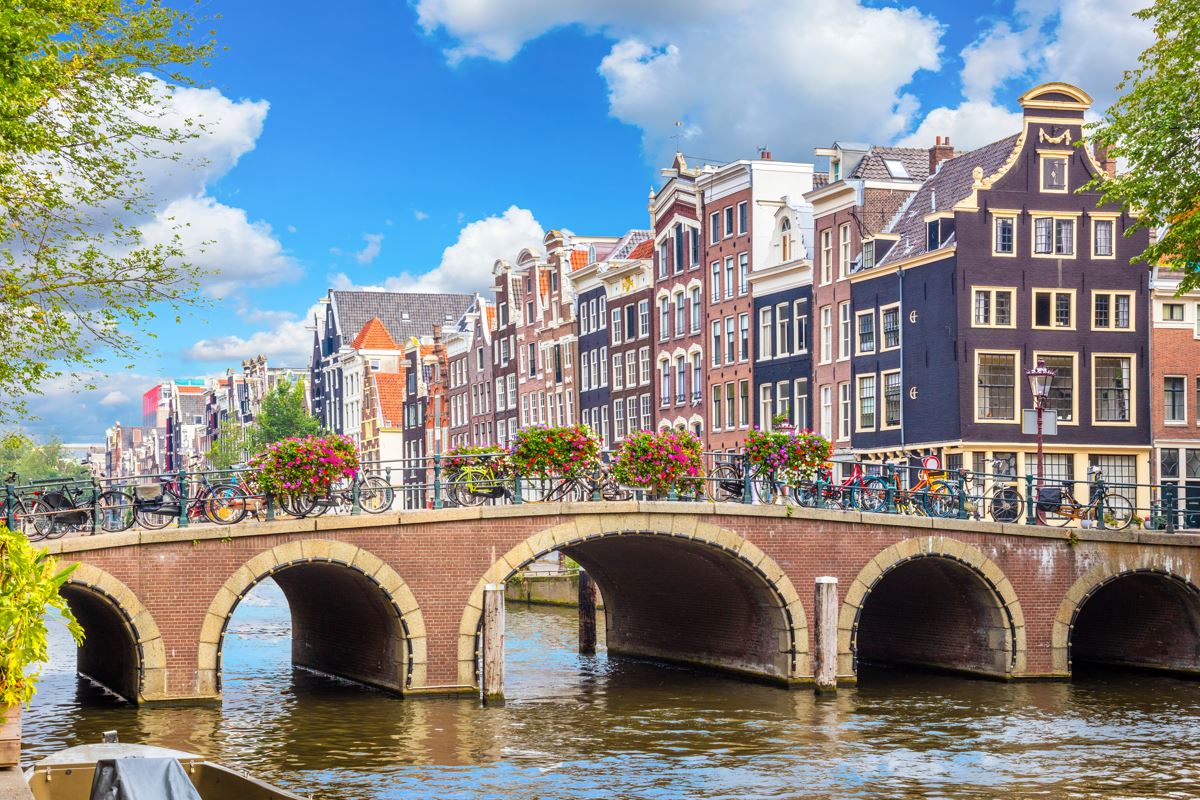
The last three countries in Europe with entry requirements are Spain, The Netherlands, and Luxembourg. For travelers heading to other European nations, they won’t have to worry about: vaccination status, recovery proof, testing, or quarantine. Unfortunately, for those wishing to visit any of the three countries listed above, there are still restrictions in place that may force some travelers to seek out other destinations.
Spain Entry Requirements
For travelers from EU or Schengen Associated countries, there are no restrictions for entering Spain. For those coming from countries like America or Canada, there are still entry requirements in place.
Travelers Must Show Proof of One of The Following:
Certificate of Covid-19 Vaccination
A negative NAAT test taken within 72 hours of departure, or an Antigen test taken within 24 hours of departure.
Certificate of recovery from Covid-19.
For those willing to fulfill one of the requirements above, Spain currently allows tourists to visit. Restrictions on occupancy in establishments have been lifted, and it is no longer mandatory to wear masks indoors or outdoors unless on public transport or in health centers. For travelers planning to head to Spain, we recently announced the cheapest and most expensive Spanish cities to visit this summer.
The Netherlands Requirements
For travelers from EU or Schengen Associated countries, there are no restrictions for entering The Netherlands. For those coming from countries like America or Canada, there are still entry requirements in place.
Travelers Must Show Proof of The Following:
Certificate of Covid-19 Vaccination
For those who are fully vaccinated that wish to visit The Netherlands, their trip should not be hindered too much. Masks are not required anywhere, including on public transport. Public venues like restaurants or bars are operating as usual and no longer require a Covid entry pass.
Luxembourg Requirements
For travelers from EU or Schengen Associated countries, there are no restrictions for entering Luxembourg. For those coming from countries like America or Canada, there are still entry requirements in place.
Travelers Must Show Proof of One of The Following:
Certificate of Covid-19 vaccination
Certificate of recovery from Covid-19
For fully vaccinated travelers, Luxembourg is still an option for a visit. There is no quarantine requirement, and no curfews are in place. There is no longer a mask mandate, except in hospitals and elderly care centers.
When Will Entry Requirements End?
Unfortunately, the end dates for entry requirements for Spain, The Netherlands, and Luxembourg can only be speculated. However, they have each given signs that an end to entry requirements is looming. All three countries have revised their entry requirements for EU or Schengen Associated nationals, allowing them to visit without restriction. As the countries monitor case counts and infection rates after easing restrictions on EU and Schengen Associated country nationals, they are sure to move forward with removing restrictions on the rest of the world.
Are Restrictions Gone For Good?
Let’s hope so! Travelers have suffered restriction whiplash in some countries over the last few years. Countries like the UK saw almost all Covid restrictions go away in July of 2021, only to see them come back with a vengeance as Omicron swept through the nation in December of the same year. It seems that most countries have decided enough is enough.
However, the World Health Organization recently urged Europe to reinstate Covid restrictions before it is too late ahead of the fall and winter season. Time will tell whether or not Covid restrictions stay gone for good, but it seems the majority of travelers and countries are ready to put it to rest.
Enter your email address to subscribe to Travel Off Path’s latest breaking travel news, straight to your inbox
Disclaimer: Current travel rules and restrictions can change without notice. The decision to travel is ultimately your responsibility. Contact your consulate and/or local authorities to confirm your nationality’s entry and/or any changes to travel requirements before traveling. Travel Off Path does not endorse traveling against government advisories
Beginning today, August 1st 2022, France has officially ended all Covid restrictions for international travelers. As the country reopens completely, travelers will no longer need to test before arrival.
Travelers will also not need to present proof of recovery from Covid-19 and will not require proof that they have been vaccinated. Travelers will no longer need to have a ‘compelling reason’ for entering the country and can come and go like they could before the pandemic.
This is excellent news for travelers hoping to spend a lovely holiday in France. Hopefully, this will be the definitive end to all Covid restrictions in the country.
Though France has ended all Covid restrictions starting today, the French government still retains the right to activate “emergency brake” measures for up to two months in the event of a new variant or significant increase in cases. This “emergency brake” contingency is valid until January 31st, 2023. After the 31st, the government cannot reintroduce measures without parliamentary approval.
An Open France & Europe
France’s decision to end all Covid restrictions is one more step toward all major European destinations being restriction free. The Netherlands and Spain are the last remaining major destinations in Europe that still have Covid protocols in place. Both of which still require proof of vaccination for passengers from certain countries.
The world is easing into normality after two years of extra travel protocols. As it does, travelers are sure to seek out countries that have fully rescinded their Covid protocols. Testing costs, the extra time spent in line, and the general hassle of restrictions have been obstacles for many travelers. Countries that still have them in place are likely to see fewer tourists than those without restrictions.
Travel Is Easier, For The Most Part
While travel will be easier without Covid restrictions, travelers should be wary of delays plaguing airports in France. For instance, between July 1st and July 10th, Charles De Gaulle Airport (CDG) in Paris only had 38% of its flights operate on time. This has become the new normal when flying, it seems. Staffing shortages and increased demand have put a lot of pressure on the aviation industry.
Avoiding The Chaos
It should be noted that Orly Field Airport (ORY), also in Paris, had 79% of its flights operate on time during the same period between July 1st and July 10th. If given a choice, travelers will be more likely to have a smooth experience by flying into ORY. The difference between airports can significantly impact travel, making it essential to know which European airports are the best for avoiding flight delays.
Another way travelers visiting France can avoid long lines is by taking advantage of fast-track entry when coming into the country. France now allows certain non-EU nationalities to come into the country by taking advantage of their Parafe Electronic Gates. The gates allow travelers to cross into France without speaking to a border agent. The most significant benefit to this process is the decreased wait times, as the lines are typically shorter and faster. Travelers hailing from the U.S., Canada, the United Kingdom, and several other countries are now allowed to use the system.
Travelers Love France
France, and Paris especially, has always been a highly sought destination by tourists. Recently, a TikTok survey revealed that Paris was the 6th most viewed destination on the platform, with 11.2 billion views as of May 17th, 2021. Airlines have noticed the increased interest, and France’s French Bee Airline recently announced $281 nonstop flights from Miami to Paris to take advantage of the destination’s popularity. The flights will begin this December and will operate three times per week.
A Post Covid World
As France, Europe, and the rest of the world continues to open up without restrictions, travelers are more eager than ever to return to the way things were before the pandemic. Though staffing shortages and supply chain issues still hinder some aspects of travel, the scrapping of restrictions is making travel easier for all parties. Travelers, staff, airports, and airlines will benefit as the world continues to reopen.
Enter your email address to subscribe to Travel Off Path’s latest breaking travel news, straight to your inbox
Disclaimer: Current travel rules and restrictions can change without notice. The decision to travel is ultimately your responsibility. Contact your consulate and/or local authorities to confirm your nationality’s entry and/or any changes to travel requirements before traveling. Travel Off Path does not endorse traveling against government advisories
The best destinations around the world for remote working have been revealed following a study. Travel wasn’t the only thing to change significantly as a result of the pandemic, with the way in which we work also undergoing a facelift courtesy of strict policies such as lockdowns and stay at home orders. As a result of these policies, now more and more people are choosing to work from home where possible – with some even electing to work from a different country altogether.
Taking into account a range of different factors, from a country’s digital infrastructure to its economic and social conditions, a definitive list of the best places to work remotely has been created by NordLayer – and it might just inspire you to take the plunge and book those tickets. Here’s a look at the list of the top global destinations for remote working, plus a look at the methodology behind how it was calculated.
Top Destinations Revealed – Information For Travelers
The study into which destinations around the world are the best choices for remote workers was completed by the network access security company NordLayer. Officially titled the Global Remote Work Index, it analyzed destinations across several key metrics, including safety, internet quality, tourism attractiveness, cost of living and English proficiency. Each country was then assigned an index score, which were used to rank countries. A total of 66 countries were included in the study in total, providing travelers with remote work on their minds with plenty to digest.
Taking top spot in the Global Remote Work Index was Germany. The European economic powerhouse scored an unbeatable 0.824 on the index altogether, with notable highlights including the country’s impressive cyber security and economic and social conditions. Whilst it’s cost of living was amongst the higher side of the table and its internet quality and prices might put some travelers off, its high English proficiency, investment in education and healthcare and tourism attractiveness ratings were enough to see it crowned #1.
Second place went to another European nation, Denmark, with an index score of 0.816. Whilst being one of the most expensive countries on the list might prove unpopular with prospective remote workers, Denmark ranked in the top 10 in various categories such as internet quality, e-infrastructure and global health coverage – all of which are key things for remote workers. Offering a high quality of living coupled with a high cost of living, Denmark is a destination many may want to consider – but it might not be a hit for those looking to save.
The bronze medal went to the US, with an overall index score of 0.809. The US scored highly in key metrics such as economic and social conditions, digital and physical infrastructure and Covid-19 handling – where it came out on top overall. Low cyber security rankings and a high cost of living might put many remote workers off the idea of moving to the states, however it does offer travelers a high quality of living – which is one of the reasons many consider remote working in the first place.
Spain came in fourth place with a score of 0.796, citing good cyber security performances, a more affordable cost of living than many destinations and the best tourism attractiveness rating out of any of the countries included in the index. Fifth place went to Lithuania, narrowly behind Spain with a score of 0.794. Lithuania boasts the second highest cyber security rating and third most affordable internet, though its quality is far behind some of its peers. Not the most glamorous location, Lithuania offers remote workers the opportunity to save money and conduct their work with peace of mind.
The top 10 countries in the Global Remote Work Index are as follows:
Enter your email address to subscribe to Travel Off Path’s latest breaking travel news, straight to your inbox
Disclaimer: Current travel rules and restrictions can change without notice. The decision to travel is ultimately your responsibility. Contact your consulate and/or local authorities to confirm your nationality’s entry and/or any changes to travel requirements before traveling. Travel Off Path does not endorse traveling against government advisories
New Survey Suggests We Need To Be Much More Thorough Before Checking Out With A Vehicle
Renting a car can be an excellent way of gaining a little extra independence on a vacation. Forgoing the tour buses, keeping to your own schedule, and the ability to make unplanned stops can transform a trip. But it’s important to remember that we’re often still at the mercy of the rental centers.
Unfortunately, a new survey suggests that we need to be even more careful than we thought when dealing with hiring companies, especially during the checking-out process. According to the survey, recorded by iCarhireinsurance.com, almost a fifth of all car hirers find existing damage to the vehicle not listed on the check-out sheet.
For those unaccustomed to renting a car, just before receiving the keys and driving off, customers are typically shown around the vehicle by an employee. The worker should have a checkout sheet with any known damage to the car records clearly. This could be anything from a small chip in the paint to broken handles inside the car. The customer can check the sheet and compare the damage as they go to ensure there isn’t anything else not listed.
This is important for the customer, as any problems seen when they return the car that are not listed on the checkout sheet may be attributed to them. This could mean charges, insurance, claims, and even legal action in the worst cases.
According to the survey, around a quarter of car hire customers only check for major damage instead of thoroughly inspecting the vehicle, while 43% don’t list any of the damage they see. In some instances, people have reported damage but not listed it on the checkout sheet. If a different employee deals with the customer upon their return, liability becomes hard to prove.
It is strongly advised that anyone hiring a car check the vehicle completely, comparing all damage to the checkout sheet and ensuring that everything is listed. It’s also strongly recommended that customers take photos or video of the car both at pickup and return. Having as much evidence as possible is always beneficial should a case emerge down the line. Just under 10% of customers have been able to prove they were not liable for damage by using photos or videos taken of the vehicle.
Older generations are generally better at being more thorough. The figure for checking the car rises to 61% for over 55s, while those renting cars under the age of 34 are only doing so a shocking 27% of the time.
A worrying statistic that may foster distrust in the car rental industry is that 13% of those surveyed said an employee had told them they didn’t need to list any damage to the car on the checkout sheet, and a further 17% were able to return their car without an inspection as an employee was not available.
Never return your rental without having it checked first. If circumstances arise where it is not possible, as for it to be noted that no inspection was given but take pictures and video of the vehicle. Evidence is always key.
Over ten percent of those surveyed said they had received unexpected charges on their card after returning the vehicle, while others were charged large sums of money for seemingly small cosmetic damages.
Insurance goes a long way in these situations. Most car rental companies will offer insurance throughout the rental, but it’s often cheaper and safer to buy third-party insurance that has more coverage. These are often cheaper than those offered by the rental companies and can cover damage on often missed spots like the windshield or tires.
Make sure on your next rental that you check everything before leaving the lot. It could save you a lot of money and hassle when you return.
Enter your email address to subscribe to Travel Off Path’s latest breaking travel news, straight to your inbox
Disclaimer: Current travel rules and restrictions can change without notice. The decision to travel is ultimately your responsibility. Contact your consulate and/or local authorities to confirm your nationality’s entry and/or any changes to travel requirements before traveling. Travel Off Path does not endorse traveling against government advisories
Machu Picchu, the fascinating structure created by the Inca Empire in Peru, South America, attracts travelers from all over the world.
This Inca citadel was declared a UNESCO World Heritage Site in 1983 and is one of the most iconic landmarks in South America. Still, travelers must carefully study local rules before visiting.
The Peruvian Ministry of Culture just announced the expansion of the number of visitors per day because tickets until mid-august were already sold-out. The number changed from 4,044 visitors per day to 5,044.
The visitors limit had already been increased just a few days ago, on July 17, from 3,044 to 4,044. But it wasn’t enough for the current demand. The decision for a second expansion this month was taken after over 800 tourists were denied access to Machu Picchu and around 1,000 tourists and locals protested.
According to local authorities, this expansion shouldn’t affect the preservation of the Peruvian Historic Sanctuary and they shared a statement on Facebook: “This decision took into consideration the conservation of the property to avoid irreparable damage that compromises its outstanding universal value, following the recommendations that UNESCO issues to the Peruvian State.”
Machu Picchu Entry Limit
The decision to adopt an admission capacity has been taken to protect the environment and the historic structures.
The “Lost City of the Incas”, as Machu Picchu is also known, was considered one of the Seven Wonders of the World in 2007 and its popularity has only increased during the past few years. Local authorities worry about damage caused by visitors and over-tourism.
In 2019, when the new entry limit measure began, the daily limit was 2,500 tourists. The number has been constantly increasing ever since to adapt to visitors’ needs.
Still, tourists have sneaked past security or damaged structures—like a few tourists from Argentina, Brasil, Chile, and France did in 2020— and have even been deported from Peru.
During the pandemic, fewer travelers visited Machu Picchu, but now that travel is going back to pre-pandemic levels, Peruvian authorities must negotiate and satisfy demand while also protecting their sanctuary.
Concerns about overtourism have been reported all over the world. Other destinations like Venice in Italy and natural monuments like the Diamond Head State Monument in Hawaii are also restricting tourist entry.
What Travelers Should Know
Those interested in visiting Machu Picchu must take precautions and consider local rules and conditions. Here are a few recommendations and relevant information for travelers:
Book your ticket online as soon as possible. Be careful, there are scam pages, opt for the official site.
Each basic adult ticket cost 152 soles, around 38 US dollars (prices change depending on tour options selected and currency fluctuation). Children and students pay less.
Beware of altitude illness. Machu Picchu is located at 7,970 ft, on a high mountain. Travelers can get sick if they don’t climb gradually. The CDC has relevant official information travelers can read.
Prepare your route. Transportation is limited, there are three main ways to access the Inca citadel: the Inca Trail, by train, and through Hydroelectric. Travelers must consider their physical conditions, especially for the Inca Trail and the Hydroelectric alternative, and also prepare baggage accordingly.
Consider the best times to travel. According to travelers’ recommendations, the best period to visit Machu Picchu is from April to October when it is usually dry and clear —although crowded in July and August. During January and February is usually rainy and travelers might not be allowed to visit the sanctuary.
Bring proper clothing and water. The best strategy is to bring lightweight layers and also a rain jacket, even if it looks sunny, the weather frequently changes. Sun protection is highly recommended as well.
Enter your email address to subscribe to Travel Off Path’s latest breaking travel news, straight to your inbox
Disclaimer: Current travel rules and restrictions can change without notice. The decision to travel is ultimately your responsibility. Contact your consulate and/or local authorities to confirm your nationality’s entry and/or any changes to travel requirements before traveling. Travel Off Path does not endorse traveling against government advisories
Beginning this August, Airbnb will be changing its host cancelation fee structure in to crack down on hosts who cancel reservations at the last minute. Airbnb has grown to be a wildly popular platform over the last decade, and it continues to offer affordable, unique, and diverse accommodations not found anywhere else. When it works, it works, but sometimes the unexpected can happen.
Bookings made months in advance that were considered a done deal have been canceled by the host, leaving travelers scrambling to find accommodation for their trips. Sometimes the reasoning is understandable enough, such as downed powerlines or unexpected damage to the property. However, sometimes the reason is outright unfair. Some hosts list the same property twice at different rates and cancel the booking for the person who reserved the lower rate.
Why Airbnb Is Making The Change
Until recently, the only penalty hosts faced when canceling a booking was a $50 to $100 fee, dependent on how close to the reservation the host canceled. This fee is excruciatingly low compared to how much hosts can make if they list a property more than once or find other ways to “resell” the reservation at a higher rate.
Consider the following:
A host has a single property they list on Airbnb for $100 per night. This is low enough they can nearly guarantee a booking. Now they list the same property again, either on Airbnb or another platform, for $250 per night. Why? Sometimes you catch a big fish where you least expect it. The property may not be worth $250 per night, but the host hopes to get lucky. Now, imagine you reserved the Airbnb months ahead of an upcoming trip. However, three days before you’re ready to leave, the higher-priced listing gets booked. What do you think the host will do? They will recoup the minuscule fee incurred in a single night, so of course they will cancel your reservation!
The New Standard
The problem was getting out of hand, with 41.1% of scams affecting Airbnb users falling into the “Multiple Listings Scam” category in 2021. Understandably, Airbnb has decided this needs to stop. When hosts cancel at the last minute, the travelers affected lose all confidence in the platform. They will very likely advise everyone they know to avoid using Airbnb. For this reason, Airbnb will be updating its host cancellation policy beginning on August 22nd, 2022.
Beginning this August, the minimum cancelation fee will be $50, and the maximum fee will be $1000. The fee imposed will be dependent upon how close to the reservation the host cancels. Here is the breakdown:
If Cancelled:
30 days ahead of check-in: 10% of Reservation Cost
Less than 30 days but more than 48 hours before check-in: 25% of Reservation Cost
Less than 48 hours before check-in: 50% of Reservation Cost
What It Means For Travelers
Travelers will likely reap the benefits of this necessary change. Firstly, host cancellations are more likely to decrease overall. In the case of the multiple listing example above, a fee of $1000 would greatly diminish any additional profit the host would gain by double listing the property. Knowing this, the host is less likely to double-list the property in the first place.
Additionally, travelers are likely to receive more support from Airbnb when things still don’t pan out as intended. Before the change, Airbnb would try to help travelers find similar accommodations. The company would their original deposit to a new booking. However, no similar properties were often available at the same price point. This forced travelers to either stay in sub-par accommodations, stay further out from their originally intended area, or cancel their trip and receive a refund.
Time will tell whether the change effectively lowers the incidence of host cancellations, but the future looks promising. Airbnb is a unique alternative to traditional bookings such as hotels, and this new change is sure to inspire more confidence in the platform moving forward.
Enter your email address to subscribe to Travel Off Path’s latest breaking travel news, straight to your inbox
Disclaimer: Current travel rules and restrictions can change without notice. The decision to travel is ultimately your responsibility. Contact your consulate and/or local authorities to confirm your nationality’s entry and/or any changes to travel requirements before traveling. Travel Off Path does not endorse traveling against government advisories