Travelers with eyes on visiting Australia rejoice, as the country has just removed all of its strict Covid-19 related entry requirements. The Land Down Under has made headlines throughout the pandemic for its strict, no-nonsense approach to dealing with the spread of the virus. From all but closing its borders to international travelers to implementing city wide lockdowns over a handful of cases, the country took extreme measures with the aim of keeping its people safe – but it looks like, at long last, its days of arbitrary entry restrictions have finally come to an end.
For the first time in years, it means that all visa-holding travelers will now be able to visit Australia and sample all the sunny, culture-filled country has to offer – and it comes just in time for summer. Here’s a look at the changes Australia has made to its Covid-19 related entry restrictions, including which entry requirements are on their way out, which other restrictions travelers should be aware of plus a look at the current Covid-19 situation in the country.
Australia Removes Entry Barriers – What Travelers Should Know
Up until recently, Australia boasted some of the strictest entry requirements in the world. On February 21st – when other countries were beginning to drop their entry requirements completely – Australia only made it possible for fully vaccinated travelers to enter, making entry to the country impossible for millions of unvaccinated or only partially vaccinated travelers. However, as of Wednesday, these strict entry requirements are set to be a thing of the past.
On Sunday Australia’s home affairs minister, Clare O’Neil, announced that the country would be removing all of its Covid-19 related entry requirements, making visiting the country not only much easier, but much more of an attractive proposition for millions of potential arrivals. In doing so, Australia has joined the likes of popular destinations such as Portugal, Thailand and several other countries who have also made changes to their entry requirements over the past few days.
That means that from Wednesday July 6th, travelers will no longer need to show proof of vaccination in order to be able to enter the country, allowing all visa-holding or visa exempt travelers to be able to enter for the first time since the pandemic took hold. With the country already having removed the requirement to take a Covid-19 test, it makes entry into the country just as easy as it was prior to the pandemic.
That’s not the only entry requirements change that Australia is set to make. Also from Wednesday, the country will be removing the requirement for inbound travelers to complete the Digital Passenger Declaration, or DPD. The DPD has long since come under fire ever since it was rolled out for being not very user friendly. However, the Minister Clare O’Neill stated that the system will likely make a comeback in the future to replace the paper-based incoming passenger card.
Travelers should be aware that state specific rules also apply in Australia and could be subject to change. Whilst there are no longer any rules in place regarding cafes, bars and restaurants, face masks must be worn when on public transport in each of Australia’s states, apart from the Northern Territory and Tasmania. Travelers will also have to wear masks when flying on both international flights to Australia and domestic flights within the country. More information on specific requirements for each state can be found here.
The number of Covid-19 cases in Australia has remained high yet steady for several weeks, with the country reporting an average of just below 33,000 positive cases of the virus per day. According to the US Travel Advisory system, Australia is a Level 1 country, meaning it is amongst the safest destinations to visit in the world.
Enter your email address to subscribe to Travel Off Path’s latest breaking travel news, straight to your inbox
Disclaimer: Current travel rules and restrictions can change without notice. The decision to travel is ultimately your responsibility. Contact your consulate and/or local authorities to confirm your nationality’s entry and/or any changes to travel requirements before traveling. Travel Off Path does not endorse traveling against government advisories
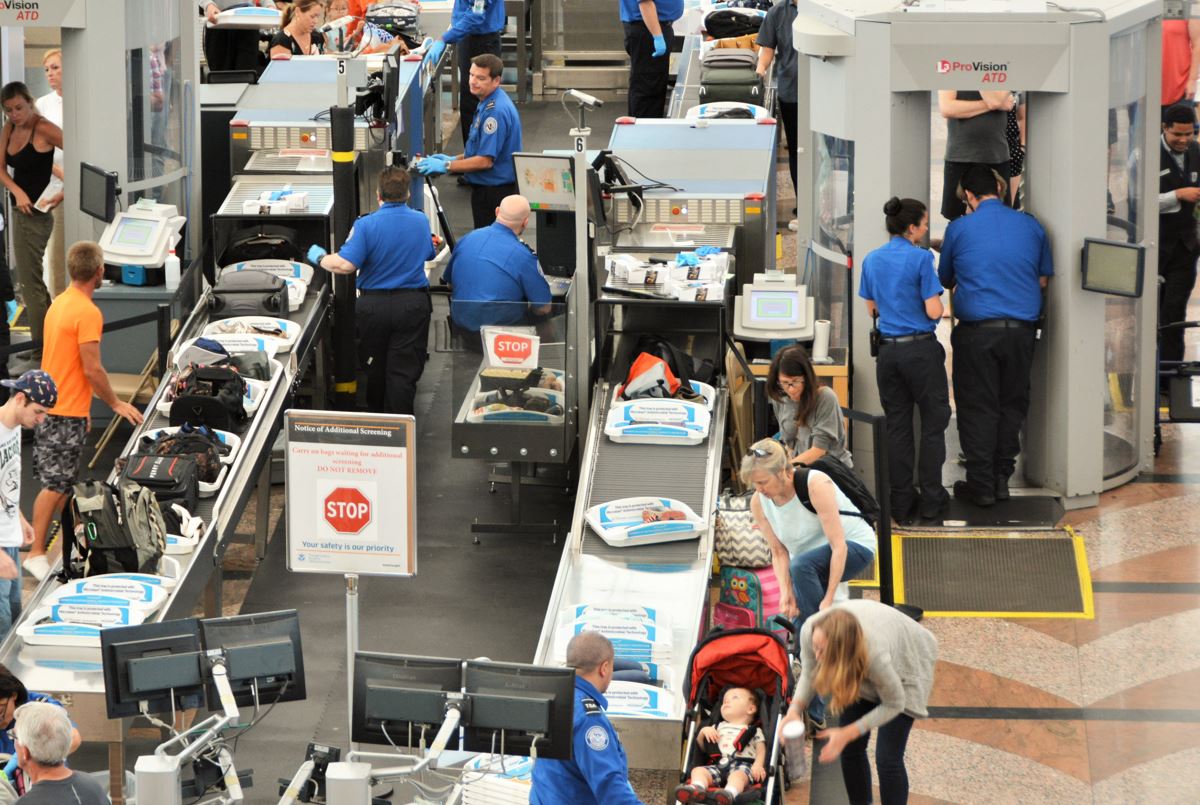
Imagine getting to the airport and breezing right through security by skipping to the front of the line. With Reserve powered by Clear, you can do just that at participating airports. The service is completely free and does not require membership with Clear, meaning all travelers can take advantage of the program. Passengers simply reserve a timeslot for going through security, receive a QR code, and use it to check in before entering the Reserve Lane.
As passengers miss flights due to airport chaos in the U.S. and abroad, taking advantage of every opportunity to smooth the airport experience is in travelers’ best interest. For flying out of airports with Clear Reserve Lanes, taking advantage of the reserved security check time could be the difference between a pleasant walk to the terminal and missing a flight in the event of clogged security lines.
Currently, Clear Reserve Lanes are available at the following airports:
John F. Kennedy International Airport in New York (JFK)
Phoenix Sky Harbor International Airport in Arizona (PHX)
Calgary International Airport in Canada (YYC)
Newark Liberty International Airport in New Jersey (EWR)
Orlando International Airport in Florida (MCO)
Los Angeles International Airport in California (LAX)
Seattle-Tacoma International Airport in Washington (SEA)
To use the service, travelers can head to Clear’s website, click on the airport they are departing from, enter their flight details and party size, and pick a time to go through security. The service is free, and only one traveler’s information is needed to book a reservation for a party of up to 10 people. While travelers should make every effort to arrive at their selected time, there is an unspecified grace period before and after selected reservation times. Twenty minutes is set aside for each reservation to ensure travelers have ample time to make it through screening, and reservations can be made up to 72 hours ahead of scheduled departure times.
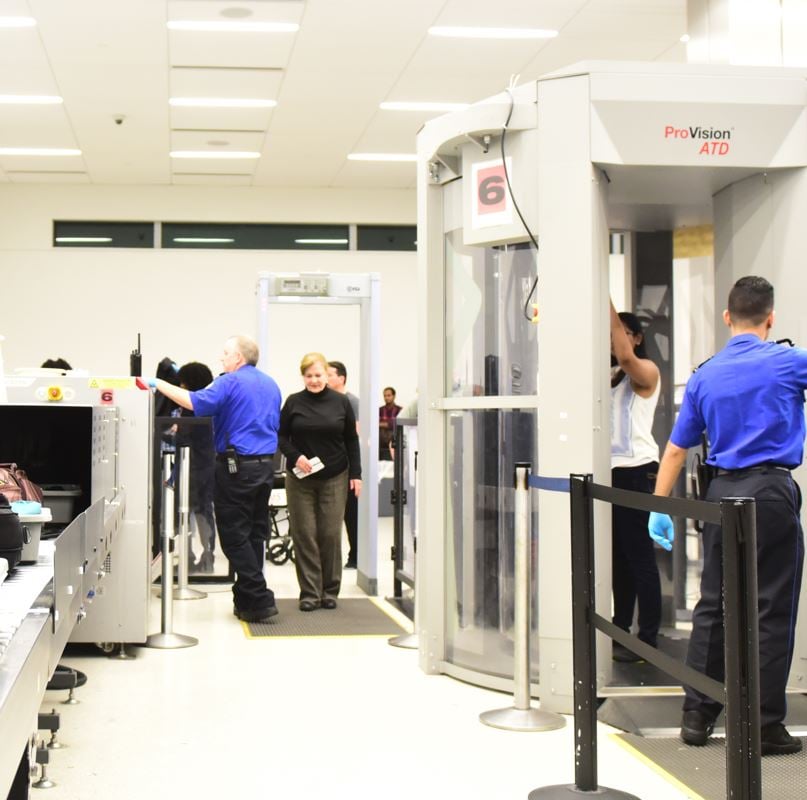
As travelers continue to deal with canceled flights and long security lines due to high travel demand and staff shortages, anything that helps make getting through the airport a smoother experience is welcome news. This year the TSA is adding new technology to their security checks to help speed up the processing time. The upgrades include new scanning technologies and mobile ID options, helping passengers get to their terminals faster. Five of seven airports listed above are equipped with the new technology, meaning travelers taking advantage of the reserve lanes at JFK, PHX, MCO, LAX, and SEA will be skipping to the front of the line and using the best technology available for a speedy experience.
The first Clear Reserve Lane debuted in October 2021 at Orlando International Airport (MCO), and Clear has been adding the service to other airports since. “The travel experience can be unpredictable – from the moment you step outside your door to the moment you arrive at your destination,” said Caryn Seidman-Becker, Clear’s CEO, in a press release. “We are excited to offer this new experience alongside Orlando International Airport and help give their travelers more predictability and more control over their time. With CLEAR’s solutions, travelers are enjoying faster and easier travel from home to gate.”
Travelers using the program should note that Reserve powered by Clear does not grant access to Clear Plus Lanes. Clear Plus Lanes are for travelers with Clear memberships, which offer faster front-of-the-line service at over 38 airports. A Clear Plus membership is not free like the Reserve Lanes and is offered at $189 per year. For travelers who want the fastest and easiest experience possible any time they travel, combining a Clear Plus membership with TSA PreCheck ensures a quick security experience. Clear Plus will get travelers to the front of the line quickly, and TSA PreCheck makes security easier by eliminating the need to remove belts, shoes, or the removal of laptops, and liquids from carry-on bags.
As travel demand continues to surge, airports and airlines are being forced to cut flights as they cannot keep up. Programs like Clear Reserve Lanes and the recent TSA technology improvements continue to alleviate travel woes for passengers and airport personnel, and their continued expansion is greatly welcomed.
Enter your email address to subscribe to Travel Off Path’s latest breaking travel news, straight to your inbox
Disclaimer: Current travel rules and restrictions can change without notice. The decision to travel is ultimately your responsibility. Contact your consulate and/or local authorities to confirm your nationality’s entry and/or any changes to travel requirements before traveling. Travel Off Path does not endorse traveling against government advisories
Let me be the first to say WELCOME to Mazatlán! It’s so fantastic that your cruise is going to stop here, because Mazatlán really does live up to its nickname of being the ‘Pearl of the Pacific’. Funny enough, Mazatlán is still relatively unknown to many travellers, which makes it more of an authentic and …
For most of air travel history, Canadians have gotten the shaft when it comes to flight availability, cheap tickets, and cool far-flung routes. We’ve watched our neighbor to the south get the most amazing flight connectivity, while we’ve had to pay higher prices for less exciting destinations. However, as of 2022 there are now more airlines, flight routes, and direct international destinations than ever before.
That’s right Canadians, it’s time to travel. With the addition of many low-cost airlines to Canada’s sky, all the airlines have had to pull up their socks and give the best offerings possible, despite the pandemic, rising fuel costs, and staff shortages.
Canada now flies direct to more cities than ever before, and there are some great deals to be had.
But what airlines are new to Canada this year? And where do they fly? What are prices like? What about seats and bags?
This Canadian airline guide is going to go over:
ALL the major airlines operating in Canada, with info on the new ultra-low-cost airlines like Lynx, Swoop, and Jetlines
Every city they fly to
What some unique routes are for each airline
What sets them apart from the others, pros and cons
Info on seats and bags
Everything else you need to know about these Canadian airlines
Air Canada
Air Canada, the nation’s flag carrier, is the biggest airline in Canada with the most destinations served. The actual Air Canada brand flies to a massive list of cities, and of course with its position in the Star Alliance, the ability to connect with 1-stop to almost any corner of the planet. Air Canada’s base is out of Montreal and is more popular with Eastern Canadians.
Pros
Huge selection of destinations and routes
On average, more seat width, leg room, and baggage allowance than other Canadian airlines
The ability to earn and use popular Aeroplan points for flights
Multiple planes that feature business class, including lay-flat ‘pod’ type seats
Great network of lounges worldwide
Cons
Can be one of the most expensive airlines to book on (although good deals can always be found)
Some people feel the brand and the vibe is a little old school when compared to the other airlines
Where does Air Canada fly DIRECT?
Here is a list of cities that Air Canada currently flies to that can be reached with a direct non-stop flight, spoiler alert, there’s a LOT.
in Canada
BC – Vancouver, Victoria, Kelowna, Kamloops, Penticton, Castlegar, Cranbrook, Prince George, Terrace, Prince Rupert, Smithers, Fort St. John AB – Calgary, Edmonton, Grande Prairie, Fort McMurray SK – Saskatoon, Regina MB – Winnipeg ON – Toronto, Thunder Bay, Sault St Marie, Timmins, Sudbury, North Bay, London, Windsor, Ottawa QC – Quebec City, Montreal, Rouyn-Noranda, Saguenay, Sept Iles NL– Deer Lake, St. John’s, Gander, Goose Bay NS – Halifax, Sydney PE – Charlottetown NB – Moncton, Frederickton, Saint john NT – Yellowknife YT – Whitehorse
in the U.S.
Alaska – Anchorage Arizona – Phoenix California – San Francisco, San Jose, Sacramento, Los Angeles, Palm Springs, San Diego Colorado – Denver Connecticut – Hartford Florida– Orlando, Tampa, Fort Myers, Miami, Fort Lauderdale Georgia – Atlanta, Savannah Hawaii – Honolulu, Maui, Kona, Lihue Illinois – Chicago Indiana – Indianapolis Louisiana – New Orleans Nevada – Las Vegas New York – New York Maryland – Baltimore Massachusetts – Boston Michigan – Detroit Minnesota – Minneapolis Missouri – Kansas City, St. Louis North Carolina – Raleigh, Charlotte Ohio – Cincinnati, Columbus, Cleveland Pennsylvania – Pittsburgh, Philadelphia RhodeIsland – Providence Tennessee – Memphis, Nashville Texas – Austin, Houston, Dallas Utah – Salt Lake City Washington – Seattle Washington D.C.
Mexico
Cancun Cozumel Huatulco Ixtapa Puerto Vallarta Mexico City San Jose Del Cabo
Caribbean and Central America
Antigua Aruba Bahamas – Nassau, Georgetown Barbados – Bridgetown Bermuda Belize – Belize City Cayman Islands Cuba– Havana, Varadero, Santa Clara, Cayo Coco, Holguin Curacao Costa Rica – San Jose, Libiera Dominican Republic – Puerto Plata, Samana, Punta Cana Haiti – Port au Prince Guadaloupe Grenada Jamaica – Montego Bay, Kingston El Salvador – San Salvador Martinique Panama – Panama City St. Lucia St. Maarten St. Kitts St. Vincent and the Grenadines Trinidad and Tobago – Port of Spain Turks and Caicos – Providenciales
South America
Argentina – Buenos Aires Brazil – Sao Paulo Colombia – Bogota Chile – Santiago Ecuador – Quito Peru – Lima
Isreal – Tel Aviv UAE – Dubai Egypt – Cairo Qatar – Doha India – Mumbai, Delhi China – Beijing, Hong Kong, Shanghai Japan – Tokyo, Osaka South Korea – Seoul Taiwan – Taipei
Oceania
Australia – Brisbane, Melbourne, Sydney New Zealand – Auckland
Pet Policy
Yes. Air Canada allows 1 small cat or dog per passenger is allowed in the cabin if: A $50 fee is paid within North America, $100 for international, the carrier counts as your carry-on bag, the dimensions are 10 x 15 x 21 and you give at least 24 hours notice.
Seats and Leg Room
Economy: Air Canada has 18″ wide seats in economy on most of their planes, which is 1″ wider than most other airlines. They also have 31-34″ seat pitch/ legroom on most aircraft, except for some Rouge planes that only give 29″
Premium Economy: You’ll get a wider seat on almost every premium economy flight, with an average of 19-24″, with 37-38″ seat pitch / legroom, which is a great upgrade from economy.
Business: In a non-lay flat bed seat, business seats have an average width of 20-21″.
Checked Bags
Checked bags are free when:
Traveling to Europe (even with a normal economy ticket)
in Premium Economy or Business
or with at least 25K elite status
Otherwise, checked bags in economy are $30 for the first and $50 for the second.
Carry On Bags
Air Canada allows you to bring both a personal item and a carry-on bag for free. They have the largest personal item size allowance in the country at 17 x 6 x 13″ and the largest carry-on bag size at 21.5 x 9 x 15.5″
WestJet
WestJet is Canada’s 2nd biggest airline with its base in Calgary, making it a very popular option for Western Canucks. They’ve grown tremendously in the past 15 years and have added many new routes with no signs of slowing down.
Pros
WestJet gets a better overall customer review score, outranking Air Canada
WestJet does have some code sharing with OneWorld and Skyteam, which helps with longer international trips.
Cons
Many of WestJet’s planes, even the new ones, don’t have entertainment screens installed.
You have to be flying pretty far, like to Europe on one of their new 787s, in order to get any free food.
While WestJet used to be cheaper than Air Canada, in almost every case they now have identical pricing
Where does WestJet fly DIRECT?
Here is a list of cities that Westjet currently flies to that can be reached with a direct non-stop flight.
in Canada
BC – Abbotsford, Comox, Cranbrook, Dawson Creek, Fort Saint John, Kamloops, Kelowna, Nanaimo, Penticton, Prince George, Terrace, Victoria, Vancouver AB – Calgary, Edmonton, Fort McMurray, Lethbridge, Grande Prairie, Lloydminister, Medicine Hat SK – Saskatoon, Regina MB – Winnipeg, Brandon ON – Toronto, Hamilton, London, Ottawa, Thunder Bay, Windsor QC – Montreal, Quebec City NL– Deer Lake, St. John’s, Gander, Sydney NS – Halifax PE – Charlottetown NB – Moncton, Frederickton, Saint john NT – Yellowknife YT – Whitehorse
in the U.S.
Arizona – Phoenix California – Los Angeles, Palm Springs, San Francisco, San Diego Colorado – Denver Florida – Fort Myers, Tampa, Orlando Georgia – Atlanta Hawaii – Maui, Kona, Kauai, Honolulu Maine – Boston Nevada – Las Vegas New York – New York Oregon – Portland South Carolina – Myrtle Beach Texas – Houston Tennessee – Nashville Washington – Seattle
Mexico
Cancun Cozumel Huatulco Ixtapa Manzanillo Mazatlan Merida Puerto Vallarta San Jose Del Cabo
Caribbean and Central America
Antigua and Barbuda Aruba Belize – Belize City Bermuda – St. George Bahamas – Nassau Barbados – Bridgetown Cayman Islands – Georgetown Costa Rica – Liberia, San Jose Cuba – Holguin, Santa Clara, Varadero Dominican Republic – Puerto Plata, Punta Cana Honduras – Roatan Jamaica – Kingston, Montego Bay Puerto Rico – San Juan St. Lucia – Vieux Fort St. Maarten – Philipsburg
Europe
Barcelona, Spain Dublin, Ireland Edinburgh, Scotland Glasgow, Scotland London, England Paris, France Rome, Italy
Pet Policy
Yes. Westjet allows a 1 pet in the cabin if they meet these rules: Passengers must call at least 48 hours prior to Westjet to confirm, the kennel cannot be larger than 16 x 8.5 x 10, and the payment of a fee, $50 in Canada and the U.S. and $100 for international flights.
Seats and Leg Room
Economy: WestJet has 17″ wide seats in economy on most of their planes, which is 1″ less than Air Canada. They also have 31-36″ seat pitch/ legroom on most aircraft, so the planes with 34-36 give WestJet a huge legroom advantage.
Premium Economy: Most of WestJet’s Premium Economy (or ‘Plus’ seating), is the same seats as economy, but with the middle seat blocked off with a makeshift table, making the width the same as economy, 17″. A few planes have been retro-fitted with proper PE seats, those give 19-20″ width, and a massive 38″ seat pitch / legroom.
Business: On their 787’s, the business class seats turn into a lie-flat bed, with 21″ width and 46″ seat pitch / legroom.
WestJet Economy Seats on the 787 Dreamliner
Checked Bags
Checked bags are free when:
Booking an econoflex, premium economy or business ticket
When you book the flight with a Westjet credit card
Otherwise, checked bags in economy are $30-35 for the first and $50-$59 for the second in North America, and $60-71 and $90-107 respectfully for Europe.
Carry On Bags
WestJet allows you to bring both a personal item and a carry-on bag for free. The personal item size allowance is 16 x 6 x 13″ and carry-on bag size at 21 x 9 x 15″
Swoop
Swoop is the largest new kid on the block when it comes to Canadian airlines, and probably the largest example of success when it comes to an ultra-low-cost airline in the country.
The tickets can be extremely cheap, think as low as $79 for international flights down to Mexico or the U.S., but know they charge for absolutely everything past that. If you are a light traveler, you can save some serious money with Swoop, plus they have routes the big guys don’t have. We flew the Kelowna – Winnipeg route when it first came out and did a full review.
Pros
Incredibly low prices on airline tickets, we’ve seen prices as low as $29, which is something Canada hasn’t seen in decades.
Owned by WestJet, so you know the quality is there
The ability to fly direct on less popular routes that WestJet and Air Canada don’t operate
Cons
You’re charged for absolutely everything. If you want to pick seats and bring lots of luggage, you can easily jack the price up as high as the major full-service carriers.
The routes, while seriously growing all the time, are still nowhere near AC or WJ’s offerings.
Planes are not as comfortable and really only offer 1-class of seating. The only way to score some extra leg room is to pick an emergency row or front of the plane, which can cost $25-50 extra.
Pets are not allowed on Swoop flights
Where does Swoop fly DIRECT?
Here is a list of cities that Swoop currently flies to that can be reached with a direct non-stop flight.
in Canada
Abbotsford Charlottetown Comox Deer Lake Edmonton Halifax Hamilton Kelowna London Moncton Ottawa Regina Saint John Saskatoon St. John’s Toronto Victoria Winnipeg
in the U.S.
Chicago Las Vegas Los Angeles Nashville New York Orlando Palm Springs Phoenix (Mesa) San Diego San Francisco St. Pete / Clearwater
Mexico and Caribbean
Cancun, Mexico Kingston, Jamaica Los Cabos, Mexico Mazatlan, Mexico Montego Bay, Jamaica Puerto Vallarta, Mexico Punta Cana, Dominican Republic
Unique Routes
Edmonton and Abbotsford to Mazatlan, Mexico (seasonal, winter)
Edmonton to San Diego, seasonal (summer, early fall)
Winnipeg to Kelowna, seasonal (summer, early fall)
Swoop had some other unique flights, like Kelowna to Las Vegas direct, that disappeared during the pandemic. Hopefully, they will soon return.
No. Swoop does not allow pets in the cabin, not even as service animals.
Seats and Leg Room
Economy: Swoop only has economy seats, with an average of 29″ pitch / leg room, and 17″ inch wide seat. On available planes, the extra leg room seats that are available for purchase for $25-$50 at time of booking will get you another 4-6″ of leg room. (They go up in price if purchased later on.)
Checked bags have a cost on Swoop, and so does the time frame of when you buy them. All costs below are based on buying them at the same time the ticket is purchased. If you sign on and modify an existing booking to add a bag later, it’s an additional $10 fee, and if you add a bag at the airport, it’s an additional $20 fee. They also add a $2 summer and Christmas ‘peak’ fee to all baggage prices.
Short distance (less than 1000km) $36.75 Medium distance (1000 to 3000km) $46 Long distance (3000+km) $56.50
Checked bags are limited to 50 lbs
Carry on Bags
Welcome to ultra-low-cost airlines where a carry-on bag costs money to bring on board. Swoop charges for carry-on and applies the same pricing matrix we talked about above. The best price is at booking, then $10 more afterward, and $20 more at the airport. Along with the $2 extra fee during summer and Christmas.
Swoop max carry-on size: 21 x 9 x 15″
Short distance (less than 1000km) $36.75 Medium distance (1000 to 3000km) $46 Long distance (3000+km) $56.50
A personal item is free on Swoop, but can’t exceed 16 x 6 x 13″
Swoop plane landing in Kelowna, BC
Air Transat
Air Transat is Canada’s largest vacation and charter airline based out of Quebec. In 2021, Air Canada canceled their acquisition deal of the airline. The flights are mostly targeted at snowbirds going to the states and vacationers heading to Mexico, the Caribbean, and even some impressive European routes.
Pros
Great deals to both popular routes, like Los Angeles and Cancun, but also to some more unique places like Cartagena, Colombia and Malaga, Spain.
They have a ‘club’ class, which is very similar to a business class-type seat, offering very comfortable ways to vacation hotspots that other airlines don’t.
You can earn Aeroplan points on flight due to their agreement with the Star Alliance
Carry-on bags are free
Cons
Many of the routes are extremely seasonal, so they won’t be available all year
Some planes have a 16.5″ wide seat in economy, which is a tight squeeze for many.
Pricing for the ‘Club’ cabin (which is a version of business class) can get quite pricey considering it’s not a full-service business class product. Deals can always be found, but the standard pricing can be eye-opening for a charter airline.
Where does Air Transat fly DIRECT?
Here is a list of cities that Air Transat currently flies to that can be reached with a direct non-stop flight.
FROM Canada
Calgary Montreal Quebec Toronto Vancouver
in the U.S.
California – Los Angeles, San Francisco Florida – Fort Lauderdale, Miami, Orlando, Tampa Louisiana – New Orleans Nevada – Las Vegas
Mexico
Acapulco Puerto Vallarta Cancun
Caribbean Cuba – Cayo Coco, Havana, Holguin, Santa Clara, Varadero Guadeloupe – Point-a-Pitre Haiti – Port-au-Prince Jamaica – Montego Bay Martinique Fort-de-France Puerto Rico- San Juan Dominican Republic – La Romana, Punta Cana, Puerto Plata, Samana St. Maarten – Philipsburg
Central/South America Colombia – Cartagena Costa Rica -Liberia, San Jose El Salvador – San Salvador Panama – Panama City
Most of Air Transat’s routes are pretty unique, especially the southern and European destinations.
Toronto to Zagreb, Croatia
Toronto to Cartagena, Colombia
Montreal to Malaga, Spain
Montreal to Bordeaux, France
Montreal to Acapulco
Pet Policy
Yes. Air Transat allows pets in the cabin. 1 cat or dog per passenger, with at least 72 hours notice, the kennel must count as the passengers carry-on allowance, the kennel can now exceed 17 x 9.5 x 10″, and a fee of $50 within Canada/U.S. or $100 internationally must be paid.
Seats and Leg Room
Economy: Air Transat has seats as small as 16.5″ wide in economy, making them one of the smallest in thecountry, but some planes have the standard 17″ and a few aircraft with 18″. If you are concerned with getting a 16.5″ seat, check the flight on SeatGuru before you book. Seat pitch / legroom for economy is between 31-32″. Club (Business): Air Transat has very roomy club seats averaging 20-22″ wide and 33-38″ seat pitch / legroom.
Air Transat has a 50lb limit to checked baggage, even in their ‘club’ class.
When passengers book the flight only, economy is charged $35-90 for a checked bag, (based on distance) but get it free if a vacation package has been booked. Club class always gets a free checked bag.
Carry-On Bags
Air Transat allows both a free carry-on bag and a personal item on all flights. Carry on bags have a size limit of 20 x 9 x 16″ and personal items have a size limit of 17 x 5 x 12
Sunwing
Sunwing, like Air Transat, is the other major discount charter airline in Canada, offering cheap flights and vacation packages to sunny destinations. In March 2022, WestJet announced its deal to acquire Sunwing.
Pros
Sunwing operates out of almost every Canadian airport, even smaller ones like Regina SK, offering more vacation for Canadians who don’t live near major airports like Toronto.
They have really cheap vacation packages, including hotels. Sometimes the prices are so cheap it’s like getting the round-trip flight for free.
Cons
Service is an issue, especially in pandemic times. It’s been well talked about that Sunwing has suspended food and beverage service on flights throughout the past few years, leaving passengers hungry. Imagine a 5.5 hour flight from Winnipeg to Mexico without anything to eat!
Seats are small and legroom is almost nonexistent
There is no premium economy or business on any flight. The only way to get any extra legroom is one row of emergency seating mid-plane.
The carry-on weight allowance is laughable and almost impossible to meet.
Where does Sunwing fly DIRECT?
Here is a list of cities that Sunwing currently flies to that can be reached with a direct non-stop flight.
*Sunwing’s flights are FROM Canada to sunny destinations, and not really used for domestic routes
Mexico
Acapulco Cancun Huatulco Ixtapa Los Cabos Manzanillo Mazatlan Puerto Vallarta
Caribbean
Antigua and Barbuda Bonaire Bahamas – Nassau, Freeport Curacao Cuba – Cayo Coco, Havana, Mazanillo, Varadero Dominican Republic – Puerto Plata, Punta Cana, La Romana Georgetown, Cayman Islands Montego Bay, Jamaica Oranjestad, Aruba St. Maarten
Central America
Liberia, Costa Rica Panama City, Panama
Pet Policy
No. Pets are not allowed in the cabin on Sunwing unless they are a service animal.
Seats and Leg Room
Economy: The seating is a little tight on Sunwing. They only fly a 737-type plane with one version of economy class, with seats that are 17″ wide and 29″ inches of seat pitch / leg room. Tall passengers will have an issue. The saving grace is if you’re able to book a seat in the emergency row, which gives you up to 10″ more leg room, depending on the aircraft.
Checked Baggage
Sunwing allows passengers who’ve booked a total vacation package to bring one checked bag for free, while passengers who’ve only booked a flight with Sunwing will have to pay $21-$26.
The max weight for a checked bag is 50 lbs
Carry On Bags
Sunwing allows all passengers to bring on a free personal item and 1 free carry-on bag. However, the carry-on weight rule is INSANELY regulated and extremely low weight at 11 lbs. Truth be told, most EMPTY carry-on bags weigh around 11lbs without any items inside. Sunwing checks every single bag and will simply not allow it on the plane if it’s over 11lbs, as there is no fee you can pay to allow for a heavier bag.
Carry-on bags have a size limit of 20 x 9 x 16″ and the personal item has a size limit of 9 x 11 x 5 (the smallest in the industry by far)
Lynx
Lynx, a very new ULCC kid on the block, has launched in 2022 with some great routes to start. They are currently serving 10 cities across Canada, with fares as low as $49 on their 737 planes.
Here is a list of cities that Lynx currently flies to that can be reached with a direct non-stop flight, which is sure to grow after their first year in operation.
in Canada
Calgary Edmonton Halifax Hamilton Kelowna St. John’s Toronto Vancouver Victoria Winnipeg
Unique Routes
Kelowna to either Vancouver or Calgary in a 737 (other airlines like Air Canada and WestJet typically use a small propeller plane)
Pets
Lynx does allow pets with a fee of $59, 48 hours notice, and kennel dimensions of 16 in. L x 8.5 in. H x 10 in. W.
Seats and Leg Room
Economy: All of the seats on Lynx Air’s 737 are 17″ wide and have between 29″-30″ of seat pitch / leg room, with the exception of the very front row and emergency row mid-plane.
To select a seat, you’ll pay $10-$22 for a normal seat, and up to $60 for an emergency row or front row seat. If you let Lynx select for you, it’s free.
Checked Baggage
Checked bags have a 50lb weight limit and the fees are based on flight distance. Under 1000 km: $40 1000 to 3000 km: $50 Over 3000 km: $60 *adding a checked bag after ticket purchase is $10 online and $20 after check-in at the airport
Carry-on Bags
Carry-on bags have a fee, while 1 personal item is allowed on for free. The personal item has a size limit of 17 x 6 x 13″.
Carry-on bags have a generous size limit of 21.5 x 9 x 15.75, a 22lb weight limit and the fees are based on flight distance. Under 1000 km: $30 1000 to 3000 km: $40 Over 3000 km: $50 *adding a carry-on after ticket purchase is $5 online and $10 after check-in at the airport
Flair
Flair Airlines has been around for about 15 years, but recently went under a re-brand as they launched more routes, really trying to stick out in the Canadian market. They are not owned by any of the big guys… yet.. so they like to lead with the message they are independent.
They have some seriously low fares, like Calgary to Victoria for $29 for example, something never seen before in the Canadian industry.
Where does Flair fly DIRECT?
Here is a list of cities that Flair currently flies to that can be reached with a direct non-stop flight.
in Canada:
AB – Calgary, Edmonton, Grande Prairie, Lethbridge BC – Abbotsford, Comox, Kelowna, Prince George, Vancouver, Victoria ON- Kitchener, London, Ottawa, Toronto, Thunder Bay, Windsor, NB- Saint John NL – Deer Lake NS – Halifax PE – Charlottetown SK- Saskatoon QC – Montreal
U.S.
Anchorage Chicago Denver Fort Lauderdale Hollywood / Burbank Las Vegas Nashville New York Orlando Palm Springs Phoenix San Francisco Tucson
Yes, Flair allows pets in the cabin, at a max of 1 per passenger and 4 max per flight. 48 hours notice must be given, a fee of $49-$79 paid, and max kennel dimensions are 16 x 9 x` 10″ and 23lbs.
Seats and Legroom
Economy: Flair Airlines uses 737 planes, which have 29-30″ of seat pitch / legroom and 17″ of seat width. They have extra legroom seats available in the emergency row mid-plane as well as the front few rows, but we couldn’t find an exact measurement of just how many more inches it gets you.
Fees for seats are as follows: $10-$20 for a normal seat selection, and $25-45 for an extra legroom or emergency row seat. Seats are free if you allow Flair to select it for you.
Checked Baggage
Flair charges $49-$69 for a checked bag when you purchase it at the time of buying the ticket, with an additional $10 fee if you buy it at the airport. Checked bags have a 50 lb maximum.
Carry-on Bags
A personal item is free on Flair, but a carry-on bag will cost you. Personal items have a max size limit of 17 x 6 x 13″ and 15 lbs, which is pretty generous for an ULCC.
A carry on bag is $29-$49 when you pre-pay with an additional $10 fee at the airport, must weigh under 22. lbs and have a max size of 21.5 x 15.5 x 9, which is as big as Air Canada.
Porter
Porter Airlines is located at Billy Bishop airport, Toronto’s smaller (cooler!) airport on the island. The airline only flies the smaller Bombardier Q400 ‘Dash’ planes, but offers some decent Eastern routes, both within Canada and the States.
Where does Porter fly direct?
Here is a list of cities that Porter flies to directly:
in Canada
Fredericton Halifax Moncton Mont Tremblant Montreal Muskoka Ottawa Quebec City Sault Ste. Marie St John’s Stephenville Sudbury Thunder Nay Timmins Toronto Windsor
U.S.
Boston Chicago Myrtle Beach New York Washington
Unique Routes
Toronto (YTZ) to Muskoka Skip the terribly congested drive to cabin country and take a quick Porter flight instead.
Pets
Porter allows up to 2 pets in the cabin, with a max weight of 22 lbs each, including the carrier, with a fee of $50 and at least 24 hours’ notice.
Seats and Legroom
The ‘Dash’ planes that Port uses are all configured the same way, with 68 economy seats and 6 ‘premium’ seats. The premium seats are exactly the same size, but at the front of the plane with a tiny bit more leg room.
Economy seats are 17″ wide and offer 32″ seat pitch / leg room Premium seats are 17″ wide and offer 34″ seat pitch / leg room
Checked Baggage
Checked bags on Porter have a 50 lb weight limit and the price is determined on when you purchase the bag, doing it at the same time you buy the ticket being the cheapest rate.
At time of ticket purchase: $27-$42 Later online: +$5 At airport: +10-$15
Carry-on Bags
Porter offers a personal item free of charge, and a carry-on is also free if booked on a Standard, Flexible, or Freedom type fare. The only fare type that must pay for a carry-on is the basic fare.
Personal items have a size limit of 17 x 6 x 13″ and carry-on bags have a size limit of 16 x 9 x 22″ and 20 lbs.
Jetlines
Jetlines is so new to Canada that at the time of writing this article (July 2022) they still don’t have their routes published. Jetlines will have its headquarters just outside of Toronto. They plan to start operations late summer / early fall 2022 and plan to fly within Canada and to the U.S., Mexico, and the Caribbean.
Smaller regional Canadian airlines
In addition to all the above airlines, there are still more Canadian airlines to mention, especially for smaller regional routes. All of the below carriers offer important connections throughout the provinces and territories. Click on the carrier to see their current flight route map.
Canada has finally positioned itself to offer passengers more options than ever when it comes to air travel, and it looks like all the pent-up demand in 2022 is only driving this trend further.
Enter your email address to subscribe to Travel Off Path’s latest breaking travel news, straight to your inbox
Disclaimer: Current travel rules and restrictions can change without notice. The decision to travel is ultimately your responsibility. Contact your consulate and/or local authorities to confirm your nationality’s entry and/or any changes to travel requirements before traveling. Travel Off Path does not endorse traveling against government advisories
International travel is back with a vengeance now that Covid is yesterday’s news – and a number of airlines are out here offering pretty irresistible flight deals. Whether it’s stopovers in amazing cities with no extra fees, free tickets to some of the world’s top rated attractions or even hotel stays, their customers will be spoiled for choice this summer…
Although entry rules have never been easier to navigate and countless destinations have reopened fully, the price of travel is skyrocketing as a result of a record-high demand. In places like Miami, hotel prices have shot up by more than 50%, making vacations not only less affordable, but even prohibitive for a majority of travelers.
Fortunately, these new flight combo deals will help ease the burden a bit:
What Are Layover Programs And Which Airlines Are Included?
While they are not everyone’s cup of tea, long layovers are a great way to tick yet another destination off the bucket list, usually for no additional costs. It is the ultimate definition of two birds, one stone, allowing connecting passengers to see all the main highlights of a city ahead of boarding their final flight.
Some destinations are, in fact, major ‘layover’ hotspots, particularly in the Middle East, where both West and East-bound routes overlap. In recent years, places like Istanbul and Dubai have gained traction as stopover hubs, mainly due to their strong connectivity and direct links to multiple cities in Europe, the Americas, Asia and Africa.
As these global cities rose in popularity, so did their so-called Layover Programs: the industry’s response to the needs of travelers on brief city breaks. These programs aim to make transiting airports easier, especially during interminable journeys where access to certain services is limited – and they have been revolutionizing long-haul trips since.
In case you missed this piece of news amid the spate of flight cancellations that has plagued airports lately, there are seven popular airlines offering layover programs with hefty benefits. These can range from free overnights in close proximity to the airport, to big hotel discounts and entry fee waivers for a number of tourist sites.
It may sound too good to be true, but we assure you these ‘on the house’ stopovers are very real, and they will come in quite handy now that travel is getting costlier. Ready to find out which airlines have joined the trend?
Here are the details in full:
Airlines Offering Free Hotels And Attractions
Emirates – On Dubai Routes
Emirates is ensuring customers have the best possible connection time in Dubai – even when transit times are long. Dubbing it the Dubai Connect, the luxury-loving airline has a surprisingly generous layover policy in place: all passengers transiting Dubai between 10 and 24 hours are eligible for the program, regardless of cabin class.
Emirates will continue providing the shortest possible connection, but anyone who cannot book seats on the quickest routes will be entitled to ‘complimentary hotel accommodation’, transfers, and even entry visas free of charge. Dubai Connect services can be added on eligible bookings through the ‘Manage’ section at least 24 hours before departure.
In sum, those flying Emirates and staying longer in Dubai now enjoy:
Free hotels (5-star ones for First Class and Business passengers)
Transfers to and from the airport
Visa fees waived
Access to the Dubai Connect Lounge
Free Entry Into The Country’s Top 3 Attractions
Additionally, the carrier has launched a new campaign allowing passengers who book flights through their website to obtain free tickets into the United Arab Emirate’s leading tourist attractions. These include the sky high Burj Khalifa building, the Dubai Fountain Boardwalk, both in Dubai, and Louvre Abu Dhabi, in Abu Dhabi.
In order to qualify, travelers must book flights froom July 1 through September 30, though booking dates, as well as terms and conditions, may vary by region. As reported by the Khaleej Times, once the reservation is confirmed, tickets can be requested via e-mail ([email protected]). The following are required:
Booking reference
Arrival date
Name of the ticket holder
Phone number
Email address
Etihad Airways – On Abu Dhabi Routes
Following a pandemic-induced pause, Etihad Airways is officially relaunching its Etihad Stopovers with some ‘steep’ discounts. The scheme automatically grants Abu Dhabi-bound passengers flying with the carrier a 40% discount at a participating five-star hotel, or a one to two-night complimentary stay in a three or four-star hotel.
On top of that, Etihad is introducing its new Transit Connect. The initiative acts as an extension of Etihad Stopovers and permits guests on ‘eligible routes’ to book a complimentary hotel near Abu Dhabi International Airport for flight connections between 10 and 24 hours, similarly to their competitors. These include:
Centro Al Manhal Abu Dhabi
Hawthorn Suites by Wyndham
TRYP by Wyndham Abu Dhabi
Premier Inn Abu Dhabi Capital Centre
Premier Inn Abu Dhabi International Airport
Ramada Abu Dhabi Corniche*
Ramada Abu Dhabi Downtown
Traders Hotel Qaryat Al Beri
*This one is a dry hotel
As for the 40% discount, it can be redeemed in a total of 23 luxury properties around Abu Dhabi, including the famous Anantara Easter Mangroves, the Crowne Palza Abu Dhabi (Yas Island), Le Meridien Abu Dhabi, the Radisson Blu Yas Island Hotel, the Sofitel Abu Dhabi Corniche, and the InterContinental.
Turkish Airlines – On Istanbul Routes
Istanbul is unarguably one of the most exciting cities on the planet. A cross-continental behemoth, this metropolis is so vast it reaches beyond the Bosphorus Strait, past Europe and deep into Asia. Even better, all of its numerous landmarks and historical sites can be explored for free with Turkish Airlines’ signature Stopover In Istanbul.
Turkey’s flag carrier lets customers book hotel stays, free of charge, when transiting Istanbul for more than 20 hours. Business Class passengers can choose from a list of five-star hotels for up to two days, while Economy Fare ticket holders may pick a four-star overnight. On the downside, visa fees and transfers are not included.
More information can be found on this link, but here are some of the most important bulletpoints:
Transits must be 20 hours long or over 20 hours
The offer is only available for passengers transferring in Istanbul Airport (IST), on the European side of the city
eVisa fees are not included (a requirement applying to American and Canadian citizens, but not Europeans)
Applications for a Stopover In Istanbul must be submitted via email once booking is completed
In case you haven’t heard, Turkey is fully open for travel, having removed all of its Covid-related entry requirements to welcome foreigners irrespective of nationality or vaccination status (though visa restrictions still apply). Effectively, transiting Istanbul on a Turkish Airlines flight is as simple as it ever was.
Airlines Offering Luxury Hotel Discounts
Qatar – On Doha Routes
Hosting the World Cup later this year, the Middle Eastern country of Qatar is determined to leave a good first impression on foreigners (budget travelers included). Naturally, this involves boosting the attractiveness of Qatar Airways as a flag-carrier, with a massive Stopover discount that is set to make trips to Doha a lot more accessible.
Under this program, all passengers booking tickets through Qatar Airways with a minimum transit time of 12 hours in the Qatari capital will be able to book a stay in a 5-star hotel starting at only $54,00. There are three packages available, and prices vary based on hotel classification and the length of the stopover:
Standard Packages (4-Star)
Starting at $14,00 for 1 night
Starting at $22,00 for 2 nights
Starting at $46,00 for 3 nights
Starting at $69,00 for 4 nights
Premium Packages (5-Star)
Starting at $21,00 for 1 night
Starting at $36,00 for 2 nights
Starting at $66,00 for 3 nights
Starting at $97,00 for 4 nights
Luxury Packages (5-Star)
Starting at $54,00 for 1 night
Starting at $103,00 for 2 nights
Starting at $166,00 for 3 nights
Starting at $230,00 for 4 nights
Once they select their package and the duration of the stopover, which can be as long as four nights with no additional airfare fees, guests are free to ‘enhance’ their journey with add-ons, such as breakfast, a Discover Doha Tour, and airport transfers. Additional fees may apply and travelers are reminded Covid entry requirements remain in place.
Airlines With ‘Free Of Charge’ Stopovers
Iberia – On Madrid Routes
Iberia may not offer free hotel stays or airport transfers like Etihad or Emirates, but its ‘Hola Madrid’ Stopover program is still incredibly popular among transiting passengers in Spain. At no additional cost to the price of tickets, passengers can spend up to 6 nights in the Spanish capital, one of Europe’s most sought-after cities.
During the long stopover, other benefits apply, including up to 40% of discount on accommodation and free public transport for two days. Fortunately for budget travelers, Madrid is not nearly as expensive as Ibiza or Palma de Mallorca, and Spain’s simplified entry rules make it an easy country to visit.
TAP Air Portugal – On Lisbon, Porto Routes
Portugal’s TAP is another airline promising long city layovers at no additional costs this summer. When booking flights through TAP connecting in mainland Portugal, tourists have the option to extend their stay for up to five days in one of two of the most popular Portuguese cities: the picturesque Lisbon or the trendy Porto.
Lisbon is Portugal’s capital and an ideal destination for food and History enthusiasts. Strolling up the city’s hilltop Alfama district, visitors can find countless bakeries serving traditional Portuguese pastries, including the world-famous pastel de nata. Up North in Porto, the Dom Luis I Bridge spanning the River Douro and baroque buildings dominate the landscape.
Icelandair – On Iceland Routes
Few countries in the world are as mystical – and enticingly mysterious – as Iceland. Northern lights, rotten shark dishes, sledding tours, unique natural landmarks and amusingly quirky, friendly locals: it truly has it all. Luckily for those transiting Iceland, Icelandair allows stopovers of up to 7 days at ‘no additional airfare’.
Ahead of resuming the journey to their final destination, travelers on a long vacation have the opportunity to bathe in one of Iceland’s countless geothermal pools, engage in some sightseeing in the compact capital region of Reykjavik, and marvel at the wonders of the aurora on clear nights. It might also be worth mentioning Iceland has scrapped all Covid restrictions.
Bottom Line
When booking international trips throughout 2022, we urge all our readers to purchase health insurance in advance and check both health, and non-health related entry conditions in place at their final destination. Lastly, all flight deals mentioned on this article remain subject to change and/or availability. Therefore, following airline updates is advised.
Enter your email address to subscribe to Travel Off Path’s latest breaking travel news, straight to your inbox
Disclaimer: Current travel rules and restrictions can change without notice. The decision to travel is ultimately your responsibility. Contact your consulate and/or local authorities to confirm your nationality’s entry and/or any changes to travel requirements before traveling. Travel Off Path does not endorse traveling against government advisories
Remote workers based in the United States, rejoice! Yet another country has embraced the Digital Nomad trend and will start issuing residence visas for eligible foreign nationals, including Americans. If you’ve never heard of this Eastern European country before, allow us to introduce you to the wonders of the fascinating Latvia:
One of the most affordable places to visit in the continent, it is a Baltic Sea jewel bordering Lithuania and Estonia and a nation steeped in History and tradition. Although it is not the most obvious of tourist destinations, Latvia has been growing in popularity in recent years, especially among travelers looking to escape overtourism.
So what exactly makes Latvia such an appealing Digital Nomad destination?
A Country That’s Been A Digital Nomad Hotspot In The Making For Years
Latvia is a relatively new country. While the Latvian language dates back centuries, the region the Latvian people today call their home has existed as a province under several Empires throughout History. The most recent example is the Soviet Union, that collapsed in the early nineties and opened the path for Latvia to proclaim independence in 1991.
Fast forward 31 years later and you will find a well-developed nation that managed to shake off the ghosts of its Communist past, and despite being in close proximity to Russia, is now a member of the European Union and NATO. Latvia is no stranger to change, and since it found its freedom it’s been constantly looking for ways to revitalize its economy.
Riga, its picturesque, 632,000-people strong capital, has been an entrepreneurship hub for years, attracting people from all over Europe and beyond due to its highly affordable cost of living and low bureaucracy for those starting a business. In fact, the Latvia Government has been committed to a ‘Zero Bureaucracy‘ policy.
Their aim is to reduce the unnecessary paperwork in the public sector and make it easier for businesses to prosper. Because of that, Latvia is at the forefront of the digital revolution in Europe: according to data from the European Commission, it ranks at number 17 in the Digital Economy and Society Index (DESI), out of a total of 44 European countries and territories.
Unsurprisingly, launching a new Digital Nomad residence permit is the next natural step moving forward. As we have discussed extensively in this other article, both solo travel and long-term travel are here to stay, now that the pandemic has boosted the digitization of the economy and remote working is more popular than ever.
Latvian Digital Nomad Visa: The Easy Path To EU Citizenship For Americans?
As of now, only citizens and residents of OECD countries (Organization for Economic Cooperation and Development) will be able to apply for the Latvian Digital Nomad Visa. This includes natives of the United States, Canada, United Kingdom, Australia, Israel, Japan, Mexico, New Zealand, Turkey, and many more.
The visa allows digital workers, whose business or companies that employ them are registered in OECD states, to live in Latvia for up to two years, without requiring local sponsorship. Additionally, the country will be offering a path to permanent residence for those who apply to remain in Latvia once two years have elapsed.
After five years of continuous legal residence in Latvia (e.g. two years under the Digital Nomad scheme, and then a further three years as a permanent residence), foreigners are eligible to apply for Latvian citizenship, which would grant them EU citizenship as an extent, and the right to move freely across the whole European Union.
What Are The Visa Requirements?
In order to apply for this visa, digital nomads will need to satisfy the following requirements:
They cannot hold Latvian or another EU/EEA citizenship, or Swiss citizenship*
Their own company, or company they work for must be registered in an OECD country, such as the United States, Canada or Mexico
They must be highly qualified professionals
They need to prove at least six months of employment with a foreign employer, or register as an entrepreneur abroad
Their monthly salary must be 2.5 times higher than the national average in Latvia**
*EU, EEA (Norway, Iceland, Liechtenstein), and Swiss nationals already enjoy freedom of movement in Latvia as per the Free Movement directive, with no requirement other than nationality. If you are a U.S. passport holder, as well as a European citizen, you can already take up residency in Latvia freely by presenting proof of your other nationality.
**The minimum wage in Latvia is roughly USD 521,00 as of January, 2022, according to Eurostat.
Other requirements, such as filling out an application form, presenting proof of mandatory health insurance and payment of a visa fee may be detailed at a further date, once the new visa is officially launched. Essentially, non-Europeans must prove they are qualified professionals in their field and a stable source of income of at least USD 1,302.50 a month.
Latvia is the latest European country to issue Digital Nomad Visas, following:
Latvia Could Be The World Capital For Digital Nomads
Several other EU countries will also be opening the doors to Digital Nomads in the coming months, though none has been as generous as Latvia in regards to financial visa requirements. Authorities in the country believe that introducing this category will ‘help the tourism industry’ by bringing in a ‘large number’ of international travelers working remotely.
Marija Golubeva, the Latvian Interior Minister, has conceded that countries with a ‘more open’ immigration policy have higher GDP, lower unemployment rates, and ‘better-educated’ labor force. Besides being open to the digital revolution, Latvia has the potential to be one of the world’s digital nomad hotspots.
It is a front-runner in broadband coverage and is already prepared for the wider 5G roll-out set to take place next year. As stated by the European Commission on its latest DESI report, one of Latvia’s ‘main strengths’ is the extremely advanced coverage of fast broadband, comprising 93% of the territory – slightly higher than the EU-wide average of 87%.
Latvia has a 4G coverage of 99.9% and has been one of the first in Europe to allocate a radio spectrum for 5G once it’s been fully implemented. This means digital nomads can find a reliable internet connection to carry out their daily work anywhere, from the metropolitan Riga to the idyllic Latvian countryside.
Bottom Line
Eastern Europe is our favorite destination to travel right now, mostly due to its affordability compared to other Western states, like France or Spain, and the freedom travelers now enjoy country-hopping in the region. Bar a few exceptions, the East has no travel restrictions in place whatsoever – fortunately, Latvia is part of this collective.
When making Latvia (an EU country) their base, American nomads will enjoy higher standards of living compared to the United States, incredible culture, and nearly negligible crime levels. As aforementioned, they will also have the opportunity to apply for Latvian citizenship, so long as they integrate into Latvian society and show proficiency in the language.
More information can be found on the Government website.
Enter your email address to subscribe to Travel Off Path’s latest breaking travel news, straight to your inbox
Disclaimer: Current travel rules and restrictions can change without notice. The decision to travel is ultimately your responsibility. Contact your consulate and/or local authorities to confirm your nationality’s entry and/or any changes to travel requirements before traveling. Travel Off Path does not endorse traveling against government advisories
Portugal has become the latest country to remove all of its Covid-19 entry requirements.
The wildly popular travel destination was one of the few remaining major tourist destinations to still have relatively strict entry requirements in place. However, following today’s positive announcement, the sunny destination will now join the growing list of other countries on the continent and around the world that have liberated travelers of tests and vaccine passport requirements – just in time for a busy summer of travel.
Whilst the travel situation throughout Europe still looks fraught, with strikes, delays, and cancellations affecting the travel plans of many travelers, being able to visit Portugal without tests or any other kinds of documentation will likely bring some cheer to the great numbers of travelers looking to jet off to the country over the next few months.
Here’s a closer look at what exactly is set to change regarding entry to Portugal, and what else travelers should know about visiting the country.
Portugal Removes Entry Requirements – What Travelers Should Know
The last few months have been full of positive stories for travelers, particularly when it comes to countries dropping their Covid-19 related barriers and opening up to travel once more. However, whilst much of Europe has peeled back their entry requirements in favor of welcoming tourists back, some countries have resisted so far, including Portugal. However, that has now all changed courtesy of an announcement made by the country today.
Prior to today, entry to Portugal was still a relatively tall order for travelers, which saw many flock to alternate destinations on the continent as a result. In order to be able to enter the country, Portugal had required travelers to ensure that they had either proof of a negative Covid-19 test result, proof of recovery from a Covid-19 infection or proof of their vaccination against the virus. However, as of today, travelers will no longer need any of those things to enter.
The change to Portugal’s entry requirements was reported by the country’s National Civil Aviation Authority (ANAC) today. It states that travelers will no longer need to present a negative test result in order to fly into the country, nor will they need to show proof of vaccination through either the EU Digital Certificate or any other means.
In short, travelers are now free to enter the country in exactly the same way they were before the pandemic – armed with only a passport and a relevant visa where required.
The change is live now, meaning that travelers flying to the country from July 1, 2022 onwards will find the process of entering the country a relative breeze – just like it is to enter most other European destinations.
Following Portugal’s change, it means that there are just five countries in Europe that are still clinging on to their Covid-19 related entry requirements – Spain, France, the Netherlands, Luxembourg and Malta.
According to the official document that brought about the changes, it was made due to the fact that “the epidemiological situation experienced in Portugal following the Covid-19 disease pandemic has remained relatively stable, as a result of the high vaccination coverage, the emergence of new drugs for the serious disease and greater knowledge about the infection”.
The dropping of the entry requirements comes at a strange time for Portugal – not that anyone is complaining – with the country currently reporting some of the highest Covid-19 statistics on the continent. The past week has seen an average of nearly 9,000 daily cases, with early June seeing as many as 70,000 cases reported in one day. However, with summer fast approaching and the country at risk of missing out on another consecutive year of a tourist drought, it seems Portugal has pivoted towards living with Covid-19 – though not entirely.
Whilst it may be a piece of cake entering the country, Portugal is still pretty strict with regards to managing the spread of the virus once travelers arrive. The country’s Minister of the Presidency, Mariana Vieira da Silva, revealed in a press conference this week that mask wearing on public transport, hospitals and pharmacies was still required and strongly recommended in other situations. That said, the change is a positive step in the right direction, and has firmly put Portugal back on the map as a serious destination for travelers to consider this summer.
With a new wave of Covid on the horizon, a number of countries are preparing to bring back dreaded pandemic mandates once more, including hugely popular tourist destinations like Germany and Ireland. In these European nations, mandatory mask usage may again be enforced starting this fall, should infection trends continue rising.
Even though a majority of countries are now open with no travel restrictions, Germany and Ireland included, we admit we may have jumped the gun in affirming the world is ready to treat Covid as endemic. If Germany’s recent back and forth with restrictions are any indication, travelers will face a high degree of unpredictability moving forward.
Even when their final destination has already dropped all pandemic rules, preservation of personal freedoms is no longer guaranteed:
Germany Planning To Make Masks Compulsory Again In Indoor Settings From October
Having backtracked twice on their reopening plans ahead of finally dropping all entry rules in early June, Germany is again discussing proposals to tighten mandates. This time, it’s masks that may be making a comeback after the summer travel season ends, according to local news outlet Die Welt.
It seems the German Government is seriously considering issuing a mask mandate in all public spaces starting this fall, when Covid infections have a potential to rise due to increased social mixing in poorly-ventilated enclosed areas. Confirming the proposal is being actively debated, Die Welt even dubbed it the ‘O-bis-O’ scheme.
‘O-bis-O’ stands for ‘Oktober bis Ostern’, translated into English as ‘From October to March’. While no official measures have yet been announced, this would mean visitors would be required to wear face masks in a majority of settings, including bars, restaurants and shops, throughout the whole winter season.
Unarguably the EU’s leading nation, Germany’s change in approach could have reverberations across the entire continent, which has been enjoying far greater freedoms lately. Its current lax health measures, enshrined into the Infection Protection Act, are set to expire in September, adding further weight to these findings.
So far, the German Health Minister Karl Lauterbach has not commented on an eventual return of mandatory masks in October, though his latest recommendations seem to point to a strengthening of the rules. Despite conceding the current data ‘does not justify making mas use a legal requirement’ right now, Lauterbach stood firmly in his recommendations that the public must adhere to masks.
He has urged visitors to keep their face coverings, as Germany already reaches 35% of its previous peak of infections. Unfortunately, the numbers are set to rise even further, as reported by Reuters. Up until this point, Germany has not communicated any changes to its mask policies or border measures affecting travelers, but that may change with no warning.
Ireland Could Be Following Suit
Proving Germany’s initiative is already having a ripple effect on Europe, Ireland is mulling a new mask mandate to be reinstated in the event of a ‘possible emergency in winter’. As the Irish Times announced, the Minister for Health Stephen Donnelly will be drafting a new law imposing mandatory mask-wearing across the country.
Earlier this year, as Ireland moved away from pandemic conservatism and fully reopened, all legislation concerning mask usage had been allowed to expire. The decision could be overturned soon, as Government sources confirm the intention is to ‘draft legislation that could be passed quickly’ if the need arises.
Infections in Ireland are nowhere nearly as pronounced as Germany’s, but we all have seen, time and again, how volatile pandemic trends can be, and how fast the virus can disseminate once a new variant stars seeding. As new sub-lineages of Covid are identified, Ireland is reporting the highest daily case count since January.
Ireland’s Health Protection Surveillance Centre (HPSC) has directly linked the viral rebound to the spread of two of Omicron’s most infectious offspring, the BA. 4 and BA. 5 sub-variants. In recent data, the HPSC has confirmed 77 per cent of cases detected in the seven days leading up to June 18 were caused by either BA. 4 or BA. 5.
As things stand, visiting Ireland today looks a lot like being a tourist in 2019. Whether it’s pub crawling or chasing the country’s world-renowned natural landmarks along its rugged Western Coast, visitors are not expected to present vaccine passes or wear masks. Based on the information gathered here, this could change once summer is over.
Is France Next In Line?
Elsewhere in Europe, countries that stood among the first to drop the mask rule are now reconsidering their liberal stance. That is the case with France, whose Prime Minister is strongly recommending mask usage despite the country lifting the mandate just over a month ago. Essentially, what started as a promising Covid-free summer is slowly turning into a new nightmare.
Coupled with the latest spate of flight cancellations, the ups and downs of Covid continue posing big challenges to travelers this year. Due to the uncertainty relating to the ever-changing mandates, we strongly encourage you to get insured ahead of flying – that way, you will be covered for cancelled trips regardless of Germany’s, or Ireland’s, or France’s unpredictable moves.
Enter your email address to subscribe to Travel Off Path’s latest breaking travel news, straight to your inbox
Disclaimer: Current travel rules and restrictions can change without notice. The decision to travel is ultimately your responsibility. Contact your consulate and/or local authorities to confirm your nationality’s entry and/or any changes to travel requirements before traveling. Travel Off Path does not endorse traveling against government advisories
Several countries now seem ready to move on from Covid after being stuck in a two-year loop of restrictions and social curbs. Consequently, U.S. citizens who had been confined to their own country due to entry bans and complex travel rules are finally regaining their travel privileges– at an incredibly fast pace.
While the U.S. passport had lost a considerable amount of power during the pandemic, as foreign countries targeted Americans as risky travelers due to the spread of Covid, it has seen a strong rebound, and it is now an even more powerful travel document than it was in 2019. Currently, 186 countries welcome Americans visa-free, or with visas on arrival.
This does not equal restriction-free entry, but it does mean U.S. passport holders are not subject to a lengthy application process, Consulate interviews, and high visa processing fees. When traveling to these destinations, all Americans generally need is a valid passport, and other health documentation that may still apply:
How Is Passport Power Measured?
A majority of people may not be aware of this interesting fact, but all passport holders are not granted the same freedom to travel. Different groups of countries have bilateral agreements in place, allowing each others’ citizens to visit their territories more freely. On the other hand, certain nationalities not covered by these agreements face restrictions.
According to the Henley & Partners Index, the U.S. passport is currently the sixth most powerful in the world, up one slot from 2019. In practical terms, Americans can travel to 186 countries without requesting a visa in advance from a Consulate, out of a total country count of 195 countries. Effectively, they can roam the world effortlessly.
The most powerful passports comprising the top 20 include Japan (number 1 with 192 visa-free destinations), all European Union citizens (Germany ranks the highest at number 2), the United Kingdom, Canada, Australia, New Zealand, and other global leaders enjoying diplomatic prestige, like the UAE (15th) and Brazil (20th).
In comparison, Iran passport holders can only travel visa-free to 42 destinations, placing them as 102nd on the list. Iraqi nationals also have their movement severely restricted in the world, ranking at an even lower 111. In 2022, those holding Iraqi citizenship can only visit 28 other countries simply by presenting their passport.
Where Can Americans Go Visa-Free?
Europe
With a few exceptions – most notably the unfriendly Russia and Belarus – Americans can travel to Europe with very few limitations. In fact, some European countries like France and the U.K. even offer Americans fast-track entry and the possibility to scan their way in, without being interviewed by a border agent when landing.
The European continent comprises 50 or 52 nations, depending on the classification of certain autonomous territories, and Americans do not need visas to travel to 48 of them. Namely, U.S. citizens can easily hop on a plane bound for the Swiss Alps, stroll the magical streets of Paris, or go on a month-long Italy foodie tour only with their passports.
Turkey requires Americans to apply for an e-visa in advance.
The Caribbean
A nationwide favorite, The Caribbean grants visa-free entry to U.S. citizens, and unlike Europe, there are no exceptions on the list. From the crystal clear beaches of Barbados, to the historical forts and colorful colonial towns of the Dominican Republic, this vibrant region loves Americans as much as Americans love them, and desperately wants them back.
Henley & Partners has included 24 nations and territories in the Caribbean, exclusively islands, and unincorporated U.S. territories where Americans can enter without passports. For that reason, the list below does not include other popular Caribbean destinations like Mexico, Belize or Colombia, that are part of the mainland.
Visa-Free Countries Americans Can Visit In The Caribbean
It is worth noting Barbados still has Covid requirements in place. Other Caribbean islands may enforce other travel rules as well.
The Americas
From North to South, the Americas is a vast continent that for centuries has received an influx of migration from other territories. While North America’s History was shaped by the Anglo-Saxon, Germanic, Asian and African peoples, the continent’s South was envisioned as an extension of Southern Europe – mainly Spain and Portugal – in the New World.
It is possibly the most culturally unique continent in the world, due to its diverse demographics and amalgamation of influences. Luckily, U.S. citizens can visit 21 out of 22 American countries visa-free. The only country still requiring some type of visa is Bolivia, though it is generally issued upon arrival for a fee.
Visa-Free Countries Americans Can Visit In The Americas
Some major destinations in the Americas like Brazil have not yet fully reopened for tourism with no restrictions.
Asia
Although it has gained a reputation in recent years for being excessively strict with its Covid policies, Asia arguably remains the tourism playground of the world. Here, visitors are met with colossal temples, sprawling metropolises where anything could happen, some of the world’s most exquisite cuisine and surprisingly friendly locals.
Unfortunately, due to their hard stance on the pandemic, most Asian countries still have complex travel rules. Some like Japan even went as far as suspending visa-free entry for Americans, and all other visa-exempt foreign nationals. At present, the following Asian countries do not require U.S. passport holders to apply for an entry permit at a Consulate:
Visa-Free Countries Americans Can Visit In Asia
Cambodia, Laos, Nepal, Pakistan and Sri Lanka are some examples of Asian countries requiring visas on arrival only.
Middle East
The Westernmost protrusion of the Asian continent, the geopolitical group called the Middle East has pretty lax, non-Covid entry requirements in place for American citizens. Out of 12 countries, U.S. citizens are granted unrestricted entry into seven, while the other five still allows Americans to obtain visas on arrival.
Much like Asia, the Middle East has retained some of its strictest pandemic-era policies. Nevertheless, the fact that Americans do not need entry visas to visit seven Middle Eastern destinations makes it much easier for them to extensively explore the region, provided that other Covid mandates are not in place.
Visa-Free Countries Americans Can Visit In The Middle East
Bahrain, Jordan, Kuwait, Lebanon and Saudi Arabia all require visas on arrival.
Oceania
It may not be one the easiest places to fly to, with some of its archipelagos being some of the most remote in the world, but a trip to the Oceania is definitely something all travelers, especially beach lovers, must experience at least once. Additionally, popular destinations in Oceania, such as Australia and New Zealand, are again open for American visitors.
In n Australia and New Zealand’s case, Americans must apply for a Travel Authorization in advance. This is not a visa, and applies to all nationalities that do not require visas to enter these countries, including Canadians, Brits and most Europeans. Applications are made online and the Authorization is usually issued in a matter of hours.
Visa-Free Countries Americans Can Visit In Oceania
American Samoa
Australia
Cook Islands
Fiji
French Polynesia
Guam
Kiribati
Marshall Islands
Micronesia
New Caledonia
New Zealand
Niue
Northern Mariana Islands
Palau Islands
Vanuatu
The territories of Papua New Guinea, Samoa, Solomon Islands, Tonga and Tuvalu offer visas on arrival for American travelers.
Africa
The continent of Africa may not be a massively popular vacation hotspot for Americans, but as we have detailed in our 5 Off The Beaten Path African Destinations article, it has a lot to offer and so much unacknowledged potential. North or South of the Sahara, visitors can take part in a number of activities, ranging from wildlife sightings to beach hopping.
African countries are also home to some of the world’s most important heritage sites, such as the El Jam Amphitheater in Tunisia, one of the largest and best preserved from Ancient Roman times, and the several millennia-old Moroccan cities of Fez and Marrakech – not to mention the History-packed nations of Egypt, Kenya and South Africa.
Visa-Free Countries Americans Can Visit In Africa
Botswana
Burkina Faso*
Cape Verde Islands*
Central African Republic
Comoro Islands*
Egypt*
Equatorial Guinea
Eswatini
Ethiopia*
Gabon*
Guinea-Bissau*
Lesotho
Madagascar*
Malawi*
Mauritania*
Mauritius
Mayotte
Morocco
Mozambique*
Namibia
Reunion
Rwanda*
Sao Tome and Principe
Senegal
Seychelles*
Sierra Leone*
Somalia*
South Africa
St. Helena*
Tanzania*
The Gambia*
Togo*
Tunisia
Uganda*
Zambia*
Zimbabwe*
*These countries offer visas on arrival
As you might have noticed, Africa is the continent Americans have the less freedom to travel, with complete visa-free entry allowed in only 14 out of 54 nations.
Bottom Line
When traveling abroad, Americans are advised to check all visa and entry requirements for their destination and ensure their passport expiry date complies with validity rules established by foreign countries. More information can be found on the U.S. Department of State, its Travel Advisories, or U.S. Embassies and representations in other nations.
Enter your email address to subscribe to Travel Off Path’s latest breaking travel news, straight to your inbox
Disclaimer: Current travel rules and restrictions can change without notice. The decision to travel is ultimately your responsibility. Contact your consulate and/or local authorities to confirm your nationality’s entry and/or any changes to travel requirements before traveling. Travel Off Path does not endorse traveling against government advisories
Prospective travelers have been dealt a further blow this week with the news that Air Canada is now canceling over 9000 flights this summer, leaving the travel plans of thousands of people in jeopardy. The announcement was made just yesterday, with the Air Canada’s CEO sending an email to customers of the airline, and is set to leave those with travel plans this summer scrambling to find out if their flight is affected and what they can do if it is.
What was once looking like a positive summer full of travel after years of pandemic related disruptions now looks as though it will descend into chaos, with Air Canada the latest of several airlines to announce sweeping cuts to their planned summer flight schedules. Here’s a look at Air Canada’s decision to trim more than 9000 flights this summer, including why it is happening, which type of flights are set to be affected and where customers stand with regards to compensation.
Air Canada Announces Cancellations – Information For Travelers
The sheer number of cancellations affecting various different airlines across North America has left the so-called record breaking summer of travel at risk of even taking off. Due to myriad factors, airlines on both sides of the US-Canada border have been forced to delay or cancel thousands of their flights, as they struggle to match the increasing demand for flights from the travel-starved populace – and Air Canada is the latest to disappoint.
Air Canada is set to substantially lower its overall flight offerings this summer. At present, the Canadian flag-carrying airline is currently operating around 1,000 flights per day. However, it has plans to reduce this figure by an average of 154 flights per day throughout the months of July and August – a move that will reduce their overall number of flights offered this summer by more than 9,000, a significant reduction.
The cancellations come as there is a major strain on the aviation industry, brought about by the sheer number of travelers flying at present. The unprescented number of travelers choosing to fly this summer has left the airline unable to provide customers with their normal standards of care, leading them to make the decision to cut flights to preserve a higher level of service. In his letter to customers, Air Canada’s President and CEO Michael Rousseau wrote that whilst many of these issues were anticipated and planned for, the airline must still cut thousands of flights in order to maintain its operational stability and reduce passenger numbers to levels that the airline can accommodate.
Some flights are set to be more affected by the cancellations than others. Amongst the routes that are the most affected are flights to and from Toronto Pearson International Airport and Montréal-Pierre Elliott Trudeau International Airport, and in particular flights that take part during the evening and late at night on Air Canada’s smaller aircraft. Some routes are to be cut altogether, such as the routes between Montreal and Pittsburgh, Baltimore and Kelowna, and Toronto and Fort McMurray.
It’s not all bad news for travelers. It’s expected that the latest cuts will only affect domestic flights, with no reductions planned for the airline’s current international flight offerings. Air Canada has slowly been rebuilding its international flight network, and last week it became the first airline to offer a non-stop flight to Thailand in ten years when it announced flights between Vancouver and Bangkok starting in December.
Thankfully for travelers, those who are scheduled to be on flights that are canceled by Air Canada will get their money back. According to the airline’s policies, travelers will be either rebooked on to another flight or offered the chance to receive a full refund. On top of this, the Canadian government announced last week that it would ensure travelers would receive reimbursements for all canceled flights, regardless of the reason for the cancellation – making sure that travelers are well protected as we head into an uncertain and chaotic travel period.
Enter your email address to subscribe to Travel Off Path’s latest breaking travel news, straight to your inbox
Disclaimer: Current travel rules and restrictions can change without notice. The decision to travel is ultimately your responsibility. Contact your consulate and/or local authorities to confirm your nationality’s entry and/or any changes to travel requirements before traveling. Travel Off Path does not endorse traveling against government advisories