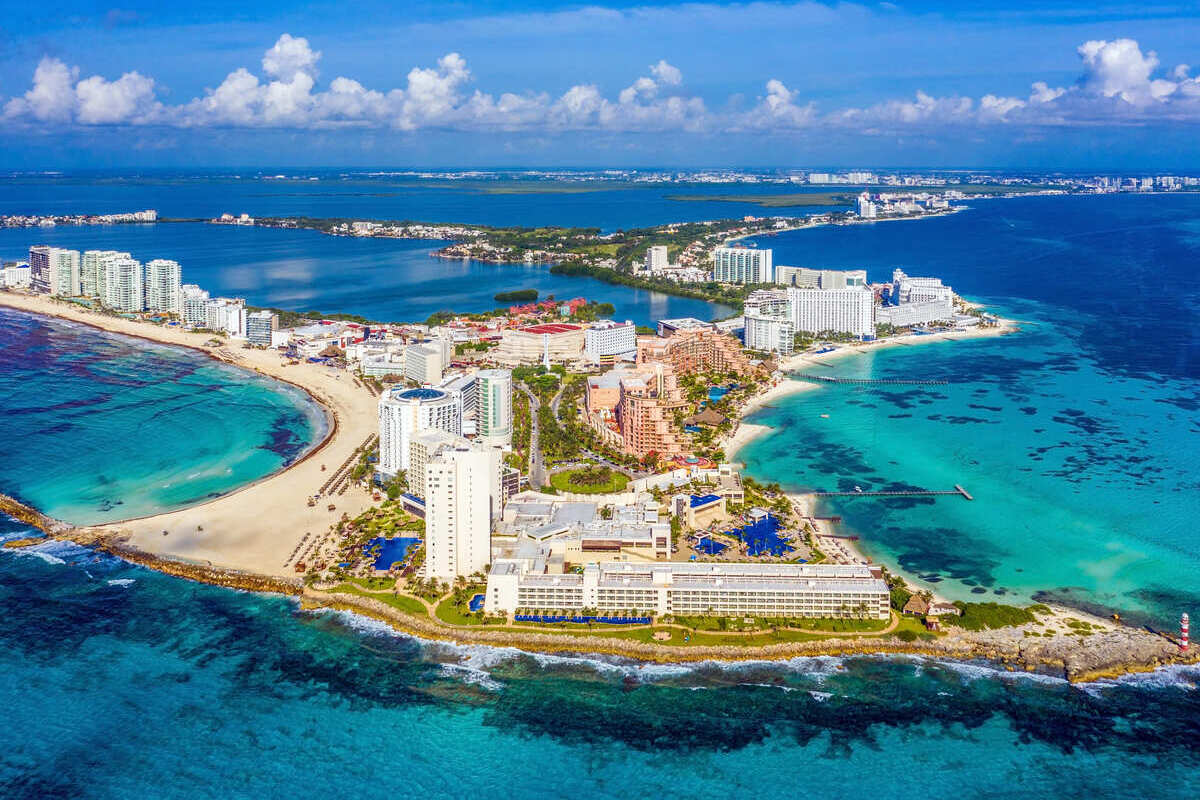
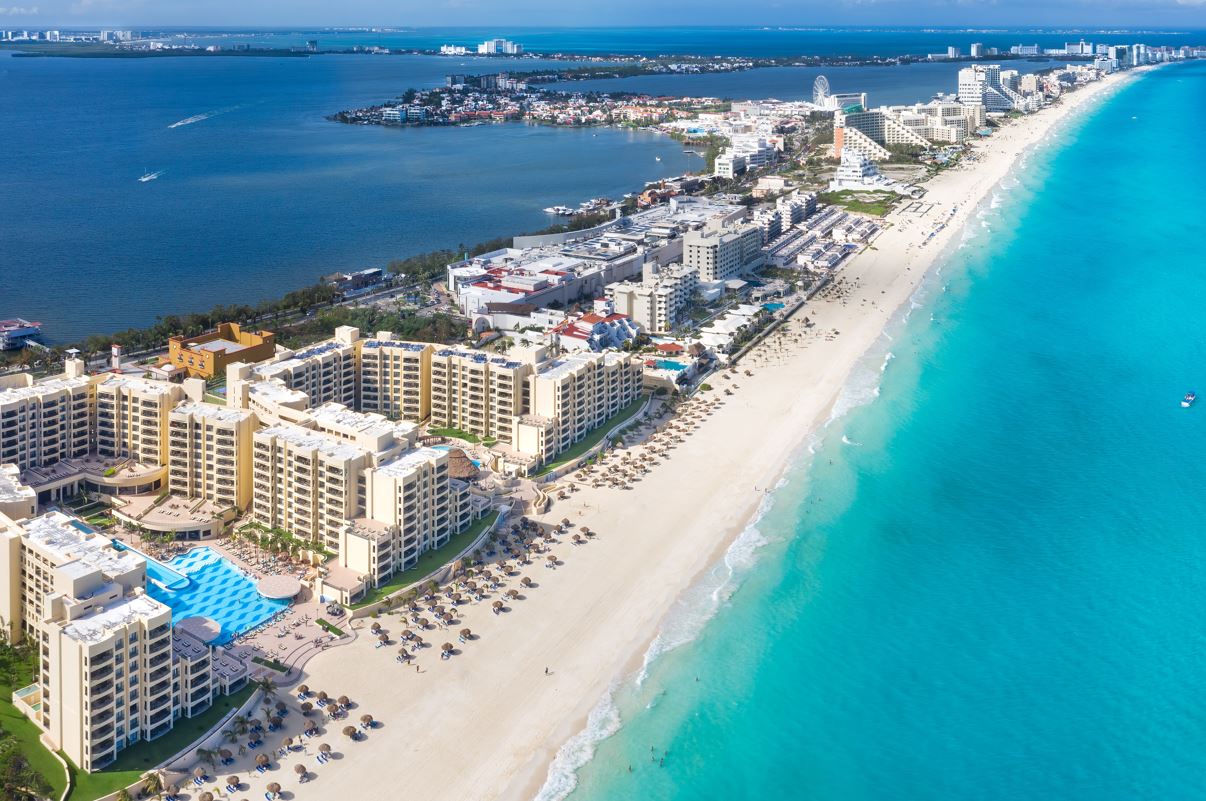
If you’re on the fence about booking that trip to Cancun now as opposed to later, in the low season, you may want to think about booking now. Whether it’s high prices holding you back or limited offers, we should remind you now is the best time to travel if you want to avoid a major problem. Beginning in March, sargassum seaweed will begin washing ashore again, and this time, the volume could be overwhelming.
Every year, the microorganism infamously batters the Caribbean coast, tarnishing the pristine nature of its white sand crescents and ruining the Mexican beach experience. Stepping over the smelly deposits as they make their way to a not-so-blue sea, painted a darker shade by the brown algae, is every traveler’s worst nightmare.
Based on the latest data, those heading to Cancun in the near future might want to bring their flights forward by a few weeks to be on the safe side:
Sargassum Season Will Be Worse This Year
After battling the phenomenon for most of 2022, Cancun – and the wider Riviera Maya – is currently enjoying a sargassum-free winter. As local specialists have affirmed, winter is the perfect time to visit the region due to the strong winds blowing from the north that help keep the seaweed at bay, in spite of the warm temperatures known to boost its spread.
Regrettably, the winds are fast-changing, and sargassum levels are bound to increase dramatically come spring. According to the newest report issued by Zofemat – an acronym for Zona Federal Maritimo Terrestre – 2023 will see a collection of algae equal to, or even higher than last year’s, with every major destination on the Riviera Maya likely to feel the impact.
This is particularly worrying, seeing that, throughout 2022, around 37,000 tons had made landfall. As stated by Lourdes Várguez Ocampo, director of Zofemaet, the numbers up to December 31 were already exceedingly high, and expecting further occurrences, preparations for the upcoming ‘intense’ sargassum season are underway at this stage.
What Can Travelers Expect Flying To Cancun After March?
In early 2022, the situation was so critical a popular beach in Playa del Carmen, a small resort town south of Cancun, was closed while cleaning was carried out. Beaches were still not completely shielded, and cleaners were routinely seen working round the clock to remove the excess seaweed. This year, they’re better equipped:
The Government has invested heavily in new machinery to divert it, but despite their best efforts, Carmen is again battling a seaweed surge as early as January. Luckily, the sargassum arriving right now is reddish and lighter in nature, ‘easier to harvest’. From March, however, tourists should expect a return of the brown, foul-smelling version.
Playa del Carmen may be bearing the brunt of it, but neighboring hotspots like Puerto Morelos, Tulum, and of course, Cancun, are also set for record levels in spring. With this in mind, Ocampo notes the Quintana Roo Administration has budgeted 40 million Mexican pesos for a wide range of anti-seaweed measures.
These may include sargassum barriers, ‘sandbonis’, and the so-called ‘sargaboats’, which collect the invasive microorganism before it makes it to land. Authorities are going above and beyond what is required to ensure vacationers do not face any kind of disruption, such as closed beaches, but it’s hard to say this far in advance whether that will be enough.
Quintana Roo Takes Tourism Very Seriously
One thing is clear: Quintana Roo takes tourism very seriously. Besides cordoning off the coast to maintain beaches in their pristine nature, the Government is adding new security forces to tourist spots in Tulum and deploying the National Guard to the soon-to-be-launched Maya Train to protect visitors from crime.
While Mexico can always crack down harder on violence, there’s only so much they can do when it comes to sargassum, especially when sea temperatures keep rising, the main factor behind algae reproduction. Every year it gets worse, and the four-month cycle for sargassum-free sunny breaks in the Mexican Caribbean keeps getting shorter.
In the end, it’s up to you to decide whether traveling now and paying more for perfectly clean beaches and a turquoise-colored ocean is a trade-off you’re willing to go with. Alternatively, you could consider exploring this lesser-known destination in southern Quintana Roo that’s recently earned the nickname of ‘New Tulum’, and where seaweed is definitely not an issue.
Massive traffic jams due to road work on the way to Cancun International Airport have forced travelers to get out of their vehicles, drag their bags, and run to make it on time to their flights since Wednesday, the 21st.
Local authorities made the decision to remodel the roads on Luis Donaldo Colosio and Kukulkan Boulevards, in the hotel zone of Cancun, in order to keep the popular destination’s infrastructure up to date with its growing popularity.
However, the Cancun Airport recently crushed a record of 719 flights, and hotels were all but sold out, meaning there were thousands of travelers all trying to get to the airport in the midst of this massive construction project.
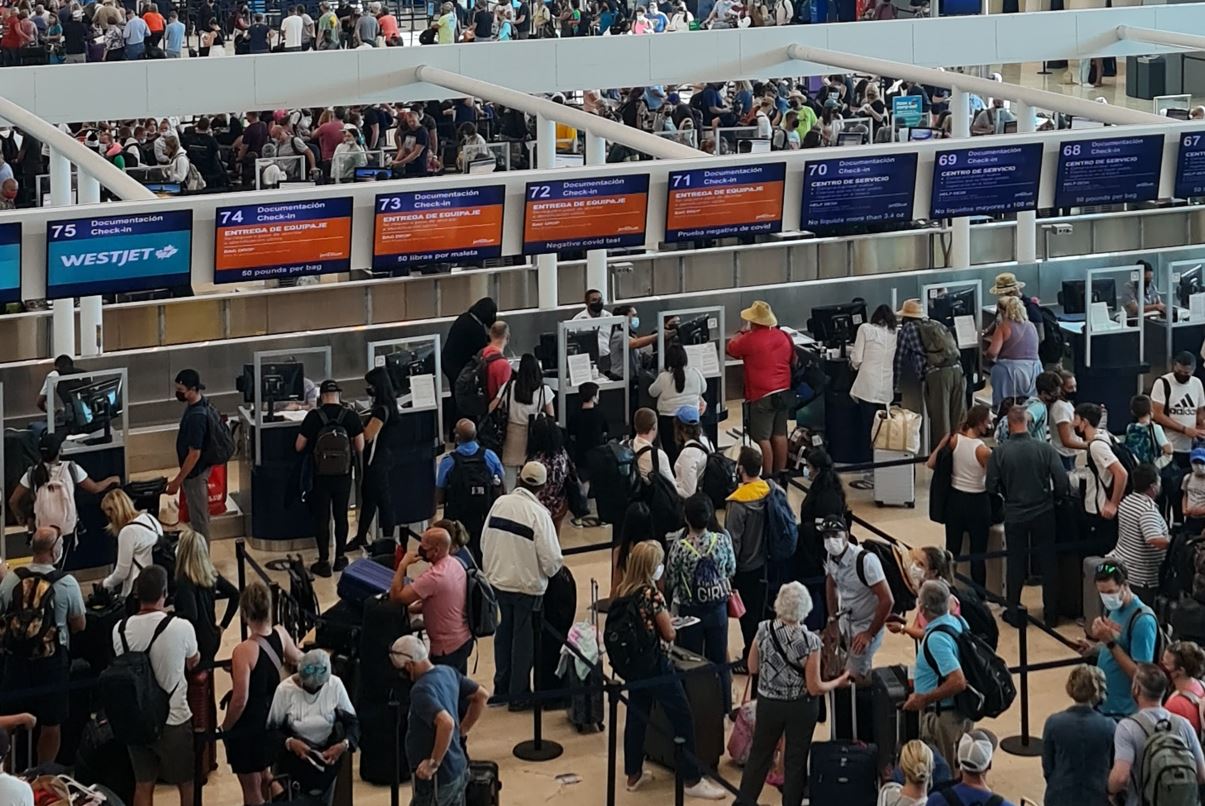
Because of the road construction, the route to the airport had heavy traffic congestion that affected around 10,000 passengers. According to the information shared by the Mexican news site El Financiero, many travelers didn’t make it in time and lost their flights, and nearly 40 flights had delays.
Through social media, users shared shocking videos of tourists—including families with babies and strollers— pushing their bags and moving faster than all the vehicles stuck in long lines of up to three hours long while heading to the airport.
“It took us 4 hours to go three miles,” wrote a user who shared a video of the experience on Tiktok. Another user commented: “It was horrible. I was dressed to land in Houston in 35-degree weather. I walked 3 miles with my 50 lb suitcase, carry-on, and giant purse.”
“Thanks to the cooperation between federal, state, and municipal authorities, we have managed to normalize fluid vehicular traffic on Blvd Colosio, which allowed the arrival and departure of tourists from the Cancun International Airport without setbacks,” said major Peralta on Twitter.
The road work that caused the chaotic traffic experience this week was part of a new project to optimize traffic flow and expand roads, but the result was catastrophic for tourists, especially during peak hours. The new measures will allow the construction to continue but also includes new road alternatives from Cancun to the international airport to create a better traffic flow.
Even though it is not the first time that Cancun’s traffic congestion has made it to the news, hopefully, this new strategy will solve the problem, and travelers can go back to a normal travel experience in the Mexican Caribbean.
When Travelers Should Leave Their Hotel
Travelers visiting Cancun right now or in the following days should be extra cautious. Cancun International airport is more crowded than ever, the traffic jam has been a nightmare, and now many flights connecting to the United States and Canada have been canceled due to bad weather in the north.
Hotels and resort transport operators are reporting that travelers need to leave 5 hours before their flights in order to make sure they make it to the airport in time. Travelers are advised to leave as early as possible to make sure the traffic situation doesn’t hinder their chances of making it home.
Even though the entry process at Cancun airport has been simplified and significantly optimized this year, these unexpected events have added stress and angst for travelers who don’t want to miss their flights. Airlines have also tried to provide solutions and alternatives for passengers.
Now that the new measures have been implemented, during the following days, the travel experience should improve. However, it’s wise to take precautions like heading very early to the airport, even if it means saying goodbye to the pristine Caribbean waters sooner than expected. Other travelers have also recommended taking morning flights to avoid peak traffic hours.
Those visiting Cancun must bear in mind that this is one of the trendiest destinations this winter, and crowds are expected. Many travelers —especially from the United States and Canada— have been flocking to the Mexican Caribbean to escape the cold weather and snow storms, and more airlines are offering direct routes to this beautiful destination to satisfy that demand.
As a result, the Mexican government is improving infrastructure, routes to the airport, and transportation systems to maintain the rising tide of Cancun’s popularity. Until such work is completed, travelers should be aware that leaving several hours in advance is a necessary precaution.
We know Cancun can be chaotic at times. Over the years, it transformed into the most popular beach destination in the Americas, and as a result, excessively long queues at the airport, traffic delays, and crowding became common occurrences. Fortunately, authorities have begun addressing complaints and improving the visitor experience. On this article, we will give you 4 reasons why traveling to Cancun will be more stress-free than ever this winter, despite mass tourism (and the long-standing security challenges):
Passport Control Will Take Less Than 30 Minutes
An excessively long waiting time at passport control has become one of the leading causes of distress among passengers arriving in Cancun. Understandably, Americans winter break want to clear customs quickly to enjoy as many precious hours of sunshine as possible, not be held up at immigration for hours on end until they can speak to an agent.
This season, sun-seekers will be thrilled to learn that INM, Mexico’s National Institute of Migration, is launching a pilot program in Cancun to expedite the screening of international arrivals. Their ultimate goal is to get Americans through in ‘less than half an hour’, as stated by Roberto Gonzales Lopez, an INM delegate.
The program will involve the opening of new E-Gate lanes, which will allow U.S. passport holders to scan their way into Cancun, lowering waiting to 25 minutes or less, even at peak times. Other measures enacted by the local Government include the scrapping of the much-criticized customs form, and deployment of more immigration staff to keep up with demand.
Transfer Times Have Been Reduced As Well
Prior to this year, commuters were advised to leave several hours ahead of their check-in time in case there was congestion at any point along the Luis Donaldo Colosio Boulevard, the main road leading to the airport. Needless to say, getting stuck in traffic when you have a flight to catch can be quite stressful, and definitely not the best way to spend your last day of vacation.
This year, however, authorities have been working around the clock to finish construction on the boulevard, and streamline the flow of vehicles. Over the holidays, Americans will no longer have to take secondary routes, or wake up in the early hours to make it to the departure gate on time. To be more precise, transfer times are now estimated at 45 minutes.
We must reiterate estimations are not always reflective of the situation on the ground, especially during the high season, when arrival figures tend to skyrocket, but it still represents a significant improvement over previous reports. In quieter days when traffic is minimal, a taxi ride may take no longer than 20-25 minutes.
Cancun Is Cracking Down On Taxi Misconduct
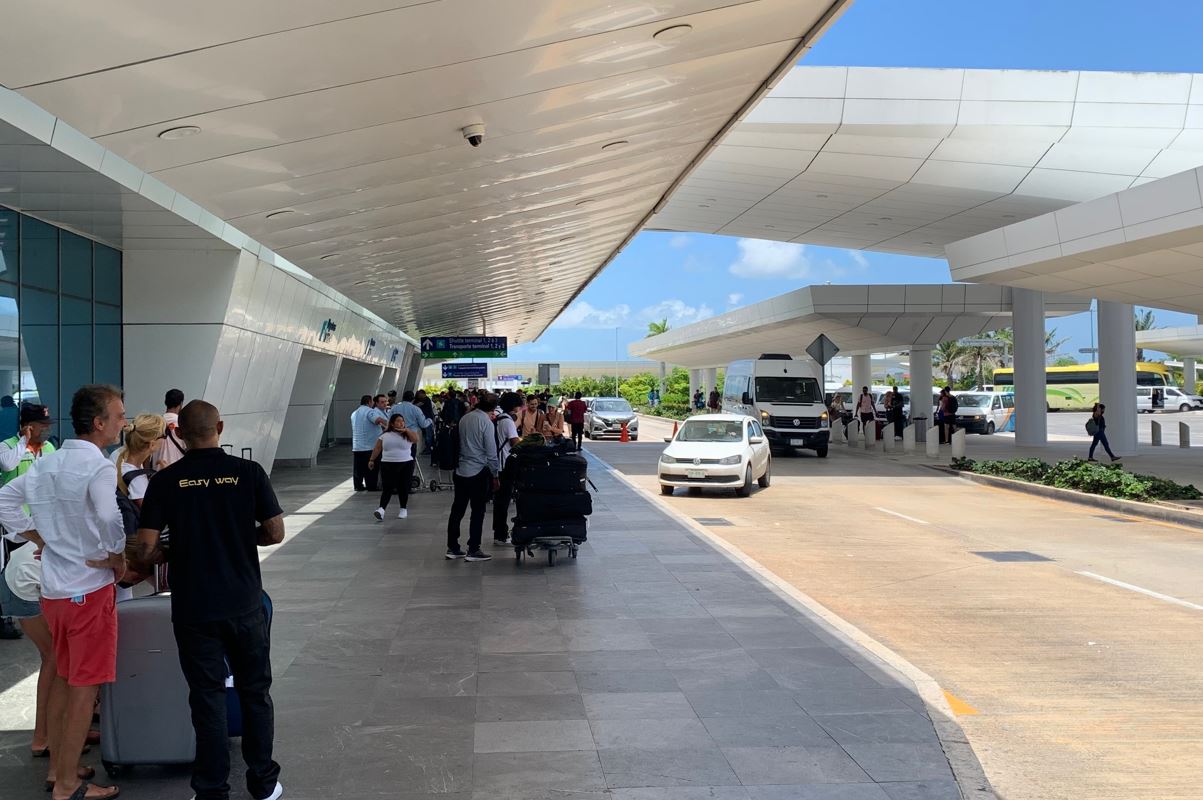
The Cancun taxi monopoly can lead to a whole lengthy discussion that deserves its own feature article – and trust us, we are not fans of the so-called ‘shark tank’ corridor, either: landing in Cancun, passengers must walk across it in order to reach the transfer desk, to the disconcerting shouts of drivers offering rides, some unlicensed.
The Quintana Roo administration is yet to tackle this issue in particular, but they are revoking the permits of drivers who commit acts of misconduct. If you ever got into a cab and felt like the conductor was ill-mannered, or even feared they could turn violent over a disagreement (e.g. after you disputed an inflated fare), you will know why this is such an important step.
As reported by The Cancun Sun, misconduct is defined as assaulting passengers, a colleague, or even drivers from private companies like Uber. We do not know, at this stage, whether scammers will also be punished under the new stricter guidelines, but it’s a fact the city has moved quickly to redress the problem, after multiple reports emerged in October.
Increased Police Presence In Tourist Hotspots
Safety is a major concern for U.S. citizens going abroad, especially to Mexico, where they are met with striking cultural differences and risks they may not find at home. With that being said, let’s make this clear: Cancun – and the wider Riviera Maya – is perfectly safe for foreigners, especially those traveling on an all-inclusive package and staying in tourist areas.
Unlike in Colombia, where Americans have been directly affected by crime, officials here have ensured guests are well-received and looked after. This year, they really went above and beyond in tightening security on beaches, sending more police officers, and even the navy, to keep crime under acceptable levels.
Soon enough, yet another operation will take place – in Tulum speifically – to further heighten surveillance in the town. Dubbed the Guadalupes–Reyes program, it will be headed by the Tulum Civil Protection Coordination, in partnership with the National Guard, the Navy and many other entities, with the sole purpose of protecting beachgoers.
In other words, Cancun has never been safer, or more pleasant to visit. If you’re flying to Mexico this winter, don’t forget to keep up to date with all the latest developments affecting tourists in Quintana Roo by accessing this link.
It seems Cancun’s never-ending war on scammers is intensifying once more after reports of fake Uber drivers targeting tourists in central areas started circulating. Now, authorities are urging them to be cautious when booking rides through the popular app, as they could be extorted, or even put their lives in serious danger.
This year, Cancun has taken additional steps to ensure visitors feel safe and enjoy a stress-free vacation in the city, deploying more police units to beach hotspots and increasing surveillance in the Hotel Zone, all the while under the scrutiny of the mass media and the U.S. Government. Naturally, when actual security concerns do arise, tourism officials react swiftly.
For now, you may want to reconsider using rideshare applications in Cancun, where taxi scams are becoming increasingly common:
Scammers In Cancun Are Hacking Into The Uber Platform For Personal Gain
Following multiple reports online, including a number of TikTok videos where tourists claim to have fallen victim to scammers, the President of the Mexican Association of Travel Agencies confirmed those who use Uber in Mexico ‘could be in danger’, as the service remains poorly regulated across the country, and criminals have been known to operate in the field.
Mr. Eduardo Paniagua stated ‘personal safety’ is endangered, taking into account Uber’s restricted reach in the Mexican Caribbean, attributed to the ongoing resistance of the regional taxi monopoly, has paved the way for scammers to present themselves as drivers, especially in recent months, when fares in Cancun and Tulum began spiraling out of control.
At present, a large number of taxis are deliberately overcharging tourists or running on inflated fares higher than Manhattan‘s, thus influencing tourists to seek other cheaper alternatives for moving around the zone. Ironically, they are resorting to unlicensed Ubers and putting themselves in danger as a result of the local taxis’ own corrupt practices.
Is Lack Of Competition To Blame For The Phenomenon?
In the words of Travel Noire, the conflict between taxi unions, whose members would like to stave off the competition at all costs, and budget-friendly rideshare apps have led ‘hackers’ to clone Uber accounts for illicit purposes. Cancun’s beaches may be the most secure (and cleanest) they have ever been, but road safety is a different matter altogether.
Essentially, the aforementioned hackers are cracking into the WhatsApp account of certified drivers and accessing the Uber database to prey on naive passengers. Travel Noire notes that, unless a customer acts carefully, they could be entering an ‘unknown vehicle’ driven by someone who has not been inspected nor approved by Uber.
Interestingly, the Government is yet to outline a strategy to combat scammers, in stark contrast with its previous, well-documented, and effective actions to quash crime in tourist spots, after a number of gang-related shootings took the headlines by storm earlier this year.
Comparatively, the lack of competition on the transportation front, and its subsequent effects, are yet to be addressed.
Americans Must Avoid Using Ridesharing Apps In Cancun
Customers are being urged to cancel an Uber ride immediately after realizing it could be a scam and reporting any dodgy accounts to the relevant authorities. Booking Ubers, in general, is now strongly discouraged, but in case they decide to take their chances, American tourists must beware of some red flags and keep a high level of situational awareness.
A simple way to spot a fake Uber driver is to pay attention to unnecessary questioning. Drivers do not need to ‘verify’ any of your personal details other than perhaps confirming your name, and to an extent, you should never share your own credit card details or other sensitive information either in person or online chats.
Additionally, checking the car plate and that the car matches the description on the booking is, of course, advised. Until the state of Quintana Roo cracks down both on ill-intended drivers, and the loopholes left open amid the fierce opposition of taxi unions to external competition, it’s best if you stick to hiring private drivers or booking transportation in advance.
That is particularly true arriving at Cancun Airport, where travelers must walk through the infamous shark tank, or ‘gauntlet’, an arrival hall lined with yelling drivers who will do anything to grab your attention, including standing on your way and snapping their fingers.
The best way to avoid feeling overwhelmed by this and taken advantage of is, again, to arrange transportation beforehand. Currently, as a result of resisting taxi drivers who rely heavily on the ‘shark tank corridor’, there is no Uber service leaving from Cancun Airport.
Cancun is a highly sought-after international destination that sees millions upon millions of tourists arriving all-year round. Its massive popularity would lead you to think the quality of local beaches is decreasing dramatically – after all, more tourists generally result in more waste and, subsequently, beach pollution. That is shockingly not the case, as Cancun has, in fact, the highest number of clean beaches in all of Mexico.
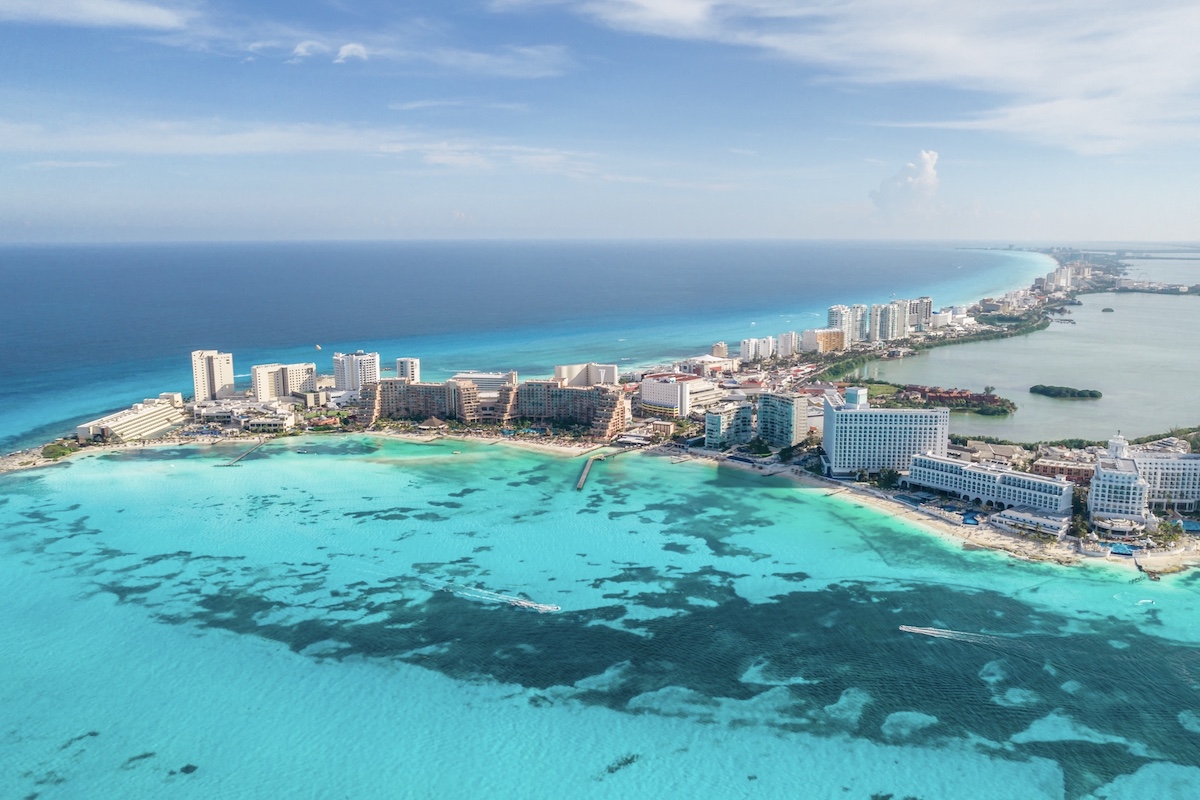
Overtourism is one of the biggest threats facing Cancun, but local authorities have risen to the challenge and are not only encouraging Americans to visit but keeping the city safe and all of its popular swimming areas spotless. Crowding risks aside, the oceans bordering Cancun and the wider Riviera Maya are as beautiful and crystal-clear as ever.
You don’t have to believe us. The proof is in the numbers:
No Other Coastal City In Mexico Has More Blue Flag Beaches
As reported by our sister website, The Cancun Sun, no other coastal destination in Mexico has more ‘Blue Flag’ beaches than Cancun. The status, which is the highest a natural landmark within this category can achieve, is only awarded to those with the best quality standards and environmental controls, also serving as an unofficial ‘safe for tourism’ badge.
A huge part of Cancun’s global fame has always been attributed to its pearl-white sands and warm, turquoise-colored seas, though the city’s visible transformation in light of mass tourism has been an ongoing concern for environmentalists. They are often critical of the Government’s development plans, particularly the upcoming Tren Maya, and have shown skepticism at their promises to protect the surrounding nature.
As it turns out, their apprehensiveness is unfounded, at least when it comes to the preservation of marine life, after seven beaches in Cancun were awarded a Blue Flag certificate at an event recently held by the Foundation for Environmental Education (FEE) in Playa Delfines. This proves the city has managed to maintain the beachfront perfectly clean in spite of the overwhelming number of visitors.
Cancun Authorities Want To Keep Tourists Coming Back
Officially, Cancun outnumbers Los Cabos and Puerto Vallarta, its partners in the triad of Mexico’s world-class destinations, as well as any other beach hub when it comes to Blue Flag beaches. For months on end, authorities have worked around the clock to ensure the Pearl of the Caribbean wouldn’t lose its sparkle amid the landfall of sargassum and a rise in crime.
This year, the Quintana Roo Government has surely stepped up its game when it comes to improving the tourist experience. Over the summer, 300 army soldiers were deployed to keep visitors safe, despite the fact that violent incidents occur almost exclusively in suburban areas, while beach cleaners worked tirelessly throughout the fall to manually remove the dreaded seaweed.
Few destinations value tourism as much as Cancun does, a quality recognized by Joaquín Díaz Ríos, head of the FEE. According to Ríos himself, Cancun is Mexico’s ‘Blue Flag capital’, meaning it has passed all the cleanliness, safety, and water quality tests with flying colors. More specifically, the below spots have attained the honor:
Del Nino
Las Perlas
Chach Mool
Ballenas
Marlín
Delfines
Coral
Additionally, three private beaches were certified ‘Blue’: Fiesta Americana Condesa’s, Hotel Live Aqua’s, and Iberostar’s.
Overtourism Major Threat To Blue Flag Status Moving Forward
This will undoubtedly prove challenging, considering Cancun is close to selling out for the peak season, with occupancy reaching 95% and packed beaches equal littering. In preparation for the phenomenon, more than 150 full-time cleaners have been hired to ensure beaches look pristine at all times, on top of increased surveillance by patrol units.
Winter is fast approaching, and you can certainly expect the Pearl of the Mayan Riviera to get busier by the minute. This may involve waiting longer in line arriving at the airport, finding it more difficult to arrange a hotel transfer unless you have pre-booked one ahead of traveling, and even staying in a sub-optimal location far from the trendy Hotel Zone due to low room availability.
Remember: if overtouristed destinations are not a big turn-off for you and a Blue Flag-certified Cancun remains your dream getaway, you should be booking that vacation package right away before rooms and airplane seats sell out. Other destinations in Mexico close to being booked up this winter are Playa Del Carmen, south of Cancun, and the insular municipality of Isla Mujeres.
Fall may not be behind us just yet, but the popular beach retreat of Cancun is already expected to reach up to 95% occupancy in the high season – in other words, it could sell out any day now. If you’re on a low budget at the minute to book your vacation package right away, yet you’re still dreaming of the Mexican Caribbean, perhaps you should consider the beautiful, paradisaical island of Cozumel instead.
In this article, you’ll find an updated round-up of all direct flights to Cozumel this winter and why it may be a better pick than Cancun in the end:
Full List Of Direct Flights To Cozumel From The U.S. And Canada
Direct flights to Cozumel (CZM) leave from multiple cities in the U.S. and Canada, and the full list, including frequency during the peak season and starting prices for one-way Economy fare tickets can be found below:
UNITED STATES
Austin (AUS)
Airlines: American Airlines, Southwest Airlines*
Flight time: 2 hr 32
American
Starting price: $169.43
Frequency: x | x | x | x | x | Sa | x
Southwest
Starting price: $151.00*
Frequency: x | x | x | x | x | Sa | x
*Southwest flights to Cozumel begin only on March 11, 2023
Direct flights to Cozumel are also available from within Mexico, leaving from Merida and Mexico City
Starting prices above may refer exclusively to seats: Economy fares do not necessarily include hold luggage, in-flight meals, or entertainment, even on international routes. They may also oscillate as we enter the peak season, subject to demand and availability. We would suggest you read our five tips for scoring cheap flights this winter amid the volatile scenario.
Why Should You Pick Cozumel Over Cancun?
After spending years in the shadows as a secondary destination or day trip option, Cozumel is climbing the tourism charts as one of the best islands, not only within Mexico, but in North America. This year, it was proclaimed the continent’s fifth most popular island by Condé Nast Traveler, behind only Holbox and Mujeres and two other Canadian destinations.
Although it has certainly seen its share of development in recent years, following the arrival of various resort brands, top-notch seafood restaurants, and even beach clubs, the once-sleepy island has merely a small fraction of Cancun’s arrival figures. While it does have its own airport, it is served by fewer cities compared to the latter.
This has helped Cozumel retain some of its Mayan mystique, an attribute that has long been lost in other overtouristed Riviera towns. Moreover, its unspoiled nature and historical sights are iconic Mexican postcards: here, you’ll find sandy white beaches and crystal clear oceans, marine parks, lagoons with underwater caverns, and of course, ancient ruins.
Naturally, Cancun Airport remains the main entry point into the Riviera Maya, but we value honesty first and foremost and will not skirt around the harder topics: due to its accessibility, it can be chaotic at times, and this will be particularly true this winter, with millions of Americans set to scramble for any seats left on sold-out Cancun routes.
If you’re worried Cancun might sell out and packed beaches are not your idea of fun, flying direct to Cozumel is simply a great alternative to enjoy all the perks of vacationing in the Mexican Caribbean.
On track to become the number one beach retreat south of the border, Cabo has just beaten other tourism hubs like Cancun and Puerto Vallarta in a major award show, where it was crowned the best destination within Mexico. The Riviera Maya continues to be the best-selling product, at least for now, but it’s the jewels of the Pacific that are stealing the spotlight.
2022 has been a record-breaking period for the Capes: in the first official post-pandemic year, they bounced back stronger than ever while still making headlines as a safe vacation spot for Americans. At present, it is one of a handful in Mexico retaining both a strong hotel occupancy and its own prestige amid a nationwide crime surge.
The same cannot be said about its closest competitors:
Cabo Takes Home One Of The Most Coveted Awards Of The Night
Held for the 8th year, this time in Fort Lauderdale, Florida, the Travvy Awards recognized the ‘top industry suppliers’ for 2022. Namely, the cities, accommodation providers, airlines, and experiences travelers love the most. It is produced by TravelPulse in partnership with AGENTatHOME, and voting is open for readers of these websites.
With over 140 categories, it is one of the largest award shows in the travel industry and one of the most relevant, with sponsorship from big companies like Allianz Partners, Air Canada, and Enterprise Holders. Seeing that Mexico is America’s favorite sunny getaway, it has its own sub-categories under the ‘Best Destinations’ listings.
When it comes to the best in Mexico, Cabo came out triumphant with a ‘Gold’ medal, followed by Puerto Vallarta (Silver) and Cancun (Bronze). Once again, it trumps all other coastal hubs and openly challenges Cancun for the top spot domestically – so why is Cabo being showered with so much love when it lags behind*the Caribbean in numbers, one may wonder?
Cabo Is Cancun’s Biggest Threat Internally
*First of all, does it?
Cancun Airport’s arrival figures may be poised to be Mexico’s highest during the peak season, but it pales in comparison to Cabo in terms of recovery. Effectively, Cancun had accumulated a lower 14.6 percent growth in 2022 by late September; at the same time, the dual ‘Los Cabos’ hit the 17.9 percent mark.
Cancun is a tour de force almost impossible to be surpassed, but should this trend continue, the Capes will keep increasing their chances of toppling the Mayan giant. In simpler terms, more and more tourists are falling in love with Cabo, and this newfound fame is attributed both to a laudable tourism campaign and the region’s remarkably low crime levels.
At a time when state governments deploy army officials and even the Navy to reinforce security along Mexico’s easternmost coast in response to gang activity and the occasional shooting, Cabo authorities have averted most of the bad press plaguing Cancun and Tulum by being firm and keeping the streets safe. In fact, 69.3 percent of residents consider it a ‘safe city‘.
In Mexico, Los Cabos – both San Jose del Cabo and Cabo San Lucas – are the safest to live and/or visit in the short term, as concluded in an INEGI report (the acronym stands for National Institute of Statistics and Geography). Moreover, the government of Baja California Sur, where the Capes are located, has stayed ahead of the curve in travel trends.
Cabo Is Mexico’s Trendiest Tourism Hub
Now that digital nomadism is on the rise, they have partnered with AirBnB to offer remote workers a roadmap to exploring the peninsula and encourage ‘sustainable’ tourism – this means boosting the nomad scene without detriment to the local community. On top of that, it is now Mexico’s official wellness capital, beating Cancun on yet another front.
The ‘Cabomania’ did not go unnoticed at the Travvy Awards, as the duo attained numerous other accolades, including a second Gold medal for ‘Best Culinary’ in Mexico, a Silver for ‘Best Honeymoon’ (overshadowed by Cancun this time), and even ‘Best Tourism Board’, evidencing the cities’ successful approach to tourism and their potential to reach new heights.
For more Cabo news, make sure you visit our sister website, The Cabo Sun.
On April 1st, 2021, the Mexican government implemented a tourist tax for international visitors coming into the state of Quintana Roo. Many of the most popular destinations in Mexico, including Cancun, Playa del Carmen, Tulum, and Cozumel, are located within Quintana Roo. As a result, most tourists entering Mexico are subject to the tax, which applies to all tourists over four. Though the tax has been around for over a year, many remain unaware of its existence.
How Much Is The Tourism Tax?
The total fee per visitor amounts to $241 Mexican Pesos, or roughly $12 U.S. Dollars as of this writing. The fee applies to every traveler over four who will visit any part of the Quintana Roo state. To pay the fee, travelers can use the Mexican Government’s VISITAX website before or during their trip. The tax is a measure to raise funding for development in the tourism industry, and it was initially estimated that the tax would produce $29.1 million U.S. dollars in 2021. However, many tourists remain unaware of the tax, which has made its collection unpredictable.
Do You Have To Pay The Tax?
The Quintan Roo tourism tax is mandatory for every traveler over four. So, if you are reading this, you should probably pay the tax. However, information regarding the tax is fairly limited, and its existence has eluded many travelers even after a year of being in effect. Beyond the payment website itself, it can be difficult to find information about the tourism tax. Some travelers have reported that they traveled to and from Cancun without ever being asked for proof of tax payment, leading others to ignore it. However, the tax is still mandatory, and travelers could still be asked to provide proof of payment.
A Word Of Caution
There is only one official site that travelers are to use when paying the tourism tax. For clarity, the site with its entire URL string is https://www.visitax.gob.mx. Any other site users may find through search engines or other means is NOT the official portal for paying the tourism tax. Many sites have popped up after the tax introduction that attempt to take advantage of travelers planning to visit Quintana Roo.
Because Travel Off Path does not wish to further these sites by providing links to them, we’ve included screenshots of the prices that a few of these sites are charging for the tourism tax. As you can see, some sites are charging as much as $42 for the $12 tax. Presumably, they are taking your information, paying the tax, sending you the confirmation, and pocketing the difference. However, since none of these sites are official avenues for paying the tourist tax, it’s unknown whether or not they actually pay the tax in your stead.
Latest Updates
When this tax was first introduced, it lacked a system to support its enforcement. Hence, many travelers have gone to and from Quintana Roo without paying or being asked about it. However, Mexico is slowly adding more infrastructure to the system. Recently, it introduced VISITAX payment modules in arrival terminals 2 and 4 at Cancun International Airport.
International tourist friend, now you can make your VISITAX payment directly at the Cancun International Airport, locate our modules in arrivals terminal 2 and 4, from Monday to Sunday from 8:00 a.m. to 5:00 p.m. to 6:00 p.m. pic.twitter.com/jWFvYQOxhm
Until recently, the only way to pay the tax was through the use of the online form. However, travelers can now pay in person at Cancun International Airport. It seems the government is trying to make the tax more apparent and more stringent enforcement could soon follow.
Information Needed To Pay The Tax
In order to pay the tax, travelers will need to fill out either the online form or use one of the in-person modules located in Cancun International Airport. The form will require:
The Number of People in Your Party
First & Last Names of All Party Members
Birthdates of Each Party Member
Passport Numbers for All Party Members
The Date of Departure from Quintana Roo
Proof of payment will be provided and, if enforced, must be shown to airport security before departing. As more destinations continue to add tourist taxes, travelers will likely see them become the new normal. Thankfully, this particular tax remains low for now. And although many travelers have gotten by without paying the tax since its introduction, it is still mandatory.
This article originally appeared on Travel Off Path. For the latest breaking news that will affect your next trip, please visit: Traveloffpath.com
Enter your email address to subscribe to Travel Off Path’s latest breaking travel news, straight to your inbox
Disclaimer: Current travel rules and restrictions can change without notice. The decision to travel is ultimately your responsibility. Contact your consulate and/or local authorities to confirm your nationality’s entry and/or any changes to travel requirements before traveling. Travel Off Path does not endorse traveling against government advisories
Cancun has consistently broken tourism records nearly every month this year, and the trend isn’t slowing. However, an ambitious project is underway that will take tourism in the area to heights never before seen, The Maya Train. A sprawling 1500 km (≈932 mi) long railway will connect Cancun to the entire Yucatán Peninsula, allowing travelers access to over 190 tourist attractions and a total of 5 Mexican states. There will be 18 stops along the route, and the train will travel at a top speed of 160 km/h (≈100 mph).
What It Means For Cancun & Travelers
Although Cancun needs no help bringing in more tourists, The Maya Train will undoubtedly ramp up tourism in the area. With a direct connection to the train right from Cancun International Airport, travel to other areas will be easier and faster than it’s ever been. For instance, the first three stops out of the Cancun airport station will be Puerto Morelos, Playa del Carmen, and Tulum.
Incidentally, Playa del Carmen and Tulum are two more areas that have been breaking records. The new Maya Train will offer travelers an easier and faster way to reach these highly sought areas. As a result, Cancun International Airport should expect even more record-breaking in its future. Currently, it takes 1.5 hours to drive 118 km (≈73 mi)from Cancun Airport to Tulum. The Maya Train will connect Cancun to Tulum with a 110 km rail section with two stops in between.
With a top speed of 160 km/hr and an assumption of 5 minutes at each of the two stops in between, travelers will still reach Tulum in under an hour. More specifically, it would take about 51 minutes. Aside from the significant time savings, the journey itself will be much more comfortable. The Maya Train will feature large comfortable seats, train cars that offer dining experiences, and even cabins with a place to lie down for those taking the train long distances.
For Cancun, Playa del Carmen, and Tulum, The Maya Train means they can each expect their visitor counts to grow exponentially. Easier access to these already-popular areas will make them more enticing to travelers looking to experience something new in the region. The adventurous traveler could plan an entire trip around the 18 stops along the route and utilize the cabins with resting areas for long-distance legs.
Due to environmental concerns over section 5 of the railroad track, which connects Cancun with Tulum, the project was temporarily halted. However, work on the section has started again, and tourists can expect to be able to ride The Maya Train by the end of 2023.
What’s Along The Route?
There will be many opportunities for tourists to explore more of the peninsula. Indeed, there will be access to nearly 200 tourist attractions along the route. Access to 5 Mexican states in the area will also make it easier for locals to connect with bigger cities. The 18 stops planned for The Maya Train are below, with four stops of particular interest to tourists bolded.
Palenque, Chiapas
Boca del Cerro, Tabasco
El Triunfo, Tabasco
Escárcega, Campeche
Xpujil, Campeche
San Francisco de Campeche, Campeche
Merida Aeropuerto, Yucatan
Izamal, Yucatan
Chichen Itza, Yucatan
Valladolid, Yucatan
Nuevo Xcan, Quintana Roo
Cancun Aeropuerto, Quintana Roo
Puerto Morelos, Quintana Roo
Playa del Carmen, Quintana Roo
Tulum Aeropuerto, Quintana Roo
Felipe Carrillo Puerto, Quintana Roo
Bacalar, Quintana Roo
Chetumal Aeropuerto, Quintana Roo
Planned Maya Train Route
Travelers will have easy access to various activities and attractions along the route. Historical sites will now be a quick train ride away rather than a lengthy taxi ride. Travelers will be able to explore more independently with ease rather than feeling the need to book a guided tour. Some of the sites that will become more accessible along the route include:
The Maya Train is a massive project that will benefit tourists and locals throughout the Yucatán Peninsula. Areas already majorly popular such as Cancun, Playa del Carmen, and Tulum, will all see increased visitor counts due to how accessible the train will make these locations to all travelers. The train will open up the region to a whole new kind of traveler who may have passed on the area before its introduction. It will also give the travelers who come back every year a brand new way to see more of this beautiful slice of the world.
This article originally appeared on Travel Off Path. For the latest breaking news that will affect your next trip, please visit: Traveloffpath.com
Enter your email address to subscribe to Travel Off Path’s latest breaking travel news, straight to your inbox
Disclaimer: Current travel rules and restrictions can change without notice. The decision to travel is ultimately your responsibility. Contact your consulate and/or local authorities to confirm your nationality’s entry and/or any changes to travel requirements before traveling. Travel Off Path does not endorse traveling against government advisories
There’s no question that Cancun and Punta Cana are two of the most popular destinations for an all-inclusive vacation. Cancun is the most visited Destinations in Mexico, while Punta Cana is the most visited destination in the Dominican Republic. Each location offers visitors a wide selection of all-inclusive properties at prices that range from ultra-luxurious to totally affordable. Both destinations have been breaking records this summer, proving that tourists are flocking to the regions. For those who are on the fence about which area to choose, this article will help determine a winner!
Travel Off Path has pitted each location against each other in a head-to-head comparison to determine the best all-inclusive destination. For clarity, we’ve broken things down into sections, including pricing and resort options, beaches, weather, activities, safety, as well as flight connectivity and cost, and traveler interest.
For this comparison, we assumed a one-week vacation during January, a peak travel month for both areas. Specifically, we chose January 14th to January 21st, with flights in and out on each of those days as well. All prices shown are based on two people traveling together.
All Inclusive Costs & Options
One of the driving decision-making factors for vacations is cost, so it’s worth exploring how Cancun and Punta Cana rank against each other. To make the comparison of properties relevant to more than just luxury travelers, we will explore two categories; 4-star properties & 5-star properties. Average costs were found using booking.com and the dates of January 14th through January 21st.
Only all-inclusive properties were considered, and pricing data was pulled on September 5th. We combed through all available properties to get an average cost of each category, and the results are below:
Based on average prices alone, Punta Cana has the upper hand in this category.
In total, Cancun has 74 all inclusive properties to choose from, while Punta Cana has 72. Cancun has more 4-star options than Punta Cana, implying more affordability. However, on average, Cancun’s 4-star properties are over $30 more per night than Punta Cana. Similarly, Cancun’s 5-star properties are, on average, about $80 more per night than Punta Cana. This isn’t to say that Cancun has no affordable options, though.
For instance, the 4-star Hotel Dos Playas Faranda Cancún is just $200 per night for the dates explored. The cheapest option for a 4-star stay in Punta Cana, the whala!bávaro, comes out a little more affordable at $187 per night. It should also be noted that, on average, Cancun’s 4-star and 5-star properties have slightly higher user ratings.
Beaches
What’s a tropical vacation without a beautiful beach? That first step onto that white-sand Caribbean beach is almost worth the cost of the flight alone. When choosing between Cancun or Punta Cana, it’s important to know which has beaches better suited to your travel style. We’ll break down the top 5 beaches for each destination and their differences. Beach rankings were found using Tripadvisor.
The single biggest difference between beach days in Cancun vs. Punta Cana is the level of development. In Cancun, the long stretch of sand in the hotel zone is jam-packed with restaurants, shops, hotels, and endless activities for tourists to take advantage of.
Conversely, Punta Cana’s beaches are less developed and offer a more authentic tropical beach vibe. While hotels certainly dot the shores, it’s much easier to find a secluded stretch of sand to soak up the sun.
Beaches: Who Wins?
When it comes to beaches, there’s no specific metric that can decide whether Cancun or Punta Cana is the ultimate winner. However, it can certainly be an influencing factor when deciding which destination is for you.
If you prefer your beach days to be close to a seemingly endless array of activities, Cancun may be for you. The tradeoff is that the beaches will be much more busy and crowded. But if that’s your vibe, then Cancun is perfect!
Punta Cana will be a better place for travelers who like to carve out their own space at the beach. However, the price you’ll pay for fewer crowds and seclusion will be less access to amenities. That’s certainly not to say there aren’t activities and restaurants to try, simply that they are not as condensed into one area as they are in Cancun.
Weather
The gorgeous weather offered by both Cancun and Punta Cana is one of the many reasons travelers flock to these areas over the fall and winter. A week of sunshine and warm weather is a wonderful way to break up the winter into more manageable sections. January is the dry season for both locations, and rain doesn’t tend to stick around. For days that it does rain, it often storms for a short period and quickly goes back to beautiful sunshine.
Below, we have laid out average temperatures and other information for the month of January in each destination.
Cancun
Temperature:
Average – 74.6°F (23.6°C)
High – 77.7°F (25.4°C)
Low – 72.3°F (22.4°C)
Rainfall Average: 9 Days with Rain, averaging 3 inches (51mm)
Average Humidity: 71%
Average Water Temperature: 79°F (26°C)
Punta Cana
Temperature:
Average – 76.6°F (24.8°C)
Low – 74.8°F (23.8°C)
Rainfall Average: 11 Days with Rain, averaging 2 inches (51mm)
Average Humidity: 76%
Average Water Temperature: 80°F (27°C)
Weather: Who Wins?
Cancun and Punta Cana have such similar averages in January that it is difficult to determine an ultimate winner in this category. Both destinations will offer a welcome respite from the cold of winter. However, for those who don’t like it too hot, Cancun may be better on average due to the lower humidity levels and slightly lower average temperatures.
Activities
Cancun and Punta Cana offer a wide range of activities to enjoy during your stay. The most significant difference in offerings is the style of activities available. While there are many overlaps, such as snorkeling, watersports, and swimming in cenotes, each destination has its own feel and unique offerings for travelers to enjoy.
Cancun Activities
Cancun’s hotel zone is like a giant 15-mile-long playground. It is the heart of tourism in Mexico and is designed to offer endless entertainment to those visiting its shores. Nightclubs, restaurants, shopping malls, beach clubs, and more are all just a quick taxi ride or walk away when you stay in the hotel zone. An extensive list of every activity available would require several pages, so we’ve listed a few of note below:
Xoximilco Cancun – A self-named “Floating Fiesta” awaits visitors heading to Xoximilco. Guests board colorfully decorated gondolas with an open bar and a three-course meal. As you venture through the park’s canals, you will see many different bands and shows. This is just one of Cancun’s many dinner shows, but it certainly sets itself apart from the rest!
Nightlife – Cancun’s nightlife is incredible, and there are some wildly popular places to go. Coco Bongo is a must and is arguably Cancun’s most famous nightclub. With live performances, balloons, confetti, bubbles, full stage lighting, incredible music, and much more, guests will enjoy the party of a lifetime.
Day Trips Galore – Not only is Cancun itself packed with things to do, but it also has easy access to some pretty incredible day trips. From Cenotes to ancient ruins, many adventures await. Tulum is one of the most popular day trips, allowing visitors to visit an ancient Mayan archaeological site.
Punta Cana Activities
Punta Cana is an excellent place for travelers who appreciate the outdoors and have an adventurous spirit. While it also has nightlife options, there aren’t nearly as many as Cancun. For an adventurous day off the resort, travelers can ride ATVs through the interior forests, zipline through the trees, swim in a cenote, or ride a horse on the beach at sunset. Here are a few activities of note in Punta Cana below:
Scape Park – This 247-acre park is a great way to take part in a host of outdoor activities all in one place. Swim in underground caves, zipline along a cliff, go caving, snorkel at Bucaneros reef, or float around in the turquoise waters of Hoyo Azul, a hidden cenote.
Visit Saona Island – Saona Island lies off the southern coast of the Dominican Republic and is a nature reserve free from major development. If you want to feel like you are walking along the beach in an untouched tropical paradise, this is where to do it. Day trips include a boat ride to the island, often with an open bar and a buffet lunch.
Unique Night Life – While Punta Cana may not have as many options as Cancun when it comes to nightlife, it certainly has some unique ones. One of the most interesting has to be Imagine Cave Disco. Built right into natural caves, this nightclub sets the tone for what is sure to be a memorable night.
If we base the winner purely on the number of activities offered, then Cancun is a clear winner. However, every traveler has their own unique tastes when they visit a new place. For travelers looking to spend more time outdoors adventuring, Punta Cana may be the way to go. Cancun is the way to go for travelers seeking a destination that feels much more urban and is teeming with endless things to do.
Safety
All inclusive properties in Cancun and Punta Cana are considered safe destinations. When venturing away from the resorts however, visitors should exercise increased caution. The most common crime affecting tourists in both destinations is petty theft. Criminals assume that tourists have a lot of money, smartphones, jewelry, and other valuables.
The U.S State Department classifies The Dominican Republic and the Quintana Roo State (where Cancun resides) as Level 2: Exercise Increased Caution. Advice from the state department for Level 2 areas includes:
Stay aware of surroundings
Do not resist a robbery
Don’t display signs of wealth
Follow local advice of resort or tour guides for safety
Both countries should be safe for travelers who stick to well-known tourist areas and activities. However, by the numbers, Cancun comes out ahead for safety. Mexico has a crime rate of 54.19 while the Dominican Republic has a crime rate of 61.02. This means that per every 100,000 people, 61 of them are subject to a crime in the Dominican Republic while 54 are subject to a crime in Mexico.
Flight Connectivity and Costs
Hotel and general costs in the area are just two pieces of the puzzle when planning a trip. Another sizeable piece is flight costs and how easy it is to get to where you are going. Below we’ve broken down how well-connected Cancun and Punta Cana are to the United States and Canada.
Cancun Connectivity and Cost
For the month of January, there are 40 U.S. cities and 16 Canadian cities that fly nonstop to Cancun. Notable U.S. cities with direct flights include Miami, New York City, Atlanta, Los Angeles, and Seattle. Notable Canadian cities with direct flights include Toronto, Montreal, and Vancouver. Below are some prices for a round-trip ticket to Cancun from January 14th to January 21st.
For the month of January, there are 20 U.S. cities and 8 Canadian cities that fly nonstop to Punta Cana. Notable U.S. cities with direct flights include Miami, New York City, Atlanta, Austin, and Chicago. The east coast has the upper hand for flights to Punta Cana. There are no direct flights to Punta Cana further west than Austin, Texas, for the month of January.
Notable Canadian cities with direct flights include Toronto, Montreal, and Quebec City. Below are some prices for a round-trip ticket to Punta Cana from January 14th to January 21st.
New York City to Punta Cana Round-Trip (JFK to PUJ)
Price: $470
Airline: JetBlue
Luggage: Free Carry On, $60 Checked Bag
Flights: Who Wins?
Cancun is the winner when it comes to both flight connectivity and flight prices. While flights to Punta Cana aren’t overwhelmingly more expensive, Cancun consistently has lower prices. Also, Cancun has double the number of direct flights to both the U.S. and Canada. Cancun also has further reaching nonstop flights, whereas Punta Cana only goes as far west as Austin, Texas. As Punta Cana continues to grow in popularity, we will likely see more cities offering direct flights. For now, however, Cancun is cheaper and easier to fly to.
Traveler Interest
One key indication of the general population’s interest in something is how many people search for it on Google. To see how interested people have been in Cancun and Punta Cana over the last year, we compared the two using Google Trends.
Looking at the graph above, we can see that for the past year, Punta Cana has been about half as popular as Cancun when it comes to Google searches. However, this doesn’t necessarily mean that Cancun is better, simply that it is searched for more often. Also, this only takes into account searches within the United States.
The Bottom Line
Cancun and Punta Cana both offer incredible all-inclusive experiences for travelers heading for warmer weather and sandy shores. Which one comes out on top will ultimately be a decision for each individual traveler.
Cancun is better connected and cheaper to fly to, offers endless activities, and has world-class beaches with incredible amenities right along the shore. If you are after easy access to activities, late-night parties, and a more lively vibe, Cancun is for you.
Punta Cana has cheaper accommodations, offers more secluded beach experiences, and caters to travelers who enjoy adventuring outdoors when they aren’t relaxing at one of its luxurious all-inclusive properties. If you are after a location that feels less developed and more authentic, Punta Cana is for you.
Both destinations offer amazing experiences that will be remembered for a lifetime, and either one would be well worth a visit. Punta Cana and Cancun are both winners in our book. The best advice we can give travelers wondering which one to choose would be… choose both!
This article originally appeared on Travel Off Path. For the latest breaking news that will affect your next trip, please visit: Traveloffpath.com
Enter your email address to subscribe to Travel Off Path’s latest breaking travel news, straight to your inbox
Disclaimer: Current travel rules and restrictions can change without notice. The decision to travel is ultimately your responsibility. Contact your consulate and/or local authorities to confirm your nationality’s entry and/or any changes to travel requirements before traveling. Travel Off Path does not endorse traveling against government advisories