As the first official post-pandemic summer unfolds, millions of travelers are heading to their favorite European destinations. Most travelers do not need to worry about Covid entry requirements, as nearly all European nations have removed all entry requirements. The most recent country to do so was France, which removed entry restrictions on August 1st, 2022. After France’s announcement, only three European countries still have Covid entry requirements for international travelers.
The last three countries in Europe with entry requirements are Spain, The Netherlands, and Luxembourg. For travelers heading to other European nations, they won’t have to worry about: vaccination status, recovery proof, testing, or quarantine. Unfortunately, for those wishing to visit any of the three countries listed above, there are still restrictions in place that may force some travelers to seek out other destinations.
Spain Entry Requirements
For travelers from EU or Schengen Associated countries, there are no restrictions for entering Spain. For those coming from countries like America or Canada, there are still entry requirements in place.
Travelers Must Show Proof of One of The Following:
Certificate of Covid-19 Vaccination
A negative NAAT test taken within 72 hours of departure, or an Antigen test taken within 24 hours of departure.
Certificate of recovery from Covid-19.
For those willing to fulfill one of the requirements above, Spain currently allows tourists to visit. Restrictions on occupancy in establishments have been lifted, and it is no longer mandatory to wear masks indoors or outdoors unless on public transport or in health centers. For travelers planning to head to Spain, we recently announced the cheapest and most expensive Spanish cities to visit this summer.
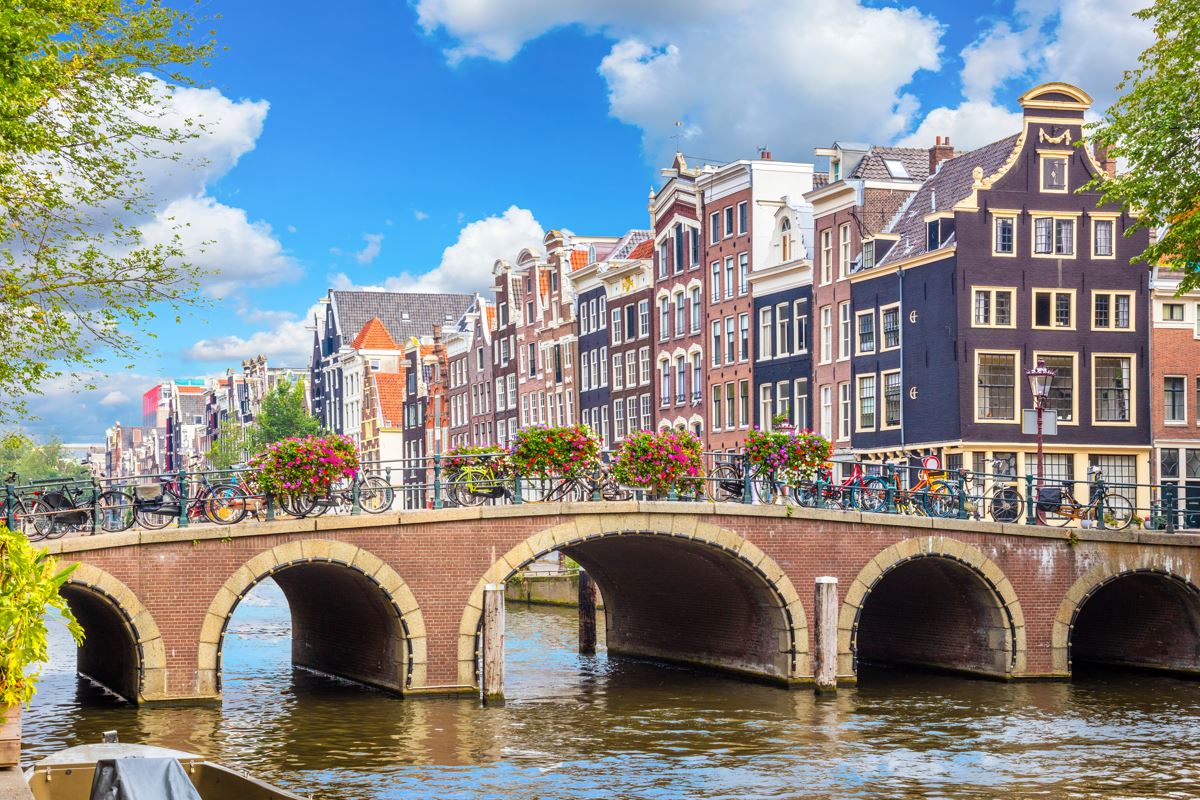
The Netherlands Requirements
For travelers from EU or Schengen Associated countries, there are no restrictions for entering The Netherlands. For those coming from countries like America or Canada, there are still entry requirements in place.
Travelers Must Show Proof of The Following:
Certificate of Covid-19 Vaccination
For those who are fully vaccinated that wish to visit The Netherlands, their trip should not be hindered too much. Masks are not required anywhere, including on public transport. Public venues like restaurants or bars are operating as usual and no longer require a Covid entry pass.
Luxembourg Requirements
For travelers from EU or Schengen Associated countries, there are no restrictions for entering Luxembourg. For those coming from countries like America or Canada, there are still entry requirements in place.
Travelers Must Show Proof of One of The Following:
Certificate of Covid-19 vaccination
Certificate of recovery from Covid-19
For fully vaccinated travelers, Luxembourg is still an option for a visit. There is no quarantine requirement, and no curfews are in place. There is no longer a mask mandate, except in hospitals and elderly care centers.
When Will Entry Requirements End?
Unfortunately, the end dates for entry requirements for Spain, The Netherlands, and Luxembourg can only be speculated. However, they have each given signs that an end to entry requirements is looming. All three countries have revised their entry requirements for EU or Schengen Associated nationals, allowing them to visit without restriction. As the countries monitor case counts and infection rates after easing restrictions on EU and Schengen Associated country nationals, they are sure to move forward with removing restrictions on the rest of the world.
Are Restrictions Gone For Good?
Let’s hope so! Travelers have suffered restriction whiplash in some countries over the last few years. Countries like the UK saw almost all Covid restrictions go away in July of 2021, only to see them come back with a vengeance as Omicron swept through the nation in December of the same year. It seems that most countries have decided enough is enough.
However, the World Health Organization recently urged Europe to reinstate Covid restrictions before it is too late ahead of the fall and winter season. Time will tell whether or not Covid restrictions stay gone for good, but it seems the majority of travelers and countries are ready to put it to rest.
Enter your email address to subscribe to Travel Off Path’s latest breaking travel news, straight to your inbox
Disclaimer: Current travel rules and restrictions can change without notice. The decision to travel is ultimately your responsibility. Contact your consulate and/or local authorities to confirm your nationality’s entry and/or any changes to travel requirements before traveling. Travel Off Path does not endorse traveling against government advisories
While it may have seemed like the darker days of Covid were behind us, the silent threat remains very much real, as several countries battle a new potentially disruptive wave. The United States’ Centers for Disease Control and Prevention, shortened to CDC, is keeping track of the developments, and has now added a further 6 countries to its Level 3 ‘High Risk’ list.
Effectively, the list comprises destinations where the average Covid case count exceeds 100 per 100,000 population, signalling the virus is in active circulation and infection/complication risks are higher. As part of the new Level 3 batch, we have:
El Salvador
Honduras
Bosnia and Herzegovina
Poland
Fiji
Bangladesh
The unlucky six are now part of a collective of 121 ‘risky’ nations:
Covid Is Making A Comeback Now That The Cold Is Approaching
After a summer of few Covid updates, other than the odd country removing entry requirements, a new Omicron offshoot called BA.5 is leaving a trail of disaster behind it. Particularly among overly conservative countries, that have grown wary of sharp Covid upticks, restrictions that had been dropped in the lead up to summer are now returning.
In South Korea, tourists are again subject to on-arrival testing and subsequent isolation until a negative result is issued, making the Asian hub the first major destination to respond this fiercely to the new wave. Additionally, the overly cautious Cyprus and Qatar have reinstated mask mandates they had scrapped only a few weeks prior.
Over in North America, the situation isn’t much better, as Canada has not only extended its strict border regime, but resumed random testing at airports. Like virtually everywhere else, cases are again rising in Canada, seriously threatening the tourism industry’s future. After all, the country is known to be super strict when it comes to pandemic management, and new waves could delay its full reopening indefinitely.
The United States has not completely abandoned its Covid protocols either. Despite lifting the much-criticized inbound testing regime for returning Americans, the country continues to require a valid vaccination certificate of foreigners, and viral trends remain markedly important for the CDC’s assessment of what makes a country safe, or unsafe for travel.
Earlier this week, the health body included a number of popular vacation hotspots, including Colombia and Paraguay, on its Level 3 listing. To be honest, we weren’t expecting any other countries to lose their ‘safe’ statuses this soon, but surprisingly, more demotions are due. Should the CDC continue moving at this speed, there won’t be many Level 1 or Level 2 countries left.
6 More Countries Are Downgraded To Level 3 Status
This time, it’s Central America‘s rising stars El Salvador and Honduras, Europe’s incredibly underrated Bosnia and Herzegovina and Poland, the paradise archipelago of Fiji, and the South Asian country of Bangladesh getting the downgrade. In all of these regions, cases have hit an average higher than 100 per 100,000 population, earning them a Level 3 stamp.
When traveling to the aforementioned six nations, Americans are advised to:
Get vaccinated, even if their country of destination does not require a Covid certificate as proof of entry
Ensure their vaccination cards are updated with all the required booster doses
When suffering from low immunity, check with their private clinician whether their upcoming trip should be going ahead, taking into account the volatile scenario
Wear face masks in all indoor spaces to prevent Covid infection and protect others, including inside planes and public transport
When unvaccinated, avoid travel to Level 3 destinations due to the higher risk of developing a more serious course of Covid
They are now only one slot below Level 4, or the Special Circumstances list, reserved for nations where new dangerous variants have been identified and/or the epidemiological scenario is dire. As we have reported previously, cases tripled in Europe in the previous six weeks, proving Covid is as unpredictable as it once was, despite containment efforts.
Are CDC Travel Health Warnings Still Useful?
Despite the CDC’s ruling, most of the affected countries have little to no Covid regulations in place. The latter applies to Poland, where pandemic-related curbs ceased applying as soon as March. Although it is posting higher infection numbers compared to earlier weeks, it has not changed its lax approach yet (unlike fellow EU member Cyprus).
Demand is high, too. Judging by the current air traffic and the generalized chaos observed in a majority of airports, that could last up to another year, Covid is no longer a primary concern for travelers. However, as an official health entity, the CDC list should still be taken into consideration. In the very least, they are an indication of potential travel curbs to come.
How, exactly? Well, now that they are classed as ‘High Risk’ destinations and Covid is bound to spread much quicker in the colder fall and winter months, both Germany and Ireland are mulling over re-introducing face masks. In sum, these health warnings are non-binding, but they help us predict which countries might clamp down on tourism.
Enter your email address to subscribe to Travel Off Path’s latest breaking travel news, straight to your inbox
Disclaimer: Current travel rules and restrictions can change without notice. The decision to travel is ultimately your responsibility. Contact your consulate and/or local authorities to confirm your nationality’s entry and/or any changes to travel requirements before traveling. Travel Off Path does not endorse traveling against government advisories
Several countries now seem ready to move on from Covid after being stuck in a two-year loop of restrictions and social curbs. Consequently, U.S. citizens who had been confined to their own country due to entry bans and complex travel rules are finally regaining their travel privileges– at an incredibly fast pace.
While the U.S. passport had lost a considerable amount of power during the pandemic, as foreign countries targeted Americans as risky travelers due to the spread of Covid, it has seen a strong rebound, and it is now an even more powerful travel document than it was in 2019. Currently, 186 countries welcome Americans visa-free, or with visas on arrival.
This does not equal restriction-free entry, but it does mean U.S. passport holders are not subject to a lengthy application process, Consulate interviews, and high visa processing fees. When traveling to these destinations, all Americans generally need is a valid passport, and other health documentation that may still apply:
How Is Passport Power Measured?
A majority of people may not be aware of this interesting fact, but all passport holders are not granted the same freedom to travel. Different groups of countries have bilateral agreements in place, allowing each others’ citizens to visit their territories more freely. On the other hand, certain nationalities not covered by these agreements face restrictions.
According to the Henley & Partners Index, the U.S. passport is currently the sixth most powerful in the world, up one slot from 2019. In practical terms, Americans can travel to 186 countries without requesting a visa in advance from a Consulate, out of a total country count of 195 countries. Effectively, they can roam the world effortlessly.
The most powerful passports comprising the top 20 include Japan (number 1 with 192 visa-free destinations), all European Union citizens (Germany ranks the highest at number 2), the United Kingdom, Canada, Australia, New Zealand, and other global leaders enjoying diplomatic prestige, like the UAE (15th) and Brazil (20th).
In comparison, Iran passport holders can only travel visa-free to 42 destinations, placing them as 102nd on the list. Iraqi nationals also have their movement severely restricted in the world, ranking at an even lower 111. In 2022, those holding Iraqi citizenship can only visit 28 other countries simply by presenting their passport.
Where Can Americans Go Visa-Free?
Europe
With a few exceptions – most notably the unfriendly Russia and Belarus – Americans can travel to Europe with very few limitations. In fact, some European countries like France and the U.K. even offer Americans fast-track entry and the possibility to scan their way in, without being interviewed by a border agent when landing.
The European continent comprises 50 or 52 nations, depending on the classification of certain autonomous territories, and Americans do not need visas to travel to 48 of them. Namely, U.S. citizens can easily hop on a plane bound for the Swiss Alps, stroll the magical streets of Paris, or go on a month-long Italy foodie tour only with their passports.
Turkey requires Americans to apply for an e-visa in advance.
The Caribbean
A nationwide favorite, The Caribbean grants visa-free entry to U.S. citizens, and unlike Europe, there are no exceptions on the list. From the crystal clear beaches of Barbados, to the historical forts and colorful colonial towns of the Dominican Republic, this vibrant region loves Americans as much as Americans love them, and desperately wants them back.
Henley & Partners has included 24 nations and territories in the Caribbean, exclusively islands, and unincorporated U.S. territories where Americans can enter without passports. For that reason, the list below does not include other popular Caribbean destinations like Mexico, Belize or Colombia, that are part of the mainland.
Visa-Free Countries Americans Can Visit In The Caribbean
It is worth noting Barbados still has Covid requirements in place. Other Caribbean islands may enforce other travel rules as well.
The Americas
From North to South, the Americas is a vast continent that for centuries has received an influx of migration from other territories. While North America’s History was shaped by the Anglo-Saxon, Germanic, Asian and African peoples, the continent’s South was envisioned as an extension of Southern Europe – mainly Spain and Portugal – in the New World.
It is possibly the most culturally unique continent in the world, due to its diverse demographics and amalgamation of influences. Luckily, U.S. citizens can visit 21 out of 22 American countries visa-free. The only country still requiring some type of visa is Bolivia, though it is generally issued upon arrival for a fee.
Visa-Free Countries Americans Can Visit In The Americas
Some major destinations in the Americas like Brazil have not yet fully reopened for tourism with no restrictions.
Asia
Although it has gained a reputation in recent years for being excessively strict with its Covid policies, Asia arguably remains the tourism playground of the world. Here, visitors are met with colossal temples, sprawling metropolises where anything could happen, some of the world’s most exquisite cuisine and surprisingly friendly locals.
Unfortunately, due to their hard stance on the pandemic, most Asian countries still have complex travel rules. Some like Japan even went as far as suspending visa-free entry for Americans, and all other visa-exempt foreign nationals. At present, the following Asian countries do not require U.S. passport holders to apply for an entry permit at a Consulate:
Visa-Free Countries Americans Can Visit In Asia
Cambodia, Laos, Nepal, Pakistan and Sri Lanka are some examples of Asian countries requiring visas on arrival only.
Middle East
The Westernmost protrusion of the Asian continent, the geopolitical group called the Middle East has pretty lax, non-Covid entry requirements in place for American citizens. Out of 12 countries, U.S. citizens are granted unrestricted entry into seven, while the other five still allows Americans to obtain visas on arrival.
Much like Asia, the Middle East has retained some of its strictest pandemic-era policies. Nevertheless, the fact that Americans do not need entry visas to visit seven Middle Eastern destinations makes it much easier for them to extensively explore the region, provided that other Covid mandates are not in place.
Visa-Free Countries Americans Can Visit In The Middle East
Bahrain, Jordan, Kuwait, Lebanon and Saudi Arabia all require visas on arrival.
Oceania
It may not be one the easiest places to fly to, with some of its archipelagos being some of the most remote in the world, but a trip to the Oceania is definitely something all travelers, especially beach lovers, must experience at least once. Additionally, popular destinations in Oceania, such as Australia and New Zealand, are again open for American visitors.
In n Australia and New Zealand’s case, Americans must apply for a Travel Authorization in advance. This is not a visa, and applies to all nationalities that do not require visas to enter these countries, including Canadians, Brits and most Europeans. Applications are made online and the Authorization is usually issued in a matter of hours.
Visa-Free Countries Americans Can Visit In Oceania
American Samoa
Australia
Cook Islands
Fiji
French Polynesia
Guam
Kiribati
Marshall Islands
Micronesia
New Caledonia
New Zealand
Niue
Northern Mariana Islands
Palau Islands
Vanuatu
The territories of Papua New Guinea, Samoa, Solomon Islands, Tonga and Tuvalu offer visas on arrival for American travelers.
Africa
The continent of Africa may not be a massively popular vacation hotspot for Americans, but as we have detailed in our 5 Off The Beaten Path African Destinations article, it has a lot to offer and so much unacknowledged potential. North or South of the Sahara, visitors can take part in a number of activities, ranging from wildlife sightings to beach hopping.
African countries are also home to some of the world’s most important heritage sites, such as the El Jam Amphitheater in Tunisia, one of the largest and best preserved from Ancient Roman times, and the several millennia-old Moroccan cities of Fez and Marrakech – not to mention the History-packed nations of Egypt, Kenya and South Africa.
Visa-Free Countries Americans Can Visit In Africa
Botswana
Burkina Faso*
Cape Verde Islands*
Central African Republic
Comoro Islands*
Egypt*
Equatorial Guinea
Eswatini
Ethiopia*
Gabon*
Guinea-Bissau*
Lesotho
Madagascar*
Malawi*
Mauritania*
Mauritius
Mayotte
Morocco
Mozambique*
Namibia
Reunion
Rwanda*
Sao Tome and Principe
Senegal
Seychelles*
Sierra Leone*
Somalia*
South Africa
St. Helena*
Tanzania*
The Gambia*
Togo*
Tunisia
Uganda*
Zambia*
Zimbabwe*
*These countries offer visas on arrival
As you might have noticed, Africa is the continent Americans have the less freedom to travel, with complete visa-free entry allowed in only 14 out of 54 nations.
Bottom Line
When traveling abroad, Americans are advised to check all visa and entry requirements for their destination and ensure their passport expiry date complies with validity rules established by foreign countries. More information can be found on the U.S. Department of State, its Travel Advisories, or U.S. Embassies and representations in other nations.
Enter your email address to subscribe to Travel Off Path’s latest breaking travel news, straight to your inbox
Disclaimer: Current travel rules and restrictions can change without notice. The decision to travel is ultimately your responsibility. Contact your consulate and/or local authorities to confirm your nationality’s entry and/or any changes to travel requirements before traveling. Travel Off Path does not endorse traveling against government advisories
Countries in Europe might be very close to each other but consumer goods and services prices can be way different. Do you know which country has the most expensive hotels and restaurants? A new report has all these answers.
In a recent publication made by the European Commission’s data analysis wing Eurostat, the Comparative price levels of consumer goods and services, Ireland and Denmark were considered the most expensive countries in the European Union (EU) with prices 40% higher than the regional average in 2021. Traditionally, countries like Finland, Luxembourg, and Sweden used to take the first place.
The cheapest countries in the EU are Romania and Bulgaria with prices 44% lower than the average, followed by Poland and Hungary. Restaurants and hotels were the main factors that affected each country’s rate.
Eurostat considered 36 countries in Europe and consumer goods and services in different categories. The analysis included food, non-alcoholic beverages, alcoholic beverages, clothing, energy —gas, electricity, and other fuels—, furniture, consumer electronics, transport services, restaurants, hotels, and more.
According to experts, the most expensive destinations are probably more expensive now since this study considered prices in 2021, before the Ukrainian war. A spokesperson for Bonkers.ie—a consumer information and comparison website— said for the journal Irish Examiner: “These figures were compiled before scores of hotels were block-booked by the Government to house asylum seekers and Ukrainians fleeing the war, which some say has led to prices in the hotel sector skyrocketing this summer.”
Denmark has been considered the most expensive country in the European Union, but other destinations on the continent are even more expensive. Eurostat made a ranking considering costs of living, combining many factors in the equation.
In the average list, “countries are sorted according to their overall price level for household final consumption expenditure”. These are the 10 most expensive countries in Europe according to the study:
Switzerland
Iceland
Norway
Denmark
Ireland
Luxembourg
Sweden
Finland
Netherlands
Belgium
Travelers will find the most expensive food in Switzerland, Norway, and Island. Norway is also known for selling the most expensive alcoholic beverages and tobacco, and Ireland in the European Union.
Regarding transportation services, Iceland is the most expensive. Switzerland has the most expensive hotels and restaurants in Europe and Denmark in the European Union. Ireland has surprised many with the high costs of living, especially the food prices. Food in Ireland is 17% higher than in other countries in the European Union, followed by Luxemburg.
The Cheapest Countries In Europe
If you want to travel on a budget, you can explore the Balkans —which are also part of the most restriction-free area in Europe— and make sure to visit fascinating destinations such as Turkey or Bulgaria.
Eurostat showed that the main gap in price among European countries was related to hotels and restaurants —which cost 3.4 times more in expensive countries compared to the cheapest ones. According to the data shared, these are the cheapest countries in Europe:
(p.s. Eurostat’s report included Turkey as a European country, as the nation has territory in both Europe and Asia.)
Turkey
North Macedonia
Romania
Bulgaria
Bosnia and Herzegovina
Poland
Montenegro
Serbia
Albany
Hungary
Turkey has the cheapest food, hotels, restaurants, and transportation services in Europe. And you will find the cheapest alcoholic beverages and tobacco in North Macedonia.
Within the European Union, Romania has the cheapest food, and Bulgaria has the cheapest hotels, restaurants, and transportation services. In the Schengen Area, Bulgaria offers the cheapest alcoholic beverages and tobacco.
Other popular destinations in Europe like France, Austria, Germany, Italy, and Portugal remain pretty close in the ranking, near the average prices in Europe.
Enter your email address to subscribe to Travel Off Path’s latest breaking travel news, straight to your inbox
Disclaimer: Current travel rules and restrictions can change without notice. The decision to travel is ultimately your responsibility. Contact your consulate and/or local authorities to confirm your nationality’s entry and/or any changes to travel requirements before traveling. Travel Off Path does not endorse traveling against government advisories
With Covid finally on course to become an endemic disease, and no longer a particularly worrying threat to public health, the Centers for Disease Control and Prevention (CDC) is making some important updates to its travel advisories. Now, six more countries have had their health risk levels downgraded, enjoying a new Level 2 status.
Throughout the pandemic, the CDC has classified different destinations based on their epidemiology. Level 1 means the circulation of Covid is low, while on Levels 2 and 3 it is deemed ‘moderate’ and ‘high’, respectively. Level 4 is usually reserved for ‘special circumstances’ when the virus is rampant, or a new variant of concern has been identified.
The six new countries that are now in the CDC’s good graces had been placed on the ‘high risk’ list for months – even after cases subsided and pandemic restrictions were dropped. As of June 21, they are no longer perceived as risky destinations:
Bolivia
An unsung Latin American country, Bolivia had been stuck in a Category 3 limbo up until yesterday, June 21, when the latest CDC guidance was published. Following the update, it was moved down to the ‘Moderate Risk’ grouping, meaning that although Covid transmission is still possible within the country, the viral spread remains within acceptable levels.
Despite being a safer destination than it once was, at least regarding Covid, Bolivia is not yet fully open for travel. Local authorities may have allowed international flights to resume as early as 2020, but they still expect air passengers to satisfy certain health requirements ahead of traveling to Bolivia for tourism.
Entry Requirements For Bolivia In 2022
When fully vaccinated, visitors must present a printed or digital copy of their certificate
If they are yet to be immunized, undergoing a PCR in under 72 hours, or a Rapid Antigen test 48 hours before boarding
Lower-than-average vaccination coverage aside, Africa as a whole seems to be moving past the critical stage of the pandemic, and Ethiopia is a clear example of that. Once one of the hardest hit in the continent, the nation has now been granted a Level 2 placing, outpacing other major tourist spots like South Africa and Seychelles.
Visiting Ethiopia may come with a set of restrictions, including mandatory testing for the unvaccinated, but at least it is far from being overwhelmed by Covid. According to latest data shared by Reuters, this Eastern African jewel is currently recording 656 new infections on average per day, or only 16% of the highest case tally reported on December 31.
Entry Requirements For Ethiopia In 2022
Travelers who are not vaccinated must present a negative Covid test for entry, either a PCR (72 hours preceding travel) or a Rapid Antigen (24 hours)
Alternatively, recovery certificates issued within the last 3 months are also considered valid proof of entry
Kenya
An up-and-coming tourist destination, Kenya is considered by many the ultimate Africa trip: perfect for slow-paced travel and safari adventures, it is home to some of the continent’s most emblematic wildlife, and arguably its most welcoming people(s). On top of that, traveling to Kenya does not involve particularly high Covid infection risks, as assessed by the CDC.
A Level 2 nation, Kenya is welcoming all vaccinated travelers, including American, without testing, quarantine, or any other health-related requirements. As long as incoming passengers can produce a vaccination certificate at the border, they are free to explore the region’s natural immediately after leaving the airport.
Entry Requirements For Kenya In 2022
A vaccination certificate is required
Vaccination certificates must be uploaded to the Global Haven website
Unless exempt, unvaccinated tourists are not allowed to enter; those who qualify for an exemption must present a negative PCR test result obtained up to 72 hours in advance
Morocco
North of the Sahara Desert, Morocco is joining both Ethiopia and Kenya as one of very few nations in Africa where Covid risks are understood to be ‘moderate’. According to the CDC, visitors are simply advised to make sure they are up to date with their vaccination schedule when visiting Morocco – indeed, it remains an official requirement for entry.
Morocco is one of the most touristy nations in the North of Africa, with cities like Marrakech, Fez, Rabat and Tangier dating back thousands of years, and a spotless Mediterranean coastline that rivals those of neighboring African and European countries. Luckily, flights into the country have been authorized again since February 2022.
Entry Requirements For Morocco In 2022
Passengers must present a three-dose vaccination certificate, or then a two-dose vaccination certificate less than four months old
When unable to satisfy the above requirement, they may present a negative PCR test result (72 hours before boarding)
Over in Eastern Europe, Romania’s infection rates have decreased fast enough for it to attain a Level 2 classification this week. A mystical land dotted with castles, medieval citadels, remnants of bygone empires and even a coastline – Black Sea summer, anyone? – the country’s tourism sector will surely benefit from the CDC revision over summer.
Unlike every other destination mentioned so far on this list, Romania is open with no restrictions whatsoever: both the vaccinated, and unvaccinated, are allowed to come and go as it pleases them, since Romanian border authorities ceased checking Covid documentation back in March.
Entry Requirements For Romania In 2022
There are no Covid entry requirements applying to those visiting Romania in 2022
Sweden
Last but not least, Sweden is now the first in Scandinavia to be moved back to the Level 2 bracket. Out of all the new Level 2 entries, it has to be the safest nation overall, reporting a nearly negligible 226 new infections per day – only 1%of the January 27 peak. Fortunately for travelers, the CDC has acknowledged Sweden’s success in managing the health crisis (at last).
More importantly, Covid levels are now so low in the country that Sweden recently scrapped all entry requirements, reinstating travel guidelines exactly as they were back in 2019. Since late March, Americans visiting Sweden have no longer been subject to Europe’s infamously strict Covid regulations, vaccine requirements, testing, or quarantine.
Entry Requirements For Sweden In 2022
There are no Covid entry requirements applying to those visiting Sweden in 2022
Other CDC guidance, including countries that remain on the Level 3 risk group, can be found here.
Enter your email address to subscribe to Travel Off Path’s latest breaking travel news, straight to your inbox
Disclaimer: Current travel rules and restrictions can change without notice. The decision to travel is ultimately your responsibility. Contact your consulate and/or local authorities to confirm your nationality’s entry and/or any changes to travel requirements before traveling. Travel Off Path does not endorse traveling against government advisories
With more and more people around the world now working online, there are in fact over 45 countries that are welcoming digital nomads with long stay visas.
Before we reveal the full list of the 46 nations that offer such visas, let’s first take a look at a few of the destinations that are proving increasingly popular among remote workers – including what these places offer those that strive to live their best nomadic lifestyle.
Thailand
There is no denying that Thailand is one of the most popular destinations in the world when it comes to travel and tourism – with its capital city having been declared ‘the most visited city in the world’ prior to the global Covid-19 pandemic.
And, for digital nomads the country certainly offers a lot – with it is possible to choose from a variety of different towns, cities, and even islands to use as a base to live and work from.
This includes the likes of the northern city of Chiang Mai – which offers plenty of co-working spaces and coffee shops to work from, as well as an overall affordable and comfortable lifestyle for digital nomads.
Another location inside the country that serves as a great base for remote workers, is the nation’s capital, Bangkok – which is mammoth in its size and provides you with literally everything you would need to live a productive, yet energetic and fun life.
For those looking for a balance between island life and city life, Phuket would certainly be a great choice for you – with the island offering literally the best of both worlds.
This is because you’ll not only be able to find a suitable place to undertake your work, but you will also have some of the most beautiful beaches and nature to enjoy in your spare time.
And, if you are wanting to escape the city life completely, then you can choose from one of Thailand’s many idyllic islands to enjoy living your nomadic way of life.
For the likes of American, Canadian and British tourists – the easiest way to stay inside the country for up to 90 days – is to obtain a 60-day tourist visa from a Thai Embassy or Consulate inside your own country before you travel, which you can then extend once in Thailand for a further 30 days.
Although at this time Thailand does not offer a specific ‘digital nomad’ visa – the country is hoping to launch theirs soon as it targets remote workers as one of the ways to revive tourism.
Bali (Indonesia)
Another hugely popular destination for digital nomads – and somewhere that also offers the opportunity for longer stays – is the beautiful Indonesian province of Bali.
There is no getting away from the fact that Bali offers some of the most beautiful beaches and stunning nature on the planet – which is a major reason why it stands as one of the most popular destinations for international travelers.
And, adding to this its low-cost of living and wide variety of entertainment and nightlife options, there is no surprise that Bali is continuing to increase its status as one of the top travel destinations in the world for digital nomads.
Two of the most popular parts of Bali that seem to be attracting the most nomads includes the beautiful beach resort of Canggu and the more peaceful and relaxing town of Ubud – which certainly offers a vibe that will allow you chillout to the ‘max’ after those hours spent in front of your laptop.
The easiest and most simplest way for tourists to enter Bali right now – and which will allow you a stay for up to 60 days – is to purchase an on-arrival tourist visa once you land at the airport in Indonesia.
The cost of the on-arrival tourist visa is 500,000 Indonesian rupiah – which is around US$33.
For those seeking a visa that will allow a longer stay (more than 60 days) inside Bali, or the ability to do remote work while you’re there, it is recommended that you contact your local Indonesian Embassy or Consulate.
Just last week we reported that Bali was to introduce a new 5-year Digital Nomad Visa, which would allow remote workers to stay in Bali for a prolonged period of time – whilst not requiring them to pay tax on the work that they undertake.
If you are wanting to keep up to date with the latest news, information and going-ons in Bali, you can do so by clicking here.
Mexico
As a nation which is expecting as many as 40 million visitors by the end of this year (2022), Mexico continues to lead the way as the favorite holiday destination for American travelers, especially the city of Cancun.
And, the nation does not just appeal to those wanting to take a two to three week holiday, as the country is also proving to be a popular destination for digital nomads – with it even considered one of the very best locations for remote workers.
This is because Mexico offers many top destinations for digital nomads – which includes the likes of Playa del Carmen, Merida, and Mexico City – with the nation offering the very best when it comes to both beachside and urban living.
As well as boasting endless beautiful scenery and some of the most delicious cuisine going, Mexico also offers the opportunity to live comfortably – and on a reasonable budget – in a country that showcases sufficient infrastructure to satisfy the needs of a digital nomad.
For those looking for a comfortable spot to focus on their work there is also a huge choice when it comes to affordable and effective co-working spaces throughout Mexico – with even the likes of the colonial town of San Cristobal de las Casas serving up some great places to work from.
The great news about Mexico – and being able to stay in the country for a prolonged period of time – is that if you are a citizen from the likes of the U.S., Canada, the UK, or the EU or Schengen zone, you won’t need to apply for a visa before your arrival.
In fact, if you are a national from the above countries and areas of the world you will receive an FMM tourist visa upon your arrival – which allows you a stay for up to 180 consecutive days in the country.
For more information on Mexico’s FMM tourist visa – click here.
While technically freelancers and digital nomads are not to work, even on their foreign projects, while on a tourist visa in Mexico, the country offers different residency programs that have been doubling as their ‘digital nomad visas’. Most nomads have been applying for a temporary residency visa for Mexico, which allows digital nomads to live and work in their non-Mexican businesses, for a time frame of 6 months to 4 years.
A Full List Of The 46 Countries That Are Welcoming Digital Nomads With Long Stay Visas
Listed below are the 46 countries that are currently offering long-stay visas for remote workers wanting to succeed in their nomadic lifestyle.
Whether you are looking for that sunny destination to work from, or wanting to experience what it’s like working out of some of the coolest co-working places around, you are certainly going to find a suitable destination from the list below.
Enter your email address to subscribe to Travel Off Path’s latest breaking travel news, straight to your inbox
Disclaimer: Current travel rules and restrictions can change without notice. The decision to travel is ultimately your responsibility. Contact your consulate and/or local authorities to confirm your nationality’s entry and/or any changes to travel requirements before traveling. Travel Off Path does not endorse traveling against government advisories
International travel has been severely affected by the Covid pandemic. While travelers could roam the world freely before the virus emerged, the last two years have been a succession of travel bans, complex entry requirements and strict testing regimes that virtually suspended tourism. Luckily, now that Covid is under control, countries are finally reopening.
Even though some economies may have not been severely affected by the crisis, as not all countries’ revenues are mainly based off of travel, others felt the pinch particularly hard. These states, where tourism makes up a large portion of their GDP, have been some of the first to reopen and accept visitors – even prior to vaccines being introduced.
Based on a study conducted by Bounce, we rounded up the Top 5 countries most reliant on international tourism, and that are now eager to welcome tourists back after Covid:
5. The Bahamas
The Bahamas ranks at number 5 on the list of places that depend on tourism the most, according to a recent study conducted by travel experts at the Bounce luggage story app. According to the experts, it is only beaten by two other destinations in terms of tourism employment, with over 26% of the country’s workforce being in the sector.
On top of that, tourism accounts for roughly 19% of the archipelago’s GDP, proving the influx of tourist dollars is vital to The Bahamas. With that in mind, it should come as no surprise that these paradise islands eased entry requirements recently, making it much easier for Americans and other foreigners to visit after the Omicron variant subsided.
With the revised rules, all tourists are welcome irrespective of immunization, having to fulfill one simple requirement:
Present a negative Covid test result (PCR or Rapid Antigen) issued up to 72 hours before arrival.
4. The Seychelles
A French-speaking archipelago off the coast of Eastern Africa, the Seychelles is a surprising destination where clear water beaches can be found against the scenic backdrop of African nature. Similarly to The Bahamas, this tiny country owes much of its GDP to tourist money, which totals nearly 26% of their economy.
It is also open for tourism, and unlike the first entry on this list, vaccinated foreigners can travel to the Seychelles without undergoing a pre-departure Covid test. The unvaccinated are also welcome, as long as they present either a recent recovery certificate, a negative PCR test taken within 72 hours of departure, or a Rapid Antigen test issued under 24 hours.
Once inside the country, tourists can enjoy more freedoms, such as:
No post-arrival tests
No state-ordered quarantines
No Covid screening when visiting tourist sites
3. Aruba
With tourism contributing to nearly 30% of local employment rates, Aruba is one of the Caribbean nations most devoted to developing tourism. In fact, the sector’s participation in its GDP is capped at 27.64%, only slightly higher than The Seychelles. Nevertheless, Aruba has decided to go a step further and removed all entry requirements recently.
Recognizing the need for a tourism revival, the Dutch outpost scrapped all health-related travel protocols, returning to a pre-2020 state of normality much earlier than other Caribbean hotspots that would only follow suit weeks later. As of March, 2022, Aruba’s pristine beaches and traditional colonial-era towns are once again open to avid explorers.
In summary:
No mandatory vaccination passports
No pre-departure tests, regardless of Covid vaccination
No post-arrival tests
No mandatory quarantine
All nationalities are welcome
2. British Virgin Islands
Second on the list of countries most eager to welcome back visitors, the British Virgin Islands are heavily dependent on the dollar. With nearly 33% of GDP being linked to traveler expenses, and a tourism-based economy, the Caribbean archipelago has remained open for visitation throughout the crisis, albeit with strict protocols.
Some groups are pushing for a wider reopening, especially now that international travel demand has surged, but the British Virgin Islands Administration has remained conservative in regards to pandemic management. They may well acknowledge that tourism is important, but some entry requirements remain in place.
Essentially, all arrivals must present a negative PCR or Rapid Antigen test, including:
A vaccination certificate to be exempt from post-arrival testing
Travel insurance covering Covid infection and any treatment costs
Unvaccinated travelers are exempt from further testing and quarantine, while the non-immunized remain subject to undergoing a post-arrival Rapid Antigen test at a cost of $50. Those who test positive are then required to quarantine for a full week; those who do not are free to enjoy their beach time as soon as they leave the airport.
The British Virgin Islands are proof that, even though they are now looking to increase revenue after Covid was controlled in the vast majority of the Western World, this does not necessarily mean a full lifting of restrictions. Fortunately for unvaccinated sunseekers, these 5 other Caribbean nations have reopened.
1. The Maldives
Leading the rank, The Maldives has a tourism contribution to its GDP at almost 39%, with the Bounce study finding that tourists bring in more than a billion US dollars into the country annually. It is far, by far and away, the nation the most excited now that Covid is becoming less of a global emergency.
Earlier this year, The Maldives became the 15th country to drop all Covid curbs, meaning vacationers are again welcome under 2019 entry rules. Along with Aruba, this island-nation is one of two destinations on this list where Covid is effectively being treated as an endemic disease: there are absolutely no health documentation required when traveling.
As of March 14, the below apply to all travelers regardless of country of departure or immunization status:
No vaccination certificates
No pre-departure testing
No post-arrival testing
No quarantine
No mandatory health insurance
To learn more about which countries have already reopened and which ones still have entry rules in place, make sure you follow all the latest Travel Off Path updates.
Enter your email address to subscribe to Travel Off Path’s latest breaking travel news, straight to your inbox
Disclaimer: Current travel rules and restrictions can change without notice. The decision to travel is ultimately your responsibility. Contact your consulate and/or local authorities to confirm your nationality’s entry and/or any changes to travel requirements before traveling. Travel Off Path does not endorse traveling against government advisories
The United States’ Department of State has just updated the travel advisory pages for 10 countries around the world. Whilst international travel may have moved closer towards normality over the past few months, it still isn’t completely without risks and challenges – as these updates show – and travel advisories still play a key role in keeping travelers in the loop before they take their trips.
From common, everyday issues such as crime and health concerns, to more serious problems such as terrorism, war and kidnapping to name but a few, travel advisories are routinely updated by the State Department to contain up to date information about the risks associated with different destinations. Here’s a look at which ten countries were included in yesterday’s travel advisory updates, plus a recap of what travel advisories are and how they help travelers.
What Are Travel Advisories? Information For Travelers
Curated and updated by the State Department as often as is required, travel advisories provide simple, clear information about the risks travelers may face when traveling abroad. Travel advisories are color coded and sorted into four different levels – with Level 1 being the least severe and Level 4 being the most severe – to make it quick and easy for travelers to see the risks associated with visiting a specific destination.
In addition to updates from the State Department, each travel advisory contains information from the CDC about whether there is a low, moderate or high level of Covid-19 in the destination. Whilst they do not legally prevent a traveler from visiting a country, they can help a traveler to make an informed decision about whether or not it is a good idea to visit, playing an important role in the pre-travel process.
New Travel Advisory Updates – What Travelers Should Know
The ten new travel advisory updates posted on the State Department’s website yesterday feature all four of the system’s levels. Two countries were handed Level 4 updates – their details are as follows:
Libya – do not travel to Libya due to crime, terrorism, civil unrest, kidnapping, and armed conflict. The CDC states it has an unknown level of Covid-19
Iran – do not travel to Iran due to the risk of kidnapping and the arbitrary arrest and detention of U.S. citizens. The CDC has determined that Iran has a low level of Covid-19
Three countries were handed Level 3 warnings, which tell travelers to reconsider travel to such destinations.
Lebanon – reconsider travel to Lebanon due to crime, terrorism, armed conflict, civil unrest, kidnapping and Embassy Beirut’s limited capacity to provide support to U.S. citizens. The CDC states it has a low level of Covid-19
Guyana – travelers should reconsider their trips to Guyana due to crime. The CDC has also stated that the country has a high level of Covid-19
Guatemala – travelers should reconsider their trips to Guatemala due to crime, with some parts of the country designated as no-go areas. The CDC states it has a moderate level of Covid-19
Only one country received a Level 2 travel advisory – Zimbabwe – due to crime, with the CDC adding it has a low level of Covid-19. Four countries received Level 1 travel advisories; these are as follows:
Saint Kitts and Nevis – CDC indicates a high level of Covid-19
Poland – CDC indicates a moderate level of Covid-19
Namibia – CDC indicates a high level of Covid-19
Mongolia – CDC indicates a high level of Covid-19
Whilst they do provide important information that travelers should be aware of, travelers are free to do their own research and decide whether or not to follow through with their travel plans. Regardless of a country’s travel advisory level, travelers should always make sure they have a good travel insurance policy to keep them safe and protected whatever happens on their vacation.
Enter your email address to subscribe to Travel Off Path’s latest breaking travel news, straight to your inbox
Disclaimer: Current travel rules and restrictions can change without notice. The decision to travel is ultimately your responsibility. Contact your consulate and/or local authorities to confirm your nationality’s entry and/or any changes to travel requirements before traveling. Travel Off Path does not endorse traveling against government advisories
Are we in the early days of a new global health emergency? After several monkeypox outbreaks were registered across Europe this week, and Belgium going as far as imposing a strict 21-day quarantine for travelers with a confirmed infection, the CDC has now issued a travel warning to a number of destinations due to the emerging threat.
Monkeypox is a disease classed by the World Health Organization as being of ‘global public health importance‘. Although it mostly affects countries in West and Central Africa, it is also present in other parts of the world, and the identification of new clusters in Europe and North America, where it is not yet endemic, is worrying health experts.
CDC Formally Recognizes The New Global Health Threat
Adding weight to the other health warnings issued by countries like the UK, the U.S. Centers for Disease Control and Prevention – CDC has formally recognized monkeypox as a potentially disruptive pathogen, and emitted its own travel alert to a number of destinations in Europe and beyond. According to the CDC, cases have been reported in the following states:
Australia
Austria
Belgium
Canada
England
France
Germany
Israel
Italy
Netherlands
Portugal
Scotland
Spain
Sweden
Switzerland
Besides the above, monkeypox has already reached the United States as well, less than a month after the first infection clusters were identified in Europe. For that reason, the CDC has added the affected countries to the Level 2 category, stopping short of slapping a Level 3 travel warning due to monkeypox.
This means that, when traveling to all European countries listed, as well as Australia, Canada and Israel, U.S. citizens should now ‘practice enhanced precautions’ to avoid monkeypox. This is a first for these destinations, as monkeypox had been mostly limited to a number of African nations up until recently.
Out of the CDC-flagged countries, Belgium has been the first to act, enacting a mandatory 21-day quarantine requirement for travelers with a confirmed monkeypox infection. The ECDC, the European equivalent to the CDC, is also monitoring the situation closely, as the case count across Europe exceeds 100 – with a large concentration of those in Spain and Portugal.
Curiously, recent cases have not been linked to travel to Central or West African countries, ‘where monkeypox usually occurs’, such as the Democratic Republic of the Congo and Nigeria. This is a strong indication there is community transmission within Europe and North American continents.
LGBTQ+ Americans Should Exercise Increased Caution When Traveling From Now On
Corroborating other findings by health authorities in foreign countries, the CDC mentions a considerable portion of cases have been reported among men who have sex with men, as sexual interaction with an infected individual increases transmission dramatically. In fact, the first European clusters were likely spread by risky sexual behavior at 2 raves.
Because of early infection trends, gay travelers should exercise increased caution, considering Spain happens to be one of the safest destinations for them, and thus a leader in LGBTQ+ tourism. That said, anyone can be infected, regardless of gender or sexual orientation, as ‘cases were also reported in people live in the same household as an infected person’.
How Is Monkeypox Transmitted And What Does The CDC Now Advises?
All it takes is coming into close contact with a person with an active infection, and particularly visible rashes and scabs caused by the disease. It can also be transmitted via bodily fluids such as pus or blood from open lesions, which are common throughout the course of infection. Scientists have not yet established whether it can be passed on through semen.
While most patients will recover without any long-term complications, monkeypox scabs can leave scars behind once they fall off, and seriously disrupt travel plans. Following in the steps of Belgium, the Dominican Republic, one of the preferred vacation spots for Americans, has also issued a preventive alert due to monkeypox.
As the World Health Organization states, people are most infectious when they have symptoms, much like Covid, and ‘normally for between two and four weeks’. Touching clothing, bedding, towels and contaminated objects such as cutlery and dishes have been equally recognized as precursors to infection.
When visiting Spain, France, Portugal, or any other destination on the list, the CDC now advises travelers to avoid:
Close contact with sick people, particularly those with skin or genital lesions;
Touching any dead or live wild animals, such as rats, squirrels, monkeys and apes;
Handling all materials used by monkeypox-infected individuals as they could be contaminated.
Risk To The General Public Remains Low As Of Now
Despite the warnings, the CDC maintains that the ‘risk to the general public is low’. Regardless, travelers are advised to seek immediate medical attention when developing any known monkeypox symptoms. Those can manifest through fever, chills, tiredness and new, syphilis-like lesions on any part of the body.
The latest CDC advice deals a fresh blow to Europe, which only recently started reopening following the Covid crisis. While monkeypox is not a novel virus like Covid, it has the potential to spread quickly and trigger a new era of tightened health protocols for travelers. So far, the World Health Organization has not declared it a global health emergency.
Enter your email address to subscribe to Travel Off Path’s latest breaking travel news, straight to your inbox
Disclaimer: Current travel rules and restrictions can change without notice. The decision to travel is ultimately your responsibility. Contact your consulate and/or local authorities to confirm your nationality’s entry and/or any changes to travel requirements before traveling. Travel Off Path does not endorse traveling against government advisories
Following months of speculation, the ASEAN – Association of Southeast Asian Nations has confirmed it is indeed working on a standardized vaccine passport for travel in the region. A total of ten Asian countries are part of the association, including Brunei, Cambodia, Indonesia, Laos, Malaysia, Myanmar, the Philippines, Singapore, Thailand and Vietnam.
Since Covid was first identified in early 2020, Southeast Asia has been grappling with recurrent viral surges and an endless loop of travel restrictions. While visiting the region has now become much easier again as more countries drop curbs, their ever-changing rules are still much harder to navigate than Europe’s or the America’s.
What’s Next For Southeast Asia Travel?
Like it’s usually the case with travel rules in Southeast Asia, the announcement has left tourists puzzled as it is not clear how the proposed vaccine certificate will co-exist with more relaxed rules that have been put in place in participating countries – especially those like Vietnam, where all entry curbs were removed.
Or, more importantly, whether foreigners who are not citizens of an ASEAN country would need to apply for a local vaccine passport, and how that would become operational seeing that Thailand, for instance, already struggles with issuing its controversial Thailand Passes, but here’s what has been clarified so far:
Officials Believe A Regional Vaccine Passport Will Make Travel Seamless
After months of a rumored ASEAN vaccine passport, health officials from different member states have agreed this week on both the mutual recognition, and implementation of vaccination certificates for resumption of international travel in the region. The agreement was reached in Bali, where entry rules have ironically been scrapped.
Sharing the news, the Singaporean Ministry of Health (MOH) stated ‘it is important to establish seamless travel across the region’, as countries in Southeast Asia still do not see eye to eye when it comes to pandemic-era travel. For instance, while some travelers still have to jump through a few hoops visiting Thailand, they face no restrictions whatsoever in Vietnam.
On top of that, some ASEAN countries do not necessarily recognize vaccination certificates issued in fellow member states, making international travel in the region an even bigger challenge for local residents, and sometimes even tourists. Grappling with a patchwork of entry rules when country-hopping in the region is no fun.
The Bali meeting, where health ministers and other senior officials sought to address these issues, resulted in member states vowing to ‘facilitate smooth international travel’. At the minute, however, ministers have not detailed how exactly foreigners, and Southeast Asians alike, can expect travel rules to change.
Dreams Of A Full Asian Reopening Seem More And More Unattainable
Implementing a mandatory vaccine passport would most certainly add to the woes of both unvaccinated and restriction-wary vaccinated travelers, while making the dream of a full Southeast Asian reopening unattainable. In order for that happen, countries would most certainly require a more relaxed approach to Covid, including treating it as endemic.
The fact that the collective is still discussing the implementation of a vaccine certificate, when countries like Vietnam and Indonesia have already outpaced others in fully scrapping entry requirements, is not an indication of that. Interestingly, judging by their statements, health officials in fact believe this will help boost tourism.
Besides a wider acceptance of an ASEAN vaccine passport for travel, officials also proposed a new ACPHEED – ASEAN Centre for Public Health Emergencies and Emerging Diseases, an equivalent to the U.S. CDC and the European Union’s ECDC. In their words, this would help enhance the ASEAN response to public health emergencies.
What About Foreign Tourists Visiting Southeast Asia?
As mentioned above, Southeast Asian nations have different entry requirements in place, ranging from pre-departure testing to entry passes. Unlike the EU, which has moved towards harmonizing travel across the bloc in recent months, the ASEAN has not been as successful and the lack of mutual cooperation on border mesures is evident.
The Singaporean Minister of Health, Mr. Ong Ye Kung, expressed his desire to see a regional vaccine passport modelled after the EU’s Digital Covid Certificate. The certificate helped smooth travel within Europe throughout most of 2021, with the most obvious downside being foreign travelers were sometimes also expected to apply for a local vaccine passport.
Right now, we cannot confirm travelers will also need to apply for an ASEAN Vaccine Passport ahead of flying, besides carrying their own certificates from home. Seeing that the EU certificate is an obvious inspiration, any such development wouldn’t be a surprise, especially in Southeast Asia where Covid restrictions are stricter.
Vaccine Certificates Are Becoming The Norm In Southeast Asia
So far, Asian officials have not yet established how their system for mutually recognizing each other country’s vaccines, or an ASEAN-wide health passport will be put in place, but Ong did add that ‘checking for vaccination certifications may well be the norm for travel, just (like how) we check our bags and our passports’.
Ahead of launching its own vaccine passport, Thai Public Health Minister Anutin Charnvirakul expressed his support the proposal, stating that every ASEAN member should adopt a ‘standardized’ Covid certificate in order to ‘rejuvenate the aviation sector’. Other business and health groups also applauded the move, agreeing it will make travel ‘seamless’.
We will report back soon as more information is published, including whether tourists will need to add an Asian vaccine certificate to their expanding list of travel documents. For now, there is still unfortunately a lot fo question marks. For all the latest entry requirements in Southeast Asia, including Thailand, Singapore and Malaysia, please refer to this page.
Enter your email address to subscribe to Travel Off Path’s latest breaking travel news, straight to your inbox
Disclaimer: Current travel rules and restrictions can change without notice. The decision to travel is ultimately your responsibility. Contact your consulate and/or local authorities to confirm your nationality’s entry and/or any changes to travel requirements before traveling. Travel Off Path does not endorse traveling against government advisories